Written by Shea Roney
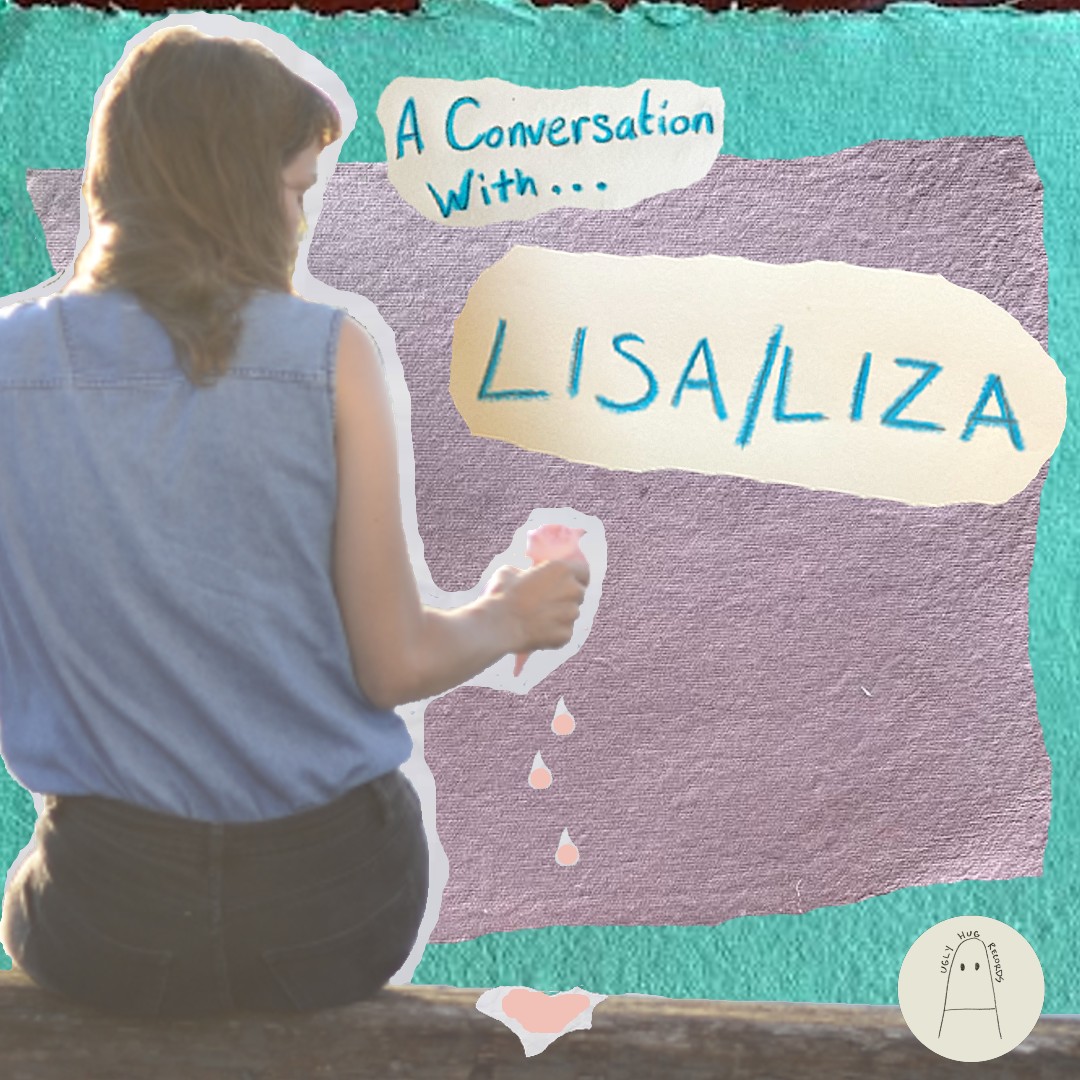
Through a career spanning almost a decade, Portland, Maine’s tender singer-songwriter, Liza Victoria, known as her project Lisa/Liza, illuminates her personal ghosts into a collection of albums filled with soft-spoken and honest self-regard. What feels at home on woodland walks or moments of solitude on a rainy day, Victoria’s work hangs from the branches of the patient and matured tree that her breathy folk songs are grown from. Utilizing her soft and afflicted voice, campfire guitar strumming and the combination of home and studio recordings, Victoria’s sound is not lost upon the feeling of loneliness and grief but is able to push a sense of warmth into the heart of it. People may derive different meanings to Lisa/Liza’s collection of work, and to an extent, this is the beauty that humanizes Victoria’s songwriting. There are no written instructions on how to deal with suffering, but Lisa/Liza’s songs are here in the meantime.
Recently, Liza Victoria took the time to answer a few of my questions. When I started posting for The Ugly Hug, Liza was one of my first supporters. As a college kid just trying to share his writing, this meant so much to me. It was an honor to work with her to put this piece out.
I know you used to live in Portland, Maine, but you recently moved out to Wayne, Maine. What has this change of scenery been like? What is the Maine music community like?
The Maine music community is very healthy and recently I’ve been reflecting on how much I feel held by it. I think there is a true communal nature to it. There are a lot of scenes within, that really just aim to support art and community, and it’s beautiful. At a lot of points I have felt really glad to have this space to make music and be part of this scene. There are a lot more places to play and communities opening up to DIY shows and scenes in rural parts of Maine now and I love that. Those are some of my favorite shows, out on farms or in unexpected spaces (ahem please invite me to your farm show). There is stuff going on right near me now, even though I’m far from Portland, I’m excited about that. I also still feel like Portland is my music-hometown, because it’s remained such a supportive and welcoming music community for me.
Your new album, Breaking and Mending is so full of transparency about your recovery from living with chronic illness and navigating mental health. When writing such beautiful songs about recovery, how do you approach the trauma? How do you approach the delicacy of your lyrics? Do the songs feel different now that they are released, as to say, when you were writing them?
Thanks for saying this, that is so kind! My approach is mostly that I don’t want to hide what I’m facing in my music and art, whatever it may be. There are a lot of spaces in society where it may not feel safe to delve into recovery or navigating mental health, but it feels like my music is my own, and I want it to be this little safe sanctuary for that, wherever I take it. That being said, it’s only reflective of those struggles because that’s what my life has entailed and it’s a very real lived experience that I was transmitting. I’m looking forward to a time when my music can reflect a softer place of joy and healing. But, I think life just holds what it holds, and art and music is a wonderful safe space to not shy away from the heavy things.
I approach lyrics sort of in mood, they kind of ebb and flow from the center of a mood or a feeling. The songs definitely change over time. They feel different after being released, and even different after years go by. It’s fun to see how their meaning shifts for me.
Your songs have such an interesting and beautiful structure to them. They are played in winding paths, that as a listener, we are not rushed to come to conclusions, but are given room to sit in your music and feel what we need to feel. How do you go about song structure when writing?
The song structure to me kind of comes naturally, but it’s also definitely something of my own making. I kind of think of it like a drawing or a painting, how sometimes when you keep working on a piece of art it can go too far. I tend to aim towards trying to let it resolve with some minimalism, or natural place. With my songs feeling sort of stream of consciousness, that is usually when the feeling of the song has come to some resolution.
Your lyrics are just as much about the present as they are about the past, and sometimes you are able to sit in this difference that makes your songs feel timeless. What tense do you feel is the most impactful for you to write in/about?
I love this question. I can’t say that either the past or the present is a more impactful place to write from. I know it’s helped me at times to reach back. I think at some point I need to write from the past or something. I think in some ways I’m trying to pull myself out of that. In this record I may be reflecting on that wish. I think there is always a use for nostalgia or memory, for the listener, and that’s impactful on its own. I think memory can draw from a happy place or a place of a lot of energy and excitement too, so it isn’t something that is always sad or holding grief. But in a lot of my songs it has been a way for me to process both those things. I’d love to sing more about the present. I think there will always be some of both.
You’ve released three albums off of Chicago Label Orindal Records, run by Owen Ashworth. As an artist, what do you find most appealing about this label?
Four actually! And several tapes haha. Owen is a great friend, so that is up there, I’m really grateful towards him. I am super in awe of his musicianship and the work he has done with this label. I was a fan before all this happened. I listened to Casiotone for the Painfully Alone first in my college dorm. It was on a mix cd from a friend and I used to play it on repeat so much that I created an enemy (not joking, haha). It’s been wonderful to be exposed to so much awesome and great music. The musicians on the label are all truly artists and interesting in a slightly outsider way that is so valuable and important. It’s hard to say what’s most appealing. I love all the music on it, I love that it’s small and stays focused on the artists. I love the friendships I have made with the other musicians on the label. I think the Midwest is really interesting and beautiful musically too, and I love having that connection to another music scene being all the way out here. I’m really grateful for the experience and support it has given me to be a part of it. And that’s an understatement. It’s just plainly had a great and beautiful impact on my life.
You are a big proponent for mental health care, accessible resources and being open to talking about your own struggles with it. As a community (music community), how do you think we should be there for others and keep the discussion around mental health open and destigmatized?
I totally think as a music community it should be a centered conversation. In my experience, musicians are very much at the forefront of the conversation, but you don’t hear a lot about it. I don’t know why that is. I think that has to do with stigma and with lack of resources, and with lack of discussion and information.
There is a lot that musicians are expected to push through and achieve with very little material gains, little profit for their careers, and a lot of expectation just to be content with very little, but to drive yourself to the edge of your ability. I don’t think it’s an exaggeration to say that it’s a recipe for trouble, for trauma, for exertion, for giving up healthy and important boundaries, and even giving up your health. I think it’s vital we are there as a community for each-other. But also, to be wary that it doesn’t become yet another expectation for musicians to hold on their shoulders, because it has a lot to do with capitalism, and with things just not being in place for so many.
What we can do, I believe, is to continue to work towards welcoming and supporting communities and spaces. To continue to believe in its impact and meaning. To include those who are stigmatized and marginalized most, is also extremely vital to this conversation. Having open conversations in your community or forums about mental health might be a way to start. Making sure people in your music community have basic resources for crisis and safety. It sounds like a lot of work, but at the same time, it can take, literally, very little. Sometimes it’s just checking in.
Again, I don’t think this should be only on the shoulders of musicians. We need grants and funds and support to help to push and keep a lot of these communities going. There are so many ways to improve things for each other. It can really just be very simple as going to shows and buying merch. I think Owen Ashworth once said something to me along the lines of “buying music is a political act”. And I think about that a lot.
A lot of your imagery in your lyrics resemble things larger than humans, i.e, the world around us in nature. Would you say you’re a spiritual person?
I am definitely a spiritual person. I don’t have much to say about it, or a way to define it. I just find spirituality really interesting and it’s a key part of who I am.
I know that you use nature a lot as a way to escape. What are the ideal conditions for the perfect hike?
I think just somewhere that inspires. It doesn’t have to be a long hike or a difficult or harrowing one. Just anything that kind of brings that spark that’s like “aha, the world is much bigger than I realized, and it’s beautiful”. That would be perfect. Maybe in the Fall or Spring too.
You can support Lisa/Liza HERE: bandcamp
For more information on Lisa/Liza, visit Orindal Records
 the ugly hug
One response to “A Conversation With Lisa/Liza”
[…] A Conversation With Lisa/Liza […]
LikeLike