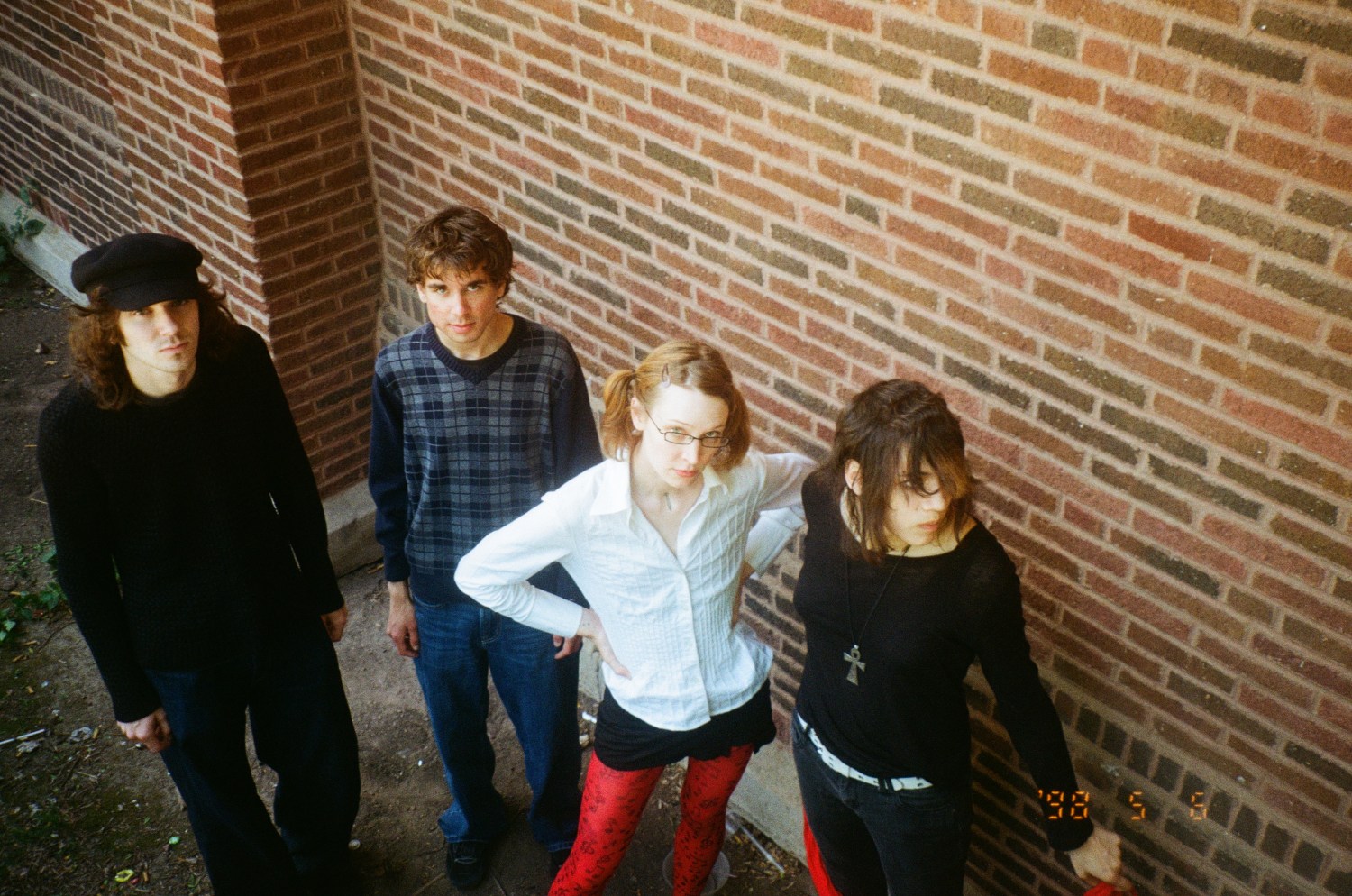
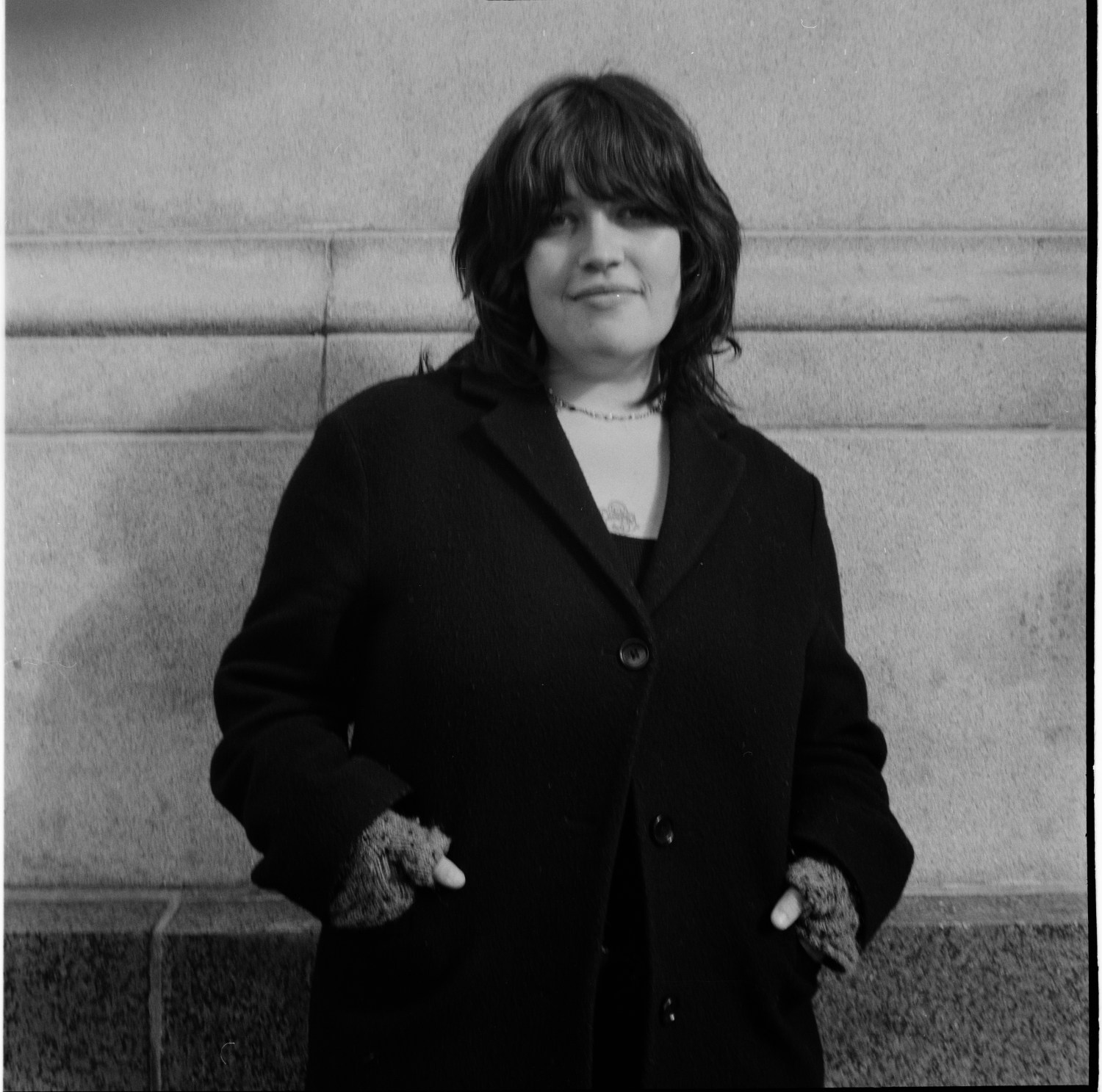
Written by Natalie Ingalls | Photos by Juliette Boulay
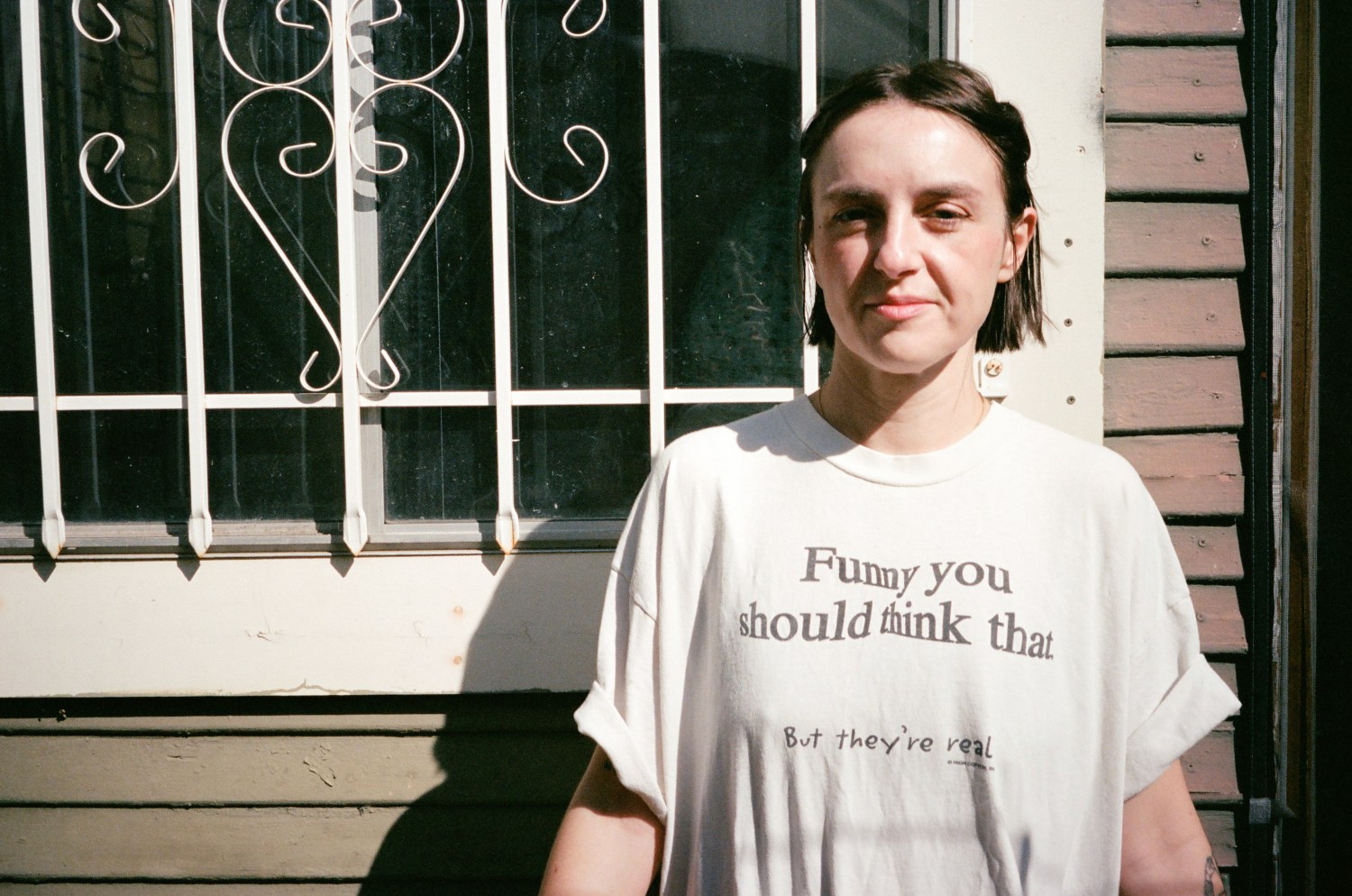
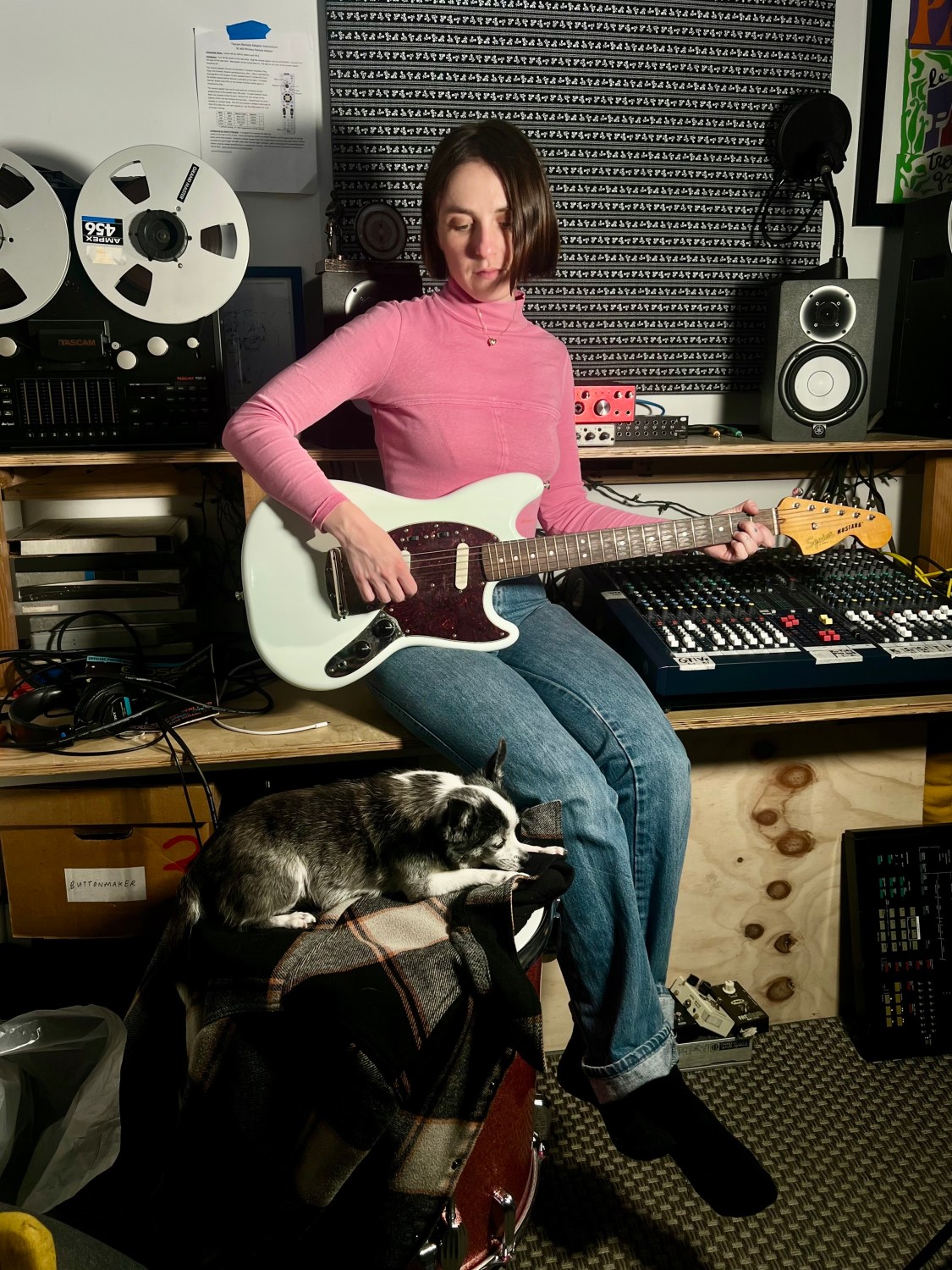
Mark Scott and I had both woken up late on the day of our interview. While I just had our conversation to look forward to, Mark, the artist behind Ohio’s villagerrr, was hours away from leaving for his first ever UK tour and there was still a lot of prep to do. It had been a busy few weeks; less than a month before, Scott had released Carousel, the follow up to his breakout album Tear Your Heart Out. The buzz of TYHO landed him a record deal with Winspear and the chance to share stages with other beloved indie acts, but the increased attention didn’t necessarily translate to a greater internal feeling of success.
Carousel wrestles with what can happen to those who make music in the spotlight; an exploitation of vulnerability, inflated egos, the loss of connection to your art. It’s peppered with features from artists whose sensibilities expand the sonic palette of the record, from People I Love’s shoegaze guitar work to lo-fi harmonies from h. pruz and skirts. The inclusion of collaborators also serves as a solution to the problem the album presents—maybe the sound of your friends making art is enough to drown out the noise from outside.
This interview has been edited for length and clarity.
Natalie: I’m excited to talk about Carousel. The album’s been out for a couple weeks. How are you feeling about it?
Mark: It feels pretty cool. At least online, it’s been neat to see it’s getting shared. Honestly, it was kind of overwhelming. I’ve since sort of tapped out a little bit but I’m grateful. As a band, [we’ve] been through a lot of tough stuff recently, so I think we’re excited to get back on the road and just have fun and detach from more serious stuff for a little while. Not to be ominous or anything. It’s just everybody’s got personal stuff, you know?
N: Do you feel like going and playing the shows validates the stuff you see online or does it feel completely different?
M: I think it’ll be interesting to see. We haven’t done a lot of headline shows in a while, and we haven’t played since the album came out. I’ve been told that some of the shows we’re playing in the UK for the first time, the tickets are moving really well and that’s just impossible for me to understand. We’ve had some good turnouts before, but there are more people coming to see us in places we never go to than our hometown. I think it’s cool, but it’s also hard to process.
N: I felt really seen by this album because I was born in Indiana and grew up in Virginia [both states are used as song names on the record]. I don’t think you’re referencing the states exactly as they are, but using them to talk about something else. You kind of do the same thing in “OHIOAN” [off his 2022 album of the same name]. I was wondering if you could talk more about using places or state names to achieve the story you’re trying to tell.
M: I think it’s a good placeholder. There’s some ambiguity to it, but especially for people who live in the states, it brings an idea to your head, maybe a picture, a temperature or a time of year. It is really evocative of a lot of things. That can be the same thing with a person’s name.
I also associate people in my life with locations. If you ever drive past someplace you remember doing something with a friend, maybe who’s not around anymore, they’re really tied together. Places are very alive too, and you can have a complex relationship with a place. Your attachment to it can be healthy, it can be unhealthy.
N: When you’re writing songs, are you often thinking about a specific moment or are you writing more about the world?
M: It’s definitely really personal. It surprises me how many people feel like they don’t write from a very personal place. I think it is inherently and subconsciously me, no matter how hard I try to step outside of myself. I am pulling stuff that is going on in my immediate surroundings. My bandmates will joke about having really long conversations with me and then two days later, I send them a song and it’s related to stuff that we’ve been sharing with each other.
N: That’s cool from your bandmates’ perspectives. I think the biggest gift of all is to have something you tell someone be adapted into art. When did you start writing music?
M: When I was really young. I never read comics but I liked making them, really bad ones, and then I eventually started writing little stories. Throughout school, writing was definitely the thing that was easiest for me. I feel like I would bend the rules of a lot of the prompts. I started playing guitar late into my teens. Then I got into recording and writing songs at like the same time.
N: Was there anyone you had to bounce ideas off of or did it feel like a really self motivated process?
M: It was pretty self motivated. I think I’m self-motivated in everything, which can be a little isolating, but it’s also cool to feel like I don’t really need too much external validation. That could be debated, though, because I am putting out music to be consumed. But I don’t inherently feel like I really need people to tell me what I’m doing is cool or good. I’ve been having a lot of thoughts about how much longer I even want to pursue music in the public facing way. It’s all a lot for me for sure.
N: What would ultimate success in your life look like? What keeps you happy?
M: That’s a good question and something that I feel like is gonna take time to really narrow in. But I love music and I really do like writing and it could be fun to take a stab at this whole band thing and see where it goes. I like the idea of being able to find people to write and collaborate with in a little more of a private way or just be somebody who can help. I would like to be the person to bounce ideas off of, maybe not be the person who’s like hey, look at me.
N: I wonder if you have any thoughts about why Tear Your Heart Out reached a wider audience.
M: In a literal sense, I partnered up with a label and I have had the help of a lot of really kind and talented people. There’s a lot of unpredictable stuff in there too. You can’t predict when somebody on Instagram with thousands of followers is gonna be like hey, I really like this album and then suddenly you get a spike in attention.
I definitely want people to connect with my music. I’ve connected with other musicians’ stuff in such deep and meaningful ways. Paying it forward- to put something out there and hopefully it means something to somebody. I get pretty nebulous when I think about a lot of this stuff.
N: I did want to ask about a couple songs. The song “Crystal Ball,” it seems kind of ominous and maybe about inhabiting a different person’s perspective.
M: I know exactly what it’s about. But I think more broadly, it’s directly related to the idea of making something with the explicit desire to be patted on the back and behaving in a way to garner attention, for the social capital.
N: I feel like you touched on that on “What Does It Mean” as well. I think that’s a really beautiful closer.
M: I feel like that song could mean a million things or nothing. I usually write pretty bluntly and I wish I could be more poetic about things sometimes. In that song I was just like oh, I’m gonna try to stream together words that feel good and paint a really cool picture. Everybody’s gonna have their different interpretations of what something means and I’ll have my own. Some of the songs on that album do feel a little more verbally aggressive. I’m not really an aggressive person, but maybe I just was feeling a little frustrated.
N: You have so much collaboration on this album. Were there any specific additions or choices that people made that surprised you?
M: You mentioned that song “Crystal Ball.” My friend Dan [in People I Love], I didn’t really know what to do with that song, I didn’t even like it that much, but I sent him a few and that was one that he took an interest in. He sent back a bunch of stuff, and I gutted some of the song and put his parts in there. I had an acoustic guitar thing going on, and he doubled some of it and I just took mine completely out because I liked [his] so much. He added a lot of cool synthy sounds. It felt like a different song entirely. I feel like that’s a song where him and I probably have about an equal amount of instrumentation going on, which is pretty cool because I don’t think I’ve ever done anything like that.
N: In your years of working with collaborators, has there been anything that people do when they write that you’ve tried to implement into your own practice?
M: I think the most that I take away is everyone truly does have their own approach and you really do have to find what works for you. I think being patient with yourself is really important when you’re trying to create something. Things can be really hard sometimes when you put a lot of pressure on yourself to be a certain way or you’re trying to force something or you want to be at the top of whatever it is. I think the best stuff I’ve gotten from other people, it’s just to be patient and be kind to yourself and be kind to other people. That’s a big one.
N: On “Swimming,” you talk about watching TV and picking up a book for the first time in a while. What’s your relationship with listening to music and do you sometimes default to [consuming] other mediums of art?
M: Yeah. I find myself defaulting to other stuff a lot. I’m definitely not one of those people who’s ever tired of music. But I’ve been listening to a lot of music lately for the first time in a long time. And I’m always reminded after pretty big breaks just how good it feels. I’m not trying to be dramatic, but it’s really powerful stuff. It can elicit a lot of emotion out of you, especially if you feel like you’re in a vulnerable place. People have ways of hitting stuff right on the head, and I think sometimes I avoid listening to music because I have a tendency to be a bit hyper emotional and sometimes it’s hard. Even if a song is happy, it’s overstimulating almost. But I’ve been able to listen to stuff a lot more lately and have a positive association with it.
N: What’s been on repeat?
M: I’ve been listening to the band Duster. That is one band where I am getting washed away in the textures and the sounds. I’ve been listening to Ted Lucas. It’s so peaceful and pretty and minimal, and he writes really directly, and uses a lot of really simple metaphors. But it proves how a one-to-one comparison can elicit a lot of emotion.
N: I read that you’re a big runner, and that you’ve done a couple ultra marathons. Do you listen to music while you run or are you running cold turkey?
M: If I was in some sort of event or race or I have company, I’m definitely not listening to anything. But when I’m alone, sometimes I’ll listen to a funny podcast. It’s kind of like junk food, and sometimes I’m not even really paying attention, but it can help turn my brain off. But I do like to listen to things and sometimes when I’m really actively recording and writing, I’ll listen to some of the things I’m working on. I can kind of frantically type my ideas down in my phone. If people see me doing it, they’re probably like, what’s wrong with the world today? I’m not texting. I’m writing.
N: Is there anything that you employ in your running practice to writing music or does it feel kind of separate?
M: I feel like it’s hard for me to know if there is a correlation, I haven’t been able to articulately describe that relationship. I think that it feels pretty separate. But I know that when I’m running, I’m typically feeling better, physically, mentally, and emotionally, and I think that that opens up my brain to be able to be inspired by the things in my life.
Written by Milkomee Addisu | Photos by Sidney Kuri Poor
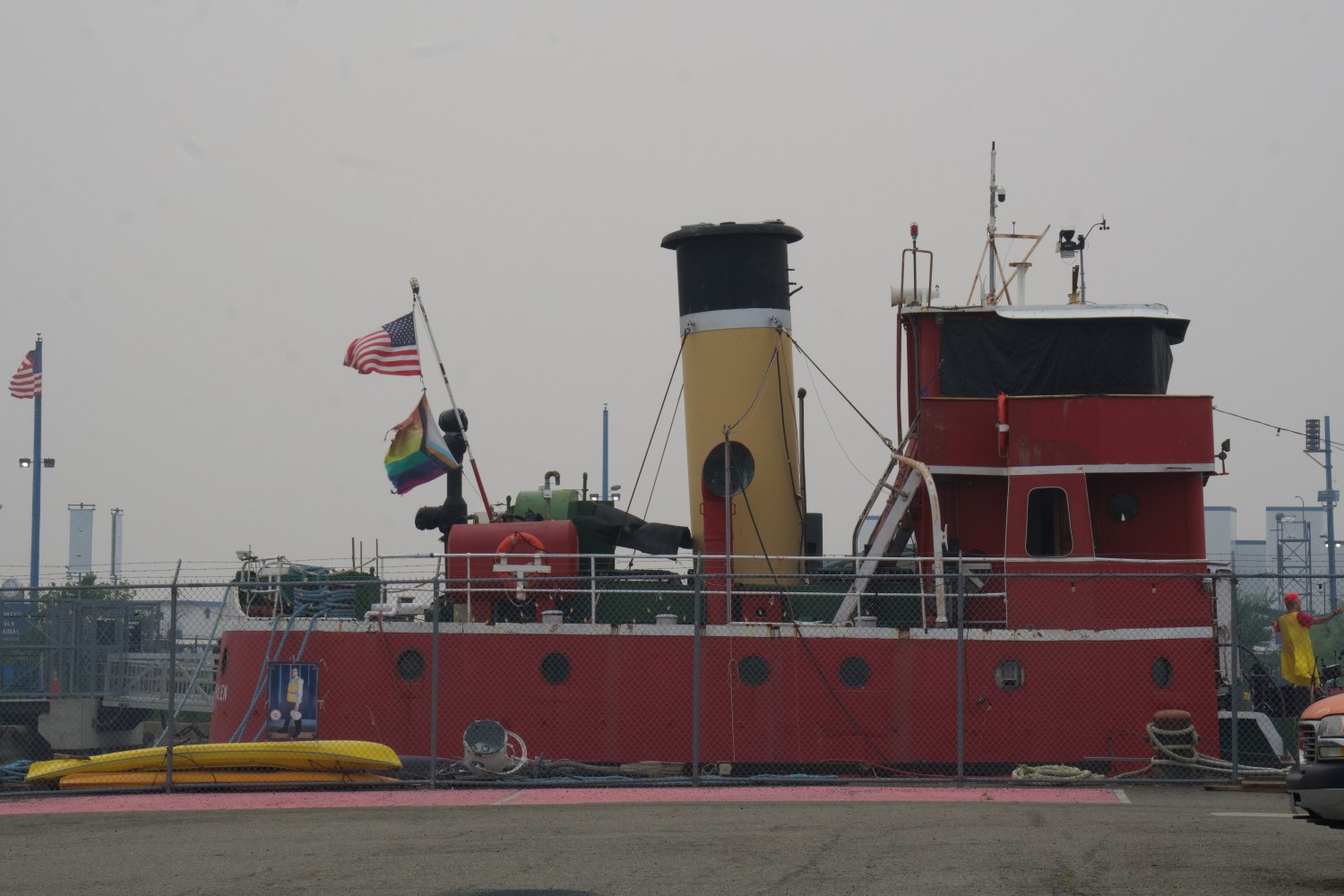
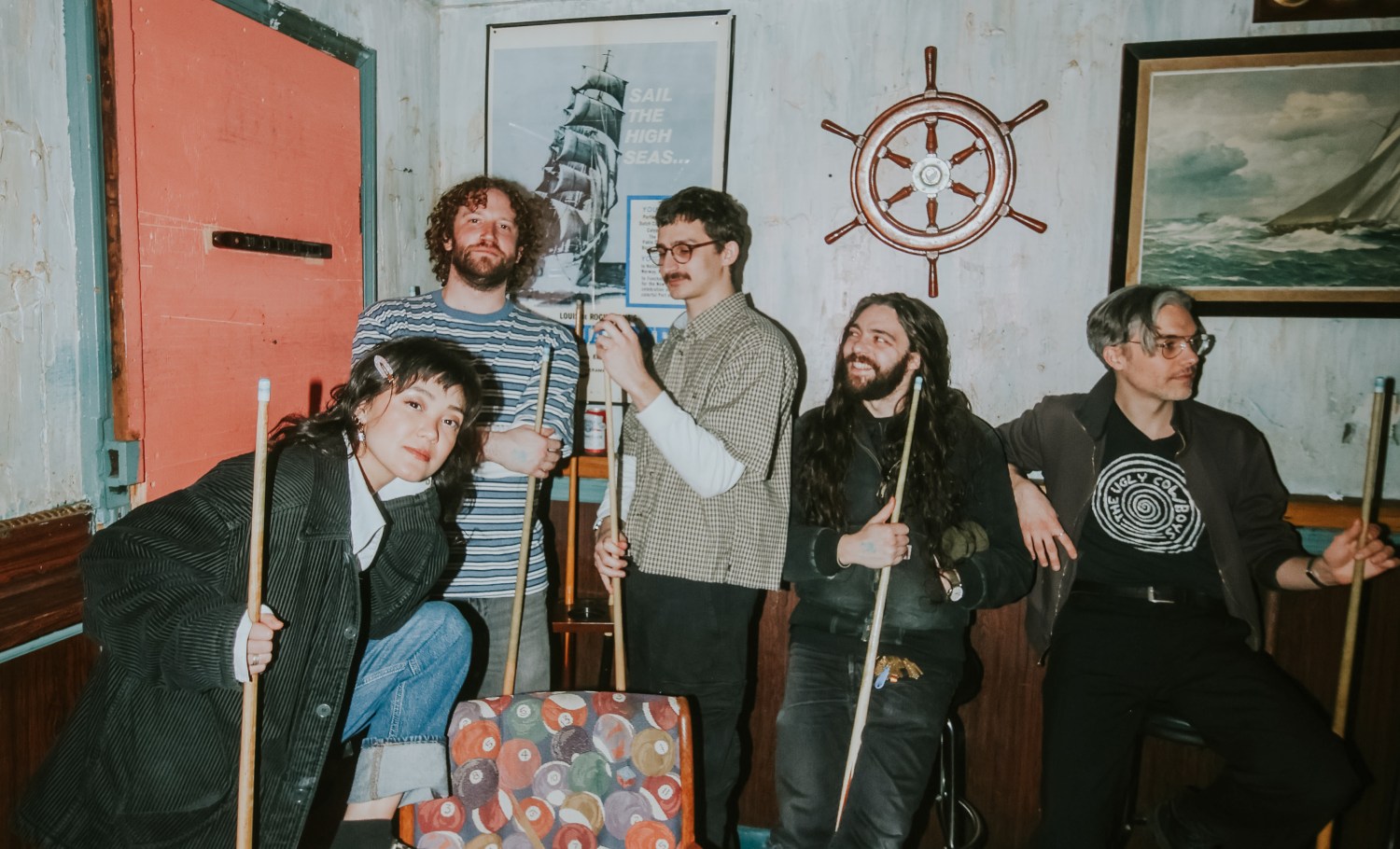
Nodding along the shores of Red Hook lies a stout tanker boat with a capacity of 100 bodies. This proved difficult for Jamie (Pec)ilunas and her three-part show series. Adding to the frenzy of this blazing summer, Pec brought a handful of New York’s beloved bands on The Mary Whalen. Her history with the boat dates back to last fall, when she brought together a Halloween show. A trail of whispers surrounding a retired 1938 coastal oil tanker got back to Pec; naturally, her interest was piqued. Carolina, the boat’s captain, agreed to hand off The Whalen for a free show that would also act as a fundraiser to help preserve the boat.
The adjacent neighborhoods of Red Hook had an easy commute to the boat. But for the other 99% of attendees, it was a pilgrimage.
Were you afraid that people wouldn’t come to the first boat show just because of the location or any other factor? It is so out of the way and very inconvenient.
Pec: Of course I tweak before every show; one of them is bound to be a flop. I know my crowd is far away, but also we’ve seen people go to freaking Rockaway for Bread and Roses Fest (an underground Indie-Punk festival). And when I saw the crowds of Freedom Attic, Diner Pets, and Nett roll in, I calmed down. But we don’t have the tenacity for DIY spaces, because these spaces can exist way further out of North Brooklyn. I think when shows are inconvenient, it makes it more worth it, because you get the heads who really want to be there, not people just stopping by to see some scene-y band, you know?
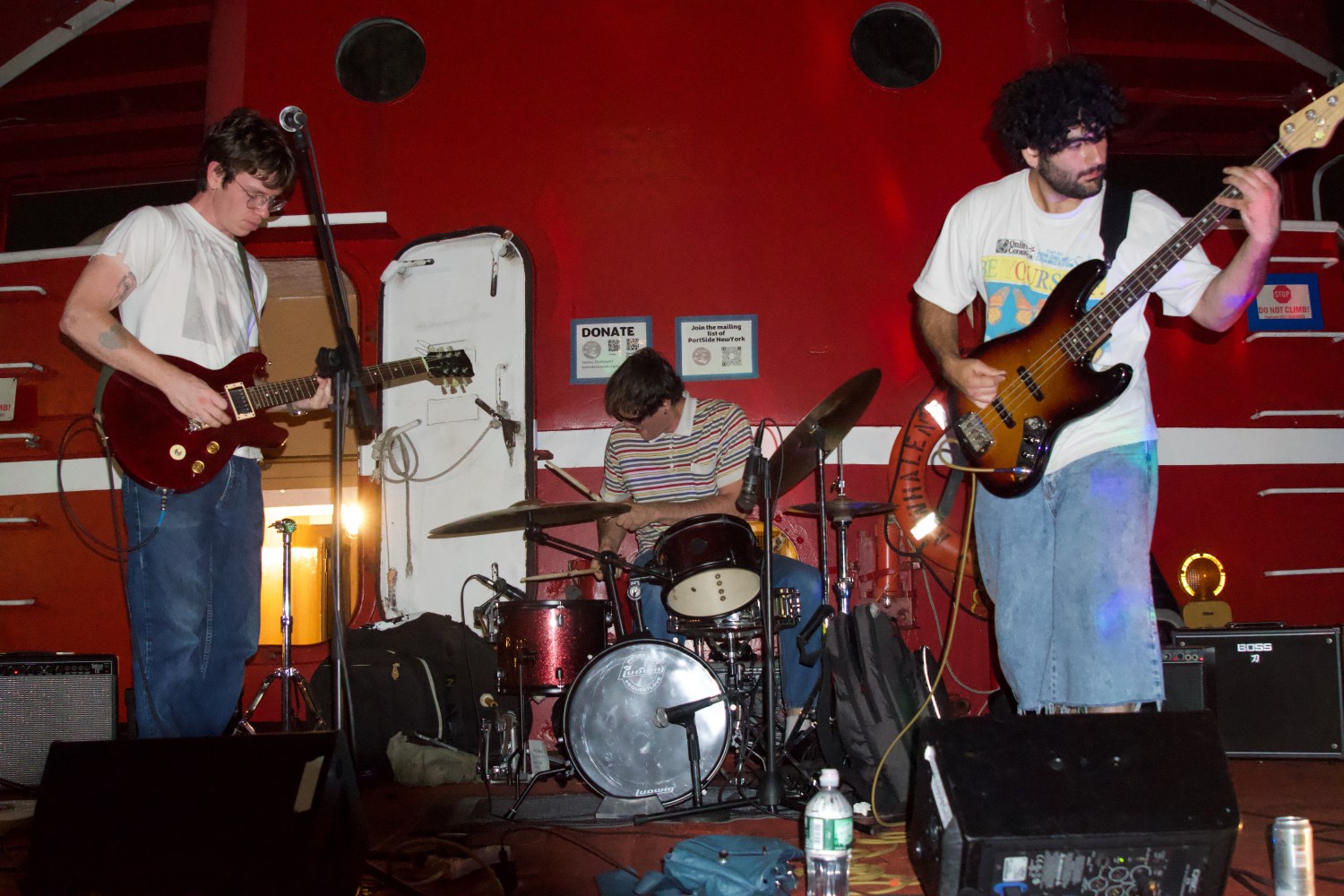
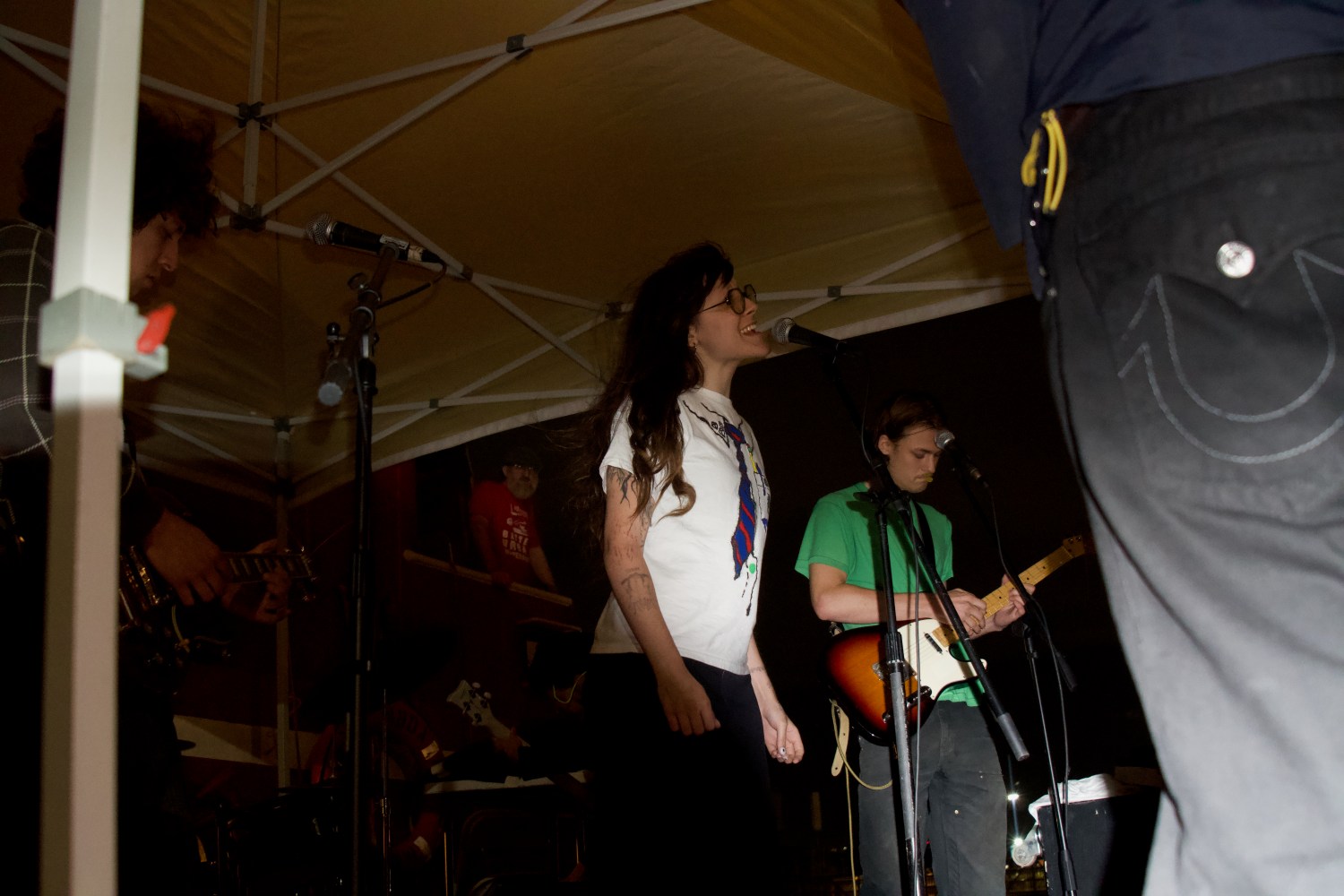
Unforeseen elements were in concurrence with Pec’s sentiments. The second show, originally scheduled on July 9th, was postponed by torrential downpour. Unbeknownst to Pec, Canada’s wildfires echoed her interest in weeding out a flippant crowd. The already postponed second show was muffled by heavy smoke blowing east. Nonetheless, Guyscrappers, Wesley Wolfee, and Plastic tore through the opaque air and delivered a show worth jeopardizing our respiratory health for.
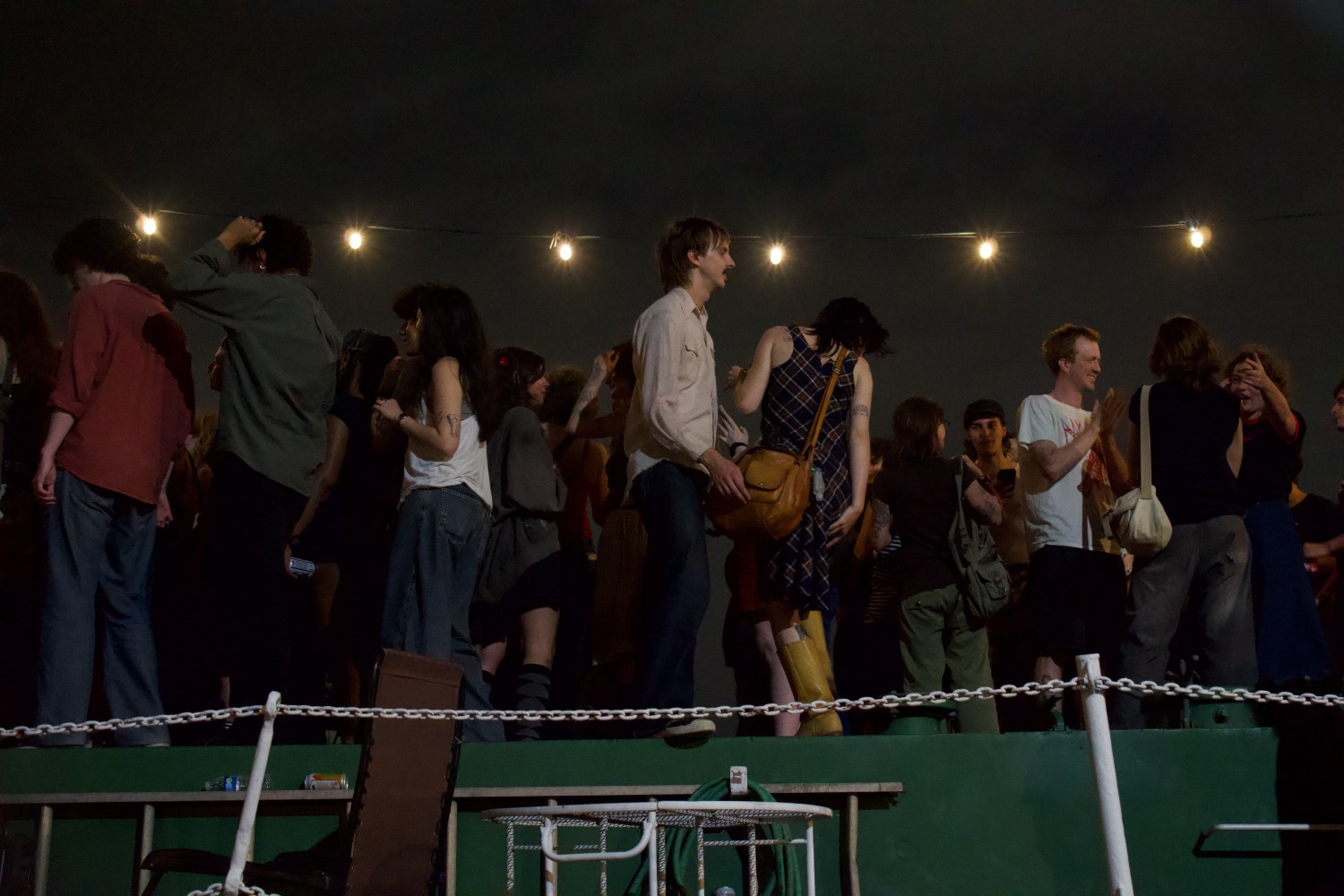
The third show, featuring ideasforconversations, Holidays in United States, and Myra Lee, experienced light rain, but Pec was more concerned about the demanding crowd flooding the desolate parking lot next to the tanker. The combination of the three pulled in Pec’s largest crowd to date. The Whalen was already swaying left and right before it reached capacity. After the overflow came to terms with the fact that they would not leave the concrete beneath them, they found a seat to settle into. Other overflows pressed up against the transparent gate, poking their fingers through the holes that let the bands’ sound reach those on dry land.
Even with a great turnout and an approved liquor license to sell drinks, Pec never considered recouping her losses.
When did you come to terms with the fact you’d be hemorrhaging money?
Pec: Me? Always. Knew from the start. That’s the thing about this DIY: is it really DIY if I’m spending all this money to be able to put these shows on?
She claims before admitting she’s losing money by making it free, accessible, and essentially charging nothing for beer. She also alluded to the fact that sponsors weren’t a part of her ambiguous DIY ethos.
Pec: We’re not scamming anyone; it’s $2 for a beer, and I want the drunkies. That’s why all the shows are also parties. It guarantees a crowd. So, I’m not profiting anything. The surplus money that we do get goes to pay the bartender to be there and work. But sponsors change things. It feels less DUI and more like…DUI? I’m saying DUI…I mean DIY! I don’t know. DIY is a farce also. What does that mean? Like, at what point does it not become DIY? Is it just roughing it and having worse amenities, and not really getting paid; is that what DIY means?
Our self-effacing host, who had trouble verbally differentiating between DUI and DIY, was quick to dismiss her hand in contributing to the DIY circles of NYC. Though I beg to differ. I personally find a Pecilunus gig to be a staple within the grassroots orbit. On top of my own bias, Pec has streamed her own income to each of her gigs. Leading up to a show, she is the sole coordinator of every logistical note or nightmare. With the help of her friends on the day of the show working the door, bartending, or sourcing materials, she orchestrates a truly communal event. Her concerns about labeling her work seem to be put to bed by these factors alone. However, Pec continued with a critique that contextualizes her gigs under the spiteful regulations of New York.
Pec: Just…we saw a lot of these used to be DIY spaces where people were living under the floorboards, now become actual venues. So it’s rare, especially now that Brooklyn is such a gentrified area; permits come into play, you can’t play amplified sound like it used to be around those warehouses that no one lived near—that’s why you could play music at all hours of the day. New York doesn’t really have that anymore.
Consequently, Pec trudged south in hopes of finding solace at sea, where amplified sound and large gatherings are less prohibited. Pec has a fair point in acknowledging the rules that are encroaching on DIY efforts. Just a couple of months ago, Royal Beef Gallery, a cherished underground space that housed exhibitions and shows, was forced out of its makeshift bunker. A tragedy we’re all still mourning. The city’s infrastructure can be crippling, and its owners are a nuisance. Unlike other band-centered cities, we have limited access to personal property that can accommodate sizeable crowds, i.e, basements and backyards. But I would argue Pec is finding a way around the terror of NYC sanctions and real estate. In addition to her dabble in maritime fun, many local bands strive to find places to convene that are not in favor of larger powers, and they’re succeeding at such a task. The unorthodox will always seek to exist.
Now that the series has come to an end, we’re all in anticipation for the next gig. Luckily, Pec mentioned a completely female-fronted lineup scheduled for September 18th. Her Halloween show will also return on the boat, this time closer to the beginning of October. Pec’s usual outdoor events and house shows will also be announced as months go by.
You can follow all show-related updates on her Instagram @jamiepec.
Earlier this month, Austin-based punk band Guiding Light released their debut album Fear On My Own Time via Post Present Medium. Composed of drummer Charles Powell, vocalist Elise Cook, guitarist John Morales, and bassist Rachel Kirk, Guiding Light create music that is bold, and gloriously so. Honing instrumental fixations that combat the dead ends of our societal collapse, these songs burst with intensity and linger with purpose as Guiding Light break through the isolation and unease that absorbs our world.
I know that Guiding Light came together in a rather serendipitous manner, where the instrumentation was complete without a lead vocalist, and vice versa, lyrics written without a band. Now that you see your debut LP about to be released, what was it like to write an album all together as a fortified unit?
It was really easy. We work well together. It was easy when we met, which is what made it so fun for us, and I’d argue it’s even easier now that we write as a unit!
The recording process for Fear On My Own Time was split up into two sessions with a 6-month gap in between. What did that lapse in time offer to these songs and the final product that we get to experience?
Honestly, the only reason there was a gap in between recording was because we didn’t have all the songs done yet, and some members are in other bands who had their own things happening. We didn’t want to rush. I think the result of having time between recording allowed life to happen and therefore themes of the album became more complete.
The songs across this album range in focus from the aftermath of a relationship ending to the overreaching fascism that we are all living in now.What does it mean to you as not just individuals, but members of a community to write and explore these topics of very human problems and faults?
What else is there to write about?
The phrase “Fear on my own time” is a stunning depiction of agency and what we let into our day to day. Can you tell me more about what that phrase means to you and why you saw it fitting to name the album?
I mean, it’s whatever you make of it.. not to sound like a prick. At the time that I wrote that track, I felt like my life was falling apart and I was living in so much fear. I knew that at the end of the day it was my own choice how I would deal with those fears, how much time I would devote to fear, whether that was worth anything or not. I think a little bit of fear is good when you’re making something. Only a little bit, though. The phrase itself was the title of the record in my head LONG before we finished all the songs.
How do you all plan to celebrate the album’s release?
We’re having a release party at Tweedy’s in Austin on August 21st!
Tweedy’s is the spot, and it was the spot before it was Tweedy’s. Half of us work there, we all spend a lot of time there. It was, in our minds, THE place to celebrate. It is also my (Elise’s) birthday when the record comes out. Believe it or not, that date was not my suggestion, just happy coincidence.
All roads lead to Tweedy’s…
You can listen to Fear On My Own Time out now via Post Present Medium.
Written by Manon Bushong | Photo by Rafael Vasconcelos
What’s that quote about nostalgia? I asked two people this question as I wrote this intro, though I may as well have asked them “what’s that one late 2010s hyper pop song?” More details were required of me, more details I did not have. I was certain there was one little cliche that warned about the seductions of nostalgia, and subsequently the perils of falling into her wistful talons, but who knows. The whole point was to reference this quote that may or may not exist, only to combat it with the plethora of ways that Nara Avakian proves its sentiment wrong. Luckily, this can be done without platitudes, because whether or not a warning against nostalgia in TJ-Maxx-home-section-prose does in fact exist is not super relevant. Anyone can admit that nostalgia is capable of hindering growth. While obsessing over the past through rose colored glasses (sorry if you thought you were going to make it through this intro without one cliche) can warp our perception of reality and keep us stagnant, Avakian’s (most likely blue) lenses do the exact opposite. Within both the literal and figurative walls of Nara’s Room, they use the comfort of childhood motifs to cushion painful reconciliations with the past. On their latest record, Tearless, Thoughtless, Avakian continues to carve a space where growth and sentimentality can operate hand-in-hand, once again proving just how powerful a tool nostalgia can be when leveraged correctly.
Many aspects of Tearless, Thoughtless propagate themes found in prior Nara’s Room records. It oscillates between feels that are vintage and utopian, sculpting an atmosphere that belongs entirely to them. It juxtaposes lyrical weight with sonic buoyancy. It nods to Avakian’s heritage. It’s teeming with early 2000’s references. It is most definitely NOT shoegaze. Though none of these observations are new for the project, Tearless, Thoughtless also manages to chart territory never before heard by fans of Nara’s Room. The album claws itself into depths that Avakian themself had only recently become comfortable with. Although Avakian cites it as the most collaborative and spontaneous experience they have ever had with a record, Tearless, Thoughtless materializes as some of Nara’s Room’s most naked work yet. Unlike their past music, which had been heavily fabricated within the safe realm of the project’s namesake, Avakian’s bedroom, Tearless, Thoughtless left the room as fragments, waiting to be puzzled together with the help of others.
“I think with Glassy Star, I was like, “this is what we’re gonna do.” It was more structured. Tearless, Thoughtless was definitely more experimental and spontaneous, and I was so much more open to the collaboration.” Avakian notes. “I also would sometimes have loose lyrics but no melody or guitar part, and we would be in studio and I would be like, “Will, like I really wanna make this song, but like I don’t have these parts yet,” and he’d be like, “Let’s just do it now.” That was all new for me, and it made a huge difference. It was very freeing. I was able to have ideas and not need to fully form them yet, because I can have other people in the room to help me. It was way more fun, and whatever we end up working on in the future, I want to keep embracing that. I’m not looking at things in this very precious way anymore.”
The depth achieved from collaboration was not coincidental. Rather, it is evidence of the powerful relationships Avakian holds with each of their bandmates.
“The boys are like my family. They’re like my brothers. They’re my best friends. We hang out so often outside of rehearsal and recording, like yesterday Will and I went to Bonus Room and watched the Oklahoma Thunder Lakers game. I think that personal connection makes it a lot easier. I will always write something vulnerable and personal, but to have the boys help realize that is so special. Everyone brings something to the table, and everyone feels things, whether in response or just on their own, even if they don’t say it or even really know what it means.” Avakian tells me.
Tearless, Thoughtless is a chest of vignettes, many of which might might have felt extremely despondent had they arrived in any other format. The record hurdles from loss and grief to familial disconnect and generational trauma – none of which are sugar coated lyrically.
However, high on the list of things mastered by Nara’s Room is nuance, and within this record, Avakian and their bandmates deliver a mosaic of feeling, many of which are sweet, optimistic, and will likely encourage you to dance around alone in your apartment. Though Nara’s Room has always been unbridled by genre, Tearless, Thoughtless is also some of their most experimental work to date. On its lively, textured, and delightfully unpredictable playground, Avakian is able to make sense of some of the hardest moments of their life. It is a ridiculously beautiful and moving listening experience, one we are lucky they chose to share.
I recently sat down with Avakian to discuss recession pop, Linda Rondstandt, Gen X Boomer Core, and Tearless, Thoughtless, out everywhere via Mtn. Laurel now.
This interview has been edited for length and clarity.
Manon: How are you feeling about the release ofTearless, Thoughtless?
Nara: You know when you work on something for so long and you’re in the process and then once it’s done, it’s like that era is over in some way. I feel like once it’s released, I can fully free myself from it. Not even creatively – I am so proud and connected to the work, but gosh… the release cycle is… I hate it. I hate making reels. I hate fucking posting on TikTok. Whatever, you know. You have to do it.
Manon: So when were you actually finished?
Nara: Will and I can work on something to the ground, so if we didn’t have a deadline to have the masters by the first week of January or something, we would have run it to the ground, we would have kept working on it and fine tuning it. But there’s something to be said about a deadline, like forcing yourself to be fully done. I feel like if you keep fine tuning, you kind of lose track, you know? So we officially finished the first week of January this year, but we started recording it in April of last year.
I used to work at Clive Davis institute when I was at NYU, Clive Davis is the Berklee College of Music of NYU. My former boss, Michael – he was a great boss, we always had the Saturday 8:00 AM shift together, so we would work quietly alongside each other, cause we were so tired. When I graduated I left the job, cause it was work study. And then last year, when we went to South by Southwest, we stopped in Dallas to play a show, and Audrey from Hiding places is a good friend, so we were hanging out at the show, and I turn around and see Michael, and I’m like “Michael, what are you doing here?” I had not seen him in two or three years, and he was like “I play bass in Hiding Places.”
Manon: Did you know?
Nara: I had no idea. He’s such a “make moves in silence” guy. Also I hadn’t seen him in a minute. You know how it goes with the instrumentalists, especially if they’re boys, and I say this from personal experience in that still no one knows who the boys are. Respectfully. So, we recorded Glassy Star at Clive when I was working there, and a student recorded us, and then after South By, someone was like, “we should record at Clive again. Ask Michael if he’d be down,” because Michael is, like, an incredible engineer. And I was like, “That’s a great idea.”
By then I had these lyrics and guitar parts for these songs, but I didn’t know how to feel about them, like we hadn’t even started arranging them. But I hit up Michael, and we put together a date in April. And then for two or three weeks we just locked in and arranged the parts, and even in the studio we were arranging in real time. I feel really lucky.
Manon: How do you feel that process impacted the final record compared to if you had come in with it all arranged?
Nara: I think with Tearless, Thoughtless the difference is that I was way more open to spontaneity and collaboration. With Glassy Star, everything was more precious. I wrote the lyrics and the melody and the guitar, and it existed in that form in my room and I brought it to the boys when it felt totally ready. With Tearless, Thoughtless, some of the songs just had fragments. And I worked with Will, Ethan, Brendan, and we kind of shaped them, almost, to the last minute in that way. Or rather, again, the deadline thing, like the “let’s just take it for what it is”. That really impacted the process and made me feel excited.
I think with Glassy Star, I was like, “this is what we’re gonna do.” It was more structured. Tearless, Thoughtless was definitely more experimental and spontaneous, and I was so much more open to the collaboration. I also would sometimes have loose lyrics but no melody or guitar part, and we would be in studio and I would be like, “Will, like I really wanna make this song, but like I don’t have these parts yet,” and he’d be like, “Let’s just do it now.” That was all new for me, and it made a huge difference. It was very freeing. I was able to have ideas and not need to fully form them yet, because I can have other people in the room to help me. It was way more fun, and whatever we end up working on in the future, I want to keep embracing that. I’m not looking at things in this very precious way anymore.
Manon: How does it feel bringing material that is so vulnerable into a collaborative space?
Nara: The boys are like my family. They’re like my brothers. They’re my best friends. We hang out so often outside of rehearsal and recording, like yesterday Will and I went to Bonus Room and watched the Oklahoma Thunder Lakers game. I think that personal connection makes it a lot easier. I will always write something vulnerable and personal, but to have the boys help realize that is so special. Everyone brings something to the table, and everyone feels things, whether in response or just on their own, even if they don’t say it or even really know what it means. Ethan, for example, his bass playing is almost in conversation or response to things. Will creates this ocean for it to exist. And Brendan comes in with the intensity and maybe the underlying feelings that I didn’t know that I felt. I feel really lucky. Will is classically trained, but me, Ethan, and Brendan, and Will, honestly all kind of come from this discipline of obviously having the talent and the skill, but focusing on the feeling above everything else. I think that really intersects with our friendship.
Manon: Last time we spoke, you cited a lot of media inspirations forGlassy Star, ranging from film and literature to Instagram reels. I would love to know if you have any you’d like to share for this record?
Nara: I think we spoke about this last time, but I really understand how I am feeling through these references, right? For example, “Tucson” is obviously very personal, it’s my memoir, and the Linda Ronstadt documentary actually helped me understand [it]. Linda Ronstadt can’t sing anymore, she has Parkinson’s, and it forever breaks my heart. Thinking about that loss really made me think about my own experiences with loss. There’s this beautiful scene at the end of the documentary, you see her at the age of about 75, and she’s sitting in her Tucson living room where she’s from, with her family around her, and they are all singing and playing guitar. She’s kind of singing along, and the director or whoever is like “but Linda, you are singing,” and she goes “that’s not singing.” And that really impacted me, it made me think about what loss means. But Linda herself, as far as I know from the documentary and what I’ve read, she’s not tied to the past. She has lost her ability to sing, and I am sure she is tired of talking about that, but it hasn’t necessarily destroyed her purpose. So I guess the thought is what do you do with that? And that was a big impact for “Tuscon”.
“Lizzie McGuire” is obviously inspired by Lizzie McGuire, that show was such a symbol of everything in that era, and it was a source of comfort in my childhood. It existed in the background, amongst all kinds of chaos. I don’t know if anyone will get it, but alongside everything in the early 2000s or childhood or whatever, Lizzie McGuire is the source of my resilience. Because it was something joyful and a source of comfort that existed amongst chaos.
And even though “Mini DV” is named after a camcorder, which obviously represents the aesthetic of the record, the content of the lyrics came from [Khaled Hosseinin’s] book, The Mountain’s Echoed, which is about an intergenerational family history in times of instability and war in Afghanistan, and that really impacted me too. What does repair mean, really? And why are we burdened with repair? I think a lot of mediums inspire that.
“Cut to Blue” is a reference to digitizing, or shooting an analog camcorder – when you hit stop, it cuts to a blue screen, and it stops all that recorded footage. “Cut to Blue” is sort of about the point when I stop committing to something.
Manon: I feel like blue is such a defining color for [Nara’s Room] too.
Nara: Yeah definitely. It’s a bit unintentional, but for every record, when I’m thinking about what color I want the cover to be, it’s always blue. It’s my favorite color.
Manon: Tell me about the cover art forTearless, Thoughtless.
Nara: I love… it’s called like, Gen X Boomer Core. I hate that there’s a fucking revisionist term for that stuff. But I love that aesthetic, and growing up, I felt like that was what the future was going to be. So I reached out to this guy, his Instagram is @bicflame, and he works a lot in Blender. I sent him some references and I feel like it really encapsulates the space in which these songs exist.
Manon: You mentioned you don’t want to make the same record twice. What do you feel like were some of the most defining differences between this record and ones you have done in the past?
Nara: I definitely think that having Will as a band member has made a huge difference; having this new instrumentation and new perspective. It’s like when you add a new friend to the group who immediately jives. He contributes something new. I have always loved guitar, I could always create a record where every texture is guitar. The experiment here with the new record was ‘what if we stripped back the guitar?’ I mean, it’s always going to be important, it’s the thing that I bring to the table. But I think the idea was how can we add new instrumentation that feels out of place, but within the context [of the record], it works? So we really experimented with that. We fucked up Brendan’s drums in the production, and we experimented with different effects with Ethan’s bass. Even my vocals, much of them were auto-tuned. When we all think of auto-tune, we think of recession pop songs, and we are like, ‘this is ridiculous’. But again, it’s just using my voice as an instrument beyond it just being my voice.
Manon: Do you have a favorite song on the record to play live?
Nara: Definitely “Lizzie McGuire.” That song is so fun to sing, and the lyrics are so personal. Also, the guitar part I wrote is just so psycho and weird but very fun to play. The boys love playing “Cut to Blue” – that is the boy rock song. In rehearsals I’ll say “okay let’s focus on this song”, and they’ll be like “let’s play ‘Cut to Blue’ first.” I love playing “Lizzie”, I also love playing “Tucson”, because when I perform it I feel like I am on my, for lack of a better phrase, soapbox. I’m like, “everyone, this is my story.” The purpose, when you write a memoir or a book, is that you want to share that story and hopefully impact someone. It always feels like a release, to tell your story. Now it’s out in the world and it doesn’t just exist in my past, or in my head.
Manon: How did it feel when you first released it as a single?
Nara: I had thought I processed and healed when I wrote it, but then when it came out, I felt this thought of “what do I do with this now?” I had been estranged from my whole family for almost six years, and I felt like this was something I wanted to share with my older cousins, who are responsible for the fact that I play music. They are all much older than me, between 8 and 12 years older than me. Growing up, they would always be jamming, and I so wanted to be close to them. In retrospect, I was a baby, and they were teens or in college. I ended up learning guitar when I was 10 so that I could get closer to them. It didn’t work because they all went to college, so I wouldn’t see them that often, but whenever I play guitar, in my heart, I know that they are part of it.
When Tucson came out, I really wanted them to hear it, and hear my own perspective. I realized I’m so prideful, I’m always like, “I am never going to reach out.” But it put me in this place where I realized I can go step by step. So I reached out to one of my cousins, and then I reached out to another. I have ten cousins. Those baby steps are the path of healing. It made me realize that it does not have to be so black and white. And I think the lyrics of Tucson are not black and white. It is not necessarily like “you wronged me” or “I am wrong” or whatever. It is all of these different elements that shape things.
Manon: Tell me about the music videos
Nara: For Tucson.. Do you know the song “Stay” by Lisa Loeb? The whole music video for that song was directed and shot by Ethan Hawke in her apartment in one take, and I love it. One take is hard to achieve. So I was thinking about how I could accomplish that, and incorporate all these elements within one take. I reached out to this videographer, Tim Chetski, he is so talented, and I said “hey, our budget’s pretty small, but would you be interested?” He was like “yes, I don’t get to do a lot of passion projects.” That was super lucky and exciting. And then I have this friend Katie, who works at the Joffrey School of Ballet, and she said we could shoot in one of the dance studios. Then I was thinking about the idea of family, and how chosen family is so important. I had essentially everyone in my chosen family in that video. The dancers I met my second year living in New York, we all lived in the same apartment building; they were on the third floor and I was on the second. We became really good friends, and now they are my best friends and my family in many ways. Obviously the boys are in the video. And I think what I wanted to do was have the symbol of emotion, the way that the dancers can express those instrumental sections and almost respond to them, so I had them improvise.
For “Lizzie McGuire”, I wanted it to be set on a basketball court and have the boys bullying me, which comes from personal experience. In Armenian Sunday school when I was a kid, the older boys stole me and my friend’s basketball, and I tried to steal it back and then broke my arm. Our manager Chella ended up directing and shooting the video with our friend Zoe, and Chella just went off. She was like “all right, frosted makeup.” The dancers are in it too, and they do the Hillary Dove “With Love” dance. It’s kind of an easter egg. They learned it in under an hour. I think that the energy you bring into a video is the most important, and it was kind of like a slumber party. My roommate Michael did the animation, and he knew the assignment. The video is really fun and exciting, I was thinking it’s like a Lizzie McGuire reboot of Lizzie was an Armenian, and it was nice to see how I fit.
Last month, Los Angeles’ Slippers released their sophomore album Slippers 08. Clocking in at just over 22 minutes, the 11-song LP is a gut-punch of twee pop, with hardly a breath allowed between songs before the next barges in. Intrepid opener “Blueberry Peel (Reprise)” veers quickly into nihilism, but there’s no time to ponder the meaning of life before the wry “Wants For Everyone” begins. There’s a tenderness amidst the scuzzy guitars and interesting synth work, with singer/drummer Madeline BB questioning her relationships to and time spent with people and music.
I was lucky enough to see Slippers kick off their tour in Chicago (with the very good Hunx and his Punx at the Empty Bottle and later with the Silvers Dolls + Alga at Torn Light Records), and Madeline brought the same barbed wit and charm to the stage as she does on the record. Her voice, sweet and almost child-like when singing, also delivered quips about her guitarist’s outfit (what IS it with men wearing suits on stage?)
This interview has been edited for length and clarity.
Natalie: Does Atlanta still feel like home, or has LA become your home? How do you perceive these two places?
Madeline: Yeah, it’s interesting. I was thinking about Atlanta yesterday. I guess practically, it’s not really a home base anymore. My parents don’t live there. I have a certain reverence for the scene in Atlanta, and I do think that there is a very unique attitude of Atlanta that feels relevant to my life now. I think something that I more so carry with me is this kind of Atlanta attitude. In the South, there’s like a chatty way of just going throughout the day and being kind. Obviously, there’s like a lot of fucked up stuff in the South, but, there’s not a weirdness of talking to strangers. In Georgia, there’s a particular music heritage and lineage that is really special to me and I feel very proud of. But LA does really feel like home.
N: I want to talk more about growing up in Atlanta. What was your journey in falling in love with music? And at what point did you start learning to play and making it yourself?
M: I kind of was a late bloomer with playing in bands; I only really started playing in bands later in high school. I guess that’s not a late bloomer. It’s so funny because when I was 21, I’d be like, oh, I didn’t learn guitar when I was six.
Well, my dad was always playing guitar. I was forced to learn piano growing up, which I feel like is a classic thing as a kid, and I hated it. I mean, I liked it and I didn’t like it. I just feel like my teacher didn’t really inspire a joy of music in me, but it was fun to engage with and I think I was pretty good at it.
My grandma played dulcimer and piano. My cousin Seth plays guitar. And then my best friend Rachel, her family started Capricorn Records, and I think her dad, who passed away way too young when we were in high school, introduced me to a lot of Elephant 6 bands. One of my fondest memories is listening to The Apples in Stereo with him. I really liked how that music felt and I had no idea that that was part of Atlanta. I didn’t really care at that point. That came later, moving away.
N: I did want to talk about your career with illustration and animation. When did that interest develop and do you feel like visual arts and music have gone hand in hand?
M: Growing up in Atlanta, there was this presence of Cartoon Network and Williams Street and Adult Swim. I didn’t grow up with a TV. I had to really seek it out. Like when I went to my grandma’s house, I would sit down and it really backfired for my parents because then it just made me even more obsessed with it when I was at home.
Music does, fortunately, help me figure out my pathway with a lot of things related to animation, because of the community I’ve built. I am able to do work, take on music videos. Music is kind of the litmus test of, does this work? Is my job allowing me to still make music? Am I able to write songs? Do I feel stuck? I’ve just graduated grad school, so I’m pretty open-ended right now for what my job is gonna look like beyond. It’s cool because the more bands I meet, I can do more music videos and that’s not like my ultimate goal or anything, but I really like it. I don’t really know if I have an ultimate goal.
N: I was reading anarticle that Pigeons and Planesput out about the Chicago scene. Joe Glass of Sharp Pins, who’s your label mate, was kind of arguing against this term of revivalist rock. I was wondering if you had any thoughts about that? I feel like there is a new spirit and presence to it today that maybe wasn’t present a few years ago.
M: I mean, when does it become pastiche? Maybe Joe is kind of interpreting that as like a pejorative, but obviously pastiche to me is a pejorative term. I think there certainly are a lot of bands and always will be bands that are pastiche, and when does pastiche become revival? Like, where do those things overlap.
I mean, you like what you like, right? If that’s what you like, the production, the vibe, to act like you’re not reviving something single-handedly, but you’re also making music that sounds like the ’70s and ’80s, like, you can’t. I think that’s fine because you’re also adding something to it. I don’t think you need to be worried about revival or pastiche. I had a friend say, what other people think of me is none of my fucking business.
I wear it on my sleeve, I think, in a way of just not being too precious about things. I like referencing bands that I like in song titles. The record title, Slippers 08, is a reference to Butter 08, which is a supergroup. I like referencing Butter 08 because they were a weird band and if I can in any way be associated with Butter 08, it’s fun. So You Like Slippers? is totally a reference to Something Else by The Kinks.
Learning how to play music, I just played along to other people’s music. I’m a huge of Montreal fan, another Athens, Georgia band. I [have a] song, “Blueberry Peel”, which I shudder at a little bit, but at the same time, I’m like, okay, whatever. I’m trying to very openly be like, yes, I love this. If you like this, maybe you’ll like Slippers. I really try to make my music sound like The Apples in Stereo, and it doesn’t. There’s intention and then there’s the actuality of what it turns out as. And I think that that space in between the two is fertile ground. Because you can intend to make something and then what it actually is going to be is a different thing. And that’s really interesting to me, how disparate those two things are and yet people can still connect them.
N: That is a really good observation, and I’m glad you name some of your references. I thought it was really interesting to reference your own name in the album title, and I feel like there’s just a lot in a name for a lot of bands. Your labelmates Touch Girl Apple Blossom draw from Beat Happening, and Good Flying Birds, that’s from a Guided by Voices song.
M: Yeah, and I’m sure with these people, you don’t sit down at a table and you’re like, what’s the coolest reference we can make? That’s lame, you know? But I think it happens for me, usually it’s kind of a joke. I’m like, wouldn’t it be funny if we called it this? And usually it’s like, what was my first idea when I wasn’t in the headspace of trying to choose something that will be good? It’s so annoying, but I find that with music and with art, the more I stay close to that initial spark, the more it is actually what I want to do. And I think for me having a sense of lightness or levity around that is the way that I feel most connected to my original intention.
And I think it takes a lot of discipline to go back to that first idea because you’re like, no, I just spent so long coming up with all this other stuff. That to me is the lie of capitalism, this work for work’s sake thing. It’s like, you did all this work. So what? What’s the good idea, actually?
N: I think it’s joyful to follow your first instinct, and it often is the best expression of yourself as well.
M: And sometimes it’s not. I think artists can get high on their own supplies. There’s also the attitude of everything I make turns to gold or something. And I don’t want to be like that either, where my first instinct on anything is perfect. That’s crazy. I learn a lot of lessons from design or animation. For me, it’s so fucking frustrating, but you have to make like 50 different versions that suck. It can be so annoying because I want to make one version that’s awesome.
I think there’s not a right way of completing something, but there can be a right way of starting, which is a lot of the time to just start. You’re not gonna think your way into an action. I heard this from PawPaw Rod. I saw a video of him and he was talking about how being ready is not a feeling. It’s an action. Things just have to start with an action. And whatever makes it easier to start that action, that’s the way to do it. It’s just so so easy to get caught up even before you begin.
N: He seems very wise. I’ll have to dig into this.
M: It’s really cool. I would love to play with more rappers. I would love for a rapper to really like Slippers. That’s another thing about growing up in Atlanta. We have freaking Outkast. I have overlap with them and I would love to be more a part of different hip hop and rap scenes. It’s such an immediate, improvised thing. I’m sure many rappers write their lyrics before, but I feel like that kind of improvisational way of working, and it can be super collaborative with people making beats, there isn’t this perfect arrival.
N: I feel like something that rap music often has that I’m very envious of is the ability to reference cultural things, like art and events. I feel like there is a shared absorption of what’s going on around in life and in art and not being afraid to use that in your art.
M: I was talking to one of my bandmates from Le Pain, Alan, who was also my next door neighbor. He was talking about, who are the political rock bands right now? You think of this moment that we’re in, they’re rolling back the voting rights act in the South as we speak. It’s bad. We have to ring the alarm and be like, this is fucked up. And I just think it’s a really hard thing to do as a rock band.
There’s Kneecap. They’re obviously speaking out a lot about Palestine. And then you see The Strokes talk about Palestine. And it’s a little ham-fisted, but I think that’s awesome, at Coachella.
I’m not gonna police somebody trying to advocate for what’s right, but, I think as a rock group, it’s hard to do. I don’t know what about it, but in rap the message is a lot clearer. And maybe because rock was co-opted by white people in the 50s and 60s.
There’s not a right way to do activism, but there’s an expectation to check every checkbox on a list of things in order to do it right. And that’s not fair either. I think that that keeps so many people scared. Myself included. I’m a member of DSA, and I try to stay active in that, and I think being a part of certain communities, there are opportunities to lend your hand, to use your music as activism. And then there’s some times to keep it separate. Sometimes you’re at a show, and maybe it’s not the right moment. But I think it’s okay to have there be moments that are good, moments that are not good.
I do think making music is itself a political act. Especially if you’re gonna do it, try to really be a touring band or something, you’re going against the norm. I like going against norm culture. It’s all about creating communities. I love that about music. You do have this community watching music and playing music and I think that’s really good when there are times of political unrest, you actually can lean on that community and I think that’s what it’s all about. I mean, I’ve lived in the same house for 6 years in LA, and I know all my neighbors, and that, in itself, is really important. I think that in the same way, having a music community allows for that, you have this group of like minded people that you could organize if you needed to.
I do think there is something about music that is inherently collaborative. I was thinking about this because I’m playing in Hunx and His Punx and I was friends with all of them before. But I feel like we’ve become closer friends and it’s so nice because we can become friends in between playing music. It’s like, we have activity as if we were on a softball team together. And it just takes the pressure off. We don’t have to talk for three hours… And you can just become really close with people really quickly.
N: I did want to ask a little bit more aboutSlippers 08, and the process of recording this album, how it varied from the last one. Were there any surprises in the making of the record?
M: Originally, I recorded four songs with my friend Joojoo [Ashworth], who is an awesome producer and engineer in LA. Usually, I write songs on guitar and then record demos and whoever is producing it, we kind of figure out the vibe together. I think so much of recording for me is letting something be what it is. Usually that involves keeping stuff that kind of sounds messed up. There’s some weird dissonant chords on this record, sometimes not on purpose. But who needs to know that it’s not on purpose? Cause I am, in a lot of ways, a novice at this, and I think that’s a good thing to keep. In animation, I’m pretty exacting. Even if I keep this kind of scrappy vibe, I think in music, it’s a lot easier for me to just detach from something, having a right or wrong way because I’m just kind of figuring this out as I go along.
I think that’s what I would say to anybody who is new. If somebody asks you to play in their band, just do it. Even if I don’t like the parts or if they’re hard. And then you build the community more because then maybe you start your own band. “Oh, I’m too busy.” It’s like, no, you’re not. I mean, I was just freaking in full-time grad school and played in like three different bands. And it was fine. And it was so important too, because having that, sometimes in school, I’d be like, who am I? What am I doing? And then I play shows or be around my music friends and I’m like, oh, right. That’s it, feeling more grounded in myself and you just never know where things are going to lead.
N: It seems like you have worked with labels for a lot of your releases, for Slippers and Le Pain.
M: At its best, it is a community and a resource. The other K bands, I’m already in contact with a lot of them, it’s people who are excited about each other’s bands, and that’s some advice that Shannon from Shannon and the Clams and from Hunx told me. When Le Pain was thinking of signing with a certain label, she was like, well, are there other bands on that label that you look up to, and I was like, no. I think that can maybe present some problems.
I think that at the DIY level, like when you don’t have money, all you have is support whether that’s emotional or community. Or even a network of people that are aware of the reputation of the label and care. I think Jolie and Hayes, who are signing a lot of the K bands right now, just really understand that and prioritize that. And I think that it’s showing, and it’s a long game, it isn’t something that’s gonna pay off immediately or even pay off ever in some ways.
And I think this DIY spirit is very important to me because I wouldn’t be anywhere without the people who play in my band and the resources I have just through my friends who will lend me equipment or let me use their studio. And to pretend like that’s something that I did all by myself would be laughable.
And I don’t know how to properly express that beyond just trying to pay it forward. I really try to, if a band’s here, I don’t have a big house, but I’m like, If you want to stay here, no problem. And I think that’s also the Southern hospitality thing. My parents would actually have bands come stay at their house too. And they were just like, yeah, sure, we’ve got to have six people stay at our house tonight. It’s 11 p.m. Figure it out. I think that that’s a really cool quality and extends to this place of wanting to help people out and not gatekeeping, you know?
N: Well, I feel like we’ve circled back to the beginning, which I appreciate.
Slippers’ shoutouts
Art, records and ice cream shops mentioned by Madeline, some of which we didn’t include in the full article for space purposes
Written by David Williams | Photo by Matthew Birkenholz
The American Frontier was the land of endless opportunities. Thousands upon thousands of settlers ventured west in search of a better life. The journey was long, hazardous for most stockpiled with scorching hot heat, outstretched desert land as far as the eye can see and apex predators lurking in the shadows waiting to strike at a moment’s notice. But, there’s something romantic about leaving a place in search of life improvement no matter how difficult the struggle appeared. There’s a reason why Westerns are still so prevalent in pop culture to this day, people are fascinated with the prospect of living out their dreams as intended.
Singer/Songwriter Leah Lavigne of the band Ok Cowgirl is putting this practice into motion. In search of a creative community, Lavigne moves to New York City from suburban Detroit. Entering New York as the mysterious stranger in a strange land, Lavigne finds her saddle mates in crime guitarist Jacob Sabinsky, multi-instrumentalist John Miller, bassist Ryan Work and drummer Matt Birkenholz. After the band’s traditional indie rock debut Couldn’t Save Us From My Gut, they switch lanes like a wild stallion galloping across the prairie to the territory of alt-country.
There’s tons of fun to be had on the band’s second record Rhinestone Cowgirl, assisted by indie rock super producer Alex Farrar (MJ Lenderman, Wednesday, Indigo De Souza). “Cruise The Town” feels like a pair of worn in leather boots that fit your feet perfectly. The swirling western guitar riffs and the anthematic chorus reminds me of Sheryl Crow entering her peak. “Fun Girl” is a high-noon standoff with herself for self betterment that doubles as dive bar banger, it’s one of the standout tracks for me this year. “Prepared To Lose,” feels like driving at high noon across state lines on the highway at break neck speed. If Taylor Sheridan doesn’t use this song in one of his hundred different television shows he runs, I will be extremely disappointed. The band’s destination is miles upon miles away from riding off into the sunset; their story is just beginning with the possibilities seemingly endless.
Lavigne took some time out of her day to chat with me over Zoom about her evolution of songwriting, the song she’s most proud of on Rhinestone Cowgirl, her favorite American band of all-time, and our collective love of Larry David.
Photo by Sydney Tate
This interview has been edited for length and clarity.
Thanks for taking some time for me. What have you been up to recently?
Lavigne: I actually just quit my job a couple weeks ago. I’m enjoying having a little more free time and being able to focus on putting this record out and such. It’s hard to balance the band stuff on top of working. So I find that every couple years I usually need to take a couple months off to prevent myself from getting super burnt out.
Do you remember your first concert?
Lavigne: My first concert when I was a kid my dad took me to a Ricky Lee Jones concert in Detroit. I grew up mostly in the suburbs of Detroit. I must have been about 7 years old. It was not an all ages show, but I’m pretty sure he bribed the bouncer in order to get me into this little rock club. I was so excited to go to a concert. I wore my leather jacket and felt all cool. She ended up not going on stage until like an hour after she was supposed to. So I took a nap. She came on stage and I couldn’t see over the railing of the balcony, so I was peering through the railing. It was awesome.
Are you from Detroit originally?
Lavigne: I was born in Miami, Florida, but I spent most of my childhood in the suburbs of Detroit. I was there till I graduated high school. I’m definitely a Midwest girl.
What were your favorite bands growing up? Did you have any ones that stood out to you?
Lavigne: I love the Dixie Chicks, who we now call the chicks. I loved Avril Lavigne. I love Radiohead, The Bends is still one of my favorite records of all time. I also got really into Patsy Cline. I had her greatest hit CD that I just listened to nonstop as a kid.
Are those artists you listen to when you’re young influence the music you create today?
Lavigne: I have sort of revisited some of those favorite records of mine in the last couple years and realized how sneakily influential they are to me. I loved listening to Avril Lavigne when I was eight. But then when I listened back to her music I saw how her songwriting style and whatever at such a young, impressionable age, must have just infiltrated my brain and ended up really influencing the way I write myself.
When did you know you wanted to be a musician?
Lavigne: When I was in high school, I started taking songwriting really seriously. I really enjoy the process of writing. I like getting in that flow state. I found that it really worked wonders for my relationship with myself and regulating my nervous system, even though I definitely didn’t have the language or self-awareness to know what was going on. I just knew playing and writing my songs makes me feel good, and makes life better. I followed that and I started playing open mics and little café shows and stuff around Metro Detroit. When it came time to go to college, I really wanted to move to New York City. I wanted more opportunities and to meet more people who were interested in the same thing as me.
What was that experience like for you to perform in your new home New York City?
Lavigne: It was probably some open mic in Greenwich Village. I was enamored by the lore of Greenwich Village, you know, Bob Dylan, and the poets and everybody playing in small clubs. To have a sense of community around that. When I first moved to New York. I wanted to find like-minded people who were serious about their creative practices. I wanted to be friends with them, learn from them, feel seen and understood because I definitely came from a much more classic, straightforward, very normal suburb. I felt kind of isolated while I was growing up trying to find people who had the same interests and values as me. Most people just wanted to figure out a way to make a lot of money and buy a nice car. I wanted to have intellectually stimulating conversations and delve into craft. It was really that sort of social scene of playing shows, going to other people’s shows, and hanging out, and having a beer where I started to find that creative community that I had spent years searching for.
Speaking of another New Yorker, you have a song named “Larry David.” What about him inspired you to title a song after all?
Lavigne: I love Larry David. I’m a big fan of Curb Your Enthusiasm. I think one of the things that makes the show so fun to watch for me is that Larry behaves in a way that I cannot even imagine behaving myself. I’ve spent years in therapy trying to be less of a people pleaser. I get disgruntled about the world and there are things that piss me off and I think don’t make sense. I love watching that show and seeing him just be so unabashedly outspoken about the things that don’t make sense to him and that he thinks they’re wrong. It’s kind of cathartic to see somebody else just walk around and call shit out. I wrote this song and it was sort of like having a bad day when things haven’t really been going your way, and it’s just sort of building up. I had this line in the bridge, “I’m no Larry David, but if I could speak my mind right, then maybe it wouldn’t build up.” It’s sort of just an offhanded thing that came to me when I was trying to think about how I’d been feeling. I let all this resentment build up, all this negative energy because I just keep taking it and not putting my foot down, not setting boundaries, not taking care of myself. Larry David came to mind when I was writing that lyric and I just thought it was kind of funny to name the song after him. It felt like an inside joke to myself.
Do you have a favorite episode or season of Curb that stands out to you?
Lavigne: I like the one with the babysitter and the pound cake (The Nanny from Hell). I’ll just go and pick a random episode to watch. Whenever I stumble upon that one, I’m always excited to watch it again. This feels incriminating to say out loud, but I really think it’s hysterical. Larry’s starting the restaurant – I’m getting in the weeds of the show now. He’s starting the restaurant, and he gets invited to the manager’s pool party. And then he compliments the manager’s son about his body. I think that one just makes me so uncomfortable that it’s just such an egregious example of him being so affable that that one just remains funny to me because it remains uncomfortable. Yeah, he’s the master of making that stuff, he’s just the best.
How do you think you evolved as an artist and your songwriting?
Lavigne: The first album was definitely much more focused on myself. It was about my personal experiences, my personal feelings, about a big breakup. This was a journey I was on to try to feel more empowered as a person. The second album is a little more removed from myself, or obviously it’s very informed by my personal life. I was spending a lot of time just thinking about life in general, thinking about the experiences of my friends and unfortunate events that happened, you know, people getting sick and battling cancer, and and just trying to wrap my head around all these unpredictable curveballs that life throws at you. The different ways on how we cope, and what makes it worth it, and how to find levity, joy, humor and connection amongst all these moments. What this record is more about is it’s a little more zoomed out, less just “oh, this happened to me.” I’m thinking about this and more, like “wow, what are we all doing? How, how, how are we doing this?” God, life is crazy.
Is there a song you’re most proud of onRhinestone Cowgirl?
Lavigne: The song that stands out to me is “Wished I Could Be.” It’s not a single, it’s the second track on the record. I wrote this song in the middle of the night, sitting on the floor with my acoustic guitar. I was feeling really insecure. I had gotten into a pretty serious relationship, but it was still kind of new. I really liked this person. I really thought highly of them, and I was really terrified I wasn’t good enough for them. I’m thinking maybe they were gonna find out. I started feeling all this fear and anxiety over just overthinking all these little things. We’re all human, but just feeling really insecure and anxious. I wrote this song, just stream of consciousness in one go. I was in the zone, it came out pretty quickly, and felt really cathartic. I got a little stuck and I was thinking, “is that the whole song? Is there supposed to be more?”
One of my songwriting tricks that I use when I feel that way is I’ll record on my phone what I have so far. And then I’ll go take a little bit of a mental break, come back, and listen to the song impartially. I remember lying on my bed with my phone right next to me, hearing it, and I just started sobbing. I was thinking “Oh my gosh, this poor girl.” This poor girl was me five minutes ago. It was so interesting to hear someone else, this voice in my phone, say all of these things that I had been feeling and ashamed of saying out loud. I think that’s one of the most valuable things songwriting does for me is sometimes it allows me to express things that I would otherwise be too ashamed or scared to bring up to a friend or even to my therapist or to my journal.
I was kind of overwhelmed with that song after I wrote it. I closed the notebook and I was like this song was just for me. I will never share this song with anybody because that girl is so sad and pathetic. Nobody can know that that’s me. When it came time to put this record together, I was gathering songs. I’ll just share it with the band. It doesn’t really match our usual energy level or vibe. It’s a little quiet and folky. They’re probably just gonna listen to it and hit skip. And these are like my best friends and like, who cares? But I’m just showing it to 4 of my best friends so I felt safe enough sharing it with them. We showed up to rehearsal, and I said “all right, guys, are there any of those songs that you like that you think we should put on the next record?” They all agreed on “Wished I Could Be”. It is very validating and a good reminder that sometimes the most vulnerable songs, the most real songs, the songs that feel the hardest to write or to share are the ones that are the most important for you to share.
My favorite song on the new record is “Fun Girl.” That’s a mega chorus right there.
Lavigne: Oh, thank you so much. That’s so funny. I was thinking that was the other song I was most vulnerable about. Like is it too, like, dumb? It kind of sounds like something I would have written when I was like 10. “I’m a fun girl.” But again, the people around me were telling me we like this song.
You worked with Alex Farrar on production for this album. He’s worked with Wednesday, MJ Lenderman, a lot of indie, heavy hitters. What did he most bring to the table for you during recording?
Lavigne: We love working with Alex. He’s a super chill guy and creates such a welcoming environment where I think we all feel super comfortable being ourselves and being creative, which is a pretty vulnerable thing. Alex is really good at helping us figure out how to best present a song on a recording because we’re definitely a live band. Alex is really good at opening that up for us and having great ideas about how to enhance the sound so the song comes across even better in a recording context. He’s also really good at sort of pairing things down because once you open things up in that way, it’s really easy to get carried away and be like “okay, we’re gonna do 15 layers of guitar, then let’s have this and let’s double that with a synth rib, background vocals and like all this stuff.” He’s really good at saying sometimes less is more. I really appreciate his opinions and his guidance in producing/figuring out how to make this song the best recording. So from album one to album two, it feels like a stylistic change with the, you know, it seems more alt-country.
So from album one to album two, it feels like a stylistic change leaning more into the alt country direction. Are there any artists or specific movies that inspired you to get to this point forRhinestone Cowgirl?
Lavigne: I think that shift in genre for this record has to do with the fact that I wrote all of these songs on acoustic guitar. On the previous record, I had written mostly on piano. I think that sort of pushed those songs naturally towards a more pop, a more classic indie rock sound. Since I was playing on my acoustic guitar, I think more of my country, old country influences, like, Sheryl Crow, for instance, sort of just came through more naturally.
Is there a difference in writing songs on acoustic guitar as opposed to electric guitar?
Lavigne: I think on acoustic guitar, I’m more likely to write things that are more delicate. I might get more nuanced about things like finger picking or voicings. Whereas when I’m playing and writing on an electric guitar, I have a pedal board to work with where I can adjust the way the guitar is sounding in these different ways. I might get a little more fixated on writing the song around these different sounds. Writing with an overdrive pedal on that’s gonna make your guitar sound more gnarly and big, it’s going to infuse the song with a certain type of energy that might inform the type of melody you’re writing, the way I’m singing, the lyrical cadence, things like that. I do feel like it pushes me to sort of write in different ways.
So since this album is Americana leaning, who’s the best American band of all time in your opinion? Or favorite? You can go in any direction you want with this one.
Lavigne: Oh my God, that’s a hard question. It might be The Band. The Band is all American, right? That I know of. I also really love Neil Young. I would probably go with one of those, which I feel like is a little cliche, because they’re definitely having a moment right now. Yeah, that’s a good one.
Are there any bands that you would love to open for down the line?
Lavigne: I would love to play with Waxahatchee. I saw Waxahatchee a couple years ago with her side project called Plains. That was also just an incredible set. It was really cool to see her and Jess do all the beautiful classic harmonies. It was awesome. Also, I love Kevin Morby. I think they’re both great fits and I love both of their music. I love MJ Lenderman and Wednesday as well. Those are the first couple ones that come to mind for me.
So last question for you. Where do you see, Ok Cowgirl going next?
Lavigne: It’s hard to financially make touring work these days, but we love being on the road. We love the experience of exploring new places and making memories with each other and getting to meet new people. So I really hope that if the album does well, we’re able to maybe play some shows outside of New York City.
Every week, the ugly hug shares a playlist personally curated by an artist/band that we have been enjoying. This week we have a collection of songs put together by the Chicago-based band, Neptune’s Core.
Along with this week’s playlist, Josie Guzzo got the chance to interview the band about their new album, Pivot.
This playlist is comprised of songs that we listened to throughout the creation of our newest album “Pivot” as well as just growing up. Each track holds a special place in our hearts and we hope you love them just as much as we do.
Read the full interview below.
It wasn’t long ago that I found myself in a Chicago coffeehouse discussing cooking tricks with the two girls sitting across the table from me. One of them raves about the addition of lemons to her creamy tomato sauce, describing it as “that moment when you’re sewing and you pull the thread and everything just works together.” Her enthusiasm led me to realize my own secret ingredient to combating the warm grief that August’s changes bring, one with the same lemony brightness: Pivot.
Sisters Jackie and Kaitlin Cywinski team up with Hannah and Sofie Richter to form Neptune’s Core, a band that has carved a niche in Chicago’s music scene for nearly a decade. After an eventful summer playing across the city, including opening for the return of beloved scene staple Twin Peaks, the band is releasing their debut album produced by Scott Tallarida (Friko) under Shuga Records.
Pivot is no mere feel-good “girl group” excursion. Its variety of tracks– slow, brooding, upbeat, tender–ride the knife’s edge of sugary indie pop and hardline alternative rock in a fusion genre they’ve coined lemon rock. It’s a classic coming-of-age and a mature hero’s journey rolled into one, the culmination of years of songwriting blending into a perfect story of self-reflection.
We sat down with Sofie Richter and Jackie Cywinski, the lead vocalist and lead guitarist of the band, to talk about the making of Pivot and break down each track.
Pivot opens with “Mind Blinker,” a haunting, layered siren song less mourning what might have been and more celebrating the liberation from an old, restricting mindset. In Richter’s words, “Mind Blinker” starts the record “because it’s about taking things for granted. A lot of the record is about a search for happiness.” Bare save for sparse guitar and soaring vocals, the track asks if “to find joy, feel love, and be glad” is enough to completely let go of negativity and embrace gratitude.
Its slow dirge shifts rapidly into “Lemon Car,” a wildly upbeat track nearly impossible not to sing along with. Jackie Cywinski’s bendy lead guitar is the highlight of this dreamy lament to someone who isn’t quite easy to love, but even harder to resist. Of the track, Richter said, “I feel like a lot of music is written about romantic relationships, which is so valid because that’s a matter that’s so close to the heart and so often tumultuous.” But what she wants fans of “Lemon Car” to know might be surprising: there’s nothing romantic behind it, despite what the “will you be my…?” plea may suggest.
“Lemon Car” is also the origin point for what the band calls ‘lemon rock’, a genre they’ve pioneered. Jackie Cywinski explained that while lemon rock is citrusy, with a bright, poppy element, there’s a bedrock of grit underneath it. “All of our songs are very raw and emotional. We always have some dirty guitars, but a fun, catchy underlying melody.” Sofie Richter added that the freshness of lemon rock is where its value lies. “We’re not trying to recycle old genres or old bands. We’re really just trying to create our own sound.”
“Bent Down Loving More” is a catchy romp that rides the wave of “Lemon Car” with an earworm of a hook and a slick guitar part. On its surface, it’s the soundtrack to a late summer afternoon, with its crescendoing vocals like leaves blowing in the breeze. It’s also about the demise of a relationship that in turn allows greater individuality. Richter noted of the lyrics, “Even though you’re ending this bond with someone, now in turn you have more energy to give to your bond with yourself.” “Bent Down Loving More” also illuminates a classic Neptune’s Core tendency: almost every song must have a good bridge. Cywinski explained that Scott Tallarida, the album’s producer, “said that the album should be named A, B, A, B, and sometimes C, because we put a bridge in everything.” Richter came to the band’s defense, saying that “it doesn’t feel complete without it. You have to have a story for each song, you gotta be fair.” The bridge solidifies the track as a smooth, yet victorious reclamation of one’s own identity.
The thread of interiority and self-reflection in the mix of other relationships continues in “Cut My Garden Bare”, which speaks to an inherent ease in a fresh start rather than just “trimming the weeds” that might be holding one back. Sofie Richter wrote “Cut My Garden Bare” about the process of transitioning from high school to college– “having to uproot what you know, plant yourself in new soil, and ideally grow.” The track illuminates the freeing and excruciating nature of rebirth, one of the through lines of the album. The capacity to make a danceable, subtly showstopping track that asks “Can I ever win with the whole world watching?” is uniquely Neptune’s Core. It’s accentuated by the range on Richter’s vocals from otherworldly whisper to throaty belt. Kaitlin Cywinski’s graceful, seemingly boundless energy on the drums provides an unconventional heartbeat to this track originally slated to be the album title. It’s a humming, wiry confession tinged with careful optimism.
“Arc” is a large part of the album’s heart and soul; it’s a fantastic indicator not just of where Neptune’s Core has been, but where they might be going. It’s characterized by rousing, layered production with unconventional elements hidden in the soundscape. The riotous drive behind this track isn’t where you’d expect to hear synthy guitars, horns, or a clapping kickdrum beat, but they fit like puzzle pieces against Hannah Richter’s steady, rhythmic bassline.
The lyrics pack a punch, in keeping with the tone of the rest of the album– “I’ve got everything I need, nothing can keep me from loving my life and everyone around me.” Sofie Richter explained that the insistence of the bridge isn’t necessarily about a true sense of self-assurance, but more about faking it until you make it. “Whatever the character is trying to convey is that everything is fine. But then you kind of realize, why are they saying that?” Richter emphasized that though Pivot comes from a lot of true feelings, none of the songs Neptune’s Core writes are 100 percent autobiographical, hence the phrasing of ‘the character.’ She elaborated, “I am my conscious thoughts. Who you know me to be is what I’m giving you. And I think what this music comes from is more my subconscious.” Even if the emotions are dialed up for the sake of art, “Arc” in particular showcases the band’s capacity to reinvent power pop with a grungier, richer feel.
As if the drive behind “Arc” wasn’t strong enough, “Tethered” shows some of the greatest depth and power behind Neptune’s Core. Sofie Richter’s growling, bluesy vocals are nothing short of electric, drawing inspiration from legendary performers like Ella Fitzgerald and Nina Simone. She discussed exploring her lower register on this track, saying, “I have so much respect for a female who sings lower because that’s looked at as some sort of masculine territory. Everyone wants to be a soprano. But that gave me more reason to love being an alto. No one will say it, but alto parts are the secret ingredient.”
“Tethered” and its live performance are hypnotizing, with Jackie Cywinski describing performing the song as being put in a trance. Richter regains control over the narrative of a former relationship with a track that bewitches any room it’s played in. Though the lyrics shed the skin of a past lover, they don’t just concede, but scream of an inherent weakness behind that process. Richter reflected on writing the song her sophomore year of high school, saying, “ I’m proud of it. It’s a really soulful and powerful song, and I’m surprised that I wrote it when I was very young and not developed, you know?”
“Cavalry King”, a sweet song about a soldier and his horse separated from each other, lightens the feeling of the album but not the tone. The band’s only completely fictional story in their current catalogue is a deceptively upbeat, anthemic track. There’s a cultural capital surrounding whimsy in this present moment. This track goes deeper than that passing fancy, turning that sense of whimsy on its head– there is a true hopefulness and depth of emotion contained within its bouncing instrumentation, even if the lyrics point to loss.
“Cavalry King” is followed by “More Than Yours”, a track that slowly blooms. It’s a song about wanting the ability to define a relationship beyond the typical terms of possession, and more importantly a subversion of typical love songs. It’s a showcase of the band’s subtle lyrical defiance, with a powerful message of self-governance and individuality. Both Cywinski and Richter discussed the importance of remaining independent within the context of relationships, especially as young women. Cywinski noted, “even when you’re in a relationship, you need to always know you’ll be okay without the other person.” Despite this confidence, there’s an underlying caution consistent with the rest of the album, as displayed in the layered lyric “cue every moment breaking down.” Though it refers to the process of breaking down your own walls in getting to know someone, it’s also about the moment of the other shoe dropping, of caution leading to the demise of the relationship.
“Wash” is characterized by low, rhythmic vocals alongside quieter, twinkly guitars that build into an intense chorus. Its vocal effects and synthy sounds reminiscent of Yeah Yeah Yeahs overlay lyrics that tell a tale of persistent rumination. “Wash” is special because of the window that it gives into Richter’s songwriting process, as well as the band’s thematic explorations. The “no longer gone” lyric in “Wash” mirrors “now I’m gone” in “Mind Blinker”– an unintentional callback that provides a resolution to a storyline of gratitude and presence within the album, made even more serendipitous by the fact that “Wash” was written first.
“Easel”, a song about the start of what it feels like to love someone, is deceptively lo-fi at its beginning, with crooning, old-school vocals. It sits in direct conversation with “More Than Yours”, transforming the narrative from one of refusing to succumb to the power of love into “everything means something when it’s you.” In the band’s mind, these ideas can coexist without diminishing the meaning of each track. Much like its lyrical arc, “Easel” is a slow burner with an out-of-this-world conclusion. The retro sensibilities of its opening develop into a perfectly undone ending, grabbing hold of the listener’s attention with intense honesty and refusing to let go. This honesty and insistence on going beyond the surface is vital to Neptune’s Core and their music. Richter said of the process, “I think we can create beautiful songs, but what’s most important is honesty. And that doesn’t always translate into beauty in this socially acceptable way.”
This honesty shines in “Skeleton”, which finishes the album with an acoustic, melancholy feel. It’s drowsy, hollow and yet it feels like a warm hug. It’s the last few dregs of coffee at the end of a rainy day where it’s difficult to get out of bed. The Jackie Cywinski-sung track came from a struggle with long mono, leaving her exhausted and anxious. “The lyrics almost sound like they’re not literal, like ‘turn off the lights, and you’ll be fine,’ but that was me literally saying these things to myself. My vision got all f—-d up, and I would actually have to dim the lights so that I wouldn’t dissociate.” There’s the inevitable pivot at the end of the song, and an excellent sign-off for the album in the words “turn around and find something better.” It closes the loop that “Mind Blinker” begins: the journey of feeling like an outsider in one’s own life into finding new growth.
This emphasis on reinvention, delivered with signature two and three-part harmonies, is key to understanding where Pivot takes Neptune’s Core. Though the band looks back on their past work fondly, Cywinski made it clear: “we wanted Pivot to be a pivot for us. We want people’s first impressions of us to be this album and this vision.” With years of classical training and two archived albums under their belt, Neptune’s Core has learned through growing up with each other.
The synergy in their sisterhood has proven to be one of the band’s biggest strengths, especially as they evolve past the image of younger performers. Richter said that “I’m able to bring such vulnerability [to the band] because we’ve been so close for a long time. Hannah’s my sister, and Jackie and Kaitlin are sisters, and I’ve known them for such a long time. We’re all kind of sisters.”
But the magic of Neptune’s Core isn’t limited to their unique sisterhood, or about their success at a young age. It even goes beyond the strengths and challenges of womanhood. It’s about the strength of growing and moving forward together as a band. Cywinski said that while she’s proud to be a young woman making music “with the superpower of sisterhood,” there’s also a hidden condition. To her, it’s frustrating when the band is underestimated, or gets feedback along the lines of ‘you guys are good for a young female band.’ “We can just be good and a young female band. But it’s pushed us to work harder and brought us closer as a unit.” Richter echoed this, reaffirming that the band is all about giving it their all on stage and rebelling against people’s assumptions. Though there’s the implicit expectation of what the image of an all-girl band may be, “the stereotype pushes us to fight against it. And I think that fight is where a lot of our fire comes from.”
For Neptune’s Core, that fire is still burning. Though August brings the beginning of college semesters and changes, the release of Pivot ushers in a new era of the band surpassing and subverting expectations. Cywinski is looking forward to the vinyl release of the album with several special variants, while Richter is excited for their album release show on December 29th at Lincoln Hall– the largest venue the band has headlined yet.
There’s an impact Neptune’s Core has beyond the warmth they exude as we sit and sip tea together. To best encapsulate this impact is to watch my not-yet-teenaged younger sister’s face as I play this album to her. Though she doesn’t say much besides asking me to “play the lemon car band again,” I can see it on her face. It’s the same sort of power I felt listening to generational mainstays like Debbie Harry and Hayley Williams at the same age. To listen to Neptune’s Core is to be hypnotized by the boundlessness of what sisterhood can be. It’s triumphing through growing pains and settling into a satisfying new sense of self.
You can listen to Pivot out now as well as purchase on vinyl via Shuga Records.
Written by Ella Hardie | Featured Photo by Hannah Cooper
“Do not wait until it ends to see what you want. Do not wonder what it could have been. Do not look away from desire.”
Anne Helen Wells is a Chicago-based hardware electronic pop artist who writes, records, performs, and produces everything herself. Before the release of her self-titled debut in February of 2025, she had already begun work on her next project, Edith, where she sharpens her focus on the particular BDSM dynamics within her relationship with her partner/“Daddy,” Samantha Edith Wrona. The result is a brutally beautiful chronicle of desire, devotion, pain, and love, loosely influenced by the Japanese story structure kishōtenketsu, consisting of an introduction, development, twist/reversal and resolution. Through this narrative device, the “story” of their relationship, as Wells puts it, is “driven less by external conflict than it is propelled forward through shifting perspectives and emergent depths.” Edith is a body of work that wholly belongs to Anne that explores the ways in which Anne wholly belongs to Samantha. The album closes with the tracks “Mine” and “Yours,” in reference to the ownership at the heart of their relationship. Wells explains that “even the choruses of ‘Yours’ are based around a refrain that I often repeat and am made to repeat in our BDSM scenes: ‘I am safe because I’m yours.’”
A far cry from Rihanna’s 2010 pop classic “S&M,” which somehow manages to fetishize “fetish” itself (Anne says: “great pop song! leaves a lot of depth to be desired”), Edith succeeds by staying firmly rooted in Wells’ experience—the bruises and bite marks on her album art are, in fact, real. Rather than approaching the widely misunderstood subject of BDSM through a wide-view lens, Wells examines her own relationship with an innate sense of generosity and gratitude without shying away from the complications that coincide with committing to another person. In Wells’ words, “BDSM & leathersex can look titillating or gruesome to the uninitiated, but I think there’s incredible beauty and intimacy within it that often goes overlooked,” hence the necessity of an album as thematically and sonically realized, as deeply felt, as Edith.
This interview has been edited and condensed for clarity.
7/14/2026 @ Estelle’s in Wicker Park:
Why are so many bars closed on Tuesdays? It’s Chicago in the summertime, it’s 96 degrees out, I have a bead of sweat dripping from my underboob to my bellybutton, and the spot we originally planned to meet at is not open. As I go to text Anne about our foiled plan, she appears on the sidewalk in front of me: she’s come straight from her desk job, tall and beautiful in business casual, and finds me red-faced, wearing the tiniest tank top and baggiest shorts I own, standing under the Blue Line tracks. We decide to pivot to a different bar a few doors down and are immediately blasted by The Most Delicious air conditioning upon entering. As we order our drinks, the opening credits of “The Big Lebowski” play on the tv in the corner. Hell yeah. Anne picks a table for us by the window, in desperate need of sunshine after sitting in an office all day. I start recording once we get settled:
ELLA HARDIE: I feel like we should start with how you’re feeling right now—at Estelle’s at 6 o’clock on a Tuesday, fresh off the clock, leaving for tour in a few days… It’s, what,eightshows in a row before you’re back in Chicago?
ANNE HELEN WELLS: I leave on Friday! It’s nine shows total across eleven days. There’s two gap days—it’s five shows and then a day off, and then three shows and another day off, and then the album release show in Chicago. And then I have the day off too—
EH: Thank God…
She laughs.
EH: Where’s your head at? What are you doing to prepare? Are you thinking about the album release show a lot?
AHW: I’m thinking about the Chicago show a lot, just because that’s where I’m based—that’s my audience, that’s my people—but at the same time, I’m also like: “Ok, I will have played eight shows in two weeks prior to that, I will be as as rehearsed and as prepared as I could possibly be—”
EH: 100%.
AHW: Like, I will be a well-oiled machine by the 27th. So my brain right now is mostly like: “Let me shake off the cobwebs, let me make sure everything is smoothly moving so I can hit these opening dates comfortably and confidently…” because I know after a show or two, I’ll feel, like, fantastic about it and I just want to keep that momentum going across the tour. There’s definitely some stress involved, but I think I’m kind of turning the corner from stress into excitement. The things I’m stressed about are, like… driving. The logistics of it… I’m driving with Samantha, my Daddy, and I put money into her car—we’ve got this thing into good shape, we’re touring, but it’s still a lot of driving….
EH: Itisa lot of driving… How many total states are you hitting?
AHW: I think it’s seven states? Maybe eight states? We’ve got Columbus, Ohio, Pittsburgh and Philly in PA… I’m playing Brooklyn in New York and Baltimore, Maryland, then I have the day off before Charlotte, North Carolina; Knoxville, Tennessee; Louisville, Kentucky; and then Chicago, Illinois. So nine shows, eight states.
EH: Have you toured at this caliber before?
AHW: No… I did a weekender last summer with Hayley Elizabeth—a great friend of mine, she’s playing my album release show—but she and I put together three shows over the course of a weekend; nothing crazy, we just did Milwaukee, Chicago, and Urbana-Champaign, where she was living at the time. I did that as part of a team and that felt very cool, but after that I was like, “Can I do this myself?” I’m a pretty organized person, I’m really good with spreadsheets and inboxes, so I thought maybe I’d try this out. I thought, “Why don’t I shoot for a ten-day tour and if I can get six, I’ll be happy.” And I ended up with nine… So I’m pretty pleased with it overall, but it’s a lot of work.
7/27 album release show flyer
AHW: One thing that’s been coming up for me as I put this tour together is that I’ve gotten to see so many cool scenes—and I haven’t even seen them yet! I’ve been like, “Let me find these bands, let me scroll through Bandcamp pages, let me check this venue’s Instagram and see who’s played here—do they look like they play electronic music or electronic-adjacent music? That’s really cool!” That’s been fantastic and exciting to me because it can feel really insular in Chicago; as much as it’s a great scene, everybody that I know who’s in this scene has done very little touring as an electronic musician. Most of the touring that I know people have done have been in alternative, hardcore, cyber-grind, metal bands, something that is not based on synthesizers and drum machines. So as I’ve been booking this, I keep noticing that, first of all: even if there’s a scene for it, it’s hard to find spaces that want to put this kind of thing on, and second of all: there’s not the infrastructure that exists in the same way as these other genres. Like—externally speaking, I don’t know about the inside—punk bands are still following the same kind of thinking and routes that were built off ‘80s imprints. Like, they can do the same route that Black Flag did, but I can’t do that; I can’t play in a house basement with no monitors, my voice is getting weird and modulated, I need to hear that. It’s been interesting, but I’m wondering if this tour can sorta form a pathway… I want more girls doing electronic music to be able to play outside of these little enclaves. Like, there’s a cool little scene that I’m excited to go play in Columbus, but I want those girls to also go play in Detroit and Bloomington and Pittsburgh and Philly. I want that to spread. And I don’t think I’m, like, unique in this, but I do think that more girls making pop and pop-adjacent electronic music can hopefully look at this. So I’ve been sharing my resources, I’ve been keeping careful lists of these venues and their contact information and their pages and their histories and their reputations in the scene, and just sharing it with other girls doing electronic music.
EH: That’s your legacy!
AHW: I want to build something. I want to give back to my friends. I want to give back to the people whose music I care about, even if I’ve only talked to them online.
***
EH: Ok, your last album came out last February, and that was your self-titled debut. When did you start working on this follow-up,Edith,and how did you know you were ready to embark on the journey of a new project? What was the timeline in between, what shifted?
AHW: When I put out AHW, I had actually started writing Edith already… At that album release show, in February of 2025, the track that I closed with was actually a track called “Limb from Limb,” that is on Edith—
EH: Aw, really? That’s the one that got stuck in my head the most—
AHW: Aw, nice! I’ve always loved that one, it’s the most I’ve ever indulged my teenage love of MCR, honestly—
Laughter.
AHW: It feels like such a very pop-punk chorus, I don’t know if that reads—
EH: It definitely does—
AHW: Good! So I started writing it around then… I love writing about relationships and people—I think those are the most interesting things to me—and I also think I kinda have to write from my own perspective. I love people who can write with a little more worldly, omniscient sort of perspective, but for me personally, I tend to write from my experience and my views. Like, with “Favorite,” that was the first relationship I saw Samantha in that I started writing about. Before that, I wrote another thing following an experience that we had at a show in March, and I was like, “huh!” And then I wrote “Favorite” about polyamory and how I was experiencing that in the moment in April of 2025, and I was like: “I wrote three songs in a row about my relationship here.” I was sorta like, “There’s this feeling of a very satisfying relationship, there’s a lot of communication that’s working for me, there’s a lot in this power dynamic that’s working for me, I wonder if I can push myself to write a whole project about this…” And then I just kept at it—
She laughs.
AHW: Over the summer when I was playing that weekender with Hayley, I had written a few more songs and the project started to take shape. Like, “Oh, I think I could write a narrative about it,” ‘cuz writing a whole album of just: “Wow I love my girlfriend,” is not the most engaging thing… I thought, “Ok, I’ve got some conflict happening here, there are pieces where I could talk about where I was before this relationship, and I can talk about where I’m looking forward to,” and over time I fleshed out more of the narrative. She had a crisis early that summer, a mental health crisis, and I wanted to write about that experience as a sort of… I don’t want to say a “twist,” but as an album that’s written largely about my perspective on our relationship together, I really wanted to have something that kinda breaks through and feels a little bit less myopic…? Something that’s less focused on how I feel about all this and more about: “Holy shit, something really scary is happening right now and I have to handle it in real time.” It kinda coincided with these feelings that I was having around being in a really satisfying relationship, being in a BDSM dynamic that felt meaningful and instructive and upwardly mobile—like, there’s space for growth here. I started to feel safe in a way where I could think about the future beyond this and think about things like children. I’m in my early-thirties, and that’s something I’ve never felt stable enough to think about, even, but now I’ve got a stable job and I’ve got a stable relationship and I wonder what that would be like, and all of that kind of coalesced into the narrative from there…
EH: So, essentially, it was just a lot of life things coming at you and it ended up being right after your first album came out. You definitely seem like the type of person and type of artist who’s just like, “Let me see if I can make something out of this.”
AHW: Yeah, this is how I process my feelings a lot of the time. It’s a good space to get stuff out. If you’re feeling really pissed off or really excited or really sad or really horny, music is a great place to put those feelings when you can’t exercise them in real life day-to-day, and that’s kinda where this album moved through. I think I’d written half of it by the end of October, and then I could see what pieces were missing and it became a really fun project of, like: “Let me fill in the blanks here,” “Let me add some backdrop for this,” or, “ I’ve already written something very horny or sexually-loaded about this relationship, now let me write something very tender about this;” “I’ve written about how things started and this is kind of an introduction to the thing, but where did I exist before that, what is the backstory here?”
EH: What else informed your approach to your follow-up? Did you feel a new pressure of people’s expectations or didAHWserve as more of a foundation/launchpad?
AHW: I definitely didn’t feel a ton of pressure. Like, the people in my scene and my community were very complimentary and responsive about the album—that was great and really means a lot to me, but it definitely wasn’t like, “Wow, this is mindblowing.” I didn’t have this feeling of, “I can’t fail myself now…” I was mostly like, “Ok, cool: I’ve established what I can do, what can I build on here?” The stuff that I really liked about AHW that I come back to are that I think the sound design has some really good elements, I think there are some great melodic things—I’m a big sucker for a hook and clever lyrics—and I could see that, so I wanted to keep those elements, but the thing that felt the least engaging about AHW for me as the artist, was that it’s kinda scattershot. It’s approaching a lot of different things: there are a couple songs about one relationship, there’s another song about another relationship that didn’t end up being a relationship, there’s a track about trans-ness, there’s some stuff about BDSM, and there’s some stuff about just growing up. I was kinda like, “Ok, this is the wide-view lens. What if I tried to narrow it down a little more?” AHW felt like a really good foundation for that and I received enough positive feedback that I was like, “Ok, I can keep going in this direction, but what’s going to be more engaging for me?” Selfishly, that’s why I make music—I want to make music that I want to listen to.
EH: Totally. One of the writing mantras that I fall back on every time I’m stumped or disinterested by something I’m working on is literally just: “Write to entertain yourself.” If that’s your goal, you never get bored and you’re always surprising yourself.
AHW: It can feel a little self-indulgent at times—
EH: Oh,for sure—
Laughter.
AHW: But you keep going back to it!
***
EH: You’re a self proclaimed “gear nerd at heart,” and if you look at the credits in your Bandcamp it’sall you:you’re writing, performing, and producing everything—the synthesizers, vocals, drum machines, all the effects, etc. which issobeyond impressive. I guess I’m curious about how one gets into it, how you specifically got into it, what it’s like to perform all of thislive, and, as a solo artist, how it’s fulfilling to exercise total creative control over your music. Sorry, that’s like five questions in one…
Laughter.
EH: Ok, where do you even start?
AHW: For me, the first instrument I was really into was piano. When I was maybe eleven or twelve, we got my cousin’s old fully-electric digital piano and I really loved playing that. I went to an arts high school where music was the focus but it was more, like, rock focused—like School of Rock but in high school. So I had all these guitarist friends with all these pedalboards, and I was like, “That’s really cool, you can, like, change the sounds of your instrument in so many ways, and I can’t do that.” I was like, “Let me figure out what synthesizers are… Oh, I can’t afford any of these… but you know what? It looks like I can build guitar pedals for really cheap because the parts aren’t that much, and I can learn how to do this.” My mom taught me how to solder and assemble electronics—she used to work for a company that makes barcode scanners—and I started making pedals, and then I had a cheap-ass version of a synthesizer.
EH: Holy shit!
AHW: At that point, I started playing guitar, but I really always liked this side of things—like the synthesizers and electronic stuff—and at a certain point, about the time when COVID started, I was getting more into that. I was in a project with my then girlfriend, now ex, called “Jewel Osco—”
I start laughing.
AHW: It started as more of a post-punk band and became more of a new-wave-revival, synth-pop kinda thing? Which necessitated me getting some more gear, like a drum machine, which is kinda how I got to the start of my current setup, like, some of the guitar pedals that I’ve amassed and the drum machine. And that was, what, six years ago? So some of that was stuff I’d had and then I started selling some old things and upgrading things until I got closer to my current setup.
EH: How about performing live?
AHW: I really like playing on hardware live. It’s really limiting—like, everything that I’m doing onstage with my equipment would be better done on a laptop with a little midi-controller plugged in and it has knobs and that’s it, but I have more fun doing it this way! I also don’t have a laptop, I do my mixing and production on a desktop computer, so I can’t really bring that to a venue anyway… When I was starting to do more solo stuff, I got in my head about watching somebody play live on electric guitar or drums, like, you’re watching what they’re doing physically. When a guitarist leans back and [starts shredding], you’re like, “Oh, cool! You’re doing something important! You’re making a show of yourself, I can see that and then I know to listen for it.” I kinda liked the idea that on a hardware setup like this, not all of that stuff is intelligible in the same way—like, somebody looking at it from the audience isn’t necessarily gonna know what these knobs do, they just know that I’m hitting knobs and turning switches. It feels engaging for me, like: “I don’t know what the knob that they’re turning does, so I have to listen for it,” whereas watching someone play a guitar solo, I can see that… I have to use my eyes more and my ears less, and I like it the other way around, where I have to use my ears more and my eyes less.
EH: What are your feelings about working alone and having total creative control over your work? It makes a lot of sense to me why your “artist name” is just your full name—there’s very little distance between you and your art, it seems every song you release is kind of a proclamation of: “This Is Who I Am.”
AHW: In terms of working on stuff alone, I love living by myself. I really value that, the freedom to be like, “I am going to do whatever I want to do,” and if what I want to do is, say, lay around naked, I’m going to do that. The more I’ve lived alone, the more I’ve relied on that. I also rely on the responsibility that it forces on me—if my cat pukes on the floor, there’s nobody there to clean it up but me; if there are dishes in the sink, they are my dishes and I have to handle that. Which doesn’t seem like that big of a deal, but mentally it really clicks for me and I like having that kind of responsibility. I’m very particular to a fault, honestly, and I think that carries over to my music. Down the line I do want to work with more people, but for some of these early projects it’s been really important for me to let myself have that degree of control—as much as I think, moving forward, it’s gonna be important for me to let go of some of that control. In particular, I want to work with mixing engineers more and rely less on myself for mixing. I really want to work with Hayley Elizabeth for mixing, I also think JuneDoom does fantastic mixing work… I dunno, I just want to branch out a little bit more because I do sometimes push myself to do everything by myself… and then I panic because I put so much weight on myself.
EH: Real…
AHW: And then the second part of your question… I’m kind of a blunt, transparently honest person a lot of the time. I really was like: I want to be upfront; this is the stuff that I care about; this is what’s important to me. And also, on a values level, I think it’s important to have sonically accessible music. I think to a certain degree, my music is still pop music—it’s a weird kind of pop music, but it’s still pop music—and I want that degree of accessibility while approaching subjects like BDSM, like power dynamics, like suicidality. I wanted those things as a teenager, y’know? There’s plenty of music about depressed people, that’s fine. I just don’t want to write about that all that much. There aren’t a lot of really sweet, accessible, fun songs about, like, leather.
EH: That’s totally true.
AHW: A lot of the time, songs like that are just like, a three lyric track that’s mostly, like, a club track. Like: “Here’s a drum machine and a bass synth, I’m going to sing you, like, four lines about leather and chains,” and then the chorus is kinda repeating… and that’s it. And this feels very nondescript to me, this feels like you’re doing it as a costume—even if you’re not, it feels that way. So I was like, “What if I just made that for myself because I want that?”
EH: I’m curious about the cover design choices forEdithcompared to your self-titled—it’s interesting that you’re not on the cover of your self-titled but you’re front and center onEdith, and it’s like: Thereyouare, but who is “Edith?” How did you conceptualize the cover art this time around?
AHW: It truly just kind of popped into my head one day. At one point, Sam and I had done a scene that involved dental gags—they’re meant to be in your mouth when you’re lying back, so they don’t want to stay in place, but if you bite down on them, they hold in place—and I had a lot of fun with that and I was like, “Wow, this is a really striking thing!” During that scene, Sam took a picture of me with the gags in and a blindfold on, and I was like, “I like that. That’s interesting.” It stuck in my head. I knew that for my next album, I wanted portraiture. I really loved Vile Creature’s album cover [for Glory, Glory! Apathy Took Helm!]; it’s a three-quarter profile portrait and she’s just got a bunch of, like, worms in her mouth. Not to be confused with aya’s hexed!, where she also has worms in her mouth… two different worm girls. God, I love a worm girl.
Laughter.
EH: It really is such a visceral, vulnerable, image. It’s you!
AHW: Yeah, exactly. I wanted to have my face on this thing. The first record has my initials on it five times. Now I’m writing about this relationship, and Edith is Samantha’s middle name, and I think because I’m not naming the album after myself, now there’s space for more of me on the album cover. When doing the photo shoot—which was done by Samantha’s sister, actually, Hannah Cooper, she’s a fantastic photographer out in LA—
EH: Shoutout.
AHW: I had gotten a harness made for the gags—like, two strips of leather to hold it in place—and we found that it was not quite the easiest fit, so we ended up with that photo where Sam’s holding the back of the harness behind my head and her arm is just like leading onto the screen with it. I was like, “That’s perfect.”
EH: Thatisperfect. I did not know that it was her arm. Your face makeup isgorgeoustoo; were the bruises and bite marks practical effects?
AHW: The cover of “Favorite” is not makeup. That’s real.
A beat. Duh.
EH: Wow. I feel dumb right now.
AHW: The bite on my clavicle for “Sick and Proud,” we did that in the studio, day of. That’s real. The bruise on my thigh is also real—we did that like the day before we flew out to LA—then in the studio we took like ten minutes, refreshed it a bit, and then did the shoot.
EH: I am so glad I asked about that, it didn’t evenoccurto me that they would be real bruises… but like,of coursethey are, that’s what so much of the album is about.
AHW: Exactly. Then in terms of the album title, “Edith” is Samantha’s middle name, and Edith is a name that’s often attributed to Lot’s wife in the Bible. When fleeing the destruction of Sodom and Gomorrah, Edith is turned into a pillar of salt for turning and looking back at the destruction. There are a lot of ways that this is interpreted, but the way that it kinda resonated with me—and with Samantha too—I think has something to do with the idea of letting your desire destroy you. There’s some symbolism in the idea that she is looking back out of lust, out of having missed her opportunity to live an ungodly life. I think that is a worthwhile thing to be sacrificed for, actually, the pursuit of an ungodly life. I felt like this was perfect; this is referencing [Samantha], this feels related to the subject matter of the album. I had that title by the time that I wrote the fourth song or so… I was like, “I know that I’m writing about her but I don’t want to name the album Samantha, I know this is her middle name, it fits nicely with this kind of intensity and weight that I want to bring.”
EH: How was your experience writing about The Person You Love Most and making your relationship—at least yourviewof your relationship—public? Because as much as it isyouandyours, it’s something inextricably tied to someone else, which surely brings about a lot of extra, more tangible, factors to consideron top ofall of the Big Feelings and Big Ideas in this album about devotion and submission and trust and infertility. Is it scary to share that? Is it freeing?
AHW: There’s a lot of fear in it, honestly. I want to do justice to this relationship that has meant so much to me so far, I want to see where it’s going and how I can continue to build this thing. Y’know, you don’t want to screw up a good thing—I care about this so much, I want to do this justice.
EH: You’re kind of preserving it, because you were writing these songs as all those things were happening. It could be kind of a time capsule down the line, in terms of tracking how you’ve both grown, which I think is very cool.
She nods.
AHW: In a humorous way, it is kind of a flex to write an album about your lover—like, that’s great—
Laughter.
AHW: But also I think of some moments of it, like the track “For Daphne,” which is me grappling with Samantha in crisis and leveraging the daughter that we’ve imagined as a way to implore her to fight to stay alive. That’s really heavy shit. That’s the kind of thing where I’m like, “Hey, I wrote this, I want to know how you feel about this, we’re going to talk about this and then we can assess whether or not this feels right” Not to say that she’s necessarily making creative decisions about the content of the album, but it’s more like, “Hey, this is about you”—maybe most explicitly, despite all of the other explicit stuff on this album…
She chuckles.
AHW: Like, “This is the most explicit thing about you that feels, like, vulnerable for you, I want to make sure that you’re okay with this.”
EH: It’s hard to give something as intimate as that away to the world—
AHW: It’s hard, but this is shit that I want to write about, this is stuff that’s important to me and is cool to me and exciting to me, this is what I want to put out there. On the topic of “For Daphne,” that’s another name that has a lot more weight to it. We were going to one of Sam’s gigs—she plays in a band called Techniques in Advanced Sounding—and we were listening to Ravel’s Daphnis et Chloé, which is a different name, but it made me think of the name Daphne, which is one of those names that comes back into my head when I think of what I would name a daughter. Daphne is a Greek myth: she was a river nymph who was chased by Apollo, and she pleaded to her father, the river god, to save her, and he turned her into a laurel tree… which did save her from Apollo, and in grief Apollo continues to wear laurel wreaths around his head. I kinda thought, “Wow, that’s a perfect way to describe this feeling of inability and newfound pain that I have over infertility.” I am both trapped and freed by my body; I will never have to know that pain, but I never get to know that pain either. It seemed like a perfect way to kinda encapsulate this in a little microcosm. I love it when granular details like that kind of contribute to a whole picture. Like, they enrich the thing, but they don’t have to be the whole thing. It’s like when you rewatch something, and since you’re not watching it for the plot anymore, you get all these rich character details that you may have missed the first time because you were focused on the narrative.
EH: Yeah. It’s interesting that you say that because mysonicexperience after listening to the album four or five times all the way through was that there’s alotto chew on. Your production is already very dense, but the other level of it comes from the lyrics, the song titles, and the structure of the narrative.
AHW: I do like really dense music. Sometimes, again, to a fault—
EH: You’re a maximalist… in a way that still feels very measured…
Laughter.
AHW: I try, I try… One: I think trying to do, like, real maximalism without a laptop is kinda impossible… And two: I like it when you can go and pick out a different part in each listen and say, like, “Oh, cool, I didn’t know the bassline was doing that,” Or, like, “Wow, I never heard that topline synth going before,” or, “What the fuck is that weird little woodblock sound?” I really like those “I didn’t even know that was here!” moments, that kind of stuff. It’s just fun.
EH: Exactly.When I was talking to 103 Fever, they kept describing those little moments as “ear candy” which I think is pretty perfect.
AHW: Yes, exactly.
EH: Speaking of those people, let’s talk about your Chicago music community and how the people that you’ve met have played a role in your growth as an artist. Because, again, your debut came out in the winter in 2025 and you were still involved before that, but it seems like you’ve really been embraced by the electronic scene here in Chicago. I’ve known [MaryMary!] since 2023 and I feel like I’ve known who you are for almost the entire time, just from hearing her talk about you, seeing your name on bills she’s on or bills she’s reposted. I want to hear your thoughts on the people, the places, thevibe…
AHW:Mary is, like, a huge hero to the scene and to me personally, honestly. Overall, I think it’s fantastic. There’s a great music scene in Chicago specifically for electronic music—all kinds of electronic music, not just dance electronic music. Like, there’s an incredible scene of DJs happening in Chicago, but the people doing solo electronic pop and rock and experimental stuff is what really draws me in. Obviously I love Mary dearly, I am a huge fan of Hayley Elizabeth and sulffffffur [and Anti-Soul Organization]—they’re just insane, they’ll always get the crowd moving, they’re incredible performers. I love Laura’s project Future Nest… Nat, who’s a recent transplant, has a band called Rose Hip that’s pretty cool. It’s been really exciting and refreshing to be embraced in this way because I’ve played in music in Chicago and been here for, like, 12 years. I’ve played in bands, and I’ve never really found this kind of sense of community, but starting to go to electronic stuff—which really started with going to Mary’s EP release—it’s been fascinating to see how it grows and connects. There are so many incredibly talented people doing all sorts of crazy shit. Again, JuneDoom does remarkable weird, heavy electronic industrial sorts of shit. I also am a huge fan of Shinespark, Zoey’s project; I love what Laura and Sage and Mary are doing with 103 Fever, though it is a little bit Ween for my tastes—
Laughter.
AHW: But I love the girls, and I love seeing them play together. And I think some of their shit is really fun, they’re just really incredible artists, and I’m very excited for them. Elle, spring ephemeral, makes some of the most luxurious sound design and perfect little pocket-heartbreak songs, just like: two minutes, perfect story, great melody, nothing but ear candy. Incredible stuff. There’s always people coming in, too, like, Cyrus Chrome moved here from Milwaukee last year and they make fantastic dance pop. There’s also such a fascinating parallel and overlap with the hardcore and noise rock and punk scenes happening—people like ameokama, who did that tour with Hayley Elizabeth and teeth kids—June[Doom] plays synth in that band, it’s sludgy noise-rock stuff. I also want to shout out Hedra Rowan! There’s just great people and great music happening in Chicago and it’s nice to have little corners of overlap, even if I feel like I’m in this particular bubble. It’s kind of the greatest thing. I do love some of the venues more than others in Chicago…
EH: Yes, what are some of your favorites?
AHW: I love Burlington, I love the Empty Bottle. They’re so cool, they’re so nice to work with. I also really like Cole’s, honestly—it always sounds great there and I like the fact that it’s not a huge rise on the stage, so it can feel a lot easier to engage with a crowd, ‘cuz you’re looking in people’s eyes.
She thinks.
AHW: I love Sleeping Village too, I am so thrilled and honored that I got to play there opening for aya last year, who’s also one of my fucking heroes. I still feel like that’s the craziest shit I’ve done yet… Hayley Elizabeth showed me aya’s album hexed! shortly after we became friends in mid-2025 and her show at the Empty Bottle in September of 2025 was one of the most inspiring things I’ve ever seen… That performance had a particular influence on “Yours,” the penultimate track of Edith, but the record overall is sonically indebted to her. To clarify, I wasn’t asked to open—I had a brief exchange with her via DM after her show, and I reached out to her in December, pitched to book her a Chicago show when she was looking for US tour dates, and she was down! I spent months getting that show pinned down with Sleeping Village and coordinated with her agent and promoted with flyers, but as incredible as the show was, I might treasure even more the fact that she and I hit it off while she was in town and we became friends. I was really worried about a “never meet your heroes” situation, but I can’t remember the last time I clicked with someone so easily as a friend.
***
EH: Any closing notes? Anything you wanted to talk about that we didn’t touch on?
AHW: Well, I’ve got the tour dates coming up… It sounds like my tapes are getting delayed, but I will have CDs for the tour and I’ll probably get the tapes express-shipped to me midway through. I had a leatherworker custom-make collars and keychain/key clip stuff to sell as merch. That’ll be fun.
EH: That’s perfect. Whoelseis selling that stuff at their shows?
AHW: People love weird little merch. For the collars I was like, “Okay, this is going to be a premium item, but it seems like a fun premium item, at least…” And it’s not like it’s got my name on it either, it’s just got “Favorite” or “Sick and Proud” on it—like, those are appropriate things to put on a leather collar.
EH: Exactly.
AHW: I’m really incredibly excited to do this tour. I’m also incredibly excited for the album to come out and exist and… to move forward. This has been a really important project for me and I really want to share it with people, but I can’t do that until it’s out. I feel very excited and very happy to be a part of this scene and to have the space to express myself and have this many people interested in it… it’s more than I ever thought I’d be interested in it, so I have to remind myself of that a lot.
Thank you to Anne for taking the time to chat in the midst of a truly chaotic week! You can listen to her two singles, “Favorite” & “Sick and Proud,” everywhere (except Spotify). Her second LP, “Edith,” is set to release on July 27th, 2026.
Laliberté is on the move. But they have always been a band that works fast. Originally composed of vocalist and guitarist Sunny Betz, guitarist Matthew Hocutt, and bassist Shaye Rosengarden, Laliberté released their debut EP back in August of 2025. Having split with their drummer soon after, Laliberté brought on Samara Savine, who played in bands with Shaye prior, to help fill in the gap for a previously scheduled weekender of shows. Following that experience, it was clear to the group what Laliberté was supposed to be. Returning to that initial EP, they changed the name and the artwork and haven’t looked back since.
Amongst fractured instrumentation, searing feedback, and relinquished melodies, Laliberté effortlessly craft clever shortcuts to reach our most inflicted and inherited dialogues. The newly titled EP, First Position, revels in the fortune of dissatisfaction that grows like mold upon our modern dispositions. And in no way is it subtle, as feelings of frustration, pain, disillusionment, and fear clot each track, bringing color to your face against the natural and rather stunning depictions of patterns we may recognize or even exhibit. Sunny’s harsh melodic phrasings croon over deep feelings of devotion and defeat while Matthew’s instinctive guitar work embraces this unpredictability, each resonating just as casual as it is damning to the restless confessionals at play. That’s not to mention the brooding forces behind Shaye’s textural bass and the tactical emotions cued by Samara’s drumming that bring these tracks to their emotional peak.
Just earlier this year, Laliberté shared two new demos, “split falling leaf/dedicado a”, which they are calling a sample of where they are headed. Emphasizing a drum-forward sound, these tracks mark a beneficiary to circumstances that have led all four of these individuals to meet at this point in time. And as we discussed this project further, and what it means to them to have as an outlet, each member laughed as they told stories of rolling around on stage, stabbing through the head of the snare drum while eyeballs rolled back into their heads, as if to just get a glimpse of how it’s all working out up there so far. Laliberté has become a testament in and of itself, as the band continuously reflects on the moments of growth and healing that go hand in hand with friendship and creativity.
Meeting together over coffee for our interview, Laliberté carved out a chunk of their day to discuss the project in depth, touching upon their progression as a band, the spirituality of performing, mindful actions and celebrating growth through art.
This interview has been edited for length and clarity.
Let’s start withFirst Position. It was a collection originally released last summer, but you have updated it since. Tell me about those changes in between the initial release and now. What sorts of things were you considering when making the changes?
Sunny: The band first formed, I guess, last spring. It was me, Shaye, and Matthew. And after we had a lineup change, Samara joined in December. I think once [Samara] joined, the songs that we already had started to really evolve into something new. [To Samara] Just with your playing infused them with new energy and meaning. And we wanted to update things to reflect the lineup.
Samara: First Position is a ballet thing. I think it’s funny, I picked the new name for the EP, but I didn’t play on it.
Matthew: I think we like to evolve all the time. So even something as little as changing the art and the title, we like to push forward whenever we can. So we felt like it was a good opportunity, you know?
Sunny: I think the old name just didn’t feel reflective anymore of what we were actually about. And when Samara proposed First Position as a title, it’s the first position in ballet before you launch into the whole dance routine. It felt like a more apt description for what we were doing on that EP, as well as set up space for what we were going to do next, and what we wanted to let go of.
A lot of your lyricism comes from direct dialogue that builds upon these larger stories. Especially on songs like “Election Day”. Where do these stories come from when you are writing?
Sunny: I do write a lot of dialogue from things that I’ve heard people say. Like “Election Night” is a pretty direct, real experience I had with someone that I met and the things that I was hearing her say. But I have a background in journalism. I haven’t done real journalism in a minute, but I’ve done it professionally before. My favorite part about it was doing interviews and collecting quotes. Sometimes I’m wary — if I’m speaking directly from my own voice, or things that I’m thinking, it’s always going to be kind of biased in a way. And I find it really interesting to tap into other people’s voices to better understand things. My journalistic practice, when I was doing that, was pulling a lot of other people’s voices into the story I was telling to flesh it out. And sometimes those voices would change the direction of the piece I was writing. Because you don’t really know what they’re going to say and how it’s going to change your point of view.
I’m sober, but there’s a lot of themes of that on the first EP when I was earlier in that journey. And “Puppeteer” was really me thinking back to late nights at the club, and that feeling I would get when I would see people interacting with each other at last call and see there’s sort of this desperation to that time of the night. That was really saddening to me. Some of the quotes are remembered real dialogue and some of them are imagined dialogue. I just think it’s more interesting to pull in other people’s voices.
Did your understanding of that dialogue shift at all with the changes you all made to the project?
Sunny: Yeah, I think it shifted. I also think it shifted with my own changing perspective as I was getting further into writing. It’s kind of crazy that we wrote all that shit in a month, basically. We recorded it right away because we wanted to play shows. But a lot of it, even though there’s other voices in those songs, you can’t take yourself out of it. Even when you’re writing something that’s fictional, I don’t think any writer can really take themselves fully out of it. Looking back at some of those lyrics, the way that I move through the world is different than it was a year ago. Some things don’t resonate the way that they did when they were first written, and I think we have the freedom to change those things.
Like you said when you incorporate dialogue, you never know what another person’s going to say. Did that level of unpredictability translate into the instrumentation when piecing these songs together?
Matthew: For “Primaries, Secondaries, Tertials”, there’s a part where Sunny introduces this bird in the song – “thought she was a paper bag till I saw the feathers ruffled”. Whenever I’m playing that song, I always visualize that part really heavily. I always picture the car driving down the highway, the bird in the passenger seat of the car and the driver fussing with it, trying to keep it calm. But I play a guitar part during that lyric that just sounds like bird noises. And then towards the end of that part, it gets a little crazier and then it cuts because the last lyric of that segment is, “She barely made a peep the whole drive”, and I cut the bird sound.
Sunny: A lot of the beginnings of ideas for songs that we’ve written have come from news articles that I’ve seen. I was recently doing a deep dive on people who keep exotic pets. A lot of the time, these ideas start from something that I’m prone to make a snap judgment about. These headlines grab your attention because it’s crazy and fucked up, but they’re leading you to make a snap judgment about a very human situation. I think keeping exotic pets is pretty fucked up, but what is that rooted in? It’s rooted in this human desire, this ego and this loneliness, where you need to have something that can never leave you, which a lot of people experience when they keep tigers in their apartments. But I was doing a deep dive on exotic pet owner Reddit and just reading how people were describing exotic pets as clever escape artists. But it’s interesting to get into the mindset of someone who’s doing shit like that to understand what it says about me or other people.
And then you come in, Samara. What was your introduction into the band like?
Samara: It was crazy. It kind of started as just me doing a friend a favor because the band lost their old drummer right before this weekender. So the day before the shows, I learned the whole set and played all three of the shows. It was an 11-hour practice session. I want to be a professional drummer, so I figured there are going to be so many times in my life where I’m going to have to learn a whole set in a day. And then I just remember the last show of the weekender at Empty Bottle being the most cathartic performance I had ever given in my life. And I remember getting off stage and bawling my eyes out. That had never happened to me before. I just fell in love with this band. They stole my heart. And I was on the way out of my old band, and was already looking for something that aligned more with who I am as a musician.
A whole weekend of shows? That’s nuts…
Sunny: It was a really raw time. We were kind of thrown into this very chaotic situation and we came out of it so much clearer. With grit. It was one of those things where you know everything happens for a reason. It really does. It was very spiritual.
Samara: I think that was honestly the most spiritual experience I had ever had with music.
I think it kind of changed the way that I see performance.
Sunny: Also, because a lot of things were really out of our control, I think that’s where a real, spiritual resonance can really happen. I try to keep that in mind a lot when we perform now. A lot of the times where you are letting the music kind of lead, the less control you have over situations, the more beautiful they can turn out.
Did that spiritual experience shift or enhance what you saw possible for this band?
Matthew: I would say so. I think Samara fits so perfectly. When this first happened, I was always saying to everybody, ‘man, we’re so lucky, we’re so lucky’. And I still feel that way. But I think that Samara has a really powerful vision for the way that she wants to make art. And it just makes it come out of me. It makes it come out of all of us. It only propels us more.
Can you tell me about that vision, Samara?
Samara: I always struggle to put it into words, but I am a very technical musician, and I really like playing loud, fast, complicated stuff. I’ve always been into more emotional music, like screamo, which is really raw and sloppy. And that’s where the emotion of it comes from, the rawness of it. But I strive to marry the two, the technical, intricate musicianship with the intense emotion. It’s honestly a struggle that I have as a drummer. I feel like a lot of drummers of high caliber see drumming as playing a sport, more so than any other instrument, honestly. And I find that really frustrating because I’m an artist before I’m a musician. And I don’t want my drumming to just be athletic. But at the same time, I want to play stuff that’s really crazy and intricate. I guess the stuff we’ve been writing lately has been really drum forward, but still also has emotional weight to it.
Sunny: There’s a tension between the two, which can be really beautiful when they interact with each other. Like, the technicality and the emotion. I think part of why we wanted to overhaul the artwork and the name for the EP, just when we started playing those songs with [Samara] drumming, it felt like it was the missing piece to them. With “One Long Night is to be Slept by All”, the way that [Samara] was playing drums on it — I mean, writing the lyrics was really emotional for me. And the way that we perform it, it had the potential to be really raw. [To Samara] I don’t think it was able to go there until you started drumming the way that you do on it. Infusing it with viciousness when it needed it and sadness and beauty when it needed it.
I’ve heard people tell me our music is scary and some people will say it’s vulnerable. And I think maybe people will say it’s scary because we are able to really go to a really raw place with it and it really means something to all of us. During our last Empty Bottle show, when we played that song “One Long Night”, I felt like the second half of that song really became an outlet for all of us to experience catharsis, which is how we knew we needed it in that moment. Shaye, you broke a bass string and Samara stabbed through the snare head. I threw myself onto the floor. Regardless of whether people were seeing it or not, it felt so good to go through it in that way. That’s what all of it is to me. It’s a vessel. It’s a tool that we can use to transform as we need it and meet us where we’re at in our lives.
Did you think you were gonna go to that space during this performance?
Shaye: I mean, I’m pretty reserved, but something just all came together at that show, and it was just this massive release. Ever since Samara joined, all of our energies feel much more aligned and everything just feels so comfortable and so natural. The music just flows so nicely. I mean, these are my best friends, too, so to have that, it’s just very freeing.
Sunny: I’ve always wanted to go there with it. I’ve been through some pretty crazy shit. Maybe I’m drawn to writing about these really dark, intense topics or performing in this way that is really intense and scary to people. When you keep that shit inside, it gets scarier because you can’t see it. It’s behind your eyeballs, you know?
When people say they find you scary, I feel like a lot of that fear comes from being uncomfortable to confront these raw emotions…
Sunny: When we played that lowdown show, I had two friends who I know through recovery come out. I’m a pretty happy smiler these days in my regular life. I’m hopeful and cheery, I think because I’ve gotten through my whatever. I’m not really a tortured person anymore, the way I used to be.But these two friends came to see that show, and afterward they were like, ‘you were scaring the fuck out of me up there’.
My performing self is really different. I’m not living my life in that kind of torment off stage, so I can really just go out and do it on stage, and then people were like, ‘wait, you got really different up there, what was that’? Everybody does it differently. I do love bands that get up there and are silly with it, because it’s just another way of using the stage as a tool to do something different. Anytime you get on stage, it’s a really rare opportunity a lot of people don’t have to create a world for the audience and for themselves. It’s cool to be able to take that as far as we can go with it, using everything available on stage to take people out of normal life for 30 minutes.
Samara: I think it’s cool to have an alter ego that you can tap into on stage. We all have different accessories we wear on stage. There are people who see the stage as a place where they get to fully be themselves. I guess we never really explored our stage identity that much. I think we’ve done it more personally. I don’t really know what I am on stage, what I identify with.
Sunny: I don’t really know if I know either. I don’t think I have an alter ego. But it’s definitely not fully me. I do put a lot of things into my stage outfit from different periods of my life when I’ve tried to be something other than me. So I think it’s interesting to exercise those things. But I don’t think I’m necessarily doing an alter ego.
Matthew: I’m me on stage. I wear this with a rotating black sweater [motioning to his outfit]. I have like three that I rotate between. But it’s always like this hat and these pants. I try to be myself up there. But I wear the same clothes every time because I think it’s important to be recognizable. I want to look like a cartoon character up there, like Scooby Doo, where they’re all in the same outfit all the time. But also if there’s a chance we ever make it big, like if you’re a Kiss fan, you might not know what they look like off the stage without the makeup and costumes. I would like that privacy if it was ever needed.
Sunny: In my everyday life, I have a lot of serenity and I’m pretty happy most of the time now. For the same reason to look like cartoon characters on stage, I don’t want to wear my street clothes because there is a difference between me as I am in my life and me as I am on stage. On stage, I go to emotional places that I don’t feel like I have to go to in my regular life. It feels good to have a distinction between the two. So I always wear the same thing when I’m in Laliberté mode. Especially with heavy music, I think it’s good to have boundaries between the two.
You guys just put out two demos. Tell me about those.
Shaye: We recorded those at our own space. We did it all pretty quick, mixed it, and then put them out to give people a taste of where we’re at right now.
Sunny: “Falling Leaf” we wrote with Samara. That’s the first song that we wrote together. But “Dedicado” was the last song we wrote before Samara joined.
Shaye: In the mixing process, when thinking about our sound now too, we kept it very drum forward. I think it helped bring a lot of power through that.
Samara: “Falling Leaf” starts with just drums. And it’s this linear, odd time, angular, buzzword, buzzword, buzzword kind of groove. When we wrote that song, I was calling a lot of the shots. I felt really comfortable taking up space, even having just joined. I love that song.
Sunny: The way I do my vocals now is decently different from how I did them on the EP. I’m exploring more. Again, more of actually letting myself go to the places artistically that I was wanting to go to, but was maybe too reserved to go to. Even though I was screaming my ass off [laughs]. It’s funny to say, but I’m trying out softer vocals and the different points in my range to express different things.
On your website, you sample one of Rilke’s poems, titledWhat Survives. It reads, “it is not the gesture that lasts, but it dresses you again in good armor”. What is the significance of that poem to you, and how does it relate to what you are trying to do as a band?
Sunny: That’s my favorite poem of all time. Something I’ve learned, and this doesn’t really have to do with recovery, but more ties into art— you can never really know where it’s going to meet the listener in their lives— what it’s going to mean to them. And the same goes for regular life. You can think you know whether you’ve had a good impact on the world or a bad impact on the world, but you don’t really have power over that. You have power over your own actions, and they will outlive you. And I think about LaLiberté, the name— it’s my paternal grandma’s maiden name. I never met her. She passed away when my dad was really little. And it also means freedom in French, which ties into all the creative stuff we were just talking about. But I do think a lot, at least in the recovery process, and also just things that are passed down to us that affect how we move through the world, we have no power to take those things back.
I think lyrically, I write about that kind of stuff a lot and explore it through other people’s voices and actions. But that poem to me has always been about ‘you will outlive yourself, and your impact on the world might affect people you will never meet’. You have to work through that and just try to do the next right thing. But we’re all interconnected in this way, and it can make you resentful against situations you didn’t have control over that were handed down to you. You don’t have control over those things, you do have control over what you turn them into. It’s just about the interconnectedness of how we all affect each other in small and big ways every day.
When I read it, I think about staying aware and staying awake in my own life. As a recovering addict, I used to bulldoze my way through life and not think about how much it would affect other people, and that’s just not possible. And so staying awake to how you are doing that is really crucial. And like I said, I’m drawn to make snap judgments on things, like those exotic pet owners— a very human impulse taken to an extreme. But I look at the most extreme version of it, and I think, how does it help me understand other people or even myself?
Lyrically, I’ve been through a lot and have seen a lot of really scary shit. You can’t live as a walking, tormented demon in your regular life because you’ve been through some scary shit. But externalizing it through the safety of the art, it helps to get it out. And it needs to exist out in some way. I think the most productive way to do that is through art. I said this last night, but there’s so much terrifying, horrible stuff in the world. And there’s also so many people who have gone down into the pits of that stuff, by choice or not, and come out the other side to create beauty and kindness and affect people’s lives. I know a lot of people in recovery have been to jail, and art saves so many people’s lives now. The world is not as black and white as we like to think it is. When I’m prone to make a black and white snap judgment about a situation, I’m like, what if I write about it instead, and explore it, and maybe put myself in the shoes of the person I want to make the snap judgment about? What can be learned from this? That’s where the work is at of being a person.
You can listen to First Position and “split falling leaf/dedicado a” out now!
Written by Natalie Ingalls | Photo by Laila Holmes
How do you cope when you’ve watched your family deal with multiple near-death experiences, alcoholism and estrangement? For songwriter Tahlia Amanson of Myra Lee, it’s through assuming a persona “similar to Hannah Montana” and laying bare those life-defining moments in song. Capture The Flag, the debut record of the Brooklyn trio, buries the personal in shoegazey guitar and imagery-laden lyrics, resulting in six intimate but expansive tracks.
Amanson grew up in the artsy, nature-driven community of Bolinas a few miles outside of San Francisco. Her dad was friends with Jefferson Airplane as a child and even rebuilt Jerry Garcia’s house. Amanson started writing music on guitar when things got tense at home, and further honed her voice at the Pratt Institute in New York, finding a love for long haiku poetry. After recording some demos, she enlisted friends to flesh out the songs and reached out to producer Calvin Lauber (boygenius, Paramore) to record them. The finished product was her first record Thanks A Million, released under the name Dino Expedition back in 2024.
Photo by Laila Holmes
During that experience, Amanson decided to leave Pratt. “I would rather go into debt over making records than school,” she said. After a lineup change cemented Aiden Velazquez on bass and McCabe Teems on drums, the trio decided to honor their commitment to each other with a name change, finding inspiration in Cat Power’s 1996 record, Myra Lee. The band recorded Capture The Flag in two days in March of last year with producer Jeremy Harris (Fruit Bats, Allegra Krieger).
The record opens with “Corkscrew Drawers,” which Amanson wrote about her mom’s battle with alcoholism, captured in lines like “Found you at the end of a staircase/Face-down and untorn.” It’s a mournful yet assured song, anchored by steady guitars and undulating viola. Amanson intentionally writes without any filler words, creating vignettes that her subject matter could surely read into. But for Amanson, that’s the point.
“Usually, with addiction, you’re in denial a lot. I’ve just found that songwriting has been the only way I’m able to communicate with my parents, how certain things have messed me up,” she said. “Once I started making this music and sending it to them, things started to change for the better. It’s been life changing for me.”
After “Corkscrew Drawers,” the band settles into a dancier alt-rock sound, but Amanson’s lyrics never lose their edge. Penultimate track “Dean” features wavering shoegaze guitar in the intro, notes bending and releasing like the swell of the ocean tide finally hitting a distant shore. Amanson wrote it about her younger sister, Ondine, who almost drowned before she was two years old after a handoff between her mom and other sister went wrong. “Creature of the oceans water/Swam before she even knew how too,” she sings, reflecting on seconds that felt like an eternity until Ondine, whose name derives from a French word meaning “wave,” was finally found and pulled out.
Amanson touches on more family dynamics across the record, with “Magpie” exploring her dad’s tumultuous relationship with his sister, who became a born-again Christian after a shared childhood of abuse (“He didn’t forget/The baggage you kept/Chose faith instead of facing the past”). But she turns inward for songs like “Trapped” and “Ten,” the latter about her experience coming out. Throughout the record, there’s a sense that Amanson is actively reliving her family’s history, square in the middle of the memories of her loved ones, however painful. In “Ten,” she faces herself, but this time she has good news to share. “I think it’s me putting my 20 year old self with my 10 year old self and just being like, hey, I’m here with you,” she said. “See how much you have grown and changed.”
Capture The Flag is out now on all streaming platforms and for purchase on Bandcamp.