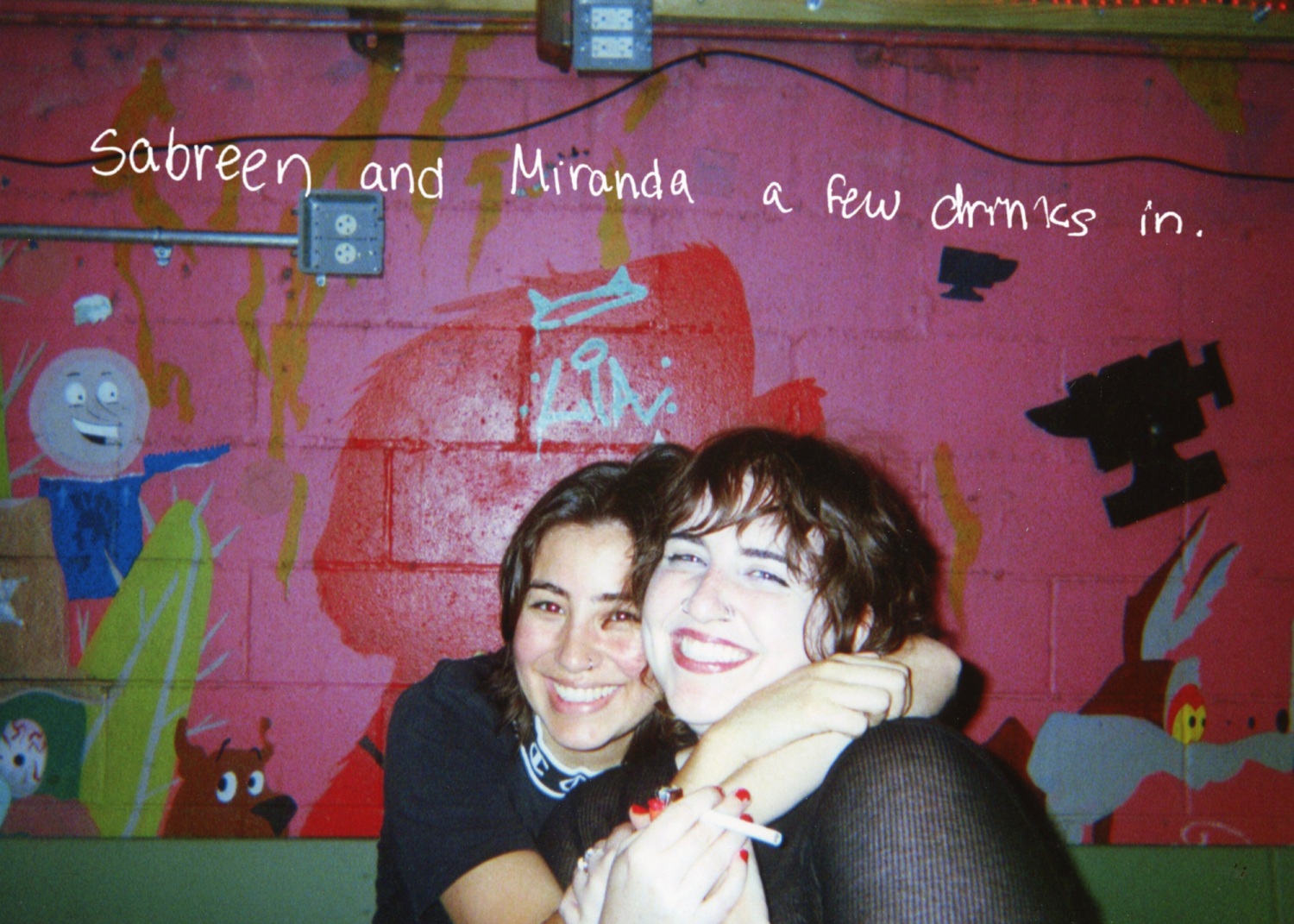
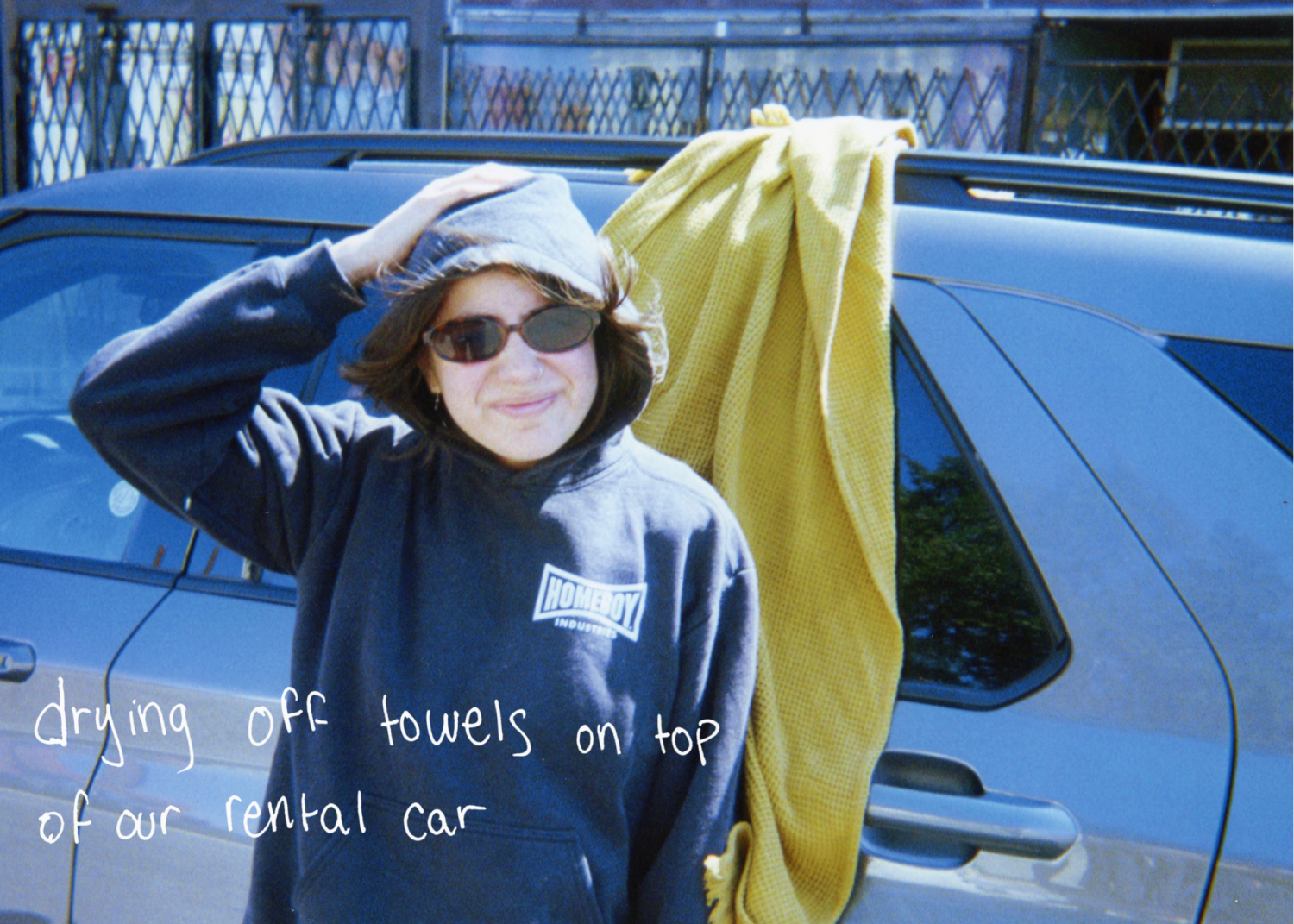
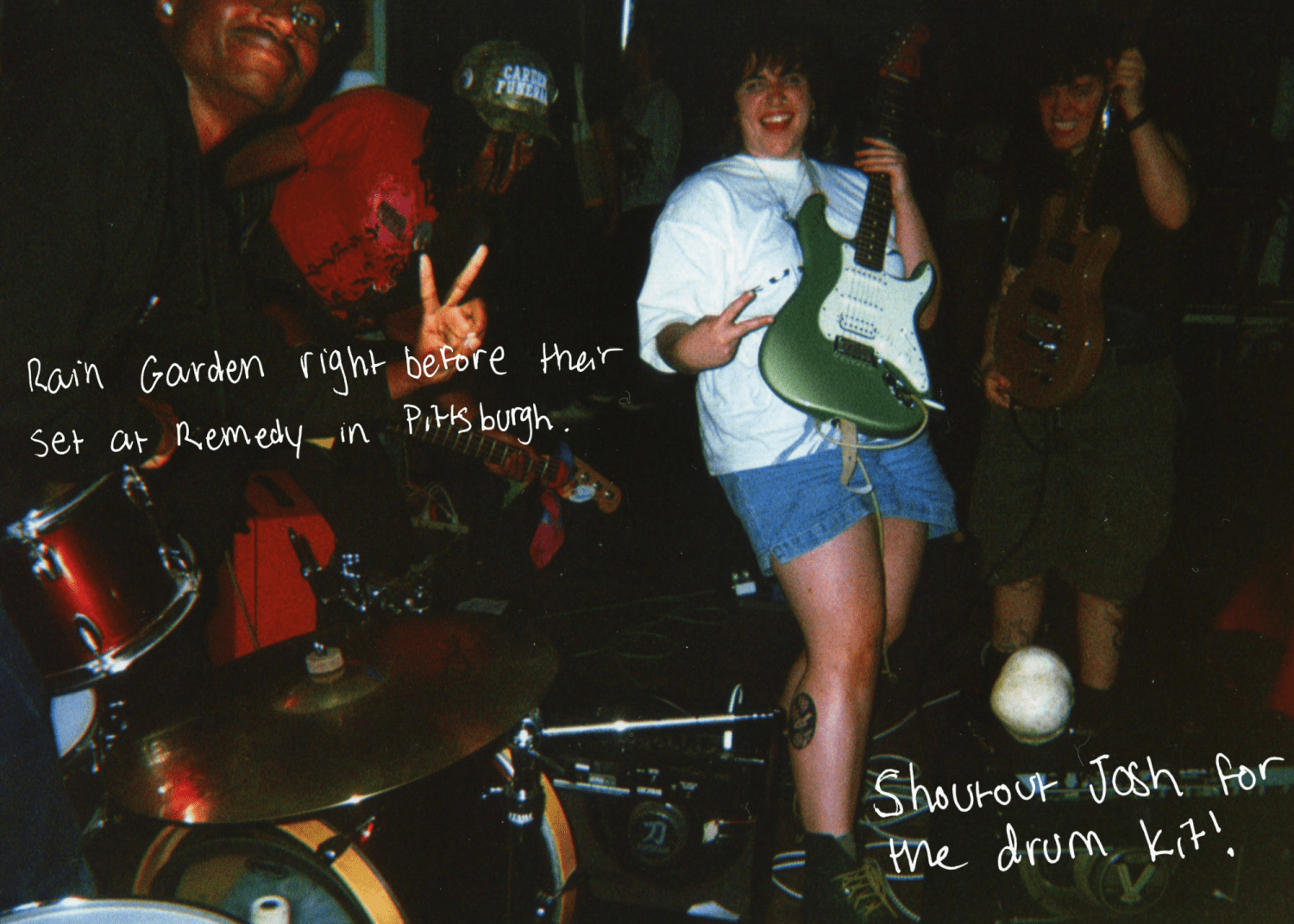
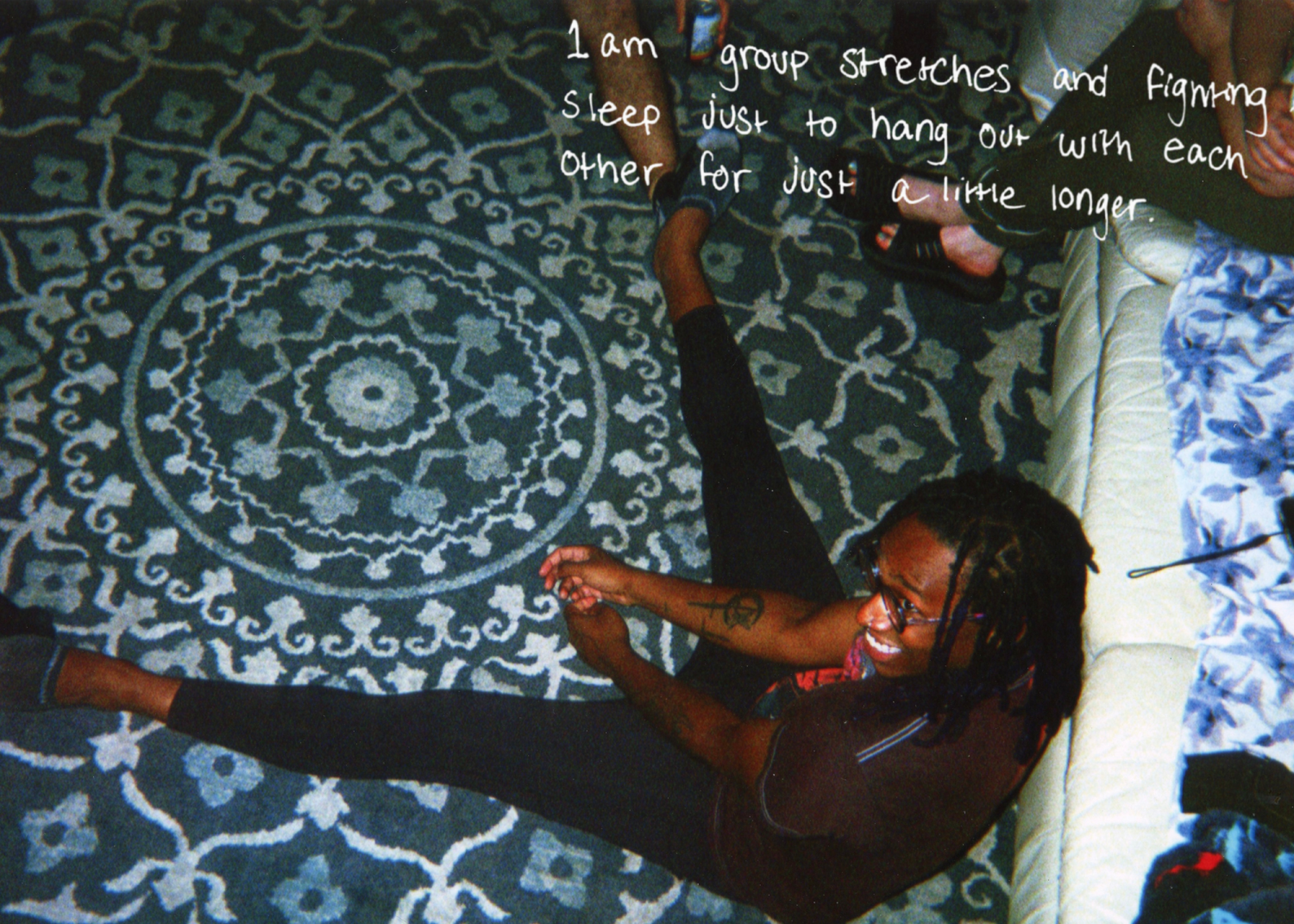
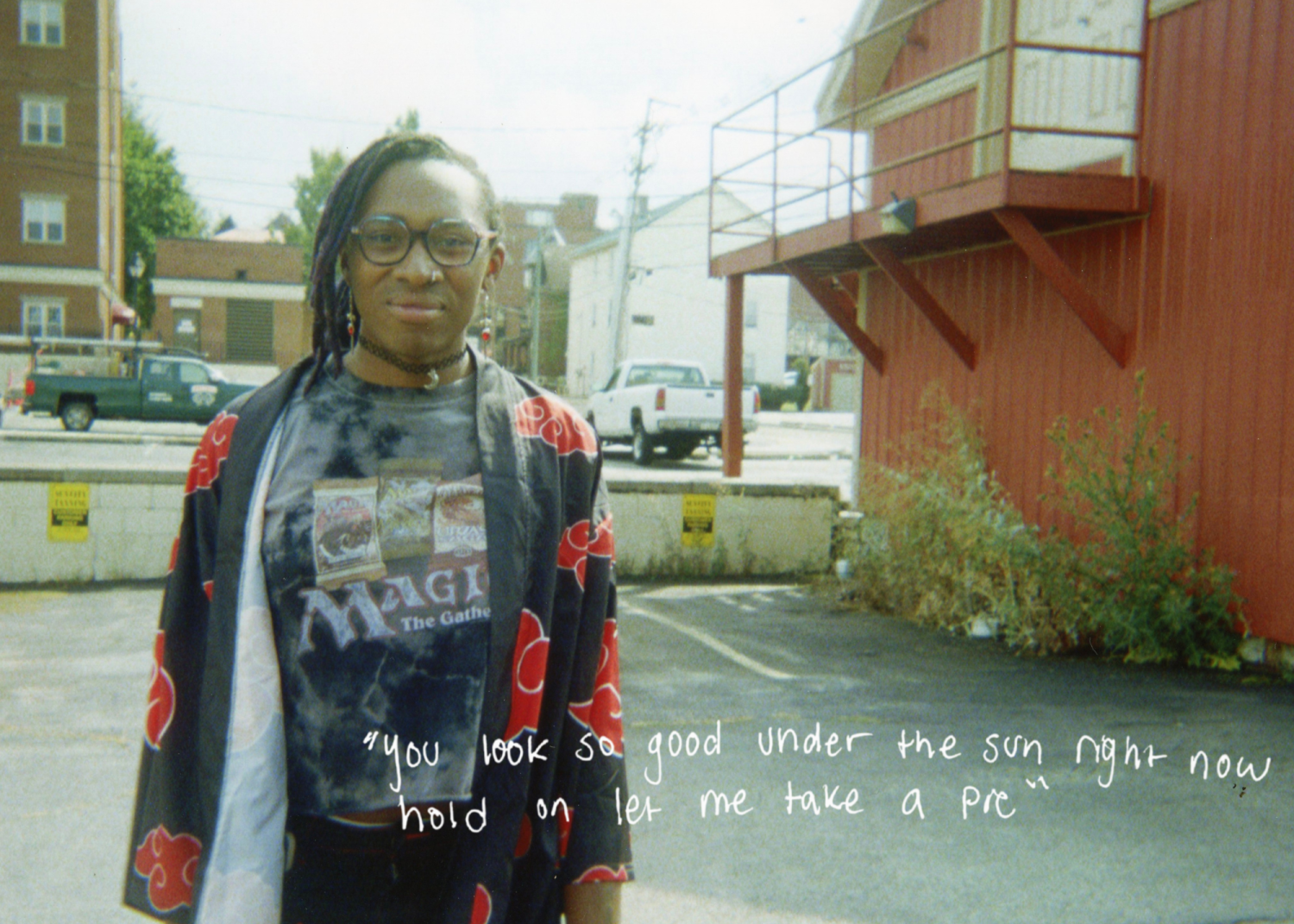
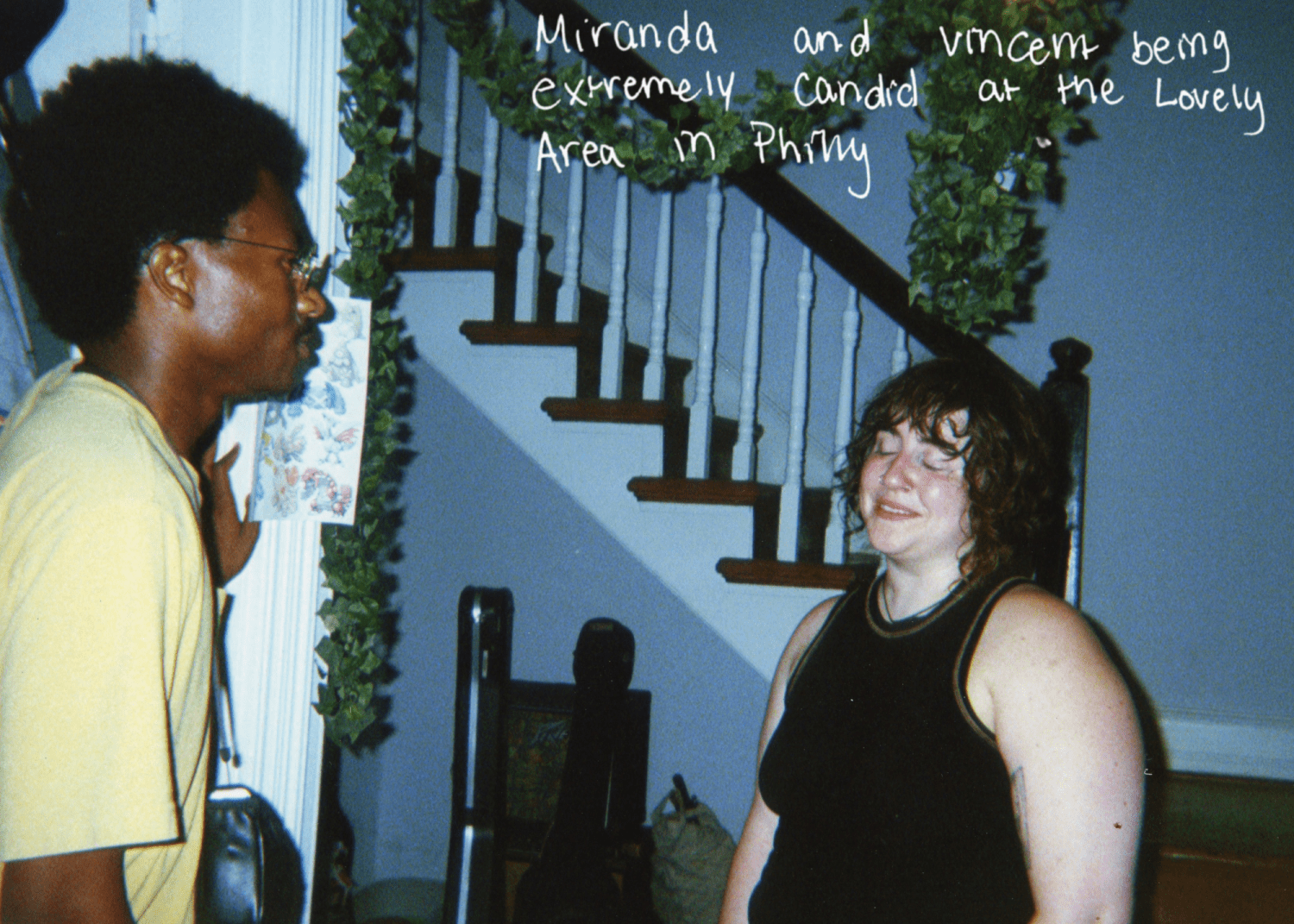
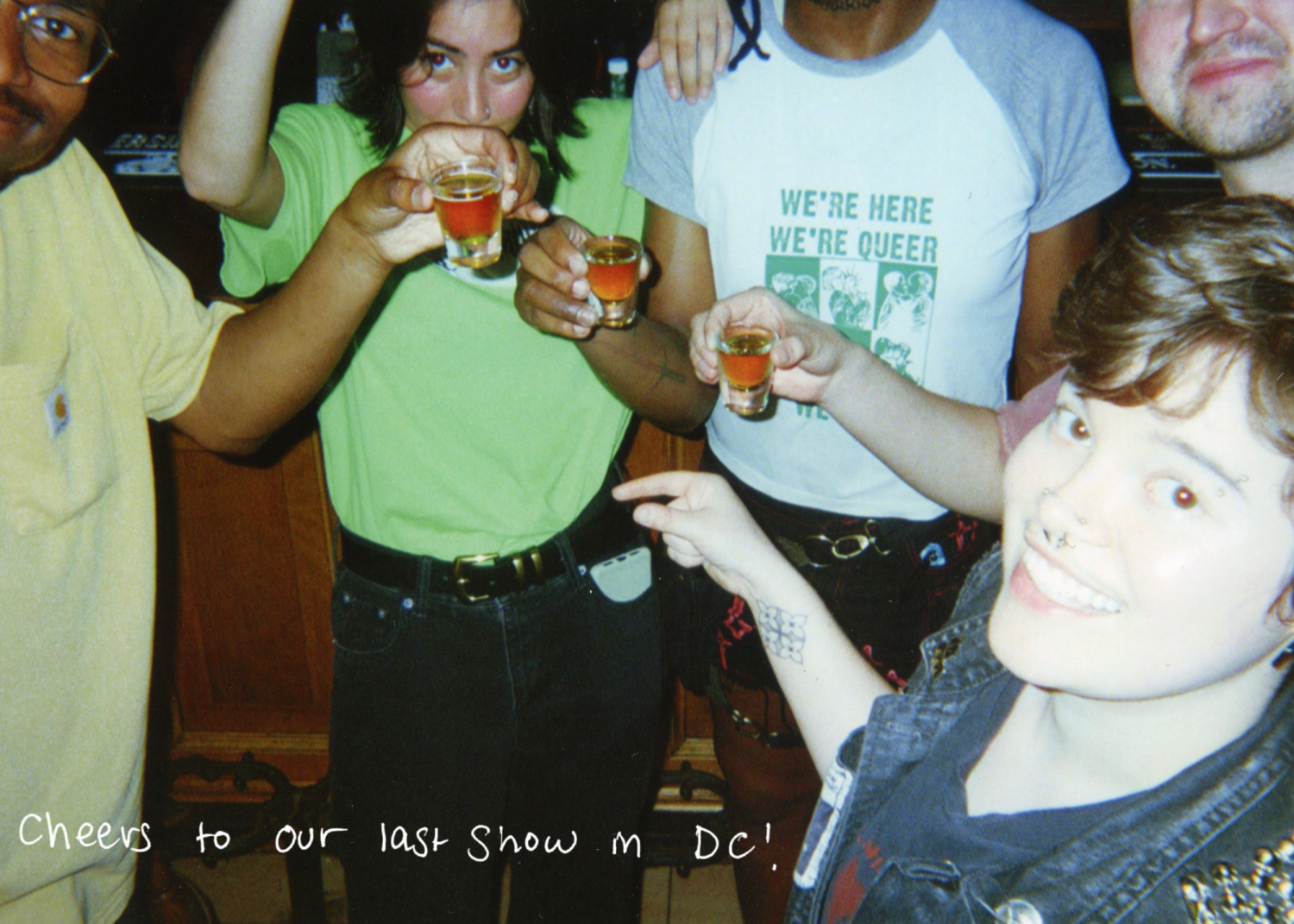
This past summer, Chicago’s own Girly Pants and Rain Garden went on a 9 date Midwest to East Coast run which they called the Girl of the Garden Tour. We gave them a camera to take on the road and document their first big tour. This is what we got back.
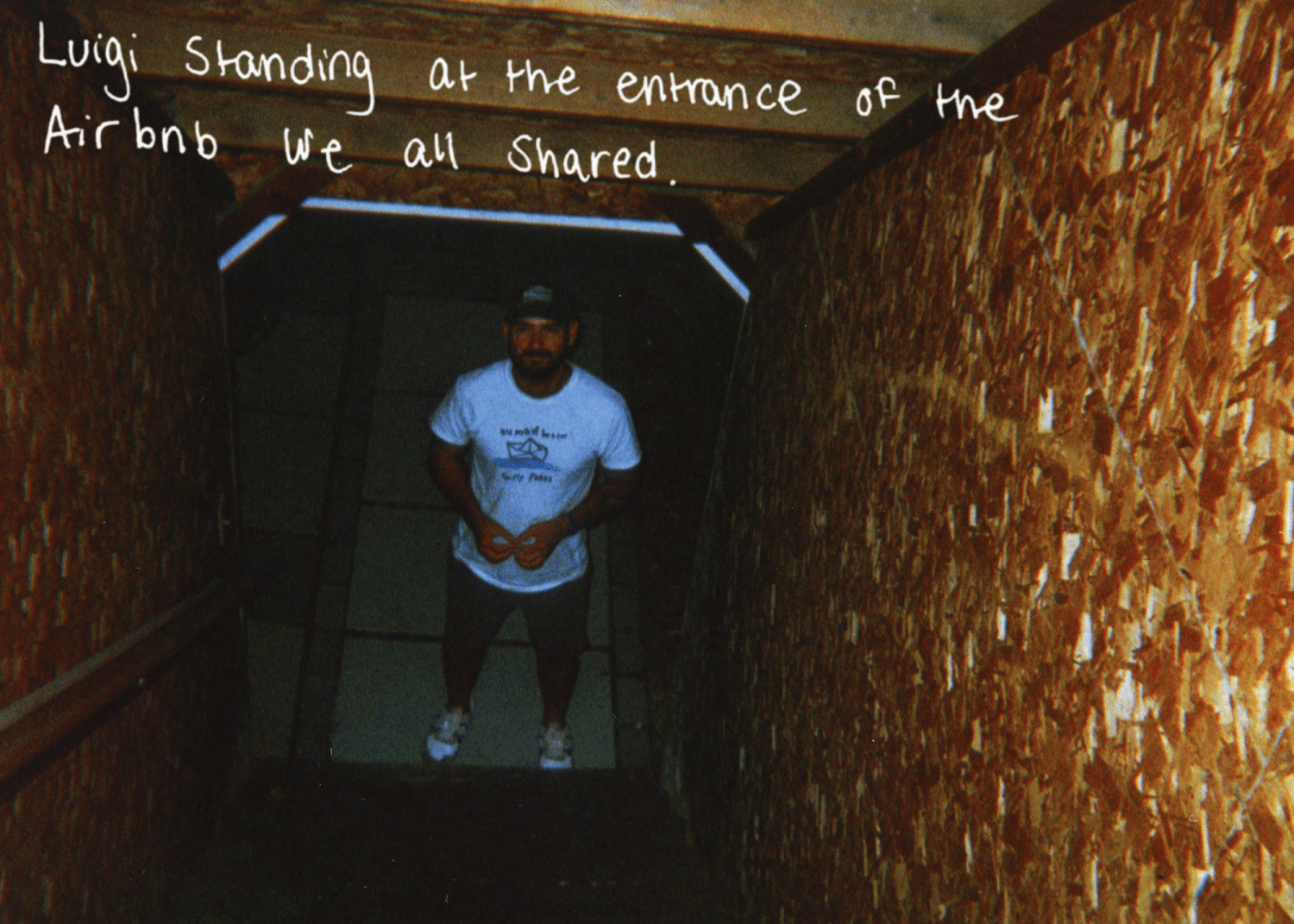
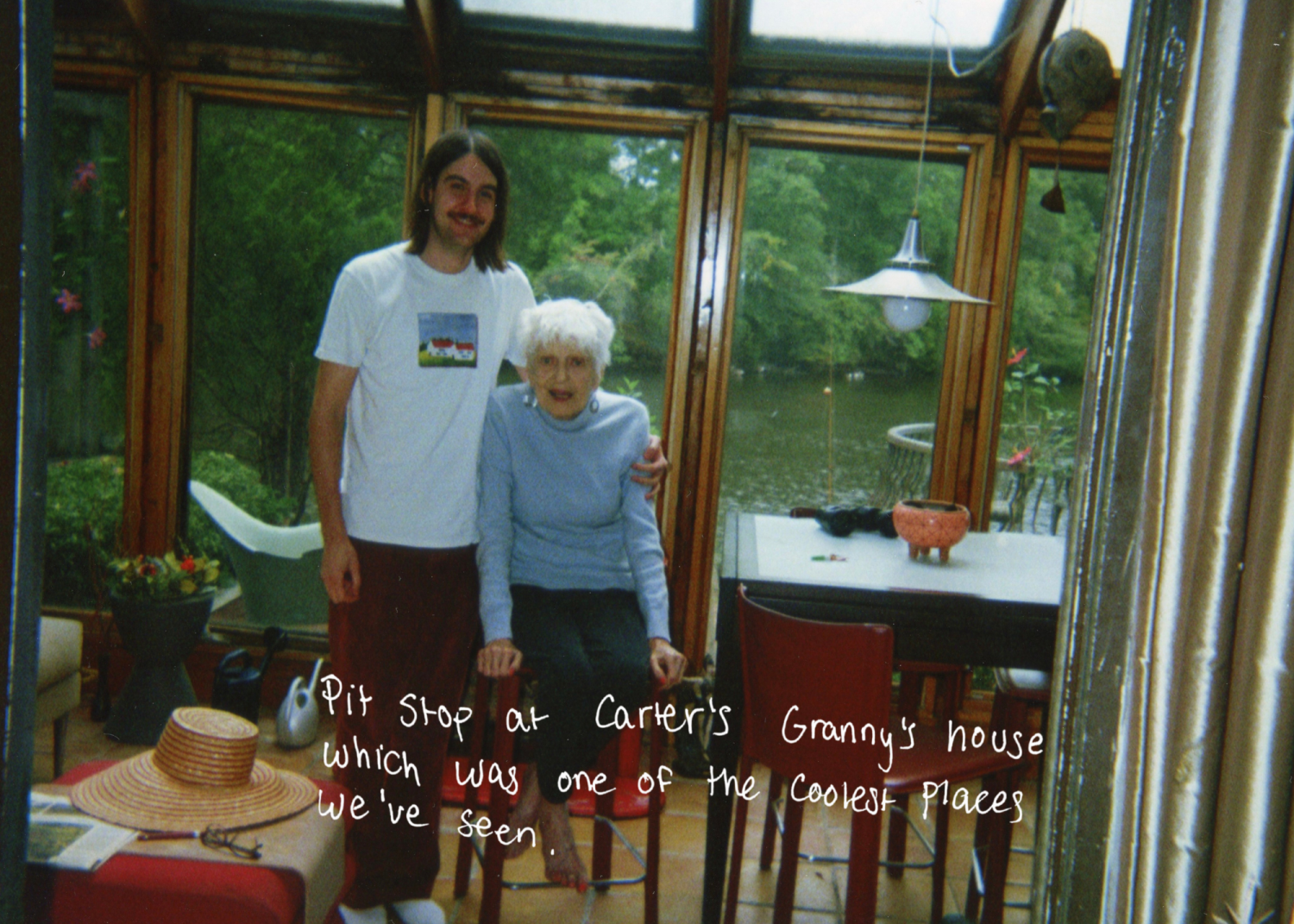
Girly Pants, fronted by songwriter Sabreen Alfadel, is a project that has become interchangeable with both her growth as a musician and as an individual. Girly Pants as a band, consisting of friends Luigi De Col [drums], Drew Emerson [bass] and Carter Ward [guitar], craft steady tracks amongst swooning guitar lines and invigorating rhythms, where Sabreen’s vocals become a point of reflection, wielding both strength and tenderness with each melody and line she performs.
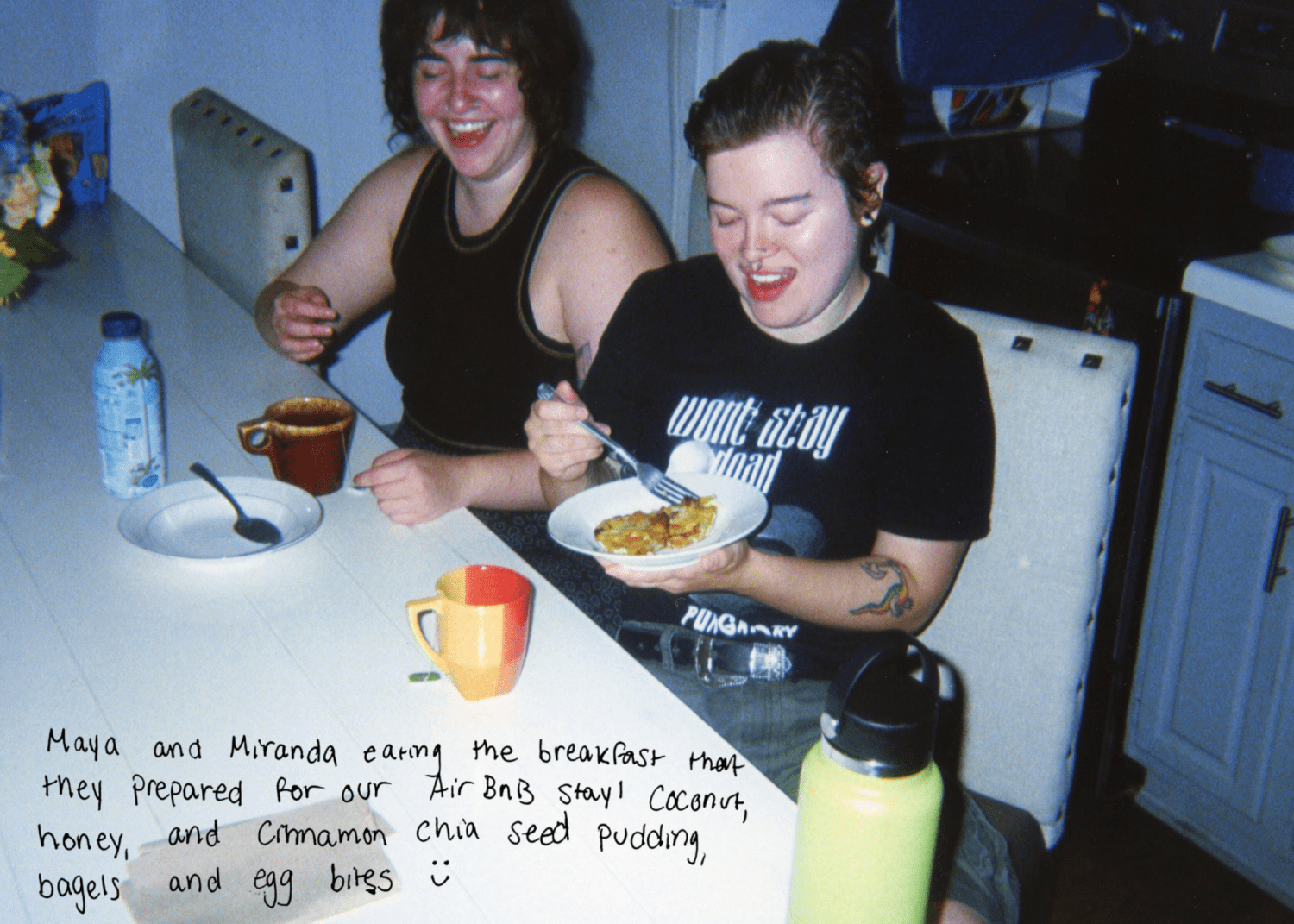
Rain Garden’s instinctive and dynamic sound is one that lingers with every performance. Fronted by Miranda Dianovsky [guitar, vox], whose vocals conduct each track with such power and sincerity, Rain Garden finds its special place due to each member’s unique style. Consisting of Harley Reid [bass], Maya Halko [guitar] and Vincent Byas [drums], Rain Garden lives for their pacing, one behind the gives and takes of our day-to-day actions, throwing caution to the wind as we relish in that invincibility we feel in the moment.
The tour was part of a 6-month logistics amalgamation, spearheaded by Sabreen and Miranda. With some inspiration from their collective band names, Girl of the Garden was in reference to the cult classic TV show King of the Hill, which was a theme throughout the tour, including the limited-edition shirt of the two bands drawn in the cartoon’s likeness, as well as the theme song interluding some Girly Pants sets.
As memorable as a first big tour can be, Girl of the Garden did not follow typical touring guidelines. “Every show was unique,” Sabreen shares. “Some of the venues included a festival in the woods, a vintage clothing store, a basement, a record store and a Mexican restaurant. Very DIY and awesome.” At the end, “Becoming closer as friends and collaborators with girly pants was one of the most rewarding aspects of this tour,” Miranda says. “I think we all feel truly grateful that we embarked on this together”
Rain Garden recently released their latest EP Aconite which you can listen to now.
Girly Pants is currently working on new music, but in the meantime, you can listen to their debut EP Nurture now.
Laveda’s Love, Darla opens in a haze – distortion pushing against reality, vocals in between presence and distance. A feeling only capable in the fading summer hours of this early autumn album. The Albany group is no stranger to working in pieces, creating records that stand on a strong hill of no resolution. For duo Ali Genevich and Jake Brooks, instability is not a flaw so much as it is a pedestal – shaping every note, every pause, every moment that pushes against the noise.
The record unfolds starting with “Care” – which doesn’t provide so much as the title may suggest. The guitars are ragged, distortion pulled nearly threatening collapse, with vocals sounding half-dubbed from an alternate tape. It sets the stage as a mosaic of disorder and shoegaze revivalism. Not unlike the rawer moments of their influences like Paper Lady and Holding Hour, Laveda chases the sensation of the unsteady. The impulse extends with high velocity into “Cellphone” and “Strawberry”. These songs feel made for the VFW Hall, the local house show, the dusty dive bar where the PA system will blow out.
It’s the quiet moments, however, that complicate and bring a certain fragile depth to the album. Songs like “Dig Me Out” slow the frame, with admissions like “I know you’re gonna kill me / I need your love it’s endless” cracking the worship of volume with matter-of-fact clarity. It’s not a plea, but a Didion-like observation. It’s one of the only times we find comfort in the record, in a bizarre way – as the honesty feels buried within us, too. The almost hushed nature reappears in the closing track, asking “when you come around, will you think of me?”. Beneath a rock hard surface, the album ultimately serves as a love letter.
Yet, lyrically, Laveda avoids the temptation towards confessional sprawl. The words arrive clipped, anchoring the sound rather than explaining it. Self doubt, dislocation, the struggle to inhabit one’s own life; they’re all present themes, but rendered bluntly, almost sparsely, while the guitar does the emotive work. In this way, this record is separated from the melodrama of its peers: the restraint is sharp and cutting.
Laveda’s Love, Darla feels like the kind of record you stumble into sideways: half-buried on Bandcamp, just caught on your college radio that still gets it right now and then. This record belongs to the East Coast DIY circuit, where distortion is structural and vocals barely cling to the surface. Give it a listen on Bandcamp and check out their current tour dates!
You can listen to Love, Darla out now as well as get it on vinyl and CD.
Every Wednesday, the ugly hug shares a playlist personally curated by an artist/band that we have been enjoying. This week we have a collection of songs put together by Texas/New York-based artist Lefty Parker.
Last month, Lefty Parker shared Ark via Airloom Records. The album was recorded in October of 2023 with Buck Meek – of whom Lefty has built a hearty collaborative and personal relationship upon the foundation of a shared love for songwriting, surfing, and tender creativity. The record’s live band also features Adam Brisbin and Jesse Turley, with additional contributions from Adrianne Lenker, Germaine Dunes, James Krivchenia, Michael Sachs, Mat Davidson of Twain and Michael Bushais.
Recently, I spoke with Lefty about seeking the same impact from music as the one experienced during one’s teenage years. It was a notion that resonated with me heavily, despite the fact that neither of us could quite articulate it in a way that surpassed the complexity of feelings that “music hit harder” amidst a more youthful time. Whenever I find myself enamored and vigorously moved by music, I notice that it’s a feeling I associate with being eighteen and “discovering” music for the first time. Perhaps there are nostalgia factors at play, but I also think it marks a time where one simultaneously develops in identity, and (at least in my experience), discovers music outside the realm of what is merely fed to you. Music that is not on the radio, perhaps music hatched from a slimmer budget, music that is not perfect and music that does not boast dozens of names credited behind it. Music that is complex, personal, interesting, humble. Music that makes you fall in love with music.
We were not doing an interview, this was merely a fleeting conversational moment I pocketed in between visits to the heaps of overstimulating dollar stores on Broadway, but when I sat down to write about Lefty’s latest record, I found myself returning to my own conclusions about music’s potency and adolescence. Ark is an album that sneaks up on you; it’s warm and grounded, it’s raw, but approachable. You do not quite notice the ways it burrows further upon each listen until it’s too late. Until you feel completely ambushed by the intense emotional weight within Lefty’s unfettered vocals, and their subtle but profound shifts. Until you find yourself entirely enamored by the airy strings and stunning woodwind accents. Until the vulnerable vignettes of Ark feel like your own.
Ark is the kind of album that turns straw to gold. It’s a familiar twangy silhouette, relying on organic instrumentation and mosaics of heartache you have likely heard before. And yet, it manages to strike in a way that feels almost foreign, in the way that powerful art can elicit a feeling of hearing music for the first time. It’s a meandering tale of the diligence of experiencing life, of the never ending cycle of getting lost and finding yourself, of seeking guidance in things that feel larger than us. It’s a beautiful and comforting and human listen, and it’s one that can touch you regardless of the chapter of life you are currently amidst.
“If it meant that much to you, would you say it, would you shy away?” Carolina Chauffe asks this not as a challenge, but as a kind of prayer. Their voice doesn’t seek an answer; it simply opens a clearing for one. This is an invitation anyone who has spent time with hemlock knows well. There is no backing away—only a breath reaching towards you, hands grabbing the warm fabric draped across their body to wipe the fog from your glasses, so you can see how delicate yet beautiful things are when you allow someone else to see you, too. And then, when a hemlock song ends, the wires are tucked behind your ears again. The world feels a little nearer, like you’ve been returned to it. This is the gift they give: revealing precision, refusing possession.
The five songs that make up Orange Streak Glow appear as bursts of light. Sometimes brief, sometimes steady. One may be the extra birthday candle, wedged into the layered sponge. Proof that the laces stayed tied for another lap. The next, a bulb that flickers back on, revived when you jostle the shade. And then it’s a color stretched across the sky, or smeared like a melted popsicle on hot pavement. Or perhaps you’ll see it as the kind of light that lives in storage: a tangled string collecting cobwebs, placed in a box beneath the stairs, until December arrives and the glow is asked to return. And what a miracle it is when you plug that string in, and each tiny spark strikes—ready to be temporarily wrapped and tucked around a tree standing straight and tall. Already dying, but displayed and danced around for a moment, as if it could not be more alive.
There is a glow, too, that arrives in the middle of the night and lights up a screen. A notification that makes you sit up, unplug, and walk over to the fire, letting the flame catch in the corners of your teary eyes. This is how I was introduced to “In That Number,” a song that mixes the familiar, “When The Saints Go Marching In,” with a feeling that pours out like smoke from a chimney. Now awake in a pitch black room, I removed myself from a twin-sized bed that was not mine, scared to be the stranger leaving stains on white pillowcases. Before I knew it I was curled up on the floor with my hands cupped beneath my face, rerouting the tears through the creases so I could watch them disappear down my sleeves. In the background, whistling like a teakettle, I could hear Maya Bon (of Babehoven) confidently coo: “I’m not scared of the water / I’m here comin’ back down / Feel the burn, face the fire,” and every word rang true. I was not scared of the stream coursing through me. Nor was I scared to realize I wanted something to reach out and touch me, unafraid to squeeze my soaked palm.
What does it mean to ask for that contact? What does it mean to offer it? Nestled in the center of the EP, I hear Carolina circle the same sentence, ink digging deeper into the page, “I am a clothespin and you are the laundry line,” and like playing musical chairs, I start looking for my line, wondering if I’ll find it before the music stops. I ask myself: What spool can I wrap around? What ear will hold my voice when I cannot listen anymore? I send a signal (a burst of light) to someone I’ve begun stacking piles of laundry beside: ‘What do you make of this lyric?’ They respond and talk about what provides structure and what provides support. I propose that maybe it’s about how we view our purpose. I am gently reminded that there are clothes involved too and someone must be mindful of the weight as they are hanging them. The spring between my two fragile limbs decides it wants to hold on tighter and longer. Binding is less daunting when you are choosing to endure and weather the same storms together, finding there is light in the shared strain. Or sometimes, there’s no strain at all. Just light.
The songs on Orange Streak Glow echo both the pain and the pleasure that come with admitting you have been altered by something—by someone. They are songs that understand that all communication is an act of faith. That to name something is to risk misnaming it. That in the end, the words that slice us open might also stitch us back together. That we hold the same power that someone holds over us. Because the truth is the safety we find in honesty might someday become the thing that tells us we need to pack up and leave. Taking what is now unburied with us, along with a basket of our deconstructed fragments, eager to hold onto something again.
In the days before hemlock’s latest EP landed like a feather in my lap, I was hiding away in a town near Hudson, NY, not far from 12lb Genius, where it was recorded. I was stumbling and circling the same sentence, tracing the thin lines between my teeth with my tongue. I was looking at a faded ‘You Are Here’ mark on a map, not really sure where ‘here’ was, or where ‘there’ was either, for that matter. The rain followed me and sometimes I was too slow to outrun it. Wet leaves stuck to my socks and became the inner linings of my boots. I found a frozen blue raindrop one morning, after the storms passed, and put it in my pocket. Something told me that even if I were to hang my jacket on the line, that one drop—if it ever thawed and pooled—would not dry. It would stain, it would burn a hole, it would leave a mark. And I wanted nothing more.
So what does it truly mean, to look at something you long to care for and reflect it back, offering structure and support? To say you will choose something even if it doesn’t choose you back? The first time I held the title track in my ear, in those final moments before the engine turns off in the driveway, I thought: This is the hemlock I know. A season returned, a holiday, a solid oak. There are some people who don’t just reach out for you, but remind you that it is possible to place your own finger on the map. They show you that what surrounds you has a pulse—hums—and you are welcome to join its choir, as both a listener and participant. It’s there, somewhere between the glow and the dark, as something you cannot see chirps, that you realize you were never outside of the equation at all. To choose nothing is not an option when every rustle has its own weight. What better choice is there than to take the thing you long for and turn it into a melody of your own? While there’s no knowing, you might just find that someone will push past the branches, look right at you, and sing it back.
The members of ira glass do not agree on everything. They have varying music backgrounds, varying listening tastes, varying stances on the accordion. They are four different people, after all – simply being in an experimental noise rock band together is not going to file down their differences and turn them into one homogenous organism. Nor should it, I cannot imagine the music would be nearly as enticing if it were produced by an army of clones. However, if there’s one thing the Chicago-based four piece can agree on, it’s webcore. They love ARGs and “low-res digital stuff”. They enjoy grueling scavenger hunts on archive.com, sifting through mounds of digital muck for something that resonates with them. They have created projections that collage videos sourced from Youtube rabbit holes. ira glass like making their own sense of the vastness of the web – spinning the overwhelming mounds of data it holds into a narrative of sorts, whether or not it’s decipherable to anyone else. Whether or not it’s even decipherable to them. “It’s like a willed, forced synthesis,” drummer Landon Kerouac notes amidst the webcore portion of our call. “A montage that doesn’t make sense but kind of works.”
ira glass’ approach to music is not too different from their mutually savored internet practices. In fact it’s essentially the exact same – though they would probably never say that, because they are not really the type of band to overly anatomize and delineate their own creative process. If anything, they are allergic to approaching music with too much cogitation, telling me that the act of intentionally striving to create something acutely new and never done before is a “nebulous, almost flawed way to go about art.” ira glass is not trying to forge some cunning new genre, in the same sense that they have no interest in tethering themselves to one that already exists. They just want to make music that they like. Music that resonates with them. Music that feels genuine.
The result is some sort of epic auditory Frankenstein; its appendages pulling both from the band’s external inspirations and “the id”. Out today, their caustic sophomore EP, joy is no knocking nation, is a sensical quilt that honors fragments and facets of their life at the time it was created. Some are discernible, like post-hardcore and jazz influences, wrath induced by infestations of faux-alternative characters, ambitions to experiment with unorthodox instruments, etc. Others cannot be outlined as easily, yet manage the same authentic impact. It’s an abrasive and charged listen, but never in a way that feels forced. The emotions are real, finding themselves in a sometimes crooked composition that winds up and down and adjourns when it needs to. It’s intense in a human way, and it’s honest without overly earnest lyricism.
“I just don’t like relying on the same old tropes, old school screamo doesn’t appeal to me,” vocalist Lise Ivanova tells me about her thoughts on lyrics. “It’s all very misanthropic or self-hating and I don’t feel that.” Instead of honing this sort of cynical pity-party poetry or accumulating shreds of intense vulnerability from their own lives, ira glass’ lyrics are detached and labyrinthine-like. They can be funny and intense and idiosyncratic, they can mean something to you if you’d like or they can just exist as another enigmatic component of the EP’s experience. It doesn’t really matter, the point is they exist in the same way as everything else ira glass creates; free from functional pressures and dilettante natures. It’s an ethos that glues together the eccentricity of their latest EP, and it’s contagious within the listen. Even in joy is no knocking nation’s harshest moments, characterized by discordant clamors of noise and shrill screaming, there is a lingering sense of comfort – perhaps even a certain catharsis, chipping away at the weight of various pressures and demands and self-inflicted factors that prevent you from just being your fucking self.
We recently spoke to ira glass about curating discomfort, “lame fake-alt people”, and joy is no knocking nation, out today via Angel Tapes.
This interview has been edited for length and clarity.
Manon: I’d love to hear how you guys just started playing music together. How did you meet and when did you start ira glass?
Lise: I moved to Chicago in October of 2022, I had lived in LA prior and had been trying to start a band there, but LA was not really fertile for bands. So when I moved to Chicago, I was dead set on starting a band, and I put up a bunch of flyers within a week of moving here, recruiting for a noise rock project and Landon was among the first to respond. We met at Whirl Away Lounge on Fullers End and talked about our influences and then we later recruited Jill – Jill and Landon know each other.
Jill: We used to work together at this french cafe.
Landon: Basically, Lise and I met in this almost romantic way – like a flyer, but then our two other members we know from day to day life.
Lise: Kaleb and I go way back. We lived in Albuquerque and were in a band called Thrush, it was a fake band because we only played one show, but it was still a good band. Even though it was a Big Black rip off. That’s how I know Kaleb.
Manon: It was fake because you only played one show?
Lise: Yeah. We practiced so much more than we played.
Manon: You mentioned that LA was not very fertile for bands. How does Chicago compare, and how would you say the scene there in general has impacted Ira Glass over the years?
Lise: I think there are more normal people here that aren’t, like, evil. So it feels better playing here.
Jill: There is a lot of collaboration, everyone is really friendly and they want to play a lot of shows with you and help each other out.
Lise: People are very sincere and driven. I feel like LA is very isolating and everybody is on a solo venture but there are a lot of bands in Chicago and people want to get together and play music with others.
Manon: You mentioned this idea of sincere and “normal people”. I feel like there is a presence of that on this new EP – maybe some exasperations about not normal people, or specifically, “freakos with hand tattoos”. How would you describe your relationship to sincerity?
Lise: Disingenuous people upset me deeply. Yeah. There are social climbers everywhere and there are lame, fake alt people everywhere. I don’t think that is exclusive to Chicago.
Manon: It’s definitely not.
Lise: But, I think there is more of a working class here. I guess that has something to do with it.
Landon: I can’t speak on it lyrically, but with our music and the composition, I think we are not necessarily striving for something new because that’s a really nebulous, almost flawed way to go about art. But also wanting to create something that comes from deep down.
Lise: Something from the id.
Landon: Yeah. [Our composition] is both really innate and also meticulous and thought out. I think that sort of synthesis gives us a sense of sincerity. I feel like we just go, “what feels right?”, and then meticulously work with and edit that material once it has come out of the depths. Would you agree with that?
Lise: Um, I don’t know.
Landon: Okay. Disregard what I just said.
Manon: I can also ask a more specific question about composition. I feel like when you make noise music, the ‘noise’ part is often rather defining, but you have a lot of interesting complementing instrumentals, and I really like a lot of the jazz elements within this EP – especially in the end of “fritz all over you”… that song is stunning. I would love to hear about your general music inspirations, and the kind of sound you were hoping to cultivate in joy is no knocking nation?
Lise: When we first started, I was super influenced by nineties Chicago noise, like classic noise rock, Albini, the Albini scene. And then, I was simultaneously also getting super influenced by mid-late nineties, early two thousands screamo, like Drones, Dream, and Orchid. So I think our first EP, compound turbulence, was definitely more influenced by those things. This EP feels a bit more post-rock, experimental, and post-hardcore. I think we are getting more into the jazz influence. Jill is a jazz head.
Jill: Yeah.
Lise: Jill, go ahead. Jill did jazz band.
Jill: Yeah. Jazz band. Throughout college.
Lise: You come from a jazz lineage.
Jill: Yeah, a lineage of jazz musicians.
Lise: And we all like jazz. I actually wanted a horn because of Brain Bombs, the way they use horns is so different. It’s not influenced by jazz at all. But Jill brings a very melodic kind of influence that I appreciate. Anything else about our influences?
Jill: We all come from relatively different backgrounds.
Lise: Landon, you like a lot of modern and contemporary noise rock.
Landon: Yeah, I definitely admire a lot of the nineties stuff, and I think what is happening with noise right rock right now is super interesting. Bands like Sprain and Shearling. Also Chat Pile. Then bands like Spirit of the Beehive.
Lise: Prostitute.
Landon: Yeah, Prostitute as well. I don’t want to keep listing band names, but I think Spirit of the Beehive is a huge influence compositionally because they don’t really have verse, chorus, verse, chorus, bridge – you know, it’s not a very orthodox song structure, but it flows really seamlessly. I think for us, maybe instead of seamless, perhaps our song composition is a bit more stitched together.
Lise: Contrived.
Landon: Not contrived.
Lise: Difficult.
Landon: It’s more stitched.
Lise: It’s a laborious taste
Jill: We figure out how to mesh different pieces together.
Lise: We are kind of math influenced in that way. Yeah math rock is also an influence.
Landon: Yeah, it’s this combination of “how can we do upside down music?” and the crazy math stuff and also stay true to the ethos of noise rock?
Lise: The banging rock and roll of it all. Kaleb, what do you like? Kaleb likes dark wave.
Kaleb: I’m more into industrial and German wave stuff. My stint with noise rock is more like Birthday Party and Scratch Acid.
Lise: Aw those are great bands.
Landon: I think some of that comes in with our experimentation with instruments. I think my symbol stacks can definitely be in the industrial realm. I think our horns too, and there is an accordion on the EP.
Lise: Which you hated. And didn’t want to use.
Manon: Anti-accordion?
Jill: He doesn’t like Organs.
Lise: He doesn’t like accordions or organs.
Jill: It’s the harmonics, right?
Landon: No, no. For the accordion…it was simply… I was fine with the accordion…
Lise: He has a fear of sounding goofy.
Landon: It’s a bit of a goofy instrument…
Jill: And the whistle…
Lise: The coaches whistle. He didn’t like that either.
Landon: It’s a bit on the nose.
Lise: Whatever, no big deal.
Landon: I think that the willingness to experiment with instrumentals, like real, storied instruments, is very seventies industrial. Instead of saying “what plug in can we use”, it’s using a kazoo, or a whistle, or something like that.
Lise: We haven’t used a kazoo yet, but it’s in our future. Our near future. Or a harmonica.
Landon: I don’t like the harmonica either.
Lise: You don’t like the harmonica either? Damn Dude.
Landon: No, I’m just joking.
Manon: Did you use the whistle? Or is that also in the near future?
Jill: There’s whistles. One coach whistle, two little whistles.
Lise: There are buried straggler whistles towards the end of the big whistle.
Manon: There’s obviously a level of discomfort to noise music, is that something you enjoy?
Lise: Yeah, we are all generally kind of awkward and uncomfortable people.
Landon: I don’t like music that sounds too pleasant or harmonic. I think the dissonance is really pleasing when it comes to melodies or chords. A word that is used a lot is angular.
Lise: Do you like that word?
Landon: Yeah.
Lise: Landon likes the word angular.
Landon: Angular is cool. There are different flavors of discomfort and dissonance, and I think angular paints a very particular picture to the sort of dissonance that we like. It’s a more intentional discomfort.
Lise: Yeah that’s true, we like dynamics. Contrast. We live for the contrast.
Jill: It can’t all be uncomfortable. You have to lure them in.
Manon: What do you hope to achieve when you play these tracks in a live setting?
Lise: We don’t like banter.
Jill: We don’t talk. We don’t smile.
Lise: Yeah I feel pretty distant from the audience, or I shut the audience out. I don’t even see them, my eyes are closed most of the time. I feel like it’s purely a live display of our music.
Landon: We’re obviously doing this for a love of music. But as we love music in theory, I think sometimes being on stage is like a compulsion. I feel like when I am up there, I’m just reacting to things, and trying my best to keep up with it.
Lise: Yeah, it’s like we’re floating. It feels so dissociative.
Landon: Which is a very unique experience. It’s not the most pleasant, but it can also be crazy rewarding if it feels right.
Lise: We’re playing aggressive and sometimes difficult music. It’s not like the songs come from this place of deep, dark self-loathing, but it still is very emotionally taxing and cathartic.
Manon: So the actual nature of the music is more taxing than the lyrics. Your lyricism is awesome though, very eccentric and a bit convoluted. Can you tell me a bit more about that?
Landon: That’s all Lise, it’s a black box to the rest of us.
Lise: Shit, I don’t know either. I do a lot of unconscious, ‘spitting it out on a page’ writing, or I have done the classic cut-up thing where I try to take lyrics from elsewhere. I like the Melvins’ way of writing, just nonsense that is still really evocative. I think you can use words that do not really make sense and they can still evoke a really strong image, and I think that’s what I am trying to do with my lyrics most of the time.
Landon: As an observer and not necessarily the author, I think it’s sort of like vignettes in a way. Would you say that?
Lise: Sometimes. I’ve been known to write a vignette from time to time. I like to think about strange situations that I haven’t experienced myself and try to describe them. I think about other people’s stories a lot.
Landon: There’s a depravity to it in a way.
Lise: People have said that. I guess it’s depraved.
Written by Manon Bushong | Photo by Derrick Alexander
Puberty serves as a first introduction to deep rooted societal taboos surrounding aging. The whole hormonal mess would suck enough without being met with shudders from adults and painful conversations packaged in animal + insect innuendos. It also never truly dissipates – it seems as though one could be decades removed from juvenescence and still dodge the word with such vehemence, as if so much as uttering “p*berty” might onset a conglomerate of pimples and a poorly timed voice crack. Not MX Lonely. The Brooklyn based four piece has a knack for complementing their harrowingly good melodies with anomalous and deeply memorable lyricism – whether that be chants of astronaut FMK, stomach-pinching anecdotes about substance use, or merely the choice to quote Elliot Smith amidst a face melting bridge. Today, MX Lonely announced forthcoming record, All Monsters, leading with a single about a trans puberty experience.
“Big Hips” takes a facetious approach to the impacts that bodily changes impinge upon someone who is gender nonconforming. The track is inherently satirical; a witty recontextualization of gender dysphoria armed with a brief comedic interlude. However, the visceral impact of “Big Hips” far surmounts its quips, and the track’s weight lingers far beyond its brevity of 2 minutes and 43 seconds.
I would advise your first listen to be via its music video (directed and edited by Owen Lehman). It leads with a few vibrant clips that set you in a school – a ticking clock, a vacant classroom, a fluorescent bathroom. Simultaneously, the track commences on a note of transient delicacy, luring you in with some coy basslines, Rae Hass’ vocals in their more angelic shape, percussion that feels rational. It’s an introduction, familiarizing you with the silhouette of the track’s melody and intentions (which you soon learn, are to inform you about having big hips for a boy) before it detonates into something you feel at the pit of your stomach, something you can’t possibly fit in a locker – no matter how much of your body weight you use to cram it shut.
The chorus is potent and erratic and catchy as hell (an experience amplified by my suggestion to experience with its visuals of blacktop shredding). It leaves you wondering why more “heavy gaze” projects are not reclaiming their juvenile gender dysphoria by shouting dick jokes at you. It makes you smile thinking of a thirteen year old in Ohio hearing it and feeling seen, and it makes you smile thinking of some cis dude in East Williamsburg boasting his big hips as he listens in the Whole Foods protein powder aisle – because god knows the rest of us have clocked enough hours singing along to his narrative.
“Big Hips” is a thrilling first bite of what we can expect from what MX Lonely will carve out on All Monsters, out February 20th via Julia’s War. About the track, Rae says, “Big Hips is a self-mocking celebration of youthful masculinity. Puberty imbues a sense of dread for everyone, but especially trans people. For me, the onset of feminine curves was met with a sort of voyeurism I didn’t feel I was made to be proud of. “Big hips” were something that happened to you rather than something you owned. The song recontextualizes the dysphoria of my youth in the way young boys would jovially proclaim the size of their phalluses (whether it was true or not). It’s a big dick joke.”
Every Wednesday, the ugly hug shares a playlist personally curated by an artist/band that we have been enjoying. This week we have a collection of songs put together by the New York-based band Docents.
Docents is a four piece with a knack for carving out an eccentric fun house experience in both their live sets and recorded discography. The project was conceived in 2018 in Upstate New York, and today exists as a Brooklyn-based four piece consisting of Noah Sider, Matthew Heaton, Will Scott, and Kabir Kumar-Hardy. In May, Docents released Shadowboxing; the EP a winding mixed bag of theatric, eccentric, and angular sound paired with lyricism that bends back and forth from earnest to outlandish. No matter what sound they are chasing, or how unpredictable their music may seem, it all feels tethered to some sense of reality – it’s as honest and sincere as it is fervent and tumultuous. Today’s Guest List consists of five picks from each member of Docents.
With his first release in four years, Morgan O’Sullivan returns with the latest track from his project, Boreen, titled “Don’t Die!”, the first to be shared from his latest album, Heartbreak Hill out November 21 via Bud Tapes. Beginning back in 2015 when he lived in Portland, Oregon, Boreen has always been a project of marked growth and personal hauntings as O’Sullivan’s writing leads with preservation and perseverance within these corroded love songs and tailored tales that he crafts and performs so well.
“Don’t Die” begins with a piano, one that holds weight to the sticky keys like a family heirloom – uneven, simple and fills the room – as it soon grows amongst the colorful instrumentation. “I was in my bedroom / and far away / the words I didn’t say came rushing forward and took my place / I start to see your face”, O’Sullivan sings, his words weighted against the lofty backdrop of instrumentation as he approaches grief and what comes to follow over time. Soon the track bursts with a gritty guitar solo while indiscernible voicings meddle in the back, filling the void of unanswered questions with the warmth in his production and the comfort in its final release.
About the song, O’Sullivan shares, ““Don’t Die!” is the first song I wrote for this album, and the first song I wrote after my uncle’s suicide in April of 2021. In a lot of ways this song shaped the rest of the album, and the themes that I started with here I kept coming back to over the past three or four years. I see this song, and this album as a whole, as a kind of a stubborn determination to survive. I’m thirty years old now. The older you get, the more life kicks you in the teeth. I wrote these songs at the times when I was most aware of that fact— as a way to record that feeling and visualize the better one that will come tomorrow.
Boreen has always been a solo project, but this album has felt the most collaborative. On “Don’t Die!” the piano was played by Garrett Linck, and the drums were played by Stevie Driscoll and recorded by Evan Mersky. The final version of this song was undoubtedly influenced by the way the Boreen live-band played it, so I feel indebted to Emmet Martin, Stevie Driscoll, and Chris Weschler for bringing it to life so many times over the years.
I started Boreen in November of 2015, exactly ten years ago, in Portland, Oregon. I moved away recently and now live in Champaign, Illinois. For me, Boreen belongs back in Portland, so I’m planning on this being the final Boreen album. To everyone that played a role in this project over the years, thank you.”
You can listen to “Don’t Die” here. You can preorder Heartbreak Hill, out November 21, now as well as on cassette and CD via Bud Tapes.
Written by Shea Roney | Featured Photo Courtesy of Boreen
The title of h. pruz’s Red Sky at Morning references a line from a 2,000-year-old phrase cited in the New Testament: “Red sky at night, sailor’s delight/ Red sky at morning, sailors take warning.” The expression, commonly used by mariners as a tool for predicting dangerous weather, was recited to Hannah Pruzinsky as a child by their mother when a storm was underway. But on Red Sky at Morning, Pruzinsky gives new meaning to the phrase, signaling the painful premonitions that hold them back in their own life and choosing to continue forward in spite of uncertainty.
The record was recorded in a small, quaint cottage in upstate New York by Pruzinsky and their partner Felix Walworth. “I really admire Felix’s tastes,” Pruzinsky said. “It’s hard to find a collaborator that I trust.” The record is peppered with Walworth’s Wurlitzer and electronics, drifting carefully through Pruzinsky’s finger-picked guitar melodies and delicate vocals. About a year after Pruzinsky wrote the songs, the two of them spent the month of January accompanied by their cat, recording equipment and the house’s collection of creepy dolls, making the cottage both a home and a studio for those few cold weeks.
Photo by Olivia Gloffke
Red Sky at Morning was described by Pruzinsky as being largely about a journey. Much of that journey involves looking inward and seeking comfort in the familiar. Their findings resurface as what feel like kaleidoscopic reflections – the skin of their lover’s palm, an old memory of gardening with their older brother, the sound of the creaking floorboards in their house. Traces of familiarity follow Pruzinsky, mirroring their movements and changes, unfolding in constant evolution. “I try to write about what has happened to me because it feels the most visceral and impactful,” Pruzinsky said. But even in its intimacy, Pruzinsky’s storytelling is steeped in mystery. “I think the ghosts are gone from the house/ But there used to be something,” they whisper on “Krista”, as if letting the listener in on a childhood secret before confessing: “I think it was something I wasn’t supposed to know about.”
Pruzinsky’s ability to play with perception is what makes the record feel like wandering through a place both otherworldly and deeply familiar. A self-proclaimed lover of narrative, adventure games like Dungeons & Dragons, Pruzinsky said they love any opportunity to “create and interrogate a world.” At some points throughout Red Sky at Morning, that world is as vast as an open sky, a lifetime of memory passing, followed by the promise of uncertainty. But often it is as narrow as the confines of one’s own body, every detail brought to focus under the stifling pressure of stillness. “We haven’t left the house in weeks/ I start to see you in the t.v. screen,” they sing on “Arrival” with a slow, sinking delivery, mirroring the feeling of being slowly consumed by motionlessness. The song is about the discomfort that arises from a static, domestic lifestyle and the ease at which familiarity shifts between a source of comfort and of anxiety. But in the face of inner turmoil, Pruzinsky makes clear their determination for acceptance in the repeated line in the song’s bridge: “I can clear the cycle.”
Photo by Olivia Gloffke
If Red Sky at Morning symbolizes a journey, that determination is the force driving it. On “After Always,” Pruzinsky depicts a slow descent into complete consumption: “I sink under you/ I am all of you/ And I breathe out the rest.” That imagery later returns on the album’s closer, “Sailor’s warning,” as Pruzinsky sings of being covered by mud with “eyes directed to the sun.” Their tone seems brighter here, as if they have chosen to allow themself to “sink under,” to willingly become enveloped in the unknown.
Between lush vocal layers and electronic swells on “Sailor’s warning,” all of the fears that Pruzinsky pours over throughout the record are whittled down to their core. “I know that you will change and I will too,” they remark before ending the record with a question that sings like an invitation, beckoning us forward into our own discomfort: “Don’t you know a warning sign when you see it?”
View more photos of h. pruz taken by Olivia Gloffke
You can listen to Red sky at morning out now as well as on vinyl released via Mtn. Laurel Recording Co.
Written by Emily Moosbrugger | All Photos by Olivia Gloffke
Sink is the new project from Colton Hamilton, who at the end of summer shared his debut album Sinking Stars. Playing guitar with fellow Columbus-mates Villagerrr, Hamilton has been well enveloped in that music scene, touring and recording with friends and collaborators whenever possible. Sinking Stars is hasty and hardy, recorded to a 4-track, that found Hamilton both conscious and explorative in the midst of what’s around him, leaning into the feelings and beings that he takes inspiration from in his day-to-days.
Sinking Stars is both a fresh start and a reflection point for Hamilton as he embraces a type of broken folk structure, one that feels fittingly clumped amongst late night DIY shows, curbside smokes and a passing midwestern prayer. These songs are minimal, with humming melodies that kick a tin can down the road as guitars cover its tracks with grit and charm. But the subtlety in these songs does not get lost in the weeds as Hamilton and co. animate the tiny yet tricky grievances of sitting still for too long. Hamilton’s focused writing is where curiosity and intuition link arms and sincerity and distrust break the hold, capturing that personal triumphant feeling of making it through another rough day while still looking forward to whatever is next.
We recently got to catch Sink at Cole’s Bar in Chicago where we got to talk about the new album, preservation and what’s next.
You just released your debut record under this project, Sink. How does it feel to get it out and about and being able to play some shows?
It just feels good to put something out there, to grease the way for some more albums. I already have another one written and ready to record. I’m just planning on doing the next one on an 8-track machine instead of 4 tracks. It feels good to practice.
You’ve been in the world of Columbus music for a while now, playing often with a lot of people and projects. When did you think this was the time to start your own thing? Did you have any initial goals?
I’ve been writing songs for a while and never really put too many of them out with a focus. But after playing live more with Villagerrr and other bands in Columbus, I just felt more comfortable doing that. I’ve seen my friends do it, so it just felt like a good time. I live in a house where everyone makes music. I just kind of wanted to document that time living in that house. It’s kind of how I view this first tape, my time living in that house. It just felt natural that way.
Were the people living in that house a big component to these recordings? Because you had quite a few contributors to the album.
Yeah, me and four other roommates, we all play music. And then just a street over, a bunch of my friends live who play music too. Zayn and Alec, Cornfed and Villager, they all live close by. It just feels like a tight-knit community right now with people playing in each other’s bands. I just wanted to make something out of that while I’m still there.
Photo by Sarah Franke
So is this your first release of songs that you wrote?
I’ve made a noise project called Western Collateral. It was 40 minutes of feedback between me and my friend over a Zoom call. It was during COVID and we didn’t feel like we could meet up, so we just fed back our guitars in a Zoom microphone for 40 minutes and put it out as an album.
You recorded everything on a 4-track. What did embracing that simplicity in recording bring out in not just the songs, but in the experience of recording them with your friends that you live with?
I think probably the same thing a lot of people find. You can only have so many takes. Keeping it pretty honest to the moment, if you can. All the mistakes that come along with that. They can’t avoid each other. The mistakes aren’t a part of the whole process, but it’s kind of like a documentation system that you set out to be.
Does that feel fitting in where these songs came from?
Definitely, yeah. I was inspired by a lot of my friends who played on the record. Henry [Schuellerman] on pedal steel was a huge inspiration. I feel like I was writing those songs a lot of times just for pedal steel. He has his own songs out with A-Go-Go. And Alec [Cox] plays bass, and watching him play in Cornfed. Mark [Scott] and Villagerrr, watching him play. Trevor [Hock] too, we wrote some of the songs together on drums. Just feeding off of his energy was an inspiration.
View more photos of Sink by Sarah Franke.
You can listen to Sinking Stars out everywhere now, as well as order a tape via Super Sport Recordings.













 the ugly hug