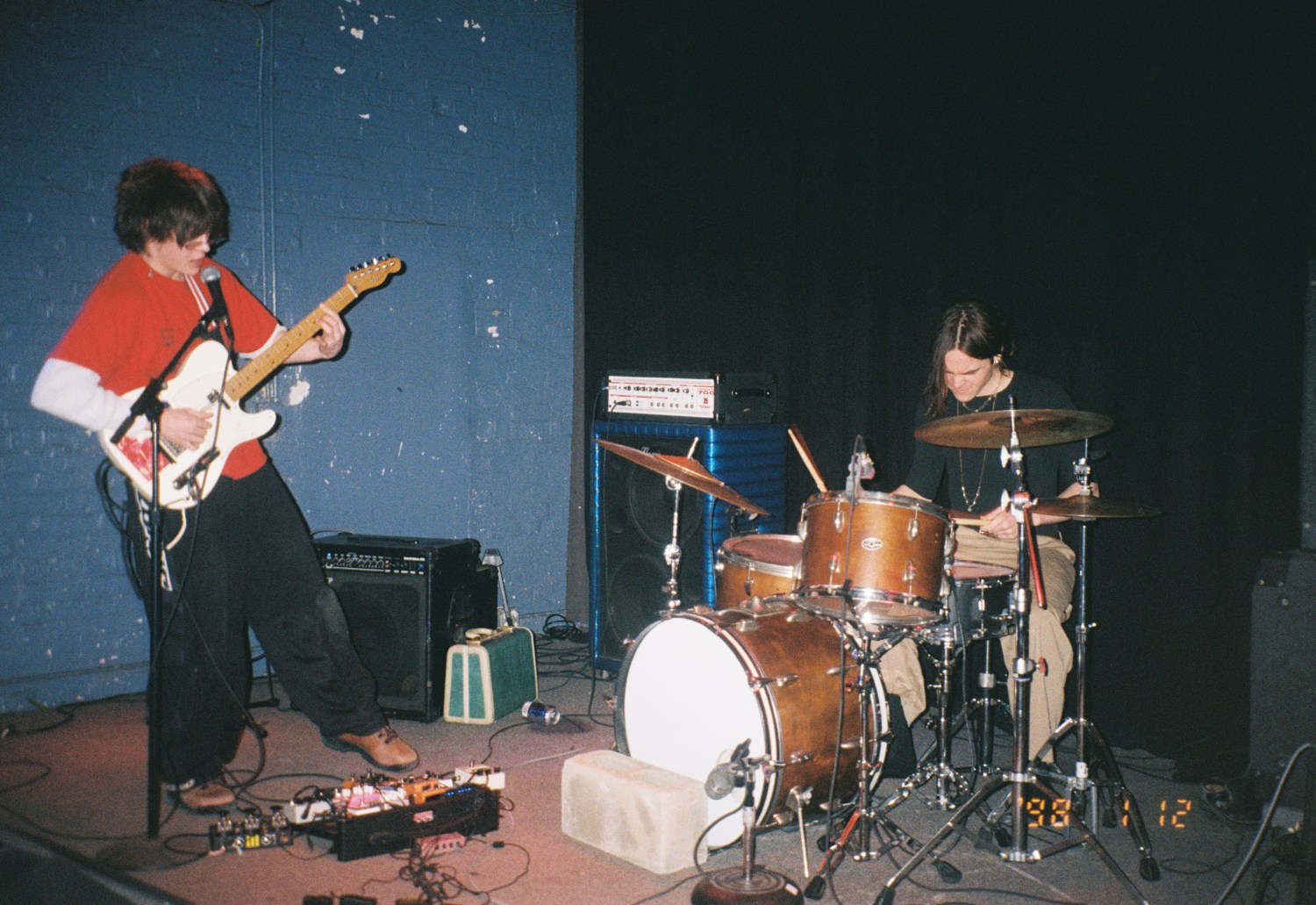
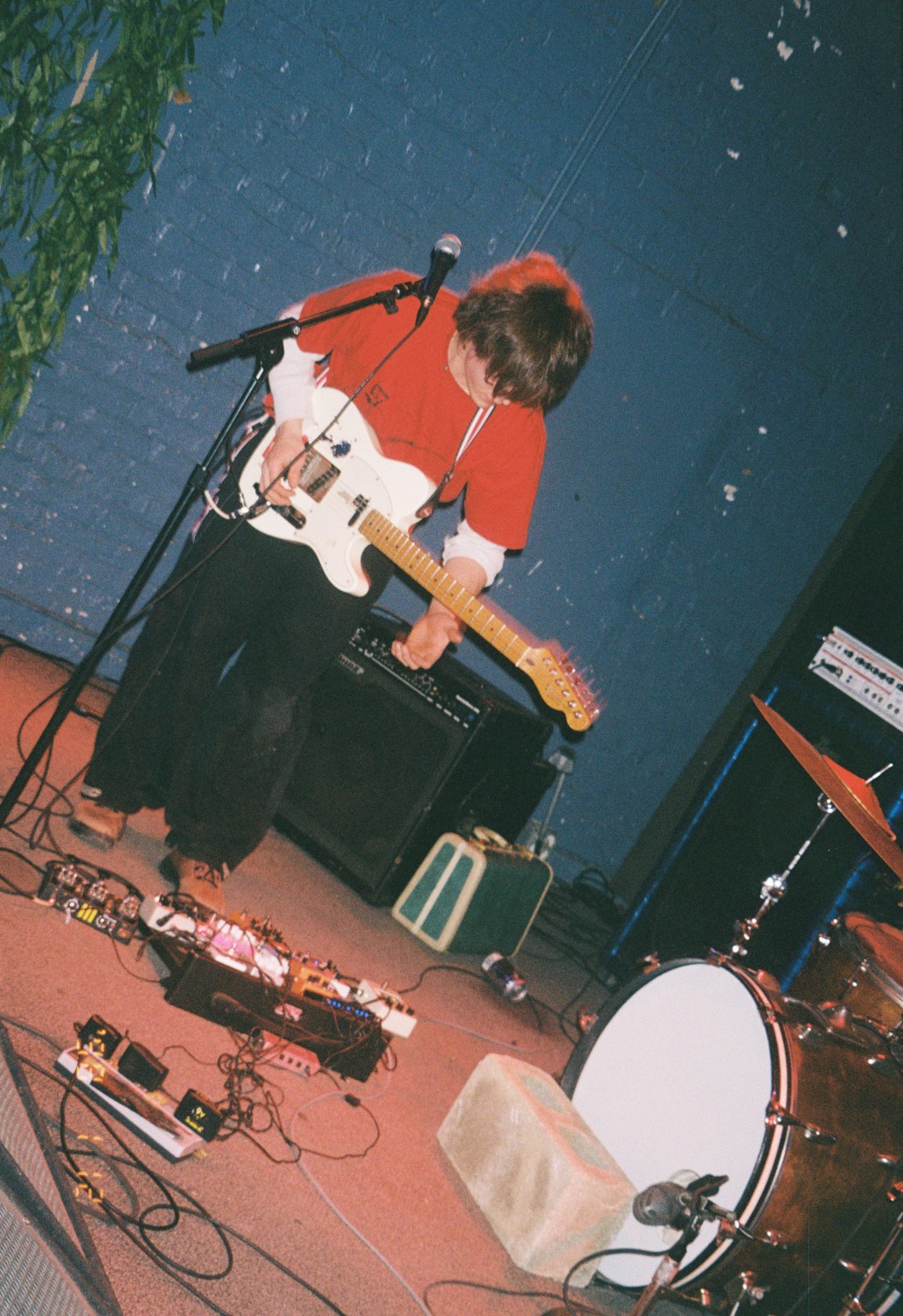
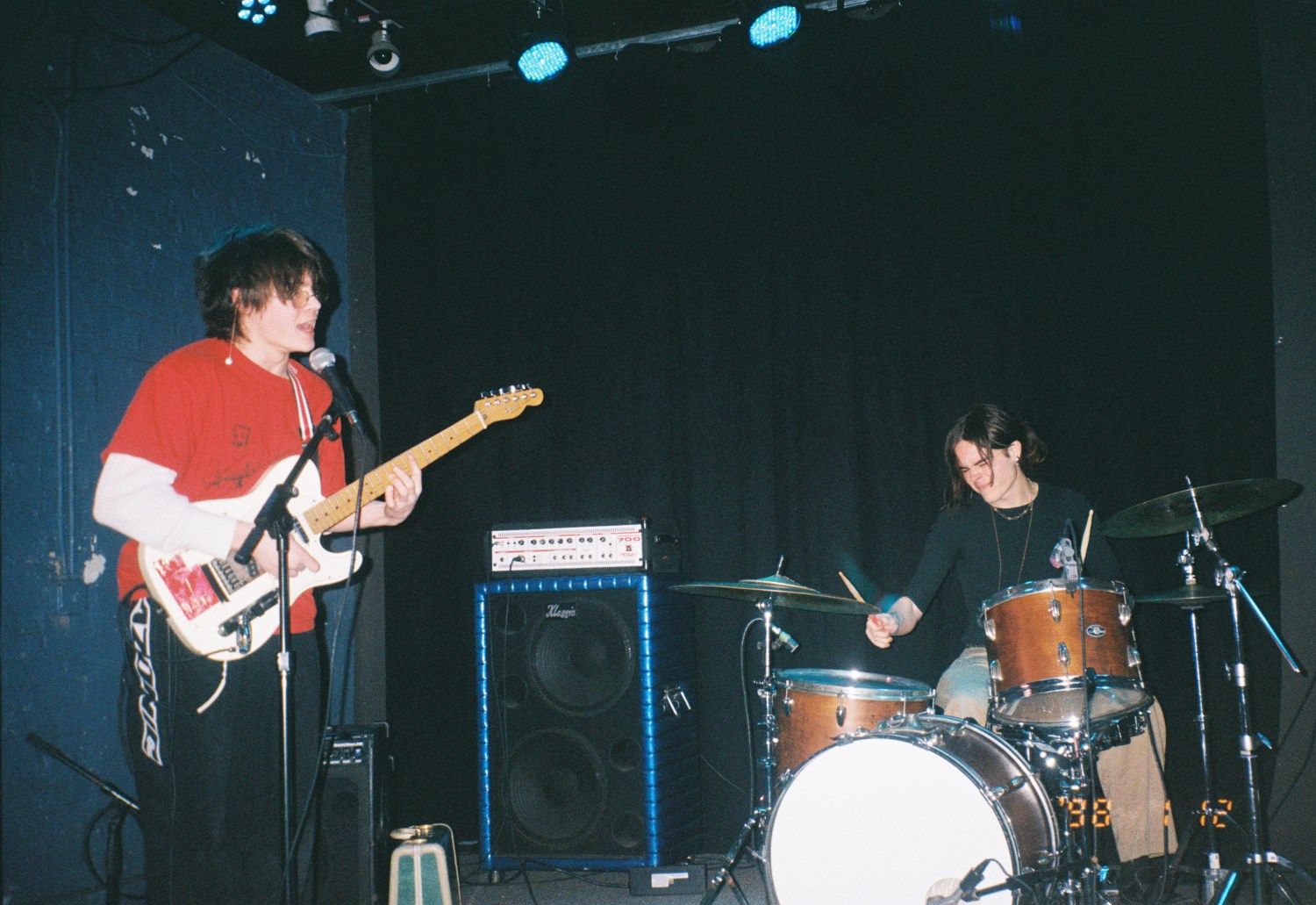
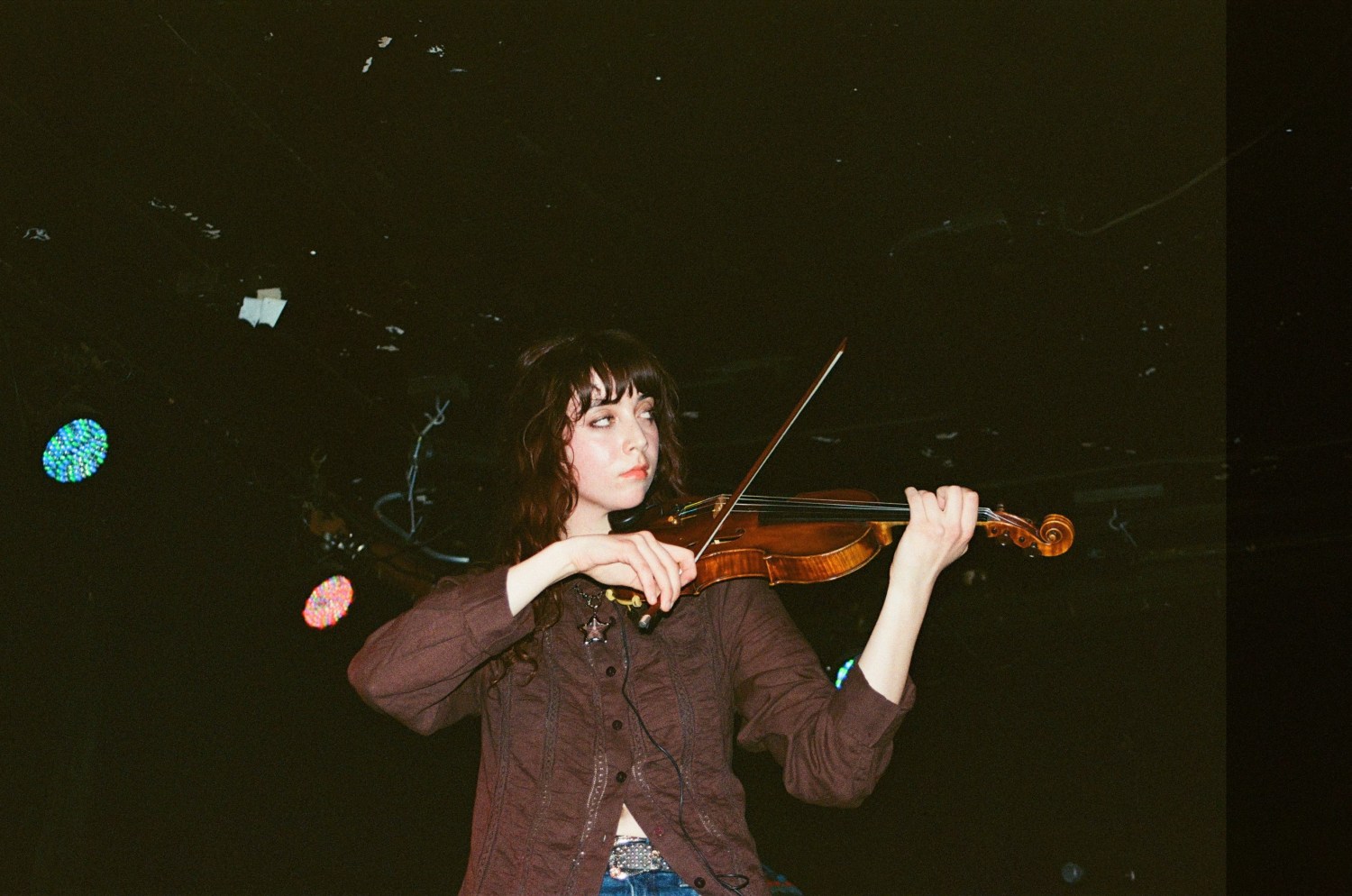
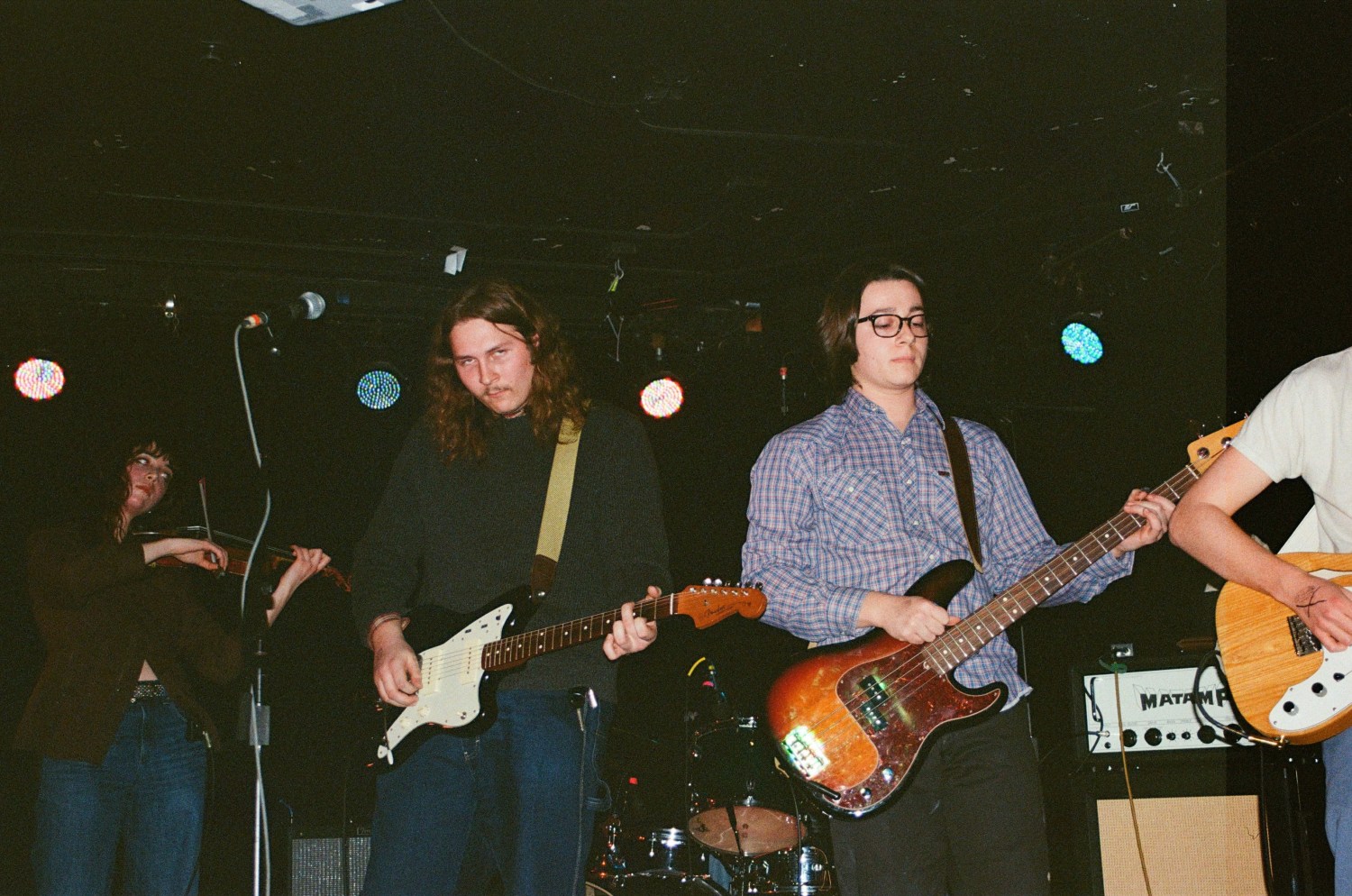
Glasgow’s Dayydream first materialized as the solo, lo-fi dreampop project from visual artist and songwriter, Chloe Kaufmann-Trappes. After a stellar and critically acclaimed debut in 2022 with the self-released EP Bittersweet, the band expanded into a full outfit when she pulled Loup Havernith, Dillon Salvi, and Samuel Rafanell-Williams into Dayydream’s orbit. Over the past few years, the band have casted their slowcore spell across Scotland’s underground creative scene with their immersive and hypnotic discography and personal and gorgeous live performances.
Often in collaboration with Glasgow-based independent label and promotion collective, No Soap, Dayydream have played at all kinds of unusual venues across Scotland’s Central Belt that are the stuff of DIY legend. From a cozy and locally revered charity shop in Edinburgh (the kind of venue where one quick movement could knock over a precious antique bowl) to an opulent and discreet chamber room in Glasgow’s South Side (the kind of venue where door access required direct communication with the event organizer), there doesn’t seem to be any spot too curious for Dayydream’s mesmerizing songcraft to drift through. In fact, Dayydream’s hazy textures and vulnerable lyrics seem to not only embrace, but appear most becoming in spaces both intimate and imperfect.
Through the magic of the Internet, we were able to bridge the ocean that separated us, and I got a chance to arrange a chat with Chloe over email. She spoke about how her artistic practice has evolved over time, from her earliest creative experiences to how she became connected to her creative neighbors in Glasgow’s tight-knit music scene.
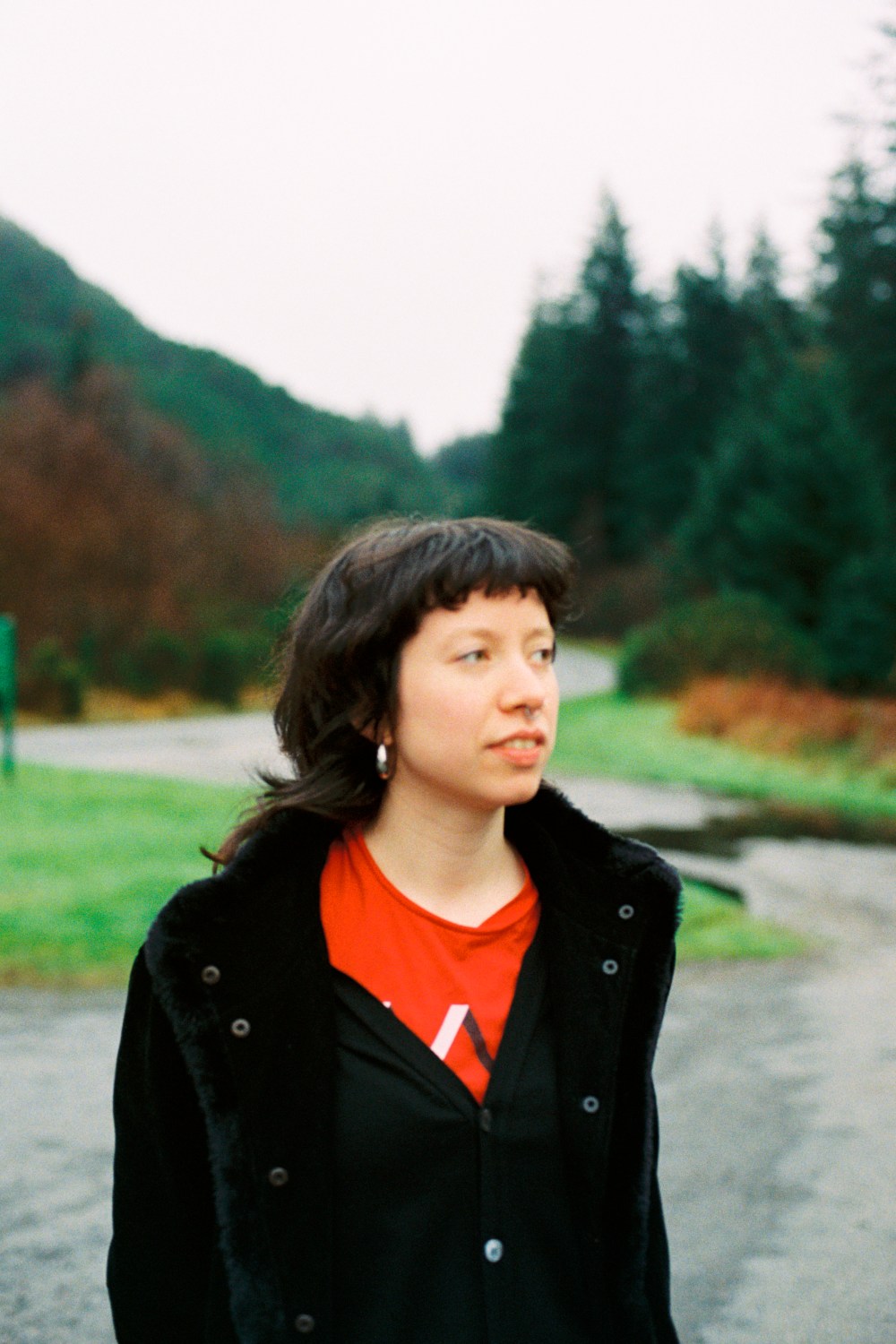
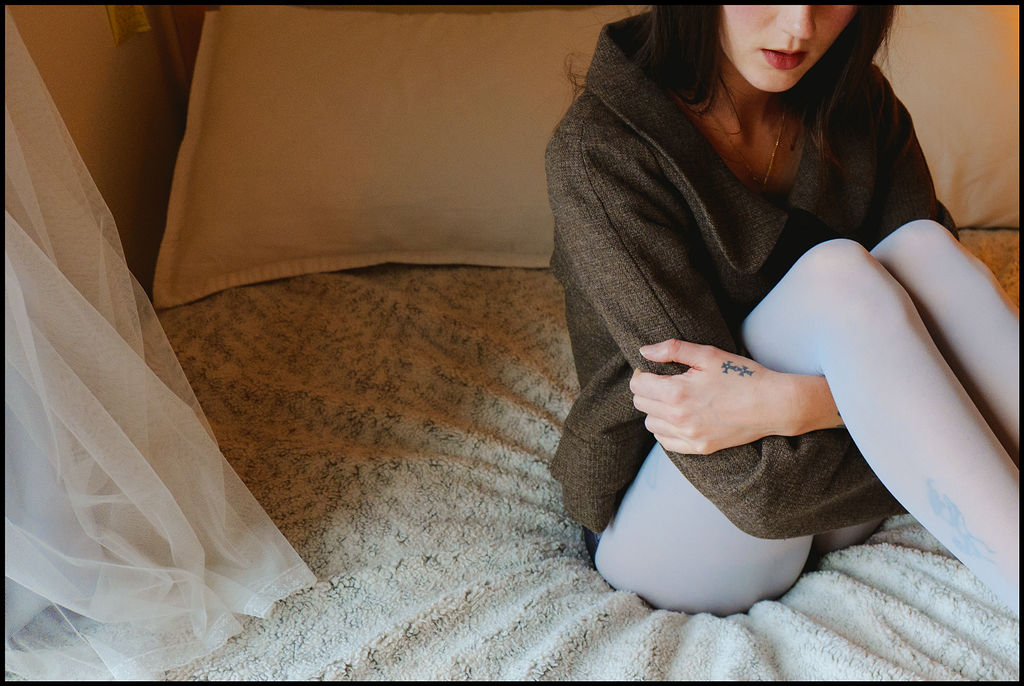
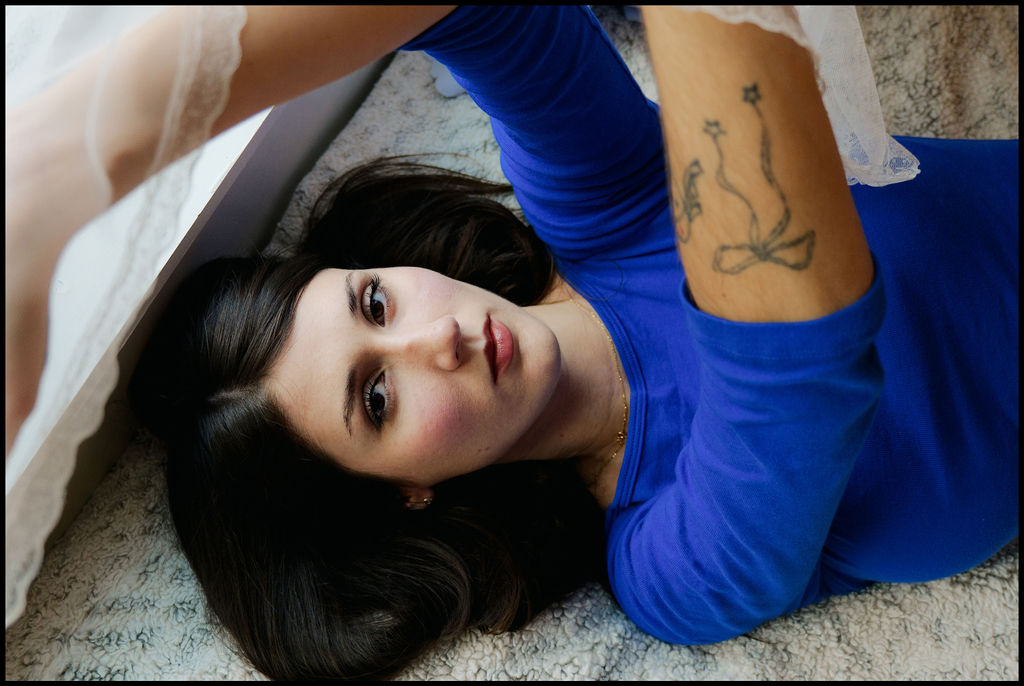
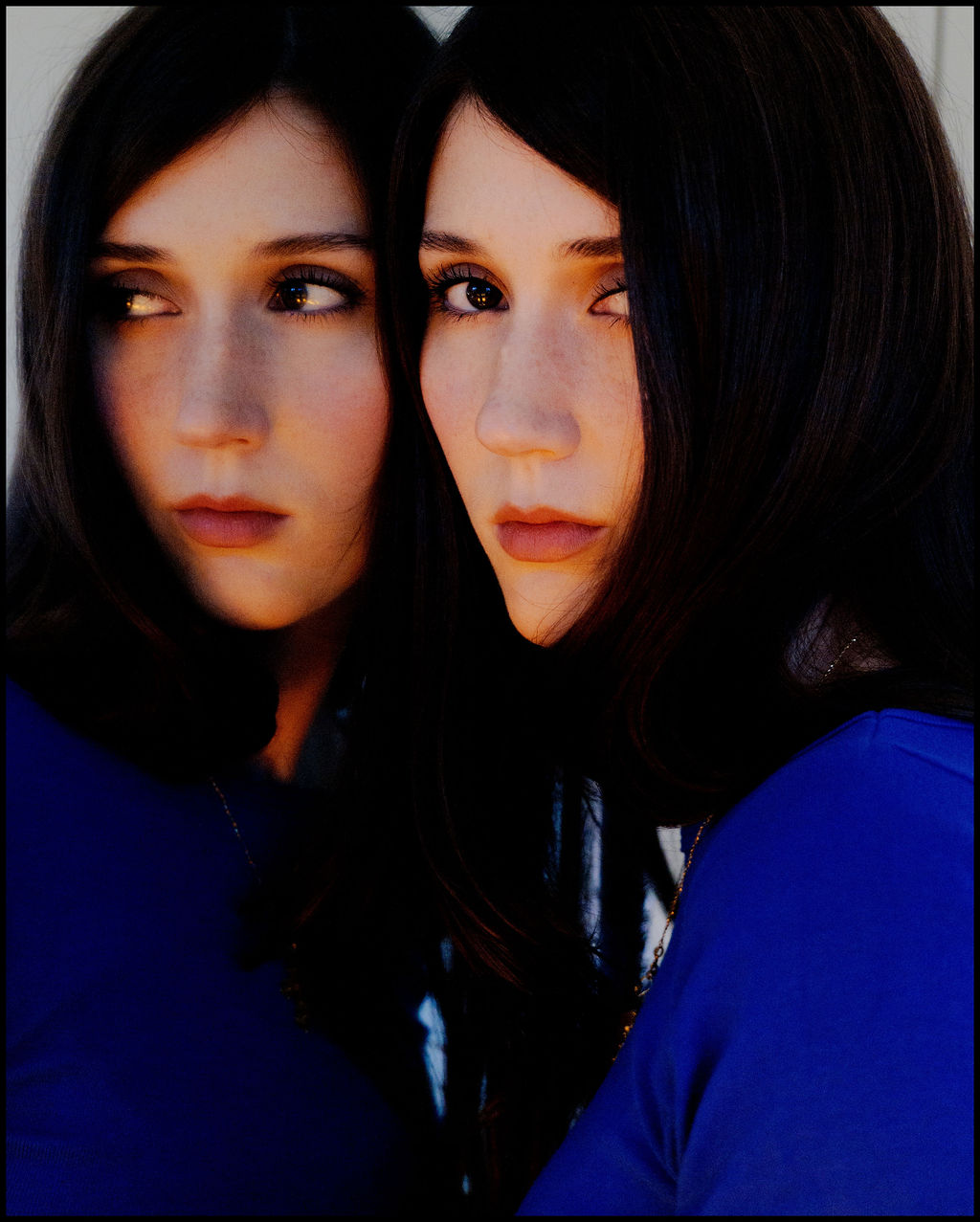
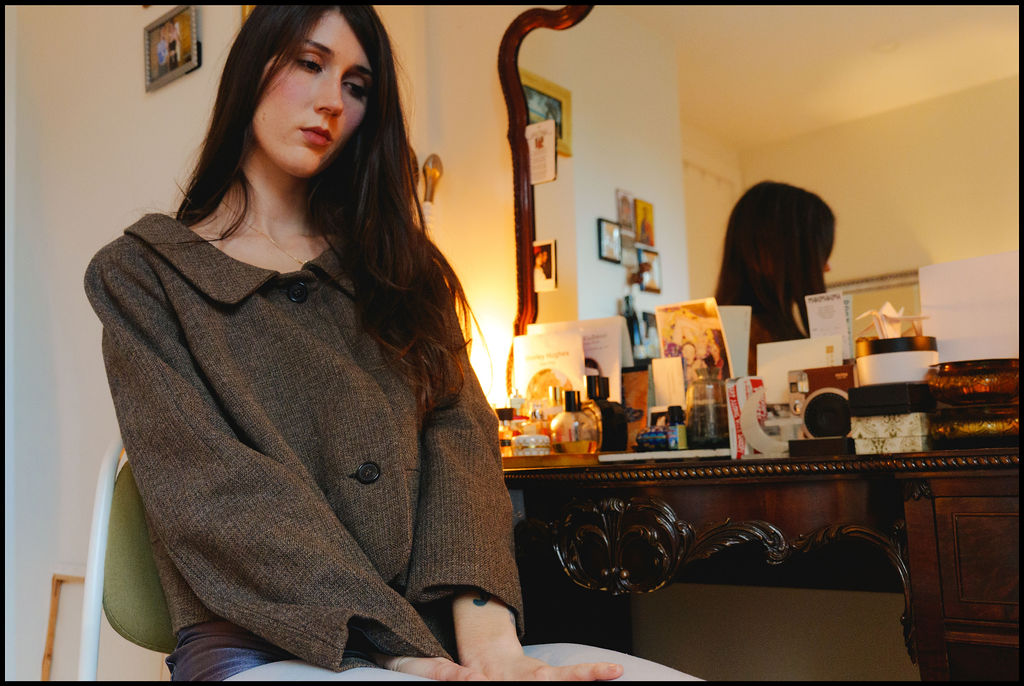
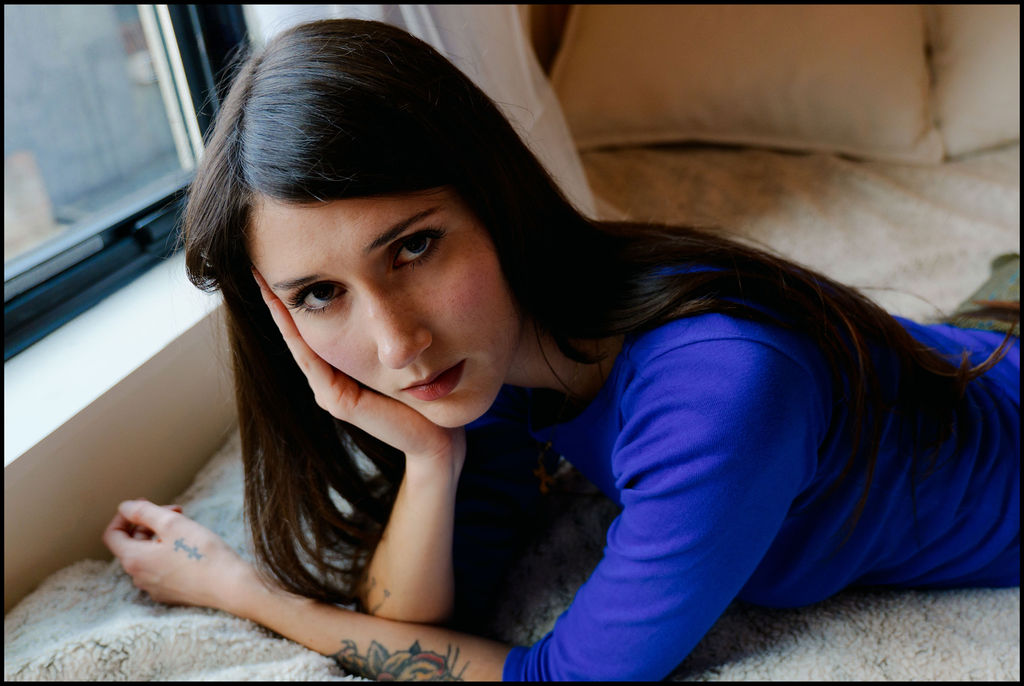
Photo Courtesy of Dayydream
Hey, Chloe! How’s it going?
Hi ! I’m good, thanks for asking 🙂
I wanted to start off by asking what your first musical memory is. Could you tell me a bit about that?
Hmm haha that’s hard ! But if I had to say, I was really obsessed with High School Musical when I was like five, that’s not really cool of me haha but it’s the truth!
Did you listen to music a lot growing up? What was the first album you ever bought?
Yes! Both my parents are musicians, my dad trained as a jazz drummer and my mum trained as a vocalist. When my parents split up my mum remarried my stepparent Stephe, who is also a musician and producer, so there was always something playing around the house. As for my first album I ever bought, I didn’t really buy anything physical until I was in my teens. It might’ve been Adele’s 21 or a compilation of Bjork’s greatest hits on the iTunes store, if that counts.
Would you say that album still has an influence on the music you make today?
Hmm haha maybe in a way ! I still love Bjork and I think Adele is a great singer/ songwriter. I think I always wanted to have an amazing belting voice , but that didn’t really happen. I think Bjork would probably be a bit more influential in the way that I just love her songs and how emotional they are, whilst also being catchy and using experimental production – also I love her visuals.
You’re also a visual artist. Did you start making music or visual art first and how, if at all, do these practices feed into each other?
I definitely started making art first, but I’ve always sang. I think I realised I was good at art much before music, because I used to draw a lot when I was young. This led me to photography and video, t. The way they tend to relate is that I sometimes design cover art and make music videos. Sometimes I have a really specific visual for a musical concept but I think the fact I am visually minded comes out in lyrics more often than not!
Do you ever feel drawn to try out other creative projects or work in other mediums?
Yeah! I always want to do more creative stuff but I feel like there’s just not enough time in a day! I’ve been thinking more about going back to drawing and photography, and maybe try out knitting. I recently volunteered at a kid’s art workshop and that inspired me to do more arts and crafts. I also attempted to learn the piano for a bit which was fun, so I might come back to that.
Dayydream is currently based in Glasgow. Are you from there originally? What influenced your decision to stay/move there?
I am not! I am very much not from Glasgow [laughs], I was born in Hoboken, New Jersey, raised in Jersey till I was twelve, and then moved to London with my family. But I consider Glasgow my home and I love it here! I came here for university to study art and stayed for music.
How did you end up meeting Loup, Dillon, and Sam? What made you decide to play together in Dayydream?
I met Loup through Instagram actually, we were mutuals, because Glasgow is small and the music scene is even smaller. He asked me to play a show and I agreed, and we became friends! Loup pretty much was the glue that brought us all together since he knew all of us already. For a while it was me, Loup and Dillon, until I asked Sam to play Sam is part of a band called Spinney, who I love. I think we all just share a lot of musical influences and work well together, and I think they understand my songs.
Independent labels often play a crucial role in shaping local scenes. Dayydream’s released a few things under the Glasgow-based, DIY label, No Soap. How has your link to No Soap impacted your relationship to Glasgow’s artistic community?
It’s been really nice being part of a community in Glasgow, because there’s so much variety out there and so many bands. No Soap has helped introduce me to a wider community of people who are into similar music and art and really supported us throughout the last couple of years!
What’s next for Dayydream? Our EP Trace is coming out March 13th on No Soap! I’m so excited to finally say it, it’s been in the works for a while, so expect to finally hear some new music in 2026.
You can listen to Trace out now and keep a look out for cassettes and tapes coming soon via No Soap!
Every Wednesday, the ugly hug shares a playlist personally curated by an artist/band that we have been enjoying. This week we have a collection of songs put together by Donna, Adam, Cody, and Blake of the Austin to New York-based band, Chronophage.
Spanning several years, Chronophage have always mixed the witty and the weary, leading with a bold heart who knows that perfection is a waste of time. Last July, Chronophage released their latest EP, Musical Attack: Communist + Anarchist Friendship in which the band rips through societal ills and personal quips with what feels to be fresh and inherently hearty practice, these songs lending relief like the dripping discharge of an A/C unit 6 floors up on the hottest day of the year – meddling in the pool of what could be and how it really is. And to their credit, these songs are in no way hopeless, but rather refuse to blow smoke in just any direction. Utilizing loose structures, drenching unconditional melodic prose with the levity of tinkering keys and brash guitars, Chronophage linger in the purity of the ol’ reliable that’s living somewhere between triumph and defeat.
About the playlist, the crew shared;
Here is a playlist! Just a bunch of shite we’ve been listening to (we at this point is Donna, Adam, Cody, and Blake, all in NYC except Adam on tour in Europe with our friend Jana Horn!), on a personal note I would further recommend people check out Controlled Bleeding, who I have been listening to a ton in the last year. Frederic Rzewski, great composer in the left-wing tradition of Cardew, Wolff, and Andriessen. Love the Waterboys, lots of pop music on here but of course have to remind people to listen to PUNK every day lest we chance to forget the fertile field from whence we first took seed. Adam with some Tejano music that it sounds like Austin Powers dubbed over. Chopin- why not? Blake of course is very into Scritti Politti recently, and made a meme involving them and other playlist citizen, Aztec Camera. Wee bit of Akashic synthesizer impressions, no longer palate cleanser but indeed the main course— OOPS! ALL INTERLUDES. Hardrock Gunter is my dad’s uncle, I love showing people this. He coined the term “RockNRoll.” As for us—we’ve got a new album on the way (well, we are still extracting the raw materials from the mine, but it is of course necessary to do this before anything else can happen) on PPM records, and had an EP come out last year, and are gearing up for our “baller year”… can’t wait!
You can listen to Musical Attack: Communist + Anarchist Friendship and other releases from Chronophage now as well order vinyl from the LA-based label Post Present Medium.
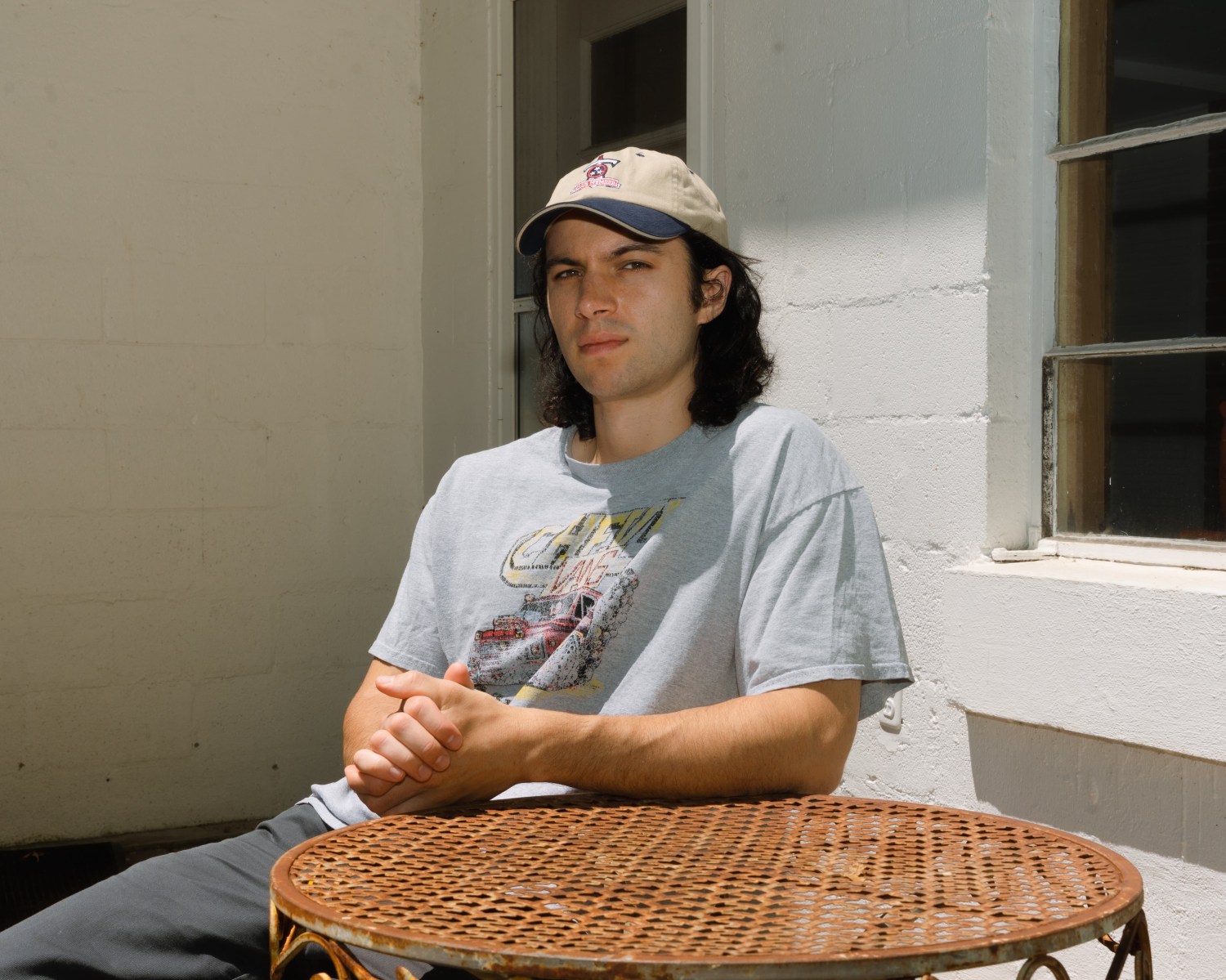
I’ve been trying to work my way through those lines — “clear eyes, full hearts / can’t lose but won’t win.” That’s from “Friday Night Lights” by Peter Lewis (recording under the name Peter Horses), who put out his debut record, xbox verizon, on Bandcamp last May. Peter told me that “Friday Night Lights” is “looser” than some of the other narrative-based songs on the record, but to me, it sustains a quiet emotional tone across its disparate imagery — a mourning still smoldering, a bitterness that cuts both ways. It was a tone that immediately found purchase in my heart. “Just let me down: say you were wrong,” the song’s character insists to their presumably wayward lover. Desire, rightness, wrongness; they’re all so entangled. On the one hand, the song creates a space to inhabit that bitterness, to ask the person who hurt us to admit their guilt. But this is not just a fantasy of emotional restitution. It’s a way to feel the loss honestly, even to quietly confess our own culpability within it. I might not be able to lose, which is what I really want—to lose and thus to not be let down—but at least I can resolve not to win.
Across all the songs of xbox verizon, there is that kind of buried self-address: all these external, sometimes absurd situations the characters find themselves in (most memorably, a plan to kidnap Jerry Seinfeld on “jerry”) reflect, or invite a new way to understand, our everyday emotional bereavements. All of these songs were written between 2022 and 2023, and it took a few years of encouragement from friends (including Aaron Dowdy of Fust and Oliver Child-Lanning of Weirs) before Peter decided to self-release them on Bandcamp. You could call it “slacker rock,” if you’re into terms like that: most tracks are simply grounded in Peter’s guitar and voice with maybe some drum machine loops (with the exception of “the plan is the end,” recorded with James Gibian on drums, Aaron Dowdy on guitar and Ryan Hoss on bass). I can hear Sebadoh, Elliott Smith, MJ Lenderman; whatever the lineage, these are sturdy songs, they’d hold their own in any arrangement, and I knew the first time I heard them they’d make a lasting imprint, as they have.
Peter explained to me that he grew up in Fredericksburg, VA, whose quietly vibrant art scene made an impression on him. “There was this Fredericksburg all-ages music scene that was happening when I was in high school and in middle school,” he told me. “It was very, very pivotal I think. My dad was involved in that; he had a bookstore where they would do shows. And then Fredericksburg has some cool music coming out of there. Daniel Bachman is from there; Jack Rose, too.”
After graduating from the Cinema Program at Virginia Commonwealth University, and spending a few years in Richmond, Peter migrated to New York City for grad school at The New School, in Media Studies. He moved back and forth between Virginia and New York a few times, before settling in the latter, where he’s been since 2022.
I’m so grateful to Peter for his complete openness—genuinely a rare thing—in agreeing to hang out and talk about his music. Below you’ll find an abridged version of our conversation, which seemed to lead us, gradually, to an understanding of the role of songwriting in the threefold emotional process of resignation, acceptance, and ownership.
This interview has been edited for length and clarity
There’s a theme of resignation on xbox verizon that I find really affecting. Your first words on “Jerry” are “lost your nerve.” And on “Farcry 5,” at the pivotal moment when the character is about to approach an old flame, they “chicken out.” But I love that, because it feels like what you’re doing in these songs is actually giving that feeling of loss some dignity. So I want to ask you: how does songwriting for you play a role in processing emotions? Because at least for me, as a listener, what it seems like you’re doing is taking what could just be seen as a negative emotional situation, and you’re giving it a sort of dignity or finding a different way of relating to it.
Well, I think I’ve struggled with expressing negative feelings, whether it’s sadness or frustration or anger—these sort of emotions that are just difficult to express, because they put you in a position of opening yourself up to conflict or guilt. And for some reason, in a lot of the songs, I find that the characters that are singing the song are sort of shitty. It’s a kind of petulance: it’s these people whining and struggling with something that is maybe just minute. I’m just using the song to express an emotion or a thought that is maybe not the most coherent, or the most appealing, thoughts that you would bury or suppress. And for some reason, I find it easier and more interesting to have these characters who are saying basically the quiet part out loud, they’re kind of expressing themselves in a way where they’re just being totally honest, and the way that they’re being honest is maybe kind of annoying. But it can also be kind of a funny feeling or can capture this sort of anxiety and indecisiveness that I think that I feel in my day. So I’m kind of using my own feelings to yell through these characters, to get upset and to get angry and to be annoyed, which is something that I’ve struggled with, in my own life, to allow myself to feel.
All these characters are having a moment, whether it’s a small problem or a big one, like on “Jerry”—this incredibly silly problem that’s larger than life and very cartoonish. The problem to me is the interesting thing, because when you present the problem in the song, you get to explore it a little bit. Are they going to solve the problem? Is the problem solvable? And then the song can kind of help you figure it out.
i can’t save money but i can do math
and he’s got enough and i would settle for half
throw jerry seinfeld in an unmarked van
hold jerry seinfeld hostage if you can
I will also say, although sometimes these characters are sort of silly or pitiful or whatever, I also really feel like these characters have a lot of tenderness.
I really appreciate that. I do think that the tenderness comes through in a way that I find surprising.I don’t think I sit down to try to write tender lyrics; it’s just something that I feel lucky enough to be able to tap into. If it’s a song more about a character, it’s about what makes this person tick, what makes them a human being. The songwriting is really kind of fluid that way, where I’ll come up with one lyric that I think is good. I remember with “Friday Night Lights,” the first thing I had was the “throw up my hands” bit at the beginning, and I didn’t really know what the song was about.
throw up my hands
and launch myself into the sun
my hair goes blonde
what’s that ‘bout how they have more fun?
Can you tell me a little about your personal history with songwriting, coming out of college and then moving to Brooklyn?
I played in friends’ bands a lot in college and after, but I hadn’t really done much of my own stuff. I had always tried to write music and it just hadn’t really worked the way I wanted it to work, and I was never very happy with the stuff I did. And then for some reason in 2021, I had gone through a weird breakup and I was living with friends and I was teaching at VCU—I had gone full circle and I was teaching in the program that I graduated from and having a weird time in general. And I finished, I think, the first song I’ve ever actually finished, that summer [“10-4”], and then came up with a couple more songs, and then moved back up here [Brooklyn], and then started coming up with songs in kind of a weird cyclone of being able to do it. I was just like, Oh, this is all of a sudden becoming so easy to do.
I go through ebbs and flows, though, where sometimes you’re kind of in—you’ve got something that you like, and you’re trying to work with it. And the rest of the time is kind of trying to find that thing. So there’s periods of time where I’m feeling like, man, I got nothing. I got nothing to say. I think that’s normal. This stuff came out of a period of time where I just was on a roll. And that was a couple of years ago at this point. All the songs came out in May, but almost every song I think I wrote between 2022 and 2023, and then I was like, oh, man, I’m tapped out. I was just sitting on them and thinking , ‘oh, they’re just demos, I’m going to try to re-record them with a band’ and so on. And it just wasn’t happening. And then, everyone’s like, we like them as is. So I’m like, oh, okay: I guess in order to make some room in my brain for working on new things, I just got to get these out of here.
It honestly blows my mind just because, you know, you just drop some music on Bandcamp on a random Thursday and people respond. And that’s so cool. I think that I still have difficulty accepting that.
You did bring a band in, though, for “The Plan is the End,” right? You had Aaron [Dowdy] from Fust on that song?
Yes, another way that I’ve been extremely lucky is that in college, I met my friends John Wallace and Ryan Hoss, who are both incredible musicians in their own right, from the southern part of Virginia, where Aaron is from. They all went to high school in the same place. And the guy who drums on that song as well, James Gibian, my favorite drummer in the world, all grew up in this one part of Virginia. So over the last 10 years or so, I’ve become very close friends with a lot of these now-North Carolina guys through this sort of kismet meeting of my two friends in college. And I have been lucky enough to find myself in this very solid group of people who I love, but also are extremely talented musicians. I had been sending Aaron and these guys these songs for a couple years.
And so for “The Plan is the End” , I went down to visit my family in Richmond, and basically, we just got together for a weekend and played some of the songs. And that one just so happened to get recorded on James’ iPhone. And the recording sounded okay enough that when I got back up to New York, I just overdubbed the guitar and the vocals. And that’s the version on the record. It’s basically just an iPhone recording, which is pretty goofy.
But yeah, these guys are steadfast buddies of mine. And I feel very, very lucky to have them in my corner. I don’t think I would have released the music if it wasn’t for my friends, who were basically like, This is great. And we think other people would like it, too.
We played our first show in October at Feast, which is something that Oli [Oliver Child-Lanning] and Justin Morris and Ori Messer and this whole North Carolina crew put on and it’s a really big, beautiful little music festival and a friend of mine, Sarah Bachman, described it as a “who’s who of who’s that.” Aaron played lead guitar, my friend Sasha Popovici was on piano, James was on drums, Oli was on bass, and my friend Avery McGuirt, who lives up here, was playing fiddle. Those guys have been so awesome, just in terms of making me feel good about the music and also helping me do the music for other people and think about it in the context of being in a band, which is something that I really wanted to do with the music, but I didn’t really have the opportunity to do.
And just to have that link back to Virginia/North Carolina, too, to that community, and to feel that’s still nurturing you in a really big way.
Yeah, I have so many friends who live in North Carolina now; half the people I know in my life all live in North Carolina. I spend a lot of time going down and visiting and doing music down there. So much cool stuff is coming out of NC. Fust is taking off, and Sluice as well, and Ollie’s group Weirs.
It’s awesome playing music with people. I did a lot of it in college, but in the last 10 years, it hasn’t happened so often, and I really crave that experience. I do so much of this stuff on my own, at home, but it’s so much more fun to do with other people. I want more of that. That’s kind of my focus going forward: finding ways to do that more.
I wanted to talk about “10-4,” which is my favorite song on the record. I’m curious about the narrative in your head behind that song in particular and its complicated address, the way the narrator refers to his addressee, in different moments, as both “buddy” and “an asshole.”
Yeah, I think that it’s an interesting one, because half of it feels a little nonsensical. Like “Polly Pocket on the hood of my car.” That was the first thing I came up with. There’s this weird mix of these made-up iterations of something like that. And the bouncer bit as well is something that actually happened to me. But that song was the first song I did where it was like, this one’s done. And that kicked everything off. So it was a weird culmination of a bunch of different things. I had just gone through a few difficult years in a relationship that was at times really beautiful and at times really, really hard.
polly pocket on the roof of my car
i lost her doin’ donuts in the car park
and when she hit the pavement
i felt lighter
You said something earlier about this idea of resignation, which I think is a theme in a lot of this music that I hadn’t really picked up on. Just letting things go—letting them be what they are, which is something that in my day-to-day life I struggle with—just accepting these things. That’s just hard to do. And that song to me is a sort of resignation. It’s like, when things are good, I’ll help you pack the car. And when things are bad, I can pack the car and I can go.
so i can be up when you’re able
and i can load the car when your folks call
you got a 10-4, good buddy
for certain enough you’re an asshole
and i can load the car when it gets old
you got a 10-4, good buddy
I was feeling very, very frustrated, I think, in some aspects of my life, resentful and angry at people. And that whole song has this feeling of, fuck you, I’ll do whatever I need to do. Like, “I could be a tugboat captain,” I can do anything I want to. This kind of middle finger to people who tell you how you should be operating or something like that.
And maybe nobody’s even paying attention to you, but in that moment for you, you’ve got a bone to pick, you know? There’s just something about this weird mix of resigning yourself to the way that you are in this moment, while also being allowed to be pissed off. In that song, it’s like: I lost my girlfriend; I might’ve gotten beat up at a bar; I got Pfizer. It’s like all these different things that can have two responses, which are similar—on the one hand, that’s all fine, and also, I’m allowed to be upset about it.
To me, it just keeps coming back to your line “long live the bummer days.” That’s sort of the watchword for me for a lot of the record.
Yeah, I really feel very strongly, even though it’s hard, that you’re allowed to feel bad sometimes. And sometimes you have to feel bad. Just accepting that “today I don’t feel very good” or “today I feel upset or angry” is really important to me. Who knows how long the bummer days will go on. They go on forever. That’s okay. It can be like that forever and you would be fine. And that’s what it means to say we could be buddies or we could be—well, that this might not work out. Either way, it’s gonna be okay.
Yeah, even if it isn’t okay, even if things continue to get fucked up, that itself is okay.
Yeah, it is. It’s like a weird, cascading thing where it’s just like, if that’s what it is, then that’s okay. Like, what are you going to do? It’s so much harder to be pushing, to be trying to stop these things from happening. So much of life is out of your hands.
Sometimes we hurt each other even worse when we try to overly control our own feelings.
Absolutely. I think that I’ve been on the receiving end of that. I feel like I’ve done that.
I wanted to end with one of my favorite lines from “tough talk,” where you ask, “what good’s a heart in heartless times?” Obviously, you could read that cynically: you could say, well, we live in a fucked-up world and it’s ending and, to use one of your other song titles, “the plan is the end.” And we’re just doomed to have our hearts crushed. And maybe there’s a little bit of truth to that. But I just love how you leave that unresolved. You don’t say, actually, our hearts will save us. And you also don’t say, the world will ultimately destroy us. You just ask the question—“what good’s a heart in heartless times?”
Every once in a while, I have this idea that—oh, this is what the record’s about. And for a little while, “the plan is the end” was kind of that touchstone. I was like, oh, this record’s about how fucked up the world is. I mean, there’s so much happening all the time that is heartbreaking and deeply frustrating and horrible. And I have a hard time not thinking about it, but also feeling like I’m not doing much about it. I feel very helpless. Maybe this goes back to the “bummer days” thing too, where I was feeling very predisposed to being, in a social situation, the guy who’s like—did you read the news today about the horrible thing that happened? Feeling like I was the bummer. There’s this social pressure to not be a bummer or something. I was thinking about that a lot when I was working on some of these songs.
Is it all just trash and sadness again?
Is it all hearts fixing to mend?
And for the “heart in heartless times” bit, it’s funny, ‘cause it’s a line that when I finished it, I was like, I should change that line. ‘Cause in my mind, it felt a little too on the nose. A few people have said that that line really resonated with them in a way that I didn’t expect.
I remember watching an interview with Michael Haneke, the German director, where he was talking about his process and how people are often telling him, you raise a lot of questions, but you’re not giving us many answers. And he said something that just always stuck with me. Something like, the role of the artist is not to answer the questions, it’s to ask the questions.
I think a lot of the time, with songwriting and with lyrics, I’m almost having a conversation with myself, where I raise a question and it prompts another question. Just cascading rows of feelings. And just moving on, because I know that I’m probably not gonna have the answers. And if I’ve ever written songs that I don’t really like, or didn’t make the cut, I think it’s sometimes where I feel a little too confident about what the answer might be. And when I listen back to it, I often feel—that’s not real, that one’s not grabbing me. I’m not loving that one because it’s too decided. Maybe where the boundary between the character and me coalesces is in these questions where I’m not even hoping for an answer.
It’s funny to hear you say you were questioning the aesthetic value of that line about a “heart in heartless times.” It poses an interesting question about deciding when to let the cracks show a more earnest core.
Yeah, I tend to overthink bits where, maybe it’s not too earnest, but where, if there’s a crack that’s showing, it’s in that where I feel I could have spent some time looking at that line and figured out something that was clever to fit in there instead. But in the case of that line, I didn’t really want to. At some point, you have to decide that you trust your instincts a little bit to not overwrite or overedit, and you have to leave those things in because they’re examples of a moment in time when you were obviously feeling that way.
And trying to respect that it’s valid to allow yourself to be a little cringey or be a little heart-on-your-sleeve or on the nose or something. And that’s allowed, because, you know, there’s the classic thing in filmmaking or literature, where it’s like, there’s no new story under the sun; every story has been told. The only thing that’s really new is that you’re telling it. So sometimes you have to trust that the thing that’s making this music or writing special is that I’m the one doing it, which is really hard for me as somebody who is constantly telling myself you’re not special, you’re not any better or different or more unique. It’s just a hard, hard line to walk for some reason for me. And so it’s been nice to see people respond in a way where I can realize, oh, I guess that’s true. So I think that stuff pops up and you just have to let it go.
That’s the flipside to that theme of resignation or acceptance: taking ownership. Saying, okay, these are my words. It’s who I am and it’s going to be imperfect but that’s who I am.
I think that kind of vulnerability, where you put something out there and people respond—that can be hard. Like at the show in November, we played “tough talk” at the end. And this person came up to me afterwards and was like, “I cried that whole song.” It still blows my mind. That aspect of people responding in their own way. It’s hard to put into words how cool that is. It just makes me think about it differently, where I’m like, oh, this has power. Art has power. It can do things. And I didn’t really make this music thinking it would do anything for anybody.
Last week, friends and collaborators Eliza Niemi and Westelaken shared a split four-song EP covering songs from both each other and friends to raise funds for Palestinian Mutual Aid.
Along with two songs of their own, Niemi covering “Pear Tree” and Westelaken covering “Don’t Think”, the crew also covered “Little Miss Anthropocene” originally by hemlock and “What’s In a Name” originally by Little Kid.
Playing on the EP is Alex Baigent (bass), Rob McLay (drums), Eliza Niemi (cello, vocals), Jordan Seccareccia (guitar, vocals) and Lucas Temor (piano, keys).
You can purchase the EP Eliza Niemi & Westelaken Cover Each Other and Their Friends only on bandcamp. Check out more from Eliza Niemi and Westelaken now.
Written by Ella Hardie | Photo Courtesy of Poolish
“Well, when you bake sourdough, you have to start by taking care of a combination of water and flour, and poolish is a ratio of water and flour,” James explains. Matthew interjects: “Doesn’t it also have commercial yeast in it? I thought it was a combination of sourdough starter and commercial yeast…” James concurs. Apparently they’ve both read TheTartine Bread Cookbook. In baking, poolish is considered the “liquid version of a sponge,” and pre-fermentation is a vital step in the baking process that results in a better loaf—the flavors have time to fully develop and the increased acidity builds up resistance to mold, giving the bread a longer shelf life. Part water, part flour, part beer-sodden-alt-country, part slowcore-post-rock (with a bit of yeast/grunge?), Poolish’s debut EP Slip-On manages to capture the ephemerality of a young band in their early stages while they’re still actively fermenting. The record is undeniably an achievement in and of itself—this “fermentation” isn’t necessarily a means to an end, but a constant state of sonic absorption, collaboration, and evolution.
That bread metaphor can only go so far: listening to Poolish is a lot like slipping on a pair of boots you broke in years ago or sewing a new button onto an old sweater. They carry well-worn traditions of rock n’roll with a distinctly Midwestern twang and an endearingly palpable sense of reverence for musicians who’ve come before them, from local acts to all-timers. It’s hard to believe Poolish only have one EP under their belt when you see them play live, a natural result of each member’s storied history within the DePaul-adjacent DIY scene—for most of them, this isn’t their first band. With the chemistry of old friends and the composure of a group well beyond their years, their performances remain underscored by the playful spirit of a weeknight jam sesh in someone’s bedroom, basement, or garage. It’s the kind of spirit that makes you feel nostalgic for the night before; a call to simultaneously celebrate and mourn your youth while you’re still in the thick of it, to sway along and soak it all up.
This interview features Matthew Boyd (guitar/vocals), Danny Barney (guitar/vocals), Cece McIntyre (violin), Tyler Cook (bass), James Matthews (drums), various members of the band Glass-Beagle, and my beloved friend Cordia Ritz (for a second at the end). It has been edited and condensed for (relative) clarity.
I imagined this interview taking place outside over a cigarette after their set, but it’s Chicago’s rainiest January day in 50 years and the Empty Bottle’s small awning can only withstand so much… I once again find myself in the green room, but this time we’ve formed a circle on and around the couch by the door. I’m hunched over on a small ottoman with Cece sitting on the floor to my right, James and Tyler on the couch across from me, Matthew and Danny in swivel chairs on my left. We all chat for a few minutes and Marble Teeth’s set begins downstairs before I start recording:
ELLA HARDIE: Alright guys, some of you know the drill—
(For context, the first interview I ever did was with James and Matthew’s other band, Intoner, a couple years ago at Archie’s Cafe (RIP) where I asked the same first question.)
EH:How would you rate your set tonight out of 10?
DANNY BARNEY: Ten! It was fun, I like that we messed up a bunch—
Everyone laughs.
DB: I don’t like playing straight, I like that we were having fun… And Empty Bottle is the best place ever.
JAMES MATTHEWS: Yeah, I’m gonna go ten as well—
MATTHEW BOYD: I’m gonna go nine and half because of my major fuck-up on that one song—
Everyone:No! That made it better, that made it a ten—
MB: But I feel like I can’t give it a ten…because of that…
CECE MCINTYRE: Well, I’m gonna give it a ten. For friendship.
EH: For the power of friendship—
CM: The Power of Friendship was up on that stage tonight.
EH: That’s beautiful. Tyler, are you also going with ten?
TYLER COOK: Yeah, ten. It was really great, I was on it—
DB: It’s always either a ten or a five. It’s never, like, an eight.
Laughter.
EH: Have you had a five recently…?
DB: Yeah, definitely. [________] was a five—
MB: [_________] was great! That was a fun show!
JM: No, [_________] was like, an eight or a nine.
DB: There’s no eight’s!
***
EH:Have you guys ever done a formal interview before? Like, with this band?
MB: No, I don’t think so—
EH: Ok perfect, I’ll try to keep the questions pretty broad. Introduce yourselves!
James sits up.
JM: I’m James… I play drums—
I laugh a little and interrupt:
EH: Sorry, my bad, I was thinking more like a “We are…” kinda vibe—
JM:Ohhhh! We’re a band. A rock band. A five-piece rock band—
Nathan from Glass-Beagle enters the green room and stands behind Cece by the door:
DB: Hiiiiiiiii!
NATHAN: Heyooooooo!
DB: What’s goin’ on?
N: Poolish Best Band Ever, that’s what’s goin’ on!
Everyone “yeahhhh”’s & “woo”’s.
EH:That’s going in the interview.
N: Poolish goated!
Nathan walks down the hall into another room and closes the door behind him.
EH:Ok, what’s the origin story? ‘Cuz a lot of you were in bands before this, or are currently in other bands—
JM: So me and Matthew really wanted to start a slowcore band—
MB: That’s so funny—
EH: That’s not what you guys are doing at all—
JM: Yeah, we wanted to sound like Duster… But it was just us two, and I remember going over to Matthew’s place and we recorded demos and stuff, and then we ran into Danny at a show—at the Cruel farewell show—
JM: So we surrounded him at Sleeping Village and asked him if he wanted to jam with us, and he said yeah. Then the three of us jammed for a couple months—
MB: And then we stole Ian from Daundry for a while, and then he got too busy, and then we brought Tyler into the band—
TC: That was after the second Bottle gig… Ian played the first one, right?
MB: Yeah, he played like…seven shows with us? Five shows?
Nathan returns:
DB: Do you wanna say something for the interview?
N: Do I wanna say something for the interview?
CM: What do you want to say, on the record?
N: Umm… Poolish is the most goated band in Chicago that does a cover of “Hot Burrito #2.” It’s not the best Flying Burrito Brothers song, but it’s close—
DB: Damn, that’s a hot take—
MB: What’s your favorite one?
N: I don’t know! I dunno, I really don’t know…but I don’t think that’s the best one. It’s gotta be a cover, I feel like it has to be—
DB: I like “Do Right Woman…”
TC: Yeah, that’s a good one—
N: No, wait, wait, wait! “Sin City!”
TC: But that’s an original, right?
N: Oh, that’s true, that’s true…
The conversation devolves into everyone shouting out their favorite Flying Burrito Brothers songs: “Dark End of the Street,” “Colorado,” “Wheels,” etc.
A beat. Everyone cracks up.
EH: Thank you for your time.
N: Hot Takes! “Hot Burrito” Takes!
Nathan heads back downstairs to catch the rest of the Marble Teeth set.
EH: Alright, let’s get back into it: Cece, how ‘bout you? How’d you get in the mix?
MB: Cece’s a new addition—
CM: Yeah, I’m the most recent addition, I wanna say about…a month and a half ago? But we’ve known each other for a while. They reached out and asked if I would play the Hot Burrito cover and one other song with them at the Hideout show. After a couple rehearsals I just sorta…weaseled my way into doing more songs and I won over the hearts and minds, and now I’m part of the band.
MB: No, she played with us at one rehearsal and we begged her to join the band—
JM: That’s actually exactly what happened—
Laughter.
CM: Well, you guys were being very nonchalant about it, so I couldn’t really tell— EH: Two sides of every story…
Cece! 1/8/2026 @ Empty Bottle. Photo by Maddie Voelkel.
EH:You guys released your first record, Slip-On, back in September. How did you approach this project in terms of trying to establish your sound? Were you kinda throwing everything at the wall or did you have a clear vision?
MB: What’s funny is that the first thing we ever recorded is not released… It’s a slowcore EP with, like, four songs that are mostly instrumental—
DB: But then everyone fell asleep when we listened to it.
Everyone laughs.
MB: Yeah… By then we were playing live and we were writing stuff that really wasn’t that vibe, we were definitely moving away from that. We had these four songs [on the EP] that I still think are a little more in the vein of what we first were writing, at least compared to where we are now. We recorded that album in [our friend] Grant’s room—
EH: Aw, really?
This time, Bayden from Glass-Beagle enters the room:
B: You guys sounded great out there!
Poolish: Thank you so much!
B: I love when there’s two singers!
More thank-you’s and compliments exchanged.
He walks down the hallway. Matthew doesn’t miss a beat:
MB: But yeah, we recorded in Grant’s room, Tyler engineered it, it was fun! We just did it in a weekend in the basement—
TC: I recorded it, I wasn’t the mixing engineer. I did the tracking—
JM: I feel like recording it in a house made it feel super chill. I didn’t feel a rush at all, we could literally just kinda sit in there—
MB: Yeah, there wasn’t any pressure on studio time… Well, there was pressure from Grant—
JM: There were times when we were like, “Ohhh, Grant’s coming home! We gotta wrap it up!” But other than that, it was just a really good environment.
TC: It was just throwin’ stuff at the wall, we had no idea really what we were doing—
MB: We all went to get tacos while Tyler tracked the bass part—
TC: Yeah, everybody left… They also left when I tracked the tambourine which took, like, an hour—
JM: I was making you food!
TC: Yeah, you’re right—
MB: Oh yeah, we all ate potato soup at the end of it—
TC: It was fantastic.
EH: James, you should post the soup recipe on your Substack that has gone extremely quiet.
JM: Y’know, that’s actually on my Resolutions List, to write out my recipes more. It takes a lot of work to write out recipes, it’s like way more than you’d think—
More talking about Substack and recipes that I have to cut for time:
EH:So, what’d you guys learn from this first record and what are you bringing into the next one? Are you cooking as we speak?
I make myself laugh with the “cooking” comment after the Substack sidebar.
JM: We are cooking.
DB: So pretty much we’re just bringing an “old-familiar…”
Everyone tries to hold it together as Danny talks:
DB: “New spin on a classic” kinda thing…
Everyone cracks up and rolls their eyes.
JM: I couldn’t have put it better myself.
DB: We’re just rockin’. We haven’t really recorded most of it yet, but the first song we did really straight and tight and it was cool. Super exact. But the rest of the songs are gonna be sobarely together. We’re gonna play, like, one take—
MB: We’re gonna be lowkey out of tune n’ shit—
TC: Yeah, no tuning’s the rule on the new record.
JM:No tuning…
DB: It’s gonna be like spaghetti—
EH: This sounds very postmodern…
James reels it back in:
JM: No, but Jay Gardoqui’s gonna produce it and he’s very passionate about what he does. He wants to try a whole bunch of things and I think it’s gonna be, again, kinda throwing shit at the wall, but this time in a studio.
MB: In a real, legitimate studio.
A third (and final) member of Glass-Beagle, Jack, walks into the green room:
JM: What’s up!
J: ‘Sup dude?
More compliments about the show ensue and Jack walks away down the hall.
JM: That’s my boy, Jack…
Everyone quietly laughs as the door loudly creaks shut behind him.
1/8/2026 at Empty Bottle. Photo by Maddie Voelkel.
EH:I’m curious about your transition from “slowcore” to the twangy rock n’ roll, alt-country situation you guys have going now. What happened?
TC: It was, like, Danny and I trying to convince them—
DB: That’s the part that they’ll leave out, that Tyler and I had to religiously convert this band into something else—
TC: And now it’s perfect.
DB: They kinda went from a Protestant band to a Catholic band—
Laughter.
DB: Slowly it’s become less of what Tyler and I want, it’s less of what James and Matthew want, and it’s more about what the band wants to do.
MB: I do feel like that’s what happened. We started writing songs as a group instead of one person bringing songs in for the rest of us to play, and it just started sounding like that—
TC: With the new song we were working on, it was really like: “You try this and then you try that—”
JM: And sometimes it’s just the ugliest shit, it just doesn’t work, but I think that’s where it’s just throwing everything out into one vessel—
DB: And now we have a new mediator, Cece. Every final decision’s always gonna be up to you—
CM: Yep, I’m the tiebreaker now.
JM: I feel like all of them introduced me to a lot of music that I now feel really inspired by.
EH: What kind of stuff?
JM: Like, the fuckin’ Flying Burrito Brothers and shit like that, just older stuff that I didn’t grow up knowing or know before I was playing in this band. I feel like I’ve been exposed to more music through this band than I have through anything else.
Someone (I can’t tell who) whistles in appreciation.
EH:Who are some of your other influences?
TC & MB:Neil Young—
EH:Oh My God…
TC: Wait, cut that—
Everyone groans/cracks up.
We all take a beat to recover from that.
MB: Yeah, Neil… Bob Dylan…
DB:Bob Dylan?
TC:Bob Dylan…?
Another eruption of laughter.
MB: I mean, it doesn’t sound like Bob Dylan, but I love Bob Dylan, y’know?
TC: So, spiritually…
MB: I also love George Harrison a lot. All Things Must Pass is one of my favorite records.
EH:How about you Danny? You seem like you’ve got a lot to say…
DB: For influences? Oh man, I’d say—
TC: Jerry…
DB: Yeah, Jerry Garcia from The Grateful Dead.
MB:Are you serious?
JM: Bruh…
TC: fakemink?
DB: No, no—
MB: 2hollis?
DB:No, no—
JM: Let’s keep going! EsDeeKid—
Laughter. Danny shakes his head.
DB: We’re trying to get on some Alex G vibes, that’s pretty much it.
MB: Sorta like an Alex G copy-paste-type-thing—
TC: More of like an unreleased Alex G that you find on YouTube—
DB: And anything on Instagram that makes me sad, like, any song—
JM: Like with Bart?
DB: No, not Bart, but like, the sad-rock sounds on Instagram—
MB: Oh, like Duster?
DB: Yeah, we’re trying to be like Duster.
Laughter.
***
EH: What’s special about playing music in Chicago? Where are some of your favorite places to play?
CM: Oh gosh… My favorite thing about playing music in Chicago is the people. This is such an incredibly supportive environment and everyone is very collaborative—everyone wants to be playing with each other and forming new groups, it’s very inspiring. As for venues, I love the Empty Bottle, this was my first time playing here and it was a really great experience.
JM: Yeah, Empty Bottle, favorite venue. I like the community that surrounds the music here, it’s kinda the coolest people. Everyone is so friendly and very talented and has a lot going on, it’s really easy to make new friends.
EH: Totally. I don’t get a ton of competitive vibes here, especially being a major city—
TC: I feel very competitive—
DB: I was gonna say—
Laughter. They’re (half) kidding.
TC: There are so many times where I’ve been like, “Yeah, we gotta play better than those guys,”
DB: No, this is definitely a race to the top. This shit is not fun at all…
EH: Yeah, I hate everyone in this room actually…
JM: Alright Danny, actually go.
DB: That was my answer! I think, y’know, you gotta rock for fun but you also gotta try your hardest or else no one’s gonna pay attention.
EH: True.
JM: What’s your favorite venue?
DB: Well, one we’re playing very soon, Sunflower House. That’s like, my favorite venue—
EH: That’s our friend’s old apartment, actually—
MB: Wait, Sunflower House?
I turn to Cordia, who’s been sitting behind me the whole time:
EH: Yes! Cordia, that one is [______]’s old place—
CR: Wait, what? I guess we don’t have to “dm for address”…
EH: Damn, why didn’t they ever do that?
CR: They kind of did—
MB: No, I know, I walked in and I was like: what the fuck I’ve been here for a house party before… It was crazy.
EH: That’s crazy. The next generation… That’s wild—
MB: Wildwood! But yeah, that’s a good spot.
Laughter.
MB: There are just a lot of good bands here that are fun to play with. And it is supportive, I think, not competitive like Danny and Tyler think it is.
TC: I think we might get a little bit competitive in our heads, but I think that’s healthy.
MB: Yeah, like, I want to be a better musician, but—
TC: We love everybody—
MB: We love everyone, there’s no hate, there’s no beef. I dunno, I just like a lot of bands here—
TC: Joe Glass! We’re beefing with Joe Glass, put that on the record.
MB: Oh yes, Joe Glass. Please put that on the record.
EH: I also have beef with Joe Glass.
MB: Everyone has beef with Joe Glass. “Fuck Joe Glass! Fuck Snakewards!”
EH: Yeah, “No one go to his show on Saturday that I changed my shift to go to!”
TC: He’s blacklisted from any gig—
Laughter.
EH: Tyler, what about you? Venues? Vibes? What makes Chicago so fertile for bands?
TC: I think some kids had a lot of money and a lot of connections and now everybody’s trying to get the same connections, so it’s really good for kinda working your way up in the scene. And a lot of the music is really good as well, which I really like—
MB: That’s a crazy answer—
TC: No, there’s a lot of connections here! It’s like a mini-LA, y’know? Like, you know a guy who knows a guy, and then you get signed to—
MB: You’re like, two steps away from Finn Wolfhard, bro—
EH: Maybe less…
TC: True… But then, out of all of it, there’s good bands that poke through it.
Matthew laughs.
MB: Where was I…favorite venue? I love the Empty Bottle. And I love the Hideout, those are two of my favorites.
Written by Shea Roney | Photo by Olivia West at O’Brien’s Pub in Boston
Every Wednesday, the ugly hug shares a playlist personally curated by an artist/band that we have been enjoying. This week we have a collection of songs put together by Max Bottner, Henry Moskal, Will Carr, and Jason Shapiro of the Chicago-based band National Photo Committee.
National Photo Committee has operated on the whim of hidden pieces and lucrative secrets for some time now, sharing a sparse catalog of demos and live recordings for public consumption. But if you are lucky enough to come into the crosshairs of one of their releases, a National Photo Committee song comes and goes like smoke through the nose and a mouth full of blood, pouring out with thick, scabbing melodies and burning dispositions of alt-country heat. Plastered with loose movements and sweaty arrangements, at the center are the bruised vocals of Max Bottner, whose stories hash both the sincerity and falter of folkloric aspirations and rock n’ roll holy prayers. As a project embedded with a type of veracity and charm, National Photo Committee are not ones to weigh the experience with the product, or even the means for that matter, but have been on the front lines of their own home-grown revolution from the beginning.
Listen to National Photo Committee’s Playlist HERE
About the playlist, the crew shared;
MAX’s PICKS:
1. “I Wanted To Be A Rock N Roll Star” – Willie Hutch: Epic track. I learned about this song from perusing Theo Parrish setlists from the early 2000s on Setlist.fm, something everyone should do if they’re interested in expanding their dance music knowledge. 2. “Feel The Strain Of Sorrow Never Ceasing” – Beck: Love his funky ass. This song is incredible, feels like it could have been written by a 600 year old man. 3. “When Things Go Wrong” – Kevin Godley & Lol Creme: There has never been a song with a more dichotomously Jewish/British vibe than this, as far as I know. Beyond that, it happens to be a perfect song from the most underrated concept album ever made, Consequences. 4. “Don’t Ask Me / Sheep” – Toy Love: It was hard to pick a Toy Love single to include on here, one of my all time favorite bands. 5. “Punk Rock Secret” – Thomas Jefferson Slave Apartments: Ohio is the Fertile Crescent of amazing punk bands. Will showed me this band I think. Just bought this single at Reckless Records the other day for 2 bucks.
WILL’s PICKS:
1. “Lutzko Lives” – Puffy Areolas: My 2010s Columbus discount scum rock goats. Imagine if Destruction Unit did drugs. 2. “Today’s Gun Permits” – Eugene Chadbourne: I remember bumping this one on repeat last Election Day. Feel good Americana. 3. “Welfare Music” – the Bottle Rockets: More of the above. We love welfare. Also, this was my first concert, but I don’t remember it. 4. “Journey” – Burning Spear: His first record is probably my favorite reggae album. There’s a YouTube comment on this song that’s like “Great mystical song I feel the whole sacred spell of the earth” and I have nothing to add to that. 5. “Oranges in the oaks” – Maxine Funke: Probably my favorite living songwriter. I’m sure adjectives like idyllic and pastoral are thrown around a lot. Great mystical song though. I feel the whole sacred spell of the earth.
HENRY’S PICKS: Being a member of National Photo Committee has brought some great people and great music into my life. In no particular order, here are some songs I like.
1. “Sick of Myself” – Matthew Sweet: Jason and his music have reminded me how much I love power pop. You haven’t really heard this song until you’ve heard Jason’s rendition. Matthew Sweet’s version is also awesome, and features Richard Lloyd on guitar. NPC played with Mr. Lloyd in January. So that’s crazy. Thanks Jason. 2. “Pick My Brain” – Bardo Pond: Leroy introduced me to Bardo Pond. Heavy stuff, and very awesome. Interesting rock at its finest? Thanks Leroy. 3. “Love’s Gonna Make It Alright” – George Strait: I love country music and I love NRBQ. Max blew my mind when he showed me this 2011 George Strait song, written by Al Anderson. It’s so good. It sounds so much like an NRBQ song, it’s insane. It changed the way I think about songwriting. Thanks Max. 4. “Mystifies Me” – Son Volt: I became obsessed with Ronnie Wood’s first solo album “I’ve Got My Own Album To Do.” Yeah man. Will reminded me that the first Son Volt record ends with a cover of Mystifies Me. I’m very glad he did, because it’s super good. Thanks Will. 5. “94 The Long Way” – Jim O’Rourke: When I listen to this song, I can feel every emotion. And also, Ken Champion’s pedal steel playing is amazing. Is this as good as it gets?
JASON’S PICKS: Here are my favorite 5 Motion City Soundtrack songs; “Hold Me Down” is a goated breakup song.
1. “Hold Me Down” 2. “Her Words Destroyed My Planet” 3. “When You’re Around” 4. “My Favorite Accident” 5. “The Future Freaks Me Out”
National Photo Committee is looking to release more music in the very near future. In the meantime, check out their EP Songs About Stick and Rocks as well as their epic live compilation Live Nude Photo Committee.
Highlighting the necessary need for community and advocacy in music, this is how we know music is a new, tender EP byhemlock (Carolina Chauffe) and Tenci (Jess Shoman), released October 3, 2025.
With this project, Chauffe and Shoman emphasize the message that art is not solely about the creation made but the intention and care behind it. Not only do they achieve this with their lyricism, but through creative collaboration and community care. All proceeds of the album are being donated to Palestinian mutual aid funds. In addition, the artists chose to leave Spotify due to their ICE recruitment ads and AI investments, and shared an open letter that invites other Chicago musicians to do the same. The first track about this choice, “bye bye spotify,” is co-written by hemlock and Tenci. They sing in unison all the way through, with impactful lines about community such as “we won’t forget what we’re gathering for,” and imagery of experiencing music in a healing way, through house shows and supporting local bands.
The following songs “Blue Spring” and “autumn” are a song swap between the artists. Both are reminiscent of nature and the seasons, and fade out with mantras such as “I’m good, I’m here” and “don’t let the cat slip out.” They reflect finding peaceful day to day moments in a challenging world.
this is how we know music is a reminder of the ways music is meant to create community rather than destroy it, and how small DIY projects between friends are essential in a world that prioritizes profit at the expense of people.
All songwriting and recording credits go to Shoman and Chauffe. The cover art was designed by Henry Smith, who recorded and mastered the album. this is how we know music is only available on Bandcamp.
Written by Shea Roney | Photo Courtesy of One Wheel Fireworks Show
“My theory on my favorite music is that 50% of it is maybe the music itself, but 50% of it is because you don’t know how it was made,” says Will Cole, calling after a long day of work from his Nashville apartment. “So, you can never like your own stuff in that manner because it just doesn’t have the mystery to it.”
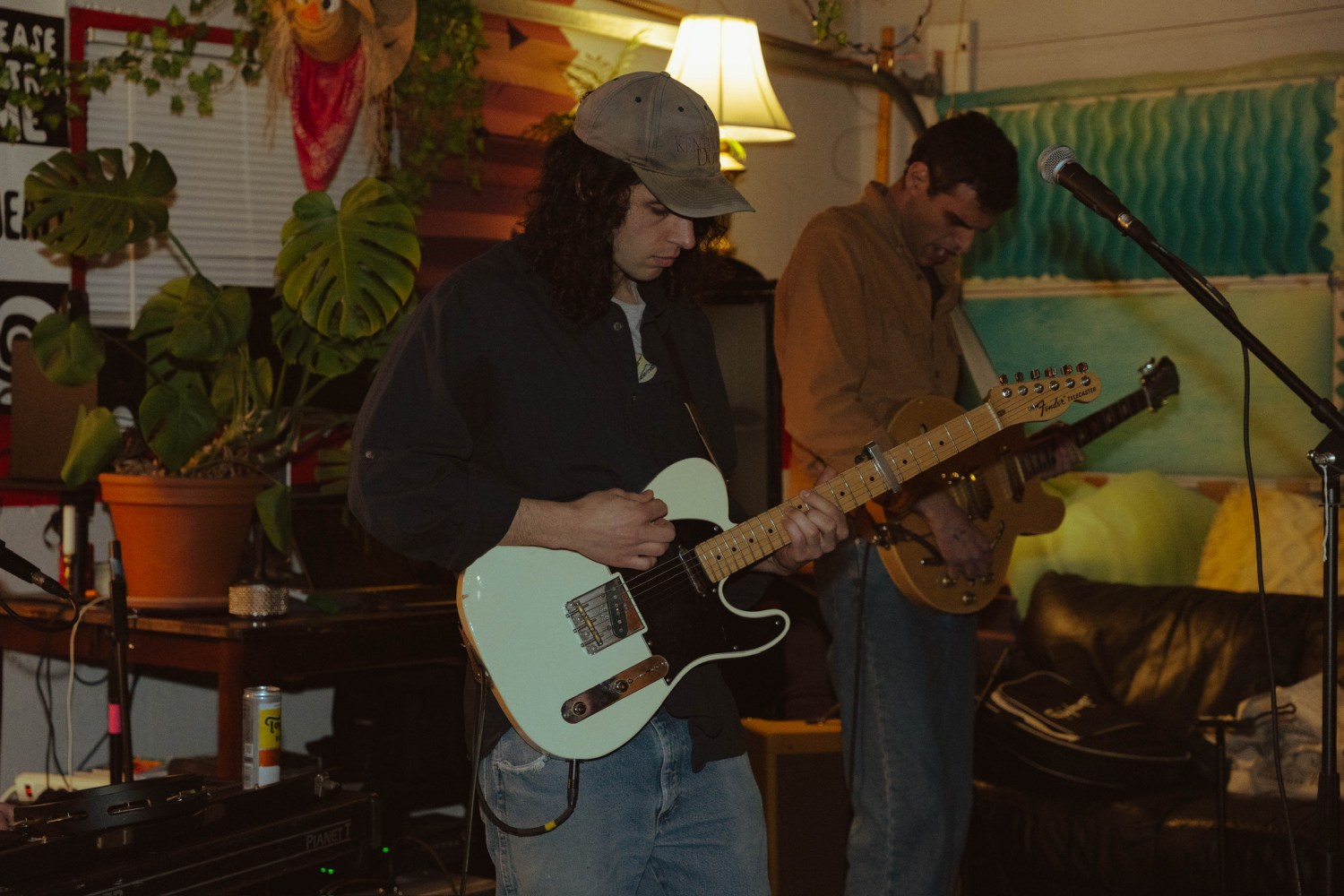
One Wheel Fireworks Show has been a throughline of Cole’s creative and personal understandings since his debut album Cold Cuts and Ramen was released back in 2024. Where songwriting became a reflection point of not just how to express himself, but why he should do it in the first place. Last month, Cole shared Jason, eternal, his newest collection of self-exploration and storytelling, out via I’m Into Life Records. These songs don’t represent moments that pass by, and they also haven’t been fully lived in yet. But to his credit, that’s what Cole envisions the journey of creating to be about. Jason, eternal bears its cracks as pieces break off from erosion and heavy use. Finding bits of conflict and resolution in the textured layers and folk-leaning explorations, Cole’s deliverance remains upfront, blending wit with conviction and irony with what has been assumed in his life thus far.
We recently got to chat with Cole before the release of Jason, eternal about the new album, restructuring creativity, leaving mystery and always writing with hope in mind.
This interview has been edited for length and clarity.
How are you feeling at this time as you approach the official release of Jason, eternal?
I’m feeling pretty good. We made it a long time ago, and it was one of those things where I wanted it hot off of the press. But I think time has been kind to my relationship with it. I recorded it in a really different way than I did the first one. And at first, I loved it, and then I hated it, and then I’ve kind of come back around to thinking it’s cool again. We’ve got a good band now, and Colin Miller (MJ Lenderman and the Wind) and Xandy Chelmis (Wednesday) hopped on it a little bit, too. I’ve got a band here in Nashville now that feels like we can actually play the record in a good way.
It does feel like a very expansive record, like you’re trying new things and taking risks. Did you have any goals or expectations as you took these songs to Haw Creek and Colin [Miller] that you wanted to see through?
The first One Wheel record I kind of made on accident. I was in another band in college that was this electronica, indie rock kind of thing, and I’d always collaborate with other people. But I had a collaboration fall apart, and then, moved to Nashville with my sister – I literally hopped in her car day of. I didn’t have anyone to work with, and it was COVID, so I started recording songs in my room, and suddenly had a record. I didn’t think I could do that, so I thought I’ll try to do it again. I spent the next year making demos that I just hated. Colin and I are both from Asheville, so I took these demos I hated to him and asked, ‘can we just make these songs, but in a way that I can stand to listen to?’ I thought the songs were good, I just thought I was using the wrong instruments, the wrong tempos and it became this very labored process.
Making this record, Colin calls it Hog Dash style, where we plug in two instruments at a time and hit the songs over and over and over again. And once you get bored on an instrument, you’d plug in a different one. There was no rehearsing any parts, it was really like zooming in on parts over and over and over and over, creating this massive stack that you would then whittle down. We did that for 4 days, and then we did it for 3 more days a couple months later, and that was the whole record. So, there wasn’t a vision other than that really messy and imperfect textures.
I want to get into the significance of imperfection in this record. Going from wanting to release it hot off the press to just not liking it at all to liking it again, what happened in between there?
In the mixing stage, we were whittling down so much, and I wanted Colin to just do his thing to it. I think it’s cool to have your art refracted through someone else. My favorite records, or at least my theory on my favorite music, is 50% of it is maybe the music itself, but 50% of it is because you don’t know how it was made, you know? So, you can never like your own stuff in that manner because it just doesn’t have the mystery to it. Colin was working on it, but then our progress was accidentally torpedoed by the meteoric rise of MJ Linderman [laughs]. Jake was there when we were working on the record, and then that whole thing popped off, and Colin got deployed to play drums on tour. But it actually allowed me to write 80 more songs.
Did the break in the middle of this album add to its mystery?
That distance is kind of the best thing ever when you’re trying to make a record. You spend so much time thinking about every word, every decision. And then come back to it, especially after someone else has sifted through it, and you sometimes think, ‘oh cool, who wrote that song?’ [laughs].
The significance of imperfection is in the title itself as well, playing homage to the artist Jason Polan. What about Polan inspired the way you view this record as both a concept and a project?
During my first two years out of college, I became completely unengaged with music – I was barely touching an instrument. I was really feeling distant from music when I came across [Polan’s] obituary. He was a newspaper cartoonist, and his whole thing was he would do these slice-of-life drawings that would take him anywhere from 20 seconds to 3 minutes. But he would walk around New York City and just pick out little details you wouldn’t normally notice. But he had this project called “Every Person in New York”, where he was attempting to draw every single person that lives in New York, which is like 8 million people. But he drew over 30,000 of these little sketches before he died in his mid-30s.
I’m trying to understand the idea of getting up in the morning and just making something. Treating music as that little 2-minute unobserved sketch. Obviously, his goal to draw every person to New York, A, impossible, and B, he failed. He didn’t get anywhere close. But it doesn’t matter, because there’s no standard by which he failed, you know? Every drawing was a testament to making stuff and letting go of perfection and comparison – just being like, well, that’s my drawing of that dog. It may not look like the dog. And it may be kind of goofy, and it may be all I can do, but that’s how I would draw it. I’ve been wanting to let that guide the creation ritual, rather than try to make something I think I should make.
It’s such an interesting goal, because depending on how you look at, it’s either, being excited that you still have 8 billion people left to draw, or it’s daunting, like ‘shit, I still have 8 billion people to draw.’ Taking that realignment of the way you approach creativity and perfection, how did it change the way you approached writing a song?
I feel like I’m now learning about how it ebbs and flows. Like, you can go out every day and pick up a notebook and start drawing everything, but sometimes I don’t feel like it. I’m learning now, after all this, to not be forcing myself to do it if it doesn’t feel right. I would throw stuff at the wall with the first record. I was very much working on coming up with something very specific to play and then perfecting each part. But working with Colin, now that idea of throwing stuff at the wall and hitting record, but moving on, that was the full circle moment. I figured out that I can get up, create, and truly just move on. That was the beauty of the break and waiting for this record. And as soon as I got home from Haw Creek that second time, I went from writing one song every month and a half to four songs a week.
Photo Curtesy of One Wheel Fireworks Show
A lot of this record you spend grappling with time and feeling stuck. But there are a lot of instances where it feels like you’re trying to balance the past, like faded experiences, or shifting around mistakes, projections, maturing, etc. Was there a need for you to bring a focus to the past, rather than writing for the future in a present that felt so motionless?
The whole time I was writing the record, there were some family health issues, and my grandfather died during the course of making it. I started to hyper-obsess about mortality and death. I remember being a little kid in elementary school and thinking, ‘my kindergarten teacher’s kind of old, right?’ And then I’d be in 5th grade, and I’d be like, ‘well, shouldn’t she be dead by now?’ She’s probably gone from the ages of 52 to 56, but I kind of thought about everybody dying when I was really little. The record was originally called B.I.B.L.E., which was an acronym that I saw on a church sign here that meant ‘basic instructions before leaving Earth’. So, between Jason [Polan], here’s this guy who did a lot with a little time, here’s me wasting all this time, clinging on to things around me that I feel are going away. But that title didn’t feel quite right. It felt a little too heady. This is a really dark record, but I’ve wanted to put a little more hope into it. I was sitting with a lot of fear and shame and regret when I was making it, but on the other side of it, it kinda feels hopeful in the darkest way.
Were you writing with hope in mind? Or does it only feel like that now that you are removed from making it?
I think “Jason” is a hopeful song. I think “Woody” is a hopeful song. I think there are glimmers of hope. The end of “Dollywood”, that song is contemplating this thought of, ‘am I evil?’ I’ve talked to a lot of friends about those kinds of thoughts, where I’m out here, trying to do my best, but is there something inherent to being that’s dark and bad and selfish, and cowardly? But that song is not resolved to that, and I feel like it pulls the other way, finding the good parts behind the bad emotion. Like, you’re angry, why are you angry? Because you care. But, why do you care? That kind of thing.
Did that lend itself to finding that hope? It’s such a dark place, when those thoughts come up, and it’s such a natural response to negative feelings. I like how you once said it’s like you’re trying to outsmart your own feelings.
I mean, it’s always the hungry check, right? Is everyone leaving, and am I doomed to wallow where I’m at forever? Or am I just hungry? Because everything feels so tangible when you’re in it, and I guess it is. But honestly, I think this was the first time I thought that making a record was about expressing emotions. Which is funny, because I made a decent amount of music before this, but I always thought I’m just making a song, you know? I have feelings, and I guess the feelings are in there, but I’m not expressing myself.
What do you think that separation was? Between actually allowing the feelings to come through and just writing a song?
I don’t know, I think I’m just stupid [laughs]. I think I was just not taking in the process of what I was doing. There’s a James Baldwin quote about how truth-telling is your only duty. Maybe before, I would just think this bad song was catchy, and now I’m almost making a logic tree of why I feel this way.
You actually use the perspective of various characters, spending time to explore their purpose in these songs and the larger stories that you’re telling. What made incorporating characters an impactful vehicle for you to tell these stories?
It’s funny, after writing the record, a lot of what I’ve written since feels very from my perspective. Characters allowed me to delve into some stuff that I was grappling with, but maybe not actually experiencing totally. “Jarrett’s House” is a combination of this old country boy that my dad was really close with in Marshall, North Carolina. He was this classic old Southern guy, who would give you the shirt off his back, but he was probably rigging local elections. He’s a lot of different things, and I feel like my dad kind of worshipped him. I mean, he’s always been nice to me, I don’t know if he’s a good guy, though. There’s a line in that song that goes, “he was a mediocre businessman, a pretty good friend, and a terrible father. Kinda wished he had a daughter, because sometimes something more foreign is somehow easier to understand.” I mean, I love my dad, but being a son… that dynamics just hard. I’m trying to make some sense of that, while trying to love people for sides of them that you don’t necessarily get to see often.
Written by Kaela McVicker | Photos by Olivia Gloffke
On a cold winter night Isabella Komodromos, otherwise known as Bella Litsa, and I hop on a call together and discuss her hyperawareness for life, love and spirituality. Komodromos releases her explorations of drastic love and the tests of limited time with limitless execution on her debut album Drasticism.
Komodromos grew up in the small town of Hopkinton Massachusetts, dreaming to play music since the first time she saw someone’s hands play the piano. She began singing lessons at age 13 but her vocals “didn’t come naturally at first”, she will admit. As she progressed over the years within the realms of dance, theater, and voice, Komodromos landed herself a spot at Berklee College of the Arts in Boston, MA. “Studying music is complicated emotionally, and after studying classical and jazz and all these different styles, I had to refind my love for music again,” Litsa says.
Taking early inspiration from artists like Lana Del Ray, Daft Punk, Roy Orbison, and natural inspirations from her day to day life living in a bustling city, Komodromos aspired to always have purity in her voice. Post college she became enthralled in all types of music, noting her love for truly embracing and living the constant of change. A strength that most strive to have, but for Komodromos, she embraces it most in her musical accolades.
“I will never sound the same all the time,” says Komodromos. “My voice is always evolving and being re-inspired by new artists I hear.” When asked about her early experiences with songwriting, she explained, “I came to college never having written a song before. Becoming so inspired by my peers in Boston making music like rock, punk, noise, and then coming to New York, I became enthralled in the sounds of the city itself.”
When producing Drasticism, Komodromos explored the radical measures of what she was able to express that she could never have in plain words. She digs deep and creates angelic visuals with her melody and choices of phrasing, describing pieces of her heart she grew to love or lose as she wades through the different shades of romance. Where some tracks are bouncy and playful, others slow and brooding, but all take you on a journey with no shortage of harmonic conversations. As it came together, Komodromos spent all her time in her room creating these songs, completely depriving herself of her basic needs, but maintaining the devotion to compose. “I sat, sometimes for 12 hours, without stopping. I didn’t eat, or get up from my seat. I kept cancelling plans,” Litsa admits. “That’s really how I like to create – with total tunnel vision.”
She pushes the songs to longer lengths than anticipated, breaking boundaries of popular writing structures, denying predictability while dreaming of unusual endings – much like her experiences in love. Every single song on this album shows her relentless attempts to reach farther than the song before. “How many vocal tracks can I add,” she would ask herself. “How much can these songs be pushed? I would not stop until songs were complete.
When listening to the album in full, it’s one that truly embraces the soft and harsh parts of love in the face of longing. From the first track “Saint Mishima” she begins to express how “hung up” she is on this love, and how she “feels it all the time”, expressed with a certain type of chill shoegaze twang that grows in its intensity. On “1117”, Komodromos swirls us into a lullaby, fluttering ever so gracefully from her chest to head voice, wrapping one in a dreamlike state along with the piano romantically dancing around the lyrics. She brings up the tempo with “Passion Plug”, thumping the keys with a song about a love that could’ve been, but now experiencing the anguish of that identifiable thrill being gone. The excitement builds with whispers of “I’ll beat the feeling to the ground” as she reminisces, her voice getting higher and higher with longing.
“Inside a Seashell” really bends the music in ways you wouldn’t expect, and ends with experimental murmurs and electronic vocal tuning. She continues putting a very hypnotizing vocal effect on her voice on “My Blue Eyes” with some laid back, almost reminiscent of Beach House, drum kit and a super catchy melody. Then over halfway through the song explodes into a bridge that breaks the listener away from the calm and into a grungy nightclub where she lures you in with her lyrics. As a whole, Litsa takes you through her deepest heartfelt moments, and each person she’s with makes her feel a different type of energy, a new melody, a darker or brighter tone, and she fully embraces it.
The process all began in Logic Pro, where Komodromos used demo midi tracks to work out all the possibilities of instruments that she heard in her head. Not to mention it being a great way to teach her band the parts, having them already laid out the way she envisioned them. Litsa has been consistently playing with a trio made up of herself, Sarah McCauley (flute) and Kelt Leray (guitar), but has since grown it into a five piece band with the addition of Henry Vaughn (drums), Huxley Kuhlmann (guitar, bass, piano) and Abe Nouri (bass, piano, synth).
Prior to the release of Drasticism, Komodromos made it a priority to create and share music videos alongside each single, sizzling these songs with experimental storytelling that let you in on her visual style.
Songs like “Neverending Movie” bring you to a land of colorful projections and memories where Litsa flows through streams of light, portrayed as an angel adorned with pure white wings in the comfort of her bedroom (this song a love letter to one of her favorite composer, Sergei Rachmaninoff). “Passion Plug” transports you through a vaudevillian theater piece with a mime-like aesthetic and expressive style of dance that adds a comedic edge the dancers feed off of each other’s movements. “1117” pulls you into a black hole where she disguises herself as a vision in blonde; a goddess spinning around endlessly into eternity. “Angelica” takes you through a snowy super 8 dreamland where she twirls through the trees flowing dreamily around the snow. All of them singing to the kind of love the tune mimics, with nearly no hesitation to talk directly to the camera as if addressing the lover themselves.
And through it all, Litsa admits that it is truly about lovers in her life, past and present. Lovers turned friends, some feeling autobiographical in reference as Komodromos emphasizes the importance of each song being a different kind of love. When questioned more about who these songs were about and the tie into the extremities of relationships, she explains that, as well as the ways she created Drasticism, the love she felt was equally part of the meaning. “The lengths willing to go for or against love is a big theme as well; the drastic measures we take. The people these songs are about know it’s about them,” Litsa makes clear.
When asking about her songwriting, there is an explanation for where it comes from. In her words, they come to her from beyond, and the spirituality she’s built within her practice of letting God speak through her.
“I have a love for God. But when writing these songs, I felt so confused,” she admits. “I would write a song and it didn’t feel like it was mine, but like it’s a predestined thing. I feel as if God sends me a melody or lyric, and it’s heaven sent. And then some songs it’s more technical. But I know how it needs to be. Now, how do I do this?”
In her music, it’s so clear that she really does have the sense of letting go within her voice and the ways she lets it explore. “When making this album, I stopped listening to music entirely. I really did this for a need of silence,” Litsa admits “Living in New York it’s never truly silent, but within the natural silence, the delivery of a song arrives.”
The cover of the album holds a lot of symbolism as well, taking some inspiration from the cover of Lana Del Ray’s “Tropico”. Aiming to mirror a look of Mother Mary in her white dress, with her sense of purity in her head garment – a wounded bridal vision. When your eyes naturally wander around the frame, the hands are a striking message of where we would normally see punctures of the skin, but find two orbs of beaming light that are practically lit with small mirrors in the center of the palms. Instead of her execution, there is an opposing message of light and hope.
“This portrays that the lights are upon you and in your grasp,” says Komodromos. “So much of this album is tortured but not hopeless; something pure, holy and surrendered.”
View more photos of Bella Lista taken by Olivia Gloffke
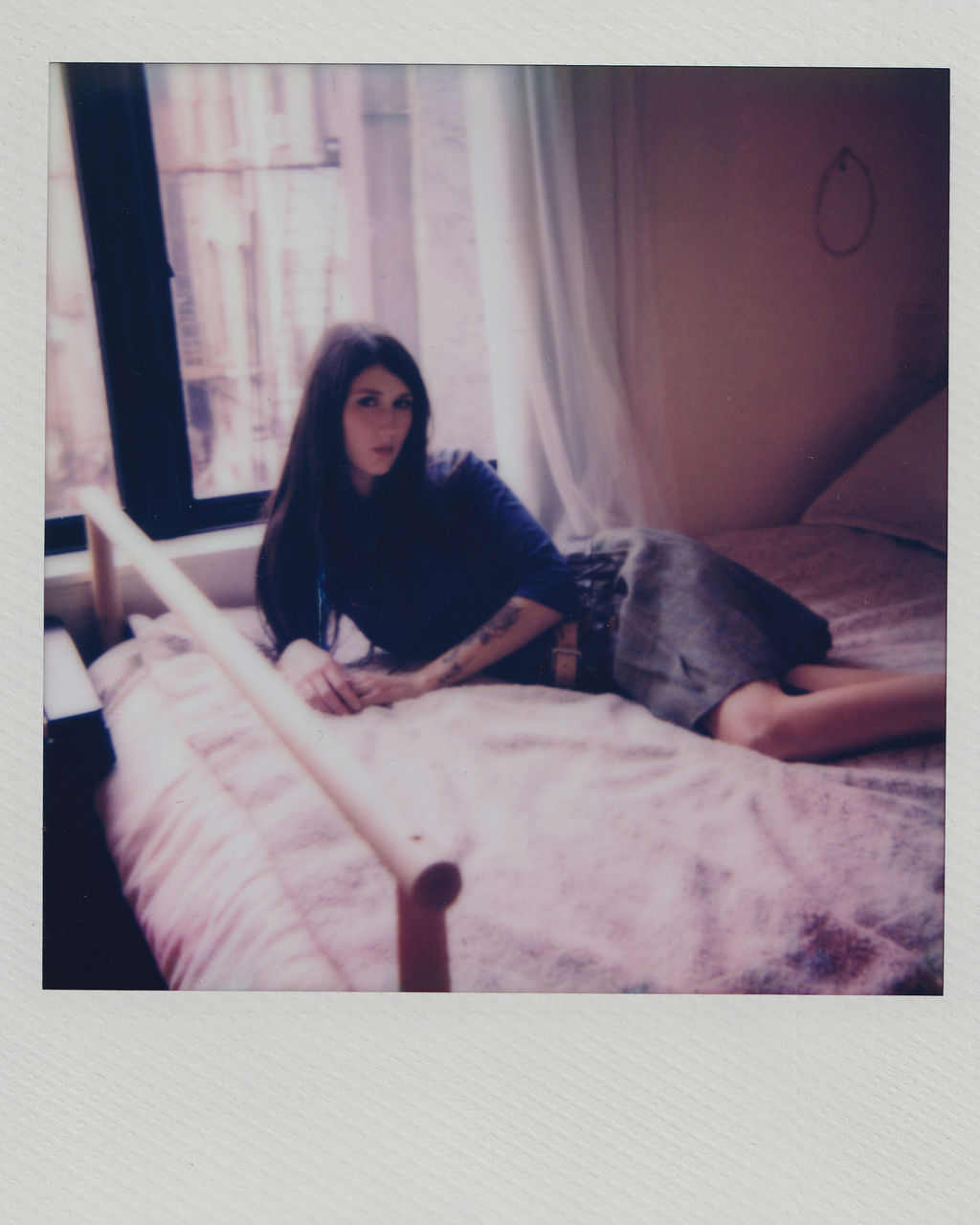
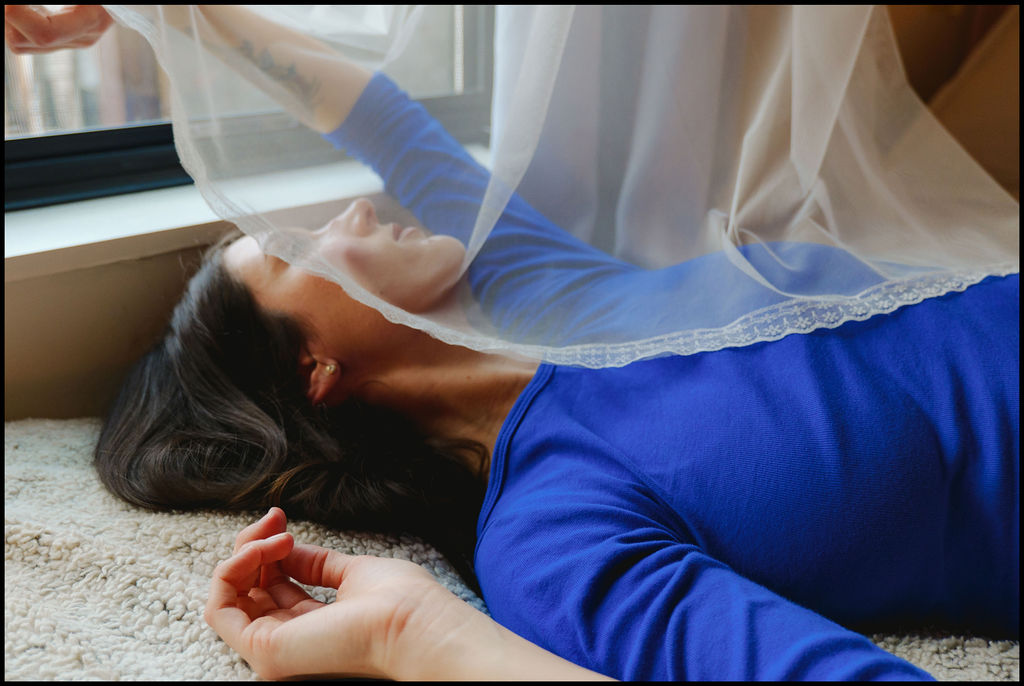
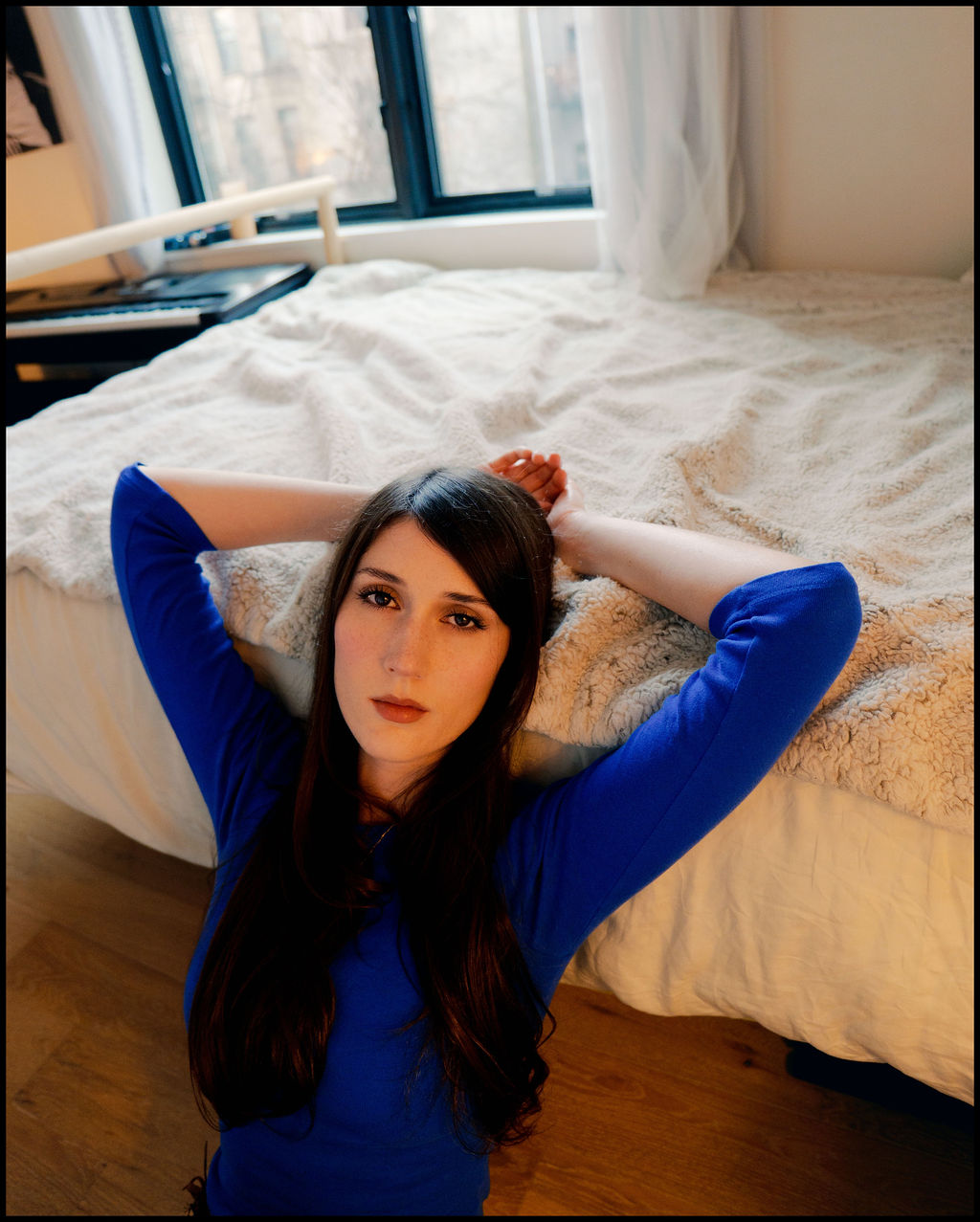
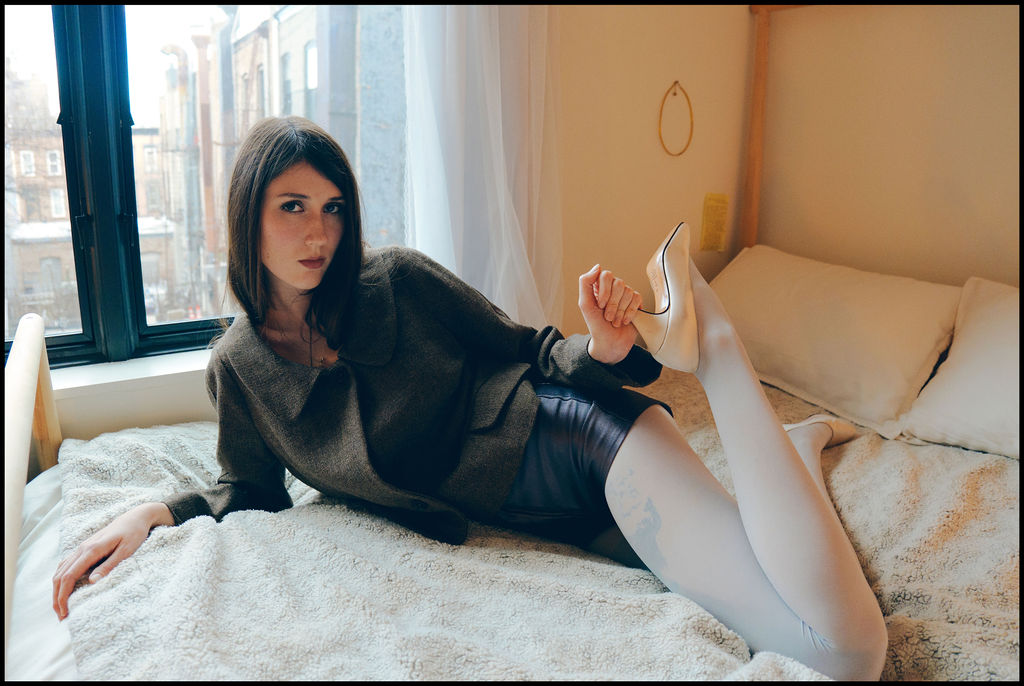
Musician Bella Litsa posing for The Ugly Hug Publication.
Musician Bella Litsa posing for The Ugly Hug Publication.
Musician Bella Litsa posing for The Ugly Hug Publication.
Musician Bella Litsa posing for The Ugly Hug Publication.
Musician Bella Litsa posing for The Ugly Hug Publication.
Musician Bella Litsa posing for The Ugly Hug Publication.
Musician Bella Litsa posing for The Ugly Hug Publication.
Drasticism is out everywhere now as well as on a limited-edition vinyl pressing.




 the ugly hug