An ode to you, DIY Darling. How can we write a hagiography that is effusive, affecting, and roughly two pages long? Easy – The Goobs & My Friend Cowboy already did it, on wax. The entire nine-song album clocks in at just over 17 minutes.
Fans of Nilsson Schmilsson will discover much to adore in Happy Loving Couples, the latest album from The Goobs & My Friend Cowboy, which dropped on Friday. Or, perhaps it’d be more fitting to liken the record to Nilsson’s 1974 collab with friend and accessory John Lennon, “Pussy Cats.” We don’t want to put too fine a point on it. Either way, if mimicry is the sincerest form of flattery, then mucho mungo – this is the sweetest little thing we ever seen.
The album is almost entirely written and performed by Carson Brom (aka The Goobs) and Logan Adam (My Friend Cowboy). Philly heads might recognize Adam as the bass player in Fib. New Yorkers might recognize Brom from his bitchin VHS tape collection or equally bitchin amateur baseball team. These are two musicians molded by intelligentsia, and while their earworm influences certainly show in Happy Loving Couples, so do their diversified interests away from music-making. Jaunty, avant-garde, almost absurdist tunes lilt with the occasional (and welcome) jagged edge. Add in vocals that ask “What would happen if Tame Impala’s Kevin Parker was Suicide’s Ghost Rider Motorcycle Hero?” and those 17 minutes fly by like a pleasure cruise leather bruise. This bite-sized smorgasbord is the summit of two far-out minds, and the result is psychedelic art rock with a mile-wide ripple of bubblegum pop (scrumptious).
Last August, after Brom released a surreal stop-motion music video for “Baby, I’m a Star” – the first single and the album’s opening track – Kellen Baker of Indiana-based Good Flying Birds reached out with an offer for Happy Loving Couples to be the inaugural release on his new label, Painty Pot. Curious parties: Let this video be your introduction to The Goobs’ sound portfolio, and buckle up to enter an abstract world with no hard lines or scruples. It’s all good company, high rollers, reasonable alternatives, and heat lightnin’. The record’s cover art (the masterwork of Adam) encapsulates that uniquely mind-bending whimsy in 2-D. (Also, shoutout Guided by Voices. I’m from Ohio and that’s a huge deal to us all.)
By your self-aggrandized reporter’s count, the stars of this collection are “Friend & Foe” and “Goodnight,” the third single off the record. “I’ve been sitting on ‘Goodnight’ for nearly five years, surviving many iterations since its conception in Portland, Oregon during the thick of COVID,” Brom tells Ugly Hug. “It was the first song I ever wrote and performed on a piano, a recording I’m so glad I held onto. It really wasn’t until I phoned a few friends last spring when the song started to come alive. Logan added drums and bass, my pal from Portland Zeke Ganschow provides the wonderful Nilsson-esque backing vocals, and then I recruited Wyatt Corder from my hometown Austin, Texas, a childhood bestie, to contribute trumpets throughout. This one was such a long time coming and a family affair, it warms my dang heart.”
Happy Loving Couples by The Goobs & My Friend Cowboy is currently available for streaming on Bandcamp or via cassette. As for Brom, he smokes American Spirit Celadons, and his favorite way to kill an afternoon right now is (like all rock n rollers) latch hooking. “I like to keep the hands and brain busy,” quoth The Goobs. “I do a lot of cooking, playing baseball, refinishing wood, upholstering, Mets games, and goin to da movies.” Outta sight. Your reporter once ate potato salad on a dive bar patio avec The Goobs on a summer Sunday afternoon, and we both agreed that it was a perfect day. Shoutout Jones Bar. Point is, our hero is hung up and strung out on thee real good stuff. Jonesing to take a cue? Course y’are! Brom’s daily-rider playlist consists of Emitt Rhodes, The Byrds, Wings, The Beach Boys’ “Love You,” and (of course) “always Nilsson.”
The world-weary modern music lover deserves to romp around in early-1970s leisure euphoria, without having to derail on a Lost Weekend of their own. Cultural imagination: Feast thine eyes. “After a year of tinkering with this record, which started as just goofing off on a four track in Philly and then evolved into a real labor of love, it’s just nice that it’s finally out in the world,” he says. “We hope you like it.” Peace and blessings and Easter Ham.
Listen to Happy Loving Couples by The Goobs & My Friend Cowboy and snag a cassette released via the newly christened, painty pot.
Today, Keta Ester, the solo project of Bruiser and Bicycle guitarist and vocalist, Keegan Graziane, shares the music video for “Singer of the Rock Song”. In February, Graziane shared his debut album under the project titled Love Apple, a collection emblematic of the beloved pop facets and responsive traditions of storytelling that the New York-based artist uses to piece together a sincere and unique profile within a single song.
“Singer of the Rock Song” begins with a sense of warm anticipation, standing on a doormat as a colorful synth and Graziane’s inviting cadence fall into the knocking rhythm that lets you in. “Am I a singer / I am the singer of the rock song”, becomes a back and forth as Graziane puts a mirror up to the creative process, exploring what it means to be a musician on his own terms. And as the instruments grow in their deliverance, and the textured patterns shed light on bits of constant reflection, Graziane holds onto each line of the final chorus, not out of any need to savor it, but a reminder of the patience, care and joy that goes into creating something genuine.
About the track, Graziane shares, “from the outside, the title of the song seems very tongue-in-cheek, but it’s written with sincerity and a deep appreciation for music and performing. There is intentionally some humor within the idea of the track, but it’s also inspired by watching musicians hone their craft over a long period of time and form their own singular expression—something that can only happen over from making music over the course of many years.”
Watch the music video for “Singer of the Rock Song” here.
You can listen to Love Apple out now as well as snag a copy on CD and cassette.
Written by Shea Roney | Photo Courtesy of Westelaken
Every Wednesday, the ugly hug shares a playlist personally curated by an artist/band that we have been enjoying. This week we have a collection of songs put together by Jordan Seccareccia of the Ontario-based project Westlaken.
Prose etched with keys into park benches and stall doors, the stories embedded within a Westelaken song animate the lines between the humdrum, the overlooked and the unrequited of our day-to-days. Like budding beds of flowers passing the collection bucket to fund the altar, each bandmate builds upon their purpose in the name of the gathered spirit. Releasing music for almost a decade, Alex Baigent (bass), Rob McLay (drums), Lucas Temor (piano), and Jordan (guitar/vocals) break away from any sort of structural dependence as they build out from the grandiose. While their melodies pull straws from folkloric wisdom and false prophets, Westelaken lean into the thoughtfully layered textures and striking dynamic displays that have continuously set them on their own path.
About the playlist Jordan shares;
My favourite radio show is called Barking Dog. It’s a college radio program on CKUW in Winnipeg. It’s researched and presented with such care and curiosity. I love listening to old episodes from their archive (explore it at julianacyoung.com). There’s all sorts of songs here but it can all be roughly categorized as traditional folk and roots music. I put a ton in this playlist. A ton of songs I heard first because I listened to Barking Dog, and some songs I don’t think they’ve played, but that I think fit right in.
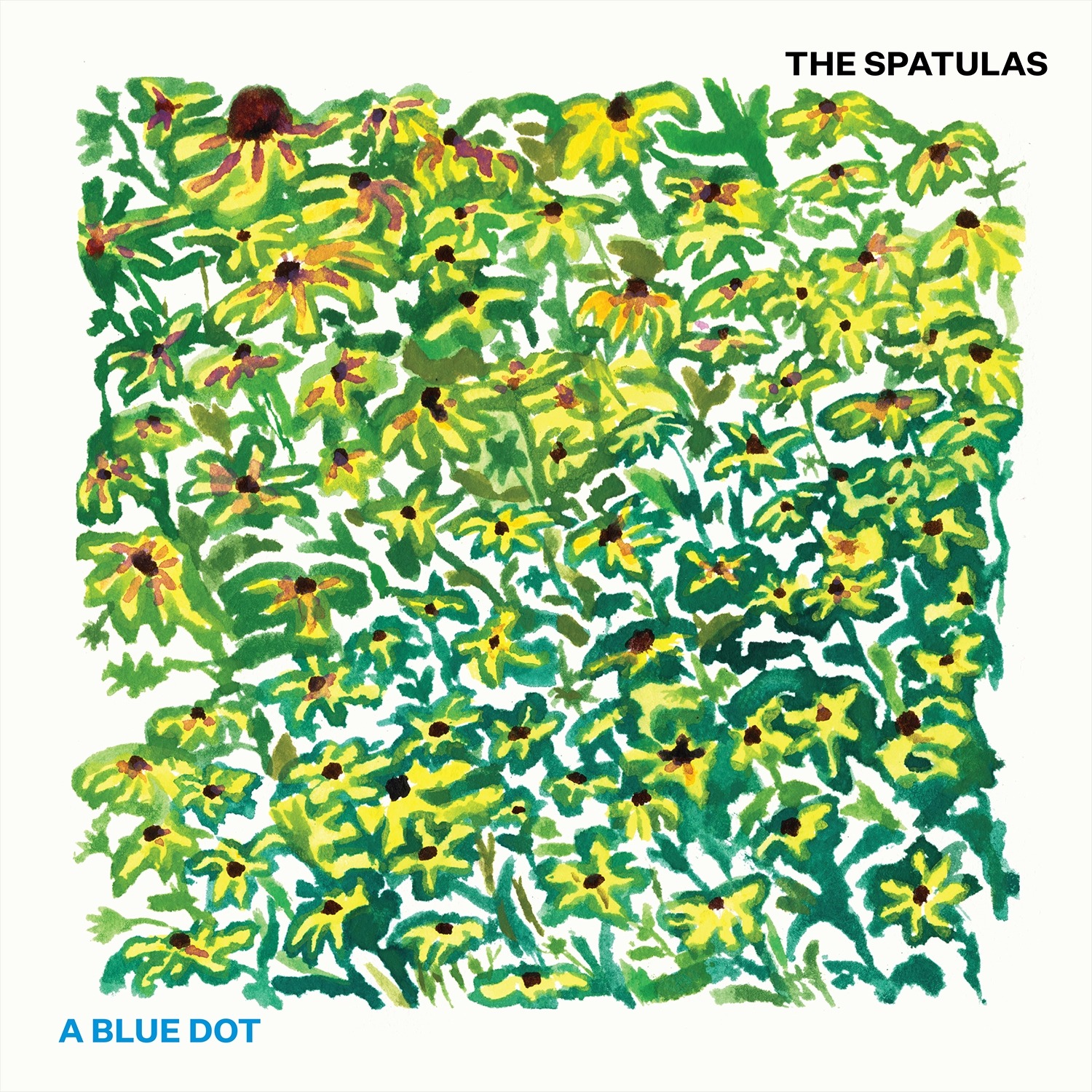
Today, Bloomington-based band The Spatulas return with their new single “What Carries Me Through Frozen Blue”, the second track shared ahead of their new album A Blue Dot out May 15th via Post Present Medium. Through several lineup changes and shifting homebases, what has stayed consistent in the world of the Spats is songwriter Miranda Soileau-Pratt, who has always found unique ways to make the project an extension of her creativity. Bringing in guitarist Luke Einsiedler, bassist Elijah Bodish, and drummer Greg Witz, A Blue Dot is the marker of where these changes have all organically led to, finding The Spatulas in their strongest form yet.
“Watch my bubbling pot boil over when I forgot”, Soileau-Pratt sings ahead of wiry guitars that fall like the hair of a mut, as “What Carries Me Through Frozen Blue” piles up loose sonic strains through natural deliveries. The Spatulas have never been a project to dwell on the impact, but rather find common ground with the humdrum that thumbs the scale of our lives, no matter how little we may notice it. And it’s in that subtlety where the shifting melodic patterns become something of a fresh start; “a sparkle of something simple in my eye”, Soileau-Pratt sings out as tones shift to-and-fro. And as the band moves on, the guitars sing like sporadic thoughts of to-do’s and daydreams amongst the clambering drums, throwing caution to the wind as the band sears the track with both a newfound invincibility and their instinctual care.
“What Carries Me Through Frozen Blue” is released alongside an accompanying music video featuring novelty characters, found footage and a dedication to the memory of Buzz “Poochie” Wallace. Watch the video by James Wallace here.
A Blue Dot is set to be released May 15th via Post Present Medium. You can preorder the album now on vinyl.
Written by Joy Freeman | Photo Courtesy of Crazier
This Dog Spits is everything that the title suggest: bold, fearsome, and unflinching. The four-track EP sees Athens-based group Crazier in a new light, one led by the defiance of lead singer Eli Raps in the face of her assault by someone in the local scene. What rises is less elegy to what came before, and more reclamation, a medley of truth brought to life by band mates Winston Barbe (guitar), Alex Dillon (drums), and Kevin Cregge (bass).
On the introductory track “Dissolving,” Raps asks, “Why would I hold it in?/ Who would that benefit?/ I’ve got this song to sing, my love,/ and you’re not gonna like it.”
I caught up with Crazier to discuss the composition of the tracks, the intentionality of their production, and what it means for them to be sharing these songs with the world.
TW: sexual assault, harassment, intimidation, and stalking.
There is an uneasiness in “Dissolving” sonically, a perfect reflection of the lyrical content (“this world will be over for you and for me if you get any closer”). Do you usually compose your melodies before or after you’ve written your songs narratively?
Eli: Melodies and lyrics usually unfold hand in hand for me. I think of or overhear narrative lines and phrases that I like all the time, and I try to document them as quickly as possible. Though I think good lines or phrases are inherently musical, when I collect an idea for what could turn into lyrics, those ideas rarely have melodies attached in my brain realtime.
I like to compile my recent ideas or line snippets when I’m working on a song. This helps me get going. I’ll find something I like while playing guitar or another instrument and just scan the line ideas until one grabs me. Once one of the lines gets kidnapped by the melodically-oriented part of my brain and the rest tumbles into place – by the time I consider a song complete, the bulk of the lyrics were written separately from the initial lines that inspired the song.
I’m hesitant to express the following sentiment, because lyrics are so important to me, but when I’m first writing a song, words are just there for me to find melodies – the second the two meet is when I consider the songwriting process to have begun. Because the lines/phrases I collect are from a bunch of different contexts, I almost never know what a song is going to be about until it’s started, and even then I don’t know what the full narrative will look like until the song is finished. There are songs of mine that I’ve listened to five years later only to discover a hidden meaning/narrative tucked into it that I wasn’t aware of before, which is a really cool experience.
Kevin: This is Eli’s question to answer but I do find there is an innate affinity between the lyrical narrative and the melody – they play off each other symbiotically to strengthen the overall effect on the listener. Eli is a natural at uniting discord and harmony to curate a wholly idiosyncratic sound that defies convention.
“I’ve got this song to sing, my love, and you’re gonna hate it. I’ll sing it anyway.” There is something so poignant in that – defiant, a reclamation. How have live audiences reacted to this track so far?
Kevin: Funnily enough, we’ve played a few shows recently where folks were locked in on the performance, so we’ve seen the audience dancing to a track that is perhaps not the most danceable, but that juxtaposition of joy and movement against sonically complex & lyrically sobering material is surprising and encouraging.
Alex: Hypnotized for sure. I’ve seen the crowd get quiet, lock in, focus on what we’re able to conjure up on stage. It’s magical.
You have a very clear lo-fi sound. It is both engaging and stripped-back enough to feel particularly intimate for the listener. How did you develop it as a group?
Eli: By hypnotizing ourselves accidentally (and then on purpose) with the songs. I think all four of us really resonate with the lyrics and emotional contexts of each song, probably in a bunch of different ways, and definitely in the main way – my 3 Crazier bandmates have all witnessed and experienced the distressing antics of the bullies who inspired these songs firsthand. It’s hard not to create something intimate when I know that the people I’m playing with know exactly who I’m talking to or about in any given line across the EP.
Going into the world of This Dog Spits together over and over proved to be pretty healing in the end, at least for me. I remember working on the songs to prepare for the studio, and it got to a point where every time we played through any of the songs in full as a group that by the time the song was over I felt like I’d just woken up from a really perfect nap, ready to get back to my Real Life again.
Winston: The first tenet of Crazier is to make decisions that serve the song. Bunkered down in our practice space, we spent hours repeatedly playing the songs to find The Feel. This allowed us to make quick decisions in the studio which is especially important with the natural limitation of tape recording.
I don’t want it to sound like I am against DAW, I think DAW is great in its own processes and especially in its accessibility, but working with tape, not to mention a wizard of a tape engineer, really helped us avoid the impulse towards perfectionism. Who wants that? What you hear on this EP is people playing music.
Kevin: Crazier initially began as a three-piece which naturally limited the scope of what we could pull off in a live setting, so there was a measured approach to developing our sound. When I joined, I filled in the low end and offered some counterpoint to the songs that fleshed out the sonic landscape. Eli normally presents her songs fully formed, with clear ideas on each part that fit together like puzzle pieces to create a larger work. We all have backgrounds in music and have played in other bands, but Crazier has the most restraint in my experience, allowing the music to exist independently without flashiness so as to draw attention to the material itself.
Alex: As a group I think specifically with Dissolving we took an atypical approach to how we would usually do things. Switching around duties (Alex on piano, Winston on drums) helped us come up with some fresh ideas. David Barbe’s production is also top-notch.
How has working in the Athens music scene shaped your work? What is the community like?
Eli: I mostly adore the Athens music scene. I think it’s full of so many authentic and talented and hardworking people. Prior to being assaulted and subsequently harassed, I had nothing but positive things to say about the scene here.
With that said, I’ve been so hurt by and disappointed in each person who massively failed (and continues to fail) handling what happened to me appropriately. Still today there are places within the scene that feel entirely unsafe for me to operate in – in many ways, I feel I have been effectively removed from the scene here. Someone who repeatedly stalked and berated me simply for being a sexual assault victim is involved in so many projects and holds many influential seats in the scene, and he is enabled by the people who know it for reasons that are not clear to me. I have been directly punished and threatened each and every time I or anyone else has tried to share specifics… that’s been a vicious cycle. Even answering basic questions like this is anxiety-inducing for me – I so badly want people to know the truth of what happened so I can feel safe again, but at the same time, it’s like… will these people find me in the street again and scream at me for this? Call me repeatedly in the middle of the night? Show up unannounced at my friend’s house? Storm into my place of work? All of these things are examples of what’s already happened. Seeing so many people record with, or book shows with, or play in bands with these people who have enabled or perpetuated my abuse has been really sad and scary and isolating, and has changed the way I view this or any other music scene.
In terms of how this shaped my work… It gave me a lot to write about, but I already had a lot to write about, so I’m not really sure. I think I used to have a lot less confidence in myself and in my abilities; I now view it as a privilege to know and work with me, the same way I consider it a privilege to know and work with Winston and Alex and Kevin. I’m no longer interested in working with just anybody, you know – you have to be kind and you have to be brave if you want to stand anywhere near me or my songs.
Winston: As a band, it’s been difficult. I’ve been a part of this music scene since I was a teenager, and it has always generated great music. But since Eli came forward about being ****d by a musician in the scene, it’s shown a different light on the scene altogether. It has shown me the weaknesses in the scene when it comes to holding people accountable. I’ve seen so many people choose the littlest amount of clout over ensuring safe spaces for people more vulnerable than themselves, and honestly it’s been really disappointing. It’s led me to become far more reserved when interacting with the scene and it feels like a lot of opportunities have been closed to us.
Having said that, all of my closest relationships have been made through the scene in Athens and I think that there are a lot of great people and a lot of great music still coming out of Athens. For instance the two songwriters who are supporting us at our Athens EP release show, Mckendrick Bearden and Malie Kato (Valley of Giants), are both people who have shown high character and write amazing songs.
I’ve had to mourn a lot of relationships since Eli’s disclosure, but it’s also really clarified what I value in people around me.
Kevin: While we are all musicians in the scene, Crazier is also composed of four members who actually work in the Athens music scene as well. So in addition to our involvement in music, we have a vested interest in supporting the scene that goes beyond just playing.
“Start over whenever you can/start over whenever you feel like it,” is a moment of hope at the end of the EP in “That’s a Start.” It isn’t a sense of mindless optimism, but an exploration of the oscillation of emotions that come with true healing. What do you hope the listener takes away from the journey of this project, front to back?
Eli: Generally speaking, I hope the listener takes whatever they need to from the journey of the project. I think one of the coolest aspects of songs and music is how personally adaptive they are – 100 different people can assign meaning to a song in 100 different ways, and I find each way so valid and so interesting. I fucking love when someone shares what one of my songs reminds them of, or how they interpreted it. Ideally, whatever the listener wants to think about – for better or for worse – they’ll find in these songs.
In a different way… it’s interesting, because these are the first songs I’ve written wherein I anticipate a few people really will not like the songs. And they should not like the songs, because they’re in them, and they’re in them honestly. Oh well.
For everybody else: If I *have* to pick a specific takeaway: Permission to feel, and permission to take a break from feeling if/as needed
Dissolving → What they did is real, and it was bad. Your world feels like it’s ending because it is.
Bye Bye → They were cowards. Don’t take them with you.
She Needs Me → Grieve all you’ve lost. Let yourself feel now what you couldn’t feel then.
That’s Start → Rest. You have a lifetime (at least) to unpack all that’s happened to you. You don’t have to solve it now, which is good, because you can’t, so rest.
Kevin: Listening to Crazier should engage and affirm, allowing you to face adversity with confidence. We cover some harder topics on this EP and while this collection does not offer a saccharine moment of digestible platitudes, it does cover a swath of emotions that sync with our lived experiences, because it’s not all sunshine and rainbows, but that doesn’t mean we don’t have the power to be a light to ourselves and others.
Alex: I hope the listener feels like they are being seen. Like the subject matter, framing, vibe is something that they can feel deep down and maybe they didn’t even know it was there.
You’re playing a set of live shows this spring. Any cities you’re particularly excited to hit?
Eli: This is the first tour I’ve ever gone on, so I’m equal parts nervous and excited for all the cities we’ll hit! I’m looking forward to Nashville – the last time I was in Nashville I got pretty sick and had to leave so I’m hoping this time is more fun. I’d like to find some cowboy boots on the cheap.
Winston: We are fortunate to play with some really good acts on this run. I’m excited to bring the songs to people who haven’t heard them before. I’m not sure which city I’m particularly excited about, I’m just stoked to hit the road with the band and to see what comes next.
Kevin: This will be our first real tour as a four-piece and I cannot wait to get close and personal with the others in Crazier. Honestly I’m excited for every city we’re playing: Birmingham is a personal favorite place to visit with one of the best record stores in the game, Seasick Records. I have several friends in Nashville and expect that will be a great turnout and fun play. Then Chattanooga has long been a preferred destination, just a lovely place I have many memories of as a kid. And very excited to get to play with our friends at Yellow Racket Records!
Alex: Stoked to hit Nashville! Maybe I’ll find a cowboy hat this time. This Dog Spits is out across streaming platforms on April 10th.
You can listen to This Dog Spits out everywhere now. You can also snag a copy of the EP on 7” vinyl.
Written by Shea Roney | Photos Courtesy of The Matildas
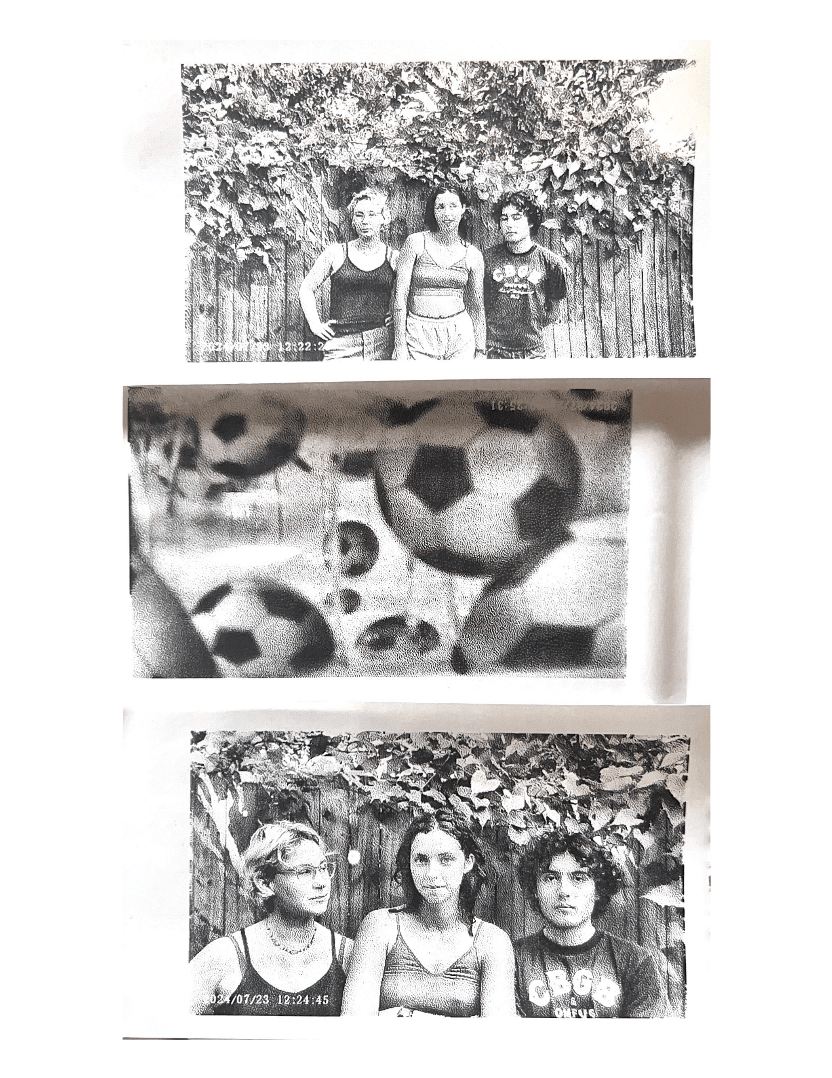
Last month, The Matildas released their debut EP titled Forever, My Talisman. After meeting in Carrboro and soon forming a band, the trio of Esmé Kerr, Lizzo Esser, and Victor Coto have since been piecing together a rich practice of creativity that goes beyond the music they make. But now spread out between NYC and North Carolina, The Matildas still harness that genuine spirit that they had from the early demo days of NC, expanding on the well-weathered and warm colorful patches of subtle pop-brews and playful experimentation. But rather than ask what choices they planned to bring into these songs, it’s easier to point at the amount of trust and good will that blooms between the group, and the lengths at which their intuition can go when piecing together these expansive soundbites and melodic revelries.
There’s a subtle punch on Forever, My Talisman that The Matildas use both sparingly and with care. With production help from Lizzo’s cousin, Amos, songs like “Kadeisha” and “Follow Through” hold up structurally; thoughtful tunes carried like a treat on a popsicle stick, as loose sonic displays drip away, and sticky harmonies begin to seep in between your fingers. “Missouri” becomes enthralled by its own natural movement, having been written at the drums, the trio blend sporadic inspirations with genuine delivery. The title track emulates both beginnings and ends, reminiscing, “On the pitch, I skinned my knee. Forever, my talisman”. Amongst conversational rhythms and patterned voices, The Matildas don’t just sing of a brush with luck, but rather an abundance of gratitude that’s worth carrying around. It’s part of their nature that doesn’t wince at a scrapped knee, but sees it more as a trophy of effort. Or something along the lines of snorting through your nose from laughing too hard is more of a sign of endearment than embarrassment. Whatever it is, it’s the natural joy of it all that lives in the heart of these songs.
We got to talk to the trio about keeping it loose, adult soccer leagues, building cohesion and opening the Big Pop Show.
This interview has been edited for length and clarity
Tell me how this EP came to be. I know you guys met up at an aunt and uncle’s place, not just to record, but to be together in one place again. What’s the story there?
Lizzo: They are my aunt and uncle. We had spent a summer together, the three of us, just playing music at our house and recording voice memos. We liked having a collection that captured that kind of spirit of jamming. But my cousin [Amos] is a really talented sound engineer, and has been working on making a little setup for himself in their house in Massachusetts. I hadn’t been there, and I was thinking about reconnecting with him, so I just messaged him and asked if he ever recorded other people. It all worked out, and we took a little trip there. It was really wonderful to all jam together and have a more proper collection of fully produced songs.
So where is everyone located? You all met up in Massachusetts to record, but where are you at now?
Esmé: We met to record in a town in the corner of Massachusetts, Vermont and also New York. So it felt like we were on the border of everything. But we all met in Carrboro, North Carolina. Lizzo was finishing her masters, and Victor and I were just hanging out, trying to play music, and waiting for Lizzo to be free.
Victor: Lizzo and I were roommates through an email blast on the WXYC email thread. That’s the Chapel Hill College Radio.
Lizzo: It was nice to come together in Massachusetts now that Victor is in New York, and Esmé and I are a little further in North Carolina. It was nice to all be together in a totally new place.
How long were you guys all originally in one place playing music together?
Lizzo: Around two years. The summer of 2024 was when we were doing a bunch of jamming, and we finally thought that we should make a band.
Esmé: But that coincides with we were also just hanging out a lot because we were on an adult league soccer team. But then we were also going to shows, so there were a lot of different ways that we were bonding. But music was the common thread we kept going back to.
I was going to ask, because soccer is a big theme throughout these songs, not just writing about the sport, but clearly the relationships through playing the actual sport are crucial. What connections do you have to soccer, and how does that translate over to your music?
Victor: I think Esmé has the closest connection with soccer out of all of us. I think that’s probably what sparked it. Esmé is really into soccer, and through Esmé is how we got into the Adult Soccer League. She’s the one that sent us the link and said, ‘you guys have to do this’ [laughs]. I think just having that in our lives, and Esmé being so excited and sharing that with us kind of just bled into the music very naturally.
Lizzo: And The Matildas is named after the Australian women’s soccer team.
Esmé: I was really obsessed with soccer at that period of my life. Lizzo was doing college radio at NC State, and I was doing college radio at UNC, and we would always talk about themes of 90s rock bands, where people would dress like they skate, but more a soccer, athletic nerd kind of thing. After seeing those themes come up in music, and actually playing soccer and then trying to tie that back to music was so fun. And when we were actually playing on the soccer team together, it just felt really harmonious — it was just so exhilarating and free after being stressed out about work, or Lizzo being stressed out about grad school. And we were kind of bad [laughs]. Our team notoriously lost every game by seven goals. Seven is a low ball. We were so bad. But I said this to Victor one time, we were playing really well on the back line, like reading each other really well, because we just know each other really well. But it’s not like we were playing well [laughs].
Lizzo: I feel like we were going into playing sports as something to try out because it is a fun way for us to hang out as friends. And the music was very similar. Especially the songs that we have on our first little compilation of voice memos, I feel like it was really capturing what we were trying out. Us playing soccer and us playing music, there is a lot of similarity in those being our activities.
And up to this EP, you guys were just releasing demos and voice memo recordings on bandcamp. What sort of things were you trying out in this session? Or was it more wanting to leave it open for the spur of the moment?
Victor: I think when choosing the songs it was a lot of what we have a more concrete idea around, so that we can use the three days that we have to finish recording. A lot of songs we had mostly finished, but I think a lot of them were songs that meant more to us. Maybe they were a little more personal things, like “Kadeisha” is specifically about a soccer player that Esmé really likes. And then “Missouri” was a personal favorite amongst us.
Lizzo: As far as what sort of sounds we wanted to focus on, I think a lot of Amos’s inspirations, like 60s wall of sound, more electronic kinds of things, helped us figure out what it was going to turn into. We used a 12-string and a lot of percussion, playing around on different things than we had in practice. It was really cool and helped us build a more unified sound throughout.
Victor: I think we picked up a mandolin at one point too. But there was a lot of focused recording stuff, and then there was also a lot of just playing because Amos had a lot of instruments.
I mean, you guys said you started off with just jamming. Did that carry through a lot in these recordings?
Lizzo: I would say so. “Follow-Through” is a good example. The beginning and the end of that song has a lot of us just jamming, that was made into little pieces that altogether made an interesting texture of unexpected things.
Victor: Yeah, and we can’t really understate how much Amos had a role to play in how those recordings sound. Most of the electronic components that you might hear are pretty much all Amos and him at his computer or getting on the guitar and layering things.
Do you guys have a background in recording at all? Or was it to Amos’s whim?
Lizzo: I have a very minimal amount. So, yeah, a lot of it was Amos helping us along.
Esmé: We don’t really have much experience recording, but Amos was really awesome about us being able to just show up. I couldn’t fly with a banjo to Massachusetts, and that’s when the mandolin came in on “Missouri”. There are playful key elements that Amos understands, like if he programs some weird key part, or really messes with my keys on “Kadeisha”, that we’ll accept that and think that it’s awesome. Because we were only in Massachusetts for three to four days, the creative integrity that we all had was really booming and contagious. And when we were finalizing a lot of stuff, Amos was really just putting in fun things that were already an essence of what was there.
Were you guys just recording the whole time, or did you allow yourselves breaks?
Lizzo: We spent most of the time recording, but then we also watched movies at night. We watched Moon Rise Kingdom, some Harry Nilsen live recordings. I think that was also part of the collaboration – we all love this music, and we all love this media.
What’s going on in Missouri?
Lizzo: Good question. An important piece of us as a band and as friends is we were really inspired by Life Without Buildings. The spirit of that band, sounding really in the moment, and being sort of repetitive, we wanted to do something like that.
Esmé: Shout out Kathy Tompkins. We were listening to so much of that music together, and those kinds of spurts of spoken word. And I feel like we just did that on top of instruments.
Lizzo: I was also going on a trip to Missouri to visit another Aunt and Uncle. There’s a lot of familial things going on [laughs]. And when we were jamming, I was like, ‘I’m going to see Uncle Mo and Aunt Carrie’, and like, ‘we’re flying on a plane’. There’s some lyrics about passing the ball, because, you know, we were on the soccer team.
Esmé: We wrote that song with Lizzo on drums, and us all singing together, just throwing things out there. And it did end up being really familial. Lizzo and I have a little family-like relationship. We’ve known each other since we were in high school. So I know what her aunt and uncle’s names are. So sometimes I feel like it’s not weird that that’s introduced, because we’re like, oh, [Lizzo’s uncle] is such a character, and we’re friends on Facebook [laughs].
And you guys just recently played the Big Pop Show. How was that weekend for The Matildas?
Victor: It was a lot of fun. I was really nervous. I mean, I’ve never been elevated on a stage before, so that was cool.
It makes a difference, doesn’t it?
Victor: Yeah, it kind of does. And someone baked bread and me and Esmé ripped off the very tail end and shared that between us. All the other bands were really awesome, too. Canaries came on after us, and they were really nice. They came in right before we went on and wished us luck.
Esmé: It just honestly feels magical that we had this getaway in Massachusetts, and then our next time seeing each other was a hustle to get out this EP, and then we also played first at Pop Show. We were the first band to play at the Art Center in Carrboro. I live in Carrboro, and that’s where we all met, so it just was a moment of major community. Like, there’s Kirk, who brought a loaf of bread and is congratulating us. And then there’s Pipe, they live down the street. And then also our old-school band that is still playing shows and having such a big influence on younger people playing. Then there were all these bands from Chicago. Lizzo has been saying we gotta go to Chicago. I haven’t had any context of it, and then I feel like I saw a corner of Chicago at Pop Fest, and I was like, whoa! I didn’t realize it was like a British invasion going on. It’s like a faux British invasion. Even though I did go last year, I feel like there was so much anticipation, and we had so much anticipation to see each other. And then when we saw each other, it was great, we had this relief, the show was over, and then we just got to see so many bands, and it was electric.
Lizzo: And Amos came and played drums with us, and then our friend, Joe Delmestro played guitar, so we had a fun little crew, and it was a sort of reunion. It was just a wonderful thing.
You can listen to Forever, My Talisman out now via Duped zine out of Chappel Hill.
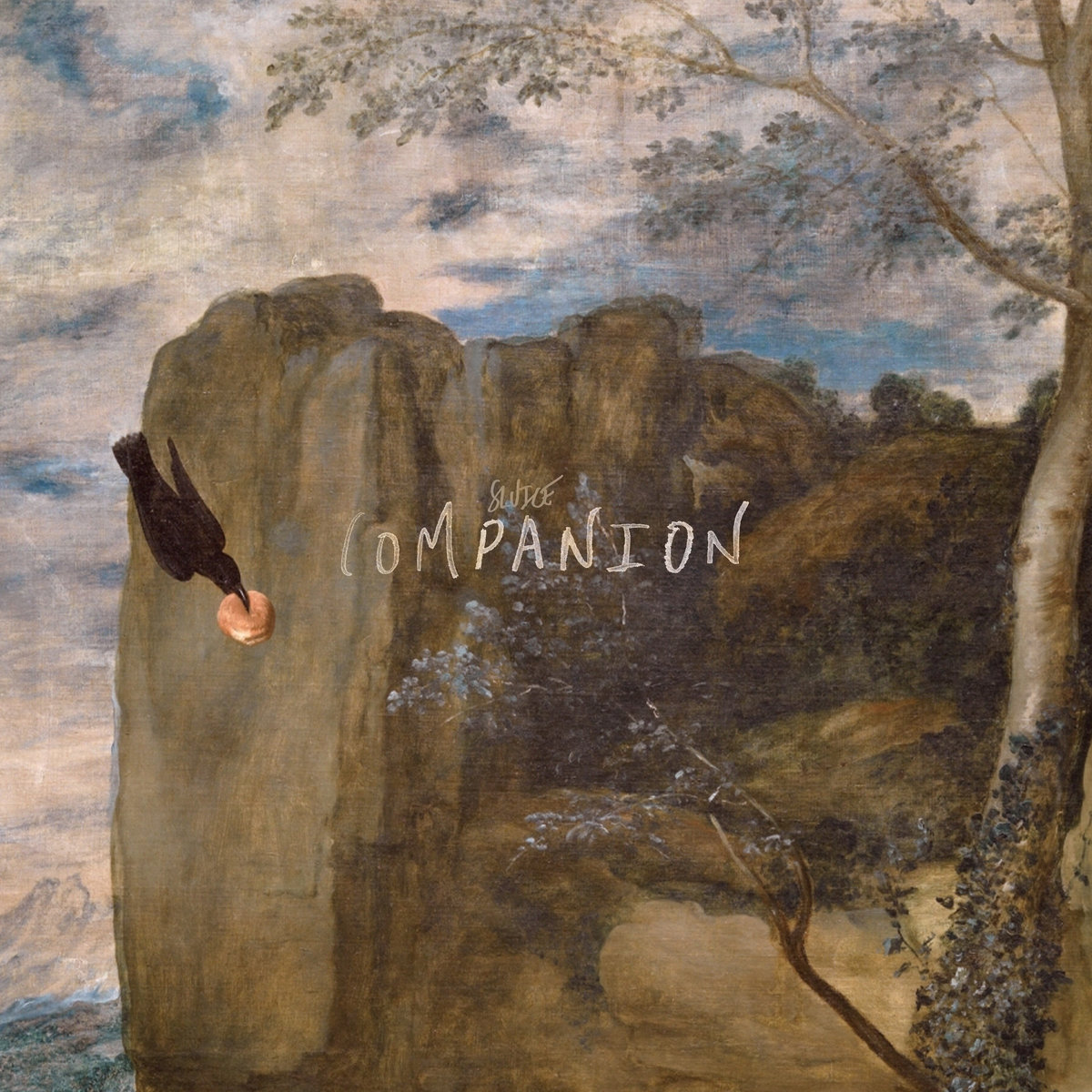
Like rifling through an old shoebox full of photos, Sluice’s third album, Companion, listens like a stroll through dusted-off stories from the past. Capturing everything – from the most mundane moments of life to its peak insanity, Justin Morris packs the good, the bad, and the ugly into one pretty, 45-minute-long package.
Kicking off the record with single “Beadie,” Morris takes characters McNulty and Beadie of The Wire, and Sarah and Joe Pera of Joe Pera Talks With You, and turns them into characters in his own life. To those not chronically online, these references may go unnoticed; nevertheless, introducing these companions, admittedly fictional, brings Sluice’s album title to life in a matter of minutes. Mixing the on-screen dynamic duos with references to (presumably) real childhood memories, “Beadie” is an anthem for healthy parasocial relationships and the art of growing up.
One thing Companion does best is use the hell out of figurative language: from personifications to metaphors and analogies to allegories, you just can’t overlook Justin Morris’ genius way with words. In songs like “Ratchet Strap” it seems fairly obvious; the song isn’t really about a car, right? And then there are songs like “Overhead,” where, sandwiched in an ode to man’s best friend, lies a somewhat graphic depiction of human culture and its animalistic tendencies. “Like the dog sprinting after a deer/Ripping his old legs out his hips/That’d be the way I’d wanna go I say/Dad nods, he says him too.” With the glorification of this feeling, of always wanting or needing to be one step ahead, comes the abrupt realization that this modern standard isn’t necessarily “right.” “And I think about being very wrong/About needing to be the animal chasing/When you can be the sleeping dog.”
What better place to apply this message than to the two nine-minute-long songs on Companion? Though you can fit a story into three or four minutes, sometimes giving it a little more time to allow for slow progressions to hum melodically in your ears is even better. Companion proves this wonderfully. “Gator,” track number four, is full of harmonies floating above raw and honest vocals that feel very much like “New Leicester”-era Sluice. It’s full of nods to home and friendship and the difference between dying to live and living to die. Here, you could see the “companion” as any one of the many named or unnamed living beings that Sluice sings of. Whether a family member or an alligator, the companion is not seen as bigger or smaller, but rather another cog in the machine. In contrast, “Unknowing,” as the title suggests, is about a singular “companion” that may or may not exist. Here, the companion is bigger than any other, and the song follows a long stream of consciousness about believing in a higher power. The song is not meant to present the listener with a question or an answer, but more so to create a moment for Morris to reflect on his own beliefs and decision to put trust in a companion he can never truly know.
These days it often feels hard to categorize music into a genre, but Companion makes it easy. In this album, which seems almost like a collection of fables, Sluice has mastered the art of folk and the beauty of the lore it can create. With wildcards like “WTF” and classic jaunty tunes like “Zillow,” every indie music lover will find a song – and indeed a companion – in Companion.
Every Wednesday, the ugly hug shares a playlist personally curated by an artist/band that we have been enjoying. This week we have a collection of songs put together by Justin Morris of the North Carolina-based project Sluice.
About the playlist, Justin shared;
“Here’s a compilation of songs that feel relevant to the writing and recording of our LP ‘Companion’ – Things played in the Fust van, the massive monitors at Betty’s studio, or my little kitchen stereo.”
Dan English’s ‘Sky Record’ is a gateway, an opening that spills outward. Toeing the line between analog and digital, flesh and fiber optics, the record unfolds on itself.
At Treefort Music Fest, The Ugly Hug had the chance to speak to Dan English about the influences behind the record, the strange experience of discovering new meaning, and work as a “distillation” of the self.
This interview has been edited for length and clarity
Lucie Day (The Ugly Hug): You’ve talked about growing up and using music, movies, and games as portals to other worlds. Do you think that Sky Record is a continuation of that, or is it more about bringing those imagined worlds into reality?
Dan English: I think I used making the music as an escape, as a salve. Doing this thing that I know how to do and have been doing for a long time as a therapy or as an escape— you know, a drug or whatever you want to call it. Some sort of piece of work that both making it and experiencing it could be useful to somebody who needs it now. It doesn’t come from some sort of genius imagination of “what if there was this kind of place”? It’s more of like a – not an expulsion, but like a spilling out.
LD: With that mythology that grows, is that more of an accidental immersion than intentional?
DE: Yeah, I would say so. Or just an explanation of the mythology of the self, you know? Even the mythology of your day-to-day, there’s an intensity and a heaviness to that that is monolithic, but it happens every day. So it’s kind of boring, but it does feel intense. And I guess it kind of has to do with that. It definitely was not me sitting down trying to be smart about it. The visuals and stuff all were just tapping with friends. I think we’re on the same page and like the same kind of stuff. Approach art in the same way. Don’t know why they do the things they do, but they really care about it.
LD: Like a compulsion.
DE: Yeah. They’re just like, this is the way that I understand the universe, and so this is what I must do.
LD: In a different interview, there was a comparison that you made to songwriting as divination. A following of intuition, which I think is very consistent with what we’re talking about. Have there been moments where in the process of constructing a song or a larger body of work, it’s surprised you or revealed something that you didn’t consciously know you were feeling or dealing with?
DE: I’ve had conversations about this album that have illuminated it more so to me than I even thought about it or understood. It’s weird, especially today doing interviews. It’s a lot of looking at something from so many different angles. This is the first time I’ve ever thought: ‘Oh, I’m an artist who has a body of work’. In a hundred years, if I was dead and somebody was like, ‘Dan English’s work is about this’. I never thought about that until today. There are all these people that are like, ‘This is what my work is about‘ and they’re right. That’s making me think about things. There’s this thing being communicated, that it’s not that I didn’t intend it, it’s just that I didn’t expect people to pick it up. I didn’t, in some cases, know it was there. It just is a distillation of me.
LD: Do you think that as time goes on, that’s going to mature and change or do you think it’s going to stay the same?
DE: That’s also come up today— not in a conversation, but now that I know what it’s about or what I’m about, what do I do with that? It’s a big question. I would rather just hang back and see what comes out and hope that it’s meaningful. But there’s also a responsibility to do something meaningful and useful and practical with your life that I do feel— Or just making music does, because I was saved by music when I was a kid. I needed music more than anything.
Making it doesn’t necessarily give me a pass or something, I still think there’s a lot more you could do for your world and your community. Hopefully, I can find a way to do that. I’ve been making this my work— my work has been my life— for however many years. Now that it’s catching a stride, and also catching a break, it doesn’t have to be so hard. You know what I mean? As hard as it is for a fat little 10-year-old who hates himself and all that shit.
LD: You have a lot of the same references come up, namely Blade Runner and Zelda. What do you think it is about those that resonates with the universe that you’ve constructed?
DE: I think it would be the reverse, that my universe reflects those. They’re just geniuses. Incredible pieces of work by people who do it differently, you know? I’ve just always been drawn to that and I’m not trying to say that that’s what I am, it’s just the stuff that i like.
I was trying to think about it the other night, I don’t even know why. I don’t know what I was watching, maybe it was a movie, or a concert and I was just like, ‘What is it that makes good stuff good?’ I think it’s anything that does the opposite of turning your brain off. It makes you like to ask questions or it keeps you engaged. It’s not predictable, it commands your attention. I don’t know whether it’s like Cronenberg or just something different. I love Ridley Scott.
I was talking earlier about thematic stuff too, I think attention to theme is also a way to keep people engaged. I certainly don’t do that with intention or anything, but when I watch a movie or even Zelda, it feels like mythology. The story might not be detailed or intense, but it has this universality and weight to it that hits hard. That’s just what moves me, and none of it in my music is by design. It’s just like gravitation, you know? I wish I could say it was from being smart and making decisions, but it’s not.
Dan English Live at Treefort Music Festival | Bosie, Idaho
LD: If Sky Record had to be a different medium, and it wasn’t the music…
DE: I mean, obviously it would be a movie. But I hope I never make a movie because I just want to keep them as a special thing. Although, you know, I’m worried I’m running out of movies to watch. It’s got to be a finite number. But yeah, it would be a film. I don’t know who would direct it, but I’ll bet it’d be good. I think it would have a good arc to it. George Lucas, Peter Jackson.
LD: When people listen to Sky Record years from now, what do you hope still resonates with them?
DE: I think there’s a thread that I didn’t really realize when I was making it that was timely with AI. This was like 2018 when I was conceptualizing it. I was into Blade Runner and Pinocchio, too. There’s a thread of it that is not feeling human, but longing to be human. This idea of “I’m not human, but I experience what a human does”. It’s just being out of touch with your emotions. And, in a way, a lot of it is the dysphoria of modern life— having a digital life and also a body. Being alive and how different and, in a way, disconnected those things are.
I hope it’s evidence of what was going on at this time, being a young adult or a person raised on the internet but also longing for the real thing. I really didn’t do it by design, which surprised me, but also is awesome to me. It is a lot of electronic stuff and a lot of acoustic stuff. It surprises me when I even realize that. I didn’t do it on purpose, this weird Frankenstein that I created.
LD: I think it’s very cool. It’s like a thing that’s alive that talks back to you. And you teach it, but it also learns from you.
DE: It’s cool. I’m happy people like it. But also… time to make another one.
Amid the constant motion of Treefort Music Fest, Coral Grief creates a sanctuary. Their new record ‘Air Between Us’ invites the listener in with open arms and layered melodies.
We caught up with the Seattle-based trio during the festival to step into the album’s haze and talk about trusting your instincts, embracing abstraction, and letting songs evolve on their own terms.
This interview has been edited for length and clarity.
Lucie Day (The Ugly Hug): First off, welcome to Boise, Idaho! Congrats on the record, too.Something that you’ve talked about is collecting ideas and not judging them too early on. How do you know when something is ready to be revisited versus whether it needs a little more time to marinate? Is it just a gut feeling?
Lena Farr-Morrissey (vocals, bass, synth): I think it’s a feeling.
Cam Hancock (drums): When you know, you know.
LFM: I feel like with some songs, they click pretty fast. That’s kind of, like, the ideal situation for a song, right?
LD: When it’s easy.
LFM: Yes, ugh, right? But then for some, it takes a little bit more getting there. And you’re right, I feel like sometimes I have a tendency to overwork something or I’m like: ‘I don’t know if that was right’. I feel like then just bringing it to y’all – having other opinions – to ask: “What do you guys think of this? Could we improve on that’? I think working more collaboratively has helped to figure out when something works.
LD: I feel like I do get that feeling. You look at something, and it’s a head and a chest feeling of: ‘Yes.’ Which is really cool! But I feel like it’s so easy to run something into the ground when sometimes it does just need time to breathe, and you just need space from it.
LFM: And then you revisit it.
LD: It’s a whole other perspective.
LFM: We have a ton of demos from years ago that when we were in the moment, we were like, ‘No’. And then you can go back and revisit them and be like, ‘Oh, wait, I actually really liked the verse of that.’ Let’s just take that part and then move forward with it.
LD: Within the record, there’s a lot of documentation of places without fully explaining them and a lot of context that’s not necessarily direct and is instead implied. Do you think that, with that, the lyrics become preservative? Or something that’s more abstract?
LFM: I think I definitely lean more abstract and I’ve been learning how to ride that line of, ‘how can I paint this picture and give people a little bit more of something to hold onto, but still not be so obvious about it’? I feel like I’m still trying to learn how to toe that line. I feel like my goal with the lyrics on the record was to – from these different angles, paint a picture. Not have it necessarily be like: ‘This is about Seattle, Washington and my favorite streets and the streets that I hate’. Kind of just evoking the feelings and the moods that I’ve been feeling about things and trying to give some context, but I’m fine with it being more abstract. Because then people can assign their own kind of interpretation to it. I feel like everyone’s kind of going through the same shit.
Coral Rief Live at Treefort Fest | Boise, Idaho
LD: Aside from the direct inspirations, do you see a visual world that the music exists within?
LFM: Totally. I think that’s unfolding more and more as we make more music. I feel like it’s very grounded in a whimsical nature.
LD: It’s like world-building.
LFM: A little bit of a – I don’t want to say post-apocalyptic, but, just, a better world? A little bit more fantasy? If I were to build a dream world that this music exists in, it’s definitely not our current reality.
CH: I think there’s a lot of nature imagery and ideas of exploring your surroundings in a way that feels like a fantasy, but it’s also very real.
LD: Very tactile.
CH: Yeah, because we’re so removed from that. It’s so easy to be removed from that. I think we’ve talked about how it’s a great record to go for a drive.
LD: Yeah! You guys said something about “in movement”.
CH: When’s the last time anyone just went for a drive and put a record on? It’s a great idea, and people do it.
LFM: We don’t have time for that.
CH: We don’t have time for that. But, you know, maybe you’re on the bus, maybe you’re on the train, or going for a bike ride or something.
LD: All you need is a window.
CH: I think if it takes you somewhere, that’s great wherever that place is for you. You talk about the abstract lyrics- people bring their own ideas to it. They bring their own imagery to it.
LFM: There’s this philosophy term that says that everything is alive called panpsychism. Everything has a consciousness, all things have a mind or a mind like quality. I want to channel that more.
LD: If the things that you were trying to be conveying weren’t through music, what do you think would be the best medium associated with it?
Sam Fason (guitar, synth): For me, at least, the medium I feel most akin to is painting. In a similar way to music, you can get very abstract and gestural with it. In music you can convey stuff with notes and structure, but you can also convey stuff with tone and timbre. In painting, you can convey stuff with form but also with color, and other things more hard to define.
LFM: I like how music moves through time. I feel like film captures that similar itch for me and I’m like, ‘Oh, I like putting this sequence together and creating a timeline’. That’s something I really enjoy about music, so film is a fun way to explore that visually even though I’m not really good at it. But I like it. It’s fun to do. I used to make videos with my sister, she was my muse. She was like four years old, and I was like, ‘Okay, you’re the horror, the scary girl, and we’re gonna have you haunt the town’.
SF: I mean, you did a couple of our music videos and they turned out great.
CH: I think that they’re kind of getting at what we’re talking about, where it’s not just us in a room playing. Even the ones that are that, there’s a lot of other imagery going on. There’s a lot of nature scenes. I really enjoy that part of the process this time around and getting to work with folks who see our vision and are able to take that to the next step. Bringing in their own ideas, it all should be collaborative.
LFM: That’s the world I want to build. A world with our friends and other people that are just down for the cause.
Coral Rief Live at Treefort Fest | Boise, Idaho
LD: Lately I’ve been thinking a lot about what you’re saying: ‘It’s fun, but I don’t know if I’m that good at it’. I don’t think it matters if you’re good at it. I think it matters if it’s fun. Sometimes it can just be fun, and that brings a feeling with it. People can tell when something is coming from a place of pure enjoyment.
LFM: And not judging yourself. Just being playful with it.
LD: If there’s a theme within the record of holding onto things that are shifting and that “sand in-between your fingers” feeling, what do you feel like you’re holding on to?
SF: It’s becoming increasingly hard, but holding onto the hope that things might get better. Things can and do move in all directions, so if it’s possible for things to get worse, things can also get better.
LFM: I have a lot of perfectionist qualities in my life that I project outward and I’m trying to let go of that type of standard in general. Kind of what we’ve been talking about – just being more loose with everything and holding on to less judgment. I feel like I’ll be able to then interact with the world better and with the hope that I’m able to embrace things more.
CH: I was thinking about the things that I can control and the time that I have that is actually mine. It feels like you’re being pulled in a lot of directions, and it’s easy to just kind of lose yourself in the news, the internet, distraction, whatever. But having that time, it’s so nice to just go to a place like Boise and get out of town. Take an eight-hour car ride, and I can’t really read anything while I’m in the car, so I just kind of sit there, and it’s easy to just be like, ‘I’m bored,’ but also, I have nothing I have to do right now.
LD: Yeah, it’s very freeing.
CH: I’m really leaning into those moments. A lot of change in scenery helps that in a big way.
LFM: Yeah, I feel like through the band, that’s how we kind of hold on.
LD: It’s like an anchor.
LFM: Yeah, it’s like an anchor. We’re hurtling through the world figuring out how to navigate it all, and if anyone else wants to hop on then hop on.
LD: I feel like everyone I see who is feeling stressed about the ways of the world has found an anchor, whether that’s in a creative process or in a community. Using your medium as a form of resistance is a real thing, and I think that people attach onto that when they need it.
LFM: That’s the thing, though. You’ve got to cut to the root of what’s happening.
SF: Being able to have gone on the road and toured a good amount in the last year, it’s really reaffirming. There are people holding it down everywhere. It’s easy to feel like you’re on an island and things are pretty bleak out there, but there’s people who are everywhere and going through the same thing. They have the same values, and they’re doing something about it.
LD: Is there anything that you guys have realized about yourselves as artists recently that you didn’t necessarily understand when making this record or within the process of?
LFM: I think it’s crazy that we recorded that two years ago now. I do feel like I’ve changed so much since then, and I would do a lot of things differently.
LD: When it’s brand new to a group of people but it feels so far away from where you are presently, that’s a really interesting disconnect.
LFM: We’re going to go back into the studio in a month or so, and we’ve been working on new stuff. I want to get more experimental with it and learn how to build on it. What I was saying earlier about perfectionism– to see if I can just let the songs unfold and have less of a strict idea of what they need to be like. Let them snowball into their own.
LD: Let them be alive.
LFM: Yeah, let them come alive a little bit more.
SF: I feel similar to that. Sometimes if I’ve been working on a song or a demo, after that I have a hard time turning that part of my brain off. I hyperfixate on that, and moving forward I want to be able to put in that work but then also let it sit and marinate more. I think that’s a really important part of the process that I sometimes struggle with. I want to tinker forever. Sometimes the best results come from just letting things settle and taking your mind off it, and then coming back to it.
CH: I think that something I didn’t realize is that the first album at the time didn’t necessarily feel like a statement, but once it was all compiled together and we started to talk about it, and we started to have to talk about it, it did. That’s part of the process too, forming those ideas around it and hearing what each other feels about the work is really important. I didn’t realize that that would come about and inform this next piece only in the way that we’re, like, just more consciously thinking about what this next thing is. I feel like there’s sometimes a pressure for the second thing to be somehow related to the first.
LD: An expectation.
CH: You’ve done your thing and you’re out in the world now. There’s all these people who are now gathered around this thing that you’ve made, whether they’re listening or finding your music on Instagram or the radio or something. Do you have to be beholden to your investors, or do you just do whatever the heck you want— or somehow find a balance? I think we’re all really down to experiment a little more, and I’m really excited about that. So far, that process has yielded things that we enjoy. And so, if that’s the trajectory we continue on, I think we’ll be in a good spot.
LD: I think that that is a beautiful closer and a very optimistic end.
Listen to Air Between Us out now via Anxiety Blanket Records.

















 the ugly hug