Sunflecks, a folk band based in Bellingham, Washington has created a gentle and comforting examination of the world around them in their album Fools Errand, released with the indie record label bud tapes. Caroline Chauffe of hemlock describes it as “a memory box pulled out from under the bed.” The impressive debut invites listeners to take the long way home and slow down with their cup of coffee in the morning.
The group is fronted by Forrest Meyer, the songwriter and vocalist for all tracks on Fools Errand. The album features bass by Augie Ballew, drums by Amanda Glover, piano by Aiden Fay, violin by Harlow Isham, and pedal steel by Logan Day. It was mixed by Nich Wilbur at The Anacortes Unknown, and mastered by M Deetz. After Fools Errand released on March 28, 2025, the band played a cozy album release show on the 29th at Honeymoon Mead & Cider, in Bellingham, Washington.
“Proximity”, the first single released off the album, is accompanied by a fuzzy, darkly lit music video in a living room, with a projector shifting backgrounds, and duplicating Meyer as he sits in front of it playing guitar. The track feels both hopeful and painful at once, with meaningful lyrics about connection such as “walking in proximity / saying much of anything / relating unfamiliar things” (Proximity.) It features gorgeous instrumentals, with violin and piano blending perfectly.
Meyer recognizes the beauty in simple expression throughout Fools Errand, with lyrics such as “What’s left when all I can say is I love you / and I miss you” (What’s Left.) Although the energy is comforting and hopeful throughout, the songs create a safe space to mourn losses as well. There is beautiful imagery of meaningful conversations with loved ones, light through the window, wishing wells, and the practice of patience, through waiting for tea and the shifting of seasons.
While every song has its own wonderful distinctions, there is a shared pattern of starting simple and building in instrumentation over time. This provides a grounding feeling while listening. Meyer tackles similar situations through different emotional lenses, with the lyrics “now I see new colors / as you hold another” (Sunburst) and “take some space to recognize the space you made” (Take Space.)
Fools Errand is the perfect reminder to accept change, notice daily simple comforts, and always remember your headphones when leaving the house.
It is available to listen and buy as a cassette and digital album on Bandcamp.
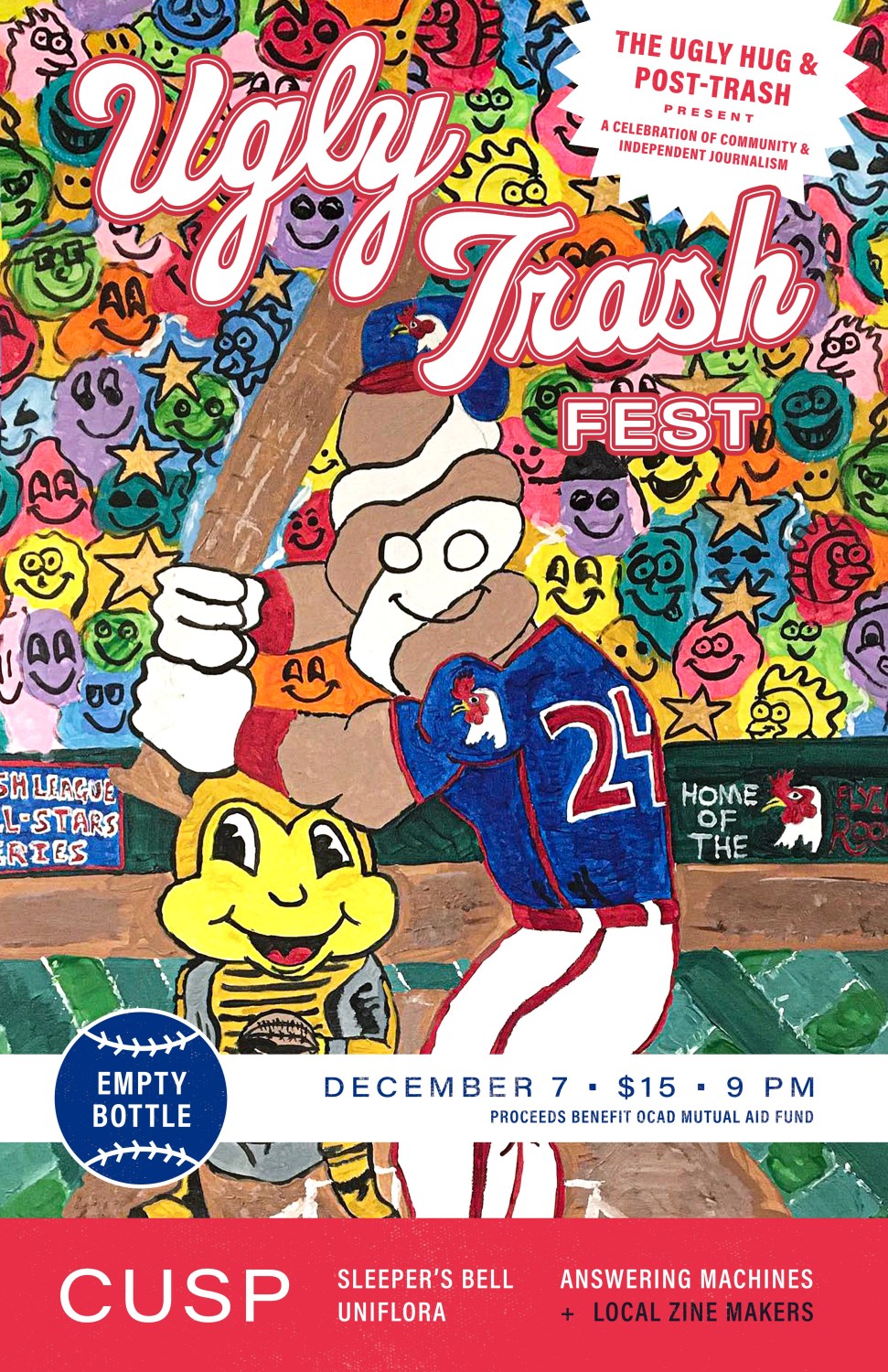
This Sunday, the ugly hug and post-trash are partnering up to bring you Ugly Trash Fest, a night to celebrate community and independent music journalism while raising funds for OCAD. With that, a handful of local zine makers are sharing their work and selling their zines at the fest.
We got to chat with the creators behind Pink Slip, Jeststink, weirdgrrrlzine, Glitzy and Unresolved about their work and how they approach the craft. Make sure to stop by and stock up on some good reads!
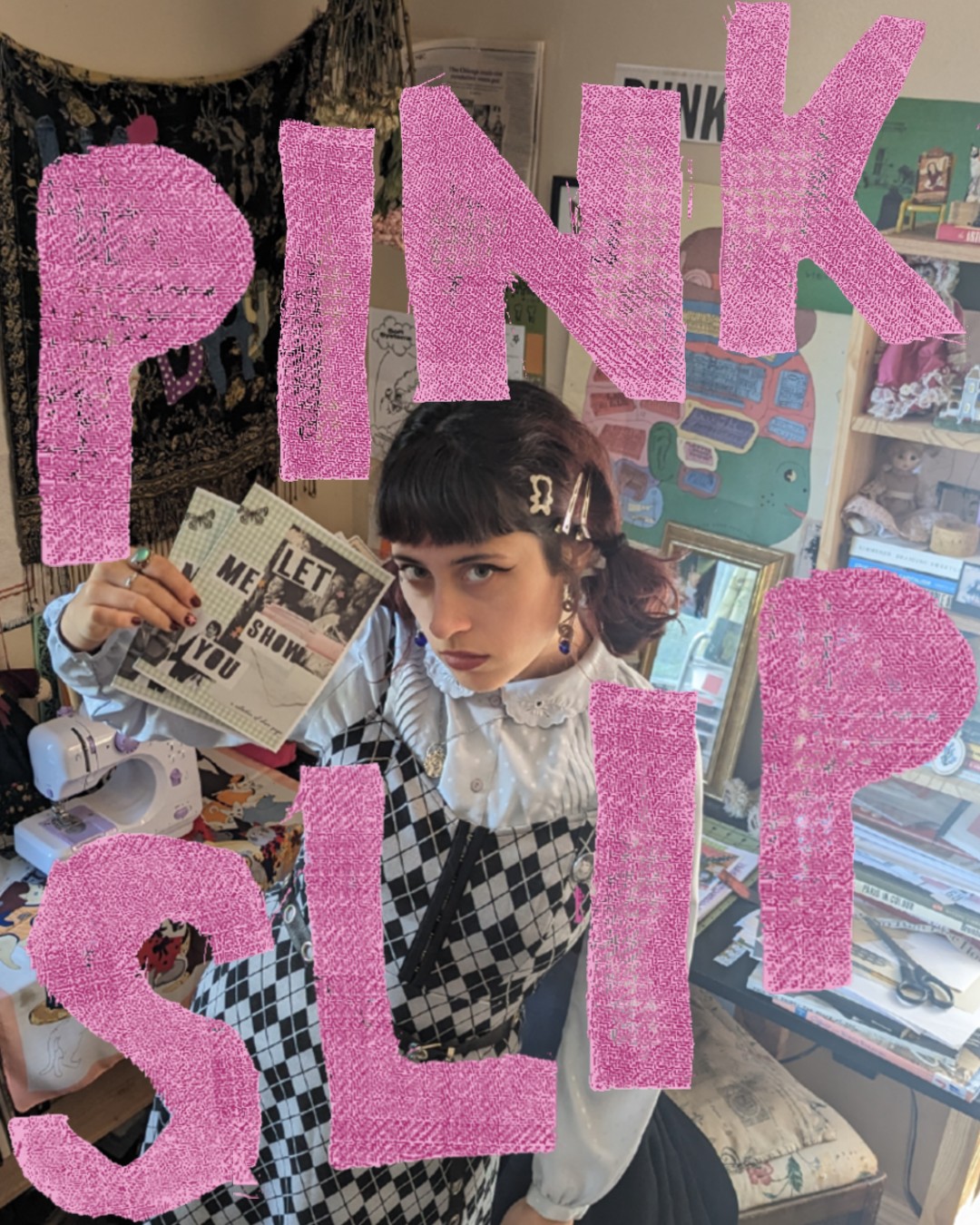
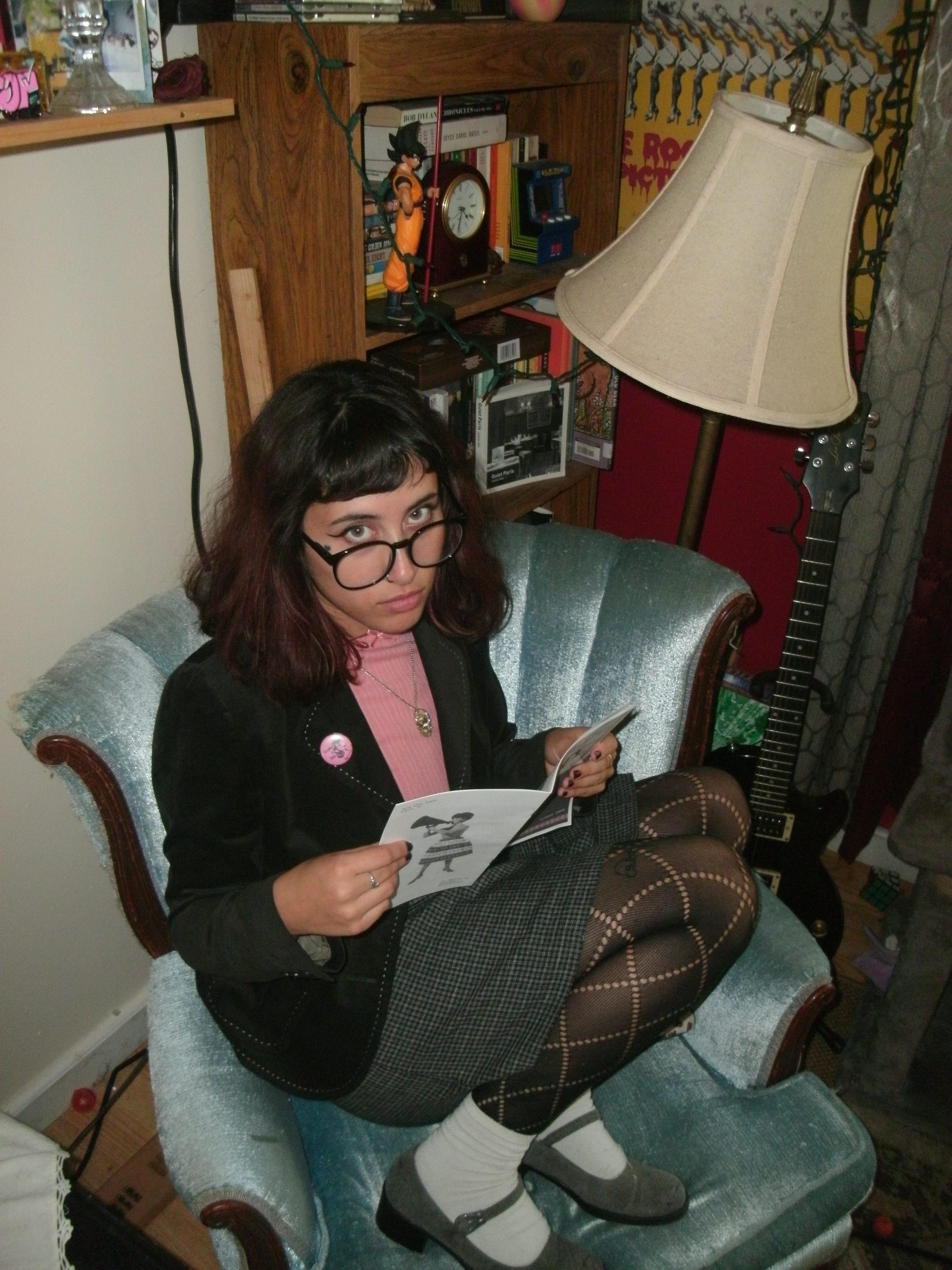
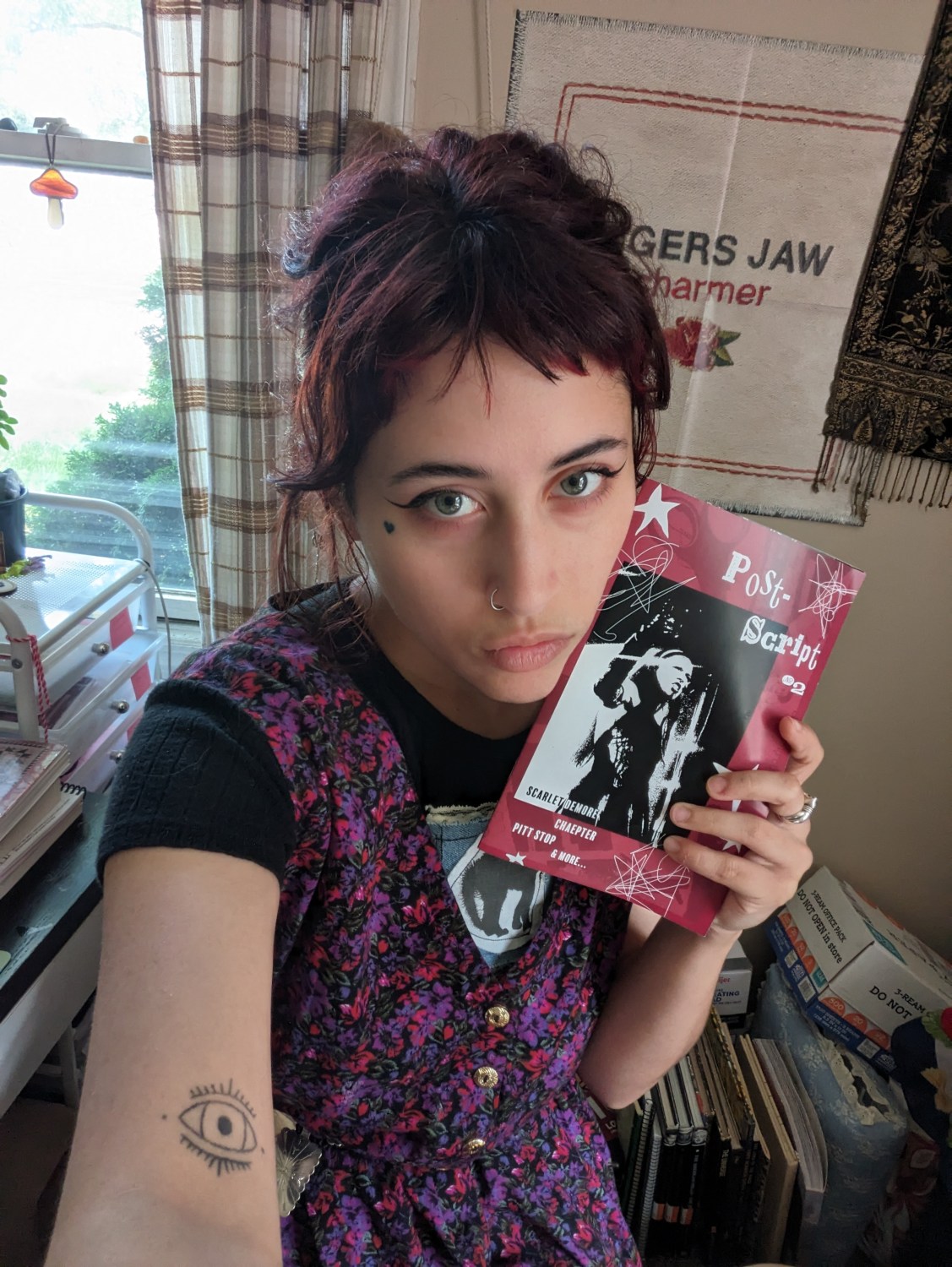
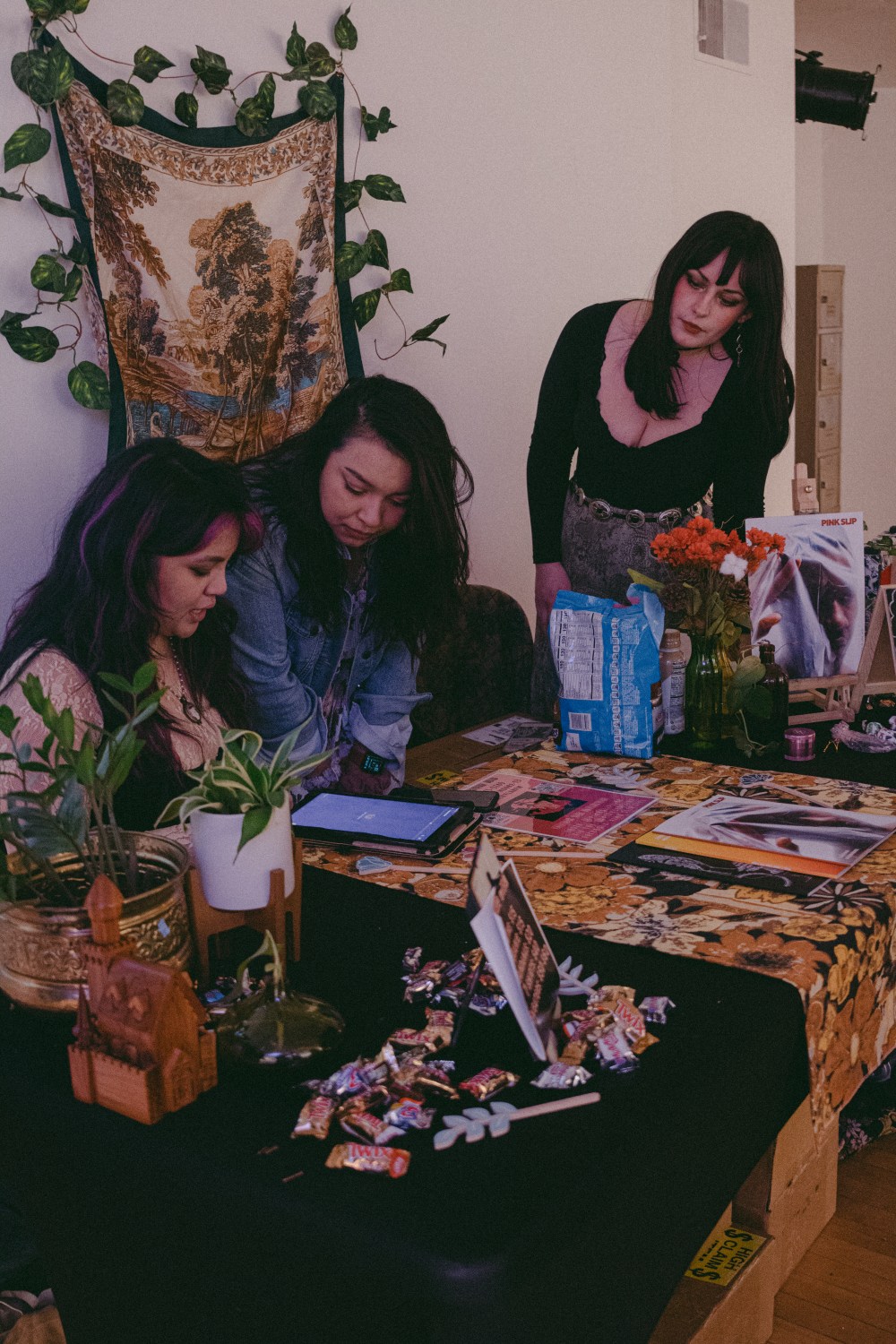
Pink Slip, founded by Skylar, is a grassroots arts collective based in Elgin, IL. Over the years, Pink Slip has become a vastly influential and engaging collection of art, ranging from music, photography, graphic design and even live events. Skylar also works on other projects such as Nobody’s Diary, an exploration into an ‘everyone’s diary’, and Post-Scripts, Pink Slip’s periodical mini zine. Skylar also helps run a monthly zine club, an inviting space for anyone to get involved in creating zines. Skylar also plays in the Chicagoland-based band Spliff.
GE DIGITAL CAMERA
Ugly Hug: What made you want to start a zine? What were your initial goals as you were getting started?
Skylar: I started Pink Slip as an avenue to showcase all of the amazing artists around me who lacked access to being published in print. Originally, it was going to be a small zine just photocopied at the library and circulated among friends. But it quickly grew into something much bigger than that! The community showed up for us, and it became a much more expansive and collaborative project. Now, I’m taking a break from running Pink Slip as a magazine, focusing on my own perzine Nobody’s Diary and hosting free community zine clubs.
Pink Slip runs as a submissions based collective. What do you think this brings to the table in regards to what Pink Slip has become over time? Have you seen it evolve with the more people who become a part of it?
Something we always wanted to foster was a sense that Pink Slip belonged to everybody, not just us. Opening up submissions allowed us to feature hundreds of artists from around the midwest (and the world!). The art that was submitted shaped the entire aesthetic and ethos of the zine, serving as a finger to the pulse of our communities.
I’ve been lucky to have many collaborators on Pink Slip as a magazine, and the various team members who have come and gone have left an indelible mark on each issue. The most current evolution of Pink Slip as a collective is focused on empowering others to create their own zines. Though our mission has been to widen print access for marginalized voices, we want to take it a step further and remove even ourselves as the middle man. Self-publishing means anyone can do it!
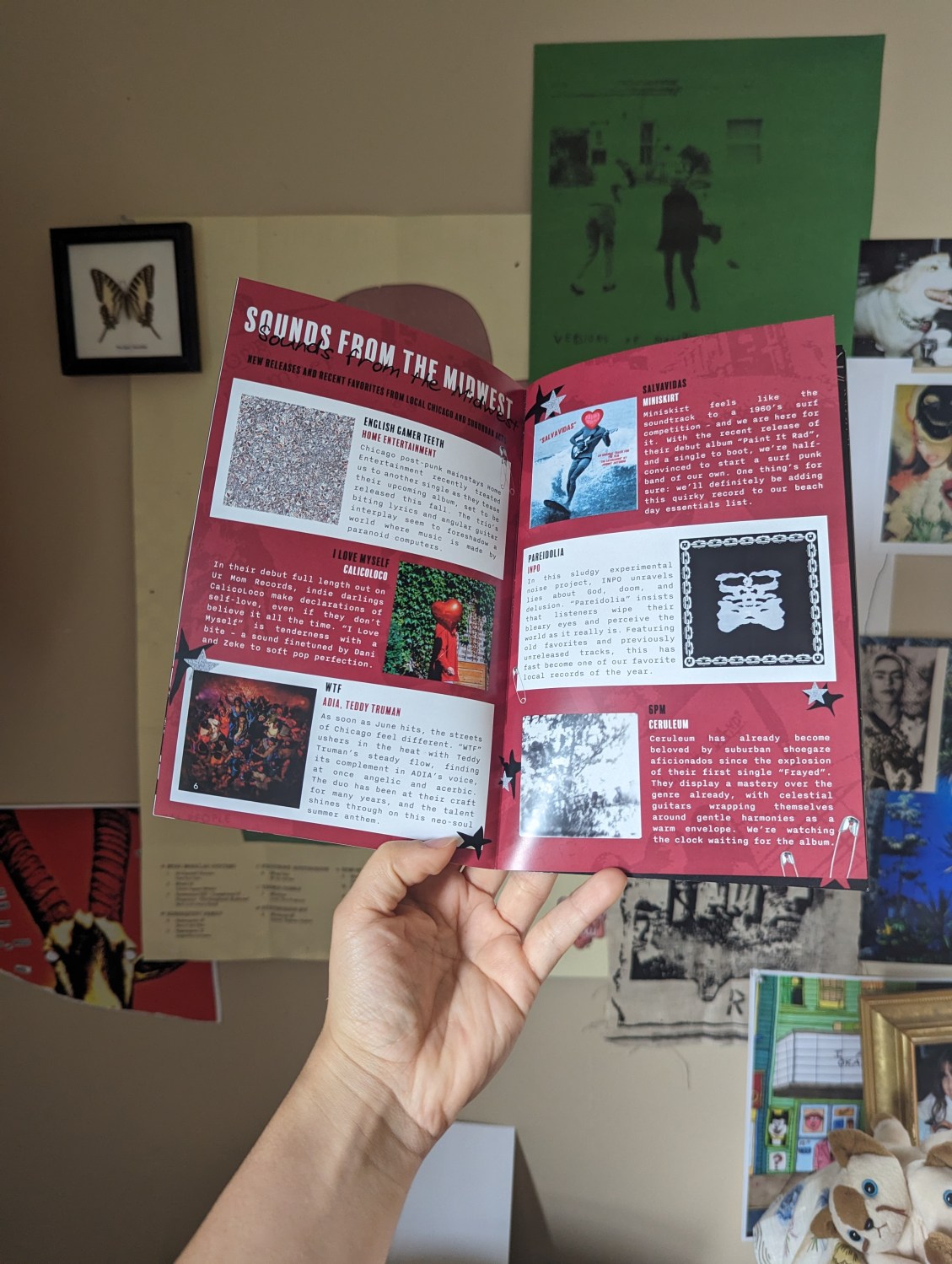
You also put out Post-Script, a periodical mini-zine made by you and your staff. How does Post-Script differ from Pink Slip? What sparked the inspiration to have a smaller, separate project to have in the works?
Post-Script kind of just falls into a more specific niche. Instead of submissions, it’s more of us curating what we think is cool about the Chicago scene. It allows us to dig a little deeper into what’s going on in the community. We definitely wanted something that felt a bit more journalistic, a bit more in line with what a traditional zine looked and felt like.
You recently partnered with Unmasked to host the Spill Your Guts event. How did this event come to be? What were the initial ideas behind it?
We had honestly been getting requests to do another open mic for so long! The Unmasked Coven approached us with the opportunity, and we saw it as a chance to showcase some talented locals while raising money for a good cause. For the most part, we’ve shifted from doing bigger events and instead try to craft warm, intimate spaces to connect meaningfully with local art.
GE DIGITAL CAMERA
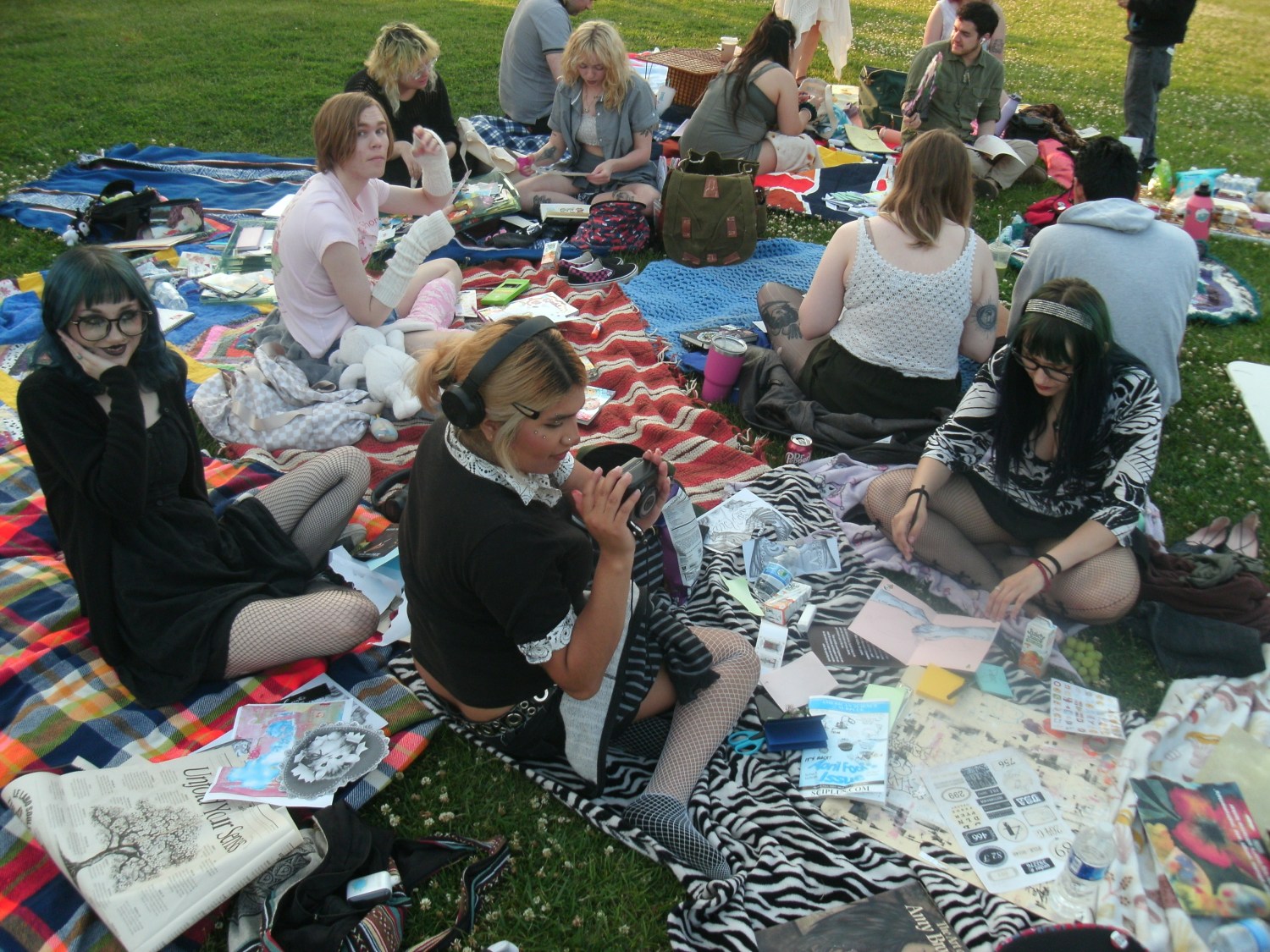
You also run a zine club for those looking to be more involved in the practice and in the community. How does one get involved in zine club and what can people expect when they attend?
Zine club is what Pink Slip is most preoccupied with these days! We host a free, all ages gathering at the Unmasked Coven once a month (usually on a Tuesday), and all are welcome. It’s a very eclectic and inviting group. Everybody is super nice. Nobody expects you to be anything you’re not, which is important, I think! You can be shy or loud, you can be a beginner or an expert zinester, you can just come to hang out if you want. The point more than anything is to connect as a community. Once we have that, we can actually show up for each other in meaningful ways and build coalition together. Come to zine club!!
Anything planned for Pink Slip soon? Anything you’re excited about?
Right now, I’m focusing on zine club for the most part. But I’ve sorta been testing the waters of Pink Slip as a distro, helping artists make/print their zines and tabling their work at events. And, of course, there are always more zines in the works. We’ll see what happens!
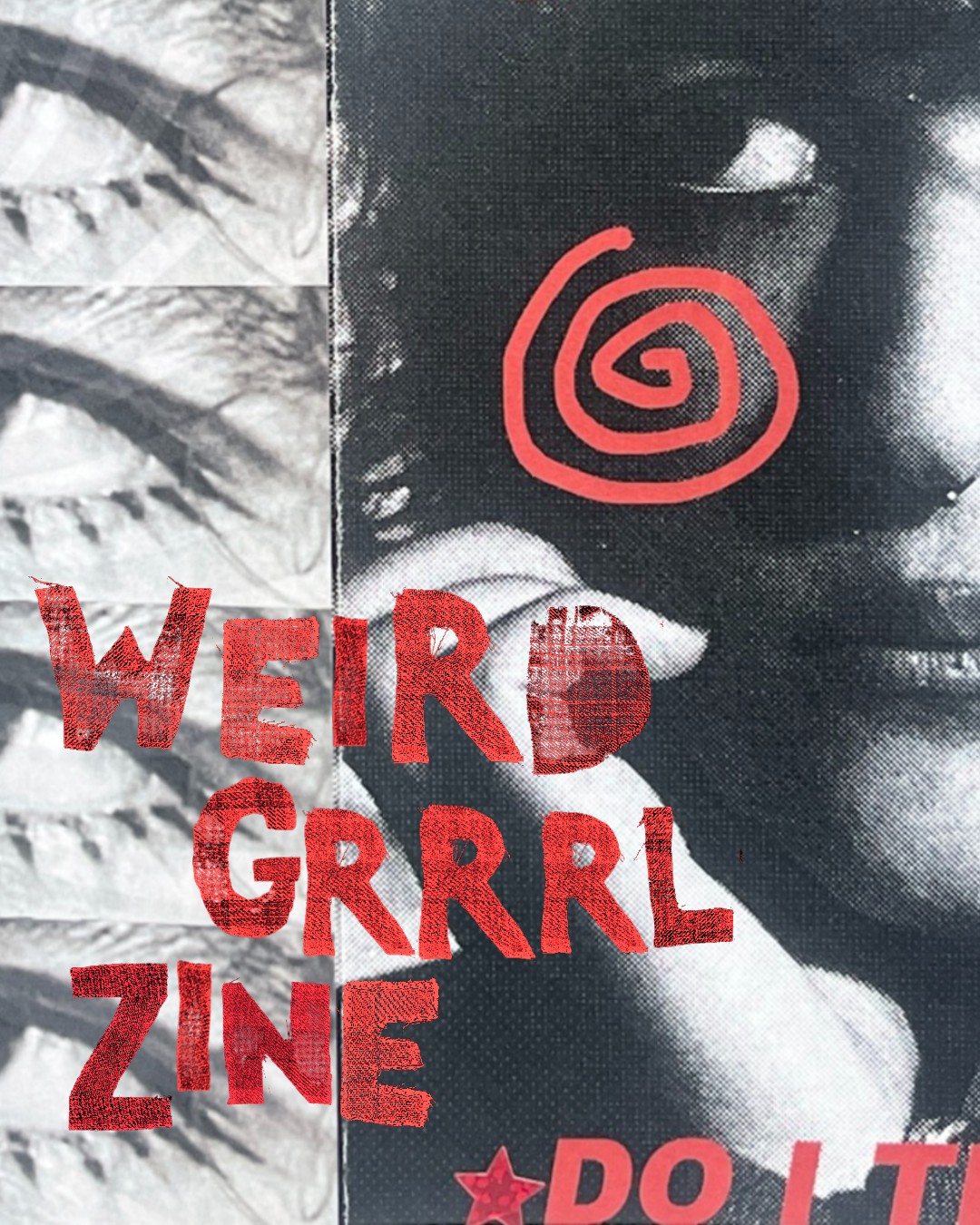
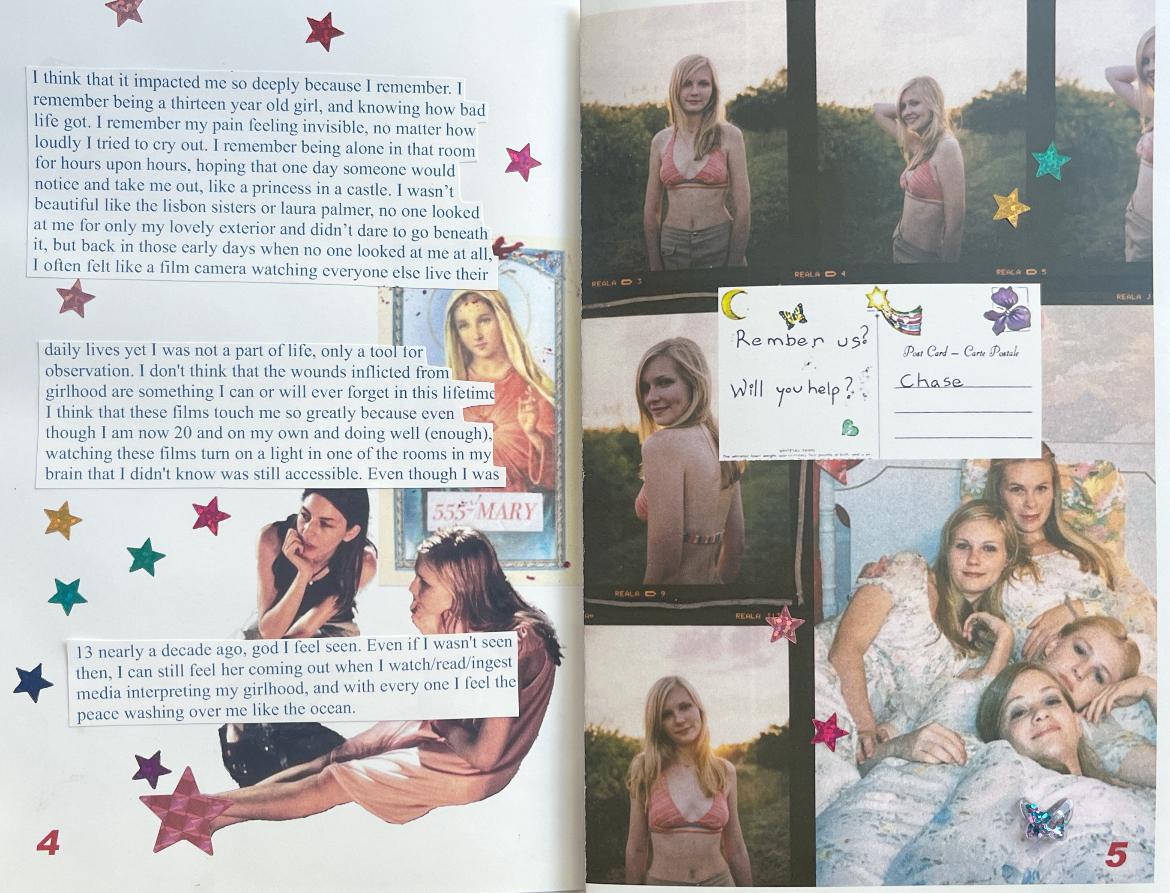
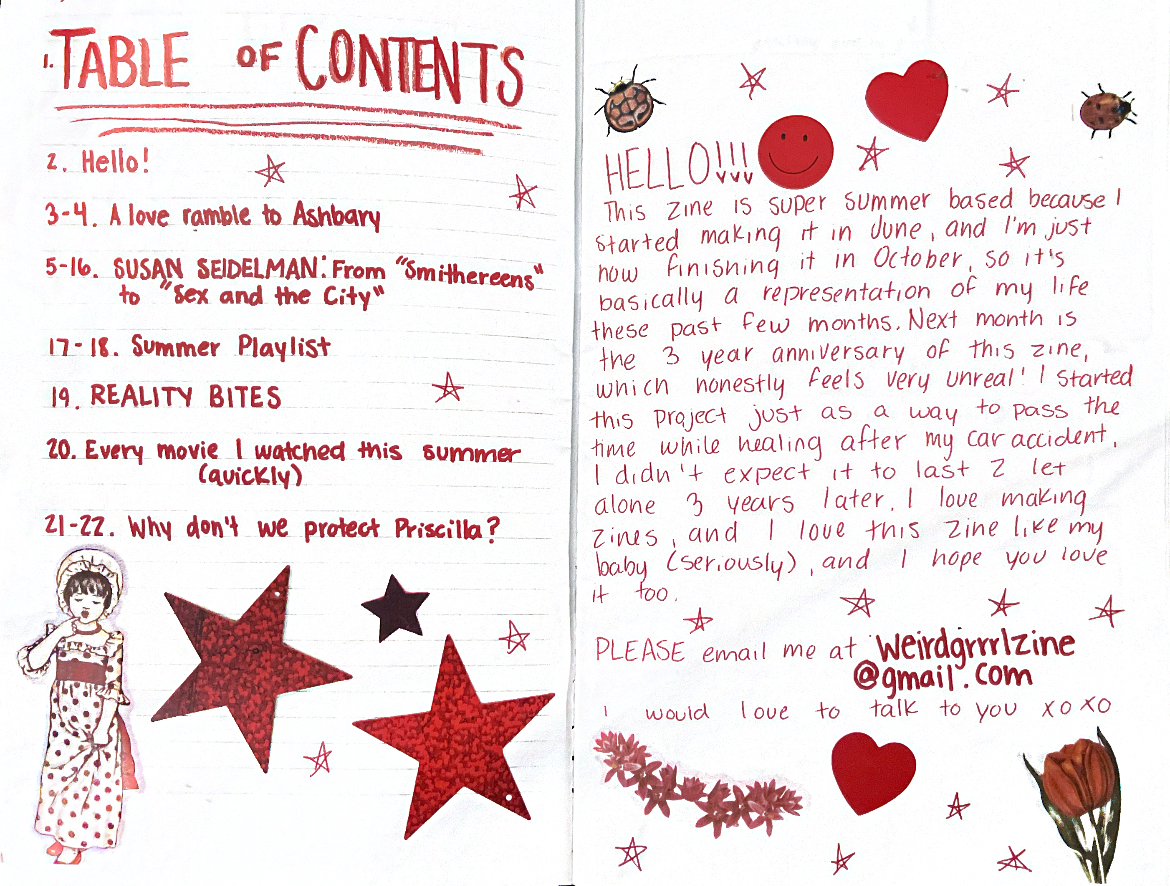
weirdgrrrlzine is the project of artist, writer and film maker, Syd Wrigley, who has been handcrafting this personalized series for four years now. Now 14 issues in, weirdgrrrl takes influences from riot grrrl, the art world and her own personal reflections, as Syd continues to offer new and unique ways to explore the world around her.
UH: weirdgrrrlzine seemed to have started out of personal exploration and a way to share your artwork. What made you want to start a zine? Have you seen it develop over time?
Syd: I first learned about zine making by watching the Kathleen Hanna doc The Punk Singer in 2020 when I was 16. Ever since that moment I knew I wanted to start a riot grrrl zine of my own. I was particularly inspired by how fun and collaborative the film made the zine process look. I’ve always made art and had an interest in writing essays and poems that I had never expressed before.
The event that actually pushed me to start weirdgrrrlzine was getting in a really bad car accident in my senior year of high school that left me unable to walk for some months. All of a sudden, I had a ton of free time and was super bored just being in bed all day, so I took the plunge and made the first issue of the zine in about a month. It was super scrappy and really poorly printed, and I feel like with every new issue you can see the gradual improvement. Now my process is much cleaner and there’s more planning involved, so the result (hopefully) feels much more intentional and professional. I still kind of love those early days where I was finding my footing in what I wanted and liked to make. The zine has gone through many iterations from being more diaristic to more journalistic and back and forth again.
This collective is a very personal glimpse into interests, thoughts, perspectives and tensions. Have you seen yourself grow in relation to the zine? Have you found yourself able to share more, or at least ponder more in your life the more you put into this zine?
I think that in the beginning of the zine I was mostly writing about all of this fear I had of becoming an adult, and how partial I was to being a teenage grrrl. A lot of the earlier issues were me writing about my sexuality as I was really exploring it in a way I hadn’t before, so everything I was going through felt so big and unprecedented. I think nowadays the more diaristic writing in my zines is a look back on my teenage years and contemplating those old feelings as the adult I was afraid to become, versus looking to the future and writing with so much fear and angst. Issues 4-8 of the zine became much less personal and were more based on my observations going to shows and seeing bands. Those issues became more interview focused as well, which came from me feeling more closed off to sharing what I was actually going through at the time of making them.
What is your relationship to art? How have you incorporated it into your work with the zine?
I’ve always been an artistic person for as long as I can remember, whether it was writing stories in elementary school or doing painting commissions in high school; now I go to art school which has basically made art my entire life. Since my college is interdisciplinary, I explore a lot of different mediums such as film/video, print, drawing, and painting; which all have played a role in the development of my zine into what it is today.
You often open your distribution of the zine to trades. Why is that important to you? Have you gotten any good trades out of it?
Typically when I release a new zine I only distribute it through trades rather than selling it. I’ve always been way more interested in sharing art and receiving new art instead of making a profit, especially when in my zines I am often talking about my love for other artists and makers. I remember some of my first trades and how special they were to me, how much they made me feel like I was connected to the world in a way I simply hadn’t been before. For volume 1 I sent one of my zines to Scotland and was in total in awe of that. I had never even been out of the country before and now the words I wrote would be across the world from me. I love being able to form these connections and make long term penpals from sharing art!
Because of these years of trading art/zines I have a pretty extensive zine library at home from all around the world! One of my zine pen pals sent me this copy she had of “Confessions of an Ex-Zine Editor” from @bubblegumzinearchive, which I hadn’t heard of before and is one of my favorites in my collection. For some Chicago based trades I adore my copies of Nobody’s Diary and Brain Graffiti, they both make me so excited about the zine scene here and I go back to them a lot when I’m feeling uninspired.
You celebrated the four year anniversary of weirdgrrl earlier this summer. What does this milestone mean to you?
Hitting four years of making weirdgrrrlzine means so much to me. Doing this for this long has shown me that I can actually commit to an artistic project for a long period of time which has always been something I didn’t think I could do. I started this zine when I was a senior in high school as a shout into the void, especially when I first began it and didn’t know who if anyone would read it. Now, I’m a senior in college still bubbling with desire to make something. Every zine I make is a love letter to my past self and the girl I used to be.
What’s the future of weirdgrrrlzine looking like?
I would love to make weirdgrrrlzine forever but I do kind of feel this itching that it has to end eventually. I recently made a bind up of issues 1-14 that totaled 221 pages, and it made me realize just how much time I’ve put into this thing. I think that making zines is this very therapeutic thing for me, and I can’t see myself ever letting that go. The future is bright but uncertain!
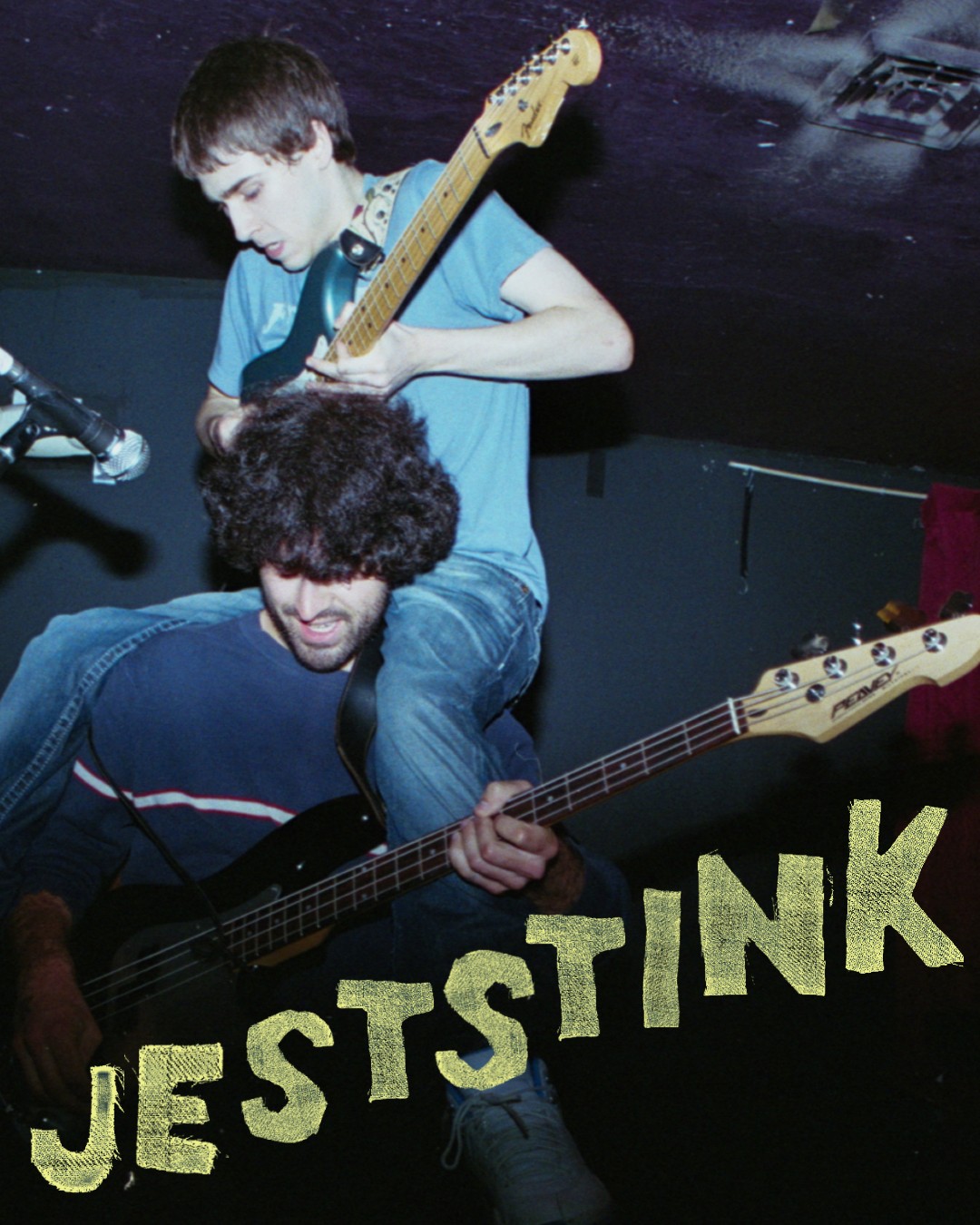
Jeststink is the brand-new project of photographer and creative Averi Love Little. Having recently moved to Chicago a year ago, Jeststink has become a curated diary of the sorts, as Averi spends time photographing their friends, sharing experiences and finding ways to blend the different parts of themselves into one cohesive collection. Jeststink will be selling their first ever issue at Ugly Trash this Sunday. Make sure to grab a copy soon!
Amaya Peña (Drummer in Starcharm) at Rozz Tox
Ugly Hug: You recently moved to Chicago, which you said allowed you to grow in your work with photography and community. What aspects of this city helped you grow in ways? Was there anything unexpected?
Averi: I feel like all of it was pretty unexpected. I didn’t know about anything that was going on in Chicago until I moved here and happened upon a really awesome music scene and a really great group of artists. I think seeing how much people are doing and how many things people are making just gave me the idea that I could do it too. It was all really slow and really simple, but looking back, I am really happy with what I’ve done and who I’ve met by living here.
Lu (Drummer in Instrument) at The Attic
Jeststink was made as an outlet for exploring your own creative interests and passion for photography. What sort of elements did you want to bring out on the page?
I definitely wanted it to be playful and lean into a sweet and intimate space. Presenting work can get so serious at times, and I wanted to stray away from that really hard. That’s when I started adding in all the other elements aside from my pictures, and I’m glad I did that because it made it a lot more fun for me to include music and silly drawings.
You just released your first issue of Jeststink, a huge milestone for you. What are you most proud of about this issue?
I’m mostly glad that my pictures are on paper and that I can give them to people. It’s really cool to be able to do, with so much of displayed photography being online – I really appreciate the simple approach of just making a book and being like, here you go, this is me, this is what I do, and you can hold it in your hands.
Lifeguard in the round at Thalia Hall
You incorporate a mix of concert photography and photos from your personal life in this issue. With you as the throughline for these different subjects, what do you hope people get out of your photos? How do they fit into what Jeststink has become?
To be very honest, I think that taking photos and processing them and crafting them into what I felt or what I saw is something I fell into and fell in love with outside of a subject in mind, and everything that comes out on the other side just is what it is – it’s me and it’s the things around me and it is very much filled with love on all sides. I think in my pictures and in making jeststink I hope that that love is visible.
You’ve explained Jeststink as “a little curated diary where all the things that make me feel like myself get to hang out together on a few sheets of paper.” What does it mean to share this personal project with others? Has it allowed you to make connections between the little bits that make up your world?
It really does feel like sharing a diary and a bit of my creative world and inspiration. It makes me really happy to see my stuff laid out alongside things that feel near and dear to me. I’m glad that I can have my work seen in a way that feels sweet and personal. It really does feel like sharing a diary and a bit of my creative world and inspiration because of that approach.
What’s next for Jeststink?
Haha, honestly, I don’t know – but definitely more.
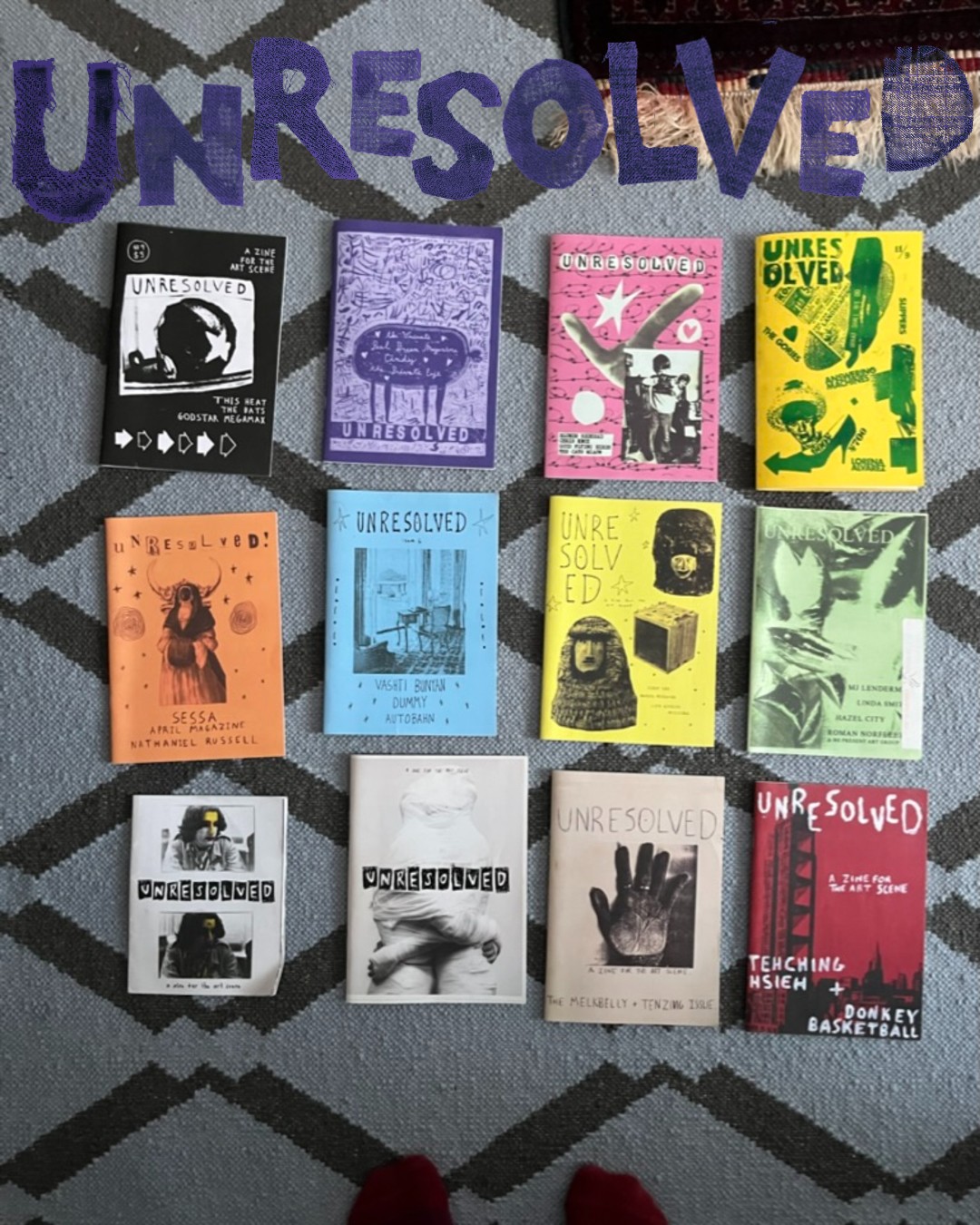
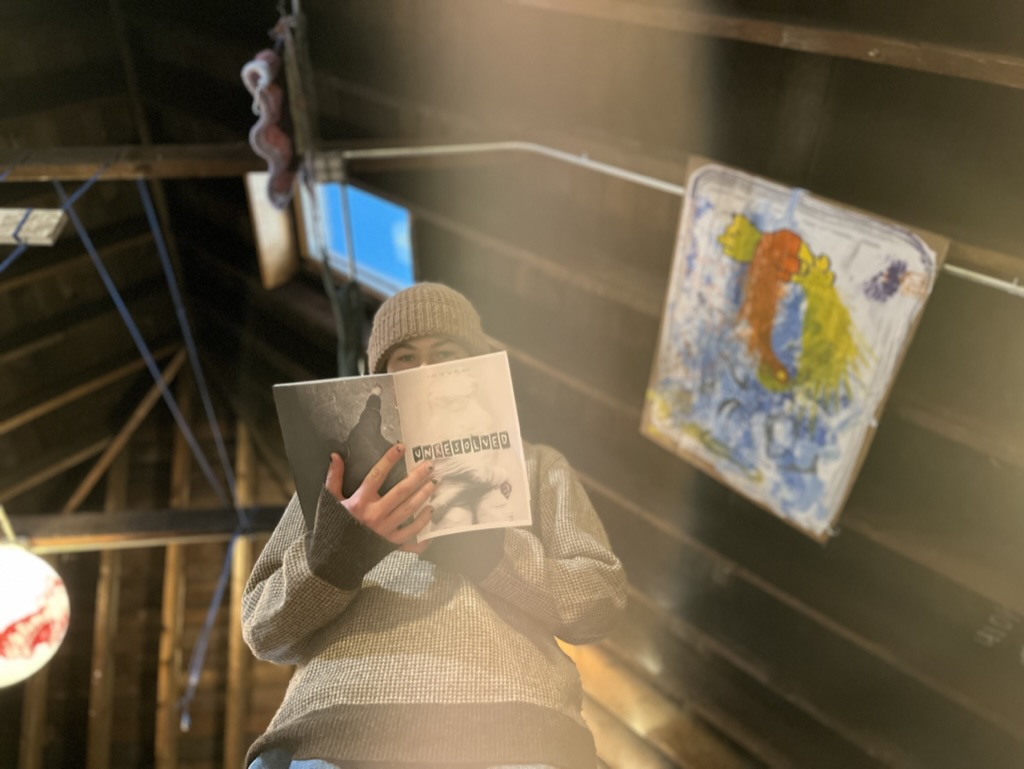
Unresolved is the ever-expansive project of artist, writer and photographer, Eli Schmitt, who began the project back in 2021. Blending different eras of independent music, Unresolved has become a universal experience and communal understanding of what it means to be DIY. Twelve issues in, Unresolved is a time capsule of art, ideas and stories that feel both excitedly new and inspirationally timeless.
Ugly Hug: You released the first issue of Unresolved in 2021. What made you want to start a zine? Was this initially a solo project?
Eli: I made the first issue in 3 days when I was home for the summer. Horsegirl was playing a show at schubas with Lifeguard and they had the idea to sell their friends zines at the merch table and they asked me to make a zine for the show. I had made an underground newspaper in high school but never a full zine. I had seen Hallogallo and just been blown away with the design and the freedom in every page, that second issue was such a guiding light for me to learn about independent music and culture. I was so excited about all the work I saw around me so I wanted a zine to highlight youth visual artists so i made Unresolved, i interviewed kai for that first issue and thats how we became friends.
Your initial goal for Unresolved was to make a historical document that was both DIY and professionally done. How have you worked with those goals as Unresolved became a substantial community zine? Did you have to adjust expectations the more you learned?
I feel like over time it’s gotten way less professional. A lot of my references going into the project were art books and these very clean beautiful bauhaus design, i was trying to make a middle ground with clean and handmade but then that got kind of boring and i wasn’t really that happy with how the issues were turning out. I realized that to make beautiful art books you sort of need art book budgets for nice paper and binding and space and i just dont have those resources, im trying to cram as much as possible into 20 pages. I saw this zine show at the brooklyn museum a couple years back and realized that i needed to study my zine history and learn the art of making things look fucked up cause it isnt as easy as it seems, its a beautiful school of design that getting glossed over cause it seems careless but its really anything but, its a very considered chaos.
Screenshot
As you began to open the door to other collaborators, what impact did that have on the mission of Unresolved and the way you approached making it? What sort of contributions were you looking to include? Any you weren’t expecting?
It’s been really great to see so many new fanzines pop up around the country. New York has a couple, My Little Underground by Shannon McMahon is so wonderful and so is Compilation Nation by Sydney Salk, Duped from North Carolina by Lilian Fan and Annie Vedder and Test Patterns from Louisville by Lizzie Cooper. It has created this ecosystem of design and work that I think we all feed off of. I remember finding all of their zines before I knew them and just being blown away, the styles are all so similar and to feel this independent magnetism to fanzines and design felt really special. We’re all friends now and continue to inspire each other in a really healthy and productive way.
Each issue of Unresolved is such an indepth collective of art and creative input. Blending various genres, scenes and creative eras, what is your process of finding features, collecting artwork and piecing it all together? What do you look for?
I think that all we really have as artists is our tastes and curiosity, and we have to be true to those urges and follow them wherever they lead, not to second guess why we like something. I try to only interview people that I’m genuinely curious about, there are so many uninspired interviews out there where you can tell neither party really wanna be there and i can only hope that i can foster conversations that feel honest for the readers.
Your most recent issue was handmade on a risograph machine. What was that hands-on experience like for you?
It was amazing, before that i was sending my zine off to be printed by Mixam which had its advantages. Im terrible at cutting straight lines and being patient and they made everything perfect but making it all by hand it was so happy. I would get the zines back from mixam and be happy but always a bit disappointed like something was lost when someone else touched it and now its all me which feels very fulfilling, every mistake and smudge is real and comes from my heart.
Unresolved is known as the never ending zine of the art scene. What do you have planned for the future? Anything you’re excited about?
The ultimate goal is to make a full compendium of the zine with the best of each issue pressed into a full book, I love a lot of the work and conversations that ive had over the years but i think it would really powerful to have them redone in a cohesive style that can be held in your hands, im also making a special issue to go along with this compilation record im making, its called Red Xerox and documents the chicago youth music scene over the last five years and the zine will give the whole story of the scene or at least an unresolved version.
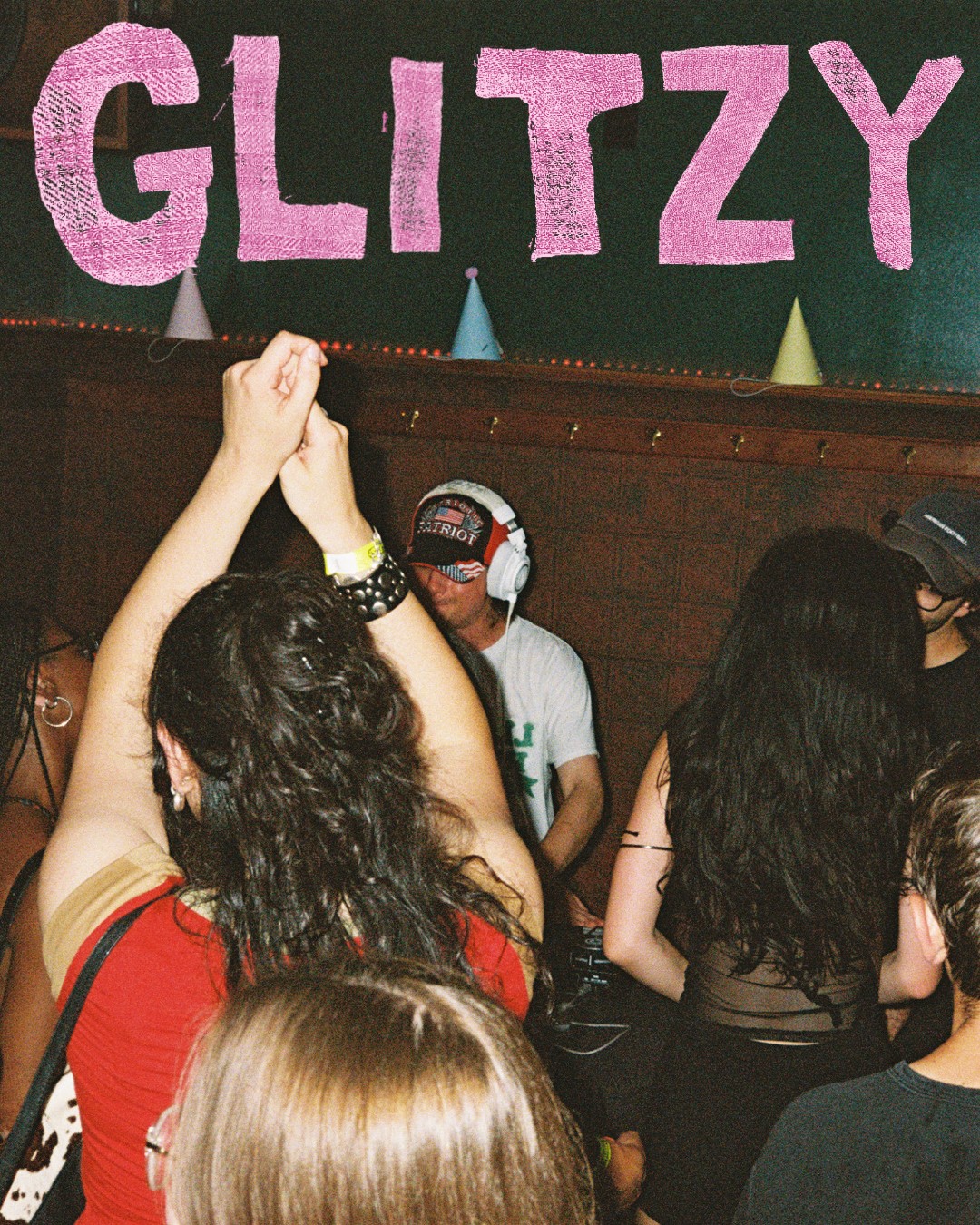
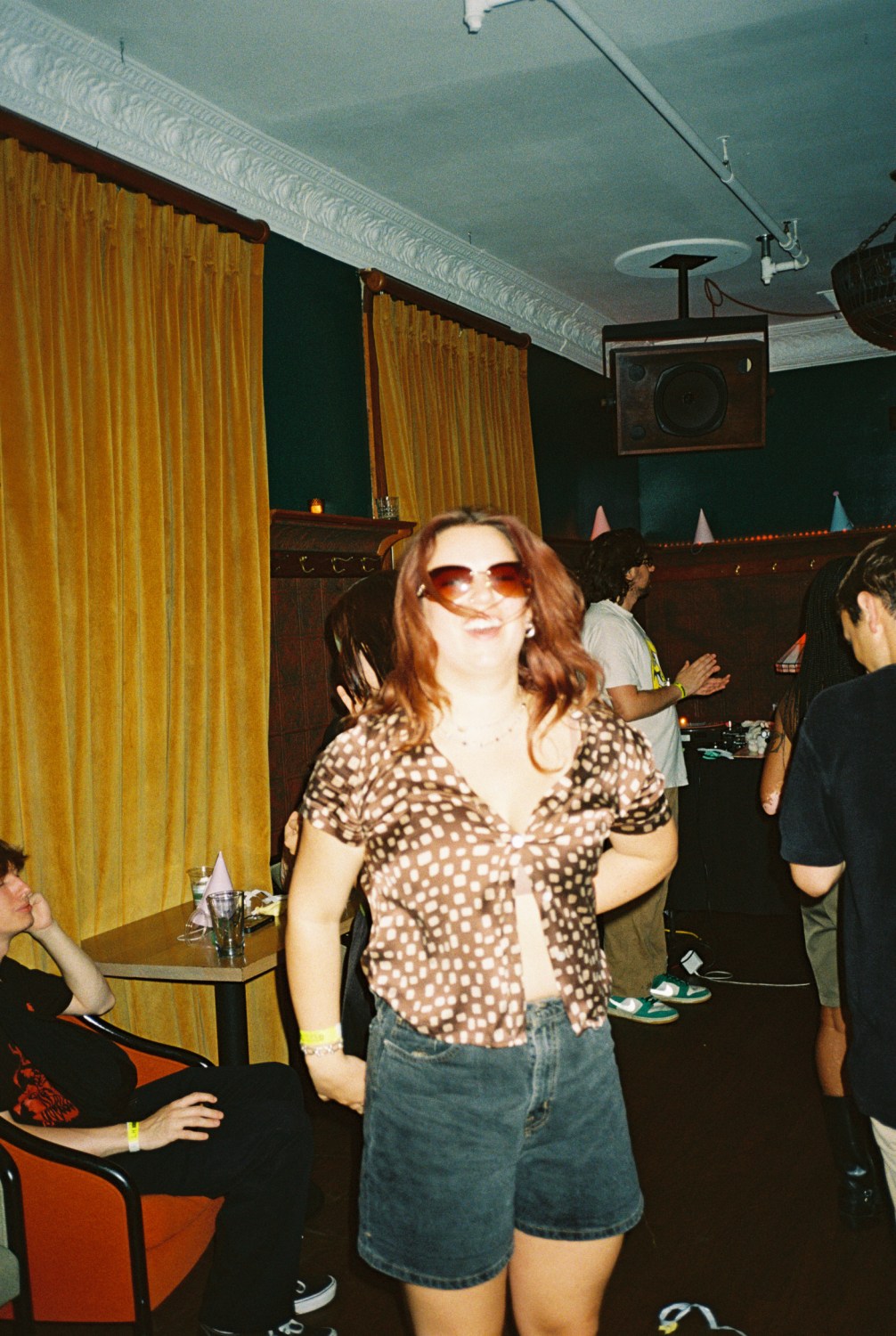
Glitzy is a conceptual and overly artistic approach to press and the coverage of the great Chicagoland music scene. Started by Mak Creden, Aly Westrin, Avalon Smith and Josie Stahler post grad navigation, Glitzy has become a space beyond the pages with live sessions, local events and community outreach. Glitzy recently celebrated the release of their second issue, opening up to contributions from many others, to create an engaging, thoughtful and artistic snapshot of Chicago DIY.
What made you want to start a zine? What were your initial intentions and how did you incorporate all four of your creative avenues into one project?
Glitzy was born at a time when the four of us were navigating post-grad life, unsure of our next moves, but finding ourselves craving creativity and community. We were certain we wanted to collaborate on a passion project together and landed on a music zine. It was a fusion of our interests (writing, design, photography, and filming) and a seemingly logical plan considering our shared backgrounds in college radio at WLUW. We’ve each had our own individual journeys in the Chicago music scene up until this point and decided we wanted to come together to tell the stories of the people and sounds driving it in a community-focused way.
You shared the first edition of Glitzy, Bloom, in the summer of 24, but you spent a lot of time building up to it by creating a community around engaging and extravagant ways of sharing music. What did you want to build up as you were approaching that first release? Did those ideas carry over to the physical edition?
We wanted to establish a corner of the community for ourselves and create a sense of excitement before diving into issue one. It was also honestly to give ourselves some time as we figured things out along the way.
You held a live session with Molly Carrberry, as well as hosted release parties for the community. What does it mean to bring this project off the page and into the world? Is this something you wish to do more?
Absolutely. One of the central pillars of glitzy is community, and we’d love to create more spaces where our community can gather around music together in the future.
As for sessions, we have multiple former film students on our team and live session production experience from the radio days– we really just wanted an excuse to set up sessions again to highlight the amazing artists in Chicago!
You recently just published your second issue, where you brought in a lot of new contributors. What does this milestone mean to you and how does this open door collaboration with others fit into where you view Glitzy and community?
While the first issue proved that we could make something together, the second issue proved that other people wanted to make it with us. Glitzy was always intended to be collaborative and ever-evolving. Involving new voices gave us new perspectives we never would have been able to create on our own.
In such a saturated world, zines and other hands-on projects are seen as the catalyst to cultural movements, offering ways to oust systemic barriers to participate and share diverse voices. Where have you found Glitzy’s voice resonating? Have you learned any lessons in regards to running Glitzy?
Glitzy’s voice seems to resonate in spaces where people are craving something tactile and personal. In a world where everyone is becoming more disconnected and jaded by AI, we have heard that Glitzy feels authentic, like something made by real hands with real care.
One of the biggest lessons we’ve learned is that running a zine is equal parts thrills and logistics. You can’t underestimate how much time goes into the backend– scheduling interviews and handling delays, creating spreads, posting on socials, renovating the website… there’s a lot of organizational work and planning that goes into glitzy
What’s next for Glitzy?
We’ve been taking the time to reflect on our past two issues as we begin looking ahead. 2026 will hopefully bring another issue of glitzy into the world, more interactive events, and ideally, some joy.
Today, Providence’s newest resident, Sleep Habits, the recording project of Alan Howard, is sharing a new song “Six String” as well as “Mountain Top”, a Daniel Johnston cover. This release comes ahead of Bandcamp Friday as Howard looks to help fund his upcoming record.
“You gotta learn how to rock at an early age,” Howard sings, almost indebted to the noise that has built itself around him and his career over the years. Sleep Habits has always been a point of reflection and curiosity for Howard, giving him the space to explore a unique type of lyrical exfoliation, reinforcing the charm and tradition of indie-folk as each song becomes its own moment within a much larger story to be told. “Six String” settles in its crunchy distortion and drum fueled waltz, falling into those picking patterns of rock n’ roll nostalgia and headbanging romantics.
About the songs, Howard shares, “Six string is a song I wrote about a year ago with no intention of ever releasing. But as I sat with it, I started to kind of like it even though the lyrics are a little more direct than I’m normally comfortable with. To me it’s just a fun song about loving music and wishing I could do it more!
Mountain top is a great song by Daniel Johnston that I became obsessed with after I heard the live BBC session that they released. It’s a terrible recording but the band is rocking and Daniel sounds great; the studio version is great too (produced by Mark Linkous of sparklehorse) but just doesn’t have that same edge! I thought it would be a fun song to cover and have bandcamp Friday coming up gave a good reason to dive in!”
You can purchase “Six String / Mountain Top” now on Bandcamp to help Howard raise funds for the next Sleep Habits album.
Written by Pat Pilch | Featured Photo by Kim Christoffell
Chicago by Rochester project Cusp might be the newbies in town, but they’ve begun to call the Windy City home. After COVID and life changes split the group back in 2022, the band quickly picked up gigging in the Chicago scene, adding two new members along the way. Their latest record What I Want Doesn’t Want Me Back is a sharp, guitar-driven collection of songs that shed light on life’s ostensibly dullest mundanities.
Leading up to Ugly Trash Fest benefitting OCAD at The Empty Bottle on Sunday December 7, both Ugly Hug and Post-Trash are running feature interviews with all four acts. Post-Trash’s Pat Pilch chats with Ugly Trash headliners Cusp about settling into Chicago, becoming a leader in the scene, and why you should never quit piano.
You were in Rochester, New York before coming to Chicago. Some old Cusp members split to Philly as Full Body 2, and then the rest of y’all came here, is that right?
Yeah, I was like probably four or five years from this point. 2022 is when we moved.
What sparked that decision?
Man, COVID played a big part in it. The Rochester scene was so vibrant, it still is. It’s definitely built back, but at the time COVID was at its peak, the independent venues and the DIY scene was sort of obliterated, plus COVID had upended a place in our lives, work-wise. Our bassist had run a small business that went under because of COVID.
We were young and we were pretty optimistic that we would get to be in a band again, but “where?” was the question. Gaelen had gone to school in Chicago, so he was familiar with the city, and it was a great decision. We’d been thinking about Philly too. I think every DIY band thinks of Philly at least once. I’ve been, and I had visited Chicago too.
Cool. What were you guys doing when you visited, like where’d you hang out?
We were in Logan, which is where we are now. I love the feeling of being in a quiet place in a loud place. I like that I can be in my apartment and it’s nighttime and it’s quiet. I also like having the knowledge that I’m surrounded by millions of people. I guess it depends where you go, but I think that’s tougher in New York to feel a sense of privacy or isolation. I guess it depends where you go.
Your lyrics are very self-aware. When did you start understanding the fact that you were becoming more of a leader within music? Has it affected how you’ve approached creativity?
I really don’t feel like a leader all too often and it’s only apparent when other people express that. It may feel that way to an observer now that I start thinking about it. We’ve grown in scale and in general interest since we started, which I think is what any band would hope for. If I look back on it, I can see that progression, but if I’m in the moment, I still always feel like a follower, even if I’m becoming sort of a leader to somebody else who’s in the beginning of their career.
But that has still impacted my songwriting because it’s still just a theme that is top of mind and it’s something I’m still writing about for this third record that we’re working on now. I think it’s more of a personality thing than it is a music thing, unless I have a revelation in my 30s that lets me be a true leader.
How did the band become a quintet and how have you established your roots here?
I started working for Reverb the first week we moved. When that job started that’s how I met Tommy and Tessa, they’re co-workers.
At Reverb we do this thing at work during company meetings where they play a person who works at the company’s band at the beginning of the meeting. Obviously, you can imagine there’s a lot of musicians that work at Reverb. Tommy heard one of our songs and hit me up in Slack and was like, “oh my god, that was crazy.” And I was like, “okay, you’re the drummer now.”
Tessa is also someone who I became friends with through work and I was a fan of her own original music. She’s a really talented pianist. Piano is actually my main instrument and I’ve been writing more and more keys and piano into the music. I was like, “okay, we need someone to fill that space,” and she was the choice.
Sweet. Did you play piano growing up?
Yeah, that was my first thing. My parents got me into piano super young. I was intensely into it for a lot of my childhood and my teenage years. Then I kind of rebelled against it in my teen years, and I should have just stuck with it. It’s very helpful for writing, and to be proficient on an instrument is a very good feeling. I don’t really feel that with guitar or even piano anymore. If anyone’s reading this, stick with your instrument or tell your cousin who’s like 10 to keep playing.
What are your favorite parts about Chicago? What are your favorite parts about the music scene? Just the city in general?
I’ve still so much to explore. You talked about self awareness, which I do think I have. And I think part of that is I’m a Chicago transplant. There’s so much that I have yet to see and explore.
But from what I have seen so far there’s a really great harmony of the amenities of transportation, access to great food and music and different types of people and their lives like that you don’t get in a mid to small sized city.
There’s a combination of that and pockets of quiet places and green spaces. The parks, the beach. For Matt and for me too, biking accessibility is really nice. It has elements of both a big city and a smaller city that check the boxes that appeal to me.
As far as the music scene goes, there was so much I was excited about before I even moved here. I listened to that first Moontype record. I was like, “Oh my god, I’m so excited to go to Chicago.” Melkbelly. There were so many bands that were already exciting to me before moving here. And the option to go out on any given night is awesome. You have so many venues or shows or things to do. And if you don’t want to, you don’t have to either.
What do you see in the Chicago scene that sets it apart from other places as far, the music scene and the DIY scene go and just like, kind of community?
From my experience, I find Chicago exciting in how accessible it feels. We came in and were the new kids. Our first show was at Cole’s and we played Golden Dagger, RIP. There’s such accessibility to an audience and to a room. I feel like I take it for granted now. In Rochester, there’s only so many spots to play shows, and a lot of them are gone now.
We felt so spoiled coming here. We already had an EP out, but we kind of walked in and were able to just do it. That feels rare. You can’t do that everywhere. And the people are nice too.
You can listen to What I Want Doesn’t Want Me Back out now as well as get it on vinyl via Exploding in Sound.
Written by Shea Roney | Photo by Nati Rosa Rodriguez
Every Wednesday, the ugly hug shares a playlist personally curated by an artist/band that we have been enjoying. This week we have a collection of songs put together by David and Austin of the Chicago-based band Copies.
Each partaking in various projects throughout the city, plays the game is the first release for this duo, secretly shared online in the dog days of summer via Beekeeper Tapes and Discs. As David’s guitar riffs begin to heat up like metal in a flame, and Austin’s ferocious drumming brands the skin, Copies’ chaotic melodies clot each track, bringing face to the natural and rather stunning relationship between pain and healing. The EP is loud, thrashing, and emotionally blending, as Copies stands their ground, in a rather dying world, as a defiant and exciting voice to be reckoned with.
Chicago is on fire right now. From indie rock, to art pop, to jazz, the Windy City’s scenes detail its rich musical history. As of late, a lo-fi wave of straight-to-tape projects championing DIY and punk ethics has cropped up on the west and south sides. Answering Machines is one of many of those bands.
In the leadup to Ugly Hug and Post-Trash’s benefit fest this Sunday at the Empty Bottle, both sites are featuring each project on their respective sites. Answering Machines is our leadoff hitter this Sunday, and their twitchy, melodic punk will kick off the night. The band’s very own Jackieboy chats with Pat Pilch about the band’s origins, playing in bands with your friends, and making art accessible.
How did Answering Machines start?
In high school I was in bands with some of my friends. I wanted to write my own music and not stress out about it. So I started recording songs on my phone on GarageBand. I kept doing it and then I moved to Chicago. I met Adelaide, who plays drums. We started playing shows here. The first show in Chicago was at The Empty Bottle with Silicone Prairie.
Where are you from originally?
DFW Texas. I grew up going to shows in Denton.
What kind of bands were you in in high school?
I was in this noise pop band. That’s what we called it. But… It was like… It started off as like a noise rock thing. Then we got really into Deerhoof.
Sweet. Who are your influences? And what are you into right now?
For Answering Machines the main ones are The Zeroes, The Ramones, Television Personalities and Beat Happening.
Your tapes and downloads are pretty cheap. Tell me about that. Is accessibility and affordability important to you?
With punk music, it comes with the territory. Making it accessible, plus I want it to sound accessible to make. The songs are simple and something any ordinary person could do. I like that rather than something complicated or overproduced.
How do you record?
I record with a four track. It’s called a Korg CR4 but I just broke it, so i’m using a Tascam Portastudio. We just recorded vocals yesterday. On track one we recorded all the instruments live and overdubbed the other stuff. Second guitar and two vocals.
What kind of Tascam do you have?
I forgot what it’s called. It’s that gray one. You can only record one track at a time. It’s like… It might be a Portastudio MS-T01. But… I could be wrong.
You’re in a couple different bands. How does your community support one another’s creativity?
I just met a bunch of people on the shows here. And my roommate Saskia. We started a band called Bungie Jumpers together. Then she started writing her own songs for a band called P. Noid. So, we’re just like, “If you play in my band, I’ll play in your band.” Type of thing.
Are you in school right now? What do you do?
Yeah. I’m in my last year of school. And I’m studying printmaking and drawing. I’m also a dog walker.
How does your non-musical art influence your music, if at all?
I feel like one of the big reasons why I like starting a million bands is you get to make art for it. I love making flyers and all that. The accessibility thing definitely carries over for me. For most of my print and drawings, I primarily use a photocopier to make all my collages and I don’t use computers. So it kind of carries over.
Do you make zines?
I don’t think I’ve made a zine before. No.
Is that something you’re interested in?
Yeah. A little bit, but I feel like there’s other people who are doing good things with that. And I’d rather just focus on being in and starting a bunch of bands. I just started two new bands. One of them is a hardcore band. We’re called Mr. Crazy.
I started another band with my friends called Autofill, and another called The Experience. I only have like three songs each for each band.
What is lyrically driving Answering Machines songs?
Mainly what’s going on in my life. Trying to convert that into something more universal that people can relate to. But I also keep it like teenager-y and silly. I love Beat Happenings lyrics. Cool. They’re not thinking too much. It’s not like trying to tell some epic story or anything. I just like something that’s relatable, especially to young people.
You can listen to the self-titled debut EP from Answering Machines now.
Ugly Trash Fest will be held on December 7th at the Empty Bottle in Chicago. All proceeds from tickets and raffle will be donated to Organized Communities Against Deportation. Get tickets HERE.
Every Wednesday, the ugly hug shares a playlist personally curated by an artist/band that we have been enjoying. This week we have a collection of songs put together by Albany-based band Bruiser and Bicycle.
I feel an advisory is required before peering into the world of Bruiser and Bicycle, an Albany, New York-based progressive folk ensemble. On October 8th, 2025, the band released an experimental approach to the traditional rural tunes of Americana, Deep Country. Their pastoral themes, intermingled with pop and rock, inform a new method of songwriting and production. A completely unique medley, belonging only to their name.
Flying freely in their whimsically constructed, musical plane, is “O’ There’s a Sign.” Gliding swiftly from start to finish, it lands in the third slot of the record, with a fast and abrupt arrival. The interior of the third track moves with fervor, featuring soft vocables that, unknowingly and excitingly, jump to overpowering proclamations and unheard-of questions like, “Who can flip a bottle on its side?” Bruiser and Bicycle never allow for comfort. There are too many moving parts to just idly sit by and passively consume their sound. To listen to the four-part ensemble, one should be keen and observant, on the lookout for the next unexpected, jerking turn.
With their closing track and record title, Deep Country, they continue to use whimsy to build their distinct image. Theatrical voices sporadically holler in the background of the melody, chiming in to spackle any holes of silence. But, one voice drives the album’s bucolic theme by slowly chewing through the lines: I’ve been out, in the fiery heat of the desert / There’s a peculiar rhythm / Arcadian or wisdom. Glistening at the tail end of the track: rapid strums and feathery adlibs to lighten its hefty precursor.
As a result of these humorous voices, the album gives the impression of a score. Playfully sounding over transient bits that feel awkward in the moment, but funny upon reflection. Films such as Juno or Little Miss Sunshine come to mind.
Proliferating from characteristics of the south, Bruiser and Bicycle portray themselves as a woven tapestry—a traditional practice blended with different materials. Their rustic-indie folk feel leans into a familiar sound, yet offers an exciting jumble of eccentric voices, introspective repetition, and jabbing humor. The unpredictability of the group amplifies any intrigue going into a listen. The chase of pinning down a meaning or general idea of the band will never tire you. Be aware, be alert, and be on the lookout for what’s to come from Bruiser and Bicycle.
You can listen to Bruiser and Bicycle’s playlist HERE!
You can find Deep Country and the rest of their discography below.
Music holds the power to wake us up, lull us to sleep, or transport us to dreamlike realities – Adeline Hotel’s new record Watch the Sunflowers unwraps a unique culmination of all three. In a long string of critically acclaimed releases out of Ruination Records, Dan Knishkowy is no stranger to the quiet spell it takes to create a record that feels dense yet holds the ability to float on air like this. Here, he’s less concerned with revelation than presence – the slow, patient art of noticing.
Where earlier Adeline Hotel albums drifted in the gentle haze of folk minimalism, Watch the Sunflowers feels almost meditative. Knishkowy sits somewhere between the fragile intimacy of Sufjan Stevens and the pastoral melancholy of Nick Drake. His voice, both literal and compositional, feels steadier, communal in spirit – like a speaker straight from the soul.
The opening track “Dreaming” sets the pace – as Knishkowy speaks directly to the listener: “some things take a little while”. A slow-building lattice of fingerpicked guitars that seem to shimmer in and out of sync. While Whodunnit’s openers were tentative, this one feels confident – an invitation that is reflective and authentic.
Stretching out the stillness, “Nothing” layers brushed drums and soft synth into something reminiscent of early Iron and Wine, yet with a maturity in the arrangement that hints at the slow and steady growth over the past few albums. The refrain feels like a heartbeat: steady and unhurried. While his voice blurs at the edges, a reminder that vulnerability can live in conjunction with strength.
“Swimming” catches you mid-current, tumbling you into its stream. Guitar fragments appear like sunspots, somewhere between longing and amusement. At the center of the record, it’s a track that could feel heavy handed. Instead, its light – buoyant in its sadness, as if noticing the color of the leaves as the storm passes through them.
“Ego” strikes differently. Accompanied by the sly tension of the piano, Knishkowy begs the looming questions of the human experience: “Do I need to be kind?”. It pulses, even slightly ironically – as if he’s testing whether or not you’re paying attention. The track introduces a shift, with hidden twang and undercover woes – it exemplifies a willingness to deconstruct and rebuild. The shift continues into “Just Like You”, which reimagines sound into the nostalgic experimentation of the early 2010s. You feel transported to somewhere serene, familiar, comfortable. It’s a kaleidoscopic experience that melts together into something nearly indescribable.
“Spaces” returns to the album’s homebody heartbeat, offering reflection on the gaps between moments and people. The instrumentation is sparse, allowing the space to resonate deeply. The final title track “Watch the Sunflowers” closes the album with a gentle crescendo, leaving a lingering sense of warmth and resolution – the perfect ending to a record that moves carefully between reflection and the light.
William Blake quotes “As a man is, so he sees. As the eye is formed, such are its powers.” Knishkowy understands this intimately; Watch the Sunflowers isn’t about what’s seen, but how it’s seen. Stillness can sharpen sight, and the smallest moments can open to infinity.
You can listen to Watch the Sunflowers out now as well as order it on vinyl via Ruination Records.
Indie-folk band Florist captures the heartbreaking magic of being alive in their newest album Jellywish; ten soothing, ambient tracks that act as a friend who shares a moment of understanding for listeners. While comforting, the album reminds people to remember that so much of the suffering in the world is created by humans, and that there is a constant, desperate need for change.
Florist is a friendship project based in Brooklyn, New York, made up of four members: Emily Sprague, Rick Spataro, Felix Walworth, and Jonnie Baker. Jellywish was released on April 4, 2025 under the record label Double Double Whammy. It was engineered by Rick Spataro, mixed by Alex P. Wernquest and Rick Spataro at Basement Floods, and mastered by Josh Bonat. The beautiful album artwork was created by Vera Haddad.
All songs are composed by Sprague, who described the album as “different from past Florist releases in that it does not offer the solution of inner peace or beautiful conclusions.” Many of the songs make this clear in a simple way, such as the line “should anything be pleasure when suffering is everywhere” in the first track “Levitate.” Sprague manages to blend hope and pain in a way that creates an immersive experience in empathy and humanity.
The album flows very intentionally, beginning with the quiet, acoustic song “Levitate” and ending similarly with “Gloom Designs,” accompanied by soft guitar and rain noises. The instrumentation ebbs and flows throughout, ranging from clear vocals, fingerpicking, and soft piano, to gritty guitar solos, light percussion, glitching background noises and distorted vocals. While the accompaniment remains minimal throughout, it is never too simple. Both the instrumentation and stylistic choices shift between hope and sadness in a way that mirrors the real world. The meditative songs resemble poetry, often lacking choruses but containing repeated lyrics to get lost in. The lack of structure is reminiscent of the societal topics and themes of the album.
Turning intimate moments into something relatable, Sprague tackles how much love and hope can be found in the world, without shying away from the many harsh realities. They write about love in a poignant way, with the lyrics “there’s no evil in your eyes” in “Sparkle Song” and “it’s been a long time since we laughed until we cried / it’s been a short time in the entirety of life” in “Gloom Designs.” “You cut your hair off and started to glow” captures the feeling of watching someone become themself and loving them more for it in the track “Started to Glow.” Death remains a steady theme, reminding us that everything is temporary, but that there is so much to love in the meantime. The album invites listeners to accept their emotions without shame.
Lyrics about the natural world add vivid imagery to the listening experience, with descriptions of rivers and waterfalls, red sunrises, the desert sky, and morning dirt. While Jellywish is lovely at any point of the year, it provides a comfort to the winter months, with descriptions of gardens dying in the freezing cold and ice. In addition, the song “Jellyfish” asks the question “will there still be winter in a year?”
On the surface it seems like Florist has created a new, magical reality to escape to with this album, until you realize these slices of life portrayed can be found just outside the window. A reminder that you can be small and important at the same time.
You can listen to Jellywish out now as well as on vinyl and cd.






























 the ugly hug