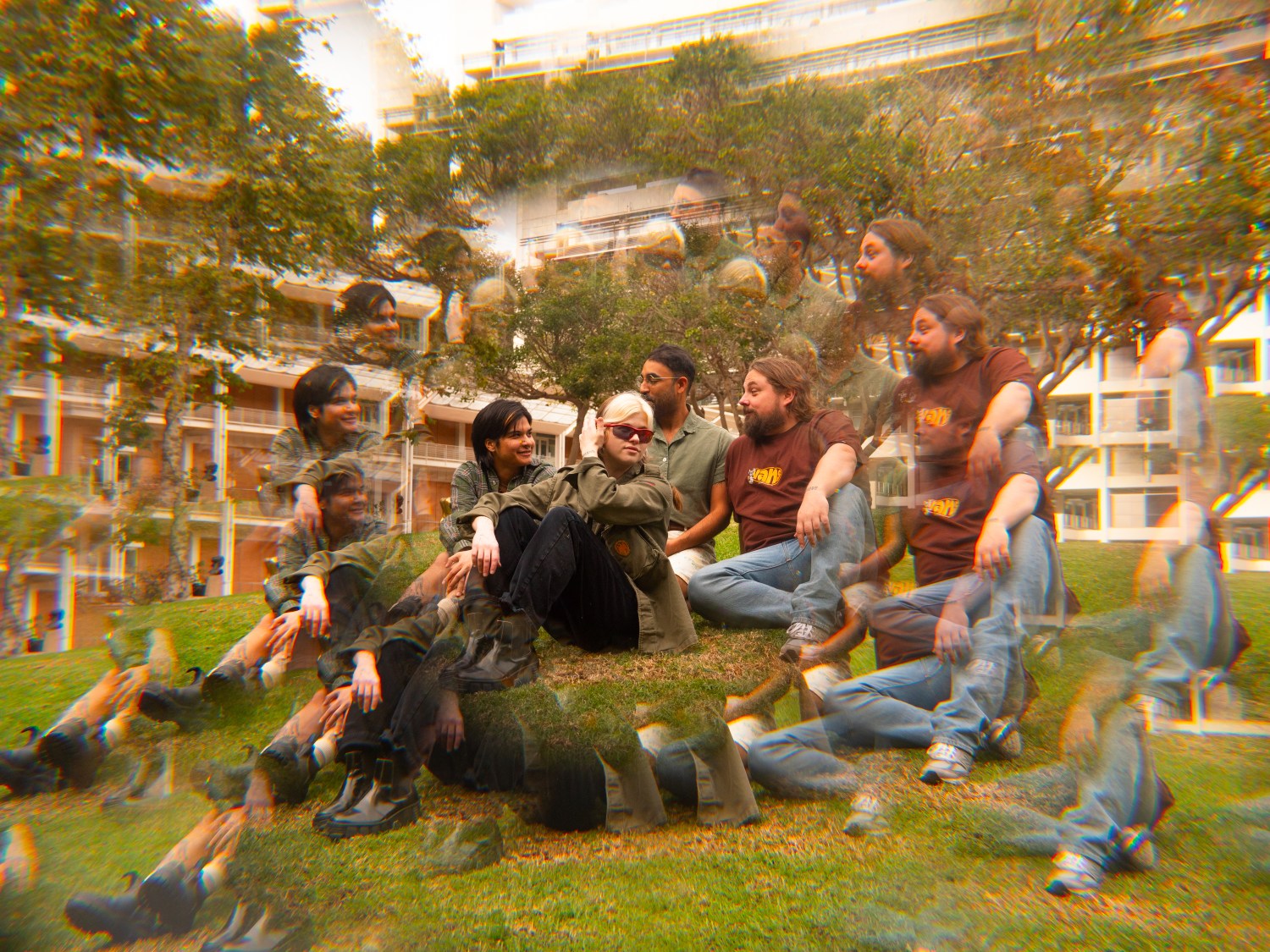
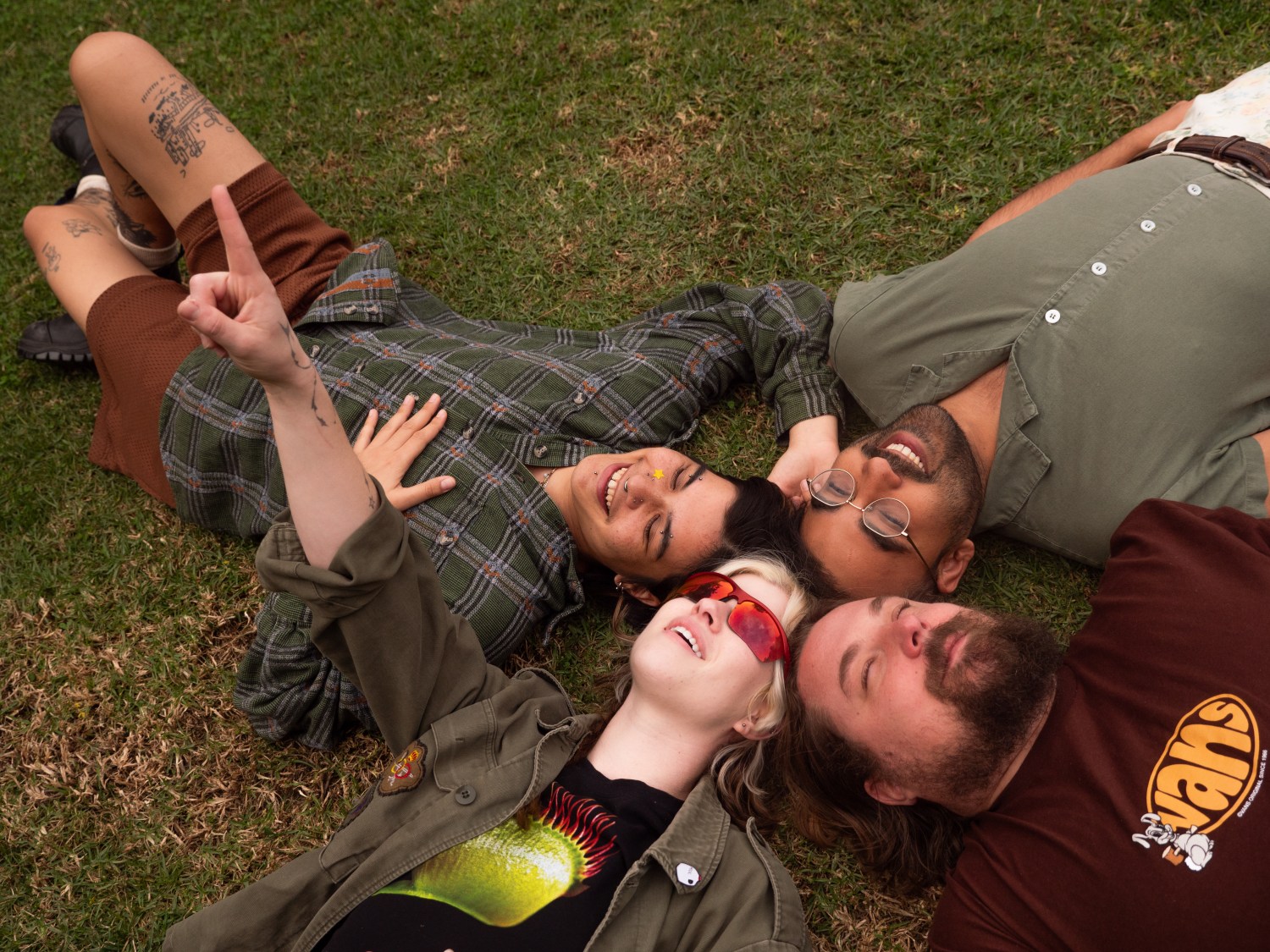
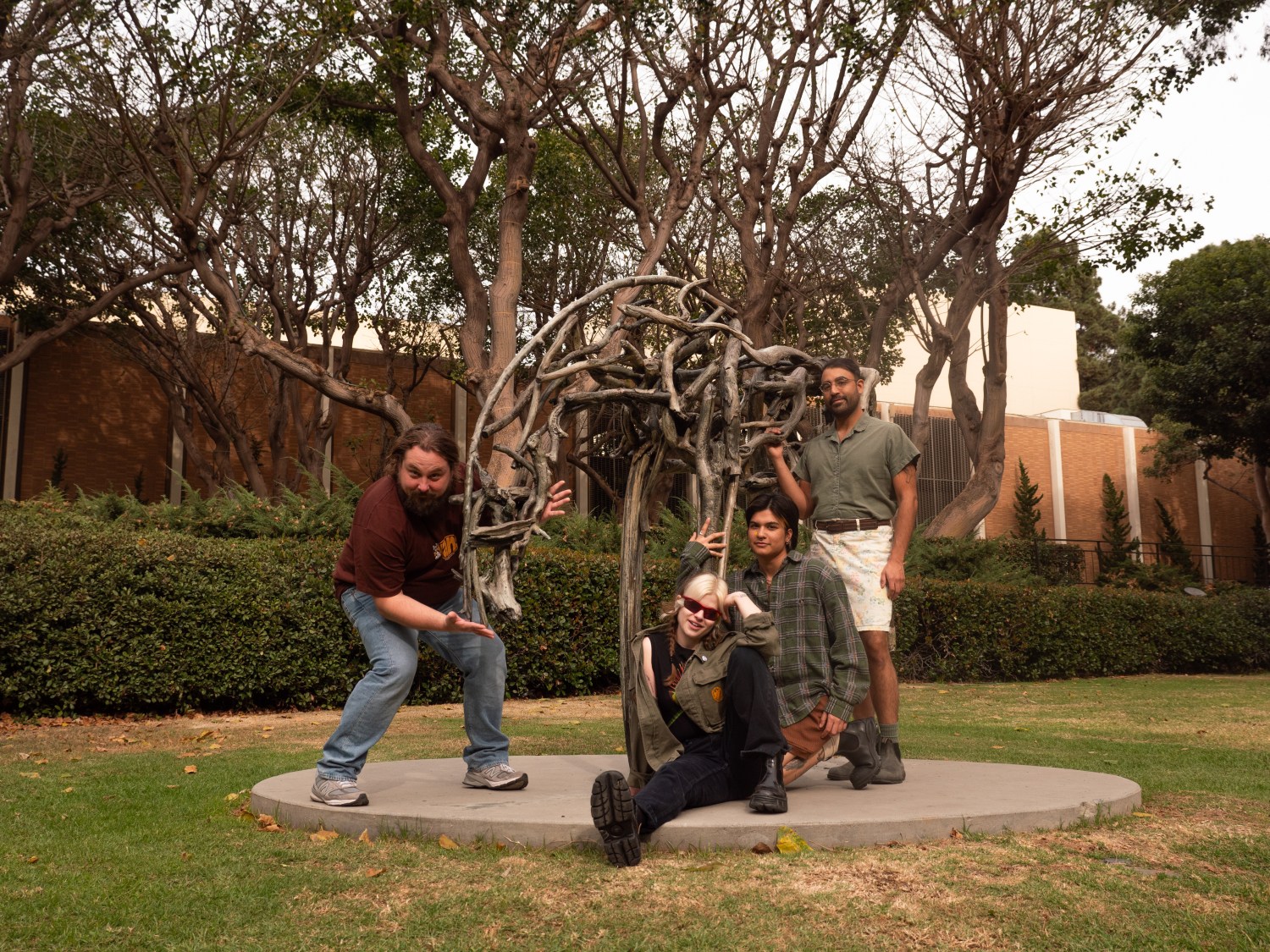
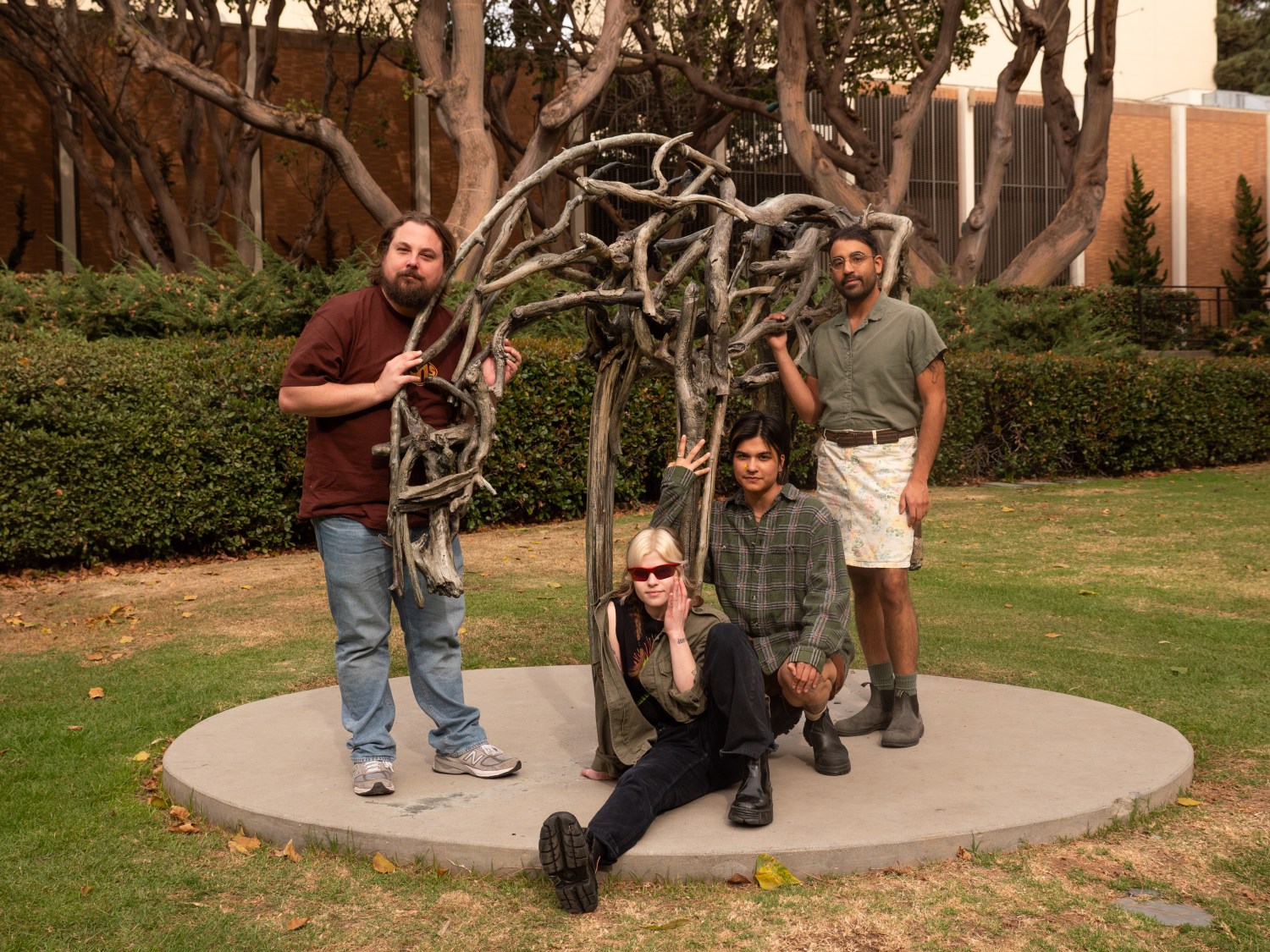
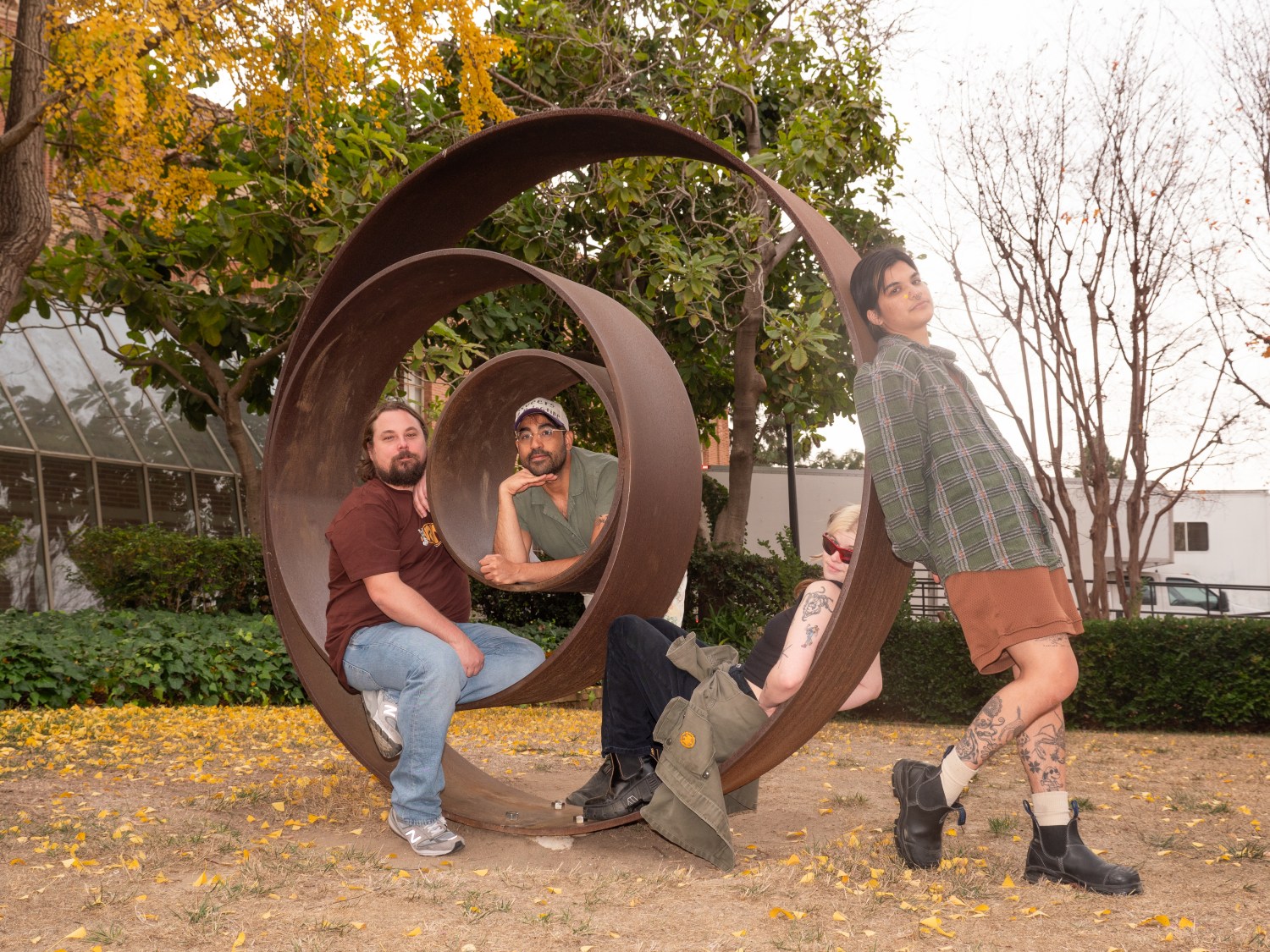
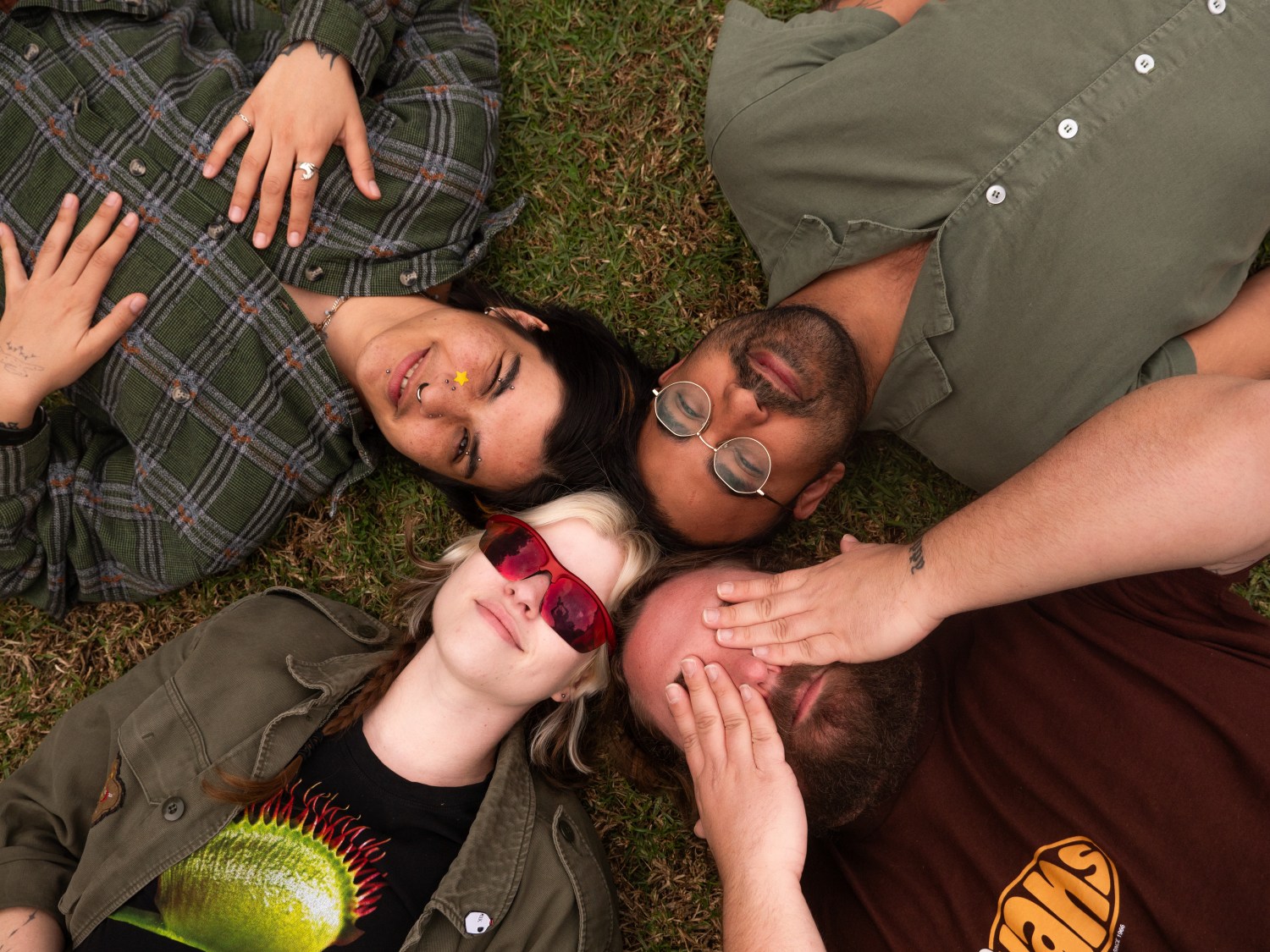
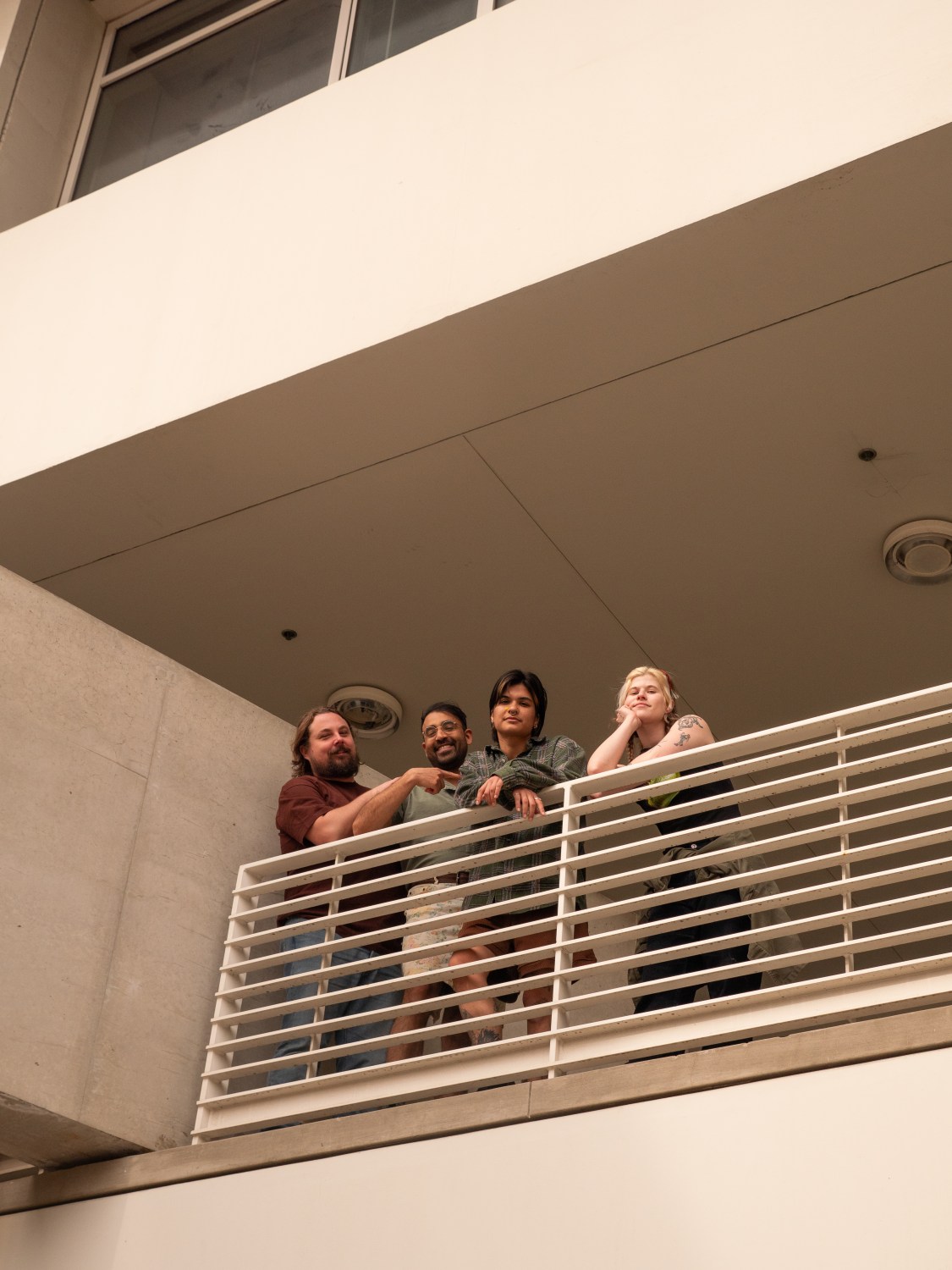
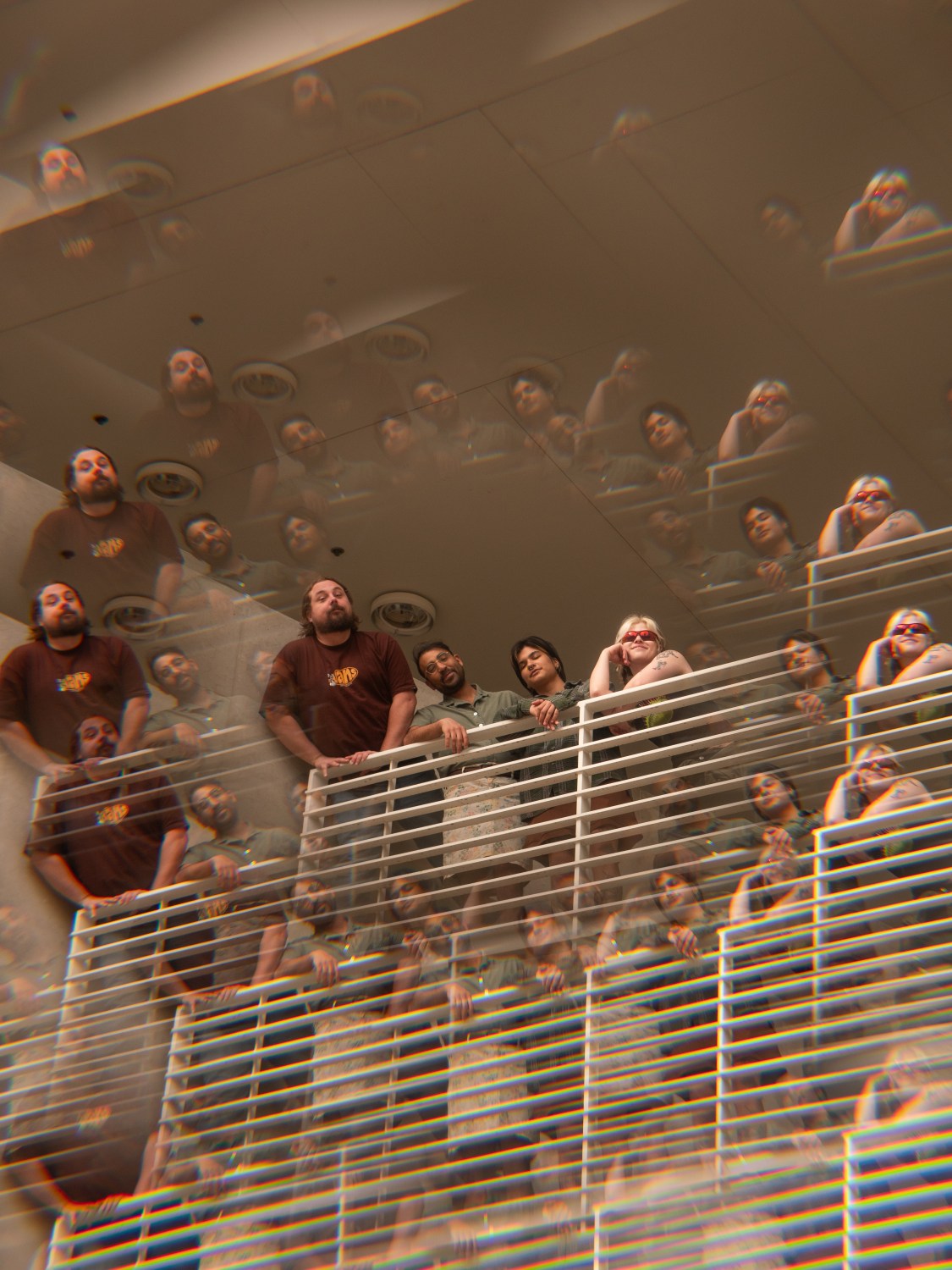
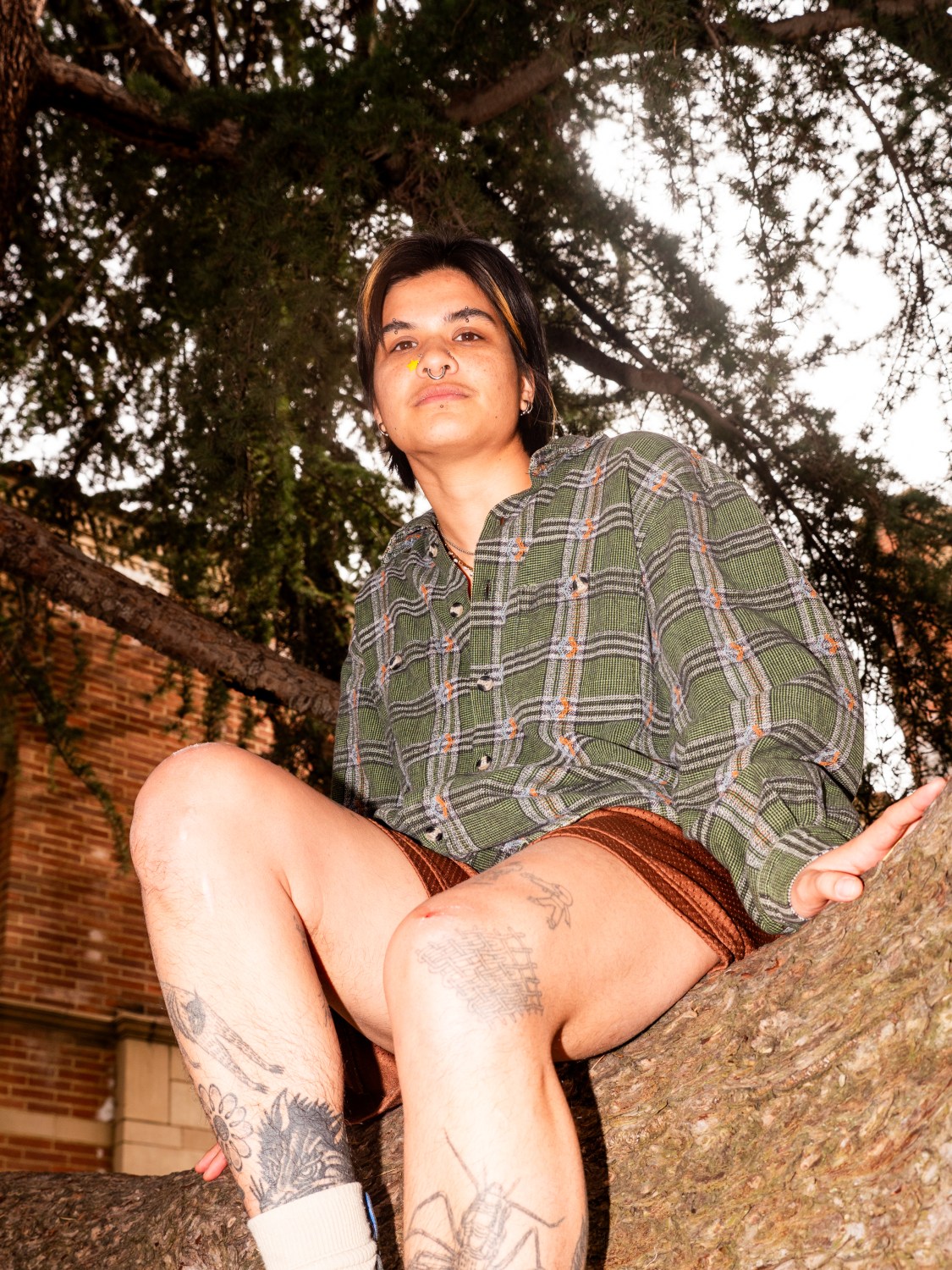
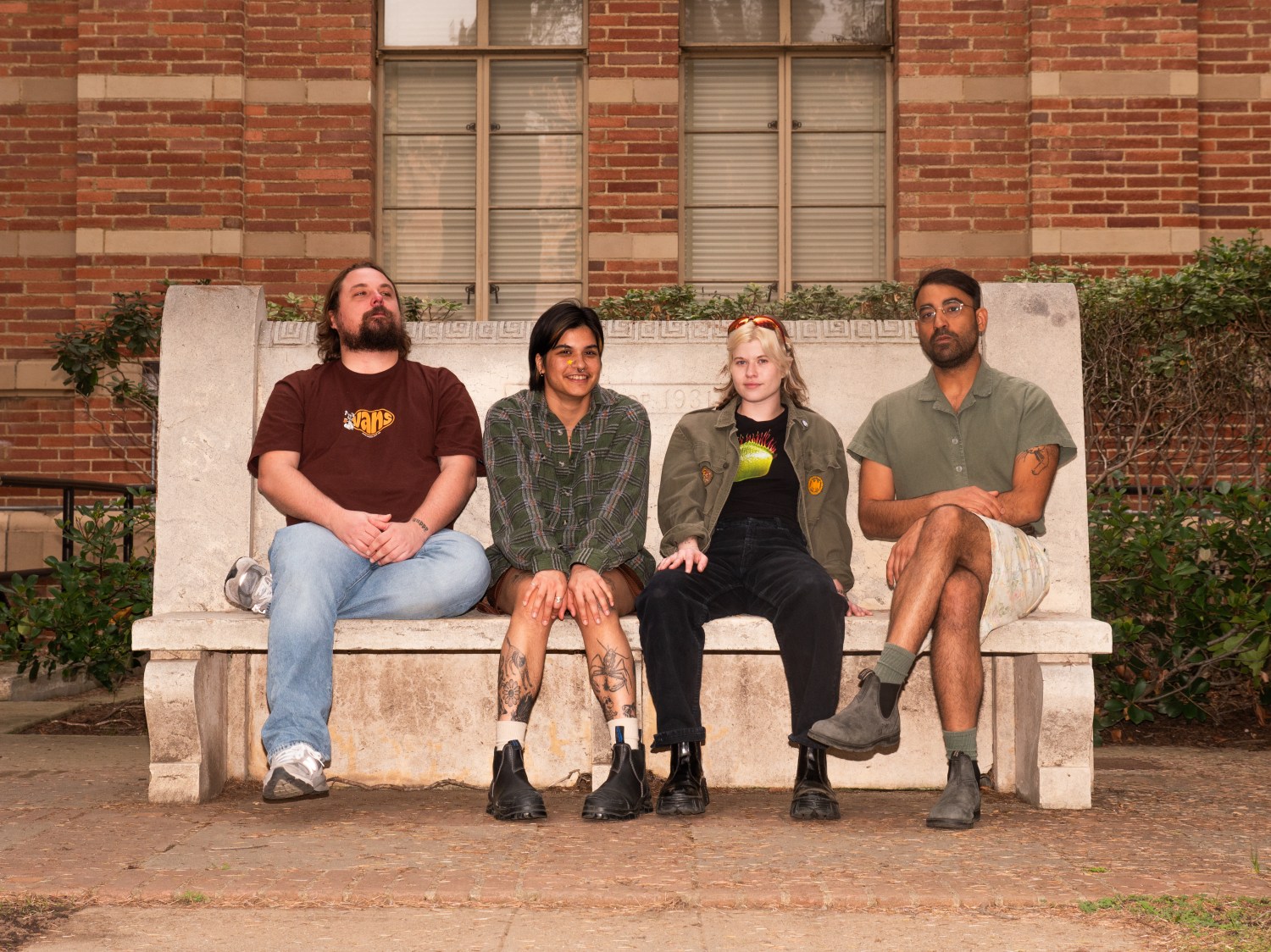
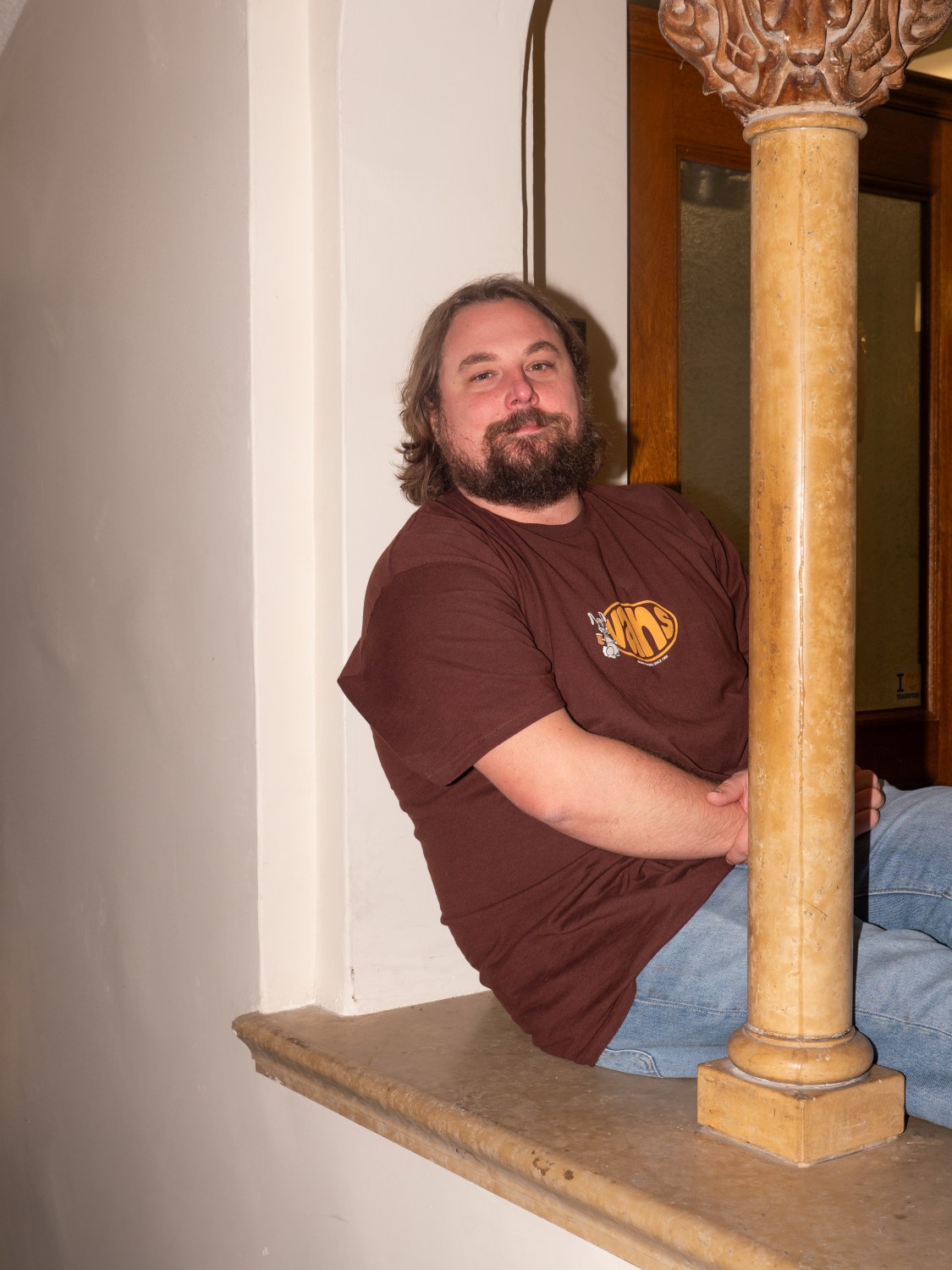
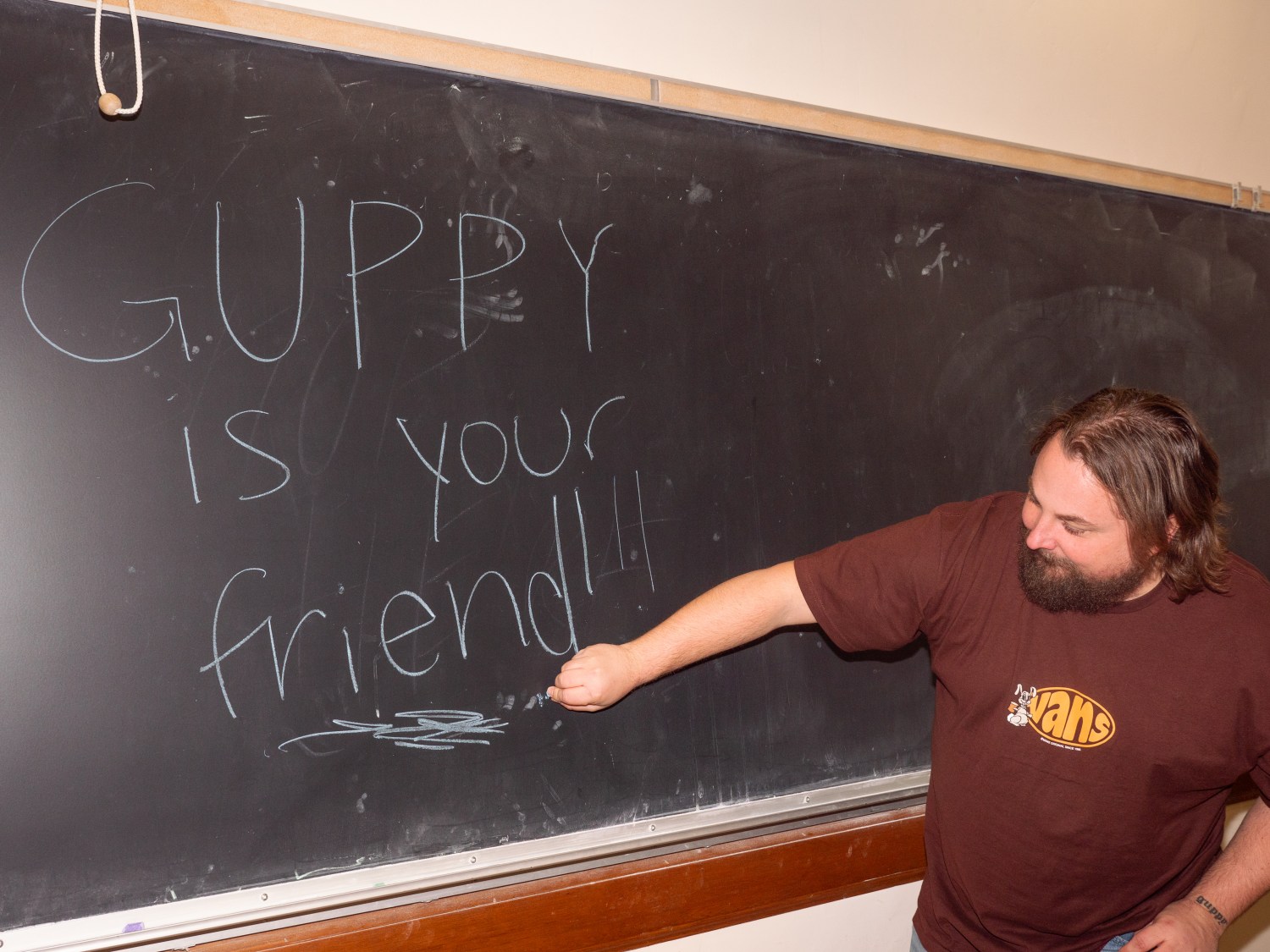
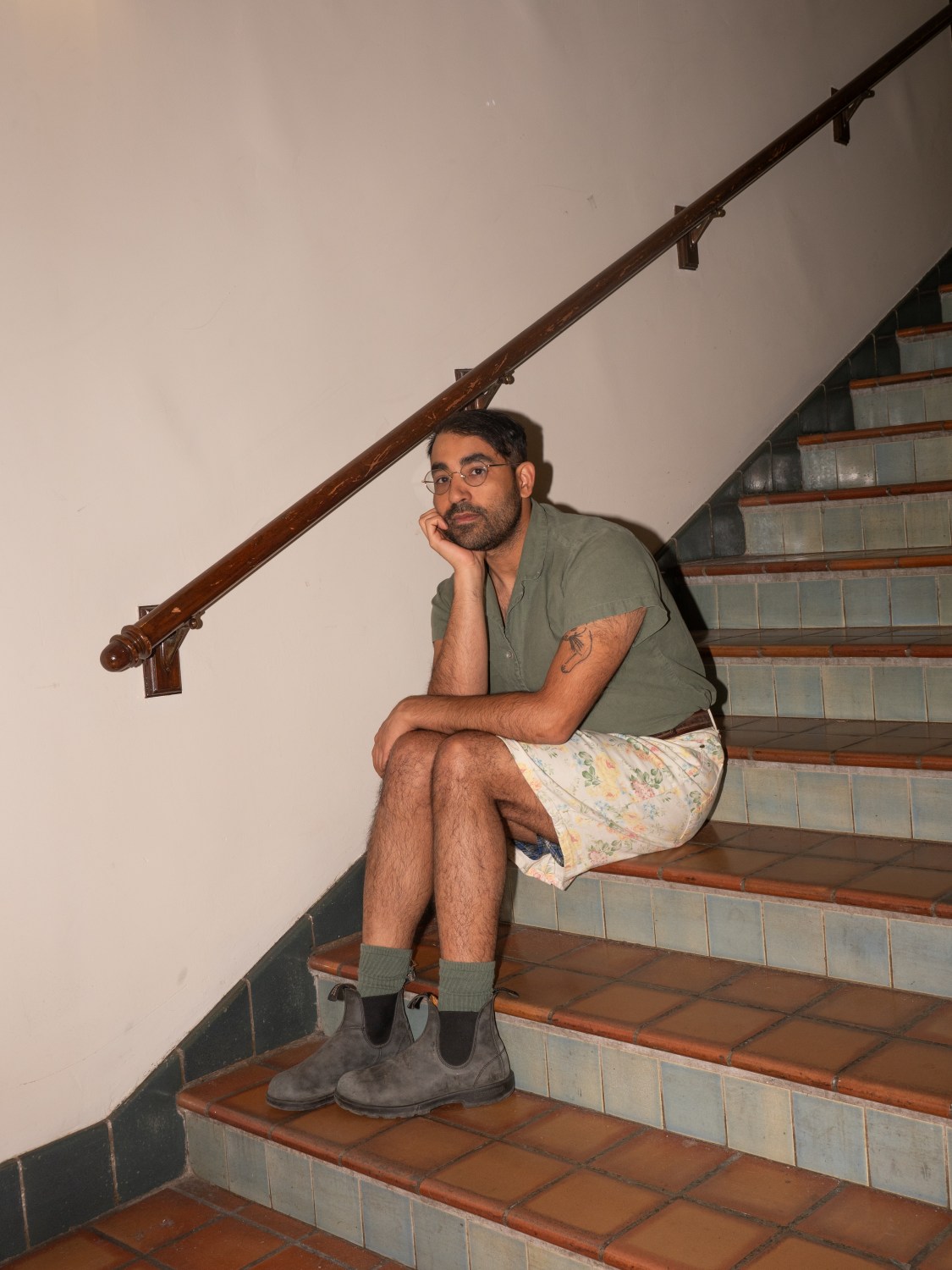
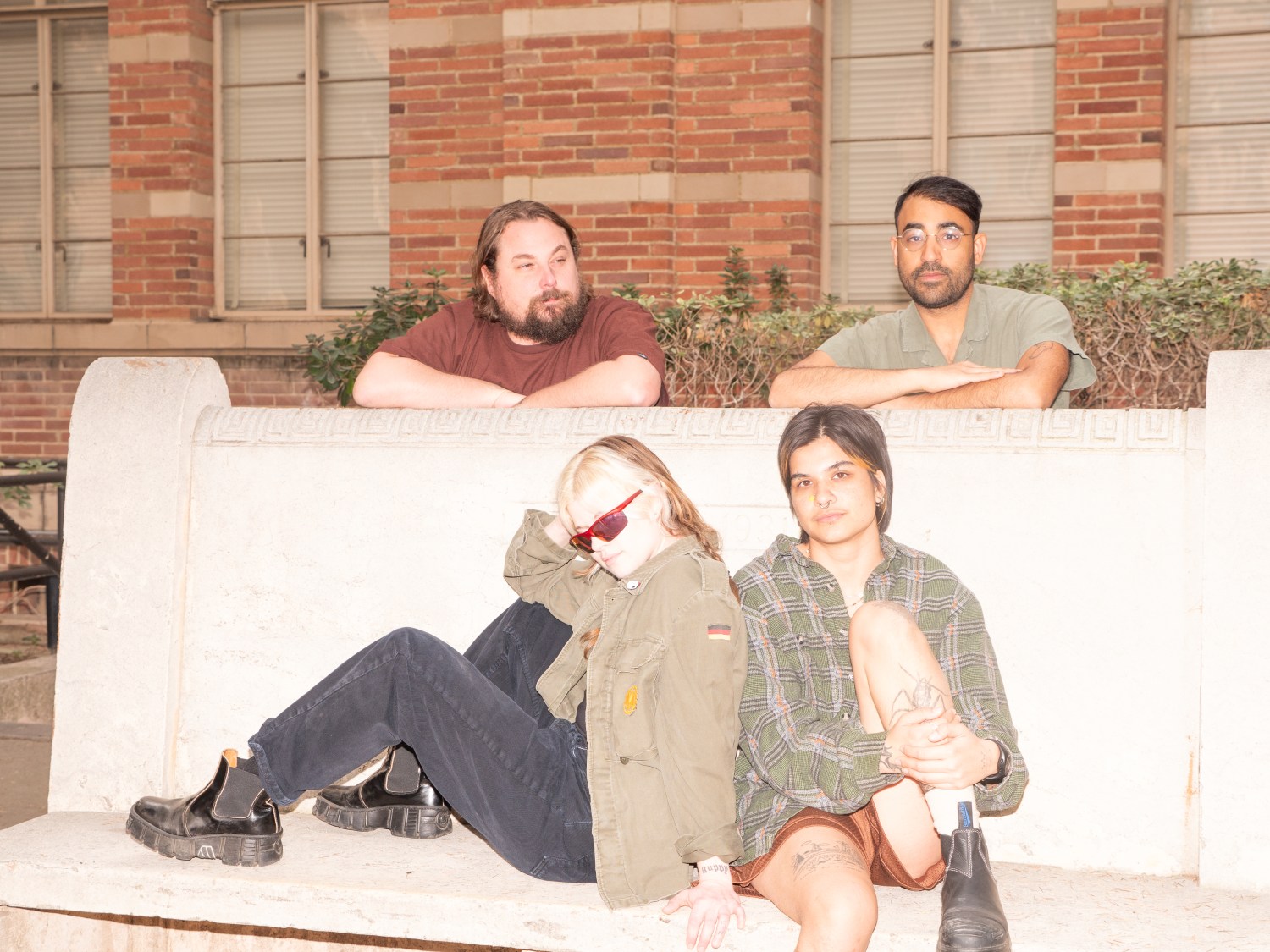
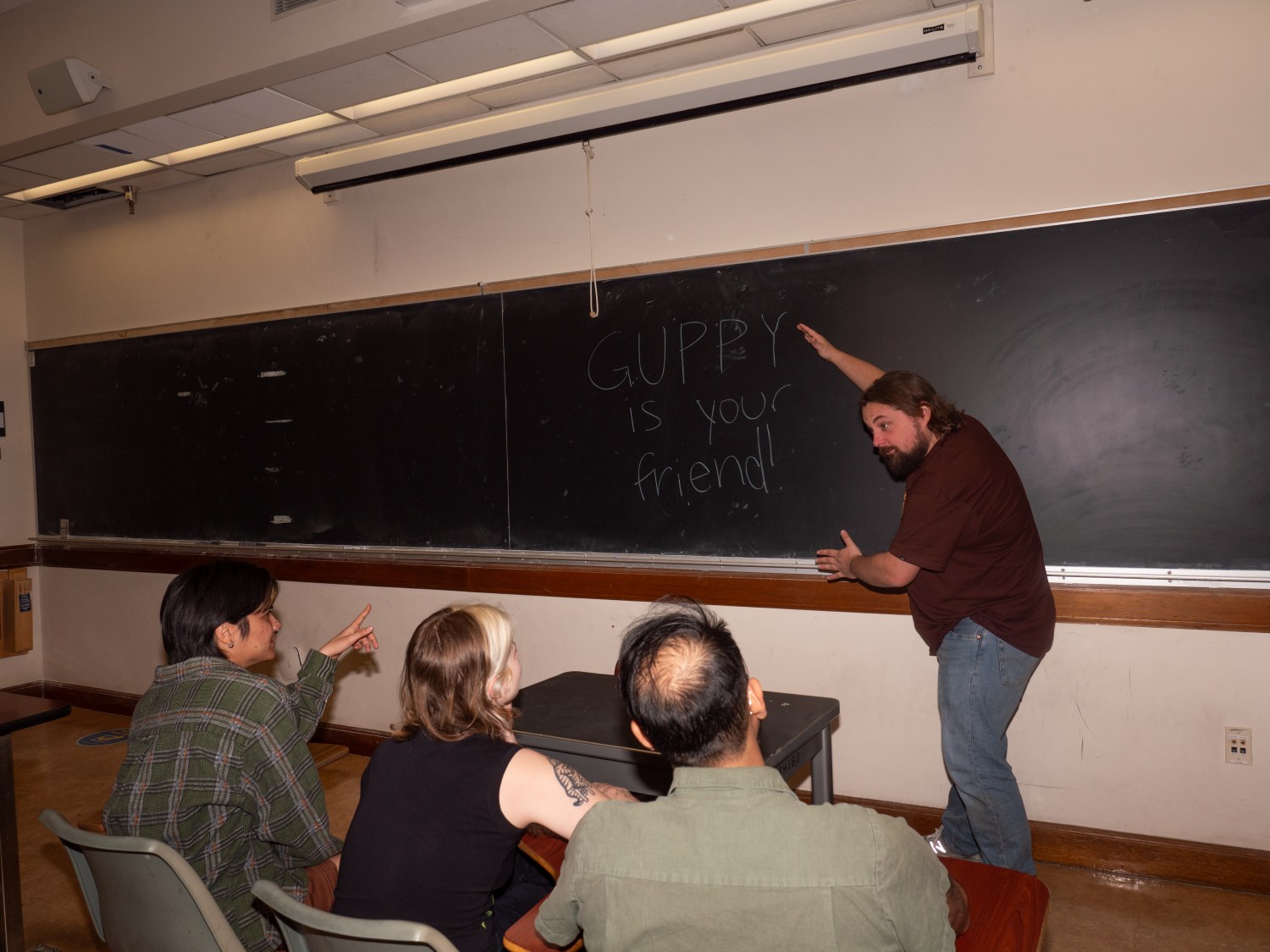
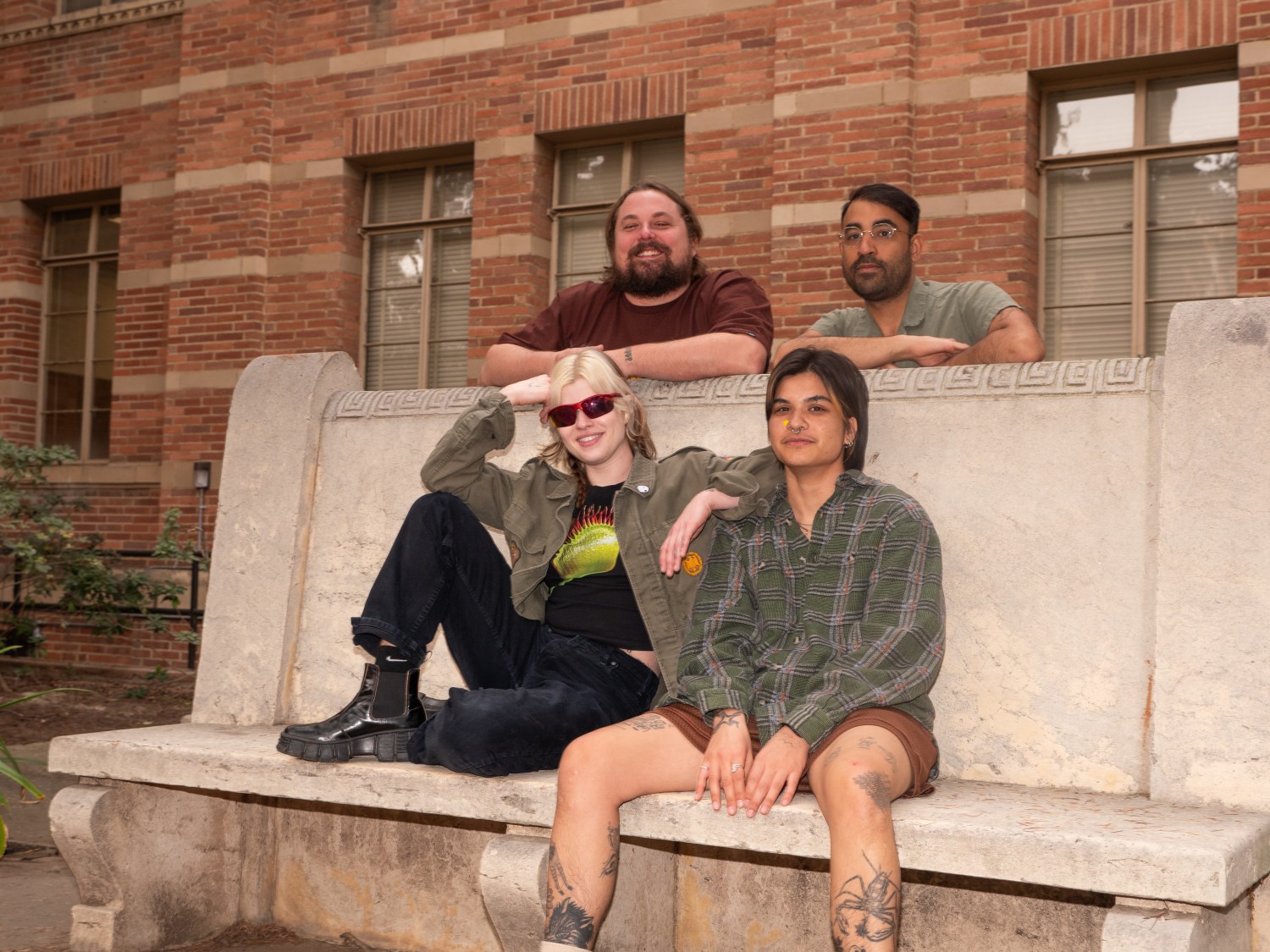
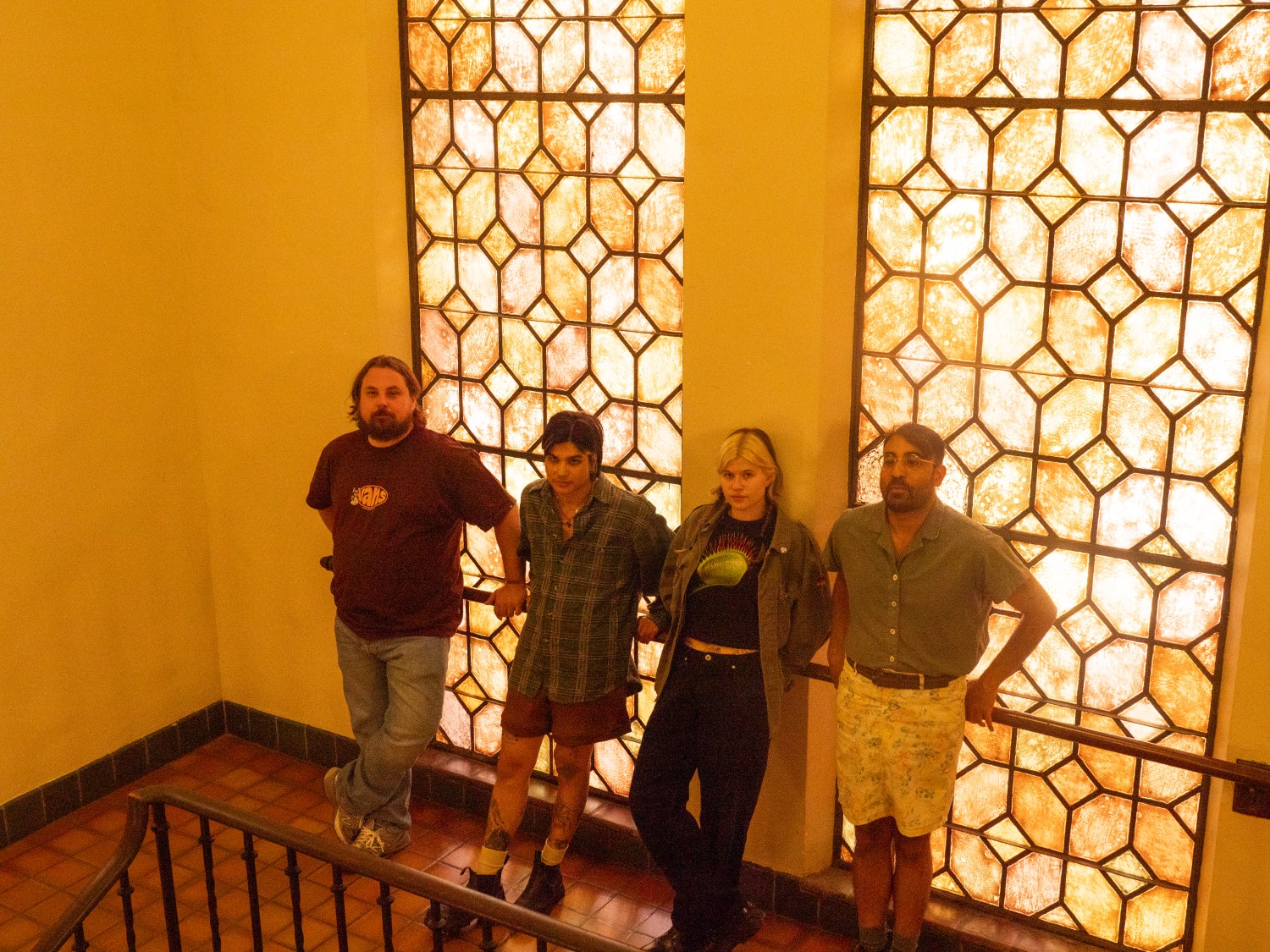
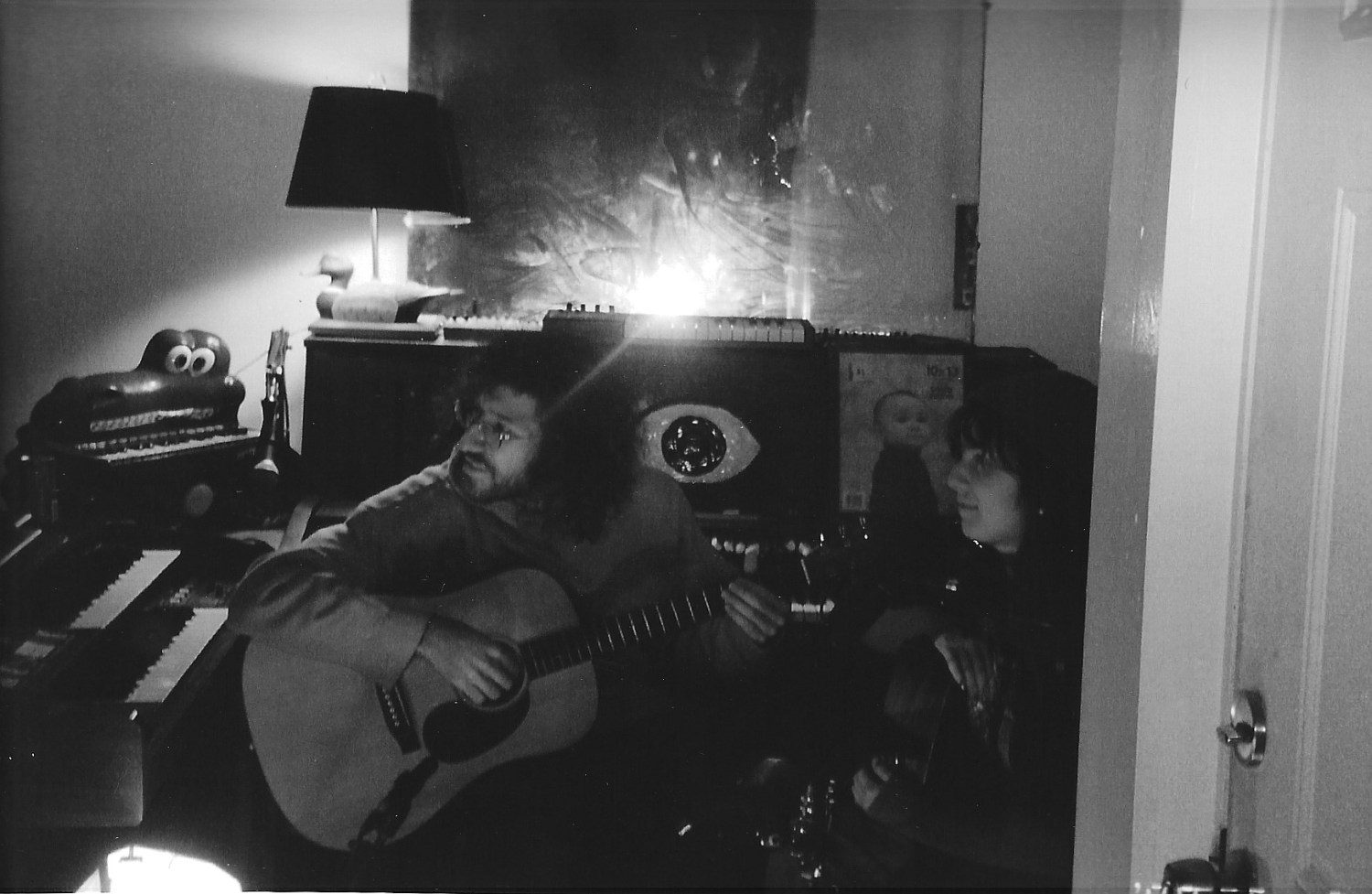
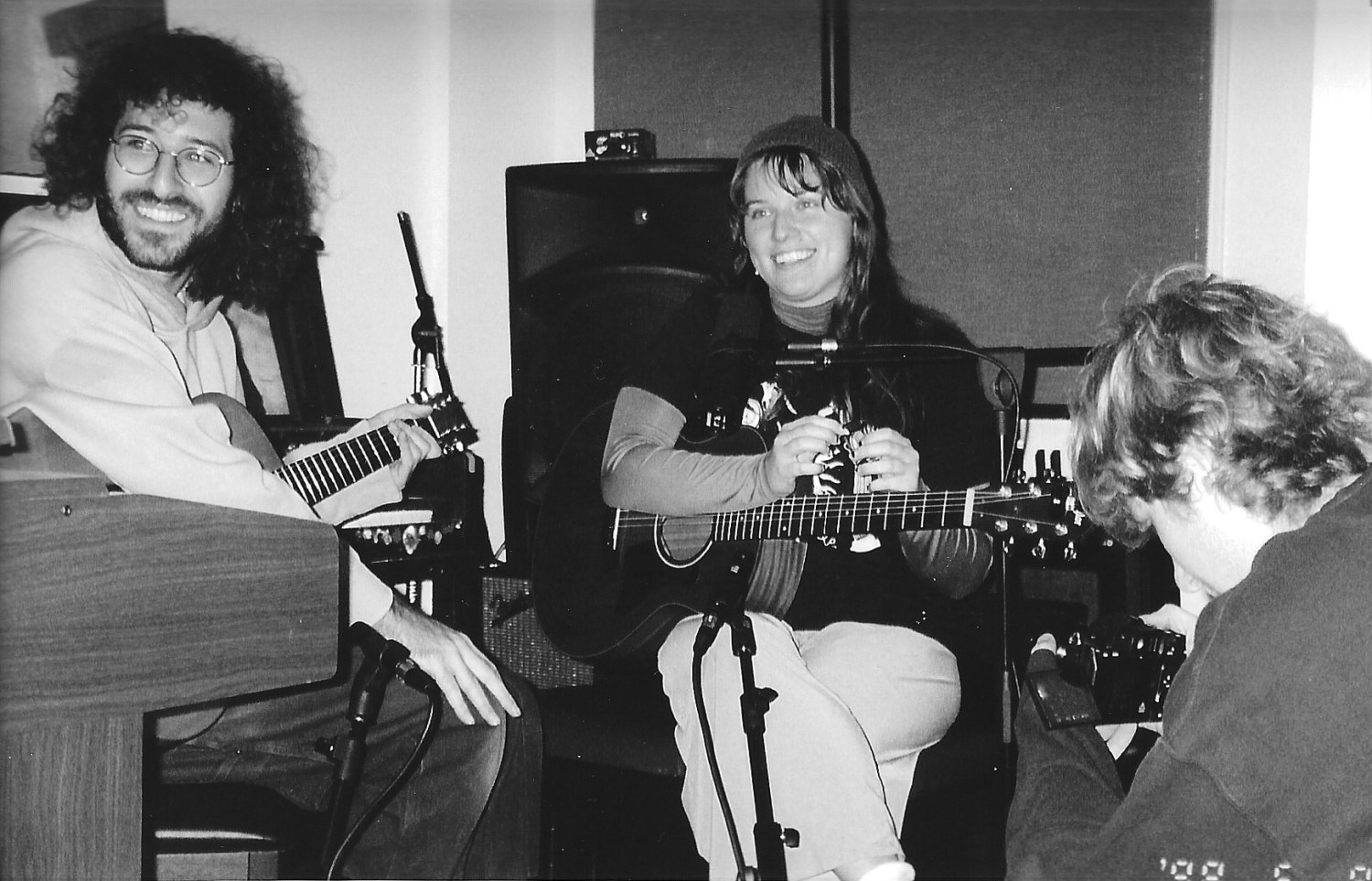
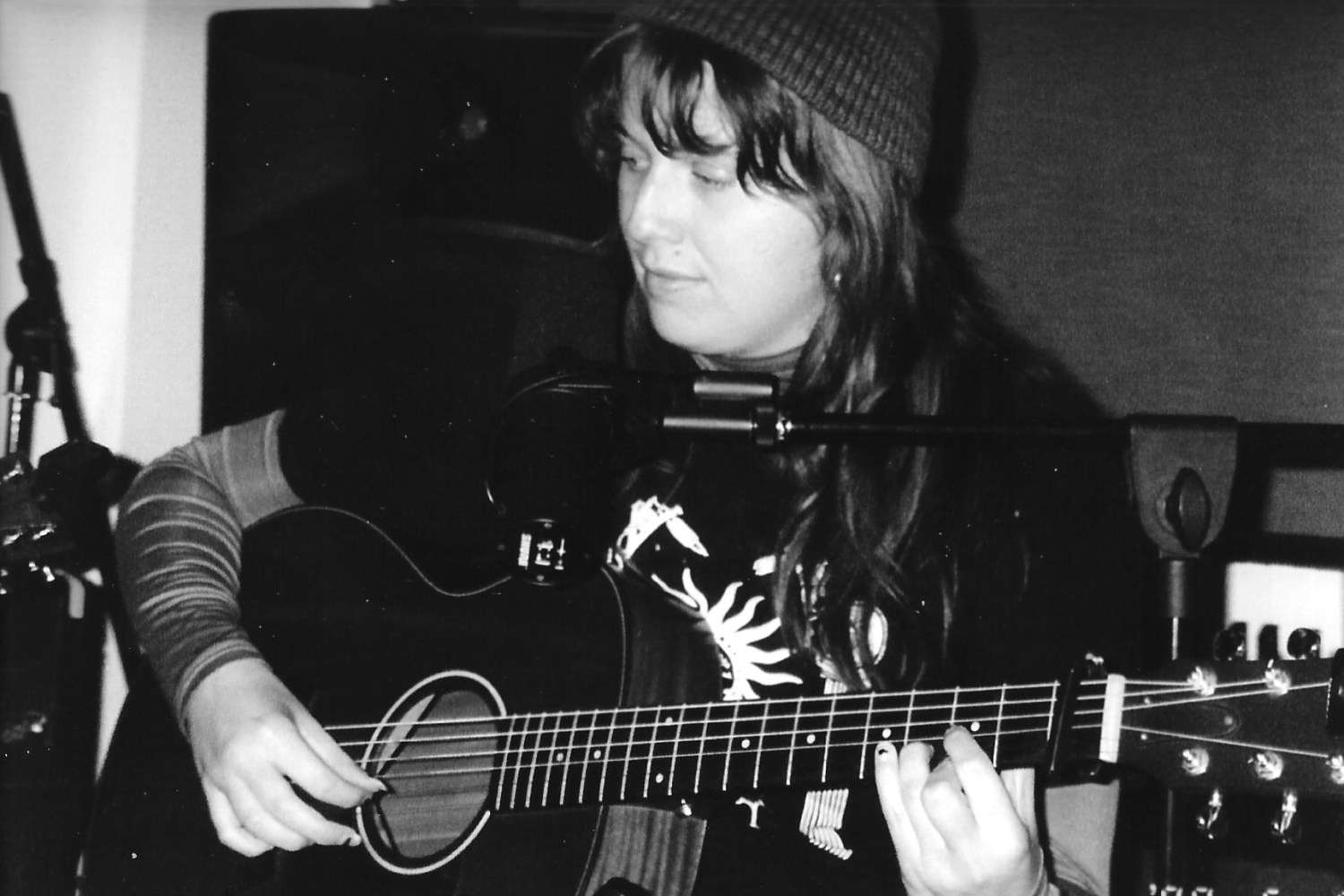
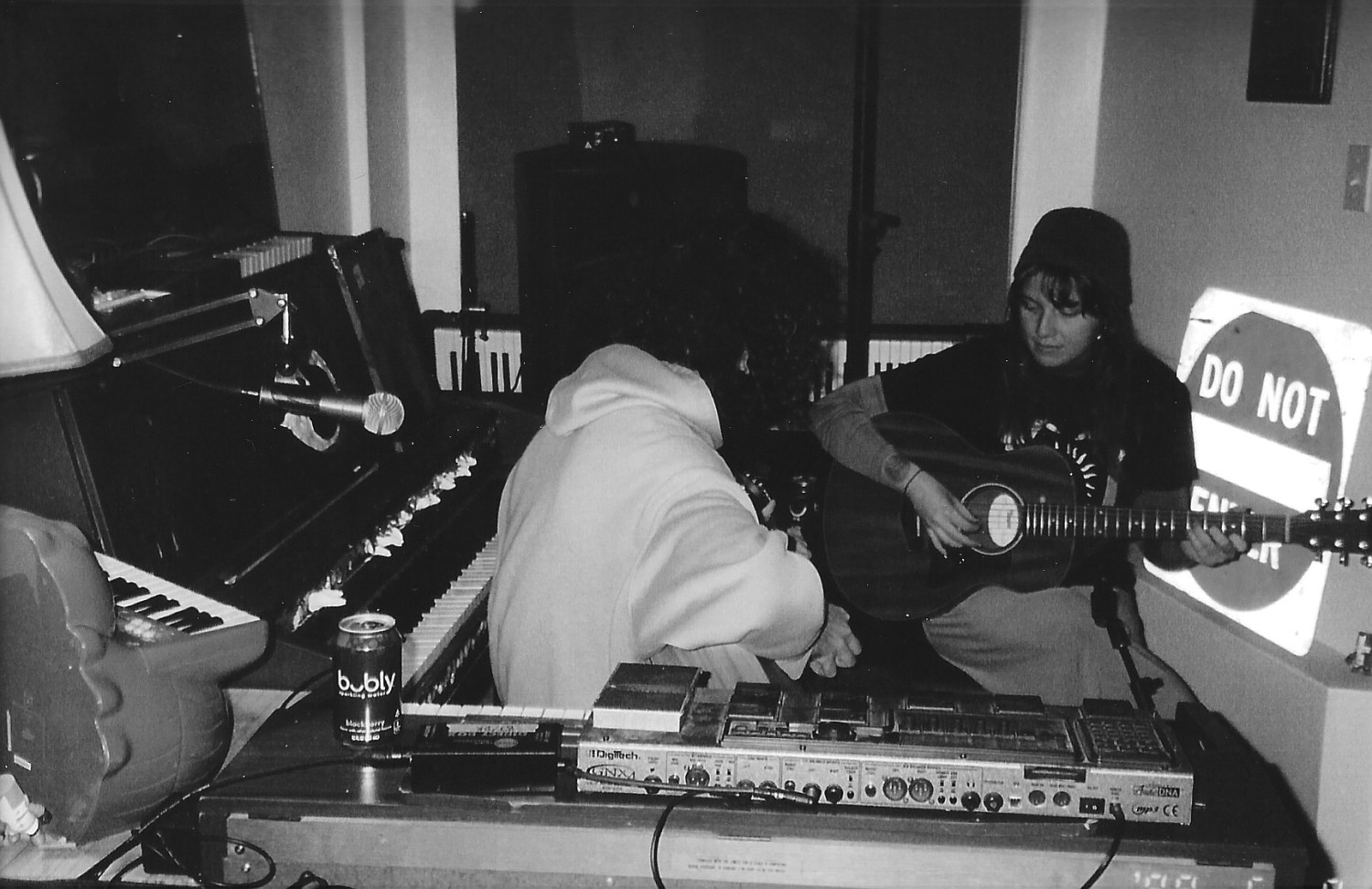
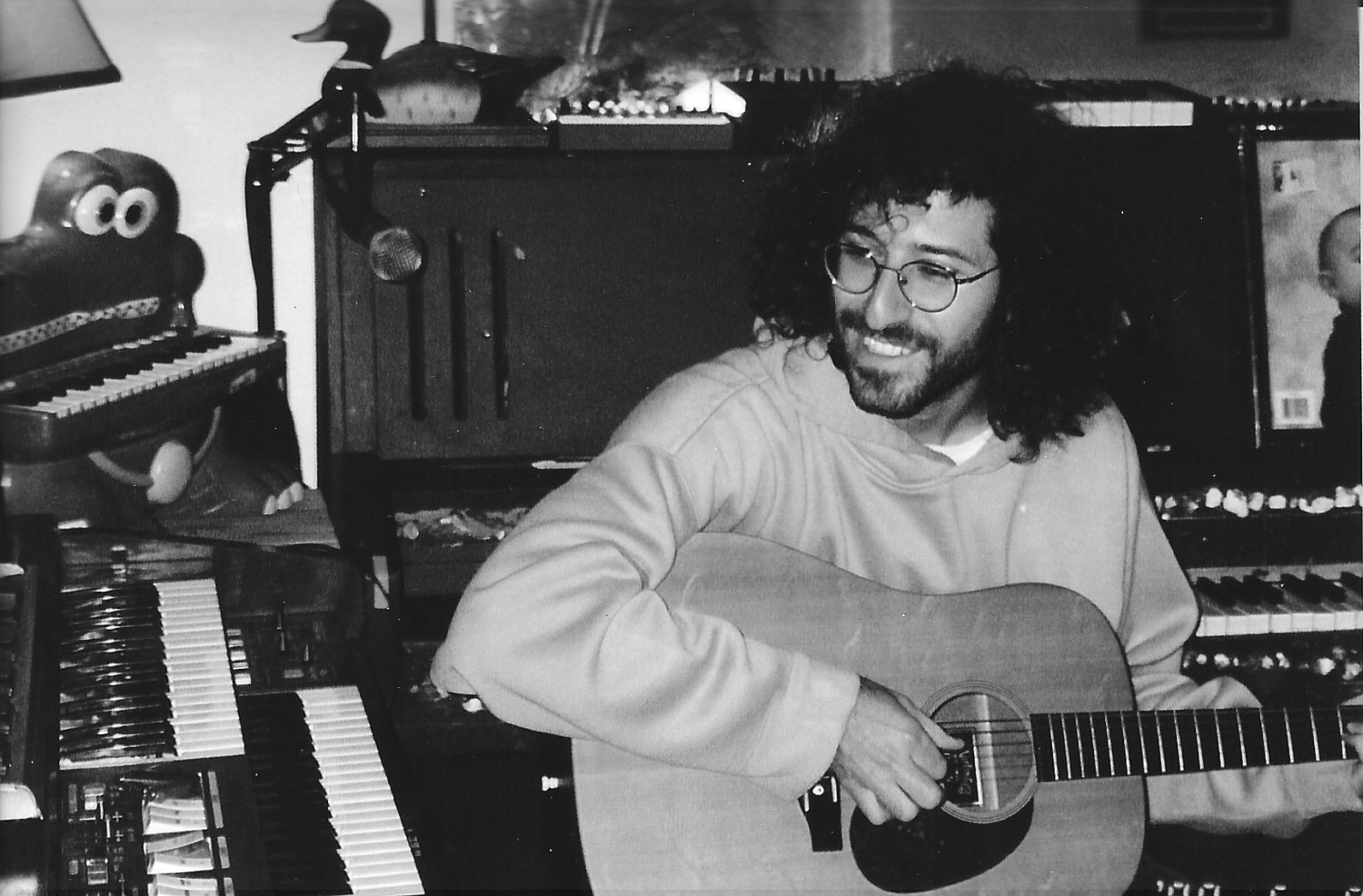
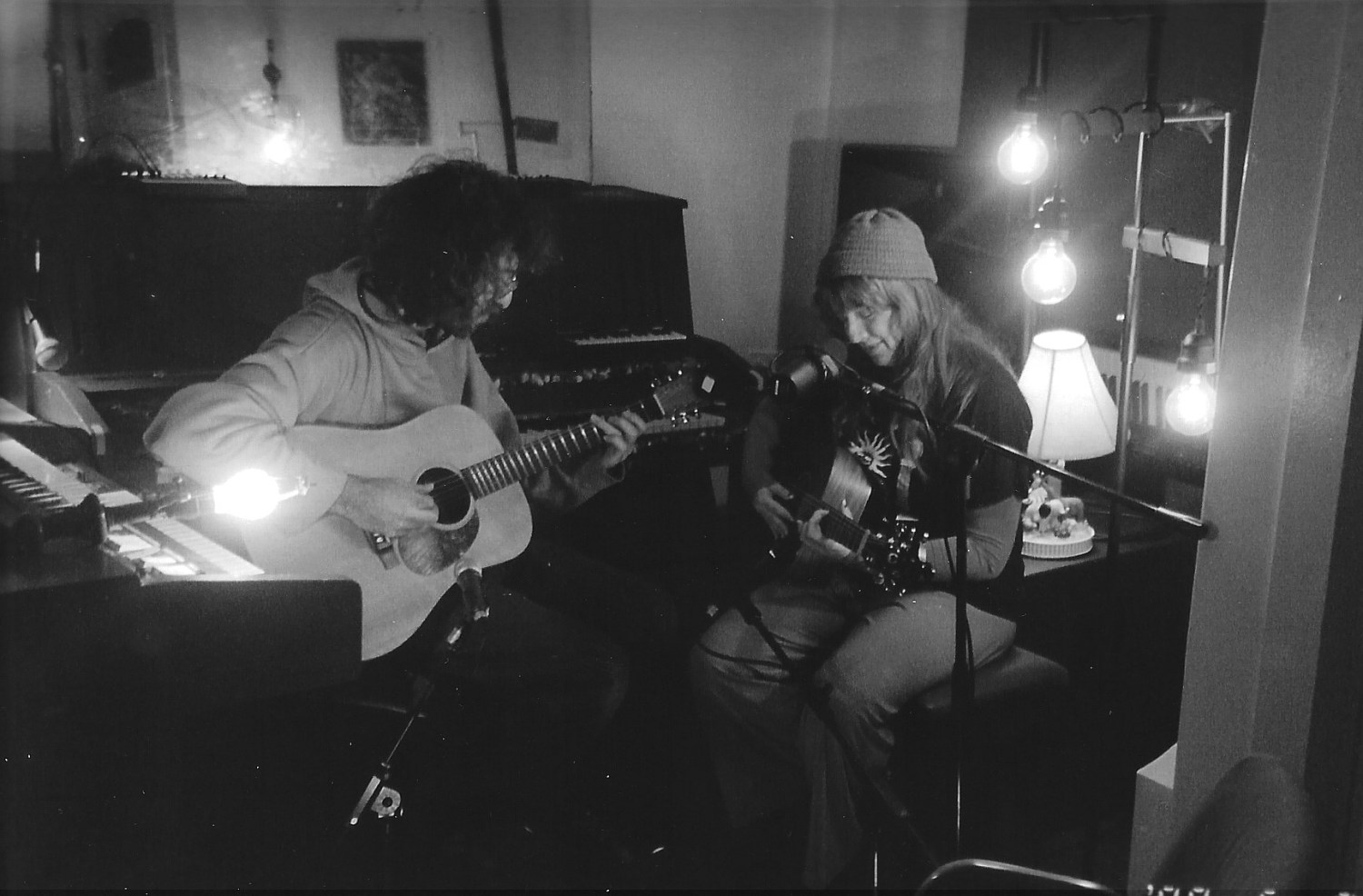
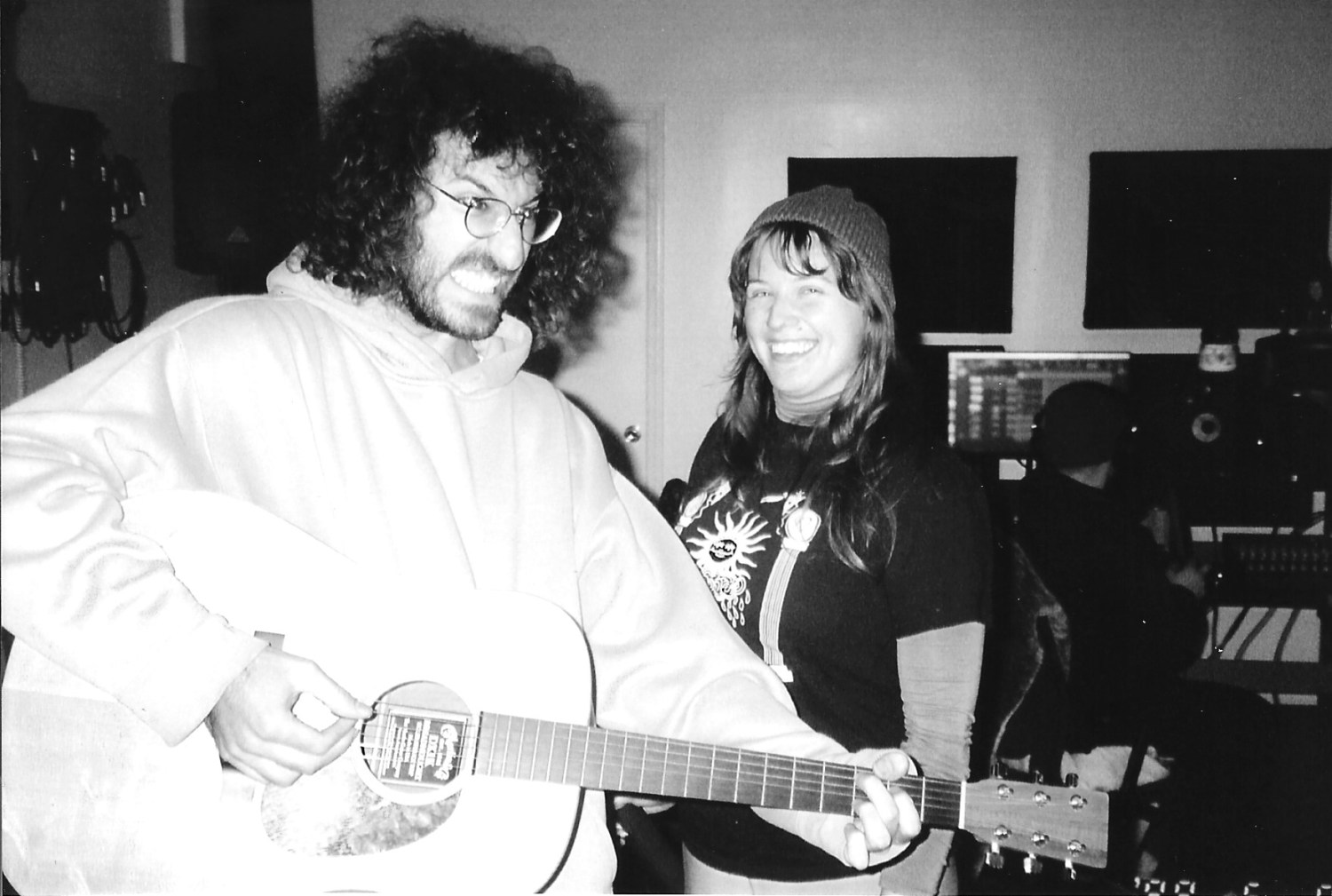
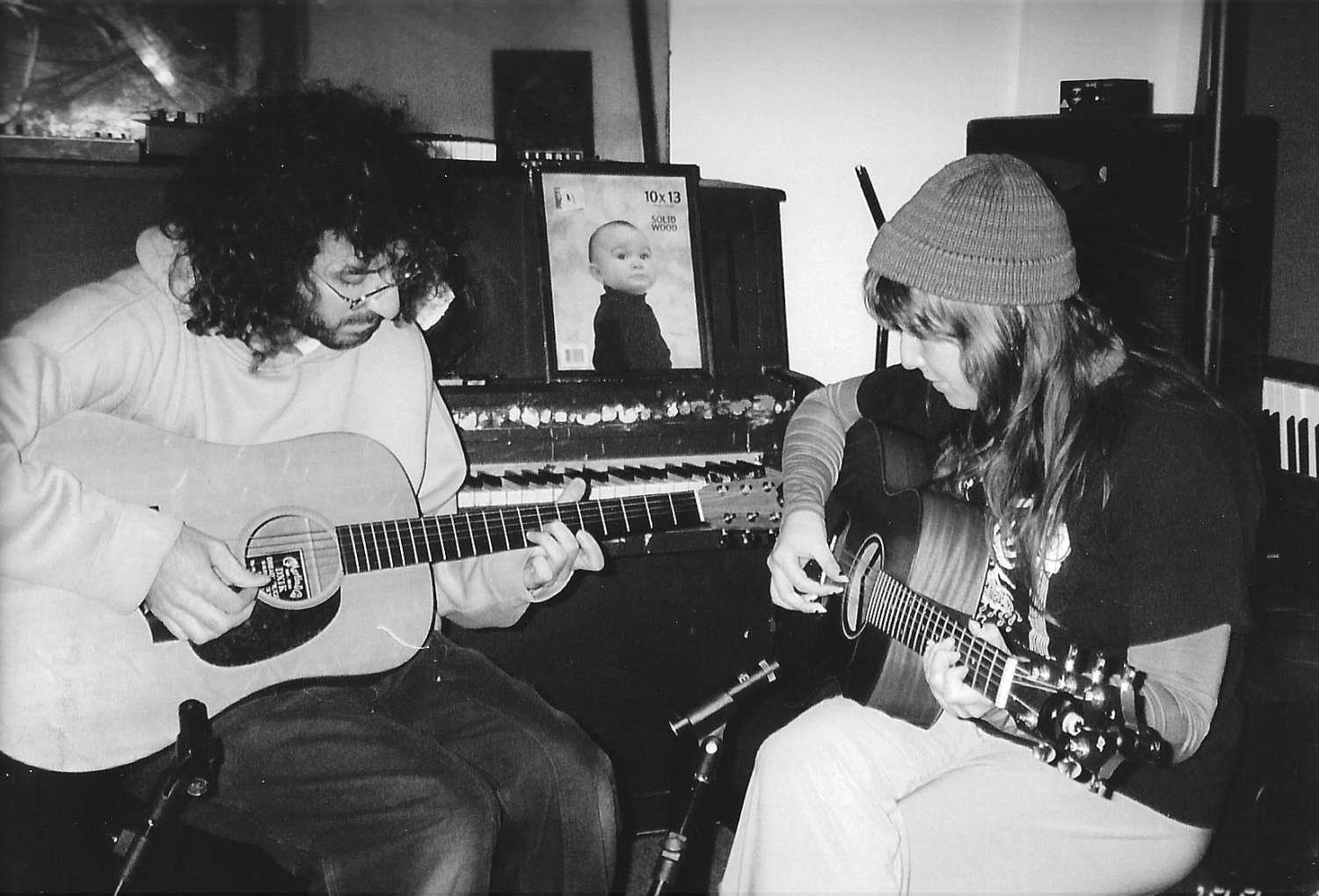
I first met Guppy in a small east LA venue, to which I recognized them for their song “Texting & Driving.” A year later, we sit side by side in booths of my college radio station to discuss the becomings and more of the band. While Guppy identifies themselves as a indie rock band from LA, there’s something to be said about their lyricism and the way they present themselves. Listen in to the world of Guppy and hear us talk about their inspirations, albums, and more!
This interview was conducted by Chloe (DJ Adderall Spritz) at ucla radio. Listen to our conversation with GUPPY below!
Scroll through to see more photos of GUPPY!
You can listen to GUPPY’s most recent release Something is Happening… out on all platforms, as well as vinyl and CD.
Interview and photos by Chloe Gonzales | Interview conducted at ucla radio
Every Wednesday, the ugly hug shares a playlist personally curated by an artist/band that we have been enjoying. This week we have a collection of songs put together by Burlington-based artist Zack James of the project Dari Bay.
Zack has been releasing music under Dari Bay since 2015. The project began as an outlet for his own creativity to exist in its coarsest form, its early days a one-man recording endeavor yielding erratic, dreamlike sensory experiences. In 2023, Dari Bay released Longest Day of the Year, a cozy record where Zack’s experimental dexterity is filtered but certainly not abandoned, presenting itself in a more intentional and holistic form. In a tight 24 minutes, Longest Day of the Year is full of contradictions, armed with sharp edges that slice through hazy moments, nonlinear melodies and somber reflections wrestling cozy folk instrumentals. The songs are refreshing and eclectic, but their stories are familiar, as Dari Bay immortalizes fleeting moments and carves out space to celebrate the mundane.
About the playlist, Zack shared;
This is a list of songs I might wanna listen to in the van after our show. Usually in this scenario I’ve got that post-show adrenaline rush and I wanna entertain my bandmates and keep the lighthearted vibes going. Even if the show didn’t go exactly the way we wanted, we still feel good afterwards. It’s a good time to listen to songs that I love, maybe some songs from the past that I’ve recently rediscovered, songs I’ve heard a million times or songs I just learned about.
Listen to Zack’s playlist here;
Written by Manon Bushong | Featured Photo by Alea Doronsky
Today, Massachusetts-based duo Taxidermists return with a new single, “Does The Wind Know”, the second track from their upcoming record 20247 out March 7th via Danger Collective Records. As childhood best friends who first met on Myspace in 2007, Cooper B. Handy (aka LUCY) and Salvadore McNamara have since expanded their relationship into building their own unique world of DIY creativity and label pushing sounds as they continue to look ahead into what is possible.
With the click of the drumsticks, Taxidermists barge in with brash tones and a running progression as the duo drives forward with simplistic coverage and a charming intensity – pushing their gear to the limit with a type of reciprocating dance brought out by the heart of the song. With short, choppy chants, a repetition of the very question, “does the wind know”, bouncing between verse and chorus with charged excitement, the duo takes on this post-punk antiquity with the grace of two friends who are in it for the love of the game.
Listen to “Does The Wind Know” below!
20247 is set to be released on March 7th via Danger Collective Records. You can pre-order the record now as well as a vinyl and CD copy.
Written by Shea Roney | Featured Photo by Harry Wohl
As a small music journal, we rely heavily on the work of independent tape labels to discover and share the incredible artists that we have dedicated this site to. Whether through press lists, recommendations, artist connections, social media support or supplying physicals, these homemade labels are the often-unsung heroes of the industry. Today, the ugly hug is highlighting the work of our friends over at Toadstool Records.
Formed by Caroline Gay as a home for her ethereal instrumental project Ghost Crab, Toadstool Records has become a home to a world of other creatives, offering a supportive and inspiring place to expand on their own and create art with those with similar mindsets. With the help of Michelle Borreggine [Dreamspoiler, orbiting] and Jonathan Hom [Mystery Choir], Toadstool has cultivated a collection of artists such as Youth Large, Mystery Choir and superbluesurf, as well as a few compilation projects like Valentines for Palestine, Let’s Be Friends: A Tribute to the Beach Boys or the upcoming 777 Love Songs out on Valentine’s Day, in which all proceeds go towards Women’s Prison Association and Mutual Aid LA.
We recently got to catch up with Caro, Michelle and Jon to discuss the label, blending visual art with music, the importance of jamming and the ethos of sharing moments in music.
Ebb in Toadstool Records Studio | Photo by Caroline Gay
This interview has been edited for length and clarity
Shea Roney: Caro, I know that the idea of Toadstool was brought out with the release of The Garden Album under your project name Ghost Crab. What was the initial inspiration that sparked this idea to start a tape label? What was that process like and what goals did you have in mind when starting?
Yes, that was the “Garden Album”, which was the first album that I ever put out through my Ghost Crab project. It was entirely self composed in this basement studio that I had in Bushwick that I got from this guy I found on an online art studio listing in 2021. He told me, ‘oh, Juan Wauters used to have this studio’. He built this little tree house cubby thing and there were all these Christmas lights and all this weird graffiti on the walls, it was so perfect. I got a drum kit from this guy on Craigslist and this beautiful Korg synthesizer (because Rick Wakeman from Yes uses it). It was like my little setup. I basically would just go there and jam by myself after work. Then I started hosting karaoke parties and I would invite people over, and I would use a projector, and we would sing Karaoke, and it was such a blast, and so I started inviting people over to share the studio and we would split the rent. I eventually finished the album and didn’t really know what to do, so I just put it on bandcamp. It was sort of my first quote, unquote release, but eventually I started putting out more stuff, and I was starting to figure out like, ‘okay, this is sort of the correct way to do it.’ I just wanted to put a stamp on my work, basically, and eventually bring other people into the fold.
Ghost Crab in Toadstool Records Studio | Photo by Michelle Borreggine
SR: How did Michelle and Jon come to be a part of Toadstool?
Caro: I first want to say that Michelle makes really incredible music videos. I remember we saw each other at a film screening for a Jonas Mekas documentary she edited.
Michelle: We had known each other for a long time before that, we just hadn’t really crossed paths, I guess. That was when we both were volunteering at 8 ball, which is like an artist community slash library radio collective here in New York.
Caro: Yes, I’ve had a radio show for a long time through 8ball, but I remember I went to the screening and she was like, ‘you started a record label that’s so cool.’ I just posted about it on Instagram and I was like, ‘no one’s gonna care about this’ [laughs].
Michelle: No, I cared a lot! I was like, ‘Caro’s so cool, I can’t believe she came to my screening!’ I was just super pumped to talk to her because I personally have always wanted to play music, but I just never really found anyone who was down to play with someone who is not like, a musician. Caro was the first person that I met who kind of got that, and so I was really psyched to hear that she had this sketchy, weird music studio. There was this mannequin outside the door that was so creepy and the bathroom was terrible, it was deranged. But it was perfect and I felt comfortable to just play whatever. It was a very unpretentious environment which was very nice and just cool to get to experiment in there.
Caro: Oh, and we’re also – should I say this? – We all really love Animal Collective.
Michelle: Yeah, that’s definitely it. All of my Animal Collective friends moved out of New York. I was like, ‘who even still listens to them? I feel so lame.’ But Caro still loves them, so I was like, ‘my gosh, we need to talk.’
SR: Caro and Michelle, you mostly came up in the world of visual art. How did that background expand into the way you approached making music? Jon, what is your experience with making music?
Caro: Oh yeah, I was mostly self taught. I sort of grew up playing flute and I took drum lessons when I was a little bit older. But yeah, it’s mostly just sort of experimental and improvisational stuff. I think people who have good music taste should make music. That’s why it was so exciting to hear Michelle was excited to play.
Jon: I started learning how to record stuff myself, and I took some Berklee College of Music online classes to learn production. I just loved the music that I was listening to enough to go and explore. I’m very taste driven as well, so I’m always trying to achieve a particular sound. Initially I was just trying to figure out how they made those sounds, and then I just wanted to replicate them and figure out how to make my own.
Caro: My goal all along was basically wanting to make other weird friends. I secretly just wanted to make friends with people who would jam with me. Jamming with people is just such a wonderful thing to do. But it’s cool looking back because I have all these recordings on my phone of jams I’ve done with Michelle and my other old studio mates. I think everybody should jam, even if you don’t know how to play an instrument. Sometimes there can be a bit of pretension – people can be weird about it if they maybe have a lot of experience. But it’s speaking a language. Everyone can jam. Everyone should jam. It’s such a beautiful exercise.
Dreamspoiler at the 8ball Community Valentine’s Day Zine Fair 2023
SR: What are some of the things you learned from jamming?
Caro: I’ve noticed it makes me feel like I can trust people. It feels like a very vulnerable thing to do. And when I’ve been able to spend time making music with people who, you know, have never made me feel like less than or just anything like that – my old studio mate Zoë [Pete Ford], at the time when I didn’t know how to play guitar, she would give me a guitar and be like, ‘here. You play the guitar.’ I’d be like, ‘oh, I don’t know how to,’ she would say, ‘it’s easy.’ Then you figure something out, just something simple, even if it’s just using one string. Basically, as long as you’re putting a bit of emotion and a little bit of groove into it, you can still do it. I’ve always loved that attitude.
SR: Community seems to be a big component of what you do, whether in the shows and parties you curate, hosting Secrets of the Sunken Caveson 8 Ball Radio or sharing resources on your website. But one big thing you do are the compilation albums that you put together. Can you tell me about the two that you have put out and how that process from open call to final product goes down?
Caro: It’s definitely a little chaotic, but I feel like the end result manages to look super cohesive. A lot of the inspiration from Toadstool actually comes from a lot of visual art stuff that I’ve done with photography through 8 Ball [aka 8 Ball Community], which is why I got involved in 8ball in the first place. There are all of these artists that I really admire who have done stuff through 8ball, and the guy who sort of was the dad of 8ball would put together these Xerox books maybe once a year with different photographers and different people in the community. When you look at it all together it actually told this really beautiful story of all these people who were somehow attracted to this collective. There were poems, or people would put in selfies, or just, you know, sort of whatever.
One summer I was volunteering through Entrance on Ludlow Street in Chinatown, and they let us do whatever we wanted with the space. I helped put on this open call art show where anybody could come by – it was basically just so people could say they had been at a show at Entrance and could put it on their CV. I know how hard it is, I first moved to New York to be an artist, and it’s just so hard to get your foot in the door – to feel any sort of footing really because no one really wants to let you in. But 8 Ball was the first place that sort of let me in so I’ve always really loved that approach of ‘everybody is welcome’.
That was sort of the idea with the compilations, too. There’s this sort of nice altruistic aspect to it. For the last two that we’ve done, we’ve had more established visual artists contribute artwork who were nice enough to donate it, like Emma Kohlemann and Matt Durkin. They’re more established, so they sort of add this element of legitimacy to the compilations which I think is really cool. But it’s just a really exciting thing. I’ve had people email me, like one time someone submitted a song to me on Tumblr for the last comp, and they were like, ‘can you please put it under this name? I’m trans and this is the first time I’m using this name’. Just like sweet little stuff happens through it.
Mystery Choir with Love Songs & Hallucinations Masters at Tiny Telephone SF
SR: Visual art is a huge aspect of what you guys do, especially with the music videos that Michelle makes. Can you tell me about the video for the Mystery Choir song “Reveillark”?
Michelle: So Reveillark is a Magic card, and Jon and I are both big Magic: The Gathering fans. Jon is like pro status. I’m not on his level, he kicks my ass every time we play. But I was very drawn to it, of course, because of that initially. He would post music up on bandcamp and I would be like, ‘wait, your music is so good. More people need to hear it, this is insane,’ and I sent it to Caro. I had been doing music videos more frequently at that time, so I feel like I just had a lot more practice. I said to Jon, ‘hey, you should come out and we should shoot a video for this’, because Caro was also really into his music and wanted to do an official release and some video stuff.
Every time I make a video, I have a notebook where I draw certain scenes that I want, and then just kind of build off of that and make something up. And because it’s a magic card, I wanted it to be a little kooky. I found this really random ruins on Long Island, and I think I was just really busy because I usually am really good about scouting locations before we commit to shooting at them, and I really should have done that because we all got infested with ticks. It was horrifying. It was like the dead of summer, and I really should have read the reviews because everyone was like, ‘don’t come here in the summer, you’ll get lyme disease.’ I felt really bad, but I think the end result was worth it, in my opinion. I think the idea was to communicate this really playful energy.
I haven’t watched it in a while, because when I make videos I watch them like 60,000 times. So I think the idea was, because this was the first pretty big release that we were doing with tapes and everything, it was this moment of Toadstool where me and Jon and Caro were working together, and just really happy to find people who we felt like got each other in a weird way.
SR: Running a label has a lot of moving parts and obviously can be a tiring ordeal. What keeps you going and excited about what you do, especially on the challenging days?
Caro: I feel like having something to focus on that feels productive I think is really important. I feel like it can be easy to wallow a little bit sometimes, but this label sort of gets me working. For example, I started going to a printmaking studio this past summer, trying to get back into silk screen work which I hadn’t done for a long time, but it has unlocked new friendships and also I’ve gotten better at doing silk screen work. It’s been such a nice creative outlet to have. And you know, every once in a while, when people approach me about the label, it’s so flattering. Sometimes I won’t be as excited about it, and then someone like Em [Margey] approached me to put out the Youth. Large release and it was so good. Em is just so enthusiastic and driven and really talented, and they have a really clear vision for their music project, so that was super inspiring. And Jon sent me some demos he did recently, and that was really inspiring, and to see the work that Michelle continues to do, it’s exciting having it all somehow fall under this umbrella and create this world that wouldn’t have otherwise existed.
Youth Large at Honeysuckle Release Show | Photo by Caroline Gay
SR: Yeah, and I’ll say, everything Toadstool has done and continues to do has been such a driving inspiration for what we do over here at the ugly hug. We just love all the stuff you’re doing and the way that you approach making and sharing art.
Michelle: Well, I think you guys are answering the question. I think it’s just like you find each other, and it’s so important to just help each other make art. That in itself is such a motivator for all of us. Just being able to meet people who you feel like get you on a cosmic level or something. It really does make life easier.
SR: What’s next for Toadstool and your individual endeavors?
Caro: I’m working on our next Valentine’s Day compilation. I’m really, really excited about the artist that I got for this one. I also want to throw a party with DJs. I sort of have one foot in the indie rock scene and one foot in the DJ scene in New York, and they’re totally separate. But I do want to throw a party with Djs, because there’re so many incredible ones in New York who also follow a similar ethos of not being pretentious, sort of like leading with feeling, and friendship and love. I don’t know, I have to get my personal life together first, but I wan to throw more parties [laughs].
Michelle: I just moved in with my partner who I make music with, so we’ll probably start making stuff more regularly I hope. And I would love to do another video for Jon once he makes more stuff. I honestly have been knitting and crocheting so much, that’s all I do now.
Jon: I have some demos from the past few years and I’d like to make a new record and release it on toadstool. I’m super grateful that Caro and Michelle took an interest in my record because it was just sitting on bandcamp, and maybe five of my friends had heard it. But it was like a real studio record that I was trying to make and it’s been really good to have other people to talk to who are interested in what I’m doing.
Caro: Oh, I’m also gonna plug my own stuff. I’m pretty much done with my new Ghost Crab record. So I need another music video from Michelle, even though we’re still working on a music video from my last project.
Michelle: Oh, and wait, Caro! We have something that we’re working on!
Caro: Oh, my God! Michelle and I have a band called DreamSpoiler, [to Michelle] we have to start doing weekly meetings about this [laughs], but we’re working on an Arthur Russell cover album. We’ve shot a video for it and really cool pictures and it’s just a matter of getting our shit together, basically.
Caro/Ghost Crab in the garden | Photo by Michelle Borreggine
SR: For those who are looking to start their own tape label, what advice do you have for them?
Caro: I love it when people reach out to me about putting out music, but I always feel bad because there’s so much stuff I want to put it out, but I can’t put it all out. So I think, for other people who maybe want to get to be a part of another label or feel like maybe their music isn’t legitimate until they’re on a label, they should just start their own. It could really just be like a little doodle, a little logo, and that sort of makes it real. I think everybody should do it, especially if you don’t see yourself reflected in a lot of the mainstream indie world, I think even then, especially, you should start a label.
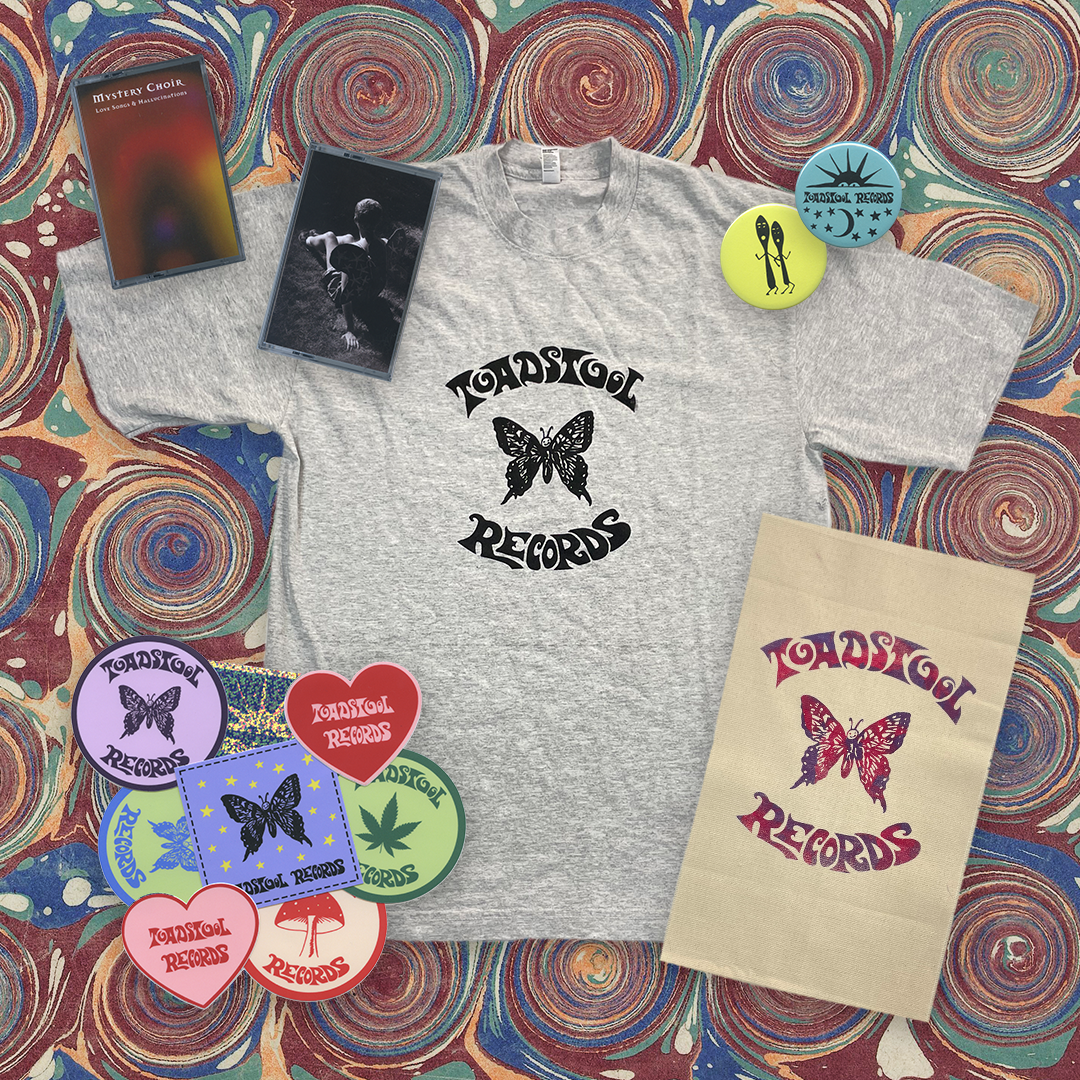
Along with this series, our friends over at Toadstool Records are offering a merch bundle giveaway! The bundle includes a bunch of stickers, cassette tapes of Love Songs & Hallucinations (2023) by Mystery Choir and Honeysuckle(2024) by Youth Large, small banner, t shirt and buttons, as well as stickers and a tote bag from the ugly hug.
To enter the giveaway, follow these easy steps below!
“I’m gonna go off topic for a second” Nara Avakian prefaces before pivoting into a story from their day at work at a school in Elmhurst, Queens. We had been discussing the impact of taking Nara’s Room outside of the physical parameters of ‘Nara’s Room’, and while they assure me the anecdote will circle back to that point, I am hardly worried. Avakian details an art class activity where they prompted students to complete a ten minute automatic drawing followed by a more intentional piece of art on the other side of the paper. “I saw the ways that their subconscious kind of came out. I mean, they’re all twelve, thirteen, so they’re not overtly thinking, but I could see the connections that were being made,” Avakian explains.
One student had drawn a Yin and Yang symbol during the brief ten minutes, explaining to Avakian it was an element of another lesson she had that day. For the second part of the assignment, she drew a chameleon, likely inspired by the cover of a textbook in the classroom. “Because she drew the chameleon in marker, when you flipped it over it bled through and it was perfectly symmetrical with the Yin and Yang symbol. I feel like that instance is how I perceive my own songwriting and performing, it’s my subconscious flowing out and it just ends up almost experimental. I bring it to the boys, and they process it in their own ways. They evolve the meaning and turn something that is very private to me and very singular into something that is so much more nuanced.”
Avakian is the front person of Nara’s Room, a Brooklyn Based band that boasts a grungy catalogue of tracks that fizz in your ears and yank at your chest. Their experimental sound glides over achey introspections like Vaseline, forming this healing liminal space where pain has to be felt, perhaps even danced to, before it can be truly let go. The deeply cathartic essence of Nara’s Room is one of the band’s biggest triumphs, though it was not necessarily intentional from conception. Avakian began Nara’s Room at a time they were still nurturing their own confidence as a musician, initially envisioning something along the lines of “Joni Mitchell, Tim Buckley singer- songwriter”. They found bandmates Ethan Nash and Brendan Jones after posting on Craigslist for ‘non men players’ who liked the Cranberries, Galaxie 500, and the Sundays. “Lo and behold, two of the most boyish of boys responded”, Avakian jokes before tenderly reflecting on the significance of Nash and Jones in their life, “They ended up becoming my chosen family.”
The band fosters an extremely pliable approach to creativity, allowing them to harvest depth from anything. As Avakian reflected on the subsconscious driven exercises of their middle school art class, I thought of a track off Glassy Star that is somewhat centered around a bottle of juice. Recalled amidst the anguish of a parasitic relationship, “Grape Juice” is a standout example of the band’s knack for achieving emotional complexity without a need for explicit articulation. When I asked if the song was based on reality, if perhaps a decayed bodega beverage was a means to reach something darker buried in Avakian’s mind, I tried to resist posing the question in an overtly personal way. In retrospect, I think the times I have dropped what I was doing to vehemently sing along to the agonizing delivery of “a moldy bottle of Welch’s juice, I left in my closet, I forgot to drink” has less to do with me than it does the band’s ability to inject pathos into, well, anything. This dexterity wields songs that beg to be weathered by the relationship of a listener; as the stories told by Nara’s Room are meant to be felt more than understood.
Avakian explains that while the moldy grape juice story was true, it was initially someone else’s, one told via Spongebob voice filter on Instagram Reels. “At the time, I was friends with someone who was the classic case of just taking advantage of a friendship. The moldy bottle of Welch’s juice line came up, and I hate that this is the reference, but I guess it goes to show that you can find that value in anything,” Avakian explains, “I was scrolling through Instagram Reels, I don’t know if you know this guy but he tells these stories through the autotune SpongeBob filter, he has a beard, whatever. He came up, and I don’t watch everything, but for some reason I was just in a mood where I was just kind of rotting, and he talked about this story where his mom wouldn’t let him drink grape juice, so he ended up grabbing a bottle from the fridge and hiding it in his closet. He forgot about it, and then it got moldy, and that kind of just stuck with me. It was not something where I saw the reel and was like, I need to make that into a song, but I took it into my subconscious and it just kind of flowed out and really defining the mood and feelings of the song”
That Reel was just one of the many fragments of life that shaped Glassy Star, mingling in the record alongside a line delivered by Laura Dern in Blue Velvet, a copy of Kurt Vonnegut’s Bluebeard, a vinyl of Fleetwood Mac’s Live Ivory and a light up horse display in a bar in Bed-Stuy. Avakian often refers to these collaged references as “fixations”, though in the context of Nara’s Room, their purpose is ultimately a catalyst for stubborn emotional excavations. The band often knits their individual focuses into one, this creative symbiosis bridging Nash’s fascination with the New York City Transit System’s most elusive train and a poem Avakian wrote on a receipt at a comic shop in LA seven years prior on “Waiting for the z”.
There is also value in the intent behind what they choose to integrate into their art. The approach is deeply unpretentious, focused on exploring the notions that resonate regardless of their cultural weight. “That’s how I process what a fixation meant to me”, Avakian explains on their trust in their own subconscious, and how they rely on music to unravel it. Amongst the slivers of life and media that braided into Nara’s Room, an emphasis on the 2000’s holds a prominent slot in the band’s identity. Glassy Star odes heavily to the cultural landscape of the band’s formative years, the album’s visuals rich with contrast between aesthetics associated with innocence and lyrics that navigate the darker realities of growing up.
“I have this relationship with my childhood, where growing up I genuinely believed that every element in the early 2000’s would be that way forever. Like the idyllic world of a Disney Channel original movie. In my music, or at least with Glassy Star, it’s one of the dimensions. There’s so many. One of them is reconciling with growing up and change”, Avakian reflects on their focus on 2000’s media, “It’s my way of kind of returning back to the room in many ways, returning back to these things that are so foundational to who I am that don’t necessarily have a place in this world anymore.”
Their manipulation of nostalgia becomes particularly powerful in the music video for “Holden”, a standout track that purges identity uncertainties over buoyant guitar and hypnotic reverb. Avakian used various cameras for the video, which features a stop motion animation inspired by Nickolodeon’s Action League Now, and a visual narrative that unfolds in and out of a vintage television set. It exists somewhere between familiarity and fabrication, envisioning an uncanny realm that possibly cautions against stretching naivete into adulthood, though like most aspects of Nara’s Room, it leans into the abstract, holding more emphasis on emotion than rationality.
This sense of ambiguity is a driving force at their live shows. Creating the songs offers the band a means to make sense of their own minds, but through sharing them the music transcends the personal nature of a notes app entry or media fascination. The meaning becomes something entirely new, as their songs knock on the door of someone else’s emotional ruminations. “When you watch something of David Lynch’s, it’s not meant to be overtly understood, but rather experienced and felt,” Avakian reflects on preforming, “I think when I bring something out of the room, I only hope that people can enter this other space with me, and we can all kind of experience and feel something ourselves.”
You can listen to Glassy Star out on all platforms now. You can also order a cassette tape via Mtn. Laurel Recording Co. Nara also creates videos under the name foggy cow. Check it out here!
Written by Manon Bushong | Featured Photo by Mamie Heldman
Today, Bedridden announced that their debut LP, Moths Strapped to Each Other’s Backs will be out on Aprill 11th via Julia’s War. Hatched by Jack Riley in his college years in New Orleans, Bedridden is now a Brooklyn based project, joined by drummer Nicholas Pedroza, bassist Sebastian Duzian and guitarist Wesley Wolffe. The individual members boast backgrounds ranging from jazz to metal, these influences subtly feeding the identity and rapport built over a shared proclivity for volume. Bedridden accompanied the album announcement with the release of “Etch”, a track both promising for those fond of their 2023 release Amateur Hearthrob and sure to dredge up new listeners. The rhythmically dense EP is sort of like if Friday Night Lights had a sludgy power pop soundtrack, wrapping notions of home runs and cheek kisses from cheerleaders in a sea of angsty guitar. It wields enough fuzz to form a foreboding cloud of grunge, but not enough to sand down any rough edges. Bedridden’s apt for animated riffs and sports novelties merely exist as a padding for the loneliness and anxieties that trickle out of their seemingly unguarded arenas of noise.
“Etch” is a wrathful track that explores the burdens of one’s own rage, armed with brooding guitar harmonies and scatterings of sports vernacular. It purges interpersonal animosities as Riley recalls a victorious fight dream, his vocals dodging harmony as he pummels through lines of “meet my knuckles” and “he can’t breathe, he can’t see without his eyewear”. Though the dream follows his rules, meandering in and out of NBA references and ending with the sweet satisfaction of the antagonist warming his own bench, there is an ambiguity to “Etch” that feels familiar whether or not you have access to any sports channels. The erratic and combative feel evoked by the song’s lack of a tonal center recalls an innately human kind of anger, an overwhelm that can sometimes only be soothed by aggressive figments of our own imagination.
In a statement about the track, Riley shares “‘Etch’ was a rhythmic accident that didn’t stem from any direct inspiration. The irregular triplet line came to me first and sounded somber, yet hostile. It lent itself well to phrases I had written not about heartbreak, but about the subsequent temper that it had induced. I was dreaming of fighting, I was dreaming of winning that fight and lastly dreaming of defaming my competitor. The song is frantic and doesn’t have a tonal center. With its weaving guitar harmonies laid underneath countering vocal melodies, it sounds to me like that regretful fistfight that I was longing for.”
Listen to “Etch” here.
Moths Strapped To Each Other’s Backs is set to be released April 11th via Julia’s War Recordings. You can now pre-order the album as well as a cassette tapes now.
Written by Manon Bushong | Featured Photo by Sam Plouff
Every Wednesday, the ugly hug shares a playlist personally curated by an artist/band that we have been enjoying. This week we have a collection of songs put together by Maine-based artist Genevieve Beaudoin of the project Dead Gowns.
Earlier this week, Dead Gowns shared “Maladie”, the final single before the release of their long-awaited debut album, It’s Summer, I Love You, and I’m Surrounded by Snow, out February 14 via Mtn Laurel Recording Co. As a writer, isolating rather complex and dynamic feelings with a vivid prose of both mindful delicacy and emotional intensity, GV works towards the terms of desire, an ever-shifting goalpost in a sometimes-unwinnable game. But it is in this delivery and stature that GV so easily articulates though her music that gives us an open space to find our own answers no matter how daunting these feelings may be.
“You could call ‘Maladie’ a bilingual song,” Beaudoin says of the single. “But for me, it’s more about how gaps in one language can be filled by another and the entire process gets me to the real feeling. Growing up around two languages, I don’t think I ever felt like I ‘got it’ either way and this song just leans into the idiosyncrasies of how French and English exist in my brain.”
About the playlist, in which she titled, “time is all together, without separation”, GV shares;
I have a record coming out on a ‘holiday’ around love but I wanted to look at love differently here. in its most enveloping shaping.
the playlist has a name, “time is all together, without separation” and it’s a [translated] line by Tim Bernardes.
sometimes when I feel unsteady, I try to call in love like two hands, one holding my heart from the front, the other from the back. so these are just a few songs for loving harder. no erasure.
Listen to the playlist here.
Listen to ‘Maladie’ below.
It’s Summer, I Love You, and I’m Surrounded by Snow will be out February 14th and you can preorder the vinyl now!
Written by Shea Roney | Featured Photo by POND Creative
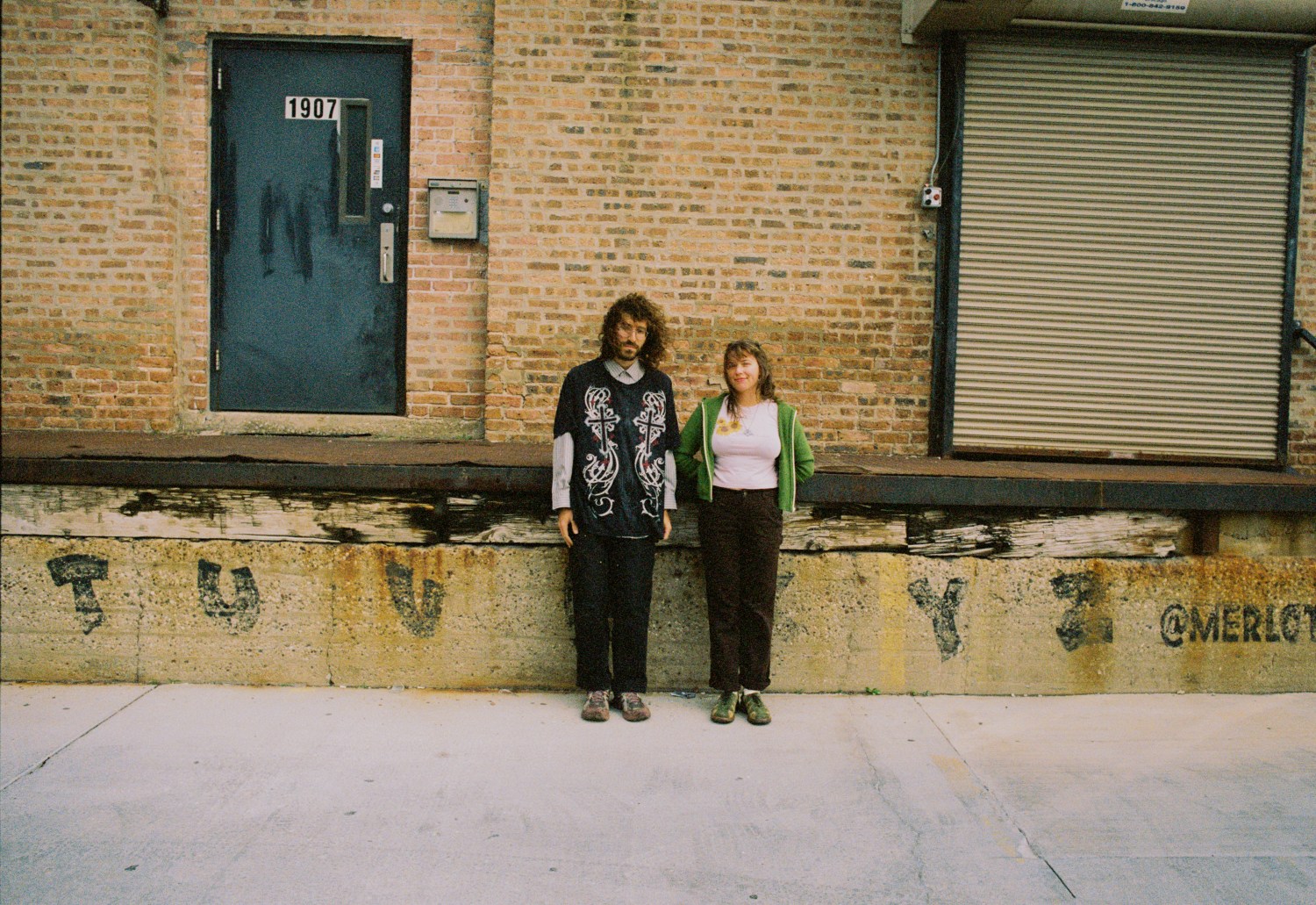
This Friday, Sleeper’s Bell is offering Clover, their long-awaited debut LP via Fire Talk’s Chicagoland imprint label, Angel Tapes. Looking ahead to this release, we are excited to be celebrating Sleeper’s Bell week here at the ugly hug with two different features!
Originally formed by Blaine Teppema back in high school, Sleeper’s Bell was first found by many listeners with the release of her debut EP Umarell, released back in 2021 and having since been reissued on cassette in 2024 via Angel Tapes. It was a raw, and rather memorable collection, as its longevity is a sentiment to its articulation of heart, something that she so beautifully made mindful in its short run time. Fostering a reciprocal relationship with storytelling, Teppema’s presence within her words has always been one of desirable consciousness and stimulation – like biting into a citrus fruit and lingering with the reliving, sweet flavors while fighting with the stringy pith that’s left behind, stuck between your teeth. With the addition of Evan Green on guitar, Sleeper’s Bell became a project unknown to Teppema, not out of lack of recognition, but a rather new and open space with no defined limitations – a chance to strive for clarity where there was sometimes none before. With songs dating back almost a decade now finally in one place on Clover, the duo has taken every part of the process step-by-step, embracing a type of chronological association where both beauty and trauma hold the cards and Sleeper’s Bell decides when to slap them down.
Embracing the vivid talents of the Chicago scene, Clover also debuts the duo working with a full ensemble of notable players including Jack Henry, Max Subar, Gabe Bostick and Leo Paterniti, putting a newfound life into the already lasting structures of a Sleeper’s Bell song. But as Teppema and Green have spent the last two years recording Clover, building upon their trust as both collaborators and friends, this debut marks more than just the release of some rather beloved songs. It has become a full story, an almost novelistic dream of what it means to love and to be loved, to be hurt and to heal, and to simply make art with your best friends.
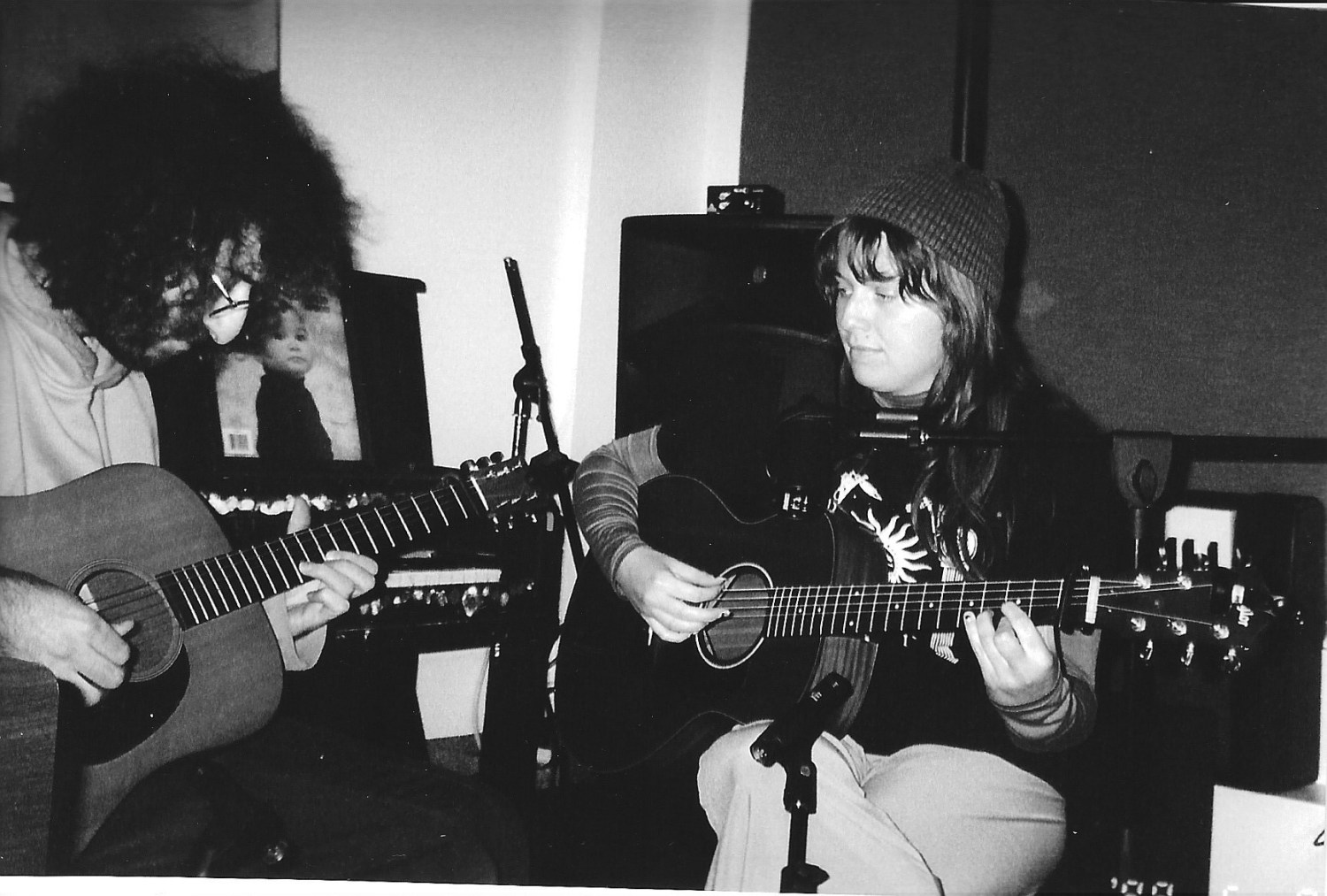
With Clover’s release this Friday, the ugly hug is featuring Sleeper’s Bell in two different ways today. One is a conversation in which we recently sat down with Teppema and Green to discuss the duo’s origin, vulnerability in sharing, friendship and the making of Clover. The second being the debut of a new series called the ugly sessions.
Watch Sleeper’s Bell perform in studio below.
This interview has been edited for length and clarity
SR: We are almost upon the eve of your debut LP, Clover. Looking over the edge now, how does it feel?
Blaine Teppema: I’m ready. I feel like I’ve been so up and down about the release process for so long, and now I’m finally in a stable place with it. It feels good.
Evan Green: It’s like the stages of grief, seriously, you know what I mean? At each part, there was like a mourning for the loss of the part before it. There were hurdles each step of the way and it definitely would feel impossible at times because it took us over two years.
BT: We were so new to every process. I’ve never recorded in a studio and I’ve never recorded with a band or really worked with other people besides Max [Subar], who was really hands-off with the process, so every time the band figured something out, we couldn’t sit with it or spend time thinking about it or really work on it. It was just on to the next part, you know? And now we’ve been able to sit with everything.
EG: We’ve come so far with the music and being a band. We were not even a full rock band before the record because it was just Blaine. And then Blaine added me to the project, just us playing duo for almost a year. And then when we started recording the album, we would get to the studio and literally I would play bass, Blaine would play guitar and sing, Jack [Henry] was on drums and Gabe was just in the recording booth pressing record, and we would just figure out arrangements for all of the full band songs on the record while it was recording. We only would play it ten times and then we’d just pick the best one.
BT: It was always the first or second one. That’s usually how it is.
SR: Was it weird figuring this out, you know, not allowing yourself to sit with pieces you just learned as you kept pushing through?
EG: Since we were at the DePaul studio, Gabe was like, ‘okay, I have this window of time for you guys to be able to record here for free’, before he graduated. We were like, ‘okay, we want this record to sound like this…’, and we just started doing it. So we felt this time pressure. We were all so busy. Eight songs done. We had those initial sessions and then we were still committed to working with Jack on the record, but he would go on tour and we would have to wait a month or two at a time and then get back to working on the record. We kept having to put things on hold, so we would have this moment where we would be working on everything and it would feel incredible, but then we would have time off. That kind of kept going until December of 2023 and we decided that Leo [Paterniti] and I were just gonna mix the record and we finished recording everything at our house and we mixed it all in our bedrooms.
SR: You can tell this album works like patchwork, but it fits so cohesively, especially knowing the whole ethos of this record piecing together old and new songs you had, Blaine. But this project has been your personal thing for almost a decade now. Was this how you envisioned Sleeper’s Bell would be when writing as a teenager?
BT: Hell no. I was so meek about music. In high school, I didn’t really show anyone my music and I didn’t like performing. I feel like it was something I would just get high and make a song on GarageBand and post it on SoundCloud, you know? And that was basically how I was able to function as a teenager – I would just record in my room alone all the time, and a lot of those songs I was so critical of, and a lot of them are gone. I would put it up and then I’d be like, ‘It’s so stupid, stupid, stupid,’ and I’d delete it. I thought that was me being humble or something, or, you know, having humility. But I think, in retrospect, it’s a form of ego to be like, ‘it’s not perfect, so it’s not me.’ Then I had these songs that I had written in college, and Max had a studio, so I felt like I should just record them and it was just gonna be a one-and-done thing to say that I did it. But I didn’t like playing shows.
EG: You did play a few shows though. I heard that Umarell EP through our mutual friend Lilly, and we were falling in love to Blaine’s music. It was really crazy because I was so in love with the songs and I was starstruck by Blaine. And when I moved back to Chicago, I was like, ‘I want to join the best bands. I just want to play music and be around other artists and other people that inspired me to write music and create.’ And ever since I heard [Blaine’s] music, my dream band would be to join Blaine in Sleeper’s Bell. It was a thought that I had, and then a few months later, Blaine hit me up to play a show. I was so scared [laughs]. I was terrified.
BT: Well, again [to Evan], you’re the reason that I like playing shows now. And I like every process that isn’t just sitting alone and writing. You’re the reason that I like sharing now.
EG: We had fun. The first practice was kind of… I feel like it was the perfect example of just how the rest of the journey would be when [Blaine] came over. I was nervous to play with [Blaine], and she comes over and goes, ‘oh, God, wait. I haven’t touched this guitar in months.’ She then takes out her guitar and strums it and it’s rattling. I take it and I turn it upside down and shake it, and dust bunnies just start pouring out of the sound hole [laughs]. It was like a magician’s handkerchief! It just kept coming off out and coming out.
BT: I wasn’t lying!
EG: And we just broke the tension. And then we played that show at the Golden Dagger, and everyone was just silent. It was almost sold out or something like that and we were so nervous. You could just hear a pin drop. We both felt high afterwards, we were shaking with excitement.
We just couldn’t believe it. That just kind of made it. After that, we just felt like we could do this.
BT: I had never really felt that way after playing a show because I was never prepared. I would go into playing a show and I would be fucking up and I wouldn’t have enough songs to have a whole set, so I would play for 15 minutes and be like, ‘I’m fucking done.’ But [Evan] helps me have discipline.
EG: I mean, you’ve grown.
BT: Yeah, I have to respect it all the time even if I’m not feeling it all the time. You know?
Photo by Athena Merry
SR: My first time hearing Blaine’s music, similar to your story, Evan, I was just, you know, completely enamored. I would even listen to it while I ran [laughs]. But it’s funny because I did an interview with Hannah Pruzinsky, and they were like, ‘what are you listening to?’ I was like, ‘have you heard of Sleeper’s Bell?’ They texted me later that day saying something like, ‘it’s so good! I just listened to it on my run.’
BT: [laughs] Oh my god! I love running to sad music. I think it’s because it makes me feel like I’m trying to get to the train station before someone leaves so I can profess my love to them. It’s like a mission.
SR: I completely agree! And then the first time I saw you was that insane four bill at Sleeping Village. It was you two, hemlock, Lily Seabird, and Merce Lemon.
BT: Was that the show where we came out and there was feedback immediately? Probably. That was also the show that I walked off stage with the cord still attached to my guitar.
EG: Some of those early ones were a fever dream. We didn’t have our tech stuff figured out, and running into awkward setups, and if people are talking it can be difficult. It’s a learning experience, but that show was a bit of a rough one for us.
BT: Also we just weren’t besties yet. That makes all the difference. Trust is huge.
SR: Blaine, this album is a constant dialogue between you and your younger self, responding to old journal entries and songs now as an adult trying to heal. What was this experience like in the beginning, and did it shift at all as this album started to become more feasible to you?
BT: I wrote the first song on the album when I was 16 and I wrote the second song on the album when I was 24. And then everything else is in between. But the last song, I wrote when I was doing trauma work in CBT, and a part of that was that I had to go back – I’ve been keeping a journal since I was nine. And as a true librarian should, I have them all archived and numbered on my wall. I never touch them. It’s like fucking dynamite – but as part of the therapy practice, I had to go back and really relive a lot of situations. That’s where the last song “Hey Blue” came from. It was part of forgiving, my inner child sounds so corny, but, you know, letting her know that I love her. But I feel like there’s a line that you tow with vulnerability, that you can give yourself away completely, and I did want to protect myself a little bit. So I did want the songs to be kind of a bop. I wanted them to be fun and energetic, so that I could play with that a little bit.
SR: In what ways did you play with rearranging the songs?
BT: Well, a lot of them weren’t like that when I wrote it.
EG: Oh my god, yeah, that’s where the grooves come in. When we first were playing these songs, they were slow and they were really, really sad. Kind of just meant for a duo setting. But we ended up taking all of those songs and sped them up, like, quite a bit, and the groove of the songs just came naturally.
BT: It just felt like a nice recontextualization. We were having so much fun, we’re in the studio, we’re joking. We were just so happy to be there and there’s nothing we’d rather be doing. I feel like that comes through in the music as much as whatever I was feeling when I wrote it.
SR: Working with the older songs, how much did you hold true to the original and how much would you change when it came time to putting this record together? When trying to hold that throughline between Blaines, what was that process like?
BT: I feel like once I write a song, I can’t change. I just don’t know how I would go in and change it, you know? If anyone else wants to try to change anything, you can, but my brain doesn’t work like that. I feel like we definitely had to doctor up the older ones a lot more because it was just, like, they weren’t as interesting.
EG: No, it wasn’t that they weren’t as interesting, but we were trying to make them fit with the other songs. Like the song “Over” just flowed so naturally. I feel like you can kind of feel it in a song, “Over” especially, how naturally things kind of flow, versus “Bored”, which was more of a puzzle, thinking, ‘how can we match this story that Blaine is telling to an arrangement?’ We have pedal steel, we have keys, we have acoustic 12-string doing these plucks, and all these elements kind of just weave together.
SR: This was also your first majorly collaborative release, quoting it as an ‘assemblage of chosen and real family’. What was this transition like as a solo writer to then a duo to now a fuller ensemble sharing ideas?
BT: Yeah, it was hard. It was really emotionally taxing, you know? I was afraid for a long time, in a similar vein of performing, telling people what I wanted. I realize now that that’s the most helpful and kind thing you can do is to tell someone exactly what you want, and that goes for anything in life. I still struggle with that, and [Evan] helped me a lot with that because I feel like we have a similar vision for it now, where it’s like we think the same things sound good.
EG: I feel like that has been maybe one of the most crucial aspects of our friendship and our musical partnership, the way in which we were able to build trust and help each other. We went from not having any experience and not knowing how to express our likes and dislikes or our preferences. It was just a whole process of growth and pushing each other to be honest. It took over two years to make the record, and we went from not knowing anything to we’re making every decision about this.
EG: But it was really hard. It takes a lot to trust, and at the same time we were making this record where [Blaine] is just being incredibly vulnerable with the lyrics and the stories she was telling, and we put so much love and care in the record. It was such an emotionally loaded experience because of how much we were enjoying it and it was so validating to have these moments of personal growth show in the record.
BT: It’s actually like, ‘this is what I really think because now I’ve been using that muscle, you know, one that I’ve been ignoring for so long.’
EG: Yeah because we were in the studio, we were like feeling confident, we were learning these skills and learning to trust ourselves and like, ‘oh we’re making a record and this is a legit thing we’re actually doing.’ And I feel like at the same time you were growing and learning to say no and stand up for yourself in relationships extending outside of the music process and that’s something. It’s not just like we were making a record, but we were deepening our friendship and deepening the trust between us and sharing these really vulnerable moments while also sharing the creative process.
BT: It was like the most fun I’ve ever had, and the hardest I’ve ever laughed. I was laughing so hard. It’s like we invented a language. I mean that happens when you have all your defenses down and you just want to make art with other people. It’s really just like a fast track to a shared language.
Scroll through photos from Sleeper’s Bell’s ugly session here!
Clover is out everywhere this Friday. Preorder your vinyl and cassettes via Angel Tapes. Sleeper’s Bell will be celebrating the release of Clover with a show at The Hideout in Chicago, Saturday February 8th. Get tickets here. If you preorder the vinyl, you will be entered into a free ticket giveaway. Winners will be picked 2/7.
Written by Shea Roney | Feature Photo by Athena Merry
Every Wednesday, the ugly hug shares a playlist personally curated by an artist/band that we have been enjoying. This week we have a collection of songs put together by Chicago-based songwriter Sofia Jensen of the project Free Range.
Free Range came into indie favoritism with their debut album Practice, released back in 2023. At the time, and still to this day, Practice is a sharp and discernable release; the marking of a conscious and explorative storyteller like Sofia, who has the ability to write songs with both melodic gratification and lyrical exfoliation, reinforcing the charm and tradition of indie-folk as each song becomes its own moment within a much larger story to be told. Sofia has also recently hinted at new music set to be shared this Friday January 31st.
About the playlist, Sofia shared;
“Here is my list of songs getting me through the winter. best listened to in order and while walking around bundled up in the cold.”
Listen to Sofia’s playlist.
Listen to Practice now on all platforms.
Written by Shea Roney | Featured Photo by Alexa Vicius
Today, Spring Onion, the recording project of Philadelphia-based artist Catherine Dwyer, returns with a brand-new song “Anger Acceptance”, marking the first single from her upcoming album Seated Figure set to be released March 14th via Anything Bagel. Having been a player in several Philly favorites, such as 22° Halo, 2nd Grade and Remember Sports, it is now Dwyer’s turn for a full-length endeavor, as Seated Figure is a collection of personal expression six years in the making.
“Anger Acceptance” begins with a very certain two chord progression, one of familiarity that defined a generation of not just youthful angst, but an exhilaration into a rather open and definitive moment of emotional recognition for countless individuals. The track begins clean, but full, as Dwyer sings, “I could have killed the man that told me / And I wish I killed him still,” apt to the gritty undertones that are waiting to be let loose. “We learned a lot about each other / I guess love’s a useful skill / that only matters if I make it / and with all my words I will,” becomes a marker all on its own, as the song erupts into a controlled burn of chaos and clarity, as Dwyer recognizes the beauty that lingers behind no matter how imperfect it may feel. “Anger Acceptance” is not a ploy for nostalgia per se, but rather a moment of gratitude, a recalling of what it was like to be young and angry before life goes on without a say in which direction.
About the song, Dwyer says, “This was the first song I wrote after my dad passed away from lung cancer in October 2020. I was alone, recovering from covid, listening exclusively to Nirvana, and stewing in the anger they say accompanies a great loss.”
Listen to “Anger Acceptance” premiering here on the ugly hug.
Seated Figure is set to be released March 14th with both a vinyl and cassette pressing from Anything Bagel. The album features longtime collaborators Julian Fader (Ava Luna), Carmen Perry (Remember Sports) and Francis Lyons (Ylayali), among others.
Listen to Spring Onion’s last release i did my taxes for free online.
Written by Shea Roney | Featured Photo Carmen Perry