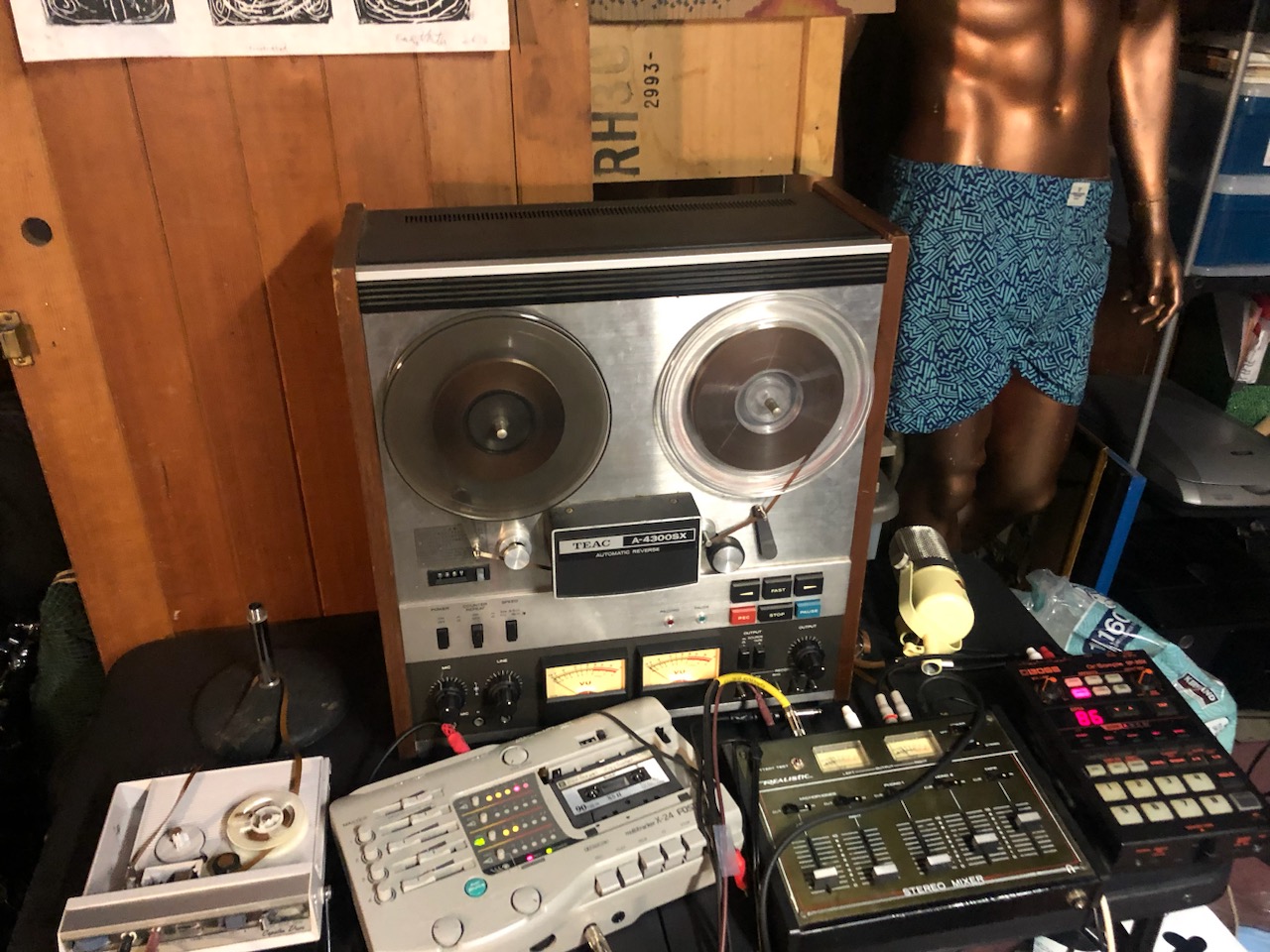
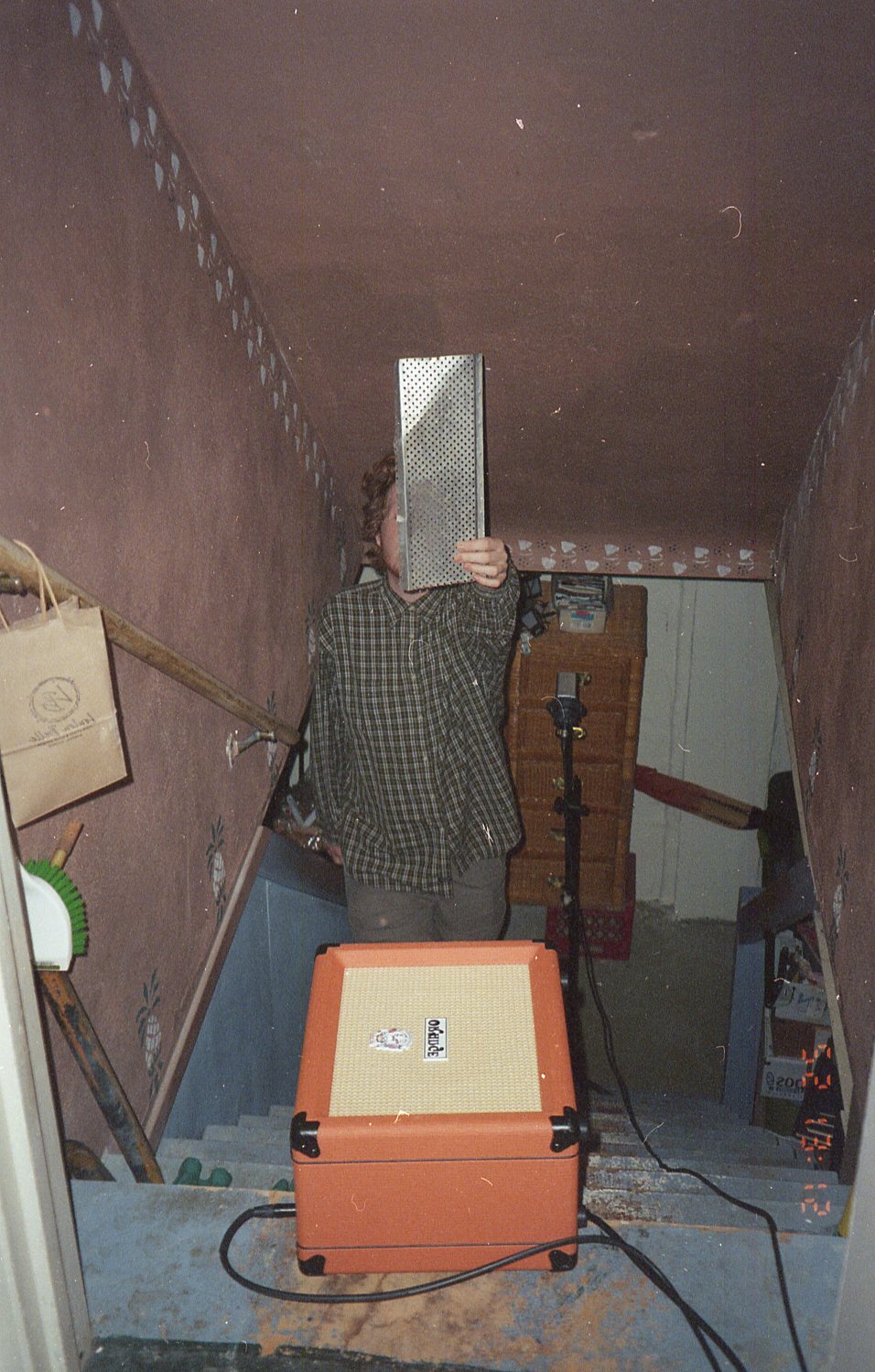
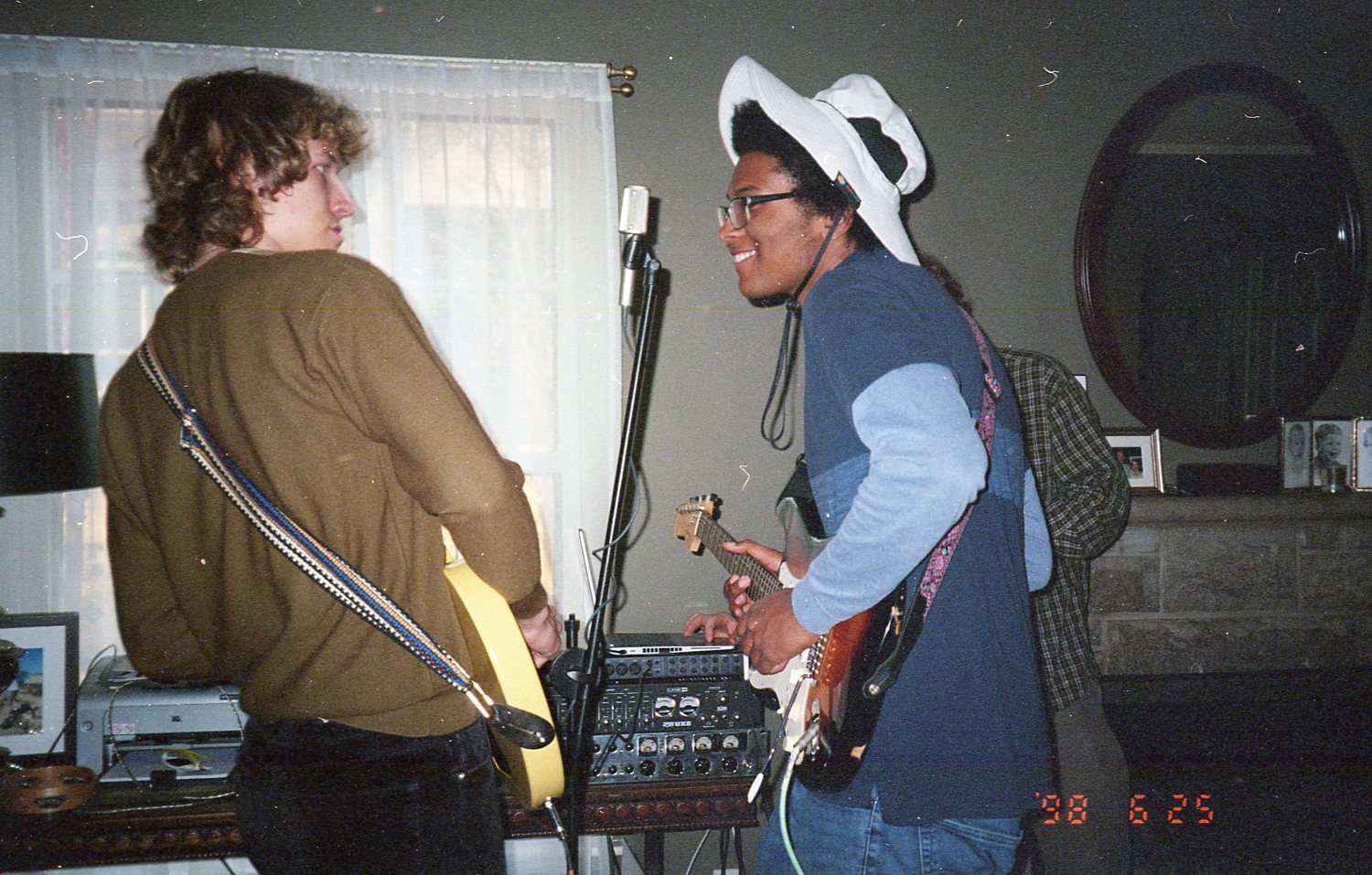
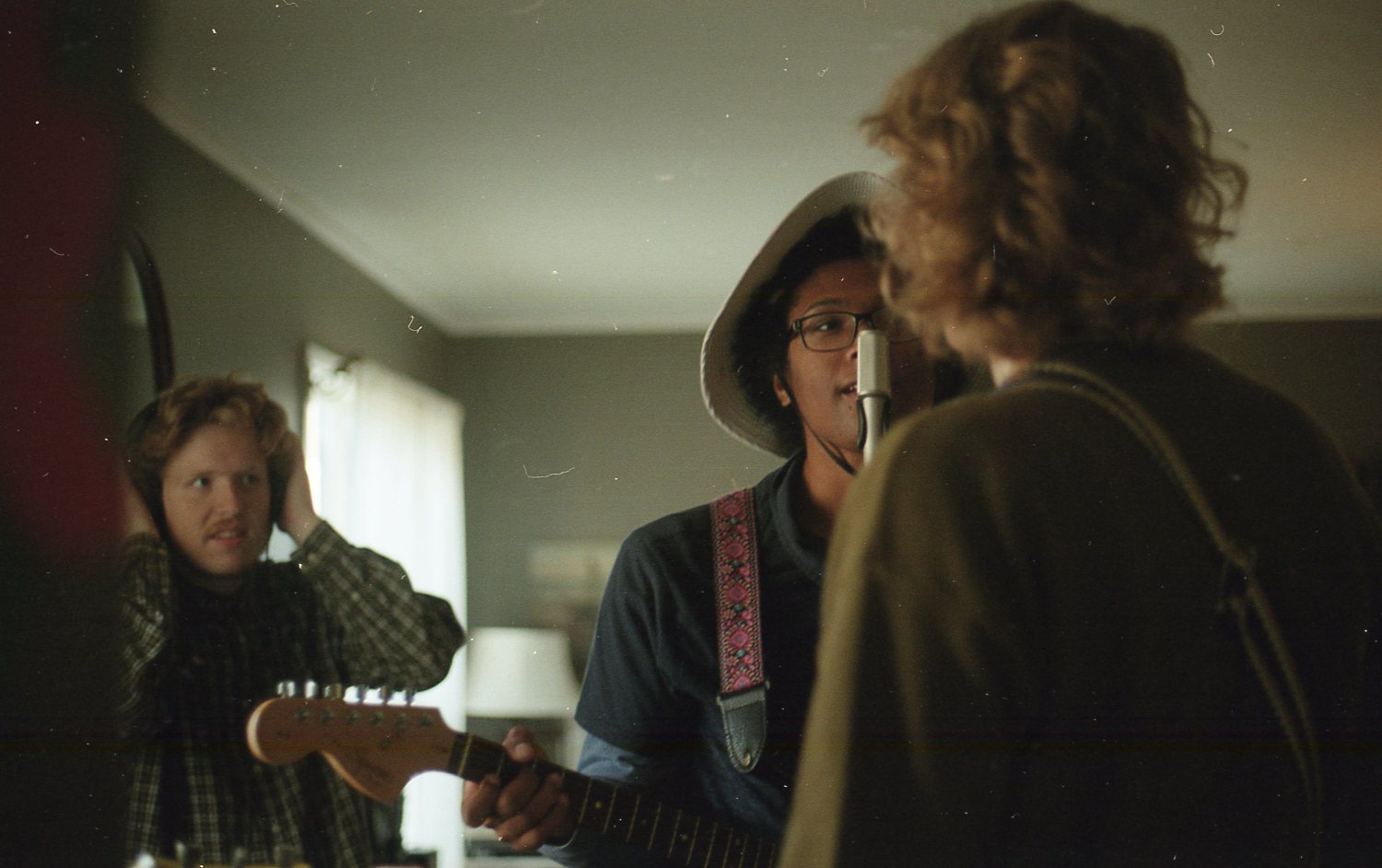
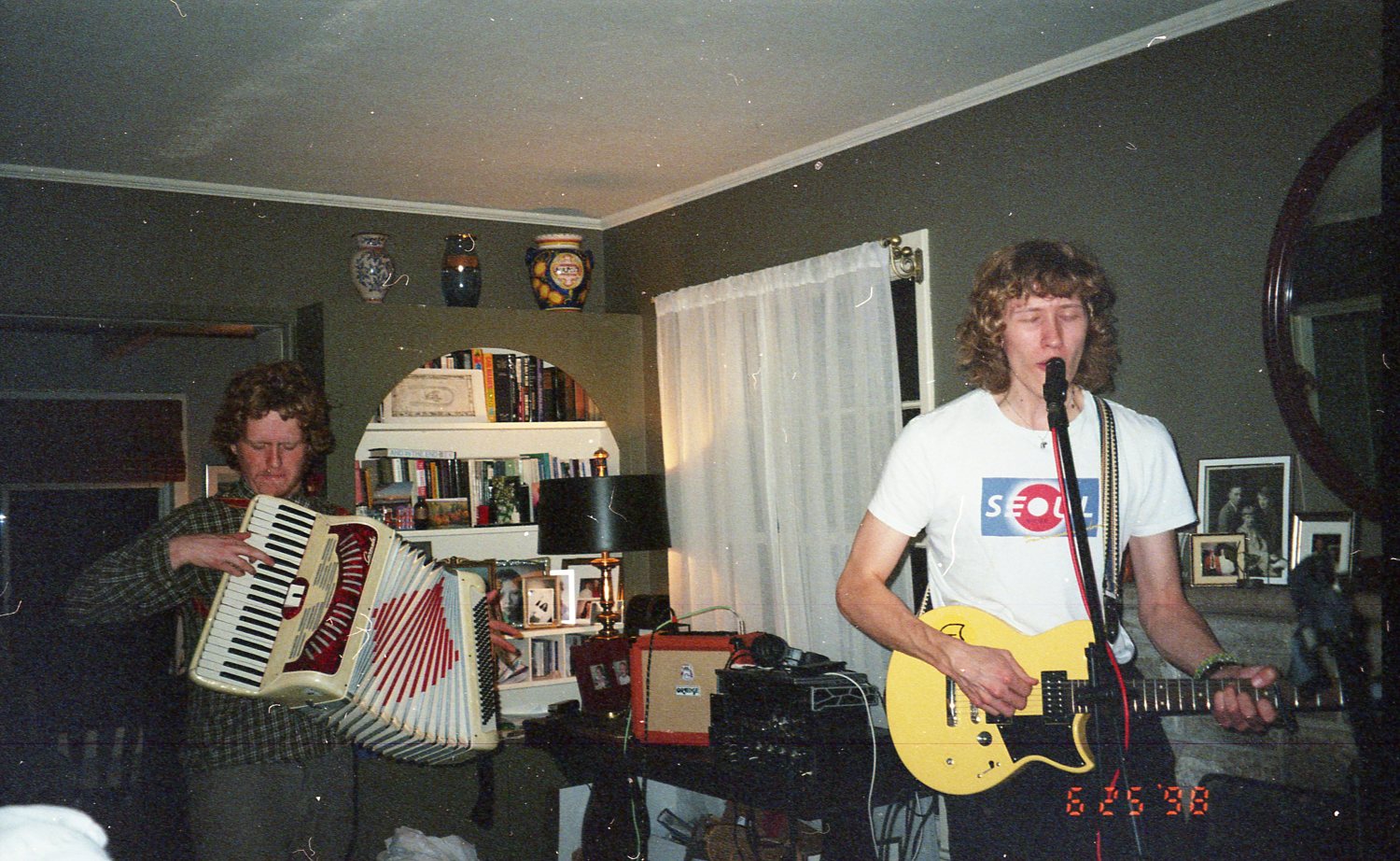
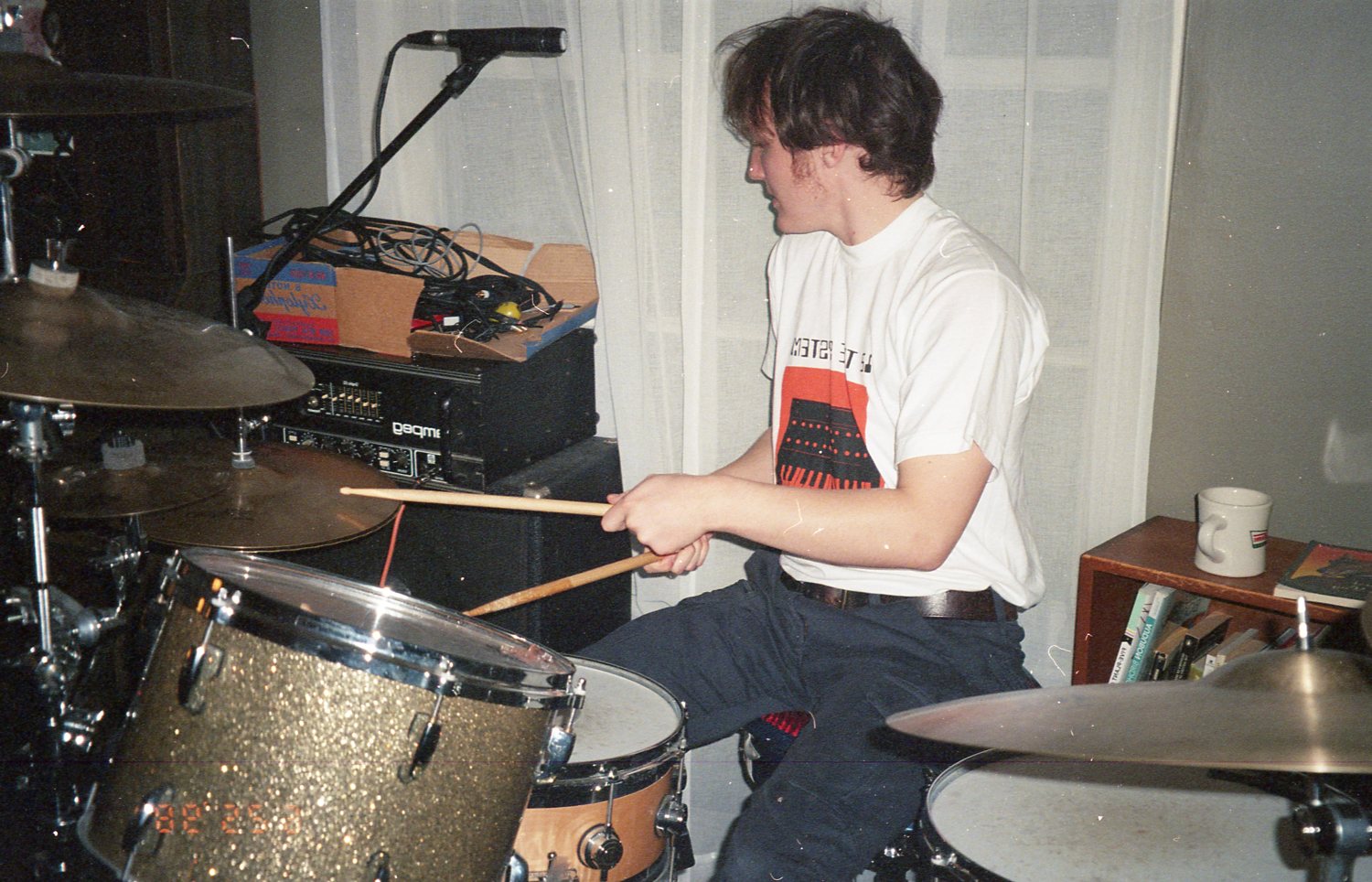
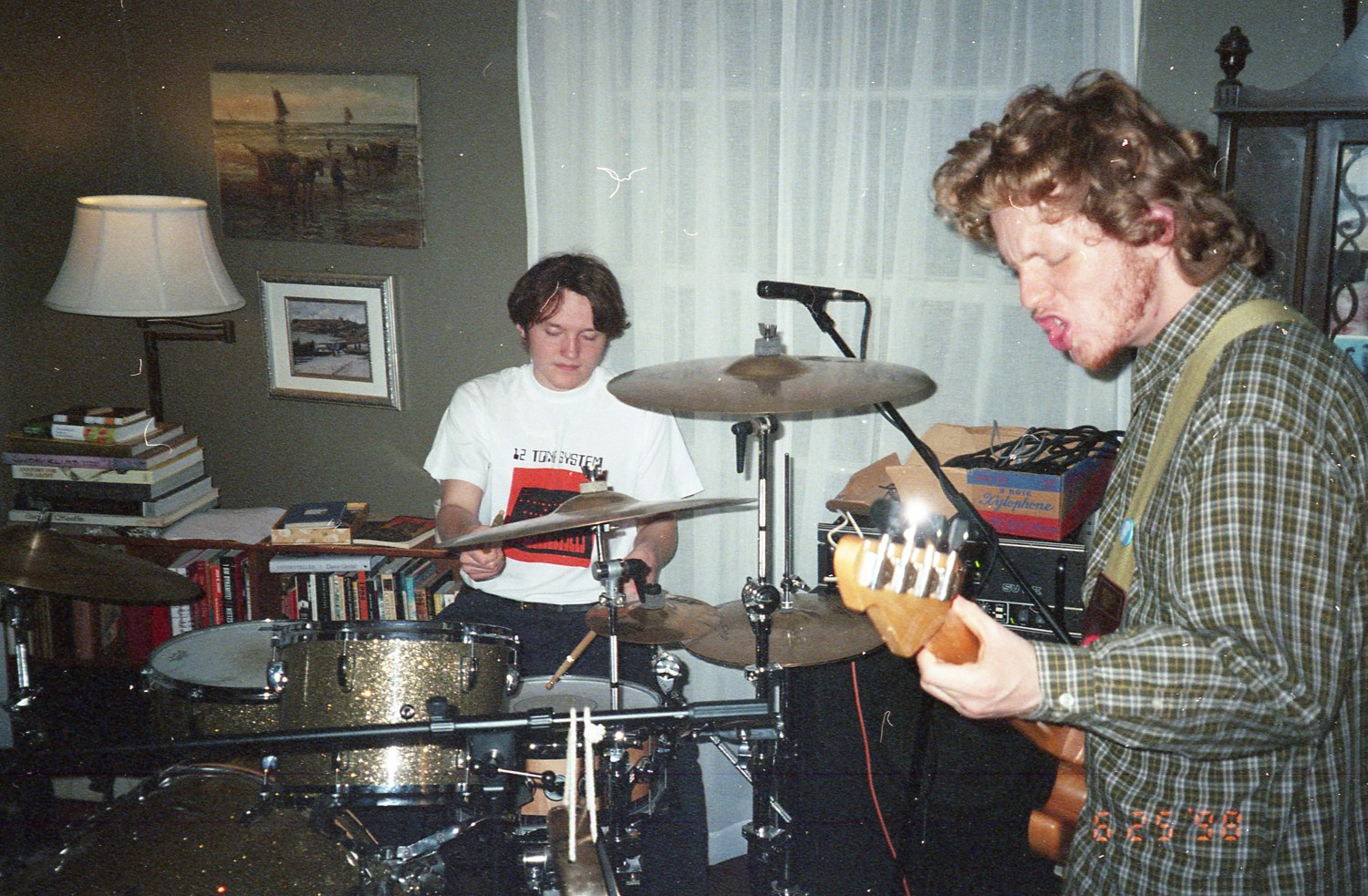
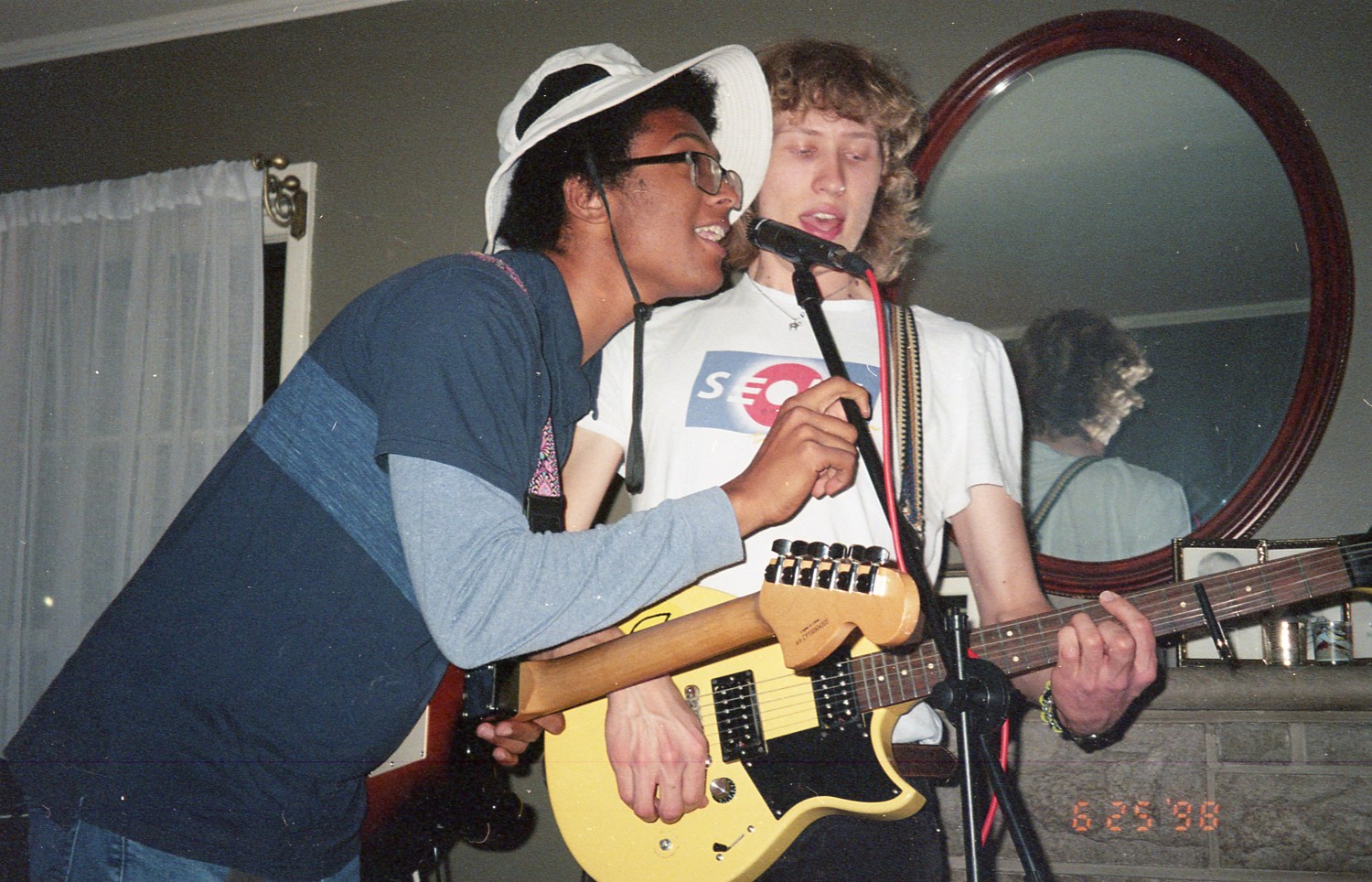
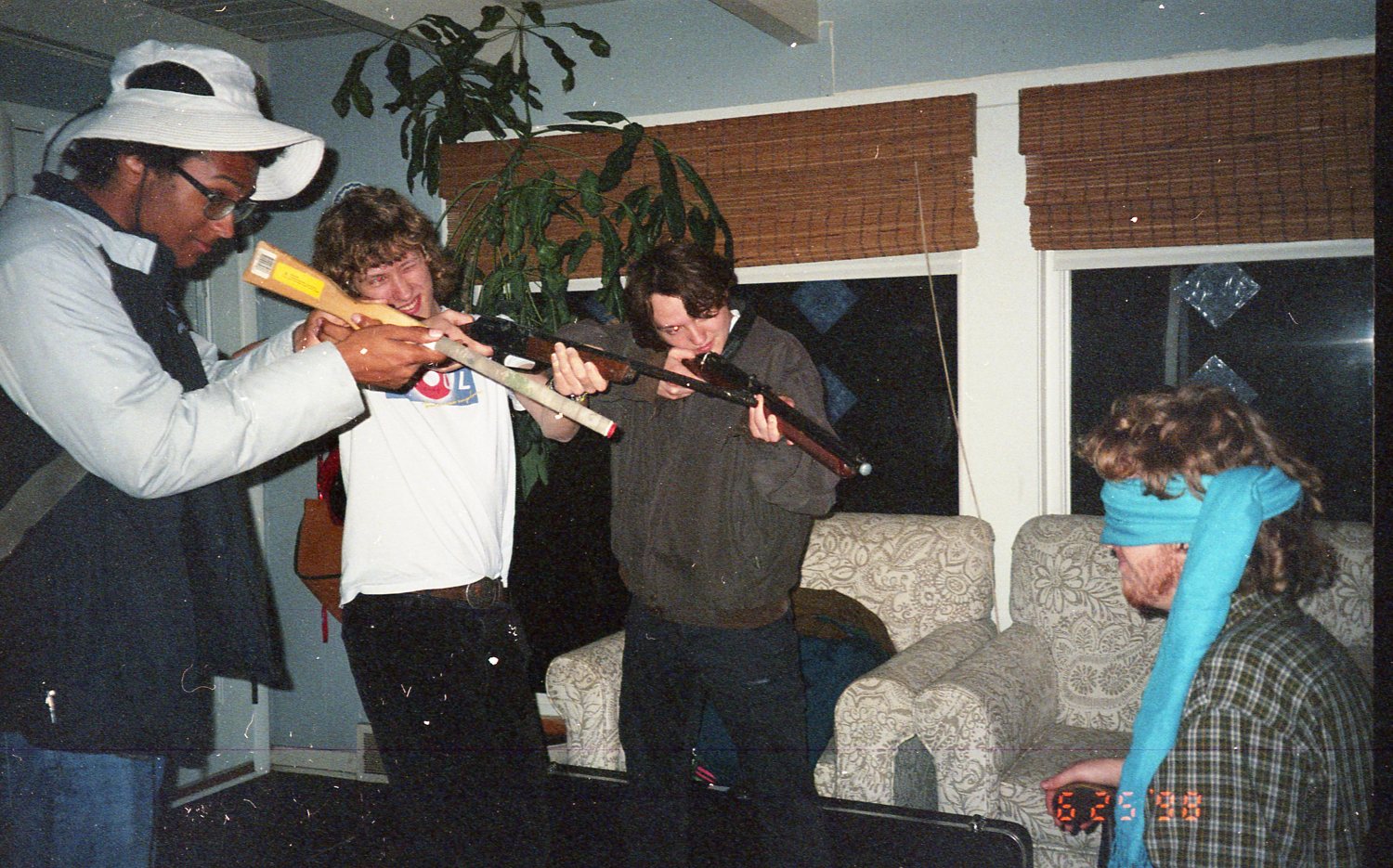
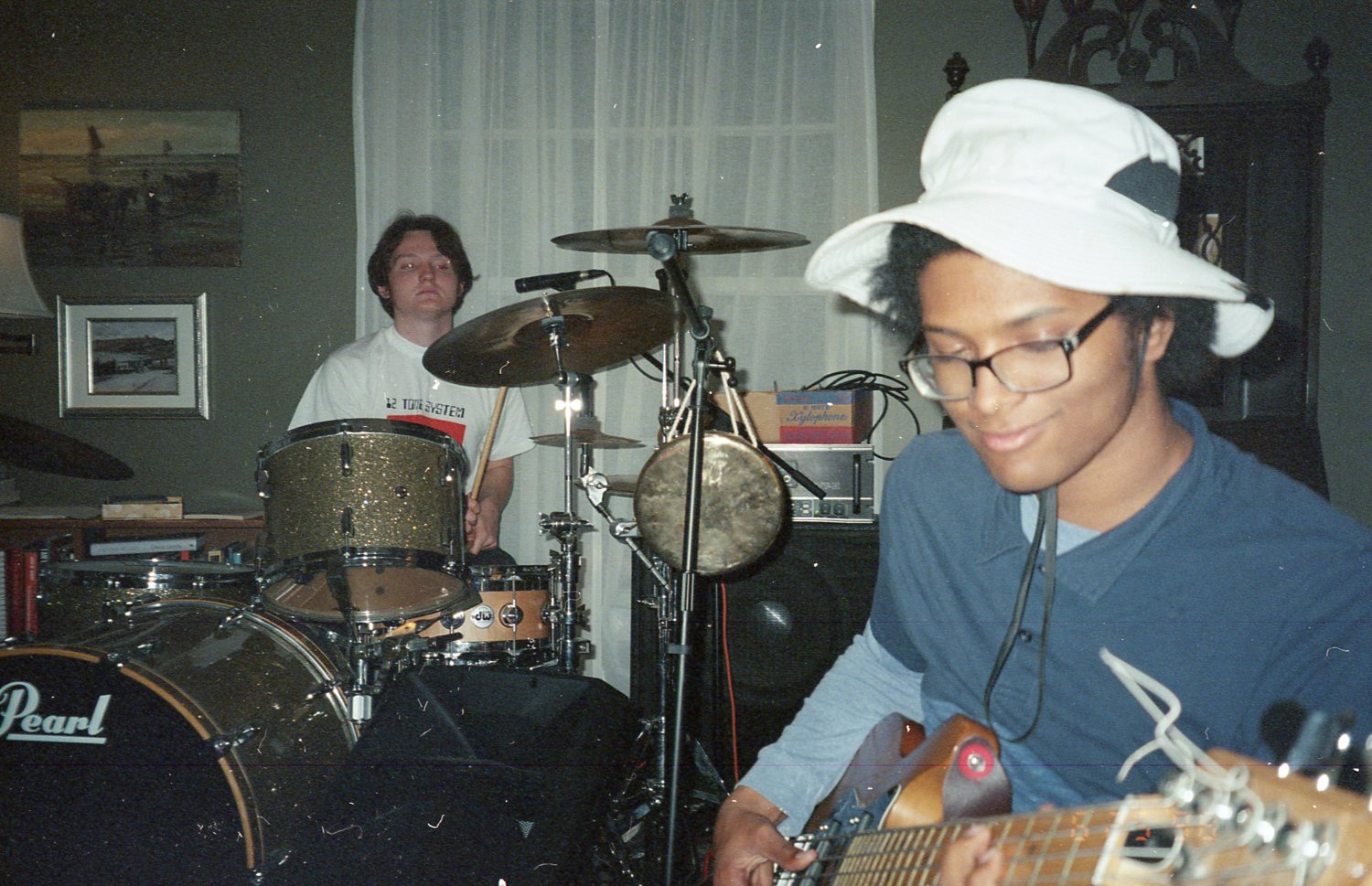
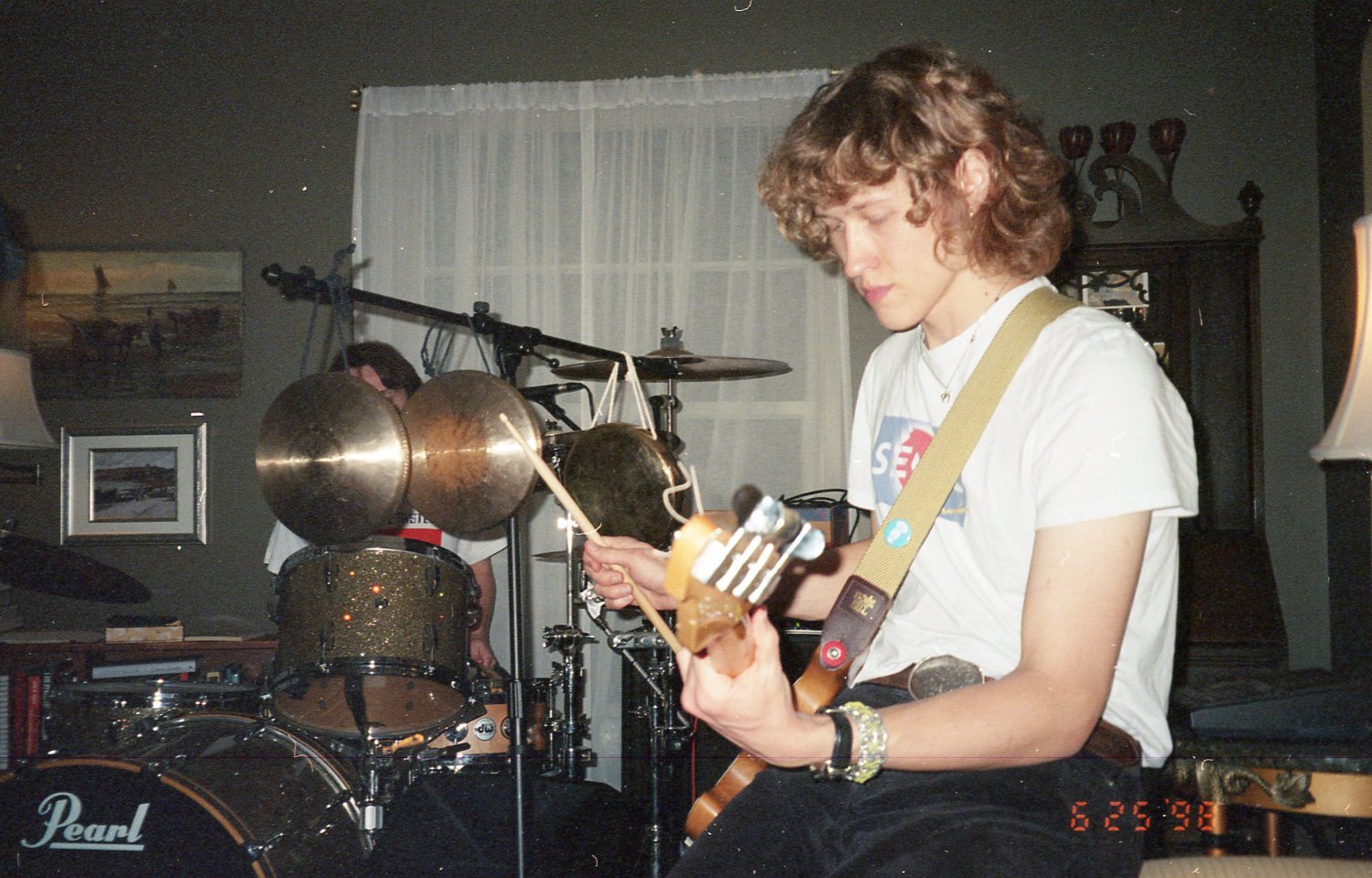
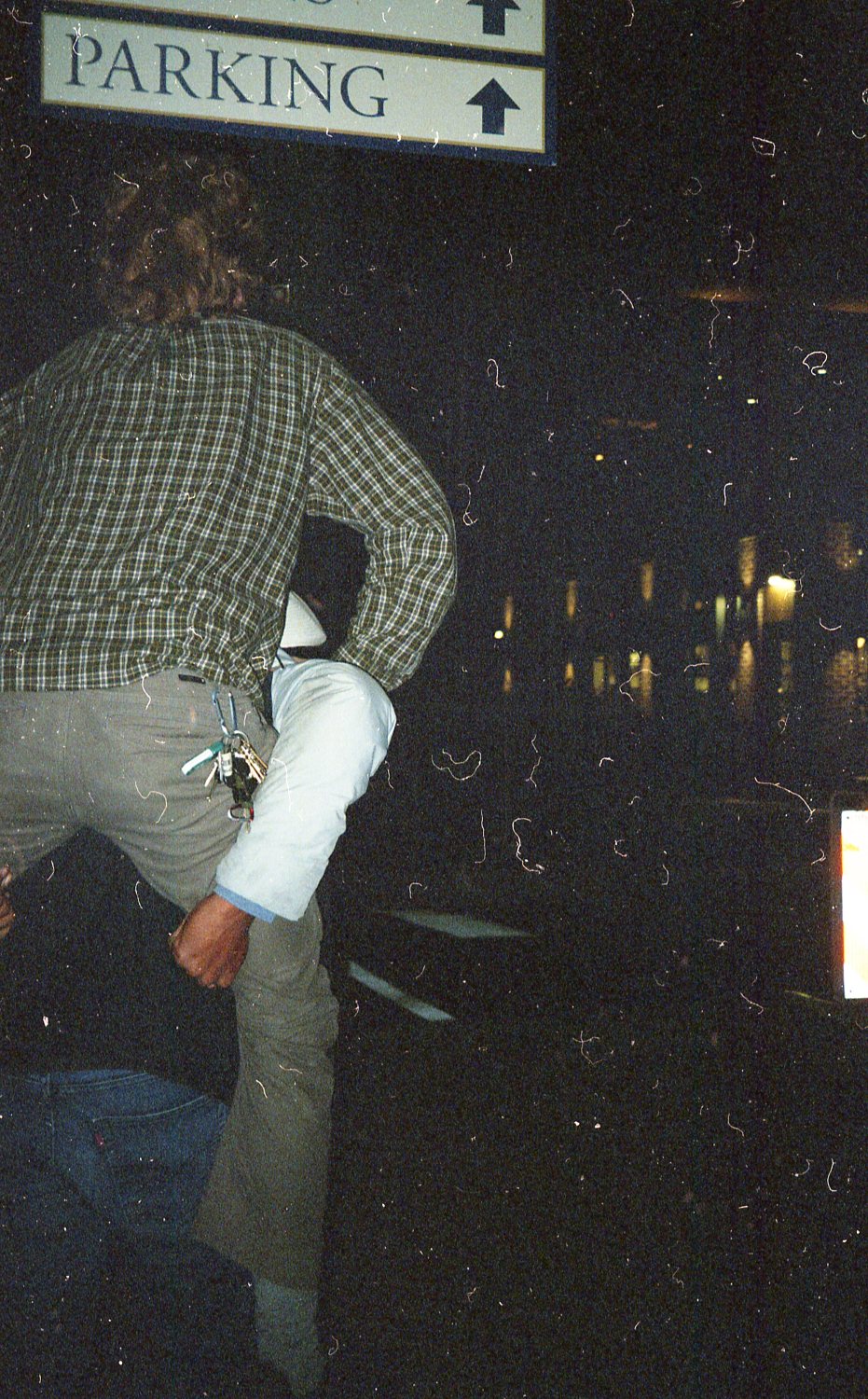
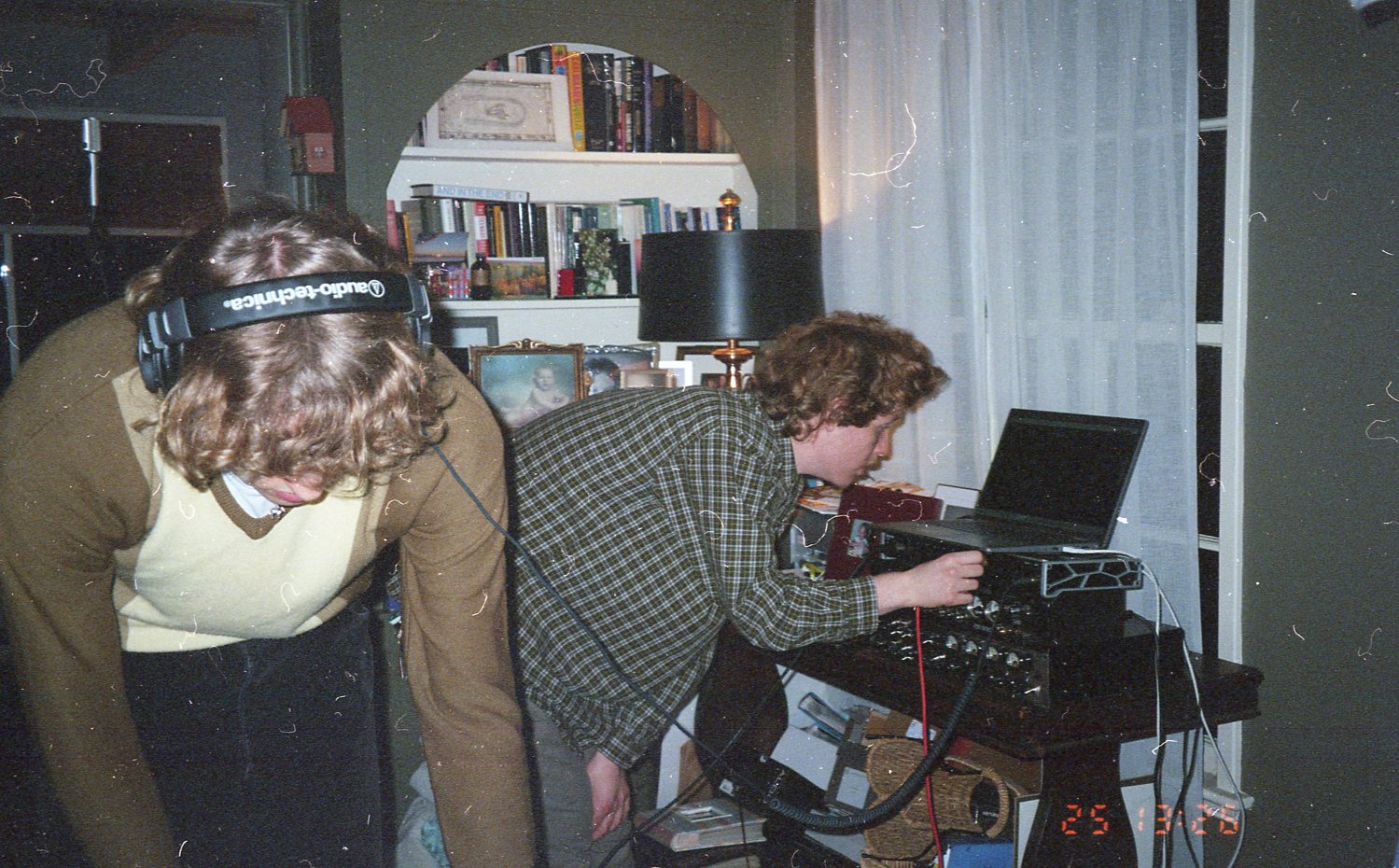
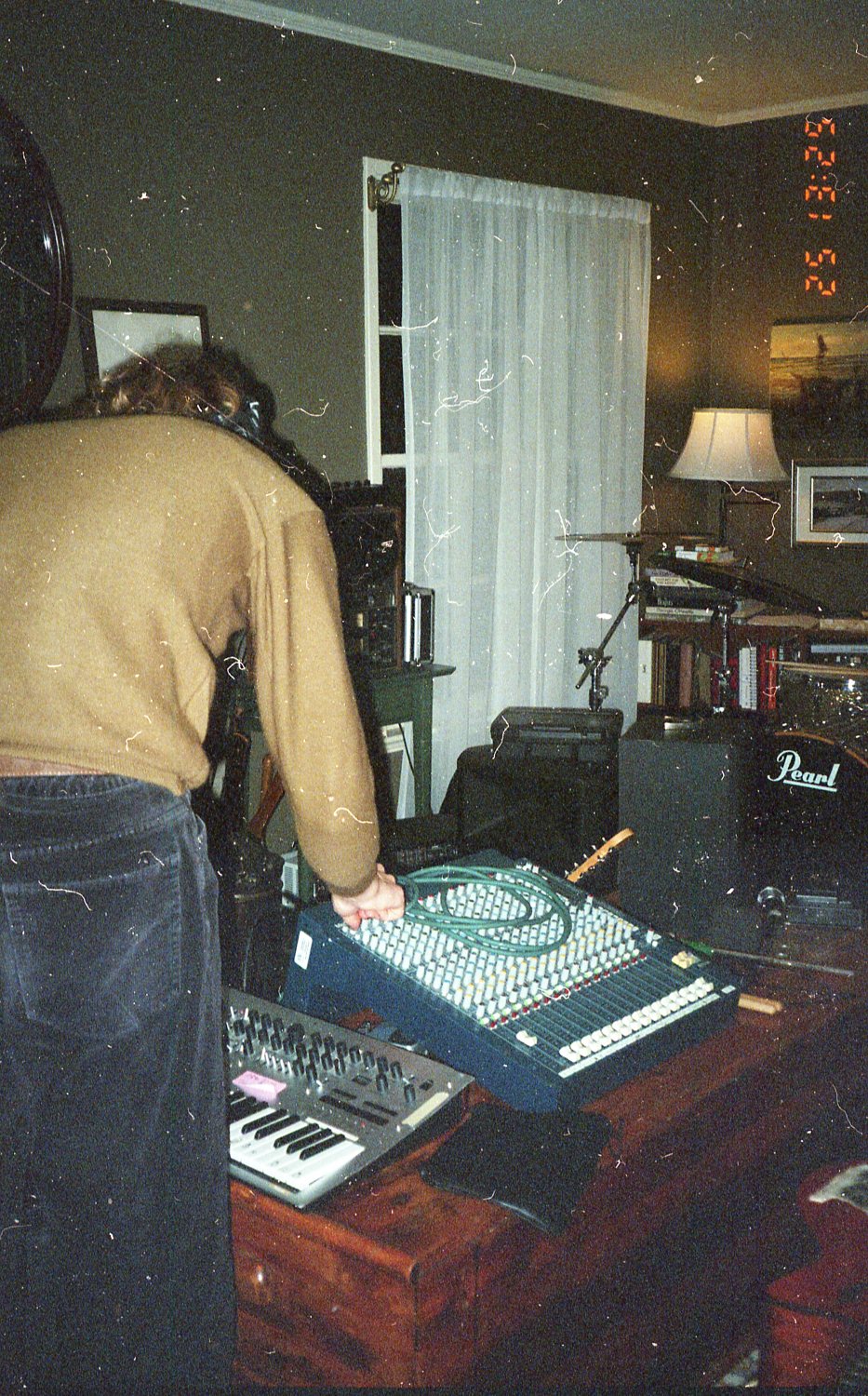
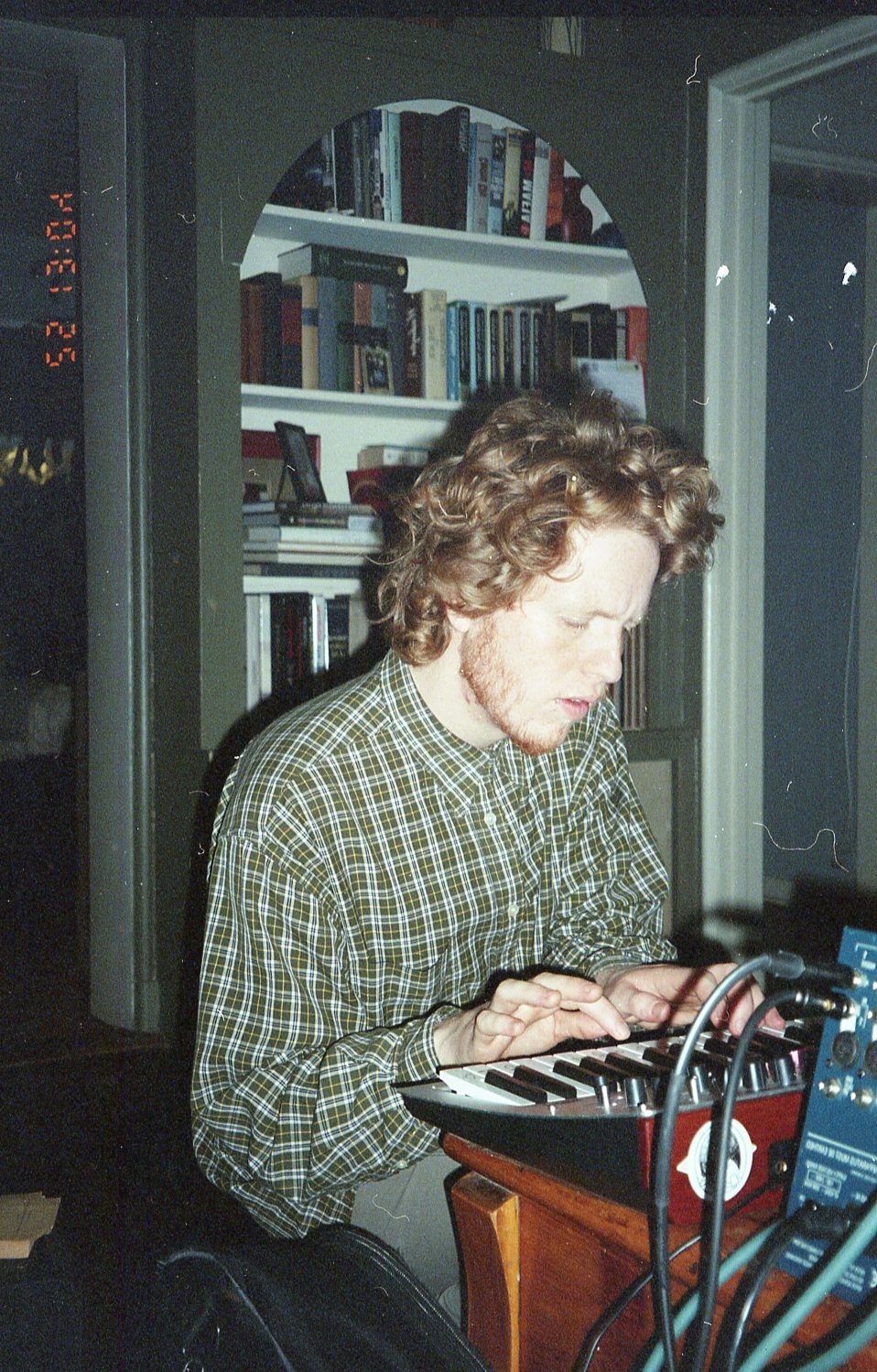
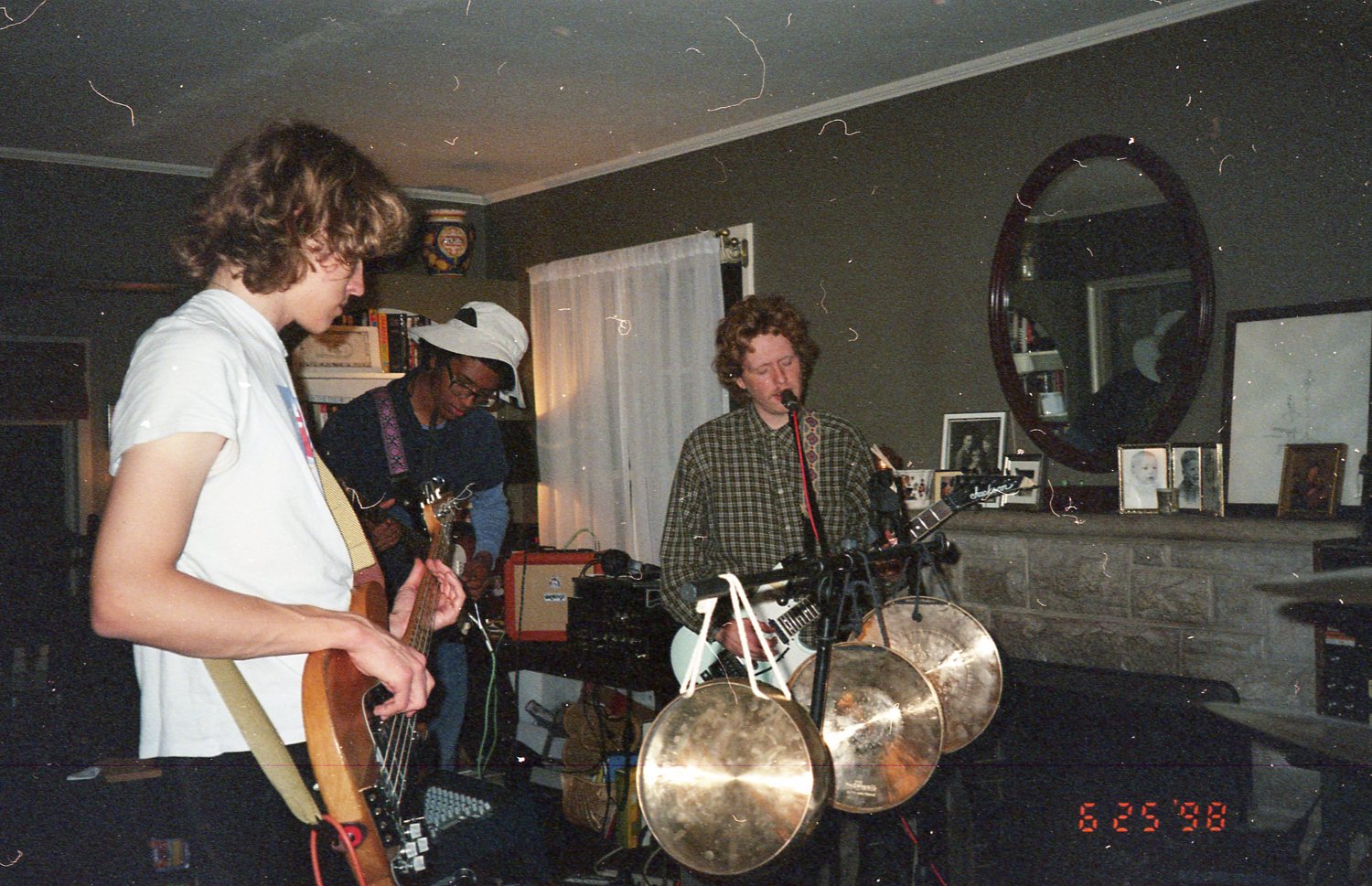
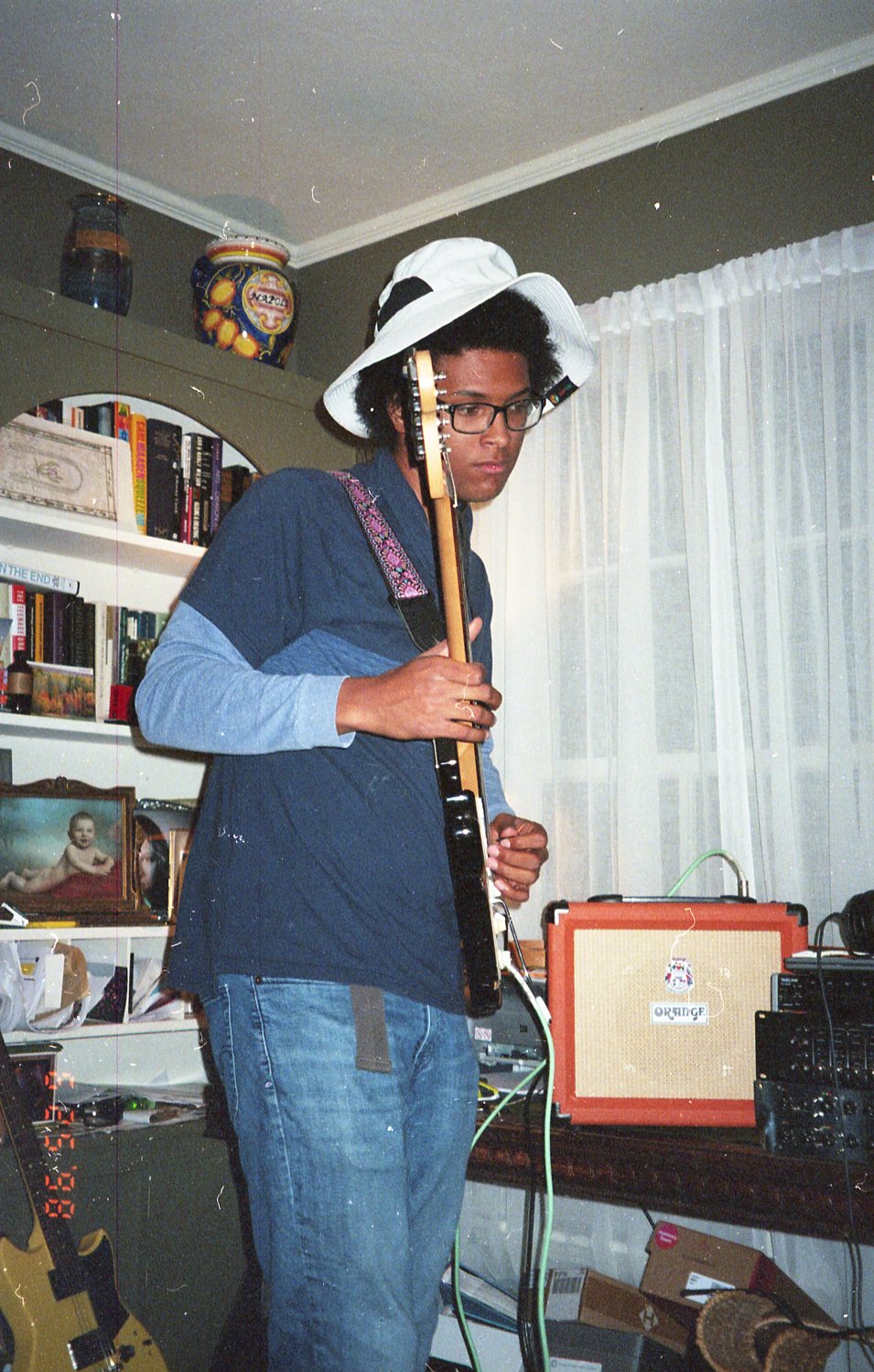
“And my idea of me / Is a place where we fill every corner / With Trinkets and Horses” sings like an open letter, where the past, present and future speak to each other in tones of grace and understanding as things are always uncertain, but each step forward is fulfilled by who you choose to bring along the way. One year ago, Mariah Houston and Alan Howard (Sleep Habits) released Trinkets and Horses, a split EP that has become a point of celebration for the two artists, both in what it has come to represent on its own, as well as what they have accomplished since.
Having met in college, the duo began to collaborate on anything they could, working out the early iterations of what would be their respected solo projects. After college, Mariah moved to New York, where she has since joined the noise-rock project, Plastic, and Alan continues to make music under the name Sleep Habits in New Orleans, where he also plays and tours with artists such as Wesley Wolffe, Noa Jamir, Thomas Dollbaum and hemlock.
As these songs continue to build out their lives, the stories scratch those marks that were left behind; imprinted – irritated and molded to shape, like the markings a harsh wood fence will leave on your skin when you get up from a momentary break. With a blend of twangy daydreams, rooted folk voicings and DIY lo-fi admiration spackling in the cracks, Trinkets and Horses does not just represent a single moment in a creative project, but rather the detailed rhythm and dedicated trust that comes with a friendship.
Recently, Mariah and Alan teamed up with New Orleans-based tape label, Kiln Recordings, to release a special edition CD, marking the first time that Trinkets and Horses can be found in a physical form. Revisiting those beloved songs, the ugly hug got to catch up with the duo, Mariah in New York and Alan driving through Utah on tour, as we discussed how the album came to be, strengthening their creative collaborations, and looking back at the experience one year later.
This interview has been edited for length and clarity
SR: I know that you two have been friends for a long time, but how did this creative relationship start?
MH: Alan and I met at Loyola in New Orleans where we lived across the hall from each other. What are the odds, right? We played in a few bands together, including a wind ensemble, I played French horn and Alan played trombone. And then on the first iteration of Sleep Habits I was singing..
AH: …because I was too scared [laughs].
MH: Yes, Alan was scared [laughs], so I was singing in Sleep Habits and Alan was playing a bit of guitar with me and helping me record some songs. It was very entry level stuff, we were just in college hanging out and making silly songs. Then it just kind of progressed from there to more serious songwriting and more serious collaborations. As we began to release stuff for our own projects, we thought, ‘damn, wouldn’t it be fun to go on tour? Why haven’t we done that yet? Let’s just make it happen!’ But we knew we needed something to tour behind, so we decided to record an EP together.
AH: In the grand scheme of things, it was all kind of very last minute, too. We really just said ‘fuck it’ and just immediately jumped into doing it. I think we uploaded the tracks a week before we left for the tour.
SR: As you were putting together the track list, you two were pulling out a few songs that you wrote individually that had been demoed and back-pocketed for awhile. What was the timeline in which you wrote these songs?
AH: It was pretty different for all three of my songs. “Little Smile” is pretty old and then “Pavement” was already on a Julia’s War comp in 2022. “Trinkets and Horses” was a pretty fresh song that I was messing around with at the time and just really came together.
MH: I had written “Promise” while I was living in Portland and the other two more recently. I actually wrote “Backseat” right when I moved to New York and then I wrote “Different Now” on New Year’s Day of 2023.
SR: A fresh start?
MH: Trying to [laughs]. I had done that this year again too. Maybe this could be my tradition. It feels really good.
SR: Throughout the EP, there feels to be this thematic throughline of redefining placement and growing up that really sticks out. Were there any overarching themes that you were looking to build upon or connect when choosing which songs to include?
MH: We didn’t really have a concept for this EP, so I do think a lot of the themes were accidental. It is funny to reflect on each song now and see how they overlap, because intrinsically, Alan and I have a lot of similar influences and we’ve known each other for almost seven years and have been collaborating since we met. So there is a lot of crossover in the kind of emotion and themes that come out in our songwriting. We also had a similar pace of upbringing, me being from the Midwest and Alan from Baton Rouge, we both had an itch to experience more about life, so there’s a lot that we both reflect on that feels similar.
AH: There were also a couple of songs that we were thinking about finishing that didn’t make the cut and may be too far gone to return to. But all of the decision making was very mutual.
MH: I decided to include “Backseat” at the last minute and Alan decided to include “Pavement”, which would both be considered more of the commercial songs, so we had a lot of discussion about the vision and style. But ultimately I think we just had some demos that came together naturally.
SR: Having both worked so closely together in college, and now covering a lot of physical distance in your collaboration, were there any takeaways about your own creative process that this EP brought out?
MH: Collaborating makes two things easier for me, which is holding myself accountable and executive functioning. We set deadlines for each other, so there was an element that reminded me not to put this off because there’s another person involved. Usually with my own music, I’ll just put a pin in it, but because we both have the tendency to sit on music for a long time, by the time we release it, we’re kind of dissatisfied with it. It’s not an accurate reflection of our taste and our style that we hold presently. But because this was such a quick turnaround, and because we’re working with each other and admire each other a lot, we actually released a project that we felt really confident about and really proud of.
SR: As it was your main goal to go on tour, which inspired you to make this EP in the first place, did these songs find different lives as you traveled and played them night after night? How does it feel looking back on it all now one year later?
AH: It was amazing! It was so fun to play the songs stripped down like they were written, but with single elements that came out in the recording process (Mariah singing with me/me playing slide with her). It felt really good to make new friends and see how people reacted to the music. It really solidified why I love playing music and doing stuff DIY. Especially it being the first tour I ever went on.
SR: Now you are celebrating the one year anniversary of Trinkets and Horses with a limited CD release from Kiln Recordings? What made you want to mark this anniversary by re-releasing the album?
AH: We had always thought about releasing this EP with some extra tracks, like we had these backyard recordings that we did at Carolina’s (hemlock) house in Chicago while we were on tour, so those are on the re-release. And we’ve always just really wanted a physical of the album.
MH: But also, Kiln is based in New Orleans and has supported our friends and our community there, like some of Alan’s other projects and Wesley Wolffe, so it’s exciting to work with them regardless. They are very deliberate, make really great art and on top of it all, they’re people we know personally, so it feels good to collaborate like that with them.
SR: Do you two have any plans to collaborate again in the future?
AH: Yeah, we’ve already been working on stuff together! I’ve been playing bass on Mariah’s new record and she’s going to be singing on my new record. But I mean, if we’re talking about collaboration, to me it feels like Mariah is just part of Sleep Habits at this point. So yeah, definitely gonna have her on the record.
MH: In any formal or full band iteration of my music, Alan will have a place. And if by chance we live in the same place again one day, I know that that will come into fruition. Whether I’m singing or playing guitar I know I’ll have a place in Sleep Habits, and when we record it doesn’t matter where we are, we can always send each other tracks. And I did record some of my album that I’m working on now in New Orleans, so Alan was there with me.
You can now order the special edition of Trinkets and Horses from Kiln Recordings, which includes two never before released backyard recordings of “Pavement” and “Trinkets and Horses” ft. hemlock, completed with a 14 page booklet including the artists’ handwritten lyrics.
While history has proven that amity amongst band members is not necessary to create good music, it’s always special when the depths of a bands’ friendship is palpable in their work. Years of experience playing in bands like Sloppy Jane and Water From Your Eyes speaks to the technical talent of Al Nardo and Bailey Wollowitz, but it’s ultimately this sense of camaraderie that makes their prog-rock band, fantasy of a broken heart, so compelling. The duo’s collaborative friendship dates back to 2017, though up until now, fantasy of a broken heart was confined to a relatively low profile of house shows and occasional single releases. The time spent cultivating fantasy’s identity, or perhaps lack thereof, is discernible in their debut album, Feats of Engineering, a captivating experience doused in honest introspection and eccentric charm.
While fantasy of a broken heart claims that “only isolated artists make original material”, Feats of Engineering is a harmonious dialogue sung in a language that feels completely their own. Lyrically, Nardo and Wollowitz are masters at fusing vulnerable with whimsy. It would be easy to assume an album with imagery of Tony Danza preparing buttermilk pancakes and a possessed Evil Kenevil wielding an “as seen on TV magicians novelty arrow” would amount to a goofy but hollow listen, perhaps engaging in a bit of post-irony ridden social commentary at best. Instead, fantasy’s amusing tangents and bizzare imagery work to enhance the project’s emotional depth. In its entirety, Feats of Engineering is somewhat of an auditory hallucinogen, inviting us deep into an unrefined subconscious reality where the strangest of thoughts are met with rather hard to swallow existential notions. Instead of coming across as a joke you aren’t in on, the album’s vulnerability factor feels somehow amplified by each lyrical peculiarity.
In an auditory sense, fantasy is a maximalist quilt of 70’s prog-rock, 90’s dream-pop, and modern indie-pop, though if you tried to create a list of every subgenre their sound touches it would rival a CVS receipt. Each song on the album has a distinct identity, with its own unique formula of layered instrumentals and varied time signatures. However, amidst their most enigmatic structures, Feats of Engineering successfully stands as a holistic body of work, unified by a discernible sonic ethos and enriched by the soothing harmonies of two voices with an undeniable musical rapport.
The album commences with the trance-inducing “Fresh”, a minute long track that starts off with a steady high pitch car beep, the one reminding you to buckle up or perhaps shut your door. Though the beep is initially attention-seizing, it is soon lost in a mesmerizing synthetic organ melody, and in a brief, word-less 60 seconds, the magnetizing pull of Feats of Engineering has begun. The vibrant “AFV” follows, providing an auditory finger snap to the meditative state induced by the intro song. At its core, “AFV” is a humorous tale of a romantic interaction gone wrong, a palm to the face detailing of a flirting effort mistaken as an attempt to buy weed. The earnest anecdote is paired with an uneasy chorus, as the two harmonize on the repeating lines of “All I wanted was a little sensation”, and “I thought a devil called my name”. Through satisfying hooks and a lavish layering of instrumentals, fantasy of a broken heart harvests structures of an addicting pop track, while balancing a lighthearted story with a desperate longing to feel.
It doesn’t take long to establish that fantasy of a broken heart has perfected the art of writing tearjerkers that pass as chic remixes of vintage television jingles. Loss is the archetype for this, offering a vulnerable testimony to the umbrella concept of “loss”, supplemented by buoyant guitar riffs and animated vocals. The track is burdened by the weighing question of “have you lost it”, but not without the comedic relief of “Where did you put the sword”. “Loss” is not the only song on Feats of Engineering where fantasy sugar coats dreary ideas in bubbly melodies adorned with quirky references. At a recent Brooklyn show, Wollowitz led with “this song is about Pizza”, before diving into “Doughland”, where the duo’s craving for inner peace becomes increasingly harrowing with every “I can’t stand this” they chant. In “Mega”, the toll of an ambiguous relationship dynamic takes the shape of a catchy tune about an extinct giant shark. The title track might hold the most intense juxtaposition of heavy and eccentric, with imagery of tiny men and their adorable miniature safety gear following shortly after a painful reflection of “thoughts of jumping off a broken bridge in Middletown”.
The compelling effect of Nardo and Wollowitz’s harmonies excels in “Ur Heart Stops”, a sonically melodramatic track about the tethers of depression and stagnation. When Wollowitz’s droning is met with Nardo’s shimmery vocals over a series of jolty instrumentals, the repetitive chorus of “Ur Heart Stops” becomes hypnotic, transforming a devastating existential dialogue into a catchy prog-pop masterpiece.
“Tapdance 1” and “Tapdance 2” are back to back tracks that take contrary approaches to exploring the crushings of doubt. In “Tapdance 1”, the lyrics rarely stray from “Nobody knows what you’re talking about”. In “Tapdance 2”, Wollowitz embarks on a tangent of reflective commentary and what ifs, confessing to a habit of overindulging in Pitchfork reviews and dwelling on a “surplus of vision”. In the midst of an excess of thoughts and questions, fantasy of a broken heart gets honest about the blurring between art and interpersonal, while once again toying with the idea that “nobody knows what you’re talking about”.
The album wraps up with “Catharsis”, an appropriately titled delicate ballad that matures into an impassioned crescendo of realization. Around four and a half minutes in, Wollowitz’ soothing vocals erupt into an emotionally charged shout, and the lyrics shift from guarded thoughts of “it means so much to me that it happened at all”, to fervent revelations of “Love is collision, destroying your soul for another”. The two offer one final harmony, repeating “catharsis of the heart is the narcissist’s nightmare” over a pulse-raising arrangement of drums and fierce orchestration. While the album hurdles through a docket of unresolved questions and heavy notions, the intensity of “Catharsis” offers closure to a lyrically and sonically consuming experience, solidifying that Feats of Engineering is not only a collection of quality songs, but an extremely well structured album.
Like many of their fellow Brooklyn-based genre-bending contemporaries, fantasy of a broken heart isn’t here to resuscitate a subculture from decades prior. At the same time, it is abundantly clear the duo has spent ample time listening and deconstructing the most successful structures and sounds, creating arrangements that are equal parts pragmatic and avant garde. Through every nonsensical twist and earnest turn, Feats of Engineering engages in sonic nostalgia while paving a completely original identity, verifying that fantasy of a broken heart is a major band to watch.
You can listen to Feats of Engineering out everywhere now.
Every Wednesday, the ugly hug shares a playlist personally curated by an artist/band that we have been enjoying. This week, we have a collection of songs put together by Colorado-Chicago-Seoul artist, Jeehye Ham of Precocious Neophyte.
Grounded in the antique foundations of shoegaze and the bewilderment of dream pop, Precocious Neophyte is a group that expands beyond the thresholds of what a bedroom artist can be. As a veteran of the South Korean indie music scene, having performed in bands such as Vidulgi OoyoO and JuckJuck Grunzie, Ham brings a type of ruckus and wonder to Precocious Neophyte, where tension and intuition are compelled to unite into moments of sincere power and tender understanding. The group released their latest EP, Stony, earlier this year.
Along with her curation, Ham shared this blurb as to how the playlist came together;
These songs are mostly by Korean indie bands, some who have been active for a long time and some who are new. Byul.org and zzzaam, two introverted, sad, and shoegazey bands who had not been active for a long time, just started releasing new songs, so I’m really excited to listen to them. But not all of the bands are from Korea. Sunshy are my favorite band in Chicago. They just started to perform last year, and I put their newest single, “are you still watching,” on the playlist. It is my favorite Sunshy song. I still remember hearing them play it for the first time on a Free Monday at the Empty Bottle last winter.
Written by Shea Roney | Feature Photo by Sara Thornton used with permission by Jeehye Ham
The Last Whole Earth Catalog is one of those prolific projects that redefines our expectations of what an individual can accomplish. With over twenty albums on bandcamp and an ongoing YouTube project of playing each song he has ever written live in chronological order, UK artist Dan Parr has returned with his latest album, We’re All Down The Rabbit Hole, self-released earlier this year. Venturing into the unknown and confusion of our innate obsessions, Parr explains that this album was written about someone who falls in and out of a cult, illustrating the characters’ struggling world view and deteriorating self-preservation as you tries to find his way back out again.
Although vast, the seismic catalog that Parr has built is not one of intimidation, but offers a safe point to jump in and experience his craft at any point in time. This is in part due to the timeless feel that these songs are molded from, where inspirations are voiced and personal visions are seen through with such intuition and commitment. Same goes for this collection, as “All Grass Seems So Green” kicks off the album with a whimsical and progressive folk groove as movement builds from a conversation with an ecstatic guitar, pushing the instrumentals to grow into a meticulous freak out. “Have You Ever” jumps out with choreographed guitar strings that lead with constant motion, never tripping over each other as they try to get to an unknown destination outside of our line of vision. “Until I’m Clear” simmers in a range of guitar tones, textures and dynamic moods as Parr’s musicianship excels in his transition from each new pacing. The album’s closer, “32”, is a light little love ditty – a break in layered stylings to a more conventional song structure that finds closure in its bashful lyrics and warm embrace.
Although the cult concept is not crucial to the overall experience of the album, Parr animates a classic archetype where obsession becomes both procurements of energy and devastation and our character has to take a fall in order to learn their crucial lesson. “With every headline I know the culprit / It’s society’s sickness and we all know / We’re stuck in the grind and don’t seem to mind enough,” sets us at our initial crossroads – where questions need answers but the tension reaches a breaking point as “If Only” erupts into a distorted drive of hopeful wondering. “I Don’t Want To Be Left Out” struggles with individuality held down by one’s own expectations, yet is dragged out by twinkling piano fills and a precarious mouth trumpet that dance around in freeform glee. The character reaches an awakening on “Reread My Life”, as Parr reflects, “Now that I know I can be fooled / Now that I know where I am weak / I’ll be careful when I have an option / When the intentions are not that easy to see”. It is one of the more sobering and grounded tracks in the bunch – a moment to stop and understand just how confusing and meaningful it is to be alive.
“In my mind there is not order / Only chance and what’s made for us / But in lasting memories I have to try and make a sense of peace”, settles in the heart of the story on “Every Single Little Piece” as a melodic guitar begins to swell with excitement as Parr’s demeanor grows in love and confidence. Although sometimes harsh, touching upon some of humanity’s most brash qualities and scapegoat tactics, We’re All Down The Rabbit Hole isn’t a project to relish in the flare-ups of despair, but one made to rejoice individuality, self-care, communication and unifying community, and in the whimsy of The Last Whole Earth Catalog, the rabbit hole is a welcoming place to fall down if you give it the chance.
We’re All Down The Rabbit Hole is available on all streaming platforms now. You can order CDs and tapes here. You can watch Parr’s All Songs Ever series here.
iji (ee-hee) is one of those groups that can be described as “your favorite artist’s favorite artist” (Sasha Colby), and through fifteen years of sophisticated pop tunes and pure indie bliss, they have proven time and time again that making music can and should always be fun. Fronted by Zach Burba, iji returns with their latest record Automatically, the groups first release since their relocation to LA in 2020 and a revitalization of the creative spirit within. Having time to sit and wonder, bubble in the troubles of the pandemic and its shadowy afterglow, Burba took the time to reflect on what is worth saying in a world like this, where stripped back pop tunes and witty musings can be just as effective when radiating moments of essential joy, communal care, existential dread, childhood dreams and souring friendships become harder to define.
On the surface, Automatically revels in organic and articulated instrumentals that feel lighter than past albums by the rather adventurous group, yet at its heart, sing the praises of such charm and character that iji has defined throughout their rich history. With an array of collaborators of indie spearheads and hometown heroes such as Erin Birgy (Mega Bog), Adrianne Lenker (Big Thief), Nicholas Krgovich (Nicholas Krgovich) and many more, Automatically is the communal event that it was always meant to be. “First Lickers of the Rock” simmers on top of electric tinkerings, while songs like “Recycle Symbol” and “Worlding Way” bounce with melodic energy, where 70’s folk-pop renegades would feel seen, and then honored when provisioned in the charming little world that iji so notably crafts. “Confusing Questions” and “Fear of What” are deliberate mysteries, unsettling at times, mark their own territory on the rather wide-ranging and inclusive collection of stylings and sounds.
“I want to take it all back / Every line ever spoken”, opens the album with “Onomatopoeia”, a song that blooms from the stem of a folk groove, choreographed to Burba’s melodic intuitions and clever vocal harmonies that would trigger anyone’s own participation in the comradery. It may come down to the phonetics that feel the most fitting, “Only one expression remains / the onomatopoeia” becomes an expletive, a simplification of all the shit around us that feels impossible to describe. And to his credit, Burba’s often textured and far out lyrical comprehension grasps this need of purposeful communication. “Walk a little more around the block to see the Deadhead sticker on a Tesla truck,” he sings, highlighting the moral and political hypocrisy in late stage capitalism. “Holy Spirit, tie my show,” sets “Dominus Vobiscum” into a whistling whimsy – “around and over, under, up and through” as religion becomes normalized in selfish ways more and more.
Intuition meets introspection as Burba rears an ending to the journey of Automatically. “Professional Anything” floats to its own lighthearted pace, as expectations are broken and passion and creativity come out on top. “She Sees” weighs heavy as it lumbers through a sparse soundscape. Featuring Adrianne Lenker on backing harmonies, she hits a steady and ghostly bongo like a heartbeat, as Barbus and co. come to the finish line. Reaching this collective release that has been kept inside for too long, Automatically doesn’t revel in the disastrous and estranged for long – even when heavy moments arise, Burba feels the most comfort in letting it breath, making for a rejoiceful moment of creativity and community to fill in the grand scheme of it all.
You can listen to Automatically on all platforms now as well as purchase a vinyl via We Be Friends Records.
The tender voicings of New York-based project Adeline Hotel return today with their fourth and final single “Isn’t That Enough” before the release of their new album, Whodunnit, out this Friday. Fronted by Dan Knishkowy, Whodunnit so skillfully captures a snapshot of an individual’s journey to redefine joy in their life as the aftermath of an ended marriage begins to fade in time. “Isn’t That Enough” serves as the companion piece to the album’s title track as an emotionally freeing piece that circulates through grief, beauty, anger and understanding.
“In a sympathetic world, I saw right through you and you saw through me,” becomes representative of the complex hindsight that Knishkowy paints throughout “Isn’t That Enough”, yet this lyrical curiosity, hanging on to each breath with a protruding edge, grasps the conversation as it catches up to where he is now. In a tender pacing, sparse and warm with an acoustic drone, the band begins to find a progression, growing in the slight sonic voicings that tinker and play underneath the heavy stanzas with heightened synths and harmonies that revel in the track’s depth as it moves forward. “Isn’t That Enough” becomes a story of a relationship left baron – where the ideas of people, places and things turn against each other in depravity and a chance to gain ground, where the question feels less inclined to ask ‘isn’t that enough’?, but rather ‘will it ever be?’
You can listen to “Isn’t That Enough” below.
Whodunnit will be released this Friday, September 27 via Ruination Records and you can preorder the vinyl here. Adeline Hotel will be playing a release show at Union Pool in Brooklyn, New York on Friday, September 27 with Sima Cunningham and Katie Von Schleicher. Get tickets here.
Written by Shea Roney | Featured Photo by Amghy Chacon
Twye is the solo project of Nashville-based multi-instrumentalist and songwriter, Jacob Grissom, who has made a career as a session and touring musician for acts like Kate Bollinger, Brennan Wedl, Heaven Honey and others through the years. Twye feels like a rather hidden project, and to Grissom’s own control, Big Sky marks his first leap into songwriting. In search of his own personal relationship with this new creative freedom came a collection of songs that represent not only his individual work, but a chance to rediscover his entire journey with music and collaboration to this point.
With unhurried pacing, charming melodies and an undeniable impression of nostalgia, Big Sky becomes a place to sit – breathing in and out of lush and thoughtful instrumentals that have you take in your surroundings wherever you may be. Written and recorded months apart from each other, these four songs don’t represent moments that just pass by, but were released already having been lived in. The textured layers of acoustic grooves, delicate harmonies and distinguished spouts of distortion colorfully animate the minute and tricky moments of comfort, love, anxiety and loss that becomes so familiar with each listen.
I recently got to catch up with Grissom, as we discussed what songwriting means to him, balancing distant memories in his writing and redefining his creative practice and trust through Big Sky.
This interview has been edited for length and clarity
Shea Roney: How has the album rollout been? It has felt very exciting watching all the shout outs and people sharing it.
Jacob Grissom: It was pretty low key which I sort of did on purpose. I didn’t tell anyone it was coming out, but a lot of people reached out and a lot of people listened which surprised me. I haven’t even put it in my bio or anything yet, which I probably should do, but it was just kind of a test run to see how I felt about releasing music in the first place, but it has been super encouraging.
SR: So you described Big Sky as your first rock n roll release. What made you want to take on this project?
JG: I’ve been making music for a long time, mostly just involved in other people’s projects as a drummer. I’ve put out electronic music all throughout high school, which is mostly scrubbed from the Internet, although I did put out an ambient project three years ago under the same name. I wanted to continue doing it, but I sort of lost interest in the long form instrumental medium. I’ve wanted to make rock songs for a long time and I’ve had a sound in my head for years now that I was hoping I could just find. I feel like I still haven’t found exactly what I’m looking for, but some of the music I’m working on now is a lot closer to that vision that I had and it’s been really exciting to get closer and closer each time and build a vocabulary musically that I can work with. I’m still a novice, so that process of exploring the instrument and my voice is really exciting because I think everyone is capable of so much more than they think they are. I just spent so many years trying to stay in my lane as a drummer, but I decided to let go of that and I became so enamored by so many artists who made these wonderful records when they’re teenagers and don’t know anything about guitar or singing or music theory. I realized that that is exactly where I fall, so I figured I might as well give it a shot.
SR: As you talk about this sound you have in your head, are there boxes that you check off as you feel like you’re getting closer to what you envision, but can’t quite articulate?
JG: I think a lot of it has to do with being able to write songs that I’m physically capable of performing. I have never done a live show and I don’t even have plans to yet, but so much of the music that I love, I’ll try to cover it, and I have a very limited vocal range so sometimes it’s just not even physically comfortable for me to perform them. When I do find a song that I’ve written that feels comfortable for me to sing and it has a pace that I’m comfortable with, that’s kind of where that feeling comes from. Everybody has a sort of built in natural tempo that feels comfortable to them, and as a drummer, I’ve always understood that. I really love songs that sort of meander and find their way to these different climaxes in incremental ways. But every week I hear a new record or rediscover something that I love and I want to attach myself to that musically somehow and so I have a list of like twenty different sounds and attitudes that I want to somehow combine one day. I’m still at the very bottom of this longer journey that I see for myself.
SR: Can you tell me about the musical relationships you have made that helped with this record? Is collaboration something you are drawn to? Are there things about your own process within a solo environment that you learned when working with others?
JG: Because this is the first time I’ve really been in the studio and been the boss, I think I kind of took advantage of that a little bit and tried to stick with my vision as much as I could. But I made it a point to surround myself with people that I really trust and have worked with for a long time. A lot of the songs that were released were pretty close to the demos, except instrumentally, because the voices that my friends have on their instruments definitely take the song to a different place. I think when I started this project I wanted it to become more collaborative, and then, as I started to write songs, I found that it was fulfilling to not ignore these really specific ideas that I had that usually get left behind when you go into the studio. So a lot of them I did work on after I would record them. I’d come home and add stuff there, and there were several instances where I took little artifacts from my demos and superimposed them onto the other recording, because that version of the song is what made me want to go in the studio and record it in the first place.
But the people that worked on these songs are irreplaceable, and I couldn’t have made any of it without them. There were times where I just handed it off to the musicians and said, ‘do your thing’, and then there were times where I had to do a little bit of revision. It’s been a slow education trying to figure out how to manage a recording session. I read this interview with music producer, Andrew Sarlo, and he was stressing how important it is to bring other people into your creative process if you want things to be complete and to feel complete. There were times where I thought about just trying to record it all myself, which I think I could physically do, but having other people involved who are excited about it really kept me pushing forward.
SR: I guess I’ll ask you this following Sarlo, now that it’s out and you’ve had a few weeks to sit with it, does this EP feel complete to you?
JG: It feels a lot more complete than I thought it would. One of my biggest insecurities about it before I released it was how different the songs sounded to me sonically because they were all recorded in different ways, with different people in different studios and different times of the year, even different points in this journey of trying to learn how to write songs. So I was worried that it wouldn’t feel cohesive and I also thought that four songs was a weird length for an EP. There are parts that it does feel a little bit incomplete because I know that I’ve left behind some songs that I was once excited about, but it definitely feels like each song on there is sort of my own little success in some kind of way. I wanted to incorporate songs that were meaningful to me, and I wanted to write songs about my family, and where I’m from and I think they all represent different ambitions towards songwriting to me. But I think moving forward, I want to try to create more cohesive bodies of work. My goal is to be more prolific and just release a bunch of songs and continue writing, to where the distance between the releases is much shorter. That way I can represent different stages of my life.
SR: As you travel, recording portions of these songs at different times and in different places, and even including a lot of samples that you recorded in your bedroom, what was your intention for piecing together this college of recording techniques and sounds?
JG: I think I originally viewed it as something that I would try to disguise as much as I could. When I was in the studio none of the vocals were done at the same time as the instrumental tracks. I’m not a trained singer, I’ve never sang on stage, so coming up with melodies is hard enough, and recording the vocals is an excruciating process for me. I found that the best performances for me were when I’m up here in my room and no one can hear me and I can explore different melodic things and sound silly. I wanted there to be a lightness when I’m recording, and anytime I start to feel this sort of pressure to produce something that people are gonna appreciate, I lose my inspiration. So I think anytime that I’ve flown the recordings out to add stuff elsewhere, it’s come out of this need for the recording process to be a fun and innocent experience. As much as I wanted everything to be done at the same time in the same headspace, sometimes I would lose that headspace and have to get it back later when I was in a different setting.
SR: I do find some lightness in the stories that you tell lyrically, even though you’re touching upon moments of lost memory or friendships ending, you create your presence in these songs, making them extremely approachable. Being primarily a drummer, was writing lyrics a new task for you to learn?
JG: Definitely a new task for me. I have always been a secret writer, nothing that I ever felt like publishing, but writing songs and melodies was new to me. Writing lyrics wasn’t necessarily an afterthought, but I figured I might as well just pile it on to the list of things that I’m trying to learn how to do. I eventually did start to find a lyrical pace that I felt was genuine, even though some of those lyrics were heavily revised. I found when I started writing, I was trying to write love songs, you know, and I really just could not figure out how to express that in song. I think the oldest song on there is “Hollow” and I made a point to just write a song about my buddies and people I grew up with at the skatepark. It was more freeing to write about these people in my life because when you write a love song, you kind of expect the person you love to listen to it and I think that held me back a lot when I was trying to do that. So I figured, if I’m just writing about people I grew up with, it was easier to find this sort of nostalgia that goes back further into this larger pool of inspiration and memories.
SR: One thing that I was drawn to in your lyrics is that in a handful of these tunes you animate this feeling of distance, whether on “Hallow” about a shifting relationship or “Annie” illustrating a gap in memories. Were you hoping to find answers, or at least bring something close to an answer more in reach when characterizing this complex feeling within the minute details?
JG: None of the songs were written as an immediate response. I mean, “Annie” I wrote maybe a few months after my grandmother passed, but all the memories that I’m recalling are from childhood basically — it’s just funny how some things will stick in your mind and you can’t really anticipate which memories are gonna resonate with you in the long term. I think a lot of the stuff that I found easy to write about was a result of this mysterious perspective that I end up with and I find it easier to write when I sort of distance myself from these memories. It’s more about what was there and what I saw, and not exactly what my relationship was or how I felt at the time. There’s certainly exceptions, but I think the way that certain memories will stick around is kind of inspiring, and I think it always means something when you have this really random memory from childhood that is totally inconsequential to your life or any other event that happens, so it’s always worth writing down at least to try to see what kind of meaning you can gather from it.
SR: Do you have anything coming up that you are looking forward to?
JG: I’ve recorded a handful of songs with my dream team of buddies, most of whom were involved with what I have recorded already or have released. I think I’m just excited to keep trying to get better at writing and to try to have my voice come through more clearly. Like I said, I have a couple of songs that I’m working on that I feel are closer to the vision that I have, and that’s such a good feeling. I feel like I’m just sort of chipping away at this enormous boulder, and it doesn’t matter if it ever goes away, it’ll just keep getting smaller. I don’t really see songwriting as a lifelong adventure for me that I really have any plans for other than just improving on it. Since I’ve been a working musician for many years now, touring, recording and presenting myself as this professional musician, it’s really fun to have this relationship with music again that feels childlike. I love feeling like an amateur at what I’m doing, and still get away with it somehow. I want to maintain that kind of innocence as long as I can because I think that is what makes music worthwhile to make and to listen to.
You can listen to Big Sky out on all platforms now.
Written by Shea Roney | Album cover by Claire Adams
Based in Brooklyn, New York, Youth Large is the solo project of Em Margey, who has returned today with a new single, “Warn Me, Hold Me”. Previously known as Emma Blue Jeans, Margey has become a staple in the intimate BK scene, both through their musical projects as well as coordinating and curating a monthly queer residency at venues such as Purgatory, Nublu, Trans Pecos, Rockwood Music Hall and more. Upon this return, Youth Large plays with articulated patience as they strip back their sound into a methodical burn on “Warn Me, Hold Me”.
There is an immediacy to the tension that “Warn Me, Hold Me” contrives, as it brings notice to the conflicting emotions within a relationship. The heavy thuds of a drum are deepened by the sparseness of instrumentation, as Margey’s instincts look every which way for a deliberate and cathartic release, singing “And every week / It creeps around the corner / we’re just saying things / you warn me, hold me.” The track’s emotions hit a peak as a harsh and swirling guitar rips through the space, as Margey repeats the very utterance, “warn me, hold me” – a clash between comfort and self-preservation as the song slowly burns out.
“Warn Me, Hold Me” is accompanied by a music video directed and edited by Margey. As a fun exposure to the rather melancholy track, the video plays with humor towards New York’s macho skate scene, even including a mustached stunt double filling in when needed.
“Warn Me, Hold Me” is Youth Large’s first release with New York-based tape label Toadstool Records and the track can be streamed everywhere now. Earlier this year, Toadstool Records also released a bandcamp compilation where all proceeds will be donated to The Freedom Theatre in the West Bank, Palestine, which you can purchase and listen to now.
Every Wednesday, the ugly hug shares a playlist personally curated by an artist/band that we have been enjoying. This week, we have a collection of songs put together by Chicago-based songwriter, composer and multi-instrumentalist, Macie Stewart.
With a career that excels in amble collaboration and exposure, Macie Stewart creates lush compositions that flow with intense trust of the open space it has, where moments conflict and cherish, embrace or strain, all working together towards a stunning release. As a studio musician and composer who can be found on songs from SZA, Chance the Rapper, claire rousay, Kara Jackson, Mannequin Pussy and many more, Stewart is also the other half of the widely acclaimed duo, Finom, as she and co-collaborator Sima Cunningham just released their latest album, Not God, earlier this year. But as a solo artist, Stewart opens up with curiosity and confrontation, taking personal confessionals through artistic reveries and dynamic instrumentation that lures out the beauty in imperfection. Stewart’s solo debut LP, Mouth Full of Glass was released back in 2021 via Orindal Records, having since released a handful of singles and announced more music on the way soon.
In her playlist, Stewart offers up a taste of Chicago, stretching far and wide across its incredibly diverse and inspirational music scene.
Featured Photo by Shannon Marks| Written by Shea Roney
As a small music journal, we rely heavily on the work of independent tape labels to discover and share the incredible artists that we have dedicated this site to. Whether through press lists, recommendations, artist connections, social media support or supplying physicals, these homemade labels are the often unsung heros of the industry. Today, the ugly hug is rolling out a new series called the tape label takeover, highlighting individual tape labels that we have grown to love, with our friends over at Anything Bagel kicking us off.
Anything Bagel, a vibrant tape label run by Jon Cardiello and Sandy Smith out of Butte, Montana, is driven by a deep passion for DIY music and community. This duo produces limited-edition, screen-printed tapes that capture the spirit of DIY craftsmanship. With a focus on small-batch releases, Anything Bagel has cultivated a distinct identity that resonates with music enthusiasts, offering something truly special in every release. In this interview, we explore their journey, creative process, and the inspiration behind their one-of-a-kind label.
Jon Cardiello and Sandy Smith
This interview has been edited for clarity and length
Kat Curey: What sparked the idea to start a tape label?
Jon Cardiello: I think it was 2015-2016 when we were getting into the DIY music world, and I had lived in New York for a little bit and we were kind of following a couple cool little tape labels. MT. Home Arts was one that we really liked that was making these screen printed tapes out of New York. We were also into Sleeper Records out of Philly and there were some in the Northwest that we were into, but it didn’t really feel like there was anybody we knew doing it in Montana that our bands could put projects out on. I felt like kind of being voyeurs into other people’s scenes but there wasn’t really anything in our scene that was doing this and so you know I think it was with my first solo album, Placid Lake, that we were finally like, well maybe we should just take the jump and just do it so that we’d have something to release our bands projects on, and also our friends’ bands.
Sandy Smith: We also wanted to get into screen printing as a practice, and it was kind of an excuse to learn more in that world. Jon had done some printing stuff before but we had a couple of friends in Missoula who were incredibly talented screen printers, Max Mahn of Twin Home Prints, and then Foster Caffrey. Foster especially helped us with specifically printing on tapes, and how to translate some of the stuff to record label-specific printing, and Max is just an all-around whiz and so invaluable, keeps teaching us stuff; he is incredible because he’s really, really good at it, isn’t annoyed when we have beyond beginner questions like, okay, “I understand that’s how you’re supposed to do it, but what if we wanted to do it like really cheap and shitty in a basement, how would we do it then,” and he was even willing to help us figure that out too.
KC: Can you share the story behind the name of the label?
JC: I feel like we were trying to think of something that felt representative of our friendship, and at that point in time, I wasn’t living in Montana, I was either in Seattle or New York and I would always come and crash for extended periods of time in Sandy’s basement to do music stuff and I think we just ate a lot of bagels is why that came up.
SS: Like one a day, 1.5 a day average; there were a lot of days with more than one bagel.
JC: We both really like bagels so something bagel-related was one of the many brainstorm ideas. And then I think we also just liked the idea of a label name that doesn’t necessarily sound like a label.
KC: As a duo, how do you divide the roles between each other, and how does that shape the way the label runs?
JC: The screen printing we always do together aside from a few exceptions when one of us was too busy or something, but I feel like it’s incredibly time consuming to do it that way. That keeps us kind of going at a slow enough pace where we can’t take on too much, which I think that’s been good for making it sustainable. We just always end up getting together to hang out and screenprint, which is fun. And it just reinforces the parts of it that we like most, which is the art, the music and the community, even when it’s just us two hanging out getting excited about music.
SS: It’s fun. We listen to cassette tapes and print together. I think we get a lot out of it.
JC: It’s always good for filling the tank of why it’s all worth putting in so much time into this passion project. Generally I do all the design stuff because I have a background in that. Sandy duplicates all the tapes and generally folds and glues the packets after we print on them. Sandy has kind of taken over the press department. We used to do that together.
SS: We still mostly do it together [laughing].
JC: Yeah we do a lot together.
SS: Jon has been dealing with most of the uploading and digital distribution stuff. And it’s a whole thing. There was a time when Jon’s job was really chill and it was a fun thing to do in the day. Now Jon’s job is less chill so we might be reconfiguring slightly.
KC: What motivates you to keep the label alive, especially with how digital music dominates today’s scene?
JC: Yeah it’s kind of amazing that now we’re at release 28, but we’re still sticking to the exact same cassette tape runs that we started with. I feel like we really like the art aspect of making physical merch, we know how helpful it is as a band to be able to sell merch on tour. I feel like if there wasn’t a physical element of it, we just wouldn’t do it. And for me in terms of buying tapes and stuff these days, I feel like my main reason is in direct opposition to the streaming world where I think I just literally would forget about albums, or I do all the time if I don’t have a physical copy of it. Where it’s like ‘oh, that was one of my top 20 albums of that year but I totally forgot about it because I didn’t buy it.’
SS: I think that some of the art object thing is also just a physical object that someone had to put an inordinate amount of time to make the thing exist and it feels precious. But also it’s not like fully giving it away, but it’s close. The tapes don’t really make much money. They’re more there as a representation of the music and the object as a playable thing that actually produces a cool sound. It’s as much the thought of the thing for me that does it.
KC: How do you find the artists you work with? Is there a special connection or vibe you look for?
SS: Well, I’m A&R on the team and let me tell you, it is difficult [laughing]. It’s nice now we’re going to be putting out some recurring artists. We’re going to put out a Zinnia album. We’re going to put out Jon’s album, and we’re putting out the next Vista House, which is really exciting.
JC: It’s nice that right now there’s a little bit of a roster and not necessarily room, we’re already penciled out well into the middle of next year with releases. But fortunately it’s mostly been in the past year or two, people reaching out to us to see if we would put stuff out. It definitely makes life a little bit easier, but we tend to listen to the project and usually do not have any room or time to do it, but then if it is something that we just like so much we try to figure out a way to make it happen.
SS: Like with Levi Minson who we just put out, is someone who actually just reached out to us via Instagram. They had submitted their last album and we were psyched about it, thought it was great, but we didn’t have the bandwidth to do it at the time. And then they sent us this most recent album, Violet Speedway and we both loved it. They were flexible enough that we could go far enough out into the year that worked out for us and for him. So to answer your question, it’s that right now, mostly people are submitting stuff to us.
JC: It very much started out super close to home with our bands, our partner’s bands, our sibling’s bands and Missoula bands. And then it kind of chugged along and took a couple jumps into different scenes which has been neat. An original goal of ours was always to tie the Montana scene into a greater network of bands.
SS: DIY bands, especially.
JC: Yeah. So it’s cool that it’s spread out quite a bit since the beginning.
SS: Now there are little pockets. There’s some bands from the Northwest, there’s a little pocket in Montreal and Toronto and some Philly bands too. And then we’re going to help release a split seven inch record with a bunch of labels around the world for a French band, which will be the first European band.
JC: There’s a Tokyo label, a German label, some French labels and us [giggles].
Anything Bagel Label Sampler
KC: What’s it like bringing a tape from concept to reality? Are there any parts of the process you particularly love—or find challenging?
JC: That part is a pretty fun part of the process. I guess in the most literal sense, we order blank tapes with no music on them and then we make a master tape at home. I upload all the music onto Logic and then burn it on to a master tape that we used to duplicate. We used to have this super sketchy duplicator and it would do one tape at a time.
SS: Our new duplicator is still one at a time and it still ate some tapes on the last run [laughs].
JC: Yeah it usually eats some tapes. We order a few extra [laughs]. And then we order blank card stock so it’s like an unfolded jacket that we screen print onto them. And that process is pretty fun where I’ll work with the artists with whatever the digital art is for the album and we’ll kind of come up with a screen printable version that somewhat references the album art, but it doesn’t have to be exact. Then we print them, fold up the jackets, glue them, and ship them out.
KC: How many do you produce per album? Is it different depending on the album?
SS: Usually 50. We’ve done some that are a little smaller. But usually 50. We like to do limited runs, where 50 feels like a good number. We usually just keep 10 to sell and ship the rest to the artist. Just because we know how nice it is to have merch to sell. But sometimes it’s a different model per release.
KC: The screenprinting aspect of your label is really impressive. Could you tell us more about how that process works?
JC: Well, it did start in extremely sketchy circumstances where we didn’t know what we were doing or have any of the equipment. And so it started when I lived at the farm and we would do it in the basement and we tried to expose screens with just a single light bulb.
SS: With a single UV light bulb. Like a small regular lightbulb.
JC: There was always just so much trial and error in that process where it’d be like we were both working and would get together after work to try to do this thing and it would just fail and we’d have to re-wash out the screens to try again the next week or whatever. And there was a lot of time spent without a washout sink where I’d be in my alleyway in the freezing cold washing out screens. There were definitely times where it felt incredibly ridiculous to do that as part of it. Most tape labels just print out J cards off of a printer which makes a lot more sense.
SS: Which makes so much more sense than the way we do it. The way we do it is so much work.
JC: I think we stand by that. I think that actually it turned out to be an art practice for us too, which is really fun. We fully learned how to screen print and now finally I have a washout sink in my basement that we don’t have to go out into the alley. This’ll be the first winter where we don’t have to go out into the alley.
SS: Seven years in and now we don’t have to go out and do an alley wash. That took a long time [laughs].
JC: We used to just not be able to print tapes for a couple of months, weather dependent.
SS: Yeah, we used to just not do releases from like December until March, mostly.
KC: Anything Bagel seems really community driven. How do you go about building those relationships, and why does that mean so much to you?
JC: I think that that’s the coolest part of it all, I think we felt really fortunate to have been around Missoula when we were getting introduced to this DIY community of bands coming through town to play shows. Then you’d make a friend on the East Coast, and then maybe eventually tour to where they live and get to play and see them again, and I feel that is the neatest part of music really. It’s finding all these people around the country that share this incredibly niche excitement over the same kind of music. And that happens on the internet too, but it’s really cool with music, getting to meet people and those friendships in person have been really cool.
SS: The community aspect started out literally where the first bands we were putting out were our friends’ bands and bands in the Missoula scene that we were really excited about. It’s not so much literal as physical, where it was all about proximity. It wasn’t the only driving factor, but there were a bunch of things we were really excited about that were really close to us. And there’s still a bunch of really exciting things that are happening close to us. But some of them have different homes and different people already doing the things. And it’s been really fun establishing a community that’s more based around the idea of the thing, that isn’t just physical. For example, even this Levi Minson release, he was excited about some of the other music we had put out and knew about it from that. Some are people that we have met physically, in real life, but live halfway across the country. But I do think that the community part of it is an incredibly important driving part of the whole reason we want to do it. And it is mostly just these people who are excited about making music, making art that they care deeply about and that they’re willing to put their time and an insane amount of effort into something that enriches their community and the lives of other people who happen to listen to it.
JC: I feel like when we were in Wrinkles and it was a relatively active band for a while we loved meeting people through touring and making those connections. But since then we haven’t been in bands that are really sending it with touring all the time, I feel like it’s really neat where this project has kept us connected in that way. Getting to meet really awesome, like-minded people around the country doing the same thing as us in different places. But since we don’t really get the chance to tour all that often, it’s cool that this is another avenue to make those kinds of friends.
KC: How does the DIY spirit influence what you do? Is there a part of that ethos that really resonates with you?
JC: I feel like it’s been something that we’re always talking about, because it’s really tempting to always try to level up as a label, to maybe take the next jump with distribution and different label things that feel very businessy. I think coming from DIY music communities, where it’s kept us rooted in the things that we really care about, which is the music, the art, and the people, that’s kind of kept us grounded in making sure it’s always still a really good deal for the bands and not trying to get too crazy with it. Which I think has made it more sustainable at least for us to keep doing it.
SS: Yeah, it’s probably actively making what would be bad business decisions, but just for the sake of having it be something we like to do and that makes sense for us and the bands to still do it. Like economically, it doesn’t make sense, we’re not paying ourselves as labor at all. We’re not doing anything for money, and yet understand that the things we’re making, hopefully are able to make the band’s money. And then it’s a matter of putting in all that time and effort and still balancing it with having a life and needing to work jobs that do make money and figuring out how to have that all balance out. And most of the time that works out alright. Every now and then it’s a little much, but I don’t think that’s anything we want to stop doing anytime soon.
KC: What keeps you going and excited about what you do, especially on the challenging days?
SS: I think it’s loving the thing and just caring about it. We really do treasure this stuff and it’s always exciting to be a part of a release and the whole thing is ultimately such a rewarding and positive thing. Someone put in all this time to make this music and put it out into the world, and you get to help them realize that and I think that’s at least a big part of what keeps it going for us.
KC: Difficult questions but can you share a few personal favorite releases that you’ve worked on?
SS: We kind of love them all, it’s like picking a favorite child. Every parent does have favorite children [laughs]. I’ll start with the New Issue record. The last one that we put out, it’s so good. Absolutely love it. Adore that band. They’re also our friends in Anacortes. We’ve been out there a couple of times to record and have genuinely become friends with them and really like them as people.And they kind of told us that they had this album they’d been sitting on for a long time and we insisted they let us hear it and then insisted on helping put it out into the world and they’ve been great to work with and we really love that music.
JC: I feel like another cool one was Puppy Problems last year. That was another one where we were fans of Sammy’s previous 2018 album, when it was on Sleeper Records. That was truly one of our favorite labels that we were inspired by and so it’s really cool to put out bands that were Sleeper bands at one point. Sammy is just such a talented artist and person.
KC: For those who are looking to start their own tape label, what advice do you have for them and what do you wish you knew when you were starting out?
SS: Do it.
JC: Do it.
SS: Just do it. I think to do it and to try to take steps to make it something you can do for a while. It’s just a matter of fitting it into your life in a way that makes sense and putting out stuff you love.
JC: It is a lot of work, but it’s been incredibly rewarding and worthwhile. I feel like we did a lot of legwork in the beginning, years of ironing out the parts that we really wanted to put our energy into. It kind of took a few years for it to feel like that was working, even with the screen printing and trying to do little bits of press outreach here and there. But I guess, just stick with it. The first couple years might be slow going until it creates a thing, but we just need more and more little labels, because there’s so many good albums coming out all the time. And I feel like, if there are parts that you don’t wanna do, just don’t do ’em.
SS: Yeah whether it’s like making a certain type of physical media press, if you don’t wanna screen print your tapes, lazy [laughs], but understandable. No, but set it up the way you wanna do it, and then do it.
KC: Last but not least, if you could hand select a variety pack of bagels, what would be in it?
SS: Okay, start out with the classic, you know, like there’s an everything bagel in there.
JC: There’s got to be a Helena Bagel Company jalapeno cheddar bagel with plain cream cheese.
KC: Yeah, like an inordinate amount of cream cheese.
JC: I still stand by Helena Bagel Co., it is like one of the best bagels I’ve found west of New York.
KC: Yeah, I know. It kind of goes hard.
JC: At least best in Montana, I’m saying.
SS: Definitely. The tough thing would be, do we actually put in any sweet bagels? I’m not opposed. But next on the list you gotta get an Asiago bagel. They smell a little bit like farts when you toast them, but they’re so good.
JC: I don’t know if we were going to go sweet, though, I would say a cinnamon raisin.
SS: Yeah, cinnamon raisin is good. I like a blueberry bagel. I don’t know, maybe it’s not everyone’s thing but I like that.
JC: That was in my head, too. Toasted with strawberry cream cheese.
SS: Yum. That’s good.
KC: Get your fruit serving of the day.
SS: Ooh I think a poppy bagel is maybe a little bit underrated. I think I would almost always rather have an everything bagel than a poppy bagel, but they’re good. What I’m picturing would actually play well on both of them, but a poppy or an everything bagel with sun-dried tomato cream cheese.
JC: Yeah. Pretty good. Can we say six bagels with their toppings? Because I feel like that’s important.
SS: What’s on the everything bagel? The beauty is it works with so much because it is everything. Anything and everything.
JC: I think lox.
SS: That’s an option?! I thought we were just doing cream cheese! Oh yeah, definitely lox.
JC: Lox and capers.
SS: I mean, that one is the one I’m choosing every day for eternity.
KC: But what about the cinnamon raisin bagel? Did we discuss that?
JC: You know what? It’s really sweet, but toasted with frosting.
SS. Okay. I’ll go with it. I was going to go with just butter on that.
SS: I’ll admit that the frosting is actually very good. It’s just pretty indulgent. But sometimes you need to be.
Final verdict after much deliberation: Everything bagel with lox and capers, Jalapeno Cheddar with plain cream cheese, Asiago with Pesto, Cinnamon Raisin toasted with butter or frosting, Sesame with sundried tomato cream cheese, Blueberry with strawberry cream cheese.
Interview conducted and written by Kat Curey
Along with this series, our friends at Anything Bagel are offering a five tape bundle giveaway in celebration of independent music and journalism! The bundle includes the albums Violet Speedway (2024) by Levi Minson, Sun Into Flies (2022) by Joyer, Exit Music for Exit Wounds (2021) by Ash Nataanii, Lagrange (2023) by Panther Car and ionlyfitinyourarms (2023) by Pompey.
To enter the giveaway, follow these easy steps below!