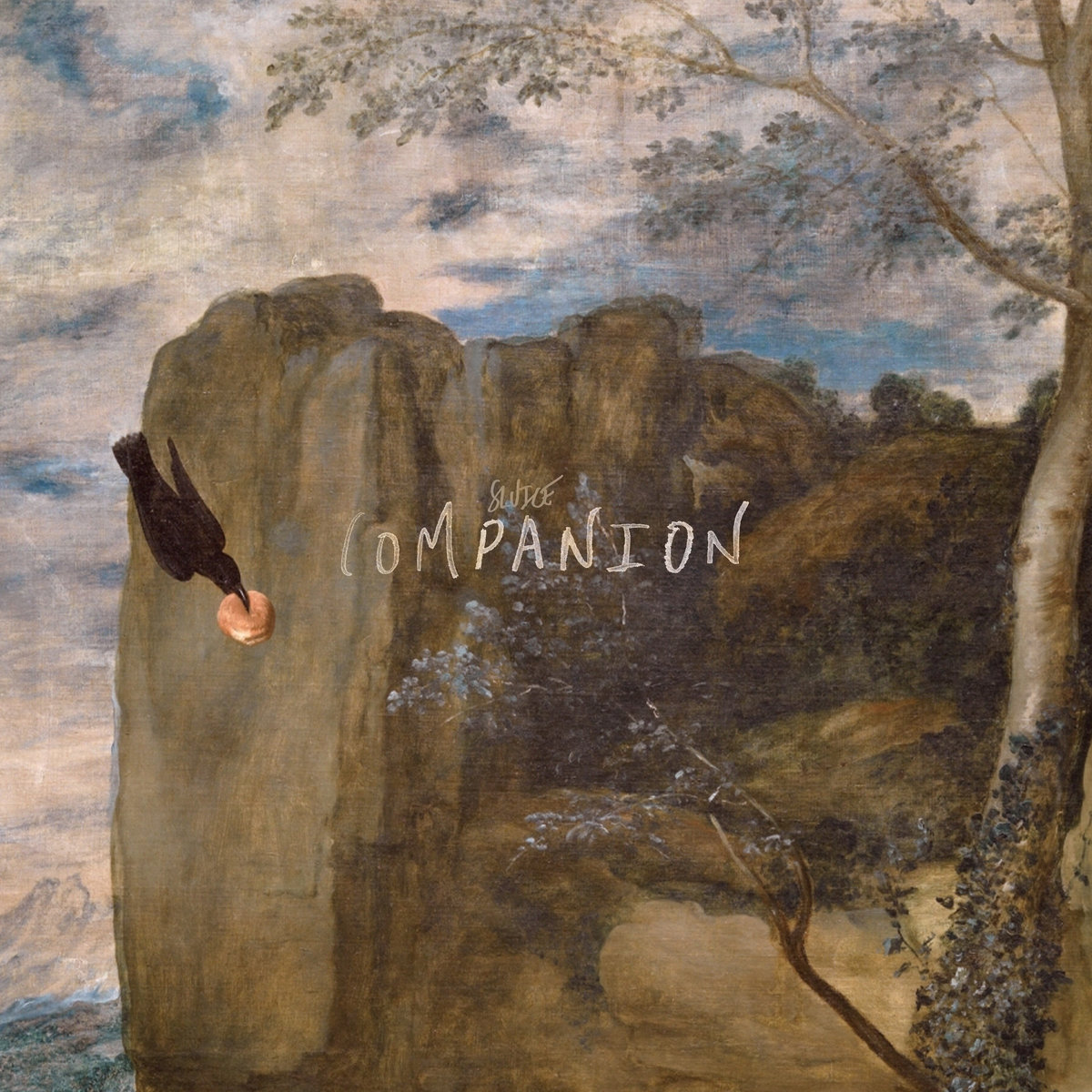
Like rifling through an old shoebox full of photos, Sluice’s third album, Companion, listens like a stroll through dusted-off stories from the past. Capturing everything – from the most mundane moments of life to its peak insanity, Justin Morris packs the good, the bad, and the ugly into one pretty, 45-minute-long package.
Kicking off the record with single “Beadie,” Morris takes characters McNulty and Beadie of The Wire, and Sarah and Joe Pera of Joe Pera Talks With You, and turns them into characters in his own life. To those not chronically online, these references may go unnoticed; nevertheless, introducing these companions, admittedly fictional, brings Sluice’s album title to life in a matter of minutes. Mixing the on-screen dynamic duos with references to (presumably) real childhood memories, “Beadie” is an anthem for healthy parasocial relationships and the art of growing up.
One thing Companion does best is use the hell out of figurative language: from personifications to metaphors and analogies to allegories, you just can’t overlook Justin Morris’ genius way with words. In songs like “Ratchet Strap” it seems fairly obvious; the song isn’t really about a car, right? And then there are songs like “Overhead,” where, sandwiched in an ode to man’s best friend, lies a somewhat graphic depiction of human culture and its animalistic tendencies. “Like the dog sprinting after a deer/Ripping his old legs out his hips/That’d be the way I’d wanna go I say/Dad nods, he says him too.” With the glorification of this feeling, of always wanting or needing to be one step ahead, comes the abrupt realization that this modern standard isn’t necessarily “right.” “And I think about being very wrong/About needing to be the animal chasing/When you can be the sleeping dog.”
What better place to apply this message than to the two nine-minute-long songs on Companion? Though you can fit a story into three or four minutes, sometimes giving it a little more time to allow for slow progressions to hum melodically in your ears is even better. Companion proves this wonderfully. “Gator,” track number four, is full of harmonies floating above raw and honest vocals that feel very much like “New Leicester”-era Sluice. It’s full of nods to home and friendship and the difference between dying to live and living to die. Here, you could see the “companion” as any one of the many named or unnamed living beings that Sluice sings of. Whether a family member or an alligator, the companion is not seen as bigger or smaller, but rather another cog in the machine. In contrast, “Unknowing,” as the title suggests, is about a singular “companion” that may or may not exist. Here, the companion is bigger than any other, and the song follows a long stream of consciousness about believing in a higher power. The song is not meant to present the listener with a question or an answer, but more so to create a moment for Morris to reflect on his own beliefs and decision to put trust in a companion he can never truly know.
These days it often feels hard to categorize music into a genre, but Companion makes it easy. In this album, which seems almost like a collection of fables, Sluice has mastered the art of folk and the beauty of the lore it can create. With wildcards like “WTF” and classic jaunty tunes like “Zillow,” every indie music lover will find a song – and indeed a companion – in Companion.
Every Wednesday, the ugly hug shares a playlist personally curated by an artist/band that we have been enjoying. This week we have a collection of songs put together by Justin Morris of the North Carolina-based project Sluice.
About the playlist, Justin shared;
“Here’s a compilation of songs that feel relevant to the writing and recording of our LP ‘Companion’ – Things played in the Fust van, the massive monitors at Betty’s studio, or my little kitchen stereo.”
Dan English’s ‘Sky Record’ is a gateway, an opening that spills outward. Toeing the line between analog and digital, flesh and fiber optics, the record unfolds on itself.
At Treefort Music Fest, The Ugly Hug had the chance to speak to Dan English about the influences behind the record, the strange experience of discovering new meaning, and work as a “distillation” of the self.
This interview has been edited for length and clarity
Lucie Day (The Ugly Hug): You’ve talked about growing up and using music, movies, and games as portals to other worlds. Do you think that Sky Record is a continuation of that, or is it more about bringing those imagined worlds into reality?
Dan English: I think I used making the music as an escape, as a salve. Doing this thing that I know how to do and have been doing for a long time as a therapy or as an escape— you know, a drug or whatever you want to call it. Some sort of piece of work that both making it and experiencing it could be useful to somebody who needs it now. It doesn’t come from some sort of genius imagination of “what if there was this kind of place”? It’s more of like a – not an expulsion, but like a spilling out.
LD: With that mythology that grows, is that more of an accidental immersion than intentional?
DE: Yeah, I would say so. Or just an explanation of the mythology of the self, you know? Even the mythology of your day-to-day, there’s an intensity and a heaviness to that that is monolithic, but it happens every day. So it’s kind of boring, but it does feel intense. And I guess it kind of has to do with that. It definitely was not me sitting down trying to be smart about it. The visuals and stuff all were just tapping with friends. I think we’re on the same page and like the same kind of stuff. Approach art in the same way. Don’t know why they do the things they do, but they really care about it.
LD: Like a compulsion.
DE: Yeah. They’re just like, this is the way that I understand the universe, and so this is what I must do.
LD: In a different interview, there was a comparison that you made to songwriting as divination. A following of intuition, which I think is very consistent with what we’re talking about. Have there been moments where in the process of constructing a song or a larger body of work, it’s surprised you or revealed something that you didn’t consciously know you were feeling or dealing with?
DE: I’ve had conversations about this album that have illuminated it more so to me than I even thought about it or understood. It’s weird, especially today doing interviews. It’s a lot of looking at something from so many different angles. This is the first time I’ve ever thought: ‘Oh, I’m an artist who has a body of work’. In a hundred years, if I was dead and somebody was like, ‘Dan English’s work is about this’. I never thought about that until today. There are all these people that are like, ‘This is what my work is about‘ and they’re right. That’s making me think about things. There’s this thing being communicated, that it’s not that I didn’t intend it, it’s just that I didn’t expect people to pick it up. I didn’t, in some cases, know it was there. It just is a distillation of me.
LD: Do you think that as time goes on, that’s going to mature and change or do you think it’s going to stay the same?
DE: That’s also come up today— not in a conversation, but now that I know what it’s about or what I’m about, what do I do with that? It’s a big question. I would rather just hang back and see what comes out and hope that it’s meaningful. But there’s also a responsibility to do something meaningful and useful and practical with your life that I do feel— Or just making music does, because I was saved by music when I was a kid. I needed music more than anything.
Making it doesn’t necessarily give me a pass or something, I still think there’s a lot more you could do for your world and your community. Hopefully, I can find a way to do that. I’ve been making this my work— my work has been my life— for however many years. Now that it’s catching a stride, and also catching a break, it doesn’t have to be so hard. You know what I mean? As hard as it is for a fat little 10-year-old who hates himself and all that shit.
LD: You have a lot of the same references come up, namely Blade Runner and Zelda. What do you think it is about those that resonates with the universe that you’ve constructed?
DE: I think it would be the reverse, that my universe reflects those. They’re just geniuses. Incredible pieces of work by people who do it differently, you know? I’ve just always been drawn to that and I’m not trying to say that that’s what I am, it’s just the stuff that i like.
I was trying to think about it the other night, I don’t even know why. I don’t know what I was watching, maybe it was a movie, or a concert and I was just like, ‘What is it that makes good stuff good?’ I think it’s anything that does the opposite of turning your brain off. It makes you like to ask questions or it keeps you engaged. It’s not predictable, it commands your attention. I don’t know whether it’s like Cronenberg or just something different. I love Ridley Scott.
I was talking earlier about thematic stuff too, I think attention to theme is also a way to keep people engaged. I certainly don’t do that with intention or anything, but when I watch a movie or even Zelda, it feels like mythology. The story might not be detailed or intense, but it has this universality and weight to it that hits hard. That’s just what moves me, and none of it in my music is by design. It’s just like gravitation, you know? I wish I could say it was from being smart and making decisions, but it’s not.
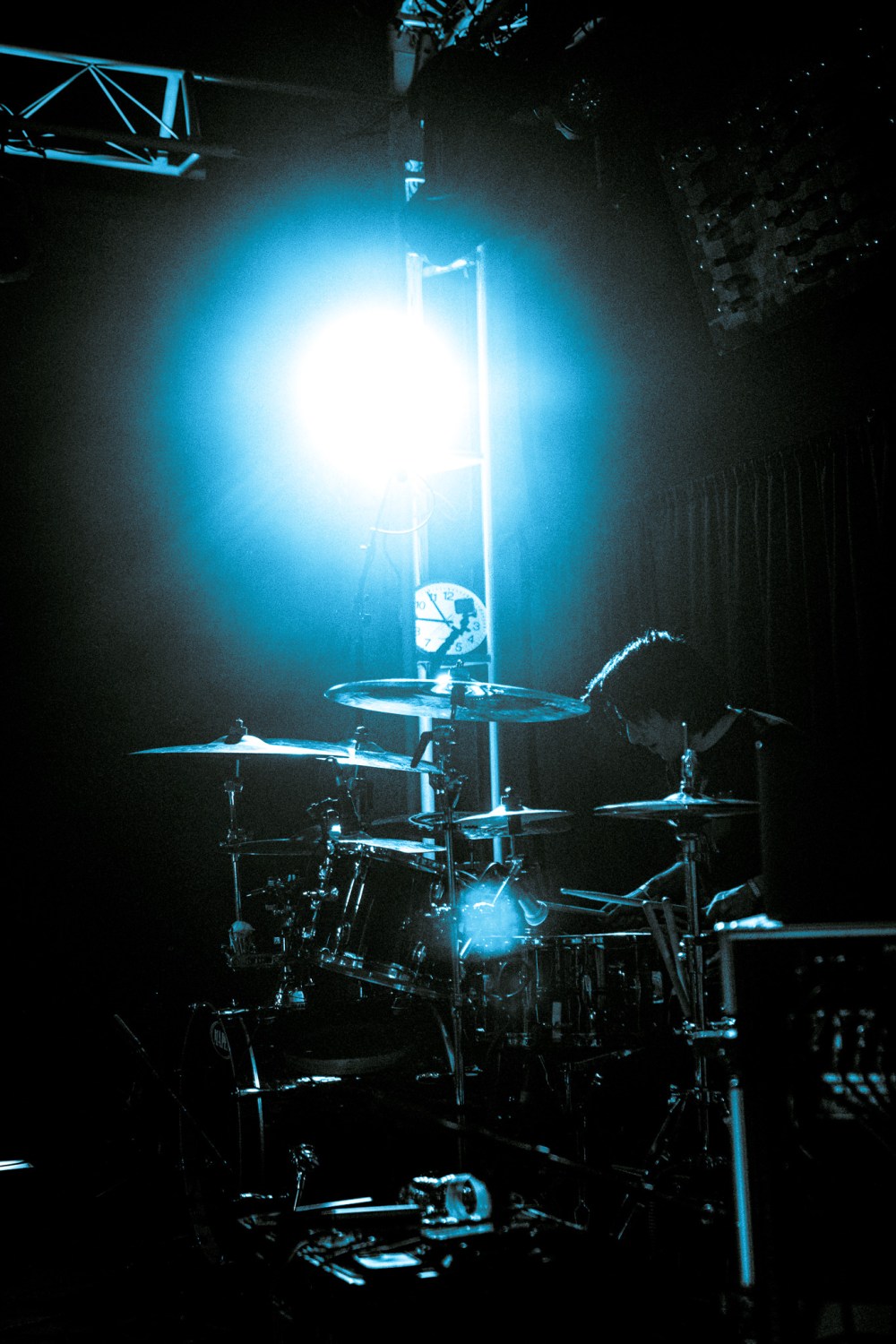
Dan English Live at Treefort Music Festival | Bosie, Idaho
LD: If Sky Record had to be a different medium, and it wasn’t the music…
DE: I mean, obviously it would be a movie. But I hope I never make a movie because I just want to keep them as a special thing. Although, you know, I’m worried I’m running out of movies to watch. It’s got to be a finite number. But yeah, it would be a film. I don’t know who would direct it, but I’ll bet it’d be good. I think it would have a good arc to it. George Lucas, Peter Jackson.
LD: When people listen to Sky Record years from now, what do you hope still resonates with them?
DE: I think there’s a thread that I didn’t really realize when I was making it that was timely with AI. This was like 2018 when I was conceptualizing it. I was into Blade Runner and Pinocchio, too. There’s a thread of it that is not feeling human, but longing to be human. This idea of “I’m not human, but I experience what a human does”. It’s just being out of touch with your emotions. And, in a way, a lot of it is the dysphoria of modern life— having a digital life and also a body. Being alive and how different and, in a way, disconnected those things are.
I hope it’s evidence of what was going on at this time, being a young adult or a person raised on the internet but also longing for the real thing. I really didn’t do it by design, which surprised me, but also is awesome to me. It is a lot of electronic stuff and a lot of acoustic stuff. It surprises me when I even realize that. I didn’t do it on purpose, this weird Frankenstein that I created.
LD: I think it’s very cool. It’s like a thing that’s alive that talks back to you. And you teach it, but it also learns from you.
DE: It’s cool. I’m happy people like it. But also… time to make another one.
Amid the constant motion of Treefort Music Fest, Coral Grief creates a sanctuary. Their new record ‘Air Between Us’ invites the listener in with open arms and layered melodies.
We caught up with the Seattle-based trio during the festival to step into the album’s haze and talk about trusting your instincts, embracing abstraction, and letting songs evolve on their own terms.
This interview has been edited for length and clarity.
Lucie Day (The Ugly Hug): First off, welcome to Boise, Idaho! Congrats on the record, too.Something that you’ve talked about is collecting ideas and not judging them too early on. How do you know when something is ready to be revisited versus whether it needs a little more time to marinate? Is it just a gut feeling?
Lena Farr-Morrissey (vocals, bass, synth): I think it’s a feeling.
Cam Hancock (drums): When you know, you know.
LFM: I feel like with some songs, they click pretty fast. That’s kind of, like, the ideal situation for a song, right?
LD: When it’s easy.
LFM: Yes, ugh, right? But then for some, it takes a little bit more getting there. And you’re right, I feel like sometimes I have a tendency to overwork something or I’m like: ‘I don’t know if that was right’. I feel like then just bringing it to y’all – having other opinions – to ask: “What do you guys think of this? Could we improve on that’? I think working more collaboratively has helped to figure out when something works.
LD: I feel like I do get that feeling. You look at something, and it’s a head and a chest feeling of: ‘Yes.’ Which is really cool! But I feel like it’s so easy to run something into the ground when sometimes it does just need time to breathe, and you just need space from it.
LFM: And then you revisit it.
LD: It’s a whole other perspective.
LFM: We have a ton of demos from years ago that when we were in the moment, we were like, ‘No’. And then you can go back and revisit them and be like, ‘Oh, wait, I actually really liked the verse of that.’ Let’s just take that part and then move forward with it.
LD: Within the record, there’s a lot of documentation of places without fully explaining them and a lot of context that’s not necessarily direct and is instead implied. Do you think that, with that, the lyrics become preservative? Or something that’s more abstract?
LFM: I think I definitely lean more abstract and I’ve been learning how to ride that line of, ‘how can I paint this picture and give people a little bit more of something to hold onto, but still not be so obvious about it’? I feel like I’m still trying to learn how to toe that line. I feel like my goal with the lyrics on the record was to – from these different angles, paint a picture. Not have it necessarily be like: ‘This is about Seattle, Washington and my favorite streets and the streets that I hate’. Kind of just evoking the feelings and the moods that I’ve been feeling about things and trying to give some context, but I’m fine with it being more abstract. Because then people can assign their own kind of interpretation to it. I feel like everyone’s kind of going through the same shit.
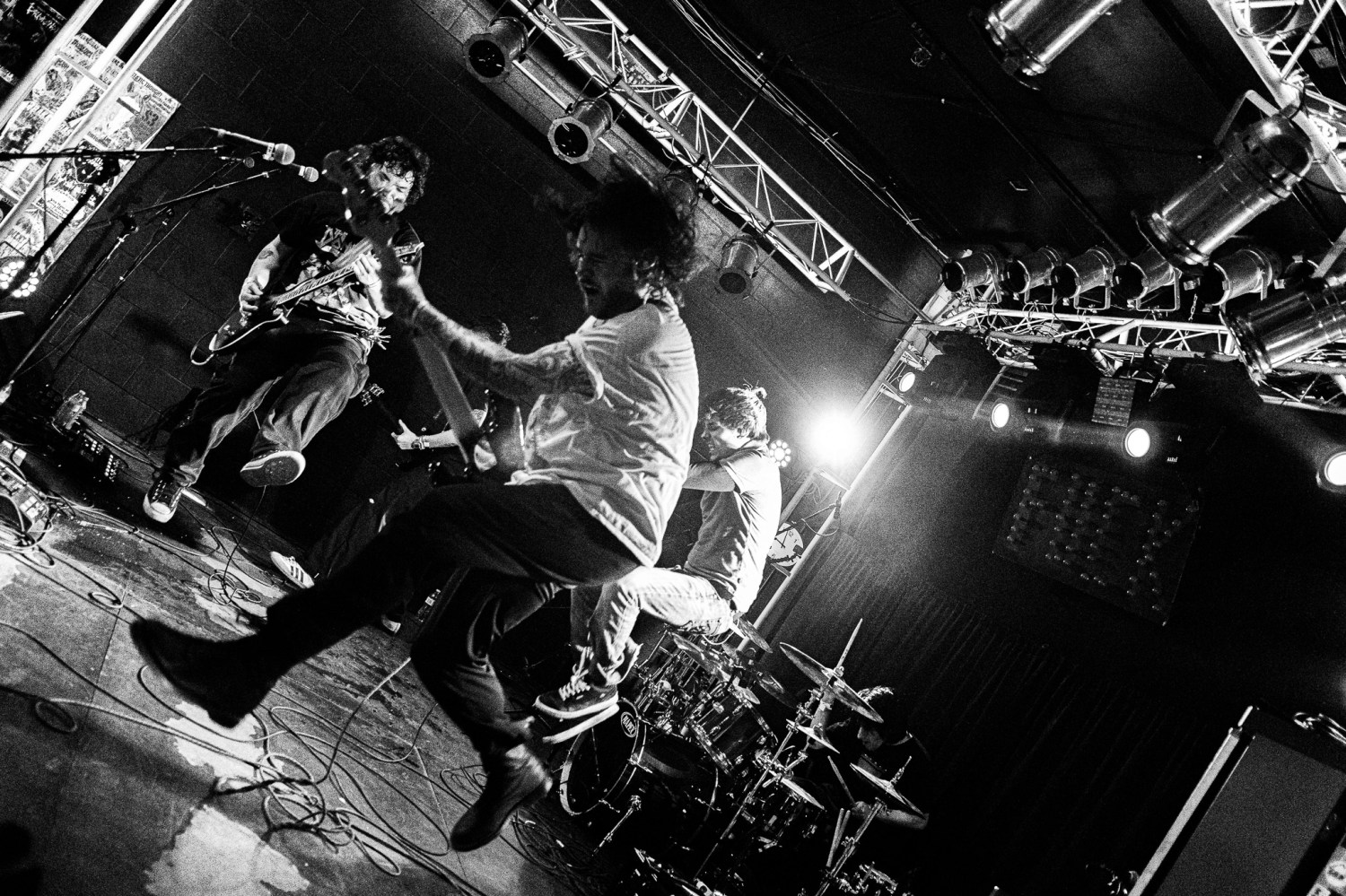
Coral Rief Live at Treefort Fest | Boise, Idaho
LD: Aside from the direct inspirations, do you see a visual world that the music exists within?
LFM: Totally. I think that’s unfolding more and more as we make more music. I feel like it’s very grounded in a whimsical nature.
LD: It’s like world-building.
LFM: A little bit of a – I don’t want to say post-apocalyptic, but, just, a better world? A little bit more fantasy? If I were to build a dream world that this music exists in, it’s definitely not our current reality.
CH: I think there’s a lot of nature imagery and ideas of exploring your surroundings in a way that feels like a fantasy, but it’s also very real.
LD: Very tactile.
CH: Yeah, because we’re so removed from that. It’s so easy to be removed from that. I think we’ve talked about how it’s a great record to go for a drive.
LD: Yeah! You guys said something about “in movement”.
CH: When’s the last time anyone just went for a drive and put a record on? It’s a great idea, and people do it.
LFM: We don’t have time for that.
CH: We don’t have time for that. But, you know, maybe you’re on the bus, maybe you’re on the train, or going for a bike ride or something.
LD: All you need is a window.
CH: I think if it takes you somewhere, that’s great wherever that place is for you. You talk about the abstract lyrics- people bring their own ideas to it. They bring their own imagery to it.
LFM: There’s this philosophy term that says that everything is alive called panpsychism. Everything has a consciousness, all things have a mind or a mind like quality. I want to channel that more.
LD: If the things that you were trying to be conveying weren’t through music, what do you think would be the best medium associated with it?
Sam Fason (guitar, synth): For me, at least, the medium I feel most akin to is painting. In a similar way to music, you can get very abstract and gestural with it. In music you can convey stuff with notes and structure, but you can also convey stuff with tone and timbre. In painting, you can convey stuff with form but also with color, and other things more hard to define.
LFM: I like how music moves through time. I feel like film captures that similar itch for me and I’m like, ‘Oh, I like putting this sequence together and creating a timeline’. That’s something I really enjoy about music, so film is a fun way to explore that visually even though I’m not really good at it. But I like it. It’s fun to do. I used to make videos with my sister, she was my muse. She was like four years old, and I was like, ‘Okay, you’re the horror, the scary girl, and we’re gonna have you haunt the town’.
SF: I mean, you did a couple of our music videos and they turned out great.
CH: I think that they’re kind of getting at what we’re talking about, where it’s not just us in a room playing. Even the ones that are that, there’s a lot of other imagery going on. There’s a lot of nature scenes. I really enjoy that part of the process this time around and getting to work with folks who see our vision and are able to take that to the next step. Bringing in their own ideas, it all should be collaborative.
LFM: That’s the world I want to build. A world with our friends and other people that are just down for the cause.
Coral Rief Live at Treefort Fest | Boise, Idaho
LD: Lately I’ve been thinking a lot about what you’re saying: ‘It’s fun, but I don’t know if I’m that good at it’. I don’t think it matters if you’re good at it. I think it matters if it’s fun. Sometimes it can just be fun, and that brings a feeling with it. People can tell when something is coming from a place of pure enjoyment.
LFM: And not judging yourself. Just being playful with it.
LD: If there’s a theme within the record of holding onto things that are shifting and that “sand in-between your fingers” feeling, what do you feel like you’re holding on to?
SF: It’s becoming increasingly hard, but holding onto the hope that things might get better. Things can and do move in all directions, so if it’s possible for things to get worse, things can also get better.
LFM: I have a lot of perfectionist qualities in my life that I project outward and I’m trying to let go of that type of standard in general. Kind of what we’ve been talking about – just being more loose with everything and holding on to less judgment. I feel like I’ll be able to then interact with the world better and with the hope that I’m able to embrace things more.
CH: I was thinking about the things that I can control and the time that I have that is actually mine. It feels like you’re being pulled in a lot of directions, and it’s easy to just kind of lose yourself in the news, the internet, distraction, whatever. But having that time, it’s so nice to just go to a place like Boise and get out of town. Take an eight-hour car ride, and I can’t really read anything while I’m in the car, so I just kind of sit there, and it’s easy to just be like, ‘I’m bored,’ but also, I have nothing I have to do right now.
LD: Yeah, it’s very freeing.
CH: I’m really leaning into those moments. A lot of change in scenery helps that in a big way.
LFM: Yeah, I feel like through the band, that’s how we kind of hold on.
LD: It’s like an anchor.
LFM: Yeah, it’s like an anchor. We’re hurtling through the world figuring out how to navigate it all, and if anyone else wants to hop on then hop on.
LD: I feel like everyone I see who is feeling stressed about the ways of the world has found an anchor, whether that’s in a creative process or in a community. Using your medium as a form of resistance is a real thing, and I think that people attach onto that when they need it.
LFM: That’s the thing, though. You’ve got to cut to the root of what’s happening.
SF: Being able to have gone on the road and toured a good amount in the last year, it’s really reaffirming. There are people holding it down everywhere. It’s easy to feel like you’re on an island and things are pretty bleak out there, but there’s people who are everywhere and going through the same thing. They have the same values, and they’re doing something about it.
LD: Is there anything that you guys have realized about yourselves as artists recently that you didn’t necessarily understand when making this record or within the process of?
LFM: I think it’s crazy that we recorded that two years ago now. I do feel like I’ve changed so much since then, and I would do a lot of things differently.
LD: When it’s brand new to a group of people but it feels so far away from where you are presently, that’s a really interesting disconnect.
LFM: We’re going to go back into the studio in a month or so, and we’ve been working on new stuff. I want to get more experimental with it and learn how to build on it. What I was saying earlier about perfectionism– to see if I can just let the songs unfold and have less of a strict idea of what they need to be like. Let them snowball into their own.
LD: Let them be alive.
LFM: Yeah, let them come alive a little bit more.
SF: I feel similar to that. Sometimes if I’ve been working on a song or a demo, after that I have a hard time turning that part of my brain off. I hyperfixate on that, and moving forward I want to be able to put in that work but then also let it sit and marinate more. I think that’s a really important part of the process that I sometimes struggle with. I want to tinker forever. Sometimes the best results come from just letting things settle and taking your mind off it, and then coming back to it.
CH: I think that something I didn’t realize is that the first album at the time didn’t necessarily feel like a statement, but once it was all compiled together and we started to talk about it, and we started to have to talk about it, it did. That’s part of the process too, forming those ideas around it and hearing what each other feels about the work is really important. I didn’t realize that that would come about and inform this next piece only in the way that we’re, like, just more consciously thinking about what this next thing is. I feel like there’s sometimes a pressure for the second thing to be somehow related to the first.
LD: An expectation.
CH: You’ve done your thing and you’re out in the world now. There’s all these people who are now gathered around this thing that you’ve made, whether they’re listening or finding your music on Instagram or the radio or something. Do you have to be beholden to your investors, or do you just do whatever the heck you want— or somehow find a balance? I think we’re all really down to experiment a little more, and I’m really excited about that. So far, that process has yielded things that we enjoy. And so, if that’s the trajectory we continue on, I think we’ll be in a good spot.
LD: I think that that is a beautiful closer and a very optimistic end.
Listen to Air Between Us out now via Anxiety Blanket Records.
Whenever I regret any of the tattoos I got at nineteen, I pacify the remorse by recalling the even more regrettable tattoos I did not get at nineteen. I still have a Pinterest board I can consult when I need to ridicule my half-baked prefrontal cortex; though no fine-line butterfly or cliche heart could come close to the surplus of relief I feel about having “wherever you go, there you are” in cheesy script on my arm. I got close; there was a time I praised that quote with a religious zeal. Today, I hate it. Sure, we cannot run from our own minds simply by changing zip codes, but I also think it is ridiculous to absolve our location of any impact on our own happiness. This can be in a literal sense, in terms of a home, community, environment, etc, but also through a broader, zeitgeist-considering lens. The state of the world, the technology that has permeated our lives, the information and slop at our fingertips. It feels out of touch to blame the disposition of our nervous-systems entirely on ourselves, as if a few deep breaths can reverse years clocked in a world constantly plummeting deeper down a catastrophic and backwards hole. In their latest work, Vermont-based Robber Robber captures just how detrimental it can be to co-exist with uncertainty. Written during a nomadic period for the band, the record blends Robber Robber’s housing impermanence with wider societal tensions. Out tomorrow, Two Wheels Move The Soul is an exhilarating sonic attestation to the enfeebling impacts of a society drenched in capitalism, as Robber Robber morphs anxiety into a sharp (and thoroughly enjoyable) listening experience.
The earliest seeds of Robber Robber were planted while Cates (vocals/guitar) and Zach James (percussion) were teenagers; the two began writing songs together towards the end of their time in high school. They continued collaborating creatively as UVM students, enlisting Will Krulak (guitar) and Carney Hemler (bass) as they began cultivating Robber Robber’s now robust identity – a transition that ultimately took several years. “It feels like it really became Robber Robber when we started putting together our last record, Wild Guess,” Cates tells me. “At that point, we had been playing together for a couple of years.”
They heavily credit their Vermont roots in the development of Robber Robber, though not necessarily in terms of their sound. In fact, the band is rather cautious about their sonic inspirations, avoiding any sort of “indie” or “punk” projects to prevent their work from being derivative. So while their sound strays from their peers (both local and within the indie-music scene at large), the community they were immersed in during their college years proved to be pivotal in attaining the dedication they have for Robber Robber today.
“The scene is great, I feel like we have been really lucky to be playing music and in school at the time that we were. It was around then that some of our other friends were starting bands and sort of pushed each other to take it to the next level. We saw one of our friends booking a DIY tour, and we were like oh yeah we can use those resources and collaborate. So now some of those friends are taking off a little bit more, like Greg [Freeman] and Lily [Seabird], and it feels like we have enabled each other more than in some college towns.”
The members of Robber Robber are now out of college, and their latest record, Two Wheels Move The Soul, is their first body of work to come out amidst this transition. Severing ties with the identity of “student” for the first time since childhood tends to reap anxiety for many, though their own circumstances quickly sent the potential stress of this milestone to the back-burner. Their apartment was demolished following a fire, an event that capsized an already skittish time in their lives. Following a series of failed sublet attempts, the band accepted that they may need to find other means of grounding themselves. In lieu of a steady housing situation, creating Two Wheels Move The Soul became one of the sturdiest constants in their life.
“At one point someone was like, ‘oh, that’s like a crazy year that you guys had, like did you think about pushing back the time line of the record?’ It actually didn’t cross our minds that maybe we should give ourselves more space with this. It was so nice to have that as an anchor and a main focus over the last year. If anything, it accelerated it.” Cates explains. They had recorded at the studio before, giving it a sense of familiarity and ownership for the band to cling to amidst a time where they chronically felt like guests in others’ homes.
The result is a refreshingly sporadic body of work. It teeters between burnout and overstimulation; often exploring how these two extremes have more in common than they contradict. Two Wheels Move The Soul wastes no time; the cavernous record is charged and busy from the moment it starts. You could consider it punk, though that label almost feels too dated for Robber Robber. Two Wheels is pumped with the modern and animated blood of a hyper-pop, and it wrangles the gritty feel of impudent noise-rock. Ultimately, it feels genre-immune; a scintillating and profoundly contemporary body of work all its own.
Lyrically, Two Wheels Move The Soul should read as almost manic. Cates assertively delivers lines like “Grind me down, blood computer. Mix my dust into a paste”, and “Shouldn’t bother, sucked back in and. Hours later, hours later. Hours later”. Though they can sometimes be nonsensical, they never register as gibberish; Two Wheels Move The Soul tells a commanding story, albeit one that can be interpreted in different ways.
“Writing lyrics can take a really long time. It depends on the song. Some come out in a day or two and then some of them take months to pinpoint. But usually what I do is I write pages of ideas, just sort of free form off a concept. I think that feels like carving it out of space. It starts very vague, very instinctual. It suits the mood of the song. I parse through them, and I try to do it on paper so I can crinkle them up in a ball and throw them and cross off ones that don’t work. Whatever I am left with, I try to puzzle and collage together.” Cates tells me. “I think something about that process helps me come back to the song later, after the lyrics have settled, and better understand what I meant. It is definitely a tool for figuring out the meaning of something, but it also means that there are often a lot of vague ideas connected.”
When I asked the band what emotions they were hoping to elicit with Two Wheels Move The Soul, their first response was “Joy”. I admit I was probably expecting something more callous, but the band went on to explain that it is important that joy go hand in hand with the catharsis of live music. “The world is also kind of exploding right now. I feel like being at a loud concert listening to music…” Nina Cates considers. “Joy in the face of it all is kind of a punk rock expression.”
Two Wheels Move The Soul will be out tomorrow via Fire Talk. You can preorder it below.
Every Wednesday, the ugly hug shares a playlist personally curated by an artist/band that we have been enjoying. This week we celebrate the 100th volume in this series with a collection of playlists made by our contributors.
h. pruz curated our first ever playlist back in April of 2024. Since then, we’ve featured countless artists ranging from Allegra Krieger, Owen Ashworth, Ivy, Squirrel Flower, Jason Evans Groth (Magnolia Electric Co.), Little Kid, Villagerrr, 2nd Grade, Dead Gowns, Winston Hightower, Shep Treasure, Tombstone Poetry, My Wonderful Boyfriend, Fust, Kan Kan, Tex Patrello, Cootie Catcher and onward.
Over the past year, we have been extremely lucky to grow in size with the help of the many thoughtful and talented contributors from all over, who have offered their time and energy to share some great music. It’s been a great time getting to know these individuals, to learn from and be inspired by their work, experience and insight with everything they do. Below is a collection of 20 playlists made by contributors of the ugly hug (listed in alphabetical order), exploring their personal listening habits and interests.
Check out each contributor’s thoughts behind their playlist, what they’ve been working on at the hug, and the other projects they are a part of.
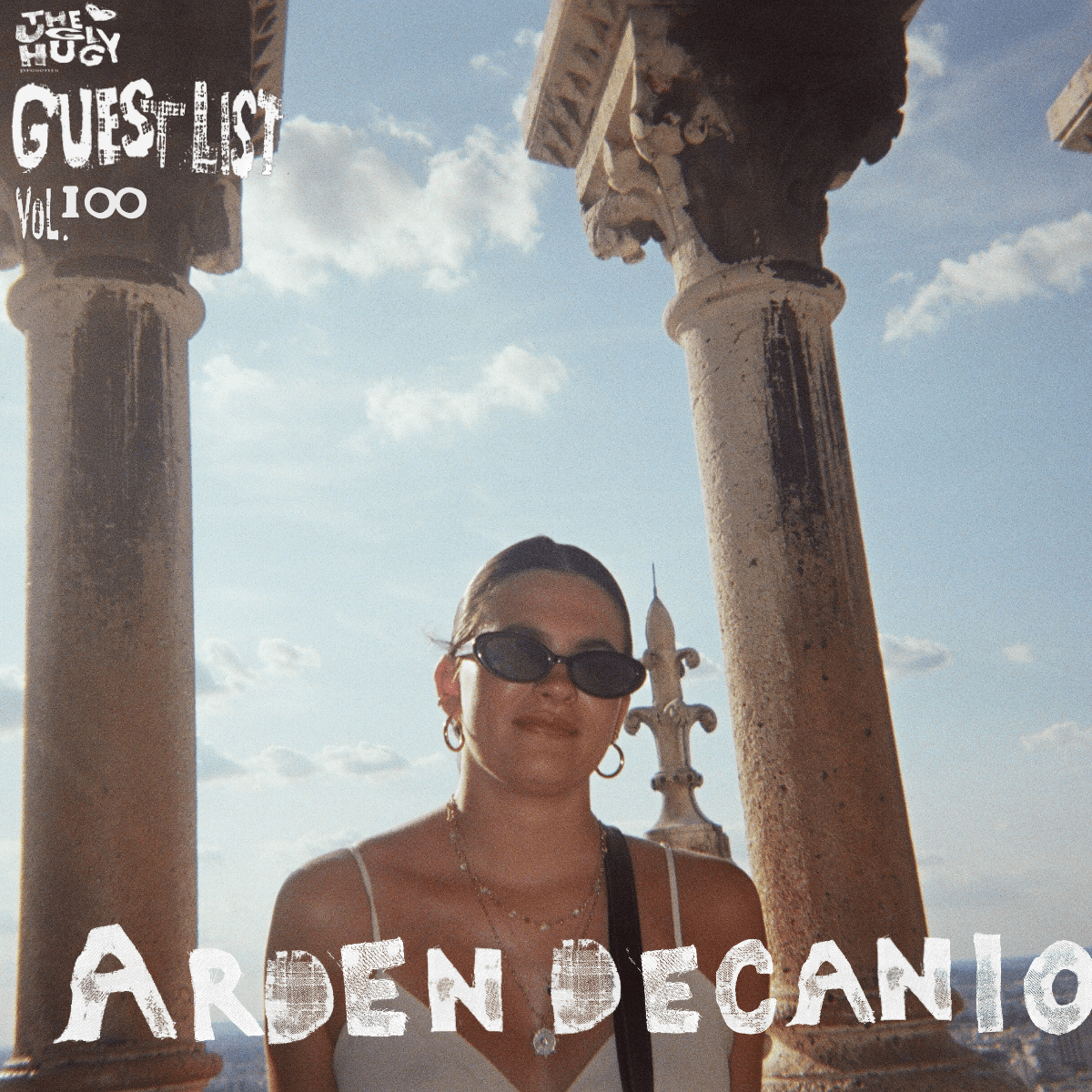
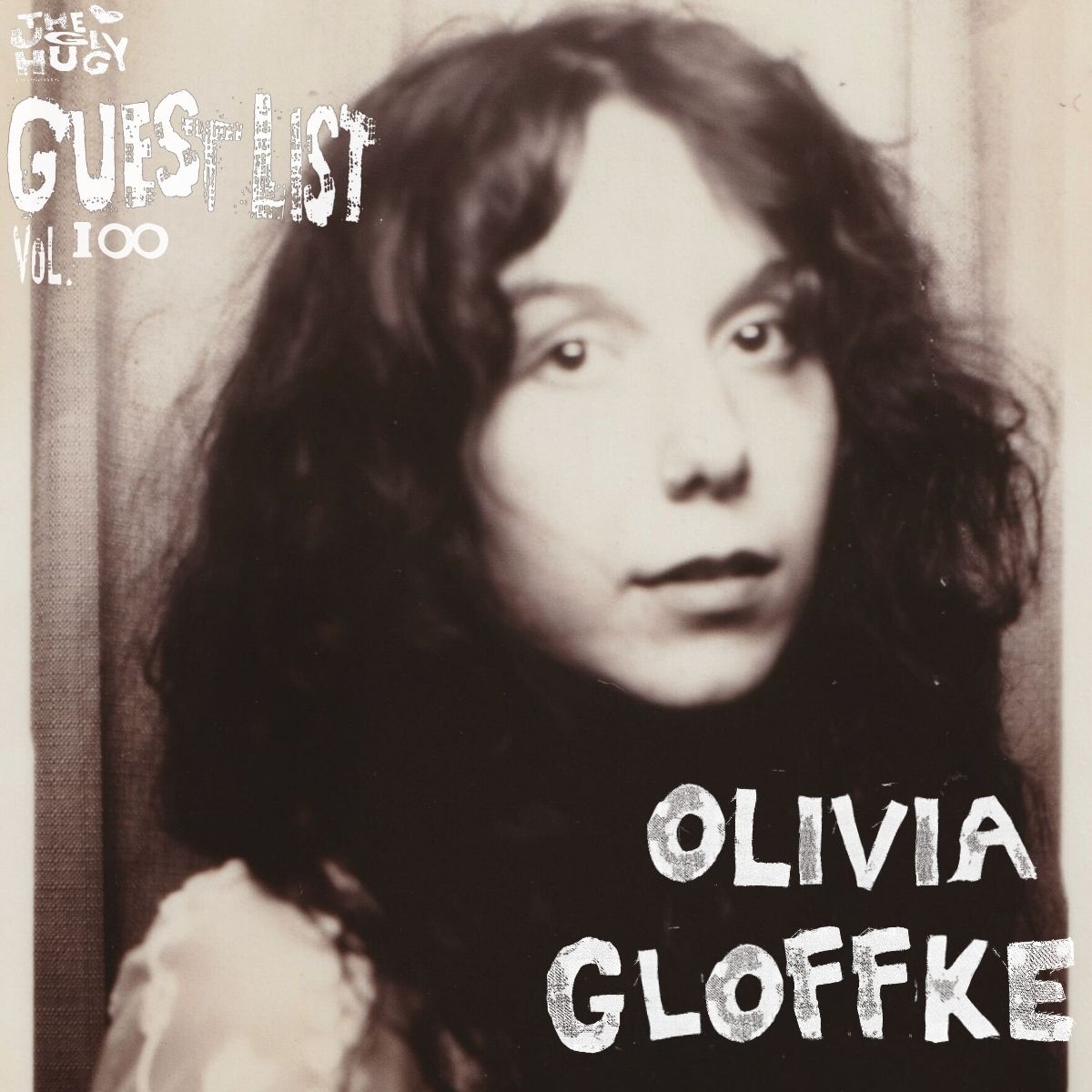
“Something people might not know about me is that I’ve been a runner for most of my life. The way I love it has changed – and with it, the music. Phases, eras, small obsessions that stuck a little longer than they should have. This is what’s lasted. This playlist is tested. Every song earns its place. It knows when to build, when to lock you into rhythm, when to hit that loud, necessary push – the kind that makes you feel a little insane in a good way. There are the songs that keep me moving and the ones that feel bigger than me; including the pop divas that raised me, the ones I try to channel mid-run (they wouldn’t quit, so neither do I). It’s not a soundtrack. It’s not even my coolest taste. It’s just a record of what I commit to, fully, a little obsessively, with my whole heart, even when it’s a little embarrassing.”
Along with her writing at the ugly hug, reviewing releases from artists like Motocrossed, Marble Teeth and Adeline Hotel, Arden curates her work on her website Arden’s Digest, where you can read everything from poetry and nonfiction to reviews, journals, and recipes.
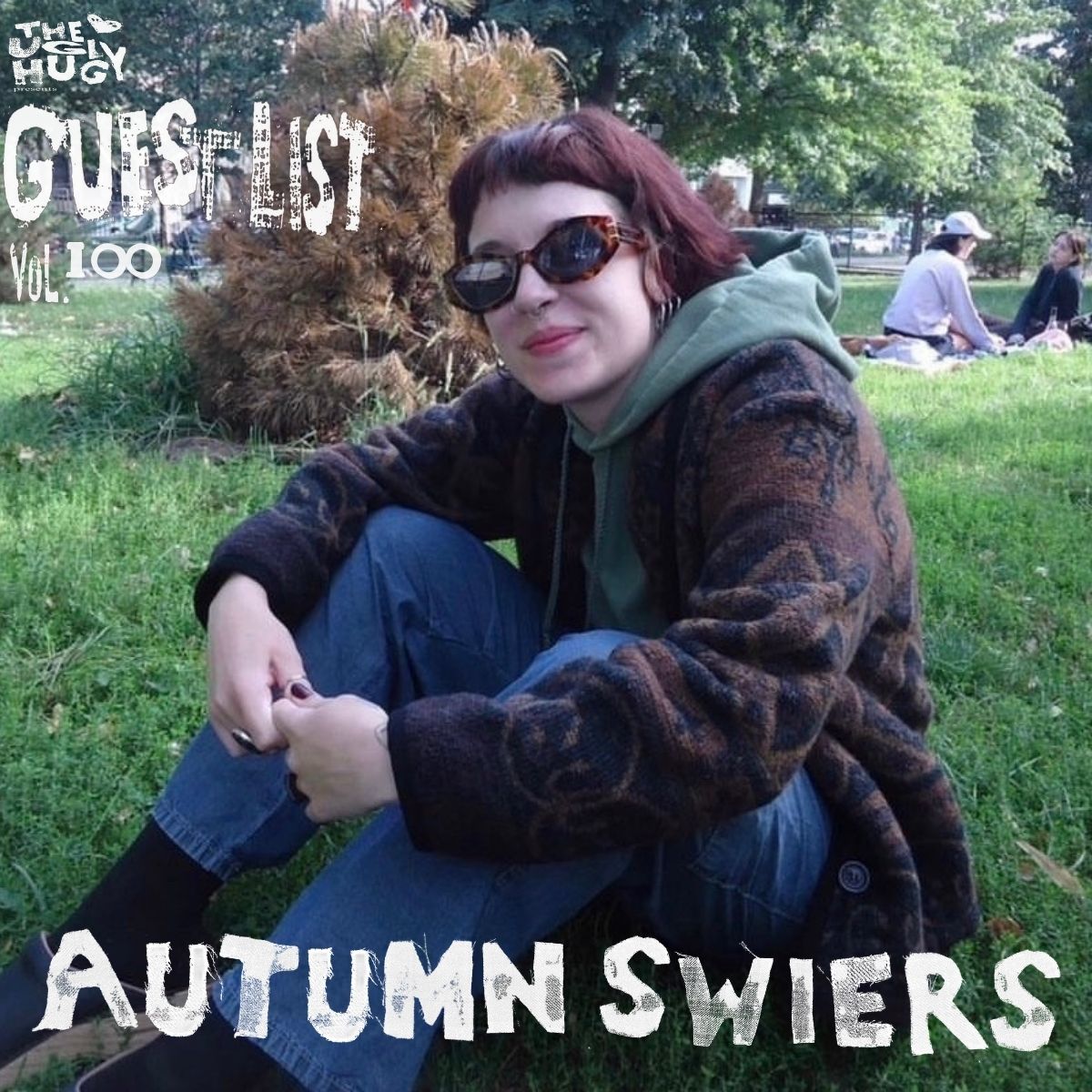
“Thee Definitive Soundtrack. Headstone fodder. Grist for the mill. If they dig me up they’ll find the following 15 trax instead of teeth for my dental record. Or, if there’s 32 in a jawbone, then maybe this playlist and a loose handful of teeth. It doesn’t have to come to all that, though. (SISTER! Why won’t you give me your HAND!) We can just spin this together now and enjoy it in the sun. We are both Aquarius and I love you (hee haw).”
You can read Autumn’s work in many of our newsletters, our personal favorite being the intro to the first volume in our show flyer letter series. You can also find Autumn’s literary work in the New York-based Tasting Table food and wine magazine, various composed pieces for a lineup of acclaimed poetry journals like The Mill, as well as three books of her own poetry and prose. The most recent being “Tap Dancing through the Chicken House”, with her fourth on the way soon.
Averi is a Chicago-based photographer and has been the leader of some of our most engaging and expansive photo collectives, including their work on the Memory Card x Kitship Tour Diary and the Trash Tape Fest recap. Averi is also the creative mind behind Jeststink, a collective zine that catalogs their world through photos, stories and found keepsakes. Averi just shared volume two of Jeststink, which you can grab a copy of wherever you can find them around town.
“This playlist stems from what I would want to put on during a road trip with someone. Calling it a game might be a stretch, but the joy of it is the same: you pass the phone back and forth, showing each other new songs, and hoping they love it too.”
Avery fronts the Chicago-based band Wishbone, who are playing a show on April 2nd at the Hideout. Keep an ear out for new music on the way soon from Avery and the crew! Along with playing music, Avery has worked an impressive career in show booking, curating countless epic bills the past several years.
“This is a collection of songs I’ve only been able to find on YouTube. There are many collections like it but this one is mine. At the end, I’ve included the first of Montreal show its entirety, as well as Heath’s part in Sight Unseen, for your viewing pleasure.”
Cade is a skilled Chicago-based videographer, working with, but not limited to, short films, music videos, and helping us get our live sessions off the ground. Watch Cade’s work in our first ugly session with Sleeper’s Bell. You can check out Cade’s website, dublindoesstuff.net, and feel free to reach out to him to make any kind of music movie. He also writes and records music under the project Mingus W.
“I tend to move through song curation with a hyper-specific emotion or scenario in mind that I’m trying to better understand. These songs communicate the gentle energy that goes into respecting fragility in people & objects.”
Dylan also writes and performs in the Pittsburg-based project, Gina Gory. Read his latest piece reflecting on a memorable performance put on by Total Wife.
“My now-roommate and I became fast friends freshman year of college; after quietly revealing our backgrounds in choir/musical theater to each other and lamenting the fact that we never sang with anyone anymore, we proceeded to spend countless nights sitting on her dorm room floor huddled around her laptop opened to ultimate-guitar.com, sipping 2 for $10 bottles of wine from 7-Eleven, stumbling through harmonies to varying degrees of drunken success. This tradition of what we so generously call “jamming” together has considerably leveled up over the past five years: we now drink $5 Trader Joe’s wine instead of 7-Eleven wine; we have our own place with two couches (though we often still sit on the floor while we jam); we have more friends joining us—turns out most of them also missed singing—and our repertoire has expanded exponentially (though if this playlist were 100% accurate, it would honestly be 90% Big Thief songs). There’s sublimity in someone breaking the silence after a song ends and saying the quiet part out loud (“we fucking nailed that”) or, inversely, cracking up immediately (“so that was fucking terrible”). No matter how many times we sing them, no song ever sounds the exact same twice, which means every song brims with potential—we’re still figuring it out as we go and trying to pull our own weight, with no real “end goal” other than to maybe sound beautiful. This is a list of songs that are, as the title suggests, our bread and butter, songs we know by heart, songs we reach for when we need to start or end on a high note. You probably/hopefully have your own version of this list and you probably/hopefully know at least one of our songs, so you could potentially join in…”
Ella is a Chicago-based writer who has recently shared some awesome in-depth and in-person interviews with Chicago’s MaryMary! and Poolish. Ella also curates her work on her substack, Rubber Cement, where she collects musical musings, thoughtful essays, countless stories and all the small things she doesn’t want to forget.
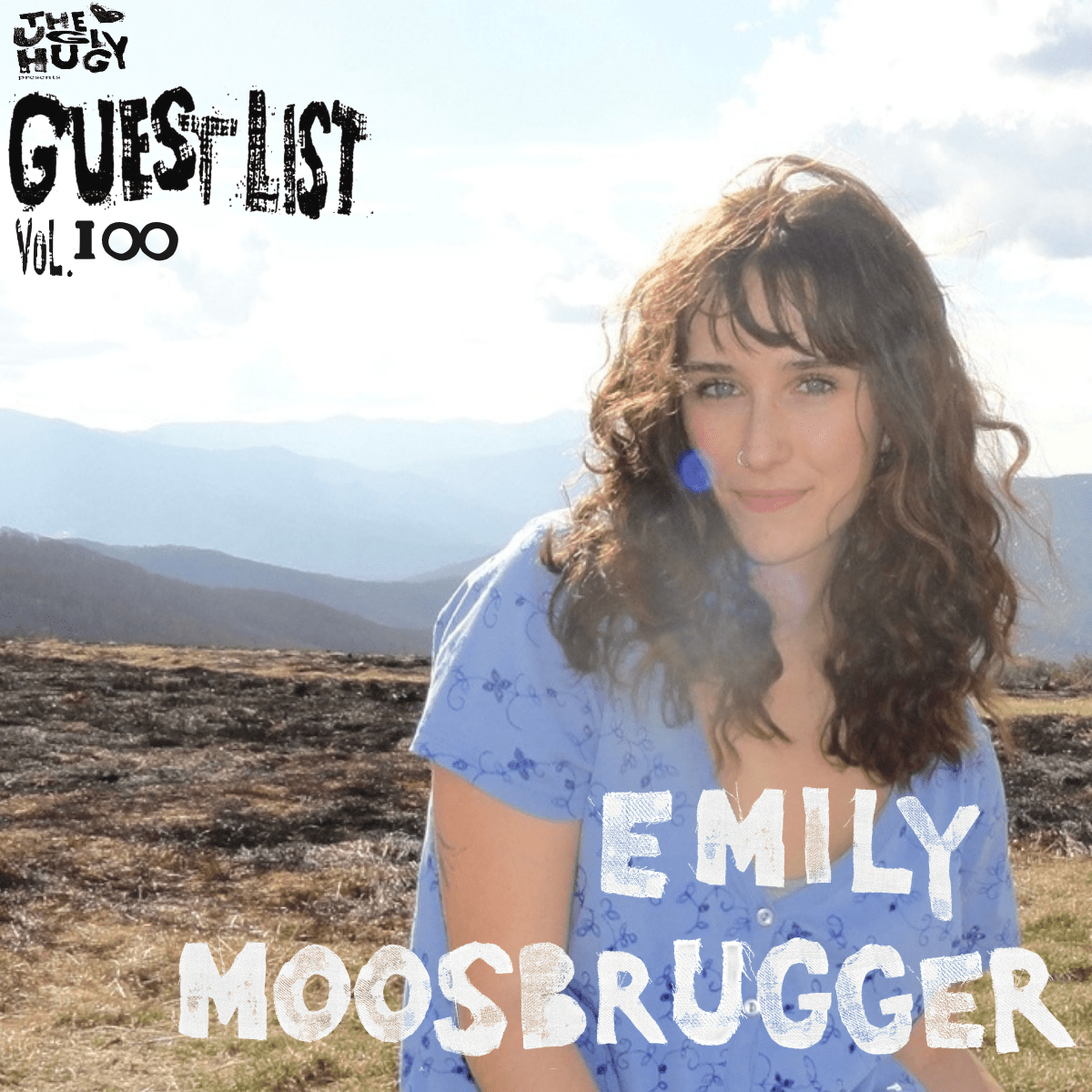
“This is music that has been important to me in the past year or so. A lot of these songs have ties to special memories or people I love, and some are just things I’ve been excited about or inspired by in recent months.”
Emily is an Asheville-based writer and creative, who consistently shares well written and earnest interviews with artists like Shep Treasure, runo plum, 0 Stars and h. pruz.
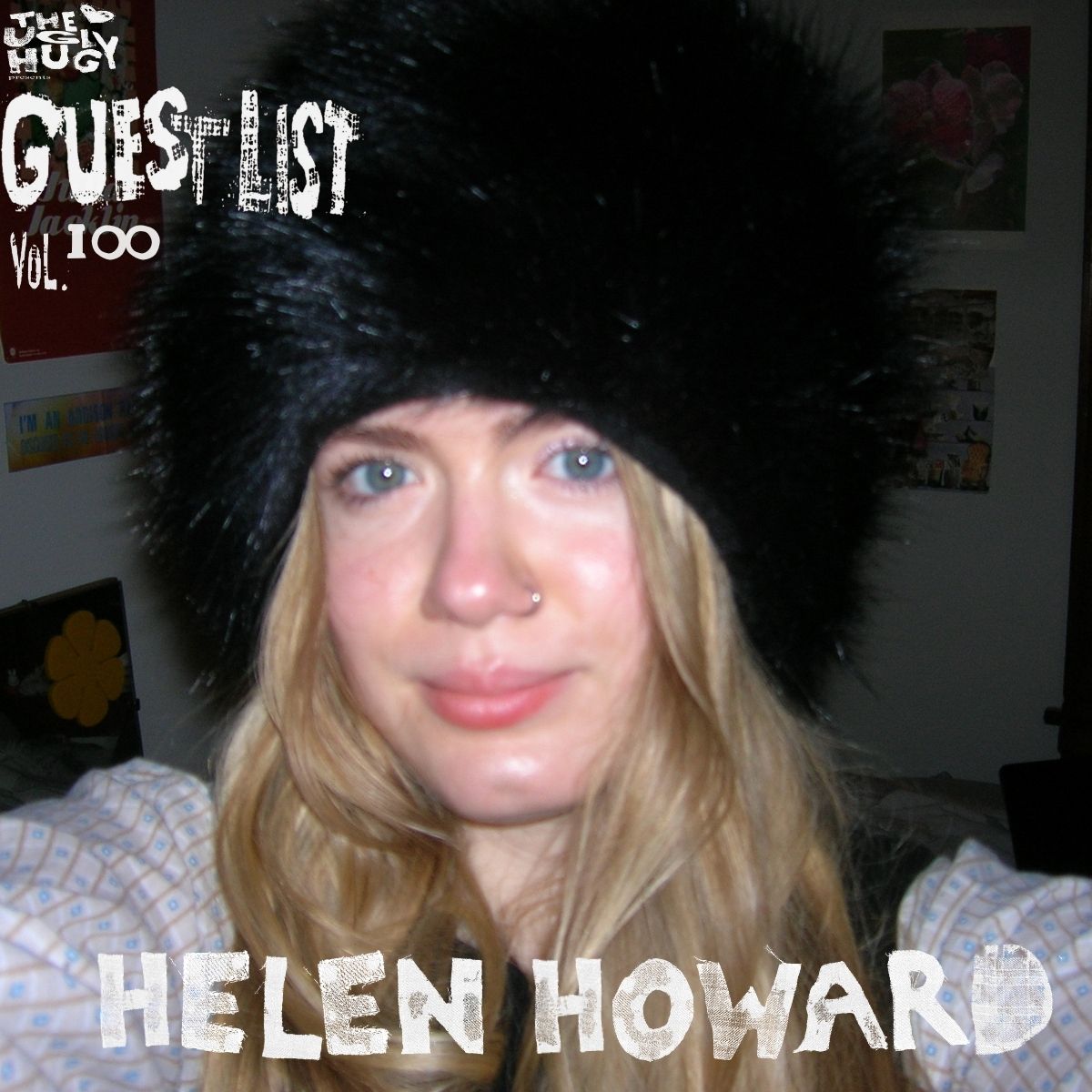
“My playlist is pretty much just an amalgamation of music I’ve been listening to over the last couple of months! It’s mostly new releases, some local Chicago friends and favorites, but also just some recent obsessions mixed in there as well. I hope you find something you love in there! <3”
Helen is a Chicago-based writer who has worked on covering releases from artists like Samuel Aaron and Glass Beagle, as well as a feature on Colin Miller. Helen currently works college radio promotion with Terrorbird as well as helps run the DIY artist management group Sister Sign management.
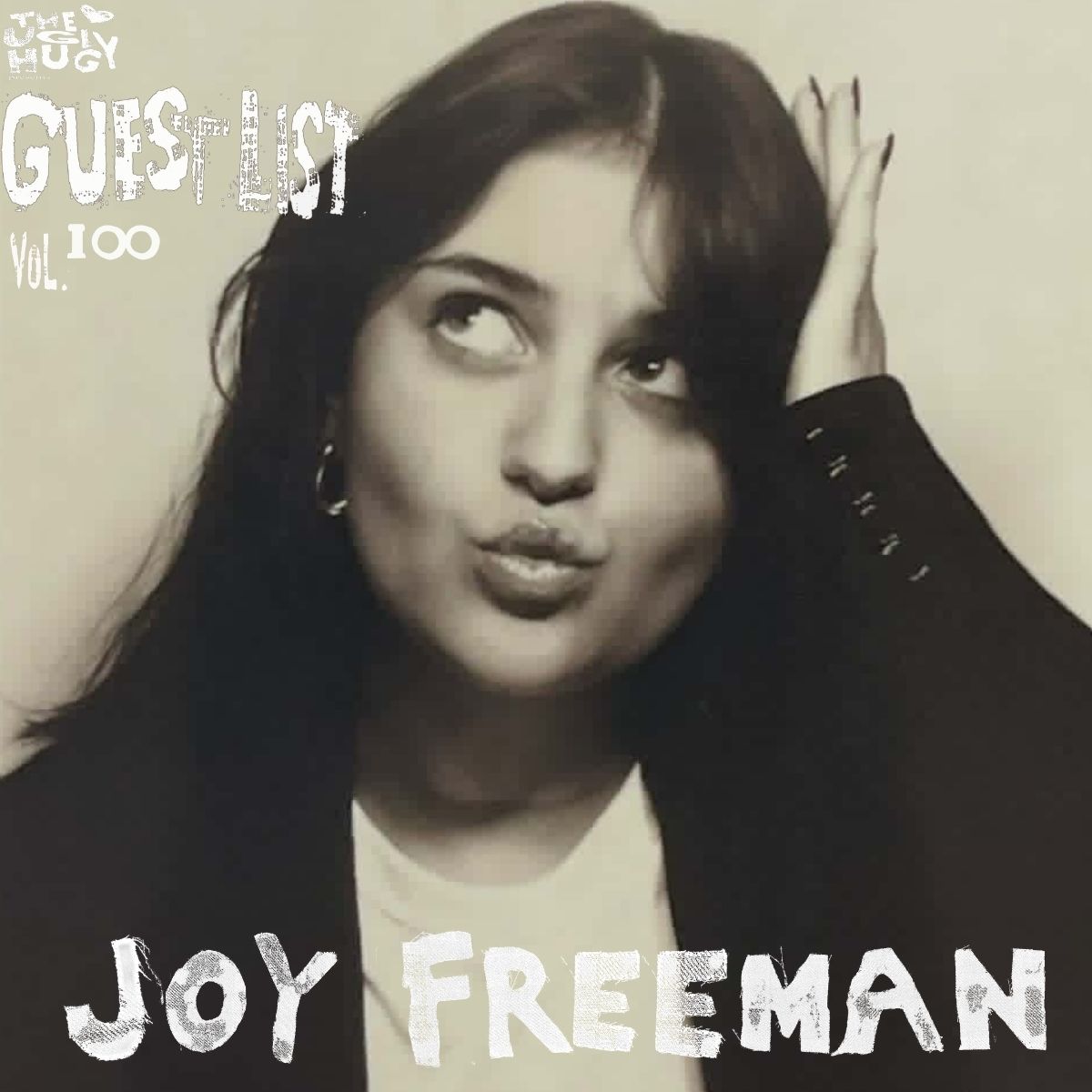
“A collage of me recently. Some tracks are just in my rotation, some have carried me throughout the year. I turn twenty-six in a few days, and I like to celebrate birthdays as my personal NYE, so I’ve been doing a lot of EOY analysis. Self-exoneration and reclamation have been themes, and I think these tracks reflect that. Also tried to include some up-and-coming Boston/MA acts that I have my eye on!”
Joy is a Boston-based writer whose latest interviews have covered artists such as Mold Gold, Prewn and Soup Dreams. Joy also runs The Yellow Light Mag, a physical digest part-literary mag, part-collage, part-sharing-of-guts. They accept photos/writings/physical art always, and have contributors from all over the world. Keep an eye out for the next issue “From the Tarmac” dropping soon. Joy also runs a blog on their website and have been featuring local New England musicians there for a while now.
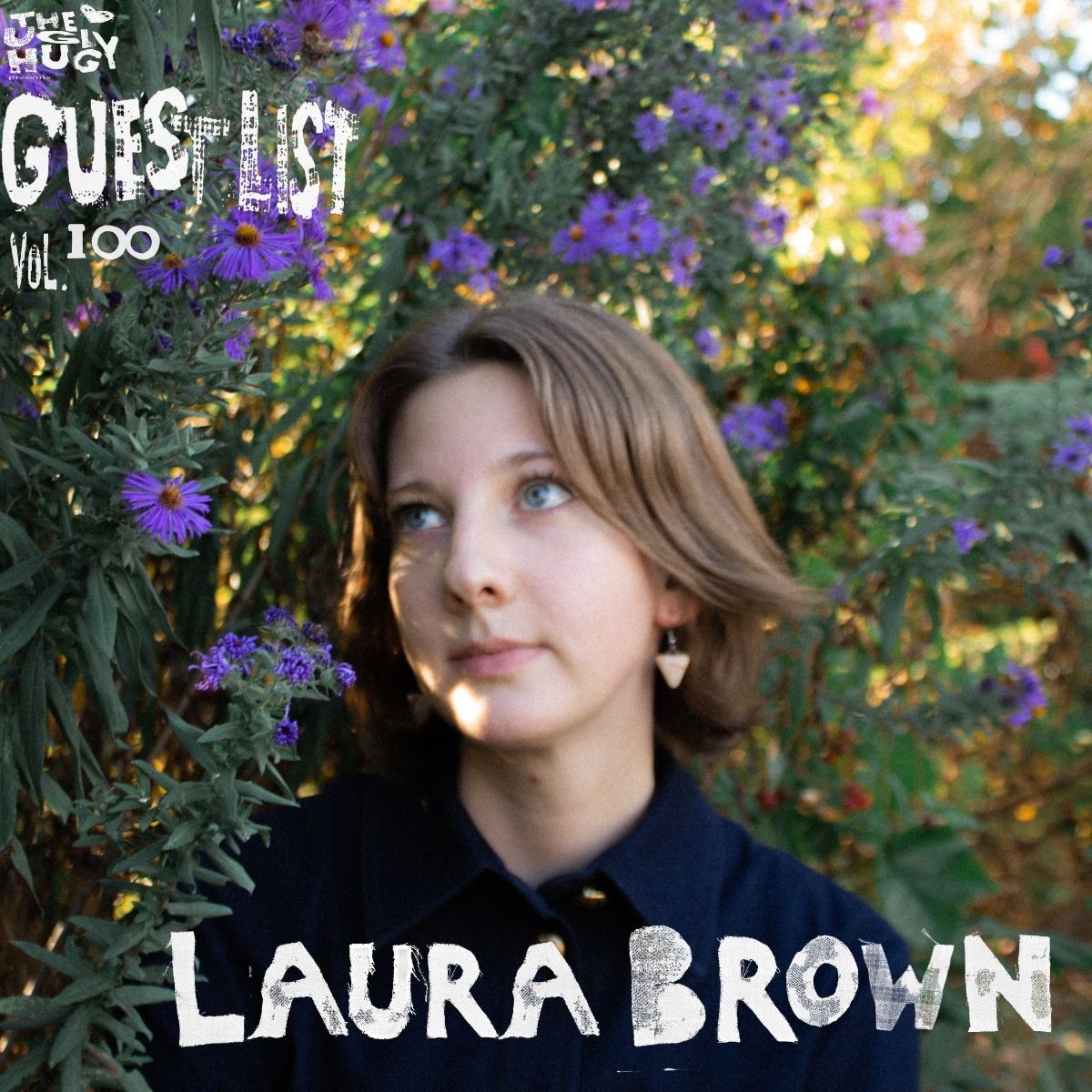
“My playlist is dedicated to the people who make up my hometown, Ithaca, New York. Every song here is a reflection. Either made by someone from this place, or chosen by someone who moves within it; musicians and supporters of the local scene who offered a song they see themselves in. Here and there. This was my way of mapping a community through sound and recognition. My hope is you will spend time with these songs and start to see the shape of something special form in front of you. Or maybe you’ll want to reach towards it. Support your local music communities. Make space for questions when they arrive. Ask what’s meaningful, what lingers, what feels like a mirror.
Thank you to: Sarah Noell, Steven Donahue, JT Tompkins, John Bueno, Hannah Toombs, Gianni Renna, Somer, Amber Martin, Cuchulain, Marcus Converse, Zach Totta, and Wallace Petruziello for sharing pieces of themselves with me. You can find me (Laura) in Ithaca, on The Creative Independent, or you can reach out and tell me about your corner of the world at lebrwn16@gmail.com.”
Laura is an Ithaca-based writer, who’s stunning work you can read on her piece covering one the latest EPs from hemlock. You can read more of Laura’s thoughtful and in-depth writing on her substack.
“These are all songs that I’ve been listening to in the first beginnings of spring, and that sort of excitement one gets as everything starts to come alive again.”
Lucie is a talented photographer out of Salt Lake City, who’s keen eye brings a refreshing and intimate feeling to all of her photos. Check out her editorial piece she did with Winter on her SLC tour stop last year. You can view more of Lucie’s work on her website.
“This is a collection of some of my favorite “therapeutic walk” tracks. Every single one has offered me a cathartic and meditative experience at one point. Some are new, some have been with me for years. They also double as excellent “late night solo bedroom dance party” tracks. Xoxo.”
Manon co-runs the ugly hug, joining as graphics and photo editor two years ago. She also runs a baking account called idontpreheattheoven, that often finds the sweet crossroads of baked goods and new releases.
“I don’t know if there’s much of a sonic thread winding through this playlist, but I chose these songs because they’ve all surprised me. Whether that’s in their melodies or instrumentation or how I was first introduced to them, I’ve experienced a lot of joy in their discovery, and I hope you feel the same!”
Natalie is a Chicago-based writer and musician, who performs under her project Prairie Scout as well as plays in Chicago’s dreampop band Humdrum. Natalie also works radio promotions with Secretly and artist management with fatback management.
“This playlist is a perfect mix of my all-time favorites and newer finds. I tend to artist hop as opposed to make playlists, so this is my first attempt at creating a short, cohesive mix of tunes from a variety of subgenres. If there is a tasteful amount of whining, the lyrics hint at a superiority complex, it makes me want to cry just thinking about it, or I start dancing after hearing the first note, it’s my kind of song. I hope it’s yours too. Enjoy!”
Natalie is a Chicago-based writer who spent a lot of time in the belly of college radio at WLUW 88.7 FM. You can read Natalie’s latest review of Charlie Johnston’s new album The Firetruck Is Running Late.
“This is a collection of songs for when I feel myself dissolving – Driving home late at night as the rain hits the windshield, crawling into the sheets of a bed where someone awaits you in their sleep, sinking into a plane that exists only before you dream.”
Olivia is a Hudson Valley and NYC based music and portrait photographer. Olivia has shared editorial shoots with artists like h. pruz and Bella Litsa. You can view Olivia’s work on her website.
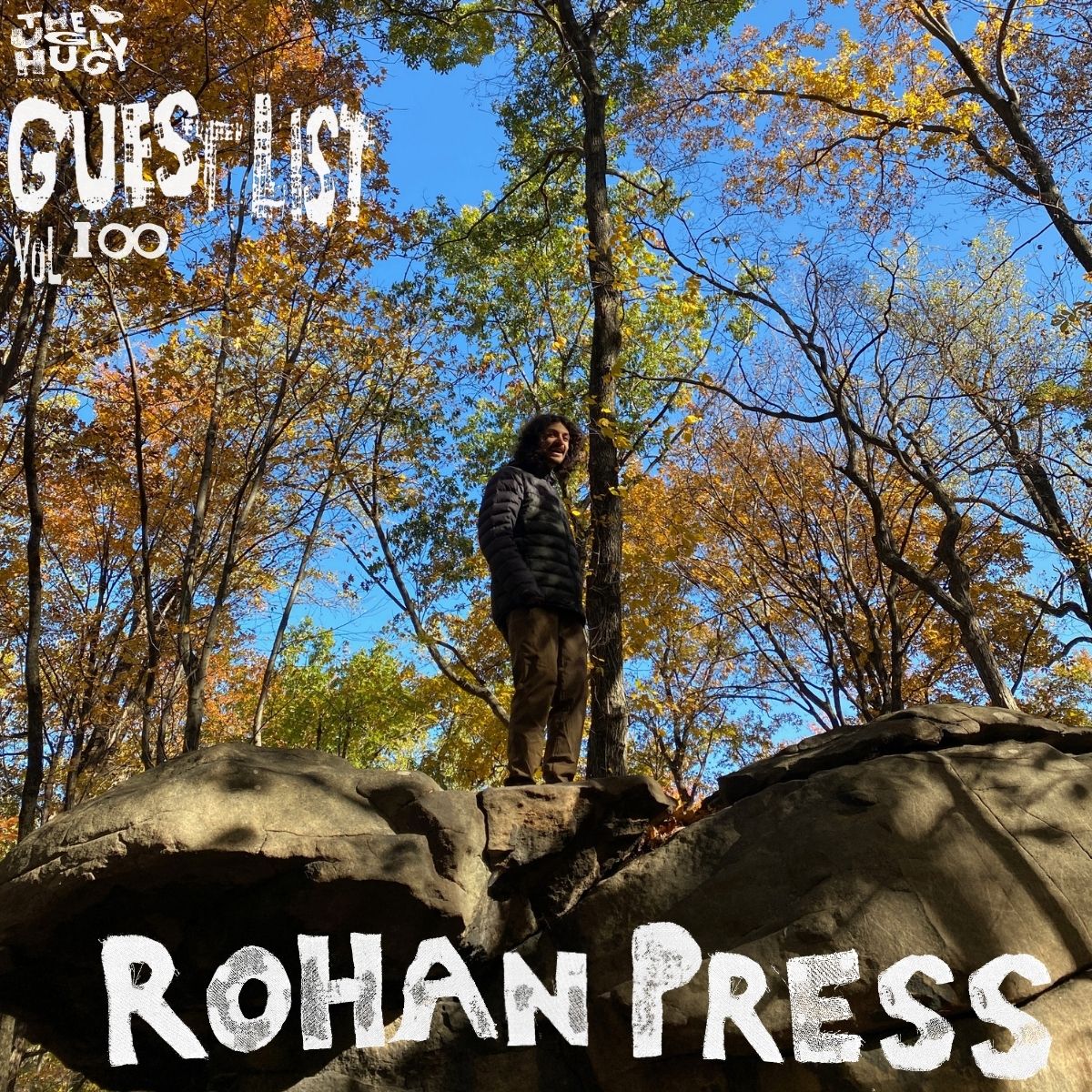
““I’m coming around to… / The place we thought the car was parked,” songwriter Garrett Linck admits—the realization like an exhale. But he follows that near-reconciliation with a step back. “I don’t where I’m going,” he confesses after another pause. It’s a tender moment. And it really gets to the heart of how I feel in the wake of my recent decision to stay in New England, after finishing Divinity School. I always thought I’d head right back West at the first chance; I grew up in Oregon and thought I’d never leave, thought I’d never want to. But Vermont, without my really understanding it, feels like it might just be where my car’s parked, and where I want it to remain parked, for a while.
I’m coming around, I guess… And I think that the reason Vermont feels like the right place for me, right now, has everything to do with these artists, all New Englanders, whom I’ve loosely compiled in this playlist. These people, this music, and the landscape that undergirds it are my reasons. This is what I’ve fallen in love with.
No—I don’t know where I’m going. But listening to these artists—a couple of whom I’ve been lucky enough to call new friends—makes me feel like I can, at least, love the place I’m at.
Rohan is Vermont-based writer, whose thoughtful work you can find at the ugly hug and at our good friends over in post trash. Read Rohan’s latest deep dive feature of Peter Horses now up on our site.
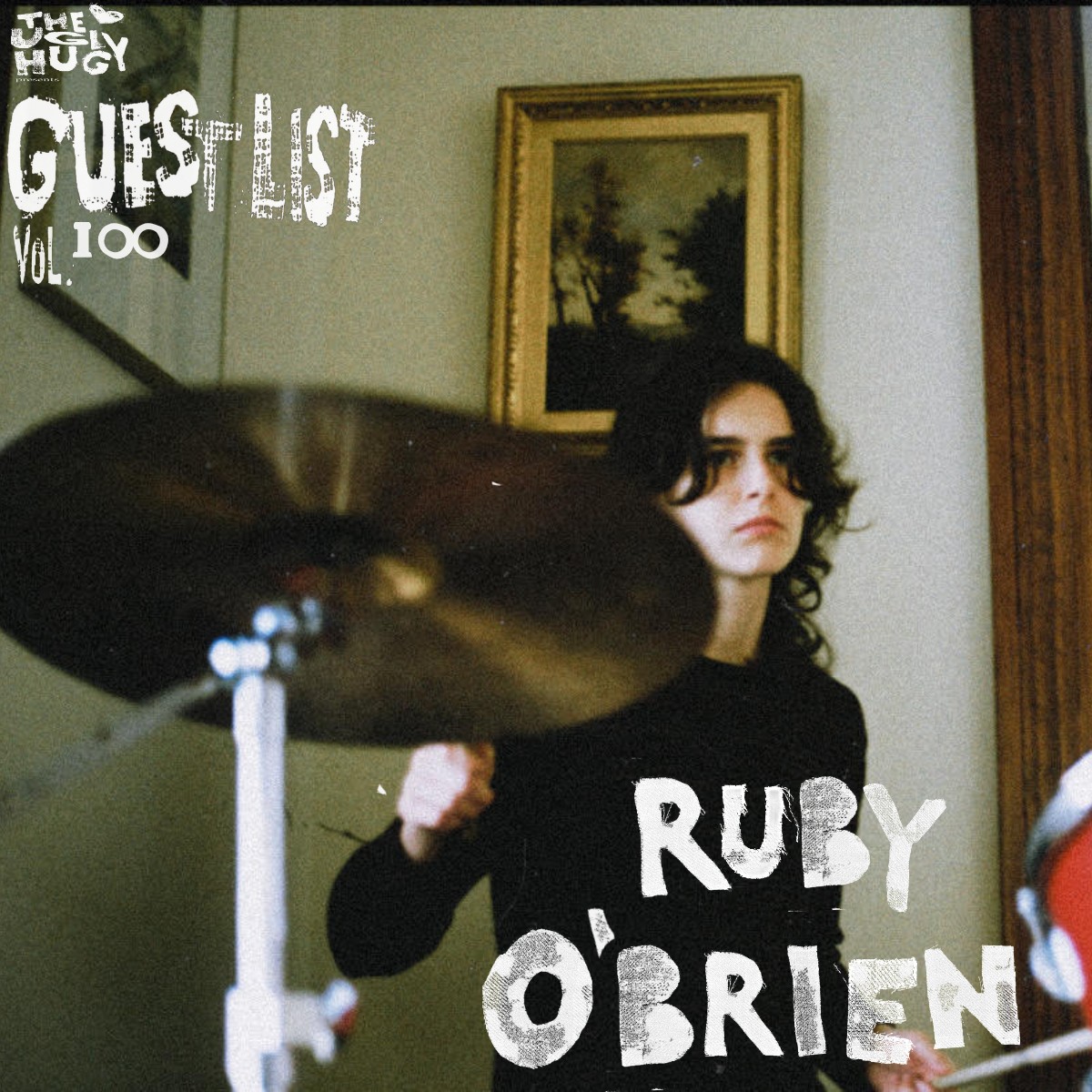
“I was recently told by my close friend that my music taste is extremely overstimulating. I had never even considered this before, and just thought that what I like is what I like… until I was walking to the Division Blue Line Stop, and realized I was listening to Hella with the volume at max. I’ve designed this playlist to look exactly how my walks look. There’s everything from lo-fi industrial stuff, to electronics. This playlist can be whatever you want it to be. There are also some local bands :-)”
Ruby is a Chicago-based writer and musician, who drums in formative project, Uniflora, as well as the newly formed band, Leroy.
“My last apartment had a fire hydrant right outside the front door. Because no cars could park there, I would often gather an old milk crate, a couple drinks, and a pack of sunflower seeds and head down to sit on the curb and listen to music. In the middle of summer, sometimes it would be cooler on the curb than my apartment. I would watch the cars struggle with the limits of a one-way street while, while getting in some target practice with the husk of the seeds, and listening to the music blend in with a neighborhood making it through the hateful heat. This playlist is a collection of songs that I listened to a lot down on that curb, often meeting the night with a purposeful end to the day.”
Shea started writing under the journal name the ugly hug back in 2023.
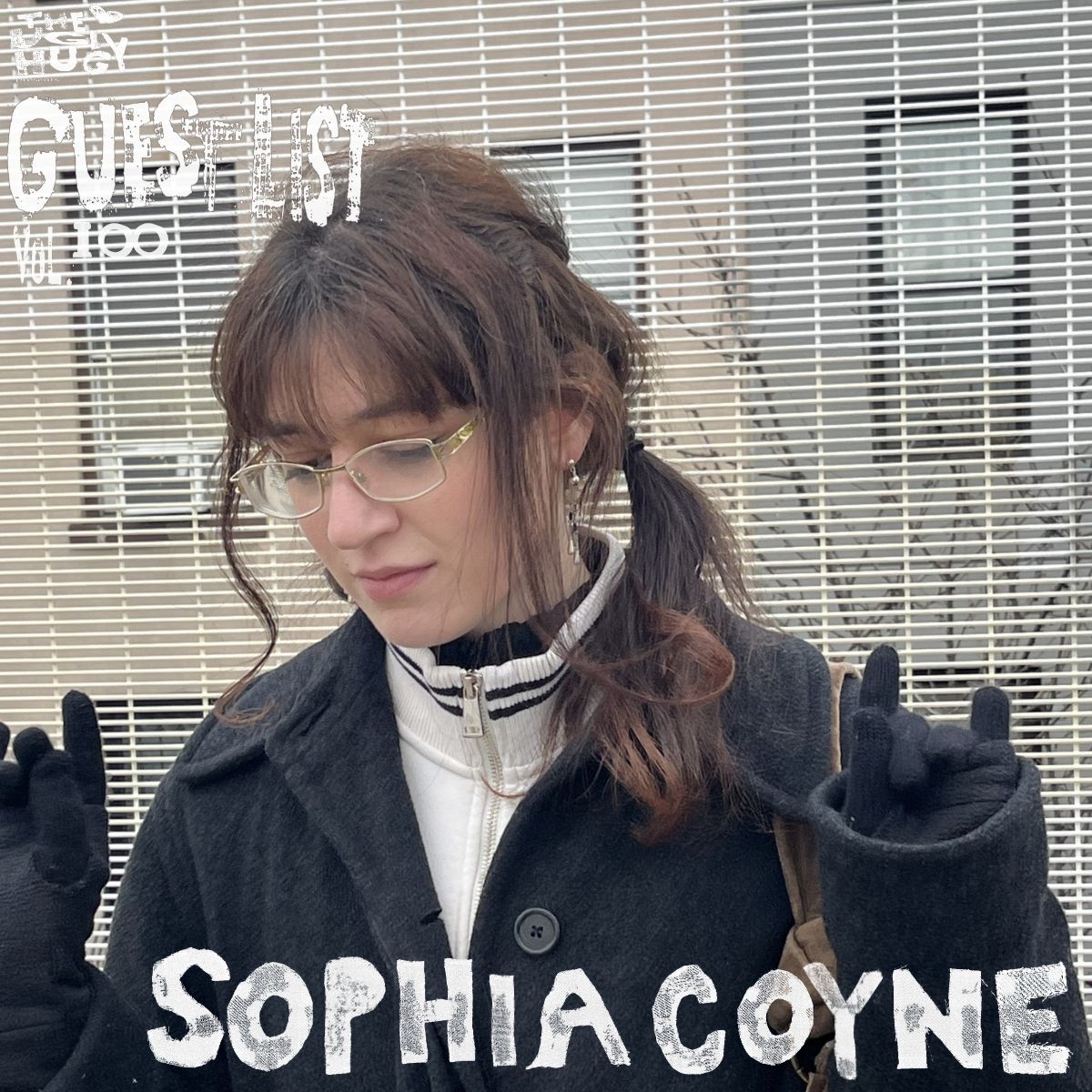
“When I’m listening to music, I tend to gravitate towards a lot of long-running or anxiety-inducing songs. These are some of my all time favorites. From field recordings of wolf packs to experimental electronic folk from Edinburgh to a live gritty rendition of a cosmic country anthem, there’s something in here for everyone. So, next time you host a party, be sure to put on this playlist of undeniable crowd pleasers!”
Sophia is an NYC-based writer and creative who currently host “Seventeen Girl Days” on 8 Ball Radio in NYC, a radio show loosely inspired by the inventor of the selfie and the culture of girlblogging. Sophia is also an independent writer, whose work has been featured in a variety of online and print publications (though possibly the most important professional achievements of her life have been contributing to a blog about rom-coms, “The New Romantics”). Sophia also produces music for the Edinburgh-based experimental band, Stall Girls alongside her bandmates Mariángela and Freddy. Their EP, Bigger than The Beatles, was put out by PX4M and is available to listen to on Bandcamp.
Written by Joy Elizabeth | Photo Courtesy of Mold Gold
There is a quiet assurance in Mold Gold’s I’m Sorry I Dropped You As A Baby. The LP, from the project founded by St. Louis-based songwriter, Mere Harrach, is full of sprawling instrumentals (à la cello) and hypnotic electronica pads. What is born from the unlikely match is a tone both warm and pristine. Harrach’s voice, unassuming and sweet, envelops the listener in a near-whisper.
I sat down with Mere to discuss some of my favorite tracks, the DIY scene in St. Louis, and the inner-workings of the entirely self-composed album.
With an album title as visceral and striking as I’m Sorry I Dropped You As A Baby, we have to touch on it. Where did the sentiment come from?
The album title broadly comes from the feeling of the anxiety of letting something important to you, that you feel responsible for, slip out of your hands. When it came to me, I was thinking about my tendency to get over-committed with projects and ideas that I feel really excited about, and in doing that, I end up neglecting some friendships and obligations that feel equally important because I get pulled in all directions. Especially when it comes to corresponding and replying to texts, I’ll mean to get back to someone and two weeks have gone by and it’ll hit me, oh shit. The balance is delicate and it feels really bad to do that, like dropping a baby. I haven’t actually dropped any literal babies but my friend Nicholas who’s a father of a new baby told me it makes him feel really terrible thinking about the album name so I’ll apologize for the imagery, haha.
The electronica effects on “Emphatic” are stark against the acoustic guitars and mellow vocals, showing us this isn’t going to be a traditional singer/songwriter record. Where does that modernized sound intersect with the folk foundation of the project?
Mold Gold is largely a mostly-solo recording project for me, so I like layering fun synth & drum machine textures in the tracks. When I play live I’m often just playing acoustic guitar and singing, though occasionally I’ve had friends join in on live sets, too, but the arrangements are still not true to the tracks. This project feels particularly inspired by artists like Chris Weisman, Lomelda, and local musician Zak M’s music, so I’m definitely drawing a bit of influence from how they record and arrange.
Dub effects on “Yellow” are perhaps even more surprising, but elevate the sound and make it more robust.
Thank you, I almost swapped that beat out for something simpler but a friend told me to stick with it & I’m glad I did.
The cello adds a cinematic air to Mold Gold, sweeping in “Bloomed” beneath the verses and giving a sense of unease in “Indigo Blue Bunting.” Who are your biggest classical influences?
For classical string writing, I really like Shostakovich & Schubert. In the world of contemporary composition, I love how Caroline Shaw can take a theme that feels old and classic & arrange it in a way that disrupts & reinvigorates. I would be remiss to not mention how important Arthur Russell and Abdul Wadud are to me, too.
You’re a St. Louis-based project. How has the local music scene supported your work?
I’ve been in St. Louis for a little over four years now & feel so at home here. To me there is no better place to land. The scene is big enough that there are a lot of different creative pockets & so many inventive and talented friends to draw inspiration from but small enough that there’s a lot of genre overlap & the communities feel tightly knit. On the regular you’ll have folk artists playing with punks playing with noise artists, playing with poets, etc all on the same bill. You really get to know people this way too, and you open your heart to a lot of different experiences. Because of this overlap, I’m lucky to have collaborated with so many friends in several projects outside of Mold Gold. There are really too many friends’ projects I want to recognize in this interview but to name just a few who blow me away every time, I would recommend checking out Kids, Sloopy McCoy, American Beautifulness, Dee Bird, and Goo Man if you get the chance to. Also if you’re ever in St. Louis, take a peek at stlshowpage.com to find out where to go.
“Mississippi Kite” almost plays like a lullaby. Was this intentional (potentially alluding to album title)?
Hmm… I hadn’t thought of it as a lullaby but that’s sweet! I should give a shout out, I stole the lyric “nude with anything” from the title of Jamie D’Agostino’s poetry book of the same name. I don’t think I have his phone number anymore, so if you read this thank you for the borrowed line Jamie!
How was your string of shows back in the fall?
It was fantastic! I’d never been to several of the cities Harrison (Riddle M) & I ended up playing on the east coast but it was a treat to hear so many sick musicians and meet so many lovely people. It was my first time playing with many of the artists we met but I especially loved getting to hear imy3 from Philadelphia and Jacob King of T.T.T.T. in Buffalo.
”Tell me what’s so wrong with wearing my heart on my sleeve?” The question is begged in “Vulture,” an emblem of the type of vulnerability felt lyrically and sonically throughout Mold Gold’s discography. Where does this intimacy with the listener come from, and is it easy to access when you are writing?
I have a hard time not writing from life, it’s kind of just what comes out haha. I think that’s important about folk tradition though, even if you’re being poetic and indirect, you can tell when someone’s writing from a place of true feeling and experience. If I’m being honest though, it limits which songs I feel comfortable playing live sometimes. That song “Vulture”, for example, came from a somewhat bitter headspace that I’m not often in the mood to put myself in or bring an audience into. A poem comes from a moment or era of feeling a certain way too, so it can feel funny writing the song, taking months to work on it, and having a shifted perspective about something once the song is released.
What can we expect next from Mold Gold?
I don’t put a lot of pressure on Mold Gold, the songs just kind of happen when they happen. But I do think for whatever I work on next in my solo songwriting, I want to invite more friends in. I should say here though, my other band Piracy is about to release our new album April 1st! Piracy has been a dream to be a part of because of its incredibly collaborative nature; I’d never been part of a group where everyone has an equal hand in writing and our musical chemistry feels so natural and fun. My collaborators Julio, Antonio, and Colin are all incredible musicians and friends, some of the most inspired individuals in St. Louis. You can find the music soon at piracyweb.bandcamp.com.
You can listen to I’m Sorry I Dropped You As A Baby out now.
Written by Shea Roney | Cover Photo by Tanner Stangle
Gawshock is the solo project of Huntsville, Alabama based songwriter David Broome, who is gearing up to release his next album titled Leaves to the Sun, out April 17th via Patchwork. Started as a way to keep himself busy during the pandemic, Gawshock has become a place of exploration for Broome as he continues to push himself as a deliberate and enduring songwriter. Today, Gawshock shares “What Do You Dream About?”, the simple, yet stunning final single ahead of the new album.
Photo by Max Marcotte
Caught up in a commotion, “What Do You Dream About” begins with an amalgamation of sounds as the track finds its footing in a lush and stirring landscape. Built around repetition, Broome asks “what do you dream about?”, the question growing in size with unruffled harmonies that create an alluring cloud of bizarre, restless fascination. And just as the question begins to sharpen, the track falls into a grounded groove as drums blow in and guitars fly around like birds between branches; frantic, yet instinctual. And amongst the conversational backdrop that “What Do You Dream About?” exudes from comes a curiosity for answers, but Broome creates an atmosphere where sometimes it’s nice to just sit in for a while before you get to work.
About the single Broome says, “I’m the sort of person who thinks about dreams a lot- oftentimes I can’t remember them after I wake up, but when I do, I’m always curious about what they may have meant. “What Do You Dream About?” is a pretty simple song about that curiosity. Do most people walking around day to day know what their brain is working on while they’re sleeping, or why?”
Listen to “What Do You Dream About?” premiering here!
You can listen to Gawshock’s catalog now as well as purchase the previous single “Heat Lightning” ahead of Leaves to the Sun out April 17th via Patchwork.
Amongst Richmond’s animated DIY scenes comes the band K9, the five-bit rock band who released their debut LP earlier this year titled Thrills. Songwriter and guitarist, Jake Schmader, came up through the city’s hardcore scene, most known for his role in the heated project, Reckoning Force. But K9’s beginning was just as simple as finding excuses to record some covers with fellow collaborator and singer, Brenda. The project operated on the whim of possibilities for some time, as the band continued to grow with the additions of Ian (guitar), Evan (Bass) and Christian (drums). Soon with new voices, K9 has since shared a sparse, yet incredibly promising catalog of demos and EPs for public consumption, including 2023’s Harmony Kills EP and 2024’s In Blistering Stereo.
At its core, K9 lingers around those harsh pronunciations and “off with their heads” kinda daydreams that hardcore punk instinctually offers, but Jake has always been clear that they don’t want to be held down by it. The tracks on Thrills revel amongst the scruffy middlemen that come in and out for introductions, as each member performs with old back pocket magic that blends so seamlessly with these new ideas and some low-fi holy prowess. Making any formality just a bit more sweaty, K9 rips through with sharp guitars, conversational movements and pairs of sweet melodies as they embrace an instinctual type of looseness and pop song fascination. It’s a quick album, but its impact is in no way brief. And as they push on, K9 continues to play show after show, finding space beyond their home of Richmond, and becoming a conversational piece, a connecting thread when this band is brought up, “oh, yeah, K9? They rock.”
We recently got to chat with Jake about the project, keeping things open and starting a label.
Photo Courtesy of K9
You recently released your debut LP Thrills this past year. How has it been sitting with you since you shared it?
Good, I guess! We’re glad that people are coming across it and enjoying it. We had recorded Thrills back in the spring of 2024 and it took a while for it to come out, so the songs feel older to us having been playing them for years at this point. It’s been fun to hear what people think of the record and what kinds of descriptions and comparisons we’ve been getting. I feel like a project needs to be out in the world for a while before I’m able to hear it for what it is, instead of just hearing the mix, or whatever.
Having spent time coming up through the Richmond hard core scene, playing in the band Reckoning Force, why did something like K9 come about in your world? Did it open up anything for you in terms of how you approached songwriting or being in a band?
Absolutely. Hardcore punk is what got me started going to shows, writing songs and playing in bands – it’s still a big part of my life. I started writing songs and the project came organically out of a desire to record and perform those songs. We think of K9 as a punk band, but we try to keep the project free and loose in terms of genre and just make what we want to make, or what comes to us. Everything we’ve done with the band is informed by punk, and I hope that shines through even when we’re doing a sing-songy tune.
What were those organic components that you noticed were building around these K9 songs? Did you want to try to make something apart from Reckoning Force or did they naturally feel like their own thing?
It sprung from a few things that had been bubbling for a while. Brenna and I would drink a bunch of beers and record covers at my apartment, Christian and I would jam and I’d do the same with Ian which turned into writing and playing songs together. I didn’t set out to make anything really, just in writing and playing together the project solidified. We have similar tastes and sensibilities that have steered our style all around and generally away from straight-up hardcore.
You first shared the project with the EP Harmony Kills back in 2022. What was that initial debut of the project like and how have you seen it grow leading up to Thrills?
We actually had a demo out in 2020 that Brenna and I recorded in 2019, so it has been a slow burn. I was not aware of much that sounded like Harmony Kills at the time of its release, and I wondered what the punks would make of it, but our friends in Virginia liked it and the tape has found its crowd in time. Thrills has definitely garnered more attention, but it’s great that people are getting hip to our other stuff as a result. We started playing live between those two releases and that had a big impact on the sound and makeup of Thrills. Ian also started contributing songs and riffs following Harmony Kills, and we’ve developed a writing partnership as a band that feels really nice. We want our releases to sound unique from each other, but we have ended up having some themes that keep a through-line; recording live, raw sound, room sound, etc. K9’s music is going to be wide in scope because we can’t help it.
Creating these writing partnerships amongst the group, what sort of things do you all bounce off of each other? Especially with the mission of making each release unique, how do you push each other as collaborators in order to meet that mark?
Songs, riffs, parts, art; a lot of times it’s as simple as everyone liking or not liking an idea. We find ourselves getting interested in the same kinds of things for inspiration and I like to think we share a vision for what K9 is, and we try to stay true to that vision and to stay honest. I feel like we just go with our gut; the direction of the project changes and we have never felt like we had to reign it in. Maybe saying that we are okay with releases being different from each other is more apt.
Thrills marks the second of three releases off of the label Who Ya Know records, including two releases of some experimental and ambient work of yours, No Mystique and Bug the Cat Mix. What does having this label mean for what you put out, or even decide to explore for that matter?
We knew, even before recording Thrills, that we wanted it to come out as an LP, and Who Ya Know Records was a result of that inclination. Like many bands before us, we were not going to let anyone decide for us if that was going to happen or not, so we did it ourselves (with a lot of help from many people, especially Green-o at Not for the Weak Records). We were admittedly impatient in the ‘sending it off to labels’ phase, but the more time passes the happier we feel that it happened this way. I’m sure we will have relationships with labels in the future, but it’s fun to have an umbrella to put our ideas and our friends’ projects under, even if they aren’t all in the same lane.
Anything coming up for k9 in the future?
Yeah! We’re planning a midwest tour set to start this June, a promo tape will go along with that. We’re finishing up tracking for a collection of songs we’d like to see on a 7”. We’ve been writing a lot and we want to go play all over, all in due time.
You can listen to K9’s catalog now as well as purchase Thrills on a limited-edition vinyl pressing.
Written by Shea Roney | Photo Courtesy of Dick Texas
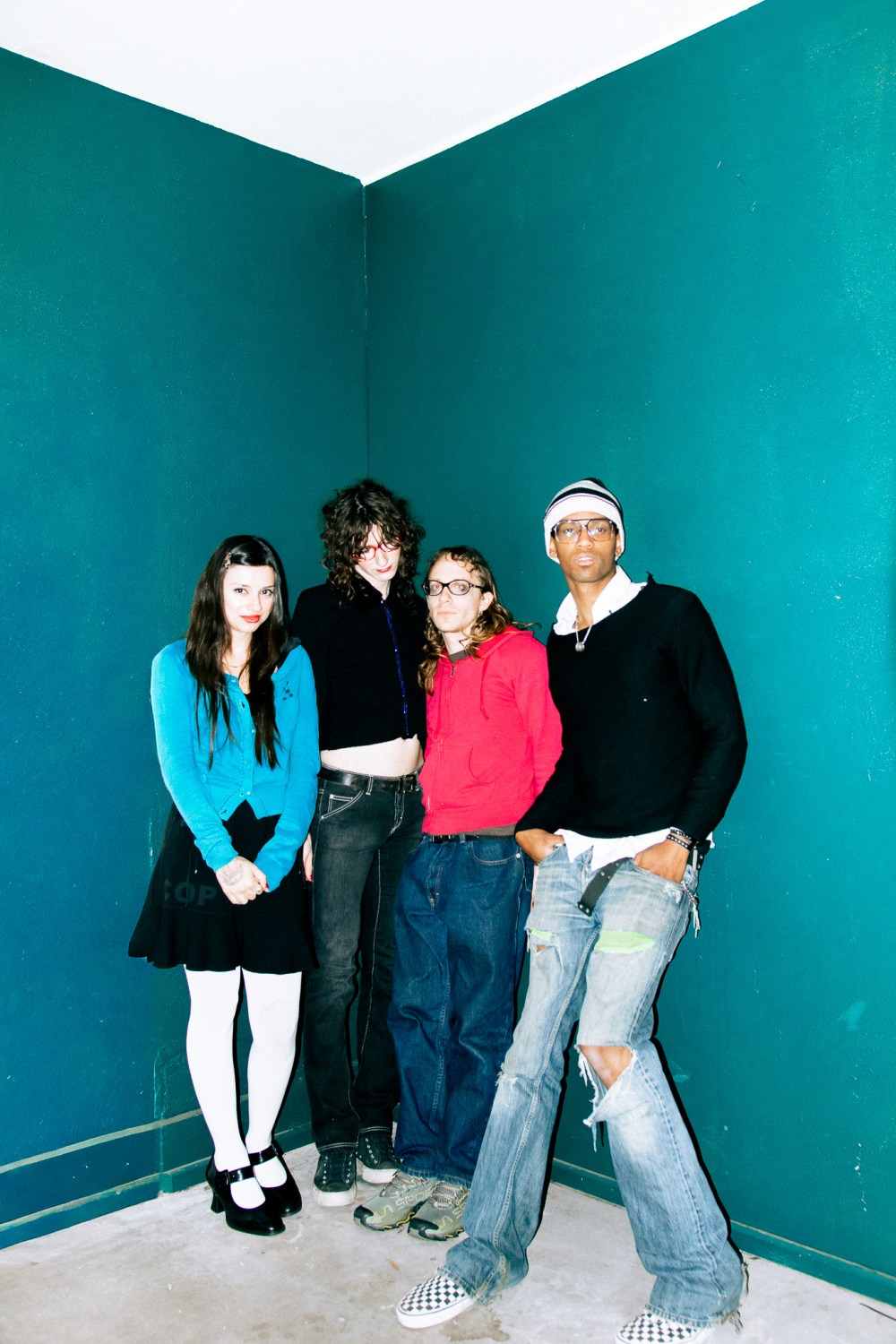
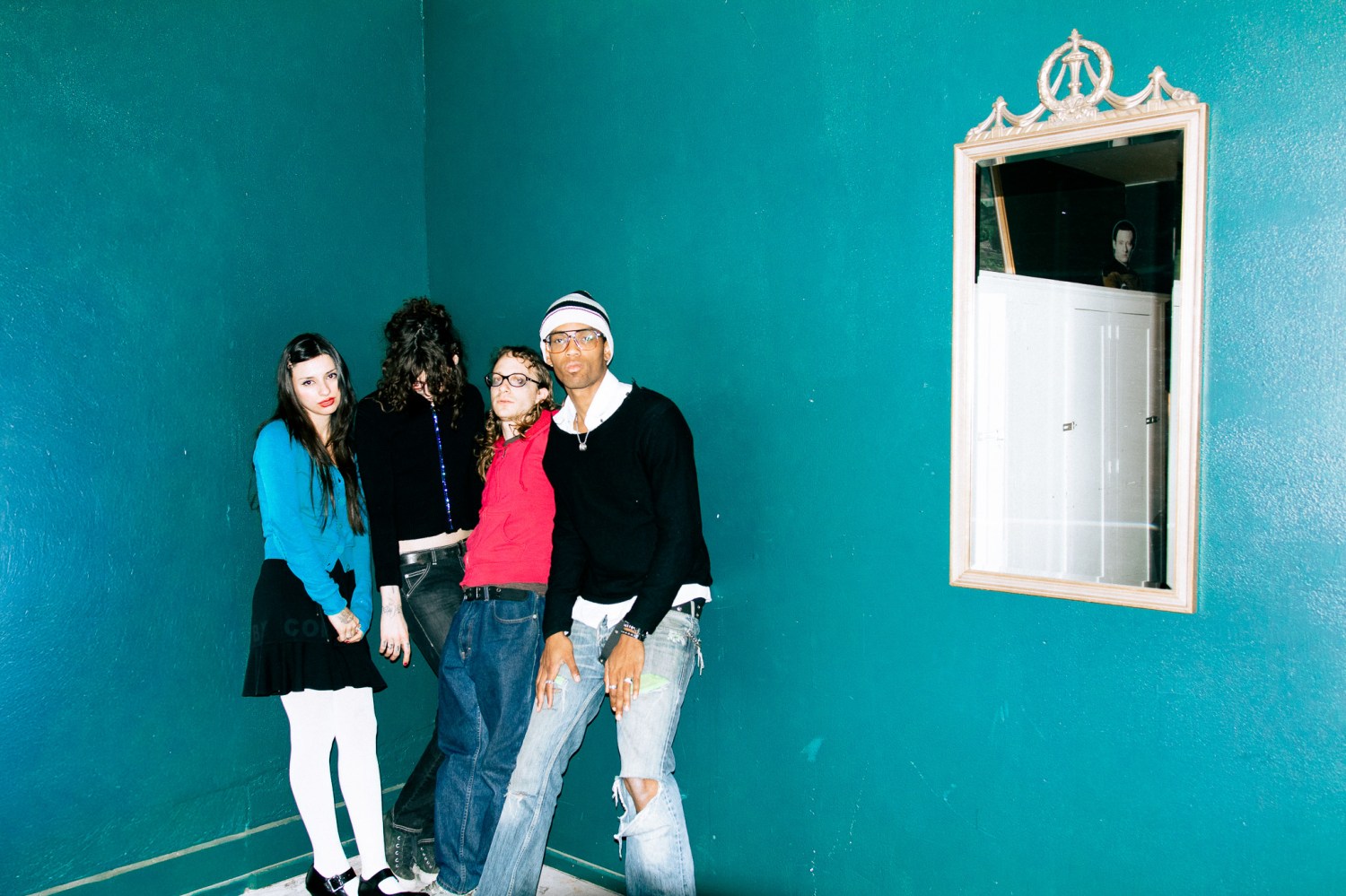
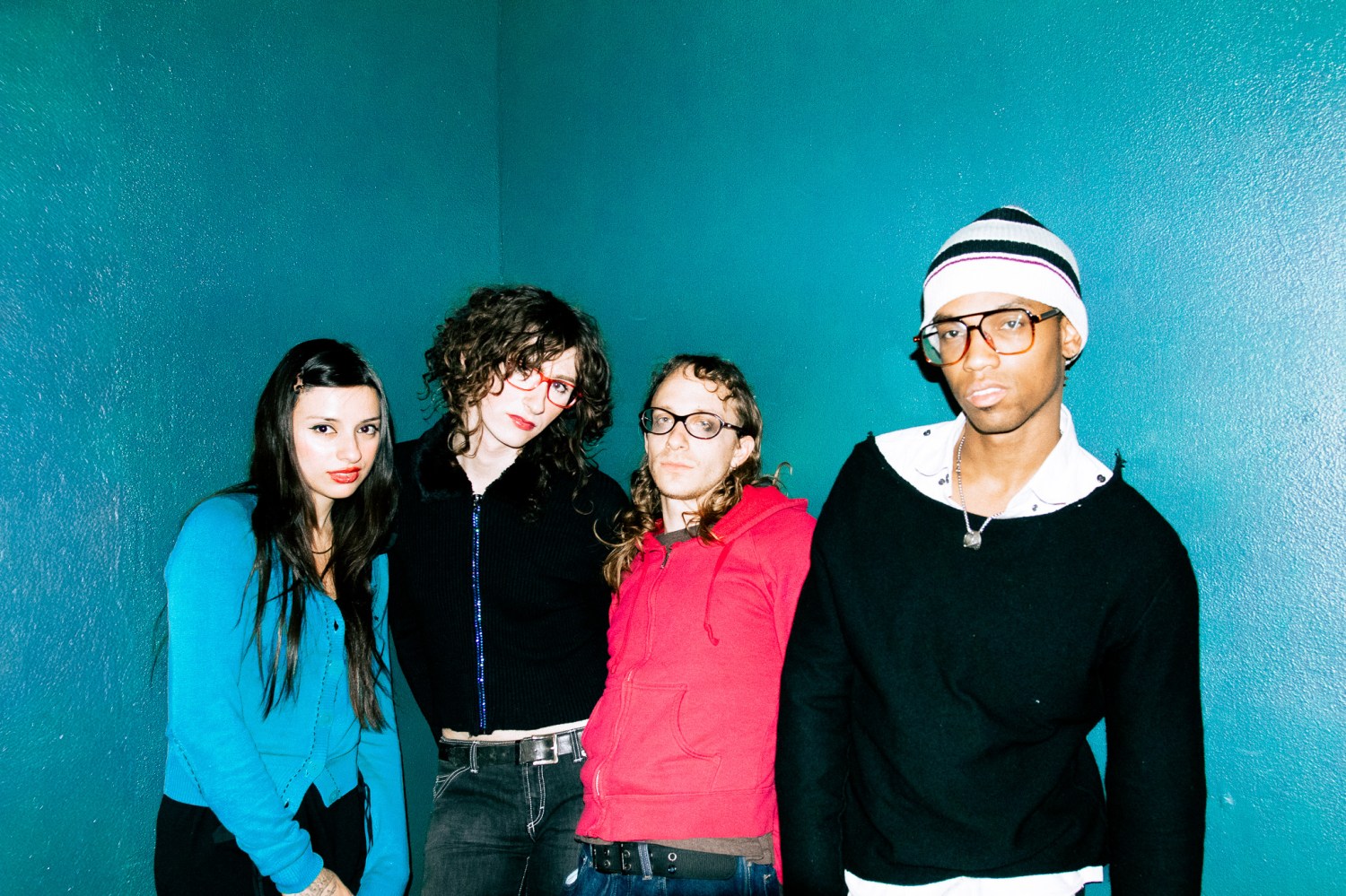
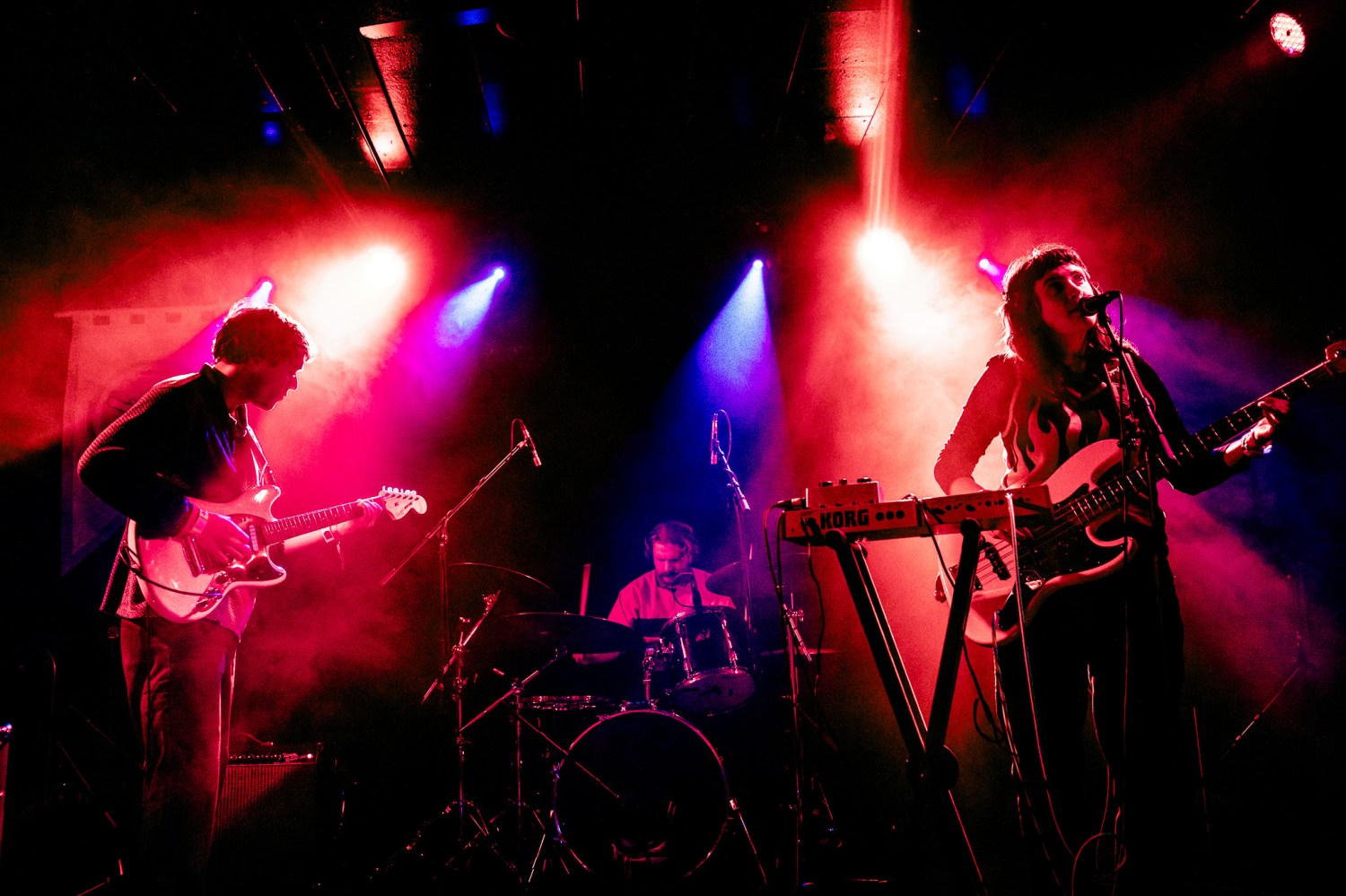
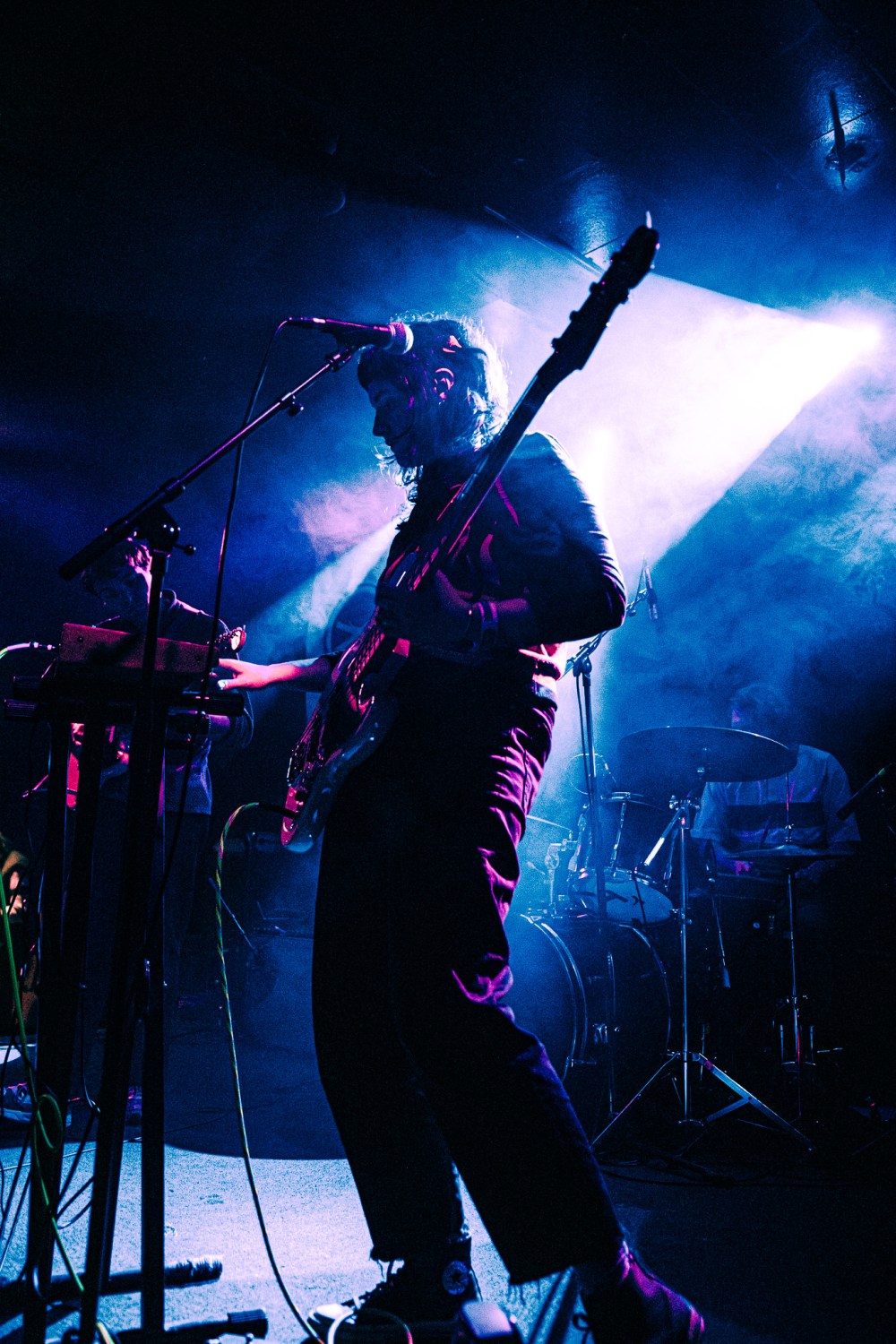
Every Wednesday, the ugly hug shares a playlist personally curated by an artist/band that we have been enjoying. This week we have a collection of songs put together by Valerie Salerno of the Detroit-based project Dick Texas.
Last spring, Dick Texas released their debut album All That Fall. Each track levies a patron’s holy prayer; two taps on the bar and shoot it back, the liquid warms your belly as you try to decipher the hidden message a glitching neon sign leaves you in the absence of its whole. Salerno’s songs become a dynamic exchange, a transfer of self as she pulls engagement in the face of grief and heartbreak. Yet it’s clear these songs aren’t meant to live in those spaces for too long. Amongst the sun-bleached bones and cinematic knots, embracing opportunity over any form of formality, guitars cut through the scenery while reverberated structures absorb the space they are given. And as wounds begin to scab over and all that was left to wither now grows with defined eagerness, Salerno’s instigations on All That Fall begin to feel more accessible with each listen.












 the ugly hug