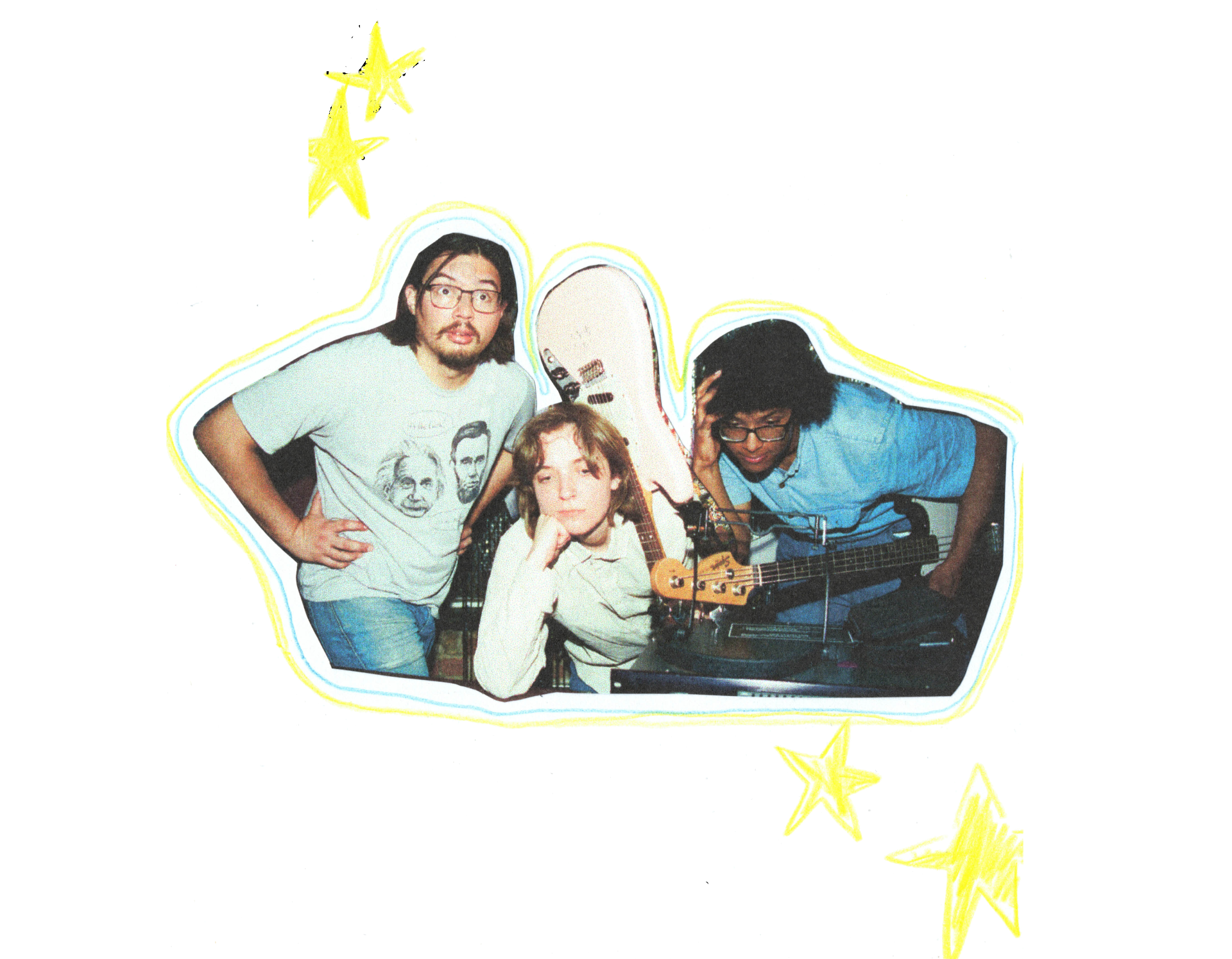
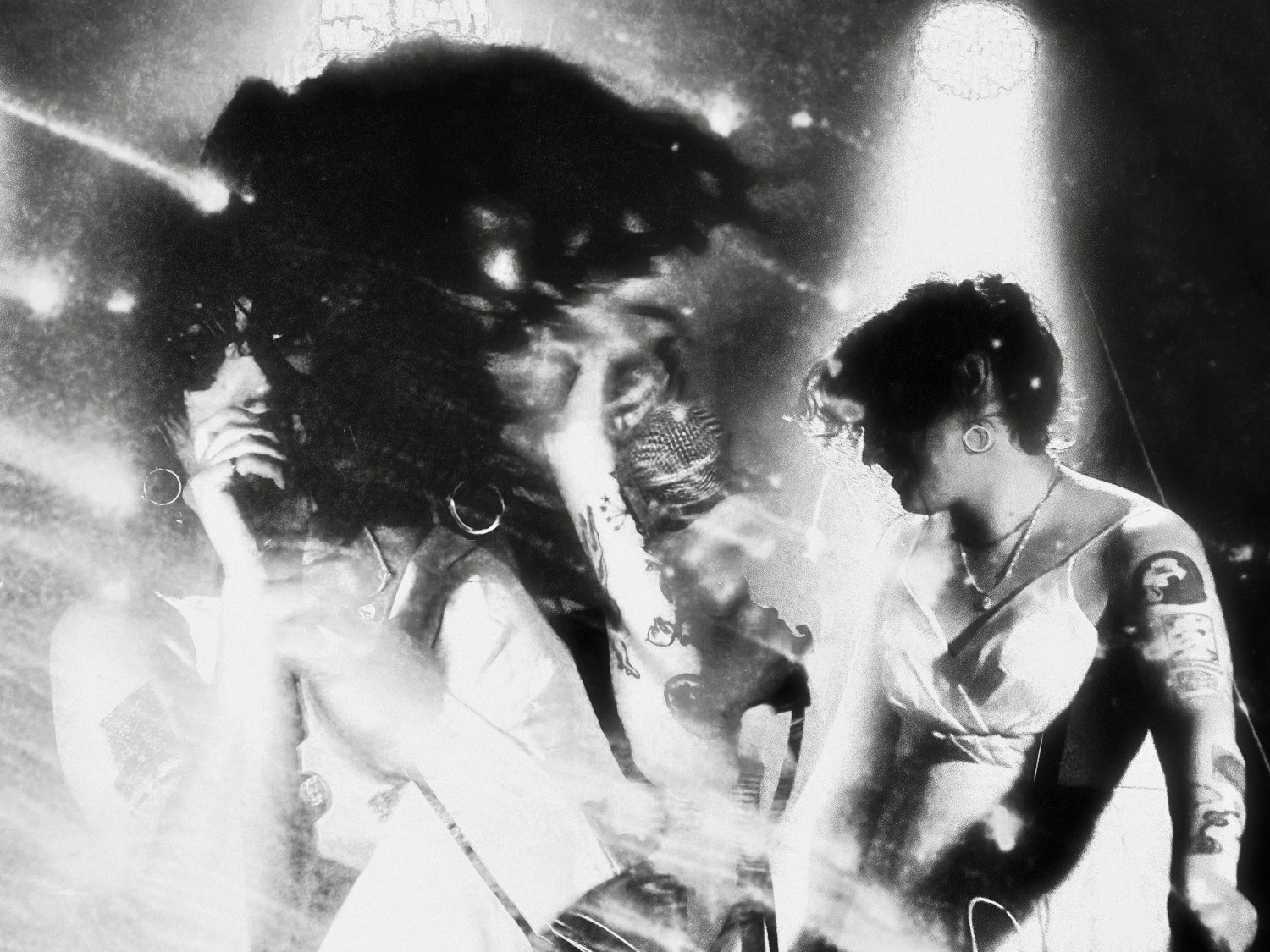
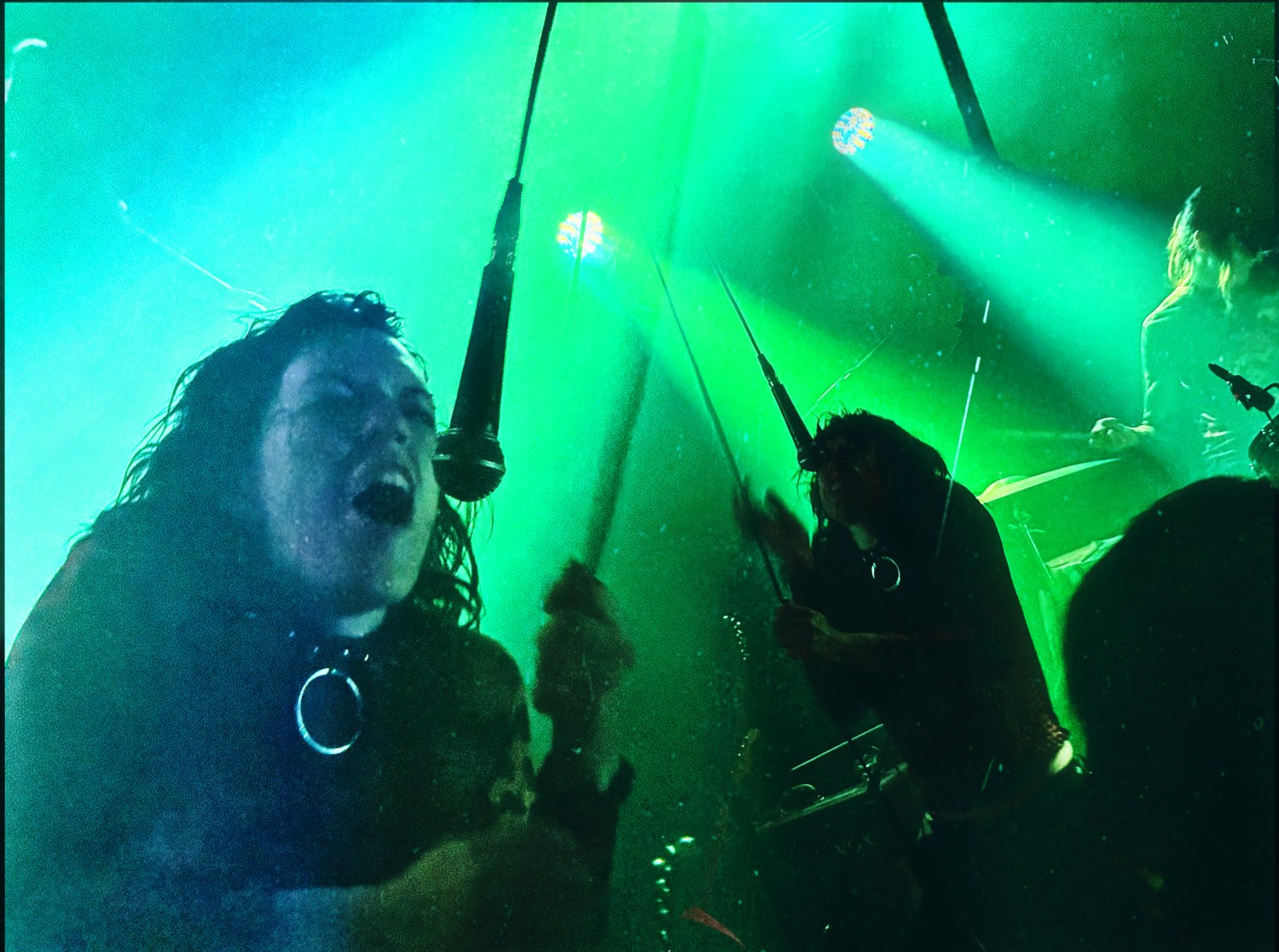
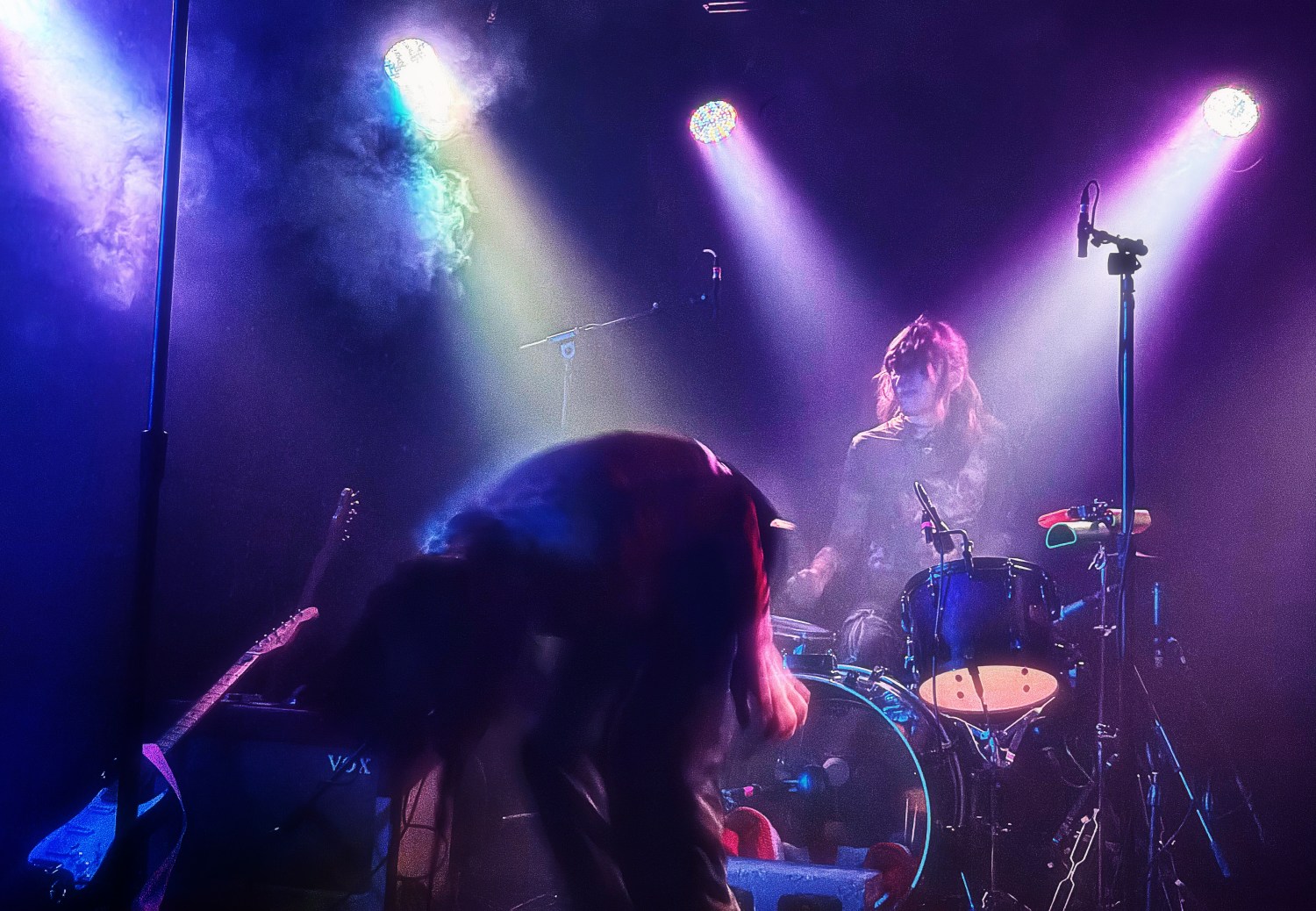
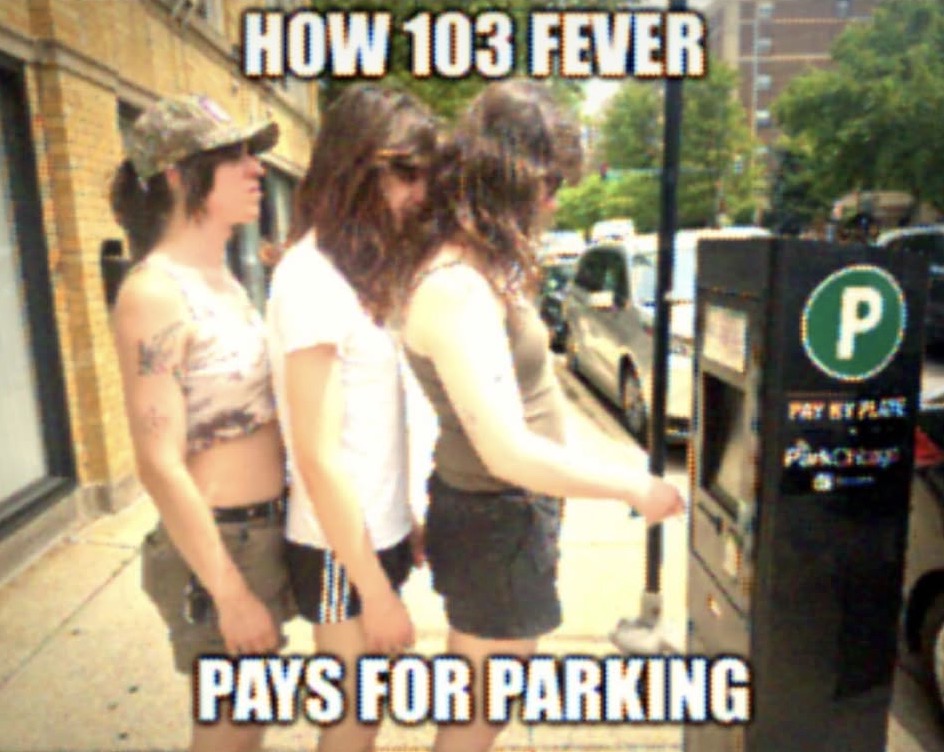
“Will you hold me in the palm of your hand, will you hold me at all?” Lolo Wawa (the stage name of Lauren Wallach) creates a comforting testament to the passage of time and the changing nature of relationships in her debut singles “Meridian” and “Fondly,” released January 23, 2026 on Bandcamp, and later to other platforms.
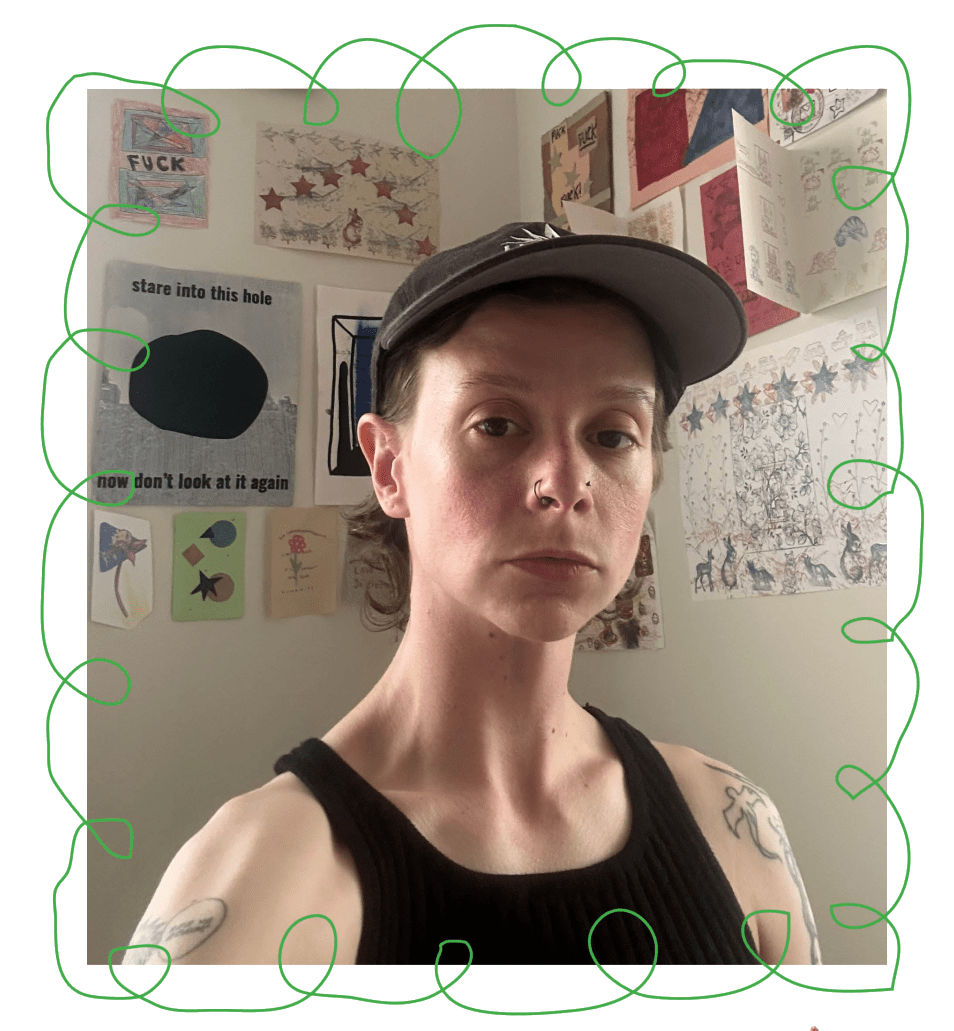
Lauren is a twenty-five year old singer based in Bellingham, Washington. She creates vivid musical worlds built around self-exploration and the people and places she cares about. One of the lead vocalists and songwriters of the folk-rock band Bellflower, and a vocalist for the Americana band Dogwood, she has recently begun exploring her own sound as a songwriter.
“Meridian” is an immersive comfort of the themes of girlhood, hope, daily moments, and time passing. There is strong wordplay, with lines such as “Zoe smells like jasmine and dogwood / hold my heart in your teeth like a dog would.” “Fondly” navigates losing someone kindly and without resentment, while still hoping to know them. She captures imagery of doubt and insecurity through the metaphors “am I a thorn in your side? Am I a fly in your lemonade?” The songs pair perfectly together as a way of moving forward gently. Lauren writes intimately of everyday objects, small details and moments, and connection with others; her vivid lyricism including the seasons, birthday candles, mood rings, backyard swings, and letters.
Her vocals are strong and clear, featuring glowing backing harmonies from Electra Richards and Rubin Hochhauser. There are gorgeous instrumental interludes, combined from Lauren’s guitar and glockenspiel playing, fiddle that mirrors the vocal melody from Rubin Hochhauser, and mellow drums by Phoebe Setter. The tracks were recorded, mixed and mastered by Zach Miller, who played guitar, tambourine, bass and sparkles.
“Meridian/Fondly” is available on all platforms. Keep an eye out for more Lolo Wawa releases and performances, and check out the projects of Bellflower and Dogwood!
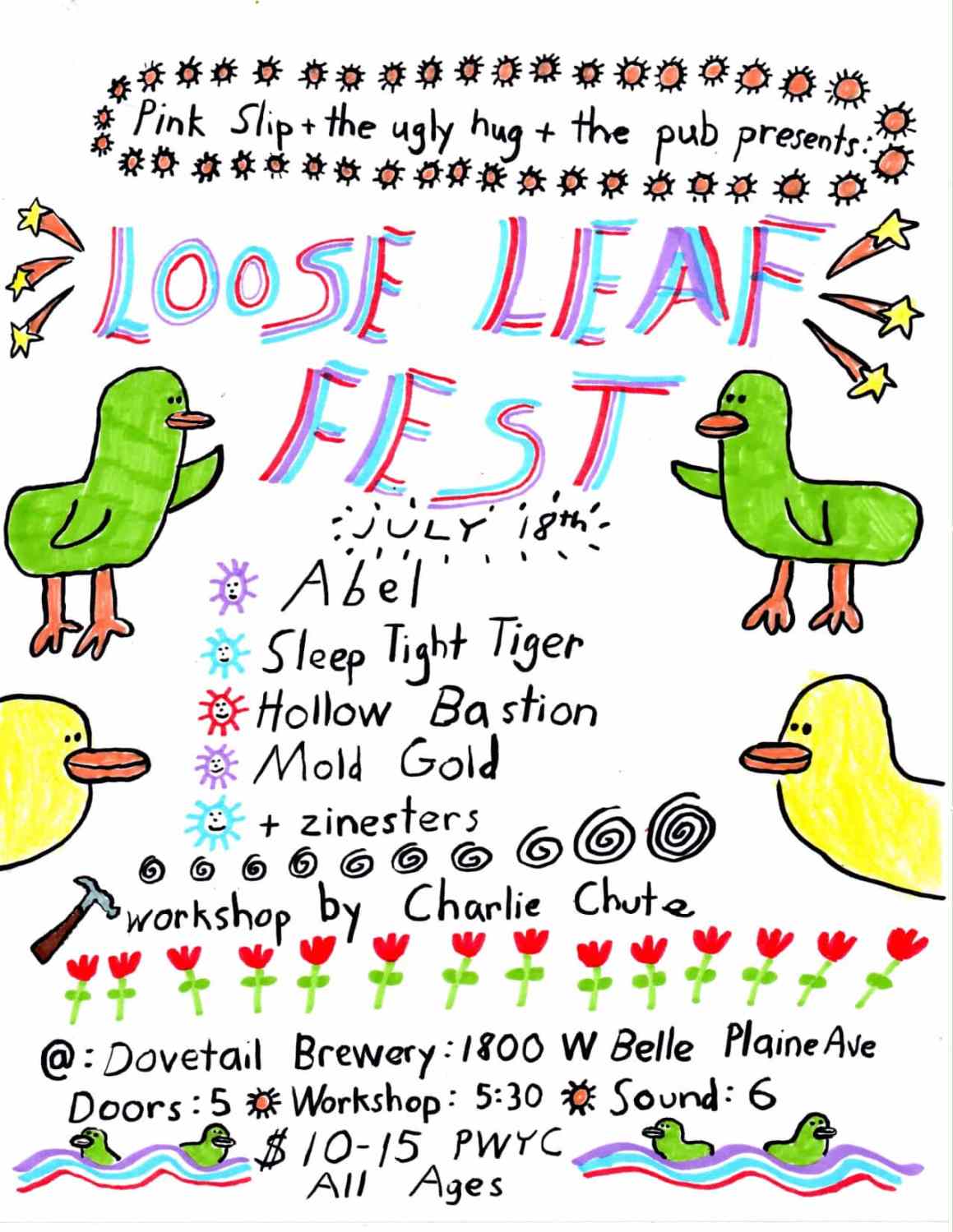
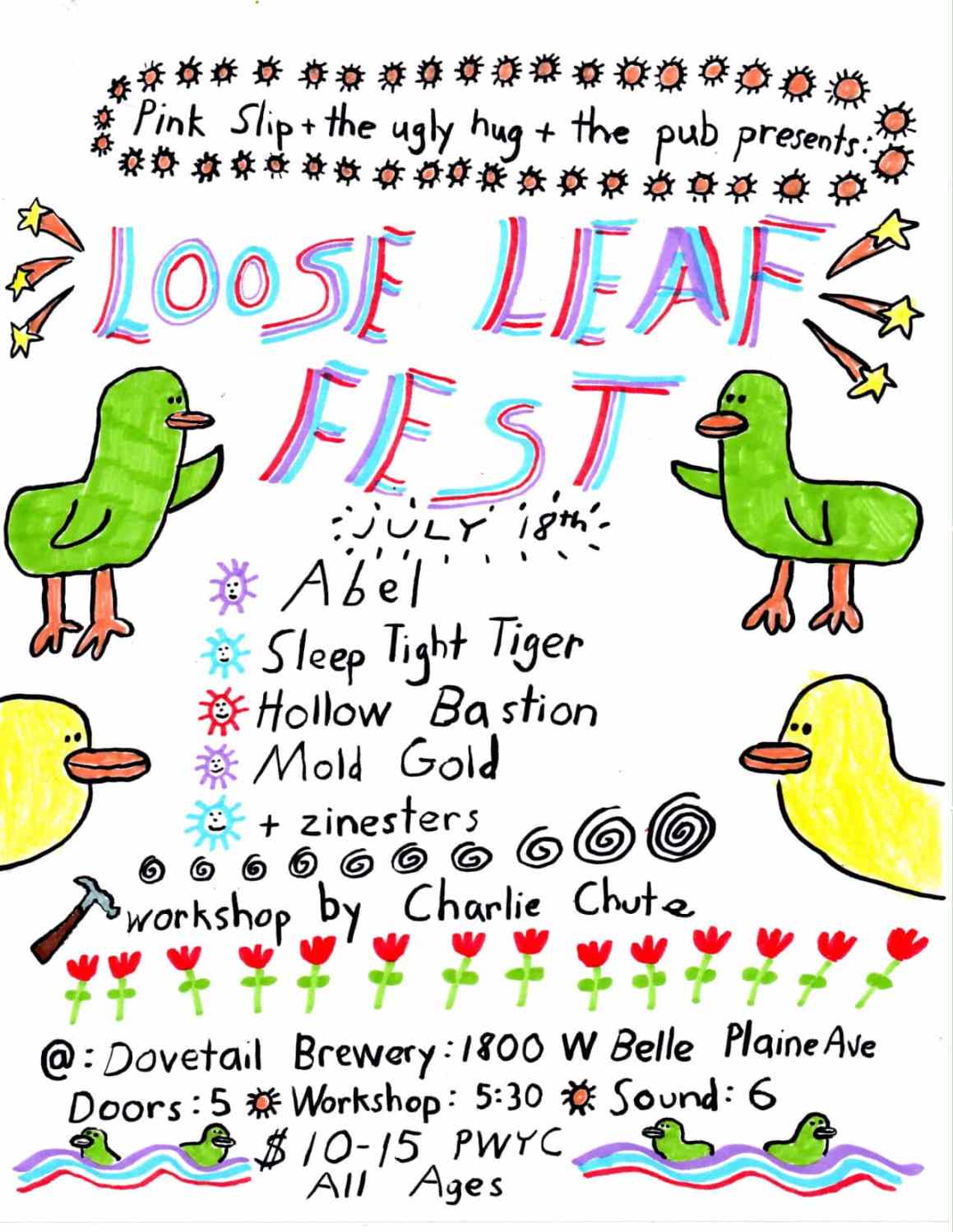
On July 18th, we are partnering up with our friends over at pink slip zine and the pub to bring the first Loose Leaf Fest! This will be an evening caught at the intersection between the underground music and DIY zine makers that keep our local scenes vibrant and inviting.
The evening will be filled with sweet sweet tunes by Abel, Sleep Tight Tiger, Hollow Bastion, and Mold Gold. Get acquainted with the folks who will be playing at Loose Leaf Fest!
Mold Gold (St. Louis)
Curious, yet incredibly endearing, Mere Harrach’s words are experienced and beautiful; a dusty fortune, a prized keepsake to hold on to for when you need it most. Amongst discombobulated bits of noise, trinkets collecting in the background, Mold Gold’s varying collections become emblematic of discovery itself. Where lucid string arrangements can weigh heavy in the moment, and Mere’s melodies become willfully poignant amongst the starry-night landscape and all that falls below.
With twangy guitars and bona fide melodies, Hollow Bastion writes songs in par to a shoot-the-shit with your closest friends. It’s a crash course in infatuation; live fast and dream big. Where pop songs are tuned to the sleepy drip of Speedway coffee, and anticipations stain the tabletop, blushed with little rings from glasses raised and lowered with habit over the years.
Praising their colorful influences and sharp impulses, Sleep Tight Tiger play tunes that stick like bubblegum in your hair and a skip in your step. It’s a whirlwind of bonafide fun, in part due to the friendship and collaboration that comes so effortlessly to the group. Their debut EP, Plum Something, has awakened an animal inside us all. And with star filled eyes, STT will never be deterred to lead with a bit of whimsy or a nasty bite.
Along with the Midwest prophets and scruffy rock n roll disciplinaries who have done their time and got their hands dirty, Abel continues to be a band that can’t stop evolving. Last year’s record, How toGet Away with Nothing, follows the Columbus group’s collective sounds into a deeper, much more haunting pool of reverberated grifters, ecstatic townies and irresistible melodies that sip from the cup of glory.
Loose Leaf Fest will be a PWYC event hosted at Dovetail Brewery. Along with zinesters, My Darling Ghost will be selling their special loose-leaf tea blends. Bring your friends and crafts! Hope to see you there.
Every Wednesday, the ugly hug shares a playlist personally curated by an artist/band that we have been enjoying. This week we have a collection of songs put together by the Brooklyn-based band, Van Goth.
Composed of duo Sydney Salk and Simon Schadler, Van Goth squeaked out their debut LP Is It? back in February. It’s a collection that stands out from its surroundings, minimal in its delivery, yet foundational in the youthful malaise that comes for us all. The instrumentation is fidgety, almost unassuming in its effectiveness, as the duo play off of angular rhythms and tempting click tracks. Not to mention the humorous quips mixed with this unpredictability that resonates just as casual as it is damning to the restless confessionals at play — Dance, dance, boogie? Whenever I get the chance. Through it all, Is It? becomes a point of reflection for the duo as they drift towards maturity, yet the darkness is still illuminated by the tip of a lit cigarette in a pair of dark sunglasses.
About the playlist, the duo shared;
We chose a mix of songs that inspired us when starting Van Goth and some that are inspiring us now as we work on new music! Lots of off-kilter electronics, sparse beats, and a dry sense of humor. Songs like this remind us to pare back and enjoy the empty spaces. We often joke about how hard it is to describe what we do musically and we hope this playlist matches that ethos.
In the broadest sense, A Doll for Abigail’s Self-titled debut is beautifully tragic loud music. It crosses the jagged, yet blurry line between the worlds of Screamo and Post-hardcore. Chicago continues to be a city filled with creatives seeing what musical boundaries they can push next. A Doll for Abigail is a prime example of this.
“A Day from Today” gives an introduction into what this band is capable of. The violin work played by StefanÍa Quiñones is weaved throughout this first track seamlessly, right up against a pummeling rhythm section. The violin serves as this melodic bookend throughout the album. Track two, “Gray Sky”, is your classic screamo number with the chaotic, back and forth screams of main vocalist/bassist Cole Rickert, as well as from drummer J Caboose and guitarist Sean Paul Matt Jr. The bridge of this song was very reminiscent of Bullets-Era My Chemical Romance (which I’m sure there’s more callbacks to this era of Emo/Screamo I haven’t caught yet).
Track six, “Love”, is the album’s longest song, just under three minutes and thirty seconds. It’s a song laced with so much tension and release, where the guitar riffs build and then ring out over Rickert’s outpour of emotion in lyrical form. Hearing the lines “It doesn’t take much to soften up your heart” and then into “And Love” screamed over beautiful, searing riffs is sure to make you want to put your head in your hands and take it all in. “Step Up to the Plate” was another hard hitter. A fun, bouncy track, filled with dueling riffs, and loud/soft parts down in classic screamo fashion. “Lieutenant Dan” is also another track I could definitely see myself screaming the words back, when I get a chance to see these guys live.
“Hope Against Hope” serves as the perfect closer to this album. A perfectly haunting track once again laced with beautiful Violin double stops atop a finger-plucked acoustic guitar. The album is a cathartic listen- even at its softest moments. A fiery debut for A Doll for Abigail.
You can listen to A Doll for Abigail wherever you find your music.
On July 18th, we are partnering up with our friends over at pink slip zine and the pub to bring the first Loose Leaf Fest! This will be an evening caught at the intersection between the underground music and DIY zine makers that keep our local scenes vibrant and inviting. Along with music by Abel, Sleep Tight Tiger, Hollow Bastion, and Mold Gold, several local zine makers will be tabling their work.
Kicking off the night with a skills-based workshop, led by Charlie Chute, attendees will have the chance to craft and collab on their own zines. Supplies will be provided, but feel free to bring anything you’d like to work on.
Get acquainted with the folks who will be hosting tables at Loose Leaf Fest!
“As a queer multidisciplinary artist, my work explores the intersections of materiality, gender, sexuality, identity and relationships with myself and others. Image, text, the process of making, and the act of processing the emotions that come with it are central to my practice. My work is largely autobiographical. Based on my own lived experiences, it becomes a way to move through different themes as they emerge. Working across photography, film, printmaking, poetry, comics, illustration, and zines, I create imagined spaces and conversations to help understand my thoughts, feelings, and the world better.”
Nando Espinosa Herrera is a freelance photographer, pseudo visual artist, and cat parent. Currently exploring print as medium and form, you can find him offering chilly-powdered lollies to friends who need a little spicy sweetness in their lives.
A back alley artists collective. Fiilthy Glo is a zine rooted in Chicago catering to the experimental ((&& slightly strange)). Run by independent creatives,, we strive to cultivate a community that celebrates authenticity and uplifts the unconventional. All misfits welcome.
“Throughout my exploration of not so well-versed self identity, I’ve been drawn back to the duality of being a woman. As a multimedia artist, my work primarily deals with themes of womanhood, connection through environment, identity, sexuality and community/ “alternative” culture. I am currently a masters student at the School of the Art Institute of Chicago pursuing my MFA in photography.”
Rebecca Arroyo and Ari Franco’s creative partnership traces its roots back to high school, sparked by a mutual love for art, books, and film. But it was during the summer of 2015, lounging on the grass fields of Dvorak Park, that Niñas Tristes truly came into bloom. Over a pint of brown liquor, they traded stories of romantic letdowns and personal histories, moments that now fuel their visual storytelling. As native Chicago artists, they use layers of paper, memory, and nostalgia to transform intimate vulnerability into collective art.
Roadhouse Magazine is a space for Chicago’s DIY music and art scene to come together. We feature reviews of local musicians, upcoming bands and albums, and showcase other creative work like photography and poetry from Chicago musicians within our physical print magazine. Our goal is to give artists, fans, and everyone in between a platform to discover, share, and celebrate the work happening in our city.
Weirdgrrrlzine is a bi-yearly self published magazine based in Chicago, IL. The zine began in 2021 by Syd Wrigley as a way to cope with becoming disabled, and is now sixteen issues running.
Loose Leaf Fest will be a PWYC event hosted at Dovetail Brewery. Along with zinesters, My Darling Ghost will be selling their special loose-leaf tea blends. Bring your friends and crafts! Hope to see you there.
Written by Ella Hardie | Photo “5/25/2026 at Empty Bottle” by Will Blakley
“LOOKING FOR A REASON?”
A reason to… what? To live? To believe? To dance? To laugh? To cry? Or maybe the better question is: What is the reason? Is music the reason? The joy of creation? The joy of friendship? Joy in general? Is it some kind of a Higher Power? What even is “A Reason” in the first place? A band like 103 Fever—whose sheer existence feels like nothing short of a cosmic miracle—somehow answers all of these questions and none of them.
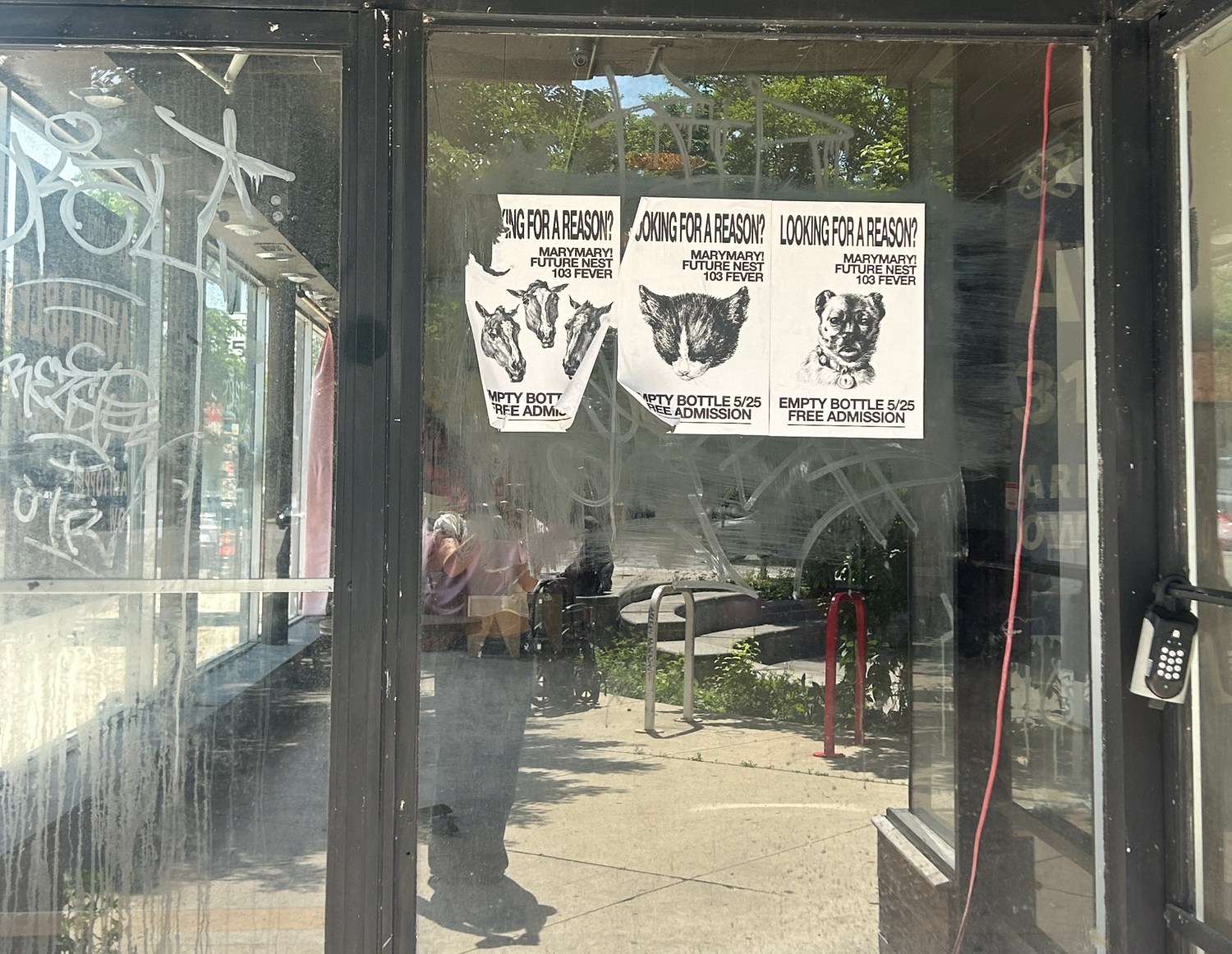
After months of jamming and collaborating on each other’s solo projects, best friends Mary Jennifer (MaryMary!), Laura Cecelia (Future Nest), and Sage Irene (Friendship City Unlimited) teamed up to form 103 Fever, a self-described “DIY alt-country electronic jam band” that stretches and pokes holes in our conventional conception of country music like it’s Play-Doh. 103 Fever is a God-given testament to the idea of Musical Soulmates, a group of musicians who make ear candy you can suck on, chew on, or swallow whole. If you live in Chicago, you might’ve seen some variation of their “LOOKING FOR A REASON?” show flyers on social media or papered around town: you may remember the one with a drawing of three fish intertwined or the one with three white-snouted horses; maybe the one with a rather forlorn-looking cat; a stoic mutt; a Victorian child sipping a glass of milk. With such elusive, ominous, (forgive me) esoteric branding and no barrier to entry—after all, they were advertising an Empty Bottle Free Monday show—I can’t imagine you wouldn’t be at least a little bit curious.
103 Fever’s extra special debut show took place on May 25th, 2026, a triple-header for Mary, Laura, and Sage, who played exclusivelyin all three sets—in Mary’s words, “three bands, three girls, three releases, one night, zero dollars.” The lineup was bolstered by familiar names Future Nest and MaryMary! (both of whom have LPs set to release by the end of the year), in addition to the sale of new merch and same-day single releases from each project. Over the course of nearly three hours, Mary, Laura, and Sage only disembarked from the stage to jump into the moshpit with a tambourine, microphone, and cowbell (respectively), and to run up to the green room for quick-changes between sets. For MaryMary!’s closing performance, Sage and Laura reemerged wearing neon safety vests over their bras while Mary donned a white evening gown. When the lights eventually came up, the band shared sweat-soaked embraces to the tune of cheers from every corner of the room. I walked out of Empty Bottle that night with my ears ringing, a new MaryMary! t-shirt, and a big fat smile on my face; if you came in search of a reason, you probably left with several.
It’s Friday afternoon and the show is on Monday night. Mary greets me at the front door of an unassuming brick building in Pilsen and leads me up the echoey stairs—what once was an industrial building is now a buzzing hub where artists can be as loud and as weird as they want. Upon entering, I count four “LOOKING FOR A REASON?” flyers: in the stairwell, on the walls, on the door to 103 Fever’s studio. In refreshing contrast to the cavernous hallway, 103 Fever’s rehearsal space feels like your cool older cousin’s basement: warm wood paneled walls, shag carpet, a tufted Bart Simpson rug on display, a tv playing UFO 50 on mute, synthesizers, guitars, a drum-kit in the corner, string lights, old Future Nest and MaryMary! show flyers, mini stained glass hanging in the window. We all formally shake hands before sitting/laying on the floor like old friends at a sleepover. The following interview is—pun intended—an absolute fever dream.
I start recording mid-conversation:
ELLA HARDIE: Let’s just go around with some introductions… Maybe we should start with your solo stuff and then bring it together? Who are you, what kind of music do you make, who wants to go first?
SAGE IRENE: Mary should go first, she just announced her album today—
Mary smiles and clears her throat:
MARY JENNIFER: My name’s Mary Jennifer, I play music as MaryMary!, and I think I make synth-punk… mixed with post-punk-indie-rock… with an electronic edge to it… It’s kinda hard to specifically describe—y’know, it’s synth-punk music you can dance and have fun to. And these two lovely ladies play in my backing band. Sage plays the drums—
LAURA CECELIA: I do bass… and guitar… and synth… and sing…
MJ: And sing—
LC: I do it all… Except for drums, because—
SI: I got that handled, I got that on lock—
LC: Under the rug—
SI: Under the rug… I cut up the rug onstage… I got big ‘ol shears—
LC: We should start bringing scissors—like, a bunch of scissors, onstage.
SI: After the show we cut all the wires—
LC: “We’re gonna make sure this is the LAST SHOW that Empty Bottle ever plays—”
Laughter.
MJ: These two have been playing in the MaryMary! band since January… Laura for a little longer, since Dream Girl last April, which was a big show that we put together. I’ve been playing with Laura’s project, Future Nest, on-and-off since last July…
Laura nods.
MJ: For my solo stuff, I have an album coming out on July 3rd which I’m super excited about. I announced it, as of this interview, today, and it’s called I Love You I’m Glad I Exist, which I’ve been working on for the last two years now. I’m very, very, very psyched for it to finally be coming out—
SI & LC (in perfect sync): MaryMary!’s VeryVeryVery—
MJ: WHOA—
All of us crack up.
SI: Wavelength! These frequencies are amplifying.
MaryMary! 5/25/2026 by Will Blakley.
***
MJ: Shall we…?
EH: Laura, what kind of music do you make?
LC: I’m Laura Cecelia… I have a lot of music under my belt, but the primary project that I work on is Future Nest, which I would say is an industrial—
SI: It’s like… sex music—
MJ: Industrial sex music—
Laura starts laughing and concedes.
LC: Industrial sex music, I guess—
SI: Very wet …steamy…
MJ:Metallic—
SI: Metallic … like body-roll—
MJ: Cronenberg’s Crash—
LC: Blood… milk… skin… muscle… wire… metal…
SI: Future Nest makes music for people who: boutique fragrances…
MJ: And no deodorant. No deodorant ever. We’re a No Deodorant Band—
SI: Future Nest makes music for lickin’ sweat off your lover—
LC: For bottling the sweat off your lover—
SI: Bottling it up and saving it for later… Keepin’ it in your fridge, puttin’ ice cubes in it, givin’ it to your guests and not telling them about it—
At this point, we’re all in bits and Laura eventually goes:“Ew that’s GROSS!”
LC: And that’s what Future Nest sounds like!
She laughs.
LC: Future Nest is my main project, and I’m coming out with an album in the fall but I won’t announce a date for it yet… Sage is gonna to be mixing the whole record because she is a wizard. It’s going to be really, really exciting. It’s been, like, seven years in the making—
EH: Oh my God…? When did your last record come out?
LC: The last record came out in 2021, and this one includes remnants of the stuff I was working on at that time that didn’t make the cut, as well as what it’s evolved into. So it’s been about seven years in the process. In Future Nest I sing and perform—most of what I do is just performance. I am very kinetic and very…
SI: It’s a very visceral performance—
LC: 50% of the show, in vocal delivery and body movement, is improvised.
SI: 50% improv, 50% epic. A million percent epic, though. It’s good shit—
LC: Mary’s played in the band a couple times, she’s done synth and aux-percussion, but on Monday she’s doing…
MJ: Synth and guitar, and some samples—
LC: And Sage is gonna do…
SI: The drums.
EH: Damn, you’re holding it down—
SI: Pretty much. I’m like Animal, I’m uncaged—
MJ: You’re also bright red and fuzzy—
SI: I’m red and fuzzy! Yeah, people say I kinda look like Animal when I drum. Which is cool.
MJ: You’ve got that Muppet bounce—
LC: You’re being puppeted. You’re a vessel for a Greater Power.
MJ: The Power of Rhythm.
Future Nest 5/25/2026 by Will Blakley.
***
SI: Well, I’m Sage Irene… I make solo music sometimes as Friendship City Unlimited, but recently I’ve been in MaryMary! and Future Nest, and then they asked me to join 103 Fever and I kinda just took over it—
Mary and Laura shrug and nod.
SI: It was gonna be, like, disco…?
LC: It was gonna be, like, minimalist techno—
SI: And then I was like: Nahhhh… We’re doin’ country music.
LC: We’re gettin’ our reeds and whackin’ our heels and stuff… And that’s not a joke.
MJ: I’m makin’ horse noises—
SI: It worked well, we all mesh very well. I met Laura a couple months ago but she’s like an old friend to me, we’re very tight like that. I think they all just get the vibe. I met Mary at [a record store] a little while ago…
EH: Yeah, I guess we should backtrack a little bit… I want to talk about 103 Fever’s origin story specifically—
Mary turns to Sage:
MJ: We met at a record store.
SI: We met on Hinge.
MJ: No we did not!
Laughter.
MJ: The earnest story is that you were on a date with somebody who I was also seeing at the time, and she brought you to My Place of Work to be like: “Y’all should meet!”
EH: Well… She was lowkey right….
A beat. Sage furrows her brows.
SI: Why did she bring me there…?
MJ:I don’t know!!
SI: She also rolled a joint and didn’t let me hit any of it when she said bye to me. Swear to God.
Laughter.
SI: But then I met Mary and it was cool.
Mary smiles. I turn to Laura:
LC: Well,[Mary and I] were separated at birth throughtime and space. We’re twins—
MJ: There is a three year difference between the separation at birth but we’re still twins, which whisked her to Texas and me to Washington State.
LC: It was rough. It was a weird couple of years that I had to live without my twin, but then we found each other… I was planning to move up to Chicago on January 1st of 2025, but I came to visit in November of 2024 and I thought, “Well, Future Nest is very mobile,” so I brought my stuff and I was gonna play a show. I found out about Mary’s music because I was looking for artists in Chicago and I saw a video of her performing and I thought it was super cool, so I reached out and asked if she wanted to play a show on “this date” at “a venue.” But I needed help booking it because I didn’t know any of the venues in the area, and she was like, “Don’t play this one, play this one, this is the best one, this is my favorite spot,” and she said Cole’s Bar, and I was like, “Cool!” So I started setting it up and she was like, “Hey, actually I can’t play this show, I’m working a wedding that night—”
MJ: A horrible straight wedding—
LC: And I was like, “Ok!” then Mary was like, “Wait, I might not be working this wedding, can you put me on the guest list?” And I was like, “Yeah, absolutely!” And then she didn’t show up.
Laughter.
LC: But it was for the best because everyone got COVID.
LC: And the show was played with AAAYYYAAA and Shinespark and this band called Drake & The Beatles that was fronted by a friend of mine from Texas named Gren—
The band name “Drake & The Beatles” makes me snort.
LC: But Mary didn’t come to that show and we didn’t meet, but then I moved up here and we hung out and then we were best friends. We were like: “Oh,that’s who was separated from me at at birth—”
MJ: We found out ‘cuz we both have separate halves of the same locket, and when we put them together it glowed and did, like, a perfect note and then withered away—
Mary and Laura proceed to match each other’s pitch in “Ahhh”’s.
EH: I can’t wait for this scene in the biopic—
LC: I miss that locket. It was a really good outfit piece too, so I’m a little peeved—
MJ: No, me too! It tied every one of my outfits together—
SI: And it exploded?
LC: It did this kinda weird little burst and then it just crumpled up—
SI: And then you took a deep breath in and you sucked in the dust and then both of your voices became the same. And then you swapped bodies…
MJ: That was the crazy thing, we swapped bodies—
LC: We swapped back, it was only for seven hours—
MJ: Yeah, it was only seven hours. We Freaky Friday’d but it was a Tuesday.
SI: “Freaky Friday’d on a Tuesday…” That’s a Brockhampton bar—
Laughter. Mary looks at me:
MJ: We’re very inspired by Brockh—
She stops herself.
LC: You can’t even say it out loud!
Sage on drums 5/25/2026 by Will Blakley.
EH: I didn’t realize how recent this was! Did you start making music together pretty much immediately?
LC: It was really funny because Mary and I, when we first hung out, she showed me a song of hers and I was like, “Damn, she’s really good.” It was “Week Goes On and On,” which is technically the first but also the second track off her upcoming record—
MJ: Or, technically second but kinda first—
LC: Kinda first. It’s like squares and circles, one’s the other and the other’s not—
Laughter.
LC: But she said something like, “It’s hard for me to want to work with someone on music immediately because I feel like I have my way that I go about creating, I feel like it usually doesn’t mesh,” which I agreed with too, but then we started working on MaryMary!’s set for Dream Girl together and we found out that we actually click very well… We started hanging out multiple times every week playing music, working on music, coming up with stuff. This was last summer…?
MJ: Laura and I realized really quickly that we make very good music together. And then with Sage, it was the type of thing where when we got to know each other we realized that a lot of our musical philosophies aligned, so I asked her to play a couple shows in the MaryMary! Band, and I feel like the three of us, as a unit, clicked very well. I remember Laura and I were planning 103 Fever as a duo thing, and we were leaving a show and talking and we were like… “What if we just asked Sage to be in the band? And it’s like… ‘We’re a band?” So now we’re a band.
EH: When you say your musical philosophies are aligned, what are your musical philosophies? How did you end up discovering that you had those things in common?
MJ: I think just, like, the joy of creation—
SI: I’m crazy about music. It’s kinda all I talk about—
MJ: All we think about, a little bit—
SI: The first few times I hung out with Mary, all I would do was talk to her about music, which was cool, ‘cuz she works at a record store and I could be like, “Oh, you know this band?” “Can I tell you about this?” I dunno, I just get super excited to talk about music and it’s cool to have friends to talk about it with all the time.
MJ: I feel like we’re also all of a very similar mindset—
SI: Of the ilk—
MJ: Yes, of a similar ilk. Girls of a similar ilk—
We all laugh.
SI: Girls sipping similar milk—
MJ: Girls of a similar milk—
LC:“Girls sipping similar milk”
SI: Ok, write that down! That’s a good lyric!
LC: Is anybody writing this down?
EH: I actually did write that down.
MJ: Y’know, creating for the sake of it—
SI: Just making a bunch of shit all the time—
MJ: Making a bunch of shit all the time and not necessarily being beholden to what gear we have, but working with our limitations and not letting that stop us from making whatever we want to make. Sage in particular is really into tape and lo-fi recording and at-home studio tricks… I feel like you’re one of the best audio engineers I’ve ever met.
LC: Certainly. Without a doubt.
SI: Thank you, I try! I love tape machines, I love my Tascam 488… I think we just like to have fun. I wouldn’t do it if it wasn’t fun… I think that’s all people need to know about this band, it’s gonna be a fun time—
MJ: I mean, I don’t know how else you could describe 103 Fever besides, like, alt-country electronic jam band—
LC: I would describe it as interesting… curious music… it’s fascinating—
MJ: A Queer Trio of Frauds.
LC: That’s true, we are frauds. Nothing we’re saying in this interview is true, by the way—
SI: I heard the new Geese record and I said: “I could do better than that.”
Laughter.
Mary hands me an EXCLUSIVE piece of 103 Fever merch that now resides on my fridge: a sticker that says “A QUEER TRIO OF FRAUDS. SOME VERY PECULIAR ABILITIES, 103 FEVER.” She smirks.
MJ: You can keep that.
***
Via @103fevertheband.
EH: I wrote this down in my notes when I was prepping, but the entire time I’ve known my roommate she’s been saying that before she starts a band she needs to find her “Musical Soulmate,” an almost mystical, otherworldly kind of connection she’s looking for… but it seems like you’ve all actually found that…
LC: It’s kinda like when Noah heard the word of God—
MJ: Why are you getting religious…
SI: I had a good story! Can I tell my good story? I had a sincere moment I would like to share—
MJ: Well, this is one of the best stories—
EH: Famously…
It’s at this moment that I notice Sage’s yellow baseball cap says: “ I ❤ JESUS” and jot down a note about it.
LC: Noah kinda had to take faith into his own hands, and he didn’t know if it was gonna be real or not because he was just hearing voices that told him to build the Ark, y’know? And then built it, and the flood happened, and I bet he felt so good that the flood happened. ‘Cuz he was right! Anyway, what’s your stupid story, Sage?
We all start DYING laughing.
MJ: Ella, I need to know what you just wrote down—
EH: I wrote down: “Sage wearing ‘I Heart Jesus Hat’ parenthesis yellow parenthesis Noah.”
MJ: Well, take note of the second part of what the hat says…
I look at Sage’s hat again and realize that it, in fact, reads: “I ❤ JESUS etc.”
EH: Oh my God. It’s a fucking Wilco hat—
SI: It’s worse!
LC: Sage, what’s your story?
SI: It was when we played the Burlington in March for Mary’s Birthday Show. We’d just gotten this practice space, we were here a ton and we were starting to sound really good, and that show I felt so confident in—
MJ: We felt very tight and, like, harmonious—
SI: We were so happy and giddy the whole time, and we had so many people come up to us after and be like, “I love seeing bands have fun like that.” Laura is always smiling so hard while we play, and there are so many moments in Mary’s songs where we have to do a crazy big hit all at once and it just blows the speakers out, and it’s so rewarding to look over at both of them and think: “I am so happy to be up here with y’all. I’m so happy I found y’all.” I just moved up to the city from the suburbs too, like, in August. I’ve always wanted to live in Chicago, and being in this music scene is kinda all I’ve ever wanted to do. I had a cousin who was in the music scene when I was growing up and I was so inspired by him; I was just like, “I want to be a part of that so bad.” I was, like, thirteen going to all the local shows and wanting to be so engrossed in it. It took me a couple years, but this is awesome. I actually did it. I have bandmates to go onstage with and play shows at these venues I used to go to as a kid… This is the actual dream. We don’t need anything more than this—I have my best friends, so it’s sweet.
MJ: There are ways for the comment, “You look like you’re having so much fun onstage,” to be treated as a back-handed thing, but I do feel like it’s earnest. Especially in the way people were talking about the last string of shows we’ve played, I think that’s what made the music so Magical and Good, it’s how much fun we’re having with one another and how comfortable we are with each other.
EH: That’s what I’m always so struck by when I see your shows. It is one of those things where you leave and you feel so alive and it’s just so affirming of, like, The Power of Music and Friendship… Which feels cringe when you say it out loud but it’s true.
SI: We’re gonna kill cringe with this band. It’s gonna be ok to love your friends, everybody’s gonna start hugging their friends goodbye after our shows—
LC: Every friend gets a hug—
SI: You can text your friend “Good Morning…” Tell your friends you love them every day—
LC: In 103 World, we love our friends…
SI: We’re gonna create a new type of “woke.”
MJ: We’re gonna create a new “woke” that’s all about respecting our friends and lifting them up and where all friends share a bed every night.
LC: Exactly. It’s all about faith. It’s all about the deliverance of faith…Have you ever heard the story of Noah?
***
SI: Who is our music for?
I laugh.
EH: That’s a good question, who does 103 Fever make music for?
SI: We came up with the answers—
Sage, Mary, and Laura all rapid-fire:
Friends
Lesbians
Girls Who Don’t Wear Deodorant
Masochists
Sadists
Girls Who Used To Be Horse Girls
Gamblers
Healthy Gamblers
People Who Buy One Dollar Scratch-Offs
People Who Buy HUGE Gambling Pools But Take Good Care Of Their Bodies
Gamblers Who Also Run Every Once in a While
Gamblers Who Jog and Eat Salads
Inflation Fetishists
Sneakerheads
Hi-Fi Enthusiasts
People Who Still Make Vine Compilations on YouTube
People Who Were Really Affected By The Blueberry Scene in Willy Wonka
Trans Folk-Punk Artists Who Were Once Vine Stars (“I can’t name any but if they’re out there, this is for you”)
Construction Workers
People Who Aren’t in Unions
People Who Are in Unions
People Who Wear Sandals
People Who Don’t Wear Sandals
People With A Little Bit of Sand on Them From The Beach Still
People Who Have Sand in Their Teeth Still
People Who Like Sand in Their Meat
People Who Like Toasting Their Buns
People Who Like Toasting Their Buns and Sand in Their Teeth
MJ: What was your question?
***
EH: How do you know when a song is for your solo project or when it’s a 103 Fever song? How are those processes different?
SI: We’ve only ever written songs all together, we’re not allowed to do solo stuff. It’s almost all born out of jams… or saying something funny to make each other laugh and then just repeating it over and over again—
MJ: And then literally being like: “Wait, that could be a song…” We have a song called “Beat It—”
SI: We wrote that song in, like, 30 seconds—
LC: And the song is only about… 30 seconds…
MJ: I feel like our song, “Like a Horse,” started from [Sage] doing joke rap bars that we were like… Wait… those are actually really good lyrics… And then we spun it into, like, an alt-country song—
LC: We were doing Weezer—
MJ: We were doing Weezer?
LC: It was some Weezer song and we just sang what we thought the lyrics should be—
MJ: We have a tendency to jam for an hour uninterrupted and just kinda jump into other ideas and grooves from one another. We could be rockin’ an idea for ten minutes straight and then immediately someone starts playing something else and we all take a step back and jump into that. And that kinda spins into what become our actual songs.
LC: We’re very good at dynamic listening with each other, which is really helpful. Like, if someone does something different, we’ll all kinda pivot and be like, “Ok, this is where we need to follow at this point.” Which I think is just good jamming in general—like, good musicianship—but we’re all of a similar sensibility in what we’re trying to create… When someone does something different, it’s like, “How can we continue this in a way that expands it from what it is, but also kinda feels in line with ourselves?”
SI: We like to ask: “Is this anything?”
MJ: “Is this anything” is the big thing, yeah—
LC: A lot of times, the answer is NO—
SI: It’s good, we keep ourselves in check! We can make a lotta bullshit—
MJ: One of the rules here is: “Don’t Gas Each Other’s Flops.”
SI: “Don’t gas my flops—”
LC: “Don’t gas my flop…”
MJ: There have been times, point-blank, when I’ve been like, “Ok, what about this?” and the response is, earnestly, “That’s nothing.” And I’m like, “Cool.”
LC: We record almost everything we do, so it’s fun to look back on.
MJ: We have countless hour long voice-memos—
LC: We’ve only had this place since March—
SI: But we kinda don’t leave it…
LC: My phone is almost completely out of storage now because of all the voice-memos that I’ve taken, like gigabytes and gigabytes worth of voice-memos… and voice-memos don’t take up a lot of storage at all—
SI: The archives will go crazy…
MJ: Also, it’s worth noting that for a lot of these jams, we go into it with fully no intention of it ever being a song we play onstage, but just stuff that we do to make each other laugh, “Hey There Laura” being an example… That won’t make any sense to anyone reading this…
Sage and Laura sing a line from their (currently unreleased) song,“Hey There Laura:”
LC & SI: “Hey there Laura / Whaddaya say?”
MJ: But the voice-memo for “Hey There Laura” is, like, 35 minutes long! And there are ideas present in it that I think could be spun into a song that we’ll play onstage or record sometime.
SI: I like the little magic moments in music where you’re, like “Oh, that fuckin’ hit.” I’m a Song Girl—like, I like albums, but I like to play a song 20 times in a row until I’m satisfied, and usually it’s just to hear a quick one-second part of it, that magic part. In the one recorded song we have, there’s, like, one little millisecond where the bass pokes out from the guitar, and we played it on loop a couple times and we were like: “That’s cool as fuck.”
MJ: Just ear candy—short bursts or very long bursts of ear candy. We’re trying to be a very singles and songs oriented band…That could change down the line, but I feel like for MaryMary! stuff and Future Nest stuff, both of us have been chipping away at our albums for so long. It’s a very fulfilling experience, but it can be frustrating to be working on this one project for months if not years. The idea of 103 Fever being a band that can get together, record, and release a song within a week is very exciting to me.
EH: How do you decide when a song is done?
MJ: Mmmm… that’s a great question…
SI: We haven’t done that yet—
Laughter.
SI: It’s a very live band… It’s fun to do 8 minute jams and stuff, but I don’t expect people to listen to 8 minutes of noise-garage-rock recorded… So maybe it’ll be a little different when we finalize something, but—
MJ: I also anticipate that even the songs—the way that we’re gonna be playing them onstage at our show this Monday—at a future show they’re probably going to sound completely different. I’m also sure that down the line we could play a more garage-rock set or an acoustic country set or a more electronic set… The show on Monday is gonna be entirely electronic with some guitar and bass, but I also feel like we’ve got a few shows lined up for this summer—which is a crazy feeling because no one has heard anything—
LC: I think we have, like four shows booked already, total? And we don’t have a single song out and we’ve never played live… We’re nothing so far!
EH: You’re just, like, a cool Instagram flyer, a cool flyer around town—
LC: Sage designed the poster, she’s a genius for that… The voice of God spoke through her for that one. Much like the Biblical Noah.
MJ: Much like the Biblical Noah when he built the Ark—
SI: Much like the burning bush…
MJ: I hate to say it, but I was one of the deniers… I thought it looked great from the jump, but every time I was like, “Should we include a little more information…?” Sage was like—
SI: I was like, “Fuck no, Mary.”
LC & MJ: And you were right for that—
Laughter.
MJ: We’re not even kidding—
SI: No, I’m rude… I’m Rude Fever… Laura’s… Hairy Fever—
LC: I’m Hairy Fever…?
SI: Mary’s Mary Fever.
MJ: Mary Fever? That’s good—
SI: Mary Fever, Hairy Fever, and Rude Fever.
MJ: Or Scary Fever…
SI: And I’d be Scary Fever… If we were the Spice Girls.
LC: Am I hairy…?
SI: You just have, like… cool hair.
103 Fever flyers spotted in Avondale. Boots on the ground journalism… Technically clogs* on the ground journalism.
***
I check my phone and see that we’ve been talking for nearly an hour.
EH: Alright, this is officially the longest interview I’ve ever done…
SI: Do you think we’ll make it? Do you think we have it?
EH: I think things are boding extremely well. I think you have it… I think I have it… I think I caught a fever… Who has a thermometer…?
Laughter.
EH: But let’s wrap it up! Plug your shit, shout out some of your favs… “Dope and Inspiring,” if I may…
MJ: Hell yeah. We’re all releasing singles on May 25th, 103 Fever, Future Nest, and MaryMary! “Small Price to Pay” by Future Nest,“how2b” by MaryMary!, and “Good Advice (new game+)” by 103 Fever. “how2b” is gonna be the lead single off my upcoming album, I Love You I’m Glad I Exist, and it’s about learning how to be. It’s a dance-punk song and I’m releasing a single-edit so it’ll be a shortened version, only five minutes, while the album version’ll be about seven and a half. It’s groovy but you can cry to it.
LC: AndFuture Nest’s single, “Small Price to Pay,” is—
SI: “Get Your Condoms Ready.” That’s the tagline… It’s sexy, the bass is loud, the bass’ll get you movin’ —
LC: It’s a song about lighting fires at people’s feet and having a very complicated relationship with desire—
Laughter. A beat.
LC: I feel like I didn’t get to say what I wanted to say about “Small Price to Pay…”
EH: Say it! Please!
LC: Ummm… Get your condoms ready.
We all crack up.
SI: The 103 Fever Song, “Good Advice (new game+)—”
LC: What’s it about, Sage?
SI: I dunno… I haven’t really written the lyrics yet…
SI: Shoutout Marcy the Baptist, she’s goated. Shoutout Massachusetts in general—
MJ: I did an interview recently where I had a whole list of local artists I really wanted to shout out, but the two people I ended up shouting out during the interview were Soft Cell and Kendrick Lamar.
Written by Shea Roney | Photo Courtesy of Lund Surk
Every Wednesday, the ugly hug shares a playlist personally curated by an artist/band that we have been enjoying. This week we have a collection of songs put together by the Chicago-based band, Lund Surk.
Listen here, comrades! The revolution is here and it’s homegrown. There is no middle on the other side. The American century of humiliation is here. Back in May, Lund Surk shared Loyal Party Member, a brief yet mighty collection of fool proof pop hooks, rogue guitar solos and tender harmonies that stand for a band at their best. Built up by the contributions of Ruben Steiner (guitar, vocals), Desi Lilly (drums, keys), Charlie Johnston (guitar), Vi Matheos (bass), and Kaylyn Dix (drums), Lund Surk is a band built by and for defiance. Emphasizing the foundational warp of American exceptionalism, the capitalistic smash-and-grabs of the working class, privatized incarceration and the “us vs them” sentiments that have destroyed our world, Lund Surk make clear that there is still so much to fight for. Loyal Party Member is a reminder that every action we take in our day to day lives is inherently political. It’s our willingness to organize, to stand together, to be empathetic, to be joyful, our ability to create and share art that can reshape power. Lund Surk are ready. But they ask, “Could you be it? Could you be the tide of change?”
About the playlist, Lund Surk shared;
Loyal Party Member owes a lot to its influences! This playlist is a compiling of various works which the five of us drew from whilst making the record, or the things the material otherwise reminds us of. Hope you like it!
Written by Shea Roney | Photos Courtesy of Mildred
From the start, Mildred wasn’t going to be a band band. Back in 2020, Henry Easton Koehler (vocals, guitar), Jack Schrott (vocals, guitar) and Matt Palmquist (vocals, bass, woodwinds) would find time to jam in their shared residence of the Ward St. house in Berkeley. It was a means to spend time together when dinner was wrapped up and the dishes done. Every once in a while, Will Fortna (drums, production) would be in town and join in on the sessions. But as songs started to fall into place, each mate putting their weight of inspiration into motion, the Oakland-based band has found themselves with their debut LP, Fenceline, out in the world.
Although these songs stick to your bones with ease, the flavors most worth savoring are derived from a slow simmer. With conversational guitars enjoying a backyard shoot-the-shit and jerry-esque jubilations galore, Mildred create a rich environment of organic patterns, sonic distortions and wholehearted harmonies that meld together so effectively. The beauty of this record is set by each member’s unique use of language. Whether that be of observational wit, natural wordplay, or their vivid musical instincts, Mildred is a group of four friends trying to write the best possible song they can.
Fenceline sets its pace with “UPS Brown”, a song tempting its own fate with inherent expectations. And it’s in that sentiment which has made Mildred such a good band. Like a cat sitting on the windowsill, Fenceline takes it all in. It’s not a race from boredom, but rather an implementation of it all; the stories caught between ambition and abandonment, the hearty and the hungover, the present and the perceived of our very normal day-to-days. They are the stories worth telling, and the songs we always return to.
We recently got to chat with Mildred about the band’s place in their lives, friendship and where they can go next.
You have received a lot of really positive press and acknowledgment for Fenceline so far, even being referred to as the ‘indie sleeper of 2026’. How have you been feeling as you let your debut LP sit out in the world? Did you have any anticipations for the record prior to its release?
Will Fortna: We put it out with very little in the way of expectations, but it’s felt really good to see it slowly but surely seep out into the world. It’s still incredibly surreal to see a stranger talking about our music online, or to have people come to our shows and know the music. We’ve had some musicians we really love and respect reach out or say nice things about it, which – again – feels really good and really surreal.
Matt Palmquist: I remember listening to the final mix, and being really pleased with the album sound. I think it is rare for me to feel that the space between the thought of the thing and the thing itself is so small; usually that translation disappoints, but in the case of fenceline, it surprised and delighted.
Henry Easton Koehler: Feels good. I wasn’t expecting anything really. I’m kinda surprised at how proud I am of the album, so it’s nice to share it, and wild that a few people are responding to it and coming to shows who aren’t my friends.
Jack Schrott: It’s been surreal. I liked the album a lot when we finished it, but I had no sense that people would react so positively to it. Having some space from actively working on it and seeing the response has let me return to the songs with new ears and a renewed sense of pride.
Mildred operates on a “no lead writer” system. What about each other’s writing chops do you admire the most? What do you think plays off well with your individual skills and observations to make the best song you can?
WF: Jack’s songs are so catchy and the vocal melodies so good that I often gloss over the lyrics at first, but then I’ll see them written down or a line will jump out at me as I’m drumming along and I realize what a fucking poet he is. The way he delivers the lines can be so matter of fact or deadpan that it often hides amazing turns of phrase, profound/weird ideas, or just really funny imagery.
MP: The band in a way is like a meta-instrument, like a really special ancient violin that makes some crazy resonant sound so it sounds way different even though you’re playing the same notes as you usually do, so that certain tones and textures become a product of unexpected combinations rather than precise arranging. I like bringing an idea into the room, and walking out with something completely different, better, and something I would as an individual never think of. I love that, and I have a lot of respect for, trust in, and admiration for the rest of the band.
HEK: What Matt said. Getting excited about everyone else’s ideas and songs is what keeps this thing going. I think we’re all still getting better as songwriters/ musicians/arrangers in a way that feels exciting. I also love having the opportunity to think of myself as a guitar player. That’s not something I’ve ever really identified with.
JS: Yeah, I’m constantly surprised/inspired by everyone’s evolving songwriting. A lot of ideas still come from people working on things in isolation, but the best part of playing together is picking up instruments without a plan, wandering around, and winding up somewhere interesting. It feels like the more we play together, the more often we wind up in interesting places. I think the goal is to let the wellsprings of individual songwriting and the wellspring of weird things that emerge from playing as a band flow into the same river.
You all have very different day jobs, but Mildred has become a chance for you all to structure your life around music together. With no prior intentions on starting a band, where does Mildred fall into your lives? Does this release influence where you see Mildred headed in the future?
WF: Mildred is definitely taking on an increasingly large, perhaps disruptive, role in our lives. We’re trying to figure out what the future holds, but I know we all want to make more music and see where things take us.
MP: On my dads side, my grandmother was a church organist, her dad came to the US with a clarinet, and her son was a supper club singer. For me music has always felt like an inevitability, though not a guarantee as the rest of my family was always very against me living a music life (themes that plague the liner notes like poverty, late nights, alcoholism, depression). It’s taken some time and creativity to wrestle Mildred into existence (for the better), so I hold that space preciously.
HEK: What Matt and Will said. I would like for us to make more records and to tour as much as we can without completely upending our lives. It feels good to be hustling a little bit, though it definitely comes with some sacrifice. I’m hopeful we will continue to figure out what feels good.
JS: Lots of new opportunities before the band that we were not thinking about a couple months ago! Figuring it out. Like everyone else, I’m very excited about making more music.
Living with each other, noting that your bond as artists came naturally with hanging out and playing music after dinner, what do you guys like to do together outside of music?
WF: A lot of hanging out involves music, whether that’s listening to it, talking about it, going to shows, etc. But outside of that? Cooking meals, playing football, playing Botticelli.
MP: Cooking meals, talking about art, life stuff, stuff you do with friends.
HEK: We had some great $9 martinis the other night at Saul’s.
JS: I wish Matt and I would start playing racquetball at the Berkeley rec center again.
The cover of Fenceline is a painting by Jack that depicts the rooftop of your old place you used to live at. Why was this image and sentiment fitting for the album cover? What did it mean to have that space? Have you been able to find a similar place since?
MP: I lived in the attic of that big Victorian house. To shower I would kneel under the eaves, like I was praying. I spent a lot of mornings there on the roof, petting jones the cat and drinking coffee while Henry played basketball against our friend Nick in the driveway. We could see both the hills and bell tower of Berkeley and the city skyline flanked by dark redwoods, and there was a funny mural on the back of a building that said that the moral arc of history was bent. I feel the band’s songs are photographs in time, and this one is pretty emblematic of that period in our lives.
HEK: We play music at Matt’s house, which feels like HQ now.
JS: I think Will and Henry had the vision for a golden hour/sunset depiction of a landmark in the East Bay. At some point I remembered this postcard I painted of the rooftop of our old house in Berkeley for our friend/former housemate Nick Roberts (Nick made the music video for Fish Sticks). We basically remade that postcard at sundown for the album cover. The rhythm of our practices/time together comes from habits formed while living together, so it feels fitting that the cover gives a nod to that era. We’re dispersed now but we still get to hang out quite a bit.
You can listen to Fenceline out now! Snag it on vinyl or CD via Memorials of Destinction.
Written by Shea Roney | Photo Courtesy of Charlie Paso
Every Wednesday, the ugly hug shares a playlist personally curated by an artist/band that we have been enjoying. This week we have a collection of songs put together by the Raleigh-based duo, Charlie Paso.
The beings that live in a Charlie Paso song are filled with a deliberate sense of belonging, scrappy and incredibly sincere in their own little ways. Back in May, guitarist Duncan McDonald and drummer Nina Sarsozo released their second LP, Pray Until Something Happens, which found the duo grappling with grief in the face of loss. Through ecstatic sounds, distortion like rotting wood and sweet melodies that find the cracks, Charlie Paso offers a collection that lingers in our ears with each melodic infatuation, each conscious sound that breaks the facade of daydreams and disassociation, brimming with life and all that we have come to understand of it.
About the playlist, the duo shared;
“These songs are an assortment of immediate influences that affected and guided us during our latest album cycle and some classics that we keep very close to the heart. An ode to melancholic optimism, primitivism, and regional splendor.”
Written by Sarah Mueller | Photo Courtesy of Secret Address
Since the mid-April release of their debut EP, A Typical Day…, Philadelphia’s Secret Address has quickly risen to become one of the indiepop bands that I’m most excited about. On the self-proclaimed “noise twee” band’s debut, the duo of Emerson Bright and Will Vani mixes the fuzzier side of C86-style indie with 60s surf pop to arrive at a sound that immediately stands out in the genre.
Earlier this month, Secret Address played their first show; afterwards, I reached out to talk to them about their place in the Philadelphia scene, future plans for the band, and more.
This interview has been edited for clarity.
Sarah Mueller: Would y’all like to introduce yourselves to people who don’t know who Secret Address is?
Emerson Bright: I’m Emerson Bright, I play guitar, drums, keys, and I sing the songs for Secret Address.
Will Vani: I’m Will, I play bass and a little guitar, and I write some of the songs, but Emerson does most of the songwriting and instruments and arrangements. I also did all the art direction for the band.
SM: First off, y’all had your first show last week; how did that go?
EB: I was really nervous about it, because we were playing with a bunch of bands that we love. Like, Ringtone is kind of like a power pop band that has a lot of deconstructionist emo influences. They’re all really great musicians on a technical level and scene veterans, so it was cool to be on a bill with them. It’s all people that I know and have admired for a while in Philly. And then Lightheaded and Laughing Chimes are not local, but they’re huge influences; they made my favorite record of last year. With Laughing Chimes, we’re both from the Midwest so it’s awesome to see a band that great coming out of Ohio. We’re playing with all these bands that are huge for us, and I was nervous, but I think we locked in.
WV: I thought it went really well. And the guy from Lightheaded bought two tapes; one of the things about the show is that we made handmade tapes. We had 20, and we sold out at the first show, which was really cool for us.
EB: We were really pleasantly surprised by being able to play with people we look up to and it resonating with that audience and the other bands. It meant a lot to us. Also, shoutout to the other four people who are in our live band.
WV: They’re so good at every instrument they play.
EB: Andy, Jackson, Kelly, and Blake round out the live band. We do all this stuff on the record that’s like overdubbing and lots of space-y reverb and wall of sound. To replicate that live takes a lot of good chemistry between the players and a big band, and they’re the best musicians I know. They really stepped up, and it was phenomenal to get to play with them.
SM: Was this both of your first times performing overall, or have there been other bands before this, together or separately?
WV: Kind of a long story.
EB: We met, actually, while playing in a previous band. And then some of the other people in the live band are from a different band I used to be in.
WV: I was a big fan of that band, called Roseheath. They made more traditional chamber pop, more similar to Jellyfish. But Emerson and one other person had creative differences.
EB: I really wanted to make more lo-fi music that was inspired by the C86 and Elephant 6 stuff that I loved, or Pet Sounds. And I wanted to work on tape, with physical instruments. My main songwriting partner in Roseheath wanted more polish and industry standard production on what we were making. He still plays in the Secret Address live band, and I still play in another band with him called Ghostship Dreamland that’s more of what he wanted. We still work together and we’re still friends, but being creative partners was not going to work out. Will and I used to play in a band called Dumb Angel, and it was very 60s-inspired rock and roll stuff. The story of that band is a bit crazy; we’d be here all day.
WV: It was a good experience to grow with each other, though. I’m happy where I am with this band, because we’re both making music we want to make.
EB: I agree, we took what we learned from both of those bands into Secret Address as an example of “what were the problems with these experiences, and what do we want the new project to feel like?” I think we learned a lot from the other bands we’ve been in.
SM: I’ve heard a lot about the Philadelphia scene from others, but not so much about the twee side of it. Could you tell me a bit about that?
EB: It’s interesting in that the Philadelphia scene is at a transitional point right now. In 2022 and 2023, there was a lot of hype around TAGABOW and the whole Julia’s War shoegaze scene. That was the sound of Philly for a while, and the hype and the innovation in that space seems to me to have died down. But no one is exactly sure what’s going to replace it yet.
WV: We’re just big fans of jangle pop; a lot of New Jersey bands lean that way. Lightheaded is a good example of the jangly side; jangle pop and power pop are adjacent to twee.
EB: That’s the thing in Philly. We got interviewed by a local zine that told us that we were the only twee band in Philadelphia right now.
WV: It’s kind of true, though there’s other similar bands.
EB: The New Jersey scene, right next door, has amazing bands that play in the city all the time. I saw a band called Shampoo the other night, they just put out a 7”. It’s incredible stuff, like Dolly Mixture or Margo Guryan, the sunshine-y, 60s influenced side of the genre.
WV: There’s a shoegaze band, Mary’s Laser Beam, that makes more traditional TAGABOW-esque stuff, and now they’re trying to lean more into twee, from what I’ve heard. My roommate is mixing it for them, and they cited Secret Address as an influence.
EB: I was flattered by that too, when I heard about it. I’m excited to hear what they come up with.
WV: I don’t know if Philly knows what twee is yet, and we’re just trying to make them aware that you can make music like this.
SM: Now that you’ve recorded music and released music, what’s the main difference between the two acts? Is it just the number of people on stage, or is there more to it than that?
WV: We’re louder!
EB: In the studio, we dial back the noise. Our noise pop in the studio comes mostly from working on tape machines or using effects pedals in unconventional ways, as opposed to straight-ahead distortion. We love shoegaze and noise pop, and we lean into the side of us that’s influenced by Lilys or Blue Rev live. It’s more of a loud, crunchy guitar band. Shoutout to our second keyboard player, Andy, who has a box of effects pedals that he’s twisting during the show.
WV: We got plywood from Home Depot and made a board.
EB: We spent all night building it for him, and he has good intuition about where to put those atonal parts. We’re very inspired by the Olivia Tremor Control and Animal Collective like that. It’s weird, because I associate those two with being studio bands, but for us it comes out more in live performance because we have a guy whose job is to do it.
SM: On the subject of A Typical Day itself, everyone I’ve talked to thinks your vocals stand out, Emerson, and particularly the falsetto. I think for me it seems unconventional, because I associate twee vocals with almost more of a flatter affect, like the Alvvays self-titled, or Cub, which you don’t. Could you talk a bit more about how you came across your choices vocally?
EB: It’s funny, because it’s not actually falsetto. I just have a very bright, high voice; I’m not singing in falsetto. It’s just the way I sound. There was a time that I wasn’t leaning into that as much in melody writing, but in my last couple bands I’ve been leaning into having an androgynous voice. I don’t make too many conscious choices about my vocals, I just sing in a way that feels right. The Alvvays debut is a record I love; I don’t hear Molly [Rankin] as having a flat affect on that record at all. She sings in a very earnest, cloying way. I love all of those vocal performances, though my formative influences are from the 60s: Colin Blunstone from the Zombies, or Brian Wilson, obviously. It’s not really a choice for me to sing in that high register, it’s just where my voice sits, but it’s a choice for me to lean into it as much as I do. And I do that because it’s what my favorite singers did. There’s a quality of longing to it, when you’re softer and quieter in such a high register, that I like to express in my music. I’m glad people like the singing; I recently went through a vocal injury that put me out of commission for a year. I’m still not sure if I sound the way I did before, so it’s good to know that people still enjoy my performances.
SM: I was relistening to A Typical Day recently, and I noticed a buried spoken-word bit in “Let’s Go Exploring!”, could you tell me what that is?
WV: It’s a really good story. The title of “Let’s Go Exploring!” is a reference to the final Calvin and Hobbes strip; we’re big Calvin and Hobbes fans. We actually found a video on Youtube of a little kid reading it aloud, and we thought, “Wow! This is perfect,” and it just fit perfectly within the song. We just put it to the microphone and played it out, and it adds a childlike nature to that section that I really enjoyed. It was intentionally buried, because we didn’t want to make it too obvious, but it adds to that section.
EB: I’m surprised it turned out as well as it did in the mix, because it’s played out of phone speakers into a pretty bad microphone fed into a tape machine, so it’s band-passed twelve ways to Sunday.
WV: That’s the story. It only has 200 views, but you can find it.
EB: If you look up “final Calvin and Hobbes strip”, you’ll find the video we sampled.
SM: On Bandcamp, you give thanks to “the raccoon that fell through the ceiling”, who I assume graces the cover. I’d love to know more about the raccoon!
EB: I lived in this absolutely terrible apartment; if anyone who reads this is moving to Philadelphia, do not rent an apartment from Madison Park! They’ll let raccoons fall through your ceiling! I moved in, and in the first week I heard scuttling noises from my ceiling; I kept calling the landlord about how there’s an animal up there, but he kept saying there’s nothing he could do about it. Eventually, I started seeing light fixtures get dislodged and little raccoon hands reaching out. I kept calling him like “man, there are raccoons in my ceiling and you’ve got to get them out”, and he kept saying he can’t do anything about it. Eventually, I woke up one morning and I heard a crashing noise and little yelps in the bathroom. I went in, and this raccoon was standing in my sink and turned on the faucet and started bathing in it. I closed the door, and I called my landlord, and I said “you’re going to have hell to pay for this”. Then I called animal control, and this lady showed up with a raccoon cage. She goes into the bathroom, and takes this little guy out of the sink, and puts him in his box. You know what? He was really polite, and I liked him a lot. He was sweet, like a little cat. They took him to a shelter and he was raised there to be released back into the wild. I hope he’s out there alive and well and rummaging through somebody’s trash.
SM: And not their ceiling?
EB: And not in their ceiling! I really hope he’s not in somebody else’s ceiling!
SM: What does a typical day look like for Secret Address?
EB: It’s been a while since we’ve had one, because we’ve been so busy.
WV: I just graduated a couple days ago. We haven’t been recording as much lately because we’ve been busy.
EB: In the next week, we’re going to start recording a lot again.
WV: The thing that’s stayed the same is that we live at this house that’s walkable to everyone, so we stay up until 4 am talking the entire night, and it’s awesome.
EB: We play music and watch silly videos, we see each other every day and there’s a whole group that congregates around this house. We’re all great friends. It’s funny, we haven’t had any of the days I wrote about on this record in a while because we’ve been so busy being in the band. We spend less time idly wandering around than we used to, mostly because it’s 100 degrees all the time now.
WV: Yeah, it’s really hot here.
EB: At this point, a typical day for us is mostly making music and then just hanging out here, noodling on acoustic guitars and watching Youtube videos.
SM: What are both of your desert island picks, your choice of songs or albums?
WV: Pet Sounds, for both of us.
EB: Are we giving one list as a band, or both of us as individuals?
SM: However you prefer.
WV: We both have the Alvvays debut on there.
EB: Do we both have an Olivia Tremor Control record?
WV: Yeah, it would be Black Foliage as a band. We’re both really into the Motifs, they’re this twee group from Australia. They’re just amazing, it’s unreal!
EB: Oh gosh, yes, I’m the One You Love!
WV: We both love Animal Collective, a lot of shoegaze.
EB: Which Animal Collective record?
WV: You like Sung Tongs, and I love that one too. I just love all their music.
EB: We’re on enough of the same page that we could do one as a band. How many picks do we get?
SM: I think we’re on five now. A six-CD changer?
EB: Do you like that Lilys mini-album [ed. note: A Brief History of Amazing Letdowns] enough? I think that one’s great.
WV: I probably have a different shoegaze album.
EB: How about The Pains of Being Pure at Heart?
WV: I think that’s pretty similar to what we’re doing with noisy twee pop.
EB: Maybe I’m just picking it because it’s close to that Airport Girl song, but we can’t desert island pick their only song.
WV: Oh! Prefab Sprout! I’d put Steve McQueen in there.
EB: Yeah, it’s got to be. My honorable mention that Will wouldn’t pick is The Last Match by the Aislers Set.
SM: You talked about starting to record again next week. Is it going to be in line with A Typical Day, or more like your live performance, or more of a stylistic left-turn?
EB: I don’t think I’d call it a “left turn”, but it’s going to be its own thing. We did A Typical Day on a four-track, so it’s in true mono, and it’s very limited. Now we have an eight-track, and we’re bouncing back and forth between the two, so you can expect a stereo image on our future work, and slightly better fidelity. We recently got a Casio SK-5 sampling keyboard from the 80s, and a tape machine with a varispeed knob that you can do loops in. We’re going to be more influenced on the next EP by Elephant 6, like Olivia Tremor Control or of Montreal. It’ll be a bit like laptop twee, but without the laptop, seeing how far we can push cassettes as a medium to make experimental soundscapes. At its base, it’ll still be the bright poppy melodies of the first EP, but we’re trying to expand the palette a bit.
We’ve got a full length after that, and it’ll be more similar to A Typical Day with better fidelity and a bigger scope, and more influence from Pet Sounds and Brill Building stuff, that can get more delicate and orchestral. We’ve got a lot of sounds we want to explore. Particularly with twee pop and shoegaze, there’s this situation where they were originally derisive terms for bands that considered themselves just “indie pop” bands, making the sounds they wanted to. I think the issue, at least with shoegaze, is when they start a band now they’ll say “we’re a shoegaze band, and that means we need to have octave fuzz and reverse reverb on everything”, whereas the original bands were just doing whatever they wanted, which is what put them outside the box. We just want to do the sounds in our heads, just whatever is exciting to us at the time is what we’ll make.
SM: Is there anything else that you think readers might like to know?
EB: We just wanted to say that we love your website [Indiepop Atlas]; I go on there and read about new bands all the time. I think you do excellent work for the indiepop community; I like that you’re very honest about how you feel about everything. It’s not just a catalog of bands that you do or don’t like, you give these excellent incisive thoughts on everything.
WV: We loved your review of A Typical Day, because it was critical but positive.
EB: I felt like it was exactly the kind of review I wanted. We just wanted to say we appreciate your work as well: we’re big fans. Otherwise, we’d love to play anywhere. Reader, if you book shows, reach out to us! We love playing and we love driving around to new places! It was good to talk to you!