Today, New York based noise outfit Docents released their latest EP Shadowboxing via Ten Tremors. A turbulent and tightly packed five track listen, Shadowboxing is a fervent push and pull, eliciting a ragged fun house of eerie post-punk experimentation as Docents obscures the line between controlled and erratic.
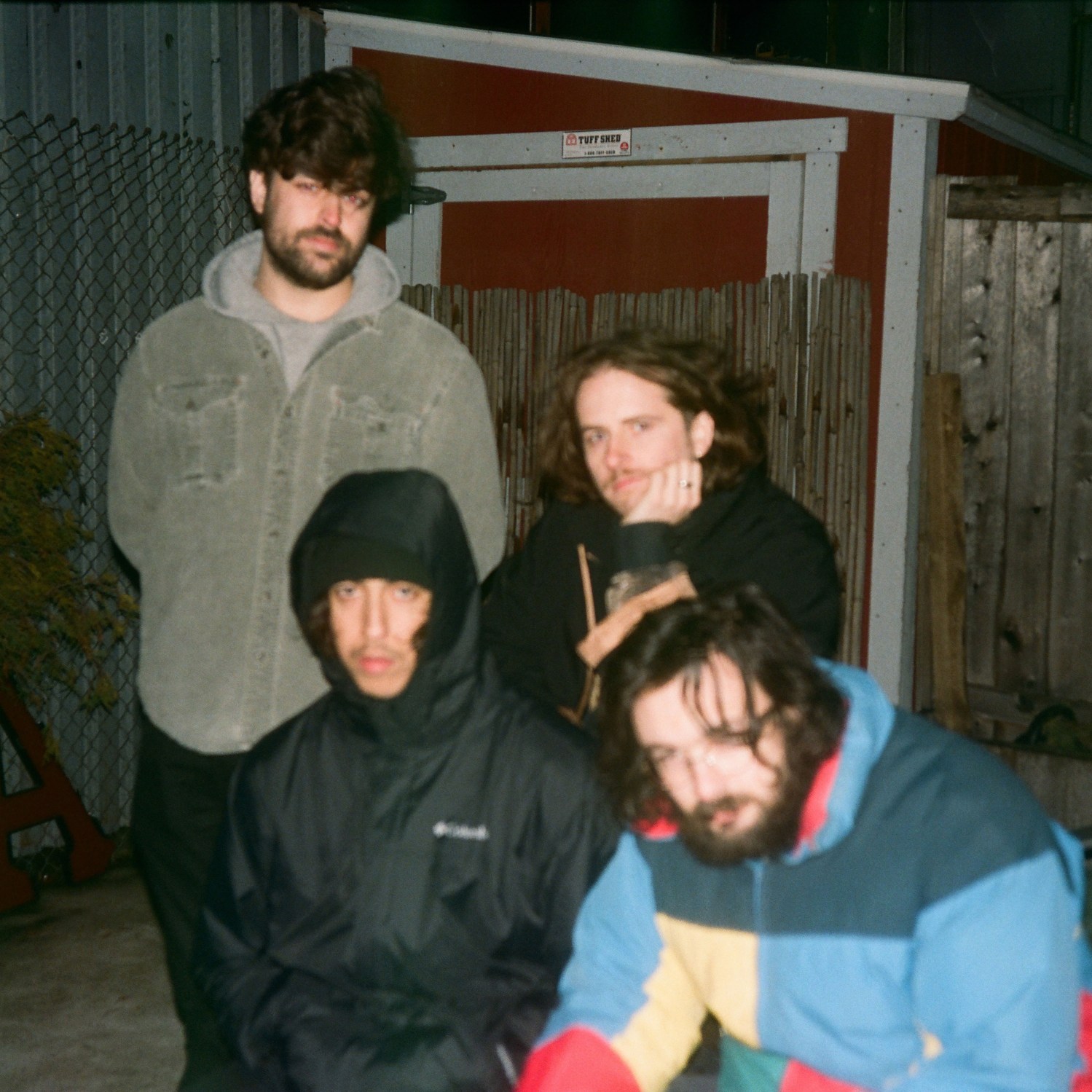
The earliest rendition of Docents traces back to Noah Sider (guitar / vocals) and Matthew Heaton (drums) playing together in college upstate, adding Will Scott (guitar / vocals) in 2018 and Kumar-Hardy (bass) in 2021. The project is driven by an emphasis on noise that feels almost sentient, toeing drastically between minimalist and maximalism without being haphazard. “There’s a pendulum that swings between writing straight-ahead-ish punkier “rippers” and, at the other end, maybe some “thinkers,” and a lot of our songwriting sessions constitute where we’re trying to place ourselves now”, Heaton explains. “There’s no principal Docents songwriter – these are very much struggle sessions, and there’s a lot of material in the discard pile. Our favorite tracks tend to either take six months to finalize or half an hour.”
The EP starts with the melodically winding “Garden”, where jerky sonic elements find grounding in assertive omens and warnings of “the land will pass judgement, it’s body keeps the score”. It’s unclear if the track “Shouldn’t We” is posed as a question or a proclamation, as Docents fervently chants the statement over a swelling of pulse-raising noise. The EP ends with “Workout”, where Docents offers both a resolution to the disorientation and a new dose of unease. An abrasive clutter of “what ifs” are countered by tranquil utterances of “then what, what now”, the dialogue unraveling against pounding walls of foreboding and flammable sound.
“Shadowboxing is our first release that feels like a cohesive unit since our first full-length from 2023, Figure Study. We recorded Figure Study to sound like a really clean version of a Docents live set – our incredible engineer Sasha Stroud ran a tight ship – Dan plays more of a producer role in our sessions. This led to more experimentation and iteration in-studio, especially on Shadowboxing”, Heaton says of the release.
Shadowboxing is out everywhere today, and can be purchased on CD via Ten Tremors.
“We’re informed by the dump we play in,” Spencer Morgan amuses towards the end of my conversation with Devils Cross Country. It’s kind of a beautiful sentiment, though in no way a hyperbole – the location where the band currently plays in Cincinnati neighbors a “Recycle America” facility. “It’s just piled sky high.” Connor Lowry explains. “The other day it looked like it was going to spill onto the street. A bunch of washing machines and plane parts.”
It is natural for a band to grow into its sound, and for their discography to reflect shifts as they inch closer to the music they are meant make. This can be a gradual phenomenon, or it could be as radical as a Frank Ocean remix project flourishing into a robust “four and a half” piece indie rock band. Devils Cross Country exists in the latter, and as drastic as that sonic shift may sound on paper, the project’s 2024 debut record affirmed that their current identity is by far their most authentic. Possession is Ninetenths tells a story of desire in its most innate form, the ethos of the album contrasted by a swarming of maximalist sound. The record is a tightly packed nine tracks, warped by a sea of synths and abraded by rusty samples that peel and chip at the ends. The listen is guided by a raw honesty, simulating the complexities of intense inner conflicts and and guilt-drenched longings through experimental song structure.
Amongst the many facets that shaped the current disposition of Devils Cross Country, the most salient was Patrick Raneses’ return to Cincinnati. Home to an animated post-punk scene, it was there that he enlisted drummer Spencer Morgan and bassist Connor Lowry, the three of them planting the project’s early seeds into hardpan Ohio soil. They shifted to a heavier sound – an outcome of existing in an environment where noise is as much a necessity as it is a stylistic choice. “When you’re in these environments, you physically have to play louder because some dude’s doing a Rob Zombie cover underneath us and there are screeching trains just ripping through outside,” Raneses tells me about the city’s impact. It was in these lighthearted moments and deprecating jokes that the members of Devils Cross Country’s relationship to Cincinnati felt the most fervent; as the three of them reflected on cracked foundations, greedy landlords and of course, “Recycle America”, their persistence to create and sheer love for their scene came across the loudest.
We recently sat down with Devils Cross Country amidst their recent east coast tour to discuss the history of the project, “trudge” music and their experience in Cincinnati.
This interview has been edited for length and clarity.
Manon: I know Devils Cross Country began during lockdown, I would love to start by hearing about the project’s initial roots and how it has evolved over the last few years?
Patrick: So I was in a band called Stem Cells at Fordham University with my friend Jake Lee and Frost Children. The last show we played was a day before lockdown, we did an acapella cover of “Numb” by Linkin Park, so we joked that we cursed the world with that one. Jake moved back to Phoenix and after graduation I moved back to Cincinnati, but we had always worked on remixes and that sort of stuff together so through the pandemic I was making music and writing songs that were definitely more indie rock oriented. I’ve known Spencer for a while, we were friends in high school and we started jamming together in 2021.
Spencer: Devils Cross Country became a band in 2022, when [Patrick] moved into our house. We lived in a house venue in Cincinnati, it was called “The Lawn”, it had AstroTurf in the basement that someone had stolen from the football stadium at UC and they kept it in the basement, at least that’s what the landlord told me when I moved in. Pat was looking for a room and then moved into our spot and the project just happened from there.
Patrick: That’s where Lawn came from. It was the perfect practice space and then we recorded that first EP there.
Manon: Do you still live in that house?
Patrick: No, they kept jacking the rent
Spencer: It doubled since we moved in, and the conditions were not worth it. Our house was falling apart and there were cracks in the foundation.
Manon: Okay so now you’re on your first tour since you released Possession is Ninetenths. Your music now has a lot of different layers and samples to it, how have these shows been, and how do you translate your recorded songs into a live format?
Patrick: We don’t feel super tied to like the recorded music, we are flexible and I feel like every show we have played has been different. We used to have two other guitarists in the band, and then we went to a three piece and now it’s kind of back to a five piece. Informally it’s a four and a half piece. I had come up with this plan a year and a half ago called the prosthetic plan, where we just add ’em on like extra limbs and it’s actually worked for the most part.
Our friend Nina, who is in another band in Cincinnati called Spoils, plays violin with us live now. It’s awesome, she was supposed to come on this tour with us but she got Covid on Sunday. I would say the past few months we’ve been working on a lot of new songs, we have a banjo guy too, Patrick number two, he is also named Patrick. It’s cool because we’re not reliant on them, but when they pop in it adds a lot.
Connor: Yeah, Nina and Pat can just jump into whatever we’re doing. Nina will just pick up a new song and instantly play the best she possibly can. It’s awesome, and a lot of what she does is straight improvisation.
Spencer: They need no instruction. Patrick and Nina are in another really cool band called Five Pointed Stars, it’s a slightly experimental dance project.
Manon: You mentioned you are working on some new music?
Patrick: Yeah, we played a couple of our new songs last night actually. I am trying to be more melodic because a lot of the songs on Possessions is Ninetenths are intense, so the new music is a bit happier and has more of a pop center, but still true to Devils Cross Country. I feel like Lawn was this bedroom pop, slacker rock EP and Possessions is Ninetenths went in a completely opposite direction. With the new stuff I want to push hard in both those directions.
Connor: Maybe in the middle somewhere
Patrick: No, other way. Stretch hard on both ends. Sometimes I’m like what genre are we even playing right now.
Spencer: Oh we’re playing trudge. That’s what we call everything, it’s a lax genre so we invented trudge. It’s a weird blend of guitar and electronic music and it sounds kind of blown out.
Manon: I like that, it beats you telling me some hyper-specific ‘-gaze’ with like four words hyphenated before it.
Connor: I feel like I struggle to understand any genre at this point, I just cannot process that information in my mind, so trudge makes it easier.
Spencer: It’s kind of just a lack of any real definition.
Patrick: We had been filming a music video for a song off Lawn called “Fishbone”, and were just driving back and some dude had gigantic boots on.
Spencer: And I was like, “that dude is trudging”
Patrick: Then the word just got stuck in my head.I feel like genre is not super useful anymore, but region can be. Like “Philly” music, that can be kind of trudge.
Manon: How would you describe the music in Cincinnati?
Spencer: There’s a big post punk scene there, a lot of hardcore guys. Corker is the other band I’m in, and a lot of the bands share members. The Surfs are there, Crime of Passing, also Feel It Records just moved there. Also, there are a lot of fresh faces, a lot of young kids making good stuff.
Manon: Do you feel like being in Cincinnati has a big impact on Devils Cross Country?
Patrick: Yeah for sure. When I started the project with Jake Lee, it wasn’t rock music. We were just fucking around, we made Frank Ocean remixes. Then [Spencer] put me on drums and I was in a hardcore band before this. Also, when you’re in these environments, you physically have to play louder because some dude’s doing a Rob Zombie cover underneath us and there are screeching trains just ripping through outside.
Spencer: They sound beautiful
Connor: Yeah they harmonize sometimes, it’s pretty cool.
Patrick: Some dude said it sounded like the studio was burning down where we were.
Spencer: We’re informed by the dump we play in
Patrick: Yeah, there is literally a dump right next to where we play
Spencer: Yeah recycling dump
Connor: Recycle America. It’s just piled sky high. The other day it looked like it was going to spill onto the street. A bunch of washing machines and plane parts.
Spencer: We are just practicing in the most bombed out areas of Cincinnati, but that’s cheap rent so it works. There are so many DIY spaces in Cincinnati, less houses these days but lots of gallery and warehouse spots.
Patrick: When we moved out of the lawn, we didn’t have a place to practice until we moved into this new place. We had to take a weird break, because you need space. I feel like a city’s DIY scene is so dependent on being able to have an affordable spot to make and play music. You need space to be loud.
You can listen to Possession is Ninetenths out everywhere now!
Dan Parr, the ever-expansive stamina behind the UK-based project The Last Whole Earth Catalog, has recently shared with us his second single of the year called “33”. Following the previous track “The Fruit Expert” released back in January, a more freeform and jazz-fueled character in his repertoire, “33” finds Parr deep within his most internal and conflicting moments, rearing both tough reflection and enduring gratitude as he grapples with his journey of being to hell and back.
Beginning amongst an array of rhythmic fixations, layering guitars that ring out with a familiar whimsy, Parr invites us into a deeply textured plane built out of his recording intuitions that have rarely led him astray. Enticed by the pacing in his lyrical phrasings, “33” focuses on the ideas of love and loss within the play of mental health, where it’s hard to show someone you love them if you don’t love yourself. And as phases of internal unrest rattle amongst persistent drum clicks and sharp-edged vocals, bringing out this journey in both fulfilling and very human avenues of grace and love, Parr sings, “Since I’ve been better, we’ve lived more than ever, this would not have happened if it wasn’t for you, I’m so proud of being a couple with meaning, a couple of ducks who just know what to do” — a song of rejoice more than anything in its final moments.
Listen to “33” out everywhere now.
Explore The Last Whole Earth Catalog’s expansive collection on his bandcamp!
Playing throughout the New York scene with friends, adding in cello and vocals wherever it may be needed, Tallen Gabriel is no stranger to the motion found deep within music and community. Captain Tallen & the Benevolent Entities is the Brooklyn-based project fronted by Gabriel, who as of today is sharing with us their new single, “Be So Nice”. This single marks the first release from their debut EP Easy, Then, set to be released May 2nd.
Introduced by a muted guitar, its fingerpicked pattern stagnant like drops of water on a hallow surface, Gabriel soon begins to collect a groove that lends itself to the emotional lens and stunning unravel of what it means to be wrapped up by sheer longing. Playing with the open space the group has so tactfully created, “Be So Nice” effortlessly shifts between conversational movements and drastic dynamic lifts, allowing the instrumentation to ground the track as harmonies swell and distorted accents rip through the landscape. At times their voice sounds mournful in its pacing, yet Gabriel’s deliverance is nothing short of empowering, bringing both a gripping presence and tender release to the here and now.
Listen to “Be So Nice” here!
Easy, Then is set to be released May 2nd via Sage Records.
Every Wednesday, the ugly hug shares a playlist personally curated by an artist/band that we have been enjoying. This week we have a collection of songs put together by Sabrina Nichols of the Rochester-based project, shep treasure.
The music that Nichols writes under shep treasure builds out from soft landscapes, lingering with haunting chord progressions and delicate melodies as the tunes become embedded into any environment that they are introduced to. Releasing music since 2018, shep treasure’s latest LP, 2023’s 500 Dead or Alive is both an organic and fragile experience, offering comfort to both our most primitive instincts and the view of the unknown ahead, encouraging us to take that first step in.
Listen to Nichols’ playlist here
You can listen to all shep treasure releases as well as order a cassette tape of 500 Dead or Alive on their bandcamp.
Written by Shea Roney | Photo Courtesy of shep treasure
“Old Friend” is a love letter to people looking over the edge penned by a person looking over the edge, or who has at least spent a good deal of time looking over it before. The edge of “what,” exactly? There’s the proverbial cliff, or perhaps more applicable to modernity, the roof ledge. But, holistically to the modern world at large, the edge is less a razor-line than an amorphous amalgam of youth, love, doubt, hope, disappointment, fear, exhaustion, beauty, trust, and once again, deep, all-encompassing love. What it means to grow up or at least grow older and see some ideas you thought you had about the world and the people in it fall away, and what that means, and how destabilizing that can be. How to step out of that years-lingering mushroom cloud.
“Old Friend” is the debut album from Hazel City, the brainchild of Clay Frankel, guitarist and vocalist of Chicago-based Twin Peaks. (This album also features some tasty upright bass from fellow Chicagoan Liam Kazar of “Shoes Too Tight” acclaim). Time has only made this capsule sweeter. When the album first dropped in June 2023, I came to it very happily entrenched in this-changes-everything romantic love, and found plenty of tender lines herein to feed my affliction like “Are you looking for a husband or just someone to get drunk with? What you want is never wrong. I could do both or either one. I could see us holding court at night or you holding our son.” Now, I revisit “Old Friend” in the early days of an equally life-changing breakup, and there are plenty more morsels waiting in these lines for me this time around – stuff I missed on the first pass, or more accurately, wasn’t ready or able to hear. Frankel’s record is a lyrical kneecapper, brutal in its simplicity and unflinching in its sincerity.
“Rain” (the opener) is the star track for me, followed closely by “Dirt.” The piano composition on “Rain” is jaunty and impressive, tones that make this gloomy ballad wildly poignant instead of weighing too one-note sad – and this is a sad, sad song. It opens with radio static and rain sounds, immediately evocative of Edward Hopper’s “Nighthawks,” and the singer is telling a similarly domestic story. He’s pacing from the living room to the kitchen to his young daughter’s bedroom waiting for his lover, late, to arrive back home. Our speaker is sadly, patiently, even a little worriedly waiting while, outside, it rains.
This album is unexpectedly orchestral in scrumptious pockets the listener doesn’t see coming – like “Snow,” an interlude that contemplatively heralds the next song (“Gorgeous”), not unlike “Behind the Wall of Sleep” into “N.I.B.” on “Black Sabbath” Black Sabbath. When it arrives, “Gorgeous” is cheerful but not naive. It doesn’t forsake a lively beat to lean self-indulgent or heavy-handed, but it’s still enough to break your heart. (“I knew that you were someone that I wanted to get to know, and now I know you, but I don’t know if you’ve done me any good.”)
No rest for the wicked! Next track “Really” rips in with another kneecapper, “What am I so dumb that I don’t know? Haven’t I been good and beautiful?” backed by dreamy effects keys from strawberry chimes to space bells. One song later, our singer lays the heater “No one remеmbers what we did. No one was еven looking. No one knows we almost made it. No one knows how close we were.” Holy shit! Ow! Not the Face!
“Rain 2” is clearly the answer to “Rain,” the cryptic counterpart of the earlier story-song sung by a piquant chorus of vocalists Emily Neale, Lillie West, Quinn Tsan, and Elizabeth Moen. But, in subtler ways, “Root” is the response to “Dirt.”
“Root” is a vote of encouragement to keep fighting the good fight – an intensely sincere, even desperate plea for loved ones to just try, try again. Its non-naive world weariness prevents this track from being gratingly optimistic. (If there’s one thing people on the edge historically respond well to, it’s a “Hang in there!” cat poster.) Instead, Frankel posits, “I know it’s hard they’ve saddled you up with a heavy heart, well ain’t that a weight we can share.” This is a track that recognizes that the world is fucked, and that at the end of the day the Everyman’s antidote to surviving it is just living the best you can from day to day, loving other people, and letting them know how deep and life-affirming that love really is. Frankel is speaking here about the type of love that is only earned after years of walking the rock beside a person – which might be where the album title “Old Friend” comes in. For the rest of us, “Old Friend” offers an answer to the sempiternal background question that takes on an especially tooth-shaking volume in eras such as ours: “What now?”
As a small music journal, we rely heavily on the work of independent tape labels to discover and share the incredible artists that we have dedicated this site to. Whether through press lists, recommendations, artist connections, social media support or supplying physicals, these homemade labels are the often unsung heros of the industry. Today, the ugly hug is rolling out a new series called the tape label takeover, highlighting individual tape labels that we have grown to love, with our friends over at Anything Bagel kicking us off.
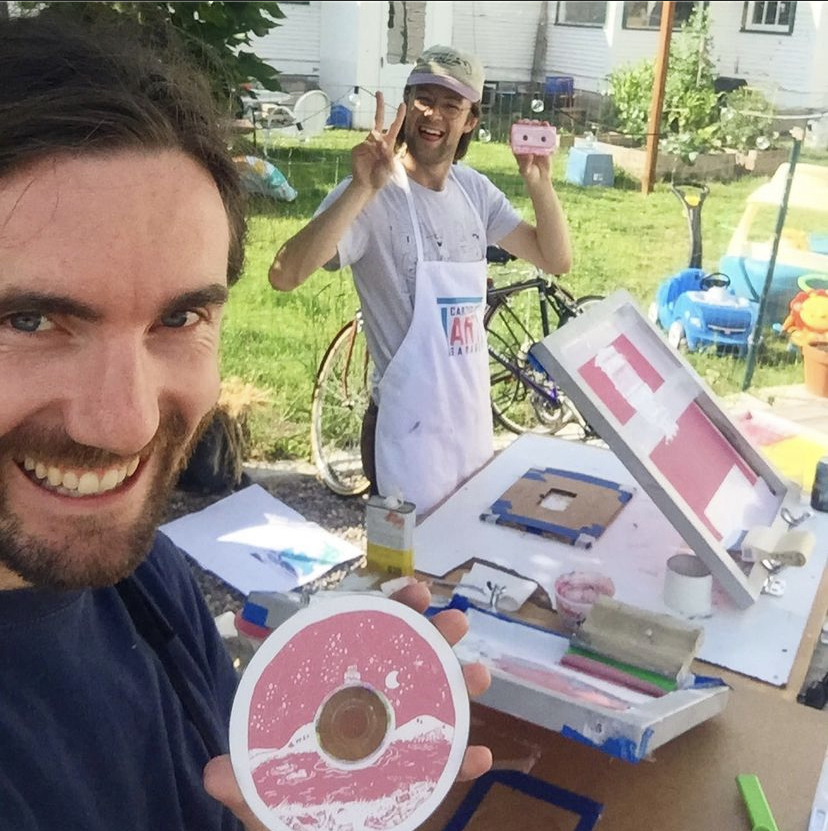
Anything Bagel, a vibrant tape label run by Jon Cardiello and Sandy Smith out of Butte, Montana, is driven by a deep passion for DIY music and community. This duo produces limited-edition, screen-printed tapes that capture the spirit of DIY craftsmanship. With a focus on small-batch releases, Anything Bagel has cultivated a distinct identity that resonates with music enthusiasts, offering something truly special in every release. In this interview, we explore their journey, creative process, and the inspiration behind their one-of-a-kind label.
Jon Cardiello and Sandy Smith
This interview has been edited for clarity and length
Kat Curey: What sparked the idea to start a tape label?
Jon Cardiello: I think it was 2015-2016 when we were getting into the DIY music world, and I had lived in New York for a little bit and we were kind of following a couple cool little tape labels. MT. Home Arts was one that we really liked that was making these screen printed tapes out of New York. We were also into Sleeper Records out of Philly and there were some in the Northwest that we were into, but it didn’t really feel like there was anybody we knew doing it in Montana that our bands could put projects out on. I felt like kind of being voyeurs into other people’s scenes but there wasn’t really anything in our scene that was doing this and so you know I think it was with my first solo album, Placid Lake, that we were finally like, well maybe we should just take the jump and just do it so that we’d have something to release our bands projects on, and also our friends’ bands.
Sandy Smith: We also wanted to get into screen printing as a practice, and it was kind of an excuse to learn more in that world. Jon had done some printing stuff before but we had a couple of friends in Missoula who were incredibly talented screen printers, Max Mahn of Twin Home Prints, and then Foster Caffrey. Foster especially helped us with specifically printing on tapes, and how to translate some of the stuff to record label-specific printing, and Max is just an all-around whiz and so invaluable, keeps teaching us stuff; he is incredible because he’s really, really good at it, isn’t annoyed when we have beyond beginner questions like, okay, “I understand that’s how you’re supposed to do it, but what if we wanted to do it like really cheap and shitty in a basement, how would we do it then,” and he was even willing to help us figure that out too.
KC: Can you share the story behind the name of the label?
JC: I feel like we were trying to think of something that felt representative of our friendship, and at that point in time, I wasn’t living in Montana, I was either in Seattle or New York and I would always come and crash for extended periods of time in Sandy’s basement to do music stuff and I think we just ate a lot of bagels is why that came up.
SS: Like one a day, 1.5 a day average; there were a lot of days with more than one bagel.
JC: We both really like bagels so something bagel-related was one of the many brainstorm ideas. And then I think we also just liked the idea of a label name that doesn’t necessarily sound like a label.
KC: As a duo, how do you divide the roles between each other, and how does that shape the way the label runs?
JC: The screen printing we always do together aside from a few exceptions when one of us was too busy or something, but I feel like it’s incredibly time consuming to do it that way. That keeps us kind of going at a slow enough pace where we can’t take on too much, which I think that’s been good for making it sustainable. We just always end up getting together to hang out and screenprint, which is fun. And it just reinforces the parts of it that we like most, which is the art, the music and the community, even when it’s just us two hanging out getting excited about music.
SS: It’s fun. We listen to cassette tapes and print together. I think we get a lot out of it.
JC: It’s always good for filling the tank of why it’s all worth putting in so much time into this passion project. Generally I do all the design stuff because I have a background in that. Sandy duplicates all the tapes and generally folds and glues the packets after we print on them. Sandy has kind of taken over the press department. We used to do that together.
SS: We still mostly do it together [laughing].
JC: Yeah we do a lot together.
SS: Jon has been dealing with most of the uploading and digital distribution stuff. And it’s a whole thing. There was a time when Jon’s job was really chill and it was a fun thing to do in the day. Now Jon’s job is less chill so we might be reconfiguring slightly.
KC: What motivates you to keep the label alive, especially with how digital music dominates today’s scene?
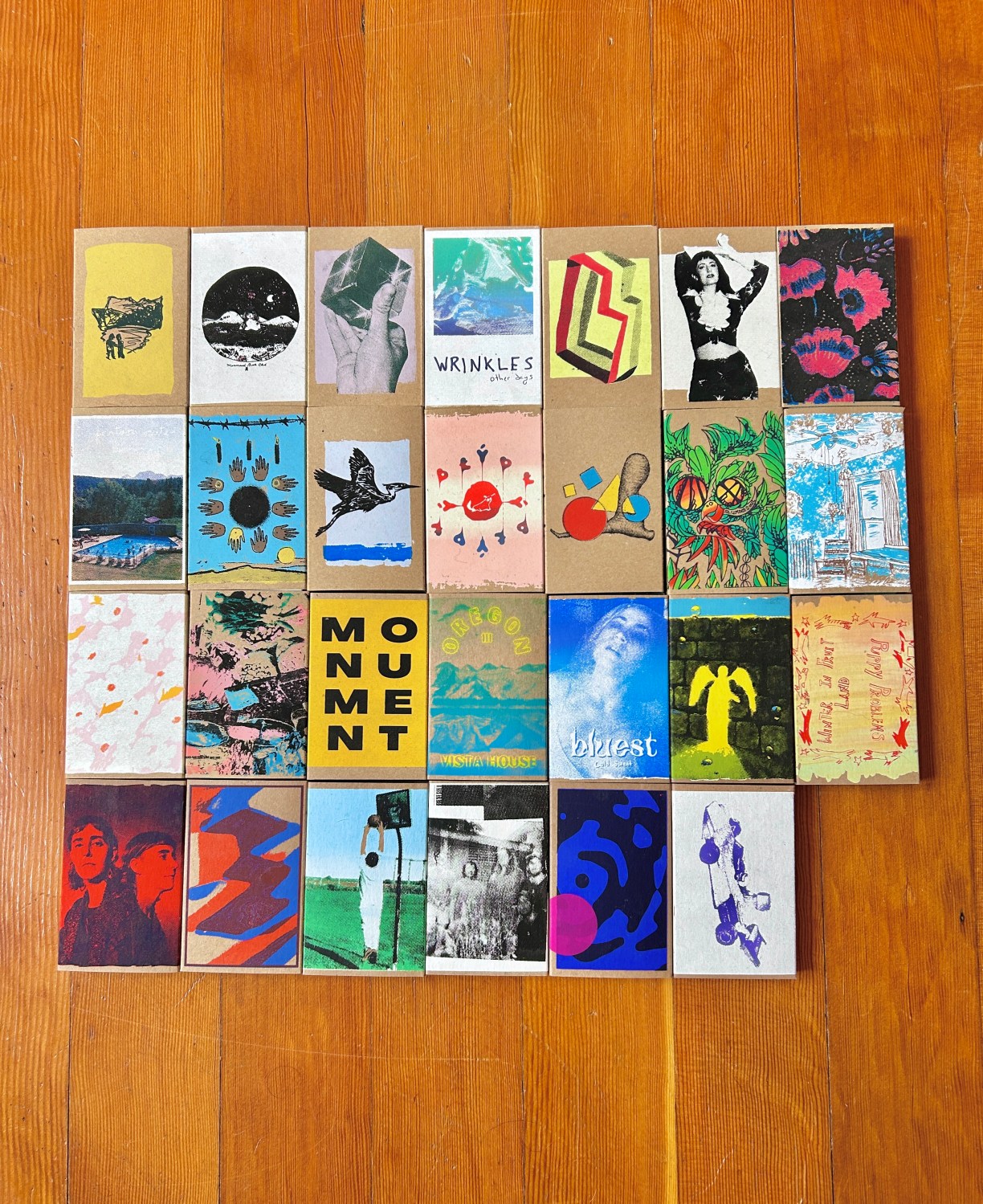
JC: Yeah it’s kind of amazing that now we’re at release 28, but we’re still sticking to the exact same cassette tape runs that we started with. I feel like we really like the art aspect of making physical merch, we know how helpful it is as a band to be able to sell merch on tour. I feel like if there wasn’t a physical element of it, we just wouldn’t do it. And for me in terms of buying tapes and stuff these days, I feel like my main reason is in direct opposition to the streaming world where I think I just literally would forget about albums, or I do all the time if I don’t have a physical copy of it. Where it’s like ‘oh, that was one of my top 20 albums of that year but I totally forgot about it because I didn’t buy it.’
SS: I think that some of the art object thing is also just a physical object that someone had to put an inordinate amount of time to make the thing exist and it feels precious. But also it’s not like fully giving it away, but it’s close. The tapes don’t really make much money. They’re more there as a representation of the music and the object as a playable thing that actually produces a cool sound. It’s as much the thought of the thing for me that does it.
KC: How do you find the artists you work with? Is there a special connection or vibe you look for?
SS: Well, I’m A&R on the team and let me tell you, it is difficult [laughing]. It’s nice now we’re going to be putting out some recurring artists. We’re going to put out a Zinnia album. We’re going to put out Jon’s album, and we’re putting out the next Vista House, which is really exciting.
JC: It’s nice that right now there’s a little bit of a roster and not necessarily room, we’re already penciled out well into the middle of next year with releases. But fortunately it’s mostly been in the past year or two, people reaching out to us to see if we would put stuff out. It definitely makes life a little bit easier, but we tend to listen to the project and usually do not have any room or time to do it, but then if it is something that we just like so much we try to figure out a way to make it happen.
SS: Like with Levi Minson who we just put out, is someone who actually just reached out to us via Instagram. They had submitted their last album and we were psyched about it, thought it was great, but we didn’t have the bandwidth to do it at the time. And then they sent us this most recent album, Violet Speedway and we both loved it. They were flexible enough that we could go far enough out into the year that worked out for us and for him. So to answer your question, it’s that right now, mostly people are submitting stuff to us.
JC: It very much started out super close to home with our bands, our partner’s bands, our sibling’s bands and Missoula bands. And then it kind of chugged along and took a couple jumps into different scenes which has been neat. An original goal of ours was always to tie the Montana scene into a greater network of bands.
SS: DIY bands, especially.
JC: Yeah. So it’s cool that it’s spread out quite a bit since the beginning.
SS: Now there are little pockets. There’s some bands from the Northwest, there’s a little pocket in Montreal and Toronto and some Philly bands too. And then we’re going to help release a split seven inch record with a bunch of labels around the world for a French band, which will be the first European band.
JC: There’s a Tokyo label, a German label, some French labels and us [giggles].
Anything Bagel Label Sampler
KC: What’s it like bringing a tape from concept to reality? Are there any parts of the process you particularly love—or find challenging?
JC: That part is a pretty fun part of the process. I guess in the most literal sense, we order blank tapes with no music on them and then we make a master tape at home. I upload all the music onto Logic and then burn it on to a master tape that we used to duplicate. We used to have this super sketchy duplicator and it would do one tape at a time.
SS: Our new duplicator is still one at a time and it still ate some tapes on the last run [laughs].
JC: Yeah it usually eats some tapes. We order a few extra [laughs]. And then we order blank card stock so it’s like an unfolded jacket that we screen print onto them. And that process is pretty fun where I’ll work with the artists with whatever the digital art is for the album and we’ll kind of come up with a screen printable version that somewhat references the album art, but it doesn’t have to be exact. Then we print them, fold up the jackets, glue them, and ship them out.
KC: How many do you produce per album? Is it different depending on the album?
SS: Usually 50. We’ve done some that are a little smaller. But usually 50. We like to do limited runs, where 50 feels like a good number. We usually just keep 10 to sell and ship the rest to the artist. Just because we know how nice it is to have merch to sell. But sometimes it’s a different model per release.
KC: The screenprinting aspect of your label is really impressive. Could you tell us more about how that process works?
JC: Well, it did start in extremely sketchy circumstances where we didn’t know what we were doing or have any of the equipment. And so it started when I lived at the farm and we would do it in the basement and we tried to expose screens with just a single light bulb.
SS: With a single UV light bulb. Like a small regular lightbulb.
JC: There was always just so much trial and error in that process where it’d be like we were both working and would get together after work to try to do this thing and it would just fail and we’d have to re-wash out the screens to try again the next week or whatever. And there was a lot of time spent without a washout sink where I’d be in my alleyway in the freezing cold washing out screens. There were definitely times where it felt incredibly ridiculous to do that as part of it. Most tape labels just print out J cards off of a printer which makes a lot more sense.
SS: Which makes so much more sense than the way we do it. The way we do it is so much work.
JC: I think we stand by that. I think that actually it turned out to be an art practice for us too, which is really fun. We fully learned how to screen print and now finally I have a washout sink in my basement that we don’t have to go out into the alley. This’ll be the first winter where we don’t have to go out into the alley.
SS: Seven years in and now we don’t have to go out and do an alley wash. That took a long time [laughs].
JC: We used to just not be able to print tapes for a couple of months, weather dependent.
SS: Yeah, we used to just not do releases from like December until March, mostly.
KC: Anything Bagel seems really community driven. How do you go about building those relationships, and why does that mean so much to you?
JC: I think that that’s the coolest part of it all, I think we felt really fortunate to have been around Missoula when we were getting introduced to this DIY community of bands coming through town to play shows. Then you’d make a friend on the East Coast, and then maybe eventually tour to where they live and get to play and see them again, and I feel that is the neatest part of music really. It’s finding all these people around the country that share this incredibly niche excitement over the same kind of music. And that happens on the internet too, but it’s really cool with music, getting to meet people and those friendships in person have been really cool.
SS: The community aspect started out literally where the first bands we were putting out were our friends’ bands and bands in the Missoula scene that we were really excited about. It’s not so much literal as physical, where it was all about proximity. It wasn’t the only driving factor, but there were a bunch of things we were really excited about that were really close to us. And there’s still a bunch of really exciting things that are happening close to us. But some of them have different homes and different people already doing the things. And it’s been really fun establishing a community that’s more based around the idea of the thing, that isn’t just physical. For example, even this Levi Minson release, he was excited about some of the other music we had put out and knew about it from that. Some are people that we have met physically, in real life, but live halfway across the country. But I do think that the community part of it is an incredibly important driving part of the whole reason we want to do it. And it is mostly just these people who are excited about making music, making art that they care deeply about and that they’re willing to put their time and an insane amount of effort into something that enriches their community and the lives of other people who happen to listen to it.
JC: I feel like when we were in Wrinkles and it was a relatively active band for a while we loved meeting people through touring and making those connections. But since then we haven’t been in bands that are really sending it with touring all the time, I feel like it’s really neat where this project has kept us connected in that way. Getting to meet really awesome, like-minded people around the country doing the same thing as us in different places. But since we don’t really get the chance to tour all that often, it’s cool that this is another avenue to make those kinds of friends.
KC: How does the DIY spirit influence what you do? Is there a part of that ethos that really resonates with you?
JC: I feel like it’s been something that we’re always talking about, because it’s really tempting to always try to level up as a label, to maybe take the next jump with distribution and different label things that feel very businessy. I think coming from DIY music communities, where it’s kept us rooted in the things that we really care about, which is the music, the art, and the people, that’s kind of kept us grounded in making sure it’s always still a really good deal for the bands and not trying to get too crazy with it. Which I think has made it more sustainable at least for us to keep doing it.
SS: Yeah, it’s probably actively making what would be bad business decisions, but just for the sake of having it be something we like to do and that makes sense for us and the bands to still do it. Like economically, it doesn’t make sense, we’re not paying ourselves as labor at all. We’re not doing anything for money, and yet understand that the things we’re making, hopefully are able to make the band’s money. And then it’s a matter of putting in all that time and effort and still balancing it with having a life and needing to work jobs that do make money and figuring out how to have that all balance out. And most of the time that works out alright. Every now and then it’s a little much, but I don’t think that’s anything we want to stop doing anytime soon.
KC: What keeps you going and excited about what you do, especially on the challenging days?
SS: I think it’s loving the thing and just caring about it. We really do treasure this stuff and it’s always exciting to be a part of a release and the whole thing is ultimately such a rewarding and positive thing. Someone put in all this time to make this music and put it out into the world, and you get to help them realize that and I think that’s at least a big part of what keeps it going for us.
KC: Difficult questions but can you share a few personal favorite releases that you’ve worked on?
SS: We kind of love them all, it’s like picking a favorite child. Every parent does have favorite children [laughs]. I’ll start with the New Issue record. The last one that we put out, it’s so good. Absolutely love it. Adore that band. They’re also our friends in Anacortes. We’ve been out there a couple of times to record and have genuinely become friends with them and really like them as people.And they kind of told us that they had this album they’d been sitting on for a long time and we insisted they let us hear it and then insisted on helping put it out into the world and they’ve been great to work with and we really love that music.
JC: I feel like another cool one was Puppy Problems last year. That was another one where we were fans of Sammy’s previous 2018 album, when it was on Sleeper Records. That was truly one of our favorite labels that we were inspired by and so it’s really cool to put out bands that were Sleeper bands at one point. Sammy is just such a talented artist and person.
KC: For those who are looking to start their own tape label, what advice do you have for them and what do you wish you knew when you were starting out?
SS: Do it.
JC: Do it.
SS: Just do it. I think to do it and to try to take steps to make it something you can do for a while. It’s just a matter of fitting it into your life in a way that makes sense and putting out stuff you love.
JC: It is a lot of work, but it’s been incredibly rewarding and worthwhile. I feel like we did a lot of legwork in the beginning, years of ironing out the parts that we really wanted to put our energy into. It kind of took a few years for it to feel like that was working, even with the screen printing and trying to do little bits of press outreach here and there. But I guess, just stick with it. The first couple years might be slow going until it creates a thing, but we just need more and more little labels, because there’s so many good albums coming out all the time. And I feel like, if there are parts that you don’t wanna do, just don’t do ’em.
SS: Yeah whether it’s like making a certain type of physical media press, if you don’t wanna screen print your tapes, lazy [laughs], but understandable. No, but set it up the way you wanna do it, and then do it.
KC: Last but not least, if you could hand select a variety pack of bagels, what would be in it?
SS: Okay, start out with the classic, you know, like there’s an everything bagel in there.
JC: There’s got to be a Helena Bagel Company jalapeno cheddar bagel with plain cream cheese.
KC: Yeah, like an inordinate amount of cream cheese.
JC: I still stand by Helena Bagel Co., it is like one of the best bagels I’ve found west of New York.
KC: Yeah, I know. It kind of goes hard.
JC: At least best in Montana, I’m saying.
SS: Definitely. The tough thing would be, do we actually put in any sweet bagels? I’m not opposed. But next on the list you gotta get an Asiago bagel. They smell a little bit like farts when you toast them, but they’re so good.
JC: I don’t know if we were going to go sweet, though, I would say a cinnamon raisin.
SS: Yeah, cinnamon raisin is good. I like a blueberry bagel. I don’t know, maybe it’s not everyone’s thing but I like that.
JC: That was in my head, too. Toasted with strawberry cream cheese.
SS: Yum. That’s good.
KC: Get your fruit serving of the day.
SS: Ooh I think a poppy bagel is maybe a little bit underrated. I think I would almost always rather have an everything bagel than a poppy bagel, but they’re good. What I’m picturing would actually play well on both of them, but a poppy or an everything bagel with sun-dried tomato cream cheese.
JC: Yeah. Pretty good. Can we say six bagels with their toppings? Because I feel like that’s important.
SS: What’s on the everything bagel? The beauty is it works with so much because it is everything. Anything and everything.
JC: I think lox.
SS: That’s an option?! I thought we were just doing cream cheese! Oh yeah, definitely lox.
JC: Lox and capers.
SS: I mean, that one is the one I’m choosing every day for eternity.
KC: But what about the cinnamon raisin bagel? Did we discuss that?
JC: You know what? It’s really sweet, but toasted with frosting.
SS. Okay. I’ll go with it. I was going to go with just butter on that.
SS: I’ll admit that the frosting is actually very good. It’s just pretty indulgent. But sometimes you need to be.
Final verdict after much deliberation: Everything bagel with lox and capers, Jalapeno Cheddar with plain cream cheese, Asiago with Pesto, Cinnamon Raisin toasted with butter or frosting, Sesame with sundried tomato cream cheese, Blueberry with strawberry cream cheese.
Interview conducted and written by Kat Curey
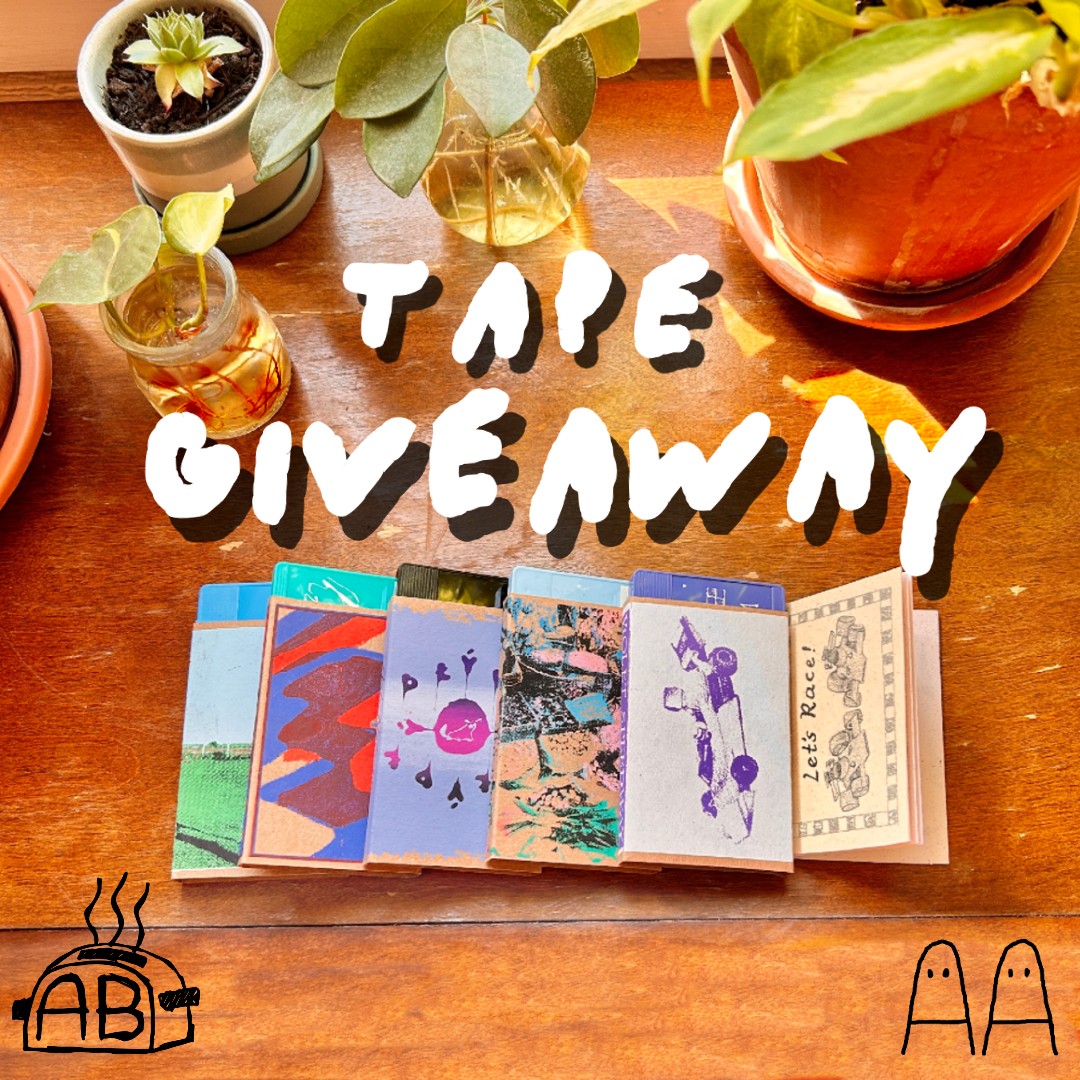
Along with this series, our friends at Anything Bagel are offering a five tape bundle giveaway in celebration of independent music and journalism! The bundle includes the albums Violet Speedway (2024) by Levi Minson, Sun Into Flies (2022) by Joyer, Exit Music for Exit Wounds (2021) by Ash Nataanii, Lagrange (2023) by Panther Car and ionlyfitinyourarms (2023) by Pompey.
To enter the giveaway, follow these easy steps below!
Aunt Ant is three-piece Asheville, NC post-rock brainchild of members Lauren Hewer, Sean German, and Jonah Ileana. Today they’ve released a new song called “8theist,” with an accompanying music video, which you can watch below.
I had the opportunity to conduct a Q&A with Lauren about the dynamic song and its meaning; one of many full, vulnerable tracks on the Aunt Ant live setlist (which you can watch here), “8theist” features everything from soft moments with sparse notes to explosions of noise and incredible overdriven tone.
Audrey Keelin: Lauren I am just so pumped to be writing about you for an on-the-record account of your freaking artistry! I have so many questions for you and I’m honored I can ask about it.
Lauren Hewer: Hi, Audrey ヽ( ´ v` )ノ thanks for asking to do this! You’re awesome.
AK:Can you tell me about the birth of this song from the beginning until now?
LH: I forgot that I sent a demo of this song in for a compilation you made in 2021 until you reminded me, but I just listened to it and it’s wildly different from what I remembered! The song sounds a lot different now. The structure had already changed a lot by the time we started playing it with Jonah [our drummer] in 2022 and I think overall it has become heavier over time.
AK:What kind of song-making process do you enjoy the most/ what works best for you?
LH: I personally find the most exciting songwriting to be in moments where we have no expectation or parameters to create something. I think this is where the most honest and beautiful music comes from, but it can be a lengthy process to reel in that kind of energy to create a cohesive song structure.
AK:Why did you write “8theist”?
LH: 8theist was a poem I wrote a very long time ago. I don’t really remember writing it, but I think I was just reflecting on being a kid. It’s mostly about growing up in the South in an area with a large Baptist presence with English (and very atheist) parents.
Photo by Ezra Earnhardt
AK:How did taking a break from releasing music and playing a bunch of local shows in Asheville prepare you to release music again?
LH: This feels like our first real release because it’s the first song we have recorded since the three of us started playing together a couple years ago. We have some old demos on different sites but they’ve mostly been iPhone recordings of ideas we’ve had before we really started playing live music as a band. We took a little break from playing shows mostly so I could finish school, but I was also feeling very overwhelmed by the state of the world and didn’t know how to show up in a live performance setting. It always feels good to play our songs for the first time after a break because they feel a lot more fresh and exciting to us that way.
AK: Live performance is complex. How have you been relating to it recently? What have you learned about live performance within the past few shows you’ve played?
LH: Right now I think I have the most fun performing live when we are playing new material. It’s always nice being able to play in a space where we can be really loud and not worry about neighbors and it’s also really cool to be exposed to new music through playing shows!
AK: Why did you write the first song you ever wrote? What moved you to start writing songs and making music?
The first song I wrote was called “Beach Party” and I wrote it with my friend Melina because we wanted a really good and relatable kids song about beach parties and having fun at the beach. But now music helps me say things I don’t know how to say otherwise.
Photo by Ezra Earnhardt
AK:Tell me about the influences you drew from for this single. Why and how did you draw this influence from them?
LH: I think I was listening to a lot of Cursive at the time and they have this really harsh dissonant guitar tone that I love. Sean showed us this band called The Festival of Dead Deer around that time also that we all got really into. I’ve also always loved the band Tall Friend and how they write about childhood, so I’m sure that subconsciously had an influence on this song.
AK: Any local bands that have been inspiring you recently?
Run Over By a Horse + Studda Bubba have been inspiring me recently! Last summer we toured with Dish and have always been extremely inspired by them. We also love Tombstone Poetry and would highly recommend Pagan Rage, Nostalgianoid, Trust Blinks, Mary Metal, Convalescent, Basilica, Terrordome, Landon George, and ORRE when Audrey is in town. 🙂 There are so many!
Blackberry Farm; a farm turned family center in Aurora, Illinois, was a place of early childhood development for me. In our matching overalls and denim baseball caps, there are an abundance of pictures of my little brother and I with our mom at this farm. We often indulged in the attractions of miniature pony rides, the anticlimactically slow carousel, and the steam engine train that was conducted by a likely alcoholic. But at that age, bubbles and chalk were all we cared about. In the back of the farm, next to the, now questionable, “settler” house and period-actor with the weaving loom, was an old well. It was too dark to see how far it went down and the top was barred off to prevent fidgety kids from finding out. But it was wide enough for us to wish on a penny and drop it in with every visit.
On their sophomore album, A Swollen River, A Well Overflowing, Chicago’s own, Tenci, create a space of empathy and self-rejuvenation to find understanding in what it means to be human. Jess Shoman, the primary songwriter of Tenci, expands on their 2020 release My Heart is an Open Field, which focuses on themes of loss and loneliness. On A Swollen River, A Well Overflowing, Shoman returns to these themes, but with the perspective of mature growth and understanding.
Tenci has always built instrumentations around the use of Shoman’s unique voice, which is often used as an instrument itself. On this album, Shoman uses influences of psychedelic folk artists such as Jessica Pratt and Michael Hurley to create a fit-for-a-movie landscape of sparse and airy folk tunes. But like Shoman’s voice, the band comes in and out with a method of accent points. The rest of Tenci consists of Izzy Reidy, Curtis Oren, and Joseph Farago, who all have respective musical projects of their own. The band’s use of instruments all play a part in the compositions and are strategically picked to tell the story. On songs such as “Be”, it begins with a simple and synchronized guitar riff. Just as Shoman growls the word “be”, the band erupts into a controlled burn of a screeching saxophone solo by Curtis Oren while maintaining the subtleness of the song underneath. This song early in the album showcases Shoman’s new complex approach to songwriting that goes beyond the illustrated emptiness that was My Heart Is An Open Field. This new conflicting orchestration is then showcased in “Sour Cherries”, where Shoman’s folky stylings are challenged by a subtle growing amplification of the band until chaos unfolds of squealing saxophone and swoops and howls of Shoman’s voice.
As mentioned in the bio of A Swollen River, A Well Overflowing on Bandcamp, there are multiple meanings of the word “well” that could be considered in Shoman’s storytelling. The most obvious form of “well” is the old fashion way of getting water and making wishes. “Well” is also the most benign way of answering small talk questions about how you are doing. It is also the easiest way to kill further questions about how you are actually doing.
A Swollen River, A Well Overflowing does the small talk for Shoman. This project has many instances that showcase Shoman’s personal growth since My Heart Is An Open Field. “Climb to the top of the magic tree, I’ll show you how I’m changing”, is how Shoman starts off on “Shapeshifter”, laying out what is to be the rest of the album. On the track “Vanishing Coin”, Shoman sings about the odd disappearances of friendships as they get older. With an accompanying music video of Shoman as a party magician, adult relationships can often vanish with no reason like a magic trick. In the almost fully acoustic “Great Big Elephant”, Shoman sings “we should just throw it down the well”. A simple and old-fashioned way to get rid of something. In this case it’s something that Shoman has been holding on to for too long and needs to accept that it is gone.
As a kid, I can’t remember if I believed that tossing a coin down a well would make my wish come true. Although it’s probably a front for well owners to profit off the moldable minds of the youth, it is a nice sentiment. Even if the forces of the world don’t work directly with the coinage-to-well business, there is an idea that whatever you wish for on that coin is a small representation of who you are at that time. With Shoman’s notion of moving on and growing up from past experiences and relationships, there is a well overflowing of small representations ranging from their entire life. In the second to last song, and one of Tenci’s best, “Two Cups”, Shoman repeatedly sings “I won’t wait to fill my cup”. A realization that self-inflicted progression is the only way to accept the past and that filling your well with pieces of past experiences is never a bad thing. With a playful sing along chorus, it is almost a direct feeling of surrendering to your past and allowing that to shape who you are.
The legacy of family is a consistent point of topic throughout the album as well. With nursery-rhyme like songs of animals and clowns, Shoman brings up integral childhood emotions that still follow them to this day. In “Sharp Wheel ”, Shoman sings about being scared in their bedroom, but from fear that they deserve it, won’t seek the comfort of their parents. “Swallow Me Whole, Blue ” is a traumatic story about some neighborhood kids poisoning Shoman’s mom’s childhood dog. “I want to pet you from the inside ”, is Shoman’s way of wishing Blue was still here in order to protect their mother’s bad memories. The album’s closer, “Memories” utilizes audio from recovered home video of Shoman’s childhood, including conversations with their grandmother in Spanish and the screams of fear from encounters with bugs. “Memories” is pretty on-the-button, but it is still impossible not to feel a sense of nostalgia while closing out the album.
Thinking back to my own memories of dropping coins in the well at Blackberry Farm can also be considered extremely on-the-button, but is there anything wrong with that? These memories bring me back to early childhood development of relationships with my family as well as with nature and wildlife. There are parts of me from that time that have remained, while there are parts that I have gotten rid of since. What Tenci does is create an album around a celebration of self-rejuvenation from your past. Especially after an album focused on grief, this new focus on A Swollen River, A Well Overflowing creates a relatable feeling of nostalgia, both through trauma and gratitude.
I live on the fourth floor of a brownstone in the middle of Madison, Wisconsin. This particular apartment, with its aged wood trim and random nail heads protruding from the floorboards, gets unbearably hot in the midst of the summer days. I have resorted to a system of carrying a box fan around with me room to room, powered with a humorously long extension cord. I would spend these days sitting on my soup stained, thrifted plaid couch and patiently wait for the day to end. Whatever problems I had in my life at that time were further provoked with the heat. The tools of successfully navigating a healthy lifestyle are weakened and I can’t help but watch the world around me as I sweat into it.
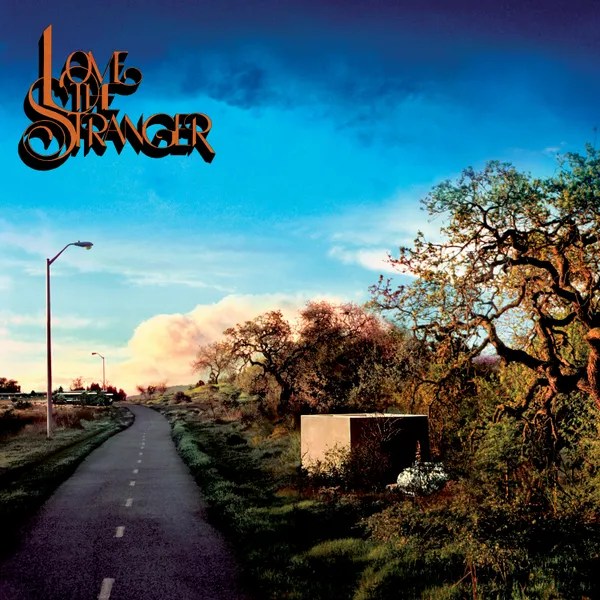
Philly based alt-country group, Friendship, released their album Love the Stranger in late July of 2022. I first listened to this album on a two-hour drive from a cabin where I shared an entire week with extended family. The week was spent reading Pearl S. Buck’s, The Good Earth, and the danger of always having a beer within arm’s length. Coming off this uneventful week, the car ride was endured by listening to Love the Stranger fully in two rotations and it just made sense.
Dan Wriggins and company began Friendship in 2015 with their debut album, Shock out of Season, from Chicago’s Orindal Records. The group was built around Wriggins and members from another Philly-based band, 2nd Grade. Their songwriting was consistent through two albums of subtle instrumentations and loosely constructed melodies. Since then, they have signed to Merge Records and now have the pressure to prove themselves as a potential indie powerhouse, alongside other Merge artists such as the Mountain Goats, Destroyer, and The New Pornographers. Instead of putting out something like the next Arcade Fire album, Dan stuck to what he knows best, sitting still.
There is a loose misconception that the most powerful and meaningful songs are thunderous music festival anthems that inspire thousands of people. But in retrospect, the majority of life is spent waiting in traffic, melting into your couch watching the History Channel, staring at articles about deconstructed churches on your phone, or doing the dishes. “Waiting on the fan with a slow rotation” from the song “Hank” was the first phrase that intrigued me on Love the Stranger. This line in and of itself sums up Dan’s writing as looking around and taking inspiration from everything and nothing at all. What Dan accomplishes in this single line is an illustration of someone who finds themselves caught in the in-betweens of life. Someone who is broiling in their home and counting the time for the rotating fan to come back to them with its blessings. This fixation on the mundane is relatable to anything, which makes Dan’s writing that much more endearing.
Love the Stranger is filled with frustration as well as a particular fixation on sitting still. Dan sings about the struggles of cleaning the grape-jelly remnants from a ramekin and being humored to a metaphor of the struggles of a relationship in turmoil. Jess Shoman from Chicago’s Tenci, makes an appearance on “What’s the Move”, singing about a faceless relationship. Even regional highway stops are given a nod of attention in the handful of minute long instrumentals spread throughout the album. “Kum & Go”, “QuickChek”, “Love’s”, and “UDF” are all regional convenience stores crossing the US, creating distance in the album and offering distinction to places that can blend together.
The Americana sound that the group emits has developed over time since their debut album. Approaching territory beyond the simple instrumentations, the group has embraced a larger sound that still holds true to rotating behind steel guitar drones and folk guitars. Dan’s voice, with its subtle grit, helps add frustration and emotion to the prosaic observations he’s singing about. Embracing the alt-country Americana sound is both charming as well as a callback to the classics where songs tell stories about the working man and the troubles of simple life.
I have had my fair share of dirty and laborious jobs growing up, enough to understand how disingenuous people can be. Learning how far the developing psyche of a teenager can be pushed. Being harassed by strangers because their table is too wobbly or their French dip isn’t warm enough for the complex palate can stain a world view. There comes a point when you get numb to the fact that people could care less about you, so you are given the opportunity to experience your surroundings undetected. You develop different meanings to the feelings you get from drinking alone as opposed to drinking with a friend. “I can tell you’re stuck. I can’t tell anyone else, cause you don’t threaten to help” is how Dan finishes “Mr. Chill”, a song about finding the right drinking buddy that won’t pity you for a bumpy existence. On the second to last track, Ugly Little Victory, Dan sings “it sucks when it ends and it sucks when it has no end”. An exhausting thought, but Friendship’s driving drums and dueling guitars approach make this the most inspiring (music festival anthem) line from Love the Stranger. “Only a nose hair away from inner peace today”, Dan sings on the album’s closer, “Smooth Pursuit”. An image of personal success of finding pleasure in your own place.
What Love the Stranger accomplishes is the ability to be okay with the idea of not seizing the day. Carpe diem, a cheap slogan branded into our personal motifs from movies and crappy kitchen signs, places a lot of pressure on an individual who is tired of their surroundings and the world around them. It’s not that Dan is singing about running away, altering his life or anything serious like that, but rather gives comfort in the thoughts that come to you when you take a moment to sit still.
On those hot summer days in my Madison apartment, I don’t panic anymore when I’m stuck on my couch with my box fan. I let it drown out the city noise and my shitty neighbors. Finding inspiration in an old couch, an unusable fireplace, or a rickety box fan can be just as inspiring as telling someone to be “Brave” or to “Shake It Off”. Love the Stranger offers new perspectives and a bit of hope in a place that I often find cruel and aging.





 the ugly hug