“Will you hold me in the palm of your hand, will you hold me at all?” Lolo Wawa (the stage name of Lauren Wallach) creates a comforting testament to the passage of time and the changing nature of relationships in her debut singles “Meridian” and “Fondly,” released January 23, 2026 on Bandcamp, and later to other platforms.
Lauren is a twenty-five year old singer based in Bellingham, Washington. She creates vivid musical worlds built around self-exploration and the people and places she cares about. One of the lead vocalists and songwriters of the folk-rock band Bellflower, and a vocalist for the Americana band Dogwood, she has recently begun exploring her own sound as a songwriter.
“Meridian” is an immersive comfort of the themes of girlhood, hope, daily moments, and time passing. There is strong wordplay, with lines such as “Zoe smells like jasmine and dogwood / hold my heart in your teeth like a dog would.” “Fondly” navigates losing someone kindly and without resentment, while still hoping to know them. She captures imagery of doubt and insecurity through the metaphors “am I a thorn in your side? Am I a fly in your lemonade?” The songs pair perfectly together as a way of moving forward gently. Lauren writes intimately of everyday objects, small details and moments, and connection with others; her vivid lyricism including the seasons, birthday candles, mood rings, backyard swings, and letters.
Her vocals are strong and clear, featuring glowing backing harmonies from Electra Richards and Rubin Hochhauser. There are gorgeous instrumental interludes, combined from Lauren’s guitar and glockenspiel playing, fiddle that mirrors the vocal melody from Rubin Hochhauser, and mellow drums by Phoebe Setter. The tracks were recorded, mixed and mastered by Zach Miller, who played guitar, tambourine, bass and sparkles.
“Meridian/Fondly” is available on all platforms. Keep an eye out for more Lolo Wawa releases and performances, and check out the projects of Bellflower and Dogwood!
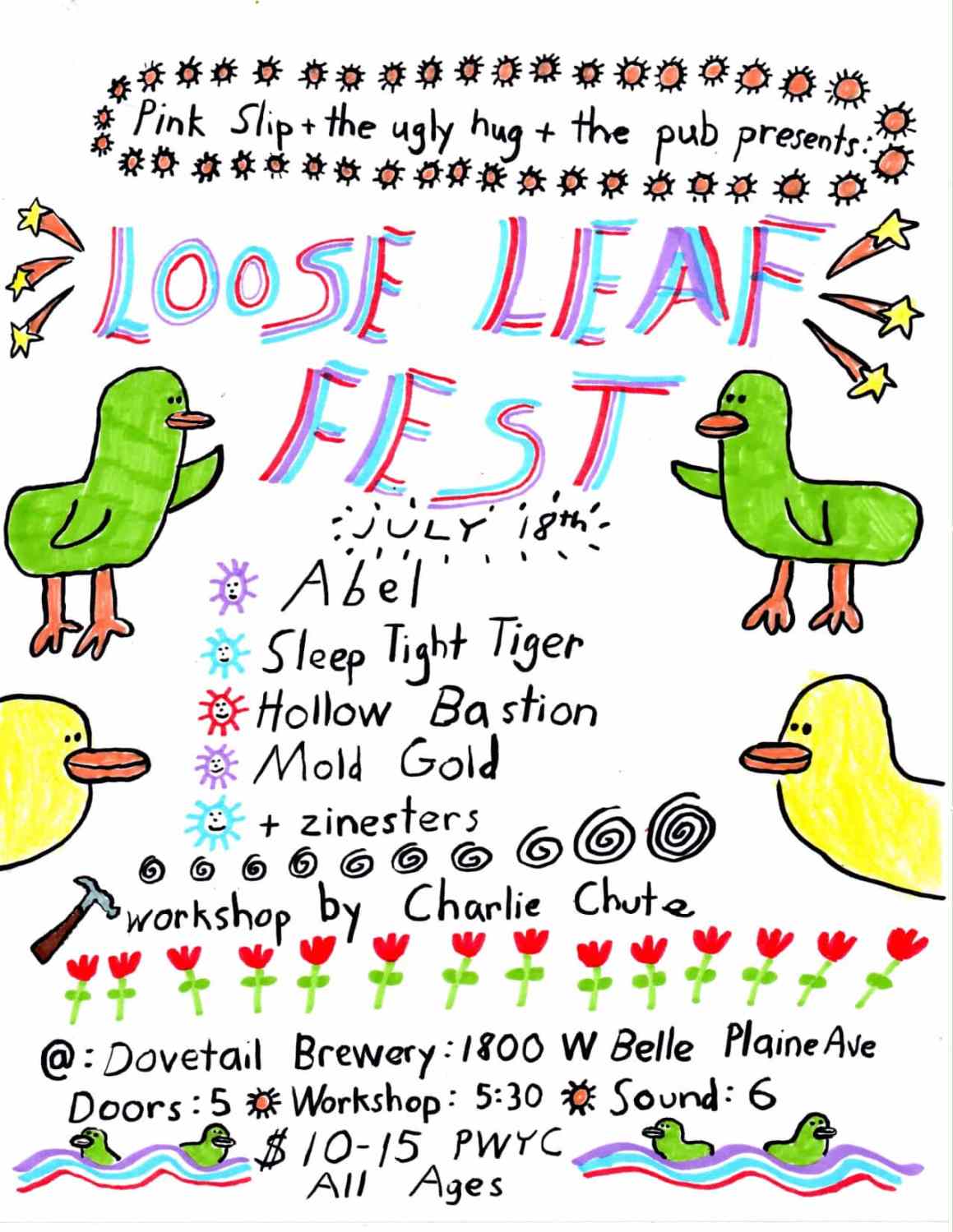
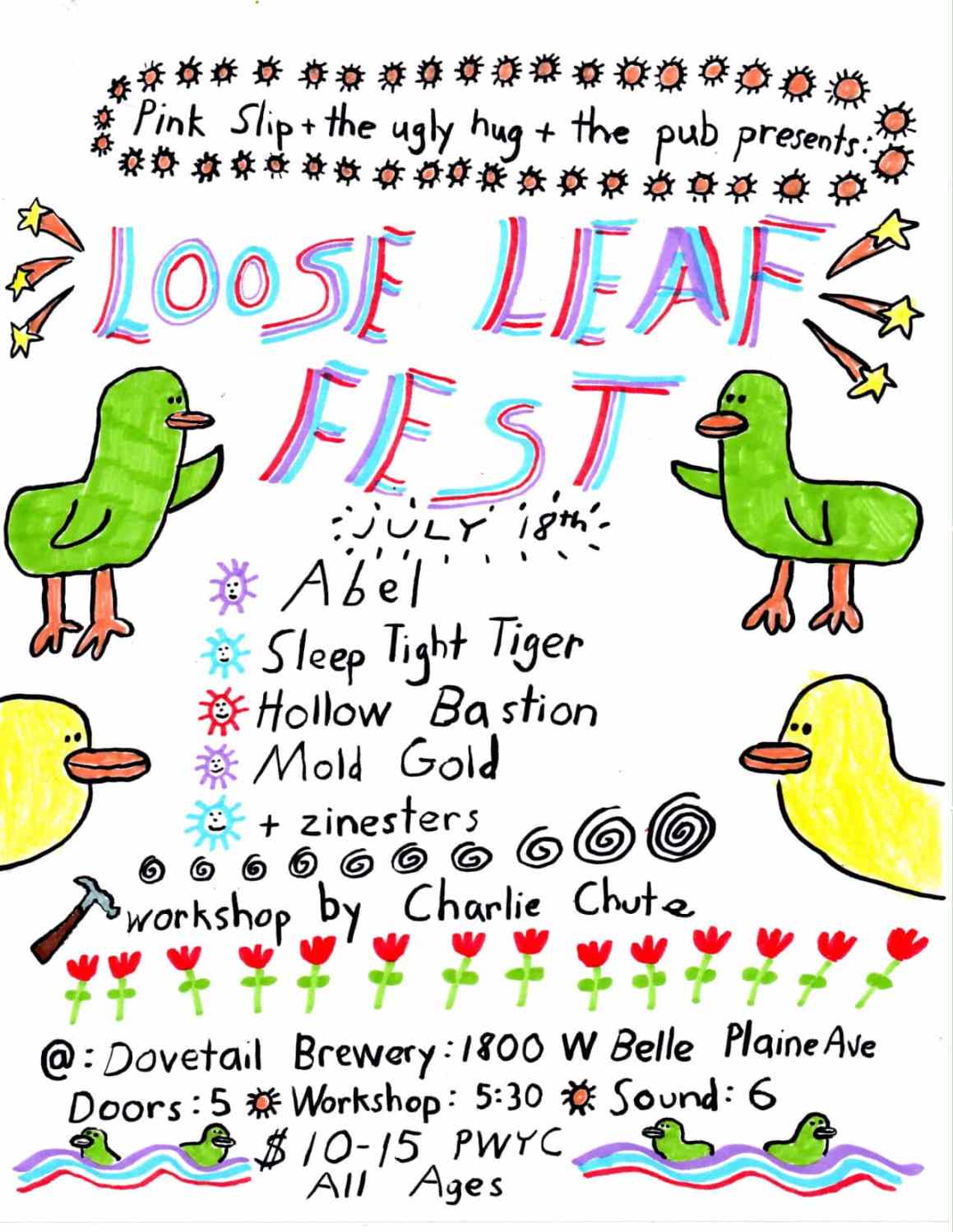
On July 18th, we are partnering up with our friends over at pink slip zine and the pub to bring the first Loose Leaf Fest! This will be an evening caught at the intersection between the underground music and DIY zine makers that keep our local scenes vibrant and inviting.
The evening will be filled with sweet sweet tunes by Abel, Sleep Tight Tiger, Hollow Bastion, and Mold Gold. Get acquainted with the folks who will be playing at Loose Leaf Fest!
Mold Gold (St. Louis)
Curious, yet incredibly endearing, Mere Harrach’s words are experienced and beautiful; a dusty fortune, a prized keepsake to hold on to for when you need it most. Amongst discombobulated bits of noise, trinkets collecting in the background, Mold Gold’s varying collections become emblematic of discovery itself. Where lucid string arrangements can weigh heavy in the moment, and Mere’s melodies become willfully poignant amongst the starry-night landscape and all that falls below.
With twangy guitars and bona fide melodies, Hollow Bastion writes songs in par to a shoot-the-shit with your closest friends. It’s a crash course in infatuation; live fast and dream big. Where pop songs are tuned to the sleepy drip of Speedway coffee, and anticipations stain the tabletop, blushed with little rings from glasses raised and lowered with habit over the years.
Praising their colorful influences and sharp impulses, Sleep Tight Tiger play tunes that stick like bubblegum in your hair and a skip in your step. It’s a whirlwind of bonafide fun, in part due to the friendship and collaboration that comes so effortlessly to the group. Their debut EP, Plum Something, has awakened an animal inside us all. And with star filled eyes, STT will never be deterred to lead with a bit of whimsy or a nasty bite.
Along with the Midwest prophets and scruffy rock n roll disciplinaries who have done their time and got their hands dirty, Abel continues to be a band that can’t stop evolving. Last year’s record, How toGet Away with Nothing, follows the Columbus group’s collective sounds into a deeper, much more haunting pool of reverberated grifters, ecstatic townies and irresistible melodies that sip from the cup of glory.
Loose Leaf Fest will be a PWYC event hosted at Dovetail Brewery. Along with zinesters, My Darling Ghost will be selling their special loose-leaf tea blends. Bring your friends and crafts! Hope to see you there.
On July 18th, we are partnering up with our friends over at pink slip zine and the pub to bring the first Loose Leaf Fest! This will be an evening caught at the intersection between the underground music and DIY zine makers that keep our local scenes vibrant and inviting. Along with music by Abel, Sleep Tight Tiger, Hollow Bastion, and Mold Gold, several local zine makers will be tabling their work.
Kicking off the night with a skills-based workshop, led by Charlie Chute, attendees will have the chance to craft and collab on their own zines. Supplies will be provided, but feel free to bring anything you’d like to work on.
Get acquainted with the folks who will be hosting tables at Loose Leaf Fest!
“As a queer multidisciplinary artist, my work explores the intersections of materiality, gender, sexuality, identity and relationships with myself and others. Image, text, the process of making, and the act of processing the emotions that come with it are central to my practice. My work is largely autobiographical. Based on my own lived experiences, it becomes a way to move through different themes as they emerge. Working across photography, film, printmaking, poetry, comics, illustration, and zines, I create imagined spaces and conversations to help understand my thoughts, feelings, and the world better.”
Nando Espinosa Herrera is a freelance photographer, pseudo visual artist, and cat parent. Currently exploring print as medium and form, you can find him offering chilly-powdered lollies to friends who need a little spicy sweetness in their lives.
A back alley artists collective. Fiilthy Glo is a zine rooted in Chicago catering to the experimental ((&& slightly strange)). Run by independent creatives,, we strive to cultivate a community that celebrates authenticity and uplifts the unconventional. All misfits welcome.
“Throughout my exploration of not so well-versed self identity, I’ve been drawn back to the duality of being a woman. As a multimedia artist, my work primarily deals with themes of womanhood, connection through environment, identity, sexuality and community/ “alternative” culture. I am currently a masters student at the School of the Art Institute of Chicago pursuing my MFA in photography.”
Rebecca Arroyo and Ari Franco’s creative partnership traces its roots back to high school, sparked by a mutual love for art, books, and film. But it was during the summer of 2015, lounging on the grass fields of Dvorak Park, that Niñas Tristes truly came into bloom. Over a pint of brown liquor, they traded stories of romantic letdowns and personal histories, moments that now fuel their visual storytelling. As native Chicago artists, they use layers of paper, memory, and nostalgia to transform intimate vulnerability into collective art.
Roadhouse Magazine is a space for Chicago’s DIY music and art scene to come together. We feature reviews of local musicians, upcoming bands and albums, and showcase other creative work like photography and poetry from Chicago musicians within our physical print magazine. Our goal is to give artists, fans, and everyone in between a platform to discover, share, and celebrate the work happening in our city.
Weirdgrrrlzine is a bi-yearly self published magazine based in Chicago, IL. The zine began in 2021 by Syd Wrigley as a way to cope with becoming disabled, and is now sixteen issues running.
Loose Leaf Fest will be a PWYC event hosted at Dovetail Brewery. Along with zinesters, My Darling Ghost will be selling their special loose-leaf tea blends. Bring your friends and crafts! Hope to see you there.
The bite of cyanotype’s newest single is worse than it’s bark. Today, the Brooklyn-based duo composed of J.C. Vargas and Silvia K. shared “wish sometimes”, an emotionally blistering track cloaked in something pretty, wilted, and deceptively gentle.
The fickle tone of its title bleeds into the entirety of the track, as “wish sometimes” carves itself into a perpetually liminal space. Robust melodic bones offer some sense of an anchor, but beyond that the song feels restless; living entirely on the fence of something else. That is not to say it is chaotic – in fact, “wish sometimes” is eerily temperate. It cultivates poignant and stirring tensions without ever turning to cheap tricks or dramatic juxtapositions, speaking to cyanotype’s astute songwriting, and the duo’s ability to deliver visceral unease through more delicate routes.
“wish sometimes” was mixed by Sonny Diperri and mastered by Dave Cooley. Accompanying the single is a video that toes a similar line between unsettling and beautiful. Featuring Skyli Alvarez and makeup done by Lee Coco, the video, mirrors the raw and emotional feel of the track, and nails an aesthetic seeped in gothic motifs and cyber influence. You can watch it below.
Every Wednesday, the ugly hug shares a playlist personally curated by an artist/band that we have been enjoying. This week we have a collection of songs put together by the Kingston-based band, $500.
Composed of guitarist Ian Donohue, bassist, vocalist Kaitlyn Flanagan and drummer Lilly Griffin, the trio released their debut record, Twelve Eyes, back in the Fall of 2025. Take any song off that record, you’ll find that these tracks tussle with both color and grit as $500 play off of what’s given to them. At times it can be unforgiving, reeling through the complexities of self, love, apathy and perception. But Twelve Eyes plays out like a daring vestige, as gritty instrumentations hum and pound with the prowess of a neighbor’s old lemon car hitting a pothole. When played out, these songs become a presence to hold on tight to, formative at the heart of some back-pocket-rock, but sobering in the likes of the band’s veering convictions, ecstatic deliveries, and big heart.
About the playlist, the band shared;
“hello music enjoyers – here is a playlist of tunes we queued up a few weeks back for our drive out to record what’s gonna become our next release.
no theme really, just some stuff that has been rocking us recently. this music best appreciated with 500 cups of coffee coursing through your system. do not forget to eat your banana.”
Written by Shea Roney | Photo Courtesy of Sleep Tight Tiger
“In a small town called Ypsilanti, where Iggy Pop would listen to Motown and catch flying frogs by the river, arose four friends with a magnificent dream: to make music that could rival a tiger.”
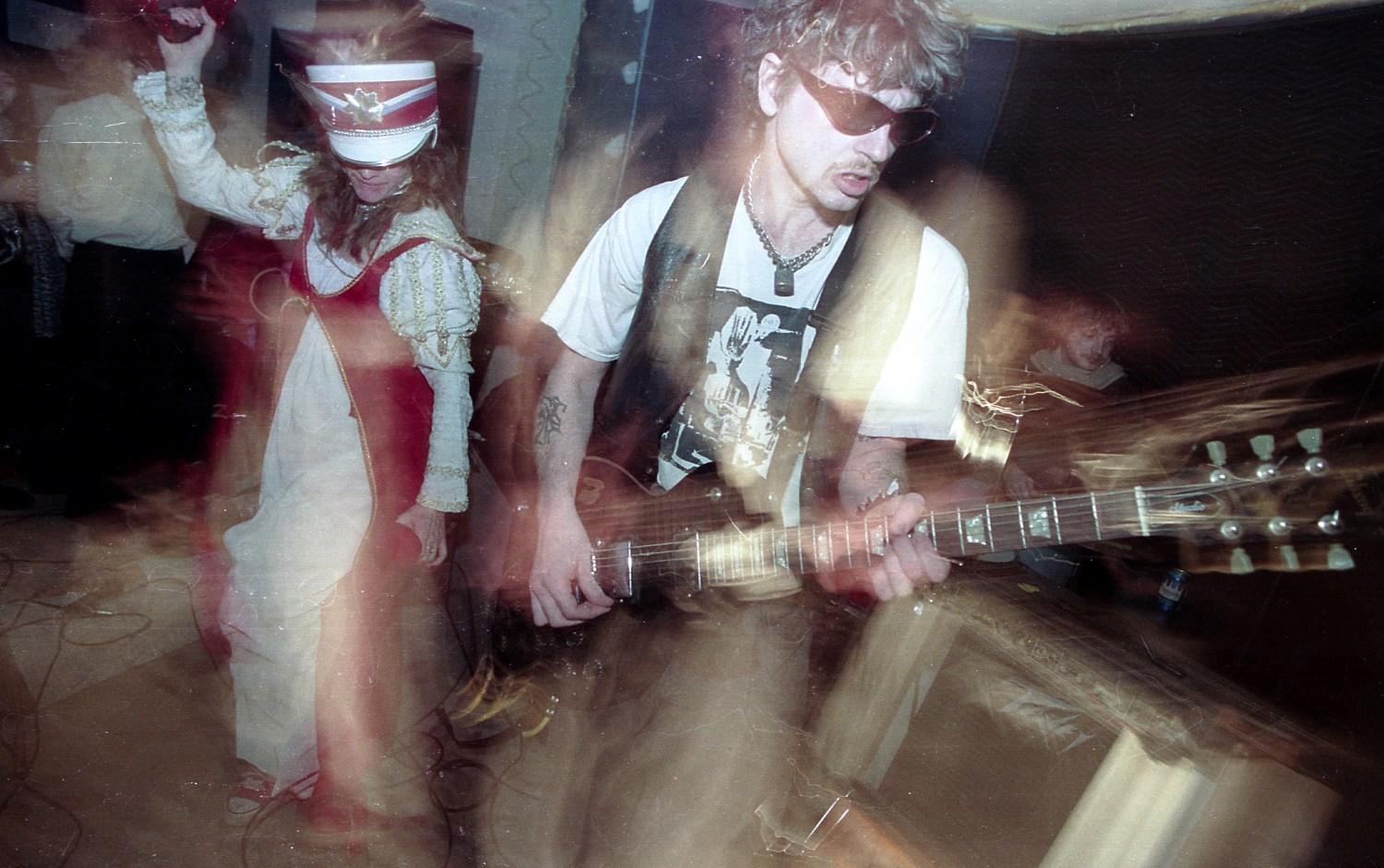
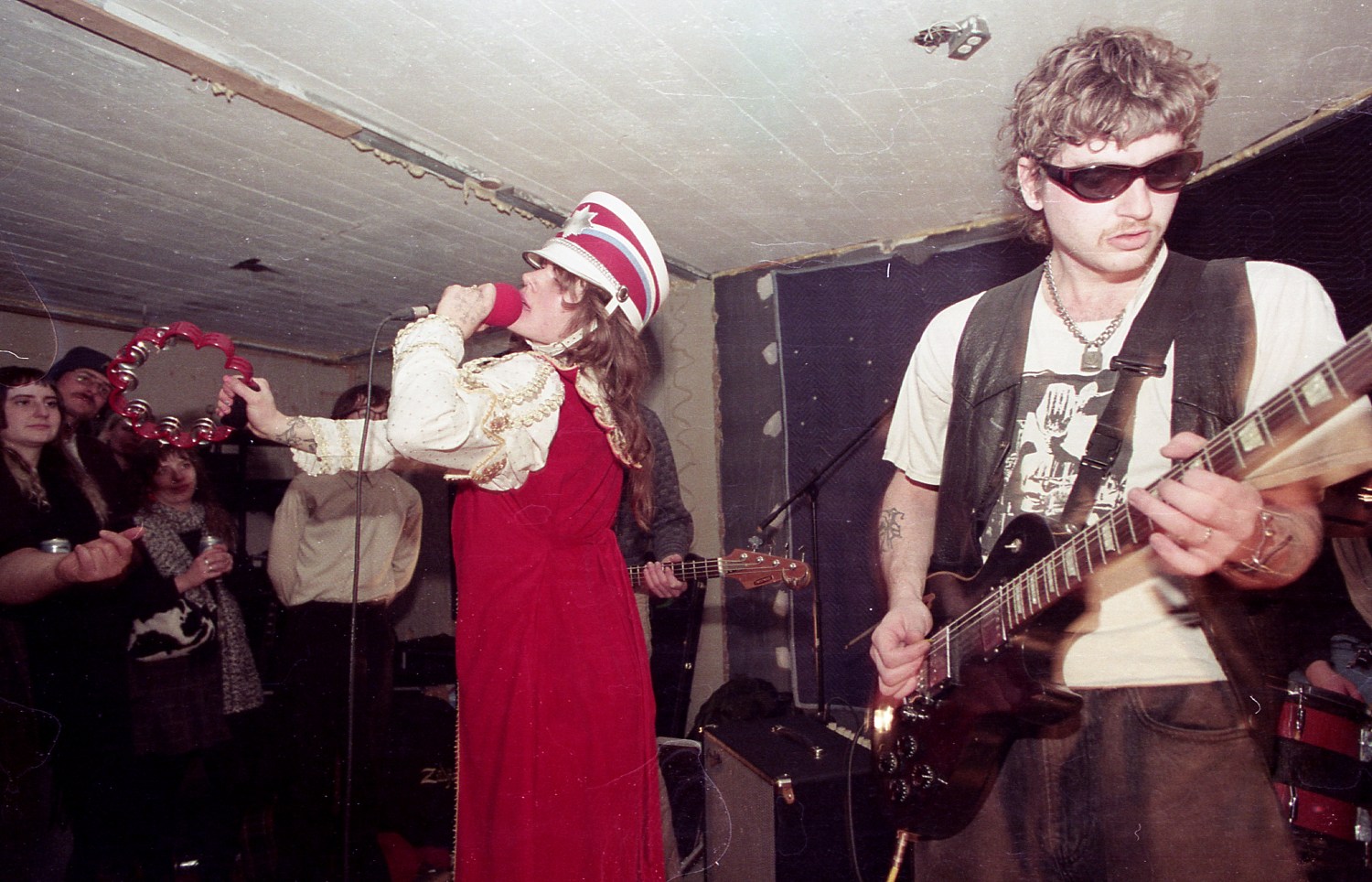
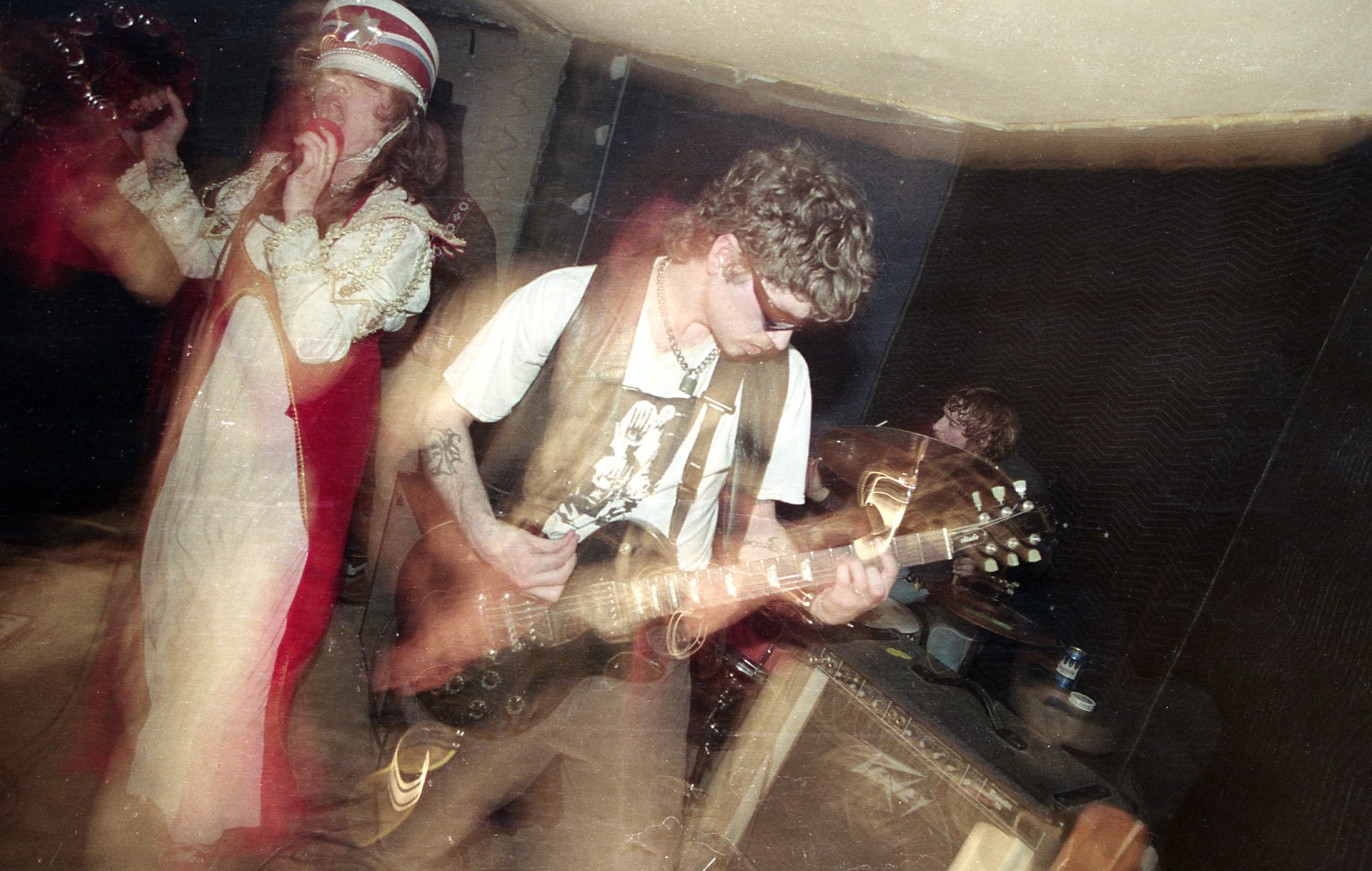
Last month, Ypsilanti, Michigan-based band, Sleep Tight Tiger, shared their debut album with the world, seven songs under the title Plum Something. Made up of collaborators and BFFs Evan Beane, Laura Topf, Ruby Howard, and Steve Poeschel, this project initial started as an inside joke back in 2023 to play one show, under the name The Goopies, and tragically break up on stage that night. But there is no such thing as a joke without a surprise. A year after that singularly influential show, the four were back together writing tunes and playing shows.
Plum Something provides proof of journey over destination; where snacks for the road and change in your pocket linger with the same anticipation of a simple jam session and a really solid pop song. Flowing like little doodles in a sketchbook, ideas parsing through colorful influences and shared impulses, the songs that Sleep Tight Tiger create are never deterred to lead with a bit of whimsy or a nasty bite. At their core, songs like “Skate” and “Jeannie” flow with excitement, where jangly guitars get tangled in sweet melodies like a string of twinkle lights, and songs like “Tiny Poem” curdles the blood with its lucid fever, vocal shrieks and punk-rock antiquity. Yet, as they will say themselves, this was never going to be an album. But these tracks are snug as a bug in a rug, regardless the direction they are pulled. It’s the pure joy that lives in these tunes, the same that is also embedded in their collaboration, that feels uniquely intuitive to what’s to come out of the St Tiger universe in the foreseeable future.
We recently got to chat with Sleep Tight Tiger about playing into the jokes, their style of collaboration and keeping the tiger in mind.
You guys met at the freeform radio station that you all were a part of, and just started jamming just for fun?
Laura: Essentially, yeah. Steve and I had been in a band beforehand. So, if I remember it correctly… actually, I don’t remember it, but we were kind of like, ‘we should play, that’s fun.’
Evan: I don’t think there was a defining moment, it just occurred to us one day that we all played music, and it just made sense that we should all play music together.
Laura: The only reason why we played a show at all was because Ruby was leaving to study abroad in Japan, and we thought it would be funny if we played one show as a band and then broke up. So, yeah, one night only, and we were gonna immediately break up after. And we were thinking of how we can fight on stage. We’re really into performance.
And it was a one-off under the name The Goopies?
Ruby: Yeah, that name was based off of one of Steve and Laura’s favorite bands called The Doopies.
Laura: Which is this fake band that this composer and pop musician from Japan started. One of the people from Buffalo Daughter was one of the vocalists, so he essentially just had two voice actors playing little girls who went on a space coming-of-age journey. Steve and I love it. We were like, how can we capture that? And we just needed a name for a poster, essentially.
Starting off in this very loose headspace around what this project is and could be, how did you eventually approach the idea of writing songs and putting out a debut EP?
Ruby: I was gone for a semester, and I got back for Laura’s graduation, and she was like, ‘I’m just gonna move to Ypsilanti.’ And we’re all still here, so we started practicing in the freeform radio station and writing songs that summer of 2025. We have a very good friend, Evan Courtney, who Evan is also in a band with. He was trying to set up a recording studio in his basement, and we had all these originals that we were playing over and over. He was like, ‘I really need to practice recording some people’. And we were like, ‘well, if you record us, it would be the lowest stakes project ever – we would like the lo-fi sound and we’re not too fussy.’ It would be fun to record these originals that we had, and so he recorded us for free, basically for practice.
Laura: To me, it wasn’t on my radar. I saw it as, I guess he needs practice, so we will record. I had never had the experience of recording music and I don’t really know anyone who has either. I never thought that was a thing that you could just do.
Steve: But I also remember that every time we would practice, we just thought it would be nice to have these recorded somewhere that isn’t on voice memos. I think we all collectively thought we got something here, we got something with this! [Screams]
Did that motivation change at all when you got into the studio? Or did it take actually finishing the recordings to feel like, oh, shit, we did that?
Laura: It felt like such a goof-around moment. We recorded all of the music in a day, and then we came back to do the vocals separately. I mean, I’ve known Evan for five years. So, it was kind of just like hanging out.
Evan: The way we set up the recording process, we didn’t really do any overdubs on the instruments. We pretty much played everything you hear on the album live. We just set it up as we would playing a concert, which I think is more of an untraditional way of recording in the modern day. So it definitely felt more comfortable, and I think allowed us to express a lot of that rawness you would see if we were playing a show or something.
Laura: A lot of my confidence as a musician comes from being with these three. If I had to record my tracks by myself, it would not be the wonderful experience that it actually was.
Steve: It sort of puts into perspective that being in a band is awesome and fun and sunshine and rainbows, but then it does sort of feel like at a certain point, you do have to treat it like a job. There was a point where we’re all kind of trying to lock in, and you’ve been there for six hours – I sort of compare it to trying to full combo a song in rock band, where everyone’s trying to get 100%, and then I’ll fuckin’ mess up on the drums, and then everyone turns around, they’re like, ‘bro, we gotta run this again. Let me full combo twist right now.’
With the thought of recording it all live, did you guys have any expectations of the way you wanted these songs to sound?
Ruby: We really like the lo-fi sound. There’s a lot of music coming out right now that is recorded to tape, and we really did like that sound and how thrown together it was. But Evan [Courtney] is a very talented mixing artist, and he really wanted to dial these things in. So we sent him a couple different albums for inspiration, like Tiger Trap, Tallulah Gosh, Dear Nora, those kinds of artists and sounds. But we got to basically go back into his studio and tweak the songs with him, which was very nice to be there. It could have been something that was super flash-in-the-pan, record to tape, but it wasn’t. We really dialed it in. We even got someone to master it for us, so the end product ended up being just a million times cleaner. I wouldn’t say better, but it was just so much more crispy than I was ever expecting.
Evan: Overall, I think it gave me more confidence in our music. When you’re focused on having a really lo-fi, trashy sound, but then listening to these very polished recordings and realizing, like, oh, our music sounds really good with this good recording process. It helped us realize that we could take this to the next level.
Laura: To the moon!
Laura: I played a show, and the former music director at WCBN was talking to me, and he’s like, ‘knowing you guys and your tastes, I don’t want to mean this in any bad way, but I thought you guys were just gonna record this in your basement or something’. And I was like, we did record it in a basement, just with Evan Courtney mixing it, and then Fred Thomas mastering it.
Ruby: And all the guys that work at the record store – we couldn’t have done any of this without the people in our community, in our spaces. We really owe it to them, and I want to continuously shout them out. We wrote these songs, but they didn’t sound like this when we were playing them in our basement.
I mean, these songs are so full of joy and excitement and love. How did your relationship to each other and your surrounding community impact what you were writing about?
Laura: I think “Skate” might be a good example of that. Ruby was away on a work assignment while we wrote that song. It was the summer I had graduated college, and it fucking sucked. I didn’t want to do anything. But Evan, Steve, and I got together in Steve’s basement, and we wrote it. The process of writing a song about something happy, and looking back on memories, and being with each other – even figuring out those awkward points of feeling insecure about what I’m writing and what I can bring to the table – those moments of getting really excited together brought back the hope and that enjoyment that I had missed in my hobbies and life. That was a turning point in that summer for me, where I was like, maybe things will just work, maybe I’ll just roll my way there.
Evan: It definitely helps in the way we write songs, because our songs are incredibly collaborative, even in the lyrics and composition of it all. Because a lot of times, we’ll sit in our living room for a couple hours and just write lyrics together.
Laura: And a lot of songs start off as jokes. The noise break in “Tiny Poem”, we had that song complete and finished, and then we showed it to Steve, and Steve was playing around with the station kit, and he was like, ‘these toms are tuned weird, bom bom bom bum’ [alternating in pitch].
Steve: They were tuned into D and E flat, and I was like, what if we go, like, boom, boom-bum-bum?
Laura: And that’s the defining moment of the songs that we’ve written, is that super soft song that’s about a retired San Rio character, and then this crazy explosion. And “Jeannie” is written about the TV show I Dream of Jeannie. Evan’s riff is an interpolation of the theme song. And the theme song of I Dream of Genie is actually sampled in Doopie Time, the album by The Doopies. Pull back! It all comes back together. But no one’s got that yet.
Evan: It’s just nice because this has been the most stress-free writing environment I’ve been a part of. Usually writing stuff solo, I always have a lot of hesitancy in showing it to other people, or expressing how I feel. But because of our very close friendship with each other, it’s been a good practice to try and be really vulnerable with each other and the type of music we write.
I love finding those little hidden jokes in songs. As a band who is thinking of how to fit them in there, are you hoping people find them, or are you content with them being just for you guys?
Laura: I mean, they’re for us at the end of the day, but I do sometimes think, is someone gonna be a big I Dream of Jeannie head? We have a lot of stuff for ourselves, and I think sometimes we’ll talk to each other, and it does seem like a different language, like how people who spend too much time together sound. But we also like to bring the audience in on jokes. We like to have costumes that we wear. I come from a dance background, and Ruby did a lot of theater growing up, so having that performance background, you learn you can’t ignore the audience. We’re here to have fun, they’re here to have fun, and we all dress up for shows because we want to show that we care.
Evan: Part of the way we express art is through performance and through aesthetic, and I think that coincides very heavily with our music. It’s almost equivalent to the way we present ourselves.
Laura: I think it can seem easygoing or it comes naturally, but I think something that is super important to us is showing that we care. I don’t think Sleep Tight Tiger would be what it is if we didn’t have our hearts on our sleeve. We want this to be awesome. We want this to be fun.
Ruby: And that’s the thing that when we started playing, quote-unquote, real shows. People would be there wanting to review us, and would always write something like, ‘they brought the fun.’ When we get to have so much fun on stage, it’s kind of like letting the audience in on that space, you’re creating the space for fun and jokes and giggles. We’re all very serious about the music in a real way, but it’s not just for the bit, you know? With the bit, at some point, you lose the barrier between you and the performance.
Laura: I would not describe us as an ironic band. I used to think that people thought that we were so bad, and the only compliment they could give us was, ‘you look like you were having so much fun!’ So it’s nice to hear, ‘that was so much fun, and you guys sounded great’. Actually having that album come out and doing the recording process felt legitimizing in that way. I was like, okay, we’re not just entertainment. We have a perspective that people think is worthy.
What other costumes have you guys done?
Ruby: Laura sewed us all these amazing white gilded shirts, and we all had a different card suit on them. That’s what we wore at our album release show.
Laura: It’s hard to make costumes on a budget. We have big dreams, but typically we’ll just be like, okay, everyone, we’re wearing plaid today.
Steve: There’s usually a small little visual piece, like ascotts. Or last night we all had ties and Laura put the letters of our initials on there. But someone came up to us, and they’re like, are your ties supposed to read ‘sire’? Because Laura did a lowercase L, and they thought it was an I. It’s our names! [screams]
Laura: When we were at The Big Pop Show, people were like, did you plan to all wear neckties? And the cool response is, no, we’re just all mind-meled. But the true response is, absolutely, of course. We do plan our outfits together. We did plan to all wear neckties. Ruby tied them all on for us, because she’s so good at tying those. We’re a team and you wear a uniform when you play. And we’re all up there to put on a show.
Ruby: Capital S. Show.
And you guys just only recently changed the name to Sleep Tight Tiger, right?
Laura: Yeah, we realized that if we were gonna put our music out, that was our one chance to change the name without it being a big ol’ hassle.
You guys wrote somewhere describing the band as making music that could rival a tiger.How do you approach the resting beauty and danger that is a sleeping tiger?
Steve: Usually when we record, there is a live tiger in the studio, and we have to play to where they’re not gonna wake up and kill us, but to where it can influence their dreams. I have no idea, I wasn’t involved in that sentence, so I’m not one to answer this.
Evan: I feel a lot of our ethos goes between wanting to write very fun, light-hearted pop songs, but underneath that is this basis of punk and noise influences. We have similar music tastes, but I feel like we all sort of bring different things to the table. Especially in how we gather influences. I’m equally as influenced by The Pastels as I am by Wolf Eyes or The Stooges. I think it’s that dichotomy that I feel resembles a sleeping tiger, because, you know, tigers can be really cute and adorable, but you don’t want to mess with a tiger. Don’t let our sweetness fool you, because we mean business.
Ruby: Especially because people come to us kind of shocked about the range. We didn’t write these songs for an album, so we didn’t write them to be cohesive. We all have different things that we find exciting at different times, and want to pursue that. Even our covers that we’ve done range really wildly in terms of the decades or genres that they’re from. We all just really love music, which is really nice because not many people in my life outside of the people I’ve met at the radio station are music generalists like these awesome people are. They know so much and there’s so much inspiration to derive from that it would feel crazy to pigeonhole ourselves into a style.
Laura: Like a tiger, we are hungry…for more genres. Give us more.
Ruby: But yeah, that was super comforting to me, because I’ve been in a couple other bands in my life where it was very much one genre, and not my music personally. So, being able to be like, I love this band, I love this sound, let’s write a silly song, or write a very ernest, heavy song.
I mean, “Tiny Poem” immediately comes to mind. People are often like, ‘that was so shocking’. And we do scream live when we play that, too. And so people are usually just blown away because we were just playing a jangly little tweet pop song, and now we’re on stage playing a heavy noise break, screaming at the top of our lungs.
Laura: And I think making everyone uncomfortable.
Ruby: A lot of people like it, some people don’t. But some people like it because they’re uncomfortable.
Laura: I mean, our music education in our 20s was largely dictated by having freeform radio shows. The beauty of music listening happens when you pull two different disparate genres, songs, artists, and you find the through line, and I do think that that’s kind of how we set out to write songs.
You can listen to Plum Something out now. You can also catch Sleep Tight Tiger in a Midwest city near you this summer.
Written by Shea Roney | Cover Photo by Tanner Stangle
Gawshock is the solo project of Huntsville, Alabama based songwriter David Broome, who is gearing up to release his next album titled Leaves to the Sun, out April 17th via Patchwork. Started as a way to keep himself busy during the pandemic, Gawshock has become a place of exploration for Broome as he continues to push himself as a deliberate and enduring songwriter. Today, Gawshock shares “What Do You Dream About?”, the simple, yet stunning final single ahead of the new album.
Photo by Max Marcotte
Caught up in a commotion, “What Do You Dream About” begins with an amalgamation of sounds as the track finds its footing in a lush and stirring landscape. Built around repetition, Broome asks “what do you dream about?”, the question growing in size with unruffled harmonies that create an alluring cloud of bizarre, restless fascination. And just as the question begins to sharpen, the track falls into a grounded groove as drums blow in and guitars fly around like birds between branches; frantic, yet instinctual. And amongst the conversational backdrop that “What Do You Dream About?” exudes from comes a curiosity for answers, but Broome creates an atmosphere where sometimes it’s nice to just sit in for a while before you get to work.
About the single Broome says, “I’m the sort of person who thinks about dreams a lot- oftentimes I can’t remember them after I wake up, but when I do, I’m always curious about what they may have meant. “What Do You Dream About?” is a pretty simple song about that curiosity. Do most people walking around day to day know what their brain is working on while they’re sleeping, or why?”
Listen to “What Do You Dream About?” premiering here!
You can listen to Gawshock’s catalog now as well as purchase the previous single “Heat Lightning” ahead of Leaves to the Sun out April 17th via Patchwork.
Written by Shea Roney | Photo Courtesy of Nat Tracks
We’re all familiar with the game of telephone; the classic time killer where someone whispers a phrase into a neighbor’s ear, passing it on down the line until it reaches the last person, and you all laugh about how such a simple phrase got so lost along the way.
Nat Tracks is the new project from Denton-based artist Natalie Hanne Winkler, who recently shared her debut EP titled Lost Signals. Animated through the colorful DIY ethos of her band Paper Jam, who have been rockin’ down Texas and beyond since 2024, Winkler is no stranger to an effectively good pop song. But it’s in that efficiency where Winkler stands out; not only engaging with familiarity, but also asking why these instances become so familiar to us in the first place. Where miscommunication prospers and simple courtesies are left to the side.
Branded as her latest obsession, Winkler spent the last year expanding on all things synthpop, exploring the most niche corners of its artistic endeavors, while homing in on an inherited Yamaha Portisound. With production help from fellow Paper Jam bandmate Mason Blair, Nat Tracks coats the pallet with vibrant synths and drums tracks that blink to the natural progression of her discovery. And it’s easy to get lost in the whimsy of these tunes, but Winkler stays anchored by the landline; each track becoming an individual conversation as sincere melodies chase pixelated dreams and busy work all throughout the house, wrapping the phone cord around chair legs, side tables and the family dog as Winkler keeps pulling ahead.
We recently got to chat with Winkler about our unmatched access, trying everything, new obsessions and throwing a midnight release show.
This interview has been edited for length and clarity.
You described this project as something that came from having more access than ever beforeto your collaborator and friend, Mason. Working with Mason in the past with Paper Jam and then starting from scratch, what does that access mean to you for both yourself as an artist and as a collaborator?
I think that was sort of a sentiment to the subjects that I’m talking about in the songs, but I like that you bring that up as my relationship with Mason and my access to him. He lives in Chicago and I live in Texas, but he’s a really talented writer, and a really talented producer, and he had a lot of time. I was writing too fast for Paper Jam because that’s my biggest outlet; writing songs versus journaling, or, you know, going to therapy. Whatever your outlet is for the things that you’re going through in your life, I just really like turning that into music. I was writing really fast, because I was just going through a lot, and we had this idea to make something separate from Paper Jam. I was getting so into synth-pop music. I was listening to a lot of OMD and this artist called Brittle Stars, who changed my perception on mixing guitar with the drum machine.
Previously for Paper Jam, it was super rock and roll. Tallulah Gosh was obviously a huge inspiration and all of that jangle pop. It’s really interesting when your music taste changes while you’re still in a project, because you don’t necessarily want to change the project that dramatically. Obviously bands go through flows of how they want their music to sound, but when you’re really into a genre, not even just listening to it and making it, but also being it, like a mod or a beatnik, or whatever, you become what you’re listening to all the time. And that’s kind of my personality, I just love doing everything all the time. So, it was like, how do I do that, but also still focus on Paper Jam stuff. [Mason] was totally down to help me create these songs.
I’m horrible at using computers. I wish that I could produce my own songs, but I just can’t do it. I’m so much more of a lyrical writer. I obviously have a lot of opinions about everything, and I have to be like, ‘can you make the drums go like this’, and then Mason could go in and physically do it. His grandma gave him this keyboard, a Yamaha Portisound, and he gave it to me to play around with, and we wrote most of the songs on it. It has these drum presets, like, rock and roll, shuffle, and samba. I would find one that I liked, set it to a pace, and then I would play some sort of little melody over it. And then [Mason] would just put it onto the computer, and then he would add so much to it, a lot more of that twinkly stuff. He’s so essential to how the whole sound came out.
The idea of this quote-unquote access is interesting, because you guys live so far apart. Was it at all challenging to be able to communicate ideas?
It actually really wasn’t. It’s so interesting, because really at any moment, we could talk to each other. But even just him sending a song to me, and then me responding back, he understood enough. We recorded a majority of this stuff before he left or in intervals when he would come back. You can do everything from a distance, but I think having him here for the vocals was good because I’m not as proficient at recording and he could tell me stuff. But as far as finishing the mix and the master, that was super seamless. We’re already friends, so we would just FaceTime every week to talk about what we’re doing in our lives anyways. But then if we needed to, we could talk about the music. Especially with this project, we did it over a year’s worth of time, just very slowly whenever we felt like we had the time to. So it was always super low stakes, just something that we wanted to do when we’d hang out.
Using the pop song as sort of a vice, as you were referring to earlier, what makes songwriting, especially an effective pop song, so meaningful to you? How are you able to connect the things in your world by turning it into music?
I really like how you’ve said that, that’s really funny. It’s true, though. For me, I’m a huge lyrics listener, and I think that that’s why I gravitate towards really simple-sounding, sort of beep-boop, robot-y sounding music. There’s not as much going on underneath, so I can listen to what they’re saying. I think that the story of a song is a huge factor to connecting yourself in the song. Obviously, I don’t want to be too specific where I’m naming names and stuff, but it is totally like you’re telling a story. Like when you watch a movie, or when you read a book, and you see yourself in the story, you equate your experience and your life to it. I think having that as an outlet and connecting with people over experiences and issues that I go through is really therapeutic to me. I had some girls reach out to me recently who were like, ‘I really relate to this’. I think that’s my favorite part, when somebody feels like they can relate to whatever I’m saying. Music is also a language, and going to shows or listening to music is a way that people get over their issues as well. It’s all just one very positive motion, where we’re all just helping each other get through these difficult times.
And it’s really cool now, because you can make anything you want, and then just put it on Bandcamp. There’s really no pressure, and anyone that wants to hear it can hear it. It’s a really passive thing in my life, because I love music, and I love doing it, but I’m also in school for meteorology. That’s a really time-consuming struggle. And that’s another thing of wanting to just do everything all the time. So it is cool that [music] can just exist.
I understand being in school on top of everything is a lot. You said this project was very low stakes for you? Is it easy for you to keep the process fun?
Luckily, I have a very interesting relationship with music. It has always been something I do for fun, because it was never in my mind something that I was going to do as a career. So there was never any pressure with it. If I release something and it flops, or whatever the kids are saying, it doesn’t matter to me. And I am excited to do my school. I feel like it took me a while to get to that point, but it’s really nice feeling secure in both of these areas of my life that are things that I want to do. It’s about balance, and sometimes I struggle with that, especially with music. If an idea comes, I just want to spend the whole week doing that and finish that song, but you have to do those other responsibilities. I think that the hardest thing is not letting music not be fun, but it’s not letting it take up too much time for my other things I have to do.
Is that balance similar at all to the way that Paper Jam functions?
We definitely have a little bit more pressure with that, just being associated with more than just me. We get a lot more offers to do things, and so there comes more expectation with it. But we are all best friends, so everything is always very fun. We’re recording our second album right now, actually. We’re doing it very differently from how we did the first one in which we were all together, and this one is a lot more one-on-one with Taylor [Rivers], our drummer, who’s doing the recording and the production. But it gets to the point where the songs are written, and I have a huge part in writing the songs, but I definitely don’t have as big of a part in them being produced. So that’s really nice for me at times when I’m doing school. It does function very similarly in that we are on our own time. We’re not on a label or anything, so it is still whatever we want, but we definitely are aware that we should make deadlines.
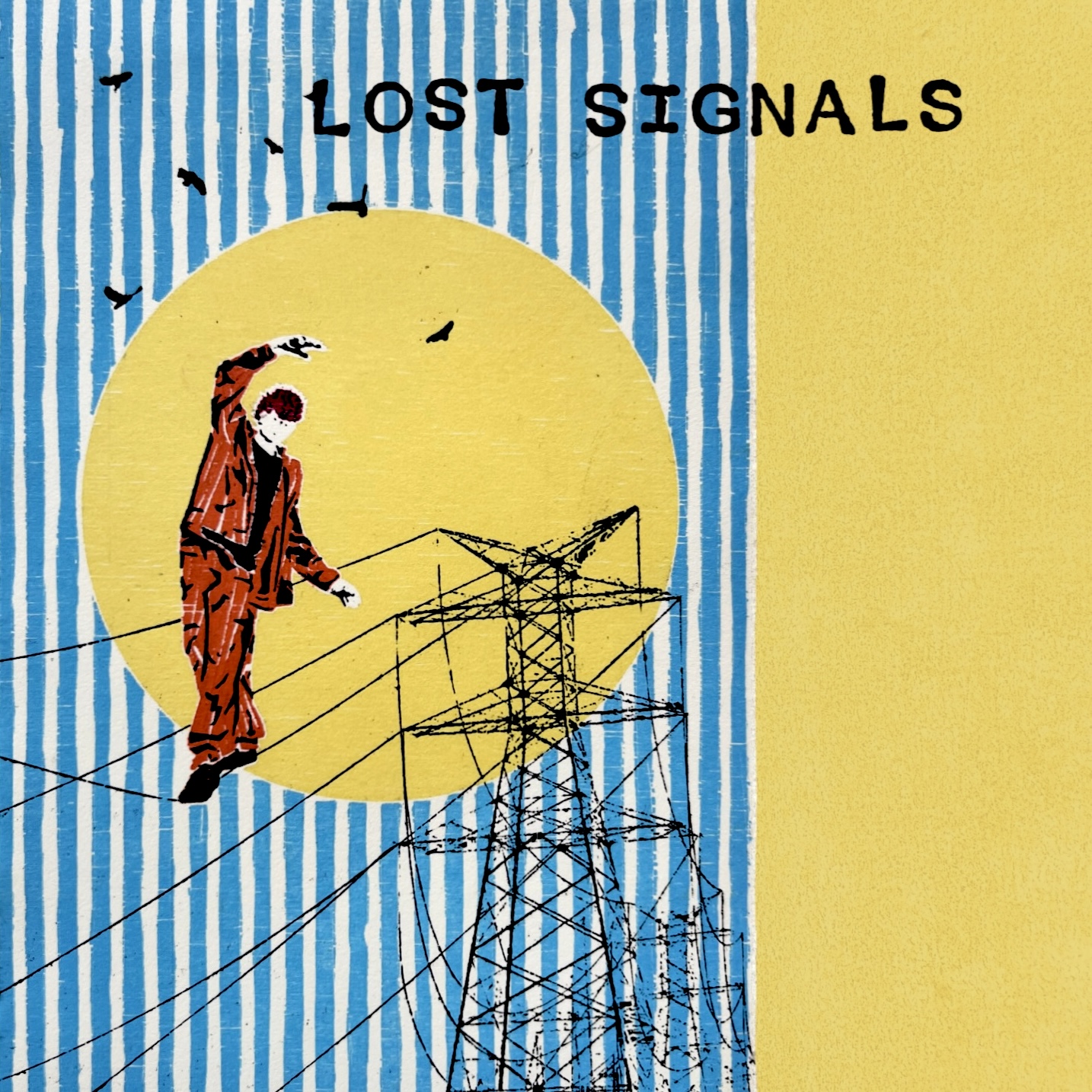
The catalyst to [Lost Signals] coming out when it did was that I met this artist, named Elijah, who had made this print called “High Wire”, which ended up as the cover. It’s the guy on the telephone wires. I remember freaking out because the first song I had was called “Telephone Game”, and it was such a perfect visual. I loved the colors, I just loved his style. There’s a lot of artists in Denton, so it’s really fun to be able to say I have a favorite one. We tried making some different prints, but I was so set on “High Wire”. And at that point, I had a visual now, so I could keep going, and this project could be 20 songs, or I could just put these ones out, and then do something new, because we know that’s how I am. I’m probably gonna want to go in a different direction anyways, so I should just put this out.
And there are thematic elements to this project, as you’ve stated. What are those connections that you wanted to make through these songs?
The whole thing was inspired by this phone call that I had with somebody that was my friend at the time. It was a very intense and sort of a traumatizing phone call. I remember getting off of it and having to sort of process it. It’s crazy that somebody can call you on the phone and say these things. There’s so many things you probably wouldn’t say to somebody if you were face-to-face with them. And so I was thinking about that a lot, and just how negative phones can be. They’re very negative on our social existence as people. And so that’s where “Telephone Game” came from. That was the first song that we made, where it started based on a phone call, but then it turned into the thought of that game where people whisper, and then it goes around and comes out the other side completely incorrect. It’s a very relatable, very simple concept.
Also there’s this artist called Oppenheimer Analysis who has this album called New Mexico that is based on Oppenheimer. That concept is really funny to me, taking something like that, very historical, and making a whole album about it. Obviously, telephones and communication is a much more common theme, and it was definitely an easier one to execute as a theme for the first time. But I’ve always really been into albums that have a theme throughout the whole album, and this one was just perfect for what I was going through at the time. We’re just not listening to each other. We’re at a time where we have access to each other’s brains 24-7, but we’re almost just so desensitized that we don’t even care to actually utilize those tools that we have correctly.
Next week, you’re celebrating the release of Lost Signals with a midnight show at Rubber Gloves in Denton. What are the moving parts of this midnight show and what does it mean to have these different factions of your world come together for this event?
That idea actually came from Kellen of Good Flying Birds reaching out to me. We were just talking about Good Flying Birds coming to Denton, and that they wanted to just stay with me on their way to Austin. And then I was like, you guys should play that night, why not? But they were playing in Oklahoma that night. [Kellen] asked if they could play at Rubber Gloves at 2AM. I asked Chad, who’s the manager, and is such a huge fan of them. He said let’s do it, let’s make it work. Good Flying Birds was so down for that, because they’re crazy people, and they’re always down for a party.
Then also there’s this art collective in Denton called Steady Hands, who really try to bring art and music together, and give physical media artists a light in a scene where music is very heavily focused on. We were just talking about how we can get people to come, because it’s so late. [Steady Hands] was gonna do a gallery this week, and I asked what if we made the reception that night leading into a show. And then maybe I’ll do Nat Tracks for the first time, so my friends come. I asked my friends specifically if any of them just wanted to try something new that night, like if they are working on something, and they just wanted to try performing it. It’s really not too hard to book a show here, because everybody’s all super close. We all live close together, and everybody’s just very excited about things, and it’s just a good community for doing something like that. I don’t know what the turnout’s gonna be like, but it’s gonna be really fun regardless. Rubber Gloves is so awesome. I think that they’re definitely the biggest and most important factor, they have such an important and influential space for music and art. They have the art there now, and they just really uplift the underground music scene and whatever happens here.
Every Wednesday, the ugly hug shares a playlist personally curated by an artist/band that we have been enjoying. This week we have a collection of songs put together by Indianapolis-based band Good Flying Birds.
Good Flying Birds are a treasure trove of dusty fortunes and healing tinctures. A band who proves that the ability to share a laugh, have a dance and hit the promised road with nothing but fond memories and bags under your eyes is what makes it all last. Before the reissue of their acclaimed album Talulah’s Tape late last year, Good Flying Birds traveled wheels up through the middle country, looking for found community in backyard bruisers, DIY institutions or any highway attraction that was down to host a rock n roll show. Amongst collected sounds, colorful textures and loose melodies, Good Flying Birds bring a new and exciting life to an already existing image. Not out of nostalgic revelry or diced-up inspirations, but rather the band’s own views on the sanctity of sharing. Where hidden gems lost to local profits find their worth once more, and abstract feelings of love, heartbreak, fear and boredom are sewn together with enduring pop tunes, all huddled under this notion of success derived from the pure joy of experiencing it with others.
About the playlist, Good Flying Birds shared;
We made this in the van while driving to Lafayette, Louisiana to play at the loose caboose with touch girl apple blossom. in that moment these were the songs in our heads that’s all I can say.
 the ugly hug