Written by Natalie Ingalls | Photos by Juliette Boulay
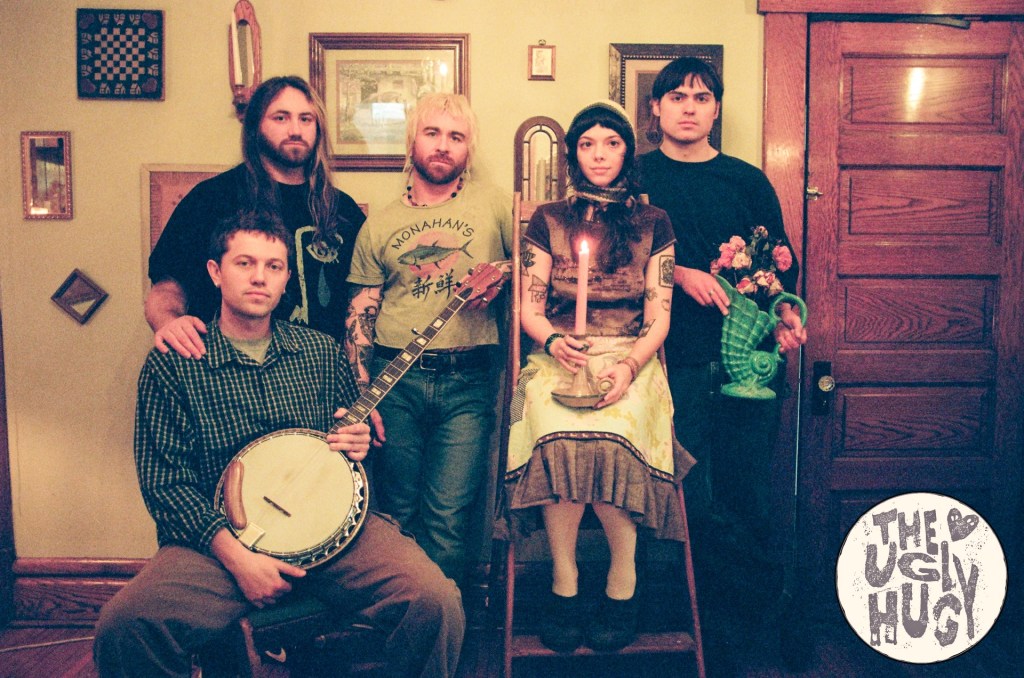
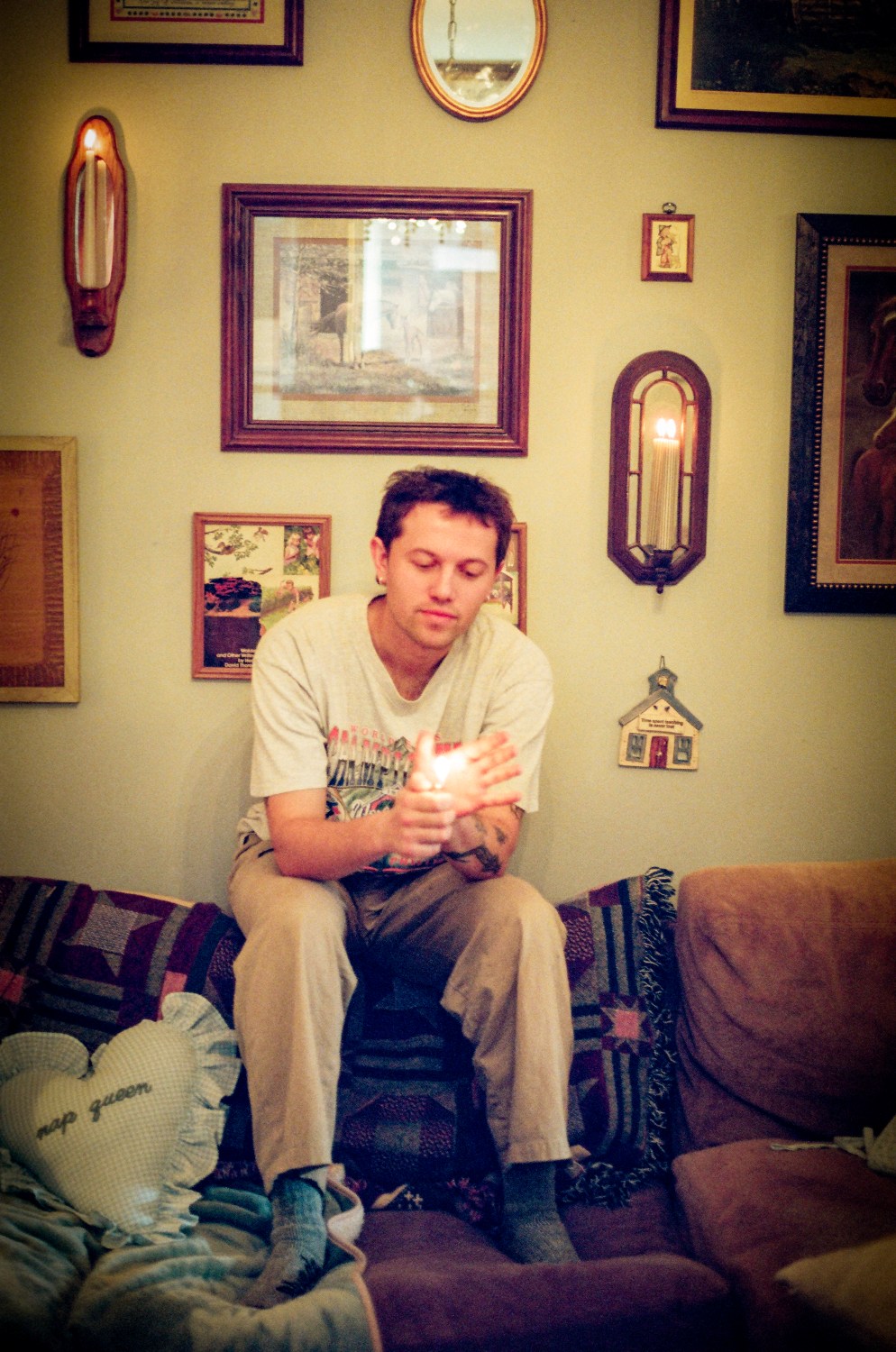
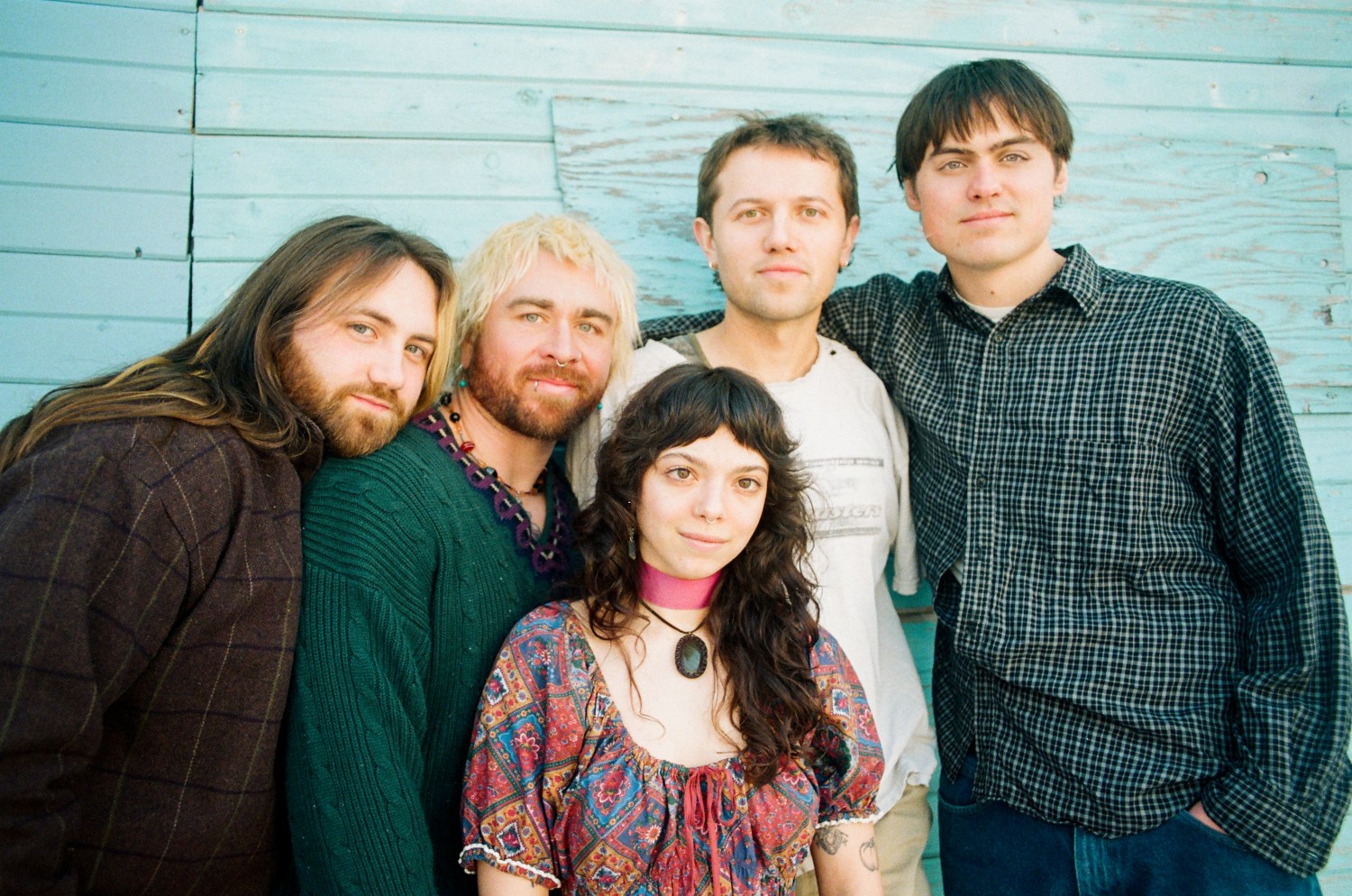
Mark Scott and I had both woken up late on the day of our interview. While I just had our conversation to look forward to, Mark, the artist behind Ohio’s villagerrr, was hours away from leaving for his first ever UK tour and there was still a lot of prep to do. It had been a busy few weeks; less than a month before, Scott had released Carousel, the follow up to his breakout album Tear Your Heart Out. The buzz of TYHO landed him a record deal with Winspear and the chance to share stages with other beloved indie acts, but the increased attention didn’t necessarily translate to a greater internal feeling of success.
Carousel wrestles with what can happen to those who make music in the spotlight; an exploitation of vulnerability, inflated egos, the loss of connection to your art. It’s peppered with features from artists whose sensibilities expand the sonic palette of the record, from People I Love’s shoegaze guitar work to lo-fi harmonies from h. pruz and skirts. The inclusion of collaborators also serves as a solution to the problem the album presents—maybe the sound of your friends making art is enough to drown out the noise from outside.
This interview has been edited for length and clarity.
Natalie: I’m excited to talk about Carousel. The album’s been out for a couple weeks. How are you feeling about it?
Mark: It feels pretty cool. At least online, it’s been neat to see it’s getting shared. Honestly, it was kind of overwhelming. I’ve since sort of tapped out a little bit but I’m grateful. As a band, [we’ve] been through a lot of tough stuff recently, so I think we’re excited to get back on the road and just have fun and detach from more serious stuff for a little while. Not to be ominous or anything. It’s just everybody’s got personal stuff, you know?
N: Do you feel like going and playing the shows validates the stuff you see online or does it feel completely different?
M: I think it’ll be interesting to see. We haven’t done a lot of headline shows in a while, and we haven’t played since the album came out. I’ve been told that some of the shows we’re playing in the UK for the first time, the tickets are moving really well and that’s just impossible for me to understand. We’ve had some good turnouts before, but there are more people coming to see us in places we never go to than our hometown. I think it’s cool, but it’s also hard to process.
N: I felt really seen by this album because I was born in Indiana and grew up in Virginia [both states are used as song names on the record]. I don’t think you’re referencing the states exactly as they are, but using them to talk about something else. You kind of do the same thing in “OHIOAN” [off his 2022 album of the same name]. I was wondering if you could talk more about using places or state names to achieve the story you’re trying to tell.
M: I think it’s a good placeholder. There’s some ambiguity to it, but especially for people who live in the states, it brings an idea to your head, maybe a picture, a temperature or a time of year. It is really evocative of a lot of things. That can be the same thing with a person’s name.
I also associate people in my life with locations. If you ever drive past someplace you remember doing something with a friend, maybe who’s not around anymore, they’re really tied together. Places are very alive too, and you can have a complex relationship with a place. Your attachment to it can be healthy, it can be unhealthy.
N: When you’re writing songs, are you often thinking about a specific moment or are you writing more about the world?
M: It’s definitely really personal. It surprises me how many people feel like they don’t write from a very personal place. I think it is inherently and subconsciously me, no matter how hard I try to step outside of myself. I am pulling stuff that is going on in my immediate surroundings. My bandmates will joke about having really long conversations with me and then two days later, I send them a song and it’s related to stuff that we’ve been sharing with each other.
N: That’s cool from your bandmates’ perspectives. I think the biggest gift of all is to have something you tell someone be adapted into art. When did you start writing music?
M: When I was really young. I never read comics but I liked making them, really bad ones, and then I eventually started writing little stories. Throughout school, writing was definitely the thing that was easiest for me. I feel like I would bend the rules of a lot of the prompts. I started playing guitar late into my teens. Then I got into recording and writing songs at like the same time.
N: Was there anyone you had to bounce ideas off of or did it feel like a really self motivated process?
M: It was pretty self motivated. I think I’m self-motivated in everything, which can be a little isolating, but it’s also cool to feel like I don’t really need too much external validation. That could be debated, though, because I am putting out music to be consumed. But I don’t inherently feel like I really need people to tell me what I’m doing is cool or good. I’ve been having a lot of thoughts about how much longer I even want to pursue music in the public facing way. It’s all a lot for me for sure.
N: What would ultimate success in your life look like? What keeps you happy?
M: That’s a good question and something that I feel like is gonna take time to really narrow in. But I love music and I really do like writing and it could be fun to take a stab at this whole band thing and see where it goes. I like the idea of being able to find people to write and collaborate with in a little more of a private way or just be somebody who can help. I would like to be the person to bounce ideas off of, maybe not be the person who’s like hey, look at me.
N: I wonder if you have any thoughts about why Tear Your Heart Out reached a wider audience.
M: In a literal sense, I partnered up with a label and I have had the help of a lot of really kind and talented people. There’s a lot of unpredictable stuff in there too. You can’t predict when somebody on Instagram with thousands of followers is gonna be like hey, I really like this album and then suddenly you get a spike in attention.
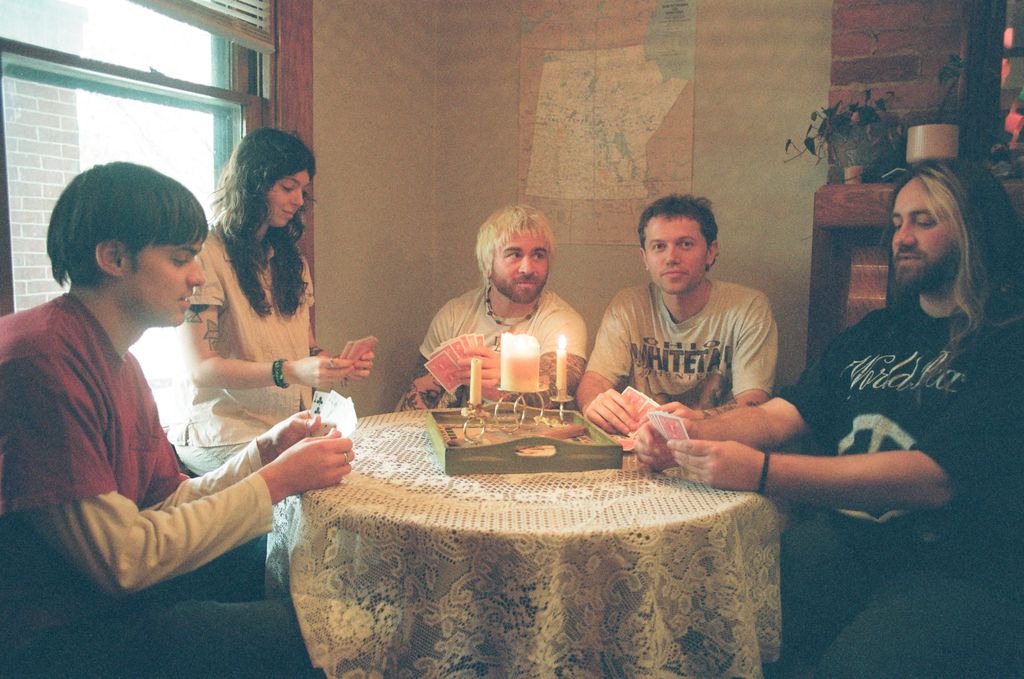
I definitely want people to connect with my music. I’ve connected with other musicians’ stuff in such deep and meaningful ways. Paying it forward- to put something out there and hopefully it means something to somebody. I get pretty nebulous when I think about a lot of this stuff.
N: I did want to ask about a couple songs. The song “Crystal Ball,” it seems kind of ominous and maybe about inhabiting a different person’s perspective.
M: I know exactly what it’s about. But I think more broadly, it’s directly related to the idea of making something with the explicit desire to be patted on the back and behaving in a way to garner attention, for the social capital.
N: I feel like you touched on that on “What Does It Mean” as well. I think that’s a really beautiful closer.
M: I feel like that song could mean a million things or nothing. I usually write pretty bluntly and I wish I could be more poetic about things sometimes. In that song I was just like oh, I’m gonna try to stream together words that feel good and paint a really cool picture. Everybody’s gonna have their different interpretations of what something means and I’ll have my own. Some of the songs on that album do feel a little more verbally aggressive. I’m not really an aggressive person, but maybe I just was feeling a little frustrated.
N: You have so much collaboration on this album. Were there any specific additions or choices that people made that surprised you?
M: You mentioned that song “Crystal Ball.” My friend Dan [in People I Love], I didn’t really know what to do with that song, I didn’t even like it that much, but I sent him a few and that was one that he took an interest in. He sent back a bunch of stuff, and I gutted some of the song and put his parts in there. I had an acoustic guitar thing going on, and he doubled some of it and I just took mine completely out because I liked [his] so much. He added a lot of cool synthy sounds. It felt like a different song entirely. I feel like that’s a song where him and I probably have about an equal amount of instrumentation going on, which is pretty cool because I don’t think I’ve ever done anything like that.
N: In your years of working with collaborators, has there been anything that people do when they write that you’ve tried to implement into your own practice?
M: I think the most that I take away is everyone truly does have their own approach and you really do have to find what works for you. I think being patient with yourself is really important when you’re trying to create something. Things can be really hard sometimes when you put a lot of pressure on yourself to be a certain way or you’re trying to force something or you want to be at the top of whatever it is. I think the best stuff I’ve gotten from other people, it’s just to be patient and be kind to yourself and be kind to other people. That’s a big one.
N: On “Swimming,” you talk about watching TV and picking up a book for the first time in a while. What’s your relationship with listening to music and do you sometimes default to [consuming] other mediums of art?
M: Yeah. I find myself defaulting to other stuff a lot. I’m definitely not one of those people who’s ever tired of music. But I’ve been listening to a lot of music lately for the first time in a long time. And I’m always reminded after pretty big breaks just how good it feels. I’m not trying to be dramatic, but it’s really powerful stuff. It can elicit a lot of emotion out of you, especially if you feel like you’re in a vulnerable place. People have ways of hitting stuff right on the head, and I think sometimes I avoid listening to music because I have a tendency to be a bit hyper emotional and sometimes it’s hard. Even if a song is happy, it’s overstimulating almost. But I’ve been able to listen to stuff a lot more lately and have a positive association with it.
N: What’s been on repeat?
M: I’ve been listening to the band Duster. That is one band where I am getting washed away in the textures and the sounds. I’ve been listening to Ted Lucas. It’s so peaceful and pretty and minimal, and he writes really directly, and uses a lot of really simple metaphors. But it proves how a one-to-one comparison can elicit a lot of emotion.
N: I read that you’re a big runner, and that you’ve done a couple ultra marathons. Do you listen to music while you run or are you running cold turkey?
M: If I was in some sort of event or race or I have company, I’m definitely not listening to anything. But when I’m alone, sometimes I’ll listen to a funny podcast. It’s kind of like junk food, and sometimes I’m not even really paying attention, but it can help turn my brain off. But I do like to listen to things and sometimes when I’m really actively recording and writing, I’ll listen to some of the things I’m working on. I can kind of frantically type my ideas down in my phone. If people see me doing it, they’re probably like, what’s wrong with the world today? I’m not texting. I’m writing.
N: Is there anything that you employ in your running practice to writing music or does it feel kind of separate?
M: I feel like it’s hard for me to know if there is a correlation, I haven’t been able to articulately describe that relationship. I think that it feels pretty separate. But I know that when I’m running, I’m typically feeling better, physically, mentally, and emotionally, and I think that that opens up my brain to be able to be inspired by the things in my life.
You can listen to Carousel out everywhere now.