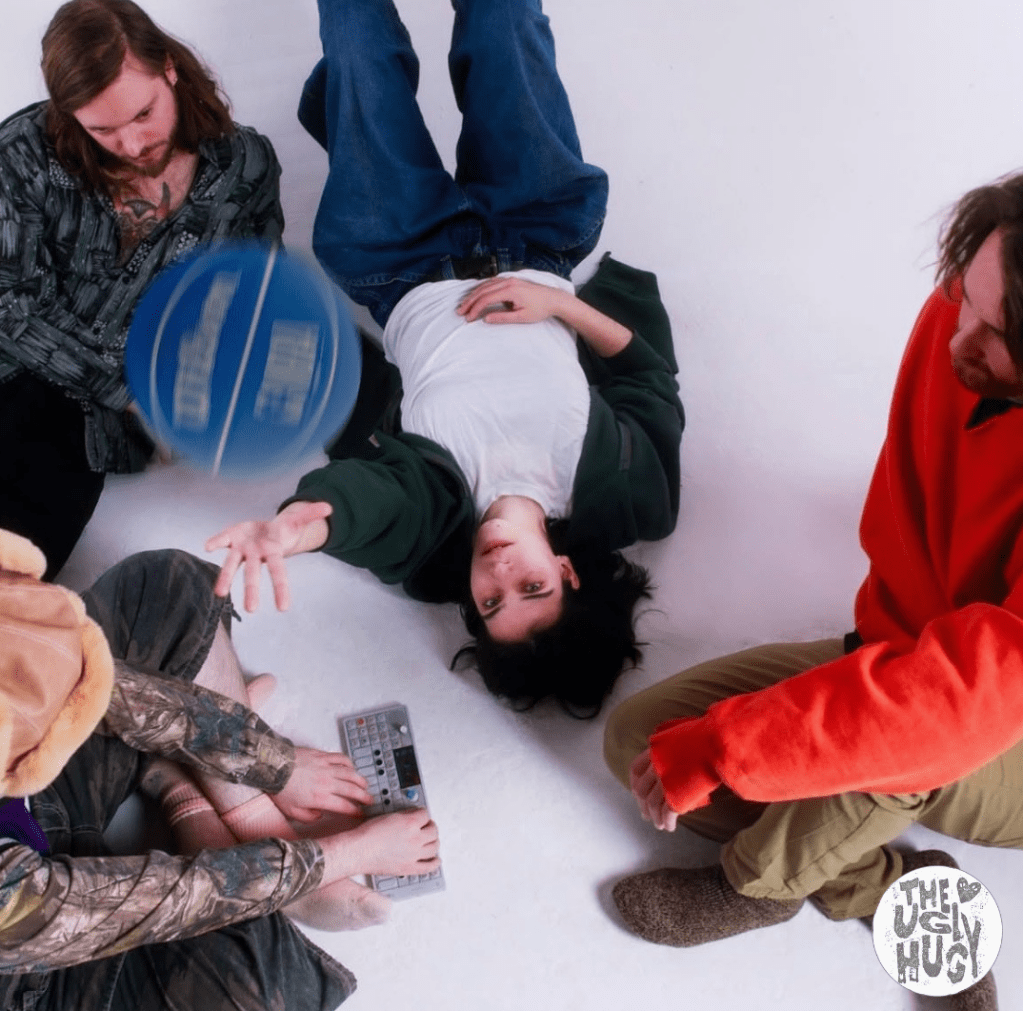
Written by Manon Bushong | Photo by Rafael Vasconcelos
What’s that quote about nostalgia? I asked two people this question as I wrote this intro, though I may as well have asked them “what’s that one late 2010s hyper pop song?” More details were required of me, more details I did not have. I was certain there was one little cliche that warned about the seductions of nostalgia, and subsequently the perils of falling into her wistful talons, but who knows. The whole point was to reference this quote that may or may not exist, only to combat it with the plethora of ways that Nara Avakian proves its sentiment wrong. Luckily, this can be done without platitudes, because whether or not a warning against nostalgia in TJ-Maxx-home-section-prose does in fact exist is not super relevant. Anyone can admit that nostalgia is capable of hindering growth. While obsessing over the past through rose colored glasses (sorry if you thought you were going to make it through this intro without one cliche) can warp our perception of reality and keep us stagnant, Avakian’s (most likely blue) lenses do the exact opposite. Within both the literal and figurative walls of Nara’s Room, they use the comfort of childhood motifs to cushion painful reconciliations with the past. On their latest record, Tearless, Thoughtless, Avakian continues to carve a space where growth and sentimentality can operate hand-in-hand, once again proving just how powerful a tool nostalgia can be when leveraged correctly.
Many aspects of Tearless, Thoughtless propagate themes found in prior Nara’s Room records. It oscillates between feels that are vintage and utopian, sculpting an atmosphere that belongs entirely to them. It juxtaposes lyrical weight with sonic buoyancy. It nods to Avakian’s heritage. It’s teeming with early 2000’s references. It is most definitely NOT shoegaze. Though none of these observations are new for the project, Tearless, Thoughtless also manages to chart territory never before heard by fans of Nara’s Room. The album claws itself into depths that Avakian themself had only recently become comfortable with. Although Avakian cites it as the most collaborative and spontaneous experience they have ever had with a record, Tearless, Thoughtless materializes as some of Nara’s Room’s most naked work yet. Unlike their past music, which had been heavily fabricated within the safe realm of the project’s namesake, Avakian’s bedroom, Tearless, Thoughtless left the room as fragments, waiting to be puzzled together with the help of others.
“I think with Glassy Star, I was like, “this is what we’re gonna do.” It was more structured. Tearless, Thoughtless was definitely more experimental and spontaneous, and I was so much more open to the collaboration.” Avakian notes. “I also would sometimes have loose lyrics but no melody or guitar part, and we would be in studio and I would be like, “Will, like I really wanna make this song, but like I don’t have these parts yet,” and he’d be like, “Let’s just do it now.” That was all new for me, and it made a huge difference. It was very freeing. I was able to have ideas and not need to fully form them yet, because I can have other people in the room to help me. It was way more fun, and whatever we end up working on in the future, I want to keep embracing that. I’m not looking at things in this very precious way anymore.”
The depth achieved from collaboration was not coincidental. Rather, it is evidence of the powerful relationships Avakian holds with each of their bandmates.
“The boys are like my family. They’re like my brothers. They’re my best friends. We hang out so often outside of rehearsal and recording, like yesterday Will and I went to Bonus Room and watched the Oklahoma Thunder Lakers game. I think that personal connection makes it a lot easier. I will always write something vulnerable and personal, but to have the boys help realize that is so special. Everyone brings something to the table, and everyone feels things, whether in response or just on their own, even if they don’t say it or even really know what it means.” Avakian tells me.
Tearless, Thoughtless is a chest of vignettes, many of which might might have felt extremely despondent had they arrived in any other format. The record hurdles from loss and grief to familial disconnect and generational trauma – none of which are sugar coated lyrically.
However, high on the list of things mastered by Nara’s Room is nuance, and within this record, Avakian and their bandmates deliver a mosaic of feeling, many of which are sweet, optimistic, and will likely encourage you to dance around alone in your apartment. Though Nara’s Room has always been unbridled by genre, Tearless, Thoughtless is also some of their most experimental work to date. On its lively, textured, and delightfully unpredictable playground, Avakian is able to make sense of some of the hardest moments of their life. It is a ridiculously beautiful and moving listening experience, one we are lucky they chose to share.
I recently sat down with Avakian to discuss recession pop, Linda Rondstandt, Gen X Boomer Core, and Tearless, Thoughtless, out everywhere via Mtn. Laurel now.
This interview has been edited for length and clarity.
Manon: How are you feeling about the release of Tearless, Thoughtless?
Nara: You know when you work on something for so long and you’re in the process and then once it’s done, it’s like that era is over in some way. I feel like once it’s released, I can fully free myself from it. Not even creatively – I am so proud and connected to the work, but gosh… the release cycle is… I hate it. I hate making reels. I hate fucking posting on TikTok. Whatever, you know. You have to do it.
Manon: So when were you actually finished?
Nara: Will and I can work on something to the ground, so if we didn’t have a deadline to have the masters by the first week of January or something, we would have run it to the ground, we would have kept working on it and fine tuning it. But there’s something to be said about a deadline, like forcing yourself to be fully done. I feel like if you keep fine tuning, you kind of lose track, you know? So we officially finished the first week of January this year, but we started recording it in April of last year.
I used to work at Clive Davis institute when I was at NYU, Clive Davis is the Berklee College of Music of NYU. My former boss, Michael – he was a great boss, we always had the Saturday 8:00 AM shift together, so we would work quietly alongside each other, cause we were so tired. When I graduated I left the job, cause it was work study. And then last year, when we went to South by Southwest, we stopped in Dallas to play a show, and Audrey from Hiding places is a good friend, so we were hanging out at the show, and I turn around and see Michael, and I’m like “Michael, what are you doing here?” I had not seen him in two or three years, and he was like “I play bass in Hiding Places.”
Manon: Did you know?
Nara: I had no idea. He’s such a “make moves in silence” guy. Also I hadn’t seen him in a minute. You know how it goes with the instrumentalists, especially if they’re boys, and I say this from personal experience in that still no one knows who the boys are. Respectfully. So, we recorded Glassy Star at Clive when I was working there, and a student recorded us, and then after South By, someone was like, “we should record at Clive again. Ask Michael if he’d be down,” because Michael is, like, an incredible engineer. And I was like, “That’s a great idea.”
By then I had these lyrics and guitar parts for these songs, but I didn’t know how to feel about them, like we hadn’t even started arranging them. But I hit up Michael, and we put together a date in April. And then for two or three weeks we just locked in and arranged the parts, and even in the studio we were arranging in real time. I feel really lucky.
Manon: How do you feel that process impacted the final record compared to if you had come in with it all arranged?
Nara: I think with Tearless, Thoughtless the difference is that I was way more open to spontaneity and collaboration. With Glassy Star, everything was more precious. I wrote the lyrics and the melody and the guitar, and it existed in that form in my room and I brought it to the boys when it felt totally ready. With Tearless, Thoughtless, some of the songs just had fragments. And I worked with Will, Ethan, Brendan, and we kind of shaped them, almost, to the last minute in that way. Or rather, again, the deadline thing, like the “let’s just take it for what it is”. That really impacted the process and made me feel excited.
I think with Glassy Star, I was like, “this is what we’re gonna do.” It was more structured. Tearless, Thoughtless was definitely more experimental and spontaneous, and I was so much more open to the collaboration. I also would sometimes have loose lyrics but no melody or guitar part, and we would be in studio and I would be like, “Will, like I really wanna make this song, but like I don’t have these parts yet,” and he’d be like, “Let’s just do it now.” That was all new for me, and it made a huge difference. It was very freeing. I was able to have ideas and not need to fully form them yet, because I can have other people in the room to help me. It was way more fun, and whatever we end up working on in the future, I want to keep embracing that. I’m not looking at things in this very precious way anymore.
Manon: How does it feel bringing material that is so vulnerable into a collaborative space?
Nara: The boys are like my family. They’re like my brothers. They’re my best friends. We hang out so often outside of rehearsal and recording, like yesterday Will and I went to Bonus Room and watched the Oklahoma Thunder Lakers game. I think that personal connection makes it a lot easier. I will always write something vulnerable and personal, but to have the boys help realize that is so special. Everyone brings something to the table, and everyone feels things, whether in response or just on their own, even if they don’t say it or even really know what it means. Ethan, for example, his bass playing is almost in conversation or response to things. Will creates this ocean for it to exist. And Brendan comes in with the intensity and maybe the underlying feelings that I didn’t know that I felt. I feel really lucky. Will is classically trained, but me, Ethan, and Brendan, and Will, honestly all kind of come from this discipline of obviously having the talent and the skill, but focusing on the feeling above everything else. I think that really intersects with our friendship.
Manon: Last time we spoke, you cited a lot of media inspirations for Glassy Star, ranging from film and literature to Instagram reels. I would love to know if you have any you’d like to share for this record?
Nara: I think we spoke about this last time, but I really understand how I am feeling through these references, right? For example, “Tucson” is obviously very personal, it’s my memoir, and the Linda Ronstadt documentary actually helped me understand [it]. Linda Ronstadt can’t sing anymore, she has Parkinson’s, and it forever breaks my heart. Thinking about that loss really made me think about my own experiences with loss. There’s this beautiful scene at the end of the documentary, you see her at the age of about 75, and she’s sitting in her Tucson living room where she’s from, with her family around her, and they are all singing and playing guitar. She’s kind of singing along, and the director or whoever is like “but Linda, you are singing,” and she goes “that’s not singing.” And that really impacted me, it made me think about what loss means. But Linda herself, as far as I know from the documentary and what I’ve read, she’s not tied to the past. She has lost her ability to sing, and I am sure she is tired of talking about that, but it hasn’t necessarily destroyed her purpose. So I guess the thought is what do you do with that? And that was a big impact for “Tuscon”.
“Lizzie McGuire” is obviously inspired by Lizzie McGuire, that show was such a symbol of everything in that era, and it was a source of comfort in my childhood. It existed in the background, amongst all kinds of chaos. I don’t know if anyone will get it, but alongside everything in the early 2000s or childhood or whatever, Lizzie McGuire is the source of my resilience. Because it was something joyful and a source of comfort that existed amongst chaos.
And even though “Mini DV” is named after a camcorder, which obviously represents the aesthetic of the record, the content of the lyrics came from [Khaled Hosseinin’s] book, The Mountain’s Echoed, which is about an intergenerational family history in times of instability and war in Afghanistan, and that really impacted me too. What does repair mean, really? And why are we burdened with repair? I think a lot of mediums inspire that.
“Cut to Blue” is a reference to digitizing, or shooting an analog camcorder – when you hit stop, it cuts to a blue screen, and it stops all that recorded footage. “Cut to Blue” is sort of about the point when I stop committing to something.
Manon: I feel like blue is such a defining color for [Nara’s Room] too.
Nara: Yeah definitely. It’s a bit unintentional, but for every record, when I’m thinking about what color I want the cover to be, it’s always blue. It’s my favorite color.
Manon: Tell me about the cover art for Tearless, Thoughtless.
Nara: I love… it’s called like, Gen X Boomer Core. I hate that there’s a fucking revisionist term for that stuff. But I love that aesthetic, and growing up, I felt like that was what the future was going to be. So I reached out to this guy, his Instagram is @bicflame, and he works a lot in Blender. I sent him some references and I feel like it really encapsulates the space in which these songs exist.
Manon: You mentioned you don’t want to make the same record twice. What do you feel like were some of the most defining differences between this record and ones you have done in the past?
Nara: I definitely think that having Will as a band member has made a huge difference; having this new instrumentation and new perspective. It’s like when you add a new friend to the group who immediately jives. He contributes something new. I have always loved guitar, I could always create a record where every texture is guitar. The experiment here with the new record was ‘what if we stripped back the guitar?’ I mean, it’s always going to be important, it’s the thing that I bring to the table. But I think the idea was how can we add new instrumentation that feels out of place, but within the context [of the record], it works? So we really experimented with that. We fucked up Brendan’s drums in the production, and we experimented with different effects with Ethan’s bass. Even my vocals, much of them were auto-tuned. When we all think of auto-tune, we think of recession pop songs, and we are like, ‘this is ridiculous’. But again, it’s just using my voice as an instrument beyond it just being my voice.
Manon: Do you have a favorite song on the record to play live?
Nara: Definitely “Lizzie McGuire.” That song is so fun to sing, and the lyrics are so personal. Also, the guitar part I wrote is just so psycho and weird but very fun to play. The boys love playing “Cut to Blue” – that is the boy rock song. In rehearsals I’ll say “okay let’s focus on this song”, and they’ll be like “let’s play ‘Cut to Blue’ first.” I love playing “Lizzie”, I also love playing “Tucson”, because when I perform it I feel like I am on my, for lack of a better phrase, soapbox. I’m like, “everyone, this is my story.” The purpose, when you write a memoir or a book, is that you want to share that story and hopefully impact someone. It always feels like a release, to tell your story. Now it’s out in the world and it doesn’t just exist in my past, or in my head.
Manon: How did it feel when you first released it as a single?
Nara: I had thought I processed and healed when I wrote it, but then when it came out, I felt this thought of “what do I do with this now?” I had been estranged from my whole family for almost six years, and I felt like this was something I wanted to share with my older cousins, who are responsible for the fact that I play music. They are all much older than me, between 8 and 12 years older than me. Growing up, they would always be jamming, and I so wanted to be close to them. In retrospect, I was a baby, and they were teens or in college. I ended up learning guitar when I was 10 so that I could get closer to them. It didn’t work because they all went to college, so I wouldn’t see them that often, but whenever I play guitar, in my heart, I know that they are part of it.
When Tucson came out, I really wanted them to hear it, and hear my own perspective. I realized I’m so prideful, I’m always like, “I am never going to reach out.” But it put me in this place where I realized I can go step by step. So I reached out to one of my cousins, and then I reached out to another. I have ten cousins. Those baby steps are the path of healing. It made me realize that it does not have to be so black and white. And I think the lyrics of Tucson are not black and white. It is not necessarily like “you wronged me” or “I am wrong” or whatever. It is all of these different elements that shape things.
Manon: Tell me about the music videos
Nara: For Tucson.. Do you know the song “Stay” by Lisa Loeb? The whole music video for that song was directed and shot by Ethan Hawke in her apartment in one take, and I love it. One take is hard to achieve. So I was thinking about how I could accomplish that, and incorporate all these elements within one take. I reached out to this videographer, Tim Chetski, he is so talented, and I said “hey, our budget’s pretty small, but would you be interested?” He was like “yes, I don’t get to do a lot of passion projects.” That was super lucky and exciting. And then I have this friend Katie, who works at the Joffrey School of Ballet, and she said we could shoot in one of the dance studios. Then I was thinking about the idea of family, and how chosen family is so important. I had essentially everyone in my chosen family in that video. The dancers I met my second year living in New York, we all lived in the same apartment building; they were on the third floor and I was on the second. We became really good friends, and now they are my best friends and my family in many ways. Obviously the boys are in the video. And I think what I wanted to do was have the symbol of emotion, the way that the dancers can express those instrumental sections and almost respond to them, so I had them improvise.
For “Lizzie McGuire”, I wanted it to be set on a basketball court and have the boys bullying me, which comes from personal experience. In Armenian Sunday school when I was a kid, the older boys stole me and my friend’s basketball, and I tried to steal it back and then broke my arm. Our manager Chella ended up directing and shooting the video with our friend Zoe, and Chella just went off. She was like “all right, frosted makeup.” The dancers are in it too, and they do the Hillary Dove “With Love” dance. It’s kind of an easter egg. They learned it in under an hour. I think that the energy you bring into a video is the most important, and it was kind of like a slumber party. My roommate Michael did the animation, and he knew the assignment. The video is really fun and exciting, I was thinking it’s like a Lizzie McGuire reboot of Lizzie was an Armenian, and it was nice to see how I fit.

