Interview and photos by Shea Roney
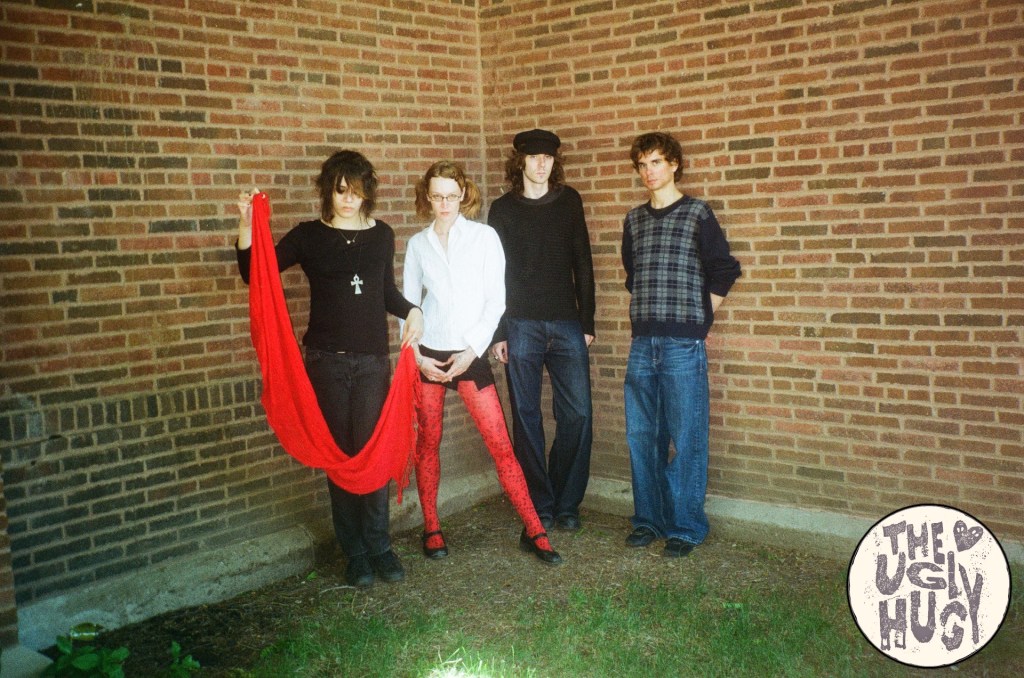
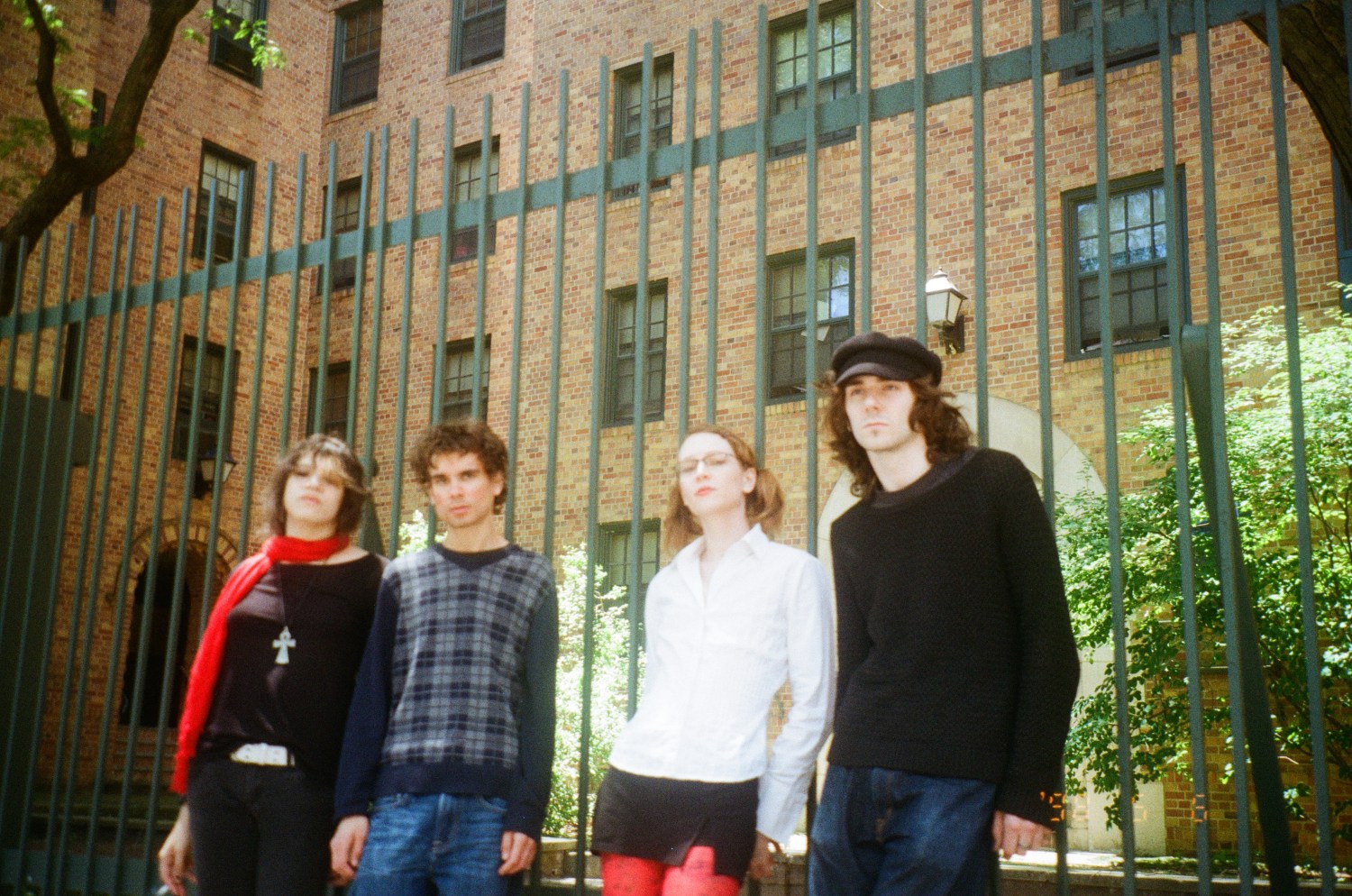
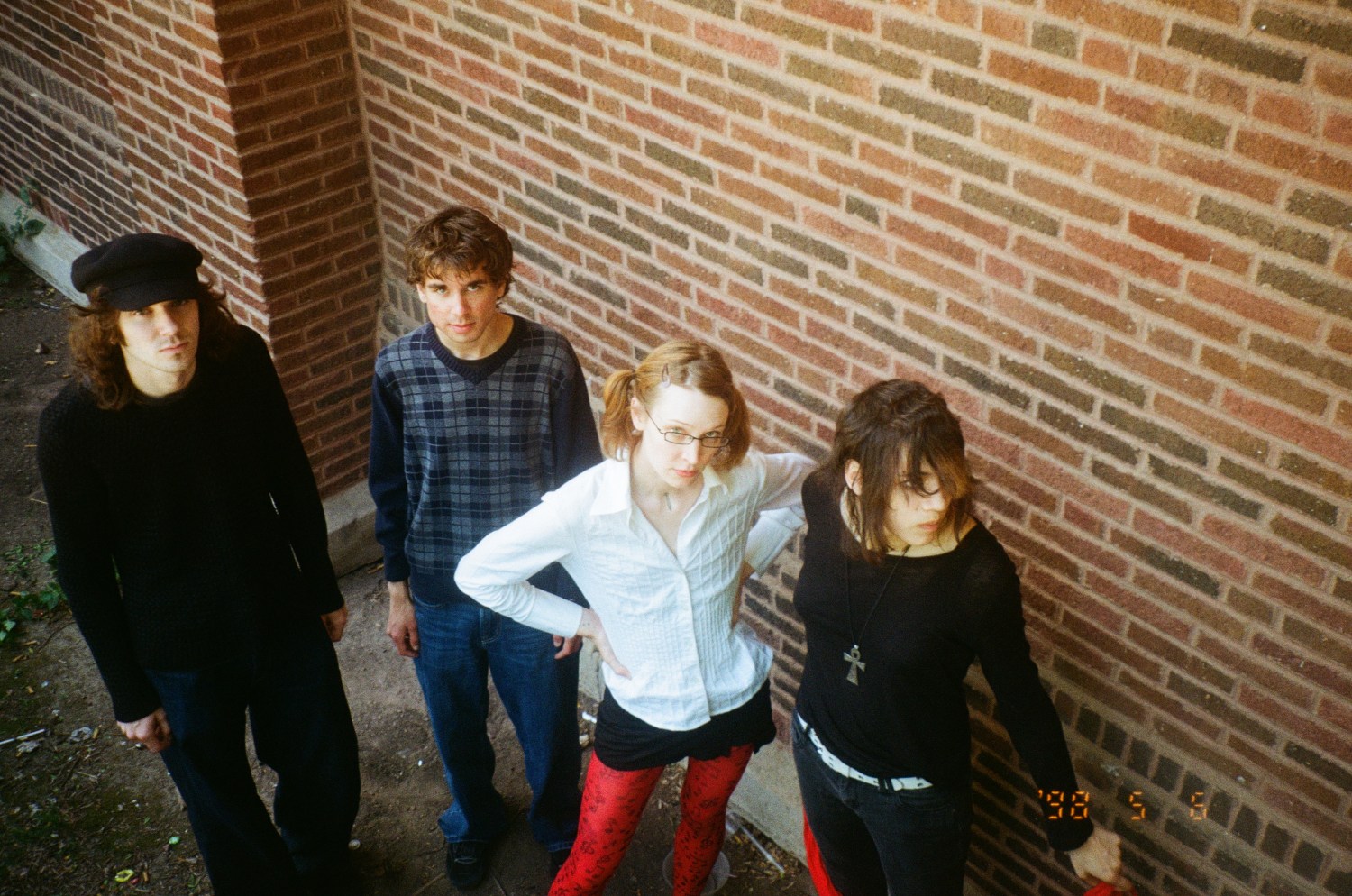
Laliberté is on the move. But they have always been a band that works fast. Originally composed of vocalist and guitarist Sunny Betz, guitarist Matthew Hocutt, and bassist Shaye Rosengarden, Laliberté released their debut EP back in August of 2025. Having split with their drummer soon after, Laliberté brought on Samara Savine, who played in bands with Shaye prior, to help fill in the gap for a previously scheduled weekender of shows. Following that experience, it was clear to the group what Laliberté was supposed to be. Returning to that initial EP, they changed the name and the artwork and haven’t looked back since.
Amongst fractured instrumentation, searing feedback, and relinquished melodies, Laliberté effortlessly craft clever shortcuts to reach our most inflicted and inherited dialogues. The newly titled EP, First Position, revels in the fortune of dissatisfaction that grows like mold upon our modern dispositions. And in no way is it subtle, as feelings of frustration, pain, disillusionment, and fear clot each track, bringing color to your face against the natural and rather stunning depictions of patterns we may recognize or even exhibit. Sunny’s harsh melodic phrasings croon over deep feelings of devotion and defeat while Matthew’s instinctive guitar work embraces this unpredictability, each resonating just as casual as it is damning to the restless confessionals at play. That’s not to mention the brooding forces behind Shaye’s textural bass and the tactical emotions cued by Samara’s drumming that bring these tracks to their emotional peak.
Just earlier this year, Laliberté shared two new demos, “split falling leaf/dedicado a”, which they are calling a sample of where they are headed. Emphasizing a drum-forward sound, these tracks mark a beneficiary to circumstances that have led all four of these individuals to meet at this point in time. And as we discussed this project further, and what it means to them to have as an outlet, each member laughed as they told stories of rolling around on stage, stabbing through the head of the snare drum while eyeballs rolled back into their heads, as if to just get a glimpse of how it’s all working out up there so far. Laliberté has become a testament in and of itself, as the band continuously reflects on the moments of growth and healing that go hand in hand with friendship and creativity.
Meeting together over coffee for our interview, Laliberté carved out a chunk of their day to discuss the project in depth, touching upon their progression as a band, the spirituality of performing, mindful actions and celebrating growth through art.
This interview has been edited for length and clarity.
Let’s start with First Position. It was a collection originally released last summer, but you have updated it since. Tell me about those changes in between the initial release and now. What sorts of things were you considering when making the changes?
Sunny: The band first formed, I guess, last spring. It was me, Shaye, and Matthew. And after we had a lineup change, Samara joined in December. I think once [Samara] joined, the songs that we already had started to really evolve into something new. [To Samara] Just with your playing infused them with new energy and meaning. And we wanted to update things to reflect the lineup.
Samara: First Position is a ballet thing. I think it’s funny, I picked the new name for the EP, but I didn’t play on it.
Matthew: I think we like to evolve all the time. So even something as little as changing the art and the title, we like to push forward whenever we can. So we felt like it was a good opportunity, you know?
Sunny: I think the old name just didn’t feel reflective anymore of what we were actually about. And when Samara proposed First Position as a title, it’s the first position in ballet before you launch into the whole dance routine. It felt like a more apt description for what we were doing on that EP, as well as set up space for what we were going to do next, and what we wanted to let go of.
A lot of your lyricism comes from direct dialogue that builds upon these larger stories. Especially on songs like “Election Day”. Where do these stories come from when you are writing?
Sunny: I do write a lot of dialogue from things that I’ve heard people say. Like “Election Night” is a pretty direct, real experience I had with someone that I met and the things that I was hearing her say. But I have a background in journalism. I haven’t done real journalism in a minute, but I’ve done it professionally before. My favorite part about it was doing interviews and collecting quotes. Sometimes I’m wary — if I’m speaking directly from my own voice, or things that I’m thinking, it’s always going to be kind of biased in a way. And I find it really interesting to tap into other people’s voices to better understand things. My journalistic practice, when I was doing that, was pulling a lot of other people’s voices into the story I was telling to flesh it out. And sometimes those voices would change the direction of the piece I was writing. Because you don’t really know what they’re going to say and how it’s going to change your point of view.
I’m sober, but there’s a lot of themes of that on the first EP when I was earlier in that journey. And “Puppeteer” was really me thinking back to late nights at the club, and that feeling I would get when I would see people interacting with each other at last call and see there’s sort of this desperation to that time of the night. That was really saddening to me. Some of the quotes are remembered real dialogue and some of them are imagined dialogue. I just think it’s more interesting to pull in other people’s voices.
Did your understanding of that dialogue shift at all with the changes you all made to the project?
Sunny: Yeah, I think it shifted. I also think it shifted with my own changing perspective as I was getting further into writing. It’s kind of crazy that we wrote all that shit in a month, basically. We recorded it right away because we wanted to play shows. But a lot of it, even though there’s other voices in those songs, you can’t take yourself out of it. Even when you’re writing something that’s fictional, I don’t think any writer can really take themselves fully out of it. Looking back at some of those lyrics, the way that I move through the world is different than it was a year ago. Some things don’t resonate the way that they did when they were first written, and I think we have the freedom to change those things.
Like you said when you incorporate dialogue, you never know what another person’s going to say. Did that level of unpredictability translate into the instrumentation when piecing these songs together?
Matthew: For “Primaries, Secondaries, Tertials”, there’s a part where Sunny introduces this bird in the song – “thought she was a paper bag till I saw the feathers ruffled”. Whenever I’m playing that song, I always visualize that part really heavily. I always picture the car driving down the highway, the bird in the passenger seat of the car and the driver fussing with it, trying to keep it calm. But I play a guitar part during that lyric that just sounds like bird noises. And then towards the end of that part, it gets a little crazier and then it cuts because the last lyric of that segment is, “She barely made a peep the whole drive”, and I cut the bird sound.
Sunny: A lot of the beginnings of ideas for songs that we’ve written have come from news articles that I’ve seen. I was recently doing a deep dive on people who keep exotic pets. A lot of the time, these ideas start from something that I’m prone to make a snap judgment about. These headlines grab your attention because it’s crazy and fucked up, but they’re leading you to make a snap judgment about a very human situation. I think keeping exotic pets is pretty fucked up, but what is that rooted in? It’s rooted in this human desire, this ego and this loneliness, where you need to have something that can never leave you, which a lot of people experience when they keep tigers in their apartments. But I was doing a deep dive on exotic pet owner Reddit and just reading how people were describing exotic pets as clever escape artists. But it’s interesting to get into the mindset of someone who’s doing shit like that to understand what it says about me or other people.
And then you come in, Samara. What was your introduction into the band like?
Samara: It was crazy. It kind of started as just me doing a friend a favor because the band lost their old drummer right before this weekender. So the day before the shows, I learned the whole set and played all three of the shows. It was an 11-hour practice session. I want to be a professional drummer, so I figured there are going to be so many times in my life where I’m going to have to learn a whole set in a day. And then I just remember the last show of the weekender at Empty Bottle being the most cathartic performance I had ever given in my life. And I remember getting off stage and bawling my eyes out. That had never happened to me before. I just fell in love with this band. They stole my heart. And I was on the way out of my old band, and was already looking for something that aligned more with who I am as a musician.
A whole weekend of shows? That’s nuts…
Sunny: It was a really raw time. We were kind of thrown into this very chaotic situation and we came out of it so much clearer. With grit. It was one of those things where you know everything happens for a reason. It really does. It was very spiritual.
Samara: I think that was honestly the most spiritual experience I had ever had with music.
I think it kind of changed the way that I see performance.
Sunny: Also, because a lot of things were really out of our control, I think that’s where a real, spiritual resonance can really happen. I try to keep that in mind a lot when we perform now. A lot of the times where you are letting the music kind of lead, the less control you have over situations, the more beautiful they can turn out.
Did that spiritual experience shift or enhance what you saw possible for this band?
Matthew: I would say so. I think Samara fits so perfectly. When this first happened, I was always saying to everybody, ‘man, we’re so lucky, we’re so lucky’. And I still feel that way. But I think that Samara has a really powerful vision for the way that she wants to make art. And it just makes it come out of me. It makes it come out of all of us. It only propels us more.
Can you tell me about that vision, Samara?
Samara: I always struggle to put it into words, but I am a very technical musician, and I really like playing loud, fast, complicated stuff. I’ve always been into more emotional music, like screamo, which is really raw and sloppy. And that’s where the emotion of it comes from, the rawness of it. But I strive to marry the two, the technical, intricate musicianship with the intense emotion. It’s honestly a struggle that I have as a drummer. I feel like a lot of drummers of high caliber see drumming as playing a sport, more so than any other instrument, honestly. And I find that really frustrating because I’m an artist before I’m a musician. And I don’t want my drumming to just be athletic. But at the same time, I want to play stuff that’s really crazy and intricate. I guess the stuff we’ve been writing lately has been really drum forward, but still also has emotional weight to it.
Sunny: There’s a tension between the two, which can be really beautiful when they interact with each other. Like, the technicality and the emotion. I think part of why we wanted to overhaul the artwork and the name for the EP, just when we started playing those songs with [Samara] drumming, it felt like it was the missing piece to them. With “One Long Night is to be Slept by All”, the way that [Samara] was playing drums on it — I mean, writing the lyrics was really emotional for me. And the way that we perform it, it had the potential to be really raw. [To Samara] I don’t think it was able to go there until you started drumming the way that you do on it. Infusing it with viciousness when it needed it and sadness and beauty when it needed it.
I’ve heard people tell me our music is scary and some people will say it’s vulnerable. And I think maybe people will say it’s scary because we are able to really go to a really raw place with it and it really means something to all of us. During our last Empty Bottle show, when we played that song “One Long Night”, I felt like the second half of that song really became an outlet for all of us to experience catharsis, which is how we knew we needed it in that moment. Shaye, you broke a bass string and Samara stabbed through the snare head. I threw myself onto the floor. Regardless of whether people were seeing it or not, it felt so good to go through it in that way. That’s what all of it is to me. It’s a vessel. It’s a tool that we can use to transform as we need it and meet us where we’re at in our lives.
Did you think you were gonna go to that space during this performance?
Shaye: I mean, I’m pretty reserved, but something just all came together at that show, and it was just this massive release. Ever since Samara joined, all of our energies feel much more aligned and everything just feels so comfortable and so natural. The music just flows so nicely. I mean, these are my best friends, too, so to have that, it’s just very freeing.
Sunny: I’ve always wanted to go there with it. I’ve been through some pretty crazy shit. Maybe I’m drawn to writing about these really dark, intense topics or performing in this way that is really intense and scary to people. When you keep that shit inside, it gets scarier because you can’t see it. It’s behind your eyeballs, you know?
When people say they find you scary, I feel like a lot of that fear comes from being uncomfortable to confront these raw emotions…
Sunny: When we played that lowdown show, I had two friends who I know through recovery come out. I’m a pretty happy smiler these days in my regular life. I’m hopeful and cheery, I think because I’ve gotten through my whatever. I’m not really a tortured person anymore, the way I used to be.But these two friends came to see that show, and afterward they were like, ‘you were scaring the fuck out of me up there’.
My performing self is really different. I’m not living my life in that kind of torment off stage, so I can really just go out and do it on stage, and then people were like, ‘wait, you got really different up there, what was that’? Everybody does it differently. I do love bands that get up there and are silly with it, because it’s just another way of using the stage as a tool to do something different. Anytime you get on stage, it’s a really rare opportunity a lot of people don’t have to create a world for the audience and for themselves. It’s cool to be able to take that as far as we can go with it, using everything available on stage to take people out of normal life for 30 minutes.
Samara: I think it’s cool to have an alter ego that you can tap into on stage. We all have different accessories we wear on stage. There are people who see the stage as a place where they get to fully be themselves. I guess we never really explored our stage identity that much. I think we’ve done it more personally. I don’t really know what I am on stage, what I identify with.
Sunny: I don’t really know if I know either. I don’t think I have an alter ego. But it’s definitely not fully me. I do put a lot of things into my stage outfit from different periods of my life when I’ve tried to be something other than me. So I think it’s interesting to exercise those things. But I don’t think I’m necessarily doing an alter ego.
Matthew: I’m me on stage. I wear this with a rotating black sweater [motioning to his outfit]. I have like three that I rotate between. But it’s always like this hat and these pants. I try to be myself up there. But I wear the same clothes every time because I think it’s important to be recognizable. I want to look like a cartoon character up there, like Scooby Doo, where they’re all in the same outfit all the time. But also if there’s a chance we ever make it big, like if you’re a Kiss fan, you might not know what they look like off the stage without the makeup and costumes. I would like that privacy if it was ever needed.
Sunny: In my everyday life, I have a lot of serenity and I’m pretty happy most of the time now. For the same reason to look like cartoon characters on stage, I don’t want to wear my street clothes because there is a difference between me as I am in my life and me as I am on stage. On stage, I go to emotional places that I don’t feel like I have to go to in my regular life. It feels good to have a distinction between the two. So I always wear the same thing when I’m in Laliberté mode. Especially with heavy music, I think it’s good to have boundaries between the two.
You guys just put out two demos. Tell me about those.
Shaye: We recorded those at our own space. We did it all pretty quick, mixed it, and then put them out to give people a taste of where we’re at right now.
Sunny: “Falling Leaf” we wrote with Samara. That’s the first song that we wrote together. But “Dedicado” was the last song we wrote before Samara joined.
Shaye: In the mixing process, when thinking about our sound now too, we kept it very drum forward. I think it helped bring a lot of power through that.
Samara: “Falling Leaf” starts with just drums. And it’s this linear, odd time, angular, buzzword, buzzword, buzzword kind of groove. When we wrote that song, I was calling a lot of the shots. I felt really comfortable taking up space, even having just joined. I love that song.
Sunny: The way I do my vocals now is decently different from how I did them on the EP. I’m exploring more. Again, more of actually letting myself go to the places artistically that I was wanting to go to, but was maybe too reserved to go to. Even though I was screaming my ass off [laughs]. It’s funny to say, but I’m trying out softer vocals and the different points in my range to express different things.
On your website, you sample one of Rilke’s poems, titled What Survives. It reads, “it is not the gesture that lasts, but it dresses you again in good armor”. What is the significance of that poem to you, and how does it relate to what you are trying to do as a band?
Sunny: That’s my favorite poem of all time. Something I’ve learned, and this doesn’t really have to do with recovery, but more ties into art— you can never really know where it’s going to meet the listener in their lives— what it’s going to mean to them. And the same goes for regular life. You can think you know whether you’ve had a good impact on the world or a bad impact on the world, but you don’t really have power over that. You have power over your own actions, and they will outlive you. And I think about LaLiberté, the name— it’s my paternal grandma’s maiden name. I never met her. She passed away when my dad was really little. And it also means freedom in French, which ties into all the creative stuff we were just talking about. But I do think a lot, at least in the recovery process, and also just things that are passed down to us that affect how we move through the world, we have no power to take those things back.
I think lyrically, I write about that kind of stuff a lot and explore it through other people’s voices and actions. But that poem to me has always been about ‘you will outlive yourself, and your impact on the world might affect people you will never meet’. You have to work through that and just try to do the next right thing. But we’re all interconnected in this way, and it can make you resentful against situations you didn’t have control over that were handed down to you. You don’t have control over those things, you do have control over what you turn them into. It’s just about the interconnectedness of how we all affect each other in small and big ways every day.
When I read it, I think about staying aware and staying awake in my own life. As a recovering addict, I used to bulldoze my way through life and not think about how much it would affect other people, and that’s just not possible. And so staying awake to how you are doing that is really crucial. And like I said, I’m drawn to make snap judgments on things, like those exotic pet owners— a very human impulse taken to an extreme. But I look at the most extreme version of it, and I think, how does it help me understand other people or even myself?
Lyrically, I’ve been through a lot and have seen a lot of really scary shit. You can’t live as a walking, tormented demon in your regular life because you’ve been through some scary shit. But externalizing it through the safety of the art, it helps to get it out. And it needs to exist out in some way. I think the most productive way to do that is through art. I said this last night, but there’s so much terrifying, horrible stuff in the world. And there’s also so many people who have gone down into the pits of that stuff, by choice or not, and come out the other side to create beauty and kindness and affect people’s lives. I know a lot of people in recovery have been to jail, and art saves so many people’s lives now. The world is not as black and white as we like to think it is. When I’m prone to make a black and white snap judgment about a situation, I’m like, what if I write about it instead, and explore it, and maybe put myself in the shoes of the person I want to make the snap judgment about? What can be learned from this? That’s where the work is at of being a person.
You can listen to First Position and “split falling leaf/dedicado a” out now!