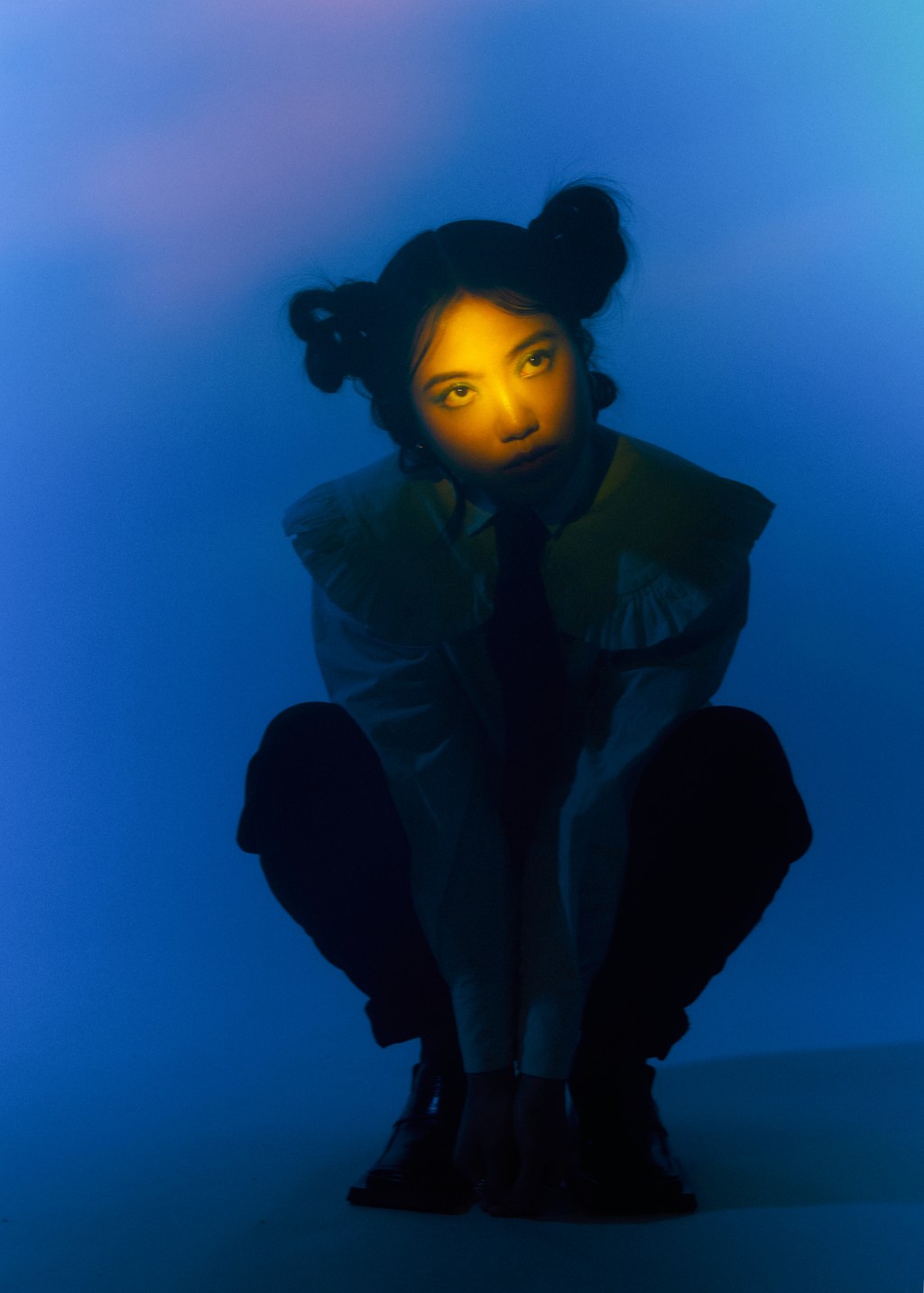
To the likes of being awakened by your sleep paralysis demons – used to the routine of these spooky encounters by now – only to be shown the surprise birthday party they have thrown for you, there are elements of mui zyu’s music that stick out as odd, borderline conflicting, yet from the center of its beating hearts, there is a tender sweetness that becomes irresistible to partake in.
mui zyu is the creative project of Hong Kong/UK artist and experimentalist, Eva Liu, who as of today, has unleashed her sophomore record nothing or something to die for out into the world via Father/Daughter Records. Over the past few years, Liu has molded her expansive, yet incredibly intimate project as mui zyu into something that is both emotionally refining and sonically addictive when ingested by earthlings. But fifteen songs in and out, nothing or something to die for is a rehabilitation of what it means to be a human, and the things we must hold on to when existence begins to feel radical and nihilism becomes a choking hazard when left out in arms reach.
With a production style that’s made through a clenched jaw and an expansive mind, Liu has thrived in brewing and boiling her sonic landscapes from within her home studio with co-producer and fellow Dama Scout bandmate, Luciano Rossi. But when it came time to create nothing or something to die for, with help from PRS Foundation funding, Liu was able to take her ideas to Middle Farm Studios in Devon, England. “The engineer came and picked us up from the station and took us to a farm shop to get supplies,” she recalls as the week of recording began. “Once he dropped us off at the studio, he left us to it – we were stuck there for a week and had no way of leaving unless we walked for hours.” Besides a hairless cat named Dust, Liu and Rossi were left to their own curiosity.

“I feel like our approach to making this album was a lot different in that we had more time to experiment and mess about with new equipment,” she adds. Through their interwoven brain paths and love of textured earworms, Liu and Rossi thrived in these moments of uninterrupted exploration. “If I’m wanting a particular sound or feeling, I would just describe it, and [Rossi] would be able to manipulate the certain thing to sound exactly like what’s in my head,” she shares, showcasing their strengths as a creative duo.
Going beyond the classic build up of instruments and mui zyu stylings, there are multitudes of little sound bites and recording tricks that live amongst the record’s landscape – something that Liu takes a lot of pride in. “As soon as we want to explore something, we’ll explore it to the max, even if we chuck it in the end.” Most memorable, to her excitement, was the chance to use a fanfare horn that hung on the wall of the studio “It was my first ever experience using a brass instrument – I had no idea what I was doing, and I think it literally only plays one note on the album,” (found in the depths of the song “sparky”). “But that’s what I enjoy most about our process and I wish I could do that every time I record – it was just such a nice experience being so removed from the world and solely focused on what I love doing.”
nothing or something to die for also features a handful of collaborations with outside artists – something that Liu has always wanted to do, but never felt confident enough in her abilities to ask for. “I used to be so terrified – I just had that inner imposter syndrome screaming at me all the time.” But spending years working with Rossi and other bandmate, Danny Grant, in countless creative environments, Liu now admits, “I feel like Dama Scout definitely gave me the confidence to approach other people and collaborate more with other artists I love.” With songs like the dissolving “sparky” featuring lei, e (formerly Emmy the Great), the darkly meditative “in the dot” featuring Lukas Mayo (Pickle Darling) or the industrial-strength muscle relaxer that is “please be okay” featuring Miss Grit, the features only enhance the sonic experience of the album, pushing Liu’s writing to new depths that she never thought were possible before.
Opening with “satan marriage”, an instrumental that plays out from an array of stringed instruments, the album comes to life like body parts shaking off their tingly slumber and unconnected nerves. Soon a drum machine accumulates and introduces our surroundings, as “the mould” kneads our physical being to fit inside this fantastical world of dilapidated characters that Liu has created – one that emboldens the horrors of very human-centric qualities of destruction, apathy, misogyny and greed through the lens Liu’s own individuality.
Following her 2023 debut LP, Rotten Bun for an Eggless Century, which followed a lone warrior exploring concepts of identity and healing, nothing or something to die for goes beyond Liu’s conception of her own character as she observes how mankind, as a species, have both a hand in, as well as are concurrently fighting off, this dying world. “As humans, we’ve kind of messed up a lot of things,” Liu will say with visible weight. “With this album I’ve left my story behind and I’m now looking more outward at my understanding of the world.”
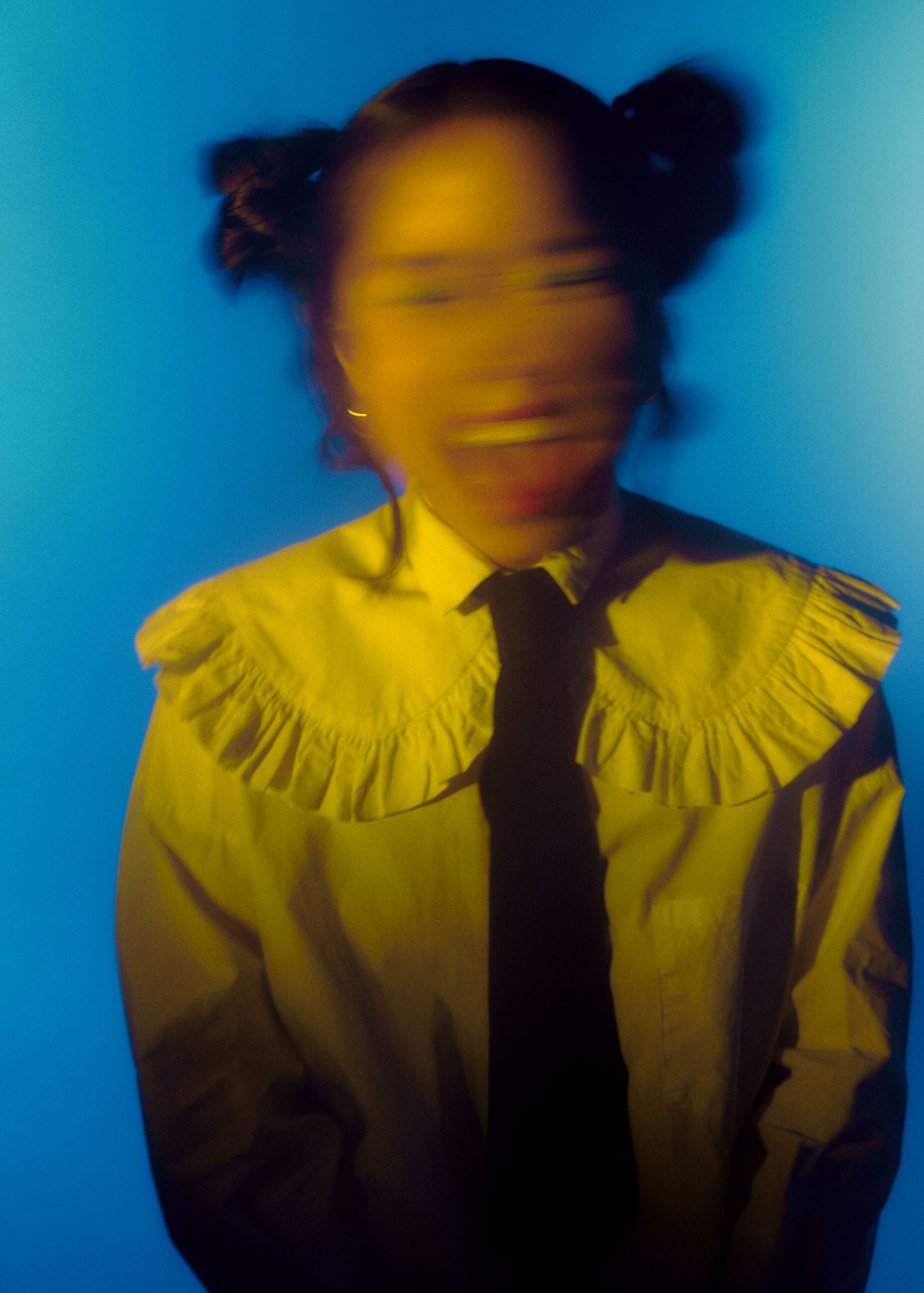
“I think a lot of the album has to do with embracing chaos in the many forms it comes in,” she adds, in the name of betterment. Dealing with serious grief on songs like “please be okay” and “the rules of what an earthling can be”, reckoning with the pressures of appeasing others’ standards, while “in the dot” gives a voice to our most destructive humanly habits, being an earthling can feel impossible at times. The sugar-coated, cavity filled track, “donna likes parasites” refers to a family member who is, as Liu puts it, “overly worried about everything. The strive for perfectionism is actually damaging their health – it’s actually ruining their life.” Like a parasite, these manufactured stressors begin to eat you from the inside out. “I find a lot of people I know are always trying to find a way to better themselves, or I guess in their eyes, quick ways to find happiness,” she says. “But it’s not lasting.”
“After the pandemic, a lot of my friends were exhausted and very disheartened with everything that’s going on in the world,” primarily noticing, “people were just not looking after themselves.” In response, Liu’s artistic theme became one of perception; creating new ways to look at, perceive and carry our trauma alongside our need for harmony and hope. “It’s just amazing how our perception of things can change all the time – whether it’s true or not,” she admits, going on to explain, “sometimes we look at memories and we can interpret them differently at times and you’ll start to feel differently towards it.” Utilizing this idea of perceptions as a new challenge – “it’s just deciding what to do with it that can change how you feel.”
“Follow the mould through portals/ Looking at memories wrong/ Take tiny sips through their lips”, rattles through the pop sensibilities and slo-mo palpitations of “the mould” as Liu views decay with a new manner of optimism. The idea of portals, as she explains it, “ represent a sort of opportunity to rethink something or to look at something differently for the positive.” “the mould” celebrates that idea, warts and all, as she embraces the caste that only she can fit in – no longer living in regret of what she’s not, but rather cherishing what she has become on her own.
Taking inspiration from the the classic 1986 David Lynch film Blue Velvet, the standout track, “sparky” honors the dog that plays in the hose as his owner dies. Although dark in its depiction, it comes down to instincts – what is Sparky capable of controlling in the moment and where is Sparky at his purest form? Although it is often warped by societal expectations of what Sparky should be doing in that moment, Liu lays it out on the chorus, “Does it feel cute biting the water, Sparky?/ Does it feel good trying to be happy?,” she sings, almost with envy towards its simplicity.
“In a way, the portals do represent an escape, but they also represent the next level, the next chapter or the next world that you’re about to embark on.” This sounds like a huge concept, but Liu knows it doesn’t need to be overly complicated. As she embarked on this treacherous journey, mirroring the complexities of manufactured rules and utilizing chaos as a benchmark of capabilities, she found there are slivers of grace amongst these songs that hold a purpose. “We need to take time to look and realize and reflect that things are actually really good and you are lucky to be where you are.” In no way is this an album of defeat, but rather one of self rehabilitation against the odds of what an earthling can be. “I like absurdity, but I think overall, this album is about hope, and as cliché as it sounds, not giving up.” As portals open and close, allowing momentary lapses in reality, Liu embraces that first step through, knowing it can make all the difference.
Written by Shea Roney | Photos by Tia Liu

 the ugly hug