Based in Brooklyn, New York, Youth Large is the solo project of Em Margey, who has returned today with a new single, “Warn Me, Hold Me”. Previously known as Emma Blue Jeans, Margey has become a staple in the intimate BK scene, both through their musical projects as well as coordinating and curating a monthly queer residency at venues such as Purgatory, Nublu, Trans Pecos, Rockwood Music Hall and more. Upon this return, Youth Large plays with articulated patience as they strip back their sound into a methodical burn on “Warn Me, Hold Me”.
There is an immediacy to the tension that “Warn Me, Hold Me” contrives, as it brings notice to the conflicting emotions within a relationship. The heavy thuds of a drum are deepened by the sparseness of instrumentation, as Margey’s instincts look every which way for a deliberate and cathartic release, singing “And every week / It creeps around the corner / we’re just saying things / you warn me, hold me.” The track’s emotions hit a peak as a harsh and swirling guitar rips through the space, as Margey repeats the very utterance, “warn me, hold me” – a clash between comfort and self-preservation as the song slowly burns out.
“Warn Me, Hold Me” is accompanied by a music video directed and edited by Margey. As a fun exposure to the rather melancholy track, the video plays with humor towards New York’s macho skate scene, even including a mustached stunt double filling in when needed.
“Warn Me, Hold Me” is Youth Large’s first release with New York-based tape label Toadstool Records and the track can be streamed everywhere now. Earlier this year, Toadstool Records also released a bandcamp compilation where all proceeds will be donated to The Freedom Theatre in the West Bank, Palestine, which you can purchase and listen to now.
Every Wednesday, the ugly hug shares a playlist personally curated by an artist/band that we have been enjoying. This week, we have a collection of songs put together by Chicago-based songwriter, composer and multi-instrumentalist, Macie Stewart.
With a career that excels in amble collaboration and exposure, Macie Stewart creates lush compositions that flow with intense trust of the open space it has, where moments conflict and cherish, embrace or strain, all working together towards a stunning release. As a studio musician and composer who can be found on songs from SZA, Chance the Rapper, claire rousay, Kara Jackson, Mannequin Pussy and many more, Stewart is also the other half of the widely acclaimed duo, Finom, as she and co-collaborator Sima Cunningham just released their latest album, Not God, earlier this year. But as a solo artist, Stewart opens up with curiosity and confrontation, taking personal confessionals through artistic reveries and dynamic instrumentation that lures out the beauty in imperfection. Stewart’s solo debut LP, Mouth Full of Glass was released back in 2021 via Orindal Records, having since released a handful of singles and announced more music on the way soon.
In her playlist, Stewart offers up a taste of Chicago, stretching far and wide across its incredibly diverse and inspirational music scene.
Featured Photo by Shannon Marks| Written by Shea Roney
As a small music journal, we rely heavily on the work of independent tape labels to discover and share the incredible artists that we have dedicated this site to. Whether through press lists, recommendations, artist connections, social media support or supplying physicals, these homemade labels are the often unsung heros of the industry. Today, the ugly hug is rolling out a new series called the tape label takeover, highlighting individual tape labels that we have grown to love, with our friends over at Anything Bagel kicking us off.
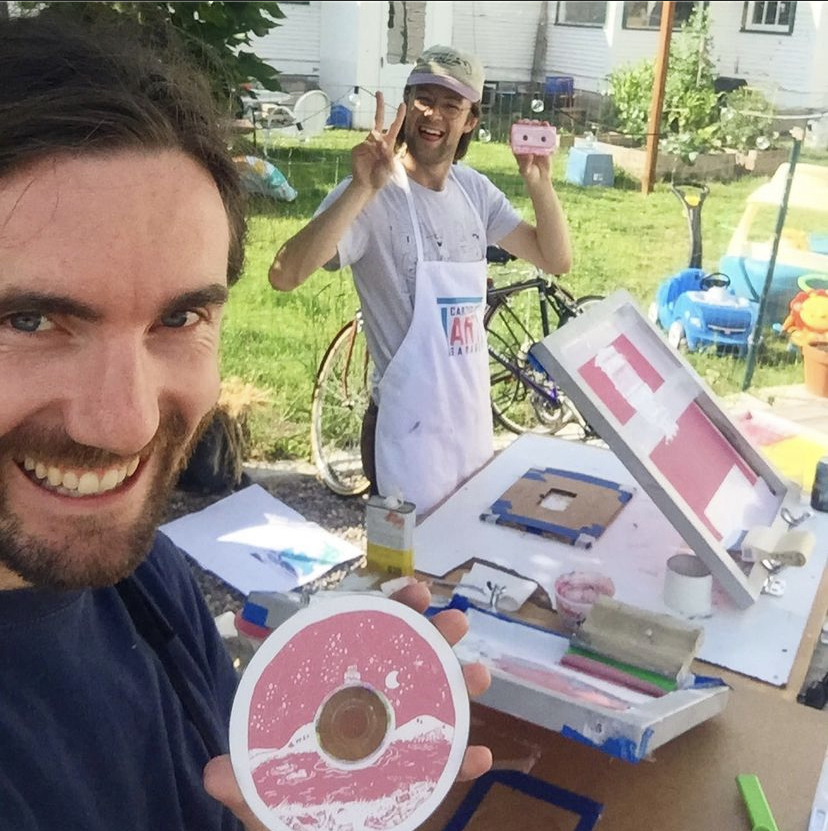
Anything Bagel, a vibrant tape label run by Jon Cardiello and Sandy Smith out of Butte, Montana, is driven by a deep passion for DIY music and community. This duo produces limited-edition, screen-printed tapes that capture the spirit of DIY craftsmanship. With a focus on small-batch releases, Anything Bagel has cultivated a distinct identity that resonates with music enthusiasts, offering something truly special in every release. In this interview, we explore their journey, creative process, and the inspiration behind their one-of-a-kind label.
Jon Cardiello and Sandy Smith
This interview has been edited for clarity and length
Kat Curey: What sparked the idea to start a tape label?
Jon Cardiello: I think it was 2015-2016 when we were getting into the DIY music world, and I had lived in New York for a little bit and we were kind of following a couple cool little tape labels. MT. Home Arts was one that we really liked that was making these screen printed tapes out of New York. We were also into Sleeper Records out of Philly and there were some in the Northwest that we were into, but it didn’t really feel like there was anybody we knew doing it in Montana that our bands could put projects out on. I felt like kind of being voyeurs into other people’s scenes but there wasn’t really anything in our scene that was doing this and so you know I think it was with my first solo album, Placid Lake, that we were finally like, well maybe we should just take the jump and just do it so that we’d have something to release our bands projects on, and also our friends’ bands.
Sandy Smith: We also wanted to get into screen printing as a practice, and it was kind of an excuse to learn more in that world. Jon had done some printing stuff before but we had a couple of friends in Missoula who were incredibly talented screen printers, Max Mahn of Twin Home Prints, and then Foster Caffrey. Foster especially helped us with specifically printing on tapes, and how to translate some of the stuff to record label-specific printing, and Max is just an all-around whiz and so invaluable, keeps teaching us stuff; he is incredible because he’s really, really good at it, isn’t annoyed when we have beyond beginner questions like, okay, “I understand that’s how you’re supposed to do it, but what if we wanted to do it like really cheap and shitty in a basement, how would we do it then,” and he was even willing to help us figure that out too.
KC: Can you share the story behind the name of the label?
JC: I feel like we were trying to think of something that felt representative of our friendship, and at that point in time, I wasn’t living in Montana, I was either in Seattle or New York and I would always come and crash for extended periods of time in Sandy’s basement to do music stuff and I think we just ate a lot of bagels is why that came up.
SS: Like one a day, 1.5 a day average; there were a lot of days with more than one bagel.
JC: We both really like bagels so something bagel-related was one of the many brainstorm ideas. And then I think we also just liked the idea of a label name that doesn’t necessarily sound like a label.
KC: As a duo, how do you divide the roles between each other, and how does that shape the way the label runs?
JC: The screen printing we always do together aside from a few exceptions when one of us was too busy or something, but I feel like it’s incredibly time consuming to do it that way. That keeps us kind of going at a slow enough pace where we can’t take on too much, which I think that’s been good for making it sustainable. We just always end up getting together to hang out and screenprint, which is fun. And it just reinforces the parts of it that we like most, which is the art, the music and the community, even when it’s just us two hanging out getting excited about music.
SS: It’s fun. We listen to cassette tapes and print together. I think we get a lot out of it.
JC: It’s always good for filling the tank of why it’s all worth putting in so much time into this passion project. Generally I do all the design stuff because I have a background in that. Sandy duplicates all the tapes and generally folds and glues the packets after we print on them. Sandy has kind of taken over the press department. We used to do that together.
SS: We still mostly do it together [laughing].
JC: Yeah we do a lot together.
SS: Jon has been dealing with most of the uploading and digital distribution stuff. And it’s a whole thing. There was a time when Jon’s job was really chill and it was a fun thing to do in the day. Now Jon’s job is less chill so we might be reconfiguring slightly.
KC: What motivates you to keep the label alive, especially with how digital music dominates today’s scene?
JC: Yeah it’s kind of amazing that now we’re at release 28, but we’re still sticking to the exact same cassette tape runs that we started with. I feel like we really like the art aspect of making physical merch, we know how helpful it is as a band to be able to sell merch on tour. I feel like if there wasn’t a physical element of it, we just wouldn’t do it. And for me in terms of buying tapes and stuff these days, I feel like my main reason is in direct opposition to the streaming world where I think I just literally would forget about albums, or I do all the time if I don’t have a physical copy of it. Where it’s like ‘oh, that was one of my top 20 albums of that year but I totally forgot about it because I didn’t buy it.’
SS: I think that some of the art object thing is also just a physical object that someone had to put an inordinate amount of time to make the thing exist and it feels precious. But also it’s not like fully giving it away, but it’s close. The tapes don’t really make much money. They’re more there as a representation of the music and the object as a playable thing that actually produces a cool sound. It’s as much the thought of the thing for me that does it.
KC: How do you find the artists you work with? Is there a special connection or vibe you look for?
SS: Well, I’m A&R on the team and let me tell you, it is difficult [laughing]. It’s nice now we’re going to be putting out some recurring artists. We’re going to put out a Zinnia album. We’re going to put out Jon’s album, and we’re putting out the next Vista House, which is really exciting.
JC: It’s nice that right now there’s a little bit of a roster and not necessarily room, we’re already penciled out well into the middle of next year with releases. But fortunately it’s mostly been in the past year or two, people reaching out to us to see if we would put stuff out. It definitely makes life a little bit easier, but we tend to listen to the project and usually do not have any room or time to do it, but then if it is something that we just like so much we try to figure out a way to make it happen.
SS: Like with Levi Minson who we just put out, is someone who actually just reached out to us via Instagram. They had submitted their last album and we were psyched about it, thought it was great, but we didn’t have the bandwidth to do it at the time. And then they sent us this most recent album, Violet Speedway and we both loved it. They were flexible enough that we could go far enough out into the year that worked out for us and for him. So to answer your question, it’s that right now, mostly people are submitting stuff to us.
JC: It very much started out super close to home with our bands, our partner’s bands, our sibling’s bands and Missoula bands. And then it kind of chugged along and took a couple jumps into different scenes which has been neat. An original goal of ours was always to tie the Montana scene into a greater network of bands.
SS: DIY bands, especially.
JC: Yeah. So it’s cool that it’s spread out quite a bit since the beginning.
SS: Now there are little pockets. There’s some bands from the Northwest, there’s a little pocket in Montreal and Toronto and some Philly bands too. And then we’re going to help release a split seven inch record with a bunch of labels around the world for a French band, which will be the first European band.
JC: There’s a Tokyo label, a German label, some French labels and us [giggles].
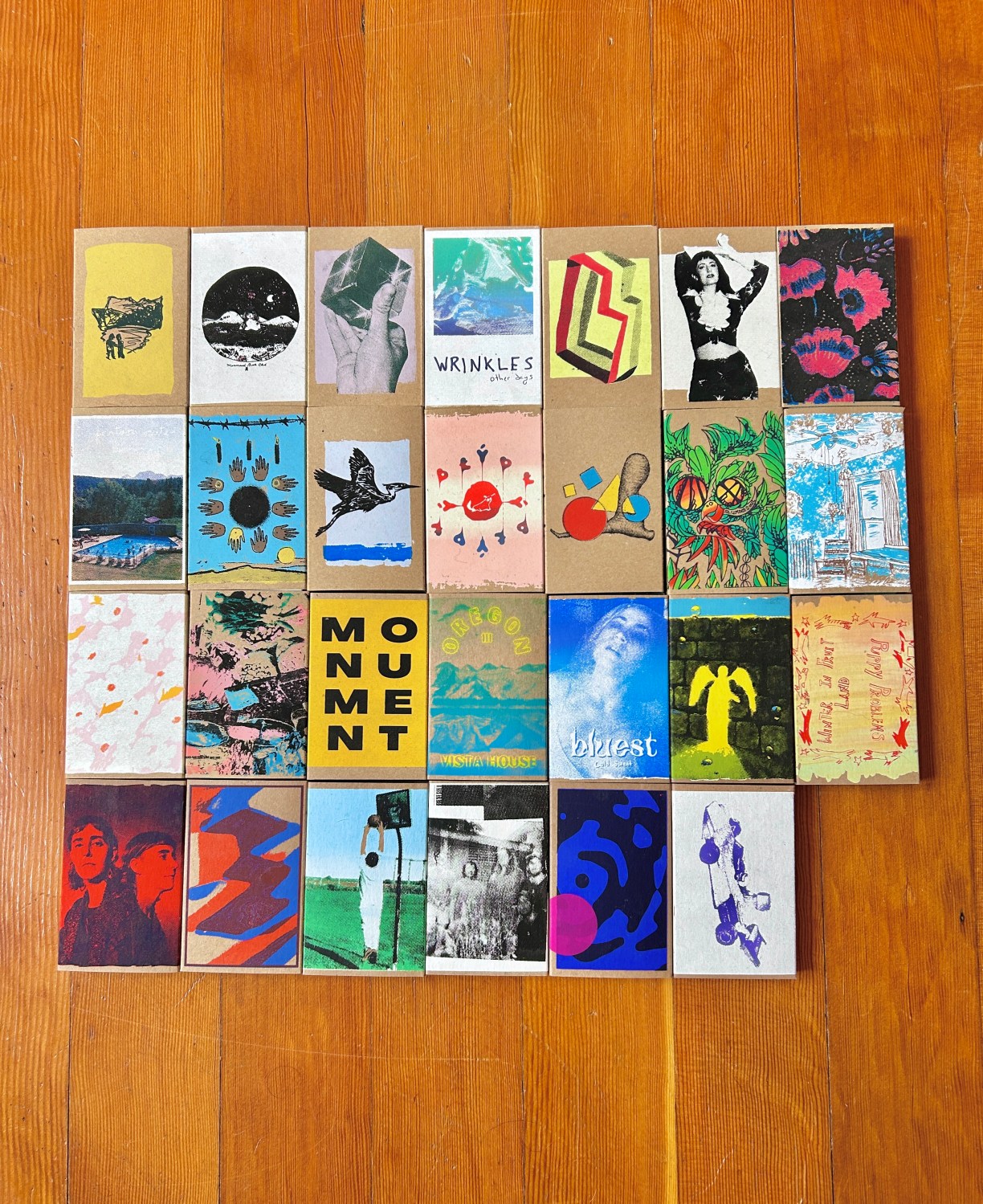
Anything Bagel Label Sampler
KC: What’s it like bringing a tape from concept to reality? Are there any parts of the process you particularly love—or find challenging?
JC: That part is a pretty fun part of the process. I guess in the most literal sense, we order blank tapes with no music on them and then we make a master tape at home. I upload all the music onto Logic and then burn it on to a master tape that we used to duplicate. We used to have this super sketchy duplicator and it would do one tape at a time.
SS: Our new duplicator is still one at a time and it still ate some tapes on the last run [laughs].
JC: Yeah it usually eats some tapes. We order a few extra [laughs]. And then we order blank card stock so it’s like an unfolded jacket that we screen print onto them. And that process is pretty fun where I’ll work with the artists with whatever the digital art is for the album and we’ll kind of come up with a screen printable version that somewhat references the album art, but it doesn’t have to be exact. Then we print them, fold up the jackets, glue them, and ship them out.
KC: How many do you produce per album? Is it different depending on the album?
SS: Usually 50. We’ve done some that are a little smaller. But usually 50. We like to do limited runs, where 50 feels like a good number. We usually just keep 10 to sell and ship the rest to the artist. Just because we know how nice it is to have merch to sell. But sometimes it’s a different model per release.
KC: The screenprinting aspect of your label is really impressive. Could you tell us more about how that process works?
JC: Well, it did start in extremely sketchy circumstances where we didn’t know what we were doing or have any of the equipment. And so it started when I lived at the farm and we would do it in the basement and we tried to expose screens with just a single light bulb.
SS: With a single UV light bulb. Like a small regular lightbulb.
JC: There was always just so much trial and error in that process where it’d be like we were both working and would get together after work to try to do this thing and it would just fail and we’d have to re-wash out the screens to try again the next week or whatever. And there was a lot of time spent without a washout sink where I’d be in my alleyway in the freezing cold washing out screens. There were definitely times where it felt incredibly ridiculous to do that as part of it. Most tape labels just print out J cards off of a printer which makes a lot more sense.
SS: Which makes so much more sense than the way we do it. The way we do it is so much work.
JC: I think we stand by that. I think that actually it turned out to be an art practice for us too, which is really fun. We fully learned how to screen print and now finally I have a washout sink in my basement that we don’t have to go out into the alley. This’ll be the first winter where we don’t have to go out into the alley.
SS: Seven years in and now we don’t have to go out and do an alley wash. That took a long time [laughs].
JC: We used to just not be able to print tapes for a couple of months, weather dependent.
SS: Yeah, we used to just not do releases from like December until March, mostly.
KC: Anything Bagel seems really community driven. How do you go about building those relationships, and why does that mean so much to you?
JC: I think that that’s the coolest part of it all, I think we felt really fortunate to have been around Missoula when we were getting introduced to this DIY community of bands coming through town to play shows. Then you’d make a friend on the East Coast, and then maybe eventually tour to where they live and get to play and see them again, and I feel that is the neatest part of music really. It’s finding all these people around the country that share this incredibly niche excitement over the same kind of music. And that happens on the internet too, but it’s really cool with music, getting to meet people and those friendships in person have been really cool.
SS: The community aspect started out literally where the first bands we were putting out were our friends’ bands and bands in the Missoula scene that we were really excited about. It’s not so much literal as physical, where it was all about proximity. It wasn’t the only driving factor, but there were a bunch of things we were really excited about that were really close to us. And there’s still a bunch of really exciting things that are happening close to us. But some of them have different homes and different people already doing the things. And it’s been really fun establishing a community that’s more based around the idea of the thing, that isn’t just physical. For example, even this Levi Minson release, he was excited about some of the other music we had put out and knew about it from that. Some are people that we have met physically, in real life, but live halfway across the country. But I do think that the community part of it is an incredibly important driving part of the whole reason we want to do it. And it is mostly just these people who are excited about making music, making art that they care deeply about and that they’re willing to put their time and an insane amount of effort into something that enriches their community and the lives of other people who happen to listen to it.
JC: I feel like when we were in Wrinkles and it was a relatively active band for a while we loved meeting people through touring and making those connections. But since then we haven’t been in bands that are really sending it with touring all the time, I feel like it’s really neat where this project has kept us connected in that way. Getting to meet really awesome, like-minded people around the country doing the same thing as us in different places. But since we don’t really get the chance to tour all that often, it’s cool that this is another avenue to make those kinds of friends.
KC: How does the DIY spirit influence what you do? Is there a part of that ethos that really resonates with you?
JC: I feel like it’s been something that we’re always talking about, because it’s really tempting to always try to level up as a label, to maybe take the next jump with distribution and different label things that feel very businessy. I think coming from DIY music communities, where it’s kept us rooted in the things that we really care about, which is the music, the art, and the people, that’s kind of kept us grounded in making sure it’s always still a really good deal for the bands and not trying to get too crazy with it. Which I think has made it more sustainable at least for us to keep doing it.
SS: Yeah, it’s probably actively making what would be bad business decisions, but just for the sake of having it be something we like to do and that makes sense for us and the bands to still do it. Like economically, it doesn’t make sense, we’re not paying ourselves as labor at all. We’re not doing anything for money, and yet understand that the things we’re making, hopefully are able to make the band’s money. And then it’s a matter of putting in all that time and effort and still balancing it with having a life and needing to work jobs that do make money and figuring out how to have that all balance out. And most of the time that works out alright. Every now and then it’s a little much, but I don’t think that’s anything we want to stop doing anytime soon.
KC: What keeps you going and excited about what you do, especially on the challenging days?
SS: I think it’s loving the thing and just caring about it. We really do treasure this stuff and it’s always exciting to be a part of a release and the whole thing is ultimately such a rewarding and positive thing. Someone put in all this time to make this music and put it out into the world, and you get to help them realize that and I think that’s at least a big part of what keeps it going for us.
KC: Difficult questions but can you share a few personal favorite releases that you’ve worked on?
SS: We kind of love them all, it’s like picking a favorite child. Every parent does have favorite children [laughs]. I’ll start with the New Issue record. The last one that we put out, it’s so good. Absolutely love it. Adore that band. They’re also our friends in Anacortes. We’ve been out there a couple of times to record and have genuinely become friends with them and really like them as people.And they kind of told us that they had this album they’d been sitting on for a long time and we insisted they let us hear it and then insisted on helping put it out into the world and they’ve been great to work with and we really love that music.
JC: I feel like another cool one was Puppy Problems last year. That was another one where we were fans of Sammy’s previous 2018 album, when it was on Sleeper Records. That was truly one of our favorite labels that we were inspired by and so it’s really cool to put out bands that were Sleeper bands at one point. Sammy is just such a talented artist and person.
KC: For those who are looking to start their own tape label, what advice do you have for them and what do you wish you knew when you were starting out?
SS: Do it.
JC: Do it.
SS: Just do it. I think to do it and to try to take steps to make it something you can do for a while. It’s just a matter of fitting it into your life in a way that makes sense and putting out stuff you love.
JC: It is a lot of work, but it’s been incredibly rewarding and worthwhile. I feel like we did a lot of legwork in the beginning, years of ironing out the parts that we really wanted to put our energy into. It kind of took a few years for it to feel like that was working, even with the screen printing and trying to do little bits of press outreach here and there. But I guess, just stick with it. The first couple years might be slow going until it creates a thing, but we just need more and more little labels, because there’s so many good albums coming out all the time. And I feel like, if there are parts that you don’t wanna do, just don’t do ’em.
SS: Yeah whether it’s like making a certain type of physical media press, if you don’t wanna screen print your tapes, lazy [laughs], but understandable. No, but set it up the way you wanna do it, and then do it.
KC: Last but not least, if you could hand select a variety pack of bagels, what would be in it?
SS: Okay, start out with the classic, you know, like there’s an everything bagel in there.
JC: There’s got to be a Helena Bagel Company jalapeno cheddar bagel with plain cream cheese.
KC: Yeah, like an inordinate amount of cream cheese.
JC: I still stand by Helena Bagel Co., it is like one of the best bagels I’ve found west of New York.
KC: Yeah, I know. It kind of goes hard.
JC: At least best in Montana, I’m saying.
SS: Definitely. The tough thing would be, do we actually put in any sweet bagels? I’m not opposed. But next on the list you gotta get an Asiago bagel. They smell a little bit like farts when you toast them, but they’re so good.
JC: I don’t know if we were going to go sweet, though, I would say a cinnamon raisin.
SS: Yeah, cinnamon raisin is good. I like a blueberry bagel. I don’t know, maybe it’s not everyone’s thing but I like that.
JC: That was in my head, too. Toasted with strawberry cream cheese.
SS: Yum. That’s good.
KC: Get your fruit serving of the day.
SS: Ooh I think a poppy bagel is maybe a little bit underrated. I think I would almost always rather have an everything bagel than a poppy bagel, but they’re good. What I’m picturing would actually play well on both of them, but a poppy or an everything bagel with sun-dried tomato cream cheese.
JC: Yeah. Pretty good. Can we say six bagels with their toppings? Because I feel like that’s important.
SS: What’s on the everything bagel? The beauty is it works with so much because it is everything. Anything and everything.
JC: I think lox.
SS: That’s an option?! I thought we were just doing cream cheese! Oh yeah, definitely lox.
JC: Lox and capers.
SS: I mean, that one is the one I’m choosing every day for eternity.
KC: But what about the cinnamon raisin bagel? Did we discuss that?
JC: You know what? It’s really sweet, but toasted with frosting.
SS. Okay. I’ll go with it. I was going to go with just butter on that.
SS: I’ll admit that the frosting is actually very good. It’s just pretty indulgent. But sometimes you need to be.
Final verdict after much deliberation: Everything bagel with lox and capers, Jalapeno Cheddar with plain cream cheese, Asiago with Pesto, Cinnamon Raisin toasted with butter or frosting, Sesame with sundried tomato cream cheese, Blueberry with strawberry cream cheese.
Interview conducted and written by Kat Curey
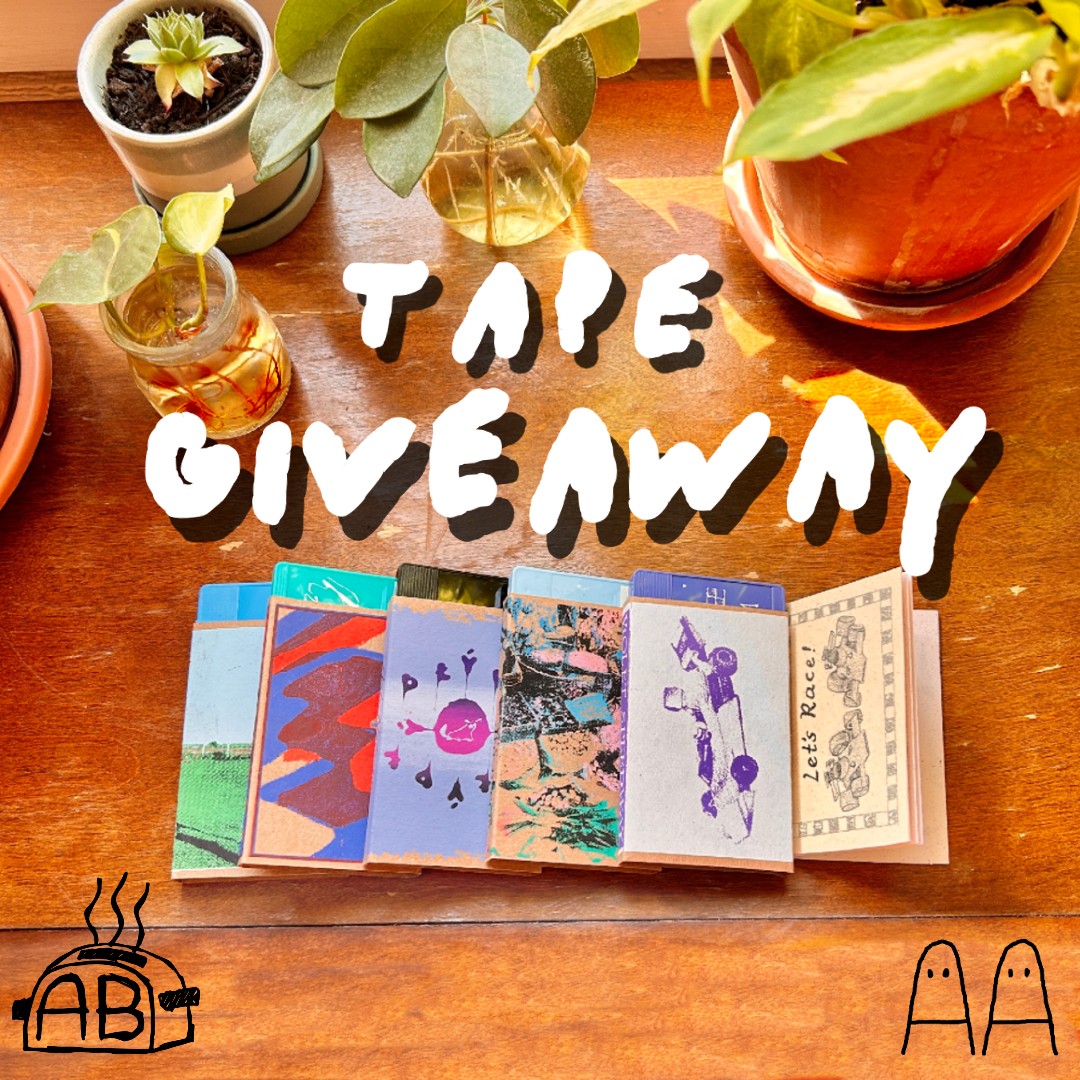
Along with this series, our friends at Anything Bagel are offering a five tape bundle giveaway in celebration of independent music and journalism! The bundle includes the albums Violet Speedway (2024) by Levi Minson, Sun Into Flies (2022) by Joyer, Exit Music for Exit Wounds (2021) by Ash Nataanii, Lagrange (2023) by Panther Car and ionlyfitinyourarms (2023) by Pompey.
To enter the giveaway, follow these easy steps below!
With a certain tenacity, untethered to any form of expectations or rules, New York-based band Plastic moves along through the sparks and dust of their debut full length album, Crabwalk. Released last week, Crabwalk is a lumbering 76 minutes of intense dynamics and alt-rock passion; the lows are intoxicating with a ledger to minimalist exceptionalism and the highs fight through melodic wear and tear to find addictive resolve that, on the whole, begins to feel conceptually engaging and strategically pure the more you sit in it.
Beginning as a solo project by guitarist and songwriter, George Schatzlein (guitars/vocals/electronics), Plastic has been slowly molding into what it is now, with new members Wylie De Groff (bass), Nigel Meyer (guitars), Sam Kurzydlo (drums/electronics) and most recently, Mariah Houston (vocals/guitar) redefining the band with a precise and expansive mindset of five distinct voices.
the ugly hug recently sat down with all five members of Plastic on a Sunday morning, and what was planned as an interview felt like a first hand glimpse at a band whose functionality and collaborative spirit pairs with an intense trust and exciting friendship, as we discussed the record and what they have in mind going forward.
This interview has been edited for length and clarity.
Shea Roney: Last week you guys released Crabwalk into the world. How has the album roll out been?
Sam Kurzydlo: It’s been interesting, I think particularly in handling a lot of the in house stuff. We’ve been very lucky to have view no country from Texas working with us on physicals, but it’s been an interesting process. Sort of figuring out what works for us and troubleshooting as we go.
George Schatzlein: You kind of just run into the problems as you go and you have to figure it out from there. Trial by fire; you can really only learn by doing.
Nigel Meyer: Yeah, even yesterday, I was going to start dubbing tapes to have some physicals at the release show, and I realized that the tapes I have are too short for the album. So, rookie mistakes on some ends.
GS: But some of it’s been pretty seamless, kind of long winded frankly, at least. I’ll speak for myself when I say I am excited for it to be out so we can just be relieved. We’re excited for it to live in the world and we’re really proud of it, but most importantly, we feel like it’s a statement, not only because it’s a long piece, but it’s just an accumulation of work over a couple of years and what this band has become. This record really encapsulates the formation of ‘what is a band’ versus just someone writing songs and directing people what to do.
SR: So Plastic has one EP out as of now called Heredity. But as you have moved forward since, how did this group come together? Have any of you collaborated in the past with other projects?
Wylie De Groff: Well, this started as George’s solo project, so that EP he recorded all himself. But when I moved to New York three years ago, I just hit up George to hang out and he was like, ‘hey man, I’m putting together a band and I need a bass player. Do you want to come rehearse with us?’ That was my entry into the band.
SK: We all connected sort of serendipitously in different ways. George and Wiley knew each other back in high school. George and I had played a show together back in 2018 while he was running through Chicago. I think this lineup sort of coalesced across a year or so, intersecting with the development of this album. But this is the configuration that I think this group was always meant to be in, so it’s been really fulfilling to see that come together.
GS: It was like a nucleus of these webs of relationships from meeting at shows or playing the same bill that kind of just naturally collected throughout time. Classic music world.
Mariah Houston: We all went to music together [laughs].
SR: In this transition, going from a project that was very singular to a full collection of talents, is Plastic a fairly collaborative writing team now?
GS: It’s been slowly inclining to being that.
SK: I feel like even across the tracks written for this album that has sort of changed and I feel like the album is a document of that process in a way. It is really interesting because some of the more recently composed songs on this album are sort of signposts of things to come.
WD: The really long, gnarly song, “Touchdown”, which was a totally different song beforehand, was something that we gigged out for a bit and fully tracked in the studio. And then, when George was recording vocals, he just didn’t feel like it fit with the rest of the album, and we all kind of agreed and decided to maybe chop it. But instead, we saw that we had the stems of this song, and wanted to see what we could do with it and we turned it into something that started mostly in George’s head and ended up being more of an expression of what the band is now as a fuller unit working together.
SK: It went from being a song that never quite connected with me to being my favorite thing on the album.
GS: When you’re starting a project, you want to be as articulate and concise as you can be so that you’re not just banking on people to make up their own parts. But when you know you play with musicians organically, and learn to trust them, they start to write parts that suit their playing more. But I think in the context of this being a live rock band, it’s a lot easier to have more liberties with parts and it’s just progressed to be that way in the studio which has become my dream for this band’s future. We all trust each other’s taste and opinions, so now it can naturally be collaborative, because we all equally care about it. I feel like we’ve all been in bands where maybe effort isn’t always put in, but now it feels like we all really do care about this project and everybody wants to put in the best they can.
SR: Yeah, I mean that clearly stands out when sitting with the album, catching onto those individual parts and feeling the energy and focus in its writing and seeing it come together to create this massive piece.
SK: I think it’s our blessing and our curse that we think about stuff for ages and ages. But then I feel like the final product does always display that level of consideration and thought and care.
SR: With that in mind, when did you feel that these tracks were finished?
GS: When I finished the vocals, which took me way too long [laughs]. We broke it up into 3 recording sessions for main tracking and I didn’t do vocals in the studio, so it got dragged out, but I think really, it wasn’t that long ago when it felt like we were done with it. “Touchdown” to me was like, ‘okay, this feels fresh. This feels like a good thing to reference where we’re going’. It just made the record well rounded to me, when the album itself is not extremely linear.
NM: I can think of at least one or two instances where the parts I play now live aren’t exactly the parts that I played on the record because it’s just progressed. When we recorded the instrumentals, we didn’t have Mariah in the band yet, so going forward and potentially bringing in new instrumentation and reworking the songs into a three part guitar piece would definitely bring out some of these songs in a different way. I think they’re always going to mutate. The record is a snapshot of what they are now, but we know they’re not set in stone.
SR: I want to talk about the length, because it feels rare these days to find an album that goes over 35 minutes. Crabwalk tracks in at 76 minutes with a handful of tracks stretching over 7 minutes. As your debut LP, what parts of building such an extensive project do you think showcases what makes you stand out as a group?
SK: I think from the beginning we endeavored to approach it in a very experiential way. I think that all of us found it important to make something that you could sort of live in for a while, taking you for a ride with different detours and new stops popping up. And yeah, who’s to say our next thing might be nice and lean, but this one from the start was important to us, not length for length’s sake, but we wanted to create something that felt very immersive and had a beginning and an end.
WD: I think that the moments that feel most like us are the long moments like “Touchdown” and “Satiation”, where the first part of ‘Satiation’ is a normal song structure and then the second part really goes out into space. Even before it reached the studio version, that was definitely the idea we played with.
SK: I think, too, we’re not traditionalist by any means, and we’re all just students of the distinct form of music we enjoy. But I do feel like the streaming ecosystem does incentivize singles, EPs and shorter form releases.
GS: The way that that is being prioritized through streaming, to basically push shorter records, and branding music in that way, it doesn’t come naturally to us. We all love those records, but I think we’re inspired by a lot of long records at the end of the day. Something to put on in the car and drive down the highway when you have the patience and time to listen to something. It’s really, really valuable.
SK: And more recently I feel like we’re in a good spot, too, where it seems like the songs that resonate most with people when we play live are the longer, weirder, more meandering ones. That’s validating in a lot of ways, but it’s also nice that it kind of gives us permission to be a little indulgent in a way that’s really fun and inspiring.
WD: Yeah, I mean the most validating phrase we’ve gotten is like, ‘oh, this doesn’t feel like a seven minute song’. We love that. That’s the goal, to aim for when the length is natural and due to the shape of the music, not length for length sake, in the same way that we’re on purpose not keeping it short just for short sake.
SR: Flip floppin’ here, one thing that I was drawn to were those little interludes, “Try Again”, “Andrew” and “Drawn”, where if just by themselves would feel random, but when in their correct spot, bring this natural progression from the different styles that encompass the album. What was the story and the process behind these inclusions?
GS: As far as track listing came along, whatever Crabwalk means to me, when you’re really kind of at the end of a project and you’ve got these chunks of songs you start to see the little gaps that could be filled in. What we tried to do, as far as whether it’s mood, texture, aesthetic, energy. or even themes, you can kind of find one of those and patch them together to just smooth it out.
SK: “Drawn” was something I whipped up for live shows when we needed to change tunings and that track evolved out of one of those interstitial pieces I put together. But it became a personal expression for me when working at the office and trying to fold music into my life as much as time allows, I’m grateful that the rest of the group gave me the chance to clean it up to live in an environment beyond the stage.
WD: “Andrew” was just a voicemail, and I think we were listening to it when we were tracking “Wannabe”. I remember we played it on tour all the time because it was so funny and it gave us a chance to just be cheeky.
GS: Yeah, I feel like as a writer myself, I kind of naturally gravitate towards writing lyrics and songs that are maybe slightly abstract and more introspective, and I kind of wanted to just feel like I am a person. I can also be funny and have a sense of humor [laughs].
MH: Yeah, it’s so important to have your personality in your music. What makes a band really special to me is when I get to be really invested in their lore as people and I am able to identify that in their music. I think it’s nice that we have those moments of humor and personality, because we are funny [laughs].
SR: George, a lot of your lyricism is very textured and vivid, which as a listener, greatly enhances this almost dystopian feel to the album. Was there a contextualized throughline that you tried to pull through on the album within your writing?
GS: I guess similar to the instrumentation, all of a sudden it reveals itself subconsciously and then you start patching it together and you realize, for me at least, the subconscious will start relating to a theme. Sometimes it just happens where it’s laid out well enough and just feels natural. Maybe there is a throughline, but there were no sort of preconceived larger concepts. I think Crabwalk became fitting for the title because it felt like an early display of what this album was stepping into with this new phase of more collaboration. To me, the idea of a crab is this constant, but awkward and lateral motion, often repeating steps, which can become really exhausting and a difficult way of moving, but there’s always motion forward.
SR: Mariah did you contribute any lyrics to the album?
MH: I feel like my contribution to the album was very last minute. All of the instrumentals were tracked long before I was in the band and then the vocals I added were done as soon as George tracked his. It was very down to the wire.
GS: That’s what is really exciting about what’s next because now the ideas are getting slowly but surely pitched in this collaboration of talents. I don’t know what it’s gonna sound like at all, but this next record is just not gonna sound close to Crabwalk. Not that we’re trying to deliberately jump away from it, but I just think this specific way of going about it is just naturally going to make it very, very different. It’s pretty much the biggest leap you can make as a band, to make it sound different going from a pretty singular songwriter to a group of five people. I wouldn’t say the identity of the band is shifting because this has been the established identity, but this will be the next archive.
MH: I think it’s exciting for me to be in a project that is so drastically different from my personal projects. I’ve always enjoyed being in bands, and have always ended up in bands that are very different from my own music. I think George and I have very different lyrical writing styles, but it’s exciting to leave my comfort zone and potentially collaborate on stuff that’s not what I’m used to writing. I feel the same when playing with these guys, too. This is the first group of people I’ve ever jammed with, which was scary at first, and then it quickly became very fun. There’s something to be said about trusting each other.
GS: Yeah, and trusting that it’s not going to always work out the first time, of course, but once you kind of figure out how to work together in that way, where everybody’s pretty mature, when someone has something to contribute there’s a collective decision and encouragement. I think that allows me to have so much certainty and confidence and conviction that whatever we try next will be great.
SR:That sounds extremely healthy.
NM: Yeah, the writing is probably the healthiest part of the band [laughs].
Plastic is releasing a limited run of Crabwalk on CD via view no country. Following the album release, Plastic will embark on a 10-date tour across the Southeast and Mid-Atlantic United States in October.
Today, Wandering Years return with You Are Covered in Brooklyn Amber, a new EP via Candlepin Records and Better Days Will Haunt You; a short, yet mighty collection that finds the New York group, fronted by Gene Stroman, embarking on a lo-fi endeavor and an expression of influence and melodic progression. “Creeks overflow / Flowers Grow / Valleys mold and boulders roll and roll”, opens the title track as a clear marking of new beginnings – the EP grows with articulated distortion roaming in the head space as the title track poses with harmonious voicings and indie-rock elegance – where Wandering Years soon proves that they are a band on a mission.
Compiled of songs written between 2022-2024, You Are Covered in Brooklyn Amber is an album layered by a multitude of melodic guitars and methodical instrumental drives that pair together with such sincerity and intention to progress. Following their 2023 debut, Mountain Laughed, this new collection repurposes two tracks from that recording session as well as three new recordings made on a tascam recorder. Songs like “Summer Dress”, one of the band’s oldest songs, takes advantage of the space with large guitar solos and pounding percussion as the EP’s heaviest rocker, while “Geologic” explodes with tenacity and tension, protruding the very confines of a lo-fi recording, as Stroman’s hushed vocals are brought out further by delicate, yet purposefully spirited harmonies that manage to stop you in your tracks.
Through the noise, though, comes a level of sincerity that is oftentimes overlooked in the world of shoegaze and gaze-adjacent groups. “You’re the Chrysler Building” bleeds within its patience, where the hiss of the tascam’s bandwidth is a simmer of reflection and a journey of finding your way back home – “Campfire sparks and Springsteen’s Nebraska / Free as can be and headed back east” – building upon personal moments of introspection as a natural open playing field to explore. “You Are Covered (Acoustic)” is a return to their Virginia roots, a display of tender folk twang and alluring repetition of melodies as Wandering Years revisits the opening track as if its an entirely knew song, yet leaving its holistic impression of fresh starts even more tender and accessible. “Progress is slow / But the seeds are sewn / Believers know / Lovers glow and glow” – told within the frame of a simple guitar song, plays a triumphant expression with heart filled gratification at its core, because Stroman and co. know it’s best to keep your feet planted – in the case of You Are Covered in Brooklyn Amber, and let the pedal steel play you out.
Through Columbus, Ohio’s Better Days Will Haunt You, there will be a limited run of vinyl of You Are Covered in Brooklyn Amber. Wandering Years will be playing an album release show Friday Sept 13 at Heaven Can Wait in NYC.
Every Wednesday, the ugly hug shares a playlist personally curated by an artist/band that we have been enjoying. This week, we have a collection of songs put together by UK-based group Bug Teeth.
Starting back in 2018 as a solo project by front-person PJ Johnson, Bug Teeth has expanded into the ethers, a functional force of members and a whimsical array of sounds and spirits that culminate in the natural beauty all around us. Their latest EP, Lucky Me, Lucky Mud transcends any defined boundaries, showing a band that has been established in their strengths while also embracing what may be beyond; ecstatic percussion, inventive tension, experimental atmospheres and literary thematic excursions all brought to life within a forceful DIY spirit. With the release of a new single, “Landscaping” earlier this year as well as a soundtrack by PJ called “Things That Grow” for a film exploring the microscopic world of bacteria, Bug Teeth are in the works of finishing new music to be released in the near future.
Today, the members of Bug Teeth curated a playlist for your listening enjoyment.
Anne Malin Ringwalt, who performs and writes under the name Anne Malin, is an absorbing artist and poet, branching through a career that is transcending of any boundaries as her art collects upon her most basic instincts as an individual. Following 2022’s album, Summer Angel, the North Carolina artist returns today to Dear Life Records to announce her fifth album, Strange Powers! (due 10/25) as well as share its first single, “River”, along with an accompanying music video.
Pivoting within an ever vivid sense of self, “River” becomes part of Ringwalt’s journey towards recovery, as she rebuilds trust in the earth and feels its reciprocation. In a bloom of violin played by Lily Honigberg, both cinematic yet simple, “I saw my heart beating in a river and left it there for the earth to save / Some muscle wet in the weeds, and flooded through still I will sing” – rests with some weight on top of Ringwalt’s fingerpicking as her articulated vocal expressions ebb and flow with such delicate intention as the track breathes in and out without congestion, immortalizing these moments of calming reassurance and understood fear amongst its wandering pace.
“River” is accompanied by a music video shot by Abby Jones at Eno River and Jordan Lake in Durham, North Carolina in a spurt of pouring rain. Shot on super 8, the video becomes a representation of solitude, as Ringwalt moves across the natural landscape, falling into the spirit of the enduring earth and the timeless warmth of the tape’s hue.
“River” is also used as a bridge that joins the release of Strange Power! and What Floods, a new book-length poem written by Ringwalt published by Inside the Castle.
If you have ever experienced the rich communal impact of the Chicago music scene, there is a chance that you have caught a performance by guitarist and pedal-steel player, Andy “red” PK, who has become a substantial player in countless Chicago acts such as Free Range, hemlock, Tobacco City and other touring groups. Although PK’s presence in the scene feels matured, established and highly influential, their skills as a songwriter are a new endeavor for them, as last week saw their debut singles as a songwriter, “Bedroom” and “Moving Off the Line”, added to streaming platforms for the first time, marking the start of a new talent that stands out on its own with such sincerity and contextual instinct.
Stemming from immediate inspiration and recorded directly to tape, these singles are brief, yet dense with intention and clarity. “Bedroom” plays within a confined space, a collective exhale – a rummaging of thoughts that plunder our consciousness when the latch of your bedroom door comes to its purposeful resting spot. “And I heard you driving / I looked away too long and I missed you,” PK sings in a hushed whisper, lingering amongst layers of guitars that create a comfort of stringed textures underneath. In a more eager push towards folk-pop, “Moving Off the Line” so cleanly plays to both of PK’s skills as a melody maker and compositional instrumentalist. Progressing with a lively and nostalgic drum track that holsters an array of off-beat accent points, the track still leaves room for the underlying bass to speak for itself as PK’s established guitar voicings kick in. “If anybody told you / That I’m moving off the line / You’d listen close for warnings / But you’d hold on to the signs,” is noted by anyone who lives in Chicago; bustling, pragmatic and essential to navigating a complex city, let alone navigating your own placement on an individual level. Balanced with a string of harmonies that are performed with familiarity in influence, PK’s debut singles already feel timeless at their core.
You can listen to “Bedroom” and “Moving Off the Line” on all streaming platforms now, as well as purchase them at Red PK’s bandcamp.
dog eyes is the lo-fi duo of Hailey Firstman and Davis Leach, who, as of signing to Grand Jury Music, released their sophomore album holy friend last month. This marked an exciting next step for the Oakland-based duo, as they continue to expand their range as well as evolve into their own endearing sound and conceptual vision as a homegrown project.
holy friend is a sonic reverie that flows through full, vibrant and admirable lo-fi production. It is not an album that rejects minimalism, playing amongst a multitude of layered harmonies and textured instrumental tinkerings, but rather one that embraces a process of both trust in the duos collaborative strengths as well as the simplicity in writing what you know best.
The intimacy at which Firstman and Leach perform from feels like the weight of a large and colorful comforter. Hiding underneath one was often what sleepovers were resorted to as a kid – flash light in hand, accidentally blinding one eye at a time, only to keep the party going in forcefully hushed secrecy because you know you were supposed to be asleep an hour ago. Those are the moments that stick to you and dog eyes knows it. As a collection, holy friend is an embodiment of memories like that, the small things; uncontrollable fits of cry-laughing, awkward relational firsts, finally knowing that your roommate’s dog loves you, the last drive in a cherished old car, or simply just making music with your best friend.
We recently got to catch up with the duo, discussing their strengths as collaborators and friends, articulating relationships through unique lenses, defining all goodness through the ‘holy friend’ and obviously, dogs.
This interview has been edited for length and clarity
Photo by Tyler Hentges
Shea Roney: Congrats on the release! How has it been going since the rollout?
Hailey Firstman: It’s been great! It feels really good to have it out there.
Davis Leach: It’s definitely the most exciting release that we’ve ever done. It’s just been really cool connecting with random people who reach out because they listened to it.
SR: Having worked closely together before on Mr. Marigold and your dog eyes debut, good, proper send off, were there any shifts, not only in your style, but the way you two collaborated that you saw stand out on holy friend?
HL: Well, we initially started working together on my project Mr. Marigold when Davis offered to help me record it and that’s when we first became friends. I feel like with each new thing we’ve done it’s been a progression of our tastes together, and also a progression of what we like when we’re making stuff together. It’s just really fun.
DL: I mean, all of it is just fun. I feel like, at least right now, this is just kind of our hobby. So you know, we both have jobs and whatnot. But with holy friend, [speaking to Hailey] were you living in the Bay Area at that point?
HF: I was probably halfway through moving.
DL: Okay yeah, so that first album, [Hailey] was living like three hours south, so she would come up, and we would just have weekend-long benders of recording music, and that kind of formed our habits. We’d be up really late every night and on Sunday night she would leave at like 2 AM. But when recording holy friend, there was part of it where she was actually living up here.
HF: So it was a little slightly healthier. Maybe a little [laughs].
SR: The album comes together in such a beautiful collage of sounds and textures that still feel cohesive as an overall project. I am wondering where this collective idea came from. Was it brought out with each individual song to match meanings and expressions or was it decided on prior to recording?
HF: I think that we do something where we both get really into specific albums at the same time, where we can’t stop listening to them. We had a couple like that. So it’s definitely some of those albums mixed with what we feel in the song.
DL: Essentially it comes down to everything we can do to rip off this album [laughs]. But then the thing is, it never sounds like it, just because, you know, we’re doing home recording with a synthesizer and like a weird loop pedal that makes weird sounds, so we try and then something else happens and we end up chasing that.
HF: There were definitely some songs where we knew what we wanted them to sound like. The song ‘fair’ was all on GarageBand and my vocals are on my laptop microphone and I recorded them when I was laying in my bed. True bedroom pop [laughs].
SR: I find ‘fair’ to be such a lovely song that holds a lot of nostalgic value in the way it was recorded and produced. Where do you experience auditory nostalgia, and in the case of this song, how did you manage to capture the expressions involved?
DL: I was gonna say adding the voice memo stuff is so easy to achieve that nostalgic feel. And I mean, it’s overused a lot, but I like when it’s just barely in there. If you listen really hard to ‘fair’, you can hear Hailey saying, ‘okay, we’re gonna start on…’ and it makes me think of blowing out birthday candles or something. And then I think just trying your best to go either hyper digital to where it starts to sound messed up and robotic, that is a very nostalgic auditory sound for me. Or going the complete opposite direction, fully analog, like we have this busted up tape machine that we use a lot that is an easy way to make those emotions come out a little more too.
HF: Actually, the recording under ‘fair’ is from a completely other song that me and my friend made, and I just autotuned it to be in the key of the song. But I feel like there’s always nostalgia in hearing a random conversation with a good friend, and I also sped up my voice to be a little higher which kind of sounds like I’m a kid.
SR: I like how the song ‘moment’ feels to be given its very own standout moment on the album, living in this standard pop sound, but also continuing that emotional throughline of nostalgia as well.
HF: Well at first we were very into the idea of our second album being a pop album, like a true pop album. I feel like ‘moment’ is kind of the only actual pop song that came out of our making a pop album [laughs].
DL: But we did try a couple of other ones, but they just didn’t work as well as ‘moment’. That was probably the hardest song for me because it was kind of a pain getting that one done. And then at the end, I feel like we weren’t super happy with it until my roommate Cameron actually started mixing it.
HF: We have certain songs that we call “Hailey GarageBand songs” at first, where I just kind of get crazy with GarageBand or Logic. I wrote ‘moment’ while I was also producing it, which is kind of unlike a lot of other songs I write. But I just remember being very excited when I wrote, “if I could hold this moment in my hands”, and I had to check to make sure no one else has written that yet [laughs]. It can go both ways, it’s earnest and could not be earnest as well, and yeah, kind of hearkens to that early 2000’s cheesy love song, but it’s truly how I felt.
SR: More often than not, when we think of a relationship album, we are prone to think of romantic love or heartbreak. But what I admire so much about holy friend is I can jump from a song about losing a childhood friend to losing a cherished car, and yet it’s still a universal and relatable feeling that is just put through a different and unique lens.Can you tell me about your experience repurposing what a ‘relationship’ album can be?
HF: I think I am just very interested in relationships of all kinds in general and how people fall into patterns. Sometimes even when I am writing a song to understand an experience, even if it’s not an experience I’ve necessarily had before, it’s something I enjoy. Almost like writing a book about something that you’ve never done and putting yourself into a character or experience. You can feel it and you know it. It helps to process my own things.
DL: Yeah, I guess writing a breakup album, you know, happens a lot, but while recording holy friend I was really into thinking about platonic friendships and a lot of the rights and wrongs that can happen in those relationships as well. You can have a love song about a friend or a breakup song about a friend too, and that’s kind of what I was thinking about the whole time.
HF: That’s true, I mean, Nora my car, that’s also a relationship I had. I actually want to make a playlist with all the songs that I’ve written about my car now. But Nora had moss growing inside because there was a little leak in it, so when it rained, the fabric on the top would get wet and it started growing moss, like a free filtration system. But there is something about a big old car that is very emotional, and now I have my mother’s cube car, which is nameless, because it’s just not as cool.
SR: When expressing the idea of the ‘holy friend’, you described it as a perfect being. Can you tell me a bit about where the holy friend comes from and did its presence shift at all while the album was coming together?
DL: At the time I had a lot of friends and people close to me that I either felt I was wronging them or vice versa. I kind of struggle socially sometimes, so I was just thinking about all these different relationships that I have and friendships that I have and I guess I was just kind of combining them all into one person.
HF: [To Davis] I remember when you were first telling me about it, you said it combines the best qualities of them, so it creates an ideal being.
DL: Yeah, now that I think about it, it’s kind of religious. I’m not religious at all, but it is kind of like a God thing. I don’t know.
HF: Like Jesus [laughs].
DL: Yeah, like Jesus [laughs]. I can’t really speak much about religion or anything, but it was kind of like the goodness in all of my friends, and thinking about that makes me feel really good.
SR: Did constructing the holy friend through writing these songs help put your own personal relationships more into perspective? Especially when walking thisfine line with such nuance and consideration when writing about them.
DL: Actually, yes, like majorly. When I would start thinking about all of my friends, I’m like, ‘man, how can I be like that?’ I know my friend would always do this, why don’t I do that for this other person and just try to be positive and work on my relationships and actually be intentional. I feel like, right now, I’m kind of in a place where my closest friends are my housemates and we’re all actually moving out at the end of this month, so now I’m having to learn how to be an actual active participant in a friendship, which sounds insane, but that’s where I’m at.
Photo by Hector Franco
SR: Were there any types of relationships or emotional connections that you found were particularly difficult to articulate?
HF: For songwriting, I’ve realized over the years that there’s kind of a sweet spot with timing with where I’m at emotionally about a situation. If there’s too much emotion, it becomes kind of muddy, like if you’re thinking about painting and there’s too many colors, it can all start blending together. Sometimes it feels good, and I need it to happen to write a song, but it doesn’t always make my favorite songs. The romantic ideal, the romanticism, or the powerful emotions recollected in tranquility, I feel like the sweet spot is once I’m at peace with a person or a situation is when I’m able to collect the nuance, like as you were talking about, and even make it kind of funny, too.
DL: I feel like there’s a lot of humor in some of your songs [to Hailey]. Like ‘firsts’, some of those lines are really funny.
HF: Yeah, and letting it sit for a little bit, or sometimes I’ll write half of a song and then months and months later I’ll finish it and get even more tranquility from it.
SR: You guys do manage to combine humor with sincerity very well. I especially like the line “I don’t exist outside of his big ears” from ‘rusty, my dog’ because it deals with this universal sense of placement and belonging that many different types of relationships have, but so adorably told through the eyes of a dog.
DL: Being perceived by a dog just melts me completely. I’m specifically singing about my roommate’s dog. His name isn’t actually rusty, but you know, that’s off the record [laughs]. I love him so much and I find myself just wondering, ‘what does he think of me?’ I always read these articles of people talking about how you need to pay attention to your dog because you are their ‘everything’, so I was thinking what would it be like to only exist to my dog, and nothing else. It’s a funny song, and it’s cute and sweet because I got my housemates involved, but it can be weird the more you think about it. I mean, we do have a lot of dog related stuff, I mean the name dog eyes, but there is so much beauty in dogs.
SR: Do you have a dog, Hailey?
HF: I don’t. I actually didn’t grow up with any animals because my mom is allergic. But I’ve lived with a dog and that’s when I started thinking about dog’s eyes. I was gonna say that one time I was Googling dog eyes, as one does, and this article popped up that was titled something like “Seeing God in your beloved dog’s eyes”. I didn’t read it, but I really liked the title [laughs].
Photo by Hector Franco
SR: Do you guys have anything coming up that you are looking forward to?
HF: We have a lot of songs we are looking forward to recording! We have a shared notes folder of the songs that we’ve each written or songs we’re writing together, and we just keep them all there for a while and simmer with them. It’s pretty giant, which is a cool problem to have, but this is the longest pause we’ve ever taken between albums and I think that’s good.
DL: Yeah and again, at least for right now, this is just a hobby for us. But with the signing to Grand Jury and having a lot of people listening, like way more than ever before, we’re definitely thinking about recording our next record, playing a lot of shows, or maybe doing a small tour. But at the end of the day we just really enjoy making music because it is just very foundational to our friendship.
holy friend is out on all platforms now as well as a limited edition deluxe cassette of holy friend and dog eyes’ first record good, proper send off.
Written by Shea Roney | Feature Photo by Hector Franco
Every Wednesday, the ugly hug shares a playlist personally curated by an artist/band that we have been enjoying. This week, we have a collection of songs put together by Brooklyn-based artist Blair Howerton of Why Bonnie.
Why Bonnie released their sophomore LP Wish On The Bone last week, marking an explosive step forward for the Brooklyn-based group. Two years since their country-tinged, sun-soaked release of 90 in November, Blair, along with mates Chance Williams (bass) and Josh Malett (drums), have spent that time building on their strengths to blend a collage of new sonic voicings that only enhance Blair’s dynamic vocals and instinctively holistic and sharp lyricism. Through maturing stories of trust and curiosity, its a record that refuses to feel lethargic as the summer heat takes one last swing, making Wish On The Bone an exciting reminder that there is always a path forward in moments of little hope.
To celebrate the album’s release, Blair curated a playlist for your listening enjoyment!






 the ugly hug