Skip to content
  • About
  • Interviews and Features
  • Singles
  • Guest List Playlists
  • Album Reviews
  • The Gallery
  • Tape Labels
  • Home

the ugly hug

  • A Conversation with Find My Friends | Interview

    April 25th, 2025

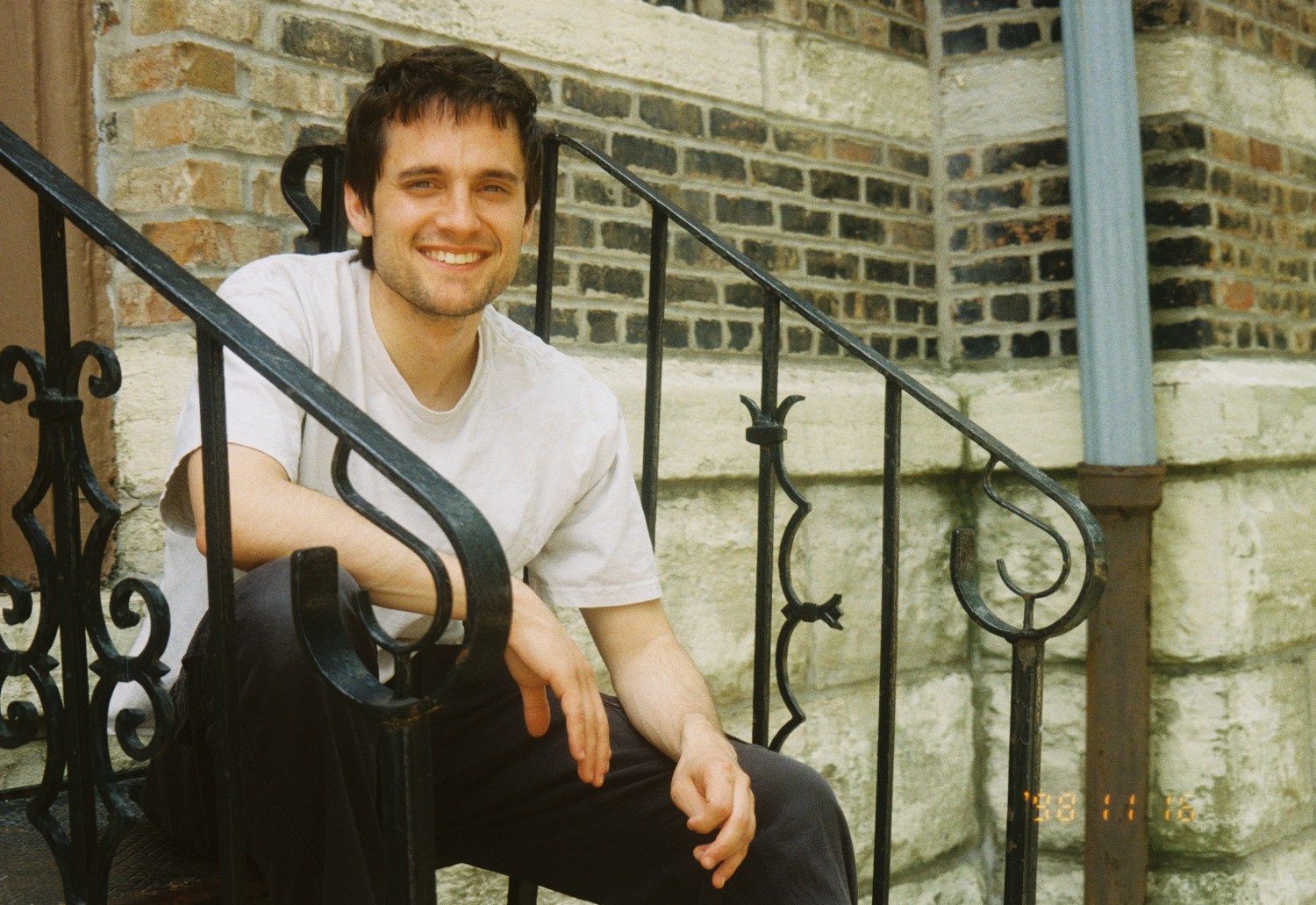
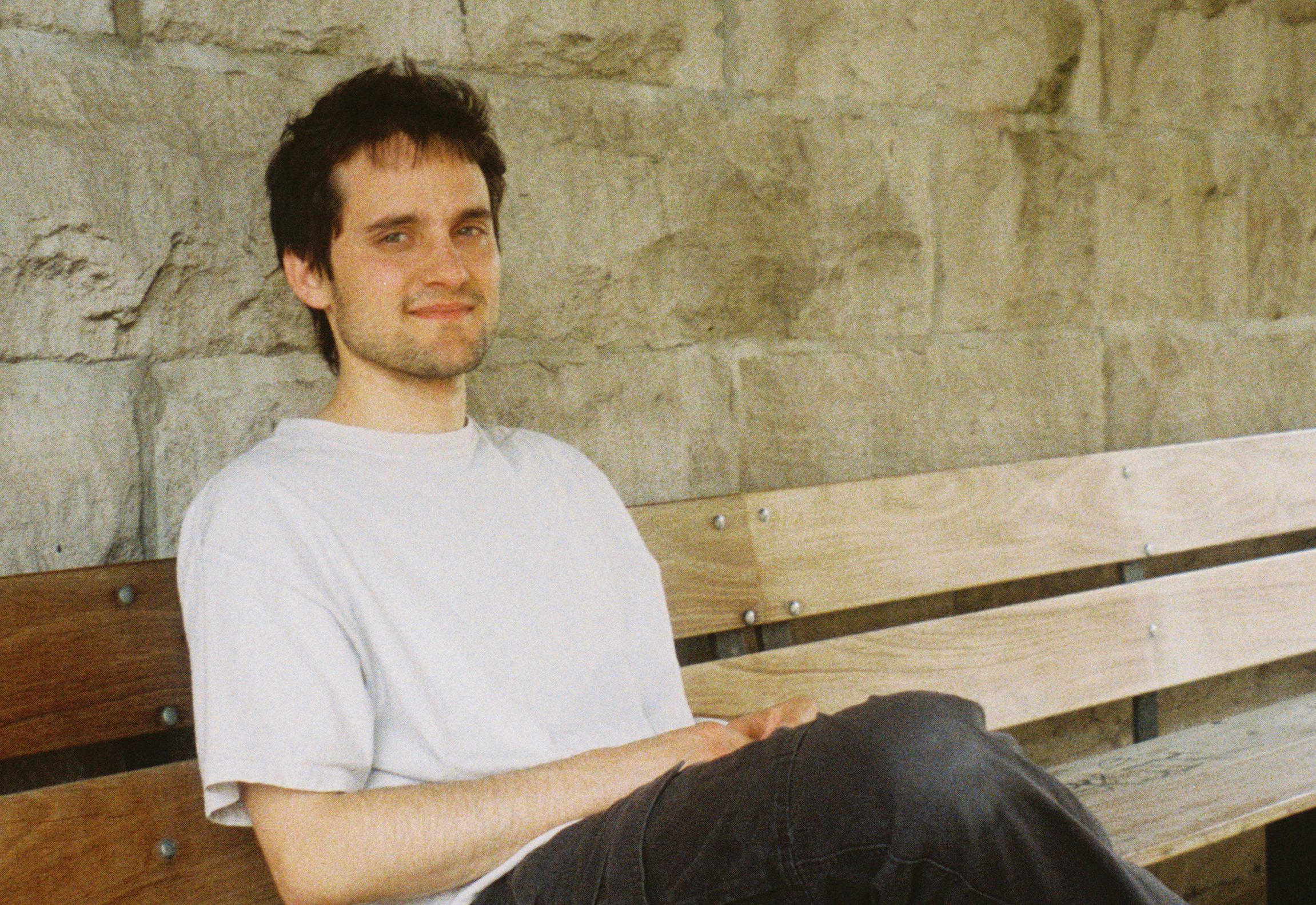
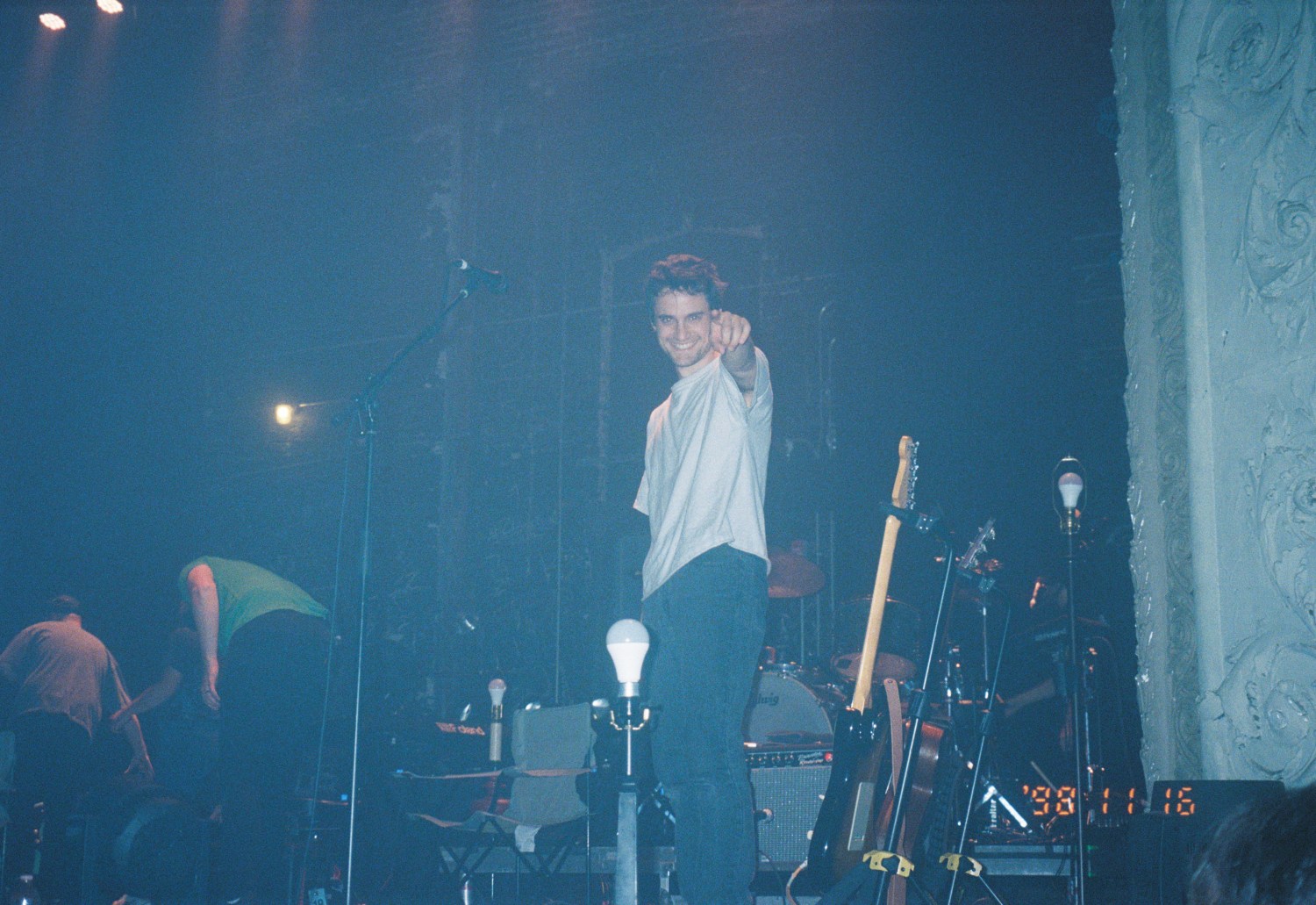
    Find My Friends, the brainchild of Pittsburgh-based artist Sebastian Kinsler, departs from his previous project’s knack for indie and grunge and takes a dip into dreampop, music that feels like you’re sitting somewhere ethereal (like the album cover). I recently sat down virtually with Kinsler to discuss his first solo release “Call” released late last month. 

    This interview has been edited for length and clarity.

    Chloe Gonzales: Introduce yourself!

    Sebastian Kinsler: My name is Sebastian. I have a project called Find My Friends and I’m in a band called feeble little horse.

    CG: I always like to open up the floor, especially for artists who don’t have stuff on the Internet, but what is your elevator pitch?

    SK: Find My Friends is a bunch of home recordings I did for fun. It’s really simple repetitive guitar songs mixed with DNB and computer sounds.

    CG: Sick. Is this your first solo project? How many projects have you been in prior to this?

    SK: I was in a few nothing bands before and I posted some of my own music on SoundCloud. But this is my first, like, official release or full album that I’ve done myself.

    CG: How many variations did you go through before you landed on your name and sound?

    SK: I thought it was really funny to have the name be like some brand so I went through a couple of different ones and then I got to Find My Friends. And I thought that was very funny, and it also hit a little bit as a solo project. The sounds are just– I make the music I want to make, so it’s always kind of sounded like this.

    CG: No, I really like Find My Friends, I found it funny too because I always have my little Sims on there, checking in on everyone. So cute.

    SK: Yeah, it feels so unhealthy but I’m definitely always on there!

    CG: I noticed on your Instagram that you’ve played previous shows with the likes of Melania Kol, who I personally saw at DRKMTTR in Nashville. What did that show and other shows look like without having any previous material online? Was it harder to garner an audience by not having anything to really point to?

    SK: I mean, I didn’t really play them to get an audience. I just had all these songs and I was planning on starting this and then my friends were like, “Do you want to play this show?” So my girlfriend and I scraped together a live act. Have you ever seen Hooky play?

    CG: No, but I know who they are!

    SK: You have to catch them if they get to LA. They have the craziest live set of all time. And we tried to replicate the same thing, just because it’s a really cool performance. The dude Scott from Hooky runs his guitar into a sample board, and the other dude, Sam, remixes the guitar live while he’s playing it. Really sick. So my girlfriends and I replicated that.

    CG: Oh, sick as fuck. Does your girlfriend help you out, like is she part of the project? 

    SK: She’s played live with me a few times but not on the songs unfortunately.

    CG: How were audience reactions to that [the live performance]?

    SK: The people were very nice. They were into the songs and said it was good afterwards. But no one’s gonna say, “Hey, that sucks.” People did say something, like, “Man, once that stuff is mixed, it’s gonna sound awesome!” And I was like, “That is mixed.”

    CG: I’ve also been listening to your single “Call” a lot, obviously for research but I enjoyed it heavily. I would kind of describe it – correct me if I’m wrong but also to each their own – dream pop with some electronic influence, maybe a little of drum & bass? But how do you want this project to sound? This is your first release, but it sounds like, according to your Instagram bio, that you have stuff cooked up.

    SK: Yeah, I mean I just think it’s a really interesting sound that I haven’t heard in a lot of places before and it’s wildly fun to make because I love live drum sets, but I can’t play the drums. But if you put really fast D&B drums under it, it’s just so much energy. It’s just fun to make, all the songs I make are fun to make.

    CG: Would you say that the album encapsulates this sound, or does it kind of bounce around? Because it seems like, the way you described it, it’s kind of you’re doing what you want. So sometimes that can look like an album hodge-podged all together.

    SK: I think “Call” is one of the more poppy, experimental cuts. It [the album] swings on both sides. There’s a song that’s more traditional guitar music, and a song that’s straight electronic, weird dancing, and then stuff that’s in between.

    CG: I see, you’ve got a range there. That’s fun, not really restricting yourself, a fun project in general. By the way you’re describing it, “Fuck it, we ball.” Another piece I really liked was the artwork. Oh I love the artwork! My favorite part is the little sticker detail which is like $1.50 but also the track length.

    SK: Oh, I didn’t know, that was coincidental!

    CG: Well maybe that was me trying to read into it. 

    SK: So the song is 1:50? That’s so sick. The artwork was done by my girlfriend’s best friend named Anna Jungle. She’s wildly talented. So I hit her up and it took months because I suck to work with art-wise, because I have really specific things that I like, but I don’t know how to communicate them. So essentially, Anna just had to throw a bunch of shit at me until I was like, “I like this and this, but not exactly them,” and then it slowly turned into that artwork, which is so perfect and exactly what I wanted.

    CG: I just know that process pissed them off, like “Damn bitchhh.”

    SK: Dude, yeah just like so annoyed.

    CG: It turned out really well. Back in the day I used to do anime drawings, so I ate that up. But the little character and everything works really well with the song. I would say at first it would be more for a mellow song, but I don’t know, a lot of stuff is a feeling and it feels right. Anna killed that.

    SK: Yeah, I think so too. And like, you know if that’s right, if it feels right.

    CG: Exactly, it’s a feeling overall. Stepping back out into the environment of your project – there’s a couple of artists I’ve interviewed before where they’ve had bigger projects and then they make side projects. One in particular, they were like, “Oh I don’t want the two of them to cross.” Like they want their side projects to be completely separate from their more popular projects. Given the success of your other project, do you want to merge audiences, or do you want it to rise more organically. Like, how do you want to present this to people?

    SK: I mean feeble is still my baby. I can only think about one thing at a time. So when we were making the feeble album, I pretty much made no songs for myself, and then we finished that album, and then I made a bunch of songs for myself. And now that I’m done with that, and now feeble is working on new stuff, so I’m not making any more songs for myself. So it’s pretty easy to keep it separate, whatever’s the focus at the time, that’s where my songs are gonna go.

    CG: But do you want to keep it separate?

    SK: No, I don’t care at all.

    CG: It’s not that deep for you.

    SK: Right. We’ve been talking about feeble playing some Find My Friends songs as covers, which I think would be really fun.

    CG: That’d be sick as fuck! This is more of a comment, but I enjoy your Instagram in the sense that it’s whatever you want it to be. You’re just throwing whatever out there, don’t think twice about it. I like the non-curated vibes, just really chill. I think sometimes it connects with audiences more.

    SK: I really wish I didn’t need to have Instagram. I was completely off Instagram until feeble released our first EP, and then ever since then, I had to have the app on my phone because like, I have so many friends on there. It’s the only way they can talk to me, which is so frustrating. So I try to put little thought into it as possible, which I think connects with people, because there’s other people that feel like, “Why the fuck are we putting so much effort into this thing that doesn’t matter at all?”

    CG: No, absolutely. And it’s kind of frustrating, especially as a smaller artist, that’s the only way sometimes you can get your music out. 

    SK: Exactly, there’s nothing else.

    CG: Are you on Tiktok or anything else too? Do you try to keep it as minimal as possible?

    SK: I’m on Instagram and anything else? Youtube, I’m on YouTube a lot, on YouTube shorts.

    CG: Stop, I bet my little brother will see you on there.

    SK: We probably watch the same videos.

    CG: That’s very interesting, I don’t know a lot of artists that do any YouTube shorts, but also probably close-minded of me, because I don’t watch them, so I don’t discover them through that. I find it’s like family channel content stuff on there.

    SK: That’s exactly what it is. It’s not anything good.

    CG: Oh so you fuck with that, my bad.

    SK: It’s just less addictive, like videos of people doing parkour and baseball highlights and Minecraft.

    CG: Oh my God, don’t get me started on Minecraft. What’s it looking like in the future [for you]? Do you have any upcoming shows or anything?

    SK: I don’t know if I’m gonna play any shows as Find My Friends anymore.

    CG: Oh, interesting! Really?

    SK: Yeah, I don’t love playing shows. I like making albums and I like making songs. I don’t love the show playing part of it. This is my project, so I don’t need to play shows. I don’t need to grow my audience. Maybe one or two, for fun.

    CG: So one of them should be in LA actually, in the UCLA Radio station, but I digress. So would you say you prefer playing in the studio than live to an audience?

    SK: Yeah, my favorite part is making recordings really and eventually you gotta bring them to live, and gotta make them worse in some way to make them live.

    CG: Do you ever use Apple Notes to jot down ideas for your project or like–

    SK: I’m a voice memos dude.

    CG: Yes, voice memos, that’s the other one. I know a lot of artists that end up doing that. Like waking up from a dream and having an idea and saying it on there.

    SK: Yeah, I used to have a Notes app when I was on Twitter. I would take interesting lines from Twitter that I would see and throw them into one long notes app. And then if I wanted to write a song, I could look through it and get inspiration. There’s one feeble song called “Healing” that started like that, and then “Call’ started like that because I saw a video of this dude getting a phone call from his brother that was on deployment. I don’t really remember the context, but I remember the feeling of a call that changes your life.

    CG: Wait, sick. One more question for you: Everyone who has a show here at UCLA Radio has a DJ name. For example, mine’s DJ Adderall Spritz. What would your DJ name be if you had a show here on UCLA Radio?

    SK: DJ Find My.

    Find My Friends debut self-titled album is set to be released May 30th via Bloody Knuckles. You can pre-order it now as well as a CD copy. Listen to the first single “call” now.

    Written by Chloe Gonzales


  • Jawdropped is Putting it All Out There in the Name of Power Pop | Interview

    April 25th, 2025

    Imagine if the swarms of songs we got during the golden age of grungy power pop came out forty years later. Would Teenage Fanclub reference CoStar in “Star Sign”? Could we expect a hyper pop element in American Thighs? Probably not, and I doubt anyone has spent much time mulling over those dumb hypotheticals because those songs in themselves are timeless; the only constituent that truly tethers them to a sense of nostalgia is the sheer abundance of really good alternative rock they were birthed alongside. It is not often done well (or frankly, done at all) today, hence why you might be not truly convinced that Jawdropped’s staggering debut EP is a 2025 release until you hit the third track and a cheeky opening line about Venmo stalking pummels you back to the era of Sweet Green salads, online dating and “Instagram Face”. 

    The LA based band was formed a little over a year ago by Kyra Morling, Sean Edwards and Roman Zangari, their ties to the city serving as integral a role in the project’s identity as their shared praise for the Lemonheads. The spirit of Los Angeles lingers throughout their debut EP, personifying the heaviest in final track and lead single “Star”, which explores the ventures of an ambiguous (and somewhat malnourished) caricature swept up in the stereotypes of Hollywood. Tucked between confident guitar riffs, catchy pop hooks and bursts of satire are also pockets of honest sincerity and introspection, and while they never kill the buzz of the EP’s ridiculously fun nature, they do elevate the complexity of the narrative the band has chosen to share. On standout track “Outside”, the tough enamel of sneering one liners wears thin as Jawdropped establishes feelings of social purgatory through a circling of the lines “a little on the outside / a little on the edge of in between” cushioned by a series of emotionally potent “lalalalalas”. Out today via Angel Tapes, Just Fantasy boasts nostalgia without ever presenting like a knock off, jamming strong vocal harmonies, jangly guitar and witty sincerity into five explosive, ridiculously fun and instantly classic melody-driven tracks that are damn-near impossible not to love. 

    We recently got to sit down with Jawdropped to discuss inspirations, their unwavering pride for Los Angeles and debut EP, Just Fantasy.

    This interview has been edited for length and clarity. 

    Manon: So Just Fantasy is a debut  release, but I am so impressed by how clear of an identity and personality there is to Jawdropped and how that comes through on this EP. I would love to hear about the formation of the project and what went into creating this sound? 

    Roman: We all met in LA, just through the music scene here. We have all played in other bands and had previous projects and were just mutual admirers of one another in terms of music. I had started some songs that did not fit with my other band and started working on some stuff with Kyra and then we were like let’s make this band. We got offered to play a friend’s house show in March of last year and it kind of galvanized everyone to try and create something

    Sean: We all hung out at some hot springs one day for our homie’s birthday, and we talked about the Lemonheads and Teenage Fanclub and Roman had these songs and we were all like “oh these are dope, let’s do it”. It kind of just worked really fast, sometimes you jam with people and you’re like okay cool probably won’t do that again, or this probably won’t go anywhere. But I feel like right off the rip when we started playing together and working on songs, shit was really easy and fun and felt worthwhile. It was never a question of ‘should we keep doing this’? It always felt very natural. 

    Roman: We went to see Dando. 

    Krya: Oh yeah. Did we see him around March? 

    Sean: I think it was right around the time we started, we all went to see Evan Dando play solo and had a really fun night together. 

    Manon: That’s Awesome. Okay so then the Lemonheads… would you say biggest inspiration for the project? 

    Roman: I would say it’s the North Star, at least for the first batch of music 

    Manon: You mentioned you met through the scene in LA. The city seems to play a pretty substantial role in Just Fantasy, can you tell me a bit more about your relationships to LA and how it influenced this EP? 

    Roman: To me, it’s super important that there’s an identity to the band that is rooted in LA. “Star” is pretty on the nose, and some of the other stuff is as well, but I do think there’s a certain quality of music from LA that maybe we are trying to follow in the footsteps of, or just a lineage we want to be a part of. It’s intentional, I wouldn’t want somebody to hear the songs on the EP and be like “is this a band from New York?” I think it’s a point of pride, being located in LA. Cook is from LA, Sean is from Moha, so right outside. 

    Kyra: You’ve lived here for years, and I’ve lived here for ten years. 

    Roman: Yeah the music scene here is just very near and dear, and I think we’re trying to embrace that rather than shy away from it. 

    Sean: Everyone plays well and everyone looks cool, I mean it’s the same as New York in that regard. To make it you have to have a sound and a cogent idea that you’re trying to hit because everyone is serious and everyone is good. I guess in a weird way it’s an industry town. So if you’re not really going for it and gunning for a sound and practicing a lot, there really isn’t a point. When all your friends are really good and all their bands are really good and doing a certain thing, it pushes you to be better. You don’t want to suck, because no one else does. 

    Manon: Besides “not sucking”, which I’d say you’ve achieved, do you feel like that pressure, and being surrounded by so many talented artists, has impacted the project in any other way?

    Roman: I honestly haven’t felt a ton of pressure. We’ve been lucky, since we’ve all been playing music in LA for such a long time and we know a lot of people so it has been pretty easy and mellow, it doesn’t feel like we are starting from scratch is I guess what I’m trying to say. I also think we are tapping into a different sound, one that I think is lacking in the scene. We just want to make power pop, catchy rock songs. Also we want to put on a good show so people want to go, maybe know the words, have a good time, but know that we’re putting it all out there. 

    Manon: The EP is definitely catchy, and also I would say quite witty. Can you tell me a bit about your lyrics and the narratives you are creating? 

    Roman: I gravitate to songs that tell stories, like Neil Young, Big Star, a lot of country stuff, Lucinda Wlliams. Songs that when you hear them it puts you in a place, and they’re about people you relate to or gravitate towards or just are kind of interested in. 

    Kyra: I write kind of therapeutically. Also sometimes I get a song stuck in my head and it’s just repeating over and over, so I actually write fairly fast because we spend a lot of time in our cars here, so I’m constantly writing in the car or if I’m alone at the wine shop. It’s usually like a word vomit thing and then I just refine it over time. I guess I write more from feeling, and [Roman] is more focused on stories, maybe more observational.  

    Roman: You know when you can’t tell if a band is talking about themselves or somebody else. It’s sometimes kind of nice to leave a little bit to the audience to apply meaning, you don’t give them the full story. You’re just kind of giving them a little. 

    Sean: I feel like “Star” is as much about us as it is some third person we are making fun of, you know? I mean we… no one’s a stranger to you know, not eating right and maybe doing drugs. 

    Kyra: And hanging out with models. 

    Sean: Maybe you Kyra. Kyra hangs out with a lot of models.

    Kyra: Cooks a model. He’s in the room with us right now. 

    Just Fantasy is out everywhere today. You can order tapes via Angel Tapes.

    Written by Manon Bushong | Featured photo Alyssa Soares

  • Colin Miller is Growing Through Grief on Losin’ | Interview

    April 23rd, 2025

    In December of 2022, Colin Miller mapped out demos for what would become the songs of his latest album, Losin’, out this week on Mtn Laurel Recording Co., in the middle of a Wyoming polar vortex. In weather reaching negative 50 degrees Fahrenheit, Miller succumbed to the cabin fever and its forceful, creative symptoms. 

    “The world wouldn’t let me leave until I finished these songs. They came out of this physical space where there was so much cold around it,  but there was a small little bit of warmth where it was able to grow,” said Miller.  

    The latest songs from the Asheville-based singer-songwriter and producer are warm, emotionally exemplative expressions of how loss affects us and how grief manifests itself in our lives long after that initial loss occurs. Miller’s own personal loss of his surrogate-grandfather, father figure, and landlord, Gary King, inspired the album’s concepts and a majority of its writing. King passed away in 2022, leaving Miller to sort through the weight of his death and come to terms with the inevitable sale of his Haw Creek property. Aside from being Miller’s home since the age of 15, he, alongside lifelong friends and collaborators like Jake Lenderman, Karly Hartzman of Wednesday, and Indigo De Souza, wrote and recorded a majority of their discographies here, becoming a safe haven and collective of sorts. 

    “ The whole process of writing the album was happening as all that was happening in my life. Me and everybody around me was kind of losing our sense of home. It just felt like an important thing to write about because I was just feeling pushed out of the comfort I had known. It goes beyond just the comfort zone. My sense of home was being kind of rocked, and I didn’t really know what else to do about it besides just write. I had never done that. I’d never written about something that was happening in the moment,” said Miller.

    Losin’ explores these feelings as they unfolded for Miller in the time following the loss of King and Haw Creek, but these songs also contain a sense of knowledge and wisdom that can only come with distance, time, and an acceptance of the effects of that loss. On the album’s excellent lead single, “Cadillac,” Miller lends us a descriptive picture of King, shirtless in the summer, smoking while utilizing an oxygen tank, and maintaining a sense of rebellion, that these dangerous, contradictory actions wouldn’t harm King as they would others. He sings, “Baby, you were born to run that red light, in the blood-black tinted window Cadillac.”

    The songs on the album swell with contributions from longtime friends Xandy Chemlis, Jake Lenderman, and Ethan Baechtold of Wednesday and MJ Lenderman & the Wind. Miller always knew his friends would be integral to the process of the album’s creation, in comparison to Miller’s debut full-length, Haw Creek, a much more insular album relying on drum machines and hushed vocals from Miller. You can hear the spirit of Miller’s friends run deeply through the roots of these songs, as they surround Miller’s vocals and rhythm guitar. Whether it’s the clear feeling of an MJ Lenderman guitar riff or a Xandy Chemlis steel pedal line on a track, the shared sense of camaraderie and love is felt and communicated by all parties throughout the album’s runtime. 

    Photo by Charlie Boss

    “I knew from the beginning I was gonna involve my friends more. On each album I work on, I want it to feel different in its creative process.  One of my favorite songwriters, Richard Buckner, said in an interview that each time he records, he has to rearrange his studio and change his physical space. That resonated with me, but I think my version of that is that I need to approach it with some difference. It needed to be cooked different to feel like it has its own life and personality to become its own thing. I wanted to work with my friends as a constraint. On my first album, Xandy and Ethan contributed a little bit to a song here or there, but I brought them in, and I was like, ‘Here’s essentially the part I want you to play, or the zone I want you to mess around in.’ On this one, it was coming from a place of change in my life, and it naturally went to a place of wanting to have my friends on this one. That’s where I was feeling in my life, leaning on friends through this hard time and seeing the beautiful things that community can bring,” said Miller. 

    While the songs of Losin’ contain the liveliness of Miller’s dearest friends and collaborators, they remain deeply personal and feel singular in how they express the emotions felt in the last few years of his life. Finalizing the writing of the album didn’t happen in a straight line, as Miller continued to find new things to say and older material to rework.


    “Some of the songs I was writing during the recording process, and some I was still chewing on and reworking. ‘Birdhouse’ was a song I had lyrics and melody to hanging around on a hard drive. I found that it worked with what I was feeling, even though I had originally written it in a different place. With small adjustments, it really fit how I was feeling. ‘I Need a Friend’ existed on a previous EP, but I chose to rerecord it. With this batch of songs, it just applied to missing Gary and my sense of home. It took on a new meaning. Putting it on the record in a different form allows that to be an official declaration of that change of feeling, and a personal marker of that song feeling relevant again in a different way,” said Miller.

    Each song’s creation came to its finished product differently for Miller, some more confidently, some needing more time and intention. 

    “Some didn’t feel good until the very last moment, and I was just like, ‘I’ve put my best foot forward with this song.’ It feels good, but maybe shakier than the others. Then you show it to a friend and they’re like, ‘Oh, that’s my favorite one!’ I’m like, ‘Oh, man.’ I don’t know if that’s helpful or harder to hear, but the songs come together at different times,” said Miller. 

    Considering the intentionality that went into them, “Birdhouse” and “I Need a Friend” are two of the album’s songs that carry the weight of grief heaviest on their backs. The album’s opening track, “Birdhouse,” begins with a crooning guitar line that leads us to Miller’s narrator, sitting alone in the titular bar, repeating the self-aware refrain, “I know I should have left. I coulda done it on my own. If I stay here, I will die in silence here.” Grief is something we must acknowledge, spend time with, and learn from, but remaining with it for too long will ultimately lead us to a heavier place than we initially came from. On “I Need a Friend,” Miller directly expresses his isolation and considers other potential, alternate outcomes of life while “waiting for a call that never came,” closing the track with the line, “Maybe I just needed to be the one who leaves first.” 

    For Miller, one of the most cathartic songs to create for the album was “Lost Again,” a song where Miller bluntly wishes for more time, opening with the lines, “I don’t need another Christmas morning. I don’t need another birthday picture cake, I just need you here for a second.” It’s heartbreaking in its delivery, as his vocals swirl into his higher register, wishing for more time with his best friend, Gary. The truest sweetness of Miller’s performance and writing shines in the moments where vulnerability is on full display. The moments where these feelings are only shrouded by the intentional and poetic delivery of lines that reshape desperation for things that can’t be actualized, but are wanted all the same, into direct, unwavering lyricism. 

    “‘Lost Again’ feels like a triumph of working hard on a song. That one jumps out in terms of just wanting it to feel good and working on it for a long time, and then trying to get it to a place that feels right,” said Miller. 

    The artwork for the singles, “Cadillac” and “Porchlight,” and the album itself, feels like an extension of the memory that Losin’ remains grounded in. Miller created the artwork for the singles while Matthew Reed, known as tvbeaches, painted and photographed the album cover. Reed has also created artwork for multiple MJ Lenderman projects like Manning Fireworks and Ghost Of Your Guitar Solo, and Friendship’s upcoming album, Caveman Wakes Up, among others. These surrealist images pair perfectly with the dream-like quality of Miller’s music and the intangible area of time it resides in. 

    “He created the album artwork before I had done the single art, mainly because I didn’t know what I wanted the art to be.  And so it’s just like entrusting a friend to help bring that part of the record’s life into reality,” said Miller. 

    The half-painted, half-photographed album artwork depicts Reed sitting in a ghillie suit, shrouded in blue and orange projector lights, with an image of a few figures holding checkered, NASCAR flags. In ways, these flags echo Miller’s single artwork for “Cadillac,” which he composed through 3D scans of old photos from a historic Asheville speedway, honoring King’s past as a racecar driver in the 1970s and 1980s.

    Photo by Charlie Boss

    “ There was a speedway in Asheville called Amboy Speedway. I knew that was where he raced from the stories he told me. I found a Facebook group of people who had grown up going to that racetrack. They had a bunch of albums of pictures people had scanned, just like a little memory lane sort of group. Right after Gary died, I found it and was like, ‘Oh man, it would be really cool if I could find pictures of Gary just to see him and have him around.’ There weren’t, but I was checking that group from when he died through the time I was recording the album. I took a 3D scan of my laptop screen and approached it the same way I approached the scan of my living room for ‘Porchlight’s single cover. It’s like a phone camera taking a scan of another screen,” said Miller. 

    The layers of a phone camera taking a photo of a scan of another photo on another screen feel like a somewhat humorous, yet uncanny approach to visually representing the way memory feels. Whether it’s an imagined photo of King at the racetrack or Miller’s PS2-esque 3D scan of his Haw Creek home’s living room, it immortalizes King and his property in a way that lives on throughout the music. 

    The last year has been a busy one for Miller, touring internationally with MJ Lenderman & The Wind and working as a producer for various projects like Florry’s upcoming album, Sounds Like… and Walker Rider’s Fair. He expresses nothing but gratitude for it all.

    “ It’s been pretty surreal. It makes me really grateful to just be in a band that consists of pretty much all my closest friends. It makes it a lot easier for sure. It’s also been cool and motivating to see people just responding to the singles and enjoying the songs,” said Miller.

    He’s also preparing to open up for Lenderman’s next leg of North American dates this summer, beginning in June. Intentionality is something that plays a large role in performing the songs from such a direct and personal collection of them.

    “ The biggest thing is spending time with the songs themselves in the playable form and just evaluating which songs feel good to play or which songs maybe are important to me and important to be on the record, but not necessarily ones that have to be played live and just checking in with myself about what feels comfortable and good to play,” said Miller. 

    Losin’ is an album that explores how grappling with the effects of grief and loss is not always a simple, linear process. Our feelings surrounding it shift continuously, and finding the right space to place those feelings is never final. Throughout the nine-track record, Miller finds a way to showcase the flow of these emotions, taking the listener through the moments of understanding it, spending time with it, and ultimately knowing when it’s time to grow from it. The album’s closer, “Thunder Road,” lilts with a wistful refrain that brings us to a peaceful environment to place the emotions that surround loss. “Pedal to the metal, I got you on my mind. And you can put your shoes under my bed, anytime.” Maybe it’s not possible to sit with our grief forever, but it’s possible to accept and acknowledge it, and continue to honor a legacy.


    Every Wednesday, the ugly hug shares a playlist personally curated by an artist/band that we have been enjoying. This week, we are pairing our guest list with our feature of Colin Miller.

    Listen to the playlist here!

    Losin’ is set to be released this Friday, April 25th via Mtn. Laurel Recording Co., which you can pre-order now as well as on vinyl.

    Written by Helen Howard | Featured Photo by Charlie Boss

  • A Conversation with Slug Rug | Interview

    April 22nd, 2025

    As I was working on a college radio playlist series for my radio station, I received an email about a band in the IU area. I plugged into the band’s music as I was leaving my home in Indiana. While the EP was a sweet three songs, it encapsulated so much more. Named Slug Rug, the band consists of sibling duo Audrey & Keegan Priest. I shared their experience of growing up in Indiana and got to pick their brain on their latest self-titled EP Slug Rug. Enjoy the conversation the three of us had on-air at UCLA Radio below!

    This interview was conducted by Chloe Gonzales (DJ Adderall Spritz) in studio at SoCal college radio and has been edited for length and clarity.

    Chloe Gonzales: Introduce yourselves!

    Audrey Priest: I’m Audrey! I sing, write songs, and play rhythm guitar.

    Keegan Priest: I’m Keegan, Audrey’s brother. I play guitar, we write songs together and do some production.

    CG: Thanks so much for coming on UCLA Radio and ugly hug! Are you guys in Bloomington right now?

    AP: Yeah!

    KP: Right now, we’re on our first little tour, we went to Michigan and then Chicago, played a hometown one in Bloomington on Saturday, and we’ve got one last show tonight. People have class today, so we’re working around everybody’s school schedule at the moment.

    CG: That’s an aspect about a college band. I’m glad you mentioned the tour because I was going to dive right into that. You guys have recently been going on tour in the Midwest for your newest EP, Slug Rug. How has that experience been, especially as a self-supported duo?

    AP: It’s been awesome! The shows that we’ve played so far have probably been my favorite shows that we’ve ever played. And I think part of that is because we’ve never really gotten to play so many shows so close together, which we can really feel the progress of us getting better every night and being more comfortable as a band. It’s definitely been a little tricky. We don’t have a van or anything so doing shows with six people and traveling with everybody is hard, but really fun.

    KP: It’s felt like one super long sleepover, which I can imagine if you’re doing it for six months at a time, by then end, it can be pretty excruciating. We all feel pretty tired already but it’s great to go to new places and meet people who’ve never heard of our music each night. A cool way to meet people in real life.

    CG: It must be nice having an audience listening that doesn’t know your stuff like tapping their feet or something and be like, “Wait, this is kind of good. These cats are cooking!” That must be satisfying.

    KP: We love playing in Bloomington with all of our friends, and all the people that are most important to us are here. But we play 13-14 shows a year here and eventually the same people are coming every time. So it’s great to have new people listen to us and get that in-person feedback.

    CG: And you’ve been playing alongside other bands. Have there been any memorable moments with them?

    AP: The first show we played with a band, Racoma, which was really fun, just because it was kind of hard. It’s been a long time in the making and a Bloomington show fell through. And so we were lucky that they asked us to play with them. That show is a really good encapsulation of how nice people were the whole weeknd. Racoma specifically were just so nice and everyone at the venue who put on the show were so nice. We had a lot of people come up to us after and were just so nice.

    CG: And how did it feel like performing these newer songs live compared to recording them in the studio? Did playing them in front of an audience change the meaning or energy of the song?

    KP: I think what’s interesting about the three songs that are on this EP is me and Audrey were a studio project for a really long time. It was mostly us writing songs together on a computer. I go to school at IU, particularly the music school, so I met a lot of audio engineers and a lot of them became band members and frequent collaborators. But these three songs were songs that weren’t just Audrey and I sitting down at the computer and writing. We played them live for a year before we started recording them, which I think really shows in the arrangement. And so at this point, I think we’re ready to move on. Honestly, we’ll probably play some of them for a pretty long time, but we’ve already got a lot of new songs written. It’s been fun to play the new stuff and it’s fun for people to know whatever the “old stuff” is because people in Bloomington have been hearing it for around a year. 

    CG: That’s nice that you’re in the music school, to be able to be surrounded by people who can help you out and foster those connections!

    KP: I don’t think our project could exist the way it does without a lot of people who are multi-disciplined, whether that’s in different instruments or production or audio engineering, because all of that stuff is really important to us. And I think a lot of our members who play with us in the live band and who play on the record, they all have their own studio projects too. So it’s like a universe now. We’re playing on each other’s stuff and influencing each other’s stuff. I think this record in particular is a beautiful amalgamation of all that.

    CG: You guys have like a little scene going on there. It’s like the Asheville scene of MJ Lenderman playing with Indigo De Souza and then him doing his solo stuff and also then playing for Wednesday. And they’re all kind of coming up together. I wonder and hope that will manifest for you guys. 

    AP: That’s exactly what we were talking about on the way to Chicago. I was talking about that with Ethan, our drummer, and Ella, who’s been touring with us this weekend, about how those are some of our biggest influences. And just talking about how special it is to have that, having a community like that in general. I think it’s really special.

    CG: Having that community, does it ever feel like you can bounce ideas off of each other? And if so, does it ever feel like an echo chamber of the same things?

    KP: I think we are all interested in similar genres of music. Audrey and I like to say that there’s a good level of friendly competition and I think that just really pushes us to just go that one inch forward. It’s been a positive reinforcement most of the time.

    CG: Before we dive into your EP, I wanted to talk about you guys being independent. As independent artists and especially as college students, how do you navigate all of these roles of marketing, managing, et cetera?

    AP: Keegan is really good at organizing everything!

    KP: I think it can be really tough. There are certain weeks where I have school coming up and most of the time, to me, Slug Rug takes precedence, like it has to get done. I really enjoy the booking and marketing and making everything as cohesive as possible. Both Audrey and I grew up both obsessed with records and how they come out. I also worked at the radio station here for four years, WIUX, and I think I’ve learned a lot about booking and event planning and just general promotion. I’ve thrown a bunch of gigs in my life and being the booker and then being the bookie, I think I’m able to understand both sides of the process. And so I think it’s going to be a while until I give up.

    CG: Very hard-headed, I like that. It’s very tiring but rewarding.

    AP: Not that we’re even anywhere near that level of having someone be able to book for us. But if that were ever the case, the thought of someone booking a tour for you and telling you this is where you’re going on this date sounds kind of scary to me.

    CG: Oh yeah, having that control previously and then giving that up, it can be scary. What has been the biggest challenge about being self managed? And what has been the most rewarding part?

    AP: I think something hard about being self managed, maybe just being any kind of band or musician in this day and age, is that there’s just so much access now to the internet for everyone, which I think is the best thing in the world. Everyone can make music, consume music, and everything’s on streaming but it’s also one of the worst things in the world if that’s something you want to make your living in. Just because there’s so much out there, I think it’s really hard to find something or put yourself out there for people to find.

    KP: I also think when you’re self managed, a lot of the times you get an agent or something. And the benefits of having one is that you’re co-opting a bunch of connections. And I think when you’re self managed, every single interview, every single band you play with, you have to be forming that connection. Your network is only going to get bigger if you work on it. Even getting this interview, a lot of the time you have to spend shooting shots in the dark and the ones that worked out are the things that end up helping you in the future. It’s a numbers game.

    CG: Having connections is the biggest thing. It doesn’t even matter if you’re qualified, if you know someone you can get your foot in the door.

    KP: Don’t mean to make it seem like we don’t care about the music, because that’s obviously the most important thing. But we can try our hardest, we can put everything into this, but at the end of the day, a lot of hard work comes in the before and after the fact.

    CG: 1,000%. I also wanted to delve into your EP. It’s a three piece: “Lighter Fluid,” “Oh Man!,” and “Teenage Symphony.” I enjoy all the names of the songs, they’re very fun. Before we break them down, can you describe each in three words and give them a color?

    KP: Lighter Fluid – Epic, progression, bite – Pastel yellow

    AP: Oh Man! – Growing up sad – Maroon

    KP & AP: Teenage Symphony – Spring, lush, encapsulating – Bright blue

    CG: Random, but do you guys have a color scheme for Slug Rug? Is it green?

    AP: It kind of turned into green, yeah!

    KP: I think that’s what just happened? And I think Audrey and I are both interested in nature and stuff. I think nature definitely plays a role in our aesthetic and our sound. So I think by proxy it’s going to be green.

    CG: Go green!! Let’s dive into these songs, first off “Lighter Fluid” – how did you guys conceptualize it? What’s the story behind it?

    KP: I’m really interested in this movement in Manchester called Madchester with artists like Happy Monday and The Stone Roses, it’s just like a blend between alternative rock music and dance music. And I think the demo in different stages of it is more Madchester than others, but I was interested in the conception of the song. Like how can we make a dance song but still have it be explosive and powerful? And I think it’s a thing we utilize, a songwriting tool we utilize on all three songs, which is we just jam a lot. I think that’s a by proxy thing of really enjoying playing live with each other – we have extended instrumentals and jam sessions, so the breakdown at the end of “Lighter Fluid,” I think that’s one of our favorite things we’ve ever done.

    CG: “Oh Man!”?

    AP: I’d say this was our first band song. I wrote it during winter break our freshman year and sent it to Keegan and the whole band. And we were like “If anyone wants to think of parts for this, we can maybe play it live!” And we had rehearsal, and everyone was like, “Yeah we can try it out and play it live. We already played this together,” and we were like, “Wow, this is awesome!” So it was probably the first song I’d written with a band in mind. I mean with our last EP, like Keegan said it was totally a studio thing. Obviously we wanted to play it live, but we’ve only done a couple of live shows as a band in the years prior. I definitely wanted it to be a big wall of sound type song, which I think is what it ended up being.

    CG: “Teenage Symphony”?

    KP: So I think naming is an interesting part of our process, because I think we derive a lot of enjoyment in naming, but I don’t know if we can sit down and explain our process. I think a lot of the time it feels right, even if the song, like the actual word, has no association with the song or how it’s written. I just think that the way words sound or how they look are just as important as their meaning. And we just think it’s fun to name things, but I’m always curious about how Brian Wilson went crazy after Sergeant Pepper. If you know about The Beach Boys, he ended up working on the Smile album, and the Smile Sessions ended up coming out later. And I was just obsessed with the quote about how he’s making a teenage symphony to God. It’s just really interesting that a grown man is making a piece of art that’s supposed to be transcendent, or like it makes you feel like a teenager. And this was a bit on the nose, but one of my favorite songs ever is “Teenage Riot” by Sonic youth. So it was teenage to those two things, and I thought it would have been on the nose to stylize it like teen space underscore age symphony. SO we ended up just going with “Teenage Symphony.” But I think that’s a cool anecdote in a way that we think about naming in general.

    AP: And I like this song so much, because usually we write a song and name it or Keegan shows me instrumental and I write melodies. But this song, Keegan made the instrumental and I was like, “I really want to name it this.” So with that name in mind I tried to think of a scenario that made something that was really formative or important to me when I was in high school, when I was a teenager.

    CG: I love that so much. The backstory for that one, that’s sick. In general, does the songwriting come first or do you work on the instrumentals and then it comes to you through there?

    AP: I think the best thing about Keegan and I is that it’s equally both. I think on these three songs, it was really 50/50 mix of sometimes I write a song completely and its guitar and me singing, and then Keegan will add literally everything else, the band will add parts. Or sometimes Keegan will come up with an instrumental and I add melody, lyrics, and maybe a couple of new parts.

    CG: That’s beautiful. Do you think you have some sort of sibling telepathy?

    KP: I think it’s a nature versus nurture thing. I think we were raised by the same two people and grew up in very similar environments and had very similar entries, that I think other people don’t understand my aesthetic the way Audrey does. I think we’re all kind of homogenizing that way. But I still think that Audrey, in this case, understands my intention for a certain part more than most people would.

    AP: I also think Keegan is more detail oriented and I’m really big picture indeed which I think makes a lot of sense. I’m more of the song as the whole, writing out song structure and melody, and Keegan is better at adding the parts, hence why he’s also an audio engineer.

    CG: That’s super cool. I also wanted to dive into the inspiration picks that you guys have been listening to during this era. Keegan I see that you have Kero Kero Bonito back there [in your room]. 

    KP: I can talk about her, especially that album I think I put “Visiting Hours” on that playlist. I really like it because it’s so video game influenced, and playing video games growing up is very important to me. I think that they do a good job where you’re taking these nostalgic instruments and tonalities, and especially on that album, it’s practically a noise pop album. There’s awesome electric guitar layers and solos. Some of the songs at the end of the album are just static and also simultaneously very twee. Audrey and I love different variations of twee or pop music with light girl vocalists. I don’t know if it’s a direct influence but for both Audrey and I we like the way the album sounds, where it’s fusing electric guitars with synthesizers.

    CG: I know you guys also put on George Clanton, which is popular here at UCLA Radio.

    KP: George is making these super 90s influenced walls of sound with electronic instruments but doing it with a dance flair. Him and Hatchie, and a band called Wishy, they all do a very niche sub genre of 90s music that we really love.

    CG: We also love Wishy here, oh my gosh.

    AP: They’re from Indianapolis!

    KP: Which is where Audrey and I grew up.

    CG: Speaking of Indiana, since you guys are from there, has that influenced your songwriting at all? Just the experience of growing up there?

    AP: We were lucky to get good concerts there, but I didn’t really know of a great music scene in Indianapolis.

    KP: I think there’s something beautiful about living in the Midwest and the Internet age. I think if we grew up in NYC, Chicago, or LA, we might have become part of scenes a lot earlier in our lives. But I think being in the Midwest and being with people who like cool things, I think that spawned interesting cool things, but really not having a scene. I think it turned me especially more towards the internet, where I was able to find totally different types of music than people around me.

    CG: Nice! Last question, shout out WIUX, but here at college radio people who have shows on the air have DJ names. What would y’all’s DJ names be?

    AP: This is good because Keegan is a DJ.

    KP: Both Audrey and I have had shows on WIUX. I like DJ Superstar right now.
    AP: Oh I see, last I heard it was DJ Keegan. I don’t have mine but my radio show name is called Fork and Plate and I do it with my roommate and we say that she’s fork and I’m plate. So I’m going to say DJ Plate.

    You can listen to Slug Rug’s self-titled EP out everywhere now!

    Interview by Chloe Gonzales | Featured Photos Courtesy of Sug Rug

  • trust blinks., Hiding Places and Tombstone Poetry Share Split EP | Premiere

    April 18th, 2025

    Last week, a band I had been interviewing told me that the only relevant means of music categorization is region-based. It came up amidst some anti-genre discourse, and the take was less a blanket statement of “every band from Pittsburgh is making an identical style of music” way, and more so rooted in the touching impacts of community on art. I found myself marinating on that take heavily as I listened to this split EP by Tombstone Poetry, trust blinks. and Hiding Places, three bands who share ties to Asheville, North Caroline. Their timelines in the city do not boast an identical alignment, Hiding Places is now a Brooklyn based project and trust blinks. has only been in Asheville since 2023, yet an element of community touches and binds the entirety of the listen, creating a through line amongst a series of personal reflections and guarded thoughts. 

    We recently got to ask trust blinks., Hiding Places and Tombstone Poetry a few questions regarding their individual tracks, collaboration on this split and the impacts of community in Asheville, North Carolina.

    trust blinks. is the project of Ethan Hoffman-Sadka who has been releasing under the name since 2021. Following the last LP Turns to Gold (2024) and two collaborative singles, Trust Blinks. returns today with two new songs, “Body Keeps Score” and “Dirty Dishes”. On “Dirty Dishes”, trust blinks. reflects on a childhood unblemished perception of the world from the thinned-out lens of adulthood. The tectonic gaps between a life where “astronaut” is an attainable path and a life where you co-exist with a roommate’s neglected mug in the sink are bridged in a rusty haze of lived in guitar and tender vocals, untethering the track from the extremes that it explores to establish an experience that leans a bit further into emotionally ambiguity. The weathering impact of lived experiences is a theme that trickles over on “Body Keeps Score”, where trust blinks. examines how hardships can only promote growth if we choose to not be defined by them. Tombstone Poetry makes an appearance on the alt-country leaning track, the initial contrast of Hoffman-Sadka’s brittle and delicate deliveries followed Burris’ sharply melodic twang ultimately filtered into one through a stunning moment of harmonization. 

    This is not your first split release, having collaborated with other artists like liverr, new not shameful and Suggie Shooter. Now with this 3 part split, even including Tombstone Poetry on one of your tracks, what does this kind of collaboration, and/or pairing, bring out in the music that you create? What do you take away from experiences like this?

    Lately, I’ve been trying to collaborate with as many of my friends/inspirations as possible. I love so many different sounds it’s hard to keep track haha. With each split or mutually created song I think I pick something new up along the way whether it’s a new skill/interest or even the realization of what I don’t like. I haven’t been really feeling a succinct sound lately so I’ve been enjoying going with the flow and doing one-off tracks instead of albums. I’m always looking for ways to force myself to not take it all so seriously- which ironically takes quite a bit of work for me.

    There is a lot of depth in these songs’ complexion, for instance, “Body Keeps Score” leans into the more alt-country style and “Dirty Dishes” embraces that more slow and harsh soundscape that filled past projects like Turns to Gold. When it came to the sonic build of these songs, was there anything new that you wanted to try? Any ways you challenged yourself with these recordings? 

    As cliche as it sounds, it’s been hard to resist leaning into the sounds of the South since I moved here. I wrote both of these songs around 6 months ago and just recorded little demos of them for Youtube without any much thought about what genre they were at the time. When it came time to really record them they both seemed to naturally gravitate towards different sounds. I knew I wanted to record Dirty Dishes with my friend Luna (Total Wife) and the goal in doing so was definitely to channel The Pumpkins, MBV, Lilies, Acetone and so on. I wrote Body Keeps Score with Caelan (Tombstone Poetry) in mind to sing on so I think I kinda built the song up around the sound of their voice I had in my mind. I’m still pretty new to incorporating instruments like banjo, violin or pedal steel into mixes so I think I struggled a little more with Body Keeps Score when it came time to record that one. I realize I still have quite a bit of work to do when it comes to genuinely approaching songs that are a departure from the usual wheelhouse haha.

    “Dirty Dishes” floats this theme of growing older and becoming more despondent to your surroundings. What was the significance in the imagery you chose? Is there a thematic throughline with the grappling that “Body Keeps Score” goes through? 

    I really like when any art comes from a really simple place. I think Dirty Dishes’ lyrics came really naturally in that sense. In adulthood I find myself so manic and wrongfully attuned to inconsequential details like the noise or messes my roommates make. I probably was in the middle of some mental stupor and took a step back and realized how sad it was that our worlds become so much smaller as we grow older. The line ‘you could clean them but they’ll still pile up’ is all about how there’s always some new problem or fault I find with something or someone. I’m working on that!

    With Body Keeps Score there is not really as much imagery going on. I just liked how those words paired together (from the book) and made a little play on the words. The lyric, “If the body’s been keeping score I’ve gone undefeated since I was born”, kinda says it all. I think sometimes I take pride in my hardships in an unhealthy way. Hardship can definitely help us grow but not when they become an aesthetic thing or a script we rely so heavily on.

    Did writing and recording these songs help you feel more present in your day-to-day, especially when pulling deeper meaning from the mundane? 

    I think I gravitate towards writing lyrics as if they are mantras. In that sense, writing these songs definitely helped me feel a little lighter. It’s always nice to consolidate a philosophy or feeling into a 3-minute, materialized thing that you can say goodbye to. As for recording these songs, I can’t say they were as enjoyable. I started that process after Hurricane Helene and six months later I still find it hard to get into a certain flow. The prospect of sitting at my desk was and still is extremely daunting and at some point, I just had to set a deadline so I could let myself move on. I’m not as happy with Body Keeps Score (it feels a bit dramatic/forced) but I’m excited to take some space and work on new stuff/potentially approach recording the song again in the future.

    Now a Brooklyn based band, Hiding Places began in Asheville as the project of Audrey Keelin, Nicholas Byrne and Henry Cutting. Following the 2024 release of single “Pulp”,  Hiding Places returns today with two new songs, “Unfixing” and “Flooded Island”. Though the notion of a “bedroom” track is technically rooted in lack, there is often an impalpable depth and level of untouched emotional ruminations in music created in one’s own space. Amidst a circling fog of delicately layered vocals on “Unfixing”, Hiding Places simulates an unraveling of skepticism and preoccupation cushioned by tender, glistening guitar. This authentic “bedroom” quality spills over onto “Flooded Island”, which maintains a wispy sense of solitude as Keelin’s syrupy vocals sift through overbearing thoughts during a quiet shift at a woodshop. 

    There is a great deal of focus towards different sonic textures in these songs, but especially on “Unfixing” with its building layers and the roles the landscapes played on the track. Where did you challenge yourself in crafting this soundscape? Did the build up of instrumentation come naturally with the songs’ intentions? 

    Nicholas: So these two songs from Hiding Places came as from songs from our first album that we’re done recording now, and basically realized, hey, we need to fit this album on a record, and these two songs stuck out as having their own sonic qualities that work together, and we thought it would be fun to release them early on this project.

    Audrey: I feel like I want to preface this by saying that these two songs were built from demos that I made in my room alone. They just both have that sort of energy to them, so I think all of the textures that we incorporated in this and essentially almost everything on this recording that was built on these bedroom demos, we’re just kind of experimenting and seeing how we can make them Hiding Places songs. And these songs were arranged and produced during the same time that we were arranging and producing and recording the entire album that’s going to come out sometime soon. But they set themselves apart because they are more like bedroom recordings, and they are just softer and more delicate and songs that we don’t really play live.  They have this more experimental energy to them rather than like, you know, this is a song that we arranged as a band in the practice room, and this is a song that we play live, and this is a song that we get out a lot of energy with. But to more accurately answer that question, the song’s intention was just experimentation, just trying to get out a feeling. It’s honestly indescribable, and that’s why we make music.

    Lyrically, there are phrases on “Flooded Island” that lean into that imaginative imagery that you have used in the past to grapple with more adult themes, as was the focus on your prior EP, Lesson. In what ways did utilize this type of writing to bring out themes buried within these songs?

    Audrey: Flooded Island was a song that I wrote while I was working in a woodshop in Chapel Hill. I had a lot of free time because there were often times where there was nobody there and I could just make my own stuff, and sometimes I would use the job site radio to mix my demos in the woodshop. So I think that that song for me is imbued with that memory. Also just imbued with the memory of working my ass off in general, especially working my ass off to move to New York. That song I wrote before I moved to New York and I was just thinking about how much hard work it was going to be to move here. It’s also just like witnessing other people overworking themselves to survive.

    This is one of the first Hiding Places’ releases where you are all once again in the same spot, but now living in New York. Has that shift in location changed the way you approach and interact with how you make music? 

    Audrey: I think that the move to New York has actually completely changed Hiding Places’ sound as a whole. I think that these songs and some of the songs that are on the album kind of mark an end of the remote Hiding Places that we’ve known for four years now. It’s kind of bittersweet, but I’m very, very happy that we live in the same place now because we can arrange music together and play it together and try it out and add new parts and test what feels most fun and exploratory live. With the shift in location though, I think the main thing that has been really revolutionary to Hiding Places is Michael Matsakis and recording and arranging with him. Having him produce some songs and play keys and organ and bass parts and even guitar parts in some songs, he’s just so tapped into this endless stream of creativity and curiosity that I admire so much and I’m so lucky to be around.

    Nicholas: Audrey made these demos in North Carolina before moving to New York about a year ago, and we recorded the rest of the parts of the arrangements in New York, so I think they exist somewhere in between sonically, which has kind of been the story of the band so far. Now with Audrey in New York, though, we have the opportunity to play a lot more and write together here, where previously our process has been building on top of demos that either Audrey or I bring to the band. There are several songs on the album that we wrote from scratch together, so we’re kind of evolving how we build songs and sounds. It’s always funny, I feel like a lot of the songs we’re releasing were made a couple years ago, so it sounds different than the things that we’re writing now. But I think these are especially cool songs because of the way that they are really crafting a soundscape and are rather ethereal in their atmosphere.

    With origins in North Carolina, this split album has its soul based in the South. Now living in New York, in what ways do these songs connect you back to Asheville and the way that that community functions? 

    Audrey: I appreciate that you asked about Asheville. It’s extremely meaningful for me to be making music and being in the same scene still with people who live in Asheville because it’s where I grew up and it’s where I feel like it’s the scene that raised me as a musician and also just as a person. I felt disconnected from it for a while ever since I moved, but the fact that I can come back and feel at home again is so encouraging and it makes me want to just keep making music and being in that community and being inspired by that community. 

    Nicholas: We just played with Tombstone at Trans-Pecos here in New York, and it was really fun. It’s really cool to blend these worlds, North Carolina and New York, of people and place and music and taste!

    Watch the accompanying music video for “Flooded Island”

    Since 2021, Tombstone Poetry has been forging a musical identity that paints a certain country warmth onto alternative rock and noise heavy walls. Following the 2024 release of their LP How Could I Be So in Debt, Tombstone shares singles “Ignition” and “Bender” today. “Ignition” presents as the most upbeat track on this release, attesting to Tombstone Poetry’s knack for molding shame-drenched confessions into buoyant hooks and twangy warmth. “Bender” adopts a darker soundscape, though both tracks cut deep into reflections on substance abuse and the impact of addiction on relationships. 

    Through feelings of heartbreak and sabotage, was there a specific theme that towed the line between these two songs? What did you find yourself embracing when bringing out these songs? 

    I think as I continue to write about things like heartbreak, I find more solace in being brutally honest. The general theme of broken relationships (both platonic and romantic) has been a defining characteristic of Tombstone songs for a long time. I think with Bender and Ignition, the songs are not only honest but defeatist in the hopelessness of the lyrical themes. In picking them as the songs for the split I decided to embrace that feeling and have these two sister songs stand together. 

    As “Bender” becomes this haunting infiltration into the lives of two individuals, how did you play with the concept of a bender and heartbreak taking on similar roles in your lyrics? 

    Bender is a pretty straightforward song about drug addiction. It’s somewhat dramatized but the feeling of being at the mercy of your vices but wanting stability in a relationship was my point of view in writing it.

    “Ignition” and “Bender” take on two different sonic build ups, yet hold on to that alt-country style that your music has set its roots into? Was there anything you wanted to do to challenge the way you work as a large instrumental unit on these tracks? Did you try anything new? 

    We recorded both of these tracks completely differently than anything we’ve done before. Usually we go into things as a unit at a studio, but with these two me and Lawson Alderson pieced them together in our home studio, bringing in different members of tombstone and guest musicians. It was a very fun and different experience to collage the songs together.

    What did it mean to you to hop on the track “Body Keeps Score” with Trust Blinks. for this split? How did that collab come to be and what did you gravitate towards on that song? 

    It was a blast! I love Ethan and have been playing music with him since he moved to Asheville. We just got together one day and bounced some ideas off each other for vocal parts and it all came together.

    You can listen to the split EP of trust blinks., Hiding Places and Tombstone Poetry on the bandcamp page of I’m Into Life Records, as well as order a cassette tape!

    Written by Manon Bushong | Interview by Shea Roney

  • Sleep Habits Reflects on New Single “Antique Mall”, Announces New EP Mourning Doves | A Deep Dive

    April 18th, 2025

    Today, New Orleans-based staple Sleep Habits, the recording project of Alan Howard, is sharing his new single “Antique Mall” as well as its accompanying music video, premiering here on the ugly hug . “Antique Mall” is the first single from Sleep Habit’s upcoming EP titled Mourning Doves, out on May 10th via Kiln Recordings. As a whole, Mourning Doves finds Sleep Habits in a very reflective state, bringing old songs up to a new light, one of warmth and maturation, as Howard continues to push himself as a deliberate and enduring songwriter.

    Setting its own pace, “Antique Mall” fills the room with warm, layered strings, reserved drum fills, chicken pecked piano notes and noticeable deep breaths as Howard leans into the open space that him and his collaborators occupy. Written years ago, it feels fitting as this track was dusted off and given new life, something resembling a piece of who he was, as Howard learns in real time how to accept the memories that feel so distant. The music that comes from Sleep Habits has always been a point of reflection and curiosity, but “Antique Mall” is very absorbing, redefining the sounds, feelings and beings that we can take inspiration from in our own daily experiences.

    We recently got to ask Howard a few questions about “Antique Mall” and its accompanying music video, discussing the weight of memories and what it means to mature. 

    I know you’ve been sitting on these songs for quite a while now. How does it feel to have “Antique Mall” be the first track in this collection to see the light of day?

    You know, it feels nice. It feels interesting to put out songs that, at this point, I almost have personal and emotional detachment to because they’re so old. It’s been interesting revisiting this song in a new frame of mind. I think I’m able to see it a bit deeper, to see more meaning out of it than I thought I was even when I wrote it. 

    A bit wiser now, huh? 

    I guess, I don’t know [laughs]. I have almost an outside perspective on it at this point. I think I learned, this song especially is a good example, that a common trope I use in my songwriting a lot is using a physical space as a symbol or a metaphor for something bigger. This song to me, what I was getting from it listening and recording it years later, was making me think about how being in some certain physical spaces can trigger certain memories and evoke things in you that you might have forgotten were even there. It’s a comforting feeling to realize that they’re still a part of you, even though you have to kind of move on from them and make space for new stuff as well. To me, an antique mall symbolizes that in-between spot, where you’re simultaneously holding onto stuff and getting rid of it.

    To me, the word antique either resembles preservation or shelved and forgotten. Now that you’re a bit wiser, did returning to this song reframe the way that you approach these memories and the way you feel and experience?

    Yeah, it actually has for sure… I’ve kind of been able to move away from the nostalgia-ness of it, where, like before, I was thinking about how I’ll never get to experience that again and how sad that kind of feeling of wishing I could go back can be. Whereas now it’s great that that had such an impact on me and shaped who I am now, and I’m thankful that I even had those experiences at all. I guess that’s just how maturing is a little bit.

    With this EP specifically, you’re experimenting with some new recording techniques. Were there any bits of that new experimentation that helped to push this song along?

    Definitely, I think that just collaborating with other people definitely helped. The setting that I chose to record in was such a chill environment. I was just hanging out with friends pretty much, but we were working on recording this song. Tyler [Scurlock], who lives in Gentilly, has this beautiful house with this living room that has wooden floors and panoramic windows and a nice acoustic piano. I intentionally chose that spot because I knew that it would just have the vibe that I wanted to be in. I knew that I wanted to be in a space that would add some kind of sonic character to the recording, and also Tyler’s just chill and down to help whatever vision I have come to life.

    Tell me about the music video and the idea behind that. Is this a familiar place to you? Have you been to this antique store?

    The footage is actually from a bunch of different antique stores. They’re all places that I had been to before, and the idea behind it was just wanting to incorporate that. What I love about antique malls is how they have homed all these little things, almost like dioramas, set up unintentionally. There’s just all this shit together in a way that I find so cool. It kind of made me think of I Spy, because I love those books a lot and I wanted to try translating that idea into a video. I’ve never been great about coming up with a video that has a story or anything like that, and I don’t feel super comfortable behind the camera, so this felt like something that I could really achieve.

    You can listen to “Antique Mall” out everywhere now and can soon pre-order Mourning Doves via Kiln Recordings.

    Written by Shea Roney

  • Marguerite Shares Music Video for “larger now II / current” | Music Video

    April 18th, 2025

    Today, LA-based group Marguerite has shared with us the new music video for their song “larger now II / current”. This song sits as the endcap to their most recent EP things we found released back in 2024 via partnering with Pleasure Tapes. The music video for “larger now II / current” resembles a narrative based on singer and songwriter Katya Urban after she traveled back to her hometown of New York City. Finding a bike on Randalls Island, Urban then bikes all the way to the other side of the city to Coney Island, bringing light to growth after grief and how presence and memories can be intertwined in the process. 

    “You should know I’m larger now I’ve come to see / Even when you’re far away you’re here with me” lingers with a commanding vulnerability as “larger now II / current” plays with a steady hand, showcasing a band that can utilize both harsh tones and layered textures as Marguerite pushes forward with thought out and enduring melodies. But as the song breaks off, following a timeline set between two distinct markers, where she is now and the memories that she holds close, Urban and co. play to the tension and release of those two ends as they are being pulled closer together with each searing guitar and dynamic intuition.

    About the video, the band shared, “throughout her journey, she is followed by a larger projection of herself on the horizon, literally “larger now” than her current self. When she completes her journey, she is greeted face on by the large version of herself and she settles on the sand to reflect and surrender to the water. By revisiting familiar places tied to different moments in her life, she comes back to herself and finds solace in her surroundings, despite navigating grief. This video is an ode to her late father, who taught her the great gift of how to ride a bike on Randalls Island, and the city that shaped her early life.”

    Watch the music video for “larger now II / current” here!

    You can listen to things we found out everywhere now, as well as order a cassette tape via Pleasure Tapes.

    Written by Shea Roney

  • towhead Trusts Their Instincts on New EP Hollow Earth | Debut Profile

    April 17th, 2025

    towhead is the Oakland-based project of Walker Price, who recently shared the debut EP from the project titled Hollow Earth. The three-piece, made up of Price, as well as lj Canonizado and Finn Palamaro, wring out the grit collected within their elongated soundscapes, prioritizing their intuition to form these edged grooves and hazed environments that carry through with reserved intensity. Although only four tracks long, Hollow Earth grips your focus for almost half an hour, playing out a dramatization of the mundane, the shifting dynamics that choreograph our lives, almost always unbeknownst to us in the moment. 

    We recently got to ask towhead a few questions regarding their debut EP as well as what they have planned for what’s next.  

    Photo Courtesy of towhead

    How did this project come to be? What is your relationship as a creative unit and how do you utilize that in the music you make? 

    towhead started as a bedroom pop / folk project a few years ago — i started playing shows under the moniker in 2021, but we didn’t start playing as a band until about a year and a half later. lj and i met in college, and finn and i met through music (i also play in their band called new not shameful). our relationship as a creative unit is definitely an extrapolation of a solo project, with me writing the songs and then spending some time with them before sending them to the band. we’ll experiment with arrangements for a little while before making any decisions. i feel super lucky to be able to make music with the two of them, there’s little that needs to be talked about when we’re working on songs, we end up on the same page nine times out of ten.

    Originally beginning as a bedroom pop / folk project, what brought you to make a meandering and dynamic collection of songs like Hollow Earth? Was this an avenue that you always wanted to explore? In what aspects did you challenge your comfort zone while exploring this sound? 

    i think more than anything it was time. i used to have a really feverish approach to making a song; i would write a song, let it fester for maybe a week or so, and then record it to tape or on my laptop. with these songs i forced myself to be more intentional with my writing, and set out with some semblance of an idea in my head when i’d write. that idea would often end up blurred and only tangentially related to the finished work. i’ve also found myself listening to a lot more ambient and experimental music in the past 5 years, and thus gravitating towards writing songs that don’t necessarily depend on traditional structures. i think i’d kind of been using that as a crutch, and once i let go of it i felt a lot happier with and connected to what i was writing.

    From what it seems, towhead has been playing shows frequently since you began back in 2023. How much are these songs influenced by your live performances? Did any of the songs go through changes the more you would play live?

    oh absolutely. all of the songs on hollow earth have existed for a long time, and as we play together it helps us get a feel for what works best in what part. all of our songs are pretty long, and as we continue playing them we’re a little more able to take a step back and figure out when that length is the right fit for the song versus when it’s borderline gratuitous. i’ll also swap out lyrics a lot as we play live and continuously try to edit. the screams at the end of the last song (“witness”) were actually an improvisation at a show we’d played like a month before we recorded which i ended up liking enough to record.

    As your debut EP, how did you want to approach bringing hollow earth to life? What kinds of things were you personally hoping to bring out of these songs? 

    i’m always reluctant to record and release music. I hate self-promotion and I find it really daunting to try to make a static, immutable, ‘finished’ version of something so personal and so constantly in motion. The impetus to record came from the fact that both finn and lj are leaving the bay area within the next few months, and we wanted to have a record of this iteration of the project. Brad [Lincoln], who engineered the ep, wanted to capture as closely as possible the sound of us playing live, and we only added a few overdubs after the fact. 

    Did documenting this iteration of towhead bring any comfort or confidence to making this EP happen, as you said you are reluctant to record and release music? 

    definitely! i think if anything it paints the recordings as an etching of the love i have for finn and lj. regardless of how i felt about the recordings (which, to be fair, i do feel proud of in and of themselves), we all have a sort of time capsule. it was a massive part of shedding that feeling of dread enough to actually undertake the recording process. 

    What can people expect from towhead going forward? 

    i’m doing a solo tour on the east coast next month with finn and their partner emily’s project imy3, we have a small west coast tour in the works for the summer, and there are a few songs on the back burner that we’ll hopefully be able to record together before the two of them move. beyond that, the project is going to continue, albeit with lineup changes. there is always stuff in the works, and ideally it’ll take less time to come to fruition than hollow earth did.

    You can listen to Hollow Earth out everywhere now, as well as purchases a cassette and CD copy of the EP.

    Written by Shea Roney

  • Making Magic with Favorite Haunts | Interview

    April 16th, 2025

    There are elements within our environment that operate through layers of chaos. But it needs to be clear that chaos isn’t innately ugly, and as a matter of fact, Favorite Haunts continues to prove with each release that chaos can be an inherent source of comfort to an individual that finds themselves in the middle of it all. The way we look at a colony of ants from our height appears chaotic, yet functions as a collaborative and productive society that takes care of all. Chaos can be the inner workings of a kitchen, preparing the most lip-smacking food you’ve ever had, made at the hands of a sweaty, rag-tag team of chefs and line cooks working between smoke breaks. Chaos is the collection of noises, the rustling of brush, a dealer’s choice of bird species and the wings of a bee making acquaintance with your ear that orchestrates your favorite natural sceneries. But it’s in this chaos, when you take the time, where you can define the many happy accidents that create something that has never been experienced quite like this before.

    Favorite Haunts is the recording project of LA-based artist Alex Muñoz, who has been releasing art under the name since his initial recordings back in 2020. With an extensive collection of albums, including some from the Favorite Haunts Sewing Circle (a live group configuration of LA creatives), Muñoz makes an effort to build a unique life within each collection of sounds that he discovers, honoring each happy accident as if they happen for a reason. Favorite Haunts recently released their latest album titled Floral Pedal, finding Muñoz sharing his most reflective and collaborative piece of work to date. After finding a floral designed loop pedal, “covered in a thin layer of dust and weighing as much as a brick”, the way in which this pedal opened up new layers of understanding – what are the stories from which these sounds may have been coming from – became strikingly influential to Muñoz throughout the process.

    Floral Pedal is a beautiful collection of recordings, building little intrinsic settings from found samples and intuitively formed instrumentation. It’s also a strikingly intense album, not in any kind of sonic display, but rather from the strength of presence, following an individual’s ever shifting connection to the environment that surrounds them. It’s a meeting of ghosts, the old and new relationships in our lives, of indescribable beauty and momentary memorial lapses. Even the thin layer of dust becomes a lens of discovery into a different place – who we are and who we may be if the bigger picture was as easy to shift as the dust that we hold – that even our existence itself is a happy accident worth celebrating. 

    We recently got to talk to Alex Muñoz about Floral Pedal, discussing how the record came to be, finding inspiration in whatever is around you and embracing the magic that is right in front of us. 

    Tell me about this floral loop pedal. Where did you find it, what were your first experiences with it and how did it come to shape this record?

    For a while I had been wanting to get a loop pedal to try improvising live after seeing Dustin Wong play a couple shows around LA, and was inspired by his way of looping guitar live. I had been wanting to change up my live set from strictly samplers to incorporate more guitars since some of the music I’ve been making/releasing lately is getting more guitar based than my previous ambient/sample based stuff. This past December, a buddy of mine from Colorado was selling some pedals on his instagram stories and I saw he was selling the Line 6 DL4 for a good price, so I decided to buy it! The DL4 was the loop pedal I had my eye on the most, since I’d seen some of my musical heroes using it here and there; Lightning Bolt, Nick Reinhart, Battles, etc.

    It’s such a unique piece of gear with so many interesting features, like it’s supposed to mainly be a delay pedal, but people use it as strictly a looper mostly. It has a function that speeds up the loop or slows it down, depending on the mode you record it on, and combining loops at different speeds can create an amazing array of shimmery, melty, twinkle-y sounds! It also has a reverse function (with 2 different speeds as well), and has a button to play the loops manually, kinda like a sampler! These are things I discovered while messing around with it and watching YouTube videos to learn more, haha.

    The very first thing I recorded with the pedal was the track “thru the woods”. It started as just another doodle/test, and the loop sounded cool to me, so I recorded it and kinda kept adding layers to it as the track progressed. There are about 3 or 4 different guitar riffs in that one track, that are just layered on top of each other until it sounded full and nice to me. I just used the voice memo app on my phone propped up to my amp to record it (along with all the main loops on the album). Those cool little functions really helped shape the sound of the album, they’re all over the record.

    I was very intrigued by the singular word you used in parentheses when describing this pedal – the word magic. What parts of these recordings would you say came from magic? How do you interpret that word in your relationship to creativity? 

    I believe music is magic, like, it comes from the weirdest, most colorful parts of the human brain and brings people so much comfort and connection. It’s a very spiritual/holy thing to me. I’m not a trained musician by any means, everything i’ve learned is by ear or picking up from friends and other musicians along the way, I know very little music theory and cannot read music. So when I’m working on a track or improvising, and I play something by accident that ends up sounding cool, it almost always piques my interest, so I run with it and use it. To me that is magic, that accidental note or sound wanted to exist and found a way to use me as a vessel to escape into the world. I’m here for it and love that way of interacting with music and art as a whole. I’m super into “happy accidents”. Happy accidents are what this album is pretty much made of! I also believe that layer of “dust (magic)” were little particles from another place I had never been to (Colorado), that might have found their way into the DNA of the music, physically and spiritually. It was covered in adventure and the essence of Colorado!

    That’s so interesting! What parts of these songs felt like your own adventure? Living vicariously through this dust, did this project influence your personal ideas of presence and environment? 

    It’s funny you say my own adventure, because while recording the album, I started to slowly imagine this surreal and psychedelic adventure using the song titles, possible track order, and sounds of each track. The “floral pedal” is kinda this loose concept in the story, but I was thinking of it as a colorful little glowing magic box that emits nice music, that our main character finds on the ground near the entrance to the woods while riding their bike. They decided to put in their backpack, thus being the catalyst for the whole adventure. So the story kinda sprawls out from there and forms a loose narrative. I’m inspired by a lot of folklore and also adventure stories, like The Odyssey by Homer, and how the classic story structure and tropes find their way into modern storytelling. Like for example, with the movies “O Brother, Where Art Thou” & “The Warriors”, etc. I wanted to create my own fairytale adventure type story to dive into, and let my imagination run wild while recording. I actually haven’t really told any of this made up lore to anyone other than to a couple close friends, and now y’all here! I hope to maybe make a little zine or something later, to go deep and explain what every track means! That’ll be fun I think. It would all be too much to explain here, so all I will say is, it’ll be a surreal fantasy adventure and the song titles are basically the theme of each “scene” from the story. Sorry if that was kind of a detour from your question a little bit, haha

    Were there any ways in which you approached this project differently than in the past? Did you want to focus on any new techniques or challenge yourself where you were already comfortable? 

    Yeah absolutely, I approached this project in almost an entirely different way than other projects, except maybe my previous album “Music from Big Green” which was recorded on my phone and mixed/layered via SP404. I started recording these loops on my voice memo app in January, just as a way to document the ideas, and I was only really planning on maybe just making a little EP out of it and that’s it. Then I just kept recording more and more of them, and having fun with adding samples and other stuff. It just kind of blossomed into this garden of accidents and colorful little pocket symphonies. After having a large collection of recordings on my phone, I started feeling like maybe I can add more to these recordings. I reached out to my friend Johnny (The Fruit Trees) who I have collaborated with in the past and is also a member of my group Favorite Haunt’s Sewing Circle, because he had offered after hearing some of the recordings, to maybe overdub some saxophone or clarinet. I liked that idea and recorded a new track for him to play over which became the track “Mystery Spot/Enchanted”. It kinda grew from there and we ended up working on adding more elements to the entire album together. I like working with him because I think we are both sometimes reading each other’s minds, and know exactly what to do next. We’ve shared creative epiphanies more than words at times when working together, which is cool and special to me. I recruited more awesome friends (Fletcher Barton, RJ Wilks, Stress Actual) to overdub various instruments to more tracks, and it really started to feel like it was becoming this living breathing organism of an album.

    Around the time of recording I was also listening to Pet Sounds a lot, so you can probably tell where my head was at during this time. Like, “let’s add everything we got to this thing”, and getting excited about it when we listen back to it after recording. I felt like a kid making a fort with my friends or like when people band together to make a huge Rube Goldberg machine in their backyard. This process was still totally new to me at the time, and it presented me with more creative ideas than challenges I’d say. The way I made my music previously was honestly more challenging and sort of limiting at times. I would usually use a lot more samples and some phone recordings still, then put them all into my SP404 sampler and kind of use it as a workstation, slowly layering things on top of each other. That process takes forever but I think it helped me learn how to make something with limited gear (I usually don’t use any DAWS). 

    What sort of paths did limiting yourself lead you down? Was it a challenge for you to limit what you used?

    Having those limits early on has definitely pushed me to want to branch out and try making music differently. I’d been making my music using that sampler method since about 2019 or so. Since then I’ve interacted with so many different musicians that have inspired me with the ways they write and record their music. It all just looks so fun, and my old method was starting to bore me a bit, because the music I have been wanting to make has been evolving. This project started as just me making lofi beats in my room in 2019, using pretty much only samples, and not really showing them to anybody. Now it’s really expanded, and I’m collaborating with more people, and things have felt a lot more free with how I can express myself and get creative through this project. I think I was feeling pretty stuck around this time last year, with what I wanted to make, how it sounded, and how I wanted to make it. I’m really glad I kept making things regardless of all those feelings, and I’m really grateful for where I’m at creatively and for the folks who have found my music thus far and told me they resonate with it. I think the biggest challenge for me overall was actually letting go and letting the music have a life of its own in the world and other people’s worlds, since this project started as such a private thing for me to occupy my time during the pandemic. You are actually also the first person to ever write about my music, which means a lot to me, and realizing where I am in my music life now really reminds me that I’ve grown a lot since my socially anxious pandemic hermit days.

    You offered a long list of names and ideas that you gave gratitude towards for making this record happen. In what ways do you interpret inspiration for these recordings? 

    Inspiration is all colors to me. Like, the type of reverb used in my favorite song that week is one color, the meal I ate for breakfast that morning is another color, a movie I saw a couple days prior is another color. It all sort of comes together for me while making something, either consciously or subconsciously. Nothing feels like it goes to waste. This album really felt like I tuned in to what inspires me, recent happenings and from my childhood in particular. Every track really felt like an appreciation of the things that have made me who I am today. The way a sour note on a guitar chord somehow ended up making the loop remind me of the soundtrack to the movie Coraline, or how another loop started giving me the same feelings and imagery as walking through the South Pasadena tunnels (that were covered in vines and surrounded by trees when exposed in certain areas) with my pals as teenagers many years ago, or when my friends and I would wake up early after hanging out late that night, and take an early morning drive into the Angeles National Forest and listen to Bryter Layter by Nick Drake. Just magical moments and media from my life. Stuff like that was coming up a lot and really inspiring during the making of this album. I’m really happy that I got to translate those moments of my life into this music! Also, as for the long list of inspiration and special thanks, I was inspired by the inside CD booklet of Person Pitch by Panda Bear, he includes a very long list of his favorite artists and inspiration for the album. When I saw that, I thought that was awesome. I can’t stand gatekeeping.

    You’ve previously mentioned that this is the first release that you actually hope people listen to and hold in their hearts. What kind of life do you hope for this album to have once it’s out of your hands and in the world? Is it easy to let projects go?

    Yeah, I didn’t really mean that as in, like, that I didn’t care at all before or anything. It’s just with this album, I made it with the hope of bringing comfort to people, because the process and sounds were also bringing me so much comfort. I just really wanted to share this whole experience. I wanted to make something that I wanted to listen to, and for others to want to listen to as well. Which is actually a first for me, because I think before I was just making stuff because I had ideas that were more like “wouldn’t it be funny or cool if ___” and just making it just to make it. Which was still fun and fulfilling, but lately I’ve just wanted to focus on making things with more intention, to bring people comfort and connection. 

    This album was very easy to let go into the world. I can’t wait for it to be out. This album feels like a school project I remember making in the 1st grade, where I had to make a little diorama of a rainforest. I was so proud of it and excited to bring it to class the next day! This feels a lot like that rainforest diorama, in more ways than one.

    Every Wednesday, the ugly hug shares a playlist personally curated by an artist/band that we have been enjoying. This week, we are pairing our guest list with our feature of LA- based artist Alex Muñoz of favorite haunts.

    About the playlist, Alex shares;

    I put this playlist together, like I have a ritual of doing with every project I work on, as a way to stay inspired and focused when im not at home working on the project. This playlist consists of music that I’d been really enjoying at the time of making the album. Some of the music has been in my constant listening rotation for almost a decade. There are a couple tracks in particular that I wanted to mention:

    1. Ethio Invention #1 by Andrew Bird

    This piece came into my life after a long night of hanging out, driving around los angeles with my friends in maybe 2018(?). We were on our way to our friend’s place to crash for the night, and my friend Nate played this song on the aux, and I was absolutely floored. The combination of being deliriously tired after a long fun day and driving through the hills of Los Feliz in LA, overlooking the city below, clad in flickering lights…was the perfect moment. That moment still continues to inspire my art.

    This track basically inspired the whole album. Starting with the pizzicato style plucking of the strings of his violin, a sound that i’m obsessed with, to being able to hear him clicking his loop pedal in the recording. The track eventually gets so dense with loops and effects layered on themselves that it turns into ambience. A perfect piece of music.

    2. Miracle by Jurassic Shark

    Jshark was a local band from my hometown that had a huge impact on me. They lived more or less down the street from me. They were my first diy show. They are the reason I started making music, recording, and playing shows, etc. They had something really special and unique that set them apart from the surfy so-cal bands at the time. Their songs were beautiful and everytime they played, they filled the room with reverb, energy, colors, and sparks. They also sometimes used to play with stacks of books on their amps, and patterned fabric on their amp faces which was funny and awesome to me. Truly a magical band!

    Listen to Alex’s playlist here;

    Floral Pedal is out everywhere now!

    Written by Shea Roney | Featured Photos Courtesy of Favorite Haunts

  • First Rodeo Crank the Volume on New Single “Nothing” | A Deep Dive

    April 15th, 2025

    First Rodeo, the collaborative songwriting project of Tim Howe (Vista House, The Great American Commute) and Nathan Tucker (Strange Ranger, Cool Original, Pontiac Flare), return today with a brand new single called “Nothing”. This track is the first piece of new music from the duo since their previous self-titled LP back in 2022, and also the first glimpse at what they have been working on in that time as they also announce their sophomore LP titled Rode Hard and Put Away Wet, out May 16th via Bud Tapes.

    Breaking away from the alt-country-fueled blaze that was their first record, “Nothing” is a drum looped escapade into the tricks attuned by years of collaboration from the well-versed duo. With Howe based in Portland, OR and Tucker in Philly, the songs that make up Rode Hard and Put Away Wet were workshopped through months of sending ideas back and forth through the internet. From the gates, there is a fitted extravagance that lives within the two-chord progression, as Tucker and Howe flip-flop on lengthy and rhythmic verses, playing into that inflection of spoken verse that riddled 90’s rock radio and nostalgic sonic remedies. As the chorus finds the grove, alleviating the rhythmic verses with a ruthlessly catchy melody and a wall of large guitars and a harmonica-ladened atmosphere, “Nothing” makes an unexpected outlier in the preconceived notions of their style, yet acts as a marker of the jovial comradery that occurs when making music that is just flat out fun.

    We recently got to ask Tucker and Howe a few questions about “Nothing”, diving deep into the track and the collaboration that makes up First Rodeo.

    You described this song as an anomaly within your catalog, but now it is one of your favorites. What were your initial feelings as it began to come together? Any hesitations, or did it just feel right?

    TH: I think it’s safe to say Nathan and I were both hesitant throughout the process that a song like “Nothing” could work coming from us. In many ways it’s not only a departure from the rest of the album but also from our songwriting comfort zone. We were really nervous that we weren’t going to strike any kind of balance and the song would tip into a rap-rock zone that we weren’t comfortable with. What I love about this song is that I got to see it through with Nathan from gestation, which is rare, since we live on opposite sides of the country, but I saw Nathan come up with the first few chords, the melody, long before there were words, and then see it slowly develop. In that way, it felt like a microcosm of the band itself, in the way we both had an inkling of what we wanted this First Rodeo thing to be, and slowly got to put arms and legs and toes on it. 

    NT: Nearly six minutes is also just sort of long for a pop song built around a four second drum loop. That was always the vision but I was worried it would get boring if we weren’t careful with the production. I think when Tim added the acoustic guitar part that happens during the refrain I was like, “OK, we can do a lot of different things with this one basic idea.” 

    The concept of radio rock plays such a crucial role in a lot of people’s memories and relationship to music. What sort of aspects of this idea did you want to embrace on “Nothing”? Were there any specific memories you were pulling from to achieve this sound? 

    NT: To be honest that wasn’t really the inspiration for the song, just kind of where it happened to end up. The initial germ of the idea was just the two-chord loop that starts the song and the basic vocal pattern that in my mind was lifted from Isaac Brock or something. But then as the recording started coming together, I realized it was as much Third Eye Blind—or even like LFO or something—as it was anything else. I also just can never resist a big chorus. 

    TH: The hook feels so quintessentially radio rock to me. I’m always impressed when someone can take a simple phrase that maybe you’ve heard a hundred times in numerous contexts and reorient the listener’s understanding of that phrase. That’s what makes this one feel so big and “radio-y” to me, just the way our verses are long and wordy and specific and the chorus opens up to this arena for everyone. 

    Working with a country’s worth of distance, how has your relationship as creatives changed since your debut LP? Especially playing together for over a decade now, were there any sort of things were you bringing out of each other or pushing for on this record?

    TH: What I really appreciate about Nathan is how he goes in with a ton of vision. I think we both do this to varying degrees; with First Rodeo we’ve been ruminating on how the sound should change album to album since we started passing demos back and forth. Nathan has always had a pretty specific understanding of what this second album should sound like. The first album was a bit more straight-forward alt-country, this one is a bit more chopped and dismantled, a bit more solemn and vast. When it became clear we were going to be making a lot of this one happen cross-country, we wanted to be able to hear the distance in each song.

    NT: It’s funny, I think for a lot of people the challenges of doing a cross country band would be a reason to say, “the stakes are low, we can just mess around.” Unfortunately I’m an annoying try-hard and I like to have a plan. Doesn’t mean you have to stick to it—and in some ways the plan on this one involved a lot of recording ten things and deleting 9—but I wanted to see what we could make by at least setting out to explore a more focused sonic and emotional palette.

    You can listen to “Nothing” out everywhere now. Preorder Rode Hard and Put Away Wet as well as a cassette tape out May 16th via Bud Tapes.

    Written by Shea Roney | Featured Photo by Sam Wenc

←Previous Page
1 … 21 22 23 24 25 … 47
Next Page→

Blog at WordPress.com.

Loading Comments...

    • Subscribe Subscribed
      • the ugly hug
      • Join 94 other subscribers
      • Already have a WordPress.com account? Log in now.
      • the ugly hug
      • Subscribe Subscribed
      • Sign up
      • Log in
      • Report this content
      • View site in Reader
      • Manage subscriptions
      • Collapse this bar