• About
  • Interviews and Features
  • Singles
  • Guest List Playlists
  • Album Reviews
  • The Gallery
  • Tape Labels
  • Home

the ugly hug

  • Making Magic with Favorite Haunts | Interview

    April 16th, 2025

    There are elements within our environment that operate through layers of chaos. But it needs to be clear that chaos isn’t innately ugly, and as a matter of fact, Favorite Haunts continues to prove with each release that chaos can be an inherent source of comfort to an individual that finds themselves in the middle of it all. The way we look at a colony of ants from our height appears chaotic, yet functions as a collaborative and productive society that takes care of all. Chaos can be the inner workings of a kitchen, preparing the most lip-smacking food you’ve ever had, made at the hands of a sweaty, rag-tag team of chefs and line cooks working between smoke breaks. Chaos is the collection of noises, the rustling of brush, a dealer’s choice of bird species and the wings of a bee making acquaintance with your ear that orchestrates your favorite natural sceneries. But it’s in this chaos, when you take the time, where you can define the many happy accidents that create something that has never been experienced quite like this before.

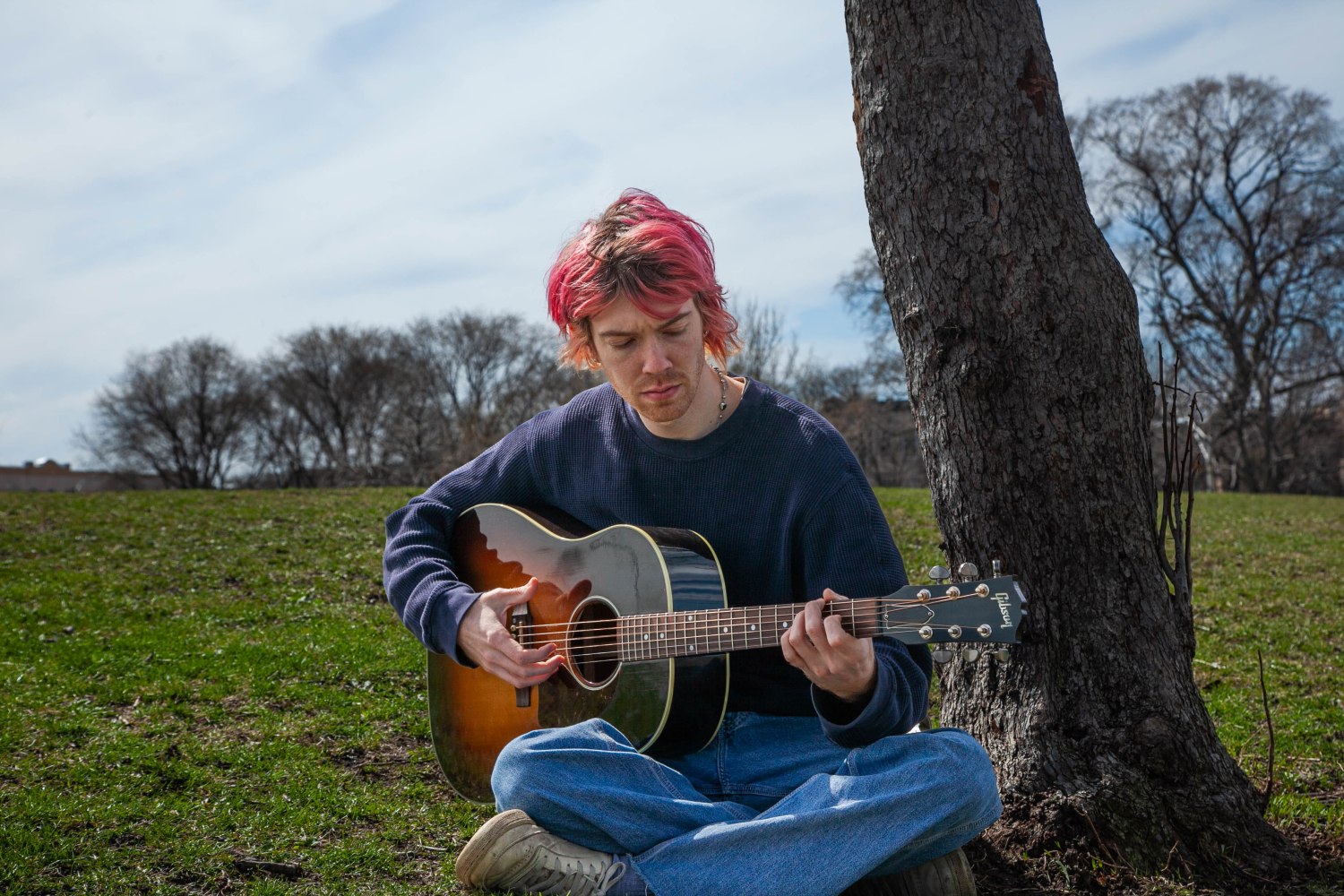
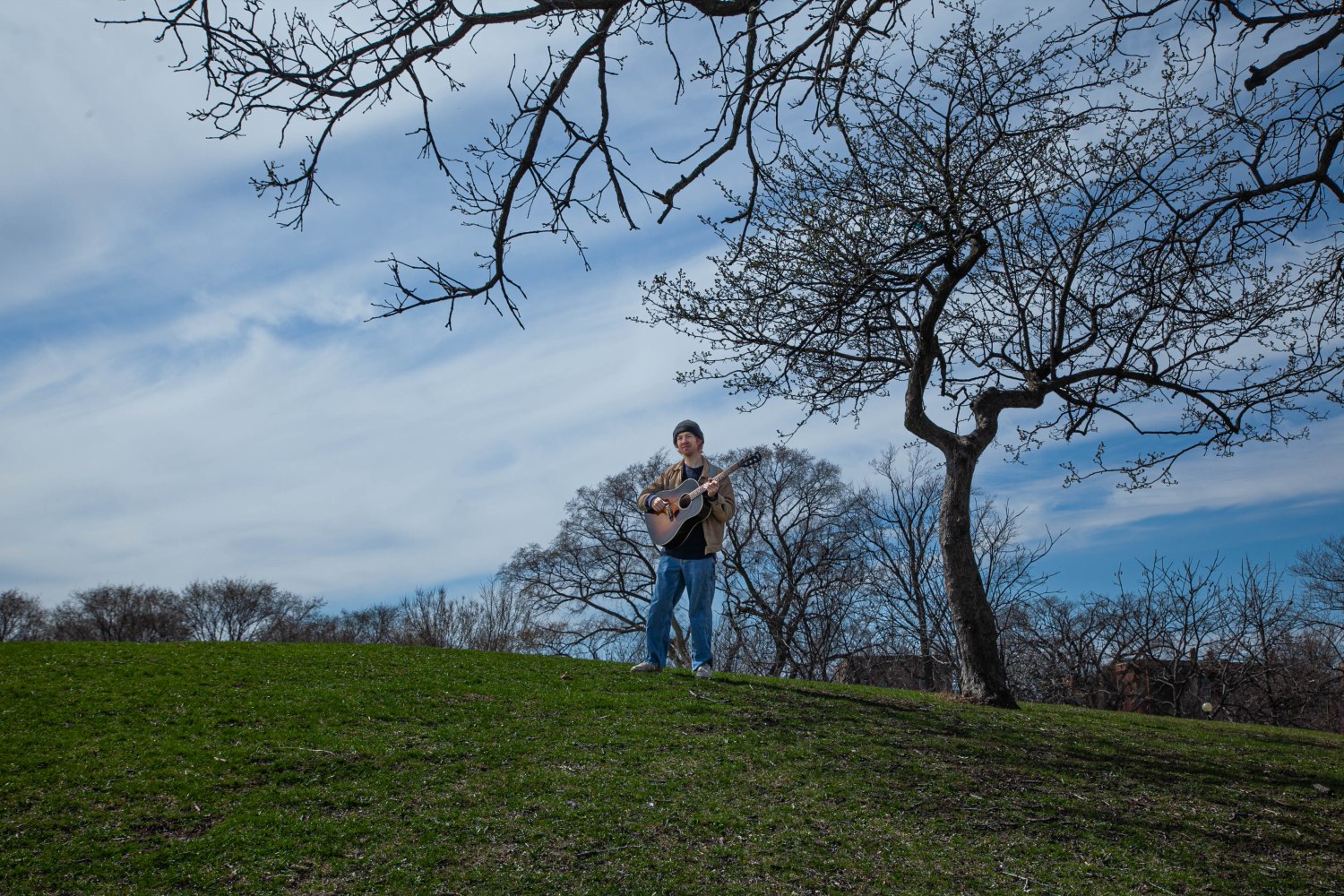
    Favorite Haunts is the recording project of LA-based artist Alex Muñoz, who has been releasing art under the name since his initial recordings back in 2020. With an extensive collection of albums, including some from the Favorite Haunts Sewing Circle (a live group configuration of LA creatives), Muñoz makes an effort to build a unique life within each collection of sounds that he discovers, honoring each happy accident as if they happen for a reason. Favorite Haunts recently released their latest album titled Floral Pedal, finding Muñoz sharing his most reflective and collaborative piece of work to date. After finding a floral designed loop pedal, “covered in a thin layer of dust and weighing as much as a brick”, the way in which this pedal opened up new layers of understanding – what are the stories from which these sounds may have been coming from – became strikingly influential to Muñoz throughout the process.

    Floral Pedal is a beautiful collection of recordings, building little intrinsic settings from found samples and intuitively formed instrumentation. It’s also a strikingly intense album, not in any kind of sonic display, but rather from the strength of presence, following an individual’s ever shifting connection to the environment that surrounds them. It’s a meeting of ghosts, the old and new relationships in our lives, of indescribable beauty and momentary memorial lapses. Even the thin layer of dust becomes a lens of discovery into a different place – who we are and who we may be if the bigger picture was as easy to shift as the dust that we hold – that even our existence itself is a happy accident worth celebrating. 

    We recently got to talk to Alex Muñoz about Floral Pedal, discussing how the record came to be, finding inspiration in whatever is around you and embracing the magic that is right in front of us. 

    Tell me about this floral loop pedal. Where did you find it, what were your first experiences with it and how did it come to shape this record?

    For a while I had been wanting to get a loop pedal to try improvising live after seeing Dustin Wong play a couple shows around LA, and was inspired by his way of looping guitar live. I had been wanting to change up my live set from strictly samplers to incorporate more guitars since some of the music I’ve been making/releasing lately is getting more guitar based than my previous ambient/sample based stuff. This past December, a buddy of mine from Colorado was selling some pedals on his instagram stories and I saw he was selling the Line 6 DL4 for a good price, so I decided to buy it! The DL4 was the loop pedal I had my eye on the most, since I’d seen some of my musical heroes using it here and there; Lightning Bolt, Nick Reinhart, Battles, etc.

    It’s such a unique piece of gear with so many interesting features, like it’s supposed to mainly be a delay pedal, but people use it as strictly a looper mostly. It has a function that speeds up the loop or slows it down, depending on the mode you record it on, and combining loops at different speeds can create an amazing array of shimmery, melty, twinkle-y sounds! It also has a reverse function (with 2 different speeds as well), and has a button to play the loops manually, kinda like a sampler! These are things I discovered while messing around with it and watching YouTube videos to learn more, haha.

    The very first thing I recorded with the pedal was the track “thru the woods”. It started as just another doodle/test, and the loop sounded cool to me, so I recorded it and kinda kept adding layers to it as the track progressed. There are about 3 or 4 different guitar riffs in that one track, that are just layered on top of each other until it sounded full and nice to me. I just used the voice memo app on my phone propped up to my amp to record it (along with all the main loops on the album). Those cool little functions really helped shape the sound of the album, they’re all over the record.

    I was very intrigued by the singular word you used in parentheses when describing this pedal – the word magic. What parts of these recordings would you say came from magic? How do you interpret that word in your relationship to creativity? 

    I believe music is magic, like, it comes from the weirdest, most colorful parts of the human brain and brings people so much comfort and connection. It’s a very spiritual/holy thing to me. I’m not a trained musician by any means, everything i’ve learned is by ear or picking up from friends and other musicians along the way, I know very little music theory and cannot read music. So when I’m working on a track or improvising, and I play something by accident that ends up sounding cool, it almost always piques my interest, so I run with it and use it. To me that is magic, that accidental note or sound wanted to exist and found a way to use me as a vessel to escape into the world. I’m here for it and love that way of interacting with music and art as a whole. I’m super into “happy accidents”. Happy accidents are what this album is pretty much made of! I also believe that layer of “dust (magic)” were little particles from another place I had never been to (Colorado), that might have found their way into the DNA of the music, physically and spiritually. It was covered in adventure and the essence of Colorado!

    That’s so interesting! What parts of these songs felt like your own adventure? Living vicariously through this dust, did this project influence your personal ideas of presence and environment? 

    It’s funny you say my own adventure, because while recording the album, I started to slowly imagine this surreal and psychedelic adventure using the song titles, possible track order, and sounds of each track. The “floral pedal” is kinda this loose concept in the story, but I was thinking of it as a colorful little glowing magic box that emits nice music, that our main character finds on the ground near the entrance to the woods while riding their bike. They decided to put in their backpack, thus being the catalyst for the whole adventure. So the story kinda sprawls out from there and forms a loose narrative. I’m inspired by a lot of folklore and also adventure stories, like The Odyssey by Homer, and how the classic story structure and tropes find their way into modern storytelling. Like for example, with the movies “O Brother, Where Art Thou” & “The Warriors”, etc. I wanted to create my own fairytale adventure type story to dive into, and let my imagination run wild while recording. I actually haven’t really told any of this made up lore to anyone other than to a couple close friends, and now y’all here! I hope to maybe make a little zine or something later, to go deep and explain what every track means! That’ll be fun I think. It would all be too much to explain here, so all I will say is, it’ll be a surreal fantasy adventure and the song titles are basically the theme of each “scene” from the story. Sorry if that was kind of a detour from your question a little bit, haha

    Were there any ways in which you approached this project differently than in the past? Did you want to focus on any new techniques or challenge yourself where you were already comfortable? 

    Yeah absolutely, I approached this project in almost an entirely different way than other projects, except maybe my previous album “Music from Big Green” which was recorded on my phone and mixed/layered via SP404. I started recording these loops on my voice memo app in January, just as a way to document the ideas, and I was only really planning on maybe just making a little EP out of it and that’s it. Then I just kept recording more and more of them, and having fun with adding samples and other stuff. It just kind of blossomed into this garden of accidents and colorful little pocket symphonies. After having a large collection of recordings on my phone, I started feeling like maybe I can add more to these recordings. I reached out to my friend Johnny (The Fruit Trees) who I have collaborated with in the past and is also a member of my group Favorite Haunt’s Sewing Circle, because he had offered after hearing some of the recordings, to maybe overdub some saxophone or clarinet. I liked that idea and recorded a new track for him to play over which became the track “Mystery Spot/Enchanted”. It kinda grew from there and we ended up working on adding more elements to the entire album together. I like working with him because I think we are both sometimes reading each other’s minds, and know exactly what to do next. We’ve shared creative epiphanies more than words at times when working together, which is cool and special to me. I recruited more awesome friends (Fletcher Barton, RJ Wilks, Stress Actual) to overdub various instruments to more tracks, and it really started to feel like it was becoming this living breathing organism of an album.

    Around the time of recording I was also listening to Pet Sounds a lot, so you can probably tell where my head was at during this time. Like, “let’s add everything we got to this thing”, and getting excited about it when we listen back to it after recording. I felt like a kid making a fort with my friends or like when people band together to make a huge Rube Goldberg machine in their backyard. This process was still totally new to me at the time, and it presented me with more creative ideas than challenges I’d say. The way I made my music previously was honestly more challenging and sort of limiting at times. I would usually use a lot more samples and some phone recordings still, then put them all into my SP404 sampler and kind of use it as a workstation, slowly layering things on top of each other. That process takes forever but I think it helped me learn how to make something with limited gear (I usually don’t use any DAWS). 

    What sort of paths did limiting yourself lead you down? Was it a challenge for you to limit what you used?

    Having those limits early on has definitely pushed me to want to branch out and try making music differently. I’d been making my music using that sampler method since about 2019 or so. Since then I’ve interacted with so many different musicians that have inspired me with the ways they write and record their music. It all just looks so fun, and my old method was starting to bore me a bit, because the music I have been wanting to make has been evolving. This project started as just me making lofi beats in my room in 2019, using pretty much only samples, and not really showing them to anybody. Now it’s really expanded, and I’m collaborating with more people, and things have felt a lot more free with how I can express myself and get creative through this project. I think I was feeling pretty stuck around this time last year, with what I wanted to make, how it sounded, and how I wanted to make it. I’m really glad I kept making things regardless of all those feelings, and I’m really grateful for where I’m at creatively and for the folks who have found my music thus far and told me they resonate with it. I think the biggest challenge for me overall was actually letting go and letting the music have a life of its own in the world and other people’s worlds, since this project started as such a private thing for me to occupy my time during the pandemic. You are actually also the first person to ever write about my music, which means a lot to me, and realizing where I am in my music life now really reminds me that I’ve grown a lot since my socially anxious pandemic hermit days.

    You offered a long list of names and ideas that you gave gratitude towards for making this record happen. In what ways do you interpret inspiration for these recordings? 

    Inspiration is all colors to me. Like, the type of reverb used in my favorite song that week is one color, the meal I ate for breakfast that morning is another color, a movie I saw a couple days prior is another color. It all sort of comes together for me while making something, either consciously or subconsciously. Nothing feels like it goes to waste. This album really felt like I tuned in to what inspires me, recent happenings and from my childhood in particular. Every track really felt like an appreciation of the things that have made me who I am today. The way a sour note on a guitar chord somehow ended up making the loop remind me of the soundtrack to the movie Coraline, or how another loop started giving me the same feelings and imagery as walking through the South Pasadena tunnels (that were covered in vines and surrounded by trees when exposed in certain areas) with my pals as teenagers many years ago, or when my friends and I would wake up early after hanging out late that night, and take an early morning drive into the Angeles National Forest and listen to Bryter Layter by Nick Drake. Just magical moments and media from my life. Stuff like that was coming up a lot and really inspiring during the making of this album. I’m really happy that I got to translate those moments of my life into this music! Also, as for the long list of inspiration and special thanks, I was inspired by the inside CD booklet of Person Pitch by Panda Bear, he includes a very long list of his favorite artists and inspiration for the album. When I saw that, I thought that was awesome. I can’t stand gatekeeping.

    You’ve previously mentioned that this is the first release that you actually hope people listen to and hold in their hearts. What kind of life do you hope for this album to have once it’s out of your hands and in the world? Is it easy to let projects go?

    Yeah, I didn’t really mean that as in, like, that I didn’t care at all before or anything. It’s just with this album, I made it with the hope of bringing comfort to people, because the process and sounds were also bringing me so much comfort. I just really wanted to share this whole experience. I wanted to make something that I wanted to listen to, and for others to want to listen to as well. Which is actually a first for me, because I think before I was just making stuff because I had ideas that were more like “wouldn’t it be funny or cool if ___” and just making it just to make it. Which was still fun and fulfilling, but lately I’ve just wanted to focus on making things with more intention, to bring people comfort and connection. 

    This album was very easy to let go into the world. I can’t wait for it to be out. This album feels like a school project I remember making in the 1st grade, where I had to make a little diorama of a rainforest. I was so proud of it and excited to bring it to class the next day! This feels a lot like that rainforest diorama, in more ways than one.

    Every Wednesday, the ugly hug shares a playlist personally curated by an artist/band that we have been enjoying. This week, we are pairing our guest list with our feature of LA- based artist Alex Muñoz of favorite haunts.

    About the playlist, Alex shares;

    I put this playlist together, like I have a ritual of doing with every project I work on, as a way to stay inspired and focused when im not at home working on the project. This playlist consists of music that I’d been really enjoying at the time of making the album. Some of the music has been in my constant listening rotation for almost a decade. There are a couple tracks in particular that I wanted to mention:

    1. Ethio Invention #1 by Andrew Bird

    This piece came into my life after a long night of hanging out, driving around los angeles with my friends in maybe 2018(?). We were on our way to our friend’s place to crash for the night, and my friend Nate played this song on the aux, and I was absolutely floored. The combination of being deliriously tired after a long fun day and driving through the hills of Los Feliz in LA, overlooking the city below, clad in flickering lights…was the perfect moment. That moment still continues to inspire my art.

    This track basically inspired the whole album. Starting with the pizzicato style plucking of the strings of his violin, a sound that i’m obsessed with, to being able to hear him clicking his loop pedal in the recording. The track eventually gets so dense with loops and effects layered on themselves that it turns into ambience. A perfect piece of music.

    2. Miracle by Jurassic Shark

    Jshark was a local band from my hometown that had a huge impact on me. They lived more or less down the street from me. They were my first diy show. They are the reason I started making music, recording, and playing shows, etc. They had something really special and unique that set them apart from the surfy so-cal bands at the time. Their songs were beautiful and everytime they played, they filled the room with reverb, energy, colors, and sparks. They also sometimes used to play with stacks of books on their amps, and patterned fabric on their amp faces which was funny and awesome to me. Truly a magical band!

    Listen to Alex’s playlist here;

    Floral Pedal is out everywhere now!

    Written by Shea Roney | Featured Photos Courtesy of Favorite Haunts

  • First Rodeo Crank the Volume on New Single “Nothing” | A Deep Dive

    April 15th, 2025

    First Rodeo, the collaborative songwriting project of Tim Howe (Vista House, The Great American Commute) and Nathan Tucker (Strange Ranger, Cool Original, Pontiac Flare), return today with a brand new single called “Nothing”. This track is the first piece of new music from the duo since their previous self-titled LP back in 2022, and also the first glimpse at what they have been working on in that time as they also announce their sophomore LP titled Rode Hard and Put Away Wet, out May 16th via Bud Tapes.

    Breaking away from the alt-country-fueled blaze that was their first record, “Nothing” is a drum looped escapade into the tricks attuned by years of collaboration from the well-versed duo. With Howe based in Portland, OR and Tucker in Philly, the songs that make up Rode Hard and Put Away Wet were workshopped through months of sending ideas back and forth through the internet. From the gates, there is a fitted extravagance that lives within the two-chord progression, as Tucker and Howe flip-flop on lengthy and rhythmic verses, playing into that inflection of spoken verse that riddled 90’s rock radio and nostalgic sonic remedies. As the chorus finds the grove, alleviating the rhythmic verses with a ruthlessly catchy melody and a wall of large guitars and a harmonica-ladened atmosphere, “Nothing” makes an unexpected outlier in the preconceived notions of their style, yet acts as a marker of the jovial comradery that occurs when making music that is just flat out fun.

    We recently got to ask Tucker and Howe a few questions about “Nothing”, diving deep into the track and the collaboration that makes up First Rodeo.

    You described this song as an anomaly within your catalog, but now it is one of your favorites. What were your initial feelings as it began to come together? Any hesitations, or did it just feel right?

    TH: I think it’s safe to say Nathan and I were both hesitant throughout the process that a song like “Nothing” could work coming from us. In many ways it’s not only a departure from the rest of the album but also from our songwriting comfort zone. We were really nervous that we weren’t going to strike any kind of balance and the song would tip into a rap-rock zone that we weren’t comfortable with. What I love about this song is that I got to see it through with Nathan from gestation, which is rare, since we live on opposite sides of the country, but I saw Nathan come up with the first few chords, the melody, long before there were words, and then see it slowly develop. In that way, it felt like a microcosm of the band itself, in the way we both had an inkling of what we wanted this First Rodeo thing to be, and slowly got to put arms and legs and toes on it. 

    NT: Nearly six minutes is also just sort of long for a pop song built around a four second drum loop. That was always the vision but I was worried it would get boring if we weren’t careful with the production. I think when Tim added the acoustic guitar part that happens during the refrain I was like, “OK, we can do a lot of different things with this one basic idea.” 

    The concept of radio rock plays such a crucial role in a lot of people’s memories and relationship to music. What sort of aspects of this idea did you want to embrace on “Nothing”? Were there any specific memories you were pulling from to achieve this sound? 

    NT: To be honest that wasn’t really the inspiration for the song, just kind of where it happened to end up. The initial germ of the idea was just the two-chord loop that starts the song and the basic vocal pattern that in my mind was lifted from Isaac Brock or something. But then as the recording started coming together, I realized it was as much Third Eye Blind—or even like LFO or something—as it was anything else. I also just can never resist a big chorus. 

    TH: The hook feels so quintessentially radio rock to me. I’m always impressed when someone can take a simple phrase that maybe you’ve heard a hundred times in numerous contexts and reorient the listener’s understanding of that phrase. That’s what makes this one feel so big and “radio-y” to me, just the way our verses are long and wordy and specific and the chorus opens up to this arena for everyone. 

    Working with a country’s worth of distance, how has your relationship as creatives changed since your debut LP? Especially playing together for over a decade now, were there any sort of things were you bringing out of each other or pushing for on this record?

    TH: What I really appreciate about Nathan is how he goes in with a ton of vision. I think we both do this to varying degrees; with First Rodeo we’ve been ruminating on how the sound should change album to album since we started passing demos back and forth. Nathan has always had a pretty specific understanding of what this second album should sound like. The first album was a bit more straight-forward alt-country, this one is a bit more chopped and dismantled, a bit more solemn and vast. When it became clear we were going to be making a lot of this one happen cross-country, we wanted to be able to hear the distance in each song.

    NT: It’s funny, I think for a lot of people the challenges of doing a cross country band would be a reason to say, “the stakes are low, we can just mess around.” Unfortunately I’m an annoying try-hard and I like to have a plan. Doesn’t mean you have to stick to it—and in some ways the plan on this one involved a lot of recording ten things and deleting 9—but I wanted to see what we could make by at least setting out to explore a more focused sonic and emotional palette.

    You can listen to “Nothing” out everywhere now. Preorder Rode Hard and Put Away Wet as well as a cassette tape out May 16th via Bud Tapes.

    Written by Shea Roney | Featured Photo by Sam Wenc

  • Salt Chunk Mary Shares Do You Feel Warm? | Debut Profile

    April 14th, 2025

    Salt Chunk Mary is the moniker of Asheville-based artist Leslie Buddy, who has recently shared with us their debut EP under the project called Do You Feel Warm? As part of several other local bands such as Star Anise and Tanner York Band, Buddy’s sonic curation on this EP builds off of that roughly edged sound that has put the Asheville scene on the map the past few years, yet finds its own path defined by the curiosity and explorative nature of the young artist. 

    On the surface, Do You Feel Warm? is a textured environment, as Buddy makes sure not to corner any ideas that may slip out through its brief, yet inquiring existence. Giving space to the creepy crawlies that fester in this type of engaging and freaky-folk laments, Salt Chunk Mary lays the groundwork for more to come in the near future. 

    We recently asked Salt Chunk mary a few questions about their debut EP Do You Feel Warm?

    You are pretty involved within the Asheville scene, playing in other local projects like Star Anise. What sort of things did you take or were inspired by from your surroundings that you brought into writing and recording these songs, whether consciously or subconsciously after the fact?

    The writing and recording occurred during two very different times in my life, which I think had a really interesting impact on the final sound of the project. Most of the songs were originally written when I was a teenager, prior to my current level of engagement with the scene, so they don’t have much direct influence from any other local acts. I was listening to a lot of Black Country, New Road at the time, and Isaac Wood’s lyrics on their second album in particular informed a lot of my early songwriting. It wasn’t really until I became involved with the DIY scene that I was inspired by my peers to record the songs to be released. The recording happened much more recently, and I found myself drawing inspiration from more local acts, most notably Sayurblaires from Charlotte (now Motocrossed) with her noisy, digital soundscapes. Aside from direct musical influences, the geography and nature of WNC is always a persistent beacon of inspiration for me.

    This EP takes on different soundscapes, environments and sonic fixations in such a brief amount of time. What was the initial vision with these recordings and did you develop or find your sound within the process? 

    The final sound is definitely a combination of an initial vision and a process of experimentation. At the time of recording and producing (and still to this day), my biggest musical obsession was The Microphones, so in the spirit of Phil Eleverum, I wanted to find the sound through an explorative process with whatever supplies I had access to. The original arrangements/demos were recorded on my Korg D8, with a PO-33 for drums and I was really satisfied with the sound of those demos. Some of the takes from those demos actually made it onto the final product, most notably the drum machine part in ‘The Stitch’. I would also attribute the sound of the project to my wonderful friends Max and Oliver (The Weights), the duo who produced, mixed and mastered the project. We spent a lot of time in Oliver’s basement just micing random things and running them through effects to find interesting sounds. Many of the electronics across the EP are also sampled from an hour-long improvised session running a broken Omnichord through a bunch of guitar pedals. The sound was found in the process because it was my intention to do so. 

    There are a lot of references in your lyrics towards how fragile whatever it is that is holding relationships together can be. Was there a thematic throughline that connects these songs? What sort of stories or feelings did you want to get across?

    I prefer to let the lyrics speak for themselves, but I will at least say I sort of see the project as a series of snapshots of the dynamics of relationships/friendships from varying perspectives, and ending with the question “do you feel warm?” ties all of those components up. I think it is something really important to ask yourself out of self respect. To reflect upon your connection with someone, identify what it is made of, what keeps it intact, and what the implications of that are for both of you. Most of the time I am writing a song, there is really no telling what the subject matter will be. It just becomes whatever it becomes, so I’m pleasantly surprised with how concise the project ended up being.

    I am curious about your fascination with insects and their very nature on this earth. Does this carry over into any creative aspects of your life?

    Growing up, my older brother was an aspiring entomologist, so I have been learning a lot about insects for about as long as I can remember. I suppose he passed the fascination on to me. I have always been amazed with the various ways in which different organisms interface with their environment, and when songwriting, I often find myself drawing parallels between those interactions and how humans interact/connect with each other. Beyond lyrics, I often return to insects to inspire visual art and even instrumental arrangement. To me, they are so strange, angular, diverse, almost robotic or alien, yet simultaneously very organic in a familiar and comforting way. These are all things I seek to achieve in my sound.

    When you released this EP you said you were already looking to move onto the next project. What can we see coming from Salt Chunk Mary in the future? 

    These songs were written a long time ago, and I’ve creatively evolved a lot in that time. I have a lot of ideas in development which will most likely come together on a full length album within the next couple of years. As for what to expect, my sound is starting to split off into two directions. Some of my songwriting is gravitating away from my usual ‘dark’ or ‘sad’ tone and toward lighter themes and pop sensibilities. For example, one of my favorite newer songs is about one of my sister’s stuffed animals and another is just about how awesome it feels to go outside. These songs are very simple and traditional in structure. On the other hand, I’m also continuing to explore darker tones, especially through long, multi-phased compositions inspired a lot by post-hardcore bands like Sprain. My goal for the album is to effectively fuse these two very different creative directions.

    You can listen to Do You Feel Warm? out everywhere now.

    Written by Shea Roney

  • Buff Ginger Dredge Up Beauty Through Destruction in “i found a bug” | Interview

    April 11th, 2025

    At one point in our conversation, Ry Minter informs me that “bugs are up right now”. Though the city’s recent teasings of spring have offered optimal conditions for a pest soiree, what Ry is referring to has less to do with the minor ant situation in my kitchen than it does a cutesy caterpillar on the cootie catcher tape currently dwelling in my cart on Bandcamp. From the quirky computer generated creature on the cover of “This is Real” to (T-T)b’s “Bug on the Ceiling” (and I supposed if we want to expand the conversation to insects there is that harrowing final track on the new Dutch Interior record titled “Beekeeping”), the infestation is a major win for eccentric music enthusiasts everywhere. Bugs are up, and today, so is Buff Ginger, with the release of disorienting and delightfully eerie new single, “i found a bug”.

    Ry has been making music as Buff Ginger since 2021, although transforming her high school guitar hobby into the dopamine hit of crunchy, glitched out textures and dizzying melodies that the project boasts now was a bit of a learning curve. “I wrote this EP in 2021 that’s now gone from most platforms. When I hear it now I just hear weird indie rock,” Ry tells me of Buff Ginger’s earlier years. “After that I switched from GarageBand to Ableton, and I just learned a lot more about music production. I got a tape machine and a tascam and I also just bought more pedals. It took like a year and a half to obtain a lot of equipment and knowledge. New Jokes was the first thing I released where I was like, this is how it’s supposed to be, this is how it’s supposed to sound.” 

    “i found a bug” both merits this badge of “how it’s supposed to sound” and severs Buff Ginger from a specific sonic niche. While it trades the animated and jaunty nature of New Jokes for a smoothed over, melancholic feel, its delicacy does not come at a cost to intensity.  The track paints an elaborate narrative, commencing with the line “i found a bug” over crisp acoustic chords, though the storyline grows increasingly unsettling as the surrounding soundscapes thicken, eventually blending hazy layers and Ry’s vocals into one. “I was harboring a lot of anger at something, and it just came out through that bug”, she tells me. Although the buildup in “i found a bug” presents as more subtle than the immediate potency of “Punchline” or “Giant Steps 2”, it fosters an equally chest-tightening, hair raising experience, rooted in the tangible emotion and distorted streams of enigmatic lyricism that Buff Ginger maneuvers so well. 

    We recently got to sit down with Ry to discuss Instagram Reels rabbit holes, playing to a still room and the inspiration behind “i found a bug”. 

    Manon: You mentioned this single is a bit different than your past music. What sort of sound were you going for, and what inspired it? 

    Ry: This one was interesting because it started off as one really clean track with a lot more acoustic guitar and I tried to do a lot of destructive editing to it, basically just reversing and pitching and kind of destroying a lot of the recordings I had, just compressing the whole thing through the task cam. I just had a lot of fun with it. I was listening to a lot of “Waltz #1” by Elliot Smith, which is kind of an interesting pick, but I really wanted to make a song that was eerie and heavy but also pretty and light at the same time. Then it turned out nothing like that, and now it’s just kind of the way it is. 

    Manon: I feel like you did nail that heavy but also light and pretty thing. I think the single is super heavy, not in a harsh way but in a, “I can feel this in my chest” way.  

    Ry: That’s definitely what I was going for, that chest feeling. Because mine does that all the time, so it’s kind of like I’m sharing it with people

    Manon: Tell me about this bug 

    Ry:  I think I just wrote the first two phrases of the song in the lyrics and I was like “oh, this is kind of kitschy”, and thought maybe I’ll rewrite it, then it turned into this really elaborate thread. I think I was harboring a lot of anger at something, and it just came out through that bug, through me finding a bug and killing the bug and being really sad about it, which is sort of the thesis of the song. 

    Manon: I like how elaborate it gets, I think it fits the pacing and feel of the song. What’s the sample you use at the beginning? 

    Ry: I was really hoping you were going to ask this question

    Manon: Of course 

    Ry: Do you ever get really bad music on Instagram Reels ever? Like do you ever go down that rabbit hole? 

    Manon: Yes but I feel like, not enough. I mostly see the really good, “bad” stuff when someone else sends it to me

    Ry: That’s good. I’ve gone way too deep and it’s just all I get now and then a lot of them started being Star Seed related. It’s people who think that their soul is from an alien, but their body is a vessel from space and there are a bunch of different types. It’s basically zodiac signs for people who are like, “this is not enough. I need more”. 

    I was really interested in what the whole community was like, so I went down this big rabbit hole one night, just researching and I found this semi adjacent thing, it’s this guy from the 80’s who’s a prophet for this entity called Kryon. He still does sermons every Wednesday but if you go to their old website that was made in the early 2000’s, don’t know if the correct term would be sermon, but basically every talk that he’s given where they all prey and summon Kryon and stuff is compiled into free to download MP3s. It’s just this huge archive of every talk he’s given, I think it goes back to 2002, all the way up to 2025. So if you’re looking for some guy talking about something really intensely, or something that has semi religious cult-y undertones, that’s the perfect place to go because it’s all just free, and you won’t get a virus… I think. I don’t think I have a virus from downloading any of it…I hope not. 

    Manon: How long did it take for you to find the one you ended up using? 

    Ry: Longer than I anticipated. I was listening to a lot of them and a lot of what he was saying either didn’t fit what I was going for or some of it was… problematic. So it was a lot of digging, I downloaded two and listened all the way through and when I heard the “I’m hearing you, plead with me”, I was like okay thats the one, that’s perfect because it can kind of crescendo into a very intense feel. Sometimes it’s fun to just dig, once you start looking for samples, it never feels like enough. Like “oh this one has too many views”, or “people will already know what this one is”. You have to get niche, and I think I went too far but I guess something came out of it. 

    Manon: Have you played the single live yet? 

    Ry: I was supposed to, and then I ended up getting sick before the terraplana show which was really sad because I love them, they’re so good. So we haven’t yet but I’m excited to, I think I’m going to use an acoustic electric for it. 

    Manon: Do you have a favorite show you’ve ever played? 

    Ry: It’s still crazy that I played this show because it was at a time when, personally, I don’t think the music was that great. We played with Full Body II at Trans Pecos, it was an oversold show so it was super hectic but really fun. There was another one recently that was really good, I have a hard time remembering because I have such bad stage fright, so I usually kind of black the whole thing out and then I wake up and I’m like, I hope that was good. I think the Glare show at Market Hotel was really fun. Also the birthday show was super special, just because it was snowing outside and it was all my friends and favorite musicians playing, and then everyone had a snowball fight afterwards. I think that one actually might be my favorite show ever, not just because I put it together, but because it was a very whimsical and magical time. 

    Manon: Yeah hard to compete with a post show snowball fight, that’s so special. Also, you mentioned you get bad stage fright? 

    Ry: Yeah, you would think eventually after doing it so many times it would eventually go away… well it hasn’t. It’s still there. But I just kinda muscle through it a lot of the time, which with a lot of things isn’t the healthiest thing to do, but playing a show is really fulfilling and always turns out to be super fun after, as long as you’re not too critical of yourself, and it feels really good when people enjoy the music. Even if the people aren’t enjoying the music, we have played to a still room many times and it’s kind of fun because if everyone is completely still it makes you want to do more. 

    Manon: Like a dare 

    Ry: Yeah, and it’s fun because in a way it kind of makes you angry, and then the anger fuels the performance. I remember there was one time, our second or third show we played at Berlin with this old head punk band and there were like forty to fifty 60-year-old punks from the East Village just standing around in the room. We played last, and the band everyone was there for went right before our set, so it was just like two old punk heads and then my parents and I was just rolling around on the floor for no reason. Like there’s not a song where I needed to be doing all of that. 

    Manon: I mean sounds like perfect time to practice your rolling

    Ry: It was. I got really dirty, it was a good time. 

    Manon: I know you said there was some Elliot Smith inspiration for “i found a bug”, but what would you say are your favorite artists or general music inspirations lately? 

    Ry: That’s so hard, I feel like it changes a lot. Recently a lot of my friends have been really inspiring me, like Crate and Shower Curtain. They have been doing super cool stuff and the demos that I’ve heard from both of them are really, really good. So I think that they’re a main, not direct source of inspiration, but they make me want to make better music you know, keep moving.

    You can listen to “i found a bug” out everywhere now!

    Written by Manon Bushong | Feature Photo Courtesy of Buff Ginger

  • Finnish Postcard Carve Out Their Own Path on Debut Album ‘Body’ | Interview

    April 10th, 2025

    In the most fulfilling sense of the meaning, Trey Shilts and Leo Dolan found each other. And since then, fronting the LA-based co-collaborative project Finnish Postcard, Dolan and Shilts have created a space that is entirely of their own. Having been part of several other bands and established solo projects through the years, as well as taking inspiration from the extensive LA underground, surrounding themselves with a calvary of creatives, Finnish Postcard has become a force of understanding towards where they are at in life, both creatively and personally.

    As of today, Finnish Postcard is sharing with us their highly anticipated debut album titled Body, released via I’m Into Life Records. These songs don’t represent moments that just pass by, but were released already having been lived in. The album as a whole, connected through textured layers, developed grooves, delicate melodies and colorful spouts of experimentation, each track wholeheartedly animates the tiny yet tricky grievances of growing up, where feelings of comfort, love, anxiety and loss become so familiar with each listen, as if they are our own stories we are listening to.

    We recently got to catch up with Finnish Postcard to discuss the new record, how the project began, redefining what makes an American band and the Finnish Postcard video game. 

    Photo by Colin Treidler

    This interview has been edited for length and clarity

    Shea Roney: We’re approaching the eve of your debut LP! How are you guys feeling about it all?

    TS: I’m really glad that it’s coming out so soon after we finished it. That’s one of the perks of working with a tape label like I’m Into Life. You see people putting out records two years after they finish them, and they’re kind of like, ‘I don’t really care about this anymore’. So I’m really excited for it to come out.

    LD: That’s something I like about not being embroiled in the industry, even though that is something I would want at the end of the day, I like to have less mediation between when we make the music and when we put it out, and it felt important to to put it out so soon. I feel like we’re both kind of still in the weird no man’s land, where the album’s announced, but it’s not out, and there’s so much work left. This just took up such a giant chunk of my brain for so long, and I feel like I’m at a place now where the release is less painful and less stressful and more just a fun thing. 

    SR: I can imagine that there’s gotta be so much momentum that you feel going from the recording process to releasing it. Were releases something you were often nervous about before?

    TS: I think there was just a learning curve, and figuring out how we wanted to do it our way.

    LD: We’ve both put out a lot of music across a lot of different types of bands before we started Finnish Postcard, and releases would always just kind of expose you. It’s like the music that you make can be perfect in your head until it’s out.

    TS: There’s just so many weird things about how music works right now, and how the industry has developed recently, where I kind of feel like we’re inventing it for ourselves, you know, how we would want to put something out. We wanted to honor the songs and not just have it be a post on the story. We wanted it to be special.

    LD: Because it feels special to us.

    TS: And I think we’ve figured out how to do that for us. The rollout of this album to me so far really feels very particular to us, and very right for the album.

    LD: This band doesn’t feel like the other bands I was in before, or even my solo project. It does feel more special, and I just like what we do more, too. So it’s just a balance between accepting that you have to have a certain level of detachment because it’s art, and once it’s out, people are going to be forming their own relationships with it. And it’s not something you could control, but also, how do I put this thing out in a way that feels like I gave it enough respect in my life?

    SR: The ethos of this record, and really this band in general, gives a nod to the fact that you two found each other. As this project was beginning, what did you two see in each other when you met and how have you progressed that into the music that you now make together?

    LD: I saw a lot in Trey, especially in his general approach to music. We met in a really awesome way where he was playing a set of solo instrumental loop based music at an art gallery, and I was there and watched him for a long time. I approached him afterwards, and basically my ulterior motive was to get him to make music with me [laughs].

    TS: Leo asked me to talk about a record I had just put out with my solo project on his radio show on KXLU. I went over to his house and we did a pretape of that, and then we just kind of chilled and jammed. Literally within 2 months of meeting we moved in together.

    LD: I think what I saw in Trey was that he had his sights set a lot bigger, and he was just willing to really put in a lot of work. Which is how I felt, too.

    TS: There’s kind of a difference between people that want to be in a band because it’s fun to be in a band, and then people who have just different intentions. You have to be down to do a lot of the really unfun stuff, like booking shows and practicing and making sure that the songs are really right, giving everything enough time and attention. I just found myself in bands where it just didn’t feel right, and I think Leo and I have a really similar musical kinship and a similar vision, and are both really just willing to see this through. 

    LD: There’s a difference between people who want to be in a band, and people who have to be in a band. There’s nothing wrong with wanting to be in a band. If you want to be in a band, you should. But that’s not how it felt. That’s never how it felt for me.

    SR: With this musical kinship that you two have garnered, in what ways did you challenge or push each other when it came to your songwriting? 

    LD: We both exposed each other to a lot of new music. I was locked into writing in a certain type of way that I felt was reaching the end.

    TS: I think we helped each other meet in the middle in a place that we were happier with than where we started. It was less of a process of challenging really, and more of a process of turning each other on to shit, and being like, ‘we should make stuff that sounds like that,’ and discovering a new space in music to inhabit than what we did before.

    SR: Did you guys kind of subconsciously know you’d be happier in this middle than where you were previously at or was it something that you had to figure out and work towards?

    TS: I don’t feel like there was really any resistance from me. I was just like, ‘thank God. With this guy, we can get somewhere interesting’.

    LD: When we met, I was at the end of a couple different energy cycles in my life where I felt like I had kind of exhausted all the ground I’d covered with my solo music.

    TS: It was a weird time for me, too. I had this long term girlfriend that I had lived with for years, and we had decided we’re going to break up, and I was going to move out. Then there was a month where I was needing to find a different job and a place, and in that month of transition is when we met. That relationship was time to build something new. It also just so happened to coincide with meeting all these bands and friends that are making music in LA. I feel like it’s the right time for this album to come out, when our colleague’s bands are making really cool shit that I love. I feel like we kind of fit into that picture in some way.

    SR: One thing that I was intrigued by on this album was that you made an effort to not filter anything out. Can you explain to me what that process looked like, what it meant to you and how did that push the way you approached this album, both musically and personally? 

    TS: To me what that means is that there were no moments where we thought that we should take something out because it’s not cool or that we probably shouldn’t go there. The album, as it exists, is exactly what we meant to say and how it was supposed to come out, and I want whoever listens to it to know that, because there might be moments on it where you’re like, ‘were they going for this, but fell short?’ No, just trust us that this is exactly what we were going for.

    SR: Was that easy for you guys, to just allow stuff to happen? Or was there a lot of hesitation that you had to combat in that process?

    LD: It’s not that it’s not easy, but I think it takes a while. Sometimes you have to sit with a decision for months. There were a lot of different approaches, like a lot of discarded pieces of music that went into this. When we were working on this album, it was not a super good period of my life. I was dealing with an injury, I was unemployed, and in a general malaise. So it didn’t feel like I had an incredible story behind this album, but more I was starting to grapple with parts of adulthood I hadn’t yet, and I feel like the album reflects that. It’s not like a dangerous album that came out of a period of living on the edge. The things that were reflected in this album, for me, felt very real and multidimensional, like the aspects of being an adult that are not always glamorous to talk about. 

    TS: Yeah, there’s no filter between what was going on and what is on the record. It was really earnest and honest.

    SR: Embracing the unfiltered stuff, did that in a way push you to understand your own grievances with adulthood? Like, if I can accept this on the record, then I can be able to accept this in my personal life or something?

    TS: I mean the answer is yes for me. I really think about my brain a lot, and what my story is and where I’m at. It’s an always turning thing and then it doesn’t get me anywhere. Then I write a song about something and then I can move on, then I’m released from whatever the thing was that I needed to get out of. Writing this music, and talking about lyrics with each other, I mean, it helped me a lot to geolocate where I am emotionally on my journey.

    LD: It’s funny, because you listen to music that I was making, you know, 8 years ago, and in a lot of ways, it sounded more autobiographical because I was writing about a lot of real world things that happened — therefore you might think it was more honest, like I’m talking about things in this very matter of fact, tactile way. I look back and I see ways that I was hiding even in there, even though it was storytelling, which is not a bad thing, music is storytelling. But I feel like with Finnish Postcard stuff, it’s a way more impressionistic approach. The lyrics, if you see them written out actually make a lot less sense, but it’s been a process of trying to hide less and make myself into something that I’m not less.

    SR: How do you think that helps put yourself out there more by embracing this style?

    LD: You gotta let the light into the dark parts of you. If you admit you got a problem with something, that’s the first step to getting better.

    TS: There’s an element of this band that is us creating this little bubble of safety together. Not even safety only, but taste —this is cool, this is lame, this sphere that we invented. And inside of that we are so free. Sometimes the truer thing, the truer lyric is the one that makes way less sense and is incomprehensible. But you hear it, and it makes the kind of sense that only songs really can. 

    LD: Writing music is not like writing poetry or prose. It’s a totally different thing that can’t be compared. There’s a lot of ways in which emotion and meaning is conveyed through music that are completely unique. I think you can’t really look at someone’s lyrics printed out and get the full picture. Once I started to realize that myself, I feel like that’s when I started writing Finnish Postcard songs.

    SR: Also, considering the experience of playing off of each other and incorporating everything that goes into a song can really open that door too I can imagine.

    LD: It’s cool to have the license to write half a song and then see what Trey has to say about it. I can totally not finish this song and just let it be for a sec.

    TS: There’s also this element of collaborating that’s honestly hard for people to understand that a band has two people, and they’re both the main person. Like, ‘it’s your band Trey, right?’ And I’m like, ‘no’. And people think it’s Leo’s band. It’s a deeply, deeply collaborative project. But it’s hard to, I think growing up under capitalism in the United States specifically, it’s really hard to not approach something collaborative with fear and to feel threatened or like you’re not getting enough of something. There was a lot of unlearning that we’ve fostered, creating an environment where I feel like I can be open and collaborative in a way that I just haven’t ever been in any other project.

    SR: You’ve also described this album as an ode to the rock shows and pseudo venues you experienced growing up. What kind of memories or feelings did you hold on to from those shows that you wanted to implement into this album?

    LD: When shows are good, especially in hard periods of my life, I would just get this incredible feeling of being like, ‘oh, my God! These people are like me.’ When I moved to LA, I was really lost and confused generally, and went to some shows and was like, ‘these are the people that I hang out with. And maybe the reason I feel so fucking weird right now is because I haven’t hung out with people like me in four months. I feel like that travels over to Finnish Postcard, too. I can be myself in this setting.

    TS: We owe so much, and really exist in a way that is in reverence to the lineage of DIY music. I remember going to this venue in my hometown that was a brunch spot where some guy would throw shows there sometimes. I grew up in a really small town, so me and the three or four other alt-kids would be there, and I just remember thinking that this is a place where difference is celebrated and you can really be yourself, and the more yourself you are, the better. It was just so different from what you’re programmed with at school or work. 

    SR: I just experienced that same conversation when a friend from Denmark was visiting Chicago. We went to see Squirrel Flower play in this haunted, abandoned theater space, and my friend was amazed at how much difference was celebrated in these spaces. She said she has only experienced that feeling in American communities. 

    TS: That is really cool! That’s something that we kind of contend with, because we’re a deeply American band, and that’s been something that we’ve always really cherished. But obviously, that’s always been really complicated. The lineage of DIY music in the United States is something that I really look to with a lot of reverence, and we both come from a background in college radio, which I think is more of what we mean sometimes when we say American.

    LD: I didn’t really know what DIY meant in music until I was like 24, but I’ve been having shows since I was like 14. Because I grew up in Oregon, and there is no semblance of any sort of music industry there, there’s no upward mobility to be a musician. So, we’ve had a lot of shows at all sorts of places, ranging from decrepit houses to jazz bars. I played in a laundromat once. It’s hard to even say that that’s what I wanted to do, because that’s just what you did and what was happening. There weren’t a lot of paths in front of me, so it’s very comforting to know that people all over are just doing shit because ain’t no one else gonna do it for you, so you gotta do it yourself. Also let the record show that we are huge Squirrel Flower fans. 

    Finnish Postcard Video Game

    SR: Speaking of doing it yourself, you guys released the first ever Finnish Postcard video game. What was the idea behind it and what was that process like? 

    TS: I had these childhood experiences exploring polygonal forests and stuff. Something about that style just feels very emotional to me— the N64 one era graphics, that just feels really meaningful to me. And I’ve been seeing it reflected a lot in the extended universe of our peers, that low poly style of artwork, and I just wanted to participate in it in one way, like once, and just do it in a big way. 

    LD: And Trey coded that whole game. You didn’t use a template, right?

    TS: No, it took a long time [laughs]. I had to learn how to use Blender and GitHub. Talk about DIY, my code looks so crazy and sloppy. 

    LD: We should release the code. 

    TS: I already did, it is on open source. But I didn’t want to do it in some way that’s just 3D artwork for a song or something. I really wanted something super different. Also as a kid, there was a game that the Gorillaz put online where you would drive around in a jeep on an empty highway as the Gorillaz, and I just remember connecting with it so much. There’s an element to it also that’s almost nostalgic in a way, but there’s this quote in it, if you go deep enough, from Brian Eno about how we always love the thing about old technology that we hated it for when it wasn’t old. So the noise of cassette tapes, or the digital glitchiness of CDs. He has this quote that he’s like, ‘as soon as we can avoid it, we want to replicate it’. Our music is not nostalgic, and I don’t want anybody to get the idea that it is. I included that as a nod to the fact that I just really wanted to have this experience.

    You can listen to Body out everywhere today as well as snag a copy on cassette or CD via I’m Into Life Records. There is also a small run of hand-bound books containing lyrics and writings on the album put together by Adam Weddle that will be for sale this Saturday at their album release show. Finnish Postcard will soon depart for a short tour going up California to the Pacific Northwest.

    Written by Shea Roney | Featured Photo by Colin Treidler

  • RL x ugly hug | Guest List vol. 52

    April 9th, 2025

    Every Wednesday, the ugly hug shares a playlist personally curated by an artist/band that we have been enjoying. This week, we have a collection of songs put together by LA-based artist RL.

    RL is the project of Rachel Levy, who began sharing music under the moniker with the release of Life’s a Bummer back in 2013. Now with a handful of beloved releases out, the songs that live on an RL project are built out of curiosity towards the relationships around us, where moments of absurdity and humor weigh just as heavy as love, heartbreak and promises, and melodies simply linger in your noggin for the rest of the day.

    About the playlist, RL asks;

    You ready to get some feelings out while you dance? K let’s go!

    Listen to RL’s playlist here;

    You can listen to all of RL’s releases out everywhere now.

    Written by Shea Roney / Featured Photo by Snapchat Filter

  • Bedridden Gets Deliberate on Moths Strapped to Each Other’s Backs | Interview

    April 8th, 2025

    Days out from the release of Moths Strapped to Each Other’s Backs, Bedridden have a lot to look forward to. It marks their debut LP, it’s an opportunity to sell tapes without title misprints and it will surely inch them closer to Sebastian Duzian’s dreams of the band landing a Miller Light sponsorship. However, amongst all the bounties on the horizon there is a unanimous front runner exciting the band the most; the anticipated shift in their shows that will come when their audience finally has access to these songs. 

    Of course, that will not come as a surprise to anyone who has caught a Bedridden set in their lifetime; the volcano of personality and noise they bring on stage speaks more to their passion for playing live than anything I could tell you from our conversation. The brash charm of their shows filters through their forthcoming record, and while Moths Strapped To Each Other’s Backs is by far their most intentional endeavor yet, at no point does the work poured into it sand down the band’s raw edges. Instead, Bedridden’s enthusiasm for the feel of a live set guides the listen, yielding an experience just as fervent as catching them at Trans-Pecos. 

    Jack Riley started Bedridden during his college years in New Orleans, enlisting bassist Sebastian Duzian and drummer Nick Pedroza to formulate the band’s identity and hatch out their first EP, Amateur Heartthrob. “I think with Amateur Heartthrob, we just wanted music out – that was our debut, so we just had six songs that we considered done. Looking back, I don’t know if I consider them to be fully finished and fleshed out to the extent that they could have been,” Jack reflects on the EP. They are now a Brooklyn based four-piece, adding guitarist Wesley Wolffe as they progress towards a denser sound and a dynamic that stitches their various individual backgrounds and influences into an identity of its own. 

    Moths Strapped To Each Other’s Backs presents as a quilt of witty and often hyper-specific anecdotes, ranging from an interaction with a church pastor to frustrations over ex-roommates’ lamp shopping obsessions. They nearly all have roots in rage, an emotion heightened as Jack’s words interact with charged guitar riffs and hostile drumming. The album’s title comes from [redacted astrology app], after a line about moths in a friend’s horoscope resonated with Jack amidst a period of his life blemished by codependency. While the tracks accumulated over the course of a few years, they all bleed into one familiar early adulthood story, and what it feels like to navigate an external world before you have fully grasped how to navigate yourself. 

    “In terms of the timeline, a lot of the things I like to write about haven’t changed over the course of two years. Whether it be my silly, self-destructive behavior or just meeting new people and having experiences, it all seems pretty cyclical, like it just tends to keep happening”, Jack tells me. “Lyrically, [compared to Amateur Heartthrob], Moths is just more concise and intentional. It’s less tongue in cheek and more just exactly what I was going through or feeling on a certain week or day. It’s still kind of coated, in a way there’s a lot of metaphors and whatnot, but if you look into it or I explained what it was about, it’s pretty cut and dry. We also recorded this record over a year ago, so when I listen back it all blends together”. 

    Although the bouts of heightened emotions explored in the album may have dulled with time, recent single rollouts have served to replenish the energy the band lends to these tracks. “It feels so good performing songs when they’re actually out. We’ve been playing some songs from the album since before the last EP was finished, so now three are out, playing those specifically is so much cooler, because there’s a chance someone in the audience actually knows them”, Nick explains, reflecting on their recent March touring. “Everytime we get to play ‘Chainsaw’ now that it’s out, I’m so stoked, like this is something I can show people and they can go find it,” Jack adds. “I’m ready for it all to be out and to get that feedback, especially in a live setting.” 

    The band’s excitement to play the record post-release is joined by a sense of perfectionism, dispelling any notions that a slacker-leaning sound is synonymous with a lack of preparation. “We treat Bedridden like the military”, Wesley jokes after the four of them went into the self-deprecating details of a dissatisfying show in Philly. They also all cited the record’s most difficult track, “Heaven’s Leg” (known exclusively as “religious song” to Wesley, Sebastian and Nick) as their favorite to play due to the enduring focus and effort it requires. “It’s just one big shred fest bonanza”, Sebastian concludes. 

    Moths Strapped to Each Other’s Backs is out April 11th via Julia’s War. Until then, the band has tapes available for pre-order on bandcamp. 

    Written by Manon Bushong | Featured Photo by Sam Plouff

  • Cash Langdon Lays the Groundwork on New Single “Lilac Whiskey Nose” | Single Premiere

    April 8th, 2025

    Today, Birmingham-based artist Cash Langdon has shared with us his new track “Lilac Whiskey Nose” along with an accompanying music video. This single is the latest sneak peek into Langdon’s upcoming album titled Dogs out May 2nd via Seasick Records and Well Kept Secret.  

    First the drums, creating an environment oddly defined by the effects of both temptation and patience, “Lilac Whiskey Nose” soon breaks for immediacy as Langdon’s vocals and an array of gritty textures enter the scene. Written after witnessing an active shooter event at work in 2016, Langdon leads with a steady pacing, singing “I like going inside/Doing it right/Swallowing my pride” — the smooth drop in his voice alleviating tension, like a lump in your throat finally residing. Rather than writing with blame, Langdon approaches this memory with a level of understanding as someone who is also just trying to make it through the same overbearing and damaging systems that reside over our heads and enable this kind of act, saying, “[this] song is mostly about still having humanity for these types of people, even when it directly affects you. With emphasis on unweathered rhythmic movements and memorable melodies that make “Lilac Whiskey Nose” stand out, Langdon continues to lay the groundwork for a highly anticipated album to come.

    Watch the music video for “Lilac Whiskey Nose” premiering here on the ugly hug!

    Dogs is set to be released May 2nd and you can pre-order it now as well as a vinyl copy. You can listen to “Lilac Whiskey Nose” and the previous single “Magic Again” everywhere now.

    Written by Shea Roney

  • The Last Whole Earth Catalog Reflects on New Track “33” | Single

    April 7th, 2025

    Dan Parr, the ever-expansive stamina behind the UK-based project The Last Whole Earth Catalog, has recently shared with us his second single of the year called “33”. Following the previous track “The Fruit Expert” released back in January, a more freeform and jazz-fueled character in his repertoire, “33” finds Parr deep within his most internal and conflicting moments, rearing both tough reflection and enduring gratitude as he grapples with his journey of being to hell and back. 

    Beginning amongst an array of rhythmic fixations, layering guitars that ring out with a familiar whimsy, Parr invites us into a deeply textured plane built out of his recording intuitions that have rarely led him astray. Enticed by the pacing in his lyrical phrasings, “33” focuses on the ideas of love and loss within the play of mental health, where it’s hard to show someone you love them if you don’t love yourself. And as phases of internal unrest rattle amongst persistent drum clicks and sharp-edged vocals, bringing out this journey in both fulfilling and very human avenues of grace and love, Parr sings, “Since I’ve been better, we’ve lived more than ever, this would not have happened if it wasn’t for you, I’m so proud of being a couple with meaning, a couple of ducks who just know what to do” — a song of rejoice more than anything in its final moments. 

    Listen to “33” out everywhere now.

    Explore The Last Whole Earth Catalog’s expansive collection on his bandcamp!

    Written by Shea Roney

  • Girly Pants Cherishes the Past, Sets Sights on What’s Next | Interview

    April 3rd, 2025

    “What’s really interesting, too, is listening to new music that makes you feel nostalgic or sentimental, even though it’s your first time listening to it.” By this point in our conversation, us being the only occupants in Lizard’s Liquid Lounge on that Friday afternoon, I had turned my recorder on and off three or four times as I sat with Sabreen – misleading myself to believe that I was comfortable with an endpoint in our interview. “I’ve been coming across so many songs lately that have been making me feel like, ‘wow, I know this—I feel like this has been a part of my life before’, even though I know it’s my first time listening to it. I hope somebody will come across a song of mine and feel that way towards it.” 

    Over the past few years, Sabreen Alfadel has been writing and performing under the moniker Girly Pants, a project that has become a known facet within the diy show circuit in Chicago. Growing up in Amman, Jordan, Sabreen began a YouTube channel to post videos of cover songs, either ones she loved or as gifts for people she cared for, that she would mostly learn by ear in her bedroom. Once enduring a complete cultural shift when she moved to Chicago after high school, Alfadel began to double down when it came to writing her own songs, as well as pushing herself to perform more frequently throughout the city. After the release of her debut EP Nurture in 2024, Girly Pants now has a steady band, consisting of Carter Ward (guitar), Drew Emerson (bass) and newest addition of Luigi De Col (drums). 

    As Alfadel continues to write, discussing new avenues she would like to take her process, there is a clear understanding of how far she has come. Girly Pants isn’t a project that sifts through the fragments for bits of nostalgia because it’s comforting or expected, but rather embraces a documentation that is interchangeable with Alfadel’s growth as a musician and as an individual. Rearing the old videos she posted from high school, covering emo songs and rocking a Teegan and Sara inspired haircut, it has become something to be cherished in her eyes. And as we closed out our tabs at Lizard’s, it was clear that Sabreen knows that there was no rush to put an emphasis on any ending, because there is always going to be something to look back on. 

    We recently got to sit down with Alfadel to discuss Girly Pants, embracing the past, developing a creative language amongst her band and a horrifying experience in the ocean. 

    This interview has been edited for length and clarity

    Shea Roney: So I want to start our conversation ten years back to when you began your YouTube channel of cover videos when you were about 17. When did you begin playing music and what were your initial intentions behind these videos? What were the initial reactions to these videos? 

    Sabreen Alfadel: I was a big sports girl growing up — big track and field person — but I always loved music. My older sister would show me so much cool music. “Doll Parts” by Hole was one of the first songs she taught me how to play and it was such a rush — being able to play a song that you love is a high that I have chased since. I can’t even explain it. It’s one thing to really love a song, but it’s another when you can actually play it. So I quit track and broke my parents’ heart.

    I didn’t really have any intentions with my YouTube channel. When I moved to Chicago from Jordan after high school, I was super lonely and homesick, so I was trying to spend the time doing something that mattered to me and that made me happy. I have these memories of being in my apartment learning all these songs and posting them on YouTube. Not because I thought they would blow up, but, one song I posted, I woke up one day and it had all these comments and views, I was shocked — it felt cool that people cared, or were at least interested. I was able to formulate an online community that eventually transitioned to an in-person community. I went to so many shows, met more people and got involved in the music scene. I really love learning songs and I’m really grateful to be playing lead guitar for Carter’s [Ward] band, for example. I love his music. It’s cool, let’s learn more songs, you know?

    It’s as simple as that. 

    It’s as simple as that.

    As you talk about building this online community, when did it start to become a part of your life in Chicago? When did it feel like Girly Pants was a manageable thing that you created and could utilize?

    Honestly, my birthday shows were a huge part of it. The first birthday show I did was a Weezer cover show, and it’s been a tradition ever since. We’ve done a Coldplay cover show, and then it was a Pixies cover show, and this year it’s going to be something else. At first it used to be a private show for people in my life, and we’d pack my friend’s garage with all these friends. And then it transitioned to a more public event. I want to see how long I can keep this tradition going, just giving homage to playing covers.

    As much as I do love covering songs, I feel like sometimes my identity gets lost in that. People care a little bit more about the fact that I can cover songs well versus write my own music. So sometimes it’s easy to get muddled with that, but I don’t want anyone to dictate whether I still cover songs or not. I’m not doing it for anyone but myself. I enjoy it and it’s a growing experience for me. 

    You do have the receipts to show for it. When did you begin to pivot towards writing your own music? 

    I think when I was meeting a lot of musicians that I admired – we would jam and they’d ask, ‘do you have your own music?’ And I’d have to say, ‘not yet, no.’ I found myself constantly saying ‘I’m working on it’. I genuinely was, but imposter syndrome is such a disease. Especially playing with people you look up to. I’ve always had voice memos on voice memos on voice memos, a Mount Everest piling up, so I slowly started picking at them. As I was meeting more musicians, I was feeling more like, ‘I want to show you that I don’t only cover songs. I have my own ideas too’.

    So, as you’re stockpiling ideas, was there anything that you found you were embracing more when it came to your own writing? 

    Something I really, really love is jamming to a song. I love to sing, but I really love to step back and jam with the band. Sometimes a chord progression is too good, and I don’t want it to die super fast. I want it to linger, I want people to sit with it. I’m working on new music, and I’m hoping to incorporate that a little more. It’s fun to see a band on stage feeling connected with an instrumental part of a song. Sometimes when I sing, I’m focused on the lyrics too much, and it takes me out of it because I’m multitasking. That’s kind of why I find myself closing my eyes most of the time when I’m singing. Genuinely, if you go on my YouTube page and look at all my thumbnails, it’s all me with my eyes closed. Photos that any photographer takes of me are never interesting because it’s just me with my eyes closed [laughs]. I can’t help it. But it’s nice to have those moments with a crowd where we’re all sitting on a feeling together. It’s a special experience.

    Taking that experience of, I guess we can call it being in the zone, jamming with a band — do you bring songs just in ideas and then jam them out to see which way you could take them, or are they more fully flesh out?

    This recent song that I wrote, it was really authentic how that one came about. I was in the practice space with my drummer, and we were talking while I was noodling. I played a progression and then I kept playing it while we were talking. He jumped in with drums and then we did that progression for a few minutes. I recorded it on my phone, took that progression home and expanded on it. So, it’s a mixture of feeling a progression together and seeing what we can add to it, or me bringing my song ideas. For my EP, it was definitely like, ‘here are the songs, learn them’. But I’m excited to do more and jam authentically and see if we can expand on an idea. I think this new song is my first five- or six-minute song, so it’s kind of nice to be a Phish band now [laughs].

    I can imagine that you guys have kind of developed a language between each other, which has got to be a lot of trust within the group.

    It is a lot of trust, and it’s such a different experience than my EP, which was a collaborative endeavor in a different way. I didn’t have a band at that point, so I recorded all the guitars and sent the demos out to friends who live in different cities. They sent drum and bass stems back and forth and we made it happen. I love collaborating, but sometimes I get nervous about committing to a specific way of doing things. There’s a multitude of ways to do something, and it’s exciting to keep things fresh. So I guess my new exciting thing is finally having a band together. I don’t want to compare any of the new songs that we come up with to the EP and that process — even though that was a special process in itself, and I’m really proud that I was able to achieve that — but it shows that there are so many ways to do it. Why limit yourself? 

    When you released the EP, how was the reception in the community? Was Girly Pants defined yet, or were people like, ‘oh, shit, that’s the girl from YouTube’ or ‘she’s the one who throws those epic birthday parties?’

    I was playing as girly pants for solo shows, which is still very special to me. As much as I love playing with the band, initially I started playing guitar by myself in my room in front of a camera. And even to this day, when I come up with ideas, the first thing I reach for is my acoustic guitar. It’s been fun jamming with my electric guitar, but my instinctual reach is for my acoustic. Playing those solo shows still has a special place in my heart. There’s something really vulnerable about sharing a space with people who are just watching you and your guitar, and there’s no distraction. It’s nerve-wracking, but it’s really fun, and I find it really exciting still. So yes, Girly Pants was defined to some extent, but not officially until the debut EP. That was something that I could refer people to, so it’s not like they’re watching me play solo shows and then I disappear into the abyss, you know? I feel like YouTube people were really surprised, especially when I released that music video for my song “Ocean.” That made me feel like I can definitely keep doing this and I never want to stop.

    I guess, in the context of where you began performing by yourself in your room to video, there was a built-in audience in a sense. When it came to actually performing live, were there any connections within these separate places for you as a performer? Was it a challenge to shift? 

    It’s different for sure. When I play in front of my camera, if I mess up, I can restart it. Live, you notice when you mess up more than anybody else will. Nobody really can tell, but it’s such a learning experience in itself, being in a situation where this is the experience I’m going to give you, whether I give you a perfect first take or not. Having eyes on you is… different. I feel like I can’t bring myself to look at anybody when I perform, which also is why I close my eyes sometimes. But I’ve gotten to the point now where I’m more comfortable, and sometimes it’s nice to peer out into the crowd and see people smiling. 

    After your debut EP, you filmed a music video for your song “Ocean” while visiting California, as well as going back home to Amman. Can you tell me about that experience and what that meant to you at that point in your life, now as a certified songwriter.

    Put in that I rolled my eyes just there [laughs]. 

    Oh, I definitely will. 

    “Ocean” came so naturally, honestly. And that was a newer song on my EP. It actually was a result of me almost drowning in California – it didn’t finish the job [laughs]. My best friend, whom I went to high school with in Jordan, lives in California, and I visit her often. On one of my recent visits, we were swimming, and I thought I knew the ocean pretty well – I never think twice before going in, but I really got my ass served to me. I got pulled under by a wave and was finding trouble reaching the surface. Every time I kind of reached the surface, I got pushed back down by another wave, and it felt like wave after wave. I couldn’t find my footing, I was choking, and it was really horrifying. I felt betrayed by the ocean. 

    Because you were friends.

    We were friends. I thought we were. [laughs] Just a backstabber. But I remember getting out of the ocean completely rattled. I went up to my friend, and I was like, ‘so I almost drowned.’ And she laughed. Her first reaction was that she thought I was joking… 

    Because you’re such a jokester?

    Put in there, another eye roll [laughs].

    Jesus Christ [laughs]!

    It was a learning experience for me. So, I traveled back to Chicago and the song came really easily. And then I went back to California again and we planned a whole music video. We filmed all the scenes of me by the ocean in an hour and a half or something, and my friend asked, ‘okay, you want to do the drowning shots?’ I was like, ‘you realize that the song is about me drowning, right? I’m not going to do that’ [laughs]. Then we wanted to add some more footage to it, and we happened to be in Jordan around the same time, so we walked around Jordan taking shots to see what we could add to it. It was just friends hanging out. I was really, really happy with how that video turned out, and I’m so grateful to my friends for lending their talents in editing and shooting it. It was such a gift. A gift of friendship and betrayal. The full circle.

    It’s almost biblical. 

    Yeah, it kind of covers all grounds of life, if you think about it. It’s not about the ocean. It’s about life [laughs].

    I guess in the grand scheme of it all, now having your own music out in the world, are you able to watch your old videos and see growth both musically and personally? 

    It is cool to see the progression. I’m such a sentimental person, sometimes maybe a little too sentimental. I tend to live in the past a little more than I do in the future. I’m a very emotional person, let’s put it that way – it’s nice to have another source for nostalgia, and to have video evidence of different chapters in my life. It’s almost like a tattoo, except I don’t have to see it on my body ever. 

    I’m excited to continue growing musically, and it’s mind blowing to actually see my guitar playing improve. I have like nine songs that I’m hoping to put into an album eventually. It’s both exciting but daunting because remember what I said about commitment? It’s a sick, sick circle. I’m so ready to release an album though. I feel like this EP has been such a nice, simple introduction for people, and I’m pumped to dive into a new process for my next release. 

    Scroll for more photos of Girly Pants

    You can listen to the debut EP Nurture by Girly Pants out everywhere now. You can also catch Sabreen playing lead guitar for Carter Ward.

    Interview and Photos by Shea Roney

←Previous Page
1 … 17 18 19 20 21 … 42
Next Page→

Blog at WordPress.com.


Loading Comments...
 

    • Subscribe Subscribed
      • the ugly hug
      • Join 82 other subscribers
      • Already have a WordPress.com account? Log in now.
      • the ugly hug
      • Subscribe Subscribed
      • Sign up
      • Log in
      • Report this content
      • View site in Reader
      • Manage subscriptions
      • Collapse this bar