• About
  • Interviews and Features
  • Singles
  • Guest List Playlists
  • Album Reviews
  • The Gallery
  • Tape Labels
  • Home

the ugly hug

  • The World of Plu and Their Self-Titled Debut | Interview

    August 26th, 2025

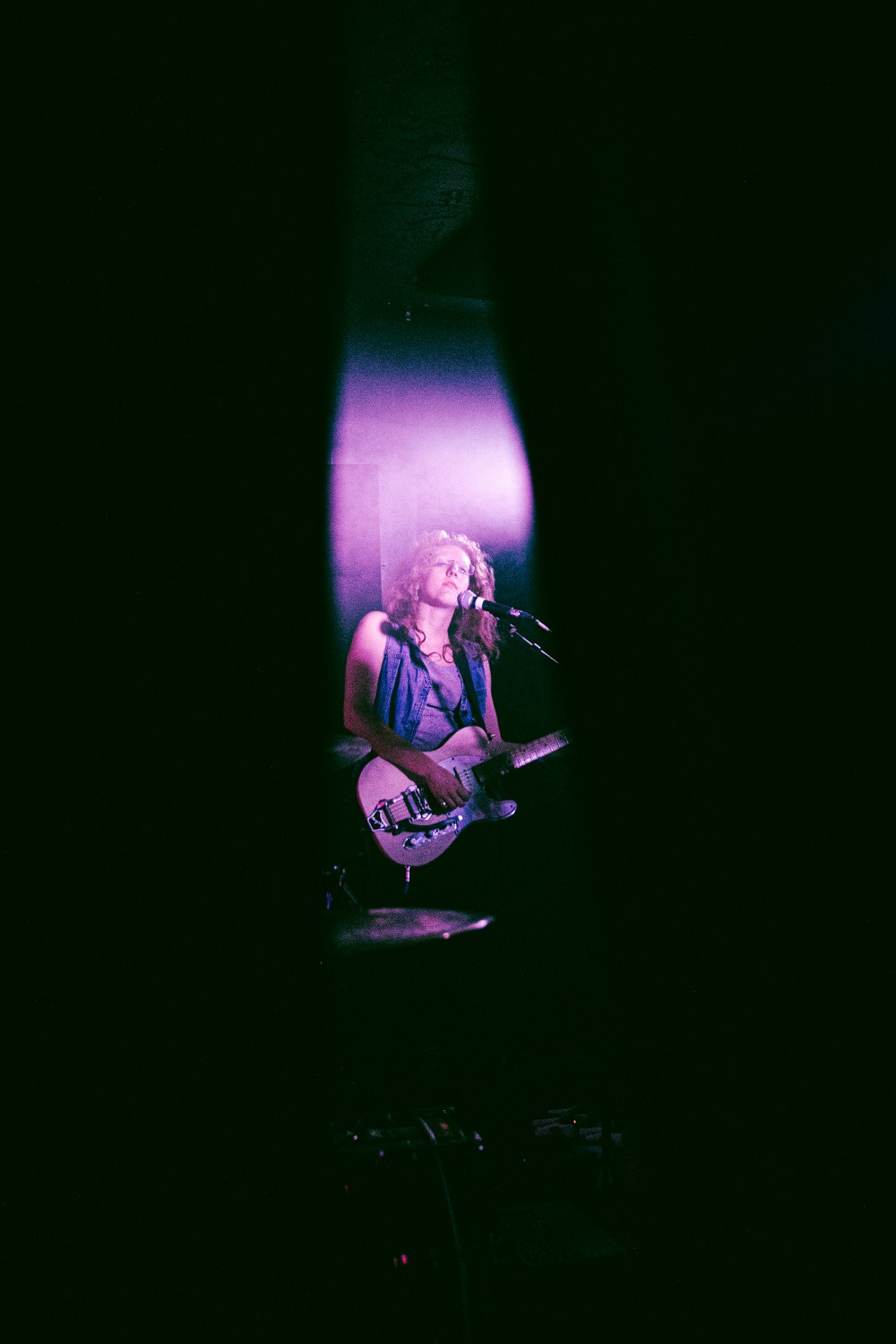
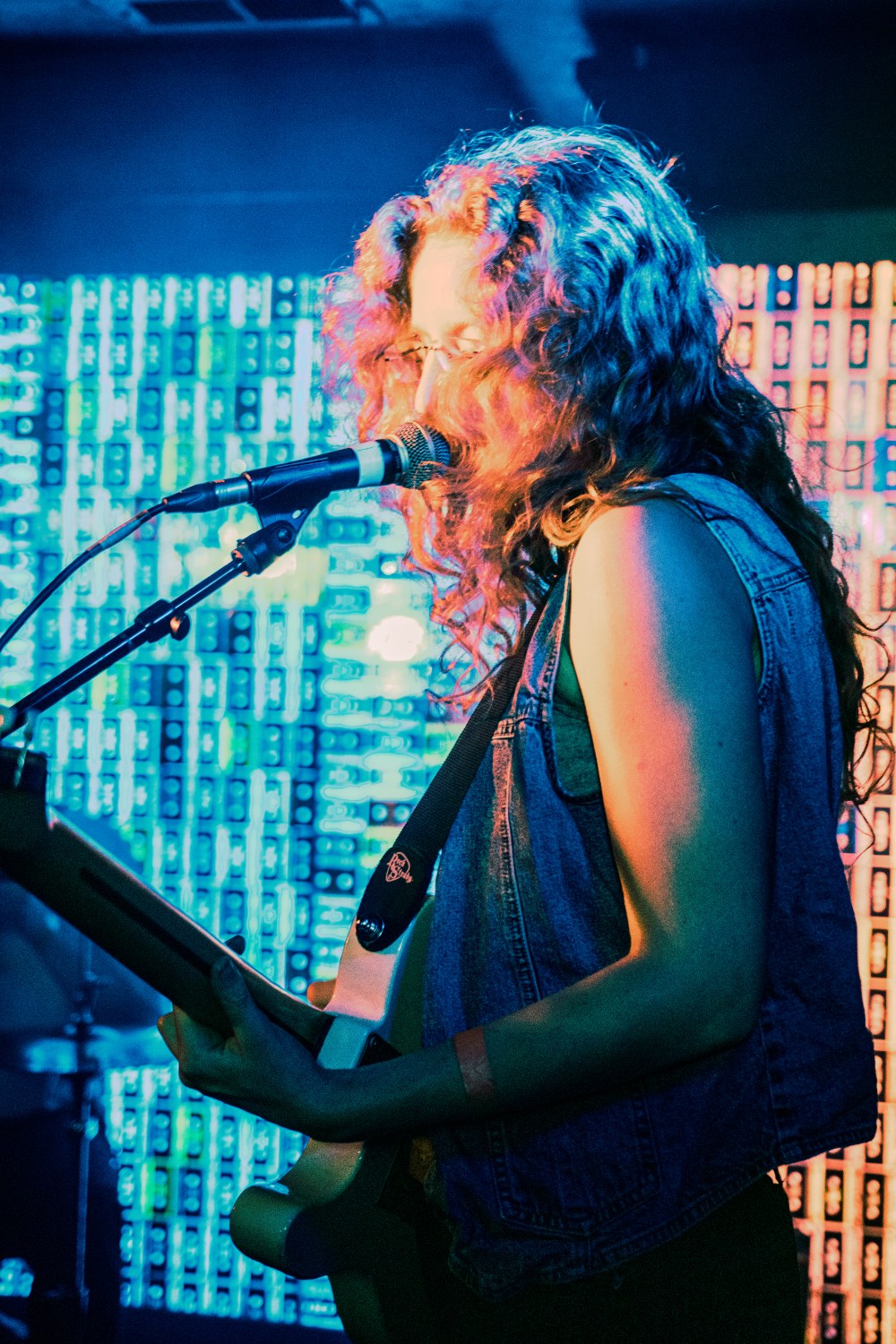
    Carving out its own space in this large, unforgiving world, the self-titled debut EP by plu became a notable piece of collaboration and artistic growth for LA-based artist Pluto Bell. As a multi-skilled artist and musician, spending a decade within the underground experimental scenes of LA, Bell worked to develop their own artistic voice through various collaborative projects and exploring alternative ways to songwriting that has since helped bring plu to this dynamic life it now leads. Released a few months ago via Anxiety Blanket Records, plu finds Bell leading a band for the first time, pushing the bounds of their dizzying compositions and the shape of the project as a whole.

    plu breaks like a fever as these songs become a swell of internal affairs, functioning as a team of mysterious little pieces that have taken matters into their own hands. The EP feels like a physical reaction, where songs like “Laziness Studio” and “Juggling” are locked in amongst the constant motion brought out by loose time signatures and deep and incredibly tight instrumental calisthenics. But what plu does so naturally in this strange little world that they have made is redefine control; what it is and how to wield it in practice when it comes to their creativity. Where intuition blends with cause and effect as a means to create something with levels of unexpected beauty. Where sounds clash and melodies wander off, but with a newfound trust that they will find their way back. Bell relishes in this back-pocket absurdity in a way that feels both incredibly vulnerable and enticing for the new project, breaking away from formulation and expectations, and embracing what matters most when it comes to releasing music as a creative motive.

    We recently got to ask Bell a few questions about the debut EP, repurposing laziness and finding inspiration in unexpected places.

    Although plu is your debut EP, you have been piecing it together for a few years now. What was the timeline that led to this release, and when did it feel like it was ready to see through to the end?

    plu came together gradually and organically. I’ve been collaborating on and off with the players since 2015, when we all first met at CalArts. Back then, my focus was more on experimental and compositional work, but post-school I started leaning more into songwriting and figuring out what my voice sounded like in that context.

    Things quieted down after the pandemic. I went through a stretch of creative uncertainty—like I didn’t quite know what I wanted to make, or even how I wanted to exist musically. But in that time, I kept tinkering with demos, and eventually, a new sonic shape started to form—something that felt more aligned with where I wanted to head.

    I’d say plu is the result of finding my creative self again, but in a new form. It’s a fresh face, in a way, but also part of an ongoing evolution that stretches back to the beginning. This music is also deeply tied to the musicians I’m working with—people I trust and feel deeply comfortable around. A big reason this band works is because of the relationships we have with one another. As someone who’s pretty introverted and protective of my creative space, it feels most natural to work with people who are familiar with me in both intimate and creative ways. These are friends I feel safe being vulnerable with, which is essential for this kind of collaborative work—at least for me. It’s a different kind of openness than composing, which can feel more solitary and controlled.

    Eventually, I realized I had a handful of demos that felt cohesive within this new sound world. That’s when I brought this group together. We kept things super low-pressure—no shows, no big goals—just rehearsing together and slowly fleshing things out. Over time, we started wanting to share what we had. We began playing shows with what was basically an eight-minute set, and eventually a few more songs emerged. That’s when the EP started to take shape—something we wanted to share in a more materially distributable way.

    You stated that a lot of your inspiration is non-musical, taking specs of daily life and the things you read as a means to your creativity. As it comes to songwriting and crafting these auditory experiences, how do you take these non-musical inspirations and create a song from them?

    For me, this mostly plays out in the lyrics. Writing lyrics doesn’t come naturally, but when I’m reading—especially certain kinds of theory or poetic prose—something clicks. These texts don’t offer clarity in a straightforward way; instead, they make language feel strange, opaque, even slightly off-kilter. I’m really drawn to that.

    I’ve always felt a little disoriented by language. I often forget common words or meanings, and I struggle to express myself clearly, especially in real-time conversation. That kind of disconnect has shaped the way I approach working with language—words feel less like precise tools and more like slippery objects. Reading theory allows me to interact with language in that object-like way. It becomes about turning words around in my head, feeling their texture and shape, seeing what angles they reveal. That’s usually what spurs lyrical ideas for me—not in a narrative sense, but through this tactile engagement with fragmented thought and abstract feeling. What that feeling is can shapeshift or wriggle out of grasp, and that ambiguity is part of the point.

    When it comes to daily life, if I’m in a good practice, I’ll jot things down—little observations, overheard phrases, moments of feeling, usually in ways that are still a bit abstracted or poetic. It’s less about journaling and more about tuning into textures of experience.

    Sometimes my lyrics end up resembling an aggregate of readymade bites—language I’ve borrowed, recycled, or recontextualized. Other times they’re more like personal etchings. But more often, it’s a mixture of the two. One spurs the other, and together they create this layered mesh of thought, tone, and intuition.

    I am really drawn to this idea of redefining laziness as a positive. How has the concept of “Laziness” brought out these songs, and what was the process of repurposing that word like for you and your creativity?

    Redefining laziness is definitely an ongoing practice for me, and the track—Laziness Studies—was partly about reckoning with my inner critic and trying to reframe how I think about slowness, stillness, or the lulls that happen in the creative process.

    I’m someone who often has to remind myself that it’s okay not to be constantly producing. It’s easy to fall into comparison—looking at how other people seem to work, or how much they’re putting out—and feel like I’m behind. But I’ve come to realize that everyone’s energy, pace, and needs are different. And honestly, doing something entirely unrelated, or taking a break altogether, can be just as generative as the work itself.

    If “laziness” had any broader role in the album, it might be in the way I let myself take my time. This project wasn’t rushed. I had to slowly find my footing again musically, and I wanted to let that process unfold without pressure. That same philosophy extended into how we formed as a band too—we didn’t set any immediate goals or try to force performances. We just rehearsed, got to know the material, and let it develop at its own pace. So in that way, I guess “laziness”—or really just slowness—was part of how this all came to be. Not as a flaw, but as a form of care.

    What sort of things did you see come out of these songs as you began to move from the demos to these rather complex pieces? What were your intentions as you began the process and did they change as these songs were given life?

    I’m not sure I go into songs with many firm intentions. It’s more about following my intuition, letting something unfold, and then being fairly decisive in the editing process. But once I brought the songs to the band, they began to grow in ways I couldn’t have predicted—and that’s actually a big part of what I wanted and hoped for with this group.

    Collaborating meant letting three other people—Jack Doubt, Leah Levinson, and Jesse Quebman-Turley—bring in their own musical idiosyncrasies, voice ideas, and, at times, push me in directions I wouldn’t have gone on my own. The initial seed of each song is still there, but the way things crystallized was shaped by each of us.

    Some of the early demos were so idiosyncratic—especially in terms of timing and structure—that we had to figure out how to translate them into something we could actually play in sync, while still maintaining the fluidity that made them work in the first place. Shadow Mythic is a good example of that. The original demo wasn’t really built with a band in mind, so recreating it as-is wasn’t possible within our setup. Instead, it became about reshaping the song into something more collective—finding a new version that still held the spirit of the original. Once I knew I was working with everyone, I began writing more with them in mind, which also started to shape how the songs evolved.

    I can be pretty particular, which goes back to what I mentioned earlier about the importance of working with people I already feel safe around—people I can communicate with openly, who understand me. But it’s just as important that they challenge me too. I think that tension—the balance of trust and pushback—is what really gives these songs their shape. Even the ideas that didn’t make it into the final versions helped move the process forward.

    The songs sound and feel the way they do because of what each member brings: their unique sensibilities, their relationship to their instrument, and their broader musical instincts. They each expanded the scope of what the songs could be—and pushed me to try structural things, for example, that I might not have thought to, or dared to, on my own.

    You can listen to plu out anywhere you find your music. You can also order a cassette tape of the EP via Anxiety Blanket Records.

    Written by Shea Roney | Photo Courtesy of Anxiety Blanket Records

  • Prewn x ugly hug | Guest List vol. 71

    August 20th, 2025

    Every Wednesday, the ugly hug shares a playlist personally curated by an artist/band that we have been enjoying. This week we have a collection of songs put together by LA-based artist Izzy Hagerup of the project Prewn.

    Following the release of 2023’s debut LP Through The Window, Hagerup has just announced her follow up album titled System, out October 3rd via Exploding in Sound. The music that comes from Prewn is as deliberately harsh as it is instinctively beautiful. Through The Window bound together lush textures and open spaces by building trusting relationships with dissident sound structures and absorbent lyricism. Prewn’s pulse continues to pump with the release of “System”, the first single off the upcoming album and accompanied by a music video directed by Sophie Feuer.

    “System” opens like a cold sweat, where thick, briny strings dribble down like beads; dribble farther down your face than you would often allow before wiping away. It’s a moment that feels stuck in time, one that deliberates between peace of mind and a piece of mind that can’t quite fall into place. As the strings begin to take shape, offering a counterbalance to Hagerup’s melodic fortitude, you want to say that it sweeps you up into a dream-like state, but this is real life, and she knows that. The song soon breaks off as Hagerup belts, “just give your life away”, a chorus of searing words that give voice to the internal conflicts between mental struggles and the buttoned-up expectations that are often placed on us. It’s a stunning track that builds upon frustration with such intent as Hagerup’s singular voice becomes the benchmark for retainment and release, slowly bringing us back to that same moment of stillness from which we began.

    About the playlist, Hagerup shared;

    “Some songs that I’ve come back to again and again over the years”

    Listen to the playlist here;

    Listen to System here!

    System is set to be released October 3rd via Exploding In Sound. You can pre-order the album now as well as on vinyl.

    Written by Shea | Photo Courtesy of Prewn

  • Shallowater Share New Single, “Sadie” | Single Review

    August 19th, 2025

    I have a tendency to fall into anecdotal rambling when I try to write about a project I find especially moving. This achilles heal is most inflamed when a song makes me cry – which does not happen super often – but when it does, I have to fight the urge to cite my own tears. It’s usually a desperate attempt to articulate the gravity of a track without turning to some dry technical dissection, but it doesn’t matter. No one gives a shit about the time I cried at my roommate’s roller blading competition, seated in a patch of grass above the park with Shallowater’s There is a Well in my ratty noise-cancelling headphones. So I will not tell you about it.

    What I will say is that Houston based Shallowater is not doing anything new. At least not in a way I can cite on paper. Their soundscapes are familiar and rather organic, and I could write a laundry list of band comparisons ranging from emo and posthardcore to alt-country and slowcore, and they would all be valid. I suppose that is the real root of this apprehensive music journalism crisis I have so generously decided to include in this single review – the chasm between the abstractly unprecedented feel of a band and a reality that they are not technically doing anything unheard of. But perhaps that is the foundation for the most touching projects; an ability to pull from motifs seen countless times before and churn it into something that stops you in your tracks.

    Today, Shallowater shared “Sadie”, the second single off their forthcoming record, God is Going to Give You a Million Dollars. The track starts on a gentle note, finding its footing in drawn out enunciations and a cautious rhythm section. As vocals grow in urgency, the soundscapes inflate into an eventual riff –lathered with mucky distortion, indulgent percussion, and a suffocating amount of poignancy. In the span of seven and a half minutes, Shallowater pursues this sort of escalation more than once, leaving you unsure of which buildup is the buildup. Perhaps the answer is neither? Perhaps the mud-slides of twangy sludge are less a destination than they are a means of amplifying slivers of delicacy and desperation between them. In the case of “Sadie”, soft vocals tend to cut deepest when they follow moments of sweeping cacophony. It’s enough to subdue even the sturdiest of poker faces.

    You can listen to “Sadie” everywhere now, and pre-order God’s Gonna Give You A Million Dollars on Bandcamp.

    Written by Manon Bushong

  • Elizabeth Sanctuary Welding School for Girls is the Girl Inside Your Computer | Interview

    August 18th, 2025

    Elizabeth Sanctuary Welding School for Girls is the project of Pōneke (Wellington), New Zealand based artist Fi, who has been making music under the name since 2023. Blending surreal soundscapes of roaming delicacy and slashed by the edges of brutalist noise, Elizabeth has since bleed out from the digital world into this physical one as Fi found the conflicting sounds a motivating comfort in her own spaces. Now, Elizabeth is set to release her next album titled Pike on September 20th. A few days ago, Fi released “Avoidant 7th” the latest test run from the album and the second single following “Pike” (the song).

    Upon searing feedback that leaves its mark, “Avoidant 7th” explodes into a hidden pop gem. With pitched vocals, crumbling instrumentation and several lacerations of melodic savviness, this song feels to live such a full life in such a short amount of time. But as we inch closer to the release of Pike, each song piecing together this larger image that Fi has created so genuinely, Elizabeth starts to become its own entity entirely. Elizabeth builds a space where the creepy crawlies that live around us are met with the sincerity of their motives, whose spaces are meant to be shared with all of their natural dispositions and beauty despite the manufactured fears that have brought us to this point. Through the churning gears and wires misfiring, through the grim, grit and glitch, these spaces that Fi creates aren’t a plea to understand this world, but rather an invitation to enter and to live and to prosper in it as we were always meant to.

    We recently got to ask Fi a few questions about the project, where she found Elizabeth’s sound, connection to body horror and noise, as well as who the girl is that’s inside the computer.

    On your previous album Plastic Double, you spent an extended amount of time working on it, but only allowed yourself little time to work on each song. What did you take away from that process and did you carry that practice through as you began to work on Pike? 

    I’ve been working on the album Pike since before Elizabeth had her name. I had a plan and a story and lyrics for most of an album since like mid 2023 and made like 80% of it across the first half of last year before completely stalling out and never finishing the last 20%. Plastic Double was purely procrastination. I think I sold myself the lie that if I made an EP really fast I’d be teaching myself how to just finish and release things, but in reality I think I was just making some quick pop music so I didn’t have to deal with any of the album songs that had actual emotional weight to them. I am actually slowly getting back to finishing and releasing things but I think that’s less me learning my lesson and more the people I love giving me consistent gentle reminders that the thing I’ve been spending so long making is actually worth love and attention and letting go of.

    I guess this is a good time to ask you about the project name. It’s really unique and really sticks to ya when you first read it. What’s the story behind it?

    I was trying to come up with a name for a noise band that I was theoretically in with a couple friends ( we practiced like twice and then stopped existing ) and one of them suggested naming the band after the name on the most neglected grave in a graveyard. I thought it was funny and went to look but every broken or neglected grave I found just belonged to a woman named Elizabeth. There were like five or six of them. I was kind of hoping for something prettier but that just made me feel like I was just another person neglecting the Elizabeths. On the walk back from the graveyard there was a sign for a wildlife sanctuary and I thought the two sounded good together. I don’t know where the welding school bit is from. I found it written in an old notebook of mine I think. 

    What sort of sonic avenues did you find yourself exploring on Pike (the album)? Was there anything new that you were trying out?

    Kind of everything music wise. I’d never really properly used any music software or produced anything before Elizabeth so Reduction the first single I made for her has been my blueprint for everything else I’ve made. Elizabeth has become like a set of rules that I don’t apply to any other projects. Primarily maximalism. 90+ layers in the DAW. At least. It’s actually become a problem, working on any of the Pike songs requires a six minute buffer while the file loads and I have to process my vocals in a separate project or else my computer crashes. When I tried to export my first single to release it the program crashed five times before I finally got it. I’m always using a lot of bit crushers and pitching everything an octave up, I think I’ve become really attached to everything sounding very bright and borderline ear fatigue-y. It’s really exciting when you find a new way to make a guitar sound like it’s been made with a synthesizer. Plus, lots of processing vocals to glitch and crunch and cut out, partially for the ‘Elizabeth is the girl in the computer’ lore reason, but also because I am super lazy when it comes to rerecording vocals. I’ve been especially into programmed drums too. I get super obsessed with altering each drum hit slightly to try to make it sound as human as possible. Although a lot of it is modelled after real drummers I’m friends with, most of the drum lines on Pike were written by Macks (our old live drummer) and the drums on Kathleen’s Theme are a shameless ripoff of the drummer of Silicon Tongue, who is incredible and chaotic and very hard to imitate with a computer.

    Elizabeth feels like a physical being in your world, referring to the project as her, almost like a good friend you’ve known for awhile. What sort of presence does she have in your life and what is your relationship to her?

    I guess she is. I have a lot of love for musical projects where there is a bit more of a character side to them, Yeule is a pretty big one, also albums like Wallsocket and Preachers Daughter. When I was making most of the first songs I was being super introverted and a bit depressed and I was trying to get really weird with it to cope with it. Very ‘I will have no eyebrows and I want nobody to talk to me’ sort of thing. I got really attached to the idea of ARGs and making something like that for the music I was making, but also just found it quite funny and a weirdly good coping mechanism to pretend that all of the ARG Elizabeth is a digital dead girl stuff is 100% real actually. I’m not in that same space anymore but you can’t really detach yourself from something you’ve built up in your head like that so she’s Elizabeth and we’re on a first name basis.

    What kinds of feelings or stories do you like to tell through your soundscapes? What sort of processing do you feel when building on the sounds you make? 

    I’ve been jokingly using the tagline ‘noise pop for dykes’ for a while and I find it a little embarrassing to admit how true Elizabeth being exclusively lesbian music actually is.

    I’ve always used music as processing and I feel like queer relationships often feel hyper specific and like they’re factoring in so many more complex factors than a typical cishet dynamic, so there’s so much more you can process! It’s always something I cling to in other people’s music, when I hear something I feel like I can actually align myself with. A lot of the lyrics of Plastic Double were inspired by a terrible hookup I had where the person I’d slept with started insisting that I should save up for surgery. Things that are slightly off putting or hyper specific always get me excited. I love niche feelings. In terms of sounds, I have a friend that says body horror is inherently queer, and I always felt like the same applies directly to the sheer number of queer people in noisy and subversive music genres. I think there’s a specific and powerful emotion that really layered music elicits in me. The tension that something that’s really sparkly pretty and the ugliest sound you’ve ever heard have when they’re in contrast with each other has always felt huge.

    Tell me about sourcelister.neocities.org/. What are you archiving on this website? Do you try to make a habit out of archiving? 

    Sourcelister is an archive of Pike (the girl, not the album)’s posts, in relation to the recent singles. From what I can tell she’s having an awful night so far. I personally love archiving, blogging and making very messy HTML. One day soon I will launch my secret website where I am slowly archiving every item that I own.

    You can listen to all of Elizabeth Sanctuary Welding School for Girls on her site as well as other places you find your music. Pike is set to be released September 20th.

    Written by Shea Roney | Photos Courtesy of Elizabeth Sanctuary Welding School for Girls

  • Sean O’Hara x ugly hug | Guest List vol. 70

    August 13th, 2025

    Every Wednesday, the ugly hug shares a playlist personally curated by an artist/band that we have been enjoying. This week we have a collection of songs put together by Asheville-based artist Sean O’Hara. 

    Through all the noise, the loose distortion, the meaningful sonic spells and the interchangeable fidelities that play to their own strengths, the songs that Sean O’Hara offers are grown from an inherent sense of kindness. Where each song becomes a quiet reflection, a still moment that sticks to you like the hair of a dog, where each piece is picked off one at a time with the care and attention it needs. Sean’s debut release under his own name, 2023’s somewhere, was a warm buzz of excitement seared with feelings of longing and intimacy, but before that, he has been sharing music under the name nadir bliss since 2015. His mot recent releases consist of a split EP with Jackson Fig and a bandcamp album titled i don’t want to be alone, a collection of songs about loneliness and self, recorded on a tascam 488 over the span of two years on a farm in Virginia. Keep an eye out for more music to come from the Sean O’Hara camp in the near future.

    About the playlist Sean shares;

    I have a habit of writing songs with pretty fast tempos. Over the past few years, I’ve made an effort to listen to more mid tempo music to influence my approach to songwriting and try to slow it down a bit sometimes. On that note, I have grown a deep affinity for “baggy” music. It was pretty popular in the 90’s and early 2000’s, coming from the Madchester scene and evolving/mutating over time. This playlist is a collection of some of my favorite baggy beats.

    Listen to the playlist here;

    You can listen to Sean’s music anywhere you find your music. You can also order a tape of somewhere via Candlepin Records.

    Written by Shea Roney | Featured Photo Courtesy of Sean O’Hara

  • mall goth are Moving Forward | Interview

    August 11th, 2025

    “They also have seasonal shake thingies, and they’re just… I mean it’s melted ice cream. It’s ‘mint milk’. I think they also have a creamsicle one. They make you feel so sick. Just 900 calories of milk based drink.” 

    Peter Lukach of mall goth is discussing the delicacies available at Stewart’s – a gas station dispersed throughout Upstate New York. It was the first I had ever heard of this institution, despite the fact that I also grew up in “New York but not New York”.

    What constitutes “Upstate” is a tired debate. Some deem it anything between the final stop on the Wakefield-241st St. bound 2 train and the Canadian border. Others believe in more complex distinctions for non-metropolitan New York, arguing that it consists of Western and Central New York, Upstate, and my home territory of ‘Downstate’. Some give the debate – and the idea of New York beyond the five boroughs – little to no thought at all. 

    If you have read any features I have done in the past, you might notice a pattern of questions about a band’s respective home. It usually stems from a place of my own curiosity; sometimes I find myself more intrigued by the idea of a scene than the actual music the scene in itself nurtures. The ways an environment can be reflected in the contours of a band’s melodies, or how influences of other artists in the vicinity can pull an unexpected sound out of a project. I also ask from an idyllic place – hoping to hear the ways in which a band’s surroundings have marinated into their art, optimistically seeking some confirmation that the internet has yet to push this notion into extinction. 

    My conversation with mall goth was seasoned with Upstate trivia. I learned the apple cider donut was invented in Albany. They sometimes serve a raspberry sauce with their mozzarella sticks. Binghamton has an exciting music scene, though it often feels fleeting given the rapid member turnover that is inherent to a college town. Albany is more robust in that regard, home to projects that have cultivated beyond a four year term and a community with a good heart. 

    From my intel on local scenes, I have also become familiar with certain rites of passages that triumph variables like whether you took a subway or yellow bus to middle school. Falling in love with an album and building relationships from the seed of shared music interest is one of the most prominent. In the case of mall goth, this was initially Plumtree, though as their inner band relationships have grown and expanded, so have their auditory pallets. They told me about their intrinsic love for “loud-quiet” dynamics in guitar-forward bands, citing Weezer and the Pixies as mutual staples. They also enthused about short term phases, which helped to paint a picture of their curious natures as individuals, as well as the influence of their enthusiasms have on each other.

    Their latest EP is the band’s fullest release yet – both sonically and in a more abstract sense. It ventures down an experimental and emotional path, clearing space for individual inspirations and perspectives while ultimately remaining grounded to the project’s sturdy spine. Out last week, Heather’s Exit is a vulnerable reflection on how even the simplest lived experiences shape us, as mall goth molds imagery of old Tupperware, rainbow sprinkles and white mildew into a cathartic listen, bleeding with honesty and nuance. 

    We recently sat down with mall goth to discuss the project’s roots, inspirations and Heather’s Exit. 

    This interview has been edited for length and clarity.

    Manon: I’m so excited to talk about this EP, it is so fun and such a confident and full version of this sound that you have been cultivating, but first I would love to hear about the background of mall goth. How did you all start playing music together?

    Ella: Peter and I met in a music theory class in college. He posted a song by Plumtree on his Instagram Story. 

    Peter: I swiped up and was like “I love Plumtree!” And [Ella] was looking to make a new band. I was in a band but it wasn’t very serious and I was not super involved in the creative process, so I was looking for something different. 

    Ella: Yeah I stole him. I was also living next to a friend named Sam so the three of us started playing and then I met Kensho and stole him from a friend’s band too, as our drummer. The four of us started playing, and as the years have unfolded, we’ve just gone through a few lineup changes. Katie has been drumming with us for about a week and a half – she’s really fucking good. Justin has been playing with us since the fall. 

    Manon: How long have you been in Albany?

    Ella: I have lived in Albany my whole life, but we officially relocated in June. 

    Manon: So is Heather’s Exit your first release since you moved? 

    Ella: Yeah. It’s funny because we mentioned our lineup has changed so much, so the EP process took a lot longer than we anticipated. But we’re excited for this chapter and to just put this music out there, we have been sitting on these songs for about a year. So we are excited, and having Katie join us has brought a different vibe to the songs – it made them feel fresh again in some ways. 

    Manon: Heather’s Exit has such a great coming of age feel – there is so much change, growth and nostalgia all wrapped up in a jangly, dream-pop sound. I know you mentioned you have been sitting on these songs for a while, 

    Ella: In terms of writing lyrics, it’s probably the most honest and raw I have ever been. It felt good to just talk about things that make you the way you are. I was really inspired by Wednesday’s Rat Saw God when I was writing. I just love how Karly Hartzman is so honest, and every song unfolds a story. That was the biggest inspiration for “Crawl Space”, also “Ribs” by Lorde. When we were working on Heather’s Exit, I really wanted to make sure the synths were building large soundscapes. 

    Manon: All of that certainly comes through on the EP. Your imagery is so intense and I also like the way it tends to parallel the soundscapes – I like the rainbow sprinkles and flowers against the melodically upbeat nature of “Your Garden”, versus the mentions of spoiled food on the darker and more experimental “Heather’s Exit”. I did want to ask about that one specifically, and why you chose to end the EP on that track? 

    Ella: That’s a great question. I feel like the EP descends from happy into, almost scary. 

    Peter: I think the lyrics helped propel it to that point too. 

    Ella: Yeah, we felt like although “Your Garden” has some gloomy undertones, it mostly feels like a sugarcoated, candy song. “Crawspace” is then a good bridge into “Marionette”, which is just loud, quiet, loud, quiet. I wanted that one to have imagery of a puppet getting ready in a dressing room – just this idea of being guided by what others think of you. As for “Heather’s Exit”, that one is kind of hard to put into words. There is a lot of nuance, and I ultimately want the music to speak for itself, and for people to have their own experience when they listen. 

    Manon: The EP has such gorgeous cover art too, who did it? 

    Ella: My friend, Eliza Waylon. I know her from high school, she is a fantastic painter and I thought that piece really fit our aesthetic perfectly. I’m so grateful she let us use it. 

    Manon: I know you mentioned some lineup switches. Would you consider your songwriting dynamic collaborative, and if so how have those changes affected it? 

    Ella: When we started the band I had some songs under my belt, so initially I was like “hey, do you guys want to play these songs I wrote?” Since then we have definitely built upon it, and in terms of what things ultimately sound like, everyone adds their parts. I am really excited to see what happens going forward, and we definitely want it to become more collaborative. We were really chasing a dreamy sound, and have since been returning to our roots which has been very inspiring. 

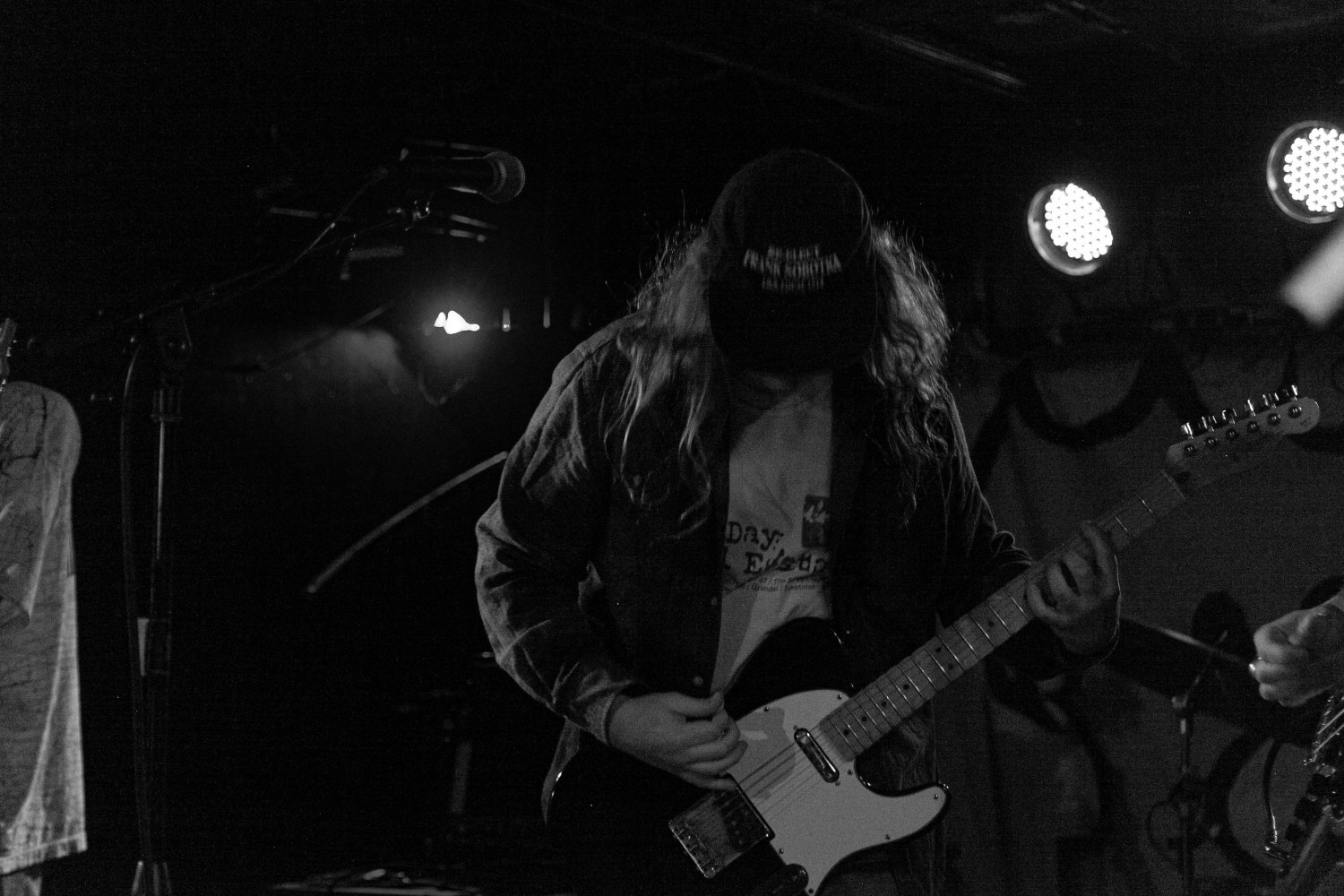
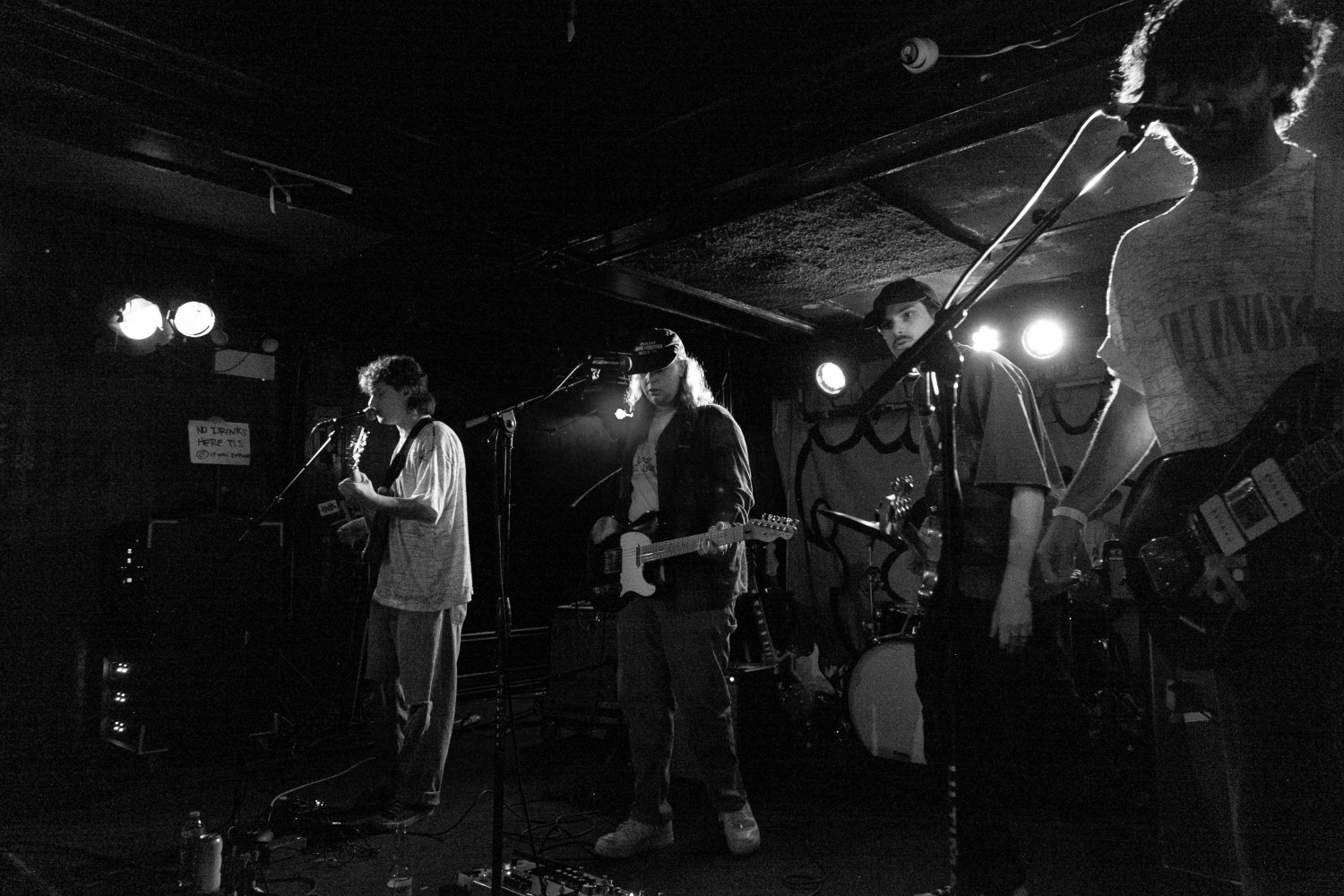
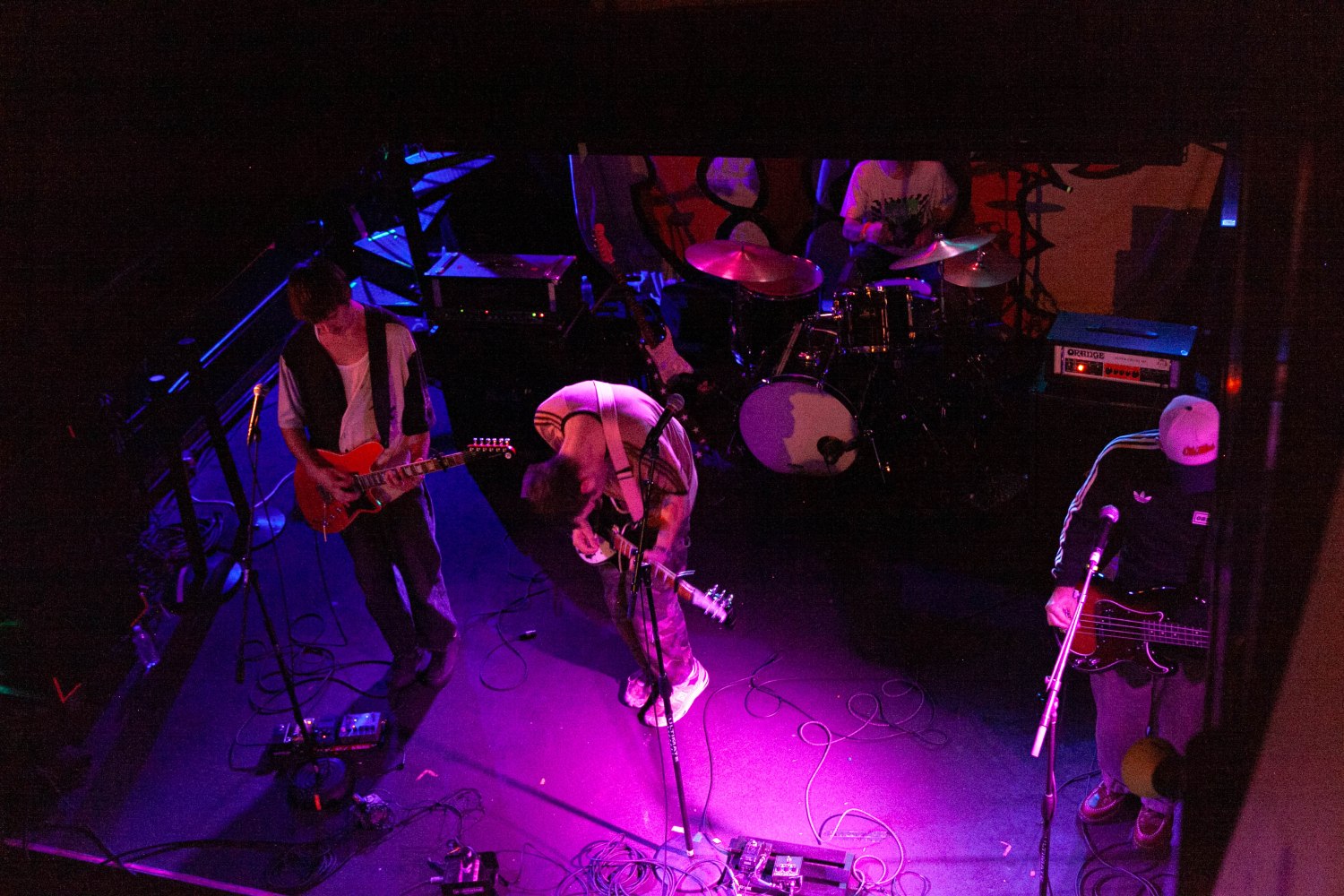
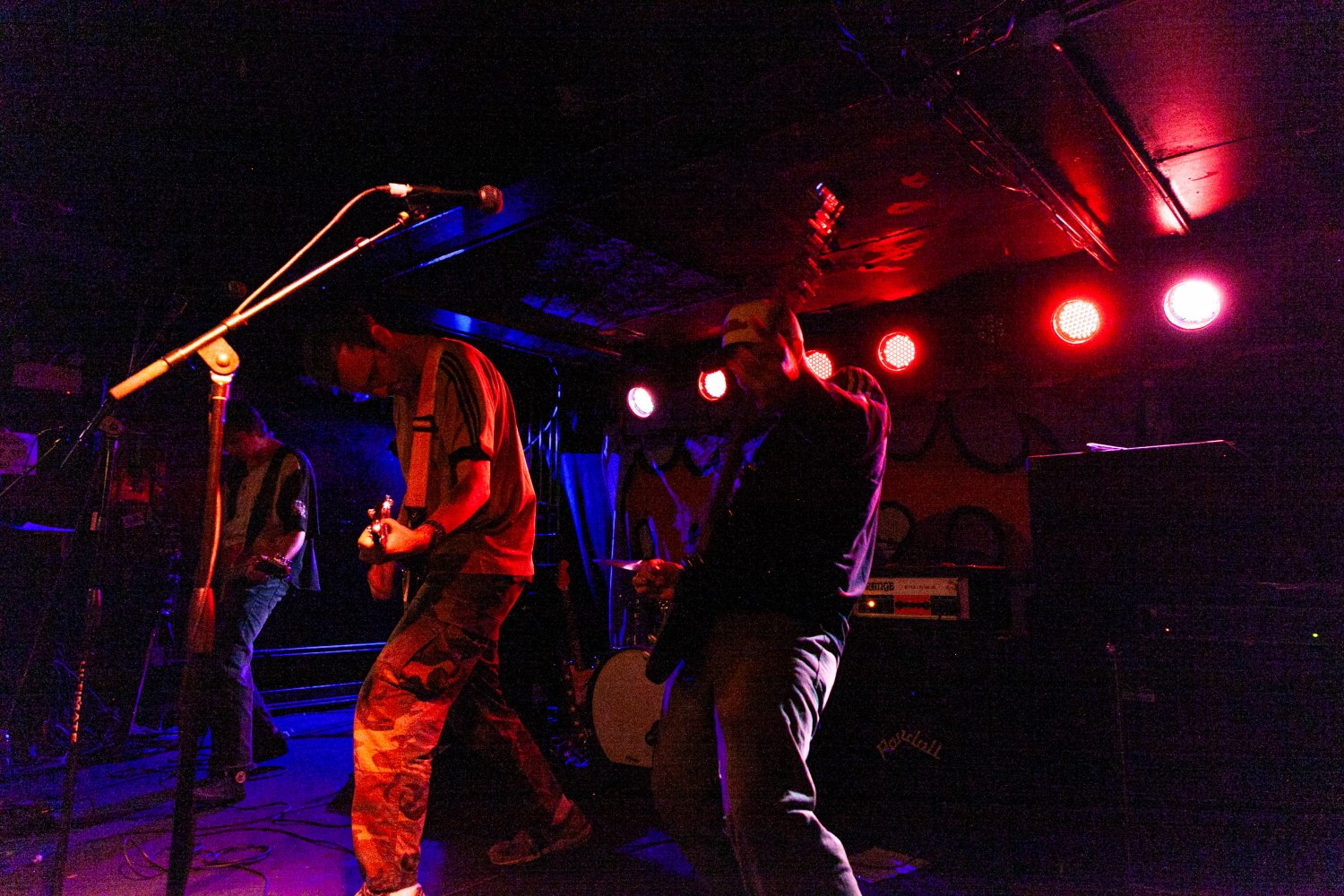
    Written by Manon Bushong | Photo by nomorezines

  • Wombo x ugly hug | Guest List vol. 69

    August 6th, 2025

    Every Wednesday, the ugly hug shares a playlist personally curated by an artist/band that we have been enjoying. This week we have a collection of songs put together by Louisville-based group, Wombo.

    This Friday, Wombo is set to release their third full length album Danger In Fives via Fire Talk Records. As a three piece, made up of Sydney Chadwick, Cameron Lowe and Joel Taylor, Wombo crafts complex structures with jagged intonations, straying patterns and foundational instincts that play out like the depths of a city skyline in full view. Forcing themselves into new territory, reshaping the writing process and traveling down paths of experimentation, the trio approached this album with a newfound excitement to their already existing strengths. As it unfolds, the band’s ability to make each riff and run feel like a conundrum, a means to observe the cause and effect of the most minor choices, Danger In Fives becomes one in and of itself as Wombo continues to embrace a world entirely of their own.

    Syd’s picks songs 1-7, Cams picks songs 8-13, Joel’s picks songs 14-18. Listen to the playlist here;

    Danger In Fives is set to be released this Friday via Fire Talk Records. You can pre-order the album now as well as on vinyl, cd and cassette.

    Written by Shea Roney | Photo by Fallon Frierson

  • Youth Large Pulls Beauty From Their Growing Pains | Interview

    August 4th, 2025

    I would say my familiarity with the concept of a “baby tee” is above average. That may be the strangest brag I’ve put to paper, but after nearly two years working as a copywriter for a clothing brand bearing 2000’s roots, I feel I have earned the right — if you can even consider it a “right”. However, as frequently as “baby tee” has infiltrated my day to day endeavors, monopolized conversations and more or less paid my rent, it was not until my conversation with Em Margey that I considered the concept in a matter that went deeper than the seams. I left our park chat pondering the implications of an adult shirt that intentionally fits like a child size, of the influx of Depop sellers scouring Goodwill’s youth section for a cheeky graphic tee, of the nostalgic appeal behind the brand I work for.

    Sentimentality motivates into behavior far beyond wardrobe choices. Though not inherently a bad thing, the line between nostalgia and comfortability is thin. When is holding on a sign of fortitude, and at what point does it begin to hold us back? These questions are a few of the ruminations that fuel Em Margey’s project, Youth Large. Toeing between tender yearnings and angsty insolence, Youth Large is an ever changing capsule of growth, change and acceptance. As deeply personal as Em often gets, their songs ultimately lean familiar – offering an experience that feels lived in, beautifully calloused and refreshingly human. 

    Em began creating music when they were twenty years old, the DIY spirited seeds of their project tracing back to a guitar purchase and open mic nights in New Jersey. “I just kind of got a guitar one day and then started writing songs, pretty much immediately,” they tell me. “Before it was Youth Large my project was called Emma Blue Jeans. And as angsty as my stuff is now – which I would say is really angsty – it was times a hundred back then. I was subjecting random groups of people in suburban New Jersey to some intense stuff.” 

    A huge part of the learning curve is tied to valuing community and leaning on friends for help, despite the vulnerable nature of their music. Their bandcamp claims most of their songs begin as introspective lullabies that come to life with the help of friends, an experience that Em deems “really heartwarming.” 

    “If I bring a song to a friend who plays in my band, it feels like you’re explaining an idea for a movie and then someone else starts to make the movie in front of you – that’s what it feels when they start playing parts on their instruments,” they explain. “At the same time it can be a scary thing because it’s so personal. I think I can have a really specific vision and it’s very sensitive to tell your friends what to do and how to play while also giving them creative free will, it’s a fine line.” 

    Friendship also plays a role in Youth Large’s live form, which has evolved in its own ways over the years. “I love performing. It’s my favorite part of the project,” they tell me. “Usually when I write a song, I’ll kind of sing it around my room, and pretend I’m on a stage. Playing it life does feel like I’m just moody and in my room and expressing myself. I think it has taken a while to find what my stage presence is, not that I’m thinking about that all the time. Not having to play guitar and being fully in my body on stage has been really freeing, and I think it makes me feel a lot more connected to my songs on stage.” 

    As much growth can be detected through Youth Large in the project’s five years of existence, Em is far from done pushing themselves. “I’m definitely working on an album right now. It’s in its early aughts. I have been writing a lot more, but I also still really like the songs from the EP. That’s a new feeling for me – to still resonate with stuff I have put out,” they explain. “I kind of want to make a mini EP completely by myself as a challenge, because I think I lean on a lot of people for support and to understand how music works, because I truly have no background in it. I have been just figuring out as I go in a DIY way, which is cool, but I did want to challenge myself and make a project completely on my own.” 

    When I asked Em about their decision to rename the project, they explained Youth Large had been the name of an early EP they released, though they felt the notion fit the core ethos of their music perfectly. “Thematically, most of my music aligns with overgrowth childhood experiences pouring into what we all feel, so I felt it was a good umbrella term for the project.” 

    Although my little tangent on baby tees ties into Youth Large in a very literal sense, it is less about the physical article of clothing than a series of curious threads that hold them together. As angsty as Youth Large can be, the project is ultimately grounded by two ethos; patience and acceptance. For Em, Youth Large is a means to dissect, warp and rework. Sometimes, this means testing how far things can stretch, molding fragments from and giving them a chance to thrive in a sensical new form. Other times, it is a means of mourning, internal conciliations, and letting go for the sake of growth. 

    You can listen to Youth Large’s latest EP, Honeysuckle, below. 

    Written by Manon Bushong | Photo by Angelo Capacyachi 

  • I’m Into Life Records | Tape Label Takeover

    August 1st, 2025

    As a small music journal, we rely heavily on the work of independent tape labels to discover and share the incredible artists that we have dedicated this site to. Whether through press lists, recommendations, artist connections, social media support or supplying physicals, these homemade labels are the often-unsung heroes of the industry. Today, the ugly hug is highlighting the work of our friends over at I’m Into Life Records.

    I’m Into Life Records is a tape label out of Ashville, North Carolina that was founded in 2022 by Ethan Hoffman-Sadka, who also releases music under the project Trust Blinks. What began as happenstance for Ethan to help some buddies out with their debut album has since grown into a mighty collection of recordings from an eclectic roster of artists. With a focus on the found community that comes with sharing music, I’m Into Life has become a staple in many scenes across the country. Over the years, the label has shared the works of remarkable artists such as Open Head, Laceleaf, Jolee Go, Tombstone Poetry, Good Trauma, Nobel Beast, Idle County, Finnish Postcard, Theadoore, Fraternal Twin, Adriana McCassim and Molly Drag.

    We got to chat with Ethan about how the label began, what lessons he has learned and how the label got its image.

    Early Label Days

    This interview has been edited for length and clarity.

    Ugly Hug: What sparked the idea to start a label? What were the initial goals, and have you seen those goals shift over time as you get more practice?

    Ethan Hoffman-Sadka: It’s funny, I just did a music business presentation about the label, so I’m ready to talk about it [laughs]. What sparked the label starting was actually my friend’s band Open Head finished their debut album and they didn’t have a home for it or a way to market it. The label started from their release. Just as a way to help them and make vinyl for them. And then from there it grew a little and I was like, ‘Okay, I guess we’ll just roll with it’.

    Did you have any prior experience with the whole releasing and marketing aspects of a label? Did you do any of that work when it came to your own projects? 

    I knew nothing about physicals. I think I had probably by then ordered tapes for my own music, but I also didn’t really start getting into music until a few years prior to starting the label. I was kind of a late bloomer, but I knew a little bit about the industry stuff. I used to work for this music blog called Alston Pudding when I lived in Boston and I did all their video stuff for them. And I also ran a social media account for my hedgehog at the time called Spiked Jones [laughs], so that was all I knew about using Instagram. I definitely learned the hard way how expensive vinyl is and have since pivoted to really prioritizing tape and CD releases.

    covid times record store drop off at Dusty Records

    Starting with Open Head, a few of the first artists you worked with were Jolee Go and Laceleaf. How did you approach finding the artists you worked with and how did you build this little community?

    I’m not sure how I found Jolee Go, I think we just had mutual friends. And then serendipitously I had moved to Los Angeles around that time, and she was moving there. We’re both from New York, so I just really resonated with her first EP and saw that she didn’t have any merch for it. So, I just reached out and offered and then we developed a nice friendship. That was a kind of random one off. But after those first three releases, it more solidified an idea that it’s sort of a collective vibe, and if one artist succeeds, then everyone succeeds and gets a little more traction. To this day that’s kind of what makes the label worth it in my eyes. Artists that join the label are kind of all in this together.

    As you started to build out your catalog, piecing together all these bands and making physicals, what were some of the trial and errors that you experienced, and what did you learn to embrace that has brought the label into what it is today?

    This was actually a big part of the point I was trying to make in that music business lecture. You have to learn to straddle this line of being DIY, but not being a total punk, and still having some sort of business acumen. As much as it sucks, you do have to think about things like, ‘oh, will these tapes sell so you don’t just go bankrupt?’ So, I think I’ve definitely learned that. even if I am so confident in a release and love the music so much, you still need to plan around that in a financial way. It’s hard not to be like, ‘oh, I’m so in love with this release, you guys deserve vinyl.’ Which I still believe in my heart, but I’ve had to learn to be more practical. Also, this is probably not the best business minded idea, but I am always encouraging artists that if they get a bigger opportunity that they should go for it and sign to a bigger label that can pay out better. It was really exciting when Open Head just signed to Wharf Cat. It was a cool, full circle thing to have gotten to give them some sort of small platform.

    polaroid of triple split crew Tombstone Poetry, Hiding Places and Trust Blinks

    When things become so hectic, what makes you most excited to run a label?

    A lot of it comes from the releases, where I’ll hear something that’s so different or weird, and it reinvigorates that excitement for music. Our most recent release, Fool’s Errand by Theodore, it’s the project of Grace Ward whose music I’ve loved for a long time. But hearing their new album was such a great experience – the music is so creepy and cool and complicated, but it makes sense. So definitely the releases keep that fun and excitement going when they’re sent to me. And then also I just try to keep it fun with shipping out the orders. I’m always at the dollar tree, buying weird stickers and candy to fill the orders. I definitely want each package to feel like a Wonka Bar or something.

    It’s all in the name. Who designed that animated poster that you use often? It’s such a fun visual.  

    So that original artwork actually came from my grandpa. He was an illustrator in the sixties in New York City, and every now and then we’ll come across one of his pieces online. That one I couldn’t find what it was illustrated for, so a friend helped me restore the image, and then we pulled the logo from it. We have not gotten into any legal ramifications for using it so far [laughs].

    So is that where the name for the label came from, too? 

    Yes, it was in that poster. I’d imagine it came from some sort of magazine he did. So really, in the beginning, I had the release first and then started the label, kind of working backwards. So I definitely needed to think of a name. I pulled a few friends and I was definitely looking at some cool, more mysterious and edgy names, but that one kind of stuck with me because it was so almost not cool [laughs]. Especially because a lot of our music falls into a category of, ‘we’re all depressed and anxious’. But, you know, we’re still trying to make the best of it. And as long as that doesn’t get grouped into pro-life. sentiments, then, yeah, that’s how the name came about [laughs].

    An I’m Into Life Poster hanging up at the Post Office

    What are some releases that have stuck with you over the span of the label’s history?

    A big one was organizing the Halloween covers compilation. It was shortly after the label started and I thought it would be cool to do something to help put the label on the map. I’m so obsessed with Halloween and so obsessed with so many of the artists on that compilation. I’m definitely still proud of that one just because I think it’s pretty unusual to make this grouping of songs where you encourage all the artists to record a whole new song. It was a lot of work, and I had to start it like over 6 months in advance and then keep following up with artists because we’re all super spacey. It definitely snowballed and became this huge thing that really did help put the label on the map for a little bit and get on those huge blogs that we hate like Pitchfork and stuff [laughs].

    Some of the I’m Into Life back catalog and merch

    You’ve done a handful of comp releases, one of the more recent being the Hurrican Helene relief comp, Song to the Siren. Do you see yourself doing more compilations? Does it feel like a thing that kind of encompasses and connects what’s around you?

    Definitely. A lot of the time, unless I really find someone who I’m obsessed with their music and they happen to not already have a label or a friend making merch for them, I don’t have a project I’m working on. At least with the compilations I have the control to make something happen instead of waiting around. The fundraiser ones are great because we can actually do something meaningful to the rest of the world. But with the #1 and #2, I wanted to tap into some really specific sounds, that if you’re kind of in the scene, you’re kind of aware as to how all these bands are connected. It’s cool to put that in a compilation and see all these artists on the same release.

    Do you have anything in the works that you’re looking forward to?

    It’ll sound kind of sad, but I have literally nothing in the works which is exciting to me. I have learned now over the years that I’ll have nothing on my radar, and then something will come out of nowhere, whether it’s like a new artist or a new release from an existing artist. That’s an anti-answer, but that’s how it seems to go. I had no releases for a while and then suddenly July became such a busy month. So, I’ll probably just be working on some retroactive promotion and pushing the older catalog. 

    Along with this series, our friends over at I’m Into Life Records are offering a merch bundle giveaway! The bundle includes How Could I Be So In Debt? vinyl (2024) by Tombstone Poetry, Hiding Places, trust blinks., Tombstone Poetry Split x3 (2025) cassette, Fool’s Errand cassette (2025) by Theadoore, as well as some I’m Into Life and ugly hug goodies.

    To enter the giveaway, follow these easy steps below!

    1. Follow both I’m Into Life Records and the ugly hug on Instagram.
    2. Tag your music friend.
    3. Comment your favorite inherited artifact.

    The winner will be picked next Friday, August 8th and will be contacted through Instagram.

    All of these releases and more can be found on the I’m Into Life Records bandcamp page in limited quantities.

    Written by Shea Roney | Photos Courtesy of I’m Into Life Records

  • Swinging Builds Space on My Bed Is A Boat | Interview

    July 31st, 2025

    My Bed Is A Boat is the debut LP from Portland based songwriter Ash Vale, who has been crafting these songs under the name Swinging since 2021. Living through various expectations of what this project is meant to be, Swinging went through several phases before finding its way to My Bed Is A Boat. Now accompanied by friends and collaborators Finn Snead and Zoe Chamberlain, these songs became moments in a much larger journey; creased and cornered, showing the wear of a story well lived in. 

    As My Bed Is A Boat plays to the opportunities of open spaces, Swinging paces themselves as if not to take advantage of what’s being offered. Melodies wander and distorted guitars kindle what lies underneath on these long and patterned instrumentals brought out by Vale’s motives.  It’s a scenic trip, counting the pattern of telephone poles like tally marks measuring how long you’ve been out on the road – but sometimes you have to ask, are we even getting anywhere? There are elements of Vale’s use of language that float between active reflection and loose trains of thought that blend into the very setting that the album lays out. It’s articulated and calculated, finding the comfort that has been buried underneath layers of soil, out of sight, yet filling the earth with nutrients all this time. And as these stories flow with such natural deliverance, Swinging so instinctually illustrates the connections that we share with what’s around us. Whether or not it’s clear from the beginning, that search for understanding becomes the heart within Vale’s writing and the sincerity that keeps the rest of us driving forward 

    We recently got to catch up with Vale to discuss defining the project, learning to stay grounded and finding the album artwork through School of Rock.

    This interview has been edited for length and clarity.

    It’s now been a few weeks since the release of your debut LP. How does it all feel? 

    I feel a lot of relief to have it out. It feels very vulnerable for me just cause it’s the first one and it’s the first recording project that I’ve ever done that feels very true to the sentiment behind the band. I have been a little bit timid about it.

    Because it feels so true to the sentiment? Like you don’t know how that’s going to come across? 

    It really is. You know, the instrumentation is me and my bandmates Zoe and Finn, and Finn did all of the engineering and production and a lot of the instrumentation. But lyrically I feel like I’m sharing a really personal diary entry or something. In a live context, I feel a little bit more comfortable sharing that, but I think just the fact that my mom could look the album up on iTunes and listen to it feels very vulnerable [laughs].

    Does it feel more permanent now that people can have it, hold it and listen whenever?

    Yeah, I think that’s also because I’ve never played live music at all until I moved to Portland almost over 3 years ago. At that point in the process of creating a band and sharing my songs, I would get nervous to play live. I’m not a gear person, and I have a pretty fucked up guitar which has become this funny, almost shtick, where I say, ‘yeah, my guitar tone sucks.’ And because it’s not super polished live, there’s some excuses that I can hide behind. But to record something and to promote it feels like I have some sort of stake in the resolve of those recordings. I feel proud of them, so it’s a weird feeling.

    You’ve had these songs back pocketed for a few years now. The first song you released was “Athens, Ohio” that was demoed back in 2022. Going from some of the oldest tracks to a debut LP, what was that timeline in between? I know you’re playing a lot of shows, so did these songs find themselves through the frequent playing? 

    Swinging as an entity has changed a lot over the past few years. At first it started out as an indie rock band. I also never played an instrument until right before I moved to Portland. I was writing songs on this little micro chord that I didn’t really know how to use. I did have a few guitar lessons from my grandpa when I was a little kid, but I just took up guitar like three and a half years ago. When I formed Swinging, I didn’t know how to play with other people at all, so the first iteration was just a standard indie rock band. I was so timid and just inexperienced, I just let whatever the dynamic of the group was take control of the direction of the songs.

    The song “Athens”, for example, I played with this group, and it was more of a rock song. I remember thinking that this doesn’t feel true to the sentiment of the song. But it was awesome, I couldn’t believe that I was playing with other people. At one point I had seven people in Swinging, and we were getting booked with a lot of pretty heavy bands in Portland. But it’s really hard to be in a band with seven people, and all of these people were in seven other bands so it just kind of devolved. Then I met Finn while I was playing a solo show at a country bar, and he asked if he could play cello with me sometime. And now Zoe has been filling out the songs with bass. I think playing a lot of shows was what helped me develop the sound that I was going for. I think I always kind of knew, because I’ve always been a huge music appreciator. But because I’m inexperienced in playing, I just didn’t know how to do it.

    I like the idea of writing songs before you knew how to play an instrument. It feels like deep down you had an understanding of what these songs and what these stories were supposed to be to you. But now with Zoe and Finn, when you came to bringing these ideas to life, what kinds of things were you guys exploring and what felt natural?

    We recorded the album in Finn’s house, super DIY stuff. The way that we approached recording it was we started with the base layer of me, playing my guitar part and then overlaying my vocals. And then from there it was kind of like, ‘Is there cello? Is there no cello?’ When we play live, Finn essentially is just playing the cello to accompany me, but what’s interesting is that there ended up not being as much cello in the recordings. I don’t even know the names of any of these devices that we were using, but we had this really cool drum machine that we kept reaching for more than I think either of us intended. I specifically remember when we were recording “Unwind”, that was the only song I wanted a drum pad before recording my guitar part and it ended up sounding really industrial. There were times where we’d both get so excited that you just couldn’t really take us away from the recording. 

    A lot of these songs play with this idea of space and this bigger story of trying to define your placement and your role with the environments that you occupy. As a very visual album, how do you use these physical environments and this physical imagery to tell these personal stories and convey these deeper thoughts and feelings in a more localized sense?

    I am from the Midwest. And when Covid started, I moved to Montana to work on a farm. I was doing a lot of farm work up until I moved to Idaho where I was in college for about two years studying ecology. So a lot of my educational background is in science and specifically restoration ecology. And until I moved to Portland, I have been living in super rural towns. I’m from Akron, Cleveland, so I’m from Suburbia. But for 6 years of my life I was living in various towns that had populations of less than 25,000 people. So, I think at this point of now being in Portland for three years, I’m starting to settle into living a more urban lifestyle. But I think I felt a lot, almost this real manic feeling since moving here. I don’t know if it’s because it’s a city and my nervous system is not used to that or if it’s been the fires and the hot weather. But I wrote most of these songs in the State of Oregon. And while they do have this droning, relaxed feeling to them, when I listen back, it does feel kind of manic. Just like what you’re saying, I am trying to grab all of these things that I’m seeing and encountering around me, trying to make sense of where I am in space. It’s definitely super entwined with my relationship to the environment around me. But I think that this album is largely, to me in a lyrical sense, about one romantic and one platonic breakup. I don’t know how they come across to other people, but to me, looking back on them, I think it has just been this effort of grasping and trying to make sense of all of this movement and loss and noise around me.

    Do you think your educational background in environmental restoration has offered new ways of understanding your place in the world, or at least new ways of being grounded with where you’re at? 

    I actually said this recently to a friend, but another way that I’ve described my album is by comparing it to a restoration project that I did when I was living in Idaho. Long story short, I was doing this research project on large trees in the middle of nowhere in Idaho. I planted all of these trees at this tree seedling nursery, and I was running all these tests on them. Some of them involved me staying up and working at 2 in the morning with a red light. I did it for two years and it was a really amazing experience. At the end of it, we wrote a paper, and basically, the paper was us saying, ‘we don’t know the thing that we were trying to prove.’ The answer was just, ‘I don’t know’. And I remember being so angry about that because I just spent two years doing all of these crazy tasks to try to test this hypothesis, and then I was just told that we don’t know. 

    Shortly after that, this area where I planted hundreds of trees with some of my colleagues, that whole area caught on fire and burned, and all of the trees died. I just remember thinking about the past two years doing all of this, and for what? Why am I in Idaho? I don’t even know how I got here. And then, the same thing that came out of the move to Portland, just thinking, what am I doing? 

    Also, when I was young, I had a tragedy in my life that led my family members to be pretty concerned for me and my mental health. They enrolled me in a Yoga training. It was this old school Yoga studio, with all these really old hippies in Ohio. It was really bizarre, but I became completely enthralled in it. My formal college training in ecology definitely does inform the way that I am able to just be in a place and definitely informs my writing. I mean a lot of the stuff that I read for leisure is Buddhist psychology, yogic philosophy, stuff like various nature writers, so I think that it all does inform it. 

    The album cover is really special because you went through a School of Rock class to find it. How did that work, and also, having not just someone else, but a kid make the art, the first thing everyone sees when they come across this album, did that bring any new meaning to you about the project as a whole? 

    My partner, Nathan, works at School of Rock, and I don’t know any of these kids, but I hear about them – all the hilarious things that they say and how amazing they are at drums. I kept throwing around like, ‘Okay, am I gonna do the album art? Should I just do a collage? Or who would I ask?’ Then one day I asked Nathan how School of Rock would feel about me hanging a flyer about an album art contest, and they said it was fine, so I made a flyer. All it said on it was, ‘Do you want to design an album cover for a band? Have your parent email me your drawing. Winner gets $50’. I got so many more submissions than I thought I would get and all of it was so beyond what I ever thought that it would be. I mean, some kids made sculptures and all sorts of crazy stuff. It was really hilarious and just so sweet. It exceeded my expectations for sure. I just remember when I saw the one that I chose for the cover I was like, that’s it.

    Juju is 9, and she is a drummer, and she’s super adorable, and her dad is awesome. It feels so wise the way that she interpreted it. I just remember looking at it, like, ‘Wow, that’s crazy. You’re like a little teeny, tiny baby’. I think that the artwork is kind of like a collaborative effort between me and a parent and a child. There’s something about it that makes me feel really honored that the parent was willing to participate in it, and that this kid sat down and took the time to draw something. I was told that she spent the $50 on new skateboard wheels and ice cream. I think about that when I look at it. It has this weight to it that I can’t really explain. But it definitely means a lot to me that it worked out how it did.

    You can listen to My Bed Is A Boat anywhere you find music as well as order a CD via Addendum Records.

    Written by Shea Roney | Photos Courtesy of Swinging

←Previous Page
1 … 11 12 13 14 15 … 42
Next Page→

Blog at WordPress.com.


Loading Comments...
 

    • Subscribe Subscribed
      • the ugly hug
      • Join 82 other subscribers
      • Already have a WordPress.com account? Log in now.
      • the ugly hug
      • Subscribe Subscribed
      • Sign up
      • Log in
      • Report this content
      • View site in Reader
      • Manage subscriptions
      • Collapse this bar