The title of h. pruz’s Red Sky at Morning references a line from a 2,000-year-old phrase cited in the New Testament: “Red sky at night, sailor’s delight/ Red sky at morning, sailors take warning.” The expression, commonly used by mariners as a tool for predicting dangerous weather, was recited to Hannah Pruzinsky as a child by their mother when a storm was underway. But on Red Sky at Morning, Pruzinsky gives new meaning to the phrase, signaling the painful premonitions that hold them back in their own life and choosing to continue forward in spite of uncertainty.
The record was recorded in a small, quaint cottage in upstate New York by Pruzinsky and their partner Felix Walworth. “I really admire Felix’s tastes,” Pruzinsky said. “It’s hard to find a collaborator that I trust.” The record is peppered with Walworth’s Wurlitzer and electronics, drifting carefully through Pruzinsky’s finger-picked guitar melodies and delicate vocals. About a year after Pruzinsky wrote the songs, the two of them spent the month of January accompanied by their cat, recording equipment and the house’s collection of creepy dolls, making the cottage both a home and a studio for those few cold weeks.
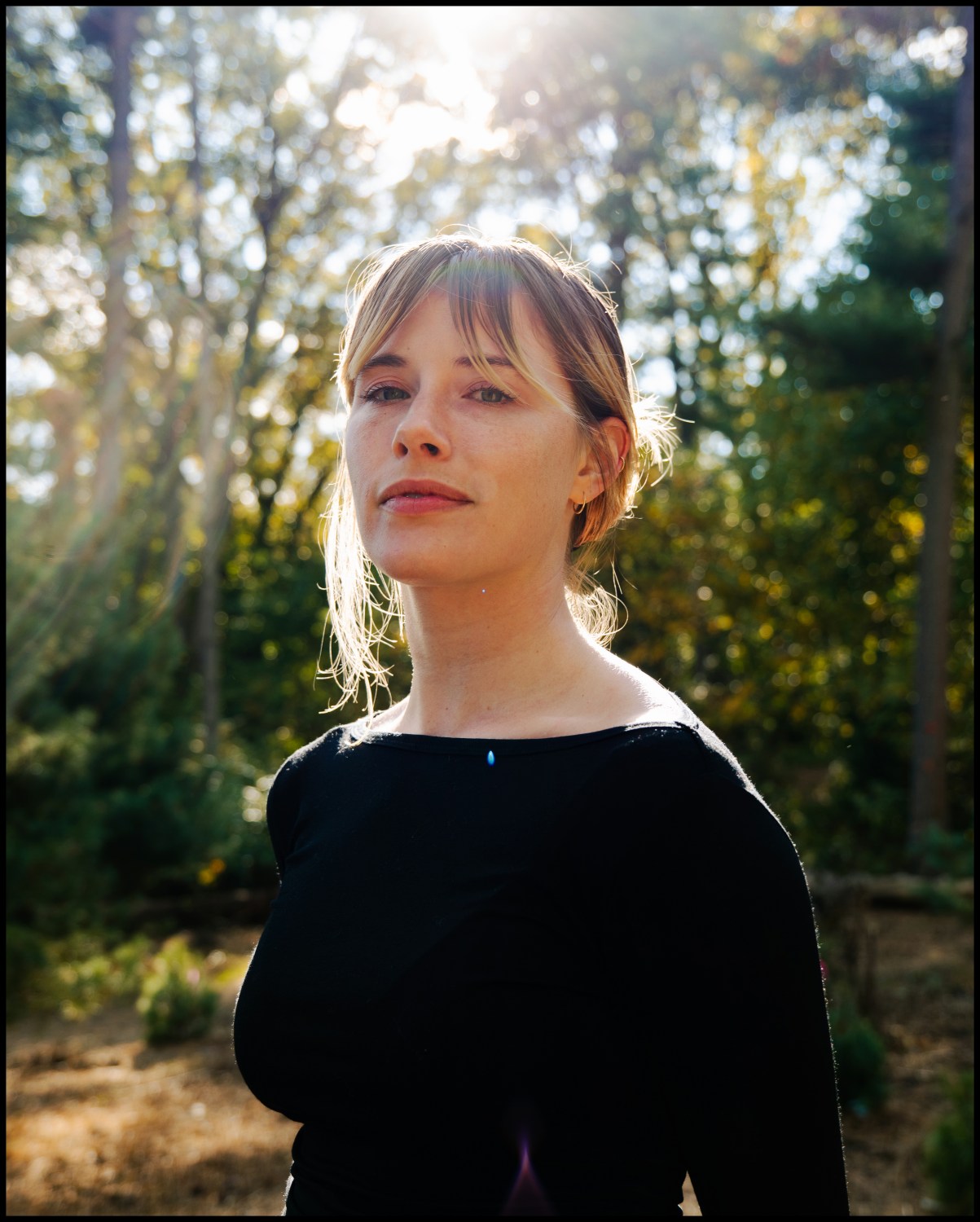
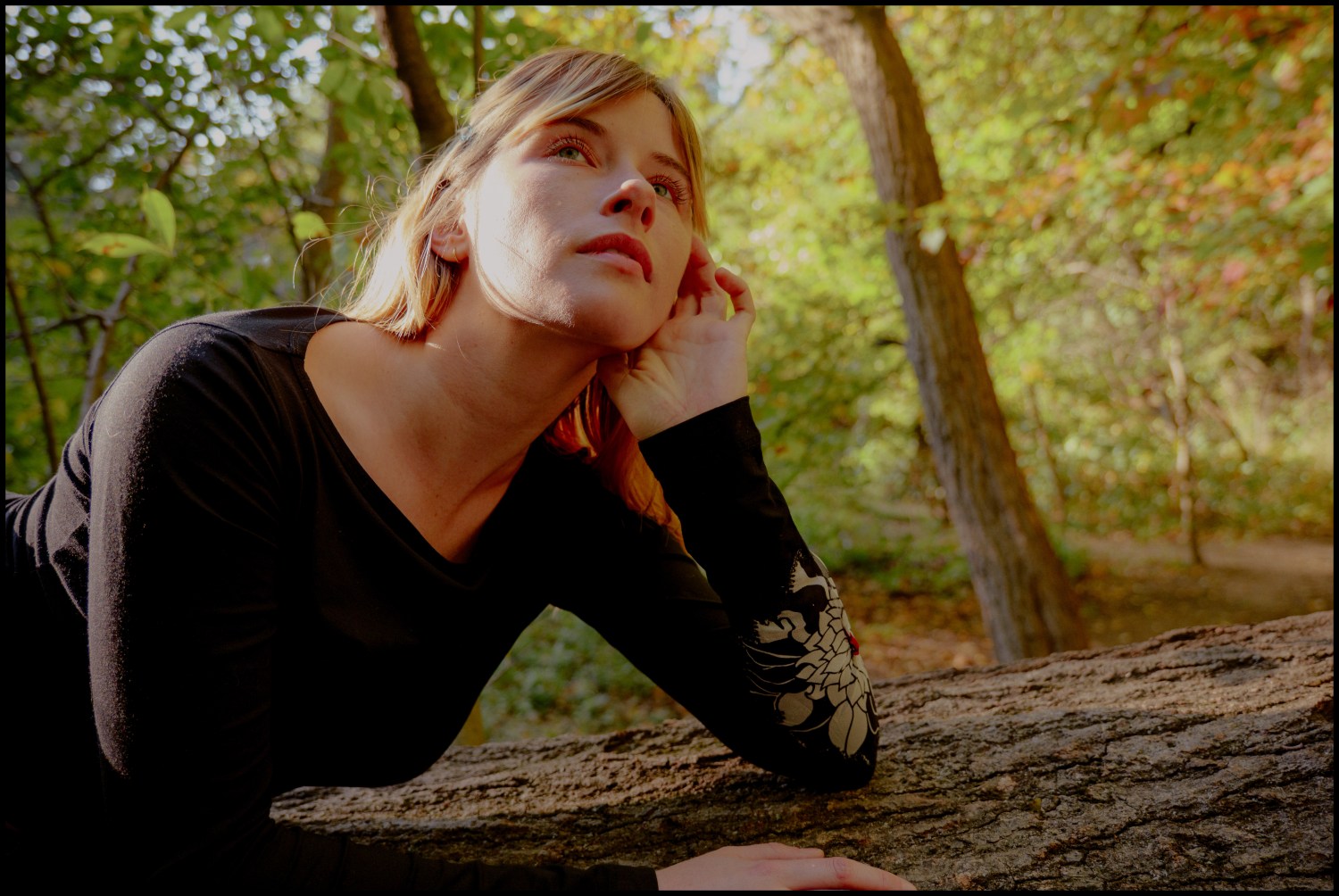
Photo by Olivia Gloffke
Red Sky at Morning was described by Pruzinsky as being largely about a journey. Much of that journey involves looking inward and seeking comfort in the familiar. Their findings resurface as what feel like kaleidoscopic reflections – the skin of their lover’s palm, an old memory of gardening with their older brother, the sound of the creaking floorboards in their house. Traces of familiarity follow Pruzinsky, mirroring their movements and changes, unfolding in constant evolution. “I try to write about what has happened to me because it feels the most visceral and impactful,” Pruzinsky said. But even in its intimacy, Pruzinsky’s storytelling is steeped in mystery. “I think the ghosts are gone from the house/ But there used to be something,” they whisper on “Krista”, as if letting the listener in on a childhood secret before confessing: “I think it was something I wasn’t supposed to know about.”
Pruzinsky’s ability to play with perception is what makes the record feel like wandering through a place both otherworldly and deeply familiar. A self-proclaimed lover of narrative, adventure games like Dungeons & Dragons, Pruzinsky said they love any opportunity to “create and interrogate a world.” At some points throughout Red Sky at Morning, that world is as vast as an open sky, a lifetime of memory passing, followed by the promise of uncertainty. But often it is as narrow as the confines of one’s own body, every detail brought to focus under the stifling pressure of stillness. “We haven’t left the house in weeks/ I start to see you in the t.v. screen,” they sing on “Arrival” with a slow, sinking delivery, mirroring the feeling of being slowly consumed by motionlessness. The song is about the discomfort that arises from a static, domestic lifestyle and the ease at which familiarity shifts between a source of comfort and of anxiety. But in the face of inner turmoil, Pruzinsky makes clear their determination for acceptance in the repeated line in the song’s bridge: “I can clear the cycle.”
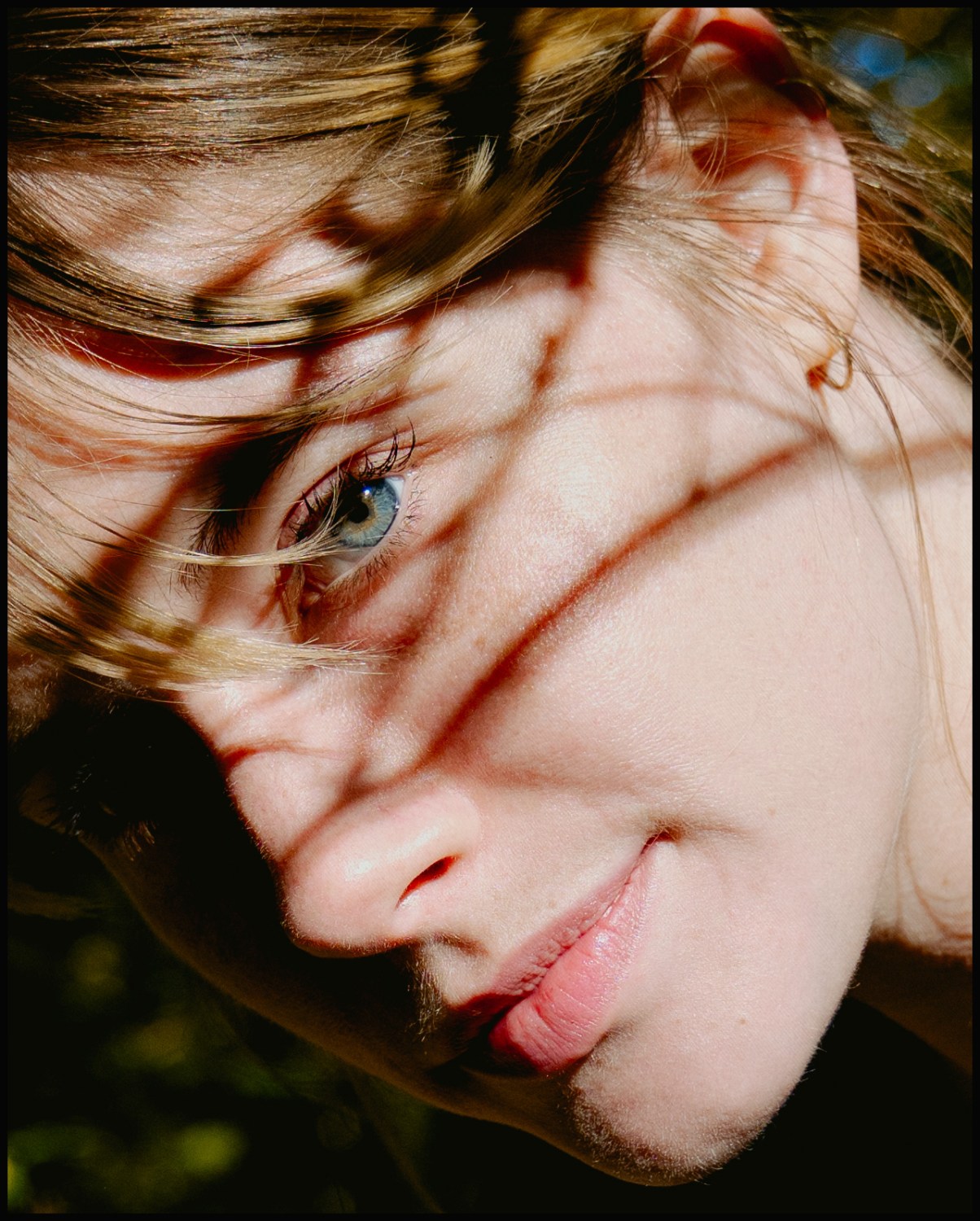
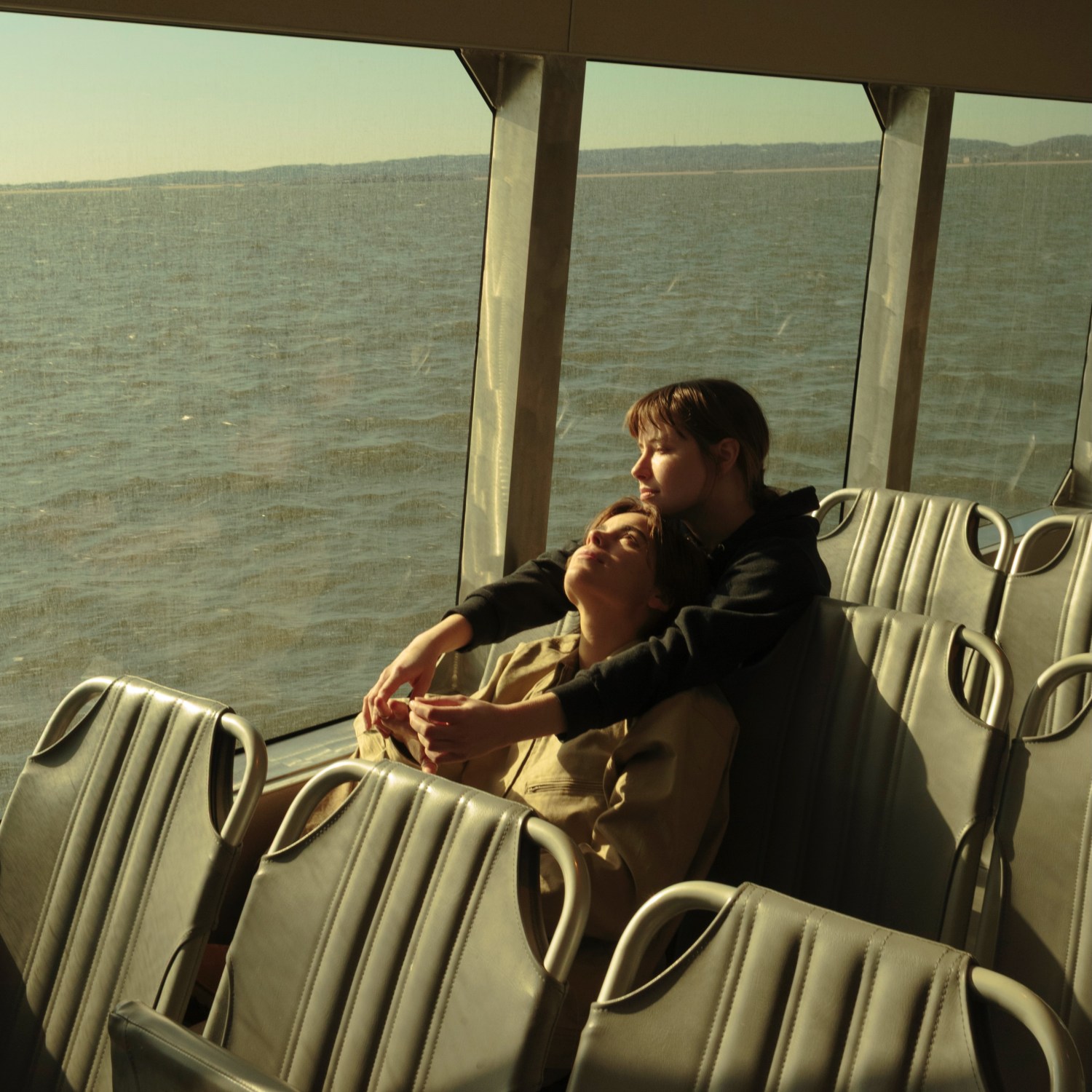
Photo by Olivia Gloffke
If Red Sky at Morning symbolizes a journey, that determination is the force driving it. On “After Always,” Pruzinsky depicts a slow descent into complete consumption: “I sink under you/ I am all of you/ And I breathe out the rest.” That imagery later returns on the album’s closer, “Sailor’s warning,” as Pruzinsky sings of being covered by mud with “eyes directed to the sun.” Their tone seems brighter here, as if they have chosen to allow themself to “sink under,” to willingly become enveloped in the unknown.
Between lush vocal layers and electronic swells on “Sailor’s warning,” all of the fears that Pruzinsky pours over throughout the record are whittled down to their core. “I know that you will change and I will too,” they remark before ending the record with a question that sings like an invitation, beckoning us forward into our own discomfort: “Don’t you know a warning sign when you see it?”
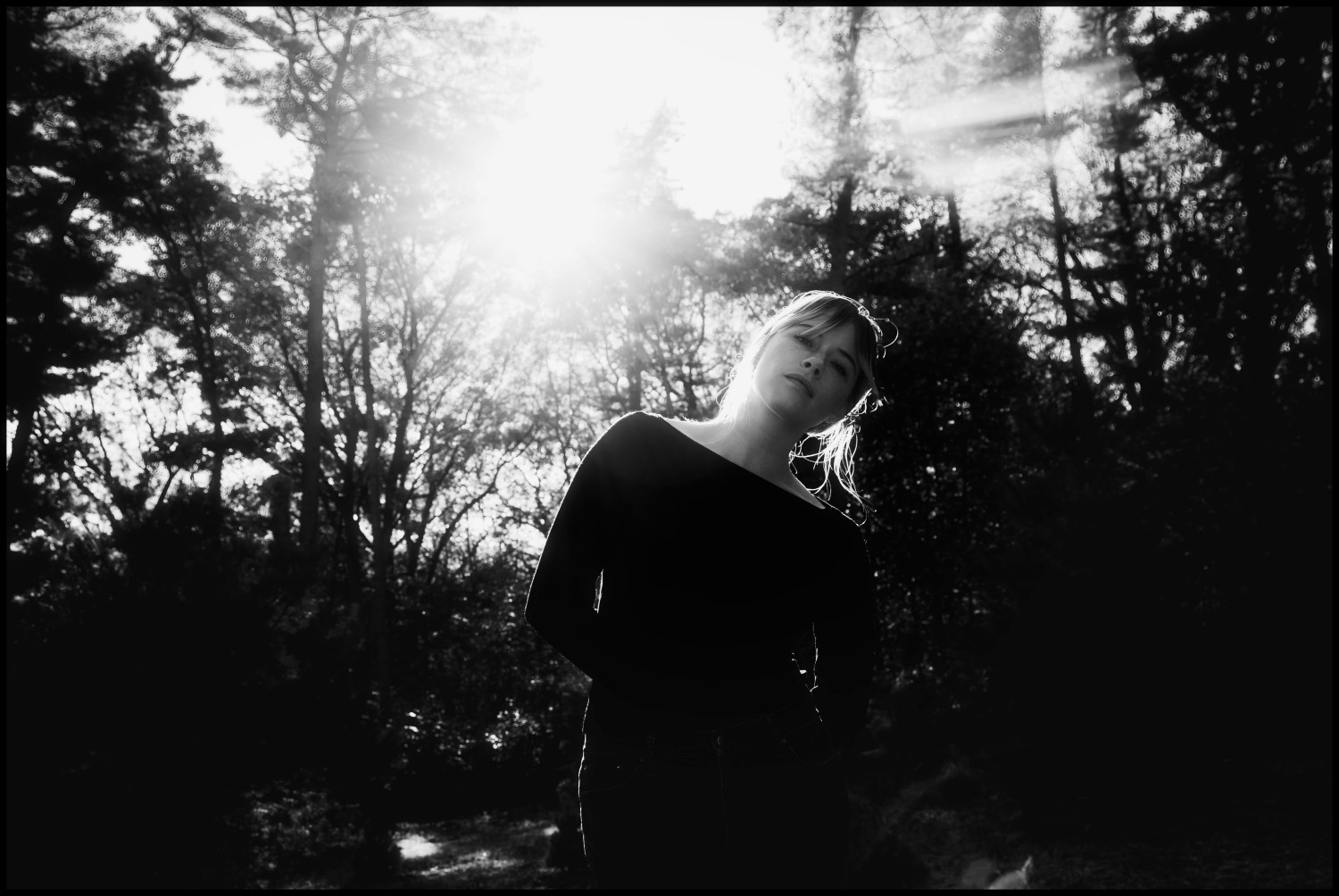
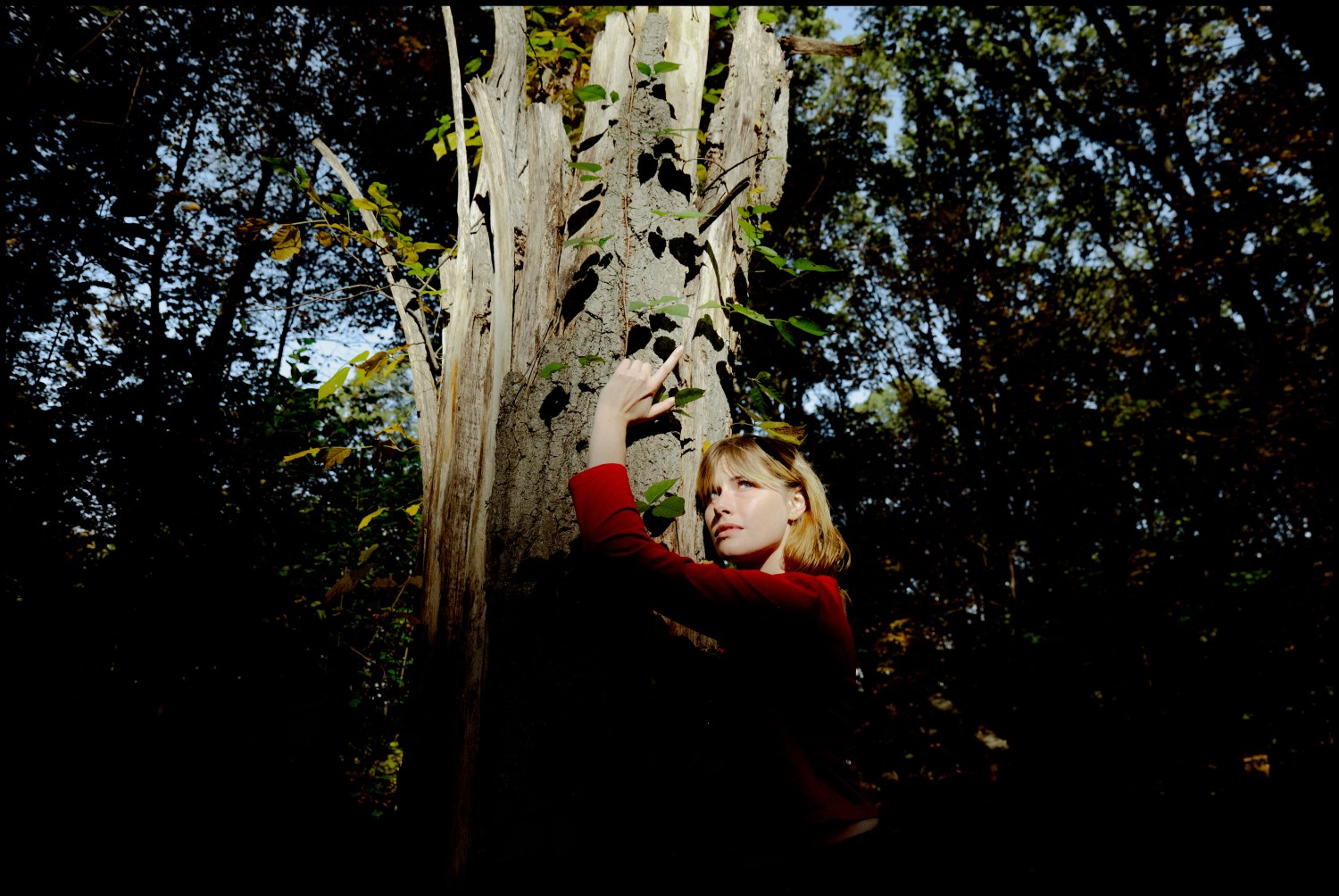
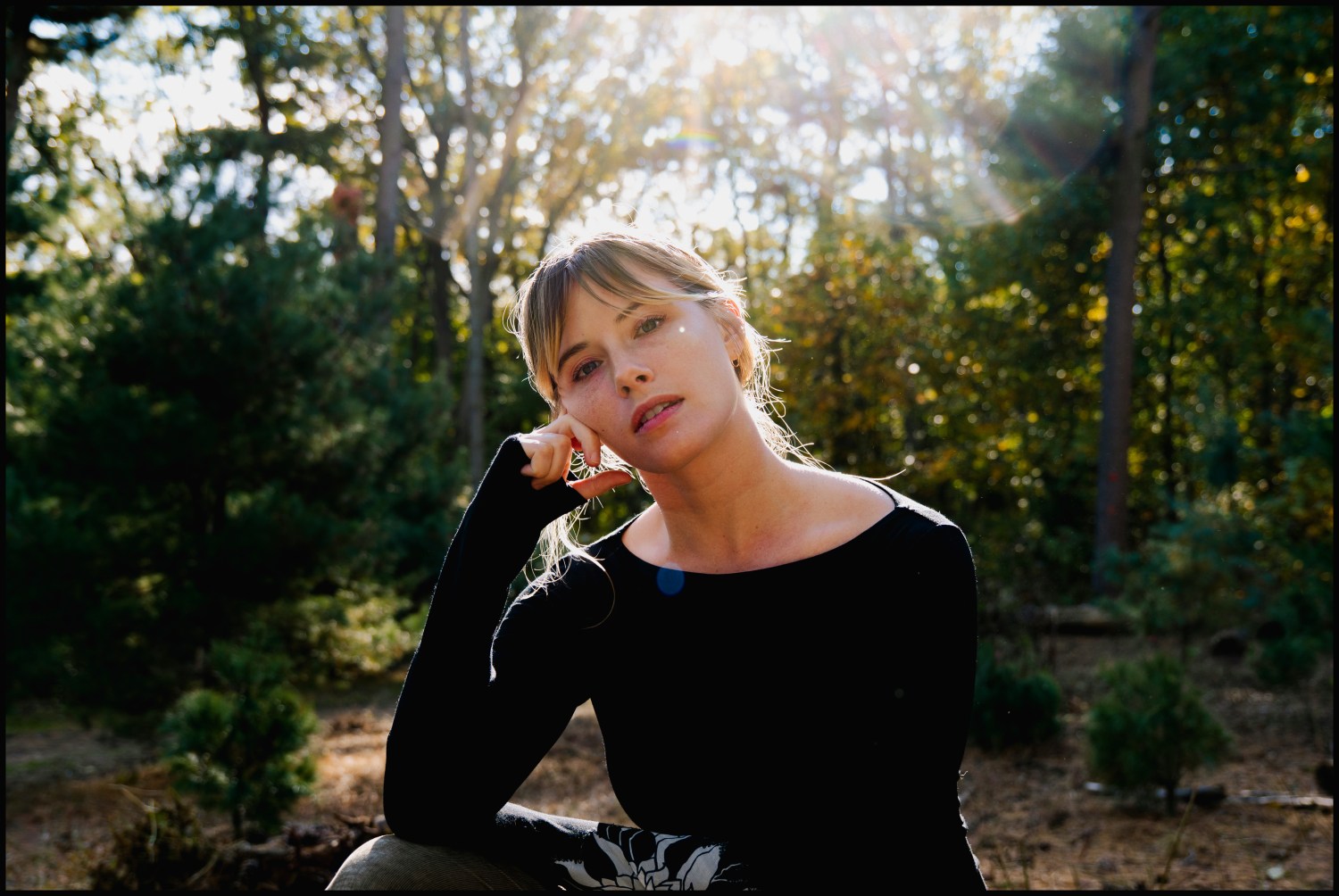
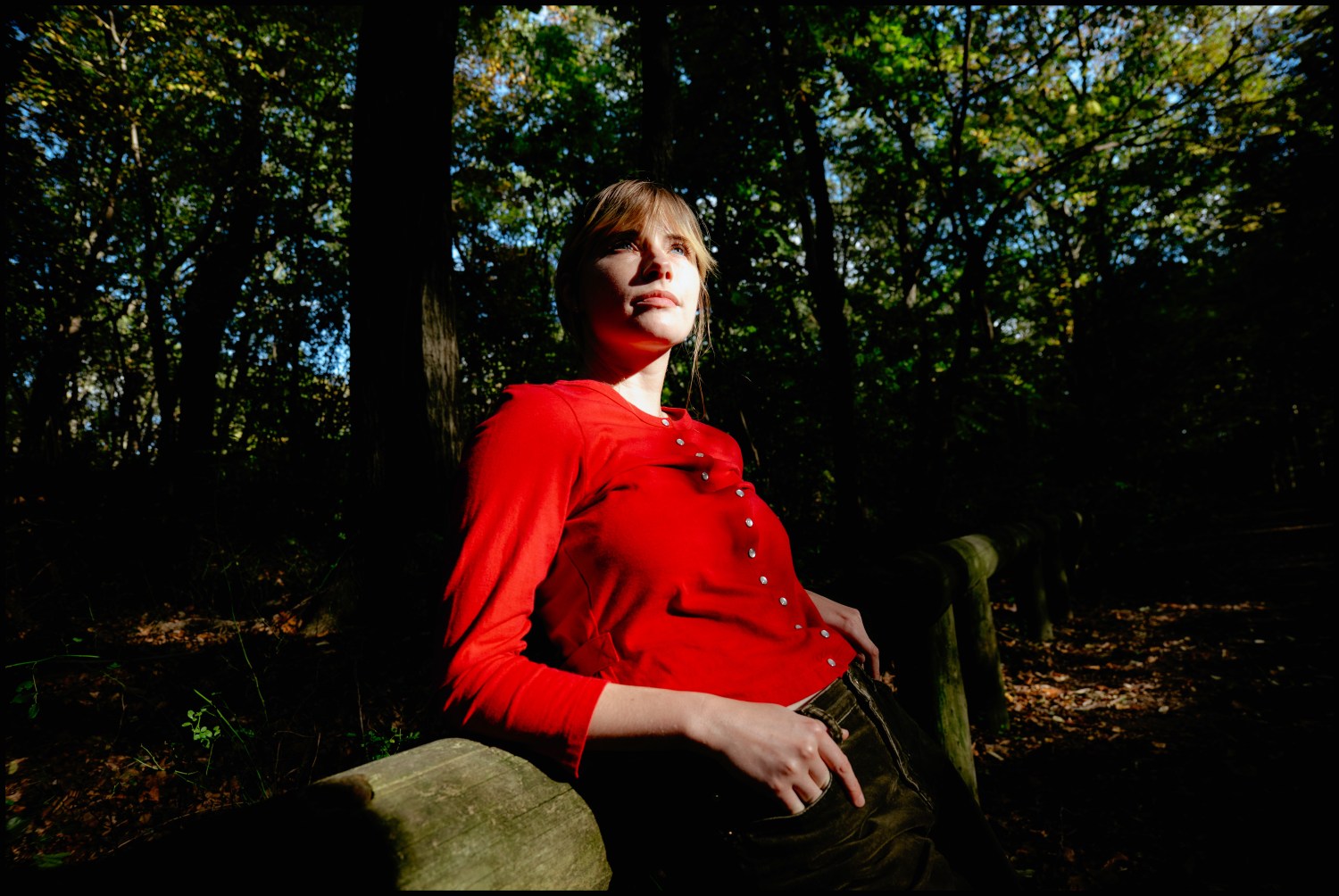
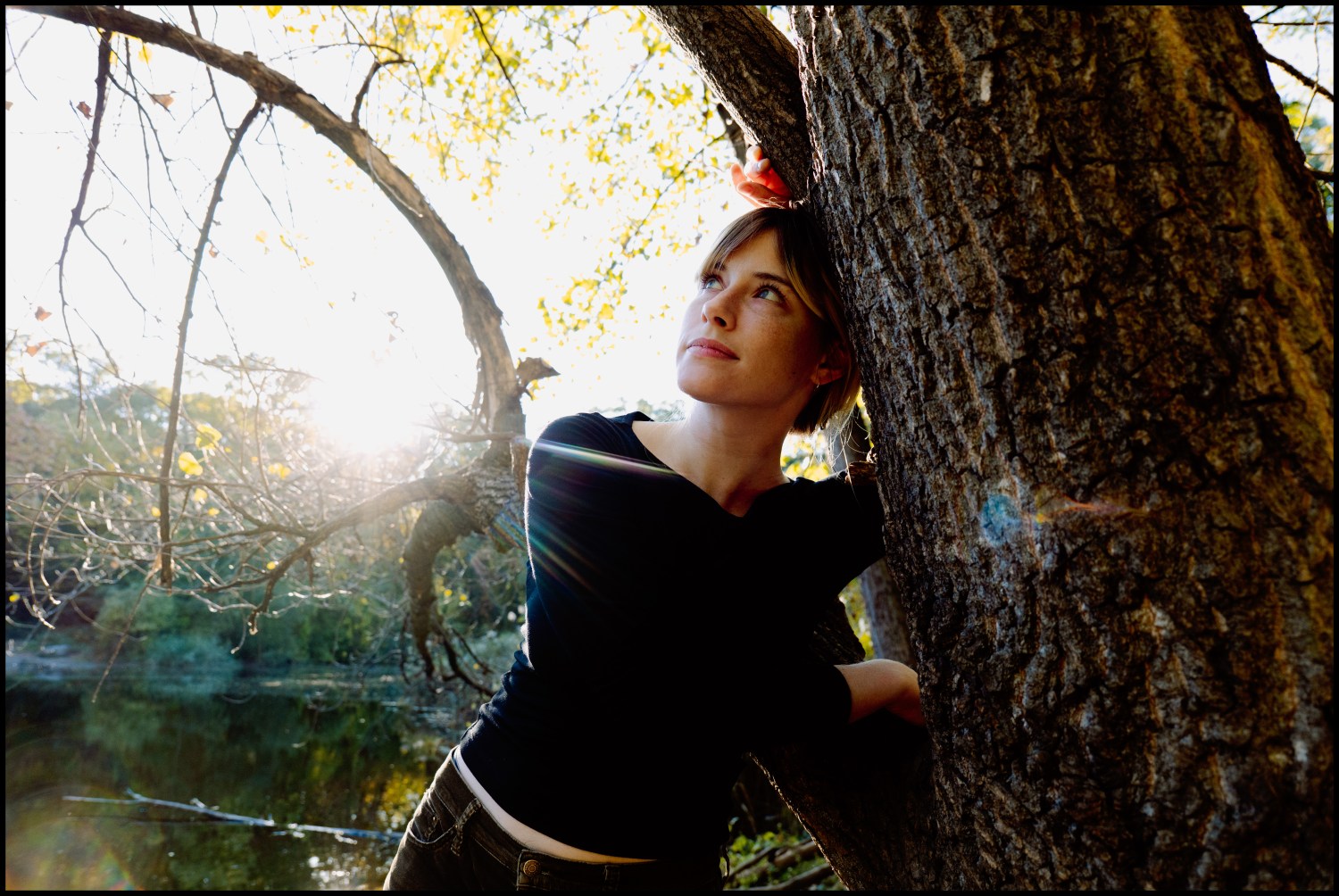
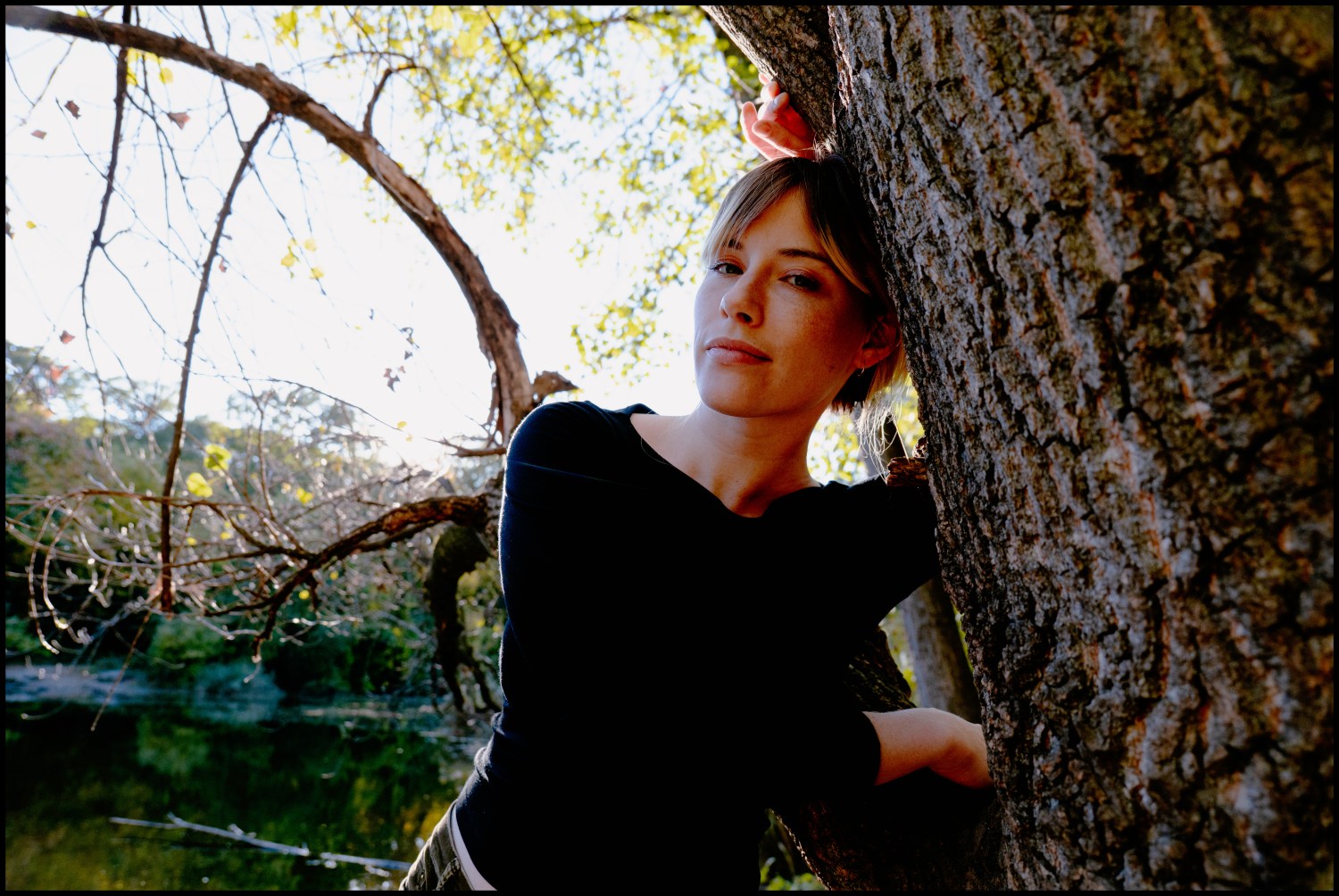
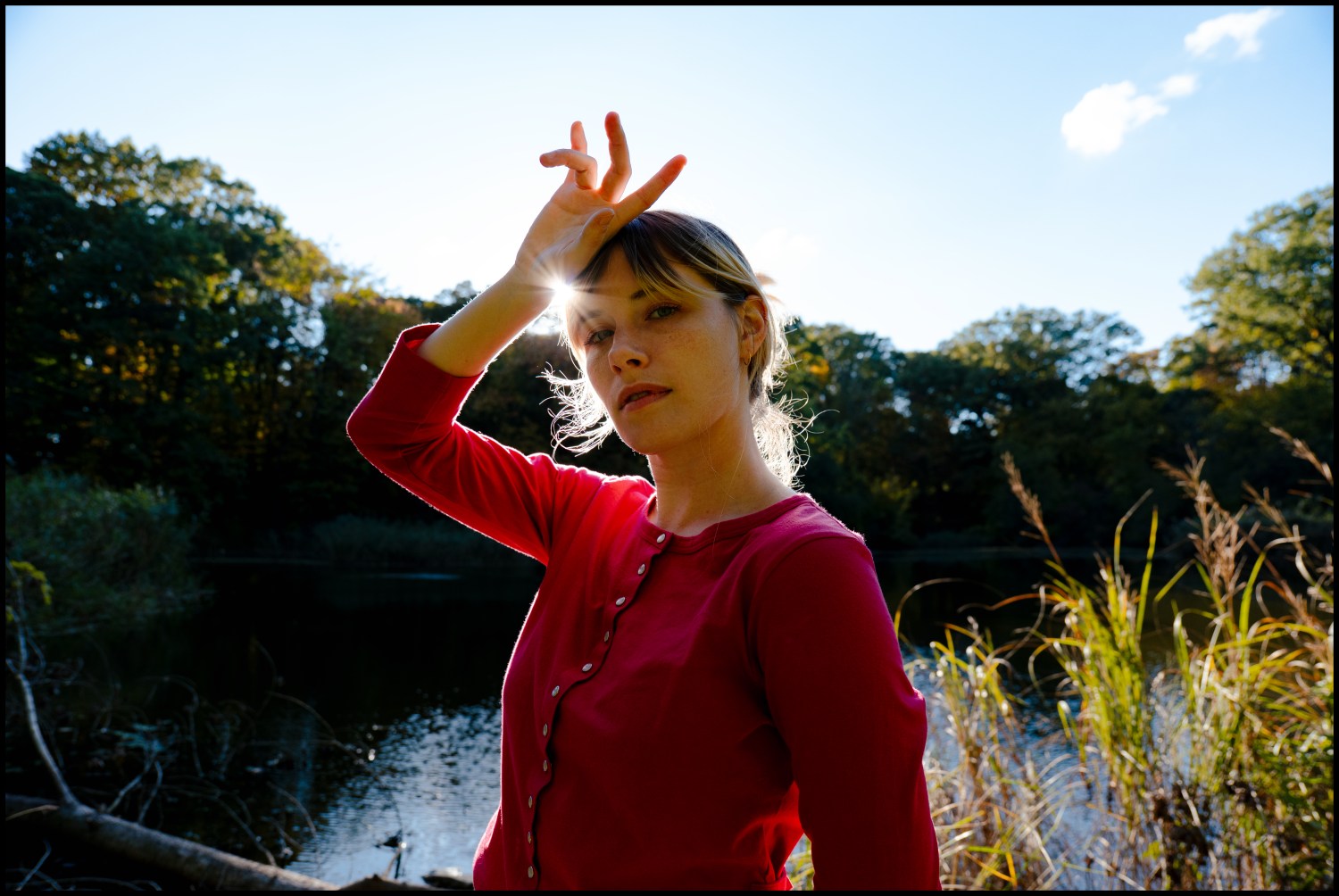
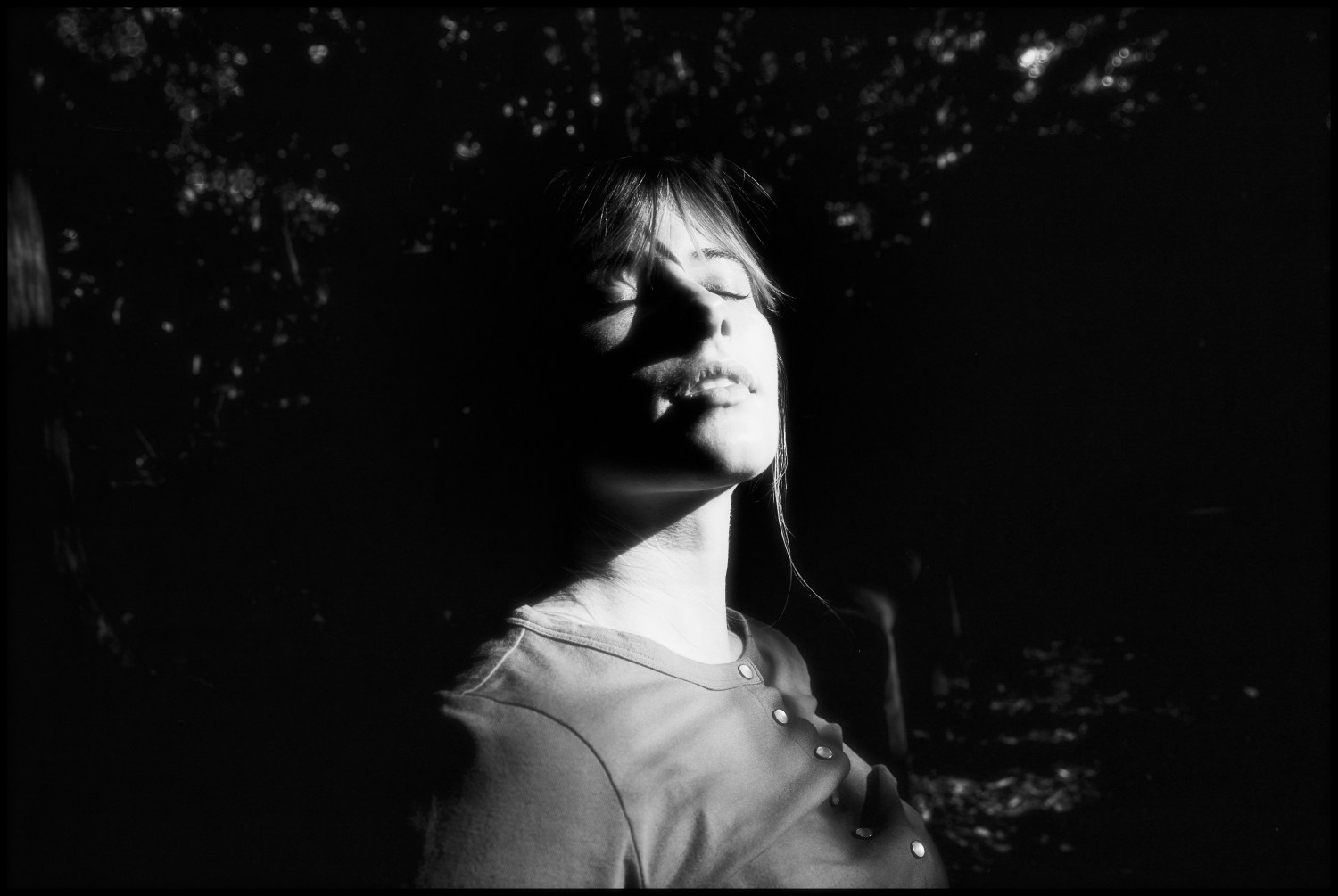
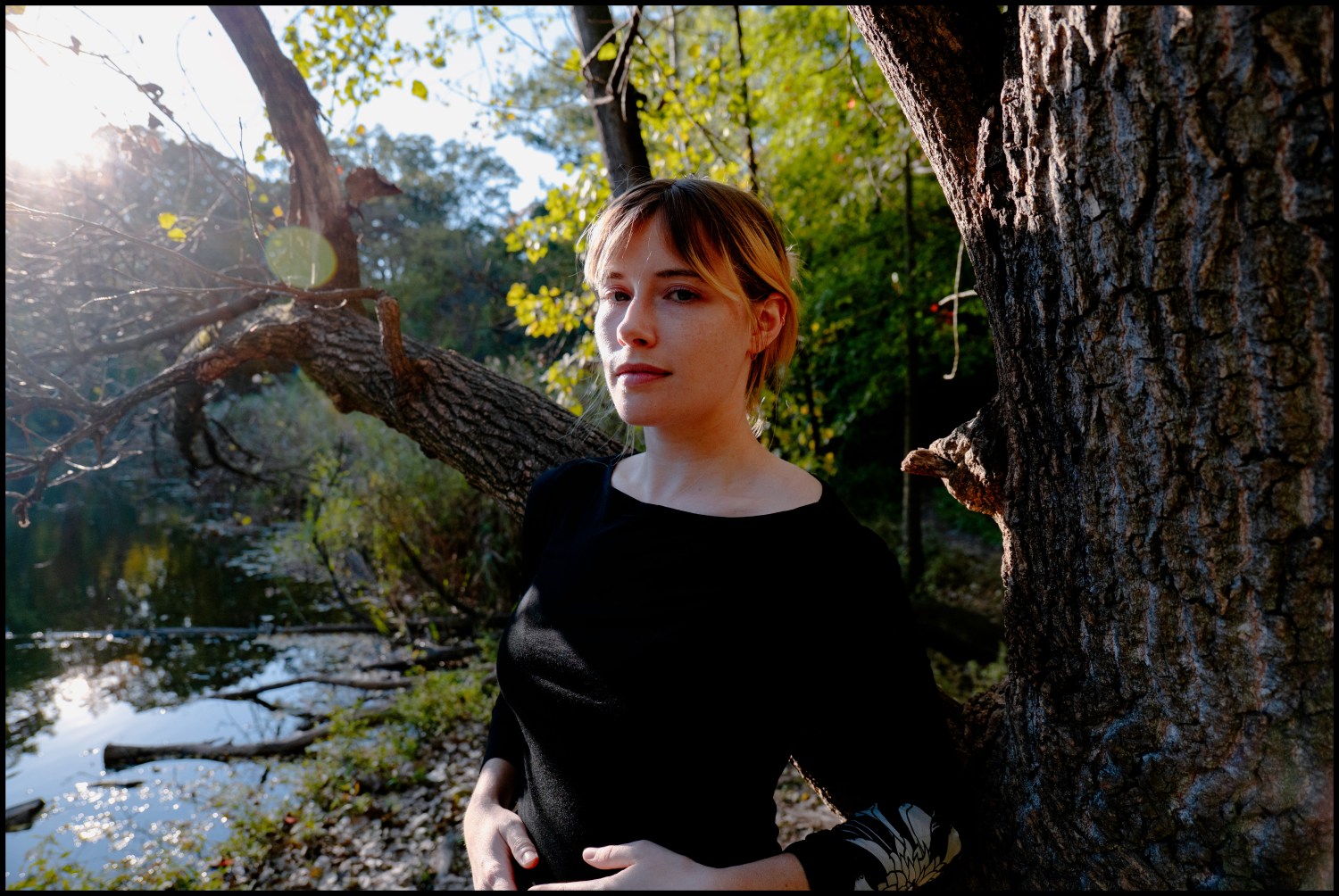
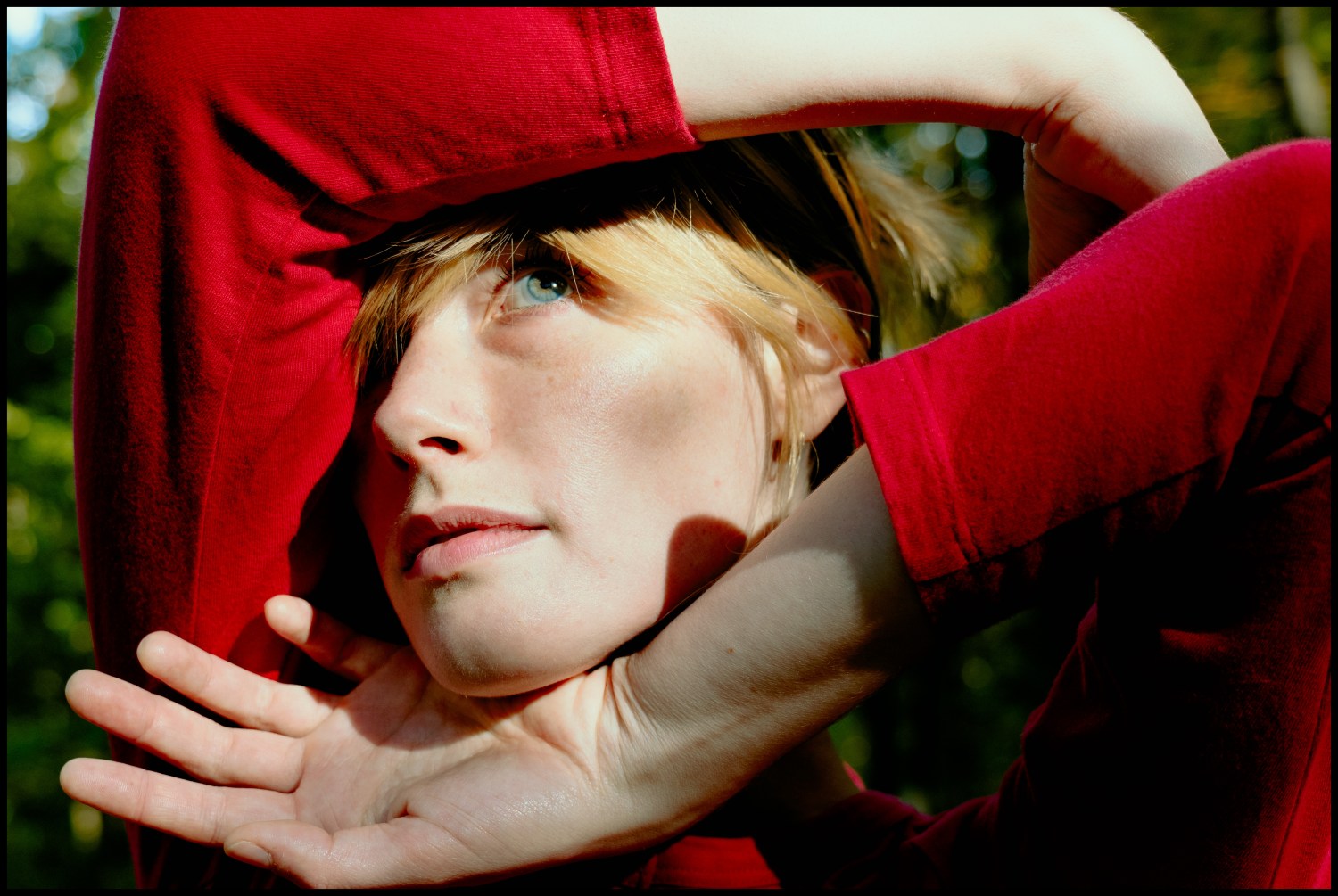
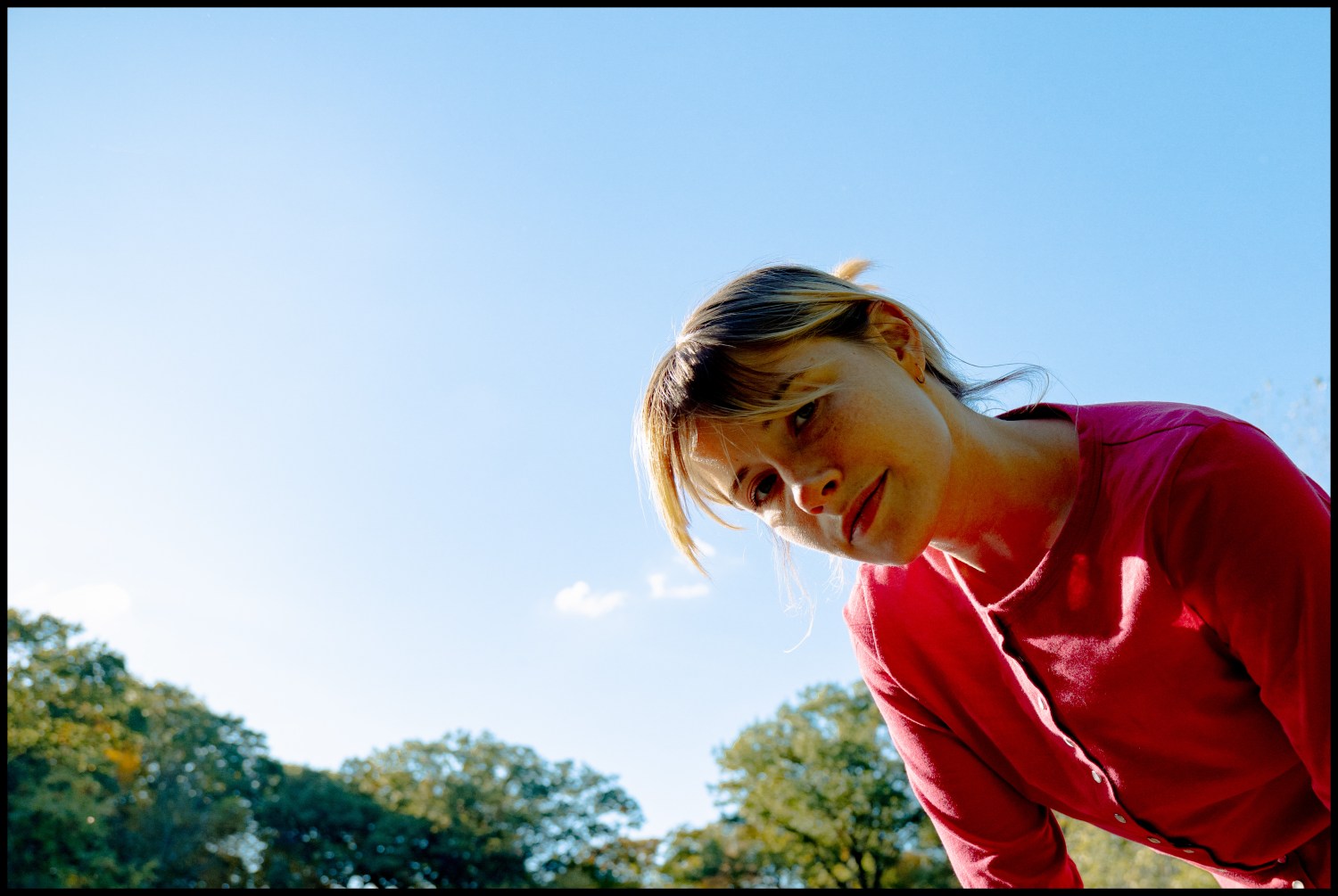
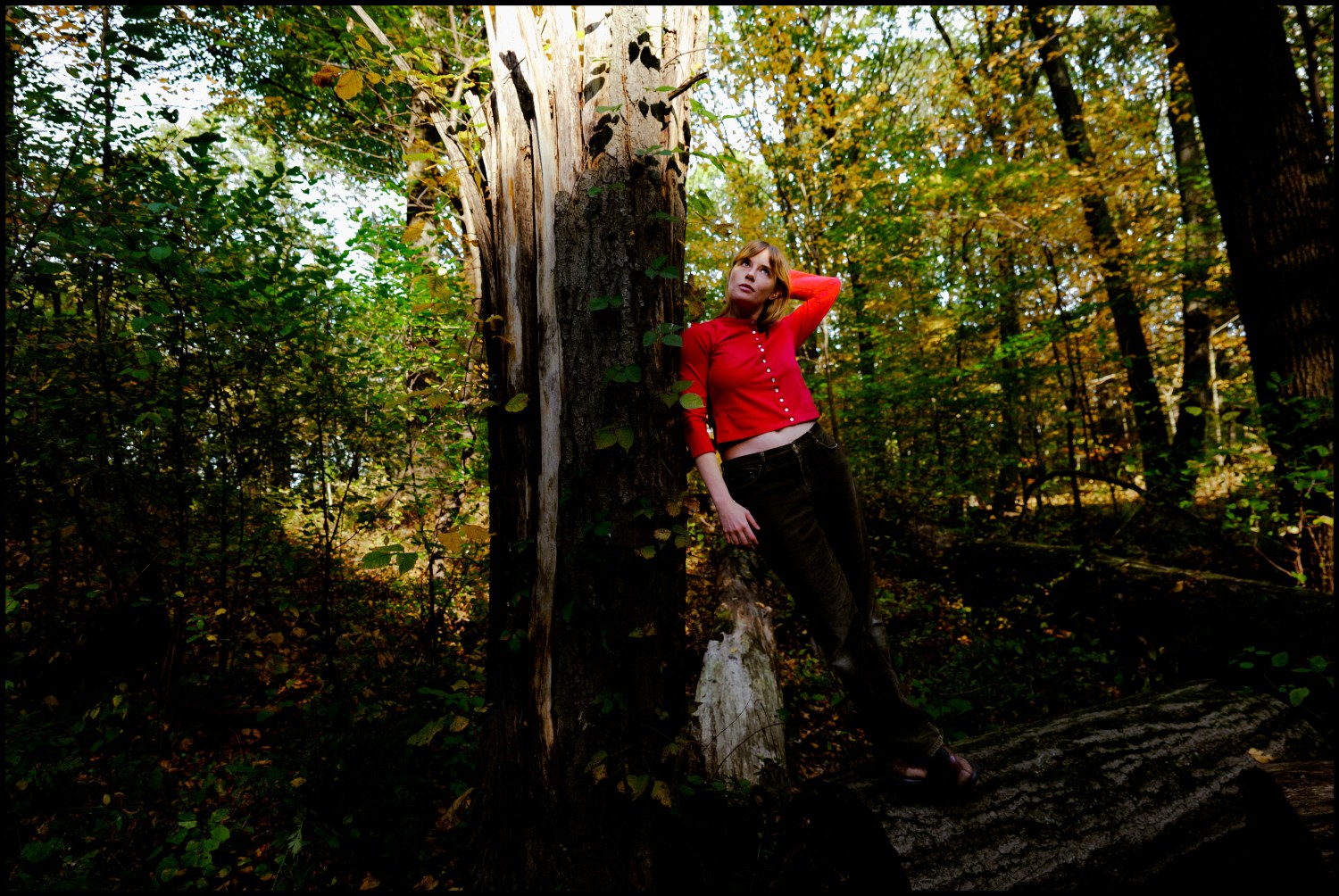
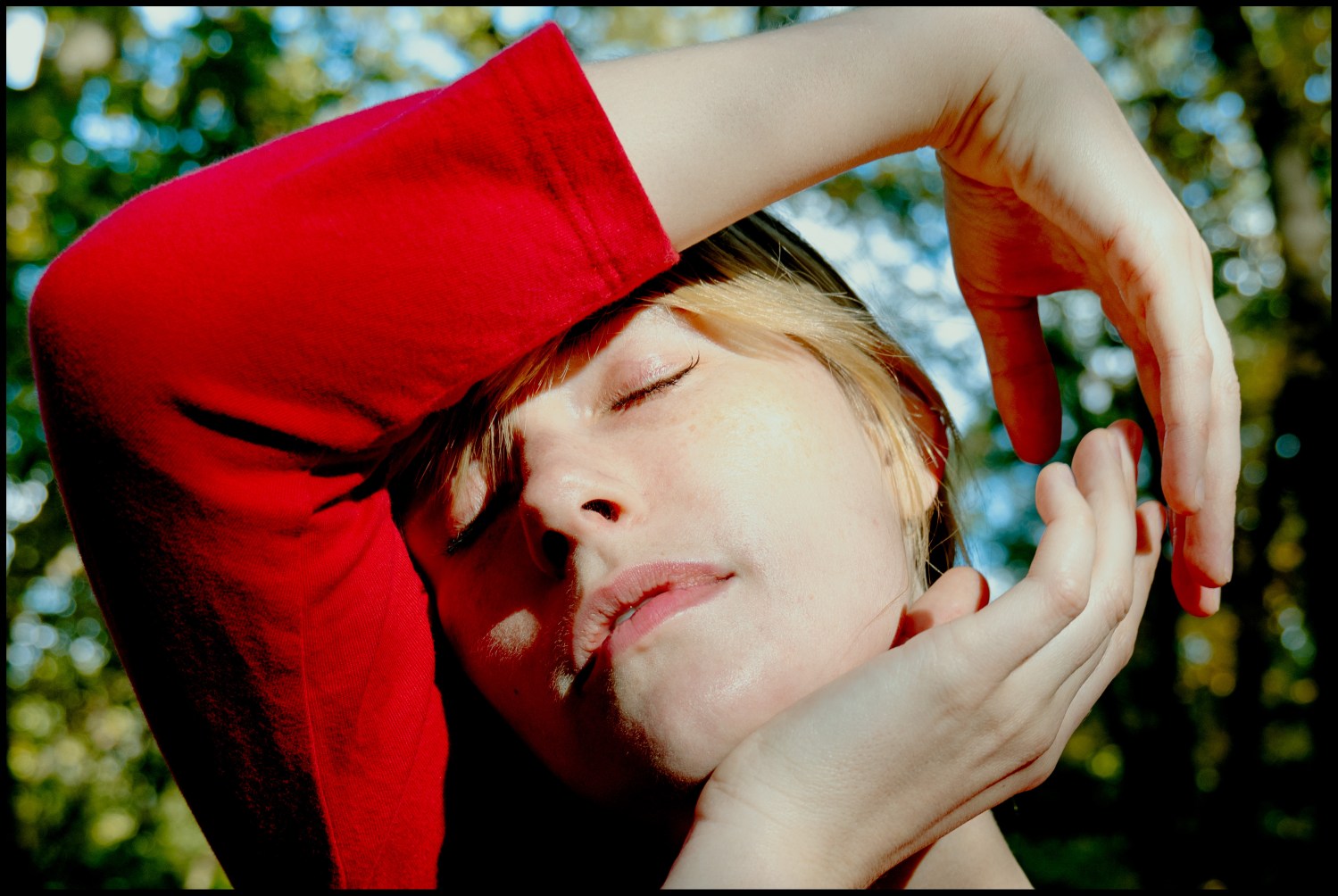
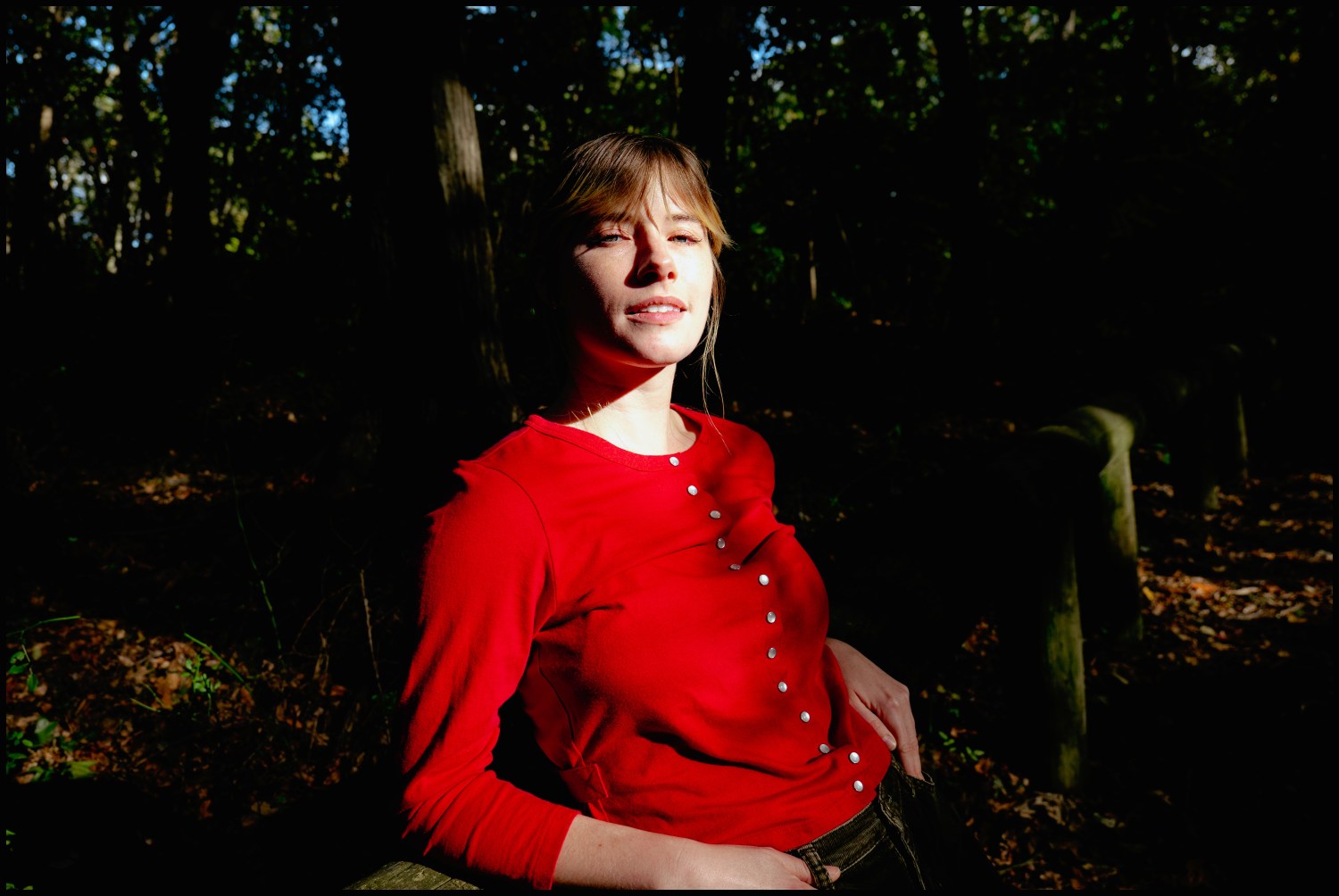
View more photos of h. pruz taken by Olivia Gloffke
You can listen to Red sky at morning out now as well as on vinyl released via Mtn. Laurel Recording Co.
Written by Emily Moosbrugger | All Photos by Olivia Gloffke
“For one thing, with all of our previous releases, we’ve always been at a point where we’re playing so many songs that aren’t even on the record that’s coming out. We often feel like we’ve moved so far beyond the thing that we’re releasing to the world,” Hannah Pruzinsky says, noting the frustration that occurs with the consistent forward motion of artistic practices and restrictions of time. “This record is the first time where that isn’t the case. It feels really exciting to just give something away and not be holding on to residual things.”
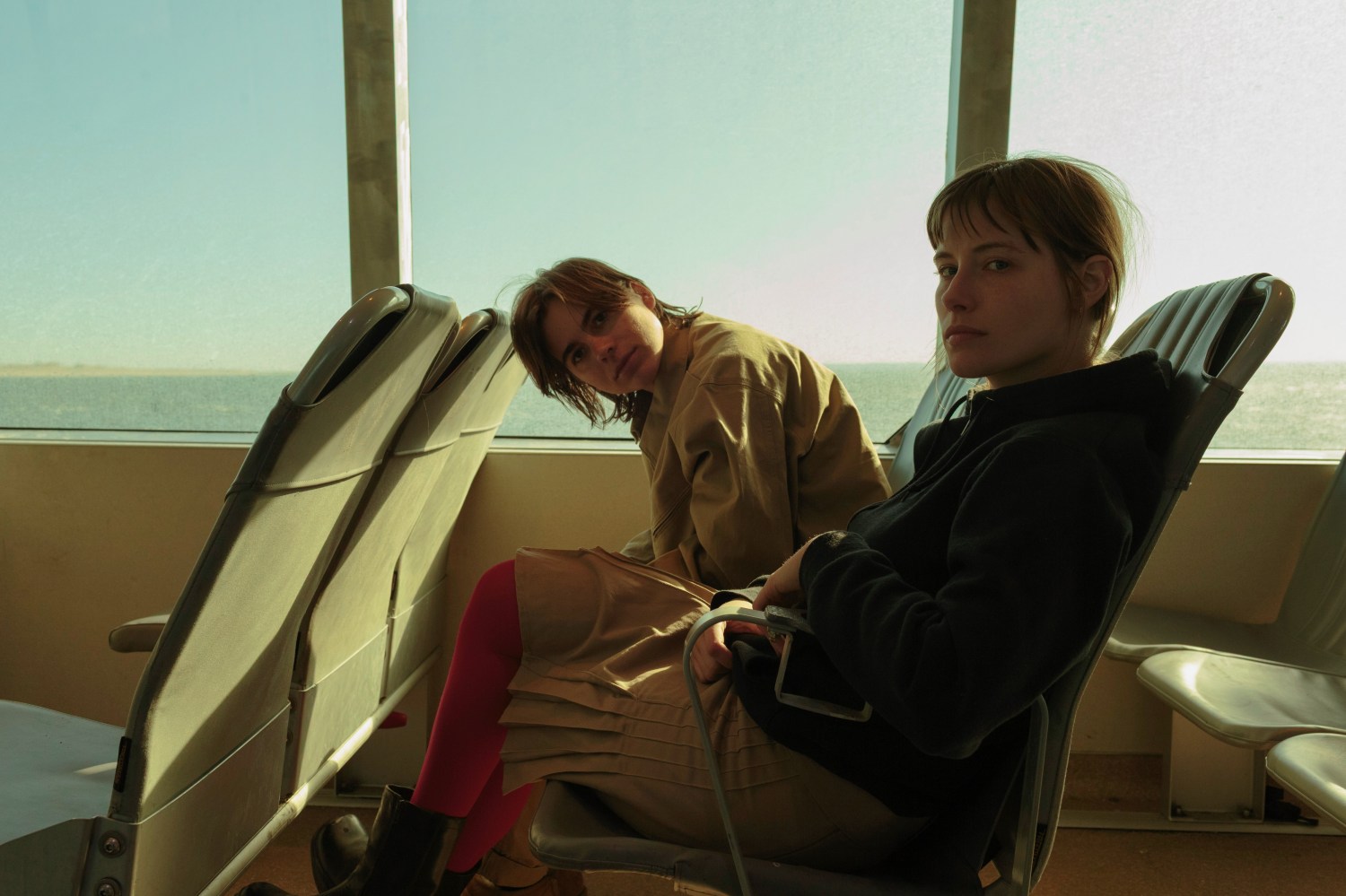
Sister. is the Brooklyn-based project of Hannah Pruzinsky, Ceci Sturman and James Chrisman, who are currently gearing up to release their sophomore record Two Birds out July 11th, marking their second release via NYC’s Mtn. Laurel Recording Co. Sharing their debut LP Abundance back in 2023, and a few straying singles here and there, Sister. has become a means of pushing the enduring process of their collaboration, all while further defining the project on their own terms. Playing with bits of maximalism, Two Birds is a record well-worn in, utilizing the exciting challenge of experimentation without hindering the deeply rooted intimacy of each track. Earlier this week, the group released “Honey”, the third taste test from the upcoming record and a display of just how well they can walk that line.
Caught within a loop, “Honey” begins with a steady build, embracing the group’s inherent talents and knack for sonic contusions that they often find themselves exploring. As a whole, the song feels rich and heavy, like thick ink blotches dripping on a clean sheet of paper. And once it gets started, it’s reluctant to stop the dribble of emotions that are no longer contained. And to their credit, “Honey” feels unpredictable in its direction, rearing both excitement and tension until the long-awaited release of the very last line, “oh honey, weren’t you moving towards eternity?”, becomes a stand-still thought caught up in all of the motion. As the group prepares to release Two Birds in a few weeks, “Honey” is a clear marking of a band that continues to push the boundaries of what they’re capable of, while still holding dear to what they know best.
We recently got to catch up with Sister., discussing new writing practices and the weight that lies within “Honey”.
SR: You guys have a new record coming out in July! How’s it feeling to finally get it going?
Hannah Pruzinsky: We’re really excited about it! These songs on the record are a lot of tunes that we’ve been working through in the live shows, so it’s been fun to be able to explore the arrangement so much.
SR: So they were given a lot of space before finalizing them?
HP: Yes, I think the oldest one is probably ‘Levity”, which I remember Ceci was playing on guitar as Felix [Walworth] and I were having a conversation like three years ago in our living room. Maybe about astrology or tarot cards or something?
Ceci Sturman: I think you had pulled [Felix’s] tarot cards and were reading them, and some of the words I found so moving and just started playing around with them. There’s a voicemail recording of the first time I ever played it, which I think is my favorite version of the song ever. It didn’t make it on the album, but the version that’s on the album is also extremely cool, and that is sort of just a James masterpiece.
James Chrisman: We recorded a good chunk of the album in live acoustic sessions. We did a lot of it in our studio, but there was some of it that was done in Hannah’s living room with all of us sitting in a circle. We tried “Levity” a few ways, but we couldn’t quite get there to be enough movement and momentum in it, because it’s quite a repetitive song. So I took that acoustic version and put it through this kind of delay where a part will get caught in the chamber and repeat, and then you can change the pitches of what’s caught – you’re kind of performing into the delay. But there’s actually very little material in the song itself, so it’s the performance of singing over guitars, and there’s the second performance of the production that’s really fun.
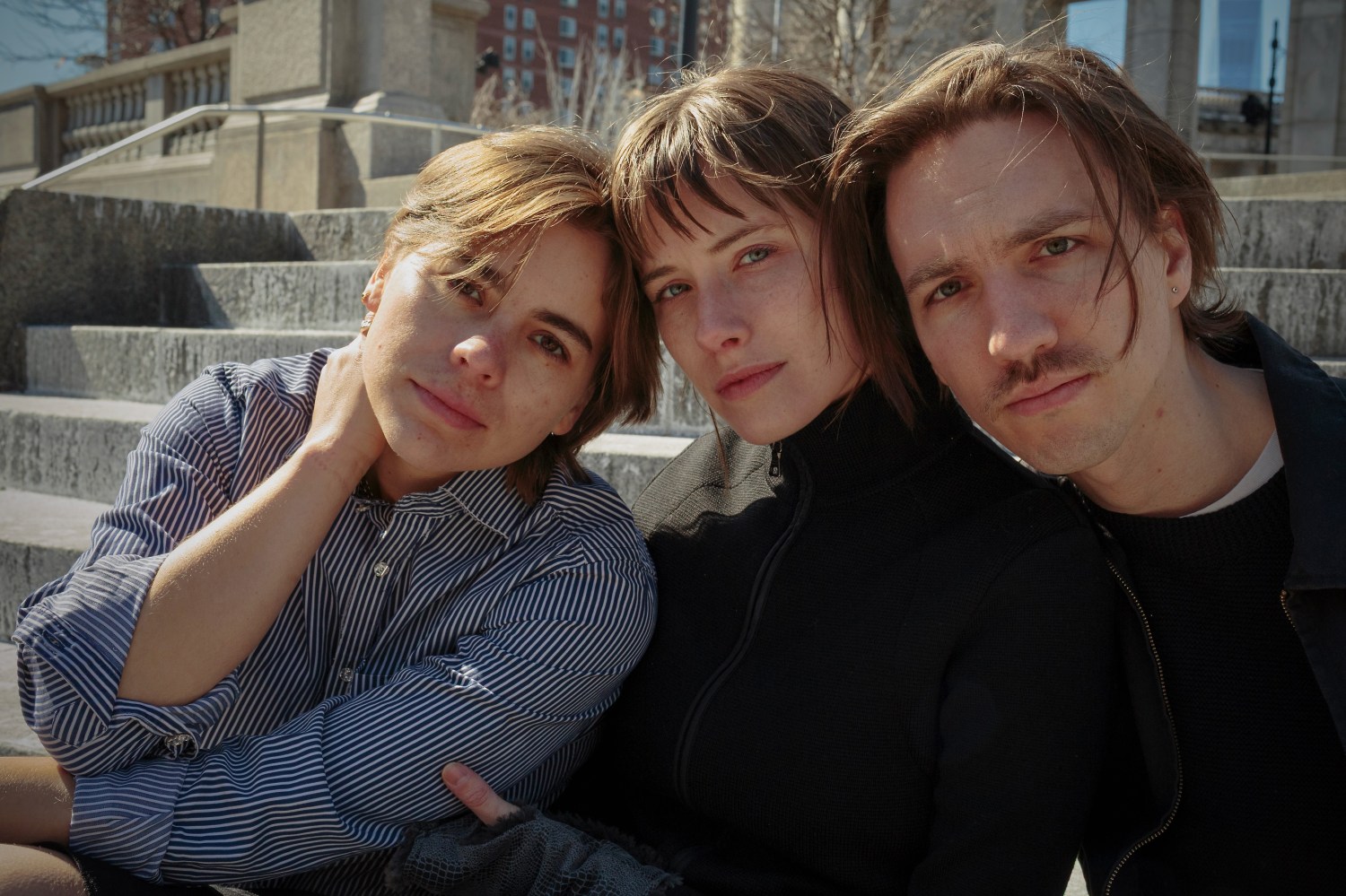
Photo Credit: Sarah Blesener.
SR: I do want to talk about the sound as a whole, because it does feel like you guys are coming into a more defined area for Sister., compared to that patchwork style of Abundance. As you went into recording these songs, what did you find yourself focusing on as you were piecing together what would be the sound of this record?
CS: I think that there’s a lot of maximalism which is a thing that we prefer – it’s sort of a sister. vibe. That definitely was true in Abundance, and I think in a lot of ways we wanted to replicate that and make it sound better. We’re all just a little bit better at the process.
JC: I mean, just a big difference is that we played everything as a band before recording it. There’s a way of making music that a lot of people do now, which is you play a song into a computer and then you try a bunch of stuff over it. I’ve done that. But we had figured out band arrangements for almost all the songs. Felix was much more in the mix this time from the beginning. That is a big difference between having stuff finished and then tracking drums over it versus building over a drumbeat.
CS: It’s definitely true with our last album, where we started playing it a lot after recording it, and we found out we liked some of the new versions a little bit more. I think we were just mindful of that going into this process and being able to play it so much and really figure it out. It has made a very cohesive sound, and we’re proud of that.
HP: Also, just a note on the writing of this album, too, it was much less those patchwork moments with songs coming from Ceci, coming from me or coming from all three of us. This time around a lot of the songs started off with Ceci and I meeting to work through things, as it was also a time when we had just moved away from each other. It was this connection to each other and our friendship through the songwriting. But there are also a lot more songs this time around where all three of us wrote the songs from start to finish.
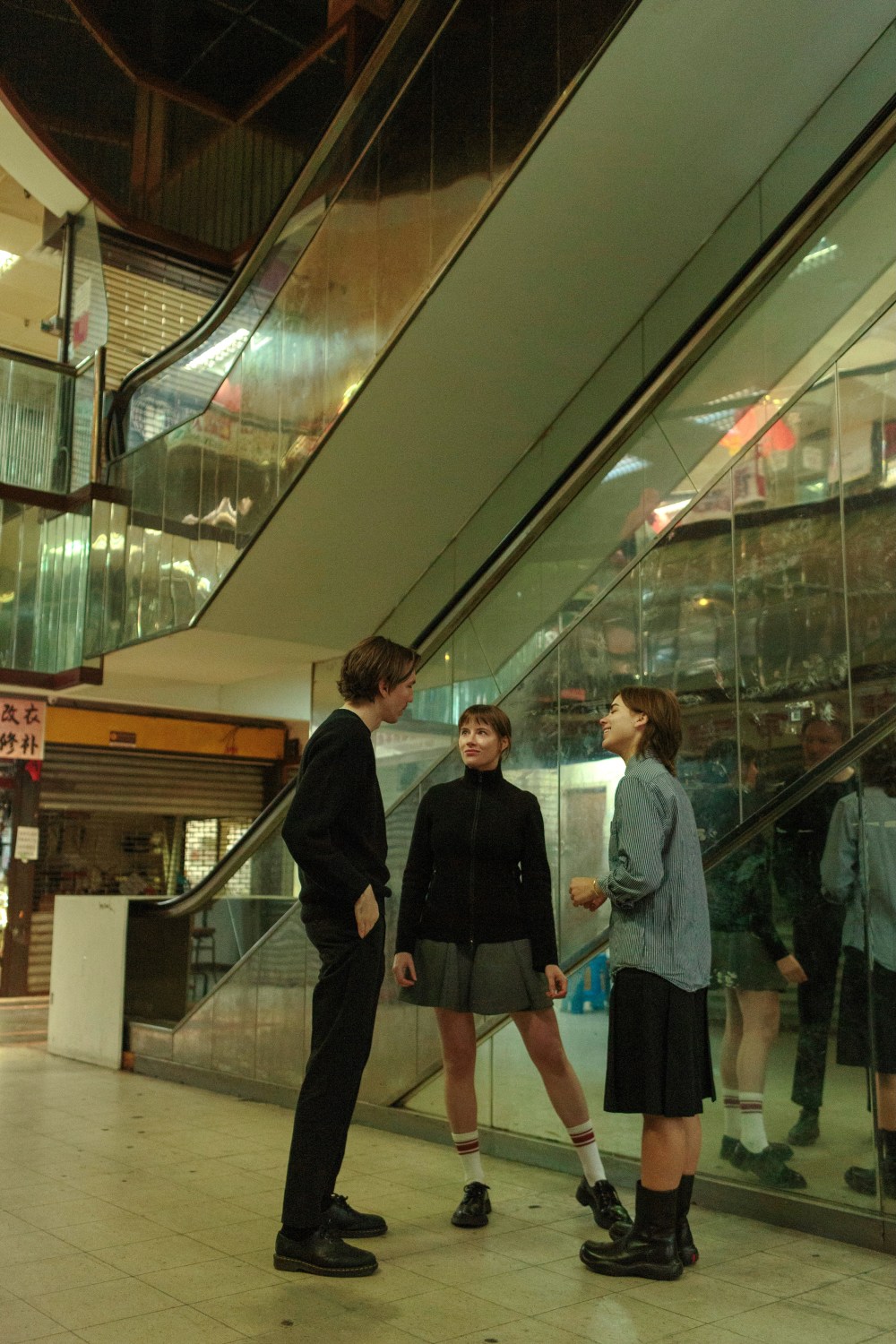
Photo Credit: Sarah Blesener.
SR: What was that like having the three of you writing together start to finish?
HP: I’m always surprised by how easy it is. I don’t think I can do that with other people. I think there’s a lot of trust between the three of us, where we can propose an idea that maybe is a little silly, or feels harder to do with people that we don’t have this type of trust with natively.
CS: I was thinking about the process for “Blood in the Vines”, which is a song that we wrote together. James proposed an activity of writing a song in 30 min. So that truly was us just putting a timer on our phone and seeing what we come up with. It started with playing the guitar and throwing phrases around, and then at the end of 30 min we had the bare bones of the song, and we really liked the direction it was going.
SR: That’s an impressive practice. So you obviously have trust in each other, but as ideas started to come out of this moment, what sort of things were you trusting to either follow or quickly discard in such a short timeframe?
CS: I’m always trying to keep everything. And so, I’m like, ‘it sounds amazing. We got it’. They can attest to my falling in loveness with scratches.
HP: I remember the song at first felt kind of pop-punky in a way. That’s certainly not something we usually do, and I think we all knew we weren’t gonna go too deep down that rabbit hole. But it is fun for us to explore a different key that we don’t usually write in and see what kind of feelings and emotions or phrases come up with that. It really depends on the song we’re writing together what we start latching on to.
JC: I think in that case, the point of the exercise is to be guided by excitement and not intellectualize at all. I think a lot of creative practices people figure out that with editing, you have infinite time. But how do you get inspiration? And turns out there are ways to manufacture inspiration, and one of them is an artificial time constraint. If a Riff were stupid or something, that would be something to worry about after that timer is over. But in the meantime, you have something, and you can make it resemble something you like, because it’s something that now exists. That’s kind of the mentality behind something like that, because you’re just worried about things like, ‘is it me?’ and you sort of bypass that because you’re like, ‘Oh, no, I only have 10 min left. Who cares.’
Photo Credit: Sarah Blesener.
SR: I want to talk about “Honey”, the next single you are sharing. One thing that I’ve always admired about your guys’ lyrical writing is the way that you really put a lens on personal and interpersonal relationships. With that, I was really drawn into the opening setting of a kitchen, because it’s a very homey, intimate location. But as the song starts, we’re brought into this already antagonizing situation. What kind of portrait were you trying to create by using this location?
CS: “Honey” is a song that I wrote the lyrics for and I remember wanting to immediately place it in the kitchen because I read something where a songwriter talked about how having the setting in the first line can do a lot for the song, like placing someone somewhere. I’ve never done that, so I want to see how that could become a way of sorting through some conflict or interpersonal confusion that is really intimate, but very distant. I think of two people that maybe are trying to figure out if they really know each other or understand each other while they’re already in an intimate setting, and like how you can sort of navigate that familiar scene. I’ve experienced a lot in my life, where I’m just sort of getting to know someone, and the more you get to know them, the more questions you have about your compatibility, or about how you relate to each other, and how that makes you relate to yourself. Really playing with the sort of contrast between the intimacy in the home, and then the serious distance in the connection.
Photo Credit: Sarah Blesener.
SR: The avenues you guys follow with the sonic exploration really do a good job at creating that tension. A standout word that I grasped onto was ‘eternity’. In that phrase at the end, I feel like that’s when the lyrical and the instrumental stories really blend together to form this release. What weight does that word ‘eternity’ hold in this song? And how did you guys try to embrace that weight instrumentally?
CS: I wanted the last word to be something really drastic, and it is drastic [laughs]. But, I mean, it’s like asking the same sort of intimacy question where sometimes you start asking them and then you can’t stop asking them, and they just build and build and build and build. The weight of it is just very big.
JC: And a big element of that song’s arrangement was found when I was mixing it. I took Ceci’s vocals and put it through what’s called a space echo, which is another kind of delay – that’s when something catches itself and it creates an infinite generative signal. So there’s kind of a literal sound painting aspect of evoking infinity there. And that first sound you hear in it is actually Ceci’s voice going through that space echo. And a lot of that stuff climaxes more towards the end like a sound painting aspect of the lyrics.
CC: I love how the band worked on the song and created it to be so tension driven. The chorus has no words in it which is abnormal for our songs, especially for the songs that I’ve written. It’s cool to lean on the instruments and the feeling that’s driven to continue to build the song where the chorus usually does. I think that there’s a lot of questions in the song, and we just slowly keep building and building and building and building it up until the last lyric, which is ‘weren’t you moving towards eternity?’, which is a question to continue to ask yourself all the time. I’m always asking myself.
Two Birds is set to be released July 11th via Mtn. Laurel Recording Co. You can pre-order the album digitally as well as on vinyl now!
Written by Shea Roney | Featured Photo by Sarah Blesener
Every Wednesday, the ugly hug shares a playlist personally curated by an artist/band that we have been enjoying. This week we have a collection of songs put together by Philly-based artist Carmen Perry.
As a member of the beloved band Remember Sports, Perry’s songwriting became a crucial part of many people’s lives, establishing rich, cheeky melodies with a type of emotional intensity and vulnerability that has stuck with so many. This week, Perry is releasing her upcoming solo album Eyes Like a Mirror via Mtn. Laurel Recording Co. It’s an album of intuition and curiosity, finding Perry embracing the simple things around her in order to help clear up life’s more complicated paths.
About the playlist, Perry said;
“I’ve been thinking a lot about the concept of the mirror, and everything it is often used to represent lyrically: self-reflection, identity, discovery, and transformation. I like the idea of a symbol that gets used by all different kinds of writers to mean essentially the same thing, but in a multitude of different ways. These are some of my favorite songs that take on the mirror, and the act of reflection, by artists that have really inspired me throughout my life. I tried to structure the playlist so that it takes the listener through a journey, and brings them back to where they started, but changed in some small way.”
You can listen to Perry’s playlist here as well as on apple music!
Eyes Like a Mirror is set to be released this Friday via Mtn. Laurel Recording Co. You can pre-order it now as well as on vinyl.
Written by Shea Roney | Featured Photo by Catherine Dwyer
“I’m gonna go off topic for a second” Nara Avakian prefaces before pivoting into a story from their day at work at a school in Elmhurst, Queens. We had been discussing the impact of taking Nara’s Room outside of the physical parameters of ‘Nara’s Room’, and while they assure me the anecdote will circle back to that point, I am hardly worried. Avakian details an art class activity where they prompted students to complete a ten minute automatic drawing followed by a more intentional piece of art on the other side of the paper. “I saw the ways that their subconscious kind of came out. I mean, they’re all twelve, thirteen, so they’re not overtly thinking, but I could see the connections that were being made,” Avakian explains.
One student had drawn a Yin and Yang symbol during the brief ten minutes, explaining to Avakian it was an element of another lesson she had that day. For the second part of the assignment, she drew a chameleon, likely inspired by the cover of a textbook in the classroom. “Because she drew the chameleon in marker, when you flipped it over it bled through and it was perfectly symmetrical with the Yin and Yang symbol. I feel like that instance is how I perceive my own songwriting and performing, it’s my subconscious flowing out and it just ends up almost experimental. I bring it to the boys, and they process it in their own ways. They evolve the meaning and turn something that is very private to me and very singular into something that is so much more nuanced.”
Avakian is the front person of Nara’s Room, a Brooklyn Based band that boasts a grungy catalogue of tracks that fizz in your ears and yank at your chest. Their experimental sound glides over achey introspections like Vaseline, forming this healing liminal space where pain has to be felt, perhaps even danced to, before it can be truly let go. The deeply cathartic essence of Nara’s Room is one of the band’s biggest triumphs, though it was not necessarily intentional from conception. Avakian began Nara’s Room at a time they were still nurturing their own confidence as a musician, initially envisioning something along the lines of “Joni Mitchell, Tim Buckley singer- songwriter”. They found bandmates Ethan Nash and Brendan Jones after posting on Craigslist for ‘non men players’ who liked the Cranberries, Galaxie 500, and the Sundays. “Lo and behold, two of the most boyish of boys responded”, Avakian jokes before tenderly reflecting on the significance of Nash and Jones in their life, “They ended up becoming my chosen family.”
The band fosters an extremely pliable approach to creativity, allowing them to harvest depth from anything. As Avakian reflected on the subsconscious driven exercises of their middle school art class, I thought of a track off Glassy Star that is somewhat centered around a bottle of juice. Recalled amidst the anguish of a parasitic relationship, “Grape Juice” is a standout example of the band’s knack for achieving emotional complexity without a need for explicit articulation. When I asked if the song was based on reality, if perhaps a decayed bodega beverage was a means to reach something darker buried in Avakian’s mind, I tried to resist posing the question in an overtly personal way. In retrospect, I think the times I have dropped what I was doing to vehemently sing along to the agonizing delivery of “a moldy bottle of Welch’s juice, I left in my closet, I forgot to drink” has less to do with me than it does the band’s ability to inject pathos into, well, anything. This dexterity wields songs that beg to be weathered by the relationship of a listener; as the stories told by Nara’s Room are meant to be felt more than understood.
Avakian explains that while the moldy grape juice story was true, it was initially someone else’s, one told via Spongebob voice filter on Instagram Reels. “At the time, I was friends with someone who was the classic case of just taking advantage of a friendship. The moldy bottle of Welch’s juice line came up, and I hate that this is the reference, but I guess it goes to show that you can find that value in anything,” Avakian explains, “I was scrolling through Instagram Reels, I don’t know if you know this guy but he tells these stories through the autotune SpongeBob filter, he has a beard, whatever. He came up, and I don’t watch everything, but for some reason I was just in a mood where I was just kind of rotting, and he talked about this story where his mom wouldn’t let him drink grape juice, so he ended up grabbing a bottle from the fridge and hiding it in his closet. He forgot about it, and then it got moldy, and that kind of just stuck with me. It was not something where I saw the reel and was like, I need to make that into a song, but I took it into my subconscious and it just kind of flowed out and really defining the mood and feelings of the song”
That Reel was just one of the many fragments of life that shaped Glassy Star, mingling in the record alongside a line delivered by Laura Dern in Blue Velvet, a copy of Kurt Vonnegut’s Bluebeard, a vinyl of Fleetwood Mac’s Live Ivory and a light up horse display in a bar in Bed-Stuy. Avakian often refers to these collaged references as “fixations”, though in the context of Nara’s Room, their purpose is ultimately a catalyst for stubborn emotional excavations. The band often knits their individual focuses into one, this creative symbiosis bridging Nash’s fascination with the New York City Transit System’s most elusive train and a poem Avakian wrote on a receipt at a comic shop in LA seven years prior on “Waiting for the z”.
There is also value in the intent behind what they choose to integrate into their art. The approach is deeply unpretentious, focused on exploring the notions that resonate regardless of their cultural weight. “That’s how I process what a fixation meant to me”, Avakian explains on their trust in their own subconscious, and how they rely on music to unravel it. Amongst the slivers of life and media that braided into Nara’s Room, an emphasis on the 2000’s holds a prominent slot in the band’s identity. Glassy Star odes heavily to the cultural landscape of the band’s formative years, the album’s visuals rich with contrast between aesthetics associated with innocence and lyrics that navigate the darker realities of growing up.
“I have this relationship with my childhood, where growing up I genuinely believed that every element in the early 2000’s would be that way forever. Like the idyllic world of a Disney Channel original movie. In my music, or at least with Glassy Star, it’s one of the dimensions. There’s so many. One of them is reconciling with growing up and change”, Avakian reflects on their focus on 2000’s media, “It’s my way of kind of returning back to the room in many ways, returning back to these things that are so foundational to who I am that don’t necessarily have a place in this world anymore.”
Their manipulation of nostalgia becomes particularly powerful in the music video for “Holden”, a standout track that purges identity uncertainties over buoyant guitar and hypnotic reverb. Avakian used various cameras for the video, which features a stop motion animation inspired by Nickolodeon’s Action League Now, and a visual narrative that unfolds in and out of a vintage television set. It exists somewhere between familiarity and fabrication, envisioning an uncanny realm that possibly cautions against stretching naivete into adulthood, though like most aspects of Nara’s Room, it leans into the abstract, holding more emphasis on emotion than rationality.
This sense of ambiguity is a driving force at their live shows. Creating the songs offers the band a means to make sense of their own minds, but through sharing them the music transcends the personal nature of a notes app entry or media fascination. The meaning becomes something entirely new, as their songs knock on the door of someone else’s emotional ruminations. “When you watch something of David Lynch’s, it’s not meant to be overtly understood, but rather experienced and felt,” Avakian reflects on preforming, “I think when I bring something out of the room, I only hope that people can enter this other space with me, and we can all kind of experience and feel something ourselves.”
You can listen to Glassy Star out on all platforms now. You can also order a cassette tape via Mtn. Laurel Recording Co. Nara also creates videos under the name foggy cow. Check it out here!
Written by Manon Bushong | Featured Photo by Mamie Heldman
Every Wednesday, the ugly hug shares a playlist personally curated by an artist/band that we have been enjoying. This week we have a collection of songs put together by Maine-based artist Genevieve Beaudoin of the project Dead Gowns.
Earlier this week, Dead Gowns shared “Maladie”, the final single before the release of their long-awaited debut album, It’s Summer, I Love You, and I’m Surrounded by Snow, out February 14 via Mtn Laurel Recording Co. As a writer, isolating rather complex and dynamic feelings with a vivid prose of both mindful delicacy and emotional intensity, GV works towards the terms of desire, an ever-shifting goalpost in a sometimes-unwinnable game. But it is in this delivery and stature that GV so easily articulates though her music that gives us an open space to find our own answers no matter how daunting these feelings may be.
“You could call ‘Maladie’ a bilingual song,” Beaudoin says of the single. “But for me, it’s more about how gaps in one language can be filled by another and the entire process gets me to the real feeling. Growing up around two languages, I don’t think I ever felt like I ‘got it’ either way and this song just leans into the idiosyncrasies of how French and English exist in my brain.”
About the playlist, in which she titled, “time is all together, without separation”, GV shares;
I have a record coming out on a ‘holiday’ around love but I wanted to look at love differently here. in its most enveloping shaping.
the playlist has a name, “time is all together, without separation” and it’s a [translated] line by Tim Bernardes.
sometimes when I feel unsteady, I try to call in love like two hands, one holding my heart from the front, the other from the back. so these are just a few songs for loving harder. no erasure.
Listen to the playlist here.
Listen to ‘Maladie’ below.
It’s Summer, I Love You, and I’m Surrounded by Snow will be out February 14th and you can preorder the vinyl now!
Written by Shea Roney | Featured Photo by POND Creative
Growing up in Eau Claire, WI, Adelyn Strei is a songwriter and multi-instrumentalist, who has spent the last decade expanding and defining her rich and improvisational type of folk music, mainly through arranging and performing her friend’s music and releasing under her previous moniker, Adelyn Rose. Now based in Brooklyn, Strei is preparing to release her new record, Original Spring, set to be released November 15. Today, she shares the third and final single before the release, “Clouds In Your Eyes”.
Bare, yet empathetic, “Clouds In Your Eyes” builds upon the opportunity of open spaces. As tinged guitar strings rattle and a sullen piano begins to find its voice, step-by-step, new textures form underneath Strei’s footing as they play out with gradual depth. “To know her was to love her / To love her was the natural way”, she sings, candid and clear, holding on to every word with thoughtful phrasing and cherished presence. Carefully, amongst ghostly echoes, tempered effects and a flurry of woodwinds, vivid and unique – like the song’s natural plumage – she repeats, “Sun in the shadows and / Clouds in your eyes / You say to let it”, gradually fading into that same open space where it began.
About the single, Strei shares, “Clouds In Your Eyes’ completes the 48 minute arc of the album. The guitar and drums together have a determined resolve, carrying lyrics about loss, but the kind of loss that feels like wonder and gratitude,” she continues, “[it’s] very much a feet on the ground/eyes on the sky kind of song.”
Today, Adelyn Strei shares a music video for “Clouds In Your Eyes”. Watch it here.
Original Spring is set to be released this Friday, November 15th via Brooklyn’s Mtn. Laurel Recording Co. and produced by Dex Wolfe. You can pre-save Original Springhere.
From the sincere and expansive community in Maine, Dead Gowns is the project of Portland artist, Genevieve Beaudoin, who has shared her new single, “How Can I”, today as the first release off of her upcoming debut LP, It’s Summer, I Love You, and I’m Surrounded By Snow, due February 14 via Mtn. Laurel Recording Co. Produced by Beaudoin and Luke Kalloch, “How Can I” is a stirring passage, brought out by the textured array of instrumentation and emotional dynamics, giving a glimpse to the power within the details that Dead Gowns has learned to hold dear over time.
Simple and steady, “How Can I” begins like a melodic conversation – a sparing guitar, full yet aware, animating the internalized dialogue that Beaudoin sings about with such carefulness. But it’s with Beaudoin’s understanding of deliverance, where the complexity of feelings can rummage through different sonic interpretations, that really hits home this expressive and enduring motive – something that has made Dead Gowns such an absorbing and poignant project to watch over the years. “But it’s just what I have to do / On these nights / When I’m in love with you cuz,” becomes a precursor to the heavy distortion and rolling drum progression that soon fills the space when she asks, “How can I?” – with time and repetition, becomes less of a question, and rather a statement of self agency in the often defeating presence of desire.
About the song, Beaudoin shares, “I think as a first single, “How Can I” sets this scene for the entire album – it’s dark, romantic, and disorienting. I wrote this song when I was in love with someone and couldn’t tell them. I swallowed so many of my feelings down –– and pushed this person and that desire away. I think that dishonesty led to a rot in our connection that was unrevivable.”
“How Can I” is accompanied by a music video filmed by Beaudoin and Hilary Eyestone on a Super8 camera. Listen to the song here.
Dead Gowns is set to release their debut album It’s Summer, I Love You, and I’m Surrounded By Snow on February 14th via Mtn. Laurel Recording Co. You can preorder the vinyl here.
Written by Shea Roney | Featured Photo by POND Creative
Every Wednesday, the ugly hug shares a playlist personally curated by an artist/band that we have been enjoying. This week, we have a collection of songs put together by Brooklyn-based group Nara’s Room.
Through the deliberation of sifting noise and strong lyrical intuitions, Nara’s Room has always circulated around the production of dreams and the reverie towards real life environments that front-person Nara Avakian so vividly samples from the day to day. Gearing up for their new EP, Glassy star, Nara’s Room has become a standout group here at the ugly hug, leaving your soul crunched and your ears tender, but in no way deterred by the experimental spirit and sincerity of the artists at hand.
About the playlist, Nara shared;
This is essentially what is playing in my room when people are over, or when I’m in the passenger seat of the car. The songs I added to the playlist are songs that have stuck with me for a long time. My bandmates Brendan and Ethan and our producer James added some songs too because they inspired the sound of the record as much as I did. I asked them to add songs that they found themselves referencing when we were writing and recording. Stuff they’d play in their rooms that made them want to pick up their instruments.
Glassy star is set to be released this Friday October 18 via Mtn. Laurel Recording Co. Nara’s Room will be playing an EP release show at Baby’s All Right on November 4th along with Mtn. Laurel label mates Sister. as well as Told Slant. Get tickets here.
Written by Shea Roney | Cyanotype by mamie heldman
Nara’s Room, the Brooklyn trio fronted by Nara Avakian, has shared two new singles “Holden” and “Waiting for the z” today as a precursor to their upcoming album, Glassy star out 10/18 via Mtn. Laurel Recording Co. Through the deliberation of sifting noise and strong lyrical intuitions, Nara’s Room has always circulated around the production of dreams and the reverie towards real life environments. With arrangement help from Ethan Nash and Brendan Jones and production by James Duncan, Nara’s Room return heavy handed, pushing the sonic boundaries of what we deem is possible while simultaneously defining their placement in an ever shifting world.
Gradually, “Holden” spirals into being through a rhythmic doom loop; constructed by the scrunchy mechanical noises and the unease that the sonic structure so easily brings out. It isn’t long before the industrial tones and gothic reverb open to a wave of jangly instrumentals, reminiscent of 80s pop and shoegaze classics, but with the trio’s own unique touches strung about. “How can we dream in a world we’re persistently being pushed out of?” Avakian asks in a statement about the song. As the chorus is emboldened by the distorted depths of the track, the band articulates every texture and sonic idea within, filling the void with individual voices as Avakian tries to define intense feelings of alienation and belonging.
In the same vein, “Waiting for the z”, lives in the balance between brutality and faith, trapped within its own confined and isolated space. With a brief spoken word piece, Avakian recites, “She led me out the door, “I can help you, it’s time to let go / Forgot what face I have on today, the clouds can tell you so,” over an eerie combination of pounding drums and a hollow bass that meanders with patience. As Avakian takes a pause, the shy words are soon succumbed to the sonic revisions of glitchy guitars and thrashing concussive drums, leaving your soul crunched and your ears tender, but in no way deterred by the experimental spirit and sincerity of the band at hand.
Each song is also accompanied by a music video made by Avakian, who has been specializing in VHS-type recordings under the project Foggy Cow. You can watch the new music videos below. Glassy star, out October 18 via Mtn. Laurel Recording Co., will have a limited tape run, which you can preorder now.
Raavi, the Brooklyn-based project fronted by Raavi Sita, have always held an ear to earnest performance – the disciplined, yet expansive sonic approach tailored to fit neatly under Sita’s equally engaging lyricism has turned some heads the past few years to say the least. Today, Raavi has shared with us a new single, “Henry”, taking a more mellow path of contemplation than before, yet at no expense to the weight it holds. Along with the single, Raavi has announced their forthcoming EP, The Upside, set to be released September 13 via Mtn. Laurel Recording Co.
Under two minutes, “Henry” is a brief formulation of personal meditation and elegant musicianship that animates the revelations of sexuality and identity that Sita has encountered over the years. But leaning back into the stepping pattern of dancing guitars and flowing with the grace of traditional folk senses, “Henry” is ultimately a patient song – the ethos of collapsing time into a minute of cathartic bliss is something that feels ambitious in practice, yet so effortless at the hands of Sita’s storytelling.
In an instant, the song begins with a mutual understanding; “Don’t worry Henry / Your secret’s safe with me,” playing to a safety blanket, one with its edges frayed and its thinning, itchy material lacking substance. But as her bright and contemplative voice command’s the open space, singing to Henry in conversation, there forms a separation between the warmth of the tune and the suffocating feelings from the story within. It’s not long before the dialogue shifts, “Oh Henry you’re no friend of mine”, only heightened by the underlying string arrangements (Nebulous Quartet) that characterize the melody as Sita’s presence matures into where she is now.
Speaking on the song, Sita shared in a statement, “it’s about realizing I wasn’t being seen by the boys and men in my life as just myself, but as a girl first. I grew up androgynous, able to act like a chameleon to fit in with my male and female friend groups with relative seamlessness in which my tomboy gender expression, while definitely acknowledged by my peers, also gave me a freedom to exist in both gendered worlds to some degree. At some point this reality came crashing down on me.” She adds, “I experienced what I think a lot of gender nonconforming kids go through in that I went from being viewed as Raavi, to Raavi the girl and all the implications that being a girl comes with.”
Watch the official visualizer for “Henry” made by Callan Thomas.
Raavi will embark on a week-long run of tour dates with labelmates Sister. on 9/4, including a festival performance at Otis Mountain Get Down. The Upside is due to be released on 9/13 off of Mtn. Laurel Recording Co. with a limited-edition run of 7″ vinyl available for preorder now.
Written by Shea Roney | Feature Photo by Veronica Bettio









 the ugly hug