Raavi, the Brooklyn-based project fronted by Raavi Sita, have always held an ear to earnest performance – the disciplined, yet expansive sonic approach tailored to fit neatly under Sita’s equally engaging lyricism has turned some heads the past few years to say the least. Today, Raavi has shared with us a new single, “Henry”, taking a more mellow path of contemplation than before, yet at no expense to the weight it holds. Along with the single, Raavi has announced their forthcoming EP, The Upside, set to be released September 13 via Mtn. Laurel Recording Co.
Under two minutes, “Henry” is a brief formulation of personal meditation and elegant musicianship that animates the revelations of sexuality and identity that Sita has encountered over the years. But leaning back into the stepping pattern of dancing guitars and flowing with the grace of traditional folk senses, “Henry” is ultimately a patient song – the ethos of collapsing time into a minute of cathartic bliss is something that feels ambitious in practice, yet so effortless at the hands of Sita’s storytelling.
In an instant, the song begins with a mutual understanding; “Don’t worry Henry / Your secret’s safe with me,” playing to a safety blanket, one with its edges frayed and its thinning, itchy material lacking substance. But as her bright and contemplative voice command’s the open space, singing to Henry in conversation, there forms a separation between the warmth of the tune and the suffocating feelings from the story within. It’s not long before the dialogue shifts, “Oh Henry you’re no friend of mine”, only heightened by the underlying string arrangements (Nebulous Quartet) that characterize the melody as Sita’s presence matures into where she is now.
Speaking on the song, Sita shared in a statement, “it’s about realizing I wasn’t being seen by the boys and men in my life as just myself, but as a girl first. I grew up androgynous, able to act like a chameleon to fit in with my male and female friend groups with relative seamlessness in which my tomboy gender expression, while definitely acknowledged by my peers, also gave me a freedom to exist in both gendered worlds to some degree. At some point this reality came crashing down on me.” She adds, “I experienced what I think a lot of gender nonconforming kids go through in that I went from being viewed as Raavi, to Raavi the girl and all the implications that being a girl comes with.”
Watch the official visualizer for “Henry” made by Callan Thomas.
Raavi will embark on a week-long run of tour dates with labelmates Sister. on 9/4, including a festival performance at Otis Mountain Get Down. The Upside is due to be released on 9/13 off of Mtn. Laurel Recording Co. with a limited-edition run of 7″ vinyl available for preorder now.
Written by Shea Roney | Feature Photo by Veronica Bettio
Earlier this week, the Brooklyn-based trio, Sister., released a new single, “Colorado” off of Mtn. Laurel Recording Co. If you live in New York and have seen the band perform in the past few months, whether that be stripped back for a house show or a full band endeavor, you most likely have heard a variation of this song. Regardless of which version, “Colorado” finds Sister. exuding a level of patient handling; a relic that romanticizes the enduring process of their collaboration, all while further defining their style and sound at their own pace.
This interview was conducted in January of this year. The band took the time to call me as they sat between projects and recording sessions of “Colorado”. We decided to hold off on publishing this piece until the song was released, and in the sense of music PR, that was the move – and for the sake of the piece, it allowed me to watch the contents of our past conversation live its life in real time.
Photo by Avery Davis
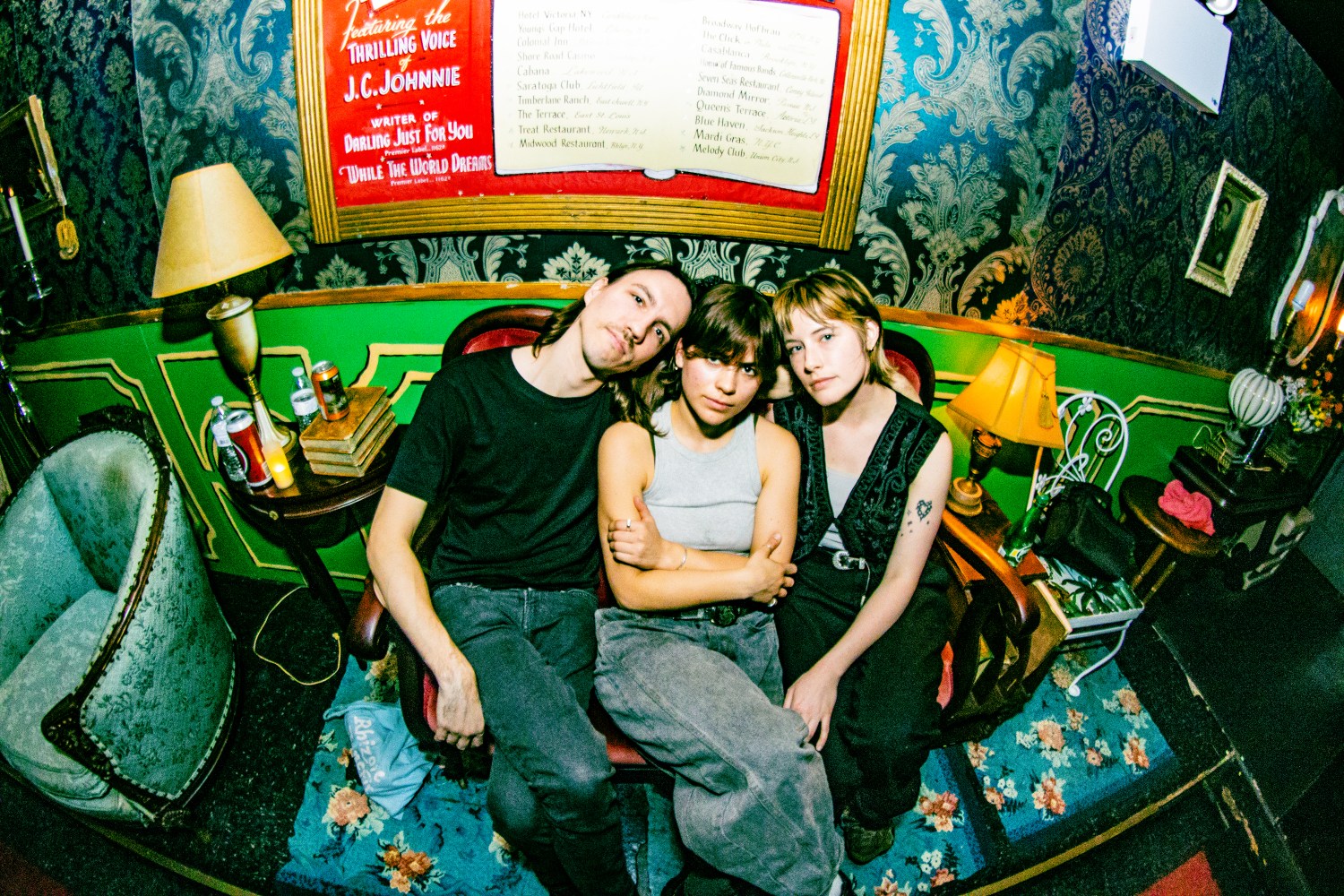
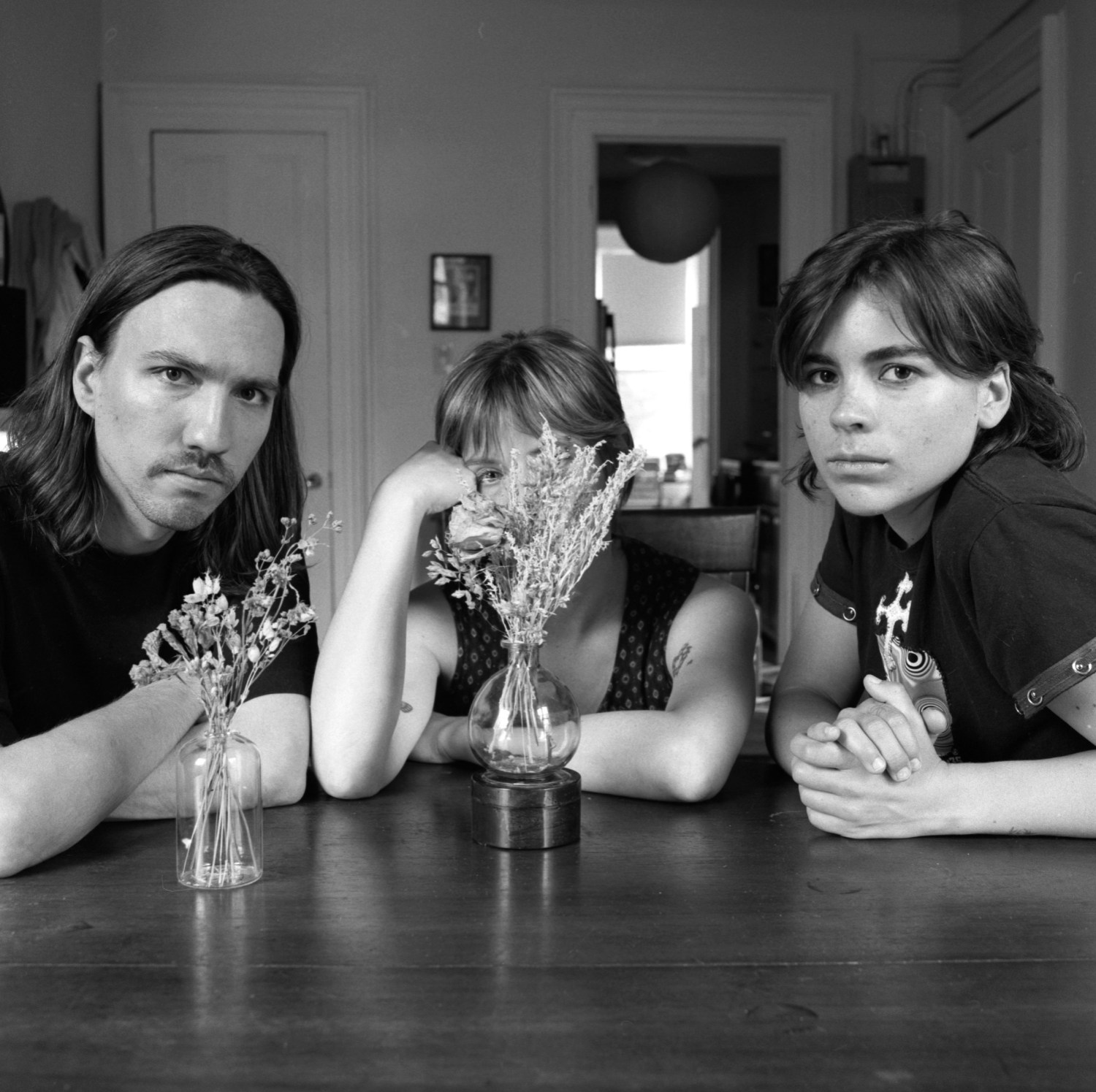
Sister. is composed of songwriters and multi-instrumentalists Hannah Pruzinsky, Ceci Sturman and James Chrisman. Last October, the band released their debut full-length album, Abundance, which found the band in a comfortable spot. Pruzinsky and Sturman started the project as a duo when they met in college, and since then, their songwriting found a similar path of sincerity and inventiveness in Chrisman’s warm and unique production and textured instrumentation.
At its core, Abundance is a bedroom record, hopping between locations in the process of writing and recording. Most of the album was tracked in a small cabin in Woodstock, NY – a little run down unit making a comfortable home for the trio to set up shop and flesh out the new songs. Unlike recording in a professional studio, the band was able to take their time, as Pruzinsky shares, “I think it was fun to be able to stretch it out so long. Even more so than recording in the cabin, I feel like I always think of us recording all the overdubs in my room with James at the computer and Ceci laying on my bed re-listening to the songs a million times.”
Whether at the cabin or in Pruzinsky’s bedroom in Brooklyn, the band recognized the outside elements that allowed the recordings to breathe; a symbiotic relationship between the noises captured and the environment in which the band occupied – “when we had the mics gained up you could hear the creek that was under the cabin,” Chrisman recalls, sharing an example form their time in the woods. These moments throughout Abundance latch on to our senses; a blend of birds in conversation, the clicks of guitar pedals and keyboards, pouring rain and the creaking of old wooden floors all stand out in their own way, yet add a collective beauty to the overall experience of the record. “That’s actually a personal preference of ours,” Sturman says, “using whatever happens to be captured, instead of going back and trying for a better sound or recording.” Something she further explains, “I think we’re just really good at embracing that sort of thing – this is what we did, we’re gonna honor it and that’s gonna become the song.”
There is no more striking example than the album’s opener “Ghost” – a song attributed to Sturman’s time learning the piano and recorded on a trip with her mom to a ranch in New Mexico. The final version grows from that original voice memo, capturing a performance of Sturman playing the song for her mother. “Ghost’ was really uncomfortable for me to accept,” Sturman shares as the others recall having to convince her to use it on the album. This song was my introduction to Sister., first listening to Abundance on the train when it was released. Its spacing felt like a familiar form of tenderness, one that knows that healing is an option, as Sturman sounded so distant in her presence, but so vulnerable and compelling in her performance.
The choice to place it as the opener wasn’t much of a topic of discussion for the band; “we started sending the album around a lot, and people said “Abundance” has to go first – you need a big entrance, and we all were like, no,” Pruzinsky laughs. It was a gut feeling, trusting their creative intuitions that kept it in its tracking spot. “I think there were definitely nerves about it, but it does welcome you into the expansiveness of the album,” Pruzinsky continues, with Sturman adding, “well, it felt like a risky move for me because it feels vulnerable, but I think it’s cool. We have to put trust in the listener that they will keep listening, and then they can understand why that might have been the first song.”
And to the band’s credit, having “Ghost” open the album perfectly sets the tone for a project that doesn’t stay in one lane for long, but rather focuses on their craft as a culmination of moments. “It’s like a record of so many things,” Chrisman says about the song. “It’s a record of Ceci and her mom and one particular performance, but it’s also because Ceci is learning the piano, it’s a document of a moment in her relationship to piano, too.” And once again, inviting in their settings, “even a document of that acoustic space with a weird bird in the background,” he laughs.
As a project, Abundance savors maximalism at no expense to intimacy, and originality through vision and feel of its players. Songs like “Notes App Apology” and “Guts” flow with melodic folk voicings through a classic and tempered alt-rock drive. “Gorilla vs. Cold Water” is a patient build, standing strong through synth drones and heavy guitar strums. The drum machine track plays second hand antagonist in the dark turns of “Classon”, and “Kinder” reaches similar emotional heights until decomposing into dust as the instrumentation burns from the inside out. “There are so many different narratives that take place on this album,” Pruzinsky shares, “I think what came through were these momentary glances in time.”
Abundance became a document of the trio’s growth, experimentation and ultimately, their form, but it is also helped capture the way that they learned to communicate creatively with such intention and ease. “It was more like a phase or a chapter for us, as songwriters and collaborators,” Sturman begins. “I think we have just been growing a lot as people and as musicians, so we got to just use this as an opportunity to co-write and just really try to see how we could make a bunch of different songs really work together and have cohesion.”
That cohesion comes through in the varied feels of comfort that arise from the individual songs, regardless of their build, emotional pull or stylistic choices. “For so long, Ceci and I had no idea how to articulate our ideas to each other and how to find someone that also just knew what we wanted,” Pruzinsky shares. “When we were able to finally get there, it was like, ‘okay, now we can do everything we want!’ It’s like we can be doing the most minimal thing, which is just the three of us playing acoustic instruments in a room, and it feels so good and so comfortable.”
Photo by Felix Walworth
“We wrote Colorado together,” says the band in their press release. “Hannah started with the chords and the line ‘You drive to Colorado and I get emotional,’ and we built it all from there.” The song builds off of those same elements of loose textures, shared ideas and honored performances that live within the heightened emotional release of the song. Within their composure, the band thrives in pushing the vast soundscape further, but in no way at the expense of losing that intimacy that makes their performances so full and memorable.
While recording “Colorado”, Sturman recalls a time when their friend and label manager, Elijah Wolf, said, “this is such a classic Sister. sound,” in the middle of their session. “That’s so cool that we might have something like that,” she says. And as “Colorado” now sees the daylight, and it was time to resurface this old conversation, I was instantly enveloped in that first experience I had with the Sister. sound, a moment of true Proust Effect on public transportation; my own momentary glance in time that felt so present. And to its effects, that classic sound doesn’t feel to necessarily label their form, but rather a chance for the band to define themselves with where they are now in the moment, knowing they have so much more to show us.
“Colorado” is accompanied by a music video made by V. Haddad with the help from Nara Avakian. You can stream “Colorado” on all platforms now. Pruzinsky and Sturman also run New York-based show zine, GUNK, which is shared at the beginning of every month.
Today, Durham-based singer-songwriter, Alycia Lang, shares her third and final single, “In Circles”, from her forthcoming debut full-length, Speak the World to Hear the Sound (due 6/14) via Mtn. Laurel Recording Co. Produced by Adrian Olsen (Lucy Dacus, The Killers), “In Circles” follows a rumination of self compassion as Lang learns to allow herself some grace.
In its most subtle moments, “In Circles” grazes amongst different timbers of plucked strings, patient and gentle harmonies and light atmospheric pieces that create a lush landscape of composure. But following a desirable chromatic fall, the song’s weight becomes strikingly clear, as Lang’s newfound empathy leads the chorus to its emotional and vibrant height; “but oh, my sweet mind why don’t you slow down”, she sings, putting a pure emphasis on perspective and presence.
Taking inspiration from a conversation with a friend, in which she compartmentalized her personal challenges as a separate entity than herself, Lang was struck by this outlook, saying:
“If we could all just make that one small shift from punishing ourselves for not thriving in an over-stimulating, impossible set of circumstances and grant ourselves permission to slow down, maybe everything would be ok.”
Along with the single, Lang is sharing the official music video for “In Circles”, made by Spencer Kelly and herself.
You can stream “In Circles” on all platforms now. Speak the World to Hear the Sound is set to be released on June 14 via Mtn. Laurel Recording Co. Lang is currently on tour with Samia playing in her touring band.
Brooklyn-based project Helenor emboldens the sensations of grief on the new music video for “Bad2”, out today. Conceived by visual artist Indie DiMartino, you can watch the video for “Bad2” now premiering on the ugly hug.
Helenor is the creative DIY project of David DiAngelis, who, last month released his sophomore record, A public place, off ofMtn. Laurel Recording Co. After dropping everything and moving to New York as the pandemic let up, A public place is representative of this wandering – a buffer between where he’s been and where he’s going as the world seemingly blows by.
Opening A public place, “Bad2” grows from a mellow haze – an episode of brain fog reluctant to part as DiAngelis feels fated to grief’s plot. Though his life appears to be static, the song presses onward with a blend of grounded acoustic guitars and revitalizing synthesizers.
“This song is a soundtrack for pretending you have the ability to be present, so for the video we wanted it to feel like an erratic playback of memory,” DiAngelis says.
The music video consists of an impressive and sensory fulfilling array of filming techniques and artistic mediums, as DiMartino, the video’s creator, explains:
“The film for Bad2 exists as an erratic playback of a memory. To portray this feeling of messy dissociation, its process pulled from an array of experimental analog compositing practices and mediums. The project’s footage and titles were shot to 8mm film, with some shots relying on in camera mattes and rear projection. Just as well, some of these film scans were manually scrubbed through and reshot on an old LCD the width of a thumb. A quarter of the project’s runtime was physically printed and rescanned frame by frame. A technique was implemented to further distress these selected sequences by “hand-blooming” the highlights with paint and charcoal.”
Although these styles transition and blur, creating a feeling of disconnection between settings and sensations, the one thing that remains consistent through it all is DiAngelis’ presence, no matter how disorienting it may appear.
Helenor will be playing a Palestine Benefit Event along with Katy Kirby and Jules Olsen on May 21. You can stream A public place on all platforms as well as purchase it on vinyl or CD.
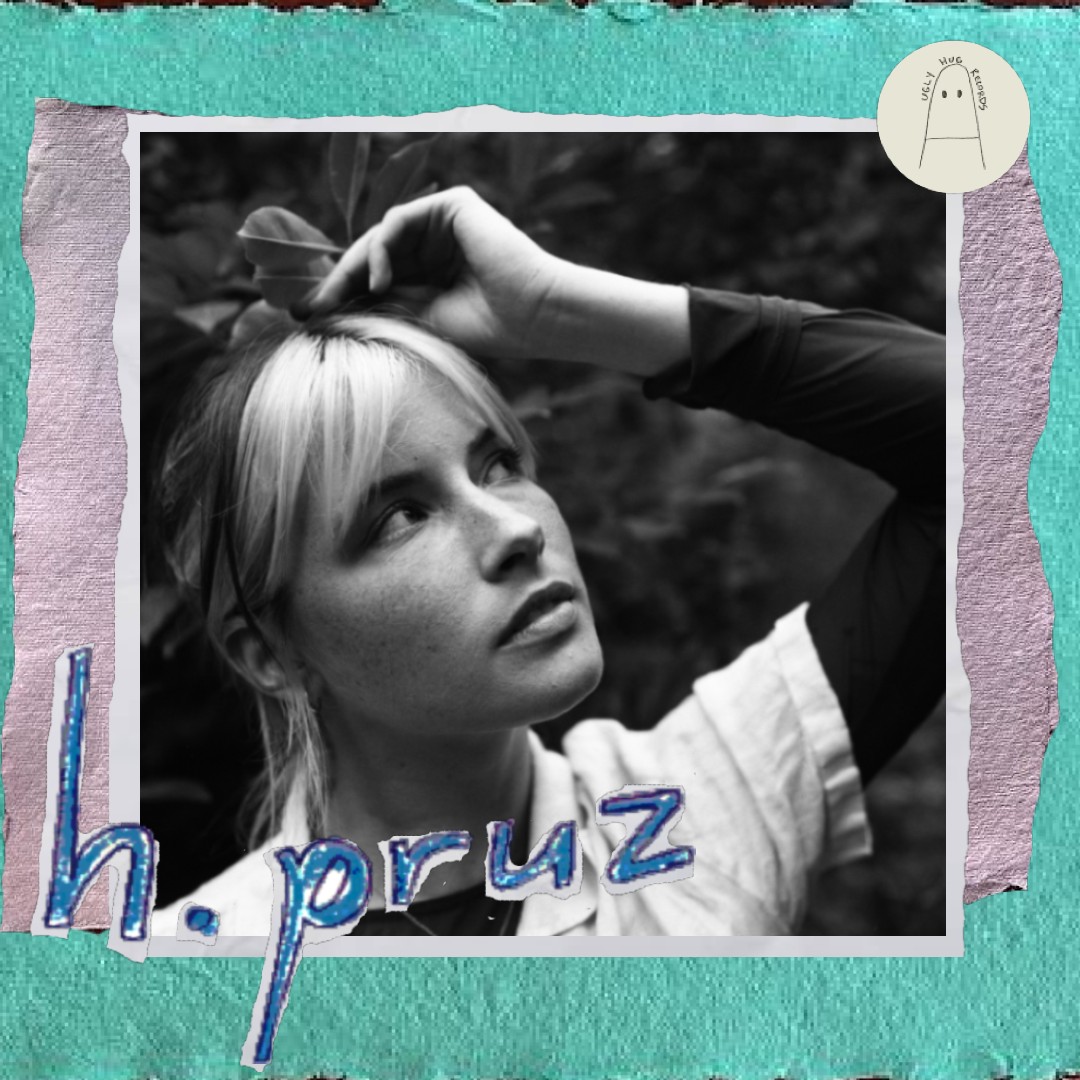
Every Wednesday, the ugly hug shares a playlist personally curated by an artist/band that we have been enjoying. Starting us off, we have a collection of songs crafted by the Queens based singer-songwriter, Hannah Pruzinsky.
Last week, Pruzinsky released their stunning debut LP, No Glory, under their growing project, h. pruz. In a celebration of patience and space, No Glory builds upon this dire urge to stay present, regardless of the shifting ground and passing reflections that disrupt our existence.
In spirit of the record, Pruzinsky offers a collection of songs, some transitional, some instant, others invincible, that they have used to feel rooted into their surrounding world.
Helenor, the Brooklyn-based bedroom project of David DiAngelis, has just announced his sophomore album, A public place, due April 12 via New York’s Mtn. Laurel Recording Co. To commemorate that announcement, he has also released a new single, called “Tattoo”, the third single released in this cycle. Helenor has become well established in his own world, growing into a cathartic storyteller – his retro stylings bringing life’s predicaments into a beautiful simmer of unique warmth and clever complexion. Leaning into the melody, “Tattoo” is as casual as it is sincere to its inevitable influence; a charming and personal sentiment shifting under the weight of permanence.
As DiAngelis tells the story, “this song is about the first time I gave a tattoo on the kitchen floor of a house party in the South Shore of Massachusetts.” With no prior experience and a new tattoo gun, DiAngelis took on requests, defying his own and everyone else’s expectations – prompting a request from a stranger who they never saw again. With no intention of releasing the song, “Tattoo” finds Helenor at his most relaxed, brought back into the ambiance of that small house party, pushing the sound of comfortable nostalgia into his novel and alluring style.
Photo by RlyBlonde
The track begins with the static plucking of strings, unbeknownst, holding its breath until Helenor sets the scene and letting waves of synths form its shape. “You can’t take it back / I gave you a tattoo on that floor” he sings, accepting reality from the very first line – a moment initiated with bona fide trust or maybe inebriated confidence. But, leaning into a rejuvenated chorus that feels reformed with its every return, Helenor embodies this magical camaraderie that comes with something as personal as getting a tattoo and as gratifying as showing it off.
Accompanied by a DIY music video, “Tattoo” is patchworked together by a montage of smiling faces, each sharing their numerous tattoos to the camera. The ranging art stylings and image choices are a glimpsing personification into who these people are. To DiAngelis, they are friends, coworkers, and bandmates, but to the rest of us, these strangers admirably show us a piece of themselves that they visibly carry with them. Mixed into the video, DiAngelis’ deadpan candor narrates the story from the reflection of a tiny mirror. As it travels around the city, emulating a tiny DiAngelis in relation to his entirety, he shows us all a small piece of himself as well – taking it along with him everywhere he goes.
You can stream “Tattoo” on all platforms as well as preorder the limited vinyl pressing of A perfect place and other Helenor merch.
Hannah Pruzinsky, known for their solo project, h. pruz, and the effectively vulnerable Brooklyn trio, Sister., has released a surprise single off of Mtn Laurel Recording Co. today. The single, “Dark Sun”, is a rich composition of atmospheric comfort and folky lament that tells a story of the complexities of love. But in juxtaposition to the title “Dark Sun”, these complexities are entitled to areas of growth and self condolences when shadowed by damage. I had the honor to talk to Pruzinsky, in which they opened up about the emotional progress in writing the new single, their comfortability of collaboration, and the stories found within the natural world.
“Dark Sun” is the first song to see daylight out of what will be the next h. pruz record out sometime next year. Following the release of their debut EP, again, there, Pruzinsky found some steady ground in the turmoil of memories, whereas “Dark Sun” finds them going a step further into these moments of contemplation. “It’s basically a song about obsession,” they share. “I wrote it in a time where I was feeling a lot of guilt for feeling those feelings, and I think it was self permission to lean into what it looks like, and I guess, to lose yourself within it”. That self-permission is an odd habit, in which you feel as if you always have it, but it’s easier said than done. “This idea of self-permission and permission to decide what I want for me without having it be echoed with other people”, Pruzinsky shares was a big self discovery in the writing process.
Artwork by Sarah Bradley
As an extension to again, there, in its vulnerable approach to sound and story, “Dark Sun” takes new strides in which Pruzinsky thought, “what if I wrote a song about falling in love?” To which they specify, “there is still a shade. It’s not just clear good love”. With production help by Felix Walworth (Told Slant, Florist) the atmospheric chord voicings and the steady brush strokes of the snare drum offers a lightness when Pruzinsky sings, “And forget everything else is real / We’re here / In the sun”. That particular warmth of new love, although not explicitly perfect, still fills the track with the innocence and hope of realistic potential.
Growing up in Pennsylvania, the natural world stood testament to Pruzinsky’s practice of self and spirit. “When I was younger, I think [nature] held a place of resentment, because usually I would be working outside pulling weeds.” They continue, “as I got older, I think it took on more of a meditative space.It became really important for me to feel a connection to my younger self in a way that felt really tied to nature”. To this extent, Pruzinsky has found a larger meaning to their place in the natural world, to the degree in which their interpretation turns into vital storytelling. “I think [nature] reflects change, which is something that I both romanticize and always desire. I think it’s really easy to see how things can return to a way you once had known,” Pruzinsky shares. “In this newer body of work, the idea of destruction within the lens of the natural world” has found narrative importance in their writing as well. “I’m your dark / Hiding place / Crush me up / Take a part,” they sing in the cadence of this double-edged feeling of love.
As one third of the band Sister., Pruzinsky is almost a month off the release of their astounding debut full-length, Abundance. Becoming more of a personal focus to conquer in their life, writing music is a process of exchange to them. Sister., as a collaborative project with long-time friends Ceci Sturman and James Chrisman, Pruzinsky tells me, “there’s a big sense of pride that I have when I get to make something with my besties, cause it’s not easy”. They continue, in response to writing lyrics with Sturman, “it’s really special to also be like, ‘wow, we both felt this thing and both got to immortalize it in a way.”
Photo by Felix Walworth
But when it comes to writing alone, Pruzinsky admits, “I remove my rose colored glasses when I start writing, and sometimes I’m not ready to do that”. Art in general is a process of give and take, but effectively raw art happens when the give becomes a vital takeaway. “I’m good at repressing things that I am not ready to see in my life,” Pruzinsky admits. “But being able to write songs about those things is the first way that I’m like, ‘Oh, wow! This is something that clearly isn’t okay”. Continuing to the effects of the upcoming album, they say, “it feels so vulnerable. Am I ready to potentially alter my life in a large way, at least with this record? It’s not always that dramatic, but it was for this one.”
You can catch h. pruz on a supporting tour this December where they are hitting the road with Portland, Maine artist, Dead Gowns. “I’m playing with a new band and excited to be a little more rocking than usual,” Pruzinsky tells me. You can listen to “Dark Sun” out now.






 the ugly hug