The discography of People I Love boasts potential for an excellent horror movie score. Not so necessarily a grotesque blockbuster (though I would love to hear “Holyness” in Smile 2), perhaps more of an emotionally abstract, artsy thriller. The kind of film where the real “horror” is not derived from cheesy SFX or supernatural antagonists that cease to exist when the credits roll, and instead through the realistic, human characters it features. His latest single might present like the latter (though I suppose that hinges on whether you believe in witchcraft), though underneath halloween emblems and mildly sinister cover art is a track that fits perfectly into his raw and sensible discography. Out today, “The Witch” toes between warmth and melancholy as it begs the question of what is more terrifying; the fact that someone hurt you, or the fact that you let them.
Brooklyn based Dan Poppa has been releasing music under People I Love since 2019. He usually keeps his canvases minimal, eliciting tension through wilting chord progressions and airy layers of organic and eerie synthetic sound. There is a heaviness amidst his sparsest arrangements, armed with sneakily contagious melodies and introspections that scrape deeper upon each listen.
At first, “The Witch” appears less fragile than People I Love’s 2024 releases. There is a volatile feel to Poppa’s vocals, which often assume a more tender and withering shape. It also builds up fairly quickly, as the early reserved guitar and thin percussion bleed into a fuller sonic atmosphere just after the one minute mark. The motifs from the beginning of the song return, offering an unsettling intermission between charged pleas of “are you a friend or you just a witch” and chipping away at a facade paved by animated melodies and moments of upbeat tempo. Though the tone of “The Witch” is murky, bending between skepticism and clarity, the track’s catchy nature is irrefutable. You can listen below.
Today, the Chicago-based duo Hell Trash is sharing with the world their ecstatic new single “Violence”. Hell Trash members, Rowan and Noah Roth have been formative members of the Chicago DIY scene, occupying countless bills, participating in other projects, and continuously finding new ways to share their unique creative voices through different avenues. But with little music released thus far, “Violence” becomes a culmination of time, exposure and spirit as the duo marks a new beginning for Hell Trash at large.
From the get-go, “Violence” is attuned to its unfamiliarity – switching from the often guitar-forward landscapes that they have covered in the past, to amalgamations of electric pianos, horns and an infinitive grove, as the track explodes into horizontal momentum built out from uncharted territory. But as the project becomes more solidified in its ambitions and practices, there is an already well affirmed structure of trust in the directions that Hell Trash choose to follow. Soon the song pushes on; “I make you violent, cause it feels good in your mind”, is a searing line, sung in harmony as the duo almost eggs on the explosive instrumentation that takes the reigns. As “Violence” begins to prove itself, its buoyant complexion becomes entrenched within the distorted grit and darker undertones of the track, embracing a pluralistic approach to making the music that Hell Trash ultimately wants to make.
About the song, Rowan shares, “I wrote “Violence” at the end of 2021. It was included in the first batch of songs that I brought to Noah when I hired them to engineer and produce a record for me around the same time. Over the course of the next four years, we recorded “Violence” four different times. The first version was an acoustic demo, the second one was based around a Can sample and a vocoder, the third one was basically a straight-ahead alternative rock song, and the fourth version is what we’re putting out into the world. It didn’t end up working until we decided to eschew the guitar as the primary driving force of the song. Instead, we leaned into other sounds that excite us—electric piano, horns, drum machines, etc. Ultimately, making this recording revealed to us that perhaps the most important part of this project’s ethos is the search for a kind of music that sounds new to us.”
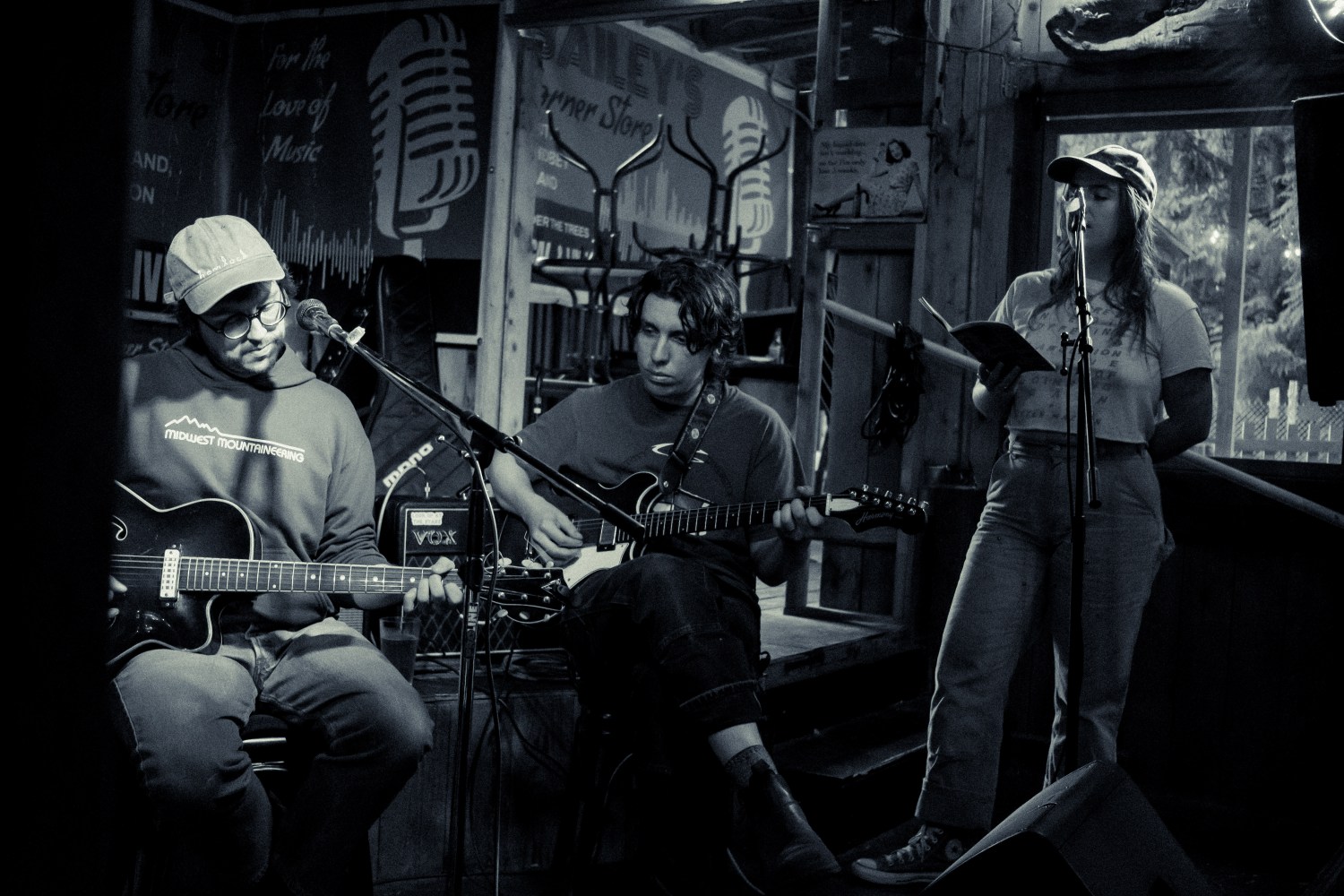
Through a type of personal introspection, one which flows with such grace and intuition, Carolina Chauffe of hemlock and Alexandre Duccini of Floating Clouds have always brought words to motion, recentering what matters most in the world with such simple fixations, open hearts and really good tunes. Now partnering up, along with Nick Meigs and Jakob (Dr. Sweetheart) Parsons, today the two share Campfire Singles, a pair of songs written and recorded on tour in Washington in the fall of 2024. As the tale goes, Carolina flew to Seattle to tour with no car and no guitar, “pushing the envelope of human generosity”; and there was plenty of it. Recorded around a campfire on an iPhone, “No One in Portland Says Howdy Anymore” and “Red Breasted Nuthatch” find hemlock and Floating Clouds in their most sincere habitat, as these two songs are a restful gesture that “music is play”.
Photo by Alex Martinez
Upon contagious laughter blending into the crackle of a campfire, the uplifting spirit of a slide whistle brings in “No One in Portland Says Howdy Anymore”, as Alexandre’s rich voice establishes the tune amidst the open air. With a steady demeanor, the two songwriters share tails of drifting heartbreak and lamenting woes as “Howdy’ becomes a space where familiarity blends with presence and courtesy with understanding. The second track “Red Breasted Nuthatch” pushes curiosity into the smallest bits of beauty that surrounds our day-to-days, ushering in a call and response pattern, a dialogue of imagination, hoping to get some answers from a tiny-winged friend they made earlier that day.
These two tracks are less of a practical method and more of a practice in trust and intention. They are sweet and silly and a little rough around the edges, but that’s okay. What else could be more perfect when capturing genuine creativity? It’s a simple, yet powerful reminder of what makes creating such a special part of being human.
You can listen to the campfire singles out everywhere today, as well as check out Floating Clouds latest album With A Shared Memoryas well as 444 by hemlock.
If you have been following this site for a while now, you may have heard the name Wesley Wolffe tossed around at some point. Following the release of his sophomore album Good Kind back at the beginning of 2024, Wolffe’s sweaty and deliberate style of punk music has held a grip on those that have come across it, and those that have been even luckier to have caught the Wesley Wolffe band live in action. Today Wolffe returns with his new single “Words”, the first release he’s offering since his move from New Orleans to Brooklyn as he showcases his new band and marking the first taste of what is going to be a two song EP that he is releasing in full next month.
With a slick pronunciation of the drums, Wolffe’s roughly tempered wail comes through, unfretted and unguarded, as “Words” breaks apart instrumental fixations – shifting from an impenetrable wall to coordinated expositions of harsh post-punk melodies and commanding vocals. Playing with his longtime guitar maestro Jeremy Mock (Face of Ancient Gallery), Wolffe now introduces his latest bandmates Nick Pedroza and Sebi Duzian from Bedridden fame to bust open Wolffe’s dynamic and intuitive sound. “Words” is presented as a bad dream, a contusion of reality and what may lie beyond what we deem the subconscious. But after being diagnosed with OCD, Wolffe finds himself lingering in the paranoia that his brain plays with him, a white knuckled grip, a deck of cards slapped down beyond his command as he runs away, looking for a justification, a plea or an answer to anything that would ease the obsessions.
We recently got to catch up with Wesley Wolffe to talk about playing live with his new band, changing his writing process and how “Words” came to be.
Listen to “Words” premiering here on the ugly hug.
Shea Roney: You have two new songs coming out soon. The first two songs from Wesley Wolffe after you moved to New York. How are you feeling about it all?
WW: I feel pretty excited about it. I kind of have zero expectations for how it’ll do on the Internet just cause I think I had pretty lofty expectations for the last release. So this time, I’m just like, you know, whatever happens, happens.
SR: I know that balancing expectations was a challenge for you the past two album releases you had.
WW: Yeah, whenever I go back and listen, I mean, it’s cool and I really like the songs, but I think after some time passes you can approach your former releases with a clear mind.
SR: Looking back, I mean personally as a fan, I’m putting those records on quite often. But I can imagine them being part of you for so long, obviously anyone looks back and sees them differently. Is there a new light that has been shed on these previous releases?
WW: All the Good Kind songs I don’t really love the recorded version of them that much, but we’re playing a ton of those songs live. And recently, with this band, our live show has gotten really, really tight and much, much more aggressive. It was already pretty aggressive, but now it’s like we’re fully a punk band and we play these songs like a punk band does. And to me, that’s really exciting. So when I watch videos of us performing live in New York, I’m like, ‘oh, this is so fucking cool.’ But then I listen to the recordings, and I’m like, ‘damn it, just doesn’t hit the same’ [laughs]. But that’s also a really cool place to be, because I feel like it’s pretty rare for bands these days to sound better than their recordings, you know?
SR: Your music has always been aggressive, but saying it’s more aggressive live and having that need, that want and that pleasure you get from playing more aggressively, where do you think that comes from?
WW: I think for me, if I go to a show, and I’m watching a band, and they’re kind of just like statues and just sort of standing there, then I’m bored. So if I were to watch a band, I would want them to perform like the way that we perform, because we all move around a ton and scream and get in your face. And it’s also just exciting, like these songs are songs, like we’re not improvising, but the way that we play them now, there is a lot more room for just weird shit to happen. There’s just a new element that’s unpredictable. The way these guys will play it, too, because they’re all professionals, they truly make it their own. So, what happens is we end up playing them just really fucking hard and really fast, just because it’s fun as hell for us. To answer your question, I think it’s just fucking fun.
SR: So your new song “Words”, a lot of our conversations in the past have been about how your writing style has been this sort of detached lens, about these characters, but still aimed at you personally. Is this something that you have continued on as you start writing more songs?
WW: Recently, no. With every new song that I’ve been writing in the past year, I have kind of stepped away from that. Now, “Words” is just about a year and a half old, so the song is about a whole host of things. I’m the main character of the song, but it’s not necessarily about anything that’s ever happened to me before.
I wrote the song first and then wrote the lyrics later. The chords have a flat 5th, or a tritone, for every single chord in it, like an evil interval. The church, back in the day, that interval was banned because they thought it would summon the devil or something. It’s used to evoke a sense of unease, and it’s always one that I gravitate towards when I’m writing songs, because, you know, I feel uneasy a lot. The song is about paranoia and focusing on facial features and trying to read people. It’s like making up all these weird stories in your brain about what people might be thinking of you. The end of the song is about me getting pushed off of a cliff by this group of people because of something that I did, but I don’t know what it was.
SR: Did you allow yourself to follow this paranoia in ways that you didn’t see coming? Or was this story crafted with something you had in your mind previously?
WW: It just all sort of came to me. At that point in my life I was in New Orleans and I just recently got diagnosed with OCD. I was talking to my therapist about it, and just talking about all of the different ways that OCD can manifest itself, and one thing I was worried about was false memory OCD. The paranoia aspect, getting pushed off a cliff and murdered for something that I was unaware of doing was like, maybe I did do something, but I can’t remember it, or like, am I having false memory OCD? What’s the deal here?
SR: You mentioned that you wrote these songs a while ago while you still lived in New Orleans. Now living in New York, do these two songs represent a transitional period for you at all? Are there parts of you and New Orleans still in them, or are you looking to have them be a way to move forward?
WW: I wrote them in the midst of some OCD delusional spells. I think it’s understandable that I’d like to leave that in the past [laughs]. However, as you know, these are issues I’ll most likely continue to battle with for the most of my life. So they remain relevant to me. I see them less as a transition or more of a chapter closing. So I guess a way to move forward is a good way to describe how I feel towards em. These are the last songs I wrote in New Orleans that I plan to release. So I’ll be moving on pretty soon
You can listen to “Words” and Wolffe’s past releases everywhere now. The second single from the EP is set to be released next month.
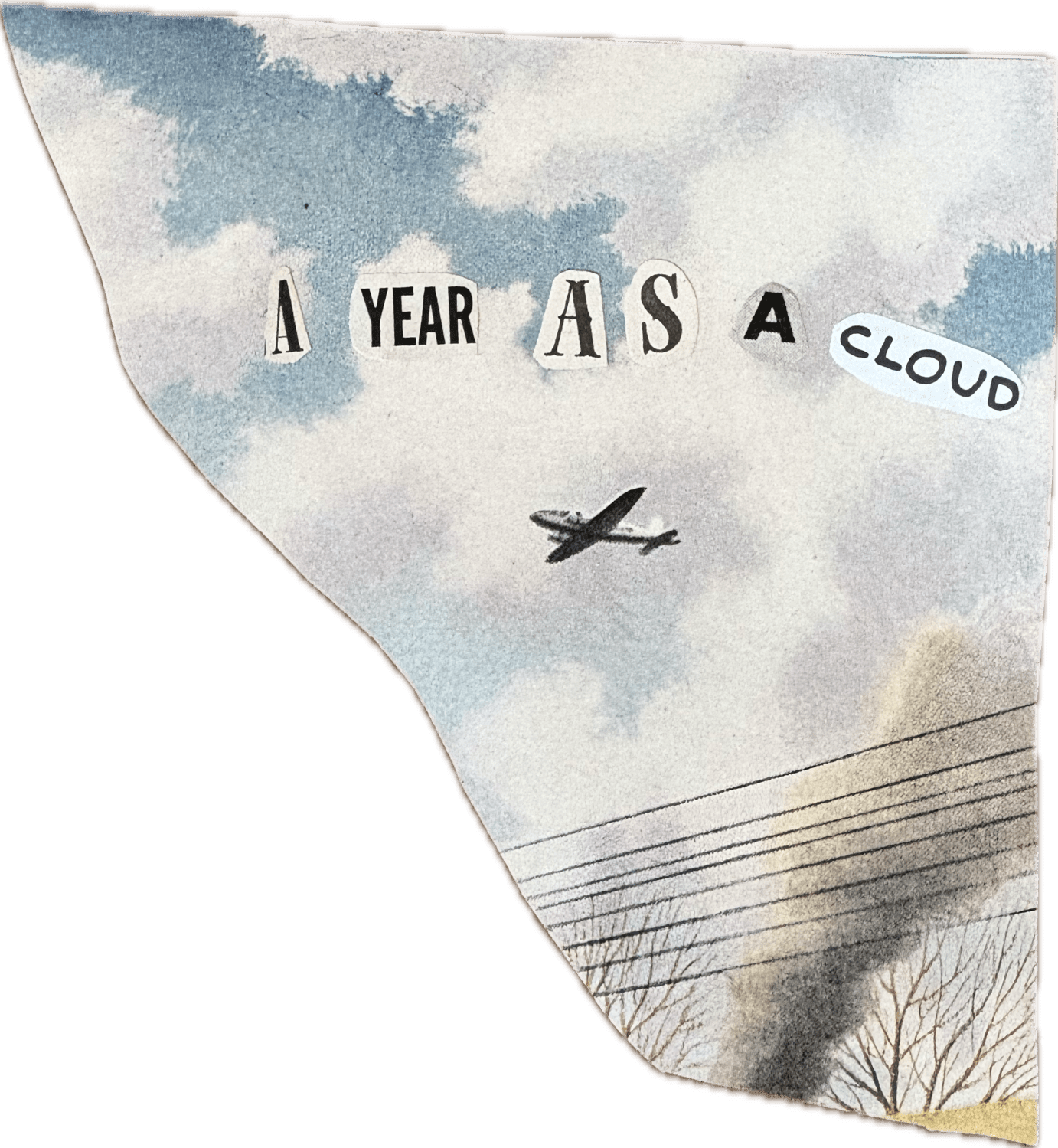
From the hills of Butte, Montana comes the pond, the latest project from longtime songwriter Jon Cardiello and his band: Noelle Huser (vocals/synth), Sandy Smith (bass/guitar), and Kale Huseby (drums/vocals). You might know Cardiello from his earlier work as Bombshell Nightlight or through his and Sandy Smith’s tape label, Anything Bagel. A Year as a Cloud invites listeners into a space where memory and sound intertwine, reshaping the past with each note. Shaped by a lifelong connection to creativity, Cardiello’s music doesn’t follow a path so much as carve one out for itself.
This new batch of songs is built from the small stuff—blurry snapshots, a walk around the neighborhood, a record playing while tea steeps. The writing lives in that quiet middle space—where grief lingers, wandering is allowed, and sadness can sit next to softness without contradiction. There’s room here for stillness and for slowly making sense of things that may never make sense.
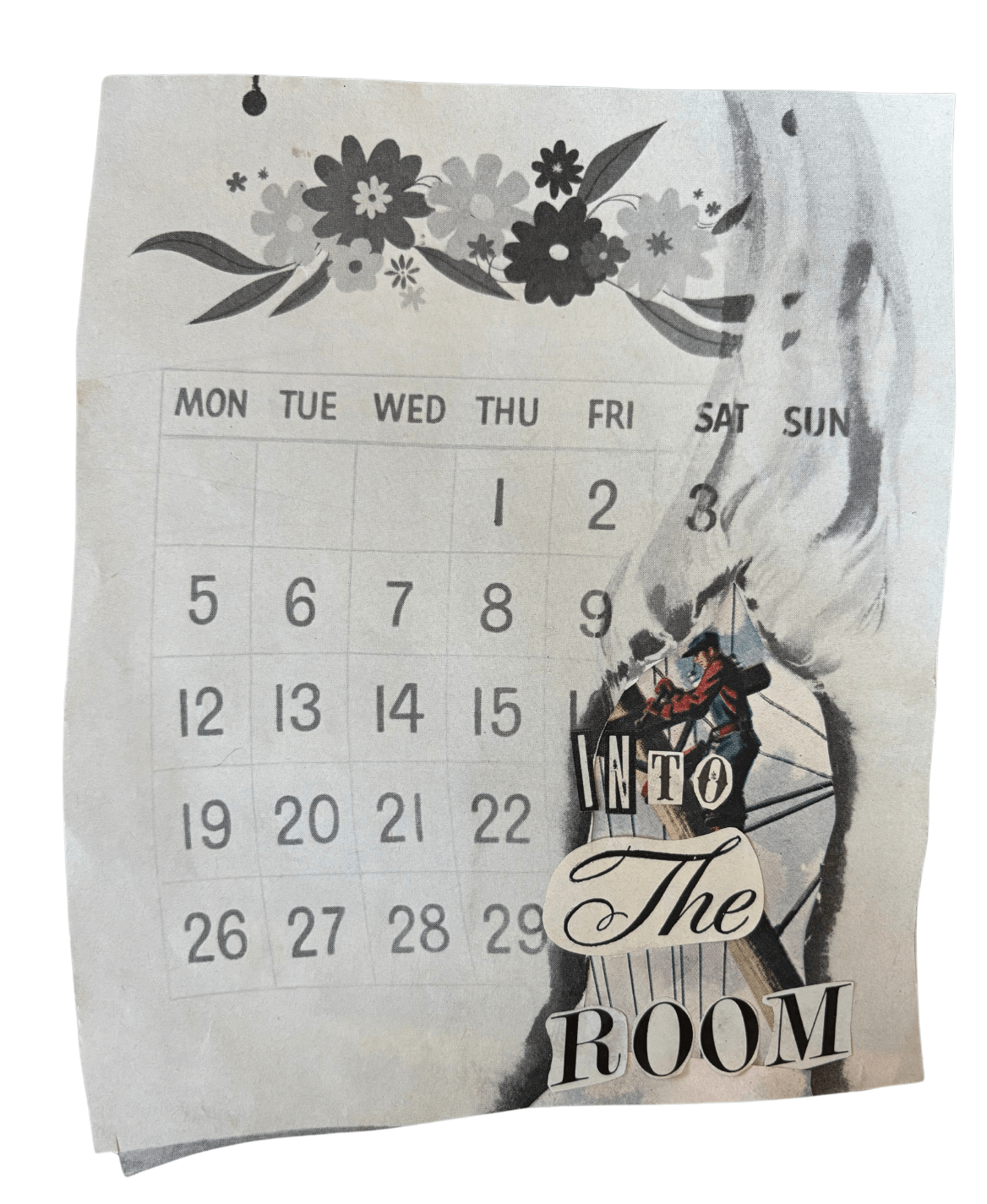
If you’ve spent time with Bombshell Nightlight, you’ll hear the same patient pacing—songs that breathe and take their time. But with the pond, there’s more grit in the softness, more weight beneath the quiet. Listeners of Friendship, Hello Shark, Horse Jumper of Love, Mount Eerie, Greg Mendez will appreciate the transparent nature of songs with equal parts lightness and gloom. With each song a compelling story surfaces within the instrumentals; Grief cuts through the lo-fi vocals and raw guitar in “Brittle”; “Into the Room” embraces distortion without sacrificing its quiet depth.
Cardiello’s evolving sound reflects a subtle progression shaped by the nuances of life’s ever-shifting emotional landscape. It’s shaped by the subtle turns of feeling that come with just being alive. It raises the question, “Where does a song go when it dies?” and forces you to think about the songs that have stayed with you long after you stopped playing them, or the ones that suddenly pop back into your head at the strangest, most unexpected times. Songs seem to live their own lives—they become companions, change shape, fade into the background, then return when we least expect it. But do they ever really disappear? Maybe they just shift, taking on new meaning as we move through different moments in our lives.
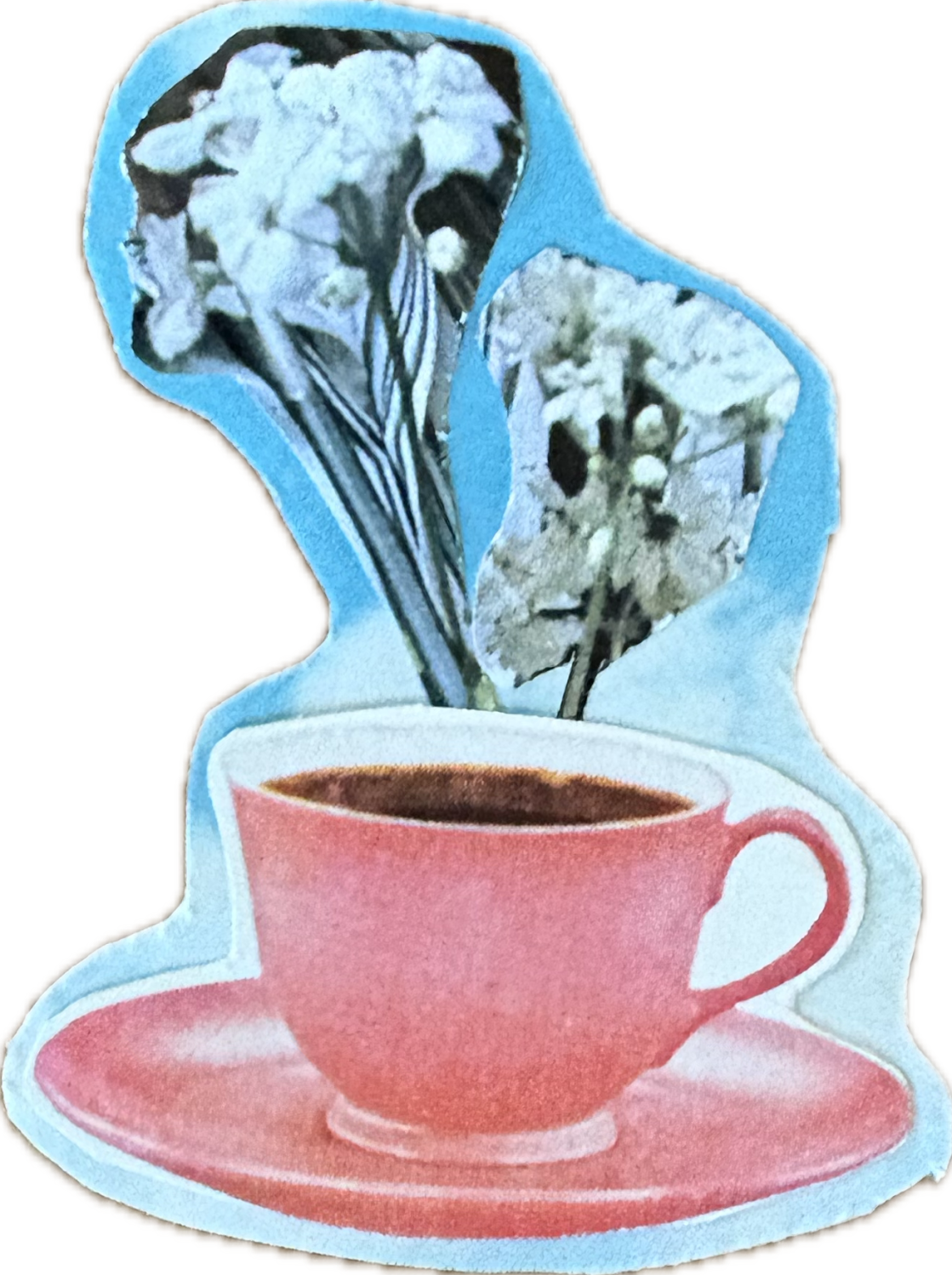
And in these tracks, there’s something undeniably alive. They carry a quiet, emotional weight, filled with questions that don’t have clear answers. “Cup of Lilacs” and “Hungry” take small, everyday moments and turn them into something worth pausing for making those tiny, fleeting feelings, like the sound of a song or a cup of tea—become significant. “Burnt Plant” is a banger for the anxious and ashamed; it’s restless and raw, with jagged guitars and a relentless beat that mimics the feeling of being trapped in your own mind.
The brilliance of this album comes from the band’s unified front, each member perfectly in sync with the spirit of each song. There’s a quiet trust in one another, never stepping on each other’s toes.
This album is meant for the liminal spaces—the haze before the coffee hits, the hush of 2 a.m. when your thoughts sit a little too close. It’s for sitting in a feeling, watching dust catch light, for witnessing, and to be witnessed.
Listen to A Year As A Cloud premiering here on the ugly hug!
Today, Birmingham-based artist Cash Langdon has shared with us his new track “Lilac Whiskey Nose” along with an accompanying music video. This single is the latest sneak peek into Langdon’s upcoming album titled Dogs out May 2nd via Seasick Records and Well Kept Secret.
First the drums, creating an environment oddly defined by the effects of both temptation and patience, “Lilac Whiskey Nose” soon breaks for immediacy as Langdon’s vocals and an array of gritty textures enter the scene. Written after witnessing an active shooter event at work in 2016, Langdon leads with a steady pacing, singing “I like going inside/Doing it right/Swallowing my pride” — the smooth drop in his voice alleviating tension, like a lump in your throat finally residing. Rather than writing with blame, Langdon approaches this memory with a level of understanding as someone who is also just trying to make it through the same overbearing and damaging systems that reside over our heads and enable this kind of act, saying, “[this] song is mostly about still having humanity for these types of people, even when it directly affects you. With emphasis on unweathered rhythmic movements and memorable melodies that make “Lilac Whiskey Nose” stand out, Langdon continues to lay the groundwork for a highly anticipated album to come.
Watch the music video for “Lilac Whiskey Nose” premiering here on the ugly hug!
Dogs is set to be released May 2nd and you can pre-order it now as well as a vinyl copy. You can listen to “Lilac Whiskey Nose” and the previous single “Magic Again” everywhere now.
Dan Parr, the ever-expansive stamina behind the UK-based project The Last Whole Earth Catalog, has recently shared with us his second single of the year called “33”. Following the previous track “The Fruit Expert” released back in January, a more freeform and jazz-fueled character in his repertoire, “33” finds Parr deep within his most internal and conflicting moments, rearing both tough reflection and enduring gratitude as he grapples with his journey of being to hell and back.
Beginning amongst an array of rhythmic fixations, layering guitars that ring out with a familiar whimsy, Parr invites us into a deeply textured plane built out of his recording intuitions that have rarely led him astray. Enticed by the pacing in his lyrical phrasings, “33” focuses on the ideas of love and loss within the play of mental health, where it’s hard to show someone you love them if you don’t love yourself. And as phases of internal unrest rattle amongst persistent drum clicks and sharp-edged vocals, bringing out this journey in both fulfilling and very human avenues of grace and love, Parr sings, “Since I’ve been better, we’ve lived more than ever, this would not have happened if it wasn’t for you, I’m so proud of being a couple with meaning, a couple of ducks who just know what to do” — a song of rejoice more than anything in its final moments.
Listen to “33” out everywhere now.
Explore The Last Whole Earth Catalog’s expansive collection on his bandcamp!
Through the glitchy fixations that tickle our most keen and wistful fulfillments, Boston-based group (T-T)b share with us their brand new single, “Bug on the Ceiling”. Made up of brothers Joey and Nick Dussault as well as Jake Cardinal, (T-T)b has been releasing music since 2015, and this single marks the last bit of teasing from the three piece as they look ahead to their upcoming LP, Beautiful Extension Cord due April 4th via Disposable America.
There is something immediate that occurs as “Bug on the Ceiling” kicks off with a foreboding chord progression, not one necessarily in debt to any malice, but rather laying out an array of options for the picking. But upon a pixelated blip, an ascension into the lofty and exciting realms of weightless synths, the power kicks in as the band erupts into a heavily distorted chorus, toying with playful electronic tinkerings and harsh, grounded noise. “Was it heaven or just a bug” becomes the main focus of the track as the band repeats this line while introducing a culmination of searing amps and implicit melodic fixations that rip through, leading us into this serene indie rock release and reminding us that the biggest questions oftentimes have a simple answer… sometimes it’s just a bug.
About the single, Joey shared, “I wrote this on the bus home from (what I thought would be) the last ever show from a band that was special to me. Thankfully it wasn’t, but they still taught me a lot about what a music scene could be, so the sentiment stands.”
You can listen to “Bug on the Ceiling” out everywhere now. Beautiful Extension Cord is set to be released April 4th via Disposable America. Pre-order the album digitally, as well as on vinyl, CD and cassette now.
Written by Shea Roney | Single Artwork by Sami Martasian
President TV of the United States, the project of Terese Corbin, shared with us her latest single “Greatest” late last week. Having artistic roots that cover both Tallahassee, Florida and Asheville, North Carolina, the single comes as a one-off following the release of “I Love You” featuring Jordan Tomasello, as Corbin begins to find comfort in blending new forms of sonic production with her tender lyrical prose.
With steady drums and warm piano runs, “Greatest” sets its own pace within the still environment from which it was made from. The subtleness becomes its strength, as a swell of synths sweep us up into the song’s passion-fueled movement and the melodic grip of the whispered vocals that flow with persistence yet lay low as if to bare caution as to who may be listening in the peripherals. But it’s in these hushed displays that hold the melody, making Corbin’s presence the tension point in the track as we lean in for every word that hangs on with poetic intuition and personal reverence, always playing with the idea of potential release.
We recently got to ask Corbin a few questions about her project President TV of the United States and the story behind “Greatest” in our latest track deep dive.
the ugly hug: What sort of things were you inspired by when writing “Greatest”?
Terese Corbin: Sonically, “Greatest” kind of came out of thin air while messing around with the ambient and piano instruments on a free sound pack I was recommended. In that way I can’t say that I directly set out to make a song like this, but I recognize I was unconsciously inspired by the arrangements and strange moods of bands like Chanel Beads, PJ Harvey, Model/Actriz, even a little bit of Geordie Greep. I’m also totally obsessed with the album Morning Light by Locust, particularly the song No One In the World. If you know that song (and if you don’t, do yourself a favor and listen!) you might feel like there’s some 1:1 references in the instrumentation between that song and “Greatest”. But like I said, not at all an intention of mine, but just a product of that being the music language I’ve surrounded myself with.
My writing and my art in general draws from a couple of usual places, but honestly, most of the time I become obsessive about moments I’ve experienced and phrases I hear that ring around my head for a long, long time before I understand why. This is definitely the case for “Greatest” —the lyrics and the whole drive of the song come from a moment I shared with someone who I loved very much and who I knew loved me too. In an intimate moment, this person told me, “I’ll be Jesus, and you’re Mary Magdalene…And I’ll be at your deathbed.” Like, you can be the judge, but I think that’s an insane thing to hear lol. Especially in the context of that relationship, but also in general–it held so much weight and poetry but was said so simply, so truly. The phrase had stuck with me for reasons I couldn’t articulate at the time, but recently had been repeating in my brain over and over. I went to write it down and what came out was the first lines of the song: “Who was it that said that I was Mary Magdalene, you were Jesus, and you’d be there to see me at my deathbed? I don’t know….” The bookend of being uncertain and questioning the source of this phrase came out of me while writing it down, and was not the phrase as I’d been thinking for so long, nor part of the original memory. But that told me that both poetically and personally I wasn’t sure how many times I had heard something like this, or been subject to this exact situation in different relationships–or, even deeper, if I was just as guilty for assigning myself that role in the relationship as Mr. Jesus was. Which is just my favorite thing ever, probably my biggest inspiration, that being the moments where the music or the lyrics show itself to you, and it then becomes your job to be curious about it and find a structure and meaning for it. It’s like therapy, or like tricking yourself into figuring out what you’re so obsessed about. I definitely don’t try to intellectualize it at the beginning and just let phrases come to me, and once I’ve gotten a good chunk of those phrases I sift the meaning out and piece them together with bridging ideas.
UH: What weight did these religious allegories in the story hold for you? Especially in the context of a complex, and rather, challenging relationship.
TC: The allegory of Jesus comes from that moment I mentioned, and the realization of how true that sentiment was, not only in the relationship I shared with that person but honestly in so many of my intense (and particularly romantic) relationships. The song is about what happens when you fall in love with someone that is the Jesus of their environment or their art—someone (often a man) who is revered, someone who exudes endless love and friendship and encouragement in a true way to their community and in their work. When they funnel this into romance, it seems full and true, they see you for who you are and often this has to do with a shared art. But because they’re Jesus, it’s tumultuous, complicated. You rely on their love, but their greatness might stand in the way of being able to pursue that, or their righteousness or their inability to actually believe that you, the Mary Magdalene in the relationship, can be as great as them — “when I try my hand you hold it, say you understand my depth, but it scares you when you hear all of the wanting on my breath.” But that wanting—for the same greatness they’re pursuing, your desire for them and their love—was fed to you earlier in the song when they laid you down and gave you their blood, desire, and encouragement, and saw you for who you were—“I don’t know, but please lay me down and bring wine to my top lip, I seem to drink your wanting and the sound that it came with.” Mary is the thing that gets left behind when Jesus has to go be pure and Jesus, and it leaves a whole mess of complication. Mary always comes back though, and Jesus always lets her back, because their connection is addicting. I think there isn’t really a bad guy in the situation, I mean Jesus had to be Jesus after all. It’s just the way life and love goes… but it doesn’t mean I’m not going to write a song about it!
UH: The landscape that you create with the instrumentals and whispered vocals bring out these moments of tension and release. Where did you push yourself when engaging with this fuller sound? Was there anything outside of your comfort zone you were drawn to?
TC: I love that you describe the instrumentals as “tension and release,” because I think that relates to so many aspects of this song—the relationship it describes, the feeling it’s based on, and my experience making the song itself. I wanted to lean into the idea that there is a part of the song that is sort of danceable, or at least fun to drive really fast to. I just wanted to see how many textures I could fit into it—the distorted strings add this drama and greatness, but there’s also this strange little synth rhythm in there at the end for humor. I didn’t feel out of my comfort zone exactly, but I was definitely trying to embrace having fun with the music, especially because the lyrics are so confessional and dramatic. My therapist always suggests that in times where you can’t see your way out of thinking patterns that you should laugh at yourself, be like, “Girl, you’re being ridiculous,” and literally laugh at yourself out loud. I definitely have been trying to do this with my art, and it’s very easy to do it in music since it’s such a hobby and therapy for me and I have no bigger expectations for it.
UH: Has your relationship with the way you record music changed as you begin to focus on more dense instrumentals and sounds?
TC: This is such a good question, one I hadn’t really considered directly. “Greatest” was the first track I’ve ever made completely within Logic with software instruments, sans the vocals of course, and I have to say, it was a lot of fun. The freedom you get with a fully produced track is insane. The amount of control you’re afforded and the quality of the sound is really delightful and not necessarily simpler but in my experience easier than recording acoustic instruments. There is a fullness to the sounds I can create on my computer that I can’t do at my novice level with real-life instruments. I’m still at the point where I’m either recording from my phone and manually syncing it to the tracks or borrowing an interface (from one of my best friends and fellow artist Jordan Tomasello ;3… in the few hours of the day they’re not using it lol). So when I am drawn toward these deeper and fuller sounds I am most likely reaching for something electronic, even if I am pairing it with an acoustic instrument. I really like that this choice built from necessity—to combine acoustic and electronic—becomes a language of my work and a seemingly creative choice. Like I sort of touched on earlier, I love the process of music that comes to me or has to arrive to fix a problem that ends up shaping the meaning and larger structure of what it is I’m making and trying to say, and I think this has come out in the way I record my music as well.
With pronounced earnestness and vision, Slake has shared their debut single “bonecollector” with us last week, along with an accompanying music video. Previously writing and releasing songs under their own name, California-based songwriter Mary Claire has unveiled a new moniker and a new sonic direction to embrace. As a DIY solo artist since 2018, with two self-recorded albums to show for it, last summer Mary Claire traveled to Hudson Valley, New York to record Slake’s debut album Let’s Get Married, set to be released June 20th, with Ryan Albert (Babehoven) and a collection of other talents that help bring this new project to life.
As steady guitars lay out ethereal tones and each vocal part motivates the track’s movement with both beauty and empathy, “Bonecollector” becomes a moment of tension and release, as Mary Claire steps out of their comfort zone in more ways than one. We recently got to ask Mary Claire some questions about the new project and to take a deep dive into the single and music video for “Bonecollector”.
ugly hug: “Bonecollector” is your first release under the new moniker Slake. What parts of this song feel like a new beginning to you?
Mary Claire: I feel like everything about this song is representative of a new beginning. I wrote this song after a dream i had. It was kind of scary, kind of prophetic, and it just didn’t let up. it kind of bled out into my real life, all that dream stuff from that time. There was a time before the “bonecollector”, and there was a time after. I was in-between worlds then, I was at a major crossroads of my life. i’m happy i got this song down during that time.
“bonecollector” touches on how we learn skills in order to survive, how we develop ways of being in the world so that our experience can be livable, maybe even bearable, maybe even good. but sometimes, these skills or defenses or attributes we’ve built up and gotten so good at start to become detrimental to us as our lives change – because the war we were fighting is over, the people are all different people, the town is new, the everything has shifted. so, we have to develop some newness, some new useful skills, and likely say goodbye to the old skills. and that unknown can be insanely scary and even feel threatening to the parts of you that desperately want to stay but are holding you back, that aren’t serving you, that are hurting you.
“bonecollector” is a little message in a bottle urging listeners to look at our ways of being and give them a little dusting off, a refresh, or some time in the sun in order to change into something new that aligns with your shifting life. and say thank you to your old skills too. because if you’re like me, the old skills won’t go down without a fight.
“bonecollector” is all about the guardian at the threshold before change. i guess “bonecollector” is entirely about newness. and i feel like the fullness in its production, the additions that come from collaboration, and the richness and rise & fall in its sonic story line are representative of that.
uh: Your previous two releases were both self recorded and self released, but Let’s Get Married brings in a whole cast of collaborators. What was it like shifting this process and what did you learn about yourself as an artist by working with others?
mc: i loved recording, mixing, and mastering this album with other people. bridge oona and lil made me feel very safe and supported and special while we recorded this album. ryan is an incredible producer and engineer. i’d never worked with a producer before and it just makes so much sense to me now – it really works with my brain to have someone like that there. i have a lot of big ideas and big feelings but sometimes i get stuck because i don’t know how to do what im envisioning. trusting others with my little world was very hard and vulnerable and rewarding, and made me more open and trusting to collaborating in general. i tend to have a pretty strict but not always clear vision of what i want to do artistically, so working with everyone on this record made me see better. i can be a little controlling about what i want or what i think i want with my art, but during this experience i just told myself to say yes as much as possible. and it was always always worth it. and so if i didn’t like something, i had to really know why i was saying no. and that is a helpful exercise. i learned how to work with others more efficiently and fully and openly. i’m not perfect at it, but i learn a little bit more every day. i’ve got dreams too big to try and do them alone. i’m glad everyone i worked with believed in my dreams and believed in me and believed in themselves.
uh: What was the vision for the music video and how did it come together?
mc: literally my only motivating factor was to get a bald guy in this video. i had a million different ideas that ranged from getting like one hundred different and unique bald people in a bar to having a super lonely barfly at the jukebox. then i saw this regular at a karaoke bar in san francisco give a very earnest and moving performance, so that was it. i initially thought id just have the video be of him singing in the bar, but talking to seth the DP of the video, he convinced me it needed more. eventually, i warmed up to the idea of including more in the video. i was reluctant at first because i really just wanted my bald man to be the only one. but seth wondered what might be playing on the karaoke TV, and then a world of possibilities opened. we kind of thought we’d do like a shot for shot remake of george michael’s careless whisper to have as the karaoke backing video, but i was walking around berlin on my birthday listening to the song and i thought it’d be more fun to be in tights. so that’s where the jazzercise thing came from. obviously seth was down. there’s so much awesome 80s female bodybuilding stuff that helped inspire the video. and when the day of the shoot came and two of my friends dads and one stranger from craigslist arrived, it felt like a perfect amount of bald men.
i’d never worked on such a professional video before and i felt very taken care of by all the guys on set. once again, i just said yes to as much as i could and opened myself up to being vulnerable.
i often too feel like when you have a big sad song, it can be hard to have a big sad video to go with it – you have a real opportunity to get through to people in a new and entirely different way through the visual medium of your music video. it’s incredible to me. so i wanted to do something funny, because even though i write kind of serious grief-laden emotional music, i would consider myself pretty funny. hopefully my friends think so too. it was a nice opportunity to express myself and my sense of humor, and see if the song could stand up to all we threw at it. i feel like it did, and im proud of it.
uh: What can listeners expect from this new project Slake?
mc: that’s a good question, one i don’t fully have an answer to. it’s changing a lot, but my creative life feels bigger and more alive than it ever was. it’s kind of overwhelming. i really want to push myself and create with discipline and get out of my comfort zone. right now this looks like trusting other people to collaborate with, and it’s been totally awesome and hard and worth it. the band is big and full, and I’m hoping to walk the dynamic line of earnest storytelling and lyrically forward songwriting with a larger louder performance. i like to world-build. Slake listeners can expect to be in my big little world.
You can listen to “bonecollector” out everywhere now. Let’s Get Married is set to be released June 20th via Cherub Dream Records.
Written by Shea Roney | Featured Photo Courtesy of Slake
 the ugly hug