Today, Asheville-based singer-songwriter Sean O’Hara shares a brand-new music video for his song “Day by Day”. O’Hara released his debut album under his own name titled somewhere back in 2023 but had released an extensive catalog under the name nadir bliss tracking back to 2015. Released earlier this year on a split tape with Jackson Fig, “Day to Day” finds O’Hara slowing down, leaning into his inviting production, and taking into account of what’s around him.
Through all the noise, the loose distortion, the meaningful sonic spells and the interchangeable fidelities that play to their own strengths, Sean O’Hara offers songs that stick to you like the hair from a dog, where each piece is picked off one at a time with the care and attention it needs. “Day by Day” feels full from the start, where the weight of heavy distortion mingles with the lo-fi synths that have made this track feel like home. “Take it day by day / don’t be easily dismayed”, O’Hara sings, patient yet sincere in his delivery. And as it goes, the guitars grumbling and light electronics tinker away, O’Hara creates a spacious piece that leaves room for both personal growth and self-reflection while still filling the void of unanswered questions with the warmth in his production.
Watch the video for “Day by Day” made by Ethan Hoffman-Sadka here.
About the song, O’Hara shares, “Day by Day” is a song I wrote about trying to be present when life is difficult & an attempt to remind myself to take things one step at a time, embracing change with a positive mindset. The music video was shot and edited by Ethan Hoffman-Sadka (from Trust Blinks) at & around Shakedown Kava Lounge where I hang out a lot, capturing a regular day chilling with friends, & also exploring the constant way my imagination & perspective turns to music to stay grounded.”
Today, on this very evening, this very Halloween night, Nashville bands Bats and Soot have teamed up to release their new split single “Lift Me Up / Square Donuts”. For Bats, this is the first bit of new music since 2024’s album Good Game Baby, which found Jess Awh grappling with change amongst a smooth blend of nostalgic rust and indie charm. Same goes for Soot, releasing their latest album Wearing a Wire back in 2024 and leaning into the brashness of metal and experimenting with dynamic expression. As partners go, these bands differ in notable ways – but this project, a collaboration that’s been a long time coming for the two Nashville bands, brings out the best of both of their worlds.
From the start, Soot’s presence on “Lift Me Up” is calculated and reserved, but in no way is it timid. Falling down as a roaming guitar grows amongst a light atmosphere tickling the tracks potential release, Micah Mathewson’s voice is so low in register it feels to be dragged through the rough dirt, picking up elements of the environment as the band caries through. Gaining ground and building the tension and texture the Soot in known for, “Lift Me Up” loves the slow burn, finding solace in the accompaniment of Jess Awh’s (Bats) haunting vocals and Nick Larimore’s (Bats) loose pedal steel, each sticking like the dirt and bugs that have latched on for the ride. And when it’s all said and done, Soot’s reserved composit explodes into pounding percussion, brought out by dark layered screams and a strain to the sincere melody, that at last, has broken loose. And as the band holds their own, as Mathewson asks, “how am I supposed to come back down after feeling so high for so long now?”, there is a moment to finally let go of the breath we’ve been holding in this whole time.
“Squared Donuts” starts off in classic Bats fashion, emblematic of the beloved pop facets and responsive traditions of storytelling that Awh uses to piece together a cohesive, sincere and entirely unique profile within a single song. Through glazed guitars and a tight drum beat, Awh’s words become willfully poignant amongst the starry-night landscape, something that Liam Curran (bass), James Goodwin (drums) and Nick have always helped with in connecting the dots. “I know it was a mistake, you were showing off with that gun / Chinese food from the buffet, square donuts,” Awh sings, a collection of thoughts, reflecting on the loss of a friend and the mythologies that arise from memory and grief in a fractured timeline. Amongst discombobulated bits of noise, trinkets collecting in the background, and the accompaniment of Mathewson’s vocals, Bats adds depth to the frustration that lingers in the face of grief.
About “Lift Me Up”, Mathewson shares, “it is exciting to us as a band to keep open the possibility of making maximally spastic, intricate songs and also equally subdued and somber ones. Lift me up has been a song we started writing a few years ago that was always left incomplete. Unfinished lyrics, no structure, but the backbone was there and it was something we did very much so feel like needed to be completed at some point. When a conversation started happening with Jess from Bats about working on a project, it became evident that this was the time to finish this song.”
He continues, “we had an all-star lineup helping us pull this off. Billy Campbell engineering and mixing made recording live so effortless. What you hear in the recording is just the room that day. For this project we wanted to depart from a lot of the production bells and whistles we implemented on Wearing a Wire [Soot’s most recent album] to really just let the song breathe. Jess’ vocals and Nick’s pedal steel playing really pushed it past the finish line and we could not be more proud of what we’ve made together.”
About “Square Donuts”, Awh shares, “Square Donuts is about gun violence. As a kid and as a young adult, I’ve had friends become victims of horrible situations made possible by the gun laws and culture in our country… the song is about those experiences, and what it’s like to know someone who becomes part of a big tragedy, and the tragedy sort of swallows up their identity in the eyes of the world. It’s about friendship, loss, and how we create mythologies. It’s the first song we’ve ever tracked piece-by-piece (not live) as a band, and the first one we’ve ever recorded to tape! The studio experience was a blast; what a privilege to collaborate with Bill (Second Floor Recording) and Micah (Soot).”
You can listen to “Lift Me Up” / “Square Donuts” out now.
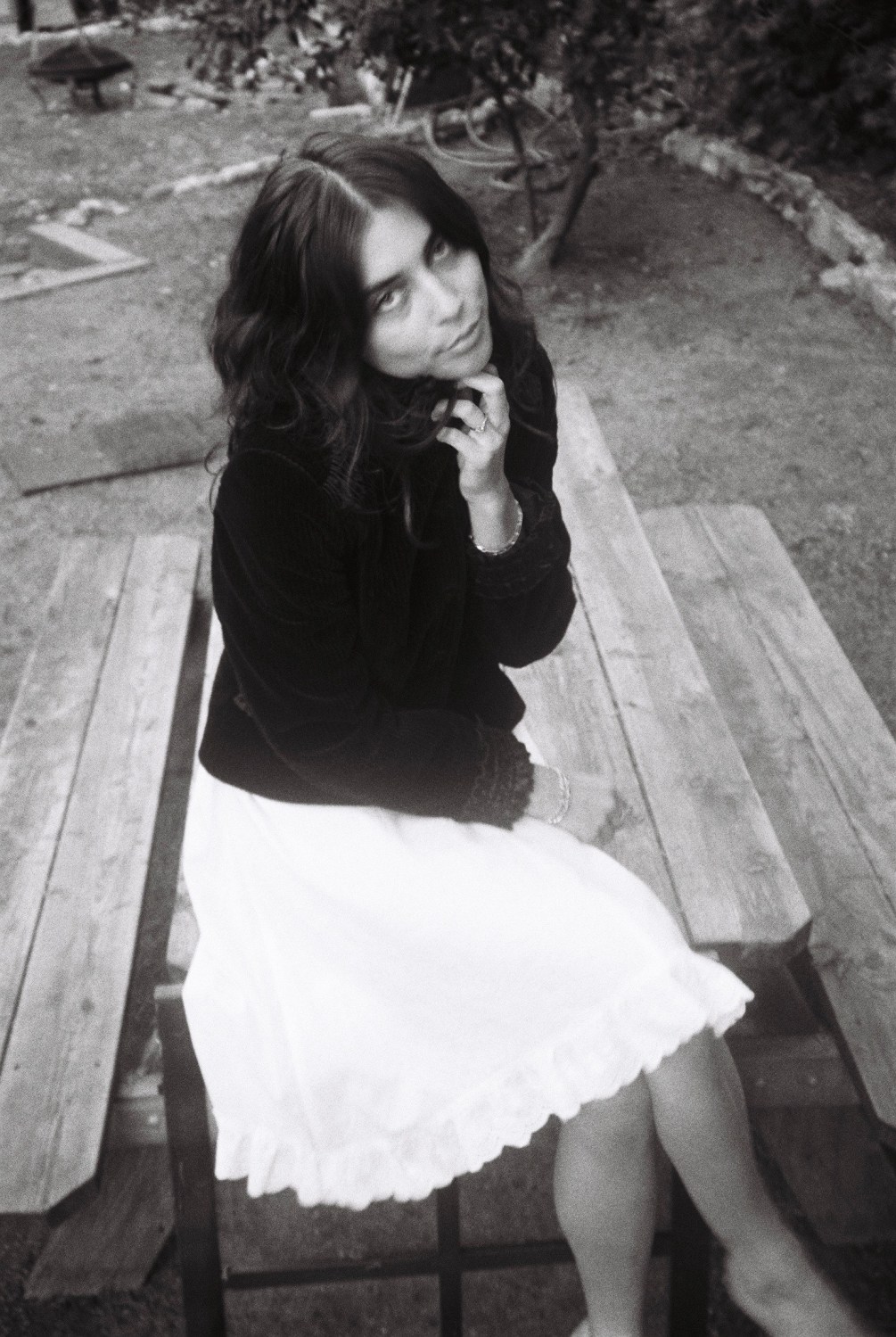
Adriana McCassim is an LA-based, Asheville-raised songwriter who shares with us her new single “Rust” out everywhere today. Returning to I’m Into Life Records, this is the first bit of new music from McCassim since her debut LP, See It Fades. Released back in 2024, McCassim invited the discomforts and bad habits into her dynamic space, her deliverance nothing short of empowering, bringing both a gripping presence and tender release to the here and now that she was writing from. Now brushing off the cobwebs, “Rust” finds McCassim returning to this space with both vulnerability and perseverance.
With a chill in the air, “Rust” opens with a voicing of gentle synths that spread like goosebumps down your arms, only brought to a reasoning from the light drum machine underneath. Although McCassim’s voice is the haunting focal point of each one of her songs, each instrumental piece becomes a limb in and of itself as “Rust” embodies a full heart consumed by a lost soul. As rich guitars rattle from its core, pumping blood throughout the space, we can’t help but to wonder if it’s enough to keep going. McCassim’s simple, yet fixated refrain, “Don’t rust your love”, leaves each word to its own means as she grapples with the space left open to the elements.
Photo Courtesy of Adriana McCassim
About the single, McCassim shares, “Rust is about the fear of corroding something beautiful – a plainspoken reflection on self-sabotage, intimacy, and the struggle to let someone in. It’s rooted in country music I was listening to at the time, and recorded mostly live. The track layers drum machines and electronic textures to create that textural world. This was the first time I played with a drum machine and live drums. It felt more human and interesting to listen to. We wanted this drone effect, and repetition, that eventually falls down by the end of the song emulating the lyrics.”
Listen to “Rust” here!
We also got to ask McCassim a few questions about “Rust” and how it came to be.
Following your debut LP, See It Fades, released late last year, as you continue to write and record, where does “Rust” fall into where you’re at in your life both creatively and personally?
Rust, to me, feels like a bridge in between See It Fades and this next record I’ve been working on. I was really on the fence with whether or not to include it on the next thing, but it felt so singular and important to put out now. I wrote Rust about this period in my relationship where I was really navigating self-sabotage and trusting myself. It really lives in its own world, creatively speaking, and feels like something other people might relate to.
Compared to the process on your last release, were there elements when writing “Rust” that came out of trying something different? Was there anything you challenged yourself to accomplish?
I think so, yes. This song was written in one sitting, oddly enough, while I was taking a School of Song Adrianne Lenker class. We were working on incorporating the idea of droning sections while writing – this song fit that mold especially just living within two chords the entire time. I really challenged myself to be as literal and honest as possible. Almost like an unravelling.
I also felt excited about starting this song with a drum machine, sort of in the demo phase, and following through with using it in the final version. Which we ended up achieving 🙂
Your songwriting has always been strickenly personal, and this song grapples with habits and the struggle to let someone in. Were there any feelings that surprised you as it was coming together? Do you find any comfort in the song, or does it sit as more of a reflective piece?
Totally. Everything that fell out first go around is pretty much in the song now. There’s words about corroding my relationship, my previous issues with ED, and just feeling deep self defeat. I wasn’t necessarily expecting that to unravel in one frame.
Now when I listen back, it does feel really comforting. Like a reminder and less punishing.
“Rust” was written inspired by the country music you were listening to at the time. What elements of a country song draw you in and how did they influence how this song came to be?
What I love most about country music is how honest and plainspoken it is. Oftentimes, it feels like a story first go around without fear of upsetting the listener. I wanted to emulate that. I was listening to a lot of Bill Callahan and Arthur Russell albums at the time.
Do you have anything planned for the future?
We are about half way through working on a new album right now, I feel so excited about what we’ve made so far. It’s such a different approach than See It Fades, mostly done live in the room at my house. Can’t wait to share it hopefully next year. We will see 🙂
You can listen to “Rust” out now, as well as order a cassette of See It Fades via I’m Into Life Records.
I have never gravitated towards astrology as a tactic for measuring compatibility. Perhaps it’s because I have never done ample zodiac research – instead I turn to slightly more specific litmus tests , like do you insist on using a Brita? Or, what lo-fi bedroom project resonates the deepest with you? Sometimes, the latter is merely a matter of surveying one’s thoughts on the Brooklyn based project, People I Love. It is a somewhat self-serving probe, with lines like “my relationship with words has a gold key” and reoccurring grievances pertaining to attending parties – People I Love’s discography is chock-full of anthems for the socially reserved. But, even if your Myers Briggs begins with an “E”, I think there is a grandeur weaved carefully into People of Love that requires a certain level of intentional and emotionally aware listening to fully appreciate (therefor setting it up as personality assessment gold). Within tracks that rarely surpass three minutes and structures that aren’t trying to prove themselves, there are parcels of complex emotions tucked in the intimate and lived in corners of each song, and an opulence that grows with each listen.
Today, People I Love shared new track, “Perfect.” Featuring Avery Kaplan on drums, as well as and guitar, piano, and slide contributions from Boone Patrello (Dead Sullivan), it’s a song about longing to be perfect…maybe. It strays from commercialized notions of perfection, dodging 9pm bed times, self-improvement books, and $16 green juices (although if I were a hypothetical gym rat, I could see the bridge pushing me to an arm day PR) and instead prods at something darker. “Perfect” opens with going about felt the bloody air / spying around find a violent stare wanna explode – but even without this lyrical agony, the track in its entirety flirts with detonation. Leading with a fleeting warmth that quickly transcends to an intense, pressure cooker kind of heat, “Perfect” conveys a dysregulated mood threatening to burst. The general soundscape is a moving target, springing from cascades of dejected guitar, quirky pitch bending, angular percussion, and Dan Poppa’s signature frothy vocals. It’s also rather catchy, sure to have you seething “wish I was perfect, my blood they’ll inject it” throughout this (appropriately timed) week.
While it is by no means necessary, I am personally fond of a band name that manages to elicit some sort of parallels to the music that said band makes. Not in any super overt way, rather in an intangible sense – like when you listen to Vivadixiesubmarinetransmissionplot and think, yeah, this is exactly what a sparkly horse sounds like. Perhaps that one is too abstruse, but think Built to Spill, Rage Against the Machine, Unwound, Brooklyn based Local Weatherman – who just announced their forthcoming EP, Right One. There is something simultaneously idiosyncratic and omnipresent about the notion of a “local weatherman”; whatever striped tie clad character it denotes for you will likely be wrapped in the same blanket of nostalgia as the one that comes to mind for your roommate who grew up Central Illinois and your coworker from New Jersey. Serving as patient zero of the ‘microceleb’, the local weatherman is a household name that belongs to you in a way Emma Stone never could. A star on your television each morning, but one time you saw him buying 2% milk at the grocery store, striped tie swapped for a quarter zip. He’s legendary and he’s human and he’ll occupy a small plot of real estate in your mind forever.
Today, Local Weatherman shared “Thread”, a song seeped in the ideas that make up my introductory tangent. Though it nods to the reigning songs of frontman Fritz Ortman’s childhood, my guess is “Thread” will dredge up some sort of nostalgia for you too. Or perhaps build the foundation for future nostalgia, as its ridiculously hooky bones and unfettered vocals pave the sort of angsty and youthful experience that our brain has no choice but romanticize in some way down the line. Crammed with punchy riffs and metaphors of disastrous failed sewing attempts, “Thread” a full throttle track slated to stick with much longer than three minutes and twenty-three seconds.
About the song, Ortman says, “‘Thread’ is about having no release valve when your mind is racing. It’s the heaviest song we’ve made, but I think the bridge is one of the prettiest moments on the EP. This song also reckons with the rockstar dreams I had growing up (and maybe still have), and each verse ends with a nod to a song I loved as a kid.”
RightOne will be out January 16 via Karol Records. You can listen to “Thread” below.
The irony isn’t lost on the listener that the title of one of Samuel Aaron and Glass-Beagle’s new double singles is called “Home Again,” which is aptly timed with the beginning of their collaborative tour this October and the subsequent music video for their two tracks. The Chicago-based artists will take to the heart of the Midwest this month, traveling to Iowa and Nebraska. Maybe in ways, this Midwestern excursion does encapsulate the idea of home if you shift your perspective slightly.
The music video showcases the collaborative nature and creation of these songs, which is evident throughout their duration, as Aaron takes the lead on the first, and Glass-Beagle is handed the baton on the second. “Home Again” details the sometimes isolating aspects of being home and wanting to escape it, but also the idealization of it despite the fact that it was previously stifling. It’s evident in lines like, “This time I’m on my own, and I don’t like the way I might like this. Always wanted to find a way to feel like I can carry myself home again.” The track soars into its second half with the repeating refrain, “Home is where it’s the hardest.”
These songs complement each other masterfully, transitioning into “Storm Chaser,” which is held together by brushed guitars and steel guitar. Glass-Beagle’s vocalist, Nathan Zurawski‘s plain-spoken vocal styling expresses the uncertainty of the song’s subject, detailing his need to allow them to be free, chase that storm, and maybe that love will come back in time. “And when the rain lets up at last, will our love be gone? Will you have a storm to chase when the highway lights turn on?”
You can watch Samuel Aaron and Glass-Beagle’s new music video for “Home Again / Storm Chaser”.
You can listen to the split single now on bandcamp. Catch Samuel Aaron and Glass-Beagle on their mini-Midwest tour. Find dates here.
Chicago’s own, Josephine, the project of Josephine Luhman, has always been one to cherish reflection and growth. Making bedroom pop under the name Joz in the late 2010s, Josephine has since taken to the Chicago circuit as a full band, bringing a large established sound to the sincerity and grit of Luhman’s songwriting. Today, Josephine returns with “Does It Pay”, a lush track of eagerness and discouragement caught in the mess of financial stability.
“Does It Pay” takes quick control with a head turning drum fill, soon becoming a slow burn of indi-pop romanticism and disparagement in late stage capitalism. As rearing guitars melt away, Luhman doesn’t hold her breath as she sings, “Did you get the job you wanted, do you love it, does it pay,” blasting through corporate wishy-washyness with intuitive dynamics and sincere deliverance. Is it a song of sympathy towards that world? Kind of. But “Does It Pay” also leans on this feeling of relief that Luhman feels in the face of expectations. The line “who am I to say?”, with time and repetition becomes less of a question, and rather a statement of deliberation, what is to be desired in a world caught in the defeating presence of financial strains. And in the noise, crafting dynamic shifts amongst swooning guitar lines and an invigorating rhythm, Josephine’s vocals become a point of reflection, wielding both strength and tenderness as the melody leads with its whole chest, breathing the slightest sigh of relief, as she sings, “I do not envy you”.
Listen to ” Does it Pay” now!
You can listen to Josephine where you find your music.
I used to avoid employing “lived in” as a descriptor for anything music related. Partially because I deemed it a bit overdone, partially because I worried it was too synonymous with “flawed”. However, the most prominent reason I had expelled “lived in” from my vernacular was because I found it reductive, and felt that it inhibited a need to expand upon what is ultimately so compelling about music that resembles the sensation of wearing that “well-loved” utility jacket that never leaves the front of your closet. The reality is, there is no impression quite like the fingerprints left by “lived in” music, and yesterday, as I meandered through an MTA tunnel plastered with advertisements for AI companionship, I realized “lived in” might be the highest form of praise art can receive today. “Lived in” dwells amongst the positive descriptors that swarm my brain when I listen to Guitar, as amidst moments of rich shredding and unforgettable hooks, the Portland project is teeming with pockets that touch on what it feels to be human – in both a complex and fundamentally simple sense.
This past summer, Guitar announced forthcoming record, We’re Headed To The Lake – sharing lead single “Pizza For Everyone” and eliciting hunger cues from anyone nurturing an appetite for power pop spreads and finger-licking riffs. “Every Day Without Fail” followed last month, and as Saia Kuli’s gravely vocals reach an intensity that rivals the face-melting soundscapes it co-exists with, the flammable second single proved that the Portland based project is beyond worthy of its name. Today, Guitar is back with the third and final single off We’re Headed To The Lake, offering a more tender side of the project as Kuli’s signature earnest vocals are replaced with his wife’s singing.
While “Chance to Win” enters with less immediacy than the singles it succeeds, the track parallels their intensities (and windswept feels) through other means. Controlled chord progressions trickle in and escalate gradually, as Jontajshae Smith’s honeyed vocals unfold a poetically disheveled stream of thought. Frenzied feelings of exhilaration, sometimes referred to as “butterflies”, are kindled through lines of “Sit still / First place / Record pace / Long game / Okay” and “Just wait / On the / Count of three / Breath in / One two”. The track is stunning and tousled – much like the adrenaline rush of possibility, and the lingering anxieties that anticipation fosters.
“This song is about the excitement of an opportunity, feeling electricity in the air and trying to stay cool and not fumble,” Kuli says.
We’re Headed To The Lake will be out October 10th via Julia’s War. You can listen to “Chance to Win” below.
In the latest case for East Coast country music, Chico States shares “A Dozen Beers”, the first single from their upcoming album I Saw A Galloping Horse Cover No Ground out October 23rd via Anything Bagel Records. With two albums already tucked in his pockets, songwriter Joseph Barresi continues his hunt for new uses of language, mopping up his daily affirmations and one liners off the dirty floor and draining out what’s left into a pail. Accompanied by Hannah Barrett (vocals), Alex Silver (bass), Garrett Linck (drums) and Ben Rodgers (pedal steel), “A Dozen Beers” spills over the edge with boozy hooks, dry wit, and a whole lot of toe-tappin’, to the point where he should have brought a second pail.
“A Dozen Beers” revels in a sweaty bit of twang, a cowboy’s holy prayer, one to be saved for when the liquor is flowing and spirits are high. “Me & you, we’re just blundering on through, a dozen beers ahead of most of the rest of the world,” Barresi drawls out amongst rusty guitar licks, both keen to weigh the empathetic with the obscure from the day-to-day’s friendly stakeholders. Stumbling to the motion of the pedal steel and swaying to the nifty hooks, “A Dozen Beers” becomes a celebration of the little things we remember. “Rip off some dumb country star / just the harmonies, straight from the heart / as I’m walking out the door”, is just as anthemic as any ol arena-mantra, yet gets us closer to who really ripped off who. This track embraces the bare bones, finding grace in the comradery, its loose melodies linger into the nightlife, a collective harmony you sing to the moon hoping it joins in for one last tune before you close out the tab.
You can listen to “A Dozen Beers” premiering here!
Carry Ripple is the Memphis-based project of artist, video creator and music producer, Carter Earheart-Brown, who has been releasing music under the project for a few years now. Today, carry ripple returns with, “Ailanthus Altissima”, the first single off of his upcoming record carry ripple 2, the sequel that has been in the making since the debut carry ripple was released back in 2024. Now accompanied by Kaleb Collins (The Louisville Orchestra), Sofie Pedersen (candynavia) and Heaven Schmit (Grumpy), Earheart-Brown continues to experiment with songwriting and new sonic flavors as “Ailanthus Altissima” becomes a song reeling through obsession and ecological and personal disparages.
With a dribble of acoustic guitar, “Ailanthus Altissima” seeps into the soil, steady and patient as a harmony of strings begin to nourish the dense roots that will soon make up some heavy ground. Referring to Ailanthus Altissima, or commonly known as the tree of heaven, a native plant in China that has become an invasive species here in North America, Earheart-Brown laments in its ecological havoc, singing “you’re more like a tree of hell”. The track waivers between natural whimsy and eager chaos as warming runs of woodwinds sprout underneath Earheart-Brown’s vocals that begin to grow erratically amongst the track’s flourishing melodies. At the same time, these natural elements begin to be overrun by alien-like effects and electronic fixations, wrapping around his words as Earheart-Brown sings, “Now every time I see a tree, I’m bound to think of you,” where these intrusive plants begin to be a disruption in not just space, but in thought as well.
Listen to “Ailanthus Altissima” here:
About the song, Earheart-Brown shares;
“The song idea started when I learned some people call it the tree of hell because of how annoying they are! It is an invasive plant that is often a host for the spotted lanternfly! While some of the lyrics are metaphorical, it really is about the actual plant.
I wrote it last summer when Kaleb and I were practicing for two acoustic shows opening for villagerrr and Tombstone Poetry. Tracked my vocals and the guitar with my friend Spence Bailey. Heaven, Kaleb, and Sofie recorded their parts remotely. We reamped some of the clarinets through guitar pedals for a glitchy sound. I attempted to write most of these songs without drums, so I wanted the sound to lean into that.”
You can listen to “Ailanthus Altissima” anywhere you find your music.
Written by Shea Roney | Featured Photo Courtesy of carry ripple
 the ugly hug