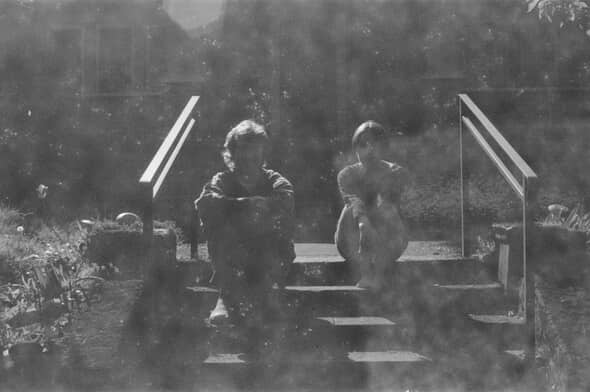
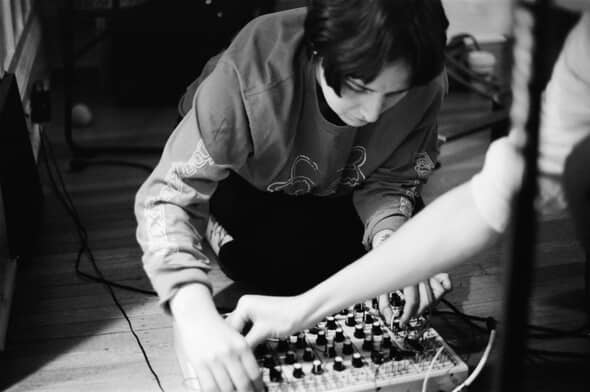
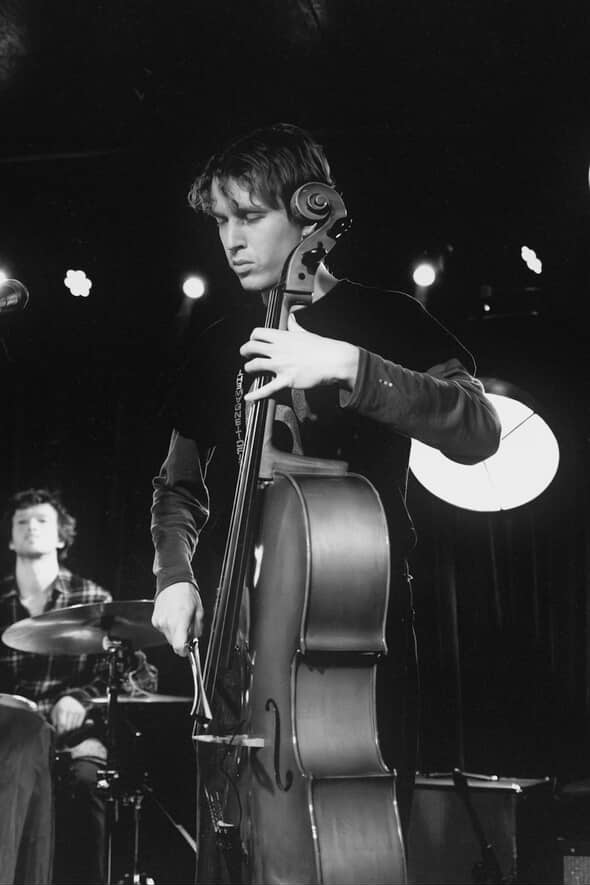
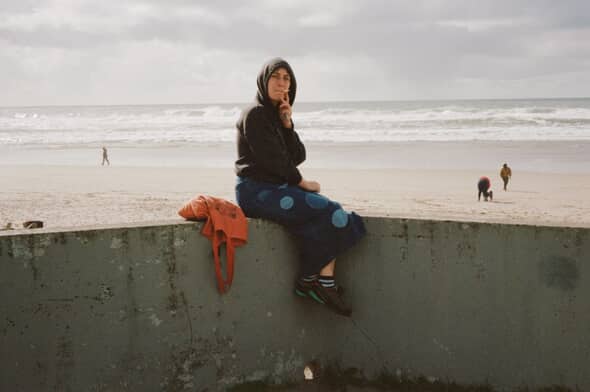
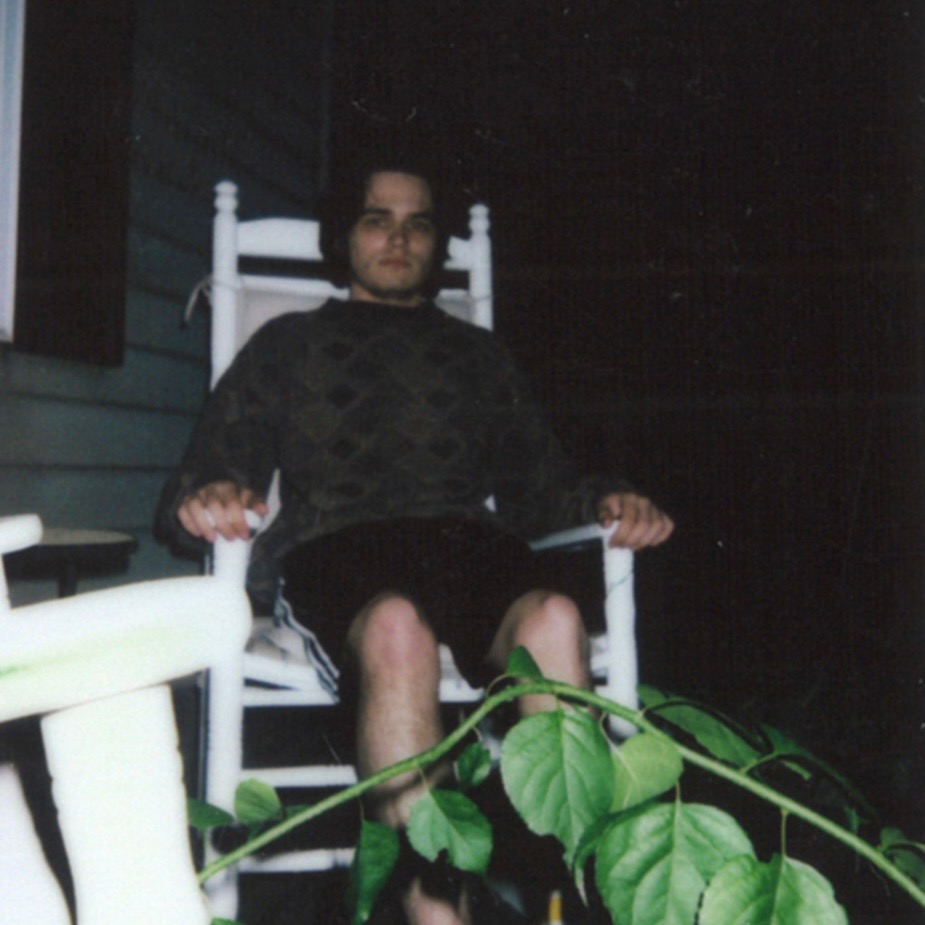
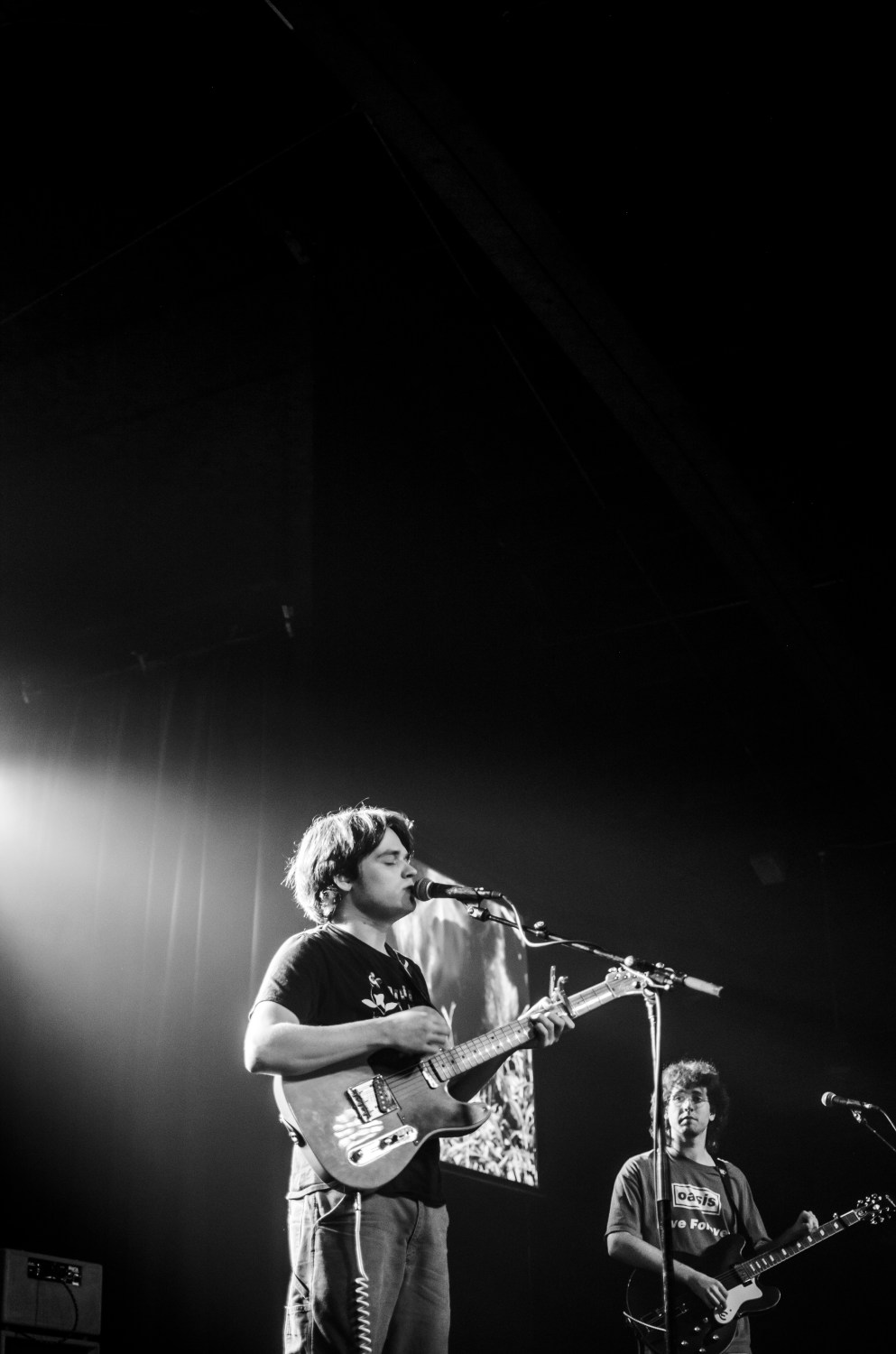
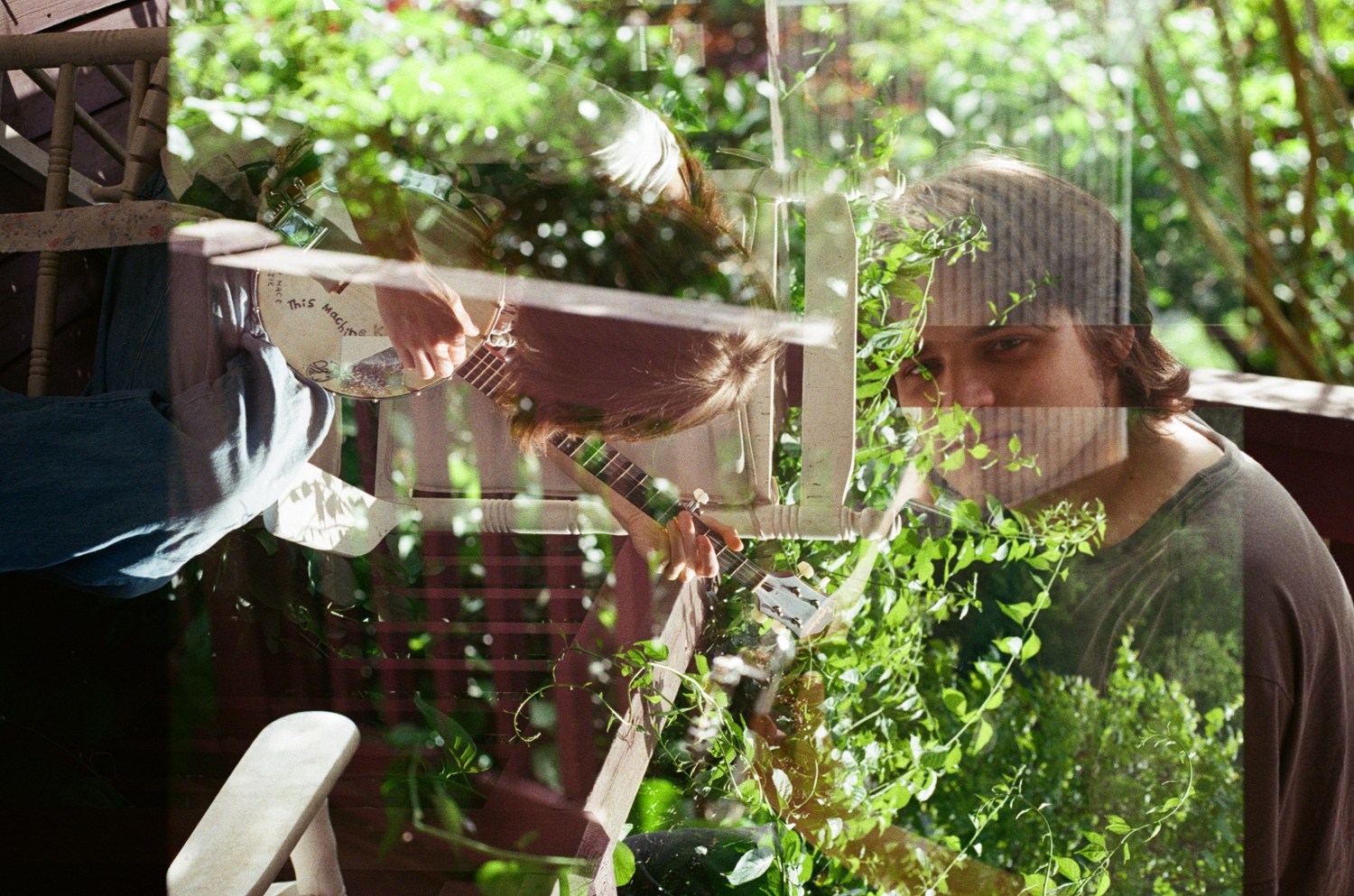
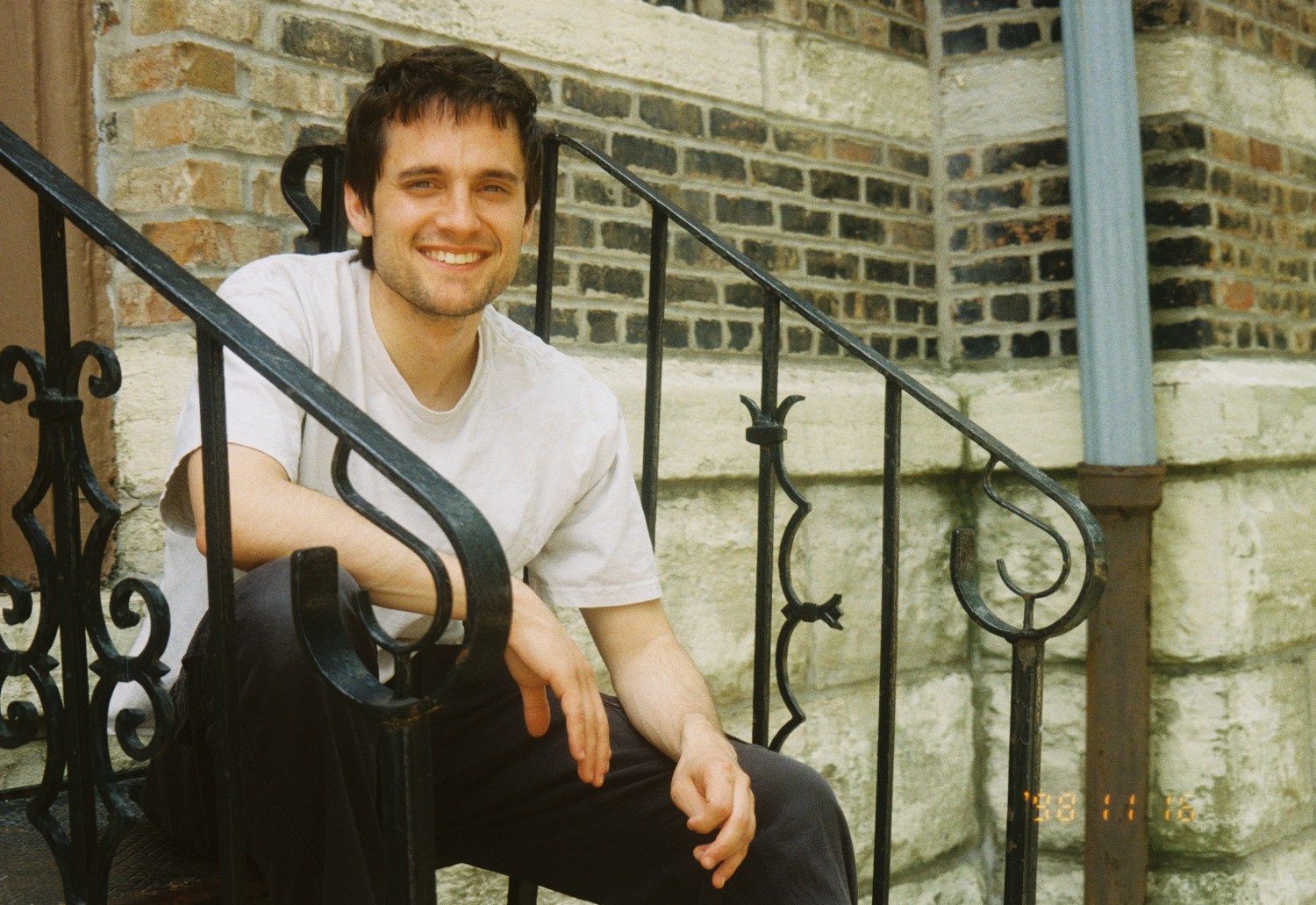
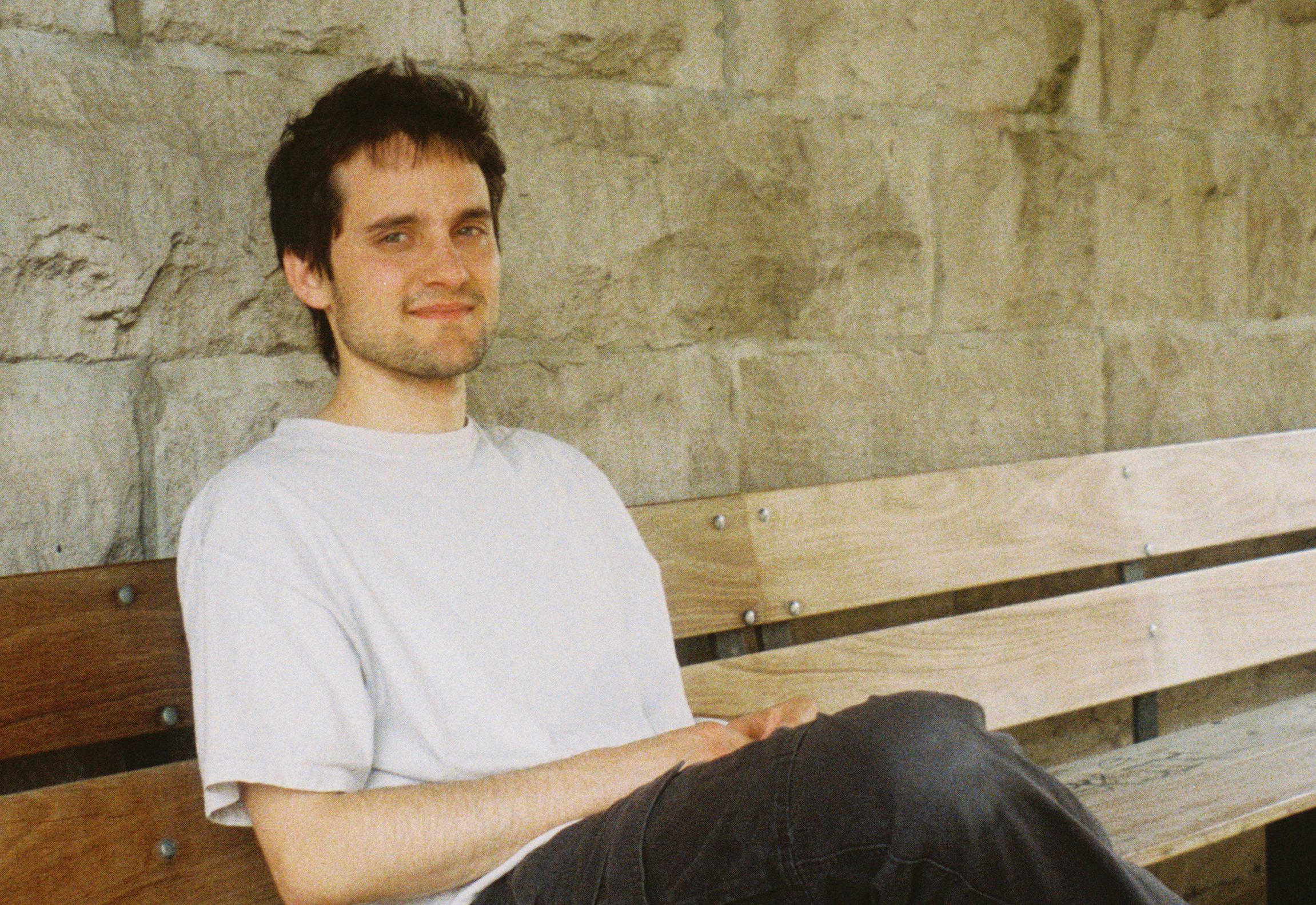
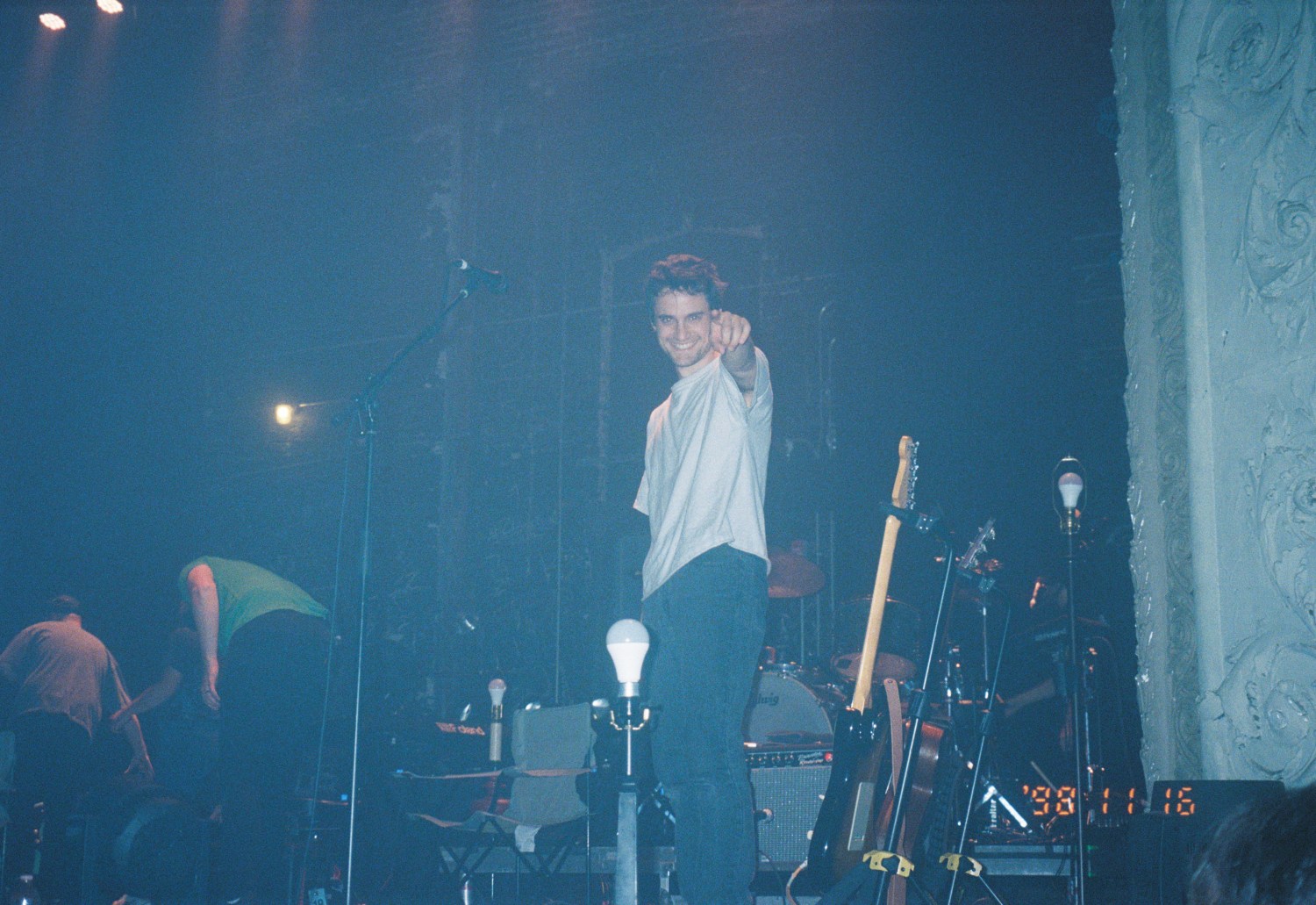
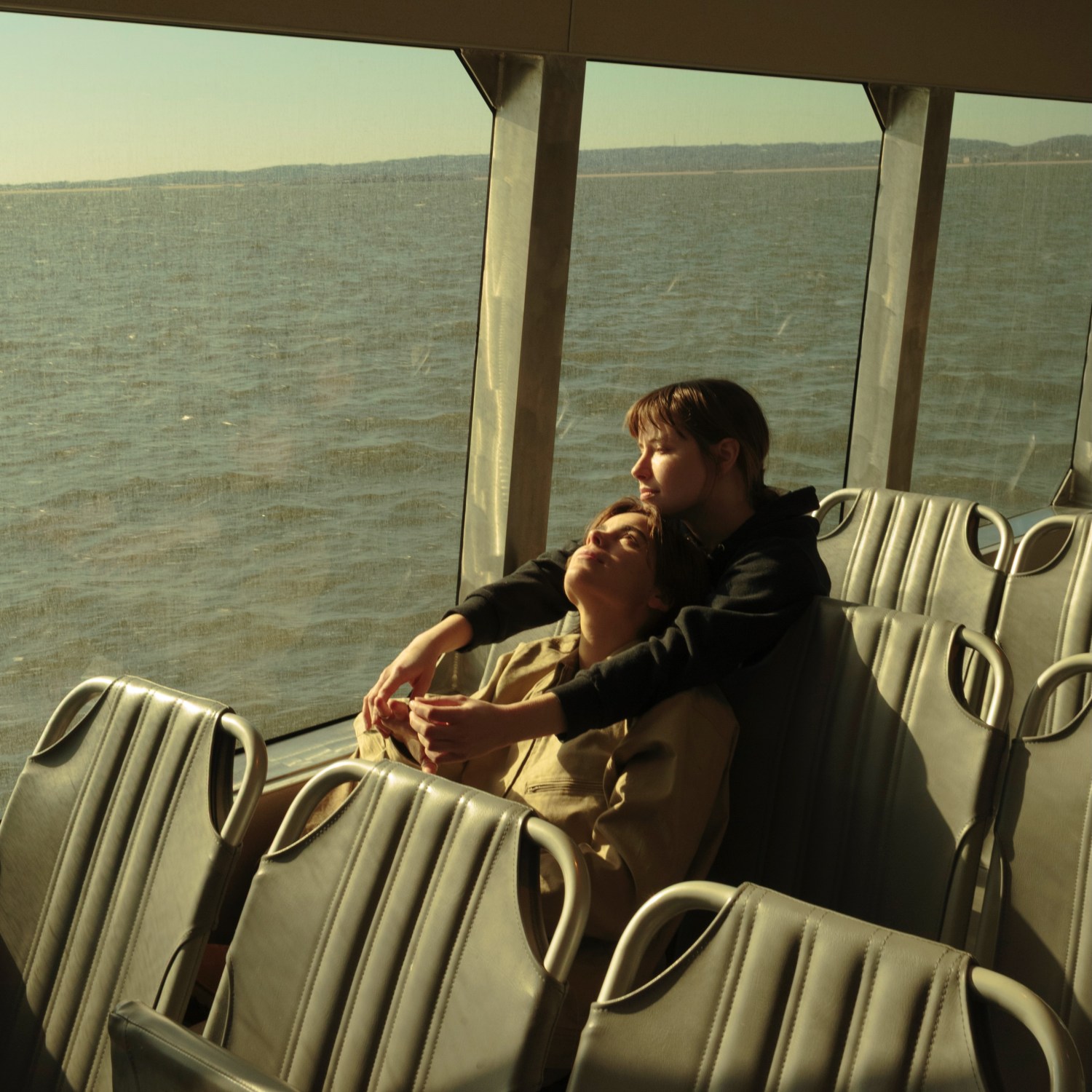
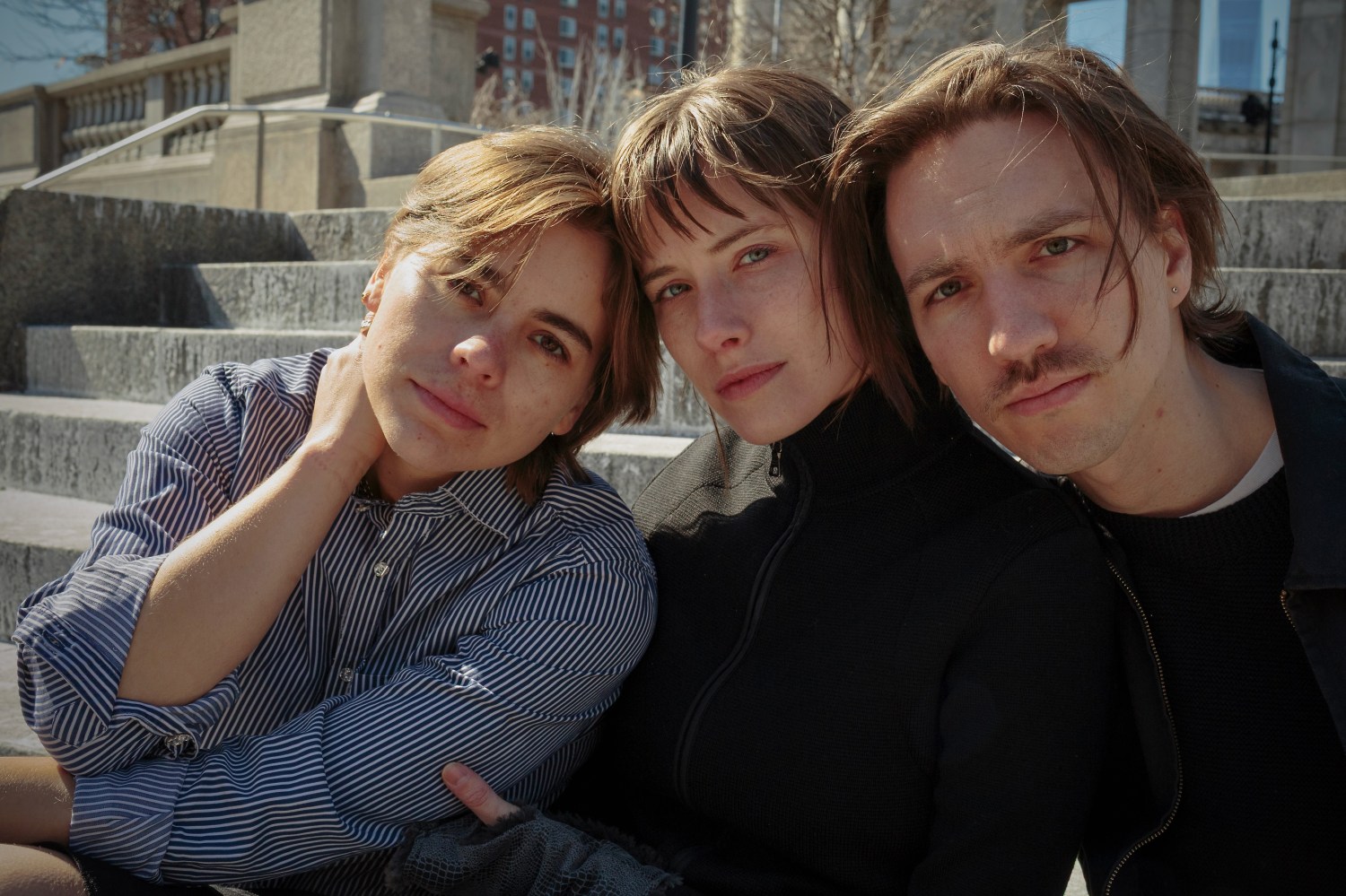
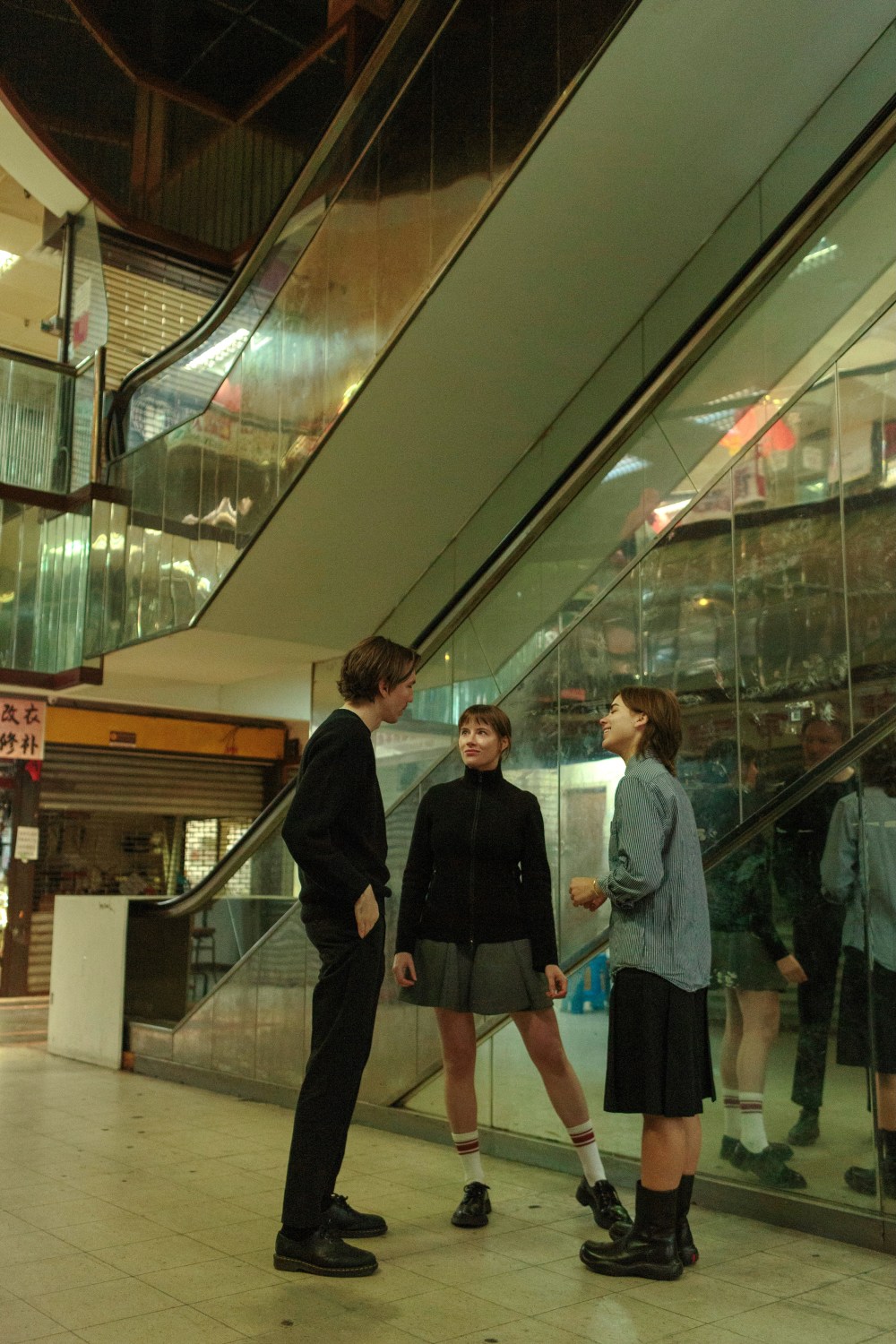
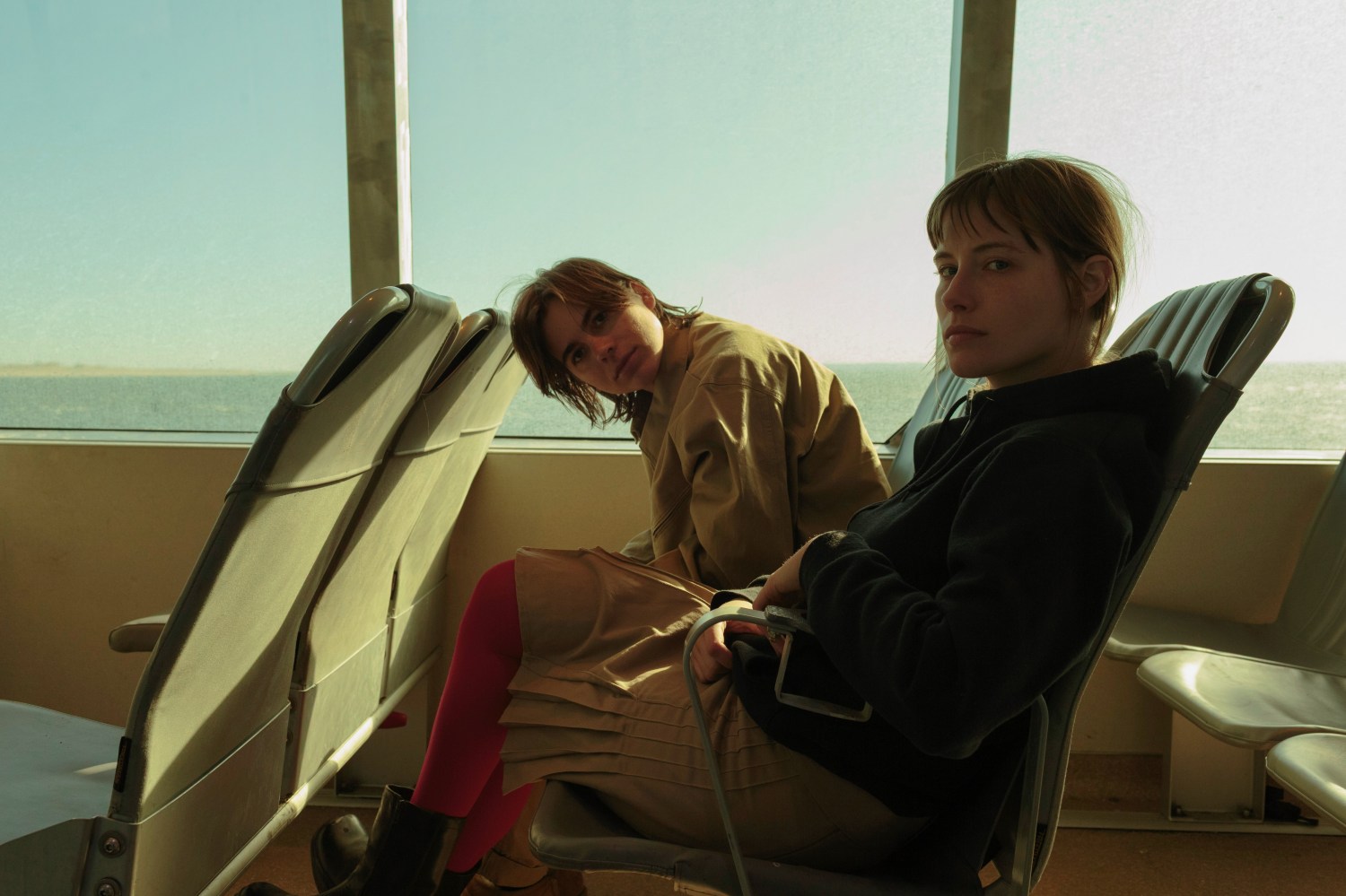
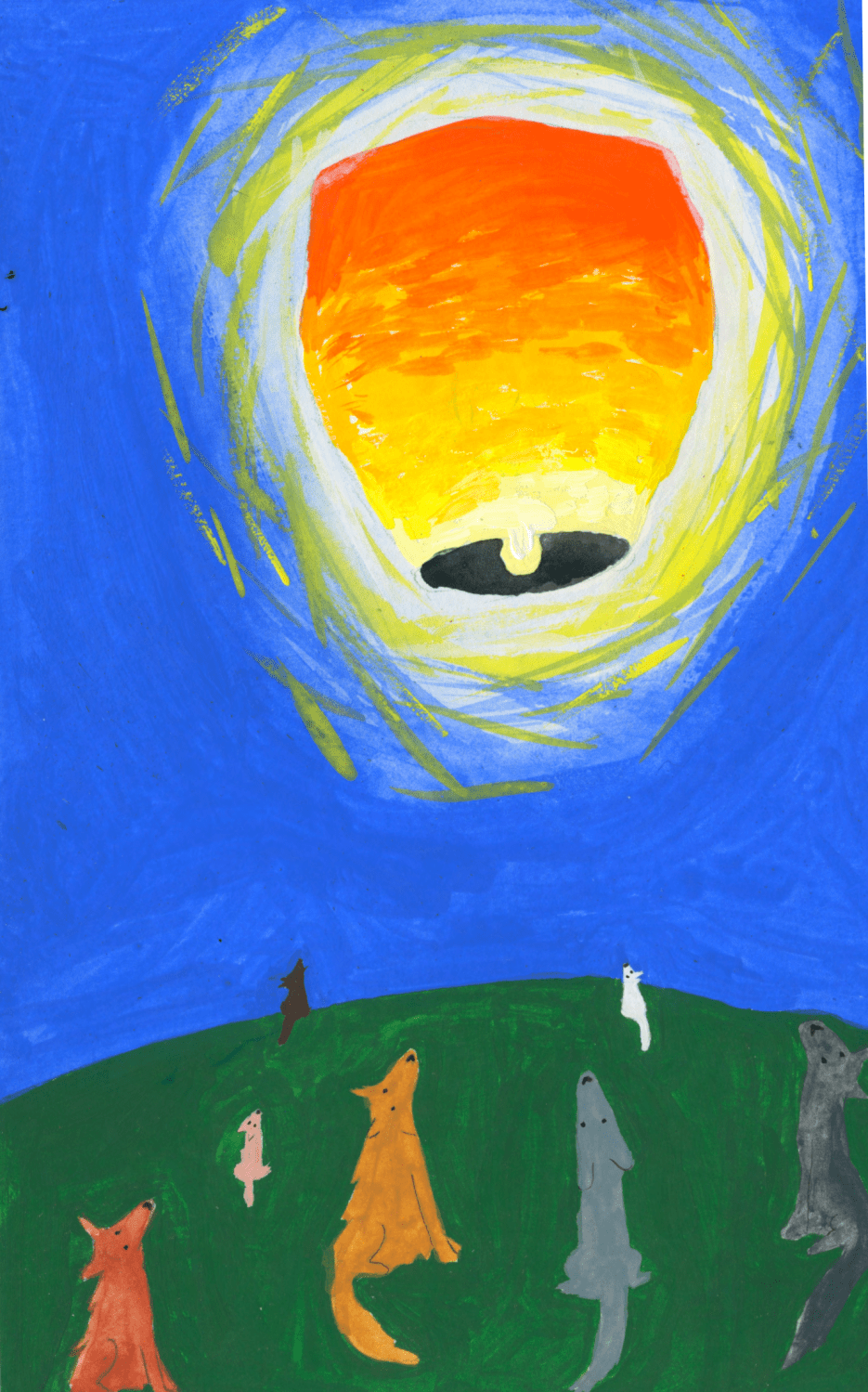
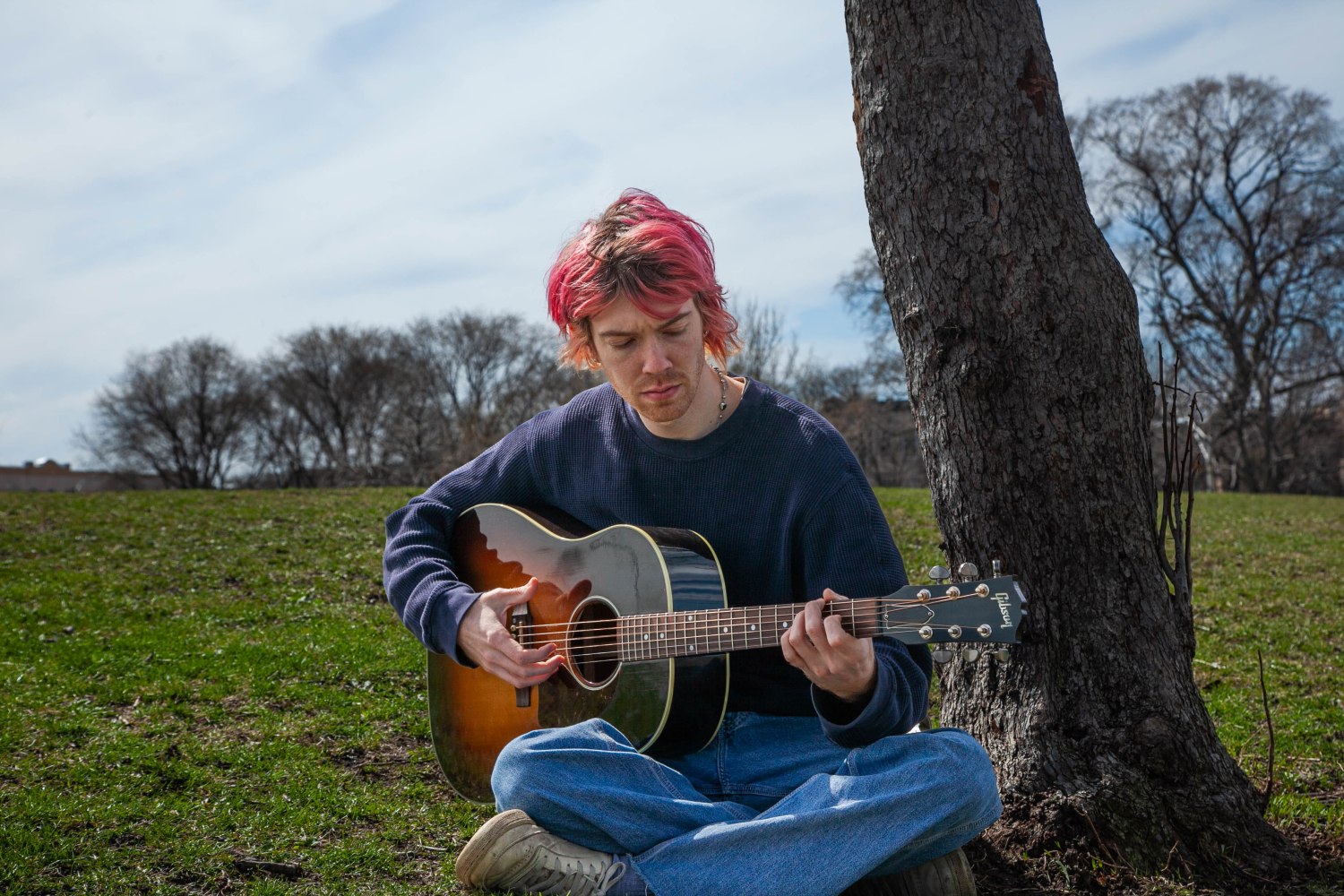
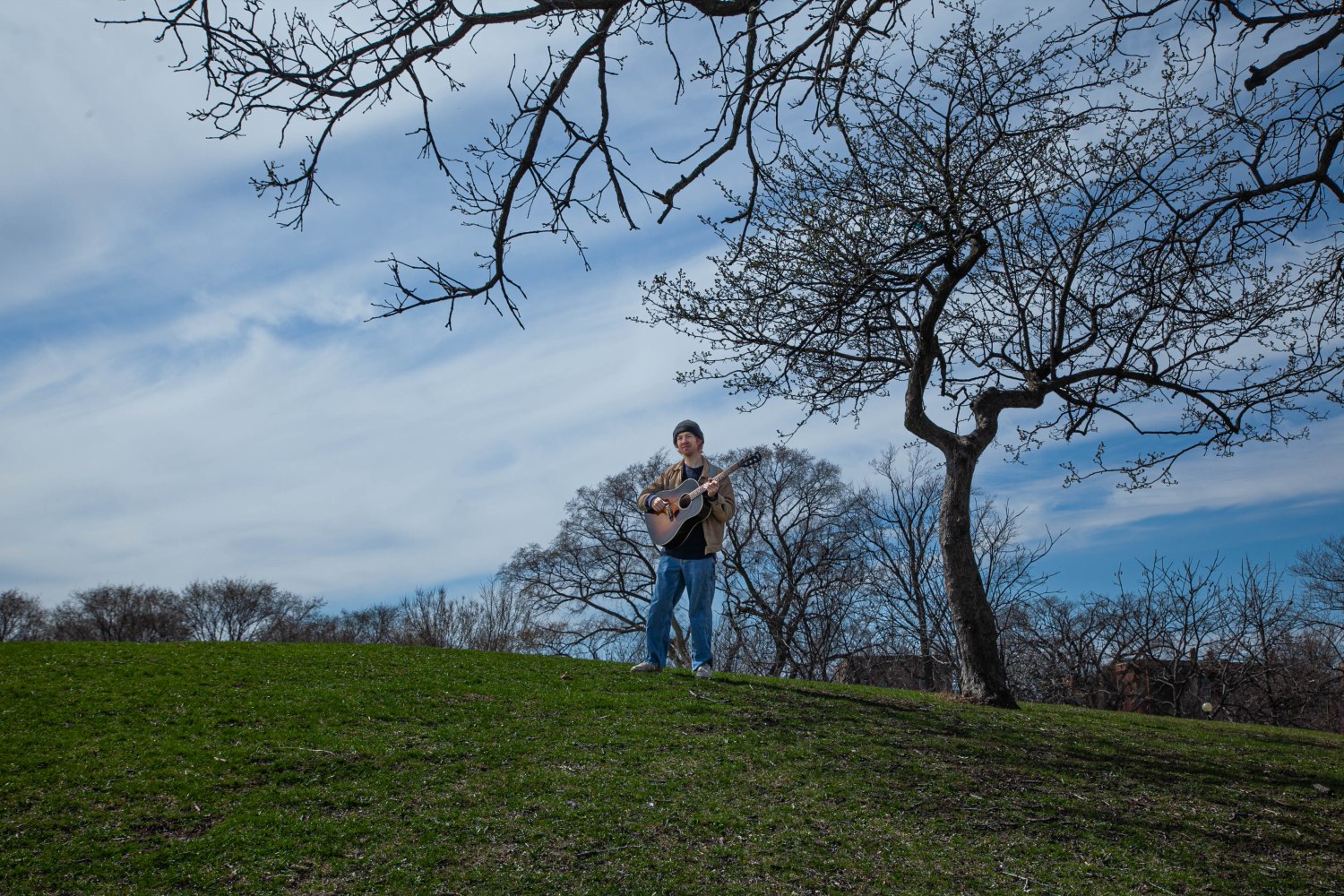
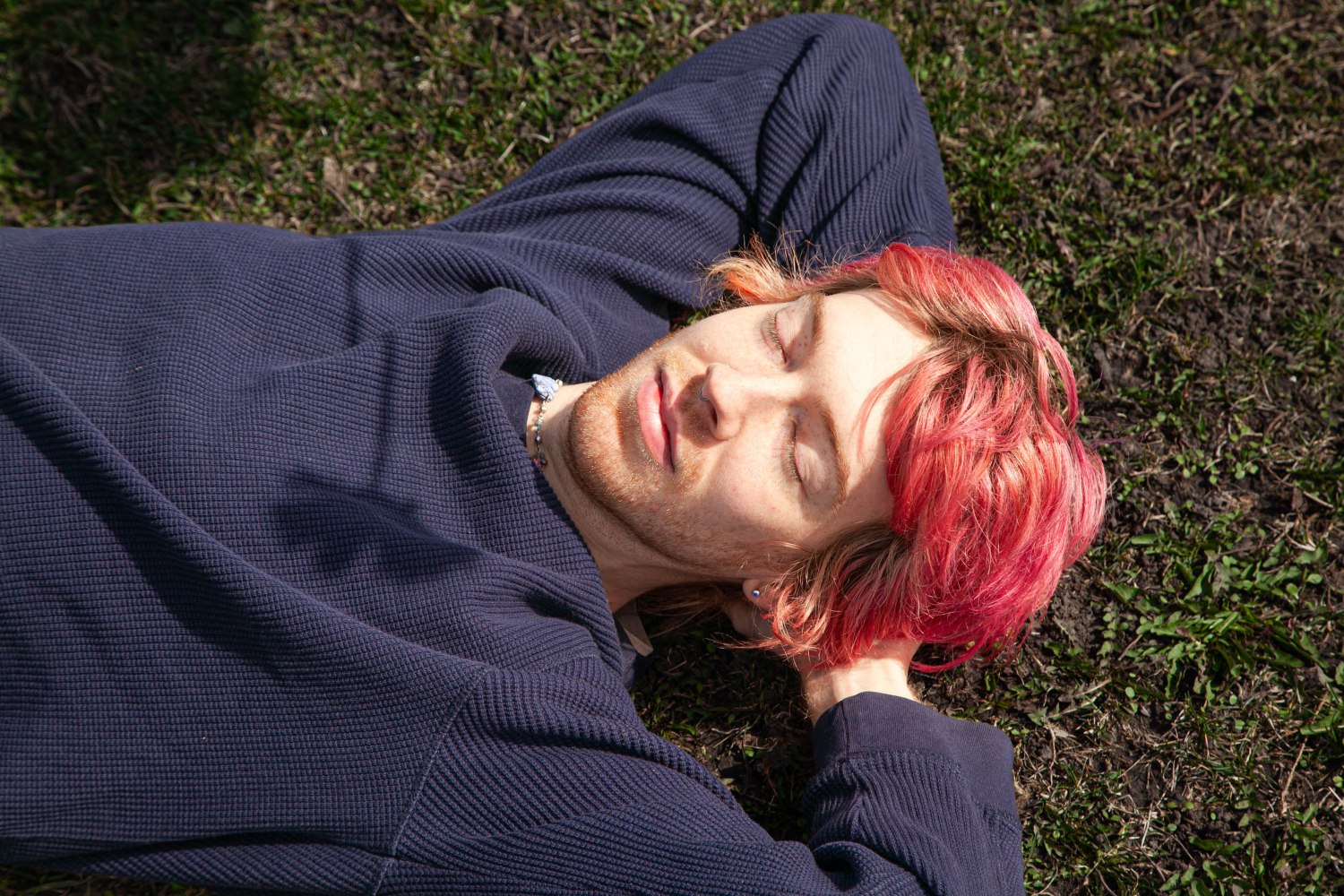
Days out from the release of Moths Strapped to Each Other’s Backs, Bedridden have a lot to look forward to. It marks their debut LP, it’s an opportunity to sell tapes without title misprints and it will surely inch them closer to Sebastian Duzian’s dreams of the band landing a Miller Light sponsorship. However, amongst all the bounties on the horizon there is a unanimous front runner exciting the band the most; the anticipated shift in their shows that will come when their audience finally has access to these songs.
Of course, that will not come as a surprise to anyone who has caught a Bedridden set in their lifetime; the volcano of personality and noise they bring on stage speaks more to their passion for playing live than anything I could tell you from our conversation. The brash charm of their shows filters through their forthcoming record, and while Moths Strapped To Each Other’s Backs is by far their most intentional endeavor yet, at no point does the work poured into it sand down the band’s raw edges. Instead, Bedridden’s enthusiasm for the feel of a live set guides the listen, yielding an experience just as fervent as catching them at Trans-Pecos.
Jack Riley started Bedridden during his college years in New Orleans, enlisting bassist Sebastian Duzian and drummer Nick Pedroza to formulate the band’s identity and hatch out their first EP, Amateur Heartthrob. “I think with Amateur Heartthrob, we just wanted music out – that was our debut, so we just had six songs that we considered done. Looking back, I don’t know if I consider them to be fully finished and fleshed out to the extent that they could have been,” Jack reflects on the EP. They are now a Brooklyn based four-piece, adding guitarist Wesley Wolffe as they progress towards a denser sound and a dynamic that stitches their various individual backgrounds and influences into an identity of its own.
Moths Strapped To Each Other’s Backs presents as a quilt of witty and often hyper-specific anecdotes, ranging from an interaction with a church pastor to frustrations over ex-roommates’ lamp shopping obsessions. They nearly all have roots in rage, an emotion heightened as Jack’s words interact with charged guitar riffs and hostile drumming. The album’s title comes from [redacted astrology app], after a line about moths in a friend’s horoscope resonated with Jack amidst a period of his life blemished by codependency. While the tracks accumulated over the course of a few years, they all bleed into one familiar early adulthood story, and what it feels like to navigate an external world before you have fully grasped how to navigate yourself.
“In terms of the timeline, a lot of the things I like to write about haven’t changed over the course of two years. Whether it be my silly, self-destructive behavior or just meeting new people and having experiences, it all seems pretty cyclical, like it just tends to keep happening”, Jack tells me. “Lyrically, [compared to Amateur Heartthrob], Moths is just more concise and intentional. It’s less tongue in cheek and more just exactly what I was going through or feeling on a certain week or day. It’s still kind of coated, in a way there’s a lot of metaphors and whatnot, but if you look into it or I explained what it was about, it’s pretty cut and dry. We also recorded this record over a year ago, so when I listen back it all blends together”.
Although the bouts of heightened emotions explored in the album may have dulled with time, recent single rollouts have served to replenish the energy the band lends to these tracks. “It feels so good performing songs when they’re actually out. We’ve been playing some songs from the album since before the last EP was finished, so now three are out, playing those specifically is so much cooler, because there’s a chance someone in the audience actually knows them”, Nick explains, reflecting on their recent March touring. “Everytime we get to play ‘Chainsaw’ now that it’s out, I’m so stoked, like this is something I can show people and they can go find it,” Jack adds. “I’m ready for it all to be out and to get that feedback, especially in a live setting.”
The band’s excitement to play the record post-release is joined by a sense of perfectionism, dispelling any notions that a slacker-leaning sound is synonymous with a lack of preparation. “We treat Bedridden like the military”, Wesley jokes after the four of them went into the self-deprecating details of a dissatisfying show in Philly. They also all cited the record’s most difficult track, “Heaven’s Leg” (known exclusively as “religious song” to Wesley, Sebastian and Nick) as their favorite to play due to the enduring focus and effort it requires. “It’s just one big shred fest bonanza”, Sebastian concludes.
Moths Strapped to Each Other’s Backs is out April 11th via Julia’s War. Until then, the band has tapes available for pre-order on bandcamp.
Written by Manon Bushong | Featured Photo by Sam Plouff
On a quick trip to New York, one of the first shows I got to attend was a small bill consisting of Dorée, Sister., and Avery Friedman (the latter being an artist I never heard of before until that evening) in an intimate living room setting. As we were filing into the warmly lit house, everyone began to take their shoes off, and as I anxiously contemplated if I was wearing that pair of socks that had the massive hole in them, Avery Friedman was just beginning her set. Playing mostly alone, along with a handful of songs accompanied by James Chrisman on guitar, Avery’s songs filled that small space with both a gripping passion and a newfound focus.
Since that evening, there have been parts of Avery’s songwriting that have stuck with me in a way that has been difficult to put into words. There are moments that brush past my own bits of internal dialogues – anxieties, doubts and memories that each take their turns in the queue. But as Avery began to release her first handful of singles, and hearing these songs take on a fuller form than what I heard during her tender and open solo performance, there was a continuity that was beginning to become clear within her music. It’s not in sonic complexion or even melodic fixations that tow this line, but rather the way she approached, and later learned to embrace music as an unknown territory for her. Having never considered herself a songwriter for most of her life, Avery was fluent in writing about music but never felt comfortable in sharing her own. After meeting friends James Chrisman (Sister.) and Felix Walworth (Told Slant, Florist) who helped her push through to make the record a possibility, the stories she needed to tell and the healing she needed to feel became synonymous with a musical progression and identity built on embracing trial and error.
Today, Avery Friedman has shared with us “New Thing”, the final single before she releases her debut album of the same name on April 18th via Audio Antihero. We recently got to catch up with Avery to discuss coming into her own identity as a songwriting, challenging her anxieties and how New Thing all came to be.
This interview has been edited for length and clarity.
Shea Roney: We are very quickly approaching the eve of your debut record. How are you feeling about it all?
Avery Friedman: It’s true, It’s one of those things where it feels like such a long time coming. In some ways this is like a lifelong dream that I didn’t even realize was a dream, or even possible for so long. But also, it feels like everything happened so fast because it is all still quite new to me. I’m very excited and just grateful to have made something and to get it out there, and that people seem to be liking it.
SR: It’s fun, because I found you in the context of seeing you play a small house show before you had any music out, and I remember just being blown away by your songs that were already so full in that environment. Then seeing you release these singles one by one, with tracks fully fleshed out, brought a new life to these songs. How did you approach bringing these songs out in the recording process, and how much of it was playing to intuition and emotions, and how much was it trying to challenge yourself?
AF: I mean, it’s funny because these songs are the first songs I’ve ever written, and it’s also the first time I’ve ever recorded something. I write on acoustic guitar and so beyond that, especially having never recorded before, I did a lot of it with my friend James, and I had never been in a situation where someone was like, ‘okay, so like, what do you want this to sound like?’ I had no fucking idea [laughs]. I really lacked a language for describing what type of guitar would sound good, what type of drum beat, or lack thereof do I want, do I want synthetic noises, like whatever. So that’s all to say, it was a huge intuitive process, I think, because there wasn’t really any intentionality with what the sound would be. I just wanted it to feel like the production elements just further emphasize the spirit of the song.
I feel really grateful because James spent a lot of time with me being frustrated in his apartment, not even knowing if this sounded good. But I think it became a sort of chicken or the egg thing too. One of the first things we recorded together was a demo of the title track “New Thing”, and we just laid down a drum beat from a drum machine, played a guitar that’s similar to what is on the final product, and then had a synth in the background. I think that was the first glimpse of what my music might sound like, and I really loved that. Once we had a little bit of that concrete idea of what Avery Friedman music might sound like, we evolved from there.
Photo by Mamie Heldman
SR: In that personal language you developed, did you rely more on what feels right and what doesn’t feel right to describe what you wanted?
AF: In lieu of not writing music for 26 years of my life, I wrote about music for my school paper and had different podcasts about music. I was an intense music listener, so I could describe what was going on in songs. But I remember, once I started understanding things like adding acoustic guitar here can create a sense of longing, or that I always want vocal harmonies – I remember when we were working on the song “Finger Painting”, there’s a big build, and James asked, ‘do you think a guitar solo is the thing that you want to be the climax of the song?’ And I sat for a second, and I was like, ‘No. What if we tried some vocal modulation?’ – that kind of thing. It’s so small, but it was one of the first times that I actually had a different idea that I accessed quickly, and that we were able to implement it. Now, I can’t wait to record something else, because it will save a lot of time.
SR: I know you have never saw yourself as a songwriter before these songs began to be released, but what did it take for you to embrace that label and are you still weary of it?
AF: I mean, not anymore. I’m putting shit out there, so I have to just own this. It’s been such a beautiful thing, it feels like something that I will never put back in a container. It’s a way that I now have figured out how to process stuff. Now, when I’m having a weird emotion, I have a new tool. My main goal with music is to continually be putting more time and energy in my life towards it. It’s surreal to talk about my stuff like this, and it’s surreal and cool to meet people over the past year and a half, since I’ve been doing this, that come to just know me as someone who is a musician. The first time I posted a show I was playing, like two Julys ago, people in my life were probably thinking, ‘that’s random. Avery’s trying something new’ [laughs].
SR: In a lot of ways, these songs are almost combative to permanence. Whether that be growing from past traumas, coming into your own and defining your identity, or just challenging yourself as a songwriter, what sort of things were you pushing towards when writing these songs?
AF: I do really view them as a jumping off point. At least for me, it’s been easy to feel like once I’m done recording it, that it’s all over. It’s a long process, and it takes so much energy and attention, but I’m viewing this as truly the beginning, and I’m really excited for future state musician me. I tried a lot of different stuff – different sonic textures and very different types of songs on the record. I’m really excited to use these as a jumping off point that I’m really proud of, and to be more intentional going forward. The record really is meta, because it speaks to and embodies a lot of firsts for me. A lot of instances of growth that were challenging and facing fears and anxieties. It’s the classic take your hardship and make it into art situation, but I’m just grateful that I have a time capsule, and I’m so grateful that that’s my first time jumping into music, because I’ll always be proud of it, even if my sound evolves a lot.
SR: Because you have dabbled in a lot of different styles, was there one that you felt represented you a little bit more than the others?
AF: It’s hard, but honestly, I think “Finger Painting” is one that I feel really proud of. Something funny about this record was James and I originally tried to record a lot of it by tracking to a metronome in his apartment, and then we just realized that they kind of lost their essence. Something that I have found to be useful when recording something for the first time is thinking, what did I feel listening to the first voice memo of this song that felt really good? Can I still access that here? And we lost some of that, so we scratched the songs we’d recorded, and we went and recorded a bunch of them live in a suit with my friends Ryan Cox (Club Aqua) and Felix. I think the ethos is just sort of trusting that instinct, taking a risk and trying to harness that live energy.
SR: I can imagine there was a lot of trust that had to go into making this record. Especially because you’ve had these songs for a while, haven’t you?
AF: I’ve had them for a few years, and the cool thing about this, though, was that there was not that much of a lapse between when I first started writing these songs and when we started recording them. I just kept writing them, and then we just were like, ‘okay, looks like we got a record’. It was crazy. Someone in an interview yesterday asked me, ‘when did you decide you’re going to make a full record?’ I was like, ‘I did not. We just realized we had songs’ [laughs].
SR: How much of it was trusting yourself, that these songs are going to be made to give justice to the stories behind them, as well as trust in the collaboration and ideas from your friends?
AF: You know, I met Felix and James through Ceci [Sturman]. James and I are both from Ohio, so I went and caught them on that Told Slant and Sister. tour, and he was having a campfire in his backyard, and they were passing around a guitar. And here I am getting nervous because I was thinking ‘Oh, my God. I do not want this to come to me right now’. I just hadn’t performed for anyone, and only Ceci knew I had written a few songs. So, I played really nervously for them, and James was like, ‘what the fuck, that is so good.’ When they came back from that tour, James texted me that he was going to be playing around with new recording techniques and said I should come by and record some of my stuff. I think we recorded that “New Thing” demo that day, and I was so nervous. My hands were shaking, and it was a really active effort to push myself to do this. Then a few months later, Ceci, Hannah [Pruzinsky], Felix and I went upstate, and Ceci was like, ‘you gotta play them the demo’. The next day Felix was like, ‘I’ve been thinking about how you sing on that song all day, and they offered to help you make the record. I couldn’t say no to this, but I also had such imposter syndrome, and every day was an effort, because I was just tweaking.
SR: How long did that imposter syndrome seem to last? Starting fresh, I can imagine there were little goof ups here and there.
AF: Of course there were goof ups. I think, for me, it just felt so vulnerable in like 900 ways, but especially just that I’ve never done this before – there were definitely goof ups. I would sometimes leave recording and just be like, ‘damn, I wasted everyone’s time,’ and I would become really hard on myself. After I performed for the first time in July of 2023, I didn’t sleep for two days before, I was so unwell. It was an inconsequential backyard show, and that’s when I was like, I need to do exposure therapy on myself. I’m going to perform every month from now on to sort of build up a tolerance here, to the feelings of vulnerability. And honestly, it’s finally a little better. Only in the past, maybe 4-5 months or so, I’m more excited for shows, which was not the case for a year.
Photo by Mamie Heldman
SR: You started playing shows in 2023 and now have a band that backs you up. Have you seen yourself grow in these live settings? As you began to play more, and with more people, what felt right as you were coming into this performance space?
AF: It’s so funny to feel compelled to do something that brings you so much fear. Maybe that was the thing, that so much was going on, so much has been really hard and shitty in the world the past couple years, something that grounded me was just the awareness. I have the ability to pursue art, to have people who want to make it with me, to perform, to spend an hour of my night doing that – it’s such a gift. A lot of people are not with that type of agency, and I just was like, ‘this doesn’t matter’. Worst case, you fuck up and it’s embarrassing, but it’s fine. I think, honestly, just grounding in gratitude for the ability to dedicate my time to this has been very grounding to me. I love performing with people. I don’t mind a solo performance, but I love a band experience. A recent goal after I exposure therapied a little was to be more present on stage. Because sometimes I was so nervous, I would kind of black out, eyes closed, the whole time. I think it lends itself to a really good and high-quality performance musically, but also just emotionally, for an audience and the performers to be connected on stage. So now I make a really conscious effort, now that I’m a bit more comfortable, to make eye contact. When it’s time for James to do a cool thing on guitar, or it’s time for Alexa [Terfloth] to do a cool synth thing, I try to look around and be like, we’re a little team. We’re doing this thing. That is really grounding to me because it feels like it’s less exposed. And we’re all in it.
New Thing will be out April 18th via Audio Antihero. You can pre-order the album now as well as cassette tape.
Written by Shea Roney | Featured Photo by Mamie Heldman
James Keegan, known under the moniker Kitchen, slowly comes to a quiet realization as he sings the haunting outro of his newest single “Real Estate Agent.” “There is no place of perfect connection, no light on the water sweeping the waves.” His voice, embedded with an aching sense of acceptance, reveals his gradual understanding that the pursuit of an idealized, perfect experience is futile. Through each line of the outro his hesitant sense of acceptance starts to wear down as he acknowledges the impermanence of seeking something that doesn’t truly exist.
A song that starts off with the image of a real estate agent’s headshot on a “for sale” sign and a fake ocean breeze blowing back her hair effortlessly turns into a reflection on indifference and apathy in the face of catastrophe as he challenges himself to sit with the uncomfortable feeling and see if it will force him to “stop sleeping.” After paralleling the disconnect between an image of the natural world disrupted by the commodification of space, Keegan cleverly comments on the way we jokingly process the decimation of our world, “calling disaster like sides of a quarter, unlucky enough to never get bored.”
“This isn’t a concept album but one of the main recurring concerns of the lyrics is the destruction of the natural world and climate change. There is a lot of nature imagery but it’s juxtaposed with imagery of the post-industrial human world,” Keegan says.
Over the past two months Keegan has been sporadically releasing singles on Bandcamp and YouTube leading up to the announcement of his newest album, Blue Heeler in Ugly Snowlight Grey on Gray on Gray on White. Keegan cited the simplicity and directness of Neil Young’s After the Gold Rush as an influence while also finding freedom in the loose and unpredictable nature of Pavement’s Wowee Zowee when pacing his longest record yet, a 20-song double record.
“I haven’t made something this long before and I always operated under the assumption that I would be better off cutting a larger project down to a more direct, more easily digestible scale. But most of these songs are not as emotionally direct as the songs on my past albums. There’s not really a simple emotional arc to these songs in the same way as the songs on Breath too Long.”
While Keegan’s newest material might lack a clear, concise storyline, and the themes feel less deliberate than his previous work, as the influences of each song jump from straightforward rock songs, to lengthy layered and droney pieces, each single desperately deals with the struggle of trying to hold onto what is left of our decaying world.
On “Bike Uphill” he sings helplessly, “I wanna be the one to live outside the world” creating an eerie almost apocalyptic feeling while contemplating a world in flux, where cities “melt away” and familiar spaces shift into surreal, dreamlike landscapes. Keegan reflects a sense of waiting, as though he is unsure whether he will be consumed by the unraveling of the world or find a way to belong within it. He imagines a world of isolation and loss, “is there a dream that i have not let pass through my hands” creating a sense of foreboding as the absence of certainty about our world and his place within it creates a dystopian feeling of being adrift in an unknown, shifting reality.
Keegan builds upon feelings he started to uncover and work through on his previous album, like on the lead single “Fall” where he sings “when the bombs go off, will I be with you.” There’s a cryptic sense of inevitability that led to the budding themes on these four new singles. Through very few words on “Ugly Snow in Ugly Moonlight” Keegan poignantly reflects on disillusionment, as if the purity and wonder of snow and moonlight have not only been tarnished by time and growing up but also tarnished by the post-industrial human world. There’s a feeling of longing for something that can’t be recaptured, a quiet surrender to the inevitability of change and the fading of youthful wonder and naivety.
The first single from the album “Sali” calls upon childish imagery by personifying the Finnish liquorice, Salmiakki, which is flavored with a type of salt that’s a byproduct of a chemical reaction according to Keegan. While it remains a spacious song, the use of textural layering and droning parts creates an overwhelming feeling that connects each of the singles.
“Before I could write songs I was even remotely happy with, I was making noise music and doing little recording experiments on audacity on the family computer and on a little digital four track I had, so making more abstract music is just part of what I do. I definitely think carefully about how ambient and drone pieces fit alongside the songs on things I make that are song oriented. In the case of the last album, Breath too Long, the ambient pieces served a structural purpose and helped to elaborate on the emotional content of the songs. The songs approached emotions in a semi-direct way and the ambient sections took them a little further into abstraction. I felt with this album that there was less of a straightforward arc than with past albums, so there wasn’t really a structural justification for ambient sections.”
Salmiakki’s unique taste might evoke a similar bittersweet nostalgia, where something initially foreign or uncomfortable becomes familiar, even a part of us. Something that may seem innocent and natural to us as children can later be revealed to be harmful and unhealthy. Keegan builds upon this feeling of escapability and a looming omnipresent fear of the future. The salty nature of Salmiakki serves as a metaphor for the bitterness that comes with growing up, where the world transforms from the innocent, carefree days of childhood into something more complex, painful, and ultimately decaying. The “salty swell” could symbolize the encroaching weight of reality, coming in waves — first subtle, then overwhelming.
“Writing lyrics that I’m happy with is hard. At the same time I try not to agonize over them. Usually the lyrics that I’m happiest with didn’t have a lot of conscious thought put into them. I’ll realize a couple weeks or months later what I was getting at. That’s sort of rare though. Mostly I try to be honest and to make sure the words sing. If the words technically work or are cool in writing but they don’t sing naturally I rewrite them. Really good lyrics feel like they arrived with the melody as a unified whole.”
Keegan has an unbelievable ability to craft stillness within his songs, a stillness that lingers even amidst the most driving rhythms. In “Real Estate Agent,” this is particularly evident as he delivers the plantitive second-to-last-line, “I learn how to live as my body decays.” Here he suggests that meaning and understanding are gleaned not in some perfect, transcendent moment but through accepting the slow process of decay and imperfection. It’s in this acceptance of time’s passage and the fragility of life that Keegan’s songs come alive in an almost meditative way.
As he repeatedly asks, “Do I know you?” on the outro, Keegan invites listeners into a reflective space, where the urgency of life slows down. Time seems to stop as his vulnerable voice hangs in the air, allowing listeners to pause and consider their own sense of connection and understanding. It’s this rare ability to create a sense of stillness, even amidst movement, that makes Keegan’s work so powerful. His vulnerability, paired with his ceaseless search for meaning and connection, creates an atmosphere where listeners can feel safe to take their time with their own reflection. Keegan’s music becomes a space in which time stops, and introspection takes precedence, offering a quiet sanctuary for those willing to sit with it.
“Overall the album ended up dwelling a lot on the feeling that I don’t know what to do about the horrible things that are happening in the world. I tried to put a few hopeful things in there but unfortunately it ended up kind of a bummer in some ways,” Keegan said. “One song on the album ‘Song for You’ was previously on a compilation by Bee Sides benefiting the Palestinian Children’s Relief Fund. I wrote the words intending for it to be a sort of hopeful song about trying to do good in the world rather than getting stuck in shame and guilt and fear and all that.”
Blue Heeler in Ugly Snowlight Grey on Gray on Gray on White will be self-released on April 4, 2025. Preorders of the album can be found on Kitchen’s bandcamp, including cassette tapes.
Written by Eilee Centeno | Featured Photo by Steven Coleman
“Is there anything that came into this shop that you had to turn away because it was too fucked up?”, Chaepter asked the employee behind the desk of Chicago’s Woolly Mammoth Antiques and Oddities, the location we chose to photograph in – and one that left us grotesquely curious as to the collectables for sale. The taxidermied cow named “Meatball the Freak”, John Wayne Gacey original paintings, an old, preserved chicken nugget or a gun holster made from a squirrel, there was humor in both the disbelief and surrealism of it all that just barley cut the tension of how dark some of this stuff really was. “Hmmm,” she says, taking the time to give us an answer that would leave us satisfied in our inquiry. “I mean, people will bring in murder memorabilia all the time, stuff used in murders and crimes. But it feels weird putting monetary value to those kinds of things, so we often just trade for it.”
Chaepter Negro is a Chicago-based artist who performs under his first name, marking ground in his own unique and challenging ways with engaging and tactful sounds. Chaepter grew up in Central Illinois, rearing a large Irish-Catholic Midwest upbringing to show for it, where he was first exposed to music through classical training in cello and piano. But with the release of 2024’s Naked Era, a bold, brutalist post-punk album riddled with acute punctuation, searing guitar tones and strict melodic orders that carved out a new vision for the project and a trajectory that Chaepter and co. have fully launched into. Accompanying him are players John Golden on drums, Ayethaw Tun on bass, who have played with Chaepter for years, as well as the newest addition of Shane Morris on lead guitar.
Today, Chaepter shares a new EP called Empire Anthems, a brief and poignant collection of songs that areunwilling to mince words directed towards the fearful, and rather stupid, timeline that we are currently residing. Although gripping tightly to our being, blending punk antiquity and rage against the system with the absolute fear of what is unfolding in front of our own eyes, Empire Anthems plays out with urgency and condemnation, of course, but the purpose of its creation is a remnant of preservation. The kind of preservation you get from making art with the people you care about. The kind of preservation you get from engaging with and looking out for the community that you are a part of. The kind of self-preservation you get when you choose what has monetary value in your life, no matter how fucked up it is. Chaepter isn’t searching for fix-all answers here, but rather ways in which we can all push back when the things that matter the most are exploited.
We recently spent the day with Chaepter, first taking photos in the Woolly Mammoth before we got to discuss Empire Anthems, having creative freedom in community and suffering from choice-poison.
This interview as been edited for length and clarity.
Shea Roney: So, you have an EP coming out soon called Empire Anthems.
Chaepter: Yes, we’re doing this EP with Pleasure Tapes. Honestly, it was kind of weird, the past year we’ve been touring the Naked Era record, and then I’ve been writing this other album and we just spent the last four months rehearsing and recording it – different from the EP. I just had a bunch of songs that didn’t really fit that, so we just spent a couple days in our practice space pushing through these songs. It’s like what would be the B-sides of an album or something, but we’re going to release it first while we search for a home for the bigger record.
SR: This EP is a continuation of that raw and bold sound that Naked Era fully embraced. As you venture more into this genre, exploring the techniques and sounds, what did you gravitate towards when fleshing out these songs?
C: I think for me it was just writing on guitar, and in this way, electric guitar. At the end of the day, I used to always write songs on piano, so I was always writing songs like that. It wasn’t until a couple years ago that I started structuring songs on guitar, and then also experimenting with pedals and stuff. I’ve always been doing quieter stuff, a lot of folk songs and stuff like that, but for whatever reason, it just kind of felt right to be part of a band. I’ve been in other bands, but I think what kind of led to that shift is I really like playing like this, where we can get loud and get aggressive, but also have those soft moments and have the dynamics, which we really try to do.
SR: Wanting to play louder, did you feel like you knew how to go into it, or was there trial and error?
C: Oh, definitely trial and error. I don’t actually even know guitar chords. I’ve just been doing my own tunings and my own chords, and just writing songs that way. I don’t know a C chord. I don’t know any of that shit. Everything’s been self-taught with guitar, and I think that’s been kind of nice because it’s forced me to do things a little differently. We were joking about that, because me and the band were at a show last night, and we were looking back at old videos of us playing and were like, ‘what the hell were we doing? What the fuck was that?’ [laughs] When I first started playing frontman and then playing guitar at the same time, I had just never done that, so it was a lot of trial and error, but we’re starting to kind of get to know each other a bit.
SR: When you bring a song to the group, how do you translate it to them? If you’re not referring to old music theory and stuff like that?
C: It really depends. We’re more collaborative now than when we first started. The Chaepter project was just kind of a solo project, and then I had friends that were playing with me, and we’ve gone through some iterations. But now we’re pretty much locked in as a band, and there’s a lot more collaboration. So I’ll bring in a song idea, and sometimes I’ll have a bass part written, sometimes not, sometimes I’ll have half of it. It’s just things like that. Oftentimes we’ll just do it as a three-piece. We’ll start fleshing it out, and my drummer, John, writes all his drum parts and helps with structuring. Unless we’re collaborating with someone who’s doing lead, we keep it pretty open. Sometimes I’ll come in with a song and it’s pretty much all done. Sometimes I’ll just have a riff, and we’ll see where that goes. It’s just been really good for my brain, and just us as a unit to push and pull.
SR: Do you feel like this freedom in your abilities, and lack of quote-unquote musical structure, has helped you explore and start writing in different ways?
C: Yeah, for guitar music at least. I was raised playing classically on cello and piano since I was six. I have that experience in theory and stuff, but in terms of guitar, just not knowing what I’m doing has been honestly really cool. Anytime I kind of figure something out, it feels very fresh to me, or naive in a way that I feel comfortable in. I would naturally play this way for whatever reason as opposed to feeling like I have to do something because someone taught me since I was a little kid to do it like that.
SR: So now as you gear up to release Empire Anthems, referring to these songs as almost B-sides to an album, was there a connective tissue or theme that runs throughout them all?
C: They were kind of just existing in their own kind of space. I’m also working on another record, too, so I’ve kind of had three or four records, or at least collections of songs, working off in different places. These songs were just in their own sort of world – its own darker kind of space. I was in a weird spot post-album. Whenever I’m done making a record, I get a little depressed, so I was just kind of thinking a lot about the relevance and utility of making art in a fading empire that we are currently residing in, and how that intersects with our cultural identity, and this idea of ‘Empire Anthems’ being these cultural signifiers that kind of lulls us into complacency and reaffirms the dominant American culture and rationalizes irrational American terror. You know, you turn on the radio and some pop song that’s making you not really think about something, but allowing you to continue to sleepwalk through life. How does art exist in that kind of way? These anthems just keep pulling you back into the Matrix or wherever the fuck we’re in [laughs].
SR: Yeah, I was very intrigued by the word ‘anthem’ in the title, because there is such a notable heaviness to the word. But also repeating the word ‘signifier’, can you talk about these songs as signifiers and this plane that you created?
C: The idea of art as a cultural signifier in general, being something that in music’s case, if you’re living in a certain culture, you’re going to produce certain cultural products that reaffirm what it means to live in American culture, which is this blood-sucking empire that’s on its last legs. How dominant art might be shifting, just to keep the dream alive even though it’s not there anymore, that’s just what I was thinking about. Art is obviously what I’m doing, it’s my life, and sometimes it’s the most important thing in the world to me. And other times, I gotta focus on my family. It’s this sort of oscillation back and forth of being a ‘god-like’ thing in my life pulling me towards something, but also something I’m just doing. It can feel kind of silly just writing songs in the state it is right now, but it is deeply important at the same time. I guess that’s all things.
SR: I would argue it’s always important, especially with all that comes with it, especially community, which is something that you are very vocal on. This was huge for you with Naked Era and that press, you’re very keen on giving your surroundings voice and appreciation. Thank you. What bits of this relation and respect for your surroundings sticks with you when making art?
C: I feel like in my brain, what comes out is pretty much a debris, just kind of an after. So if making art is a fabric, it’s that community that comes with it that I think matters the most. It’s kind of reflexive – it’s a mirror. So if you’re involved in a really active art scene, you’re inherently going to be injecting that into what you’re making. Whether you’re doing it explicitly or tacitly, it’s always going to be part of it. That’s something my band and I try to focus on, that process and journey mattering more than the song that comes out of it. Because at the end of the day, as artists and creatives, that’s what you have. Once you let that song go, it’s out there, but you have that journey with you forever. So inserting yourself in something and allowing yourself to be part of a scene or some sort of artistic collective fabric is the best part of doing all this shit. I spent so many years of my life making songs alone in a bedroom. It was fine, but you get out what you put in. There’s nothing wrong with writing in an isolated manner at all, but nowadays, I’ve been feeling so good about being around other people that are making stuff, and part of this greater thing.
SR: Even to the stories you tell in your songs, there is this level of presence and characterization regardless of if it’s told from your eyes or not. There is always this presence. So when it comes to dealing with conflicting imagery, you know, with this failing empire, what kind of emotions went in and came out of these songs in the process?
C: Yeah, I mean, post-album with these songs, I felt like I was just steering a ship in the dark, into the fog. It’s getting foggier and it’s very confusing – I get overstimulated. I was kind of in that space where I was just like, ‘what the fuck am I doing?’ Not in any way that’s rooted in that much reality, but I was getting very existential. I think that’s where these leftover songs and how they kind of form into this EP. It’s a weird thing, once you’ve given life to a new project. For me, it’s kind of an obsession. I’m obsessed with something for a long time, and then you finally put it to tape, and then, ‘dang, here it is’. That’s kind of the headspace I was in putting this record together. And then, you know, watching all the systems around us degrade at an even more accelerated rate than they have been doing so previously – there’s a lot going on to say the least. And again, it can seem so silly to be writing a little song, but it’s serious. And I think being able to balance both is important.
SR: Sorry, are you blinded? This window is brutal.
C: I am cooking. Part 2 on the bench out there?
*change of scenery
SR: I can’t remember what we were talking about
C: I was saying anything I needed to. I was in survival mode [laughs].
SR: [laughs] How long have you lived in the city for?
C: Since October of 2019. I moved here after I was in Madison for a little bit after college working and then moved here. Then COVID happened.
SR: Hell yeah. You have described your project in the terms of Midwest Gothic, which I really appreciate having lived here all my life. I feel like in a way that really helps make this Empire Anthems a little bit more credible, growing up in the heart of America with a big classic big family. Looking at the world you grew up in and then the world you are in now, does that live in these songs at all?
C: I feel like everyone who grows up in the Midwest has this sense of space because we are just in this plane. When I’m writing songs, I do try to channel that a lot. I grew up in Central Illinois in the country. It was really lovely being able to grow up around nature and be exposed to animals and having that big family, but there is sort of a Midwest existentialism, I guess I will call it, that feeling of living sort of nowhere all the time. Illinois in particular, and what happened to this state and what it looks like now with industrial agriculture and losing the prairie, is something I’m always thinking about and trying to channel into the music. There’s a big history of lost connection to our land here in Illinois and the Midwest in general because of industrial agriculture and what that’s done to farming communities. There’s a lot of ruins around here. You can go over to Michigan, or go to Gary, Indiana you know, an hour from here, and see with your own eyes what that looks like when people just get left behind. I was thinking about that a lot with these songs, just that expansiveness that we’re looking across. We can see everything in front of us in the Midwest.
SR: Did you find any hope buried within these songs? Or are we.. are we pre-hope?
C: [laughs] I feel like these were probably my least hopeful in a minute. These songs were kind of like a shot, you know, these five songs, just like an injection. I don’t know what’s going to happen after the injection. Whereas with a full record, I feel like I tend to be able to have emotional arcs with them and I’ve never been a huge fan of writing EPs. I’ve always felt I’ve struggled with encapsulating a full concept in them that I can do in a record. But that’s why I kind of view it as a shot, it’s just one big injection. There’s maybe not the catharsis that a full record has.
SR: I mean, to call back to before we were recording, we were talking about exposure therapy, and it’s kind of ripping off the bandaid in all aspects. Do you find yourself taking too much on at times?
C: These songs, and just a lot of the music I have been kind of consuming as of late, fall into that sort of ‘rattle ya a little bit’ category. Not in one particular sort of ideology, but just like this idea of like, things are not right per se, and if you’re feeling like something’s off, that’s not probably innate to just you, you know, it’s a fully human thing. It’s like, if you’re ill, you’re mentally ill because of this or, you know, the sort of individualized blame that it’s really easy for us to go into and to sink into that shame, you’ve got to give yourself a little bit of grace, you know? Recognize that to some degree we’re doing what we can, don’t be so hard on yourself. Maybe it’s growing up with Catholic guilt, I find myself doing so much, and I’m trying to be better about it. I don’t think we should have to be able to keep up with everything that’s going on, especially, in terms of new technology and productivism and feeling like we have to be this well-oiled, perfect little production machine as a human. It’s like, ‘nah, man, this shit is so confusing’. It’s hard to keep up and it’s not normal for the human brain to have all this fucking stupidness all the time
SR: What constitutes a break for you?
C: Oh, I’m so bad at trying to just chill out. I have a lot of family stuff that’s always going on. Eight siblings, very dysfunctional, and trying to balance that with making money and doing music, booking tours and doing this music thing, it’s just so much work. I love it, it’s an obsession, but it’s a lot of unpaid work, so it’s hard to do and balance a job. I’m reading more, which has been good. I deleted Instagram from my phone last week, I was like, ‘this shouldn’t be that big of a deal’, but it was. It’s really difficult because I use it to book tours, so I’ll message a band, and then like an hour later, I’m like watching fucking videos of AI squids being cleaned off. That’s why I deleted my Instagram. I saw this AI video of someone washing off a giant squid in a boat and I couldn’t tell if it was real or not. I was like, ‘this is fucked up. I got to get rid of this’. I was sleeping better and when I wake up, I felt just a little bit better about how much time I’m spending consuming things that don’t affect me. Obviously, we’re veering towards absurdism, but at some point, I just need to disconnect and be like, ‘okay, I’ve got friends in front of me, family, people I love that I talk to and talk back to me’. I also got rid of streaming, which has been fine, but I don’t have a lot of money to buy records so I’ve been doing YouTube and bandcamp and buying friends stuff that I really, really love.
SR: How has that been? Did it bring out anything with your relationship to listening or something?
C: I’m trying to find a balance with music because we’ve kind of been conditioned to view it all as free. Even as someone who makes stuff, I grew up with CDs – I first fell in love with music with CDs; buying CDs, getting CDs from the library, burning them, getting them from friends – it was a little more precious back then at least. I got streaming in 2018, and whether you think about it explicitly or not, it does reshape how we interact with and appreciate art, you know? I’ve just been trying to make some small changes where it’ll force me to go a little slower with stuff. Because otherwise I can be kind of overstimulating myself. Something I always think about is choice. I think historically, humans aren’t actually that good with choice, which is why I think the capitalist idea of choice in terms of products and things you consume is like a mirage. We’re good at looking back and rationalizing stuff, but when I have all these choices in front of me, I just get choice-poison – I just don’t know what to do. So I feel like limiting myself a little bit and being like, ‘okay, I can listen to this today’. I remember one summer driving my mom’s car, she had a Feist CD, and you know, I was like, ‘I don’t know what this is’, but I fell in love with it. For that whole summer, that’s the only CD I had in the car, and every song I got to love.
Scroll for more photos with Chaepter
You can listen to Empire Anthems out everywhere now via Pleasure Tapes. Chaepter will be playing an EP release show this Thursday 3/20 at Empty Bliss in Chicago and then will embark on a short tour working their way out east. Look for dates and cities here.
“The thing is, part of the reason why I picked bowling as an activity that I was going to get into is because you look like an absolute fool if you are having a bad day and start crying out on the fucking bowling alley that looks like it is 1994,” Park says, wavering between the need for a joke and a contempt for understanding. “It’s just too goofy to be visibly upset here. Especially alone. You cannot do that. So, it does kind of force a cheeriness into you.”
Victoria Park is a Chicago-based songwriter, who for the past few years has been performing under the moniker Pictoria Vark. With just a slight shift in the nomenclature, there is a differentiation there that even Park herself has set out to understand since the project’s initial founding. Now gearing up for her sophomore record Nothing Sticks via Get Better Records out on March 21st, this album has been a part of a longtime-coming-esque journey. After going through life changes and embarking on a tour that lasted 150 days, Park’s demeanor became ill fitted, relying on the ability to be present when she knew she couldn’t be.
Nothing Sticks is as vivid as it needs to be, rearing an earnest delivery that dares to challenge the fronts that become habit to us all. But where Nothing Sticks becomes most poignant is in Park’s focus in her own sense of self through her experience within the music industry, navigating the relentless expectations and learning how easy it is to lose yourself along the way. But in the end, Park has proven herself to be emboldened by it, embracing a rigorous, empathetic and more in-depth approach to writing these songs. And as they trickle out with each single, rearing with sincere melodies and indie rock bliss that PV and co. have brought to life, there is a sentiment built around momentary lapses of reflection that Park makes so vulnerable and engaging throughout.
We recently took to the Waveland Bowling Lanes on a below freezing day in Chicago to talk with Park about balancing expectations, breaking habits and the making of Nothing Sticks.
This interview has been edited for length and clarity purposes.
Shea Roney: I am very intrigued about this 150 days of touring, and this is kind of where the generalized theme of the record came from. What was that experience like and what sticks with you now as you have taken time off?
Pictoria Vark: I was enjoying being on tour for that long, but it was also because I was running away from myself and my life. I didn’t want to confront the lack I felt at my home because I didn’t have the time to put energy into making it feel like home, to building friends and making it a real place I wanted to be. And so, instead, I would be like, ‘okay, when am I going back on tour?’ I just kept running away, being like, ‘I want to be here as little as possible.’ I haven’t really toured that much where it felt like I was running towards something. And I think the toughest part of walking away from that, or what the album is about, is when you spend time developing experiences when you spend time and money, the experience comes and goes. It just becomes a memory. So, it was just me kind of building memories and not anything material with it. I’m kind of just taking away the memories, and sometimes I call looking back on that time as “remembering the horrors” [laughs]. Which is partially me being dramatic about it and partially kind of real. Other people have different horrors they remember in their life, just like, ‘oh, that was a fucked up time’, and when you’re looking back on it, that’s remembering the horrors. So, because I have “the horrors” to remember, I’ve been trying to help my friends who are just starting to tour for the first time or want to know more about that to impart that wisdom so that they don’t crash and burn in the same way I did. I also didn’t have a lot of people at that time that I could talk to about these experiences because I didn’t have a lot of peers that were doing that much or were touring to that degree at all. So, it’s nice to be able to be that for other people, or try to be.
SR: You have mentioned in the past that there is a Victoria Park and there is a Pictoria Vark. Where do you draw the line between these two and has one taught the other anything?
PV: I think with the second record, something that I was thinking about is that I have these opportunities to be on stage, to share my music and some people will listen to it. Rather than think about the songs that I’m writing as like, I need this diary, I need to put my demons somewhere on a page and then I share that, but more like, if you were on a microphone in front of an audience of people, what would you want to say? What is the thing that I actually want to share with other people? What is something that I think is a useful message or something? So, it was made kind of intentionally and I think that’s something anybody can do or think about. All those crazy YouTube interviews of just like, ‘we’re just talking to ordinary people’ – that’s kind of like the same thing as that. If you were stopped on the street, what would you say?
With Victoria and Pictoria, I’m trying to do a better job at drawing a line between the two. Online, it’s honestly been really tough because I feel like I am only really using my social media to promote my music. And then it becomes a skewed image of like, ‘wow, you’re really busy’ or like, ‘how’s the music stuff?’ People don’t really know what’s going on in my personal life. One thing I am trying to do for the new record is have a stage costume so that it’s like when I’m on stage, I am in my persona, and then when I take that off, that’s like a different person – to create more of that delineation in a physical realm.
SR: Wow, that’s a great idea! What do you have in mind for the stage costume?
PV: Okay, early drafts, I wore these angel wings at Outset and I kind of want to keep sticking with them for the new record. It’s both a play on the like the halo effect, which is kind of a type of bias that I think happens to a lot of musicians. It’s like you literally put them on a pedestal. So I think that’s funny, angel wings, halo effect, yeah. And also because I love Wings of Desire by Wim Wenders. What if I was just like an angel on earth? That sounds so fun and it’s also, you know, kind of about forever.
SR: You say that these are just better songs in many aspects from writing and recording than your previous release. What did you find yourself focusing on more this time around? Anything out of your comfort zone?
PV: Yeah, I really wanted to push myself as a songwriter to make my craft better, to make stronger choruses or make stuff with more than three chords. When we got to the studio, the biggest challenge was working on a lot of the vocals, because we didn’t do a ton of vocal takes and there was like a whole eight hour day where it’s like Brad and I were just running through vocals and just being like, ‘oh, did we like how I said this word better?’ So by the end of that day, we were so fried. But overall, the studio time went really smoothly I think because we had so much preparation going into it. We were making really complex demos. I felt so bad, I was asking so much of Gavin and Tori because in my head I was like, ‘we don’t have time to like mess up.’ But I think it was like that initial thought and working out that way allowed us to have a smoother experience in the studio. It set a precedent, if I work with these same people for the next record, we can keep things a little bit more relaxed. I don’t really know how much we expected to go wrong, you know, but it was really exciting. It was just so many more people and so fun to watch it happen. There were some times where it’s like Brad and Gavin and Tori were just kind of like cooking and I was like, ‘I’m here’ [laughs]. It was really cool to just let them take the reins a little bit. My main job is assembling the task force.
SR: Do you think next time you will be more comfortable?
PV: Yeah, next time I want to leave it just more open, you know? Like maybe we don’t have to make the demos quite as intense, we can play or leave a little more room in the studio to figure things out. Finding a good balance of preparation and being open to improvising.
SR: And because everything was so tense with time and the demos, do you feel like there’s some parts of the recording process that you really wish you could have focused more on?
PV: Honestly, no, I think the time crunch felt really good, because it made us not overthink things. And we didn’t. We didn’t have time to redo things, we just had to let it live as is. And even if there’s a vocal performance or two that I would like to have done another take, it’s almost nice to think that that’s just room for improvement for next time.
SR: So at the point of this conversation, you only have two singles out. But you just wrote a really nice piece in your substack about balancing expectations, especially about the singles. You crowdsourced friends about which songs should be singles and there were some different ideas. When it comes to songs that are so personal to you, what does that balance of expectations look like as you go forward?
PV: It’s not easy [laughs]. I don’t think I do a great job at it. In all honesty, if you talk to some of my closest friends, I’ve driven them nuts over the last year just by going through the same kind of thought circles I can’t get out of. I think what I struggle with is the uncertainty rather than if something were to perform badly. I just don’t really handle not knowing in a lot of areas of my life, for various different reasons. It’s like more than being in this gray space where anything could happen and only like one thing will. It makes me crazy, makes me unwell – just in terms of like, I don’t know what my life will look like in three months, six months. I think the singles, weirdly, when I polled people on what song should be singles, I was not expecting “I Pushed It Down” to be the number two one that people would pick after “Make Me A Sword”. But to have that reflected by the Spotify algorithm is super weird. This reflects a taste of people, whatever it is. I thought that was really weird and interesting.
SR: One of the major themes of this album is understanding that nothing lasts forever. What did it mean to you, when talking about the fleeting implications of life, to come to this conclusion? Although bleak, did it offer any clarification or justification to you?
PV: I think it was the result of causing myself so much suffering by trying to keep things together in my life. Before this 150 days was started, I was dumped for going on tour for too long. And then four days later, I was on the road for three months. I had centered so much of my life around him unknowingly – it was part of the reason I decided to stay in Iowa an extra year, which became two years and didn’t move to Chicago sooner. And then with different bands or friendships, when there’s those falling outs, it left a really big emotional mark. I think in writing this record, it’s helped me be like, ‘okay, if this person doesn’t want to be friends with me or doesn’t want to repair things, that’s kind of not my problem. That’s not mine to hold.’ I can see that as an opportunity for more space for something else to come in, and I think that reframe has been really, really helpful because of the amount of like, almost a scarcity mindset of, if I want this thing and this thing feels good, it has to stay. I have to be the one to force it to stick in my life.
SR: Has this changed the choices you make when it comes to both your career or personal life?
PV: You know the meme of like, ‘I did X,Y, and Z and all I got was this t-shirt?’ That is kind of what going on tour felt like – I don’t know what happened. It’s like that thing happened, it was a blip in my life, and you know, now I wake up and I go to work and I still make music. I have a hard time not being able to make a clear and straightforward narrative from it. And so I think the ‘nothing sticks’ ethos is to try to enjoy the present as much as possible. Have the memories, but to not expect life to follow in a logical way like X,Y, and Z and be ok with things slowing down or ending because they eventually will. I don’t know if that’s a good answer for that question, but that’s what I got. I think with music, it’s made me change my approach, like, if this thing is going to cost time and money and energy to do, what are the things that I actually want to do in it? Because playing to 20 people, 100 miles away from home is like, I’ve done that, you know, I’ve done that enough now where I don’t feel like that’s an additive experience. So everything that I want to do moving forward, I want to feel really purposeful and really meaningful during the process of doing it, so that the end result doesn’t quite matter.
SR: So the last song, We’re Musicians, reminds me of a theory you were workshopping last time we talked, about good outcomes and bad outcomes. Being a musician, stuck in this almost stuck on this thin line, can you find yourself reflected in that theory?
PV: Oh my god [laughs]. Okay, well, if we’re gonna get super real with this, the big tour that I got asked to do a few years ago, that is like getting what you want and it wasn’t a bad outcome. It’s getting exactly what you want, but it’s like, not what you think it is. It is in some ways the monkey’s paw. Like, you get everything you ask for, but then it’s not what you thought it was gonna be at all.
graph made by Victoria Park
SR: What are you most excited for in regards to this album finally being out?
PV: Just to have it out. Yeah. Just to make it exist. Like, of course there’s things I want from it, but I know that’s not a guarantee. I think it’s something that I’ve been harping on in my mind of like, Oh, if X, Y, and Z doesn’t happen, then what happens? It’s like, I don’t know. You wake up. You go to work, I don’t know. That’s what happens. You make more music.. But I am really proud of this record and I think I’m just gonna let it speak for itself the best I can. As hard as that is for me.
SR: I mean, look how far you’ve come. Just earlier in this conversation you were like, I’m so scared of not knowing X, Y, and Z.
PV: The thing is, I am going to leave this question and then go back to my house and be like, ‘I’m scared of X, Y, and Z’ [laughs]. This is what I mean when I’m writing these songs as Pictoria – I would like to be this way. And by pretending that I am this way, that is me trying to be closer to that. The thing is like, part of the reason why I picked bowling as an activity that I was going to get into is because you look like an absolute fool if you are having a bad day and start crying out on the fucking bowling alley that looks like it is 1994. It’s just too goofy to be visibly upset here. Especially alone. You cannot do that. So it does kind of force a cheeriness into you.
See more photos of Pictoria Vark here.
Nothing Sticks is set to be released Friday March 21st via Get Better Records. You can pre-order the album now as well as vinyl or cassette tapes.
“Ash, ash— You poke and stir. Flesh, bone, there is nothing there——
A cake of soap, A wedding ring, A gold filling.
Herr God, Herr Lucifer Beware Beware.
Out of the ash I rise with my red hair And I eat men like air.”
There’s much to be said about a band who bases their name off of a Sylvia Plath poem. Eating men like air, formally red-haired Chloe Gallardo discusses the DIY nature of her latest project, Herr God with us. Chloe and I (also Chloe) virtually sat in front of each other in this latest interview, one of us in a SoCal college radio station and the other in the depths of the sprawling sphere of Portland. Other than being gifted the same names, I learned that Gallardo and I had a lot in common: scribbling down thoughts in our Notes app, scanning media with junk we can find around us, and vomiting our thoughts onto paper in forms of lyrics and more. It was healing to talk to what was like a version of myself placed in a different reality where I was a girl and a performer, but Chloe is her own person pioneering her own path. She grasps onto thoughts and feelings, making art from her diary that others can relate to.
We enjoyed each other’s company during our interview, which you can read below!
Photo by KC Jonze
This interview was conducted by Chloe Gonzales (DJ Adderall Spritz) in studio at SoCal college radio and has been edited for length and clarity.
Chloe Gonzales: Honestly, I just want to dive right in, because I’m very interested in your project! I was reading up a little bit about it and it was so interesting because you all drew your name from a poem by Sylvia Plath [Lady Lazarus].
Chloe of Herr God: It’s funny, because my grandma got me this poetry book for Christmas, and I was flipping through it before I had even started the band, and I wrote down Herr God. I liked how it looked on paper, so I was like, “Oh, that’s cool,” like, “I’m gonna save that for something later.” And then when I decided to start the band, I was looking through the list of the names that I had made, and I found that one, and I was like, “Oh, that’s kind of cool. I think I’m gonna use that.” And then a couple months later, I had dyed my hair red, and then I realized that the last stanza of the poem talks about having red hair. So it was like, kind of not on purpose, but now I can never change my hair back to normal.
CG: I think every person’s got to have red hair, at least non-men. People tell me that like means that like you’re crazy or something, or like, you’re going through something. Are you mentally ill? Yeah, it’s real, honestly. Unfortunately, it is kind of true, at least from personal experience. I get it. But before we fully dive in, I always like to have bands and artists give the opportunity to give a little elevator pitch and just spill out whatever you want to say about the band. I want to hear everything from you.
Herr God: Yeah, we’re pretty brand new. I started the project less than a year ago when I was living in San Francisco. I wrote some demos, showed them to one of my friends that lives in Philadelphia, went out and recorded in Philly. And then after I had those recorded, I threw a band together, and that was Herr God 1.0 and then we’ve had a few variations of the band since. When I moved to Portland, I was just like, “Okay, I’m gonna put together the final boss mode of this band.” Like I’m done teaching people how to play the songs every single gig that I have, and for this to be more of a collaborative band, rather than just me doing it. One of the reasons I moved to Portland was because the music scene here is really awesome, and I feel like I really identify with it, and also, the people here are just so, so talented. I’m just lucky enough to be friends with a lot of my favorite local bands here, and so one of them agreed to be in my band with me, and I actually live with two of my bandmates. My other really good friend lives three minutes away and he’s the fourth member of the band. So it worked out really nicely.
CG: Your latest release is your EP, “Grief and Calamity”. Could you walk us through the concept of it?
Herr God: Yeah, it started off as weird little demos that I was trying to prove to myself that I could write all of the parts of a song, rather than just lyrics and guitar. I made all the demos myself and then replicated the exact same thing in the studio. I’d say it’s more of an independent, “I can do this” kind of project. “Grief and Calamity” is sort of alluding back to the healing process of me moving away from my home in Southern California and starting fresh, then realizing that I have free will and can move wherever–don’t need anybody.
CG: That’s so vulnerable! You talk about having very personal lyrics and songwriting. I also know that you have your own project. How do you differentiate Herr God from your own music?
Herr God: I honestly made Herr God to kind of get away from my solo project and I definitely identify more with Herr God than my other project. I mean I made that project when I was like 17 or 18 and I put out my first songs not knowing how releasing music worked. I was fresh out of high school, if not a senior in high school. It was just one of those things where I thought only my family on Facebook was gonna listen to it and so I just put it under my name because I was conditioned from school to put my first and last name on a project. And then it kind of snowballed into something bigger than just my Facebook family seeing it. And then I realized that I was kind of stuck with my name, which there’s nothing wrong with that, but I also wished the whole time that I had a band name rather than just my name.
It’s hard to book shows when you are a female solo act, venues are less inclined really. In my experience they’re like. “Oh, you’re just a sad singer-songwriter,” which there’s nothing wrong with that but for me, applying for the bills that I was applying for, it didn’t really make sense. Also, all my projects under my name were heavily collaborative with others to the point where I wrote the songs but also didn’t really fully identify with them as much as I did originally. Herr God is like a full DIY, it’s all me. I’m making all the creative decisions, or at least the first project that I put out, and have the actual band with me to bounce ideas off of. It’s like equally collaborative instead of having a session player come in and play a guitar part and then I never see them again.
CG: It’s nice to be able to build that community and friendship amongst your band members. It’s so interesting that you say that your first project with your name isn’t as much of you as Herr God is, that dissociation with that being like “Oh this is me but also not me.” Because usually when people use their personal names and such, there’s the opposite situation where you’ve been through band names but now you use your own name to be like, “This is really who I am.”
Herr God: Yeah totally, I feel like I did it in reverse a little bit. But I think it would’ve been the same if I had started with a band name. I think it’s just because I started so long ago, trying to find myself in the music world. So it’s more of the project itself, not even my name, like all those songs are so old. Also, when you make music or any kind of art, you always like your newest project the best and think your old stuff is garbage. It’s one of those things where I just really don’t identify with the person that I was when I put those songs out. I feel like I wouldn’t be where I am now without that project though. It’s just a weird thing to navigate because I learned basically everything that I don’t want to do. I was able to jump start this project and do everything the way I wanted to do it and so it was kind of a learning experience. Obviously those songs are a part of me, but I definitely am in the direction that I want to be in now with this current project.
CG; That’s amazing that you’re able to find that though and be secure in it! I also wanted to ask if there’s anything from the recent EP that you want to expand on in your upcoming works, like a certain sound, thematics, lyrics, or anything else.
Herr God: The weird song names are definitely going to carry over.
CG: I was hoping for that!
Herr God: I think that’s just kind of funny, for it not to be anything about the actual song and it just be weird, like “jesus candle in the liquor store,” I went into the liquor store and saw a Jesus candle and was like, “That would be funny for a song name or poem.” And so I have this list of stuff that I could potentially use. So they [song titles] don’t mean anything. I think we have a couple of newer songs coming out that have weird names as well. But I think as far as the sound, it’s going to be pretty similar, maybe a bit heavier if anything. We should have a couple of new songs coming out by the summer, which is exciting!
CG: I am obsessed with your names and I think it fits into the crowd that you’re catering to. I guess you aren’t really catering to anyone, but I feel like there’s a good group among Gen Z that have this weird obsession with things like teeth, dolls, and religion. It reminds me of the midwest, so it’s interesting because you’re from southern California. Is there a scene that has this kind of vibe?
Herr God: I don’t know. I don’t want to say no, but actually there is religious stuff. I grew up Catholic, Christian and it did a number on me in a not super positive way. And so I think it’s all satire and probably disrespectful, but it’s my own coping mechanism. I think religious artwork is so beautiful and it bums me out that I have a negative association with the religion itself. My room at my house is decked out in pictures of Jesus and rosaries and stuff. It’s kind of a weird thing that I have adapted into my life.
CG: I can totally understand that. Talking about religious imagery, your visuals, for example “jesus candle in the liquor store” single has scanner, print stuff. I find your aesthetic so interesting and cool. Like on Instagram and everything it seems so random but it comes together so cleanly. Is it just whatever comes to your mind?
Herr God: It’s not on purpose. The single artwork you’re talking about, I have this really crappy scanner and I found this photo that was like this old book of different flowers. I would throw stuff on the scanner and move it around while it was scanning and some of them turned out cool. And I zoomed in really close on a lot of them and that’s how I made the single artwork and the EP cover as well. It’s all just weird scanner stuff.
CG: That’s amazing. And honestly that’s the best, like it never has to be high production like we saw with “Brat.” I’m glad we’re coming to something more like mixed media, crafty in this era.
Herr God: I think it also comes down to like waiting. I hate waiting and paying for things. I’m such an instant gratification type of person so I will usually try to do things myself before I ask for help. That was another thing that I learned from my last project where I was being given a lot of advice to go to different professionals for artwork and stuff. I think that’s really cool, but sometimes you just don’t have the budget for that. And those people have a million things that they’re doing and there’s a long turnaround. The purpose of the first EP that I released for this [Herr God], I wanted it to be all myself and just all on my own terms. So it was kind of crazy when I got the masters back and was like, “Oh, I can upload these today.” Like I don’t have to wait for anybody. It was more of a thing where I just wanted to do it completely DIY and it ended up being kind of cool. I don’t really know what we’re gonna do for this upcoming release because I’m working on a collaboration with another band and so we’re kind of collaborating. I think it’s gonna be like some photo that I have and some photo that they have and combine them in some way.
CG: Yes, put them on Photoshop and do a little mix around with it. That’s the fun part. Okay, we kind of touched on this earlier, but you spoke about being independent and doing stuff yourself. How does that work with the group dynamic, with the band?
Herr God: I guess we’re still navigating, like we have all these new songs and I’m recording with my guitarist and he and I have been like—things kind of come together when you’re recording them. And then he is also a graphic designer and we have very similar artistic visions. So we already click on that front. So I don’t really have to worry about visuals because everyone gets the vibe. So it’s kind of like, how do we continue that and improve upon it as a band?
CG: That’s really nice that you all are kind of on the same wavelength!
Herr God: Yeah, it’s the beauty of being in a band with people that you’re really good friends with, which I guess could be problematic at times but for us not yet. We’re golden.
CG: Wow, no that’s good. Enjoy the ride while you can. But how do you want to carry these visuals and aesthetics to the stage and such?
Herr God: That’s actually funny that you ask, because I just was making a projection thing for our show. I literally just took this old footage of different flowers blooming and layered it with weird color blocking, flashes of different colors, and put them on top of each other and made it a 30 minute loop. It’s just one of those things where I just mess around with something until I make it look the way that I want it to look. And there’s definitely way, way better ways to do it if I was an actual professional.
CG: If it works, it works! You don’t need anything too fancy, it stays DIY.
Herr God: I want it to look kind of bad, but like in a cool way.
CG: For sure, just like goofy visuals. It reminds me of what you said earlier with the names meaning nothing. It reminds me of Phoebe Bridgers’ “Strangers in the Alps”, which has a meaning that she got from a movie that means nothing basically. It just sounds beautiful.
Herr God: Yeah, if I like it, I like it. And then sometimes meanings come to you after you name it, like writing a song or poem and you’re like, “Oh, I wrote this. I have no idea what it means.” But then you read it later and you’re like, “That’s really weird, I feel like I just predicted my own future.” That kind of thing happens to me a lot, so I usually just like to keep things pretty simple and then see if they develop a meaning to me later and if they don’t, then they still sound cool.
CG: I totally understand that. It sounds cool and then you derive meaning from it.
Herr God: I don’t like to talk about or tell people what my songs are about for that reason. I know with my solo project that happens where people will be like “Oh, this song reminded me at this point in my life and I think it’s crazy that you wrote this because I feel like it was written about me.” And that’s like a really weird thing to hear, because I’m like writing in my diary and publishing it to the world. So it’s crazy that people actually have similar experiences and make it their own complete experience. It’s weird.
CG: That’s the beautiful thing about it! I also wanted to get into the classic band inspirations. I can hear some inspiration that are not musical, like the religious aspects and stuff. Are there any other bands or non-musical inspirations?
Herr God: Honestly, I draw most of my inspiration from my friends in the music scene, just seeing what they’re doing. And it’s not even necessarily stylistically but just doing the thing that they’re passionate about. I think that’s really inspiring. My band and I have been listening to a lot of MJ Lenderman. He has some funky lyrics that I like. I just love the way he writes. And I feel like it’s probably going to subconsciously happen where we’re like writing a song and then I come up with weird lyrics like that and it’s gonna be my new MJ Lenderman song.
CG: When you do your lyrics, is it on a whim like you write in your notes app or when you’re walking?
Herr God: Definitely a Notes app. For the EP, I sat down with GarageBand on my phone and made a little beat, little guitar, hum a melody, and then I would kind of loop it, and then just write whatever came to mind on my note. Then I would sing it and that was the final product. I don’t really ever go back to edit anything unless it sounds really bad; I like the authenticity of it being fresh off my brain and just staying that way, because it’s kind of like capturing a specific moment in time.
CG: No absolutely and capturing like those imperfections but then they turn into these little things of their own. I also wanted to ask about your songs that you gave me, any context you want to give?
Herr God: Most of the songs I sent are current rotation and our favorites at the moment. Like I can’t stop listening to the Horsegirl one. They’re like the most adorable people ever, but yeah it’s just all stuff I really love.
CG: I appreciate it, like underground artists that should be more appreciated. Hope that there’s a Horsegirl x Herr God collab.
Herr God: Weirdly enough, I have played a show with them as my solo project at The Observatory in Orange County. I was just a local opener for them but they were like the sweetest people. I love them so much.
CG: That’s amazing. Do you have any good memories from opening for other people as Herr God?
Herr God: Yeah, my favorite show that we’ve done so far was in San Francisco. We played with Deadharrie and Nick Brobak and 0Fret. And like Deadharrie and Nick Brobak were like, or still are, some of my favorite bands. So it was really cool, because I got to set up the show and then they ended up all crashing at my house. That’s like such a fun part about music in general is just making friends with people that you actually really look up to. That show was really cool. And then we also played a show, our first official Portland show was a couple of weeks ago, with a lot of cool local Portland bands. I feel like it’s just really rewarding to play with people that you admire and who inspire you.
CG: Yeah absolutely. What’s that saying, don’t meet your celebrities?
Herr God: Don’t meet your heroes, something like that. I feel like that is true to some extent but maybe the people that are my heroes aren’t famous enough to be douchebags. Everyone that I’ve met so far, they’ve been very lovely and I just enjoy my time so much with them.
You can listen to Grief & Calamity out on all platforms now.
Written by Chloe Gonzales | Featured Photo by KC Jonze
Quietly released on bandcamp in 2023, Philly-based songwriter Hughes Bonilla shared maybe you’ll find me under their project moniker theydevil. Full of vibrant synths and lush green patches of electronic tinkerings, Bonilla created a space in which they can explore with sincerity and confusion, however unequal those two parts may be. These songs feel giddy, easing through the charming hooks that they crafted with both intention and caution, but as a whole, the album’s beauty is indebted to lonely nights, witty interrogations, longing vocations and the ability to recognize how far they have come since then.
Beginning to work on these songs at 19 after moving to Philly, Bonilla’s writing was as reactionary as was vividly aware, compiling life’s influence into one very earnest yet complicated world. Experiencing the gut jab that is being in your early twenties, navigating rogue relationships and shifting identities, these songs became intertwined within a sense of self. Emphasizing presence and perspective, Bonilla’s songs are just as lasting as the bits of yourself you look gracefully back on with a laugh and a sigh.
Now almost two years later, theydevil is reissuing maybe you’ll find me with the help of UK favorites Devil Town Tapes as an exclusive run of tapes. We recently got to sit down with Bonilla to discuss the new life brought into these songs, learning to accept grace and reflecting on maybe you’ll find me with new light.
Self Portrait by Hughes Bonilla
This interview has been edited for length and clarity.
Shea Roney: So tell me about how this reissue with Devil Town Tapes came to be?
Hughes Bonilla: Jack and I had been following each other for a hot minute, and I had been secretly manifesting something would happen. Then he reached out to me about doing the reissue back in November and he was just like, ‘I personally want this on tape. So, it would be really cool if we just did like a whole thing so that I could have this on tape’ [laughs]. And I’m like, fuck yeah, dude, let’s do like a small run of tapes. And he had the idea of having a bonus track that’s tape exclusive, which initially made me really, really nervous because I feel like there’s a reason why songs didn’t make it on the record, which is that I did not like them. But I sent him like 2 songs to choose from and we both agreed that the bonus track should be “Bruja”. He was really stoked about it and I’m really excited that it’s happening.
SR: Almost two years out now from its initial release, how does it feel to have these songs on maybe you’ll find me see new life? Especially with one that hasn’t seen the light of day yet either.
HB: It’s really exciting mainly because I didn’t expect anything to come of this record. When I put it out, I put it out very hastily. It was something that I had been trying to put together for a long time, and there was drama with my old laptop, like I lost half of the record because my old laptop died, and I just was not expecting anyone to listen to it or pay attention to it. It was something that I put out because I had spent years obsessing over it, and I think in order just for me to move on personally and be able to create other things, I just needed to have this out in the world so that I don’t have to think about it anymore. And now having it on a physical release feels really special. It kind of feels like all of the obsessing that I did was worth it. And it feels cool that it can kind of have a reach that it didn’t have before.
SR: Did losing those recordings change the outcome of the album from how you initially envisioned the project?
HB: It definitely did. There were only a few songs that I managed to salvage, ‘oh, honey’ and ‘the good part’. I basically started from scratch after that and the entire theme of it changed. This was also like pre-Covid, and then when I lost the songs, it was like in the thick of Covid. I had one hell of a time getting a new laptop and my life had changed drastically, too, because of Covid, so the whole record really changed and became something else entirely. Which I think was kind of a blessing in disguise. I think if I had released the other songs that I had been working on, I don’t think I would have been as happy with it. I think that it forced me to make music more intentionally.
SR: Is that where the obsessing came from? Making music with more intention?
HB: Yeah. I was frustrated because I felt like I had a timeline before, and that I was excited about, and then that was completely blown out the window. I had to come up with a new timeline. It was very much this obsessive thing of like, I need to recreate this and get this all together. And there are several songs on the record that came from other songs I had to rewrite and re-record, and there were certain vocal parts that I had lyrics for and really wanted to use, but I wanted to use them in a new way. But I felt like if I didn’t do it then I was just never going to do it. I put a lot of pressure on myself.
SR: In hindsight, do you think you would do it differently now? Would you allow yourself more grace to work with?
HB: Yeah, I’m actually working on stuff now. I kind of took a break from making music for a bit, because I think I did apply too much pressure. And now I’m allowing myself to take more time with it and not really put a timeline on it because I feel like when you apply so much pressure to yourself, at least for me, I started to hate the things that I was creating because I needed it to be perfect, or as close to perfect that I could have it. And then sometimes it was like, well, I can’t make this perfect, but I need to push this out by this date. And so maybe this recording isn’t exactly the way that I want it to be, but it’s out. This time I’m just taking it slow, taking my time and making sure that things are the way that I want them to be, but also kind of trying to keep in mind that I don’t have to sound like I’m recording in a studio, because I’m not. I’m literally recording songs in my bed so it can sound that way. It’s fine.
SR: Is this a sound that you have learned to embrace the more you write and record?
HB: I think so. I hear from other musicians, or something that I feel has become really popularized is trying to make something sound like it came out of a studio when it wasn’t recorded in a studio, so I feel like a lot of things are kind of overproduced in a way. I think that there is a lot of magic in having something not sound totally perfect and polished, which is hard for me because I taught myself how to record music, but I don’t actually know what I’m doing. It would be really nice if I knew how to fucking use auto-tune, but I don’t know how to use auto-tune and at this point I feel like it’s too late [laughs]. That was something that I was really caught up on for a long time. My vocals don’t sound really polished, and I think that that’s a huge part of my music. Maybe I’m hearing things that other people aren’t necessarily hearing, where my pitch here is not exactly great, but I also spent so many hours recording these vocals, so it’s fine. I’m trying to get over that.
SR: I think that goes hand in hand with the throughline of this record, a document of just where you were at that time in your life and creating this little environment that was so specific to you. I liked how you brought up the shift from pre and post pandemic, because this album was described as a very coming of age piece of work. What elements of these songs were intertwined with that time in your life?
HB: Around the time that I started writing I was 19 and had just moved to Philadelphia, and I was kind of trying to build my world, I guess. I dipped my toes in the dating pool here. I don’t know if you’ve heard about dating in Philly, but it’s not good. I think we were ranked like the number 2 worst city to date in America. I think Chicago was 3rd [laughs].
SR: Makes sense.
HB: But I was a very uncertain person. Uncertain about my identity and where I really fell in the world. I was also navigating my gender identity, all of these things, so that’s something that comes up a lot in the record, just navigating different relationships and my relationship with myself. I feel like there are like two uplifting songs on that record. It’s “skins” and “swimming song”, and “skins” was really about me trying to come to terms with just being the person that I am and not really worrying about pleasing other people, the ideas that other people may have had of me, or expectations that I may have had of myself. It was a really lonely time transitioning to Philly and that’s kind of what a lot of the record is about.
SR: Did tasking yourself with writing these songs help you define these relationships at all? Or was it more of a chance to kind of map them out more with a new perspective?
HB: Yeah, definitely. I think writing these songs just helped me map things out and just kind of better understand where these emotions were coming from. I don’t think the music is what gave me a better understanding of myself. I think it gave me an outlet for all of the processes that I was going through at the time. It also gave me a really safe place to put feelings of anger and devastation. I feel like music is my healthiest coping mechanism, so that’s kind of what I view this album as, it’s a coping mechanism for the times.
SR: I do want to ask you about the ‘sweetness’ factor that you once described your sound as, building out this duality of heavy topics and light sounds.
HB: I think a lot of it was accidental, honestly. I never go into writing a song with the intention of sounding like something. Music is very much a place for me to just explore, and I think that’s what it really was. It was kind of an exploration of sound and going into it with a sense of almost childlike wonder. I feel like I do tend to choose softer synths and try to make a sweeter atmosphere with sound because that’s just what feels good to me and sounds good to me. Even though I’m gonna go into writing a song, I know I’m gonna write something pretty emotional, and the sounds that I choose almost feel like a safety net. I do kind of write about pretty heavy things, and so to kind of have more whimsical sounding instrumentation, it’s a good way to ease in.
SR: How do these songs sit with you now? As you have changed and are more comfortable with your writing and who you are as a person, looking back at these songs, what do you feel?
HB: I think it’s bittersweet in some ways. I feel a little bit embarrassed about the songs, which is funny because one of the songs is called “get embarrassed”. But it’s solely because I wrote these songs when I was like 19 through 22. So obviously, it just feels very embarrassing from a 25-year-old perspective now, which doesn’t seem like a lot of time, but it definitely is so much time. And I do feel like a completely different person and a different writer, so sometimes I’ll look back on the lyrics and be like, ‘yeah. This was definitely written by a 20-year-old’. Very dramatic. But at the same time, I do feel very proud of the work that I put in, and I also just feel like it’s a really awesome way to honor the space that I was in before. There are songs on that record that I do feel like are bangers, whether other people agree or not, which is really cool to feel coming out of it years later. There are definitely songs that I’ve made in the past where I’m just like, I can’t believe that I put this on the Internet, and they’re not on the Internet anymore for that reason. But everything is still on the Internet, which is a great sign!
You can purchase a limited-edition cassette tape of maybe you’ll find me by theydevil via their bandcamp page or Devil Town Tapes. The tapes also include an exclusive bonus track called “bruja”. maybe you’ll find me is available on all platforms.
Written by Shea Roney | Featured Photo Courtesy of theydevil
Last month, Glaring Orchid was the first of five bands to play a California wildfire show hosted by Julia’s War at Trans-Pecos. The event’s flier made its Instagram debut a scanty 24 hours in advance, though neither short notice or the evening’s harsh wind chill hindered a punctual turnout; the Queens venue was lively by 7:30 while Dana DeBari’s sugary vocals drifted in and out of heavy grunge atmospheres. As each gritty layer of Quinn Mulvihill’s project came to life, there were moments you could detect a pin drop and moments too brash to hear your own thoughts. Obviously, no one is hearing a pin drop at Trans-Pecos, but the control the band wielded as they oscillated between tender and heavy (and the fact that it was only their fourth live show) felt deserving of all the cliche hyperboles in my arsenal.
Their first show was last April, playing alongside Ringing, Rat Palace and Pry at the TV Eye in Queens. For those unfamiliar with the venue, the stage features an opulent red velvet curtain that opens and closes between sets, “We made jokes about it for a while afterwards”, Mulvihill tells me, “We did a show in Philly after that which was really cool and intimate and we were like, ‘where’s the curtain? We need the curtain to set up”
Mulvihill has been playing music since his dad gave him a guitar for Christmas at 12, spending his teenage years recording songs on a free version of Ableton Live and recruiting Dana DeBari to sing on them. “Dana and I grew up together, she was not that into music, but she was just naturally good at singing, I thought. So, I was like, can you please come sing on this song,” Mulvihill recalls of the two’s earliest collaborations. “Yeah, in his loft bedroom. We were like, 16 years old,” DeBari adds. Glaring Orchid began a few years ago to satisfy Mulvihill’s craving to put out music that he could make on his own while he was working on boats and moving frequently, his first release a drum and bass heavy lo-fi EP in 2022, followed by a cover of “I’m So Tired” in 2023.
Last year Glaring Orchid released i hope you’re okay, a splattering of synthy lo-fi, grungy reverb and glitchy fragments that never present the same way twice. The release thickened the project’s identity, with production help by Tim Jordan and drum contributions from Jordyn Blakely and Alex Ha bending Glaring Orchid’s bedroom recording project roots into a charged experimental rock album. DeBari’s famously nice voice looms in nearly every track, chameleon-like in its tendency to adapt to the mood established by instrumentals it surrounds. In some tracks Mulvihill’s bristly vocals offer a dreamy counter-harmony, as the two drone about being under the influence in “buzzed in the basement”, eerie synths invading gradually as the song trickles further from reality. Though it frequents naturlistic imagery, i hope you’re okay is sort of like eating fruit in Sour Patch Kid form, processed in unpredictable ways to contort organic ideas into a surreal and potent experience.
the ugly hug recently sat down with DeBari and Mulvihill to discuss music inspirations, their creative dynamic and the history of Glaring Orchid.
Photo by Noah Lehman
This interview has been edited for length and clarity
MB: How long have you known each other?
DD: Since we were 12, same hometown.
MB: That’s awesome! When did you start Glaring Orchid?
QM: Glaring Orchid started a couple of years ago. I was away working a lot, and I started getting frustrated that I hadn’t put any music out. I was like, I’m just going to do something that I can do on my own and release, and that was the first EP – the drum and bass lo-fi one. It was very different from what I had always made but I just thought, maybe I can try to do this on my own.
MB: Were you living in New York then?
QM: I was sort of in Florida, I worked on boats so I was kind of moving around a bit, but at that point mostly in Florida, and Dana was either in New York or Boston. So for that first single, the cover we did, she was in New York and did a voice memo and sent it over.
MB: And then Dana, I know your involvement started with having a good voice. Do you feel like you’ve shifted how you approach music since the days in the loft bedroom?
DD: I feel like I’ve learned a lot, which has been nice, but I kind of just do what [Quinn] requests, and then we tweak it. I’m always groaning about something, being like, do I have to do this right now? So, it’s like that kind of dynamic.
MB: I’d also love to talk about I hope you’re okay! Quinn I know you mentioned you worked on boats, I was curious about the way you used the ocean and other eerie nature references in this record that often explores life and death. Was there an intention there?
QM: Honestly, there wasn’t really too much intention. I didn’t realize until way after – I read something talking about the songs, and I was like, ‘wow. Every one is about life and death.’ I didn’t mean for that to happen, and I don’t know why it happened.
DD: Your natural state of thought
QM: I guess so… There were a couple of songs that I did consider a bit more. Definitely “swimmer”. It was just post COVID when people were starting to go back to work, and everyone was miserable and that struck a note with me.
MB: Yeah that one definitely has a ‘post-covid’ feel to it. Have a lot of the songs on the record been with you for a while?
QM: Some of the songs are from a long time ago. I definitely start songs and then I put them away for a while and then I come back to them. “swimmer” I started in 2022 and then kind of hit a roadblock and wanted to do something else. I started working with Tim Jordan in May of 2023, and he helped me finish it by December.
DD: I like watching the process, kind of from afar. I see the early stages, and they get stuck in my head. I’m like, ‘when are you going to finish this’, because I want to hear the rest of it.
MB: Was there a song you heard early on that felt especially antsy about being finished?
DD: “swimmer” was always on my mind for sure, I just thought it was going to come out really good.
QM: She kept saying ‘you have to release this one’.
DD: Yeah, I was getting impatient.
MB: What song off the record came the easiest?
QM: I would say “blistered skin” was the quickest. I was visiting Dana in Boston. I brought my guitar and I just recorded a demo.
DD: And I heard it on like a loop
QM: Yeah that one I was really stoked about. “blurry2” too. That was when we were almost done with the record, it was one of the last ones and I was just feeling really inspired, so it came together easily. That one was Tim’s idea, like I brought it to him and he was like, ‘this is the first song’.
MB: Okay, so besides from going to work post-covid, what are some of your bigger inspirations?
QM: So much music! The obvious ones are Nirvana, and I love Sufjan. I’ve always kind of followed the local music scene. I love TAGABOW and all those Philly bands, all the New Moral Zine bands doing the grunge stuff, I mean all those bands are massively inspirational.
MB: The album has such a great balance of soft and heavy, that was really awesome during your show, there was so much control. Has there been any challenges with playing these songs live?
QM: The chords themselves are all simple, the hardest parts are the stopping and starting, and trying to make it quiet. Also not playing “sweater” for the first two shows. I think it was fun to do that for Chicago and then for Trans-Pecos. It was just me playing guitar in the first two shows, so bringing in a second guitarist made a big difference. It’s also hard because I don’t want to tell people what to do too much, but I’m trying to find the balance of letting someone do what they want and keeping some sort of resemblance to the album.
MB: How long have you been playing shows under Glaring Orchid?
QM: The Trans-Pecos Show was our fourth show, so it’s very new. The first two shows, we had a couple of friends from New Jersey that played with us, and the second was with some friends I met from here. It’s been kinda makeshift, the trickiest part is trying to get five people in a room together to practice and then play a show.
MB: It definitely did not sound makeshift! The songs translate so well live.
QM: Thank you. We did practice, we both really tried to make it sound good, and we were really happy with how it was.
MB: So your third show was in Chicago, how was that?
DD: So fun!
QM: That was, that was a lot of fun. Chicago was great. We played at Schubas – perfect venue. The whole experience was really great. I think we were all a bit nervous, but the first show was definitely the scariest one.
MB: Have you seen any good shows lately?
QM: I saw Melaina Kol before the Chicago show, and that was something that really surprised me. I love their albums, but the live shows are a whole different thing – really great. Seeing TAGABOW live is really cool, probably like the loudest band I’ve ever seen. I also saw Greg Mendez, and I didn’t know him at the time, but I saw him play and I fell in love with his music. It was special. It’s been cool discovering music that way, where you might go to just see one band and then find another that you fall in love with.
You can listen to Glaring Orchid’s 2024 release i hope you’re okay out everywhere.
Written by Manon Bushong | Featured photo courtesy of glaring orchid
I first met Guppy in a small east LA venue, to which I recognized them for their song “Texting & Driving.” A year later, we sit side by side in booths of my college radio station to discuss the becomings and more of the band. While Guppy identifies themselves as a indie rock band from LA, there’s something to be said about their lyricism and the way they present themselves. Listen in to the world of Guppy and hear us talk about their inspirations, albums, and more!
This interview was conducted by Chloe (DJ Adderall Spritz) at ucla radio. Listen to our conversation with GUPPY below!
Scroll through to see more photos of GUPPY!
You can listen to GUPPY’s most recent release Something is Happening… out on all platforms, as well as vinyl and CD.
Interview and photos by Chloe Gonzales | Interview conducted at ucla radio
“I’m gonna go off topic for a second” Nara Avakian prefaces before pivoting into a story from their day at work at a school in Elmhurst, Queens. We had been discussing the impact of taking Nara’s Room outside of the physical parameters of ‘Nara’s Room’, and while they assure me the anecdote will circle back to that point, I am hardly worried. Avakian details an art class activity where they prompted students to complete a ten minute automatic drawing followed by a more intentional piece of art on the other side of the paper. “I saw the ways that their subconscious kind of came out. I mean, they’re all twelve, thirteen, so they’re not overtly thinking, but I could see the connections that were being made,” Avakian explains.
One student had drawn a Yin and Yang symbol during the brief ten minutes, explaining to Avakian it was an element of another lesson she had that day. For the second part of the assignment, she drew a chameleon, likely inspired by the cover of a textbook in the classroom. “Because she drew the chameleon in marker, when you flipped it over it bled through and it was perfectly symmetrical with the Yin and Yang symbol. I feel like that instance is how I perceive my own songwriting and performing, it’s my subconscious flowing out and it just ends up almost experimental. I bring it to the boys, and they process it in their own ways. They evolve the meaning and turn something that is very private to me and very singular into something that is so much more nuanced.”
Avakian is the front person of Nara’s Room, a Brooklyn Based band that boasts a grungy catalogue of tracks that fizz in your ears and yank at your chest. Their experimental sound glides over achey introspections like Vaseline, forming this healing liminal space where pain has to be felt, perhaps even danced to, before it can be truly let go. The deeply cathartic essence of Nara’s Room is one of the band’s biggest triumphs, though it was not necessarily intentional from conception. Avakian began Nara’s Room at a time they were still nurturing their own confidence as a musician, initially envisioning something along the lines of “Joni Mitchell, Tim Buckley singer- songwriter”. They found bandmates Ethan Nash and Brendan Jones after posting on Craigslist for ‘non men players’ who liked the Cranberries, Galaxie 500, and the Sundays. “Lo and behold, two of the most boyish of boys responded”, Avakian jokes before tenderly reflecting on the significance of Nash and Jones in their life, “They ended up becoming my chosen family.”
The band fosters an extremely pliable approach to creativity, allowing them to harvest depth from anything. As Avakian reflected on the subsconscious driven exercises of their middle school art class, I thought of a track off Glassy Star that is somewhat centered around a bottle of juice. Recalled amidst the anguish of a parasitic relationship, “Grape Juice” is a standout example of the band’s knack for achieving emotional complexity without a need for explicit articulation. When I asked if the song was based on reality, if perhaps a decayed bodega beverage was a means to reach something darker buried in Avakian’s mind, I tried to resist posing the question in an overtly personal way. In retrospect, I think the times I have dropped what I was doing to vehemently sing along to the agonizing delivery of “a moldy bottle of Welch’s juice, I left in my closet, I forgot to drink” has less to do with me than it does the band’s ability to inject pathos into, well, anything. This dexterity wields songs that beg to be weathered by the relationship of a listener; as the stories told by Nara’s Room are meant to be felt more than understood.
Avakian explains that while the moldy grape juice story was true, it was initially someone else’s, one told via Spongebob voice filter on Instagram Reels. “At the time, I was friends with someone who was the classic case of just taking advantage of a friendship. The moldy bottle of Welch’s juice line came up, and I hate that this is the reference, but I guess it goes to show that you can find that value in anything,” Avakian explains, “I was scrolling through Instagram Reels, I don’t know if you know this guy but he tells these stories through the autotune SpongeBob filter, he has a beard, whatever. He came up, and I don’t watch everything, but for some reason I was just in a mood where I was just kind of rotting, and he talked about this story where his mom wouldn’t let him drink grape juice, so he ended up grabbing a bottle from the fridge and hiding it in his closet. He forgot about it, and then it got moldy, and that kind of just stuck with me. It was not something where I saw the reel and was like, I need to make that into a song, but I took it into my subconscious and it just kind of flowed out and really defining the mood and feelings of the song”
That Reel was just one of the many fragments of life that shaped Glassy Star, mingling in the record alongside a line delivered by Laura Dern in Blue Velvet, a copy of Kurt Vonnegut’s Bluebeard, a vinyl of Fleetwood Mac’s Live Ivory and a light up horse display in a bar in Bed-Stuy. Avakian often refers to these collaged references as “fixations”, though in the context of Nara’s Room, their purpose is ultimately a catalyst for stubborn emotional excavations. The band often knits their individual focuses into one, this creative symbiosis bridging Nash’s fascination with the New York City Transit System’s most elusive train and a poem Avakian wrote on a receipt at a comic shop in LA seven years prior on “Waiting for the z”.
There is also value in the intent behind what they choose to integrate into their art. The approach is deeply unpretentious, focused on exploring the notions that resonate regardless of their cultural weight. “That’s how I process what a fixation meant to me”, Avakian explains on their trust in their own subconscious, and how they rely on music to unravel it. Amongst the slivers of life and media that braided into Nara’s Room, an emphasis on the 2000’s holds a prominent slot in the band’s identity. Glassy Star odes heavily to the cultural landscape of the band’s formative years, the album’s visuals rich with contrast between aesthetics associated with innocence and lyrics that navigate the darker realities of growing up.
“I have this relationship with my childhood, where growing up I genuinely believed that every element in the early 2000’s would be that way forever. Like the idyllic world of a Disney Channel original movie. In my music, or at least with Glassy Star, it’s one of the dimensions. There’s so many. One of them is reconciling with growing up and change”, Avakian reflects on their focus on 2000’s media, “It’s my way of kind of returning back to the room in many ways, returning back to these things that are so foundational to who I am that don’t necessarily have a place in this world anymore.”
Their manipulation of nostalgia becomes particularly powerful in the music video for “Holden”, a standout track that purges identity uncertainties over buoyant guitar and hypnotic reverb. Avakian used various cameras for the video, which features a stop motion animation inspired by Nickolodeon’s Action League Now, and a visual narrative that unfolds in and out of a vintage television set. It exists somewhere between familiarity and fabrication, envisioning an uncanny realm that possibly cautions against stretching naivete into adulthood, though like most aspects of Nara’s Room, it leans into the abstract, holding more emphasis on emotion than rationality.
This sense of ambiguity is a driving force at their live shows. Creating the songs offers the band a means to make sense of their own minds, but through sharing them the music transcends the personal nature of a notes app entry or media fascination. The meaning becomes something entirely new, as their songs knock on the door of someone else’s emotional ruminations. “When you watch something of David Lynch’s, it’s not meant to be overtly understood, but rather experienced and felt,” Avakian reflects on preforming, “I think when I bring something out of the room, I only hope that people can enter this other space with me, and we can all kind of experience and feel something ourselves.”
You can listen to Glassy Star out on all platforms now. You can also order a cassette tape via Mtn. Laurel Recording Co. Nara also creates videos under the name foggy cow. Check it out here!
Written by Manon Bushong | Featured Photo by Mamie Heldman