Generifus is the long-running project of songwriter Spencer Sult, who today is sharing Best Of, a collection encompassing twenty years of songwriting released via Perpetual Doom. Coming up through Olympia, where projects like Generifus have been acclimated to the ever-shifting scenes, Sult still manages to craft his own path through the years, building up a project of fulfillment and joy as he now reflects on his time sharing music.
I first became privy to Generifus after 2023’s release, Rearrangle, when digging through the catalog of Butte’s Anything Bagel and Portland’s Bud Tapeson their split release. This record became a haven of connections, a collection of formative stories that lived full lives within these lighthearted tunes. But with each release over the years, Sult’s words have stuck with both fondness and experience, like snacks for the road and change in your pocket, something to hold on to for when you need it most. With albums like 2012’s Back in Time or 2016’s Peace Sign Rising, his writing became rooted in both placement and perspective, where the minor moments of joy, confusion, heartbreak and clarity become a reflection point that we can all anchor to. With such a deep catalog to explore, Generifus paints a picture much larger than we can initially take in, but Best Of is an album built on gratitude, understanding the role in which sharing music has played in his life, and offering a space to look at how far he has come.
We recently got to ask Sult a few questions regarding the Best Of release, reflecting on his career and sharing music for two decades.
Photo by Sarah Cass
This interview was conducted over email
What does it mean to you to have such a long-term project? Did you foresee the longevity in this curation and creativity when you were starting out back in 2005? What made you keep returning to this little world you have constructed?
Having such a long running project makes me proud and also gives my life meaning, as the project and my life are pretty completely intertwined after 20 years. When I was starting out, I did not foresee anything in particular. The project began as mostly instrumental and ambient, I had no idea I would even learn to write songs or sing at that point. Once I started playing shows, things progressed gradually and everything I did from then on made sense under this project name. I sought advice about potentially moving to performing under my own name around 2019, but it didn’t seem to be a smart move based on the body of work I had already created as Generifus.
Looking back now at your catalog, are there any risks or shifts that you tried out and can look back on with fondness as a memorable moment in the project’s history? And vice versa, anything you can look back at and maybe laugh at and be okay leaving in the past?
Both in recording and live performance, starting to collaborate with other people on my music has been the biggest and most rewarding shift. I believe that listeners can recognize my music regardless of who’s playing with me, based on the mood and my presence, but many of my favorite moments on records are those played by others. My song “Wouldn’t I” where I rap a bridge is a bit silly and caught in a certain moment where I was trying to interpret Young Thug and Gunna in the way that Kyle Field had with Lil’ Wayne. It is slightly embarrassing now.
What sort of things were you discovering about yourself and the stories you were writing from as you were starting out? Has that lens shifted as you got older? Are you able to make sense of a path or linear growth through your catalog as you look back on it now?
When I was starting out, I relied heavily on imagery and metaphor for my songwriting content. Over time I felt more comfortable including personal references, while never being fully confessional or self-referential. The sweet spot that I have found success with has been to create vague but recognizable imagery coupled with specific relatable details. I think that the variety of songs has grown and changed along with me, not necessarily linear but definitely always shifting.
What were the conversations around creating a ‘Best Of’ album for Generifus? That practice feels rare these days, more of something you would pick up in an old CD collection. Does that nostalgia factor play into this release at all for you?
I had some great Best Of and Greatest Hits CDs such as Tom Petty and Fleetwood Mac and they are always a good entry point for any artist. Especially those who may not have physical music in constant print. Nostalgia was not a huge factor in deciding to work on this release, but I did want to create a good starting point for my large back catalog.
How did you go about choosing which tracks best fit this momentous project?
To choose the tracks for this album, I started with my Olympia-era releases as the earlier material was somewhat rough and not as memorable. I picked songs that were performed often, ones that I’ve received lots of good feedback on, some that have amassed relatively higher streams on Bandcamp and other streaming services, and some that were favorites of the band to play live. I tried to spread the tracklist pretty evenly from those albums from 2009-2023.
Beginning the project back in 2005 with a handful of self-releases, and then continuing on, working with new people, friends and labels more frequently, how did this project shape the way you approach collaboration and relationships, both in and out of music?
Relationships formed from musical collaboration are so important to me. When I listen back to the Free Ways album, for example, I think about the fun times we had recording it in Anacortes as much as the songs. I’ve toured and hosted shows, and made music with so many people over the years. This is the basis of my social life and most of my relationships. While there hasn’t been a ton of outside recognition or material success from playing music, the moments created and bonds formed have given my life deep meaning and significance.
You can listen to Best Of anywhere you find your music as well as purchase a cassette via Perpetual Doom.
Written by Shea Roney | Featured Photo by Sarah Cass
Today, Motocrossed share “Drown (Country Girl)”, the second single off their upcoming debut self-titled record out October 3rd via the legendary Trash Tape Records. Coming up through Charlotte, North Carolina, this band is nothing new to the surrounding scene, although there have been some notable changes. Originally named sayurblaires, the project was formed by songwriter Blaire Fullagar, leaning into territories of digital soundscapes and emo inspired song structures. But sayurblaires soon became a project embedded with collaboration, as Colin Read (guitar), Caroyln Becht (drums) and AJ George (guitar) joined the live crew, before shortly offering to the writing process for new songs between 2023 and 2024. What came out was this newfound level of alt-country chaos as Motocrossed became the next step for the NC musicians.
In a clash of noise, Fullagar asks, “Do you wanna walk and laugh along the streetlights? We can just talk and pretend everything’s fine,” her voice falling into the motion with both confidence and an underlying layer of trust that there is something below to catch her in case she gets ahead of herself. And with that, “Drown” becomes a team effort, a culmination of distinct voicings that each bring something unique to the track, and cultivating this scenic dispute of love, curiosity, heartbreak and comradery. In the same way that we all know that Walmart parking lots have the best sunsets, the amount of noise put into the environment brings out the best of each color; loose harmonies shooting the shit amongst distorted guitars, a fiddle doing what it does best, and the rich tones from a few sax runs pull us closer into the ruckus. “Country Girl, you’re my world. But I’m not sure you should be just yet,” feels messy, but pure, and you can’t help but admire that feeling.
We recently got to talk to Blaire and Carolyn about “Drown (Country Girl)”, shifting genres, and what this project means to them.
This interview has been edited for length and clarity
You made music under the name sayurblaires for a while, but now shifting genres completely and now writing and performing under the name Motocrossed, what sparked you to want to reset everything?
Blaire: So, in 2023, we started the sayurblaires band, and we would play renditions of songs on the sayurblaires album as a full band. They were fun to play, but I feel like we kind of got detached from them and we started to write new songs. They were all just way different, because I switched to writing on guitar instead of just on my computer. They turned out a lot different, of course. And so, sayurblaires just didn’t feel right, especially because we formed the band, and then it felt like we all wrote these songs together by the time that they were actually written as a full band.
Carolyn: And it was so sonically different from what we were doing as sayurblaires, which was like, a digital, emo, screamo project, and this is, way different conceptually, unrelated almost. Not unrelated, but… we’re calling ourselves alt-country now.
Blaire: The songs that we would play, the songs that eventually became Motocrossed songs, we’d play them in the middle of the sayurblaires set, and it would feel really bizarre, honestly. So, it just felt right to switch to Motocrossed, and we’ve just played shows under Motocrossed, and we’ve only played Motocross songs since then.
Did you find that there was a shift in the shows you were playing and the crowds that were coming out?
Blaire: Yeah, when we were sayurblaires we played with bands like Your Arms Are My Cocoons and Awake But Still in Bed, which I don’t think we would have gotten those shows now. They probably wouldn’t have reached out to us. It was cool, I like those bands, and I do like emo, but ultimately, now, bands that I like a lot more are reaching out, and I feel like I’m just more in the scene that I’ve always listened to.
As that original four-piece, was it natural for everyone else to adjust to this all-country route?
Blaire: Yeah, I mean, I think everybody was super down for it, especially having the ability to write their own parts instead of the ones that I wrote for them. I think it naturally played out well. Like AJ [George], our guitarist, listens to a little bit of alt-country, but mainly they listen to a lot of really, really heavy shoegaze, so what they provide for the band is all the heavy parts. And then I feel like Colin [Read], our other guitarist and lap steel player, listens to a lot of everything, so Colin’s playing just kind of goes off of whatever the thing calls for. I think that it just naturally worked out perfectly.
With these singles, it sounds like there’s so many different voicings that you’re trying out, that it feels like it should be chaotic, but it works really well. Especially going from a 4-piece to 6 members and counting, how does this inclusion of new players represent what you wanted this project to be as you were continuing to shift and evolve and try something new?
Blaire: When we started recording these songs, I already had in mind that I wanted it to be a big band. I mean, I still want to keep adding people, I’m not against going up further. I just started reaching out to people to record on these songs that I had written. Like, the 8 songs that we have right now have probably gone through 6 or 7 versions each, just sounding different from having different people record on them.
With your new single “Drown”, you’re writing about a relationship of love and worry and complexity. What did this song mean to you as you were choosing singles and how did it come together?
Blaire: I write songs in a way where I will write one part, and then that part kind of sticks with me for a while. And then eventually, I’ll find another part that goes with it. So, this song existed as three separate parts. There was the beginning, and then the middle part, the country girl part, and then there was the end. And it came together nicely once I sat down and really wrote it. But, I’d say, more than anything, it’s just a love song. I’ve had a long on-and-off relationship for 10 years that’s messy and complicated, and that’s ultimately what it’s about. The album in general is a lot of love songs, but more than anything, it’s an album about being in love with music and the people around you. “Drown” doesn’t really feel like it’s specifically about one person in any real way, but I think it’s a good representation of the album.
You can listen to “Drown (Country Girl)” anywhere you find your music. Motocrossed is set to be released Oct 3rd via Trash Tape Records which you can preorder now!
Written by Shea Roney | Photos by Valentina Calderon
“Darla is sort of like your alter ego… the person you thought you were going to be, but maybe you’re not.” Is it a love letter? A letter from a former enemy? Or maybe a reflection of who we want to be? Love, Darla, the newest release from NY-based duo Laveda, perhaps comes from a place of wanting. We reflect on choices we don’t make, wondering how our life trajectory would’ve changed. Filled with noise and the hustle of city life, this latest project aches to be in our headphones as we walk across streets and alleyways.
The ugly hug recently had the pleasure to sit down with Ali Genevich and Jake Brooks of Laveda, to talk about Love, Darla and more.
Photo by Julia Tarantino
This interview has been edited for length and clarity.
Who’s Darla?
Ali: Darla is sort of like your alter ego or maybe that person that you thought you were going to be, but maybe you’re not. It’s the person that you wish you were.
Jake: If you made other decisions in your life in an alternate reality. She’s definitely a badass.
Is she the narrator of this album?
Ali: I would say so! It’s not always in a first person or omniscient sense, but I would say so. I think every song has a different version of her.
I wanted to talk about “Strawberry,” your latest single. You guys talked about how it is very formative in the evolution of your creative processes, where it gave to a fully realized sound after being tested live. When did you know that the track had crossed from being a live track to being a fully finalized version?
Ali: I feel like it was on tour. At some point, we took it out in March of 2024, and we had it and “Heaven” sort of demoed out. And we had an idea of what we wanted to do for the next record, but most of it wasn’t written. And we were like, “Oh, we should take these two songs out on tour and see how they feel in a live setting and make some adjustments and put our own little flair on things.” And I think that “Strawberry” had a very natural evolution, where we would play it, and vocally I remember trying some new things and straying really far from the original vocal performance that I did in the demo. So by the end of the tour, we had a version that felt very different. And just the energy that it was evoking, I was like, “Okay, I think I want the rest of the record to sort of feel like this.”
Jake: I think we knew maybe after our tenth show in Austin.
Ali: We were playing a lot of shows in one week and doing the songs three times a day almost. So, you have a lot of time to think about the set and think about what you’re doing, and you have a lot of creative freedom when you’re playing that much. I don’t know if I would recommend it necessarily, but it was fun in some ways. It was cool to spend that much time with one set too. I think that was about the time we figured it out and then the rest of the record came later, but that definitely inspired everything else that came later.
You talk about a feeling – with the context of New York, it kind of feels like walking around at 4 a.m. maybe with some dark alleyways. What imagery do you invoke from it? Is it intentional at all?
Ali: Definitely walking, movement in some way, I think just goes hand in hand with the record. Whenever I’ve been listening to some of my favorite records since moving here, it’s been in transit. It’s just sort of that chaotic movement feeling and headphones specifically. I think it’s like a very headphones listening sort of record, so you can just be in your own world, while everything else is moving past you.
I love that. You also mentioned playing unfinished songs during your sets – did audience reactions ever shape how the songs ultimately developed?
Ali: Definitely. With “Strawberry” specifically, I think my vocal performance had a lot to do with what feedback we were getting at the end of shows. I would have people say, “By the way, I really like when you would scream during that one song.” And it would be something that I was trying out, and so I definitely think I took that to my heart for sure. And I was like, “Well, I like doing that too.”
You guys also mentioned digital burnout before. How does it feel to navigate the tension of needing to promote yourselves while also being drained by this personal burnout that you guys experience?
Jake: I think it’s a never ending struggle. We’re on our phones a lot promoting. And I think that goes for everybody that does something that they like doing, I feel like American commercialism and capitalism bleeds into everything that we do. It sucks and it’s annoying. I think that digital burnout definitely is like the most modern way of experiencing being sick of capitalism. Music is supposed to be about hanging out with your friends and meeting people. That’s one of the things I really like about music, is that you go to all these small cities and towns and they welcome you into them, you know? And you meet so many cool people out of it. It’s such a local thing, playing music and going to different cities, you just meet all these people that are so present in their own reality. And so it feels weird and superficial to be doing stuff like that, and also having to be promoting yourself and selling a product. It’s a tough thing to navigate.
Ali: I’m excited that the label that we’re working with for this record were like, “Sure, selling records is good, but at the end of the day you should be focusing on the music.” It’s cool that they recognize it, whether or not we can do it. We all work day jobs, but I feel lucky to even be able to put out a record, and that people care about it.
I wanted to talk about one of your songs, “Cellphone.” I think that’s one of my favorites off your record. I got to look at the lyrics and I particularly like the repetition of, “I don’t need to know that my hair looks like a boy.” To me, it captures unsolicited critiques, projecting insecurity, narcissistic tendencies, and such. I was just wondering more about the story behind it.
Ali: Totally, I feel like you hit the nail on the head. It’s funny because when we first wrote that song, it was really just total gibberish that I was singing into the mic for the demo. And I just had this melody of “I don’t want to be your girlfriend anymore, I don’t want to be your boyfriend anymore.” And then I had the hair lyric, and was like “God, I should probably change that, it doesn’t make a whole lot of sense.” And then I remember for days, once the song was totally done, thinking I gotta come up with other lyrics. Then so much time passed and I was like, “I just can’t sing anything else there,” like it made sense to me and that’s what I was feeling behind it. It doesn’t matter what people say, but it’s just, like, why do we even need to think about it? It’s like, you’re upset about it, but you also don’t give a fuck at the same time.
You’re celebrating the record with a release show at Baby’s All Right – what does playing that stage mean to you?
Ali: We’re super excited, it means a lot!
Jake: We grew up as a band hearing the mysterious tales of Baby’s All Right and how amazing the place is. It’s kind of a milestone thing to play there. We played there once, opening for our friend’s band and now we’re excited to headline it.
Ali: The sound is so good there and the staff is so awesome. It’s gonna be the craziest Tuesday ever.
What do you hope people will carry with them about Love, Darla, especially after the show?
Ali: I hope they have fun! I hope they can release some sort of energy at the show, because the record is very fiery and a big release of energy. I hope they can let go of something and just enjoy themselves.
You can listen to Love, Darla anywhere you find your music as well as on vinyl and CD via Bar/None Records.
Written by Chloe Gonzales | Featured Photo by Mars Alba
“So hold on tight and see how they fly!” Time Thief is Providence’s new duo of Zoë Wyner (halfsour, zowy) and James Walsh (Dump Him, Musical Fanzine Records), who today share their debut self-titled mini LP via Lost Sound Tapes and Musical Fanzine Records. Wyner and Walsh last collaborated on dump him’s 2017 release Venus In Gemini, and soon after had a falling out and went their separate ways. But now starting fresh, bringing what they each know best to the table, Time Thief is a testament to both collaboration, friendship and the craft.
Reshaping their approach to song writing, Wyner and Walsh decided to switch off on vocal and instrumental duties for each track. What came out of that practice were six songs that flow like little doodles in a sketchbook, where people and places interact amongst the most nuanced depictions of the world and are never deterred to lead with a bit of whimsy. As the jangly instrumentation takes you for a light jog, keeping pace with the energy brought out from a beloved punk rock antiquity, Walsh and Wyner shine amongst their sweet melodies and intuitive harmonies. Although written with such care and experience, Time Thief bubbles like teenage daydreams, where moments of absurdity and humor weigh just as heavy as love, heartbreak and promises. And it isn’t long before Time Thief’s tunes stick to you like bubblegum in your hair and a skip in your step.
We recently got to catch up with Walsh and Wyner to talk about the new project, what collaboration means to them, and the album’s accompanying zine.
Having worked together in previous projects, but also coming from being friends to enemies back to friends, how does this project represent the spirit of collaboration in both of your lives? Do you find that collaboration in general has shaped the way you approach your relationships in and outside of music?
James: So, for context, Zoë and I played together in my old band, DUMP HIM, from 2016-2017 and made a record together then. For a bunch of reasons that we have since worked out and don’t even feel like my business anymore in the year 2025, that friendship ended really poorly and we didn’t speak at all for about 6 years.
In terms of your question, there are a few things that come to mind. I think the way I have conceptualized collaboration has changed drastically since then, both artistically and interpersonally. In 2016/17, I was 20 and doing what I thought of as a “solo project that other folks played in” and wasn’t really recognizing how much time, effort, and energy others put into the project. Maybe I wrote the foundation of the songs, but none of those songs would be anything but me and a guitar without the parts that others wrote. It’s really important to me that I properly understand and acknowledge the contributions of others in everything I do from here on out.
When we started to write songs for time thief, Zoë and I had already talked a lot about what worked for us in the past (and what didn’t). It became clear that with this project, it was really important to both of us that neither of us would be the main songwriter, and we thought it might be fun if neither of us had a set instrument that we played – one of us brings a song in, and the other adds an idea on whatever instrument we feel like. We recorded all these songs for three instruments, and play as a three-piece live with one friend or another joining us on whatever instruments they feel like playing, which means we end up in different configurations from one show to the next.
Zoë: I’m someone who has really strong aesthetic sensibilities / a LOT of strong opinions and it has been a really big but good challenge to put some of that aside for this project. It has definitely resulted in some fun outcomes that are not what I would inherently reach for myself; I’m really proud of the music we’re creating together.
James: And naturally, the way we all approach our bands is going to reflect the way we navigate our interpersonal relationships, too. I definitely had a lot to learn about collaboration in a lot of different ways when we first knew each other. I certainly would have said back then that community and relationships were important to me, and I had read a lot of like, anarchist theory and DIY punk manifestos that talked about how to relate to others, but I don’t think I quite figured out how to live by my own principles to the degree I thought I had back then. I think the key to a lot of it was really just learning to listen to others without projecting, and coming to my relationships as honestly as possible. I’m still learning!
Zoë: I relate to this last piece in a big way and am definitely still learning too!
What aspects of your respective styles, processes and backgrounds did you want to bring out on this EP?
Zoë: I don’t think that we had a ton of clear goals coming into this project around what we hoped to reflect sonically. We did talk a lot about the music that we liked (we do this constantly), and things that we were most proud of that we had written/recorded before, but past that we let things happen pretty organically. I’m someone who often will say “I want to be in a band that sounds like x, y, or z” and it never quite works out that way. I was a big sing-in-the-car kid (like, would constantly write 20 minute long rambling songs while on road trips that had no clear destination), and I still feel like a lot of my writing starts the same way it did then. I have certain melodic sensibilities that make sense in my head and it’s really hard for me to get past those/emulate other things I love and would like to be associated with. This does sometimes leave me wondering where my music fits/who my audience is, but I’m not totally sure how to go about this any other way.
James: For the most part, I wasn’t thinking about what I wanted this EP to sound like while we were writing the songs. I know we both wanted to feel able to let ourselves make music that felt true to ourselves, and I knew I didn’t want to limit myself in ways I had in the past. We love a lot of the same bands, and there are also a lot of bands that I absolutely love that Zoë doesn’t get (and some that she likes and I don’t care about). I tend to vibe with stuff that Zoë might find too sing-songy on one end of the spectrum, or too aggressive on the other. She tends to gravitate towards stuff that is a little more musically complicated (one of her first favorite songs was Mother Whale Eyeless by Brian Eno and mine was Baby One More Time by Britney Spears, she was raised by an audio engineer/musician and I was raised by a Bon Jovi superfan, etc). We share a love of C86/Flying Nun/indie pop, ‘00s Australian indie rock, early music (except she’s more Monteverdi and I’m more chant), and Grass Widow. I don’t think that all came through here, but I don’t want to sound exactly the same as all the bands we like, y’know?
Otherwise, I think the most notable conscious change I made was my approach to writing lyrics. I got deep into music via hip hop, mostly a lot of conscious stuff, and then feminist punk. Lyrics were what really won me over, and I used to think really hard when writing them. Zoë is someone who can sing along to a song without even realizing what the words mean until it’s pointed out to her. And when she writes lyrics, it’s all really natural, but still can be really poignant. I took some inspiration from her there and let myself go with the flow when writing this time around.
One of the singles you released called “A Brief History of Ordinary Letdowns”, you said, showed a different side of your collaboration. What did this sentiment mean to this song and the rest of the EP? Where did your differences as creatives bring out these songs, and did it take this EP to places that you didn’t expect to venture?
James: Zoë said that about the song, so she’ll have to clarify, but I think “A Brief History” is a bit softer than the other songs. That was the song on the record that was most inspired by Sarah Records bands like The Field Mice. I always think of Sarah bands (and the label) as being super vulnerable while simultaneously operating in a way that is punk as hell, which is really inspiring. I think a lot of people conceptualize punk as stuff with raw energy or a certain sound or look, and I don’t – for me it’s more about the principles involved. That said, I still used to be really self-conscious about writing softer songs. Like someone was going to judge me for not being punk or whatever. Which has happened, and I really don’t care anymore. I have a Sarah tattoo now, fuck ‘em (i’m joking, kind of). Anyway, writing this song felt like I finally figured out how to access that mentality creatively. Like, I asked Zoë to play mellotron! There are no live drums!
Zoë: Yeah “A Brief History” is the one time thief song where I feel like some of the sensibilities from my other current project, zowy (pronounced the same as my name in case you were wondering), came into play in a way that I really like. I have played in other indie pop/rock bands that usually consist of more standard rock instrumentation (guitar, bass, drums) – zowy is the first time where I’ve branched out and allowed myself to explore the world of synths, vocal processing, and drum machines. It was really nice to be able to bring some elements of that into this project, if just for a moment. I also love this softer energy coming from James. It really feels like they are being true to a different side of their songwriting tendencies that is so special to see!
You also made a zine to accompany the physical releases of this record, going into some background of the band as well as how the recordings came to be. Why did you two choose to preserve and document this moment of collaboration and creative process? Especially considering it gets pretty specific into your recording setup and equipment.
James: This record came out on a label I do called Musical Fanzine. The whole idea of the label is to get bands to create more joint audio + zine releases. I got into collecting physical media in the first place because I wanted to learn absolutely everything about what I was listening to. I would buy a pile of CDs of albums I had already downloaded, hoping that they’d all have robust booklets – or at least lyrics inside, and I’d always be disappointed if they didn’t. Booklets are kind of like zines in a way – I mean, I’m thinking about the booklet for something like Bikini Kill’s C.D. Version of the First Two Records. It totally blew my mind with how thoughtful it was. In encouraging bands to make zines, I’m trying to do my part to keep physical media sacred in a really online world.
Zoë was pretty against having any lyrics anywhere in the zine (we are polar opposites in that way), and tasked me with all the writing (she did the layout), so I just wrote about what I knew – since I recorded the EP, I focused on that. As someone who has been teaching myself about sound engineering a lot over the past 5 or so years (after discouraging myself for about a decade before that), I do a lot of reading about the making of records. I always wished that info was more accessible. Sound engineering is something that can be gatekept, and really expensive to get into. I’ve experienced that a lot. It can be especially hard to work up the confidence to try or figure out how to learn that shit if you don’t come from money or aren’t a dude. I guess I just wanted to show that if my dumb ass can figure this stuff out, so can some other random queer kid, and here’s how.
You go beyond the band in your zine, mentioning both influences and recommendations in your local Rhode Island setting. What do these spaces mean to you as members of the community?
James: I moved to Rhode Island in a bit of a whirlwind time of my life; it almost felt like I ended up here by accident. That said, I’m so grateful I did. I grew up in Eastern MA, which is prohibitively expensive now, and Providence really feels like the closest I can get to it in a lot of ways. The music community here is so welcoming and creative and there are truly so many freaky geniuses that really think outside of the box – I’m really grateful to share space with everyone here, and I think we just wanted to shout them out.
Zoë: I agree with so much of what James said. I’m a visual artist as well, and this is the first place I’ve lived where I don’t really feel as though there’s a ton of competition within the various creative communities that I’m a part of. Folks are really supportive and encouraging, which has opened a lot of doors for me as far as pushing myself creatively goes. It is hard seeing the city shift and change, with more echoes of Boston apparent pretty much every day. As someone who used to live in Boston and moved to RI about five years ago, I’m very aware of my part in this. I just hope that this sweet city can retain its weird, unique charm and not just become another tech bro destination.
James: That too. We also spend a lot of time hanging out at record stores around here (and I spend a lot of time at the local vegan deli/ice cream shop) and we’ve gotten to know the folks who run all of those places a bit. When we decided to put together a playlist of our inspirations, it felt incomplete without including influences within our own community. Besides, so many bands skip Providence on tour and I think I just want to encourage everyone to come hang.
You can listen to Time Thief anywhere you find your music as well as order a limited-edition tape or vinyl which comes with a zine about the album.
“I’ve tried playing football, soccer, baseball, and tennis. I even tried trap shooting for a little bit,” Ryan Walchonski lists out. “But I could never find anything that I was really good at. I think through my experience with Feeble Little Horse, I was like, ‘okay, maybe music is something that I am good at.’ That was pretty empowering to feel.”
Walchonski is the founder of the band Aunt Katrina, first a solo project now a full band based in Baltimore, who recently shared their debut LP titled This Heat Is Slowly Killing Me. After many personal changes, moving from D.C. to Baltimore and parting ways with his previous band, Feeble Little Horse, Walchonski began to look inward, redefining his placement in his own practice and in the communities that he both came up in and inhabits now. Jumping right into the project, Aunt Katrina released an EP titled Hot back in 2023 via Crafted Sounds. Embedded into the oddities of surrounding noise, Walchonski’s style of glitchy electro-pop and lo-fi folk fixings linked arms to combat the very mundane that we so badly want to resist. Seven songs in, Hot was a taste test into Walchonski’s fluency in songwriting, leaning heavily into sound production and the personal victory of releasing something entirely of his own.
But This Heat became a fixation to Walchonski as he worked to push the bounds of his own songwriting abilities, while continuing to explore the avenues of what he does best. At its core, the album sits amongst pop-song antiques, relishing in the delicate, yet damaged instrumental layers that are as unpredictable as they are inherent to the grace offered amongst the worn in melodies and personal stories that they are written from. But what cuts through on this album is a newfound presence that Walchonski now leads with. There are moments that brush past bits of our own internal dialogues – anxieties, doubts and memories that each take their turns in the queue. They don’t represent moments that just pass by, but rather the stories that he needed to tell and the healing that he needed to feel that soon became synonymous with a musical progression and identity built on embracing personal trial and error.
We recently got to ask Walchonski about the new record, self-releasing and finding his voice as a songwriter.
This interview has been edited for length and clarity.
With your debut LP now out, how is it sitting with you? How are you feeling?
Feels good. The EP was kind of a trial, I would say. I really wanted to have this album out so I could have things that I feel like were more in line with what I wanted our music to sound like. Mostly relief, I would say. It’s been a long time coming, releasing an album, especially when you’re just kind of doing it yourself. There’s a lot of work that needs to be done.
You did decide to go the self releasing route. What was that like for you? Does that practice reflect the way you want to view this project that you have?
I can be wary of the music industry and record labels. I’ve worked with a lot of good labels in the past, but I think I don’t like answering to other people. I think that a big part of it was just that I don’t want anyone to tell me or my band that we have to play shows, or that we’re not playing enough or do something that I don’t really want to do. I don’t know what the future will hold, because self-releasing an album can also be expensive. So maybe I’ll need someone else to help pay for it in the future. But, at least for this one, I wanted it to just be uncompromising. I didn’t want anyone else to really have a say in what we are doing and how I was releasing it.
This album has been a few years coming for you. You’ve since moved from DC to Baltimore and went through a lot of personal and creative shifts. Where did these songs fall in that timeline? How did this shift impact the way that you wanted to continue this project as you further defined it as this entity that is yours?
I would say these songs were finished about this time last year. It was really just about trying to stand on my own two feet, I guess. Prove to myself that I can write songs. I feel like every subsequent song I write feels like it is the last one, like, that was just a fluke. But I think Aunt Katrina, to me, is a continuous form of proving to myself that I am capable and that I can write songs.
It does feel like a lot of playing with your own expectations. So as you try to progress yourself as a defined songwriter, what sort of things were you trusting that you were coming out of this process that made you feel like a songwriter?
It’s tough, because I think I’ve always been pushing myself to try to be a songwriter. First and foremost, I started music by playing guitar, but I think where I really wanted to find myself was with songwriting. It’s a matter of trusting the process, as corny as that saying has become. I love writing music. I do it all the time. The trust is that it’s the only thing I’ve ever done in my life that makes me feel good. That’s hyperbolic, but as far as hobbies or jobs go, I feel like I’ve tried everything. I’ve tried sports. I’ve tried other artistic endeavors. Music is the only thing that I come back to that gets me up in the morning. It’s something I’m excited to do which I think can be really tough to find as a human.
So as you start to find your footing, proving to yourself that you are a songwriter, how did you rein in the experimentation that the first EP represented into what you would wanted this album to be?
The EP was kind of my experiment with writing songs outside of the context of Feeble Little Horse, but with the skills and tools that I had developed being a part of that band. It was really like, ‘Okay, I see that I can write songs collaboratively with this band. I want to explore that personally with myself. Let’s see if I can write 5 or 6 songs that are just me and see if I could do that period and then take those songs and turn it into a band.’ Because what I missed was playing in a local band. I think it’s a really rewarding experience. Everyone wants to get to the next level, but being in a local band is cool. You can hang out with your friends for like four hours on a Tuesday night and drink beer, play a show, make no money, and then go home. And you’re like, ‘that was the best time that I’ve ever had’.
So, with the album, I had this initial proof of concept with the EP. Those songs are cool. But I really want to write the best songs that I can and continue to apply the skills that I’m learning and grow my strengths as a songwriter. This album, to me, is much more personal than the EP. I wanted to write a full-length album. I wanted to write better songs. I think there’s a bit of a less reliance on digital flourishes. The EP also came around the time when I was really experimenting in Ableton. It felt almost like playing another instrument. Learning how to use the software that you record is not necessarily conducive to writing good songs, though it’s just like an instrument that you can apply to your sound.
Because this was a strikingly personal record for you, a lot of these songs get lost in all this disillusionment from all these personal shifts. As you were starting to get your footing as a songwriter, do you think that allowed you to get more personal in the stories you told? Do you feel like there was more of a foundation that would back you up?
I think I felt more empowered to think, ‘how can I write a song that really expresses how I feel?’ I already did the first thing; I put something out. That’s great. But how can I write an album that really feels personal to me? I think I felt empowered to write about more personal, oftentimes negative feelings that I was having, because I felt more confident in myself as a songwriter.
Did it become an escape from this disillusionment that you were feeling, or more of a way to sit in it and grant yourself the time to understand these feelings?
I’ve always leaned into songs that I feel can put words or sounds to the way that I’m feeling. I latch on to very specific lines in songs that I have stuck in my head. I wasn’t writing it to be like, ‘Oh, man, I feel bad. I have these negative emotions. Let me try to write a song about it.’ I can talk about when I feel happy or excited about something, but it’s harder to talk about something that I’m struggling with. And the songs were, in a way, more like diary entries than a purposeful, ‘I’m going to write a song about what it feels like to me to have anxiety and suffer with that’. It was more so, ‘I feel like shit. I’m going to write a song. And somewhere within the subconscious of my lyric writing process I’ll express these negative emotions without necessarily trying to do it’.
These songs do play with a lot of sonic tensions and inherited emotions. What is it about that blend of feelings and styles that felt right in this writing process?
It definitely does. I think part of it is that I write the music in ways that I like music to sound. So usually, that’s stuff that is catchy or rhythmically interesting, or just fun to listen to for your ears. And then the lyrics, it’s almost like I can’t help myself in writing – I don’t know, it’s almost like some emo music where the instrumentation is not necessarily depressing but the lyrics are. I wasn’t inspired by emo, but I think there’s some through lines.
That point of making music that sounds fun, I feel like that really falls into the way that you’ve approach cherishing the community around you, because it’s fun. Where do you remind yourself that this is supposed to be fun, especially when you feel like shitor are doubting yourself?
Yeah, I mean, that’s kind of what life is. We’re kind of cycling between feeling like shit, and also like having fun, right? That’s also what’s so beautiful about music to me. It can be so fun, but it can also be so personal and challenging. That’s why I like being in a band. That’s why I like making music. It’s something that is so personally fulfilling to me, it’s just a reflection on life and how that makes us feel.
You can listen to This Heat Is Slowly Killing Me out everywhere now as well as order a vinyl or CD made with the help of Crafted Sounds.
Written by Shea Roney | Featured Photo by Julia Hernandez
Carving out its own space in this large, unforgiving world, the self-titled debut EP by plu became a notable piece of collaboration and artistic growth for LA-based artist Pluto Bell. As a multi-skilled artist and musician, spending a decade within the underground experimental scenes of LA, Bell worked to develop their own artistic voice through various collaborative projects and exploring alternative ways to songwriting that has since helped bring plu to this dynamic life it now leads. Released a few months ago via Anxiety Blanket Records, plu finds Bell leading a band for the first time, pushing the bounds of their dizzying compositions and the shape of the project as a whole.
plu breaks like a fever as these songs become a swell of internal affairs, functioning as a team of mysterious little pieces that have taken matters into their own hands. The EP feels like a physical reaction, where songs like “Laziness Studio” and “Juggling” are locked in amongst the constant motion brought out by loose time signatures and deep and incredibly tight instrumental calisthenics. But what plu does so naturally in this strange little world that they have made is redefine control; what it is and how to wield it in practice when it comes to their creativity. Where intuition blends with cause and effect as a means to create something with levels of unexpected beauty. Where sounds clash and melodies wander off, but with a newfound trust that they will find their way back. Bell relishes in this back-pocket absurdity in a way that feels both incredibly vulnerable and enticing for the new project, breaking away from formulation and expectations, and embracing what matters most when it comes to releasing music as a creative motive.
We recently got to ask Bell a few questions about the debut EP, repurposing laziness and finding inspiration in unexpected places.
Although plu is your debut EP, you have been piecing it together for a few years now. What was the timeline that led to this release, and when did it feel like it was ready to see through to the end?
plu came together gradually and organically. I’ve been collaborating on and off with the players since 2015, when we all first met at CalArts. Back then, my focus was more on experimental and compositional work, but post-school I started leaning more into songwriting and figuring out what my voice sounded like in that context.
Things quieted down after the pandemic. I went through a stretch of creative uncertainty—like I didn’t quite know what I wanted to make, or even how I wanted to exist musically. But in that time, I kept tinkering with demos, and eventually, a new sonic shape started to form—something that felt more aligned with where I wanted to head.
I’d say plu is the result of finding my creative self again, but in a new form. It’s a fresh face, in a way, but also part of an ongoing evolution that stretches back to the beginning. This music is also deeply tied to the musicians I’m working with—people I trust and feel deeply comfortable around. A big reason this band works is because of the relationships we have with one another. As someone who’s pretty introverted and protective of my creative space, it feels most natural to work with people who are familiar with me in both intimate and creative ways. These are friends I feel safe being vulnerable with, which is essential for this kind of collaborative work—at least for me. It’s a different kind of openness than composing, which can feel more solitary and controlled.
Eventually, I realized I had a handful of demos that felt cohesive within this new sound world. That’s when I brought this group together. We kept things super low-pressure—no shows, no big goals—just rehearsing together and slowly fleshing things out. Over time, we started wanting to share what we had. We began playing shows with what was basically an eight-minute set, and eventually a few more songs emerged. That’s when the EP started to take shape—something we wanted to share in a more materially distributable way.
You stated that a lot of your inspiration is non-musical, taking specs of daily life and the things you read as a means to your creativity. As it comes to songwriting and crafting these auditory experiences, how do you take these non-musical inspirations and create a song from them?
For me, this mostly plays out in the lyrics. Writing lyrics doesn’t come naturally, but when I’m reading—especially certain kinds of theory or poetic prose—something clicks. These texts don’t offer clarity in a straightforward way; instead, they make language feel strange, opaque, even slightly off-kilter. I’m really drawn to that.
I’ve always felt a little disoriented by language. I often forget common words or meanings, and I struggle to express myself clearly, especially in real-time conversation. That kind of disconnect has shaped the way I approach working with language—words feel less like precise tools and more like slippery objects. Reading theory allows me to interact with language in that object-like way. It becomes about turning words around in my head, feeling their texture and shape, seeing what angles they reveal. That’s usually what spurs lyrical ideas for me—not in a narrative sense, but through this tactile engagement with fragmented thought and abstract feeling. What that feeling is can shapeshift or wriggle out of grasp, and that ambiguity is part of the point.
When it comes to daily life, if I’m in a good practice, I’ll jot things down—little observations, overheard phrases, moments of feeling, usually in ways that are still a bit abstracted or poetic. It’s less about journaling and more about tuning into textures of experience.
Sometimes my lyrics end up resembling an aggregate of readymade bites—language I’ve borrowed, recycled, or recontextualized. Other times they’re more like personal etchings. But more often, it’s a mixture of the two. One spurs the other, and together they create this layered mesh of thought, tone, and intuition.
I am really drawn to this idea of redefining laziness as a positive. How has the concept of “Laziness” brought out these songs, and what was the process of repurposing that word like for you and your creativity?
Redefining laziness is definitely an ongoing practice for me, and the track—Laziness Studies—was partly about reckoning with my inner critic and trying to reframe how I think about slowness, stillness, or the lulls that happen in the creative process.
I’m someone who often has to remind myself that it’s okay not to be constantly producing. It’s easy to fall into comparison—looking at how other people seem to work, or how much they’re putting out—and feel like I’m behind. But I’ve come to realize that everyone’s energy, pace, and needs are different. And honestly, doing something entirely unrelated, or taking a break altogether, can be just as generative as the work itself.
If “laziness” had any broader role in the album, it might be in the way I let myself take my time. This project wasn’t rushed. I had to slowly find my footing again musically, and I wanted to let that process unfold without pressure. That same philosophy extended into how we formed as a band too—we didn’t set any immediate goals or try to force performances. We just rehearsed, got to know the material, and let it develop at its own pace. So in that way, I guess “laziness”—or really just slowness—was part of how this all came to be. Not as a flaw, but as a form of care.
What sort of things did you see come out of these songs as you began to move from the demos to these rather complex pieces? What were your intentions as you began the process and did they change as these songs were given life?
I’m not sure I go into songs with many firm intentions. It’s more about following my intuition, letting something unfold, and then being fairly decisive in the editing process. But once I brought the songs to the band, they began to grow in ways I couldn’t have predicted—and that’s actually a big part of what I wanted and hoped for with this group.
Collaborating meant letting three other people—Jack Doubt, Leah Levinson, and Jesse Quebman-Turley—bring in their own musical idiosyncrasies, voice ideas, and, at times, push me in directions I wouldn’t have gone on my own. The initial seed of each song is still there, but the way things crystallized was shaped by each of us.
Some of the early demos were so idiosyncratic—especially in terms of timing and structure—that we had to figure out how to translate them into something we could actually play in sync, while still maintaining the fluidity that made them work in the first place. Shadow Mythic is a good example of that. The original demo wasn’t really built with a band in mind, so recreating it as-is wasn’t possible within our setup. Instead, it became about reshaping the song into something more collective—finding a new version that still held the spirit of the original. Once I knew I was working with everyone, I began writing more with them in mind, which also started to shape how the songs evolved.
I can be pretty particular, which goes back to what I mentioned earlier about the importance of working with people I already feel safe around—people I can communicate with openly, who understand me. But it’s just as important that they challenge me too. I think that tension—the balance of trust and pushback—is what really gives these songs their shape. Even the ideas that didn’t make it into the final versions helped move the process forward.
The songs sound and feel the way they do because of what each member brings: their unique sensibilities, their relationship to their instrument, and their broader musical instincts. They each expanded the scope of what the songs could be—and pushed me to try structural things, for example, that I might not have thought to, or dared to, on my own.
You can listen to plu out anywhere you find your music. You can also order a cassette tape of the EP via Anxiety Blanket Records.
Written by Shea Roney | Photo Courtesy of Anxiety Blanket Records
Elizabeth Sanctuary Welding School for Girls is the project of Pōneke (Wellington), New Zealand based artist Fi, who has been making music under the name since 2023. Blending surreal soundscapes of roaming delicacy and slashed by the edges of brutalist noise, Elizabeth has since bleed out from the digital world into this physical one as Fi found the conflicting sounds a motivating comfort in her own spaces. Now, Elizabeth is set to release her next album titled Pike on September 20th. A few days ago, Fi released “Avoidant 7th” the latest test run from the album and the second single following “Pike” (the song).
Upon searing feedback that leaves its mark, “Avoidant 7th” explodes into a hidden pop gem. With pitched vocals, crumbling instrumentation and several lacerations of melodic savviness, this song feels to live such a full life in such a short amount of time. But as we inch closer to the release of Pike, each song piecing together this larger image that Fi has created so genuinely, Elizabeth starts to become its own entity entirely. Elizabeth builds a space where the creepy crawlies that live around us are met with the sincerity of their motives, whose spaces are meant to be shared with all of their natural dispositions and beauty despite the manufactured fears that have brought us to this point. Through the churning gears and wires misfiring, through the grim, grit and glitch, these spaces that Fi creates aren’t a plea to understand this world, but rather an invitation to enter and to live and to prosper in it as we were always meant to.
We recently got to ask Fi a few questions about the project, where she found Elizabeth’s sound, connection to body horror and noise, as well as who the girl is that’s inside the computer.
On your previous album Plastic Double, you spent an extended amount of time working on it, but only allowed yourself little time to work on each song. What did you take away from that process and did you carry that practice through as you began to work on Pike?
I’ve been working on the album Pike since before Elizabeth had her name. I had a plan and a story and lyrics for most of an album since like mid 2023 and made like 80% of it across the first half of last year before completely stalling out and never finishing the last 20%. Plastic Double was purely procrastination. I think I sold myself the lie that if I made an EP really fast I’d be teaching myself how to just finish and release things, but in reality I think I was just making some quick pop music so I didn’t have to deal with any of the album songs that had actual emotional weight to them. I am actually slowly getting back to finishing and releasing things but I think that’s less me learning my lesson and more the people I love giving me consistent gentle reminders that the thing I’ve been spending so long making is actually worth love and attention and letting go of.
I guess this is a good time to ask you about the project name. It’s really unique and really sticks to ya when you first read it. What’s the story behind it?
I was trying to come up with a name for a noise band that I was theoretically in with a couple friends ( we practiced like twice and then stopped existing ) and one of them suggested naming the band after the name on the most neglected grave in a graveyard. I thought it was funny and went to look but every broken or neglected grave I found just belonged to a woman named Elizabeth. There were like five or six of them. I was kind of hoping for something prettier but that just made me feel like I was just another person neglecting the Elizabeths. On the walk back from the graveyard there was a sign for a wildlife sanctuary and I thought the two sounded good together. I don’t know where the welding school bit is from. I found it written in an old notebook of mine I think.
What sort of sonic avenues did you find yourself exploring on Pike (the album)? Was there anything new that you were trying out?
Kind of everything music wise. I’d never really properly used any music software or produced anything before Elizabeth so Reduction the first single I made for her has been my blueprint for everything else I’ve made. Elizabeth has become like a set of rules that I don’t apply to any other projects. Primarily maximalism. 90+ layers in the DAW. At least. It’s actually become a problem, working on any of the Pike songs requires a six minute buffer while the file loads and I have to process my vocals in a separate project or else my computer crashes. When I tried to export my first single to release it the program crashed five times before I finally got it. I’m always using a lot of bit crushers and pitching everything an octave up, I think I’ve become really attached to everything sounding very bright and borderline ear fatigue-y. It’s really exciting when you find a new way to make a guitar sound like it’s been made with a synthesizer. Plus, lots of processing vocals to glitch and crunch and cut out, partially for the ‘Elizabeth is the girl in the computer’ lore reason, but also because I am super lazy when it comes to rerecording vocals. I’ve been especially into programmed drums too. I get super obsessed with altering each drum hit slightly to try to make it sound as human as possible. Although a lot of it is modelled after real drummers I’m friends with, most of the drum lines on Pike were written by Macks (our old live drummer) and the drums on Kathleen’s Theme are a shameless ripoff of the drummer of Silicon Tongue, who is incredible and chaotic and very hard to imitate with a computer.
Elizabeth feels like a physical being in your world, referring to the project as her, almost like a good friend you’ve known for awhile. What sort of presence does she have in your life and what is your relationship to her?
I guess she is. I have a lot of love for musical projects where there is a bit more of a character side to them, Yeule is a pretty big one, also albums like Wallsocket and Preachers Daughter. When I was making most of the first songs I was being super introverted and a bit depressed and I was trying to get really weird with it to cope with it. Very ‘I will have no eyebrows and I want nobody to talk to me’ sort of thing. I got really attached to the idea of ARGs and making something like that for the music I was making, but also just found it quite funny and a weirdly good coping mechanism to pretend that all of the ARG Elizabeth is a digital dead girl stuff is 100% real actually. I’m not in that same space anymore but you can’t really detach yourself from something you’ve built up in your head like that so she’s Elizabeth and we’re on a first name basis.
What kinds of feelings or stories do you like to tell through your soundscapes? What sort of processing do you feel when building on the sounds you make?
I’ve been jokingly using the tagline ‘noise pop for dykes’ for a while and I find it a little embarrassing to admit how true Elizabeth being exclusively lesbian music actually is.
I’ve always used music as processing and I feel like queer relationships often feel hyper specific and like they’re factoring in so many more complex factors than a typical cishet dynamic, so there’s so much more you can process! It’s always something I cling to in other people’s music, when I hear something I feel like I can actually align myself with. A lot of the lyrics of Plastic Double were inspired by a terrible hookup I had where the person I’d slept with started insisting that I should save up for surgery. Things that are slightly off putting or hyper specific always get me excited. I love niche feelings. In terms of sounds, I have a friend that says body horror is inherently queer, and I always felt like the same applies directly to the sheer number of queer people in noisy and subversive music genres. I think there’s a specific and powerful emotion that really layered music elicits in me. The tension that something that’s really sparkly pretty and the ugliest sound you’ve ever heard have when they’re in contrast with each other has always felt huge.
Tell me about sourcelister.neocities.org/. What are you archiving on this website? Do you try to make a habit out of archiving?
Sourcelister is an archive of Pike (the girl, not the album)’s posts, in relation to the recent singles. From what I can tell she’s having an awful night so far. I personally love archiving, blogging and making very messy HTML. One day soon I will launch my secret website where I am slowly archiving every item that I own.
My Bed Is A Boat is the debut LP from Portland based songwriter Ash Vale, who has been crafting these songs under the name Swinging since 2021. Living through various expectations of what this project is meant to be, Swinging went through several phases before finding its way to My Bed Is A Boat. Now accompanied by friends and collaborators Finn Snead and Zoe Chamberlain, these songs became moments in a much larger journey; creased and cornered, showing the wear of a story well lived in.
As My Bed Is A Boat plays to the opportunities of open spaces, Swinging paces themselves as if not to take advantage of what’s being offered. Melodies wander and distorted guitars kindle what lies underneath on these long and patterned instrumentals brought out by Vale’s motives. It’s a scenic trip, counting the pattern of telephone poles like tally marks measuring how long you’ve been out on the road – but sometimes you have to ask, are we even getting anywhere? There are elements of Vale’s use of language that float between active reflection and loose trains of thought that blend into the very setting that the album lays out. It’s articulated and calculated, finding the comfort that has been buried underneath layers of soil, out of sight, yet filling the earth with nutrients all this time. And as these stories flow with such natural deliverance, Swinging so instinctually illustrates the connections that we share with what’s around us. Whether or not it’s clear from the beginning, that search for understanding becomes the heart within Vale’s writing and the sincerity that keeps the rest of us driving forward
We recently got to catch up with Vale to discuss defining the project, learning to stay grounded and finding the album artwork through School of Rock.
This interview has been edited for length and clarity.
It’s now been a few weeks since the release of your debut LP. How does it all feel?
I feel a lot of relief to have it out. It feels very vulnerable for me just cause it’s the first one and it’s the first recording project that I’ve ever done that feels very true to the sentiment behind the band. I have been a little bit timid about it.
Because it feels so true to the sentiment? Like you don’t know how that’s going to come across?
It really is. You know, the instrumentation is me and my bandmates Zoe and Finn, and Finn did all of the engineering and production and a lot of the instrumentation. But lyrically I feel like I’m sharing a really personal diary entry or something. In a live context, I feel a little bit more comfortable sharing that, but I think just the fact that my mom could look the album up on iTunes and listen to it feels very vulnerable [laughs].
Does it feel more permanent now that people can have it, hold it and listen whenever?
Yeah, I think that’s also because I’ve never played live music at all until I moved to Portland almost over 3 years ago. At that point in the process of creating a band and sharing my songs, I would get nervous to play live. I’m not a gear person, and I have a pretty fucked up guitar which has become this funny, almost shtick, where I say, ‘yeah, my guitar tone sucks.’ And because it’s not super polished live, there’s some excuses that I can hide behind. But to record something and to promote it feels like I have some sort of stake in the resolve of those recordings. I feel proud of them, so it’s a weird feeling.
You’ve had these songs back pocketed for a few years now. The first song you released was “Athens, Ohio” that was demoed back in 2022. Going from some of the oldest tracks to a debut LP, what was that timeline in between? I know you’re playing a lot of shows, so did these songs find themselves through the frequent playing?
Swinging as an entity has changed a lot over the past few years. At first it started out as an indie rock band. I also never played an instrument until right before I moved to Portland. I was writing songs on this little micro chord that I didn’t really know how to use. I did have a few guitar lessons from my grandpa when I was a little kid, but I just took up guitar like three and a half years ago. When I formed Swinging, I didn’t know how to play with other people at all, so the first iteration was just a standard indie rock band. I was so timid and just inexperienced, I just let whatever the dynamic of the group was take control of the direction of the songs.
The song “Athens”, for example, I played with this group, and it was more of a rock song. I remember thinking that this doesn’t feel true to the sentiment of the song. But it was awesome, I couldn’t believe that I was playing with other people. At one point I had seven people in Swinging, and we were getting booked with a lot of pretty heavy bands in Portland. But it’s really hard to be in a band with seven people, and all of these people were in seven other bands so it just kind of devolved. Then I met Finn while I was playing a solo show at a country bar, and he asked if he could play cello with me sometime. And now Zoe has been filling out the songs with bass. I think playing a lot of shows was what helped me develop the sound that I was going for. I think I always kind of knew, because I’ve always been a huge music appreciator. But because I’m inexperienced in playing, I just didn’t know how to do it.
I like the idea of writing songs before you knew how to play an instrument. It feels like deep down you had an understanding of what these songs and what these stories were supposed to be to you. But now with Zoe and Finn, when you came to bringing these ideas to life, what kinds of things were you guys exploring and what felt natural?
We recorded the album in Finn’s house, super DIY stuff. The way that we approached recording it was we started with the base layer of me, playing my guitar part and then overlaying my vocals. And then from there it was kind of like, ‘Is there cello? Is there no cello?’ When we play live, Finn essentially is just playing the cello to accompany me, but what’s interesting is that there ended up not being as much cello in the recordings. I don’t even know the names of any of these devices that we were using, but we had this really cool drum machine that we kept reaching for more than I think either of us intended. I specifically remember when we were recording “Unwind”, that was the only song I wanted a drum pad before recording my guitar part and it ended up sounding really industrial. There were times where we’d both get so excited that you just couldn’t really take us away from the recording.
A lot of these songs play with this idea of space and this bigger story of trying to define your placement and your role with the environments that you occupy. As a very visual album, how do you use these physical environments and this physical imagery to tell these personal stories and convey these deeper thoughts and feelings in a more localized sense?
I am from the Midwest. And when Covid started, I moved to Montana to work on a farm. I was doing a lot of farm work up until I moved to Idaho where I was in college for about two years studying ecology. So a lot of my educational background is in science and specifically restoration ecology. And until I moved to Portland, I have been living in super rural towns. I’m from Akron, Cleveland, so I’m from Suburbia. But for 6 years of my life I was living in various towns that had populations of less than 25,000 people. So, I think at this point of now being in Portland for three years, I’m starting to settle into living a more urban lifestyle. But I think I felt a lot, almost this real manic feeling since moving here. I don’t know if it’s because it’s a city and my nervous system is not used to that or if it’s been the fires and the hot weather. But I wrote most of these songs in the State of Oregon. And while they do have this droning, relaxed feeling to them, when I listen back, it does feel kind of manic. Just like what you’re saying, I am trying to grab all of these things that I’m seeing and encountering around me, trying to make sense of where I am in space. It’s definitely super entwined with my relationship to the environment around me. But I think that this album is largely, to me in a lyrical sense, about one romantic and one platonic breakup. I don’t know how they come across to other people, but to me, looking back on them, I think it has just been this effort of grasping and trying to make sense of all of this movement and loss and noise around me.
Do you think your educational background in environmental restoration has offered new ways of understanding your place in the world, or at least new ways of being grounded with where you’re at?
I actually said this recently to a friend, but another way that I’ve described my album is by comparing it to a restoration project that I did when I was living in Idaho. Long story short, I was doing this research project on large trees in the middle of nowhere in Idaho. I planted all of these trees at this tree seedling nursery, and I was running all these tests on them. Some of them involved me staying up and working at 2 in the morning with a red light. I did it for two years and it was a really amazing experience. At the end of it, we wrote a paper, and basically, the paper was us saying, ‘we don’t know the thing that we were trying to prove.’ The answer was just, ‘I don’t know’. And I remember being so angry about that because I just spent two years doing all of these crazy tasks to try to test this hypothesis, and then I was just told that we don’t know.
Shortly after that, this area where I planted hundreds of trees with some of my colleagues, that whole area caught on fire and burned, and all of the trees died. I just remember thinking about the past two years doing all of this, and for what? Why am I in Idaho? I don’t even know how I got here. And then, the same thing that came out of the move to Portland, just thinking, what am I doing?
Also, when I was young, I had a tragedy in my life that led my family members to be pretty concerned for me and my mental health. They enrolled me in a Yoga training. It was this old school Yoga studio, with all these really old hippies in Ohio. It was really bizarre, but I became completely enthralled in it. My formal college training in ecology definitely does inform the way that I am able to just be in a place and definitely informs my writing. I mean a lot of the stuff that I read for leisure is Buddhist psychology, yogic philosophy, stuff like various nature writers, so I think that it all does inform it.
The album cover is really special because you went through a School of Rock class to find it. How did that work, and also, having not just someone else, but a kid make the art, the first thing everyone sees when they come across this album, did that bring any new meaning to you about the project as a whole?
My partner, Nathan, works at School of Rock, and I don’t know any of these kids, but I hear about them – all the hilarious things that they say and how amazing they are at drums. I kept throwing around like, ‘Okay, am I gonna do the album art? Should I just do a collage? Or who would I ask?’ Then one day I asked Nathan how School of Rock would feel about me hanging a flyer about an album art contest, and they said it was fine, so I made a flyer. All it said on it was, ‘Do you want to design an album cover for a band? Have your parent email me your drawing. Winner gets $50’. I got so many more submissions than I thought I would get and all of it was so beyond what I ever thought that it would be. I mean, some kids made sculptures and all sorts of crazy stuff. It was really hilarious and just so sweet. It exceeded my expectations for sure. I just remember when I saw the one that I chose for the cover I was like, that’s it.
Juju is 9, and she is a drummer, and she’s super adorable, and her dad is awesome. It feels so wise the way that she interpreted it. I just remember looking at it, like, ‘Wow, that’s crazy. You’re like a little teeny, tiny baby’. I think that the artwork is kind of like a collaborative effort between me and a parent and a child. There’s something about it that makes me feel really honored that the parent was willing to participate in it, and that this kid sat down and took the time to draw something. I was told that she spent the $50 on new skateboard wheels and ice cream. I think about that when I look at it. It has this weight to it that I can’t really explain. But it definitely means a lot to me that it worked out how it did.
You can listen to My Bed Is A Boat anywhere you find music as well as order a CD via Addendum Records.
Written by Shea Roney | Photos Courtesy of Swinging
Tanner York doesn’t walk into a studio so much as he drags it with him, through Asheville apartments, the recording studio at UNC Asheville and his parents’ attic, leaving behind a trail of tape hiss, cheap snacks and a surprisingly serious collection of pop songs. York is your music obsessed friend anxiously waiting to leave a party to sing along to Beach Boys Instrumentals in his Subaru after sipping on his patented “Tanner Two,” a self-prescribed two lager limit. He spends his days obsessively scrolling through microphone reviews on one tab and a high-speed game of bootleg Tetris in another, thinking of all the different ways he can create the perfect drum sound. But when he plugs his guitar into the AC30 tucked away in his closet and presses record on his Tascam 488 MKII, all that scattered energy coalesces as he reveals himself in this sacred space as a budding hero of modern underground pop. On Welcome to the Shower, his joyfully weird and emotionally sincere debut album, released July 20 via Trash Tape Records, York transforms his obsessive ear and chaotic charm into something startlingly clear: lo-fi pop songs that sound like inside jokes until they suddenly hit like memories.
Before Tanner York started recording as Tanner York, he fronted a high-energy noise-pop duo called Diana Superstar. The early performances leaned into pure showmanship and black midi-esque chaos. “I thought my destiny was kind of like the noisy, blow-you-away live show,” York says. The songs were short-winded but bursting with excitement and creativity–jagged, stitched-together ideas that didn’t always complement one another, but hinted at a restless, ambitious musical mind. Over time though, he shifted his focus inward, discovering his real obsession wasn’t spectacle—it was the song. The melody. The chord changes. “I started realizing that what I value most is writing something that could pass the acoustic guitar test. Something sticky, something strong.” That pivot marks his growth, not just in style, but in intention as well, as he learned to craft nuanced, coherent pop songs that stick with you long after the tape stops rolling.
Photos by Hana Parpan
That newfound clarity within his songwriting is what makes Welcome to the Shower so charming and so special. While the album brims with unconventional tape tricks and lo-fi quirks, it’s never a gimmick. York’s melodies are deceptively complex, his harmonies airtight. Tracks like “Girlfriend” and “Museum Broadway” are loaded with witty lyrical side-eyes—born from York’s interest in comedy and his brief but passionate detour into stand-up in Los Angeles—but they’re never too cool to not care. In fact, they care deeply, and that tension between irony and sincerity is part of what makes this record so endearing.
In “Museum Broadway,” York paints a surrealist portrait of suburban malaise, full of strange observations and tongue in cheek imagery: “The movie theater with a fuck-ugly mural / Beside the frozen-over pond.” These are the kinds of lines he’s mastered that evoke laughter before shifting into emotional clarity over a key change when he drops the dry detachment to sing “everyday I think about just moving far away from here but I don’t have the time.”
“Girlfriend” is equally clever, but more biting in its longing. It flirts with the melodrama but always lands somewhere painfully honest. “I heard she gave you a tattoo / of your dog that recently died” and “I could be everything she is” feel like throwaway one-liners until York twists them into a chorus that aches with restraint: “But you have a girlfriend / she loves you just fine.” It’s that careful balance between pettiness, humor, and vulnerability that makes York’s writing shine. His lyrics often read like someone trying not to cry by telling a joke and then accidentally revealing everything.
While the lyrics may lean toward playful or indirect, York admits that’s partly a protective instinct: “One of the ways that I get myself to trust a lyric is to make it funny. It’s almost an insecurity thing, where it’s like, ‘oh, if I’m being funny then I’m above sincerity, which I’m trying to avoid, but I really do love songs with funny lyrics. Bands like Squeeze have incredibly funny lyrics, but they also write such amazing pop songs. I’ve always thought that novelties are in the same artistic bracket as something that’s attempting to be serious because it’s equally if not harder to pull off correctly.” That looseness, both as a defense mechanism and a genuine stylistic tool, often leads to wryly observational lines that sneak up on you and leave a mark.
Photo by Hana Parpan
Last summer York spent a few months in Los Angeles, California working for a twitch streamer, Luke Taylor, editing his streams. He found himself at stand up comedy shows almost every other night trying out new jokes and meeting fellow comedians. Through this and by playing video games online, York found lots of personal inspiration by befriending many of his comedic and musical heroes.
“I was playing Fortnite with my friend Dan, who lives in New York, and one day he asked if his friend could join the lobby. It ended up being Will from Hotline TNT and I was like, ‘Oh my God, I love his music.’” York had recently become obsessed with Cartwheel, Hotline TNT’s latest album at the time. “In a lot of ways it felt adjacent to the goals I had where it was like the kind of Teenage Fanclub writing, pretty simple pop songs, but in the context of having super loud guitars and things like that.” The two began exchanging music and ideas over Discord. “From then on Will has been a big help for me, both giving feedback and also helping me navigate releasing a record and things like that. He’s been very wonderful.”
The process behind Welcome to the Shower is as loose and spontaneous as the music sounds. “I never wrote or recorded songs with the intention of them having a place on an album, which may explain the abundance of energetic songs rather than calmer ones,” York says. “I got very into recording with a Tascam 8-track cassette recorder after seeing the Elephant 6 documentary, and the immediacy immediately inspired me. I loved how it didn’t let me spend hours tweaking with settings. It forced me to think about the music first.”
He leaned into the tape’s limitations, experimenting with pitch shifts and speed manipulation. “Sometimes I’d record my vocals at a slower speed so that when I pitched them back up they’d sound higher. Recording on tape was really helpful because sometimes when I hear a song so many times I start to get sick of it and I start doubting it. I found that if I have a song and I’m starting to get sick of it, if I pitch it up a lot, it’s almost like listening to a new song and you get to hear the chord changes differently, it feels like you’re hearing the song as an outside listener. A lot of the time it would make me realize like, ‘oh, this is still a good idea. I just need to get out of my head.’ Sometimes I would just keep the pitch shifted version that way because I ended up liking how it sounded more.”
Some tracks like the fluttery, hook-laden “All Over Again” were written, recorded, and fully mixed on tape in a single day. Others, like the textured “Cut Out,” went through multiple demos and incarnations before arriving at their final form. Whether immediate or hard-won, each song is bound by a deep, almost mythic pull toward pop itself. The shimmering ideal of a melodic, emotional, and endlessly replayable song. “I became really obsessed with pop song structure and key changes and what makes a good melody,” he says. “When I listen to great pop songs, I get so much joy from listening to them over and over, and singing along in my car. I just wanted to make songs that could fit in that space.”
Photo by Geddi Monroe
With influences that range from The Beach Boys, Beatles, and XTC to contemporary weird-pop heroes like Sharp Pins, Combat Naps, and Chris Cohen, York isn’t reinventing pop so much as lovingly disassembling it and re-taping it back together, making it entirely his own. Welcome to the Shower reflects that patchwork spirit, full of jangly guitar tones, crisp comedic timing, and unpredictable but sophisticated chord changes, all stitched together into lo-fi power pop songs crafted with enormous care and an even bigger heart.
One of the album’s most striking moments comes at the very end with “Blarry,” a devastating closer that peels back all the irony and reveals York exposed in a way that feels almost disarming. It’s a song about compromise, about trying to hold onto something already fading. “Do I, do I remind you / Of those days and long, long nights / When someone made an effort to believe you?” he asks, before answering himself with the heartbreaking clarity: “I’d walk a thousand miles / for someone just to lay beside / for that alone I’d trade anything.” Just when you think the jokes drop away as the melody stretches out in a remarkable moment of unguardedness, you get a punch to the heart as the song abruptly ends in the middle of a line and you kind of want to strangle him.
Photo by Hana Parpan
Underneath all of the amusing remarks and the bent melodies, Welcome to the Shower is an album about longing and coming-of-age confusion. Its roots lie in York’s community in Asheville, at shows at Static Age Records, a local venue and record store that fosters a thriving music scene where York has seen and played with many of his heroes and made many of his friends, in conversations with older mentors, and in jam sessions with fellow UNC Asheville music technology students (now his live band). “With this record, I stopped trying to sound like anyone else,” he says. “I just chased the melodies I couldn’t get out of my head.”
Welcome to the Shower isn’t trying to prove anything, and that’s part of its charm. It’s the sound of someone falling in love with music all over again. Not for the aesthetic, or applause, but for the simple thrill of a well-placed key change, a sticky hook, or a lyric that makes you snort before it breaks your heart. Tanner York may still be figuring it all out, but if this record is any sign, he’s already miles ahead of the curve. His songs might start as jokes but they end as the kind you can’t stop thinking about for days on end. Welcome to the Shower is the perfect soundtrack to a hot summer night and the sound of someone arriving casually, hilariously, and with total clarity.
You can listen to Welcome to the Shower out everywhere you find your music. Pre-orders for your very own Tanner York CD are now open via the legendary Trash Tape Records.
Written by Eilee Centeno | Feature Photo by Hana Parpan
In Kim Gordon’s memoir, there is an excerpt from a 1988 tour diary that ends with the sentiment: “I like being in a weak position and making it strong.” It serves as a sort of conclusion to an unraveling reflection on gender and performance, on her relationship to playing bass and her own femininity, on wondering how she’s perceived next to dozens of boys with guitars she deems “ordinary as possible.”
The statement itself is simple, but I think it encapsulates exactly what makes Gordon one of the greatest female musicians in the sphere of experimental noise rock. I don’t mean that in a good-for-a-girl kind of way; rather, she is good because she’s a girl, because of the sharpness within her dissonant sound, the hunger within her seemingly wandering melodies, the harrowing authenticity wound into her abrasion. A perfected scream vocal is nothing without nuance, and the most compelling noise artists wield a caustic sound for subversion, not mere shock value. Among the contemporary artists cultivating dimension within auditory hostility is Flooding, and the Kansas-based project’s latest EP is a testament to their propensity for making weak positions strong. Out last week, object 1 is a sonically full display of satire, blistering yet astute song structures, and cunning juxtaposition.
Rose Brown, Cole Billings, and Zach Cunningham started Flooding in 2020, releasing their self-titled record the following year. While it leaned into a melancholic, slow-core feel, their debut also hinted at a darker and more intense sound – one Flooding would fully sink their teeth into on their 2023 release, Silhouette Machine. The latter revealed how compelling Flooding can be if they refrain from diluting their art for the sake of likability. “The first one was before I really knew how to write music; it was one of the first things I’d ever written, so I approached it in a way of ‘how do I make this what I want to hear,’ but I also still felt kind of pressured to make it palatable for people listening,” Rose tells me of Flooding’s early years.
While it’s true that Flooding’s more recent releases have veered in a creative direction often deemed “challenging,” there’s a slight contradiction in her statement – one that prods at longstanding discourse on music and palatability. The success Flooding has found by embracing a harsher identity speaks to the fact that Rose is not alone in the sounds she craves. Acknowledging the disconnect between that and the music she felt pressured to make for the sake of a general listener begs the question: why do these notions still pervade the industry so aggressively?
What makes art palatable? Is it comfort, something that can appease a wide demographic of perspectives? But what about successful media that isn’t “comfortable”. What about the prominence of violence in the film industry. Is violence palatable? What about sex, is sex palatable? An intro to marketing class will tell you it sells. But can it sell authentically? What happens when it’s not strategically packaged? When it’s honest, when it’s explosive, when it doesn’t prioritize comfort?
My biggest issue with the “palatability” conversation is how little faith it places in the general listener. Perhaps that’s an idyllic stance, but as I listen to Flooding, I have a hard time imagining a reality in which you do not take something from the experience; the hair-raising percussion, the catharsis of Rose’s vocal volatility, the eerie beauty of the chord progressions. Is it challenging? Perhaps. But why is that a bad thing?
When I asked Rose about performing such brash songs live, she explained it had been challenging at first, “I was just so nervous and shy, I wasn’t screaming back then. I was just trying to sing and I could barely do that then. Preforming is my favorite part of music because I like how it can evolve the songs and evolve you as a person too.” Flooding’s appetite for discomfort has been as a catalyst for their own growth, and their latest release encourages you to do the same. You can listen to object 1 anywhere now.
We recently chatted with Rose to discuss music inspirations, shame, and Flooding’s new EP, object 1.
This album has been edited for length and clarity.
Manon: I wanted to ask about the length of object 1—at 17 minutes, it’s a lot shorter than Silhouette Machine. I think something that makes your music so powerful is your contrast between delicate and abrasive. On your last album, you had a lot of time to really manipulate and explore those extremes. Was this project always meant to be an EP, and how did you approach creating a more condensed body of work?
Rose: The process was a lot different from our first two albums. The first one was before I really knew how to write music; it was one of the first things I’d ever written, so I approached it in a way of “how do I make this what I want to hear,” but I also still felt kind of pressured to make it palatable for people listening. For the second album, I really wanted to challenge myself with different ways of approaching writing music. I’ve always been an album person, I really like listening to albums, and that’s what I want to produce. This EP is a lot different. It’s very ironic and sarcastic, and I’m approaching a lot of subjects from different people’s points of view, so it felt right to make it a more condensed work. It felt so different from what we’d been doing that I kind of wanted it to be an endcap or a starting-off point for future things.
Manon: I read that the name Flooding comes from an intense, “face your fears all at once” style of exposure therapy. What sorts of fears or general notions were you hoping to contend with on this EP?
Rose: I’m talking about shame a lot, and I’m talking about shame from other people’s perspectives, because I think it’s pretty hard to explore if you’re just talking about your own shame. I feel like for me, the themes kind of come together and make sense after I’ve recorded everything and it’s ready to go.
Manon: I’m curious about the notion of fragility in “your silence is my favorite song.” I feel like your use of repetition there creates such an interesting skewing of the word fragile, it feels as if “I’m fragile” is a warning, especially in the context of your volatile song structures. What does fragility mean to you, and why did you choose to emphasize it in that song?
Rose: I think it can mean a lot of different things. When people think of femininity, they think of “fragile” in the way a flower is delicate. But there’s also the fragility of a bomb that could explode. The EP has a lot of contradictory elements, and I think that’s a very interesting juxtaposition.
Manon: You mentioned that for the first album, you were still learning how to write songs and were trying to create something more palatable. Since then, you’ve moved toward making what you want to hear. What are some influences that have shaped your recent releases—and yourself as a songwriter in general?
Rose: Thinking about our first album, I hadn’t really delved super deep into slowcore yet. People started referring to us as “slowcore” and I was like, oh shit, yeah, we are. So then I started listening to that. I also got really into screamo and hardcore because Kansas City has a huge hardcore scene, that’s just what’s around us. That definitely influenced our second album a lot. Recently, I’ve been really into pop music and jazz, so I tried to find a way to combine those elements with something that’s still kind of aggressive and noisy.
Manon: Then “object 1,” the track, has no lyrics. Since your vocals are such a powerful instrument in Flooding, how was your experience writing a song without them?
Rose: That’s maybe the only song we have without my vocals on it, besides like one interlude track. It’s also the only song we’ve ever all written together, me, Cole, and Zach. It felt a lot different to me. I approached playing guitar in a different way, where it wasn’t the main structural element. It felt weird to try to put vocals on it, and I couldn’t figure out what to do, nothing felt natural.
Manon: I feel like when you have a more experimental and noise-heavy sound, it often gets clumped into this category of “cathartic music.” Would you consider playing Flooding live to be cathartic?
Rose: For sure. It’s definitely an emotional experience for me.
Manon: Is it always? Or are there times when something you’ve written doesn’t resonate anymore?
Rose: Honestly, we don’t even play the songs we don’t want to, we have enough of a catalog now to just play what we want. It’s definitely different playing the new EP because it’s not as extremely personal as a lot of our past music has been, but it’s still cathartic, just in a different way. You get to act out the perspective of being a pop star, or just some arrogant guy who doesn’t give a shit.
Written by Manon Bushong | Photo by Fabian Rosales

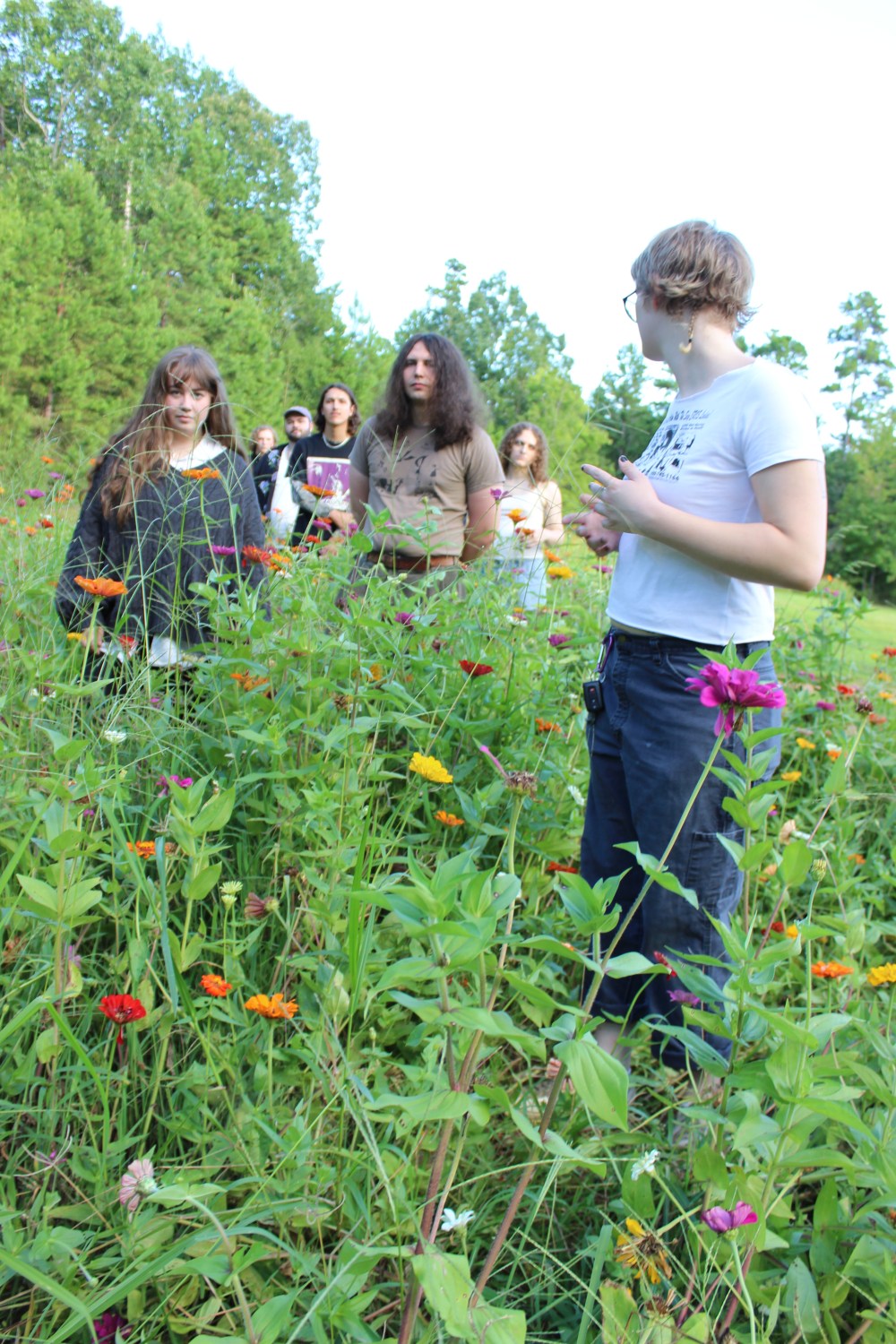
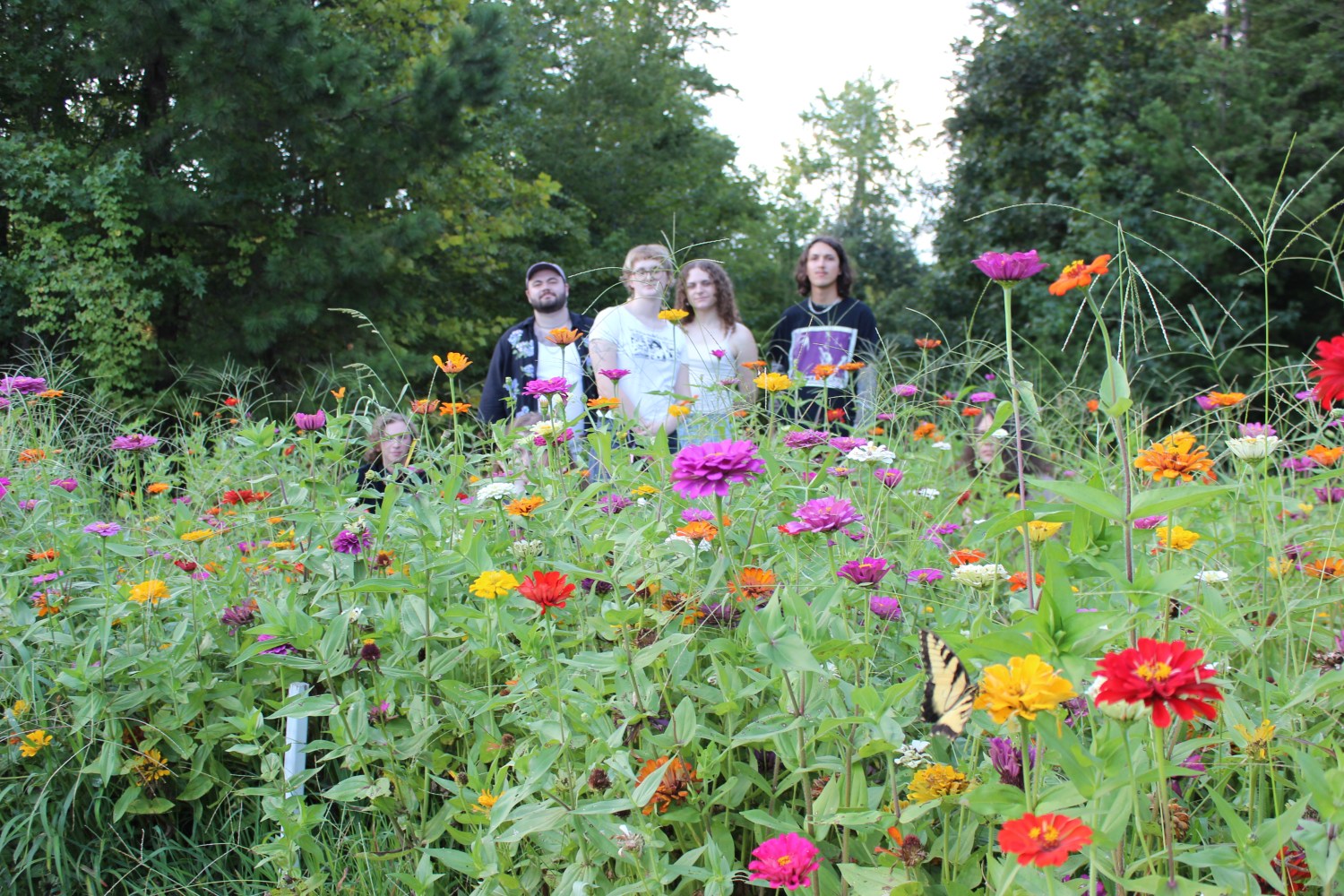
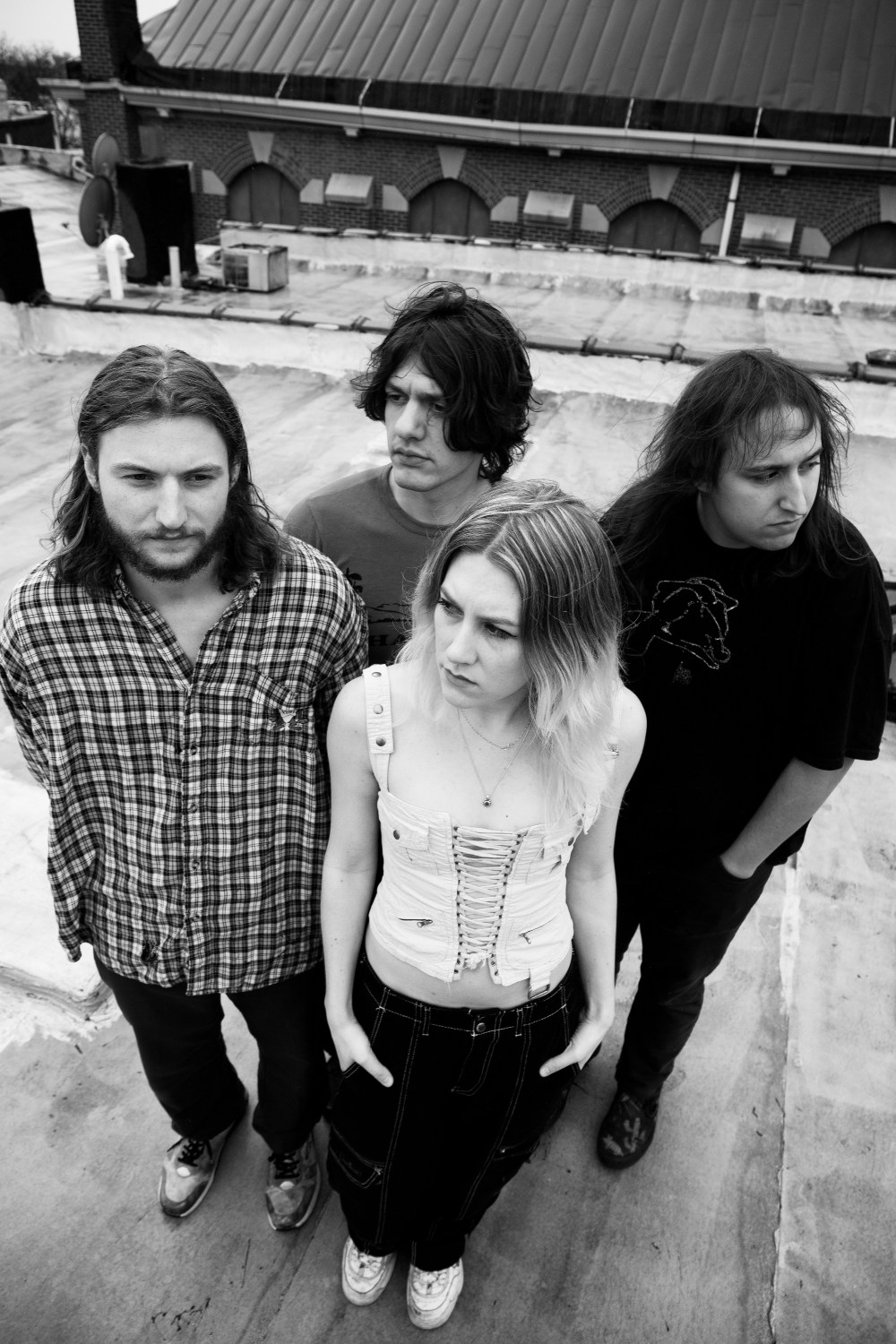
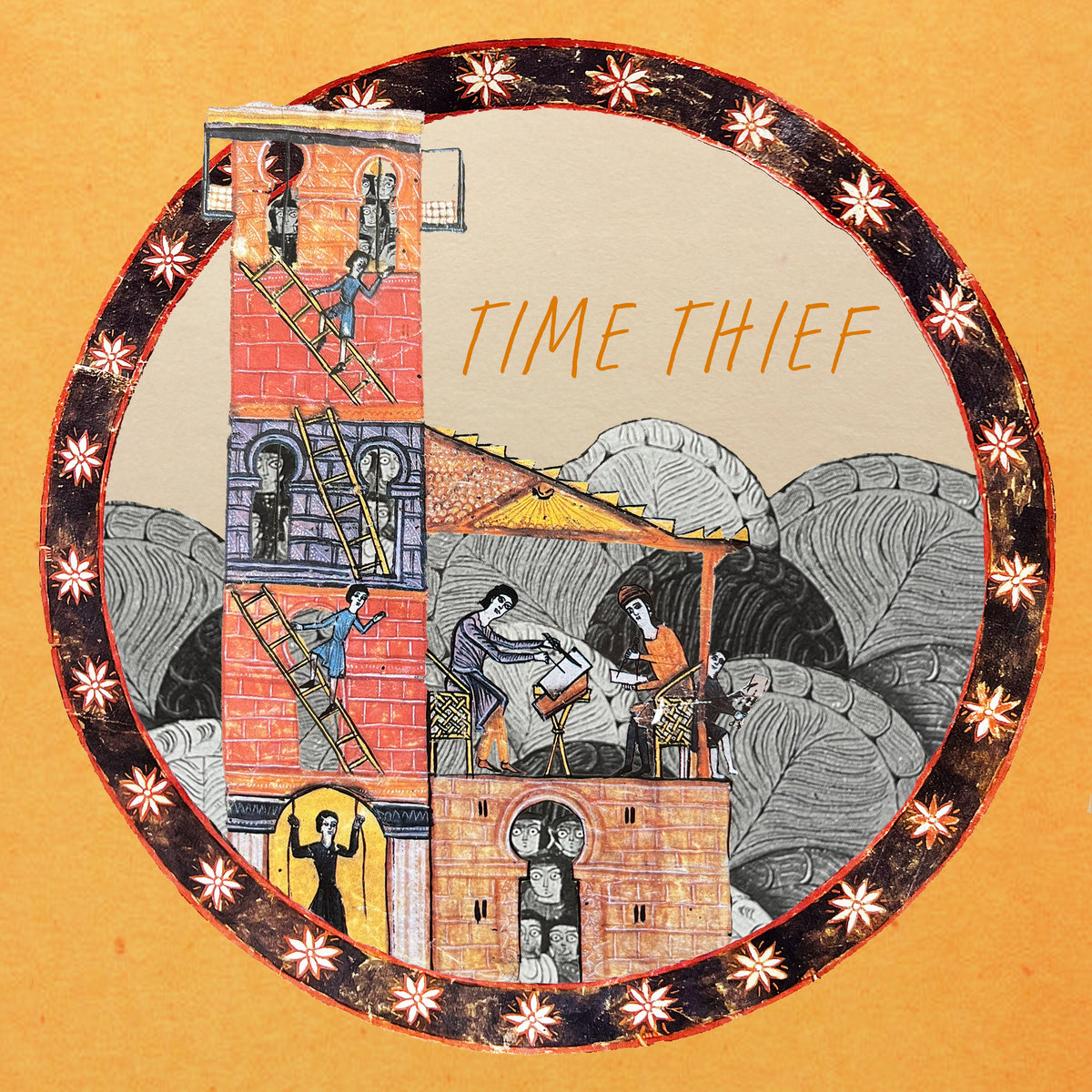
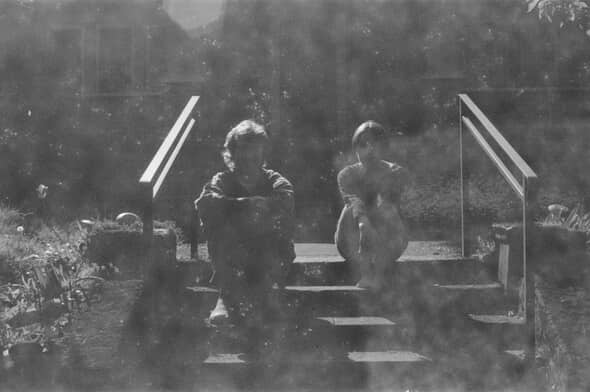
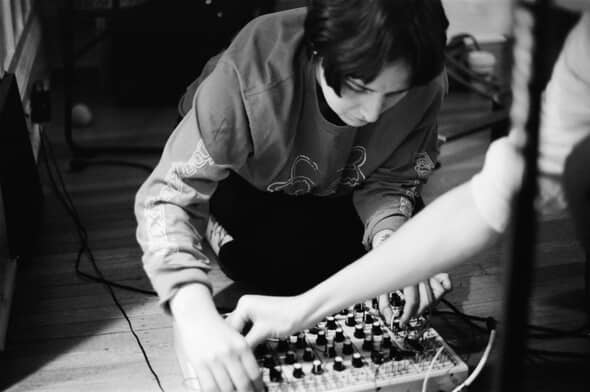
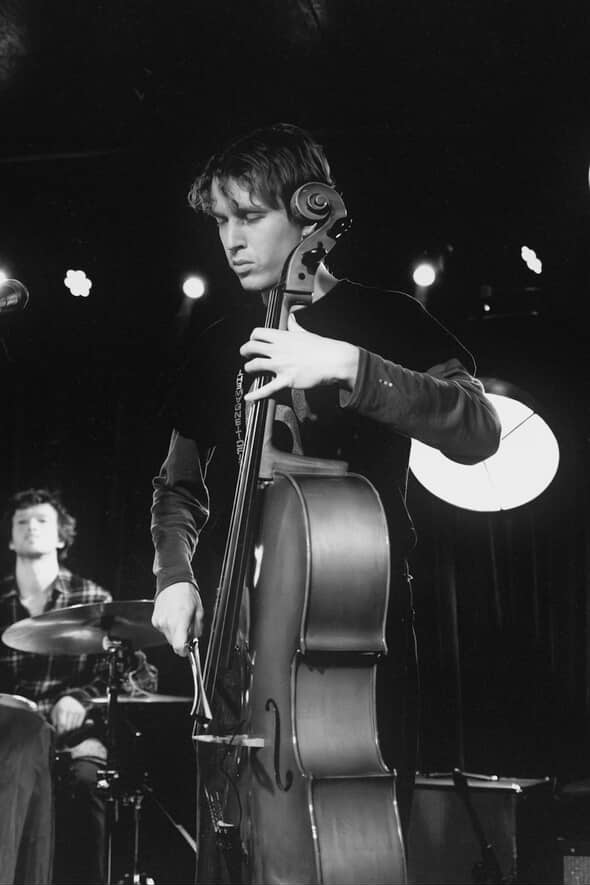
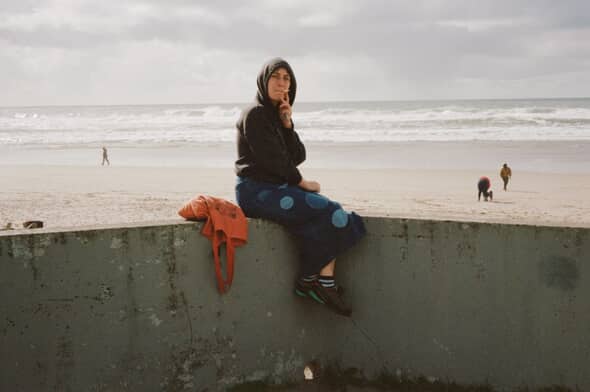
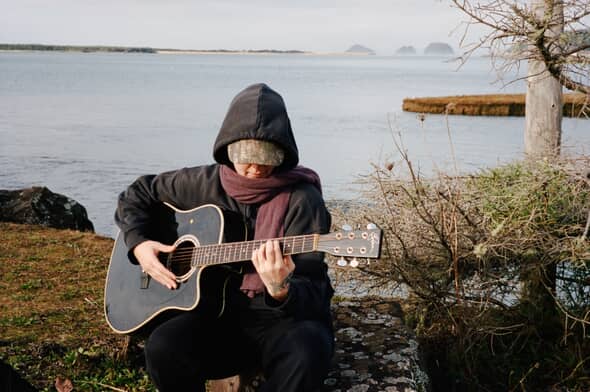
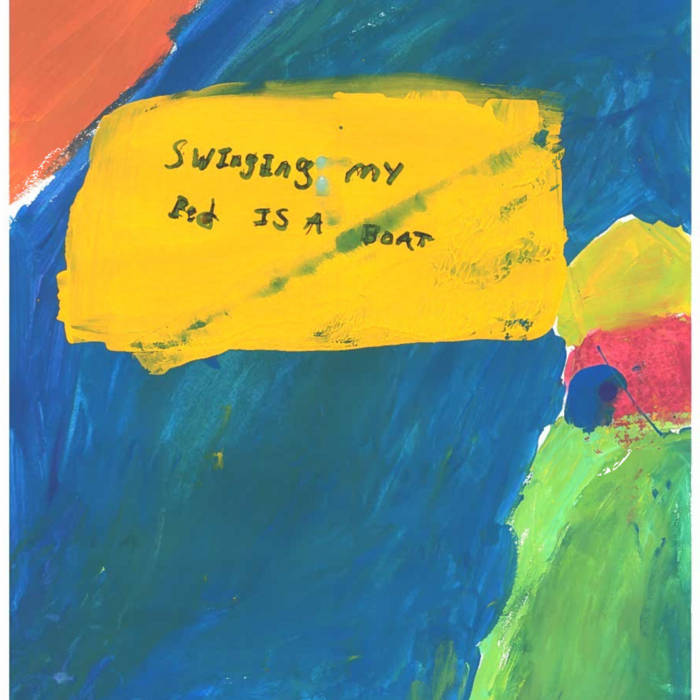
 the ugly hug