Helenor, the Brooklyn-based bedroom project of David DiAngelis, has just announced his sophomore album, A public place, due April 12 via New York’s Mtn. Laurel Recording Co. To commemorate that announcement, he has also released a new single, called “Tattoo”, the third single released in this cycle. Helenor has become well established in his own world, growing into a cathartic storyteller – his retro stylings bringing life’s predicaments into a beautiful simmer of unique warmth and clever complexion. Leaning into the melody, “Tattoo” is as casual as it is sincere to its inevitable influence; a charming and personal sentiment shifting under the weight of permanence.
As DiAngelis tells the story, “this song is about the first time I gave a tattoo on the kitchen floor of a house party in the South Shore of Massachusetts.” With no prior experience and a new tattoo gun, DiAngelis took on requests, defying his own and everyone else’s expectations – prompting a request from a stranger who they never saw again. With no intention of releasing the song, “Tattoo” finds Helenor at his most relaxed, brought back into the ambiance of that small house party, pushing the sound of comfortable nostalgia into his novel and alluring style.
Photo by RlyBlonde
The track begins with the static plucking of strings, unbeknownst, holding its breath until Helenor sets the scene and letting waves of synths form its shape. “You can’t take it back / I gave you a tattoo on that floor” he sings, accepting reality from the very first line – a moment initiated with bona fide trust or maybe inebriated confidence. But, leaning into a rejuvenated chorus that feels reformed with its every return, Helenor embodies this magical camaraderie that comes with something as personal as getting a tattoo and as gratifying as showing it off.
Accompanied by a DIY music video, “Tattoo” is patchworked together by a montage of smiling faces, each sharing their numerous tattoos to the camera. The ranging art stylings and image choices are a glimpsing personification into who these people are. To DiAngelis, they are friends, coworkers, and bandmates, but to the rest of us, these strangers admirably show us a piece of themselves that they visibly carry with them. Mixed into the video, DiAngelis’ deadpan candor narrates the story from the reflection of a tiny mirror. As it travels around the city, emulating a tiny DiAngelis in relation to his entirety, he shows us all a small piece of himself as well – taking it along with him everywhere he goes.
You can stream “Tattoo” on all platforms as well as preorder the limited vinyl pressing of A perfect place and other Helenor merch.
“You’re an expectation, I’m another night wasted on the outline,” a phrase lured in by a steady electric guitar and opening “Smokescreen” with no objection. As a whole, Nisa’s latest single is relentless; blending lush tenacity and the epitome of a catchy pop hook – making for a playful song of hesitation and emotional contusions. “I was stuck in a loop of repetitive behavior and somehow also expecting to feel different,” Nisa says about the song. “After a while, it started to weigh on me. In order to get out of one, I had to admit that I was prone to harmful patterns.” Along with the previously released pair of singles, “Vertigo” and “Currents”, Nisa says, “a lot of what these songs are about is a struggle to form a coherent sense of identity with all of the intersecting pieces of me.” These songs are abrasive and at times overwhelming, but from the heart, it comes together as Nisa’s melody matures into something to long for; an anticipation to break all expectations.
Nisa is the budding solo project of Nisa Lumaj, who, as of today, has just shared her new single, “Smokescreen”. With three singles released in this cycle, Nisa has also just announced her first full length album, Shapeshifting, due April 26 via Portland’s Tender Loving Empire Records. Nisa has crafted a career out of skies-the-limit songs, such as the cold-blooded rocker “Cold” (2021) and the glittery gaze of “Exaggerate” (2022), performing with such contagious angst that is leveled out by self reflection. Now coming up to her most cohesive project to date, Shapeshifting carries its name sake in both sonic explorations and narrative feats, as Nisa writes from the freights of a moving identity; one that is no longer fitting – while in line – the next is not yet attainable.
Born to Albanian immigrants, Nisa is a native New Yorker, preoccupying the boroughs of Manhattan, the Bronx, and currently residing in Brooklyn. Growing up and blending a bilingual household with the love of culture, both inherited and found, “I really felt like I had a foot in each continent,” Nisa conveys with recognition. With traditional folk music as the backdrop of her childhood, there was a drawn-out introduction to English-speaking pop music as she began to explore New York and the many artistic facets that hide in every corner. “When I started to play guitar I decided I was not going to focus on this [cultural] part of my musical identity,” admitting, “I hadn’t heard pop music yet, or anything of that beyond the radio.” Stimulated by this new music, and the wide definition thereof, “I was gonna explore what’s new,” Nisa recalls with excitement.
But with everything she has experienced, Nisa mentions, “the older I get, the more I appreciate my parent’s background.” Even in times spent dancing around despondency, there is an acknowledgement that her familial roots will always be a part of her; inevitably offering an angle when piecing herself together. “I do feel really attached to that part of my identity,” she reassures. Even in her musical world, Nisa admits, “the woes of being an indie musician, like the stress of financial security, doesn’t even begin to cover their hardships and experiences. I am very grateful to have that perspective.”
Photo by Rhianna Hajduch
Nisa is still a fairly new player to the Brooklyn scene, having released her first EP, Guilt Trip, in 2021. But in that short amount of time, with memorable live shows and a few more releases in the mix, Nisa has found a comfortable environment to cultivate her own. With each EP falling in love with a fresh sonic build up, discovering and defining new styles has become an exciting challenge for Nisa to venture into her songwriting. “I think working on a project-to-project basis has helped me keep a through line – that is, sounding like me without labeling me garage pop or something like that.” With much delight, embracing fuzzed out power chords, glittery sedation, theatrical art leaps, glitchy electronica – all with the subtlety of folk construction underneath, there ought to be celebration for remaining consistent in ever shifting environments.
The paired singles, “Vertigo” and “Currents”, released at the end of 2023, take a leap of faith together, not only into a tender subject, but into structural truancy as well. “The songs don’t really sound like something specific that I wanted to reference,” Nisa admits. “It’s just kind of what happened that day we were recording.” With production help from Ronnie DiSimone (Ritual Talk, Annika Bennett), Nisa shares, “we were kind of trying to convince ourselves that once we made it and it was out, we no longer had control over it.” As an incentive, control (or the contrary) can be a life support for a songwriter; especially one who so trustingly wears their heart on their sleeve. “I think understanding that you relinquish control in making something,” Nisa ponders, when a song is out, “there’s nothing you can do to change it. You’ve already said what you have to say and that can be really empowering.” As brutal as releasing a piece of yourself can be, acknowledging that there will always be anxieties; a standard rotation of expectations and critiques – “I think just reframing it for yourself has been the best way for me,” Nisa expresses with appreciable confidence.
In all, the amount of stylings Nisa embodies in no way feels like a chore – more rejuvenated by the movement – flowing naturally with the through line of her interior sentiments and emotional reverence. The new group of singles are sonically contrasting, thorough in their own ways, but aren’t necessarily that different as accomplices in Nisa’s overall narrative. “They were definitely written during a period of transition,” she shares, continuing, “the intersecting pieces of me didn’t feel composite.” Fractured in time with the basic experience of getting older, there is no clear answer to Nisa’s turmoil, but there is a blunt and habitual flow to these songs that rely on their combative differences and sincere nature to define an honest spectrum of mending; a balance that is always worth the wait.
With “Smokescreen” now out and Shapeshifting announced to a growing crowd, Nisa’s natural movements continue to push past expectations, both of the audience and of her own. For a project brought to life through hesitations and tender impressions, Nisa’s music grows out of this natural hunch and appealing confidence that she has spent years forming for herself. As identity goes, there is no saying when you have accomplished such an accountable idea of self, but with all the facets that Nisa has emboldened in her world, it is undeniable who she is as an artist. “I have always made what I want to make,” she says, clearly in direction towards our conversation, but the reflection in her voice lets it hang out in the open – to stay there. “I think if you keep doing that full steam ahead, you’re never gonna question yourself.”
I think one humorous aspect of history, in regards to the world of psychology, is the extended quarrel and inevitable fall out between psychiatrists Sigmund Freud and Carl Jung. We all know of Freud’s work; those little round glasses and clean goatee have become synonymous with the complexities of the human psyche and the way we study it. What started as a mentorship, Jung had a theory that contradicted the fundamentals of Freud’s work. In a blend of the conscious and subconscious levels, Jung looked for a way to define the concept of the authentic self entirely, acknowledging that not everything could be explained through sex and aggression. Destined to understand each barrier that stood in the way, one of Jung’s biggest contributions was the shadow; our own repressed ideas, weaknesses, desires, and instincts. To accommodate the shadow and blend any disharmony it caused would theatrically find copious amounts of comfort in an individual’s psyche.
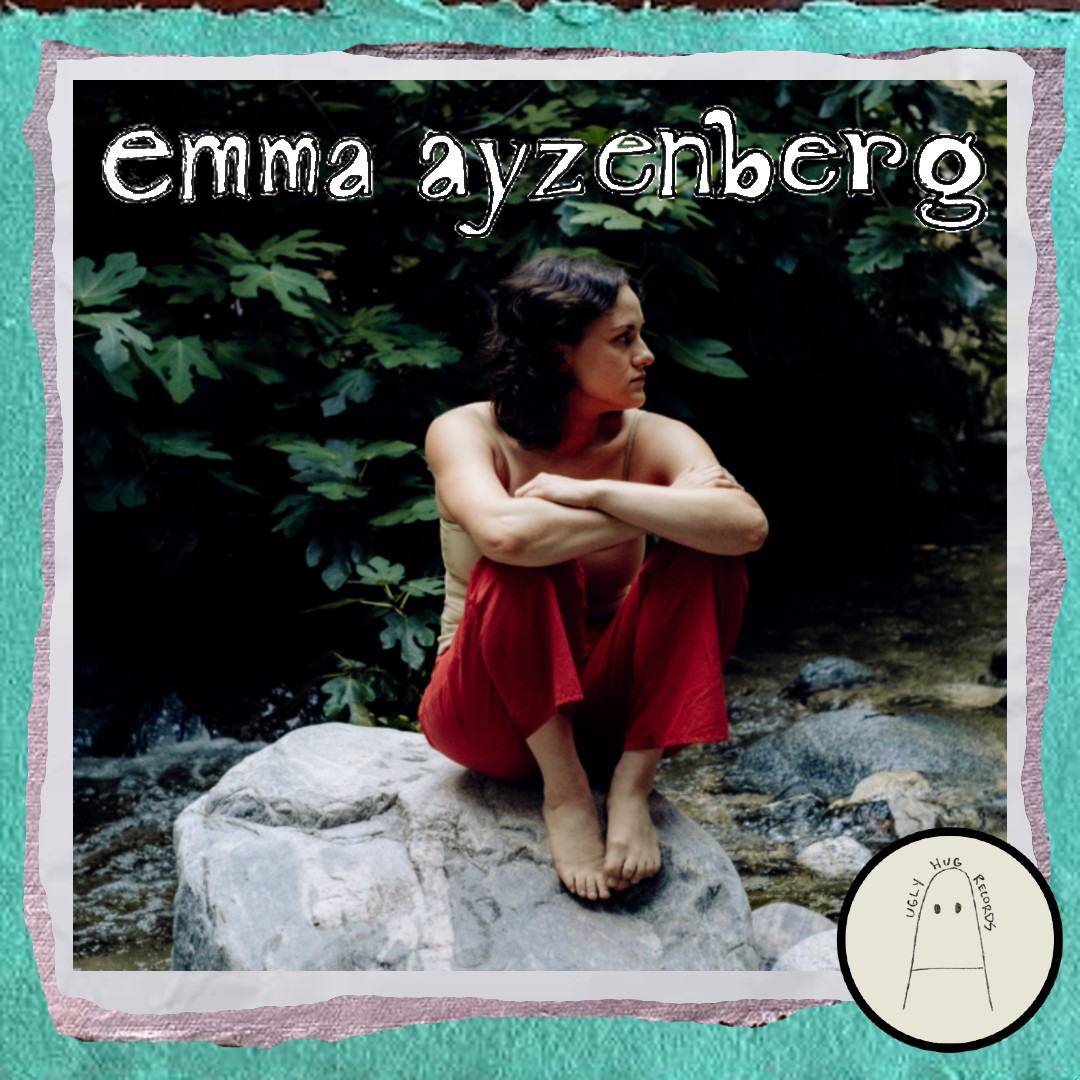
L.A.-based singer-songwriter, Emma Ayzenberg, has a natural inventiveness to telling her story. As a songwriter, rooted in its narration and instinctive storylines, her writing has never been one to stray away from digging – especially in regards to her own psyche. On a new four song EP titled iron mountain, Ayzenberg accommodates her own shadow, all of the unsavory depths, in the hopes of finding some comfort in herself. Each song, each a step in personal defiance, covers four strongly different topics. But as a collective and cohesive project, these songs are no more different; calloused, intimidating, and all oddly beneficial with its blend of personal amnesty and forgiveness. Just finishing up a rehearsal, Ayzenberg took the time to call me up to talk about iron mountain; her journey of bringing trauma to the forefront in search of defining her authentic self.
Photo by Aubrey Trinnamen
At the end of 2021, Ayzenberg joined a songwriting class instructed by producer and musician, Luke Temple (Art Feynman). Upon that, he helped produce some of the early renditions that laid the groundworks for iron mountain. “He came in for a couple days and we just played a bunch of songs that I had written – all live. I had never really done that before and I was really scared,” she shares. Inevitably, “I just went with it,” opening up a new way to approach songwriting in grander terms. “I’m such a control freak, it’s insane, so it’s truly pushing me to not be.” Reflecting on the time in the studio, she says, “you just allow yourself to capture the moment that you’re in, rather than trying to curate the whole thing.” Also credited with production help is Carly Bond (Meernaa), who’s stylistic knack offered some of the EP’s most animated performances. “I had shown the recordings to Carly, and she was like, ‘I really see strings on these,’’’ Ayzenberg recalls,leading to the EP’s ultimate completion.
iron mountain is a gripping sentiment – climactic with its lyrical flows, licked wounds and atmospheric supervision. But at its core, it’s a fragile piece of work. Becoming second nature to Ayzenberg, songwriting is a form of cathartic storytelling; trial and error; ebb and flow with its path of rapport and endurance. “I’ve realized that I have a bit of a delayed reaction with a lot of things,” she shares. “I fully process them and then it sort of just hits me that I’m ready to talk about it.” As an extremely personal endeavor; leading with focus, fixation, and reflection, Ayzenberg says, “I go in with an intention of wanting to see how I can portray this story.” Although seemingly narrated from a distance, iron mountain is a culmination of personal convictions, relying on her own patience to build upon an incredibly personal story. Whether it be a recurring dream after leaving a scary relationship (“lucile”), pinpointing generational trauma (“iron mountain”), or the grander ineffectiveness of climate activism (“hero”), each song is credited to its own personal account.
The title of the EP, as well as the namesake for the song “iron mountain”, comes from the English translation of her Polish name, Ayzenberg; a perfect fit – poetically – for a collection of songs wrapped around identity. But the weight that that name holds, both in the way she wields it as well as its very real history, reflects on her relationship with her grandfather, a Holocaust survivor, and the stories that she grew up listening to and learning from. Very open to discuss the song’s subject, Ayzenberg tells me, while growing up, “there were so many things that I was starting to believe about the world.” As she continued, her tone shifted in disbelief as she said, “I would hear my grandpa say the exact same things, and I would think to myself, ‘nothing that we’ve experienced in the entire world has been similar at all. How can I be this way?’”
Spending years trying to understand the effects of this lineage, the idea of induced trauma passed down, Ayzenberg admits, “it didn’t start with me, it’s like you can inherit a worldview almost as a means of protection. I think that’s really what it is.” A notable line from the song, “and he’ll never be saved/The genes of an optimist,” there comes a double edged sword; optimism as a form of comfort and rehabilitation, but can inevitably disguising real pain and trauma. “I mean, every family has trauma, and every family has stories like that,” Ayzenberg says, “so it’s like how can you perceive safety or tranquility?” As she has tried to move and work with the trauma, leading with inner monologues both inherited and through her own experiences, Ayzenberg has learned to lean on it, letting it establish full presence in her life.
Photo by Aubrey Trinnamen
The EP comes to a close with “count the dreams”, growing from the roots of the hard ground it was planted in. The concept of the song was initially an assignment from Temple’s song writing class; to simply write a love song. Not in a relationship, Ayzenberg was stumped – a topic always easier when it’s physically present. Lost in the process, she kept asking herself, “why do I still not feel settled?” Having recently come out, “count the dreams” is more of a love letter to the process of growing, rather than any infatuation in particular; a love letter to her ever changing self and coming into her queerness. In its earnest opening, stacking lush vocals like overthinking layers of thought, Ayzenberg softly wanders around the phrase, “what if the way I stay is ever changing?” – a question asked, a question not necessarily answered, but to place in the parameters of a love song, she says, “I feel like I’m falling in love with this journey, for as silly as that sounds”.
That line in particular, “what if the way I stay is ever changing,” describes a new form of personal relation with one’s self. The idea of ever changing, something that is synonymous to the queer experience, is never a straight line; counterweighting both internal and external dialogues. “That’s how it is,” she says. “Catch me at 50 looking completely different.” But the song is a somber flow in a thick atmosphere and when asked why this approach felt right, Ayzenberg responds, “if we look at this as a sort of perpetually changing experience, then there is gonna be a lot of failure and a lot of mishaps.” She continues, “I so badly just want to be the person that knows I’m going to be fine and know who I am as a queer person, but I just don’t know yet.” Now able to sit with the finished song, she admits, “I have a hard time even calling that song a song, because it kind of feels like a poem or a little vignette,” a small piece of something so much larger.
As iron mountain enters the world, already physically adapted to where it was meant to be, Ayzenberg shares, “I came to the conclusion that it’s really about the stories that shape you, even if they are all very different and very disconnected, but they all make sense in my mind” – a relic of what constitutes as her authentic “self”.The EP, for what it is, is divided into four stories – an accommodation, a voice, an acceptance, and finally a comfort to some of her most troubling bits. In classic Jungian fashion, Ayzenberg’s shadow becomes a guide, given the opportunity to say its piece. Soon the complex idea of a singular self begins to mold into a cohesive individual – in this case, a collection of beautifully structured and earnest songs. “That’s what being in your twenties is like – just making sense of who you are in the world,” she reclaims, “and I know that that is like one sixteenth of a fraction of who I really am.”
“Oh wait, one more fun thing,” Link gasps as she jumps up from the couch and quickly exits the frame of our Zoom call. Right before our chat, her band PACKS released their new single, “HFCS”, along with an accompanying music video. Self shot in Las Vegas with Link’s trademark fisheye lens, the music video is as dizzying as it is addictive; notably dead-on considering its environment. With a knack for charmingly clever music videos, Link embraces the concept of low-budgeteering into her own style of sharp simplicity and pure enjoyment. After a minute or two, she returns to the call screen with a huge grin and an enormous pair of spy goggles covering most of her head. Playing with the long magnifying extension, bringing out her right eyeball to unforeseeable proportions, she tells me that she is getting everything ready to shoot another video, this time spy themed, for the song, “Missy”. Set to play a daring spy and her counterpart arch villain with her awesome new prop, Link’s genuine excitement couldn’t be wavered.
Madeline Link and PACKS have had a pretty productive past year. With the release of 2023’s Crispy Crunchy Nothing, PACKS redefined the bleak and mundane in the name of charming fixations and fuzzy rock sedation. On top of that was a month-long U.S. supporting tour with Brooklyn rockers, GEESE. Looking into 2024, after a mainland Europe tour, the Toronto band just released their highly anticipated second album within a year, titled Melt the Honey. On a break between tours, Link called me from her family’s home in Toronto, where we got a chance to catch up, discussing her first European tour, recording Melt the Honey, and the stories that she has strung along the way.
The sound that PACKS has led over their career is a collaborative and textured style of unpolished garage rock, anti-folk and the barebones of pop exceptionalism – spread out within a controlled burn of fuzzed-out clamor. But before the formation of the band,it was just Link. “I was making music in high school by myself, and I was just writing because that’s what I wanted to do when I got home.” Having played in a few bands with friends, as well as the jangly-pop duo, Triples, with her sister, Eva, Link was attuned with collaboration, but always placed an emphasis on a song’s personal and structural roots. Without a consistent band to play with, “I was writing songs so that I could perform them solo and they wouldn’t sound that different,” she tells me. But with the serendipitous addition of members Noah O’Neil (bass), Shane Hooper (drums) and Dexter Nash (lead guitar) to PACKS in 2021 allowed Link to comfortably take her vulnerable tunes into denser stylistic territories. With a great deal of trust, Links reiterates, “when I got the band, I would write the songs on my guitar, with maybe only a drum beat in mind, knowing that the guys would have really cool ideas for it”.
With that all being said, that creative premise rang incredibly true when PACKS was billed to support Slow Pulp on a full European tour at the end of 2023. As our call was a week before her departure, Link tells me she was headed over to the mainland, not with her guys, but as a two piece; her boyfriend taking the role of programming drum beats. Looking beyond this hurdle and relishing in the excitement, Link comfortably admits, “this is closer to what PACKS originally sounded like” – acknowledging the leap to that early and vulnerable style she had planned for. “It’s cool, now that we’re practicing for the Europe set, to just hear that the songs can take on any form that they want to.” She continues, “the song can live as many lives as it wants.” When asked as to how she interprets these new formations without embellishment to their meaning, Link admits, “it comes from not really having too much of an iron grip on any of the elements of the song.” As a wide smirk crosses her face, she sneaks in, “variety is the spice of life.”
Over a professionally tedious eleven day period, the band traveled down to Mexico City, rehearsing hours on end, to culminate what would eventually become Melt the Honey. From there, leaving behind the bustling center, the band took a bus to Xalapa, the capital city of Veracruz, and home of the notorious Casa Pulpa. Rumored to be commissioned by an ambitious grandmother as a place for her grandkids to play, the house, a cornerless entity, became a working home and studio for PACKS to record their new songs. As an architectural feat – an oddity – “It’s honestly a really dangerous place,” Link laughs, almost still in disbelief. “Me, Shane and Noah were sleeping on these platforms that were 14 feet above the concrete floors,” recalling the super tall echo chamber type rooms. “And then they have these poles that you take to get down. Or I think at least mine did, I don’t know if the other guys did,” she says, humored in the image of their gravitational struggle.
These anomalies – an intriguing combination of environmental and equipment failures – only led to what would be Melt the Honey’s greatest strength; its calloused individuality. With the utmost minimal recording equipment, Melt the Honey’s sound remains an established force, with each member’s personal aesthetic baked in. “We rented a drum kit from the only guy that rents drum kits in Xalapa, and we didn’t even use any clicks,” Link says. With the inclusion of various field recordings; a strong Xalapa storm, a love-tempered cat, recording goofs; Melt the Honey is a genuine relic of the time spent making it. “We just performed,” Link recalls. “I just played along for every take. It was a bit grueling after a while, but it was just a lot of fun.”
Photo by Eva Link
Melt the Honey finds the band presenting their laurels in traditional PACKS pageantry – but where it differs from other PACKS projects is its unapologetic trust, both as a band as well as in Link’s personal life. As listeners, we can easily find resonance within a PACKS song – deliberate in relatability, wit and charm in the face of loneliness and personal bummers. But now face-to-face with the project, Link affirms, “it’s not like writing sad songs is the only thing that I do. They’re the songs that tend to have heaviness to them, and so they’re the ones that are fun to play and expand upon.” On that note, she continues, “anything that I’m saying is buried under so much metaphor. I always try to encode things and distract you.” Before we both start laughing, she demonstrates with hand motions, “this is how bad I’ve been feeling for a month, but here’s the chorus.” On past projects, Link’s wording was meant for coping – distancing herself from her most troubling affections. But with new endeavors in her life, most notably, falling in love, Link’s quips and anecdotes have a lighter duty to them. A counterweight – specifically, Link makes clear, “it’s underrated. Well, I think maybe underrated is unfair to say, because artists are usually just quite sad, and they just can’t write happy songs.” She takes a pause, before saying, “I feel lucky that I get to write these songs.”
As Link and I continued our interview, lapsing my line of questioning to sharing stories; her art residency in Mexico City, the criminal Canadian/US visa cost (which I bravely took the heat for), and the time a drunk kid at a PACKS show tried to convince the both of us that I looked just like Hobo Johnson, Link’s excitement for sharing experiences was undeniable. “I find that I can move pretty slow,” she admits. “I process things pretty slowly, and I feel like I’m kind of a slow person. It’s like truly experiencing what is happening. It’s just part of the fun of being alive and I think every single thing that I experience allows me to have a wider perspective.” Going back to, “variety is the spice of life”, Melt The Honey feels like an embodiment of that particular spice that Link has used before, but this time around it feels purposefully heavy handed.As the boldest project of hers to date, redefining comfort in her style and in the direction her life is headed, Melt The Honey blends this new pronunciation of joy with the fixations of the things that she’s come to cherish; a new love, a passion for creating, the opportunity to do it with her friends – and all-n-all, a new pair of spy goggles to show for it.
Calling from separate locations for our Zoom call, Kevin Krauter, braving the November cold on the front porch of his friend Stephen’s house and Nina Pitchkites from her cozily lit room, were discussing a carpool possibility to pick up Ben Lumsdaine, friend and producer, from the airport at midnight. The next day they would be traveling down to Bloomington, Indiana to record what would be the debut full length album from Wishy. But obviously, before we can talk about a full length album that hasn’t been recorded yet, Wishy is riding the release of their debut EP, Paradise, out today.
Making noise from Indianapolis, Wishy is racketeering force of Midwestern exceptionalism; a blanket of whirling guitar music and breezy pop hooks in return for a melancholy heartbeat by leaders Kevin Krauter and Nina Pitchkites. Having met in high school, Krauter and Pitchkites already had a built in friendship, though Wishy wasn’t formed until 2021 when Pitchkites moved back from Philadelphia. Both being established songwriters before collaborating, Krauter being a former member of the band Hoops as well as a solo career, and Pitchkites’ electro-indie pop group, Push Pop, the two had to put their respective projects on the backburner due to the pandemic. But coming out of this break was the formation of Wishy; a purposefully emulated and collaborative force to be reckoned with. Spending two trips in LA with Lumsdaine to record the new songs, Wishy came back with one of the most critically acclaimed EP’s released this year. Coming upon this release, Krauter and Pitchkites called me up to discuss the project, commemorating the homegrown spirit, and the pleasure of where they are currently at.
As the band began to catch steam in the media for the three singles released ahead of the EP, Wishy became a cluster of descriptors and antiquated jargon to try to lock down a clear understanding of their sound. With loud and boisterous instrumentation, layered atmospheric calms and jangly pop hooks, Wishy is a consistent, impressive and nostalgic blend of noise. When asking the two of them to sum up their own interpretation of their sound, Krauter expresses, “I think that it’s a reflection of our personalities and our tastes, you know.” To which he continues, “in general, we both have an emo side and we both really love cutsie happy sounding shit. I love when bands are able to capture a synthesis of both.” Building upon, Pitchkites adds, “it’s edgy and sweet. I’ve always had a taste for both and I’ve always wanted to communicate it,” continuing with, “I feel like I just never hear much of that anymore, but I found that through Kevin.” With tracks like “Paradise”, “Spinning”, and “Too True”, Wishy breaks down and expands on generic genre terms, creating something that they feel most comfortable in. “I think at the end of the day, we both just really love writing pop songs,” Krauter reiterates, saying “this EP in particular, is a presentation of the softer side, for the most part, the sweeter side of things.”
Before Wishy was even an initial idea, Pitchkites became indifferent on whether to pursue a career in music at all. Once moving back to Indianapolis, where Krauter asked her into the band, Pitchkites was hesitant, saying, “I just got jaded and cynical about the world. But, I went with it and it’s been over 2 and a half years since we started this band.” She finishes, “it’s just motivated me to actually write more and to practice more and challenge myself.” That feeling doesn’t go unreciprocated, as Krauter shares, “I think I personally feel more confident in my songwriting than I ever have,” he says, sustaining on that thought. “Having this outlet where Nina and I can collaborate, the atmosphere we both like to inhabit feels really good together”.
With the release of Paradise as well as a foretold debut full length in their future, Wishy shows no signs of slowing this momentum, as well as a clear understanding of the camaraderie that they surround themselves with. Bringing back Lumsdaine to record again as well as the inclusion of Steve Marino, who you can also find playing guitar on the EP, finds two Hoosiers returning home to contribute to the project. When asked if this homegrown mentality was something that they try to preserve, Krauter responds, “Yeah, it feels really good, it’s just fun to do shit with your friends,” with Pitchkites adding, “everyone gets a little exposure to their own craft, you know. So like, we’re all winning”.
Where Wishy stands as a new band that is catching the wave of popularity was in no way their definitive goal when starting this project. Beyond the stereotypical formalities found in Midwest caricatures, being a part of a music scene in the middle of the country has a very approachable, dare we say wholesome, feeling to it. The Indianapolis indie scene is a comfortable home to many underground groups, and like other bands in Midwest scenes, that grow up on a specific tenacity that comes through the rickety house shows, backyard parties, and the occasional farm show, Wishy truly capitalizes on the humble midwestern roots. “Starting out, this whole project has just been about having fun with our homies and impressing my friends,” Krauter shares, as simple as that. “That’s really been my main goal.”
That kind of sums up where Wishy is at the moment; just happy to do what they love. As we finished up our call, and the conversation wandered to ridiculous FedEx fees and favorite music publications, Krauter and Pitchkites were looking ahead into a busy next couple weeks, but they didn’t seem phased. With one last single to be released and a full album to record, the two of them are extremely proud of the work that they have done, but truly humbled by the attention it has received. Still in slight disbelief, Krauter voices one more time, “when I first started writing this shit, the vision in my head was always like ‘I can’t wait to play this at State Street Club with my homies’, and not exactly like, ‘I can’t wait to get on Pitchforks singles of the week’. That’s just been a really happy surprise”.
You can find Paradise, off of Winspear, out everywhere now. In addition to this interview, you can read my review of the EP at Post Trash.
“I think, when it comes down to it, people get into three things as they grow up,” Blair Howerton proclaimed from the stage at Chicago’s Lincoln Hall. In no particular order, she lists out, “sports, birdwatching, or spirituality”. This odd, yet endearing list sparked some chuckles from the audience, then comically rang more true to a lot of people as murmurs like, “holy shit, I just got into birdwatching,” spread throughout the packed hall.
Blair Howerton fronts the Austin/Brooklyn band Why Bonnie. Following the release of their critically acclaimed 2022 debut full-length, 90 in November, an album that defined a childhood spent growing up in Texas, the band looks to ride this momentum forward. Gearing up to announce their next album, Why Bonnie doesn’t hold on to much of the past anymore as they try to shape the future and find steady ground in these trying times. I recently got to chat with Blair Howerton in the midst of this transition period, opening up about where she is at in life, including her own roaming spirituality, a new era of the band, and what the next Why Bonnie album is shaping up to be.
With their second album not yet announced, Why Bonnie took advantage of this most recent supporting tour, with S.G. Goodman, to showcase a lot of the new material. With notable themes revolving around money frustrations, growing/diminishing empathy, and systematic uneasiness, Howerton shares, “I was really interested in the relationship between micro and macro issues and how that kind of plays out in our personal lives.” To the effect in which large issues can bleed down to simple and communally felt points of discomfort, Howerton’s storytelling remains as vivid and authentic as ever through this shift of focus. For as much as 90 in November found a personal home in Austin, Texas, this next Why Bonnie project is a bit more dissociated. Since having moved to Brooklyn, Howerton expresses, “you’re all kind of living on top of each other, so you can’t escape, and you can’t really turn a blind eye, which I think is a really cool thing. It’s definitely a lesson in empathy.” Where this environment has led creatively, she shares, “this is a much more inward looking album. I think it’s bigger than just where I’m at. I think it’s trying to reach everyone.”
Voicing from the Lincoln Hall stage that night, Howerton remarks that she has begun to reassess her personal spirituality, which is a focus point in some of the new songs. Without putting a label on it, she adds, “I’m a very imaginative person, so I like to believe that there’s something else, and that there is something somewhat magical going on.” Although she’s not committed to anything in particular, there can come a sense of comfort when uncertainties are given possible answers. “I have a puny little human brain. We all do, and no one knows anything, and that makes it all that much more interesting.” That’s kind of where Why Bonnie is at these days; “what’s my place in this world,” a considerate and mature question, doesn’t hold the weight it once had.
As Why Bonnie plans out the next few months, the band finds themselves down a player. Kendall Powell, who has played keys with the band since its formation, has taken a personal step back. “We’ve been playing music together for 6 or 7 years, and have been best friends since we were 2. She’ll always be in my life,” Howerton responds when asked how she has adapted to this change. You will still be able to find Powell’s work on the new Why Bonnie project, as “the new album has a lot of great synth on it. We haven’t gotten to show it in our live set yet, but I’m really excited for everyone to hear it,” she shares. As the band looks forward, “we’re moving into a new era, if you will,” Howerton claims. “We don’t exactly know what the future looks like, but we’re just happy to play music together and tour together. It brings us all a lot of joy.”
“Going back to spirituality,” Howerton relays, “something I’ve really been thinking about a lot is just how deeply similar people really are; how we experience a lot of the same emotions. Maybe different situations, but the way we feel them is all really similar.” This is not only true through unfortunate and systematic commonalities, but it’s also why “sports, birdwatching, or spirituality” is such a genuinely accurate statement. With found joy, communal support, and empathy, suddenly something as simple as stopping to watch a bird or being part of a team offers some sort of confident placement in such a despondent world. As Why Bonnie prepares to move forward, Howerton remains assured, as she voices, “I wrote this new album from a place of, I don’t want to say despair, but just really grappling with all these issues in the world and how to stay hopeful when it’s really hard to be.”
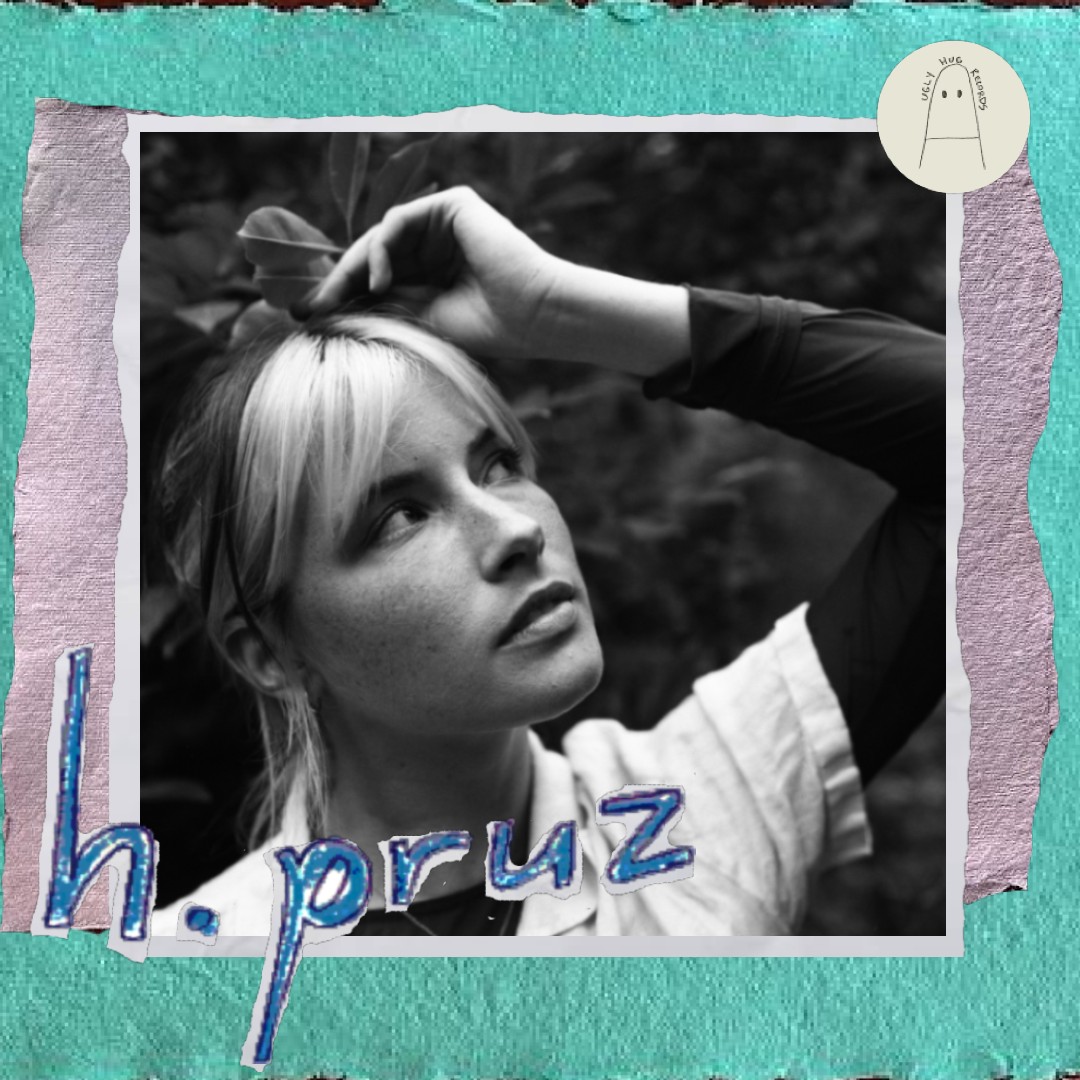
Hannah Pruzinsky, known for their solo project, h. pruz, and the effectively vulnerable Brooklyn trio, Sister., has released a surprise single off of Mtn Laurel Recording Co. today. The single, “Dark Sun”, is a rich composition of atmospheric comfort and folky lament that tells a story of the complexities of love. But in juxtaposition to the title “Dark Sun”, these complexities are entitled to areas of growth and self condolences when shadowed by damage. I had the honor to talk to Pruzinsky, in which they opened up about the emotional progress in writing the new single, their comfortability of collaboration, and the stories found within the natural world.
“Dark Sun” is the first song to see daylight out of what will be the next h. pruz record out sometime next year. Following the release of their debut EP, again, there, Pruzinsky found some steady ground in the turmoil of memories, whereas “Dark Sun” finds them going a step further into these moments of contemplation. “It’s basically a song about obsession,” they share. “I wrote it in a time where I was feeling a lot of guilt for feeling those feelings, and I think it was self permission to lean into what it looks like, and I guess, to lose yourself within it”. That self-permission is an odd habit, in which you feel as if you always have it, but it’s easier said than done. “This idea of self-permission and permission to decide what I want for me without having it be echoed with other people”, Pruzinsky shares was a big self discovery in the writing process.
Artwork by Sarah Bradley
As an extension to again, there, in its vulnerable approach to sound and story, “Dark Sun” takes new strides in which Pruzinsky thought, “what if I wrote a song about falling in love?” To which they specify, “there is still a shade. It’s not just clear good love”. With production help by Felix Walworth (Told Slant, Florist) the atmospheric chord voicings and the steady brush strokes of the snare drum offers a lightness when Pruzinsky sings, “And forget everything else is real / We’re here / In the sun”. That particular warmth of new love, although not explicitly perfect, still fills the track with the innocence and hope of realistic potential.
Growing up in Pennsylvania, the natural world stood testament to Pruzinsky’s practice of self and spirit. “When I was younger, I think [nature] held a place of resentment, because usually I would be working outside pulling weeds.” They continue, “as I got older, I think it took on more of a meditative space.It became really important for me to feel a connection to my younger self in a way that felt really tied to nature”. To this extent, Pruzinsky has found a larger meaning to their place in the natural world, to the degree in which their interpretation turns into vital storytelling. “I think [nature] reflects change, which is something that I both romanticize and always desire. I think it’s really easy to see how things can return to a way you once had known,” Pruzinsky shares. “In this newer body of work, the idea of destruction within the lens of the natural world” has found narrative importance in their writing as well. “I’m your dark / Hiding place / Crush me up / Take a part,” they sing in the cadence of this double-edged feeling of love.
As one third of the band Sister., Pruzinsky is almost a month off the release of their astounding debut full-length, Abundance. Becoming more of a personal focus to conquer in their life, writing music is a process of exchange to them. Sister., as a collaborative project with long-time friends Ceci Sturman and James Chrisman, Pruzinsky tells me, “there’s a big sense of pride that I have when I get to make something with my besties, cause it’s not easy”. They continue, in response to writing lyrics with Sturman, “it’s really special to also be like, ‘wow, we both felt this thing and both got to immortalize it in a way.”
Photo by Felix Walworth
But when it comes to writing alone, Pruzinsky admits, “I remove my rose colored glasses when I start writing, and sometimes I’m not ready to do that”. Art in general is a process of give and take, but effectively raw art happens when the give becomes a vital takeaway. “I’m good at repressing things that I am not ready to see in my life,” Pruzinsky admits. “But being able to write songs about those things is the first way that I’m like, ‘Oh, wow! This is something that clearly isn’t okay”. Continuing to the effects of the upcoming album, they say, “it feels so vulnerable. Am I ready to potentially alter my life in a large way, at least with this record? It’s not always that dramatic, but it was for this one.”
You can catch h. pruz on a supporting tour this December where they are hitting the road with Portland, Maine artist, Dead Gowns. “I’m playing with a new band and excited to be a little more rocking than usual,” Pruzinsky tells me. You can listen to “Dark Sun” out now.
Work Wife, the creative project of Meredith Lampe, has become a facet of the Brooklyn DIY scene, both as a band and as a community patron. Coming up on a supporting tour with Husbands and new music to be released in 2024, Meredith Lampe and newbie member Isaac Stalling, called me from their rock climbing gym to discuss lyrical goals, building a community, and functioning as friends who also happen to play in a band together.
After moving from Seattle to Brooklyn, Lampe was a member of the Brooklyn trio, Colatura, but with too many songs to share, she began her own project, calling it Work Wife. Upon the release of her 2022 EP, Quitting Season, Lampe added Cody Edgerly (drums) and Kenny Monroe (bass) to the project, allowing Work Wife to find its fullest pop band potential. “Ever since then I’ve been thinking of it more as a band rather than just my project,” Lampe shares. “There are some things that are easier with just me, but it isn’t nearly as fun.” After meeting Stalling on tour, when it came down to it, Lampe and the band said, “we should get that fun kid from Oklahoma City,” and soon Stalling was moving to Brooklyn.
As a musician, and a lyricist in particular, Lampe relies on the hidden details. Choosing brief moments to command feelings of both grief and comfort, Lampe’s writing offers up open arms. With songs that break down emotional trauma into digestible, and oftentimes, darkly humorous stories, tracks like “Brian Eno” and “Apathy” are on the cusp of perfection. With a song like “Too Young To Understand”, a nod to a family caught up in addiction, Lampe is able to form years of distrust and heartbreak into a four minute song. “When I wrote [“Too Young To Understand”], I had no intention of putting it out, which is, I think, the right way to go about writing a song that is so sensitive,” Lampe admits. “To just say, I’m never going to put this out, I’m gonna give it the honest treatment and then decide after the fact,” allows for more sincerity and less internal deliberation. “I think being honest like that can be really fucking scary,” Lampe says, “but everyone always handles it better than you think they’re going to, as long as you have a one-on-one conversation with them about it. And in this case, I think it improved our relationship in the long run.”
Going from being an additional singer in Colatura and then transitioning to a solo project, Lampe is now the leader and front person of her own full band. “Now that I have these guys, we’re kind of figuring out this new writing process as we go,” she shares while adding, “it’s been so much better. The music is so much better now that I have people to work with.” With Stalling as the newest addition, he responds, “I felt so lucky to be added. Everyone’s just immediately chill and there is no proving grounds or anything like that.” For as tightly constructed the band sounds when playing both in studio and live, the environment of Work Wife could not be looser. “It’s funny as a front person”, Lampe says, “it feels like you’re always trying to balance showing the band that you know what you’re doing. You have to be artistically opinionated enough for them to believe in your leadership, but not so much that you’re a dictator or then it’s kind of like limp noodle vibes,” she laughs.
Photo used with permission from Work Wife
.
Sometimes it can be a fine line between work and play that can ruin a band, but in the case of Work Wife, the work has become the play. “Music is hard enough. It sounds like bullshit, but one aspect that is often forgotten is that we are very lucky to do this. So, maintaining a fun situation makes it a lot more achievable for longevity,” Stalling shares while Lampe adds, “the odds that you’re really going to do anything bigger are so slim that if you aren’t enjoying the process, you’re making a horrible bet.”
Having first seen Work Wife on a supporting tour with Fenne Lily and Christian Lee Hutson at Chicago’s Thalia Hall, it was clear that the band loves what they do. Whether that be sharing members amongst the three groups, crying and hugging to Hutson’s emotionally ripping songs behind the curtains, or sharing humorous stories on stage, as an audience member, I felt fortunate just to be there. That being the first time touring as a full band, Lampe and Stalling couldn’t hold back their excitement of remembering those shows and the time spent on the road. “This is just so hard to come by and with just newly joining the band, at the time, I felt so lucky,” Stalling says while Lampe adds, “it was kind of like when you are dating someone and you’re like, ‘is this just really good for me, or is this like actually really good?”.
Photo used with permission from Work Wife
The effects of a reliable and neighborly network are not lost upon the members of Work Wife. “If you have an idea of the community that you want, no one’s gonna make it for you. You just have to make it happen,” Lampe tells me. As roommates, Lampe and Monroe have turned their house into a venue called No Hassle Castle. Getting friends to play sets, the No Hassle Castle has hosted artists such as Fenne Lily, Katy Kirby, Sister., and They Hate Change along with many other Brooklyn staples and travel-throughs. With a welcoming and overtly cozy environment, Lampe and Edgerly have created a safe space for artists and fans alike to enjoy and build upon the Brooklyn music community. “After people started going to shows again, I was kind of the weird girl where you meet someone really briefly, but not well enough to hang out. And then I would be like, ‘hey want to get lunch?’” Lampe shares with enthusiasm. “Every time I did that, we ended up fostering a very close friendship.”
With an official EP set to release in the spring of 2024 and rumbles of the first Work Wife full-length in the works, Lampe shared what she has planned in the coming months. “I really wanna just sort of pare it back, which is, I feel, like the usual trajectory of someone’s music career,” she shares. In regards to the album, “I’m hoping we can record the full length this spring. It all depends on how fast I can write all the songs. But fortunately for the band, I just lost my job. So I’m on a roll,” she says as her and Stalling laugh.
You can catch Work Wife playing the Turkey Slamdown Benefit Show (11/11) for Make the Road NY as well as on tour with Husbands for their East Coast Run.
“It was the morning after I had done a release show for the first record I ever did called Black Hole. I remember all my friends were just so supportive about it. But, I was basically living in a closet and I was pretty much on my way out of Brooklyn to go and study music therapy, so I just needed a change for a lot of reasons. But it was hard to leave”. Goldberg continues, “I had a dream that I was with some of those friends at this cabin in the snow. As I set off away from those friends at the cabin, a bear appeared in front of me. We had a standoff. The bear whacked me with its paw, and I was dying in the snow, but I remember thinking to myself, ‘I don’t regret this’”.
The Spookfish, the project of Maine-based musician Dan Goldberg, recently released his latest project, Bear in the Snow, off of We Be Friends Records. As a songwriter, Goldberg is a collage artist of sorts, encountering sparse folk music and lo-fi electronic fixings in a layered and textured sonic world. As a project, Bear in the Snow finds Goldberg in an extension of his natural self; the part of him that no longer has a place on this earth, but with full acknowledgement to his physical journey in the natural world. The album is also accompanied by its own video game created by Goldberg that follows that path of self discovery. Calling from his home in Maine, Goldberg opened up about his recovery process after a tragedy that led to this alluring and earnest project.
To fully grasp the personal aptitude and eternal understanding that went into the writing and producing of Bear in the Snow, it is crucial to know about Dan Goldberg’s last few years. With life turning events facing a family tragedy, on top of a heartbreak and moving to a new state, Goldberg was pushed into the externality of our human fragility. Referring to a lyric he wrote for the track “Misanthropy”, Goldberg kept coming back to the phrase, “the world’s not going to miss us when we’re gone”. In a bleak state, Goldberg explains his “frustration at the way that western values and capitalism can get in the way of human life,” while he adds, “if it killed us, the animals would not miss us. They won’t be like, ‘oh, I wish they did more economic development in their time,’” he laughs, but it is clear there is some weight behind it.
Having studied and practiced to be a music therapist, Goldberg made an effort to find effective ways of recovery through his own creative outlets. In textures, Bear in the Snow is a deeply expansive listen, embodying layers of familiarity and subtle sonic tensions. “I would go to this cabin and it would be these moments where I wasn’t gonna get an emergency call for an hour. I was just completely hidden in these scary woods,” he says. “I would really enjoy making sounds that soothe my brain and then playing them back,” Goldberg shares. Breaking away from structural soundness, “I think I was able to find a little bit of freedom to move the music away from my normal patterns”.
Beyond the primitive and experimental instrumentation that Goldberg creates, Bear in the Snow serves as a kind of natural field recording, following the sounds that make up his world. “Coyotes”, as simple as it sounds, is a recording of a pack of coyotes as they howl and laugh to the open sky. To some, this is an external noise that doesn’t grasp at any deeper meaning, but to Goldberg, this inclusion stands as an expansion of personal sense and growth. “As a small child I was horrified by everything. I was horrified by the woods, and I felt like everything was haunted. I’m sure that’s just being a vulnerable little being that could easily be eaten by anything,” Goldberg laughs, but with slight sincerity to his younger self. The inclusion of “Coyotes” was a thoughtful addition into an already deeply personal record. “I guess I wanted to revisit that childhood feeling” of vulnerability to the world. “That particular recording, I was walking back from a hike, and it had gotten dark. I was just immersed in that feeling and I recorded it as a journal entry”.
Recalling the time he went on a solo hike on Devil’s Path, one of New York’s most difficult trails to hike in the Catskills, Goldberg brings up a fractured process where he admits, “I would try to exhaust myself into feeling better”. As the sun set on the treacherous trail, Goldberg found himself lost and with no cell service. As the old tale goes though, follow running water and you will find a way out (which Goldberg says that this is an irresponsible action and that it is safer to stay put). Soon coming upon water supply land and flag markers, Goldberg ended up on a highway, where he came face to face with a mama bear and her cubs. “She scowled in my face before shooing her cubs in the woods and leaving,” Goldberg says. Eerily similar to the dream he explained earlier, Goldberg admits, “I feel like that was when I was like, ‘Okay, I need to focus’”.
The video game, a visual extension to the album in which Goldberg also titled “Bear in the Snow”, is a personally rooted piece of art representing Goldberg’s understanding of his path to recovery. “Well, I was working at a soap factory while I was in school. I was just drinking coffee, putting soap into boxes, and the idea just popped in my head,” he says in suit of mindless busy work. Goldberg describes the game’s concept, in which “you’re this little ghost character. I came to see that as my own ghost,” referring back to the dream, “because the bear killed my sense of self”. Enriched with these beautiful and introspective beings, the game is a haunting exposé of Goldberg’s eternal conflicts. As he continues, “my ghost is floating around, and each of those places in the game and each of those song titles is a place where some really significant things happened”.
These significant places are highlighted with a storybook instruction manual that refers to Goldberg’s travels. Put together by his partner, Saffronia Downing, the manual explains specific paths, locations, creatures, and myths that expanded Goldberg’s perception of self. As the ghostly character, you encounter this cathartic journey, redefining your own place in the world.
As a world traveler, Goldberg has been on the move for years. But he finds himself comfortable with where he is at now. “I think that I feel like I’m set,” he tells me with confidence. Having graduated and spent years in practice as a musical therapist, he has found a love for helping others in their own recovery process. “I’m really interested in combining outdoor therapy with music therapy. I would like to have a place that I could build relationships with the people that I work with,” he says.
When living in Brooklyn, Goldberg would host events that he called the ‘Mountain Shows’. Taking a group of musician friends as well as a group of listeners up Mount Taurus, the mountain became a sanctuary of redefining personal roots, not only in the natural world, but internally as well. “I think a big reason for the mountain shows was to give people different ways of looking at being in the woods, especially in New York City where a lot of people hate hiking,” he says. Goldberg developed a remarkable way in which people can experience both kinds of therapies. “I would say that the interesting thing about both fields is that they let people have moments of not speaking”. He insists, “I don’t necessarily or rationally believe in ghosts, but, some part of me feels the ghosts. Some part of us is feeling things that we aren’t thinking”. In the search for understanding, those inner ghosts can come out when least expected when given a moment to breathe and “it can share really valuable information about [people’s] lives,” Goldberg finishes.
Returning to his dream, as Goldberg laid dying in the snow, the bear stood defiant and remorseless in its actions. A nightmare of sorts, but in the end, the bear is the least important facet of this dream. A narrative, told through the simplicity of closing his eyes and the complications of REM sleep, broke down an impossibly difficult decision into a clear answer. Goldberg recalls a moment where, “it felt worth it to try and do what I needed to do, even if I got killed by a bear within five minutes”. Bear in the Snow stands as a complementary parallel to the valuable information given by the ghosts that find home in our physical bodies, as Goldberg tells me he decided right then and there, “I’m gonna do this change, even if it fails”.
The story of how Ivy began was, in sorts, ideal to their DIY success. And the story of Ivy’s ending is equally as telling to the strength and depth of their legacy as a band. Consisting of Dominique Durand, Andy Chase and Adam Schlesinger, the trio defined a particular type of underground music that was both accessible and artistically compelling. With the passing of Schlesinger in 2020, Chase and Durand have come back to their early catalog, reissuing their 1997 album Apartment Life (as well as its demos) on vinyl. Now their 1995 debut full length, Realistic, is getting the vinyl treatment off of Bar/None records as well. Recently, I had the opportunity to chat with Chase and Durand, talking about the early days of the band, the processing years after the loss of Schlesinger, and finally coming full circle on the Ivy project.
Photo used with permission by Bar/None Records
In 1991, Chase posted an ad in The Village Voice, looking for like-minded musicians to form a band, in which Schlesinger responded. Dominique Durand, a native to France, moved to New York to study English, where she met Chase. Soon, Durand and Chase developed a relationship, eventually marrying down the line. With no intention of performing, or even singing for that matter, Schlesinger and Chase convinced Durand to sing on some demos and Ivy was formed. Putting out their first EP, Lately, in 1994, “we were just the three of us. Me, Dominique and Adam, just logging it away and figuring things out in my little semi professional recording studio”, Chase says with a clear excitement reflecting on the innocence of the early days.
Quickly becoming a close group of friends, Ivy was a place of learning and developing in real time. “I think the innocence was real”, recalls Durand. “First of all, we were beginners. We were not very professional and really had no idea what we were doing. We were in the learning process and every step was so exciting”. In regards to all three members, it was an experience of learning new instruments, building production techniques, and even just learning how to function as a band in general. “When you’re in your twenties, like we were, every week in the recording studio was like, ‘Oh, my God! I can’t believe how much better we are,’” Chase says animatedly. “And we didn’t have those ‘Oh my God!’ moments in our later records as much as we did on Realistic. We were really going from, I guess, infancy to adulthood,” he finishes.
Having signed to Seed Records for the Lately EP and the debut LP, Realistic, the band handed off some of their creative liberty, something that they worked so hard on developing themselves. “Realistic was like the perfect storm for us to ensure that the rest of our career we would do it ourselves,” Chase recalls. Determined to this DIY approach, the three became an indisputably well structured unit. “I think, in our DNA. The three of us were very autonomous minded,” Chase adds. Working to craft a relationship in which creative disputes were democratically handled, ideas were graciously heard and the process was true and patient, Ivy’s structural strength shined through their musical ventures. “In a way we just love to be able to do everything, because I think we really love each element of making a record,” Durand says.
When it came to an Ivy album, you would just find the band Ivy as the fully credited songwriters. When asked how the creative process was divided, Chase shared, with regards to his and Schlesinger’s other bands, “clearly there was a filter that any idea would go through that was so powerful, that it was unrepeatable outside of Ivy. So the easiest way to credit that alchemy was to just say all songs written by the three of us”. In a move that has been found fatal in many bands, Ivy thrived in this shared creative involvement as Durand says, “because we are three very strong minded people, we had arguments, but always in good spirits. And at the end, you know, we always ended up compromising in a way that was fair and okay with everyone”.
As Schlesinger’s other band, Fountains of Wayne, as well as his commercial success in movie soundtracks began to take off, Ivy always remained a constant in his busy life. Although finding success in their sophomore album, Apartment Life, as well as having a song in a Volkswagen commercial and in the 1998 film, Something About Mary, Ivy never reached that heightened commercial success. “I think with Ivy, he didn’t have to think in terms of ‘is this gonna be a huge commercial band’, because we didn’t sound like that,” Durand recalls. “And so, in a way, with us, he was more relaxed, and he was really more focused on just being more creative in terms of production arrangements and writing. I think he needed that in his life”, she finishes while Chase adds, “it’s like coming home”.
Schlesinger’s passing in 2020 due to COVID-19 was a shock and a huge loss to the music world. But to Durand and Chase, it was more than losing a bandmate and a contemporary. Schlesinger was part of the family. As the private people they are, it wasn’t until some time had passed that Durand and Chase released a tribute video. With intimate home footage of Schlesinger in the studio, critiquing Chase’s choice of sweaters, playing guitar in a freezing apartment, and gag after gag on stage, Durand and Chase crafted a meaningful and personal celebration of life and contribution that he had shared with the world. “It took us a year and a half at least, to even publicly comment in any way,” Chase admits. “And [the tribute video] was our way of publicly commenting”.
Around the same time of Schlesinger’s passing, Ivy’s record label, Network Records, called up to tell them that their fifteen year contract had expired and they now owned all of their master tapes. With this new possession, the band held years of demos, voice breaks, and multi-tracks of their music; all relics of their late friend. Taking a contemplative pause, Durand shares, “after [Adam’s] death, for at least a year and a half we couldn’t even listen to [the masters]. We couldn’t even think or do anything about it. It was our own personal mourning”.
As time passed and mourning turned to reminiscing, Durand had an idea to reconnect with Mark Lipsitz, the man who first signed them to Seed Records back in 1994, giving the band their first shot at success. Now working at Bar/None Records, a personal excitement for the New York indie musicians, Lipsitz graciously took them on with plans of fully reissuing their early projects on vinyl for the first time. But that would mean listening to the hours worth of tapes and demos that the two have avoided for so long.
When asked in what way these master tapes affected their recovery process, Chase quickly says, “if you always appreciated somebody, and then they’re gone forever, you can’t help but to delve back into what those things were that you appreciated [about them]. And then you discover all over again how vast it was”. Each taking turns to share their favorite moment re-lived within these recordings, it was clear that this reissuing process has become a unique source of healing for the two of them. And as it goes, remembrance becomes an opportunity to find comfort and closure. “It’s not painful anymore. It’s actually really joyful. I love hearing his voice. I love thinking about him. I love remembering him,” Durand shares.
Photo used with permission from Bar/None Records
Ivy is one of those bands that has transcended the 90s, avoiding that unsavory time stamp given to decade defining acts. With a sound that is both breathy and expansive as well as tight and articulate, the band defied pop rules; a point to which a lot of groups these days seem to still be capturing that Ivy influence. Although unsure to what extent the Ivy project will continue past this point, their musical contributions are attested to how definitive and essential the group has been to underground music. As Durand and Chase prepare for the reissue of Realistic, there comes a comfortable book end to this significant group. “So it gives us that closure. We started our career with Mark and now we’re ending the Ivy story (in a way) with Mark,” Chase discloses. “It ended up being a beautiful story, because it really felt like we were going back to the roots,” Durand adds. “Here we lost a member, but we are going back to the person who discovered us. It sort of made sense to us. To feel like we are, you know, not reborn, but it’s making sense emotionally”.
















 the ugly hug