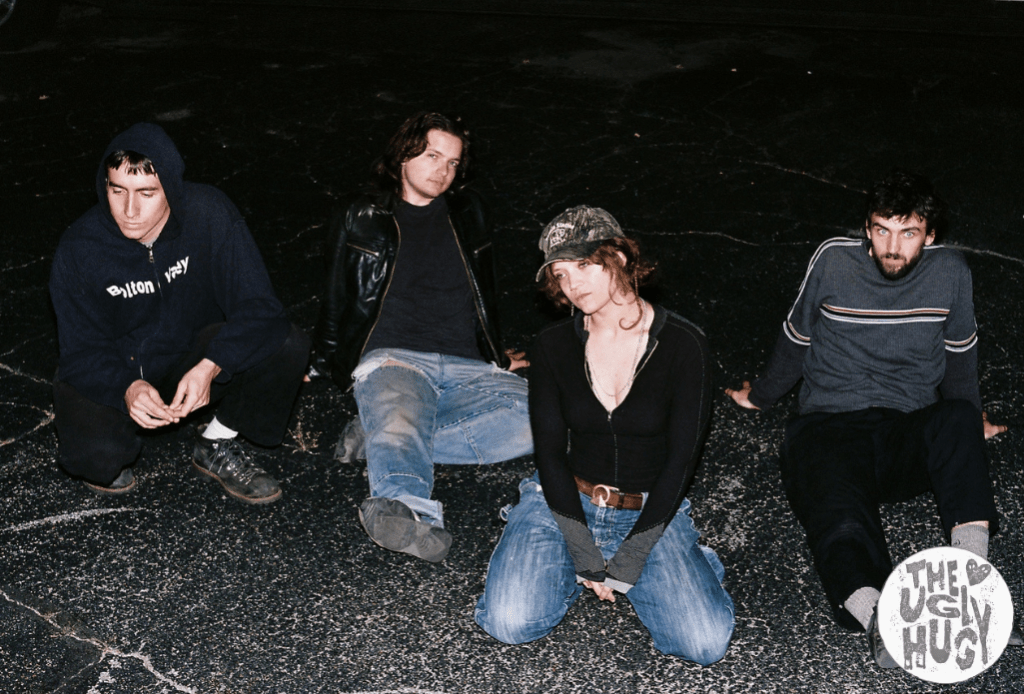
Written by Manon Bushong | Photo by Jackie Freeman
Whenever I regret any of the tattoos I got at nineteen, I pacify the remorse by recalling the even more regrettable tattoos I did not get at nineteen. I still have a Pinterest board I can consult when I need to ridicule my half-baked prefrontal cortex; though no fine-line butterfly or cliche heart could come close to the surplus of relief I feel about having “wherever you go, there you are” in cheesy script on my arm. I got close; there was a time I praised that quote with a religious zeal. Today, I hate it. Sure, we cannot run from our own minds simply by changing zip codes, but I also think it is ridiculous to absolve our location of any impact on our own happiness. This can be in a literal sense, in terms of a home, community, environment, etc, but also through a broader, zeitgeist-considering lens. The state of the world, the technology that has permeated our lives, the information and slop at our fingertips. It feels out of touch to blame the disposition of our nervous-systems entirely on ourselves, as if a few deep breaths can reverse years clocked in a world constantly plummeting deeper down a catastrophic and backwards hole. In their latest work, Vermont-based Robber Robber captures just how detrimental it can be to co-exist with uncertainty. Written during a nomadic period for the band, the record blends Robber Robber’s housing impermanence with wider societal tensions. Out tomorrow, Two Wheels Move The Soul is an exhilarating sonic attestation to the enfeebling impacts of a society drenched in capitalism, as Robber Robber morphs anxiety into a sharp (and thoroughly enjoyable) listening experience.
The earliest seeds of Robber Robber were planted while Cates (vocals/guitar) and Zach James (percussion) were teenagers; the two began writing songs together towards the end of their time in high school. They continued collaborating creatively as UVM students, enlisting Will Krulak (guitar) and Carney Hemler (bass) as they began cultivating Robber Robber’s now robust identity – a transition that ultimately took several years. “It feels like it really became Robber Robber when we started putting together our last record, Wild Guess,” Cates tells me. “At that point, we had been playing together for a couple of years.”
They heavily credit their Vermont roots in the development of Robber Robber, though not necessarily in terms of their sound. In fact, the band is rather cautious about their sonic inspirations, avoiding any sort of “indie” or “punk” projects to prevent their work from being derivative. So while their sound strays from their peers (both local and within the indie-music scene at large), the community they were immersed in during their college years proved to be pivotal in attaining the dedication they have for Robber Robber today.
“The scene is great, I feel like we have been really lucky to be playing music and in school at the time that we were. It was around then that some of our other friends were starting bands and sort of pushed each other to take it to the next level. We saw one of our friends booking a DIY tour, and we were like oh yeah we can use those resources and collaborate. So now some of those friends are taking off a little bit more, like Greg [Freeman] and Lily [Seabird], and it feels like we have enabled each other more than in some college towns.”
The members of Robber Robber are now out of college, and their latest record, Two Wheels Move The Soul, is their first body of work to come out amidst this transition. Severing ties with the identity of “student” for the first time since childhood tends to reap anxiety for many, though their own circumstances quickly sent the potential stress of this milestone to the back-burner. Their apartment was demolished following a fire, an event that capsized an already skittish time in their lives. Following a series of failed sublet attempts, the band accepted that they may need to find other means of grounding themselves. In lieu of a steady housing situation, creating Two Wheels Move The Soul became one of the sturdiest constants in their life.
“At one point someone was like, ‘oh, that’s like a crazy year that you guys had, like did you think about pushing back the time line of the record?’ It actually didn’t cross our minds that maybe we should give ourselves more space with this. It was so nice to have that as an anchor and a main focus over the last year. If anything, it accelerated it.” Cates explains. They had recorded at the studio before, giving it a sense of familiarity and ownership for the band to cling to amidst a time where they chronically felt like guests in others’ homes.
The result is a refreshingly sporadic body of work. It teeters between burnout and overstimulation; often exploring how these two extremes have more in common than they contradict. Two Wheels Move The Soul wastes no time; the cavernous record is charged and busy from the moment it starts. You could consider it punk, though that label almost feels too dated for Robber Robber. Two Wheels is pumped with the modern and animated blood of a hyper-pop, and it wrangles the gritty feel of impudent noise-rock. Ultimately, it feels genre-immune; a scintillating and profoundly contemporary body of work all its own.
Lyrically, Two Wheels Move The Soul should read as almost manic. Cates assertively delivers lines like “Grind me down, blood computer. Mix my dust into a paste”, and “Shouldn’t bother, sucked back in and. Hours later, hours later. Hours later”. Though they can sometimes be nonsensical, they never register as gibberish; Two Wheels Move The Soul tells a commanding story, albeit one that can be interpreted in different ways.
“Writing lyrics can take a really long time. It depends on the song. Some come out in a day or two and then some of them take months to pinpoint. But usually what I do is I write pages of ideas, just sort of free form off a concept. I think that feels like carving it out of space. It starts very vague, very instinctual. It suits the mood of the song. I parse through them, and I try to do it on paper so I can crinkle them up in a ball and throw them and cross off ones that don’t work. Whatever I am left with, I try to puzzle and collage together.” Cates tells me. “I think something about that process helps me come back to the song later, after the lyrics have settled, and better understand what I meant. It is definitely a tool for figuring out the meaning of something, but it also means that there are often a lot of vague ideas connected.”
When I asked the band what emotions they were hoping to elicit with Two Wheels Move The Soul, their first response was “Joy”. I admit I was probably expecting something more callous, but the band went on to explain that it is important that joy go hand in hand with the catharsis of live music. “The world is also kind of exploding right now. I feel like being at a loud concert listening to music…” Nina Cates considers. “Joy in the face of it all is kind of a punk rock expression.”
Two Wheels Move The Soul will be out tomorrow via Fire Talk. You can preorder it below.
Photo By Jackie Freeman
 the ugly hug