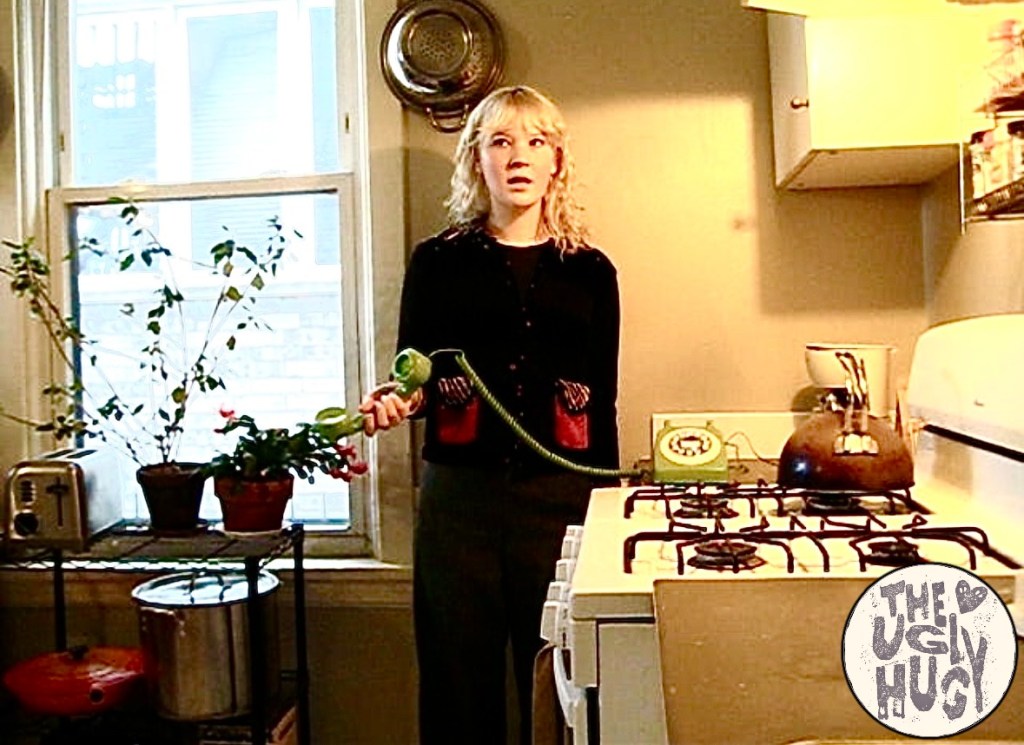
Written by Shea Roney | Photo Courtesy of Nat Tracks
We’re all familiar with the game of telephone; the classic time killer where someone whispers a phrase into a neighbor’s ear, passing it on down the line until it reaches the last person, and you all laugh about how such a simple phrase got so lost along the way.
Nat Tracks is the new project from Denton-based artist Natalie Hanne Winkler, who recently shared her debut EP titled Lost Signals. Animated through the colorful DIY ethos of her band Paper Jam, who have been rockin’ down Texas and beyond since 2024, Winkler is no stranger to an effectively good pop song. But it’s in that efficiency where Winkler stands out; not only engaging with familiarity, but also asking why these instances become so familiar to us in the first place. Where miscommunication prospers and simple courtesies are left to the side.
Branded as her latest obsession, Winkler spent the last year expanding on all things synthpop, exploring the most niche corners of its artistic endeavors, while homing in on an inherited Yamaha Portisound. With production help from fellow Paper Jam bandmate Mason Blair, Nat Tracks coats the pallet with vibrant synths and drums tracks that blink to the natural progression of her discovery. And it’s easy to get lost in the whimsy of these tunes, but Winkler stays anchored by the landline; each track becoming an individual conversation as sincere melodies chase pixelated dreams and busy work all throughout the house, wrapping the phone cord around chair legs, side tables and the family dog as Winkler keeps pulling ahead.
We recently got to chat with Winkler about our unmatched access, trying everything, new obsessions and throwing a midnight release show.
This interview has been edited for length and clarity.
You described this project as something that came from having more access than ever before to your collaborator and friend, Mason. Working with Mason in the past with Paper Jam and then starting from scratch, what does that access mean to you for both yourself as an artist and as a collaborator?
I think that was sort of a sentiment to the subjects that I’m talking about in the songs, but I like that you bring that up as my relationship with Mason and my access to him. He lives in Chicago and I live in Texas, but he’s a really talented writer, and a really talented producer, and he had a lot of time. I was writing too fast for Paper Jam because that’s my biggest outlet; writing songs versus journaling, or, you know, going to therapy. Whatever your outlet is for the things that you’re going through in your life, I just really like turning that into music. I was writing really fast, because I was just going through a lot, and we had this idea to make something separate from Paper Jam. I was getting so into synth-pop music. I was listening to a lot of OMD and this artist called Brittle Stars, who changed my perception on mixing guitar with the drum machine.
Previously for Paper Jam, it was super rock and roll. Tallulah Gosh was obviously a huge inspiration and all of that jangle pop. It’s really interesting when your music taste changes while you’re still in a project, because you don’t necessarily want to change the project that dramatically. Obviously bands go through flows of how they want their music to sound, but when you’re really into a genre, not even just listening to it and making it, but also being it, like a mod or a beatnik, or whatever, you become what you’re listening to all the time. And that’s kind of my personality, I just love doing everything all the time. So, it was like, how do I do that, but also still focus on Paper Jam stuff. [Mason] was totally down to help me create these songs.
I’m horrible at using computers. I wish that I could produce my own songs, but I just can’t do it. I’m so much more of a lyrical writer. I obviously have a lot of opinions about everything, and I have to be like, ‘can you make the drums go like this’, and then Mason could go in and physically do it. His grandma gave him this keyboard, a Yamaha Portisound, and he gave it to me to play around with, and we wrote most of the songs on it. It has these drum presets, like, rock and roll, shuffle, and samba. I would find one that I liked, set it to a pace, and then I would play some sort of little melody over it. And then [Mason] would just put it onto the computer, and then he would add so much to it, a lot more of that twinkly stuff. He’s so essential to how the whole sound came out.
The idea of this quote-unquote access is interesting, because you guys live so far apart. Was it at all challenging to be able to communicate ideas?
It actually really wasn’t. It’s so interesting, because really at any moment, we could talk to each other. But even just him sending a song to me, and then me responding back, he understood enough. We recorded a majority of this stuff before he left or in intervals when he would come back. You can do everything from a distance, but I think having him here for the vocals was good because I’m not as proficient at recording and he could tell me stuff. But as far as finishing the mix and the master, that was super seamless. We’re already friends, so we would just FaceTime every week to talk about what we’re doing in our lives anyways. But then if we needed to, we could talk about the music. Especially with this project, we did it over a year’s worth of time, just very slowly whenever we felt like we had the time to. So it was always super low stakes, just something that we wanted to do when we’d hang out.
Using the pop song as sort of a vice, as you were referring to earlier, what makes songwriting, especially an effective pop song, so meaningful to you? How are you able to connect the things in your world by turning it into music?
I really like how you’ve said that, that’s really funny. It’s true, though. For me, I’m a huge lyrics listener, and I think that that’s why I gravitate towards really simple-sounding, sort of beep-boop, robot-y sounding music. There’s not as much going on underneath, so I can listen to what they’re saying. I think that the story of a song is a huge factor to connecting yourself in the song. Obviously, I don’t want to be too specific where I’m naming names and stuff, but it is totally like you’re telling a story. Like when you watch a movie, or when you read a book, and you see yourself in the story, you equate your experience and your life to it. I think having that as an outlet and connecting with people over experiences and issues that I go through is really therapeutic to me. I had some girls reach out to me recently who were like, ‘I really relate to this’. I think that’s my favorite part, when somebody feels like they can relate to whatever I’m saying. Music is also a language, and going to shows or listening to music is a way that people get over their issues as well. It’s all just one very positive motion, where we’re all just helping each other get through these difficult times.
And it’s really cool now, because you can make anything you want, and then just put it on Bandcamp. There’s really no pressure, and anyone that wants to hear it can hear it. It’s a really passive thing in my life, because I love music, and I love doing it, but I’m also in school for meteorology. That’s a really time-consuming struggle. And that’s another thing of wanting to just do everything all the time. So it is cool that [music] can just exist.
I understand being in school on top of everything is a lot. You said this project was very low stakes for you? Is it easy for you to keep the process fun?
Luckily, I have a very interesting relationship with music. It has always been something I do for fun, because it was never in my mind something that I was going to do as a career. So there was never any pressure with it. If I release something and it flops, or whatever the kids are saying, it doesn’t matter to me. And I am excited to do my school. I feel like it took me a while to get to that point, but it’s really nice feeling secure in both of these areas of my life that are things that I want to do. It’s about balance, and sometimes I struggle with that, especially with music. If an idea comes, I just want to spend the whole week doing that and finish that song, but you have to do those other responsibilities. I think that the hardest thing is not letting music not be fun, but it’s not letting it take up too much time for my other things I have to do.
Is that balance similar at all to the way that Paper Jam functions?
We definitely have a little bit more pressure with that, just being associated with more than just me. We get a lot more offers to do things, and so there comes more expectation with it. But we are all best friends, so everything is always very fun. We’re recording our second album right now, actually. We’re doing it very differently from how we did the first one in which we were all together, and this one is a lot more one-on-one with Taylor [Rivers], our drummer, who’s doing the recording and the production. But it gets to the point where the songs are written, and I have a huge part in writing the songs, but I definitely don’t have as big of a part in them being produced. So that’s really nice for me at times when I’m doing school. It does function very similarly in that we are on our own time. We’re not on a label or anything, so it is still whatever we want, but we definitely are aware that we should make deadlines.
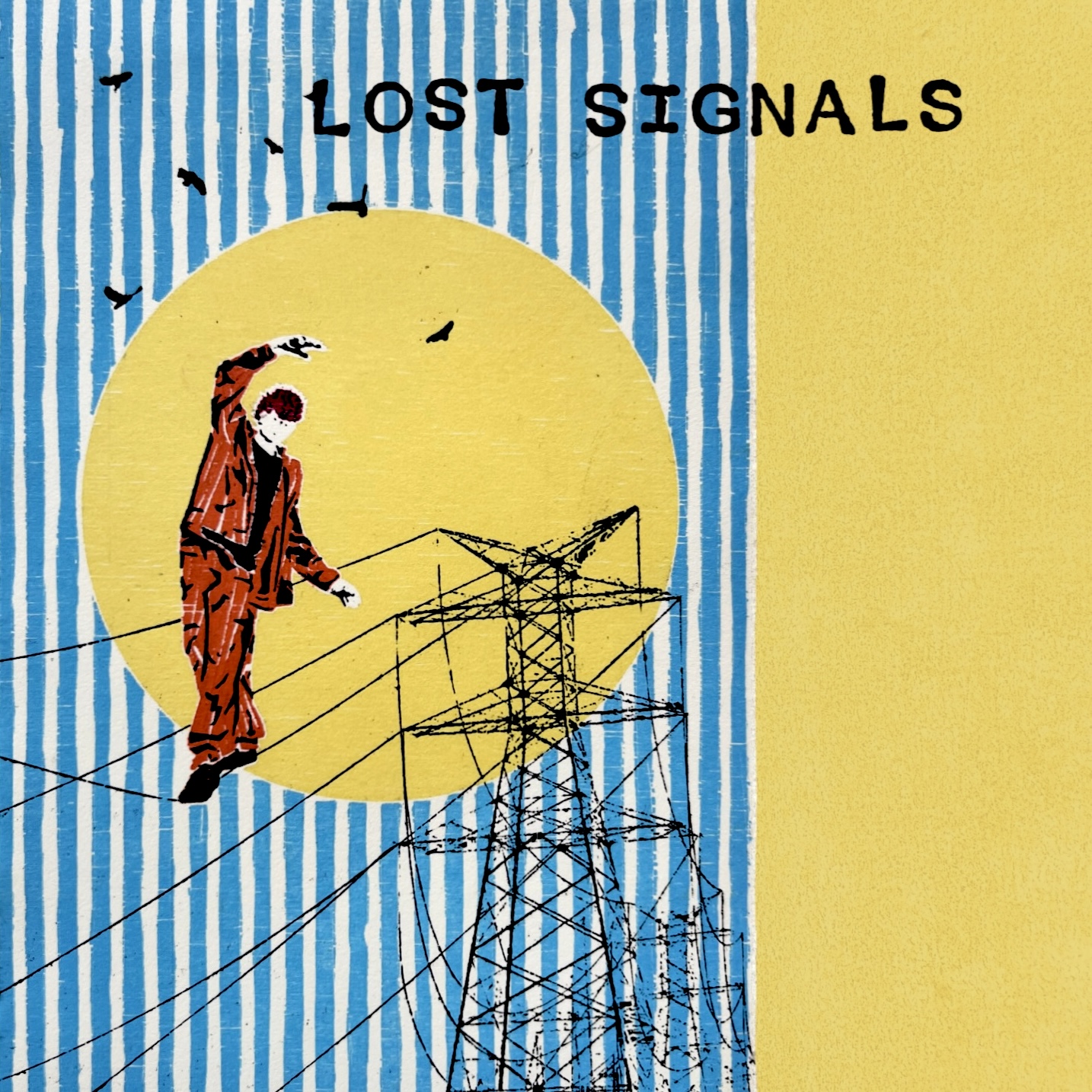
The catalyst to [Lost Signals] coming out when it did was that I met this artist, named Elijah, who had made this print called “High Wire”, which ended up as the cover. It’s the guy on the telephone wires. I remember freaking out because the first song I had was called “Telephone Game”, and it was such a perfect visual. I loved the colors, I just loved his style. There’s a lot of artists in Denton, so it’s really fun to be able to say I have a favorite one. We tried making some different prints, but I was so set on “High Wire”. And at that point, I had a visual now, so I could keep going, and this project could be 20 songs, or I could just put these ones out, and then do something new, because we know that’s how I am. I’m probably gonna want to go in a different direction anyways, so I should just put this out.
And there are thematic elements to this project, as you’ve stated. What are those connections that you wanted to make through these songs?
The whole thing was inspired by this phone call that I had with somebody that was my friend at the time. It was a very intense and sort of a traumatizing phone call. I remember getting off of it and having to sort of process it. It’s crazy that somebody can call you on the phone and say these things. There’s so many things you probably wouldn’t say to somebody if you were face-to-face with them. And so I was thinking about that a lot, and just how negative phones can be. They’re very negative on our social existence as people. And so that’s where “Telephone Game” came from. That was the first song that we made, where it started based on a phone call, but then it turned into the thought of that game where people whisper, and then it goes around and comes out the other side completely incorrect. It’s a very relatable, very simple concept.
Also there’s this artist called Oppenheimer Analysis who has this album called New Mexico that is based on Oppenheimer. That concept is really funny to me, taking something like that, very historical, and making a whole album about it. Obviously, telephones and communication is a much more common theme, and it was definitely an easier one to execute as a theme for the first time. But I’ve always really been into albums that have a theme throughout the whole album, and this one was just perfect for what I was going through at the time. We’re just not listening to each other. We’re at a time where we have access to each other’s brains 24-7, but we’re almost just so desensitized that we don’t even care to actually utilize those tools that we have correctly.
Next week, you’re celebrating the release of Lost Signals with a midnight show at Rubber Gloves in Denton. What are the moving parts of this midnight show and what does it mean to have these different factions of your world come together for this event?
That idea actually came from Kellen of Good Flying Birds reaching out to me. We were just talking about Good Flying Birds coming to Denton, and that they wanted to just stay with me on their way to Austin. And then I was like, you guys should play that night, why not? But they were playing in Oklahoma that night. [Kellen] asked if they could play at Rubber Gloves at 2AM. I asked Chad, who’s the manager, and is such a huge fan of them. He said let’s do it, let’s make it work. Good Flying Birds was so down for that, because they’re crazy people, and they’re always down for a party.
Then also there’s this art collective in Denton called Steady Hands, who really try to bring art and music together, and give physical media artists a light in a scene where music is very heavily focused on. We were just talking about how we can get people to come, because it’s so late. [Steady Hands] was gonna do a gallery this week, and I asked what if we made the reception that night leading into a show. And then maybe I’ll do Nat Tracks for the first time, so my friends come. I asked my friends specifically if any of them just wanted to try something new that night, like if they are working on something, and they just wanted to try performing it. It’s really not too hard to book a show here, because everybody’s all super close. We all live close together, and everybody’s just very excited about things, and it’s just a good community for doing something like that. I don’t know what the turnout’s gonna be like, but it’s gonna be really fun regardless. Rubber Gloves is so awesome. I think that they’re definitely the biggest and most important factor, they have such an important and influential space for music and art. They have the art there now, and they just really uplift the underground music scene and whatever happens here.
You can listen to Lost Signals out now.
 the ugly hug