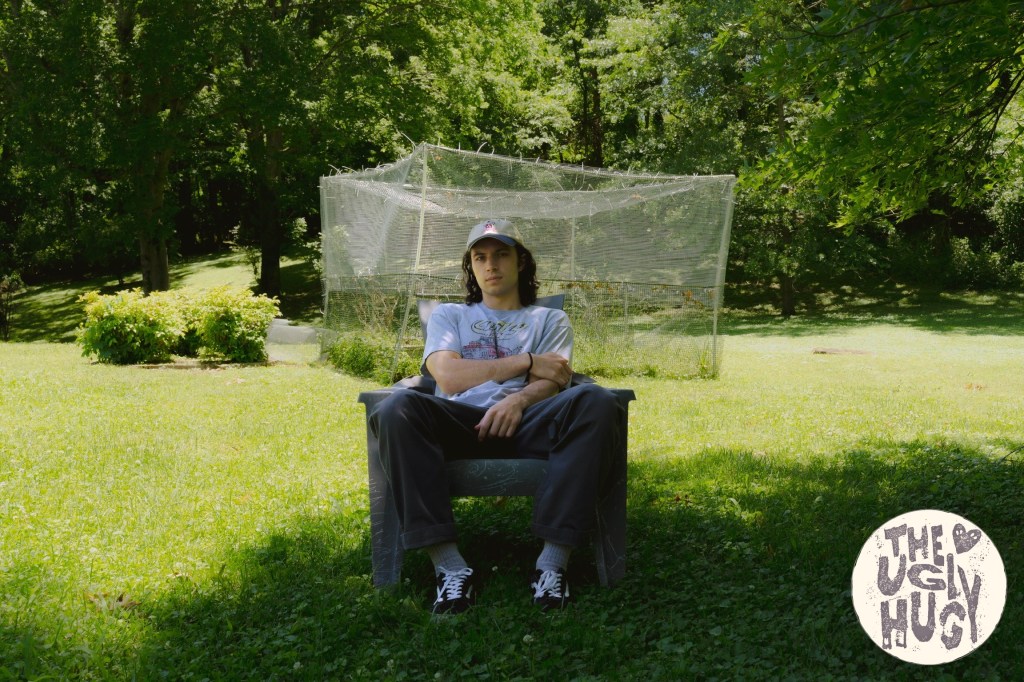
Written by Shea Roney | Photo Courtesy of One Wheel Fireworks Show
“My theory on my favorite music is that 50% of it is maybe the music itself, but 50% of it is because you don’t know how it was made,” says Will Cole, calling after a long day of work from his Nashville apartment. “So, you can never like your own stuff in that manner because it just doesn’t have the mystery to it.”
One Wheel Fireworks Show has been a throughline of Cole’s creative and personal understandings since his debut album Cold Cuts and Ramen was released back in 2024. Where songwriting became a reflection point of not just how to express himself, but why he should do it in the first place. Last month, Cole shared Jason, eternal, his newest collection of self-exploration and storytelling, out via I’m Into Life Records. These songs don’t represent moments that pass by, and they also haven’t been fully lived in yet. But to his credit, that’s what Cole envisions the journey of creating to be about. Jason, eternal bears its cracks as pieces break off from erosion and heavy use. Finding bits of conflict and resolution in the textured layers and folk-leaning explorations, Cole’s deliverance remains upfront, blending wit with conviction and irony with what has been assumed in his life thus far.
We recently got to chat with Cole before the release of Jason, eternal about the new album, restructuring creativity, leaving mystery and always writing with hope in mind.
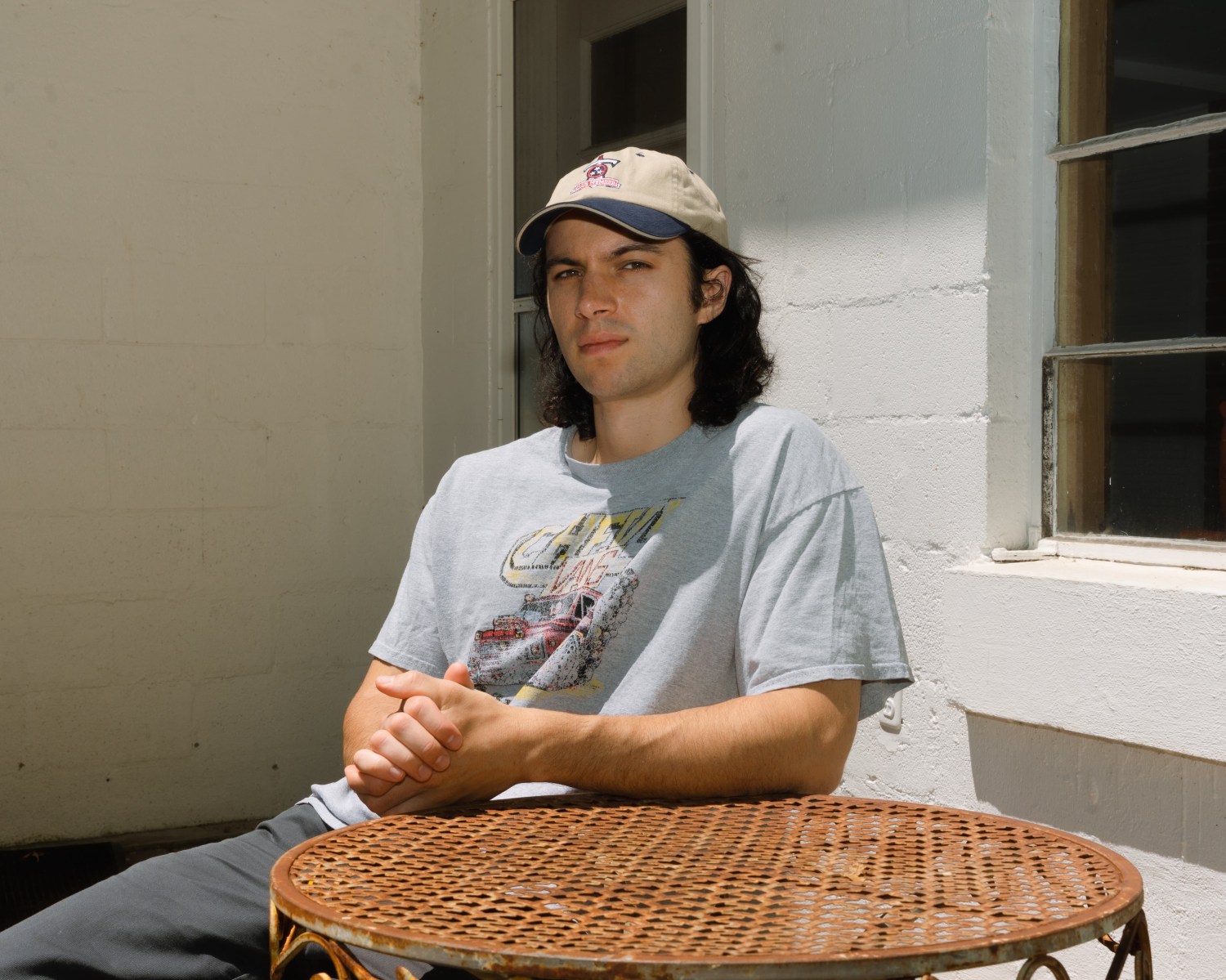
This interview has been edited for length and clarity.
How are you feeling at this time as you approach the official release of Jason, eternal?
I’m feeling pretty good. We made it a long time ago, and it was one of those things where I wanted it hot off of the press. But I think time has been kind to my relationship with it. I recorded it in a really different way than I did the first one. And at first, I loved it, and then I hated it, and then I’ve kind of come back around to thinking it’s cool again. We’ve got a good band now, and Colin Miller (MJ Lenderman and the Wind) and Xandy Chelmis (Wednesday) hopped on it a little bit, too. I’ve got a band here in Nashville now that feels like we can actually play the record in a good way.
It does feel like a very expansive record, like you’re trying new things and taking risks. Did you have any goals or expectations as you took these songs to Haw Creek and Colin [Miller] that you wanted to see through?
The first One Wheel record I kind of made on accident. I was in another band in college that was this electronica, indie rock kind of thing, and I’d always collaborate with other people. But I had a collaboration fall apart, and then, moved to Nashville with my sister – I literally hopped in her car day of. I didn’t have anyone to work with, and it was COVID, so I started recording songs in my room, and suddenly had a record. I didn’t think I could do that, so I thought I’ll try to do it again. I spent the next year making demos that I just hated. Colin and I are both from Asheville, so I took these demos I hated to him and asked, ‘can we just make these songs, but in a way that I can stand to listen to?’ I thought the songs were good, I just thought I was using the wrong instruments, the wrong tempos and it became this very labored process.
Making this record, Colin calls it Hog Dash style, where we plug in two instruments at a time and hit the songs over and over and over again. And once you get bored on an instrument, you’d plug in a different one. There was no rehearsing any parts, it was really like zooming in on parts over and over and over and over, creating this massive stack that you would then whittle down. We did that for 4 days, and then we did it for 3 more days a couple months later, and that was the whole record. So, there wasn’t a vision other than that really messy and imperfect textures.
I want to get into the significance of imperfection in this record. Going from wanting to release it hot off the press to just not liking it at all to liking it again, what happened in between there?
In the mixing stage, we were whittling down so much, and I wanted Colin to just do his thing to it. I think it’s cool to have your art refracted through someone else. My favorite records, or at least my theory on my favorite music, is 50% of it is maybe the music itself, but 50% of it is because you don’t know how it was made, you know? So, you can never like your own stuff in that manner because it just doesn’t have the mystery to it. Colin was working on it, but then our progress was accidentally torpedoed by the meteoric rise of MJ Linderman [laughs]. Jake was there when we were working on the record, and then that whole thing popped off, and Colin got deployed to play drums on tour. But it actually allowed me to write 80 more songs.
Did the break in the middle of this album add to its mystery?
That distance is kind of the best thing ever when you’re trying to make a record. You spend so much time thinking about every word, every decision. And then come back to it, especially after someone else has sifted through it, and you sometimes think, ‘oh cool, who wrote that song?’ [laughs].
The significance of imperfection is in the title itself as well, playing homage to the artist Jason Polan. What about Polan inspired the way you view this record as both a concept and a project?
During my first two years out of college, I became completely unengaged with music – I was barely touching an instrument. I was really feeling distant from music when I came across [Polan’s] obituary. He was a newspaper cartoonist, and his whole thing was he would do these slice-of-life drawings that would take him anywhere from 20 seconds to 3 minutes. But he would walk around New York City and just pick out little details you wouldn’t normally notice. But he had this project called “Every Person in New York”, where he was attempting to draw every single person that lives in New York, which is like 8 million people. But he drew over 30,000 of these little sketches before he died in his mid-30s.
I’m trying to understand the idea of getting up in the morning and just making something. Treating music as that little 2-minute unobserved sketch. Obviously, his goal to draw every person to New York, A, impossible, and B, he failed. He didn’t get anywhere close. But it doesn’t matter, because there’s no standard by which he failed, you know? Every drawing was a testament to making stuff and letting go of perfection and comparison – just being like, well, that’s my drawing of that dog. It may not look like the dog. And it may be kind of goofy, and it may be all I can do, but that’s how I would draw it. I’ve been wanting to let that guide the creation ritual, rather than try to make something I think I should make.
It’s such an interesting goal, because depending on how you look at, it’s either, being excited that you still have 8 billion people left to draw, or it’s daunting, like ‘shit, I still have 8 billion people to draw.’ Taking that realignment of the way you approach creativity and perfection, how did it change the way you approached writing a song?
I feel like I’m now learning about how it ebbs and flows. Like, you can go out every day and pick up a notebook and start drawing everything, but sometimes I don’t feel like it. I’m learning now, after all this, to not be forcing myself to do it if it doesn’t feel right. I would throw stuff at the wall with the first record. I was very much working on coming up with something very specific to play and then perfecting each part. But working with Colin, now that idea of throwing stuff at the wall and hitting record, but moving on, that was the full circle moment. I figured out that I can get up, create, and truly just move on. That was the beauty of the break and waiting for this record. And as soon as I got home from Haw Creek that second time, I went from writing one song every month and a half to four songs a week.
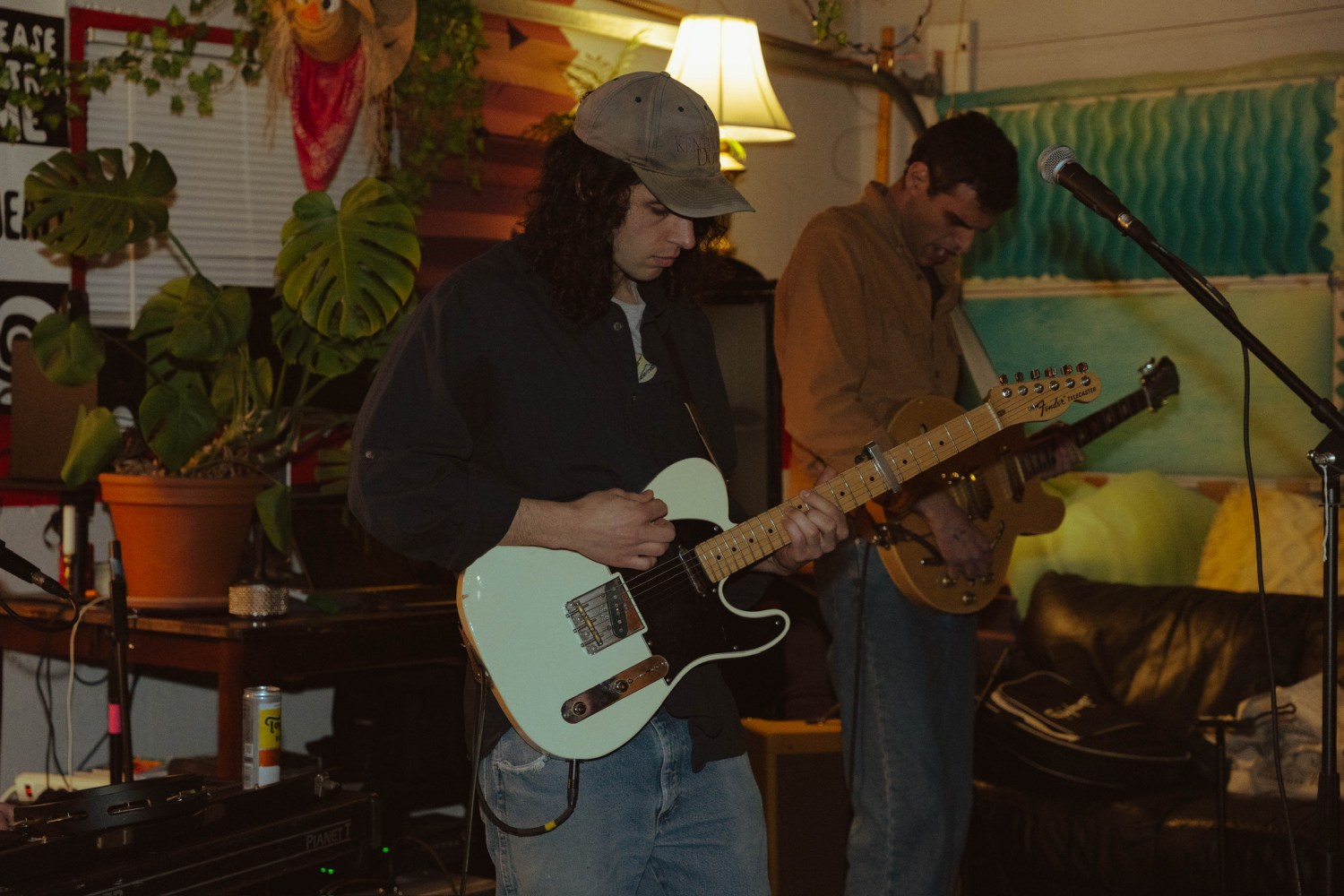
A lot of this record you spend grappling with time and feeling stuck. But there are a lot of instances where it feels like you’re trying to balance the past, like faded experiences, or shifting around mistakes, projections, maturing, etc. Was there a need for you to bring a focus to the past, rather than writing for the future in a present that felt so motionless?
The whole time I was writing the record, there were some family health issues, and my grandfather died during the course of making it. I started to hyper-obsess about mortality and death. I remember being a little kid in elementary school and thinking, ‘my kindergarten teacher’s kind of old, right?’ And then I’d be in 5th grade, and I’d be like, ‘well, shouldn’t she be dead by now?’ She’s probably gone from the ages of 52 to 56, but I kind of thought about everybody dying when I was really little. The record was originally called B.I.B.L.E., which was an acronym that I saw on a church sign here that meant ‘basic instructions before leaving Earth’. So, between Jason [Polan], here’s this guy who did a lot with a little time, here’s me wasting all this time, clinging on to things around me that I feel are going away. But that title didn’t feel quite right. It felt a little too heady. This is a really dark record, but I’ve wanted to put a little more hope into it. I was sitting with a lot of fear and shame and regret when I was making it, but on the other side of it, it kinda feels hopeful in the darkest way.
Were you writing with hope in mind? Or does it only feel like that now that you are removed from making it?
I think “Jason” is a hopeful song. I think “Woody” is a hopeful song. I think there are glimmers of hope. The end of “Dollywood”, that song is contemplating this thought of, ‘am I evil?’ I’ve talked to a lot of friends about those kinds of thoughts, where I’m out here, trying to do my best, but is there something inherent to being that’s dark and bad and selfish, and cowardly? But that song is not resolved to that, and I feel like it pulls the other way, finding the good parts behind the bad emotion. Like, you’re angry, why are you angry? Because you care. But, why do you care? That kind of thing.
Did that lend itself to finding that hope? It’s such a dark place, when those thoughts come up, and it’s such a natural response to negative feelings. I like how you once said it’s like you’re trying to outsmart your own feelings.
I mean, it’s always the hungry check, right? Is everyone leaving, and am I doomed to wallow where I’m at forever? Or am I just hungry? Because everything feels so tangible when you’re in it, and I guess it is. But honestly, I think this was the first time I thought that making a record was about expressing emotions. Which is funny, because I made a decent amount of music before this, but I always thought I’m just making a song, you know? I have feelings, and I guess the feelings are in there, but I’m not expressing myself.
What do you think that separation was? Between actually allowing the feelings to come through and just writing a song?
I don’t know, I think I’m just stupid [laughs]. I think I was just not taking in the process of what I was doing. There’s a James Baldwin quote about how truth-telling is your only duty. Maybe before, I would just think this bad song was catchy, and now I’m almost making a logic tree of why I feel this way.
You actually use the perspective of various characters, spending time to explore their purpose in these songs and the larger stories that you’re telling. What made incorporating characters an impactful vehicle for you to tell these stories?
It’s funny, after writing the record, a lot of what I’ve written since feels very from my perspective. Characters allowed me to delve into some stuff that I was grappling with, but maybe not actually experiencing totally. “Jarrett’s House” is a combination of this old country boy that my dad was really close with in Marshall, North Carolina. He was this classic old Southern guy, who would give you the shirt off his back, but he was probably rigging local elections. He’s a lot of different things, and I feel like my dad kind of worshipped him. I mean, he’s always been nice to me, I don’t know if he’s a good guy, though. There’s a line in that song that goes, “he was a mediocre businessman, a pretty good friend, and a terrible father. Kinda wished he had a daughter, because sometimes something more foreign is somehow easier to understand.” I mean, I love my dad, but being a son… that dynamics just hard. I’m trying to make some sense of that, while trying to love people for sides of them that you don’t necessarily get to see often.
Jason, eternal is out now as well as on cassette via I’m Into Life Records.
 the ugly hug