
Written by Kaela McVicker | Photos by Olivia Gloffke
On a cold winter night Isabella Komodromos, otherwise known as Bella Litsa, and I hop on a call together and discuss her hyperawareness for life, love and spirituality. Komodromos releases her explorations of drastic love and the tests of limited time with limitless execution on her debut album Drasticism.
Komodromos grew up in the small town of Hopkinton Massachusetts, dreaming to play music since the first time she saw someone’s hands play the piano. She began singing lessons at age 13 but her vocals “didn’t come naturally at first”, she will admit. As she progressed over the years within the realms of dance, theater, and voice, Komodromos landed herself a spot at Berklee College of the Arts in Boston, MA. “Studying music is complicated emotionally, and after studying classical and jazz and all these different styles, I had to refind my love for music again,” Litsa says.

Taking early inspiration from artists like Lana Del Ray, Daft Punk, Roy Orbison, and natural inspirations from her day to day life living in a bustling city, Komodromos aspired to always have purity in her voice. Post college she became enthralled in all types of music, noting her love for truly embracing and living the constant of change. A strength that most strive to have, but for Komodromos, she embraces it most in her musical accolades.
“I will never sound the same all the time,” says Komodromos. “My voice is always evolving and being re-inspired by new artists I hear.” When asked about her early experiences with songwriting, she explained, “I came to college never having written a song before. Becoming so inspired by my peers in Boston making music like rock, punk, noise, and then coming to New York, I became enthralled in the sounds of the city itself.”

When producing Drasticism, Komodromos explored the radical measures of what she was able to express that she could never have in plain words. She digs deep and creates angelic visuals with her melody and choices of phrasing, describing pieces of her heart she grew to love or lose as she wades through the different shades of romance. Where some tracks are bouncy and playful, others slow and brooding, but all take you on a journey with no shortage of harmonic conversations. As it came together, Komodromos spent all her time in her room creating these songs, completely depriving herself of her basic needs, but maintaining the devotion to compose. “I sat, sometimes for 12 hours, without stopping. I didn’t eat, or get up from my seat. I kept cancelling plans,” Litsa admits. “That’s really how I like to create – with total tunnel vision.”

She pushes the songs to longer lengths than anticipated, breaking boundaries of popular writing structures, denying predictability while dreaming of unusual endings – much like her experiences in love. Every single song on this album shows her relentless attempts to reach farther than the song before. “How many vocal tracks can I add,” she would ask herself. “How much can these songs be pushed? I would not stop until songs were complete.
When listening to the album in full, it’s one that truly embraces the soft and harsh parts of love in the face of longing. From the first track “Saint Mishima” she begins to express how “hung up” she is on this love, and how she “feels it all the time”, expressed with a certain type of chill shoegaze twang that grows in its intensity. On “1117”, Komodromos swirls us into a lullaby, fluttering ever so gracefully from her chest to head voice, wrapping one in a dreamlike state along with the piano romantically dancing around the lyrics. She brings up the tempo with “Passion Plug”, thumping the keys with a song about a love that could’ve been, but now experiencing the anguish of that identifiable thrill being gone. The excitement builds with whispers of “I’ll beat the feeling to the ground” as she reminisces, her voice getting higher and higher with longing.
“Inside a Seashell” really bends the music in ways you wouldn’t expect, and ends with experimental murmurs and electronic vocal tuning. She continues putting a very hypnotizing vocal effect on her voice on “My Blue Eyes” with some laid back, almost reminiscent of Beach House, drum kit and a super catchy melody. Then over halfway through the song explodes into a bridge that breaks the listener away from the calm and into a grungy nightclub where she lures you in with her lyrics. As a whole, Litsa takes you through her deepest heartfelt moments, and each person she’s with makes her feel a different type of energy, a new melody, a darker or brighter tone, and she fully embraces it.
The process all began in Logic Pro, where Komodromos used demo midi tracks to work out all the possibilities of instruments that she heard in her head. Not to mention it being a great way to teach her band the parts, having them already laid out the way she envisioned them. Litsa has been consistently playing with a trio made up of herself, Sarah McCauley (flute) and Kelt Leray (guitar), but has since grown it into a five piece band with the addition of Henry Vaughn (drums), Huxley Kuhlmann (guitar, bass, piano) and Abe Nouri (bass, piano, synth).

Prior to the release of Drasticism, Komodromos made it a priority to create and share music videos alongside each single, sizzling these songs with experimental storytelling that let you in on her visual style.
Songs like “Neverending Movie” bring you to a land of colorful projections and memories where Litsa flows through streams of light, portrayed as an angel adorned with pure white wings in the comfort of her bedroom (this song a love letter to one of her favorite composer, Sergei Rachmaninoff). “Passion Plug” transports you through a vaudevillian theater piece with a mime-like aesthetic and expressive style of dance that adds a comedic edge the dancers feed off of each other’s movements. “1117” pulls you into a black hole where she disguises herself as a vision in blonde; a goddess spinning around endlessly into eternity. “Angelica” takes you through a snowy super 8 dreamland where she twirls through the trees flowing dreamily around the snow. All of them singing to the kind of love the tune mimics, with nearly no hesitation to talk directly to the camera as if addressing the lover themselves.
And through it all, Litsa admits that it is truly about lovers in her life, past and present. Lovers turned friends, some feeling autobiographical in reference as Komodromos emphasizes the importance of each song being a different kind of love. When questioned more about who these songs were about and the tie into the extremities of relationships, she explains that, as well as the ways she created Drasticism, the love she felt was equally part of the meaning. “The lengths willing to go for or against love is a big theme as well; the drastic measures we take. The people these songs are about know it’s about them,” Litsa makes clear.
When asking about her songwriting, there is an explanation for where it comes from. In her words, they come to her from beyond, and the spirituality she’s built within her practice of letting God speak through her.
“I have a love for God. But when writing these songs, I felt so confused,” she admits. “I would write a song and it didn’t feel like it was mine, but like it’s a predestined thing. I feel as if God sends me a melody or lyric, and it’s heaven sent. And then some songs it’s more technical. But I know how it needs to be. Now, how do I do this?”
In her music, it’s so clear that she really does have the sense of letting go within her voice and the ways she lets it explore. “When making this album, I stopped listening to music entirely. I really did this for a need of silence,” Litsa admits “Living in New York it’s never truly silent, but within the natural silence, the delivery of a song arrives.”

The cover of the album holds a lot of symbolism as well, taking some inspiration from the cover of Lana Del Ray’s “Tropico”. Aiming to mirror a look of Mother Mary in her white dress, with her sense of purity in her head garment – a wounded bridal vision. When your eyes naturally wander around the frame, the hands are a striking message of where we would normally see punctures of the skin, but find two orbs of beaming light that are practically lit with small mirrors in the center of the palms. Instead of her execution, there is an opposing message of light and hope.
“This portrays that the lights are upon you and in your grasp,” says Komodromos. “So much of this album is tortured but not hopeless; something pure, holy and surrendered.”
View more photos of Bella Lista taken by Olivia Gloffke

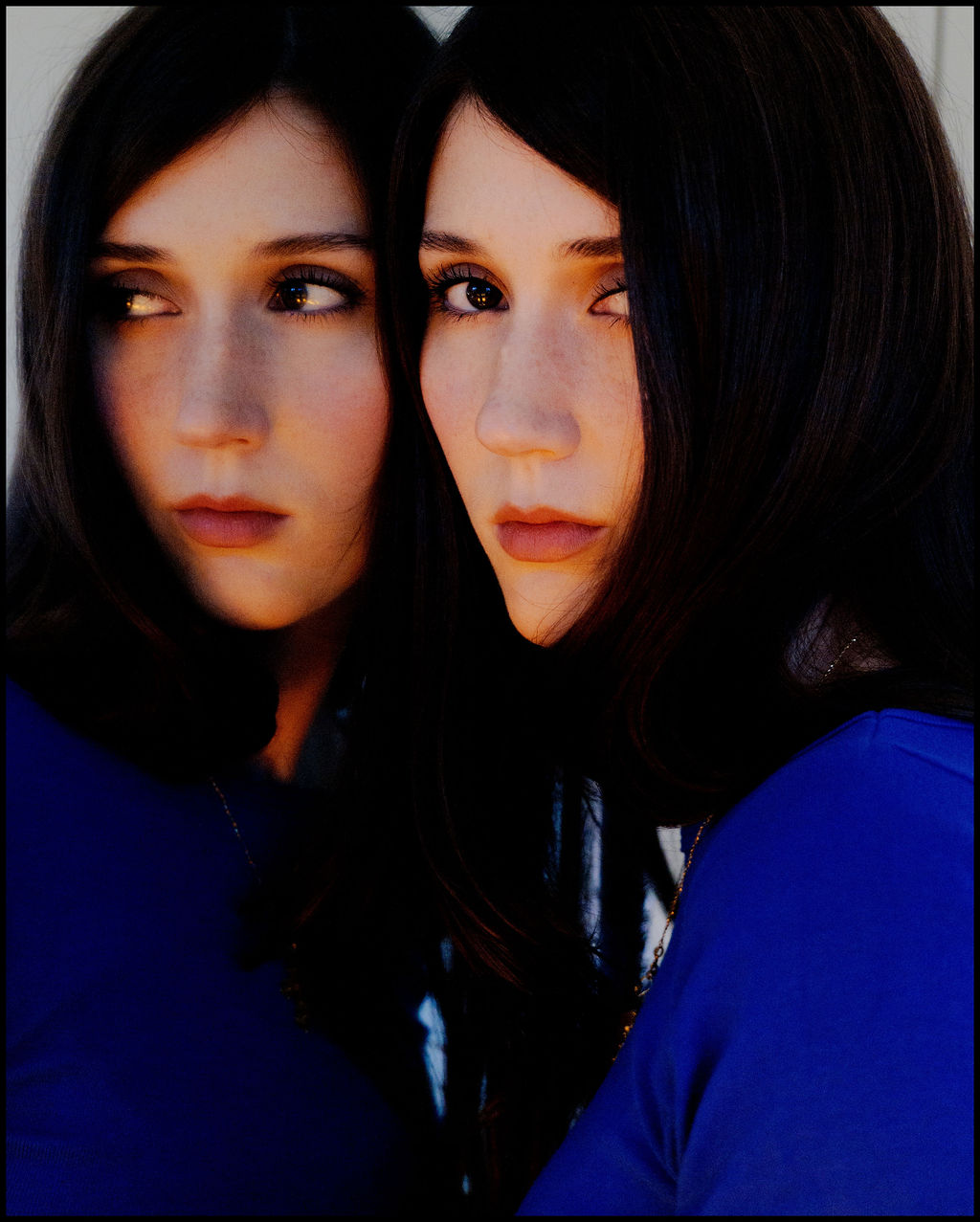
Musician Bella Litsa posing for The Ugly Hug Publication. 
Musician Bella Litsa posing for The Ugly Hug Publication. 
Musician Bella Litsa posing for The Ugly Hug Publication. 
Musician Bella Litsa posing for The Ugly Hug Publication. 
Musician Bella Litsa posing for The Ugly Hug Publication. 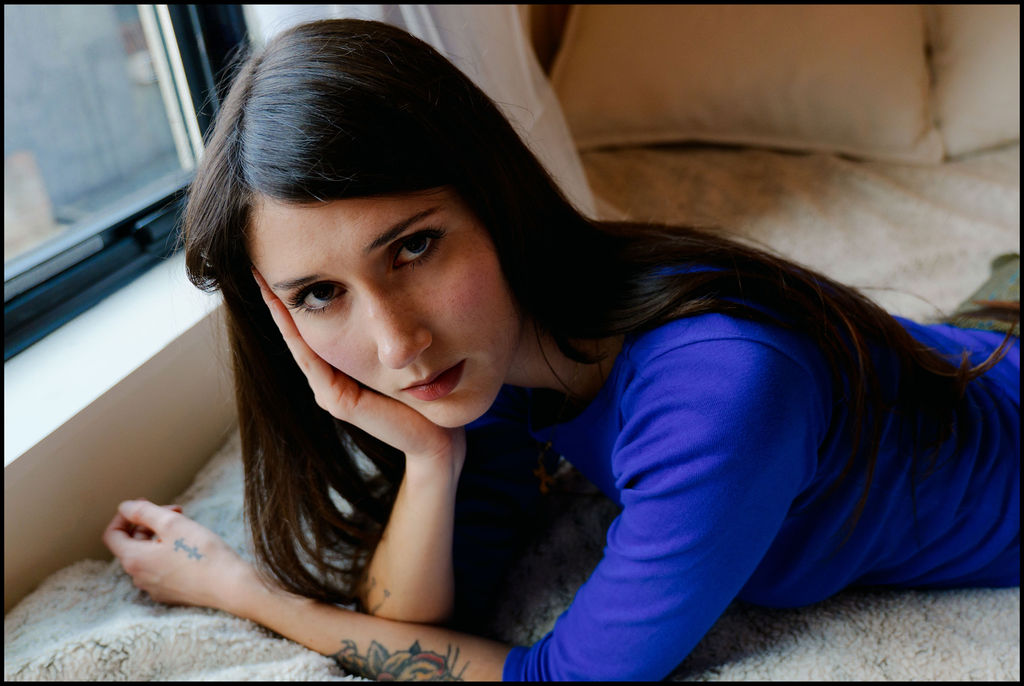
Musician Bella Litsa posing for The Ugly Hug Publication. 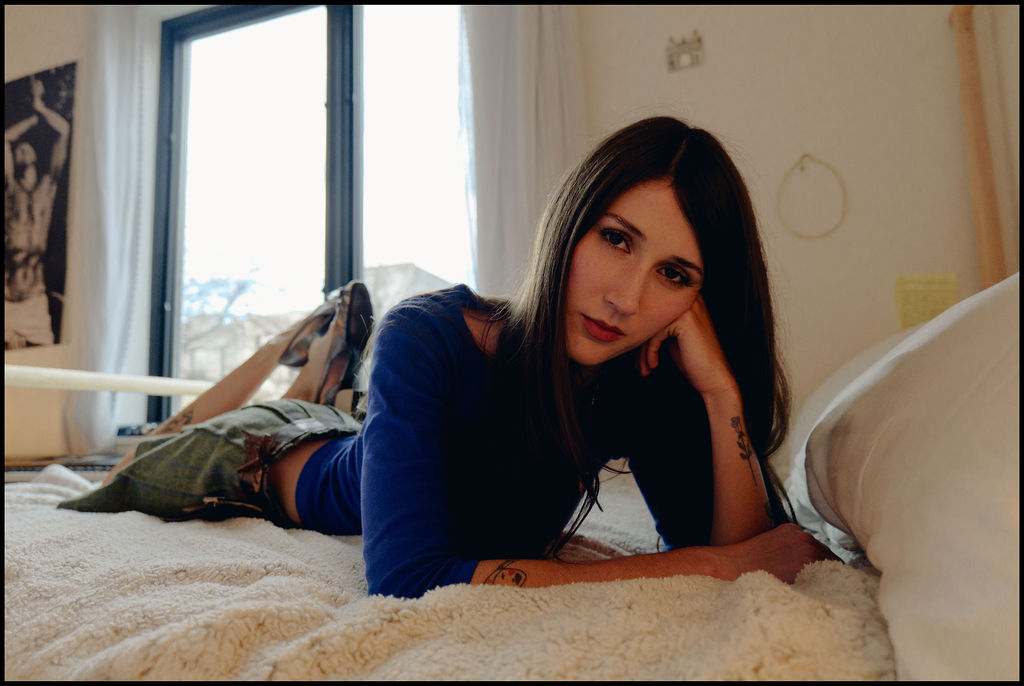
Musician Bella Litsa posing for The Ugly Hug Publication. 
Drasticism is out everywhere now as well as on a limited-edition vinyl pressing.

 the ugly hug
One response to “Bella Litsa on Loving to the Ends of the Earth | Interview”
[…] music and portrait photographer. Olivia has shared editorial shoots with artists like h. pruz and Bella Litsa. You can view Olivia’s work on her […]
LikeLike