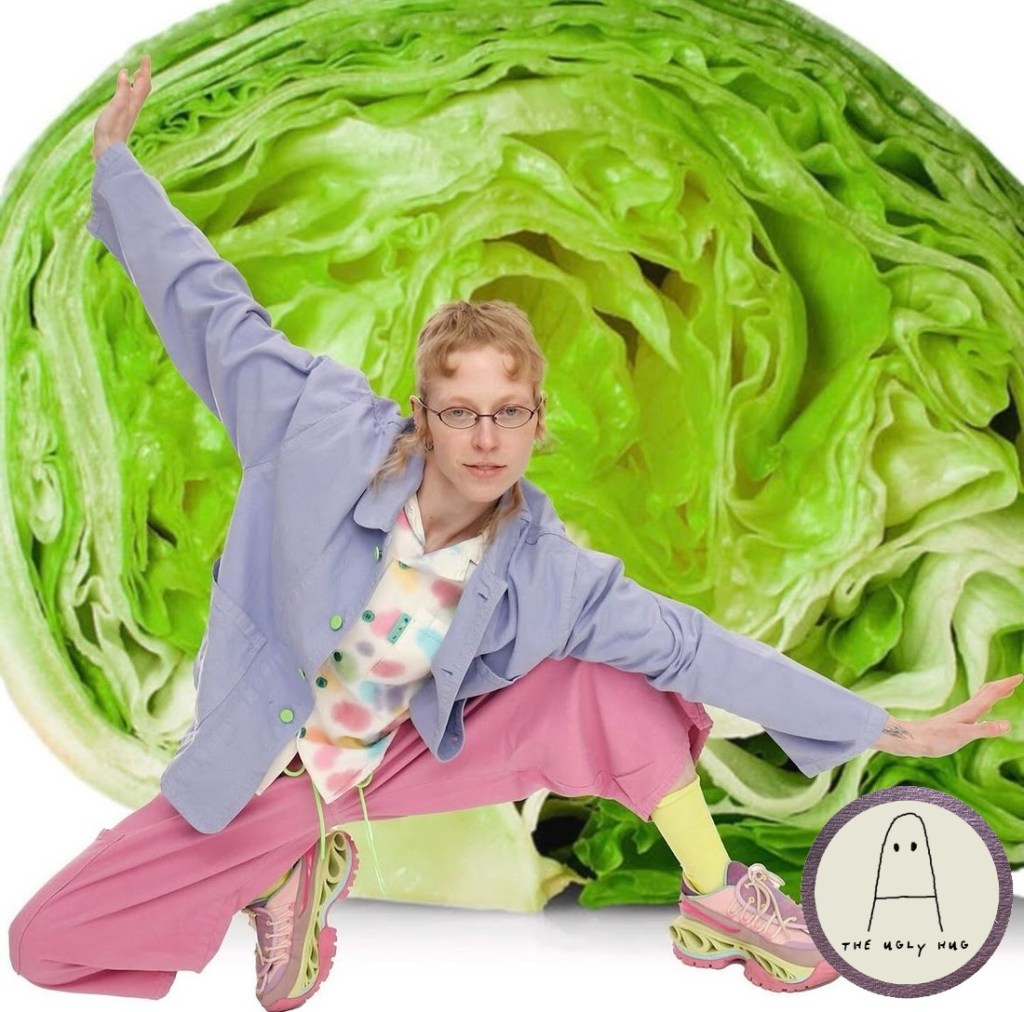
Carving out its own space in this large, unforgiving world, the self-titled debut EP by plu became a notable piece of collaboration and artistic growth for LA-based artist Pluto Bell. As a multi-skilled artist and musician, spending a decade within the underground experimental scenes of LA, Bell worked to develop their own artistic voice through various collaborative projects and exploring alternative ways to songwriting that has since helped bring plu to this dynamic life it now leads. Released a few months ago via Anxiety Blanket Records, plu finds Bell leading a band for the first time, pushing the bounds of their dizzying compositions and the shape of the project as a whole.
plu breaks like a fever as these songs become a swell of internal affairs, functioning as a team of mysterious little pieces that have taken matters into their own hands. The EP feels like a physical reaction, where songs like “Laziness Studio” and “Juggling” are locked in amongst the constant motion brought out by loose time signatures and deep and incredibly tight instrumental calisthenics. But what plu does so naturally in this strange little world that they have made is redefine control; what it is and how to wield it in practice when it comes to their creativity. Where intuition blends with cause and effect as a means to create something with levels of unexpected beauty. Where sounds clash and melodies wander off, but with a newfound trust that they will find their way back. Bell relishes in this back-pocket absurdity in a way that feels both incredibly vulnerable and enticing for the new project, breaking away from formulation and expectations, and embracing what matters most when it comes to releasing music as a creative motive.
We recently got to ask Bell a few questions about the debut EP, repurposing laziness and finding inspiration in unexpected places.
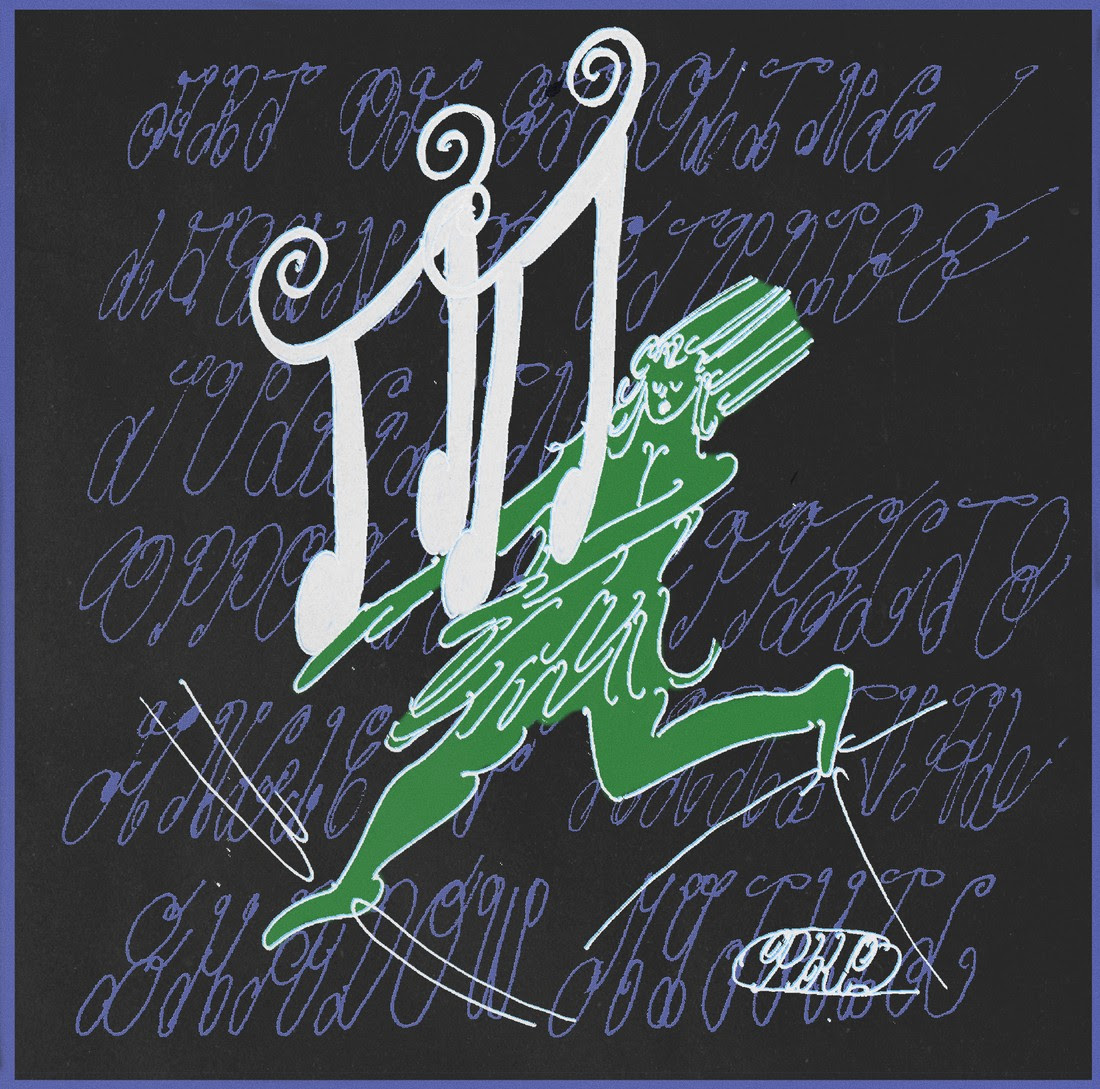
Although plu is your debut EP, you have been piecing it together for a few years now. What was the timeline that led to this release, and when did it feel like it was ready to see through to the end?
plu came together gradually and organically. I’ve been collaborating on and off with the players since 2015, when we all first met at CalArts. Back then, my focus was more on experimental and compositional work, but post-school I started leaning more into songwriting and figuring out what my voice sounded like in that context.
Things quieted down after the pandemic. I went through a stretch of creative uncertainty—like I didn’t quite know what I wanted to make, or even how I wanted to exist musically. But in that time, I kept tinkering with demos, and eventually, a new sonic shape started to form—something that felt more aligned with where I wanted to head.
I’d say plu is the result of finding my creative self again, but in a new form. It’s a fresh face, in a way, but also part of an ongoing evolution that stretches back to the beginning. This music is also deeply tied to the musicians I’m working with—people I trust and feel deeply comfortable around. A big reason this band works is because of the relationships we have with one another. As someone who’s pretty introverted and protective of my creative space, it feels most natural to work with people who are familiar with me in both intimate and creative ways. These are friends I feel safe being vulnerable with, which is essential for this kind of collaborative work—at least for me. It’s a different kind of openness than composing, which can feel more solitary and controlled.
Eventually, I realized I had a handful of demos that felt cohesive within this new sound world. That’s when I brought this group together. We kept things super low-pressure—no shows, no big goals—just rehearsing together and slowly fleshing things out. Over time, we started wanting to share what we had. We began playing shows with what was basically an eight-minute set, and eventually a few more songs emerged. That’s when the EP started to take shape—something we wanted to share in a more materially distributable way.
You stated that a lot of your inspiration is non-musical, taking specs of daily life and the things you read as a means to your creativity. As it comes to songwriting and crafting these auditory experiences, how do you take these non-musical inspirations and create a song from them?
For me, this mostly plays out in the lyrics. Writing lyrics doesn’t come naturally, but when I’m reading—especially certain kinds of theory or poetic prose—something clicks. These texts don’t offer clarity in a straightforward way; instead, they make language feel strange, opaque, even slightly off-kilter. I’m really drawn to that.
I’ve always felt a little disoriented by language. I often forget common words or meanings, and I struggle to express myself clearly, especially in real-time conversation. That kind of disconnect has shaped the way I approach working with language—words feel less like precise tools and more like slippery objects. Reading theory allows me to interact with language in that object-like way. It becomes about turning words around in my head, feeling their texture and shape, seeing what angles they reveal. That’s usually what spurs lyrical ideas for me—not in a narrative sense, but through this tactile engagement with fragmented thought and abstract feeling. What that feeling is can shapeshift or wriggle out of grasp, and that ambiguity is part of the point.
When it comes to daily life, if I’m in a good practice, I’ll jot things down—little observations, overheard phrases, moments of feeling, usually in ways that are still a bit abstracted or poetic. It’s less about journaling and more about tuning into textures of experience.
Sometimes my lyrics end up resembling an aggregate of readymade bites—language I’ve borrowed, recycled, or recontextualized. Other times they’re more like personal etchings. But more often, it’s a mixture of the two. One spurs the other, and together they create this layered mesh of thought, tone, and intuition.
I am really drawn to this idea of redefining laziness as a positive. How has the concept of “Laziness” brought out these songs, and what was the process of repurposing that word like for you and your creativity?
Redefining laziness is definitely an ongoing practice for me, and the track—Laziness Studies—was partly about reckoning with my inner critic and trying to reframe how I think about slowness, stillness, or the lulls that happen in the creative process.
I’m someone who often has to remind myself that it’s okay not to be constantly producing. It’s easy to fall into comparison—looking at how other people seem to work, or how much they’re putting out—and feel like I’m behind. But I’ve come to realize that everyone’s energy, pace, and needs are different. And honestly, doing something entirely unrelated, or taking a break altogether, can be just as generative as the work itself.
If “laziness” had any broader role in the album, it might be in the way I let myself take my time. This project wasn’t rushed. I had to slowly find my footing again musically, and I wanted to let that process unfold without pressure. That same philosophy extended into how we formed as a band too—we didn’t set any immediate goals or try to force performances. We just rehearsed, got to know the material, and let it develop at its own pace. So in that way, I guess “laziness”—or really just slowness—was part of how this all came to be. Not as a flaw, but as a form of care.
What sort of things did you see come out of these songs as you began to move from the demos to these rather complex pieces? What were your intentions as you began the process and did they change as these songs were given life?
I’m not sure I go into songs with many firm intentions. It’s more about following my intuition, letting something unfold, and then being fairly decisive in the editing process. But once I brought the songs to the band, they began to grow in ways I couldn’t have predicted—and that’s actually a big part of what I wanted and hoped for with this group.
Collaborating meant letting three other people—Jack Doubt, Leah Levinson, and Jesse Quebman-Turley—bring in their own musical idiosyncrasies, voice ideas, and, at times, push me in directions I wouldn’t have gone on my own. The initial seed of each song is still there, but the way things crystallized was shaped by each of us.
Some of the early demos were so idiosyncratic—especially in terms of timing and structure—that we had to figure out how to translate them into something we could actually play in sync, while still maintaining the fluidity that made them work in the first place. Shadow Mythic is a good example of that. The original demo wasn’t really built with a band in mind, so recreating it as-is wasn’t possible within our setup. Instead, it became about reshaping the song into something more collective—finding a new version that still held the spirit of the original. Once I knew I was working with everyone, I began writing more with them in mind, which also started to shape how the songs evolved.
I can be pretty particular, which goes back to what I mentioned earlier about the importance of working with people I already feel safe around—people I can communicate with openly, who understand me. But it’s just as important that they challenge me too. I think that tension—the balance of trust and pushback—is what really gives these songs their shape. Even the ideas that didn’t make it into the final versions helped move the process forward.
The songs sound and feel the way they do because of what each member brings: their unique sensibilities, their relationship to their instrument, and their broader musical instincts. They each expanded the scope of what the songs could be—and pushed me to try structural things, for example, that I might not have thought to, or dared to, on my own.
You can listen to plu out anywhere you find your music. You can also order a cassette tape of the EP via Anxiety Blanket Records.
Written by Shea Roney | Photo Courtesy of Anxiety Blanket Records
 the ugly hug