My Bed Is A Boat is the debut LP from Portland based songwriter Ash Vale, who has been crafting these songs under the name Swinging since 2021. Living through various expectations of what this project is meant to be, Swinging went through several phases before finding its way to My Bed Is A Boat. Now accompanied by friends and collaborators Finn Snead and Zoe Chamberlain, these songs became moments in a much larger journey; creased and cornered, showing the wear of a story well lived in.
As My Bed Is A Boat plays to the opportunities of open spaces, Swinging paces themselves as if not to take advantage of what’s being offered. Melodies wander and distorted guitars kindle what lies underneath on these long and patterned instrumentals brought out by Vale’s motives. It’s a scenic trip, counting the pattern of telephone poles like tally marks measuring how long you’ve been out on the road – but sometimes you have to ask, are we even getting anywhere? There are elements of Vale’s use of language that float between active reflection and loose trains of thought that blend into the very setting that the album lays out. It’s articulated and calculated, finding the comfort that has been buried underneath layers of soil, out of sight, yet filling the earth with nutrients all this time. And as these stories flow with such natural deliverance, Swinging so instinctually illustrates the connections that we share with what’s around us. Whether or not it’s clear from the beginning, that search for understanding becomes the heart within Vale’s writing and the sincerity that keeps the rest of us driving forward
We recently got to catch up with Vale to discuss defining the project, learning to stay grounded and finding the album artwork through School of Rock.
This interview has been edited for length and clarity.
It’s now been a few weeks since the release of your debut LP. How does it all feel?
I feel a lot of relief to have it out. It feels very vulnerable for me just cause it’s the first one and it’s the first recording project that I’ve ever done that feels very true to the sentiment behind the band. I have been a little bit timid about it.
Because it feels so true to the sentiment? Like you don’t know how that’s going to come across?
It really is. You know, the instrumentation is me and my bandmates Zoe and Finn, and Finn did all of the engineering and production and a lot of the instrumentation. But lyrically I feel like I’m sharing a really personal diary entry or something. In a live context, I feel a little bit more comfortable sharing that, but I think just the fact that my mom could look the album up on iTunes and listen to it feels very vulnerable [laughs].
Does it feel more permanent now that people can have it, hold it and listen whenever?
Yeah, I think that’s also because I’ve never played live music at all until I moved to Portland almost over 3 years ago. At that point in the process of creating a band and sharing my songs, I would get nervous to play live. I’m not a gear person, and I have a pretty fucked up guitar which has become this funny, almost shtick, where I say, ‘yeah, my guitar tone sucks.’ And because it’s not super polished live, there’s some excuses that I can hide behind. But to record something and to promote it feels like I have some sort of stake in the resolve of those recordings. I feel proud of them, so it’s a weird feeling.
You’ve had these songs back pocketed for a few years now. The first song you released was “Athens, Ohio” that was demoed back in 2022. Going from some of the oldest tracks to a debut LP, what was that timeline in between? I know you’re playing a lot of shows, so did these songs find themselves through the frequent playing?
Swinging as an entity has changed a lot over the past few years. At first it started out as an indie rock band. I also never played an instrument until right before I moved to Portland. I was writing songs on this little micro chord that I didn’t really know how to use. I did have a few guitar lessons from my grandpa when I was a little kid, but I just took up guitar like three and a half years ago. When I formed Swinging, I didn’t know how to play with other people at all, so the first iteration was just a standard indie rock band. I was so timid and just inexperienced, I just let whatever the dynamic of the group was take control of the direction of the songs.
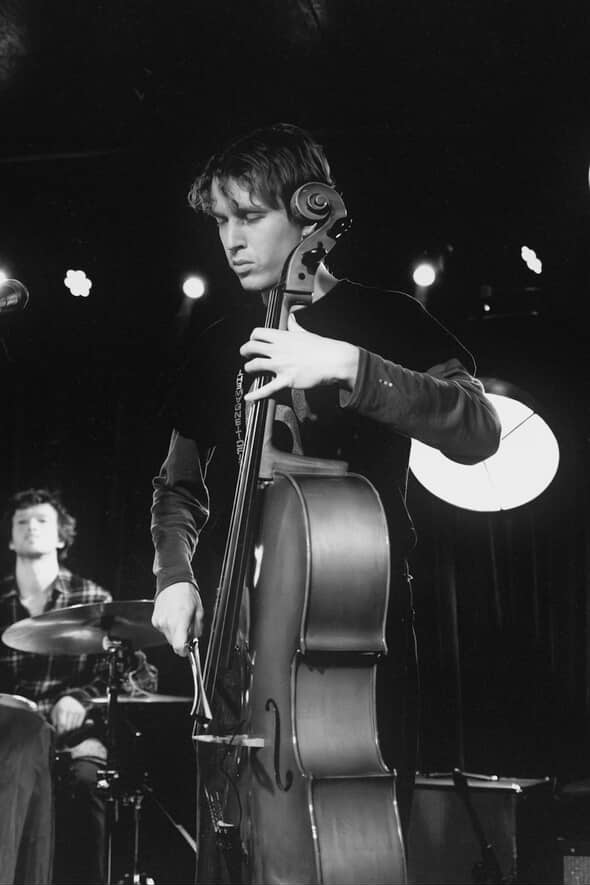
The song “Athens”, for example, I played with this group, and it was more of a rock song. I remember thinking that this doesn’t feel true to the sentiment of the song. But it was awesome, I couldn’t believe that I was playing with other people. At one point I had seven people in Swinging, and we were getting booked with a lot of pretty heavy bands in Portland. But it’s really hard to be in a band with seven people, and all of these people were in seven other bands so it just kind of devolved. Then I met Finn while I was playing a solo show at a country bar, and he asked if he could play cello with me sometime. And now Zoe has been filling out the songs with bass. I think playing a lot of shows was what helped me develop the sound that I was going for. I think I always kind of knew, because I’ve always been a huge music appreciator. But because I’m inexperienced in playing, I just didn’t know how to do it.
I like the idea of writing songs before you knew how to play an instrument. It feels like deep down you had an understanding of what these songs and what these stories were supposed to be to you. But now with Zoe and Finn, when you came to bringing these ideas to life, what kinds of things were you guys exploring and what felt natural?
We recorded the album in Finn’s house, super DIY stuff. The way that we approached recording it was we started with the base layer of me, playing my guitar part and then overlaying my vocals. And then from there it was kind of like, ‘Is there cello? Is there no cello?’ When we play live, Finn essentially is just playing the cello to accompany me, but what’s interesting is that there ended up not being as much cello in the recordings. I don’t even know the names of any of these devices that we were using, but we had this really cool drum machine that we kept reaching for more than I think either of us intended. I specifically remember when we were recording “Unwind”, that was the only song I wanted a drum pad before recording my guitar part and it ended up sounding really industrial. There were times where we’d both get so excited that you just couldn’t really take us away from the recording.
A lot of these songs play with this idea of space and this bigger story of trying to define your placement and your role with the environments that you occupy. As a very visual album, how do you use these physical environments and this physical imagery to tell these personal stories and convey these deeper thoughts and feelings in a more localized sense?
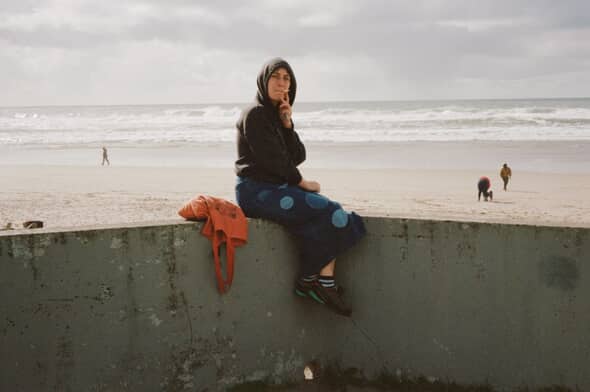
I am from the Midwest. And when Covid started, I moved to Montana to work on a farm. I was doing a lot of farm work up until I moved to Idaho where I was in college for about two years studying ecology. So a lot of my educational background is in science and specifically restoration ecology. And until I moved to Portland, I have been living in super rural towns. I’m from Akron, Cleveland, so I’m from Suburbia. But for 6 years of my life I was living in various towns that had populations of less than 25,000 people. So, I think at this point of now being in Portland for three years, I’m starting to settle into living a more urban lifestyle. But I think I felt a lot, almost this real manic feeling since moving here. I don’t know if it’s because it’s a city and my nervous system is not used to that or if it’s been the fires and the hot weather. But I wrote most of these songs in the State of Oregon. And while they do have this droning, relaxed feeling to them, when I listen back, it does feel kind of manic. Just like what you’re saying, I am trying to grab all of these things that I’m seeing and encountering around me, trying to make sense of where I am in space. It’s definitely super entwined with my relationship to the environment around me. But I think that this album is largely, to me in a lyrical sense, about one romantic and one platonic breakup. I don’t know how they come across to other people, but to me, looking back on them, I think it has just been this effort of grasping and trying to make sense of all of this movement and loss and noise around me.
Do you think your educational background in environmental restoration has offered new ways of understanding your place in the world, or at least new ways of being grounded with where you’re at?
I actually said this recently to a friend, but another way that I’ve described my album is by comparing it to a restoration project that I did when I was living in Idaho. Long story short, I was doing this research project on large trees in the middle of nowhere in Idaho. I planted all of these trees at this tree seedling nursery, and I was running all these tests on them. Some of them involved me staying up and working at 2 in the morning with a red light. I did it for two years and it was a really amazing experience. At the end of it, we wrote a paper, and basically, the paper was us saying, ‘we don’t know the thing that we were trying to prove.’ The answer was just, ‘I don’t know’. And I remember being so angry about that because I just spent two years doing all of these crazy tasks to try to test this hypothesis, and then I was just told that we don’t know.
Shortly after that, this area where I planted hundreds of trees with some of my colleagues, that whole area caught on fire and burned, and all of the trees died. I just remember thinking about the past two years doing all of this, and for what? Why am I in Idaho? I don’t even know how I got here. And then, the same thing that came out of the move to Portland, just thinking, what am I doing?
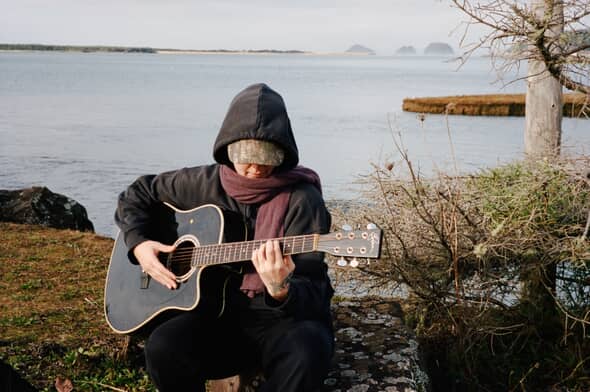
Also, when I was young, I had a tragedy in my life that led my family members to be pretty concerned for me and my mental health. They enrolled me in a Yoga training. It was this old school Yoga studio, with all these really old hippies in Ohio. It was really bizarre, but I became completely enthralled in it. My formal college training in ecology definitely does inform the way that I am able to just be in a place and definitely informs my writing. I mean a lot of the stuff that I read for leisure is Buddhist psychology, yogic philosophy, stuff like various nature writers, so I think that it all does inform it.
The album cover is really special because you went through a School of Rock class to find it. How did that work, and also, having not just someone else, but a kid make the art, the first thing everyone sees when they come across this album, did that bring any new meaning to you about the project as a whole?
My partner, Nathan, works at School of Rock, and I don’t know any of these kids, but I hear about them – all the hilarious things that they say and how amazing they are at drums. I kept throwing around like, ‘Okay, am I gonna do the album art? Should I just do a collage? Or who would I ask?’ Then one day I asked Nathan how School of Rock would feel about me hanging a flyer about an album art contest, and they said it was fine, so I made a flyer. All it said on it was, ‘Do you want to design an album cover for a band? Have your parent email me your drawing. Winner gets $50’. I got so many more submissions than I thought I would get and all of it was so beyond what I ever thought that it would be. I mean, some kids made sculptures and all sorts of crazy stuff. It was really hilarious and just so sweet. It exceeded my expectations for sure. I just remember when I saw the one that I chose for the cover I was like, that’s it.
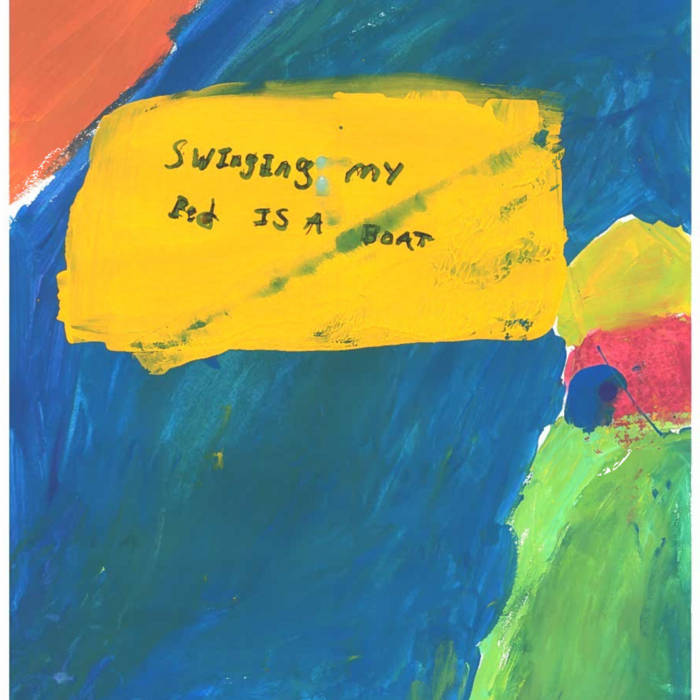
Juju is 9, and she is a drummer, and she’s super adorable, and her dad is awesome. It feels so wise the way that she interpreted it. I just remember looking at it, like, ‘Wow, that’s crazy. You’re like a little teeny, tiny baby’. I think that the artwork is kind of like a collaborative effort between me and a parent and a child. There’s something about it that makes me feel really honored that the parent was willing to participate in it, and that this kid sat down and took the time to draw something. I was told that she spent the $50 on new skateboard wheels and ice cream. I think about that when I look at it. It has this weight to it that I can’t really explain. But it definitely means a lot to me that it worked out how it did.
You can listen to My Bed Is A Boat anywhere you find music as well as order a CD via Addendum Records.
Written by Shea Roney | Photos Courtesy of Swinging

 the ugly hug