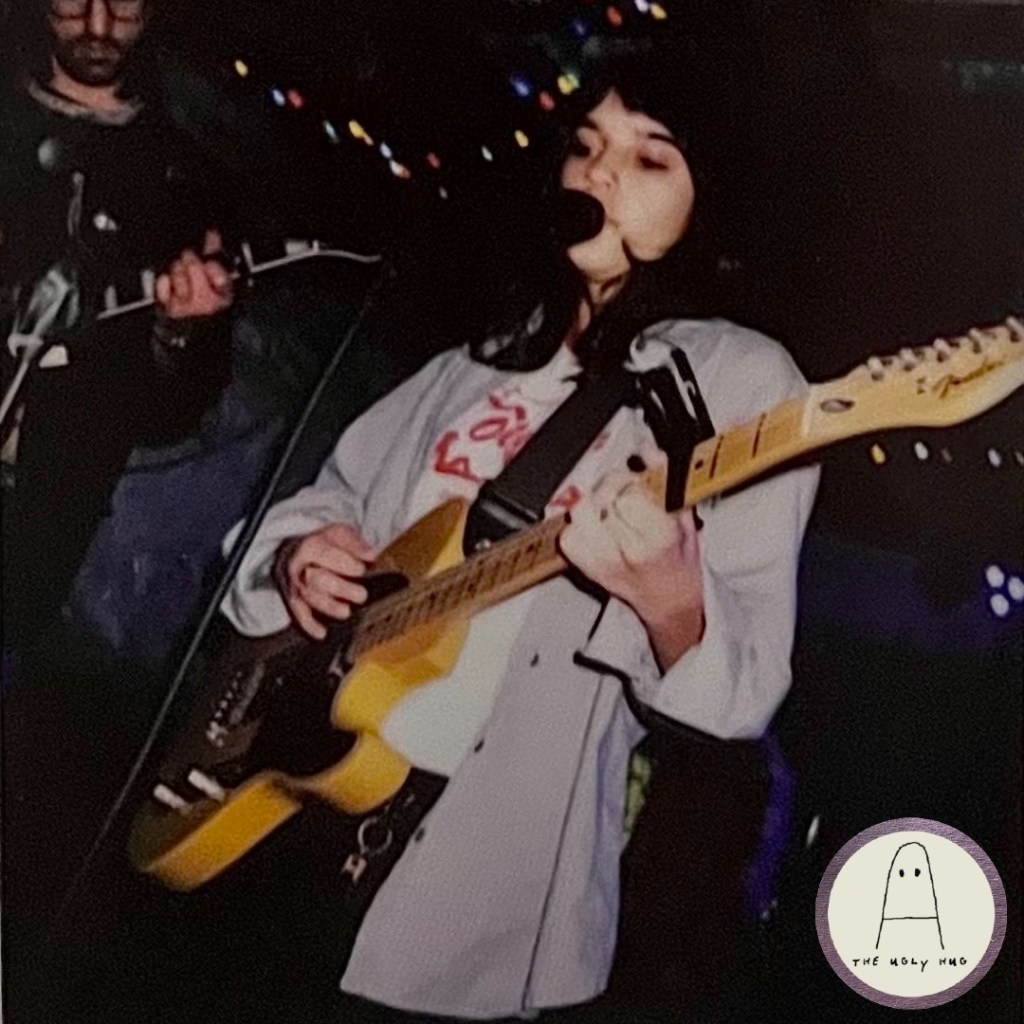
Mila Moon has always been a project that decomposes any sense of formulation, grifting amongst Isabella Feraca’s innate intuition and maturing senses. Beginning as a solo project back in 2021, finding solace in the new sounds that she would create on a whim, Mila Moon has since found new meaning in her life. And as of a few weeks ago, Mila Moon shared “In Transit”, the fourth album from the Pittsburgh-based songwriter, finding the project coming into full harvest as Feraca continues to define the space it occupies as something more reflective of where she is now.
“In Transit” becomes a vehicle in and of itself, trekking through soundscapes of genre-bending fascinations, as Feraca makes thoughts and goals feel like destinations to be met and explored. As a listener, we are taken along for the ride, accompanying the various new routes that Mila Moon travels down; finding the alt-country nods of “why” and “less” play out like familiar landmarks, while the electronic backbone of “Reprise” becomes a scenic route to the more hearty and boisterous guitar work of songs like “Bored” and “Drive Through”. It’s an album that beams with confidence as In Transit also finds Feraca bringing in a few collaborators, including a duet from Chicago’s Henry Tartt of Memory Card on the opening track “The Half”.
We recently got to catch up with Feraca to discuss the heart of In Transit, the practice of writing a ‘song’, and continuing to grow with Mila Moon.
This album has been edited for length and clarity.
So it’s now been a few months with In Transit out there. How are you feeling about it all? How’s it sticking with you?
I feel really good about that album. We’re preparing for a few shows and finally playing some of those songs live. I feel really good about the feedback that people have given me, and I’m excited to keep going in that direction and write more.
This album definitely feels like you’re really coming into this project with a lot of confidence, like exploring different sonic avenues or bringing in a few collaborators. What aspects of making this album are reflective of where you’re at in your life, both personally and as an artist, too?
Well, bringing in collaborators is definitely reflective of my life creatively. Before this record, I was trying to do everything myself. I don’t know why, I guess I had an image of how I wanted things to sound, and I really just wanted to do it myself. But for this record, I wanted to break out of that because I became aware of the limitations that exist in doing it that way. So, at this point in my creative life, I was trying to work on that and bring in other collaborators so I could go outside of those limitations and just make a better project overall. Personally, I just feel like I’ve been moving between different locations and spaces, in transit literally [laughs]. That’s what a lot of the record is about. It’s about literally physically being on trains and planes, and then also feeling that way mentally and emotionally as well.
So you had a clear vision for this project, so when it came to discovering your own limitations creatively, was that something that was easy for you to accept?
I mean, it took a couple of projects, but it’s hard to say. I guess part of why I was not really looking to collaborate that much is because a lot of the records were being recorded in my room whenever I had a chance. I didn’t like sitting on songs that much, so I would just record everything in one take. For this album I sat on songs and showed them to people and got input and recorded demos and then took in other people as well. It did take a little bit to accept, but it was more just looking to approach this project completely differently.
What sort of things did you want to approach differently?
Definitely the songwriting aspect. I feel like on previous records, I wasn’t really writing full songs, just music. But this time I was looking to write songs that could be recorded and reproduced. It was more trying to write the actual song, and maybe just recording a simple demo, and then coming back to it and figuring out how I want the final recording to sound.
It’s a very expansive collection of sounds, exploring bits of alt-country, some electro, methodical interludes, and really just more boisterous guitar work than your previous work. What things did you find yourself wanting to explore more sonically, and what new avenues were you finding comfort in that you explored?
I was definitely wanting to explore the alt-country sound. A lot of Wilco, Frog, Neil Young, and all of that. I’ve gotten to a point where I really like that sound and I like how it suits me. A lot of times my music takes shape in what I’m really into. So that’s probably why I did find comfort in that. And as I’ve started writing other new music, I’ve been exploring different sounds on different projects. But I’ve definitely found comfort in these new things, and it’s something that I want to pursue going forward.
As you said earlier, being more comfortable sitting with these songs longer, did that spark any of the different avenues that you explored, and maybe wouldn’t have originally thought to go down before?
I can remember writing a song, sitting with it, and then later, coming back to it and adding something crazy to it. Like that song “Reprise”, the last bit of it is this really insane electronic stuff that I was just playing with. I was sitting on that song for a while, and I re-recorded it like three times. I just really liked the chord progression. It’s a reprise of the second song on the album, “Scratch”. I was really unsure of how to finish it and make it exciting. But that song is definitely a product of sitting with it longer.
Does it feel finished to you now that it’s got a new life to it?
Honestly, yeah. When I added that part, I was like, ‘this is it’ [laughs]. I thought it was fun, and a lot of this album was just me trying to have fun and to play with it a little bit, just not take it too seriously.
Does it feel like you accomplished that?
Definitely. I feel like it’s a really good mix of playfulness and also seriousness.
I know the instrumentals of a Mila Moon project are very crucial, where the lyrics weren’t necessarily your biggest priority when you were first starting to write. Do you find yourself putting more weight on the lyrics that you write now to accompany these instrumentals?
Definitely. I think that goes with what I was saying about trying to write songs, where a lot of them started out with either just words or me on the guitar, just really simple bare bones stuff. Whereas Prior, when I wasn’t really focusing on the lyrics, it would be a lot more about recording an instrumental that I really liked, and then just adding words that sounded good to it. So this time there’s a lot more weight on the lyrics and just making them cohesive songs.
With the idea of being in transit a lot, what stories did you want to get across when pairing your focus of instrumentals and newfound focus of lyricism on this record?
A lot of the stories are about movement. There’s a lot of songs about me riding the train from my house here in New Jersey to New York. I was just on the train a lot, and it would be this bridge between here and the things happening there that were also in my life. It’s kind of a mosaic of different stories of my life from the past year or so. It’s not a concept album or anything, but more just pieces of things that were happening. But I was really focused on trying to translate things from my life into a song, rather than the more abstract lyrics that I was writing before.
Okay, so you’re in New Jersey now?
I go to school in Pittsburgh, which is usually where I’m based. But I’m home right now in New Jersey and every time I’m in New Jersey I’m going into the city for various things.
Do you feel settled at all? I know you’re still moving around, but with this album out, are you feeling settled as a project, or just where you’re at?
Honestly, yeah. I think before, I wasn’t really sure of what direction to take. I wasn’t even sure if I wanted to keep the Mila Moon project, or just abandon it because it’s so old. I started it when I was 16, and it’s just taken so many different forms that sometimes I don’t even know if I want to keep with this or just start something else. But I think with this record, especially with the love that it’s gotten, I’m going to keep going in this direction and see what happens.
I understand wanting some distance from something you made when you were 16. So how did this album help you get over that hesitation and decide to keep the name?
Mila Moon has sort of become less of my alter ego and more of a project that incorporates other people, which is what this album was about. I think that helped me to grow into it more. And having my friends who are in the band really embrace the name has really helped me feel more attached to it, and just feel better about what it is, and less of my 16-year-old alter ego. It’s become more of a project that’s growing and putting out records that I’m proud of.
You can listen to In Transit and all other Mila Moon projects out everywhere now!
Written by Shea Roney | Photos Courtesy of Mila Moon
 the ugly hug