In the dimly lit basement bar of Neptune’s in downtown Raleigh, the crowd fell into a hushed reverence as the band began to play. Cramped onstage even more than the audience, they filled the room with Andrew Dowdy’s distinctive vocals, carried by a rich composition of pedal steel and fiddle—country-soaked tones that swelled beautifully with each song. It was an intimate, immersive moment, and I was hooked. Though I had heard Fust’s name mentioned in conversations about North Carolina’s music scene, this show, a part of last fall’s Hopscotch Festival, was my true introduction—and it couldn’t have been a better one.
Since discovering them, I have been immersed in their music. Their latest release, a collection of demos titled Songs from the Rail earned a spot on my most memorable list of 2024, while their last true album, Genevieve, is one of my favorite records of recent. Led by singer Andrew Dowdy, of Durham, NC, Fust is deeply rooted in the Appalachian Mountains of Virginia and West Virginia where Dowdy’s origins lie. He draws from these roots to explore what it means to be from the American South—more specifically Appalachia. On Big Ugly, Fust expands their sound, reaching louder and greater heights, while the album’s themes plunge into deeper lows than any of Dowdy’s previous work. Each song reads like the journal of some lost author, peering deeply into Dowdy’s mind and memories. Continuing the region’s rich and integral storytelling tradition, this album takes the form of modern-day folk ballads, preserving local history and passing down the gritty realities of Appalachian life to future generations.
Joining Dowdy on Big Ugly are Avery Sullivan (drums, percussion), Frank Meadows (piano, percussion), John Wallace (guitar, vocals), Justin Morris (guitar, pedal steel, vocals), Libby Rodenboug (fiddle, vocals) and Oliver Child-Lanning (bass, vocals, dulcimer, synth).
Together, they craft a dynamic sound on Big Ugly spanning from fuzz-filled tracks like “Mountain Language”—where producer Alex Farrar also sits in on guitar and lap steel to complete the arrangement—to driving drum tracks and roaring guitars reminiscent of Drive-By Trucker songs. On the other end of the spectrum is “Sister”, one of the album’s most haunting tracks. Its more stripped-back composition brings the fiddle and pedal steel guitar to the forefront, with the fiddle scratching along as Dowdy’s vocals drop to a lower register, delivering devastating lyricism. Further expanding the album’s sonic landscape are the contributions from Dave Hartley of the War on Drugs on synths and John James Tourville of Deslondes on pedal steel.
Throughout the album, Dowdy’s distinctive vocals are augmented as they are layered over with his own voice, as well as those of his bandmates, creating a haunting, almost choral-like effect. Dowdy’s vocals are complemented by a deep, resonant bass and the higher-pitched harmonies of Libby Rodenbough on many tracks, along with a duet with fellow Appalachian artist, Merce Lemon, on “What’s-His-Name”. The album’s ethereal vocal quality feels fitting for songs that deal with memory—like ghosts lingering in the past. Real people and places from Dowdy’s life come to life through lyrics about gas stations, demolished hospitals, and highways, all while grappling with the reality that these things have been lost to time. The songs are a testament to Dowdy’s love for the kinds of things that make up who we are, while they are with us and once they’re gone. The things that now exist only in memory, like a worn-out photo carried close, fading yet never forgotten.
Songs like “Mountain Language” lament the poverty of Southern life while yearning for a time when home was untouched by that pain. Dowdy sings, ‘But if we can make it up the mountain again / We’ll be back with country friends / And there’ll be language on the mountain again / Oh what country, friends, is this?’ The final line is a direct reference to Shakespeare’s Twelfth Night, where Viola, shipwrecked in an unfamiliar land, speaks the play’s first words: ‘What country, friends, is this?’ Like Viola, Dowdy channels a sense of disorientation, searching for a return to the familiar past he once knew. Yet, the ever-changing reality of Appalachia renders this impossible—what was once home has become an unrecognizable landscape.
On “Gateleg”, Dowdy further shows off his songwriting and storytelling ability further, with a Hemmingway-like restraint in its lyrical content. He references Bob Dylan’s Maggie’s Farm for the chorus taking “I ain’t gonna work on Maggie’s Farm, no more/No, I ain’t gonna work on Maggie’s Farm, no more” flipping it to say “You ain’t gonna work on the line, no more/You’re gonna work for Maggie’s store”. Dowdy paints a picture of a relationship in the face of poverty, defined by the backdrop of wood burning stoves, convenience stores, and broken-down cars, propped up on cinder blocks.
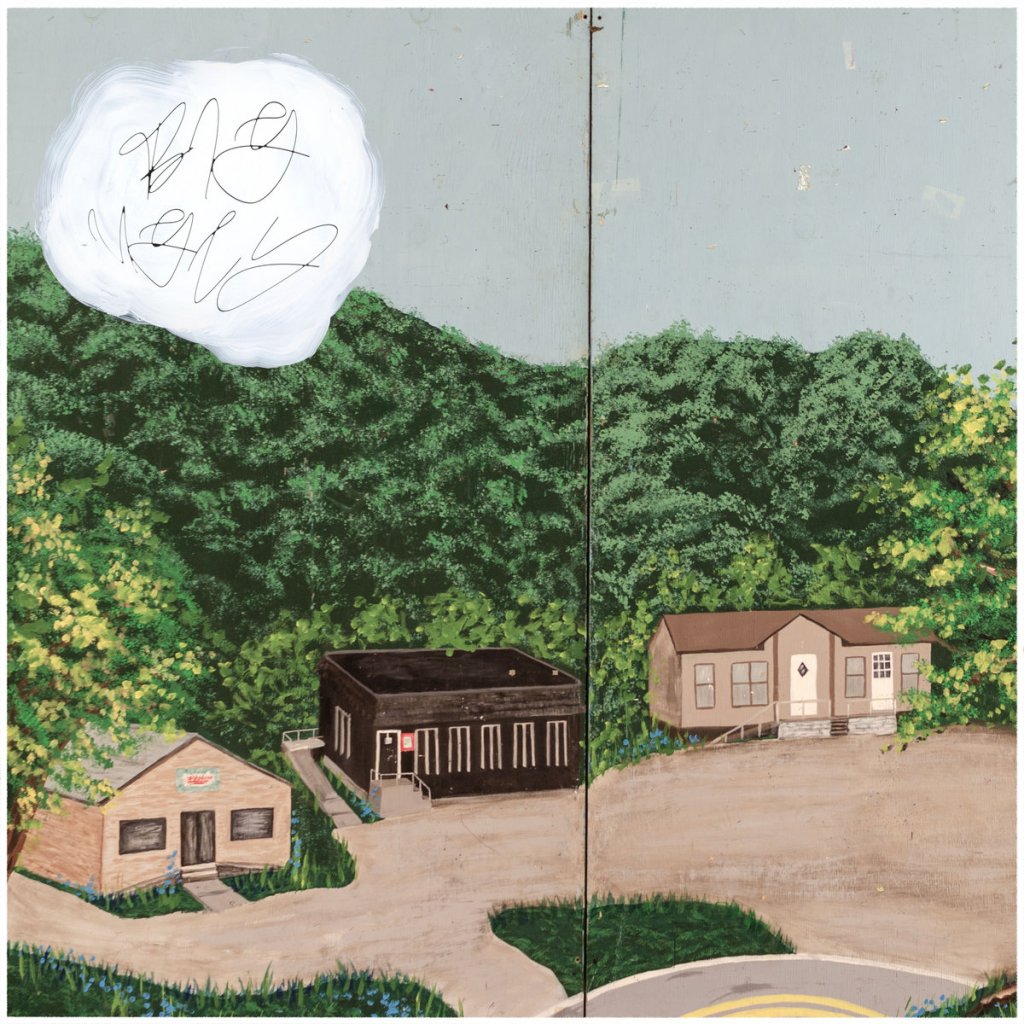
Fust captures the contradiction of rural Appalachia—the stark contrast between poverty, drug abuse, and environmental devastation, brought on by exploitation of the region, and the enduring beauty of green rolling mountains, deep-rooted traditions, and the resilience of its people. The album takes its name from a community located in one of the poorest census tracts in one of the poorest counties in West Virginia. Its cover art features a photograph of a mural from the Big Ugly Community Center, originally painted as a backdrop for a student play that told the stories of local families. The image serves as a perfect accompaniment to the record’s themes— a testament to both the ability and the necessity of creating beauty in the face of ‘ugliness’.
Given that Fust’s last two albums were among the best releases of the past two years, I was admittedly apprehensive about whether Big Ugly could live up to its predecessors. It has—and then some. With this record, Andrew Dowdy has firmly established himself as one of today’s great songwriters. As Fust embarks on tour, I would highly recommend seizing the opportunity to experience their music live—I know I definitely am.
Big Ugly is out on all platforms now. You can order a vinyl or CD copy of Big Ugly via Dear Life Records.
Written by Will McRae

 the ugly hug