Written by Shea Roney | Photo Courtesy of Thomas Dollbaum
Every Wednesday, the ugly hug shares a playlist personally curated by an artist/band that we have been enjoying. This week we have a collection of songs put together by the New Orleans-based songwriter, Thomas Dollbaum.
Dollbaum is set to release his next album, Birds of Paradise, later this week; a collection that rears through restless thoughts, unfettered folk tunes, old conversations and the sweats from last night’s whisky. Although bound to the past, Dollbaum’s writing becomes synonymous with the scenery and its dwellers as he drives forward, the telephone poles tallying the distance that grows between him and what’s being left behind. It’s not an album of regret, or one of hope for that matter. But rather one dedicated to finding ground below your feet for the first time in a while. One of flubbing around on the guitar until a familiar melody squeaks out. Where memory becomes a practice of good faith and mark of a life lived.
Today, Dear Life Records and Pretty Purgatory share Songs of Hope for Gaza, a collection of songs by 33 artists written in solidarity with Palestine. The comp consists of artists such as Little Mazarn, Thanya Iyer, Tashi Dorji, Ava Mirzadegan, Lady Queen Paradise, Ther, Adeline Hotel, and many more. In his essay titled “Notes on Craft: Writing in the Hour of Genocide”, Fargo Tbakhi says, “creative work readies us for material work, by offering a space to try out strategies, think through contradictions, remind us of our own agency.” That agency becomes the benchmark of our community, to be able to gather in shared space, utilize our tools, to connect, to listen, to lift voices, to create and to call for collective action.
You can pre-order the full album on bandcamp now for any amount you can give. The full compilation will be released on October 28th. All proceeds from this compilation will go to ANERA to support humanitarian aid and emergency relief in Gaza and beyond.
In a mission statement by the compilation’s curator, Liza Victoria, she says;
“Songs of Hope For Gaza is a compilation organized as an effort to join together as a music community to write music in solidarity for Palestine. Each musician was given a call to action to write a protest song of their own interpretation, in solidarity with Palestine. The cover painting & title is a nod to Bottles of Hope For Gaza, where in Egypt, bottles containing rice, flour, and beans were thrown into sea in hopes that they would reach the shores of Gaza. In organizing this project, I hope to offer encouragement to anyone in the music community, to speak up in song and to utilize our collective power. I believe it is vital to our own hearts, and our lives as artists, to empathize and show empathy to this cause.”
The track list of Songs of Hope for Gaza is a collection of 33 original songs written in solidarity with Palestine. The collection was mastered by Hamilton Belk.
Katie-Krysta
In The Olive Tree- Thanya Iyer
In Palestine- Christy Armstrong
Worse Than Bombs- Matt Bachmann
Sunbirds- Will Stratton
Carolina Wren- Ava Mirzadegan ft. Jason Calhoun
It Is Within You Where The Falcon Sang/ May All The Ancient Olive Trees Return Tashi Dorji
Epitaph- שאַנדע (Shande)
Nana’s Story- Guy Capecelatro III
This Very Hour- Little Mazarn
Sunbird- Stephen Kerr
The Economics Of Despair Pt. 1- Ther
The Economics Of Despair Pt.2- Lady Queen Paradise
Twila Ping- Blood Things
Sand Castles- Lisa/Liza
Precious Memory- Liam Grant
Bound To Live-Adeline Hotel
Enduring Silence – Peter McLaughlin
How Do We, Country – Ava Brennan
Nothing Fire in the Sky part II- Dee Dee and the Weeds
Two Parts-Tremolo Fields
BREAD- Young Moon
Setting Ourselves on Fire- Sam Pawlowski
All On The Lake- Amelia Riggs
Humanity- Good Good Blood
A Balm For Those Hearts Burnt and Burning Still- Mellifer
Ice Fall- Florida Ghost
The Birds Never Ask if They Deserve to Exist – Slow Hymn
Live Triptych for Gaza- Haven’s Den
Weird Dream- Glass Machine
Sending Heart- Josh Burkette
Arena- Jacob Augustine
War Cry– Asher Platts
Listen to Songs of Hope for Gaza now premiering here!
There are also statements from the artists that are featured in this collection about their own interpretations of a protest song and what it means to be in solidarity.
“This song is actually bits and pieces of conversations had about the flood in Central Texas a few weeks ago in which many children perished. One of my friends offered a prayer to the grieving parents, that children’s spirits fly to the afterworld faster than most. This conversation has been deeply intertwined with many conversations here about climate change and the need to grieve the natural world we once knew in order to adapt and live into the future. When asked if I would write a song in solidarity with Palestine, these conversations glowed bright in my mind as we here in Texas grieve the catastrophic loss of life from the flood. We are all connected in our joys and sorrows, the marrow of our days. May we walk together towards peace. This very hour.”
– Lindsey Verrill of Little Mazarn
“and the lens is a gun
hope like the sun
resistance in the make up
of water and love
water and love”
– Lyrics from “Blood Things”, Twila Ping
“This song is about the lengths that people/news media/the US and other countries countries will go to avoid witnessing genocide. But also, the ways I too unsee Palestinian death; how reading about starvation is now part of my morning routine, but my days go largely unchanged. I appreciate being a part of this compilation and other actions in solidarity with Palestinians as a way to feel less alone in my witnessing and hopefully bring some mobilization, no matter how small, towards change/relief/ending genocide and occupation.”
– Matt Bachmann
“Anas Al-Sharif was assassinated by Israel. In his last will, he said, “If I die, I die steadfast upon my principles.” We can decide to always be this clear about what we stand for.”
– Lady Queen Paradise
“songs, like history, often rhyme. when we bring struggle home and in our hearts, we create echoes of dreams that predate us, we carry them best when we do it together“
– Ther
“When care and safety is an innate human right of all people, it is such a moral imperative to speak up when that is actively being taken away and deprived of through the use of violence, starvation and murder. At this stage, the accounts of injustices enacted by Israel onto the Palestinian people are near innumerable. All people deserve safety, and all children deserve a childhood. Hearing the suffering cries of a baby which cannot be soothed due to severe burns and shrapnel wounds should be enough to mobilize anyone to act and to use their voice. This sound alone I know I will carry for the rest of my life. This is not a war, this is a genocide, and it must end.”
– Christy Armstrong
“The song is a repeated mantra peeking out from the corners of a meditative but jagged soundscape—to kill the body, but not the idea, which is bound to live. I took the words from an old labor poster that sits beside my desk and contains the quote: “it is true, indeed, that they can execute the body, but they cannot execute the idea which is bound to live.” No violence, no war, no terror inflicted by the oppressor upon the oppressed can ever truly destroy the bonds of solidarity or extinguish the flame of liberation.”
– Adeline Hotel
Victoria continues about the comp, sharing, “it was a privilege to work with each of these artists and hear their perspectives and heart show through. I am so grateful for the dedication and time they each put into this. Free Palestine. Thanks to Dear Life Records, Frank Meadows, Peter McLaughlin, Chel Painting, Hamilton Belk, Pretty Purgatory, Ava Mirzadegan, & to all the musicians involved.”
You can preorder Songs of Hope for Gaza via Dear Life Records and Pretty Purgatory now with all proceeds going to ANERA.
Every Wednesday, the ugly hug shares a playlist personally curated by an artist/band that we have been enjoying. This week we have a collection of songs put together by Francie Medosch of the Philly-based project Florry.
This Friday, Florry is set to release their sophomore album Sounds Like… out via Dear Life Records, establishing the group in its fullest, and quite naturally, most rockin’ form yet. The music of Florry is pronounced in simplicity. Not of musical structure or emotional depth, but rather the way in which these songs stick to you and your surroundings with such ease; the simplicity of what can be the true pleasures in life. With rowdy guitar work and bona fide melodies, Florry plays like a shoot-the-shit with your closest friends, a pile of beer cans from the night before, a scenic route with good company, or a full tank of gas and no destination ahead.
Every Wednesday, the ugly hug shares a playlist personally curated by an artist/band that we have been enjoying. This week we have a collection of songs put together by Durham-based artist Aaron Dowdy of the group Fust.
Today we would like to welcome you all to the “Big Ugly Hug”, a celebration of Fust’s third album Big Ugly, shared last month via Dear Life Records. With a name built on contradictions, one that offers limitless imagery, Dowdy’s use of storytelling is unshaken by truth, letting intentionality mix with what has been right in front of us all along, but tapping into the heart that often gets left behind. It’s an album of hardships and traditions. An album of friends and the ghosts that we have not been acquainted with yet. It’s an album of flaws and retribution, not to overlook the moments of goodwill and tales of redemption. It’s a piece of historical contribution, bringing old stories out to get a peak at life once more.
About the playlist Dowdy shares;
I am excited for this big ugly hug. not exactly preliminary notes but things i’m thinking about now that big ugly is done and i am dreaming of the next record. kind of two sets here: the first ten are sort of electric and the second sort of acoustic. the first set is harsh and I’m trying to figure out their harshness. the second set i can’t even begin to play, they totally elude me, and they are songs I sing along to in languages i don’t speak. we’ll see what happens.
Listen to Aaron Dowdy’s playlist here;
You can listen to Big Ugly out everywhere now.
Written by Shea Roney | Featured Photo by Merce Lemon
In the dimly lit basement bar of Neptune’s in downtown Raleigh, the crowd fell into a hushed reverence as the band began to play. Cramped onstage even more than the audience, they filled the room with Andrew Dowdy’s distinctive vocals, carried by a rich composition of pedal steel and fiddle—country-soaked tones that swelled beautifully with each song. It was an intimate, immersive moment, and I was hooked. Though I had heard Fust’s name mentioned in conversations about North Carolina’s music scene, this show, a part of last fall’s Hopscotch Festival, was my true introduction—and it couldn’t have been a better one.
Since discovering them, I have been immersed in their music. Their latest release, a collection of demos titled Songs from the Rail earned a spot on my most memorable list of 2024, while their last true album, Genevieve, is one of my favorite records of recent. Led by singer Andrew Dowdy, of Durham, NC, Fust is deeply rooted in the Appalachian Mountains of Virginia and West Virginia where Dowdy’s origins lie. He draws from these roots to explore what it means to be from the American South—more specifically Appalachia. On Big Ugly, Fust expands their sound, reaching louder and greater heights, while the album’s themes plunge into deeper lows than any of Dowdy’s previous work. Each song reads like the journal of some lost author, peering deeply into Dowdy’s mind and memories. Continuing the region’s rich and integral storytelling tradition, this album takes the form of modern-day folk ballads, preserving local history and passing down the gritty realities of Appalachian life to future generations.
Joining Dowdy on Big Ugly are Avery Sullivan (drums, percussion), Frank Meadows (piano, percussion), John Wallace (guitar, vocals), Justin Morris (guitar, pedal steel, vocals), Libby Rodenboug (fiddle, vocals) and Oliver Child-Lanning (bass, vocals, dulcimer, synth).
Together, they craft a dynamic sound on Big Ugly spanning from fuzz-filled tracks like “Mountain Language”—where producer Alex Farrar also sits in on guitar and lap steel to complete the arrangement—to driving drum tracks and roaring guitars reminiscent of Drive-By Trucker songs. On the other end of the spectrum is “Sister”, one of the album’s most haunting tracks. Its more stripped-back composition brings the fiddle and pedal steel guitar to the forefront, with the fiddle scratching along as Dowdy’s vocals drop to a lower register, delivering devastating lyricism. Further expanding the album’s sonic landscape are the contributions from Dave Hartley of the War on Drugs on synths and John James Tourville of Deslondes on pedal steel.
Throughout the album, Dowdy’s distinctive vocals are augmented as they are layered over with his own voice, as well as those of his bandmates, creating a haunting, almost choral-like effect. Dowdy’s vocals are complemented by a deep, resonant bass and the higher-pitched harmonies of Libby Rodenbough on many tracks, along with a duet with fellow Appalachian artist, Merce Lemon, on “What’s-His-Name”. The album’s ethereal vocal quality feels fitting for songs that deal with memory—like ghosts lingering in the past. Real people and places from Dowdy’s life come to life through lyrics about gas stations, demolished hospitals, and highways, all while grappling with the reality that these things have been lost to time. The songs are a testament to Dowdy’s love for the kinds of things that make up who we are, while they are with us and once they’re gone. The things that now exist only in memory, like a worn-out photo carried close, fading yet never forgotten.
Songs like “Mountain Language”lament the poverty of Southern life while yearning for a time when home was untouched by that pain. Dowdy sings, ‘But if we can make it up the mountain again / We’ll be back with country friends / And there’ll be language on the mountain again / Oh what country, friends, is this?’ The final line is a direct reference to Shakespeare’s Twelfth Night, where Viola, shipwrecked in an unfamiliar land, speaks the play’s first words: ‘What country, friends, is this?’ Like Viola, Dowdy channels a sense of disorientation, searching for a return to the familiar past he once knew. Yet, the ever-changing reality of Appalachia renders this impossible—what was once home has become an unrecognizable landscape.
On “Gateleg”, Dowdy further shows off his songwriting and storytelling ability further, with a Hemmingway-like restraint in its lyrical content. He references Bob Dylan’s Maggie’s Farm for the chorus taking “I ain’t gonna work on Maggie’s Farm, no more/No, I ain’t gonna work on Maggie’s Farm, no more” flipping it to say “You ain’t gonna work on the line, no more/You’re gonna work for Maggie’s store”. Dowdy paints a picture of a relationship in the face of poverty, defined by the backdrop of wood burning stoves, convenience stores, and broken-down cars, propped up on cinder blocks.
Fust captures the contradiction of rural Appalachia—the stark contrast between poverty, drug abuse, and environmental devastation, brought on by exploitation of the region, and the enduring beauty of green rolling mountains, deep-rooted traditions, and the resilience of its people. The album takes its name from a community located in one of the poorest census tracts in one of the poorest counties in West Virginia. Its cover art features a photograph of a mural from the Big Ugly Community Center, originally painted as a backdrop for a student play that told the stories of local families. The image serves as a perfect accompaniment to the record’s themes— a testament to both the ability and the necessity of creating beauty in the face of ‘ugliness’.
Given that Fust’s last two albums were among the best releases of the past two years, I was admittedly apprehensive about whether Big Ugly could live up to its predecessors. It has—and then some. With this record, Andrew Dowdy has firmly established himself as one of today’s great songwriters. As Fust embarks on tour, I would highly recommend seizing the opportunity to experience their music live—I know I definitely am.
Big Ugly is out on all platforms now. You can order a vinyl or CD copy of Big Ugly via Dear Life Records.
Every Wednesday, the ugly hug shares a playlist personally curated by an artist/band that we have been enjoying. This week we have a collection of songs put together by Philly-based composer, multi-instrumentalist, producer and Founder of Dear Life Records, Michael Cormier-O’Leary.
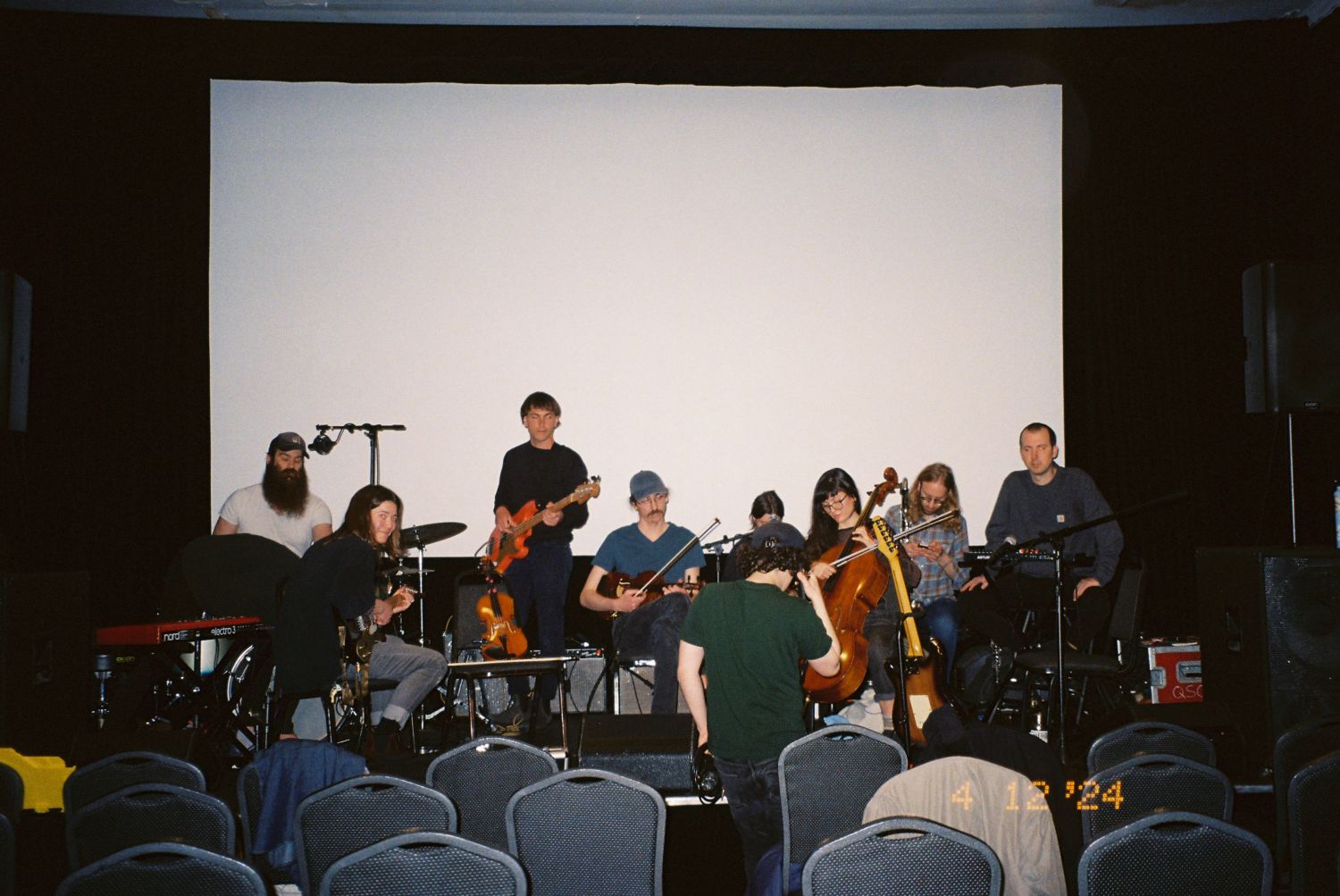
Along with contributions to beloved projects such as Friendship and 2nd Grade, Michael also leads the remarkable chamber folk ensemble, Hour. Following the critically acclaimed release of Ease the Work, Hour recently announced the arrival of Subminiature, a live tour document curating two years of DIY show performances and offering a culmination of the project’s seven years of dynamic work.
The first snippet shared from Subminiature is lead single, “At the Bar Where You Literally Saved Me from Fatal Heartbreak (Live at Philamoca, Philadelphia, PA, 4/12/24”, accompanied by a live concert video directed by Matt Ober. Watch below.
Michael put together a playlist of some of his favorite film music, a lot of which has inspired Hour in many ways. Listen below!
Hour is made up of many familiar faces from the Philly scene and beyond, with Subminiature featuring players such as Jacob Augustine, Jason Calhoun, Em Downing, Matt Fox, Peter Gill, Lucas Knapp, Evan McGonagill, Peter McLaughlin, Keith J. Nelson, Erika Nininger, Abi Reimold, Adelyn Strei
Set to be released on Valentine’s Day of this year, Hour will celebrate Subminiature with an extensive month-long tour across the U.S. You can preorder Subminiature now, including a limited edition cassette and CD run by Dear Life Records.
Written by Shea Roney | Photo by Michael Cormier-O’Leary
Earlier this year, the Philadelphia instrumental ensemble Hour released their latest album, Ease the Work, a collection that soars with dynamism and passion, striking both communal and critical acclaim across the board. Made up of ten multi-instrumentalist who perform and record live, Hour is composed and produced by leader Michael Cormier-O’Leary (Friendship, 2nd Grade, Dear Life Records). Today, the group returns with two new songs “Saturday After Payday” and “Absence is a Heady Spice”.
Photo by Michael Cormier-O’Leary
These two songs were recorded as part of the Ease the Work recording session at the Greenwood Playhouse on Peaks Island, off the coast of Portland, Maine, in which the group had to take a ferry to get to with an entire studios worth of equipment. The songs were ultimately left off of the album, yet remained a solid pairing to be released at a separate time.
Playing with a tempered progression, “Saturday After Payday” begins with a steady piano, undeterred with its direction as a string quartet and an electric bass add a firm, yet suave voicing. The track was recorded live by an eight piece iteration, and is “indebted to the work of some classic French pop arrangers, most notedly Jean-Claude Vannier.”
Like the old family heirloom pianos, “Absence is a Heady Spice” holds weight within the simplicity and unevenness, each note played is met by a release – the tension of the sticky keys relieving pressure from the years of use on the piano’s inner workings. “Being the only solo piano piece in a collection of compositions for large ensemble,” Cormier-O’Leary says, “I thought it was funny to name the piece “Absence is a Heady Spice”. Like, ‘where’d the band go?’”
“Saturday After Payday” and “Absence is a Heady Spice” are now available to stream on all platforms. Purchase the two songs here.
Hour is made up of Jason Calhoun (synth), Michael Cormier-O’Leary (guitar, percussion), Em Downing (violin), Matt Fox (viola), Elisabeth Fuchsia (violin), Peter Gill (bass), Lucas Knapp (radio effects, field recordings, piano), Evan McGonagill (cello), Peter McLaughlin (drums), Keith J. Nelson (bass clarinet, clarinet), Erika Nininger (piano, rhodes) and Abi Reimold (electric guitar).
Anne Malin Ringwalt, who performs and writes under the name Anne Malin, is an absorbing artist and poet, branching through a career that is transcending of any boundaries as her art collects upon her most basic instincts as an individual. Following 2022’s album, Summer Angel, the North Carolina artist returns today to Dear Life Records to announce her fifth album, Strange Powers! (due 10/25) as well as share its first single, “River”, along with an accompanying music video.
Pivoting within an ever vivid sense of self, “River” becomes part of Ringwalt’s journey towards recovery, as she rebuilds trust in the earth and feels its reciprocation. In a bloom of violin played by Lily Honigberg, both cinematic yet simple, “I saw my heart beating in a river and left it there for the earth to save / Some muscle wet in the weeds, and flooded through still I will sing” – rests with some weight on top of Ringwalt’s fingerpicking as her articulated vocal expressions ebb and flow with such delicate intention as the track breathes in and out without congestion, immortalizing these moments of calming reassurance and understood fear amongst its wandering pace.
“River” is accompanied by a music video shot by Abby Jones at Eno River and Jordan Lake in Durham, North Carolina in a spurt of pouring rain. Shot on super 8, the video becomes a representation of solitude, as Ringwalt moves across the natural landscape, falling into the spirit of the enduring earth and the timeless warmth of the tape’s hue.
“River” is also used as a bridge that joins the release of Strange Power! and What Floods, a new book-length poem written by Ringwalt published by Inside the Castle.
Last week, Lindsay Reamer shared with us her debut LP, Natural Science via Dear Life Records; a new body of work that introduces the Philly-based artist to the forefront of conversations within the indie-folk world. “There’s a strange smell in the air / Something like spring, something rare / I’ve walked this way many times before / The houses look the same but I know my door”, she sings with vivid recognition over lightly plucked strings on the album opener, “Today”. Soon falling into a tender folk groove of sticky piano notes and driving drum fills, a collage of textured strings paint the backdrop of not just this song, but setting the scene for an entire album animated by presence, pushed by artistry and driven by sincere intention.
In the scope of traditional folk stylings, Natural Science is rooted in the day to day – what comes around goes around in the name of genuine storytelling. As a former field scientist, traveling through the cinematic landscapes of the American National Parks and the often forgotten in betweens, Reamer’s writing revels in her emotional calculations, visual observations, and understanding of the small things that make life so unique. With constant movement, the lead single “Figs and Peaches”, featuring Eliza Niemi on cello, plays to the summer romantics and pop-hook lamenters that thrive in the thick sunny air. “Gardens on the land / Castles on the beaches / I trust my hand and / Pluck my figs and peaches,” she sings with such gratification; an ode to carving your own path, picking your own fruit, defining your own beauty.
With recording help from Lucas Knapp, Reamer has come into her own sound with such open confidence; where deliverances feel rooted to her heart and the sonic branches are given space to grow where they need to go. The dilapidated lo-fi ballad of “John’s Song” or the constructed wavelengths of distorted guitars and trickling strings on “Mushroom House” progress and blend with ease when sandwiched between alt-country pop hooks and riveting folk grooves of songs like “Necessary” and “Lucky”. Even with a nod to the classics, Reamer closes the album with “Heavenly Houseboat Blues”, a cover originally written by Townes Van Zandt and Susanna Clark. Reamer’s rendition though, featuring Peter Gill (2nd Grade, Friendship) on guitar and Jon Samuels (Friendship, MJ Lenderman) on vocals, plays to the most biting elements of those traditional compositions, yet inspirited by her own stylings, before being washed into the sea with harsh natural field recordings, a body of water, and a meandering fiddle that manages to remain afloat till the very end.
Some of the most emotionally fervent moments on the album are displayed within the dualities of reflection; where Reamer simmers in the sweet spot between moments of triumph and setbacks. “Spring Song” is driven by the light and breezy chorus that is meant to be consumed on repeated listens, yet isn’t wrinkled by the defined expectations and disappointments that the song represents. “I’m standing still, I only live to fill the space between / The coming and the going,” she sings on the chorus, where the following “do do’s” hold as much weight as the looming undertones at hand. “Red Flowers” is drowned in passiveness, as Reamer’s poppy reverbed vocals feel to have their own layer of consciousness, watching and listening as life moves quickly past her. “Can you handle the bitterness / Of something real? / Or are you just running from / The scary things you feel,” she sings on the delicate track, “Sugar” – cautious, beautiful and one of the more sobering moments on the album.
Natural Science is a collection that moves at its own pace, and to its credit, the album’s greatest strengths come from those little individual blossoms of patient voicings and unconventional instrumentals that feel enticingly fresh for the genre. Playing God over model trains, eavesdropping of Days Inn gossip, waking up next to day-old take out, overly large prized vegetables, creeping on an ex – Reamer’s dedication to the mundane, brought to life within her broad depth of emotions, is richly beautiful, warmly inviting, super catchy and deeply human; a remarkable debut for an artist that is just getting started.



 the ugly hug