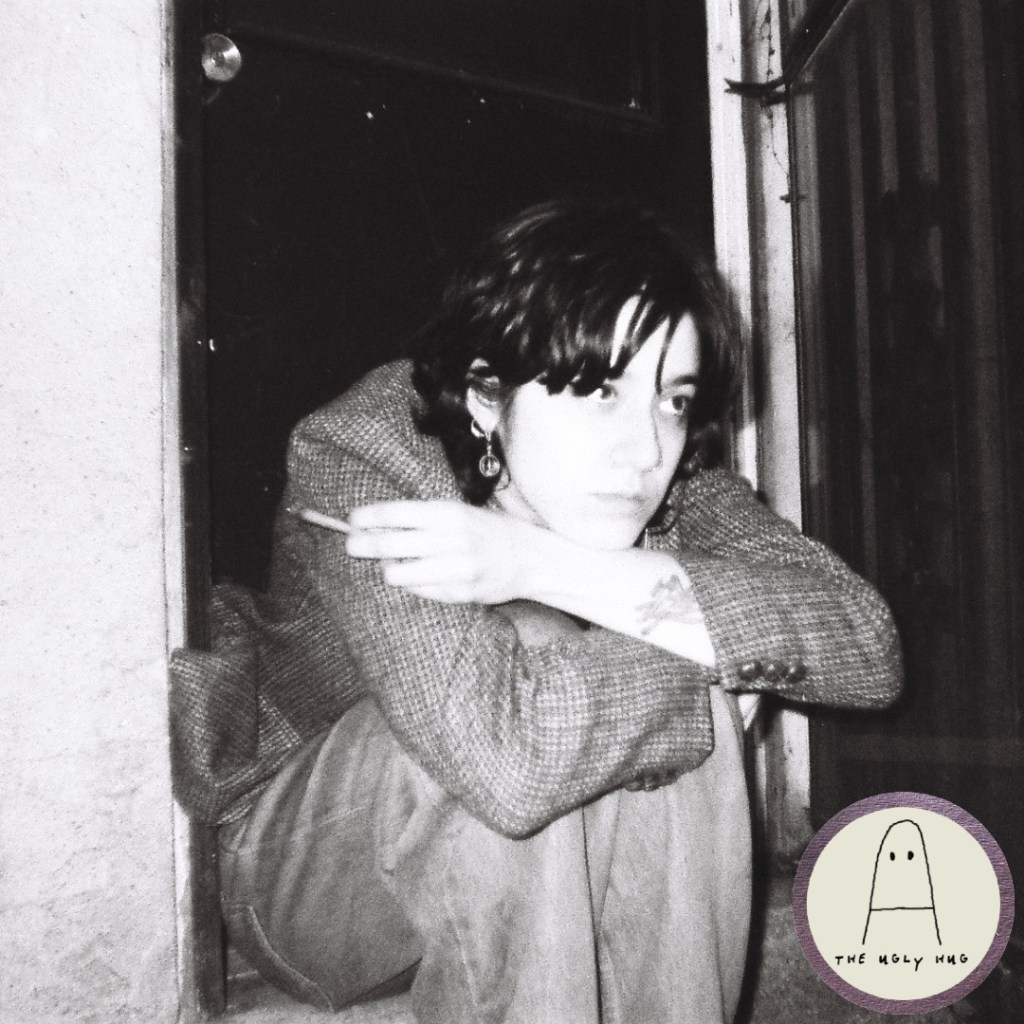
Quietly released on bandcamp in 2023, Philly-based songwriter Hughes Bonilla shared maybe you’ll find me under their project moniker theydevil. Full of vibrant synths and lush green patches of electronic tinkerings, Bonilla created a space in which they can explore with sincerity and confusion, however unequal those two parts may be. These songs feel giddy, easing through the charming hooks that they crafted with both intention and caution, but as a whole, the album’s beauty is indebted to lonely nights, witty interrogations, longing vocations and the ability to recognize how far they have come since then.
Beginning to work on these songs at 19 after moving to Philly, Bonilla’s writing was as reactionary as was vividly aware, compiling life’s influence into one very earnest yet complicated world. Experiencing the gut jab that is being in your early twenties, navigating rogue relationships and shifting identities, these songs became intertwined within a sense of self. Emphasizing presence and perspective, Bonilla’s songs are just as lasting as the bits of yourself you look gracefully back on with a laugh and a sigh.
Now almost two years later, theydevil is reissuing maybe you’ll find me with the help of UK favorites Devil Town Tapes as an exclusive run of tapes. We recently got to sit down with Bonilla to discuss the new life brought into these songs, learning to accept grace and reflecting on maybe you’ll find me with new light.

This interview has been edited for length and clarity.
Shea Roney: So tell me about how this reissue with Devil Town Tapes came to be?
Hughes Bonilla: Jack and I had been following each other for a hot minute, and I had been secretly manifesting something would happen. Then he reached out to me about doing the reissue back in November and he was just like, ‘I personally want this on tape. So, it would be really cool if we just did like a whole thing so that I could have this on tape’ [laughs]. And I’m like, fuck yeah, dude, let’s do like a small run of tapes. And he had the idea of having a bonus track that’s tape exclusive, which initially made me really, really nervous because I feel like there’s a reason why songs didn’t make it on the record, which is that I did not like them. But I sent him like 2 songs to choose from and we both agreed that the bonus track should be “Bruja”. He was really stoked about it and I’m really excited that it’s happening.
SR: Almost two years out now from its initial release, how does it feel to have these songs on maybe you’ll find me see new life? Especially with one that hasn’t seen the light of day yet either.
HB: It’s really exciting mainly because I didn’t expect anything to come of this record. When I put it out, I put it out very hastily. It was something that I had been trying to put together for a long time, and there was drama with my old laptop, like I lost half of the record because my old laptop died, and I just was not expecting anyone to listen to it or pay attention to it. It was something that I put out because I had spent years obsessing over it, and I think in order just for me to move on personally and be able to create other things, I just needed to have this out in the world so that I don’t have to think about it anymore. And now having it on a physical release feels really special. It kind of feels like all of the obsessing that I did was worth it. And it feels cool that it can kind of have a reach that it didn’t have before.
SR: Did losing those recordings change the outcome of the album from how you initially envisioned the project?
HB: It definitely did. There were only a few songs that I managed to salvage, ‘oh, honey’ and ‘the good part’. I basically started from scratch after that and the entire theme of it changed. This was also like pre-Covid, and then when I lost the songs, it was like in the thick of Covid. I had one hell of a time getting a new laptop and my life had changed drastically, too, because of Covid, so the whole record really changed and became something else entirely. Which I think was kind of a blessing in disguise. I think if I had released the other songs that I had been working on, I don’t think I would have been as happy with it. I think that it forced me to make music more intentionally.
SR: Is that where the obsessing came from? Making music with more intention?
HB: Yeah. I was frustrated because I felt like I had a timeline before, and that I was excited about, and then that was completely blown out the window. I had to come up with a new timeline. It was very much this obsessive thing of like, I need to recreate this and get this all together. And there are several songs on the record that came from other songs I had to rewrite and re-record, and there were certain vocal parts that I had lyrics for and really wanted to use, but I wanted to use them in a new way. But I felt like if I didn’t do it then I was just never going to do it. I put a lot of pressure on myself.
SR: In hindsight, do you think you would do it differently now? Would you allow yourself more grace to work with?
HB: Yeah, I’m actually working on stuff now. I kind of took a break from making music for a bit, because I think I did apply too much pressure. And now I’m allowing myself to take more time with it and not really put a timeline on it because I feel like when you apply so much pressure to yourself, at least for me, I started to hate the things that I was creating because I needed it to be perfect, or as close to perfect that I could have it. And then sometimes it was like, well, I can’t make this perfect, but I need to push this out by this date. And so maybe this recording isn’t exactly the way that I want it to be, but it’s out. This time I’m just taking it slow, taking my time and making sure that things are the way that I want them to be, but also kind of trying to keep in mind that I don’t have to sound like I’m recording in a studio, because I’m not. I’m literally recording songs in my bed so it can sound that way. It’s fine.
SR: Is this a sound that you have learned to embrace the more you write and record?
HB: I think so. I hear from other musicians, or something that I feel has become really popularized is trying to make something sound like it came out of a studio when it wasn’t recorded in a studio, so I feel like a lot of things are kind of overproduced in a way. I think that there is a lot of magic in having something not sound totally perfect and polished, which is hard for me because I taught myself how to record music, but I don’t actually know what I’m doing. It would be really nice if I knew how to fucking use auto-tune, but I don’t know how to use auto-tune and at this point I feel like it’s too late [laughs]. That was something that I was really caught up on for a long time. My vocals don’t sound really polished, and I think that that’s a huge part of my music. Maybe I’m hearing things that other people aren’t necessarily hearing, where my pitch here is not exactly great, but I also spent so many hours recording these vocals, so it’s fine. I’m trying to get over that.
SR: I think that goes hand in hand with the throughline of this record, a document of just where you were at that time in your life and creating this little environment that was so specific to you. I liked how you brought up the shift from pre and post pandemic, because this album was described as a very coming of age piece of work. What elements of these songs were intertwined with that time in your life?
HB: Around the time that I started writing I was 19 and had just moved to Philadelphia, and I was kind of trying to build my world, I guess. I dipped my toes in the dating pool here. I don’t know if you’ve heard about dating in Philly, but it’s not good. I think we were ranked like the number 2 worst city to date in America. I think Chicago was 3rd [laughs].
SR: Makes sense.
HB: But I was a very uncertain person. Uncertain about my identity and where I really fell in the world. I was also navigating my gender identity, all of these things, so that’s something that comes up a lot in the record, just navigating different relationships and my relationship with myself. I feel like there are like two uplifting songs on that record. It’s “skins” and “swimming song”, and “skins” was really about me trying to come to terms with just being the person that I am and not really worrying about pleasing other people, the ideas that other people may have had of me, or expectations that I may have had of myself. It was a really lonely time transitioning to Philly and that’s kind of what a lot of the record is about.
SR: Did tasking yourself with writing these songs help you define these relationships at all? Or was it more of a chance to kind of map them out more with a new perspective?
HB: Yeah, definitely. I think writing these songs just helped me map things out and just kind of better understand where these emotions were coming from. I don’t think the music is what gave me a better understanding of myself. I think it gave me an outlet for all of the processes that I was going through at the time. It also gave me a really safe place to put feelings of anger and devastation. I feel like music is my healthiest coping mechanism, so that’s kind of what I view this album as, it’s a coping mechanism for the times.
SR: I do want to ask you about the ‘sweetness’ factor that you once described your sound as, building out this duality of heavy topics and light sounds.
HB: I think a lot of it was accidental, honestly. I never go into writing a song with the intention of sounding like something. Music is very much a place for me to just explore, and I think that’s what it really was. It was kind of an exploration of sound and going into it with a sense of almost childlike wonder. I feel like I do tend to choose softer synths and try to make a sweeter atmosphere with sound because that’s just what feels good to me and sounds good to me. Even though I’m gonna go into writing a song, I know I’m gonna write something pretty emotional, and the sounds that I choose almost feel like a safety net. I do kind of write about pretty heavy things, and so to kind of have more whimsical sounding instrumentation, it’s a good way to ease in.
SR: How do these songs sit with you now? As you have changed and are more comfortable with your writing and who you are as a person, looking back at these songs, what do you feel?
HB: I think it’s bittersweet in some ways. I feel a little bit embarrassed about the songs, which is funny because one of the songs is called “get embarrassed”. But it’s solely because I wrote these songs when I was like 19 through 22. So obviously, it just feels very embarrassing from a 25-year-old perspective now, which doesn’t seem like a lot of time, but it definitely is so much time. And I do feel like a completely different person and a different writer, so sometimes I’ll look back on the lyrics and be like, ‘yeah. This was definitely written by a 20-year-old’. Very dramatic. But at the same time, I do feel very proud of the work that I put in, and I also just feel like it’s a really awesome way to honor the space that I was in before. There are songs on that record that I do feel like are bangers, whether other people agree or not, which is really cool to feel coming out of it years later. There are definitely songs that I’ve made in the past where I’m just like, I can’t believe that I put this on the Internet, and they’re not on the Internet anymore for that reason. But everything is still on the Internet, which is a great sign!
You can purchase a limited-edition cassette tape of maybe you’ll find me by theydevil via their bandcamp page or Devil Town Tapes. The tapes also include an exclusive bonus track called “bruja”. maybe you’ll find me is available on all platforms.
Written by Shea Roney | Featured Photo Courtesy of theydevil
 the ugly hug