Skip to content
  • About
  • Interviews and Features
  • Singles
  • Guest List Playlists
  • Album Reviews
  • The Gallery
  • Tape Labels
  • Home

the ugly hug

  • A Conversation With hemlock

    September 21st, 2023

    Written by Shea Roney

    Photo by Erik Kommer

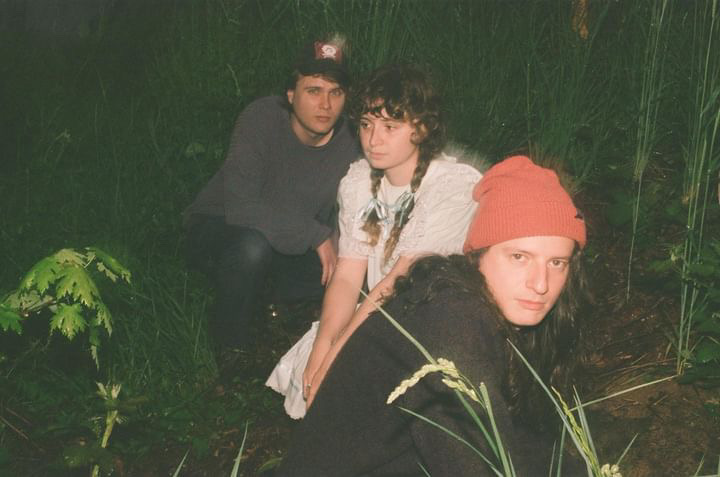
    I met Carolina Chauffe after one of their shows at Chicago’s Sleeping Village. Since then we have kept in touch to put together this interview. 

    When Carolina and I began our Zoom call, I noticed a painting of a Baltimore Oriole centered on the wall right behind them. As a bird enthusiast, I had to give it a nod of fascination. “Thank you! Yeah, my grandmother painted it” they told me. “I took the painting when she passed, and I’m not an avid birder, so until a friend pointed it out to me I actually thought it was a robin haha!”. 


    Carolina Chauffe, known as their project hemlock, has become an important facet of not just the Chicago music scene, but a friendly contributor beyond. Being from Lafayette, Louisiana, Chauffe grew up in a pretty condensed scene. Looking to move out of their hometown, the first opportunity that presented itself was an internship at a record label in Seattle. But as the pandemic exhausted that plan, they spent some formative time in Astoria, Oregon before eventually moving to Chicago. “Since then I just kind of heed the signs when a friend, or someone that I care about offers me housing, I just kind of run with it if it feels right” Chauffe explains. “I’m trying not to be in the business of saying no to gifts that are offered.”

    I know you grew up in church and chamber choirs. But when did you first start writing songs?

    So my dad is a couponer and he got this coupon for guitar lessons at a local Baptist church for one month of free guitar lessons. So he bought a cheap Walmart guitar for me that was pretty much impossible to play, and I went, and I did this month of free guitar lessons. I learned to play a Taylor Swift song I think. And then the coupon ran out, and so we stopped doing the lessons. But even before that, there have always been little diddys that would come to me. I mean, I can remember writing songs about my crushes in middle school and high school. But the first song that I ever performed in full for an audience was at a high school music showcase and I remember some of the lyrics were, ‘I’ve been holding my breath over bridges that I should have burned so long ago.’ It was really teenage angsty, about some fresh heartbreak, and I remember my parents were concerned after which, also, is still a through line, like my parents are always asking, “are you okay? We listen to your music haha”.

    With this opportunist mentality, Chauffe has been making lasting connections with people all over the country. As an artist, this is imperative to their work. As someone who claims to be a very solitary song writer, Chauffe pushes themselves into collaboration as a set goal. “Collaboration with different people always opens up these new windows, sonically and emotionally, of what each body of work can be” says Chauffe. It’s not that collaboration is unwanted, it’s more complicated than that. Art is personal and exposed and to place it in the hands of someone else can be uncomfortable. “If I’m being totally honest, I still like to yield a lot of control over the recording process”, Chauffe expresses, but “opening my heart to that deep trust that comes with letting someone into the very vulnerable world that [I’ve] built”, has worked to push personal boundaries.

    hemlock’s career has been something different than the commonplace musician. With a catalog consisting mostly of demo-records, Chauffe has been adamant on redefining the idea of what a “finished” song is. Embarking on ambitious ‘song-a-day’ projects, Chauffe has worked sonically and socially to rewrite the limits of what a song can be. “I’ve just allowed myself to break more and more of the “rules”. Or the more time goes by, the less strict I am with myself. because I believe that music is play”, they say. With five ‘song-a-day’ albums representing entire months of time, the songs are purely explorative. They can represent short thoughts (even if not complete), a piece of characterful instrumentation, or field recordings of the world around them. Almost like postcards, these projects represent where they were, who they were with, and what they were going through in the generalist terms. 


    In a way, a song is never finished. “There’s a short term finish where it feels good in the moment to walk away from,” says Chauffe. “But then, long term speaking, I don’t know that a song is ever finished, cause I just think it’s malleable. It’ll keep shifting”. It’s something that is representative of the moment and the memory of the time it was written. But, over time it can grow and model with you. Even with hemlock’s established songs and professional recordings, Chauffe told me, “none of them are ever finished, because I believe that songs lead their lives, and they keep evolving. If you keep breathing life into them, if you keep playing them, they’re allowed to be whatever form they’ll take in that moment”.

    You are headed off to New York tomorrow to do some recording. What do you have in mind going into the process?

    I don’t really write a body of work with the idea of it being an album already. I kind of just write as they come, and then if they fit together, then cool. I’m going into it just with a body of work that I want to be captured. And then I trust Ryan [Albert] (of Babehoven) to be able to dream up something that feels really good for us to do together. But we’ll shape it together. I don’t really play my own music around the house very often. I’m bad at practicing which is something that I’m okay with being bad at now. But when I record it it gives me the sort of opportunity to get to know what my songs are a little bit better, and to expand what they can be.

    hemlock released their first full-band LP titled, talk soon, in 2022. Written all over the country from 2018 to 2020, the thoughts behind talk soon traveled with Chauffe over those years. With soft exposés of folk tunes, the album is an intimate conversation of change, heartbreak and acceptance that Chauffe trusts in us to share with. When listening to this album, what stands out are the handful of voicemail recordings that Chauffe uses almost as narrators. Hearing the love and support from their pawpaw, a song sung by their mother or just friends calling to check in is, in sorts, representative of people we have in our own lives. Having never met any of these characters before, I still found my heart twisting with what they had to say. It’s this natural drive for intimacy and connection that draws on these voicemails and clings to what it needs to. “In some ways [the voicemails] are the string that ties everything together. Those songs were written in so many different years and so many different places that it helps to track this nonlinear web of memory”. 

    As humans go, though, I think we take memory for granted until it starts to slip. Memory is more than just remembering our postal code, what we had for breakfast or directions to the nearest convenience store and to buy the toothpaste we need once we get there. It’s also names, faces, laughs, morals, friends, moments of sadness and love and the ability to feel those moments again. What it comes down to, memory is a preservation of our own beings. 

    Memory, or more this preservation of memory, is not only important to what Chauffe is creating, but it has become something more personal. Memory is instinctive to human nature, but when it becomes fleeting, it easily becomes disposable. That’s fucking scary. As I watch my own grandmother currently lose herself in a world that doesn’t make sense to us, I have had time to watch what slipping memory has the dynamism to do. Finding solace in each other as we talked about our own personal grievances, Carolina opened up about their family history. “My whole family, we are prone to forgetfulness,” Carolina shares with me. “My granny on my dad’s side is a documentarian. She was the first person I saw who constantly had a camera taking family photos” they said with an enthusiasm in engaging with moments. “And then on my mom’s side is where this loss of memory is very prominent”. As they deliberate on what to say next, Carolina’s head couldn’t help but to turn back to that simple, yet incalculably beautiful painting of the Baltimore Oriole centered on the wall. 


    Song writing to Chauffe is very archival. To them it is “very much with the ethos of trying to capture a moment, capture a memory without smothering it, and being able to let it glow in a way that feels true”. Subconsciously, music, and art in general is a representation of our memories. The time it’s made, the personal state at which it is made, and who may have had a hand in it, all stick with that piece. The meaning can become malleable as time goes on, but the initial identity of the piece stays forever. Chauffe though, makes it a point to acknowledge the full story of their process and continuance. It can be seen in the endless collaborations with the people that they trust and love. It can be seen in the voicemails they furnish talk soon with. It can be seen in the ‘song-a-day’ projects that take the pressure off of honestly capturing a moment in time. It can be seen in the “unfinished” songs that shift and meld into the performative moments they are meant to be. It can even be seen in the simple act of hanging and preserving a painting of a Baltimore Oriole on the wall in the center of their living room. “And yeah, I’m terrified of forgetting and its inevitability” Chauffe confides in me, “but I want to be clear that it’s not that I’m fighting against the forgetting, but coping with it. That’s often what songwriting is for me”.

    You can support hemlock HERE: bandcamp

  • A Conversation With Lisa/Liza

    September 8th, 2023

    Written by Shea Roney

    Through a career spanning almost a decade, Portland, Maine’s tender singer-songwriter, Liza Victoria, known as her project Lisa/Liza, illuminates her personal ghosts into a collection of albums filled with soft-spoken and honest self-regard. What feels at home on woodland walks or moments of solitude on a rainy day, Victoria’s work hangs from the branches of the patient and matured tree that her breathy folk songs are grown from. Utilizing her soft and afflicted voice, campfire guitar strumming and the combination of home and studio recordings, Victoria’s sound is not lost upon the feeling of loneliness and grief but is able to push a sense of warmth into the heart of it. People may derive different meanings to Lisa/Liza’s collection of work, and to an extent, this is the beauty that humanizes Victoria’s songwriting. There are no written instructions on how to deal with suffering, but Lisa/Liza’s songs are here in the meantime. 

    Recently, Liza Victoria took the time to answer a few of my questions. When I started posting for The Ugly Hug, Liza was one of my first supporters. As a college kid just trying to share his writing, this meant so much to me. It was an honor to work with her to put this piece out.

    I know you used to live in Portland, Maine, but you recently moved out to Wayne, Maine. What has this change of scenery been like? What is the Maine music community like? 

    The Maine music community is very healthy and recently I’ve been reflecting on how much I feel held by it. I think there is a true communal nature to it.  There are a lot of scenes within, that really just aim to support art and community, and it’s beautiful. At a lot of points I have felt really glad to have this space to make music and be part of this scene. There are a lot more places to play and communities opening up to DIY shows and scenes in rural parts of Maine now and I love that. Those are some of my favorite shows, out on farms or in unexpected spaces (ahem please invite me to your farm show). There is stuff going on right near me now, even though I’m far from Portland, I’m excited about that. I also still feel like Portland is my music-hometown, because it’s remained such a supportive and welcoming music community for me.

    Your new album, Breaking and Mending is so full of transparency about your recovery from living with chronic illness and navigating mental health. When writing such beautiful songs about recovery, how do you approach the trauma? How do you approach the delicacy of your lyrics? Do the songs feel different now that they are released, as to say, when you were writing them? 

    Thanks for saying this, that is so kind! My approach is mostly that I don’t want to hide what I’m facing in my music and art, whatever it may be. There are a lot of spaces in society where it may not feel safe to delve into recovery or navigating mental health, but it feels like my music is my own, and I want it to be this little safe sanctuary for that, wherever I take it. That being said, it’s only reflective of those struggles because that’s what my life has entailed and it’s a very real lived experience that I was transmitting. I’m looking forward to a time when my music can reflect a softer place of joy and healing. But, I think life just holds what it holds, and art and music is a wonderful safe space to not shy away from the heavy things. 

    I approach lyrics sort of in mood, they kind of ebb and flow from the center of a mood or a feeling. The songs definitely change over time. They feel different after being released, and even different after years go by. It’s fun to see how their meaning shifts for me. 

    Your songs have such an interesting and beautiful structure to them. They are played in winding paths, that as a listener, we are not rushed to come to conclusions, but are given room to sit in your music and feel what we need to feel. How do you go about song structure when writing? 

    The song structure to me kind of comes naturally, but it’s also definitely something of my own making. I kind of think of it like a drawing or a painting, how sometimes when you keep working on a piece of art it can go too far. I tend to aim towards trying to let it resolve with some minimalism, or natural place. With my songs feeling sort of stream of consciousness, that is usually when the feeling of the song has come to some resolution.

    Your lyrics are just as much about the present as they are about the past, and sometimes you are able to sit in this difference that makes your songs feel timeless. What tense do you feel is the most impactful for you to write in/about? 

    I love this question.  I can’t say that either the past or the present is a more impactful place to write from. I know it’s helped me at times to reach back. I think at some point I need to write from the past or something. I think in some ways I’m trying to pull myself out of that. In this record I may be reflecting on that wish. I think there is always a use for nostalgia or memory, for the listener, and that’s impactful on its own. I think memory can draw from a happy place or a place of a lot of energy and excitement too, so it isn’t something that is always sad or holding grief. But in a lot of my songs it has been a way for me to process both those things. I’d love to sing more about the present. I think there will always be some of both. 

    You’ve released three albums off of Chicago Label Orindal Records, run by Owen Ashworth. As an artist, what do you find most appealing about this label? 

    Four actually! And several tapes haha. Owen is a great friend, so that is up there, I’m really grateful towards him. I am super in awe of his musicianship and the work he has done with this label. I was a fan before all this happened. I listened to Casiotone for the Painfully Alone first in my college dorm. It was on a mix cd from a friend and I used to play it on repeat so much that I created an enemy (not joking, haha). It’s been wonderful to be exposed to so much awesome and great music. The musicians on the label are all truly artists and interesting in a slightly outsider way that is so valuable and important. It’s hard to say what’s most appealing. I love all the music on it, I love that it’s small and stays focused on the artists. I love the friendships I have made with the other musicians on the label. I think the Midwest is really interesting and beautiful musically too, and I love having that connection to another music scene being all the way out here. I’m really grateful for the experience and support it has given me to be a part of it. And that’s an understatement. It’s just plainly had a great and beautiful impact on my life.

    You are a big proponent for mental health care, accessible resources and being open to talking about your own struggles with it. As a community (music community), how do you think we should be there for others and keep the discussion around mental health open and destigmatized?

    I totally think as a music community it should be a centered conversation. In my experience, musicians are very much at the forefront of the conversation, but you don’t hear a lot about it.  I don’t know why that is. I think that has to do with stigma and with lack of resources, and with lack of discussion and information.  

    There is a lot that musicians are expected to push through and achieve with very little material gains, little profit for their careers, and a lot of expectation just to be content with very little, but to drive yourself to the edge of your ability. I don’t think it’s an exaggeration to say that it’s a recipe for trouble, for trauma, for exertion, for giving up healthy and important boundaries, and even giving up your health.  I think it’s vital we are there as a community for each-other. But also, to be wary that it doesn’t become yet another expectation for musicians to hold on their shoulders, because it has a lot to do with capitalism, and with things just not being in place for so many. 

    What we can do, I believe, is to continue to work towards welcoming and supporting  communities and spaces. To continue to believe in its impact and meaning. To include those who are stigmatized and marginalized most, is also extremely vital to this conversation. Having open conversations in your community or forums about mental health might be a way to start. Making sure people in your music community have basic resources for crisis and safety. It sounds like a lot of work, but at the same time, it can take, literally, very little. Sometimes it’s just checking in.   

    Again, I don’t think this should be only on the shoulders of musicians. We need grants and funds and support to help to push and keep a lot of these communities going. There are so many ways to improve things for each other. It can really just be very simple as going to shows and buying merch. I think Owen Ashworth once said something to me along the lines of “buying music is a political act”. And I think about that a lot.

    A lot of your imagery in your lyrics resemble things larger than humans, i.e, the world around us in nature. Would you say you’re a spiritual person? 

    I am definitely a spiritual person. I don’t have much to say about it, or a way to define it. I just find spirituality really interesting and it’s a key part of who I am.

    I know that you use nature a lot as a way to escape. What are the ideal conditions for the perfect hike?

    I think just somewhere that inspires. It doesn’t have to be a long hike or a difficult or harrowing one. Just anything that kind of brings that spark that’s like “aha, the world is much bigger than I realized, and it’s beautiful”. That would be perfect. Maybe in the Fall or Spring too.

    You can support Lisa/Liza HERE: bandcamp

    For more information on Lisa/Liza, visit Orindal Records

  • A Conversation With Yours Are The Only Ears

    September 7th, 2023

    Written by Shea Roney

    Photo By Daniel Dorsa

    Under the name of Yours Are the Only Ears, Susannah Cutler released her first single “Fire In My Eyes” in 2014. It’s a warm folk song where Cutler’s caring and whispery vocals are edged out with a heavy and sodden synth. On the track, Cutler expresses some distrust in herself. “Am I a good person?”, she recites, until the question becomes a heavy handed measurement. Cutler, as an artist, is something special. Hailing from upstate New York, she has made a name for herself with her whimsical aesthetic and soft approach to trauma and rage. On her latest album, We Know the Sky, Cutler embarks on an uphill hike to answer that question she asked 9 years ago, opening up about uncharted inspiration, navigating musical barriers and learning to trust herself again. 

    Growing up in a musical household, Cutler was environmentally disciplined in a specific lane of musical thought. With both her brother and dad as full time session musicians, Cutler described their influence on her as imposter syndrome; watching them destined to musical technique where she didn’t see herself fit. “It just didn’t fully dawn on me that you could be a musician in a different way” Cutler admits, “so I didn’t really feel like I was one until I started writing songs” in a way that felt comfortable and personally impactful. 

    Where did the name Yours Are the Only Ears Come From? It’s a really intimate name when you think about it. 
    It’s actually from an of Montreal song on this album called The Early Four Track Recordings. All of the songs are named after Dustin Hoffman doing various things. The Song is called, ‘‘Dustin Hoffman Scrubs Too Hard and Loses Soap’’.  I was so obsessed with that album around the time when I decided to give my project a name, and I just liked that line a lot because it conveyed how I wanted my music to feel.

    Before she was a musician, Cutler was an artist studying both visual art and textile design at New York’s FIT. Being a skilled visual artist, she developed a style of quaint and organic folkish art that you can find on her album covers. But between visual art and music, Cutler told me that her creative thought processes are completely different. While visual art is purely aesthetic and driven with precision from her thoughts, with song writing, she says, to an extent, there is trust in not knowing where her inner sentiments will take thematically. “I have to let my emotions lead and take hold of the song. It just becomes what it’s going to be”, Cutler conveys.

    This unknown is where Cutler thrives as a songwriter. Allowing herself to sit in her conscious and let it speak for itself is the most honest an artist can allow themselves to be. But it is not an easy task. “It can feel really scary when you want to control how something sounds or is presented to the world,” Cutler tells me. “I guess it’s also kind of cool that you can’t always do that. You just have to trust that something valuable and aligned will surface”.

    I feel like you and I share a similar respect for nihilism in the world.
    I definitely feel like nihilism helped me so much with playing shows in the beginning. I used to have really bad stage fright, but thinking to myself ‘well we are all just going to die, so does it even matter if I completely embarrass myself?’. I feel like there’s some aspect of nihilism that is really freeing.

    Sitting on songs for years, Cutler released her first full length project Knock Hard in 2018 off of Team Love Records. “I feel like I was ready to release music before I ever did”, Cutler says as she discloses the discouraging logistics of making and releasing an album. On top of the financial barriers of producing music, Cutler also went through the tedious process of teaching herself how to record and produce herself from scratch while still in school. “In terms of recording and releasing music it can feel like there are so many barriers to entry, which can be frustrating,” Cutler says.  

    But her most recent release, We Know the Sky, sonically speaking, was an ambitious project. Focusing on the minute details to make her most extensive landscape yet, Cutler created an album littered with guitar fills, wind instruments, resonated harmonies, and subtle percussion that paints a fairytale-perfect natural world tampered with stories of abuse and distrust. Although proud with how it sounds, “it was a little too much to be so perfectionistic about everything and I dont think it’s always helpful for the creative process,” Cutler admits. “I think for the next record I will probably try to be somewhere in the middle”

    A lot of your themes are driven through your connection with nature and animals. What are some personal connections to the natural world around you that have inspired you the most?
    I’ve gotten really into medicinal herbs. Right now I work at an herb farm/shop, and I’ve been learning about common plants that grow all around us. Some of them are considered weeds, but all plants have healing properties. I feel like this also helped ease my nihilism, because especially when I was younger, I felt like everything was chaotic and meaningless. But just knowing that there are all these plants growing everywhere in abundance that can heal us, it’s wild. I think just having that pillar of faith in something bigger than me, even if it is just a plant or the intelligence of plants, is helpful for me to stay grounded and have faith that there is meaning. I can often feel ungrounded, but just knowing that nature is all around us and we are a part of it is calming. 

    In a sense, We Know the Sky is a love letter to Cutler herself. Although there is no denying that there is hurt behind these songs, the hurt is used more to push Cutler’s own personal understanding. After removing herself from a painful relationship, Cutler was faced with the undeniable reality of starting over. Relearning to love yourself is an uphill battle, full of doubt and a brandishing identity eager to be whole again. “I think the songs are kind of about that, ” Cutler recounts. “You can have so many layers that make it hard to fully access how you actually feel” that can come out when you begin to piece yourself together again. Although she can’t admit she is fully there, she tells me the biggest thing is to “put in the time and effort to show up and be there for yourself”.

    Support Yours Are The Only Ears HERE: bandcamp

  • I Keep My Feet on the Fragile Plane

    August 10th, 2023

    Allegra Krieger

    Genre: Folk Label: Double Double Whammy

    When structure is lost and life seems to forgo desire, it becomes easy to sit within observations. Like the simple pleasures from a smoke break in the middle of a brutal shift at a dead-end job, calamity slows down to personal silence. This personal silence can be just what you need to understand your place in the world. Told through whirling, soft folk songs, Allegra Krieger uses her winding words to do the heavy lifting on her new album, I Keep My Feet on the Fragile Plane, as she sits still in a superficial passage.

    Hailing from New York, but having lived all over the country, Krieger has been a part of many people’s storylines. On her fourth full length release, and her debut from Brooklyn label Double Double Whammy, Krieger stays grounded in her own storyline, giving emphasis to the album’s title and the world in which she visualizes around her. There is no time wasted in getting to memorialization, and in ten tracks, Krieger muddies the concept of past and present that perpetuates the timeless struggles of young adulthood. 

    In a rhythm like waltz, Krieger opens the album with an apologetic line of, “I’m so sorry to say/I think you’re walking the wrong way”. “Making Sense Of”, the opening track, is a dance of sorts towards the unknown. With the simplicity of guitar strumming, Krieger’s vocal points are accented by orchestral string arrangements that create a whimsical atmosphere, yet remain receptive to the light thumping of stand up bass that steadies at the bottom of the sound. The uneasiness that comes hand-in-hand with unexplored territory is stagnant in Krieger’s songs, but in no way does it become overbearing. 

    Krieger’s strengths come from intersecting lines of grace and delicacy with grittiness and violence. These contradictions, so specific in their recollection, must come from personal observations that Krieger has deemed resourceful. “After work I have a drink/and walk to Matthew’s down the street/I love the way I don’t think/when he’s fucking me” Krieger sings as guitar distortion seeps in, fighting off the acoustic groove. Seeing things not just primarily good or bad, but complex to the human experience, Krieger allows many layers of consciousness to mature within her words.

    There is an unconventional pull to Krieger’s song production that pushes I Keep My Feet on the Fragile Plane to stand out amongst standard folk works. With implements of French and English horns, there is a florid softness to a song of heartbreak like the track “A Place For It To Land” while the use of heavy static hums hold a layer of tension. “I Want To Be” frills out into a guitar battle of pounding strings and amp feedback, coming to an abrupt conclusion on a rather mellow track. “Terribly Free” utilizes a simple piano sound while Krieger’s vocal phrasings fizzle out into scrapes of static as she sings “fire and fog/sparkling stars/slow heavy sex/fast moving cars”. The contradictions in her lyrics reverberate within the sweet tones of the extended outro.

    The stand out track, “Lingering”, is a cyclical story of doing everything and nothing at all. Beginning and ending in Krieger’s room described as having  “pictures on the white walls/black mold on the ceiling”, she goes about her day as normal, but calling out the mundane that would normally go right past us. It’s a slow methodical groove that allows the listener to walk with her through Fifth and Avenue A that “smells like piss and garbage”, or sit and people watch through her bedroom window that separates her from the outside world. 


    Passive listening to Krieger’s words is, often, not possible. At heart she is a storyteller. And like any skilled storyteller, she warrants all ears. Her voice is both comforting, in delivery and in spirit to the subject matter. The atypical orchestration below her never feels abrasive, but more of an emphasis of priority to her soft and skillful vocal approach. There is no structured path for Krieger, instead she wonders on her own terms. This fragile plane wavers underneath her feet, cracking into noticeable gafs, as she dances around them. “I keep my feet on the ground/and my expectations low” she sings on the formidable track “Low”. Broken down into individual stories, Krieger can’t seem to stop writing. Each song on I Keep My Feet on the Fragile Plane, with its poetic and winding verses, establishes beauty in the context of observation and comfort in the context of learning.

    Written by Shea Roney

    Allegra Krieger bandcamp

  • A Conversation with Annie Blackman

    July 25th, 2023

    Written by Shea Roney

    Photo by Tonje Thilesen

    Earlier this month, Rolling Stone Magazine published a shorthand list of artists that represent the future of music. The print, with a glamorous photo on the cover of Bad Bunny with a polished look and chains dangling from his neck, stands as a typical Rolling Stone write up. But once you get to page 73 (the meat and potatoes of the issue) in the midst of the “Rolling Stone Future 25” you will come across a warm toned photo of Annie Blackman. Wearing a butterfly patterned skirt, she looks at ease with her back resting on a subtle floral print wall. Within the first sentence of Blackman’s feature, Taylor Swift is name dropped. This can cast a giant shadow that covers anyone compared to Swift these days. It recalls the time in 2011 when Blackman, at the age of 13, got to meet the pop star and Swift empowered her to keep writing music. Whether or not that experience has helped Blackman reach this point (who’s to say?) her writing speaks for itself. 

    Annie Blackman is a Brooklyn-based singer/songwriter from Montclair, New Jersey. Her most recent release off of Father/Daughter Records, an EP titled Bug, traps words of friction, justifiable nerves and love butterflies that exude from the walls of her safe space. But in a rare case, Blackman is an artist who has been sharing personal music since a young age. With documentation of life stuck in time, anyone can see the lengths at which Blackman has grown both personally and musically, proving herself through the years to be an instinctive storyteller. “What are the things it feels like I am the only person in the world experiencing even though I’m obviously not” she says when discussing writing decisions. And to the relation of which specificity in her work holds, we as listeners are given the opportunity to hear our common and complex feelings broken down into digestible and natural stories through her personal accounts. 

    Learning guitar around the 5th grade, Annie Blackman began her public musical endeavors in 2016 when she released her first album titled, Blue Green, a collection of songs she wrote throughout her high school years. This was a fully acoustic venture representing the turmoil of young love that was recorded within the walls of her childhood bedroom . “I was in love with my best friend for quite a while and I never tried anything with him”, Blackman recalls when I asked about muses, in hindsight, she finds funny with age. Instead of telling him, she wrote songs and wouldn’t release them until it was all completely platonic. “Looking back on it, I honor and love the girl who had a crush on him, but it is funny to think of the gravity of the whole thing”, Blackman jokes. 

    As a songwriter who writes with the acute details in mind, I asked Blackman how she feels her storytelling has grown with her since the lovesick songs from high school. “I have become more observant, more attuned to my feelings and also I think more selective”, as she recalls the harshness of some of her earlier songs. “I feel like now I understand that in order to pack a punch or tell a story of woundedness I don’t need to bring anyone down in such an obvious way” as comes with maturity she hopes. 


    Blackman started receiving a lot of attention on TikTok from posting snippets of songs like “Seeds” and “Glitch” during the pandemic. Stranded in a time that was dedicated to stillness, Blackman’s words became something that sat comfortably with listeners. As videos started to see viral attention, Blackman tells me “it gave [her] the confidence boost to make a really proper demo and collaborate with some friends who know how to produce”. For the first time she saw that her songs could go beyond an intermediate circle of support.

    I read a cool story in your Rolling Stone write up that when you were studying abroad in Paris, and some TikTok fans of yours from Berlin reached out to you?

    So it was actually pre-TikTok. It was the winter of 2019, so TikTok hadn’t even blown up yet. But I had actually had a high school friend run an online zine who’d done a little interview with me when my first album [Blue Green] came out on bandcamp. Somehow this friend group of German teenagers had found me through this zine and I was sort of a favorite in their friend group which is totally crazy and random. We sort of became internet friends and then when I was in Paris, I was going to Berlin to visit a friend in another program, and I reached out to these girls and said I would love to meet you guys. And it’s funny because I was 20 and these girls were like 15, so it was definitely a sweet little age gap. A couple of my friends and I went to a party that these girls were having and it just turned into an impromptu house show, which was really cool. The first time that has ever happened to me, and the last.

    Blackman soon sent professional demos all over, but landed on San Francisco indie label Father/Daughter Records. Blackman was familiar with this label because the bands Remember Sports and Forth Wanderers, Father/Daughter staples, came from her hometown. “These people seem cool and legit and down to earth so I emailed them and three weeks later I was in there”, Blackman recalls. 

    In 2022 you put out your first album off of Father/Daughter Records called All Of It, where you recorded in a makeshift tent studio inside of your childhood home in New Jersey. Can you tell me about that process? 

    I mean, it was hard. It was deep pandemic and I was living at home. My dad and I built this PVC pipe sound blanket little hut thing and I would just go in there for hours and hours and hours. And because we made the whole thing remotely it was definitely difficult. I’d never actually recorded myself before, so you know, I had a little interface, I had a little mic, but it was a lot of trial and error. But I was also out of college, unemployed, and you know, COVID, so you can’t really do anything, so I’m glad it happened when it did because it gave me a sense of purpose for sure.

    Earlier this year, Blackman helped represent Father/Daughter records at SXSW in Austin, Texas. When I asked her the peaks and pits of a week-long festival life, Blackman had nothing bad to say about the festival itself. “Everything just feels so fun and wholesome. You get to see people that you only get to see there”. But Blackman then brought up a point that is often glossed over and that being the financial struggles of a life in music. “I think the pits are that you don’t make any money and if you don’t have a car, which I don’t, the transportation costs really add up. So I think that was definitely the most painful part”. 

    Right before Blackman jumped on my call, she was in the midst of a job search. “Everybody has a day job of varying time commitment, but it’s definitely important to strike that balance [with a career in music]. It’s a necessity”. Unless artists are reaching millions and millions of streams or constantly touring, there is no money in music and this is often a point that is not widely known by non-musicians. Blackman still considers it to be one of her two careers and “it is a job, but it’s really not”. Making music is expensive. Unless playing a solo show, Blackman tells me she just gives all the earnings to her bandmates because rehearsal rates can add up too. 

    As time came to chat about the attractive title given by Rolling Stone, there were mixed feelings of course.” On one hand, I’m like, ‘Oh that’s fake!’. And on the other hand, I’m like, ‘do I need to now be the future of music?’”. The future of music is quite the title. It can sit heavy on one’s shoulders. When asked if this label was burdensome at all, Blackman responded with “I don’t know if it’s too burdensome, but I also can’t just rest on my laurels. Everything just sort of needs to be better than the last thing”. 

    With print readers on the decline, there wasn’t much of a translation to a rise in listeners for Blackman. Considering it as street cred within her scene and hopes it will open the door for more opportunities in the industry, there is no denying that Blackman is still grateful for the honor. “Whether it’s sort of an accolade, or a duty I now need to carry out I’m not sure, but it mostly feels really cool and sort of surreal.”

    Photo by Tonje Thilesen

    As for her most recent work, Blackman sings on her EP, “Like a play within a play within a play within a scene” on the title track “Bug”, to decompartmentalize the rough goings in her life in palatable and frivolous chunks that she keeps in her pocket for keeping’s sake. This EP, and works prior, have shown that Blackman consistently makes concise pieces of work that have established her as a new voice worth listening to.  

    For the remainder of the summer, Annie Blackman has a show at the Knitting Factory on August 26 in Brooklyn, New York opening for Beau. She is excited for more things in the works for the Fall.

    For more info on Annie Blackman: bandcamp, TikTok, Instagram

  • Laundromat

    June 22nd, 2023

    Pickle Darling

    GENRE: folk/dream-pop LABLE: Father/Daughter Records

    In a bedroom somewhere in Christchurch, New Zealand (the largest city in the South Island), sits multi-instrumentalist and producer, Lukas Mayo, known as their musical project Pickle Darling. New Zealand, a country that frequently pumps out alternative innovators, such as The Clean, Tall Dwarfs and Aldous Harding, also finds that Pickle Darling fits neatly into this estranged group. After years of formidable DIY sustenance, Mayo finds comfort again in making lo-fi bedroom pop songs from the comfort of their own home. 

    Finding success amongst EPs and two full length albums, Bigness (2019) and Cosmonaut (2021), Mayo felt the extension of pressure that comes from the public eye. Pickle Darling has been a bandcamp favorite for years now, having both full length releases being labeled as ‘Album of the Day’. Also having toured with acts such as The Beths, Fontaines DC and Lucy Dacus while gaining a lot of attention to their homemade pop songs, Mayo began to feel lost. The release of Cosmonaut in 2021 brought Pickle Darling to large production heights, fitting for the theme of the outer spaces, but with intricate composition and the expectation of perfection, Mayo no longer felt like they were making music for themselves anymore. Feeling worn down, Mayo retreated back to the bedroom to record their newest album, Laundromat. 

    Laundromat, Pickle Darling’s first release off the San Francisco label Father/Daughter Records, is Mayo’s journey back to finding comfort in art. Still creating lighthearted songs embellished with several finger-picked instruments, the dreaminess of synths and drum tracks and coyish autotune has shown that Mayo has perfected the clean and sweet bedroom pop tune. Graduating with a degree in audio production, there is no denying the quality that a Pickle Darling album sounds like. Writing, recording and producing each song on their own, these songs live in Mayo’s personal world, crafted and mastered within the walls of their home; sometimes reluctantly released out into the world. Laundromat finds Mayo in their first comfortable living situation; sans problematic roommates and peevish landlords, offering a place for Mayo to fully thrive in the writing process. 

    The first single for Laundromat that Pickle Darling let sit in the world was the brief “King of Joy”. Scraping over a minute long, “King of Joy” dangles in its simplicity; running low tones with driving percussion that resolves in the lightness of synthesizer melodies. There is undoubtedly a sweetness that it leaves behind; a smile on your face or a daydream to a more honeyed time. This single acts as a reminder to Mayo to not overcomplicate art. Pushing themselves to utilize ideas in the moment relieves the pressure of making something overworked in the name of perfection. 

    There is a large amount of Nostalgia that Mayo paints within their tunes. Considering the lengths that Mayo takes to ‘homemade’, I am taken back to the extent of childlike imagination. Laying on the floor with a box of broken crayons, no care as to what is produced, resting on the expected approval from adults and the confidence in what our little minds can make. Mayo litters Laundromat with songs that soundtrack this homemade and pressure free artistic exposure. With folk tunes built in dreamy atmospheres, Pickle Darling brings the listener back to the bedroom; our own space of solitude and comfort, decorated without the pressures of the outside world. 

    The music video for “Head Terrarium” is built within its own DIY world with paper mache hilly landscapes, cardboard trees, cotton ball clouds and dancing plastic creatures. Overlooking this dream world is Mayo, whose face rests amongst the clouds, taking pride in all the self-constructed beauty. As the song shifts into the chorus, the video takes a turn to the real outside world, much darker in its aesthetics, where a malformed mannequin is made out to be Mayo. The only resemblance to Mayo’s humanity is the lower half of their face on a screen attached to the body, singing along to the song. This shell of Mayo repeatedly sings “I’m not as brilliant as I like”, an acknowledgement to the feeling of despondence from the art they are creating.

    Mayo’s electronica intuition has been a signifier through all the music they have released into the real world. The song “Invercargill Angel”, beginning with folky string instruments housing Mayo’s whispery autotune, is a beautiful reminder of the sonic instincts that prop up a Pickle Darling song. Two different sonic styles that gracefully blend together to create a unique and playful sound that is reminiscent of early Sufjan Stevens or a late career Wes Anderson soundtrack. “I hope he makes you feel at home” Mayo repeatedly insists before the song breaks off into an electronic setting of retro synthesizers and drums tracks that build upon each other until there is a harmonious chorus of arcade nostalgia and internal comfort. 


    Pickle Darling sings about finding art in the mundane; having an open mind to the beauty when you don’t over complicate things. It’s this simplification to the writing process that fills Laundromat with so much charm and affability. Caked in sunny major intonations and culminating melodies sets Pickle Darling light on the chest. It’s a meaningful listen that flows from track to track with the hope that it doesn’t end.

    Written by Shea Roney

    Pickle Darling bandcamp

  • Big Picture

    April 26th, 2023

    Fenne Lily

    GENRE: Folk/Rock LABEL: Dead Oceans

    There is an aspect of growing up when love becomes a step-by-step process rather than starry-eyed, on-and-off episodic moments of life we see in movies. Bristol artist Fenne Lily allures her newly determined definition of love through charming and light-hearted folk songs on her new album, Big Picture.

    Fenne Lily’s overall themes are no stranger to the overstimulated idea of love. Lily’s previous release, BREACH, a collection of songs entrapped by heartbreak, was released in 2020 during the pandemic, squashing her ability to tour and share what she worked so hard on. This induced severe writer’s block, that Lily discussed, took a long time to shake. What makes Big Picture different from other Fenne Lily releases is that all ten songs were written and cultivated within the bookends of a relationship. Lily goes through stories and phases of new love, branded ideals of giving yourself up to someone else, and then the final fall out to make an entire album something familiar and truly convoluted.

    One thing that Lily wants to be clear on is that Big Picture is not a sad album. Lily has talked about the oversimplification that has branded so many artists into a new and now popular sub-genre; sad girl indie music. Although Lily has always been boxed into this corner with artists like Phoebe Bridgers, Mitski and Lucy Dacus, she wants to be clear that slow music does not equal sad music. It takes personal growth and emotional maturity to come to this conclusion not only as a listener, but as an artist too. The ability and confidence to blend songs of hopeful intuition with a soft and slow burned sound creates an active voice to relate to life’s more complex feelings honestly and candidly. That brings us to Lily’s overall point on her new album; emotionally honest music can be a muse for self-soothing and the reintegration of joy back into life.

    How does Fenne Lily make a collection of songs entirely about a failed relationship into an album of reassurance and self-fulfillment? Lily states, “these songs express worry and doubt and letting go, but those themes are framed brightly”. What it comes down to was refusing to fixate on the overripe feelings’ leftover from an expired love and to take away what felt needed. That being either memories or lessons learned to carry on. “So it’s alright/if you don’t want a shoulder/If you don’t wanna get over it all”, Lily sings on the song “Dawncolored Horse”.

    The album begins with a subtle pop bass line that molds into a soft and playful track titled “Map of Japan”. Lily sings about the hindsight’s of a relationship with an airy vocal approach and electric guitar that grounds the lightness of the tune into the reality of the tough situation. What follows track after track is a beautiful, warm expression of Lily’s understanding and self-acceptance of where her life was currently at and displays it within lighthearted folk songs with mature melodies and conscious instrumentations. “Lights Light Up” is sung as a hardening conversation between two lovers who are not on the same page, but surrounded by bright and static guitar work that embodies both restlessness and independence. The dilemma of wasting time and the time it takes to heal is calmly addressed on “In My Own Time” where Lily sings “In my own time/I’ll brighten up the corners/Temporarily”. A nod to the impatience of healing and the universal fear of a wasted life.

    Big Picture is also a demonstration of Lily’s creative growth from her first two albums in that she took on a collaborative approach with people that she trusts and loves. As past projects go, Lily has been very adamant about doing everything herself. But in the case of these 10 songs, Lily wrote and demoed each track herself and then brought them to her live band to flesh out together. The entire album was recorded live in Brad Cook’s North Carolina studio with special help from artists like Katy Kirby, Melina Duterte (Jay Som), and Christian Lee Hutson. In the case of the track “Red Deer Day”, Lily wrote the song after the rest of the album was finished and her relationship was over. All-in-all, what Lily offers is the clearest analysis of a breakup that she has, yet it is the most confident and self-projecting song on the album. “I’m alright or I will be in time” sums up the cleverness behind Lily’s pre-determined ambition to a hope-filled album. It is such a perfect conclusion to Lily’s Big Picture, that friend and musical contemporary, Christian Lee Hutson, helped record the whole song in one day to assure its inclusion to the project.

    Big Picture is flushed with love songs that are emblematic of what it really is; confusing, vulnerable, arduous, fragile, blissful, affectionate and desirable. There is no complete linear story starting at the initial crush to the inevitable breakup that Lily experienced in the process of writing the album, but more of a stream of consciousness that occurs when a relationship isn’t working. The back and forth between passion and doubt leads to more complex feelings of guilt and personal endowment that is truer to a love story than what is usually glossed over. “I tell you I don’t know but sometimes I can’t help but picture a whole different life” Lily sings on the album’s closing track “Half Finished”, barely wincing at this decree.

    It’s refreshing to hear an artist rework the social constructs that surround the slow song. Even upon a passive first listen of Big Picture, there is no hiding the subtle expressions of joy and contentment that poke their head out often. No drama is white knuckled and no names are dropped, provoking an album of soft contemplation and euphonic understanding. The contrast between these beautiful and laid-back instrumentations and the cut-throat lyrical persuasion that Lily embodies aren’t there for contrast’s sake; but for a deeper and more mature way to accept a failed love.

    Written by Shea Roney

    Fenne Lily bandcamp

  • Crispy Crunchy Nothing

    April 19th, 2023

    PACKS

    GENRE: rock/folk LABEL: Fire Talk

    An apple with a rotten core can have beauty on the outside, giving off the falsehood of a pristine piece of fruit. This doesn’t mean that there can be no joy from this apple but a balance between the beauty and the crumbling core within. Canada’s own, PACKS, have returned to the scene with their sophomore album, Crispy Crunchy Nothing, setting boundaries between vulnerability and understanding while all having a good laugh about it in the end. 

    Returning from her soft solo acoustic project, WOAH, Madeline Link found herself in a confusing state of will-they-won’t-they until she reunited her band mates to return to the muddy and gritty groove that defined PACKS since their 2021 debut album, Take the Cake. In the meantime, what came about was 18 months of sending demos back and forth until the fourteen songs were fleshed out in one week of friendship and creative endurance. What emerged was Crispy Crunchy Nothing and a nod to the crummiest of situations while still grasping on to optimism, certainty and laughter from our day-to-day surroundings.

      Elevated by drowsy melodies and the fuss of electric guitars, in a way, Crispy Crunchy Nothing is a return to the basics for PACKS, but it shows that the band is reaching for more. The new sonic sketches that the band indulges in help build a fitting home for Link’s sincerely humorous yet frank lyrics and mumbly double-tracked vocal approach. With no song surpassing the three-minute mark, Link’s offbeat imagination and select attention to detail, combined with loads of dry wit, produces songs that drown reality in plump bar chords and minor lo-fi garage rock-band instrumentations to create something from nothing. The stand-alone singles “Abalone” and “Brown Eyes” follow the band’s moody takeover of slacker-rock and the good-humored attitude that comes with it. Dexter Nash’s harsh yet calculated guitar riffs add a layer of boldness in the same fashion that Joey Santiago brings to the Pixies. Noah O’Neil’s bass hides within Link’s fat chords while also bringing new melodies to the songs. Shane Hooper’s punctual and tireless drumming acts as a steady hand while maintaining the sloppy sound of garage rock. The loose song structures only illuminate the hidden melodies that Link sneaks into the shortly lived songs. From the “lalalala’s” on “Dishwasher” to the soft choruses in “Cheese” and “Rag Doll” showcase a collection of warm lo-fi songs that represent the small and buried bliss that comes out when least expected. 

    Within these tender lo-fi songs, though, there is no hiding the loss and discomfort that is brewed on the surface of Crispy Crunchy Nothing. “EC” takes a song about the death of a coworker and masks it with a soft, twangy folk song that resides in the warmness of our hearts. With emotionally exhausted vocals, Link sings about a failed long-distance romance and the feeling of complete loneliness on “Say My Name”. The song barely scrapes over a minute long but still manages to come off as heart-breaking and sincere when you hear Link plead “Never thought I’d say I just wanna hear your voice say my name”. “Smallest One” plays into frustratingly taking apart nesting dolls in the hopes for a obtained sense of closure when holding the smallest one in your hand. 

    Slumping through songs about loneliness, frustration, loss and the tumultuous feelings of being stuck, the band’s moody disguise doesn’t completely mask the moments of confidence and ambition that Link has hidden throughout the album. Link’s knack for humor in lyrics that are derived from the mundane world around her make a PACKS song stick out when you hear one. “Fourth of July/fireworks and fountains/Shattered dreams and cotton candy”. As funny as a Canadian singing about a sacred American holiday, the song “4th of July” tells of feelings of loneliness derived from holidays and festivities mixed with an already present internal sadness that feels oh too familiar. Even on the minute-long track “Late to the Festivities” shares the line, “cause’ like an apiary in a cemetery/I was fooled by the flowers”, which in and of itself induces a nervous laugh to the situation. 

    Crispy Crunchy Nothing is less about purposely seeking out joy from life, but letting the joy sneak out from where we least expect it. There is a mutual understanding between Link and her bandmates that these collections of songs are not an appropriation of bad feelings, but more of a celebration of the small things in life. Even through topics of loneliness, heartbreak, loss, wasting life and unfortunate fixations, there is a warm feeling that Link and company coat over each song. Whether that be the charmingly unpolished sound of the band or the allurement of sincere anecdotes, there is a sense of hope categorized finely by Link’s imagination of her banal existence that when she sings “Laughin’ till I cry/Sometimes it feels like life is on my side”, you can’t help but to feel it too.

    Written by Shea Roney

    PACKS bandcamp

  • Ike Reilly Assassination Sell Out Schubas Tavern for St. Patrick’s Day Matinee

    March 20th, 2023

    In the early afternoons of the St. Patrick’s day hangovers, a group of working class self profiteers, Irish delights, the poorly destitute and blatant rock n rollers crowded into a sold out Schubas Tavern in Chicago for a matinee to see one man; Ike Reilly. What Ike and the rest of his band, the Ike Reilly Assassnation (IRA) deliver is nothing short of back pocket magic that they seem to master with every performance. 

    The opener “My Wasted Friends” invites what being at an Ike Reilly show is; a brooding sense of comradery tapered with washed up friends, intoxicated singalongs, and the holy belief in the importance of sharing stories.

    With little time in between songs besides for talent or instrument switch outs, Ike performed a setlist that collected songs from his entire catalog, but still holding tight to the latest LP titled, Because the Angels, with the songs “Ashes to Ashes” and the fabled “Racquel Blue”. Ike even played some long-time-fan pleasers, such as the deep cut “Falling Into Happiness” from the 1992 release of Community #9. And because it was the day after St. Patrick’s Day, Ike and the band couldn’t help but pay homage to “one of the greatest songwriters of all time who drinks a lot and has no teeth”, Shane MacGowan (as described in a story about his oldest son for which he is named after). Covering both “Rainy Night in Soho” and “Dirty Old Town” accompanied by the Irish tin whistle, Ike’s long time friend Frank Quinn joined the band for a handful of songs to ring in the Irish holiday tradition. 

    Since the faulty days of quarantine, Ike has been performing with his three boys, Shane, Kevin, and Mickey in what were live stream videos as a source of income; or just an attempt at family bonding. But since then, the boys have been touring with their dad and the IRA family, and now are a pleasurable staple to the shows. Shane performed an original song, “Who’s Been Hurting’” from his anticipated album. Implementing Dylan undertones, (but catchier), he showcases his own writing ability next to his established father. The Reilly family also pulled out the new crowd favorite, “Trick of the Light”, in which every boy gets to sing memorable lines of messed up families, greed, internal mutiny and the common backhand to those around you. 

    After seeing Ike and the IRA a dozen times, it’s striking how the band can make each show unique. Ike Reilly, as the front man, is no more fierce as he is endearing. Taking a hold of the stage with what is years of experience and a powerful message to be told, Ike will always give a nod and smile to familiar faces in the crowd and tell personal stories that ground him as a humble yet sometimes flawed human. The band behind him is just as important as Ike himself to the unforgettable IRA shows. Whether that be Phil Karnat’s ability to emulate overarching tones with atmospheric guitar playing, Dave Cottini’s taut style of drumming, Pete Cimbalo’s strict bass lines and iconic bass-face, or Adam Krier’s ability to blend any instrument into the song, Ike Reilly uses this high-class talent for his benefit. A benefit, that no matter the venue, the band has the ability to own it. 

    To capsize the show with IRA traditions, the show ended with “Put A Little Love In It”, where the stage was filled to its brim for this holistic sing along about death, weed, and a gravedigger. For as intense and heartbreaking the original story behind that song is, it means something different to everyone, and I think Ike understands that. “This is a song for the people that we have lost and the people that we miss”, Ike says before brandishing the song that closes so many IRA shows. 

    Ike Reilly is often referred to as a renegade, a poet, a storyteller and a rebel, but what I think deviates Ike Reilly from other singer songwriters today, and the novel past, is his humility. Throughout his career he has experienced critical acclaim and critical neglect, but has learned to become something more important to his fans; an escape from life’s shitty doings. He is a man who understands hardship, religious turmoil, soul-sucking suits, the towny drunk, and the lost familyman; but in the end that makes him no different than anyone else in that crowd who gathered into Schubas at 2pm on Saturday to listen to the most experienced folk singer that no one has heard of.

    Written by Shea Roney

    Ike Reilly Information: https://www.ikereilly.com/

  • A Swollen River, A Well Overflowing

    February 23rd, 2023

    Tenci

    Zac Belcher, Rachel Lessing, Paul Santiago

    GENRE: folk/alternative LABEL: Keeled Scales 2022

    Blackberry Farm; a farm turned family center in Aurora, Illinois, was a place of early childhood development for me. In our matching overalls and denim baseball caps, there are an abundance of pictures of my little brother and I with our mom at this farm. We often indulged in the attractions of miniature pony rides, the anticlimactically slow carousel, and the steam engine train that was conducted by a likely alcoholic. But at that age, bubbles and chalk were all we cared about. In the back of the farm, next to the, now questionable, “settler” house and period-actor with the weaving loom, was an old well. It was too dark to see how far it went down and the top was barred off to prevent fidgety kids from finding out. But it was wide enough for us to wish on a penny and drop it in with every visit. 

                On their sophomore album, A Swollen River, A Well Overflowing, Chicago’s own, Tenci, create a space of empathy and self-rejuvenation to find understanding in what it means to be human. Jess Shoman, the primary songwriter of Tenci, expands on their 2020 release My Heart is an Open Field, which focuses on themes of loss and loneliness. On A Swollen River, A Well Overflowing, Shoman returns to these themes, but with the perspective of mature growth and understanding. 

                Tenci has always built instrumentations around the use of Shoman’s unique voice, which is often used as an instrument itself. On this album, Shoman uses influences of psychedelic folk artists such as Jessica Pratt and Michael Hurley to create a fit-for-a-movie landscape of sparse and airy folk tunes. But like Shoman’s voice, the band comes in and out with a method of accent points. The rest of Tenci consists of Izzy Reidy, Curtis Oren, and Joseph Farago, who all have respective musical projects of their own. The band’s use of instruments all play a part in the compositions and are strategically picked to tell the story. On songs such as “Be”, it begins with a simple and synchronized guitar riff. Just as Shoman growls the word “be”, the band erupts into a controlled burn of a screeching saxophone solo by Curtis Oren while maintaining the subtleness of the song underneath. This song early in the album showcases Shoman’s new complex approach to songwriting that goes beyond the illustrated emptiness that was My Heart Is An Open Field. This new conflicting orchestration is then showcased in “Sour Cherries”, where Shoman’s folky stylings are challenged by a subtle growing amplification of the band until chaos unfolds of squealing saxophone and swoops and howls of Shoman’s voice. 

                As mentioned in the bio of A Swollen River, A Well Overflowing on Bandcamp, there are multiple meanings of the word “well” that could be considered in Shoman’s storytelling. The most obvious form of “well” is the old fashion way of getting water and making wishes. “Well” is also the most benign way of answering small talk questions about how you are doing. It is also the easiest way to kill further questions about how you are actually doing. 

                A Swollen River, A Well Overflowing does the small talk for Shoman. This project has many instances that showcase Shoman’s personal growth since My Heart Is An Open Field. “Climb to the top of the magic tree, I’ll show you how I’m changing”, is how Shoman starts off on “Shapeshifter”, laying out what is to be the rest of the album. On the track “Vanishing Coin”, Shoman sings about the odd disappearances of friendships as they get older. With an accompanying music video of Shoman as a party magician, adult relationships can often vanish with no reason like a magic trick. In the almost fully acoustic “Great Big Elephant”, Shoman sings “we should just throw it down the well”. A simple and old-fashioned way to get rid of something. In this case it’s something that Shoman has been holding on to for too long and needs to accept that it is gone. 

                As a kid, I can’t remember if I believed that tossing a coin down a well would make my wish come true. Although it’s probably a front for well owners to profit off the moldable minds of the youth, it is a nice sentiment. Even if the forces of the world don’t work directly with the coinage-to-well business, there is an idea that whatever you wish for on that coin is a small representation of who you are at that time. With Shoman’s notion of moving on and growing up from past experiences and relationships, there is a well overflowing of small representations ranging from their entire life. In the second to last song, and one of Tenci’s best, “Two Cups”, Shoman repeatedly sings “I won’t wait to fill my cup”. A realization that self-inflicted progression is the only way to accept the past and that filling your well with pieces of past experiences is never a bad thing. With a playful sing along chorus, it is almost a direct feeling of surrendering to your past and allowing that to shape who you are. 

    The legacy of family is a consistent point of topic throughout the album as well. With nursery-rhyme like songs of animals and clowns, Shoman brings up integral childhood emotions that still follow them to this day. In “Sharp Wheel ”, Shoman sings about being scared in their bedroom, but from fear that they deserve it, won’t seek the comfort of their parents. “Swallow Me Whole, Blue ” is a traumatic story about some neighborhood kids poisoning Shoman’s mom’s childhood dog. “I want to pet you from the inside ”, is Shoman’s way of wishing Blue was still here in order to protect their mother’s bad memories. The album’s closer, “Memories” utilizes audio from recovered home video of Shoman’s childhood, including conversations with their grandmother in Spanish and the screams of fear from encounters with bugs. “Memories” is pretty on-the-button, but it is still impossible not to feel a sense of nostalgia while closing out the album. 

                Thinking back to my own memories of dropping coins in the well at Blackberry Farm can also be considered extremely on-the-button, but is there anything wrong with that? These memories bring me back to early childhood development of relationships with my family as well as with nature and wildlife. There are parts of me from that time that have remained, while there are parts that I have gotten rid of since. What Tenci does is create an album around a celebration of self-rejuvenation from your past.  Especially after an album focused on grief, this new focus on A Swollen River, A Well Overflowing creates a relatable feeling of nostalgia, both through trauma and gratitude. 

    By Shea Roney

    Tenci Information:

    https://tenci.bandcamp.com/album/a-swollen-river-a-well-overflowing-2

←Previous Page
1 … 44 45 46 47
Next Page→

Blog at WordPress.com.

Loading Comments...

    • Subscribe Subscribed
      • the ugly hug
      • Join 94 other subscribers
      • Already have a WordPress.com account? Log in now.
      • the ugly hug
      • Subscribe Subscribed
      • Sign up
      • Log in
      • Report this content
      • View site in Reader
      • Manage subscriptions
      • Collapse this bar