Every Wednesday, the ugly hug shares a playlist personally curated by an artist/band that we have been enjoying. This week we have a collection of songs put together by Dallas-based songwriter Tex Patrello.
Last year, Patrello released her long-awaited debut album Minotaur, a project that was seven years in the making and made entirely by herself in her bedroom. Conceived with the mindset of a musical, accumulating characters, thematic squirmings and the sheer magnitude of interpretations that make for a project of grand proportions, Minotaur is a modern Greek tragedy, one to hold the scaffolding of each story that follows its expansive, and oftentimes charmingly offensive, production styles and faltered scribblings. And through it all, without wearing thin, Patrello’s expression is reluctant to let up, simmering with haunting avant-pop contusions, waltzing, hollowing lows and high spiritual frenzies that fluctuate within her own throbbing, veiny heart.
“These are my 15 favorite Billy Joel songs. I was obsessed with Billy Joel when I was fifteen. I used to pray to him, make wishes. My first huge crush was a bigger fan than I was, and we saw Billy together in Houston in 2015. After that, his music started to make me feel sick. But both guys will always be present in my songwriting.”
With a certain tenacity, untethered to any form of expectations or rules, New York-based band Plastic moves along through the sparks and dust of their debut full length album, Crabwalk. Released last week, Crabwalk is a lumbering 76 minutes of intense dynamics and alt-rock passion; the lows are intoxicating with a ledger to minimalist exceptionalism and the highs fight through melodic wear and tear to find addictive resolve that, on the whole, begins to feel conceptually engaging and strategically pure the more you sit in it.
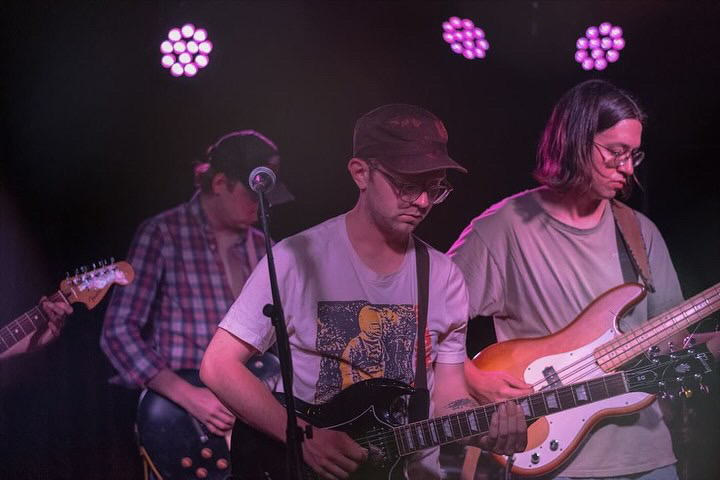
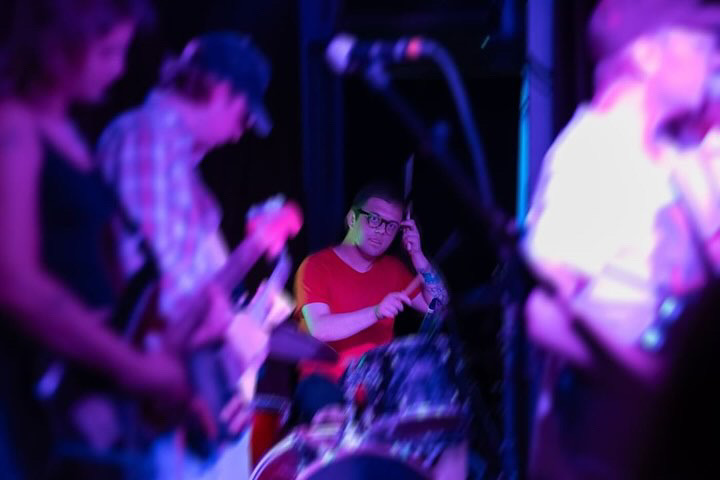
Beginning as a solo project by guitarist and songwriter, George Schatzlein (guitars/vocals/electronics), Plastic has been slowly molding into what it is now, with new members Wylie De Groff (bass), Nigel Meyer (guitars), Sam Kurzydlo (drums/electronics) and most recently, Mariah Houston (vocals/guitar) redefining the band with a precise and expansive mindset of five distinct voices.
the ugly hug recently sat down with all five members of Plastic on a Sunday morning, and what was planned as an interview felt like a first hand glimpse at a band whose functionality and collaborative spirit pairs with an intense trust and exciting friendship, as we discussed the record and what they have in mind going forward.
This interview has been edited for length and clarity.
Shea Roney: Last week you guys released Crabwalk into the world. How has the album roll out been?
Sam Kurzydlo: It’s been interesting, I think particularly in handling a lot of the in house stuff. We’ve been very lucky to have view no country from Texas working with us on physicals, but it’s been an interesting process. Sort of figuring out what works for us and troubleshooting as we go.
George Schatzlein: You kind of just run into the problems as you go and you have to figure it out from there. Trial by fire; you can really only learn by doing.
Nigel Meyer: Yeah, even yesterday, I was going to start dubbing tapes to have some physicals at the release show, and I realized that the tapes I have are too short for the album. So, rookie mistakes on some ends.
GS: But some of it’s been pretty seamless, kind of long winded frankly, at least. I’ll speak for myself when I say I am excited for it to be out so we can just be relieved. We’re excited for it to live in the world and we’re really proud of it, but most importantly, we feel like it’s a statement, not only because it’s a long piece, but it’s just an accumulation of work over a couple of years and what this band has become. This record really encapsulates the formation of ‘what is a band’ versus just someone writing songs and directing people what to do.
SR: So Plastic has one EP out as of now called Heredity. But as you have moved forward since, how did this group come together? Have any of you collaborated in the past with other projects?
Wylie De Groff: Well, this started as George’s solo project, so that EP he recorded all himself. But when I moved to New York three years ago, I just hit up George to hang out and he was like, ‘hey man, I’m putting together a band and I need a bass player. Do you want to come rehearse with us?’ That was my entry into the band.
SK: We all connected sort of serendipitously in different ways. George and Wiley knew each other back in high school. George and I had played a show together back in 2018 while he was running through Chicago. I think this lineup sort of coalesced across a year or so, intersecting with the development of this album. But this is the configuration that I think this group was always meant to be in, so it’s been really fulfilling to see that come together.
GS: It was like a nucleus of these webs of relationships from meeting at shows or playing the same bill that kind of just naturally collected throughout time. Classic music world.
Mariah Houston: We all went to music together [laughs].
SR: In this transition, going from a project that was very singular to a full collection of talents, is Plastic a fairly collaborative writing team now?
GS: It’s been slowly inclining to being that.
SK: I feel like even across the tracks written for this album that has sort of changed and I feel like the album is a document of that process in a way. It is really interesting because some of the more recently composed songs on this album are sort of signposts of things to come.
WD: The really long, gnarly song, “Touchdown”, which was a totally different song beforehand, was something that we gigged out for a bit and fully tracked in the studio. And then, when George was recording vocals, he just didn’t feel like it fit with the rest of the album, and we all kind of agreed and decided to maybe chop it. But instead, we saw that we had the stems of this song, and wanted to see what we could do with it and we turned it into something that started mostly in George’s head and ended up being more of an expression of what the band is now as a fuller unit working together.
SK: It went from being a song that never quite connected with me to being my favorite thing on the album.
GS: When you’re starting a project, you want to be as articulate and concise as you can be so that you’re not just banking on people to make up their own parts. But when you know you play with musicians organically, and learn to trust them, they start to write parts that suit their playing more. But I think in the context of this being a live rock band, it’s a lot easier to have more liberties with parts and it’s just progressed to be that way in the studio which has become my dream for this band’s future. We all trust each other’s taste and opinions, so now it can naturally be collaborative, because we all equally care about it. I feel like we’ve all been in bands where maybe effort isn’t always put in, but now it feels like we all really do care about this project and everybody wants to put in the best they can.
SR: Yeah, I mean that clearly stands out when sitting with the album, catching onto those individual parts and feeling the energy and focus in its writing and seeing it come together to create this massive piece.
SK: I think it’s our blessing and our curse that we think about stuff for ages and ages. But then I feel like the final product does always display that level of consideration and thought and care.
SR: With that in mind, when did you feel that these tracks were finished?
GS: When I finished the vocals, which took me way too long [laughs]. We broke it up into 3 recording sessions for main tracking and I didn’t do vocals in the studio, so it got dragged out, but I think really, it wasn’t that long ago when it felt like we were done with it. “Touchdown” to me was like, ‘okay, this feels fresh. This feels like a good thing to reference where we’re going’. It just made the record well rounded to me, when the album itself is not extremely linear.
NM: I can think of at least one or two instances where the parts I play now live aren’t exactly the parts that I played on the record because it’s just progressed. When we recorded the instrumentals, we didn’t have Mariah in the band yet, so going forward and potentially bringing in new instrumentation and reworking the songs into a three part guitar piece would definitely bring out some of these songs in a different way. I think they’re always going to mutate. The record is a snapshot of what they are now, but we know they’re not set in stone.
SR: I want to talk about the length, because it feels rare these days to find an album that goes over 35 minutes. Crabwalk tracks in at 76 minutes with a handful of tracks stretching over 7 minutes. As your debut LP, what parts of building such an extensive project do you think showcases what makes you stand out as a group?
SK: I think from the beginning we endeavored to approach it in a very experiential way. I think that all of us found it important to make something that you could sort of live in for a while, taking you for a ride with different detours and new stops popping up. And yeah, who’s to say our next thing might be nice and lean, but this one from the start was important to us, not length for length’s sake, but we wanted to create something that felt very immersive and had a beginning and an end.
WD: I think that the moments that feel most like us are the long moments like “Touchdown” and “Satiation”, where the first part of ‘Satiation’ is a normal song structure and then the second part really goes out into space. Even before it reached the studio version, that was definitely the idea we played with.
SK: I think, too, we’re not traditionalist by any means, and we’re all just students of the distinct form of music we enjoy. But I do feel like the streaming ecosystem does incentivize singles, EPs and shorter form releases.
GS: The way that that is being prioritized through streaming, to basically push shorter records, and branding music in that way, it doesn’t come naturally to us. We all love those records, but I think we’re inspired by a lot of long records at the end of the day. Something to put on in the car and drive down the highway when you have the patience and time to listen to something. It’s really, really valuable.
SK: And more recently I feel like we’re in a good spot, too, where it seems like the songs that resonate most with people when we play live are the longer, weirder, more meandering ones. That’s validating in a lot of ways, but it’s also nice that it kind of gives us permission to be a little indulgent in a way that’s really fun and inspiring.
WD: Yeah, I mean the most validating phrase we’ve gotten is like, ‘oh, this doesn’t feel like a seven minute song’. We love that. That’s the goal, to aim for when the length is natural and due to the shape of the music, not length for length sake, in the same way that we’re on purpose not keeping it short just for short sake.
SR: Flip floppin’ here, one thing that I was drawn to were those little interludes, “Try Again”, “Andrew” and “Drawn”, where if just by themselves would feel random, but when in their correct spot, bring this natural progression from the different styles that encompass the album. What was the story and the process behind these inclusions?
GS: As far as track listing came along, whatever Crabwalk means to me, when you’re really kind of at the end of a project and you’ve got these chunks of songs you start to see the little gaps that could be filled in. What we tried to do, as far as whether it’s mood, texture, aesthetic, energy. or even themes, you can kind of find one of those and patch them together to just smooth it out.
SK: “Drawn” was something I whipped up for live shows when we needed to change tunings and that track evolved out of one of those interstitial pieces I put together. But it became a personal expression for me when working at the office and trying to fold music into my life as much as time allows, I’m grateful that the rest of the group gave me the chance to clean it up to live in an environment beyond the stage.
WD: “Andrew” was just a voicemail, and I think we were listening to it when we were tracking “Wannabe”. I remember we played it on tour all the time because it was so funny and it gave us a chance to just be cheeky.
GS: Yeah, I feel like as a writer myself, I kind of naturally gravitate towards writing lyrics and songs that are maybe slightly abstract and more introspective, and I kind of wanted to just feel like I am a person. I can also be funny and have a sense of humor [laughs].
MH: Yeah, it’s so important to have your personality in your music. What makes a band really special to me is when I get to be really invested in their lore as people and I am able to identify that in their music. I think it’s nice that we have those moments of humor and personality, because we are funny [laughs].
SR: George, a lot of your lyricism is very textured and vivid, which as a listener, greatly enhances this almost dystopian feel to the album. Was there a contextualized throughline that you tried to pull through on the album within your writing?
GS: I guess similar to the instrumentation, all of a sudden it reveals itself subconsciously and then you start patching it together and you realize, for me at least, the subconscious will start relating to a theme. Sometimes it just happens where it’s laid out well enough and just feels natural. Maybe there is a throughline, but there were no sort of preconceived larger concepts. I think Crabwalk became fitting for the title because it felt like an early display of what this album was stepping into with this new phase of more collaboration. To me, the idea of a crab is this constant, but awkward and lateral motion, often repeating steps, which can become really exhausting and a difficult way of moving, but there’s always motion forward.
SR: Mariah did you contribute any lyrics to the album?
MH: I feel like my contribution to the album was very last minute. All of the instrumentals were tracked long before I was in the band and then the vocals I added were done as soon as George tracked his. It was very down to the wire.
GS: That’s what is really exciting about what’s next because now the ideas are getting slowly but surely pitched in this collaboration of talents. I don’t know what it’s gonna sound like at all, but this next record is just not gonna sound close to Crabwalk. Not that we’re trying to deliberately jump away from it, but I just think this specific way of going about it is just naturally going to make it very, very different. It’s pretty much the biggest leap you can make as a band, to make it sound different going from a pretty singular songwriter to a group of five people. I wouldn’t say the identity of the band is shifting because this has been the established identity, but this will be the next archive.
MH: I think it’s exciting for me to be in a project that is so drastically different from my personal projects. I’ve always enjoyed being in bands, and have always ended up in bands that are very different from my own music. I think George and I have very different lyrical writing styles, but it’s exciting to leave my comfort zone and potentially collaborate on stuff that’s not what I’m used to writing. I feel the same when playing with these guys, too. This is the first group of people I’ve ever jammed with, which was scary at first, and then it quickly became very fun. There’s something to be said about trusting each other.
GS: Yeah, and trusting that it’s not going to always work out the first time, of course, but once you kind of figure out how to work together in that way, where everybody’s pretty mature, when someone has something to contribute there’s a collective decision and encouragement. I think that allows me to have so much certainty and confidence and conviction that whatever we try next will be great.
SR:That sounds extremely healthy.
NM: Yeah, the writing is probably the healthiest part of the band [laughs].
Plastic is releasing a limited run of Crabwalk on CD via view no country. Following the album release, Plastic will embark on a 10-date tour across the Southeast and Mid-Atlantic United States in October.
Dallas based musician, actress and visual artist Tex Patrello is an anomaly in many ways. After the release of 2017’s short EP, yellow curse, her musical career has flourished in the celestial outers – but once you discover it, her artistry becomes impossible to look away from. Expanding our comprehension of what a bedroom musician can be, brandishing her own style of dysfunctional and twisted pop music, Patrello has always pushed the boundaries of what we consider capable by an individual.
Last week, Patrello finally released her highly anticipated debut full-length, Minotaur, off of Texas label, View No Country. After spending seven years in the making, Minotaur was conceived with the mindset of a musical, accumulating characters, thematic squirmings, suggestive imagery and the sheer magnitude of interpretations that make for a project of grand proportions. Overt patriotism, body objectification, attentive despondency – the world that Minotaur exudes feels obsessive, sinful, and sexy, yet utterly revitalizing at the same time. Patrello, who embodies herself throughout the album, encounters various characters that direct her decisions; Ricky the football player, Lou the matured suitor, and The Beast. Minotaur, as a whole, is a manipulation of reality, a mere delusion that Patrello has manufactured herself for the pure purpose of understanding where and what she is truly connected to.
Photo by Tex Patrello
With ten engaging songs, some creeping over the six minute mark, Minotaur is reluctant to let up. With a continual build of haunting avant-pop contusions, waltzing, hollowing lows and high spiritual frenzies that fluctuate with Patrello’s throbbing heart, Minotaur squeezes out as much expansive, and oftentimes charmingly offensive, production styles as possible. At its core, songs like “Panda Express”, “Wichita Falls” and “Anything Goes” still seamlessly flow with whimsy over shifting patterns and arcing instrumentation that Patrello bundled into the prog-like folk style of yellow curse. But beyond that, Minotaur is magnetic, clinging to new sounds of ravaging orchestrations, acrobatic vocals and electronic decays as Patrello’s posture wavers through song structures, molding from one idea into the next with such strategic thought and execution.
Breaking down her process, Patrello is patient when shaping melodies. “I find whatever makes me feel a high at that moment. I extract that, and I end up joining those extractions together.” As far as the individual songs go, she continues, “I tend to keep building upon them – making sure I love every corner and turn in it. I just didn’t want to have anything I didn’t love in this album.” In its full construction, “I would say that there is no song on this album that’s under 50 tracks. And there’s some, I think, that are 400 tracks.” She recalls, “it’s two different projects, because it wouldn’t even work if I had it in one. My computer wouldn’t work.”
Spending seven years endlessly working through these configurations, flexing through instrumentations and concepts as well as learning to mix and master on her own, this magnitude of time and intensity is vital in the name of Patrello’s artistry. There are multitudes of shifts and changes, blending patience with needs, as personal tribulations sway her perception of reality. “I knew a story I wanted to tell, but I didn’t want to push anything. I wanted to write a musical, but have every song come naturally – as if I wanted to make a movie, but every scene happens to me before I put it in.”
Patrello’s world is strikingly unique and personal, pulling us in with cartoonish characters and tropes that only further intensify the situations. These characters are structured within convoluted juxtapositions that feel distressed within her own being as she experiences them in real time. “I feel like one of my biggest sources of inspiration comes from things that I have no interest in,” she confesses, something that feels oppositional to what we are often told – “write what you know”. “I don’t know anything about sports but I’ve written like 5 songs about football,” and yet, football becomes a symbol of power, sex and eventually hostility as Minotaur unfolds into its climax.
In the opening track we are introduced to the all-American football star’s son, Ricky. It starts with a white flash, an intense heat, as Patrello demands the car come to a stop, when Ricky first appears and this delusion begins. Changing out of his football pads, she sneaks a look at his perfect athletic body. “I crouch/ It’s some hunk in his backseat now/ He’s undressing/ He lifts his jersey/ It’s Ricky”, she croons, struck with instant infatuation. “Ricky is real in a way. He’s a bunch of different people that I’ve lived with these last seven years,” Patrello admits. He lives on a pedestal in her mind, being the only one who can satisfy her lust for perfection – perfect image, perfect smile, perfect body, perfect lover, perfect sex.
When writing Minotaur, Patrello was very intrigued by the Nelson Family, who, crossing decades, held a looming level of adoration in American culture throughout the 1950’s during their long running sitcom, The Adventures of Ozzie and Harriet. “They were the perfect family of the time,” Patrello says. “The show is literally just about their family,” consisting of Ozzie and Harriet, and their two sons David and Ricky. “The episodes aren’t very interesting. The stories they tell aren’t interesting at all,” but this TV family was meant to portray the very real Nelson family as the perfect, All-American, white picket fence – true patriots of the middle class mirage – that the American narrative forced at the time. But on the contrary, blending this level of perfectionism with real people who were very much not, brought out the inevitable, and quite public, destruction of what was reality to them.
Photo by Tex Patrello
As the most interactive character, Ricky holds a level of control over Patrello, whether he is aware of his powers or not. “I’m kind of using someone as my muse for [Ricky], but most of the time the person I’m writing about is apathetic or rude or uncaring. And so I think that in my head Ricky has a lot of highs and lows in this album.” As Ricky lives his life, strongly on his own terms, Patrello’s relationship to him always feels to be trailing behind in whatever capacity Ricky will allow. “My fluctuations are probably just responses to Ricky’s fluctuations. He’s sort of calling the shots on what I’m thinking and what I’m feeling.”
For as much as the album revolves around Ricky, the real focal point that drives the story is the way that Patrello interprets the distance of their relationship and her own autonomy. “I think in Ricky’s world, I’m not as much of a concern to him. So I think it’s more about my progression than his.” The song “Long Lost Pimp” trails a brief moment of liberation as Patrello tries to push Ricky away, seeking out the compassion of an older man named Lou. “Wichita Falls” feels like a holy communion as Patrello sees Ricky finally committing to her. “That trip to Wichita Falls, I think, is like a baptism for me in that lake. My yoke is being loosened. My sin is being drowned.” Songs like “Slick-Dick’s Baby” show violence in the same vein as sex and passion, as Patrello watches Ricky dominate his football game, becoming unwieldy and lascivious by her love for him. “Love me like you love America/ And when you choke that fucker, call me wife/ And when he’s out, my god, I love my life.” As her character’s direction feels fated from the beginning, “I think I’m just responding to Ricky most of the time,” Patrello admits.
“I would say that The Beast is the opposite of my relationship with Ricky”. To Patrello, The Beast, or for namesake, The Minotaur, can be a culmination of a lot of different things in her day to day surroundings – the things that she overlooks in the name of casualty and routine, though they always offer some supportive ground below her feet. “I feel like I was trying to have Texas speak through me a little bit. When I’m more connected to The Beast, I’m more connected to the Earth and I’m more low to the ground and present in this land – in Texas specifically.” Unlike the uncertainty that Ricky excretes, The Beast, and its many possible representations, feels comfortable in his presence and actions. “I feel as though I’m more a resident of my room than of any city, because I’m not out super often, but when I am, I feel very connected to Texas and this land surrounding me.”
Photo by Tex Patrello
In a lot of ways, Patrello utilizes the Greek origin story of the Minotaur, one of lust, conquer and betrayal, as a source of direction and relation for her own story. As it goes, Theseus is sent from Athens on a mission to slay the Minotaur that lives in the Labyrinth, but arrives wildly unprepared. Ariadne, the mistress of the Labyrinth, sees Theseus and quickly falls in love with him. Fearing that he will be killed in this fateful battle, Ariadne equips him with the tools he needs, but only on the premise that if he succeeds, he must marry her. “I’m connecting myself to Ariadne,” Patrello asserts, mirroring her own story with Ricky – falling helplessly in love until he, almost predictably, abandons her on a whim.
In the end, Patrello is filled with the guilt of neglecting, forfeiting, and having a hand at slaying The Beast – not until he is dead does it become clear the significance he has on her life. The second to last song “Pony Meat” plays as a memory, spent “reconnecting to a past life where I might have been Ariadne,” as she sings,” “Animal, you animal/ So sweet to me/ I didn’t know, how could/ I know/ Just what you mean?” There is desperation in her voice, each line more sobering than the next. Ricky is gone, The Beast is dead, the world she has built is crumbling and her true reality has succumbed to darkness. In its stillness, Patrello admits her realization – “it’s wanting what you can’t have. The Beast is what I’ve had, and it’s hard to see that comfort or beauty in him with how enthralled I am with Ricky.”
In her process of accumulating inspiration, choosing to write about things that she has no interest in, such as Ricky’s All-American football career, there was a distance between Patrello and Ricky from the beginning, where Ricky was always going to be more idolized than truly loved. “I think when writing [“Pony Meat”], the whole time I felt more connected to the Minotaur and that sort of like dirty or freaky side of me that I wouldn’t allow to be seen by Ricky,” Patrello admits, continuing, “I feel that I’m not putting something on as much anymore.” That is where the difference between Ricky and The Beast becomes gripping – in whose claws does Patrello feel most connected and grounded to be her true self.
“The Minotaur is a human body with a bull’s head, of course, and I think that that’s why I’m most connected to him,” she conveys. “I feel similarly, in a way, where I feel like I’m a pretty face on a beast’s body or the other way around.” This duality, half man/half beast perfectly interprets human nature – sinful, lustful, rabid, violent, egregious animals who can put on pants and a tie and call it civilized. Like the Nelson Family, blinded by the lights of Hollywood, the paparazzi and their own ego, their show acted as their own pair of pants and tie (for as silly as that sounds), creating a false and conflicting image of who they truly were, winding up to be their own tragedy.
As an album that grows out of a delusion, fluctuating between realities, worlds and personalities, the finale, “DeKalb” flourishes in its ability to be present. “Dekalb is when I’m really the most lucid, and not only do I feel the most lucid, I feel like that’s the first time I’m lucid in the whole album and the most connected to where I am,” Patrello reflects. “I guess I’m connected to where I am, and I feel like I’m less delusional about things – things like Ricky.” Patrello doesn’t shy away from how much her character has faltered trying to be something that she is not – its her own modern day Greek tragedy, one to be reiterated over and over again in time.
“The conclusion of the album is that I’m still petty,” she says with a slight laugh. “There’s like no lesson really learned, but I think I’m just kind of waking up a little bit in the end.” Although there are moments that feel full circle, there is no clean conclusion, leaving us listeners with some unease. But to its credit, that’s the point. “‘Dekalb” is very aware that I don’t feel like I’m in a resolved place in my real life,” Patrello states with full honesty, firm in the artistic choice she has made. “So with what’s happened in this album I wasn’t gonna end it in a perfect way.” Minotaur is a starting line, the culmination of events that Patrello felt were necessary to experience before real change, growth and sobering realization can begin. And who knows, maybe seven years down the line we will get her next chapter – in the way that only Patrello sees fit.
Tex Patrello has a few shows in Texas that will be announced in the coming weeks. You can stream Minotaur on all platforms now and purchase a CD or tape of the album.




 the ugly hug