Dan Parr, the ever-expansive stamina behind the UK-based project The Last Whole Earth Catalog, has recently shared with us his second single of the year called “33”. Following the previous track “The Fruit Expert” released back in January, a more freeform and jazz-fueled character in his repertoire, “33” finds Parr deep within his most internal and conflicting moments, rearing both tough reflection and enduring gratitude as he grapples with his journey of being to hell and back.
Beginning amongst an array of rhythmic fixations, layering guitars that ring out with a familiar whimsy, Parr invites us into a deeply textured plane built out of his recording intuitions that have rarely led him astray. Enticed by the pacing in his lyrical phrasings, “33” focuses on the ideas of love and loss within the play of mental health, where it’s hard to show someone you love them if you don’t love yourself. And as phases of internal unrest rattle amongst persistent drum clicks and sharp-edged vocals, bringing out this journey in both fulfilling and very human avenues of grace and love, Parr sings, “Since I’ve been better, we’ve lived more than ever, this would not have happened if it wasn’t for you, I’m so proud of being a couple with meaning, a couple of ducks who just know what to do” — a song of rejoice more than anything in its final moments.
Listen to “33” out everywhere now.
Explore The Last Whole Earth Catalog’s expansive collection on his bandcamp!
Billy Woodhouse and Elliot Dryden finished their latest lots of hands record in a “very messy fucked up student room”. They hurled this description early on in our conversation, my context on the duo limited to that their evening itinerary consisted of rounds of Fortnite and pints of beer. For a moment I found it ironic that they titled the album into a pretty room, although, as they wedged memories of celebratory dance parties in between fond reflections of writing and recording in Woodhouse’s living room, the allegedly “fucked up” nature of the apartment held less and less of a contradictory effect. into a pretty room pursues a sort of haven that cannot be furnished with antique Danish chairs and wallpaper swatches pulled from Architectural Digest. With self-described “squealy chipmunk” vocals, delightfully weird patches of electronic production and lyrics that strip notions of grief right down to the bone, lots of hands’ forthcoming album is a stunning tale of growing up, and a testimony to the extents of beauty found in the unrefined.
In the last four years, Dryden and Woodhouse have continued their journey of stylistic experimentation whilst honing the project’s identity. A chronological listen of the lots of hands catalog corroborates their growth towards a gentler, ambient-folk sound, a progression that hits an exhilarating peak in their latest work. While past lots of hands’ endeavors have been the fruit of remote labor, relying on the modern technological miracles of online demo exchanges, into a pretty room marks their first truly collaborative work, a product of Dryden and Woodhouse thoughtfully collaging old work and writing new songs together in Leeds, UK. into a pretty room fosters an obvious ‘touching grass’ vibe, with lyrics like “breathing the country air” and “talking with the dogs and birdies” offering a glaring manifestation of their experience in the north England countryside. However, the most moving effects of the album’s collaborative nature are far less axiomatic, as their shared vulnerabilities intertwine into one deeply human and emotionally complex coming of age narrative.
Over the course of the 14 track album, twinkling instrumentals coat the achy revelations of growing up. It’s a story of defending ‘laziness’ to your mom before the word depression enters your vocabulary, of experiencing heartbreak and grief not knowing if you will ever feel okay again, of waking up and wishing you could have been born as someone else. While it sounds devastating, the longer you sit with into a pretty room, the more it presents like running your hand over a scar rather than the all-consuming sensation of a fresh wound. “Before we made this album, we were both in transformation phases, different parts of our lives” Woodhouse explains, “[into a pretty room] is reference to doing well for the first in a while, with work and mental health and identity and trying to find out what style of music you want to make and what kind of person you want to be”.
into a pretty room is set to be released as their Fire Talk Records debut on January 17th. I recently met with Woodhouse and Dryden via Zoom, where they spoke about what they’re listening to, the history of lots of hands and what a pretty room looks like to them.
This interview has been edited for length and clarity
courtesy of lots of hands
Manon Bushong: You are about to release your fourth album under lots of hands, but I would love to start by hearing about the project’s roots. How did you two meet, and how did lots of hands come to be?
Billy Woodhouse: I’d been doing it as a solo project until about 2020, when I got Elliot involved, we just met at a really terrible music course in Newcastle and just bounced ideas off each other. It kind of took Elliot a while to get into the scene that I was in. I was probably on the different side of the spectrum, so we kind of met in the middle in terms of style and taste and just started making music as a duo. But before that, it was just an acoustic, ambient project.
Manon Bushong: So you met in the middle… I’m curious about what these ‘opposite ends of the spectrum’ looked like. Can you describe your tastes when you first started?
BW: Elliot was very…
Elliot Dryden: I was very…[laughs] bear in mind we were like, 16. Very Britpop-y
BW: Oasis
Elliot: Those guys… We always had some middle ground, we liked the Beatles, Elliot Smith, Radiohead.
BW: I was listening to a lot of hardcore, and a lot of very heavy math rock that I probably wouldn’t be as interested in now. Eventually we found this sweet spot of folk and ambient that we just really enjoy making together.
MB: How about now, what were your favorite music releases from last year?
BW: Tapir!
ED: Yeah
BW: our good friends in Tapir! dropped an absolute banger of a record this year. It’s like folk music with a little TR 808, electronic drum in the background. I can’t stop pushing that album on every single person I speak to. It’s amazing, it’s kind of a concept album about a pilgrimage that they’re all taking. And, the new Horse Jumper of Love album was amazing, that came out this year.
ED: Mk.Gee, we went to see Mk.Gee
BW: Oh yeah, like a month ago. That shit was awesome. That shit was so awesome.
MB: You mentioned finding a sweet spot of folk and ambient. That is definitely present in your recent work, it has a very cozy, almost outdoorsy feel to it. Where did you write and record the album, and how did that influence the project as a whole?
BW: We recorded it in my living room when I was living in Leeds. I was studying illustration, and Elliot had just got this new job, so he was coming down and splashing his cash every weekend in Leeds. We’d kind of just have a day when we’d sit and write and record. I think just doing it in my house has always been good, but I feel like because it was away from both of our homes, it felt like a new chapter for both of us, and I feel like that translates to the music really well.
MB: It definitely translates well, there is a certain coming of age feel to the album and how you reflect on adolescence, grief and depression. Are the songs and the stories you are telling ones that have accumulated over time?
ED: There’s quite a few that have been around for a couple years, a few of mine that have been around for two, maybe three years, and then some that Bill wrote like two years ago. So half of it is kind of old music that would fit with what we were trying to talk about, and the other half was stuff we came up with recently – reflecting on where we were at the time as well.
MB: You mentioned this idea of ‘what you were trying to talk about’. I would love to hear about the title for this album, and how these tracks fit into your idea of a ‘pretty room’.
BW: With a lot of the songs being from three years ago and a lot of them being new, we tried to encapsulate that sense of moving forward with identity and grief, and just stuff we had been through. It felt like the only time we were able to sit down and work on it was in the living room. With the album, I think we were trying to get a coming of age feel, and a sense of a safe space that we both are in now.
MB: into a pretty room also has more words than your previous albums, though it also includes a few ambient tracks without lyrics. How do you approach creating songs with lyrics versus ones without, and what is the process for tying them all together in one album?
BW: There is, maybe not for the people listening, but in my head, a need for some breathing room because it felt like we were getting quite a lot off our chests in actually making songs with lyrics. I definitely had a lot more ambient tracks on the album on a first draft we created, and then Elliot said “it’s just a bit too much breathing room”. I think in a way, we are just dividing the album into three parts, not because it really changes, but just so you have a chance to breathe. I would really like to do another ambient project that’s just instrumental because that is the sort of music I enjoy making the most.
MB: Would you ever consider creating ambient music for another type of project, perhaps scoring a film?
BW: One of my bucket list goals is to score a film. Maybe when I get old, or whenever the offer comes to me, I’ll take it. For now, and I don’t know about Elliot, but I make music with scenes in my head
ED: I don’t
BW: He doesn’t.
MB: If you could create the music for any existing film, which would you pick?
BW: I would do where the wild things are. I love that Karen O record so much, but I just feel like my music looks like that film. I remember going to see that with my dad when it first came out, and it was actually life changing. All the puppets that they made for the film, it was just everything I needed to be creative in my head, it had all the inspiration. So probably that film, no diss on Karen O’s record though. It’s amazing.
MB: You have used a lovely series of paintings as the cover art for the single releases and the album. Who was responsible for those, and why did you pick them?
BW: I had the idea of barn animals for the cover, because we have the song “barnyard” that was initially going to be the main single. We got kind of caught in that country folk thing, we were listening to a lot of Hank Williams and a lot of country. Our friend Beef, and Harry Principle painted it and so I shot her a quick message and was like ‘please can I steal that for an album?’. It’s actually just one massive painting that she did that she got scanned, but I cut it into pieces because there’s so much going on. They did it by drawing over each other’s artwork, it’s a collaborative piece and then they started dating after, so it also has a cute little story behind it. Shout-out Beef and Shoutout Harry for making that cover, I think it just looks how the album sounds.
MB: Do either of you have a favorite song off of into a pretty room?
ED: There’s one that Bill wrote called “in between”, it’s really good. I like the lyrics, and it’s quite short and sweet and all acoustic, which I like. That one is my favorite
BW: My favourite is “barnyard” because it has everything I like in lots of hands’ songs in it, droning reversed guitars in the background, my squeally chipmunk vocals as well as Elliot’s very baritone, almost grainy vocals. We just kind of wrote it in about ten minutes, just like brainstorming together in my fucked up student room in Leeds. That was a good moment for us when making the record, because we made it, and then we just kind of had a little boogie to it for about half an hour, just being like “we just made this shit, we’re making a record right now”.
MB: What are you most excited for now in the coming months? Aside from album rollout, is there anything else exciting on the lots of hands radar?
BW: I’m really excited to play these shows. We’ve got some really good musicians on board for it, and it’s always good to see the other side of the country. We’re in a very weird place in the UK, it’s beautiful and it has a lot of history, but there’s just not much of a music scene here, so it’s always good to travel about and meet other musicians.
ED: Yeah, same with me. I’m kind of excited that we might be able to travel somewhere else one day, maybe America or just anywhere else. It’ll be quite fun, I’m excited and staying hopeful we’re gonna hit the US.
BW: Elliot, plug, plug, uh, our solo stuff.
ED: No, I’m not.
BW: Elliot’s got some solo stuff coming out at some point. Under Elliot Dryden
ED: So does Bill.
BW: Mine is under Uncle Red. We’re gonna be doing some side projects, mine is more ambient, his is more kind of singer songwriter-y. We’re trying to get the lots of hands universe going.
Today, lots of hands shares “barnyard”, the fifth and final single before the release of into a pretty room. Listen below!
into a pretty room is set to be released this Friday January 17th via Fire Talk Records. You can preorder the album, as well as vinyl, CDs and cassettes.
Written by Manon Bushing | Photo courtesy of lots of hands
Hailing from Wiltshire, England, Tom Brown is known for projects such as Teenage Tom Petties and Rural France, proving himself to be a highly effective and cherished voice in the world of underground pop. Today, Brown shares “Dunno”, the debut single from his latest creative endeavor, Lone Striker. Five years in the making, Brown has set the jangle-pop aside as Lone Striker embraces the warmth of wobbly homemade loops, found sounds and moody, wistful arrangements, while still having his well-crafted melodies continue to be a testament to his artistry at hand.
First a drum fill, a sort of laissez faire jumpstart into this dirty, melancholic groove, “Dunno” finds its footing within a clanky backbeat and a curtain of weathered horns, offering an off-kiltered, yet reassuring presence to get lost in. Although Lone Striker finds Brown working mostly alone, “Dunno” also includes the work of Billy Fuller (BEAK>) on bass. Swirling with disillusionment, questions asked and questions left unanswered, Brown sings with a tender clarity, “And I can’t think about tomorrow if the past is gonna be so cruel” – the subtlety in the chromatic digression helping him find his footing as he keeps moving forward. As “Dunno” begins to fade, the layered textures of modulated synths, simple rhythmic movements and those same weathered horns continuing on, Brown has already laid the groundwork for a triumphant rebranding to an already beloved career.
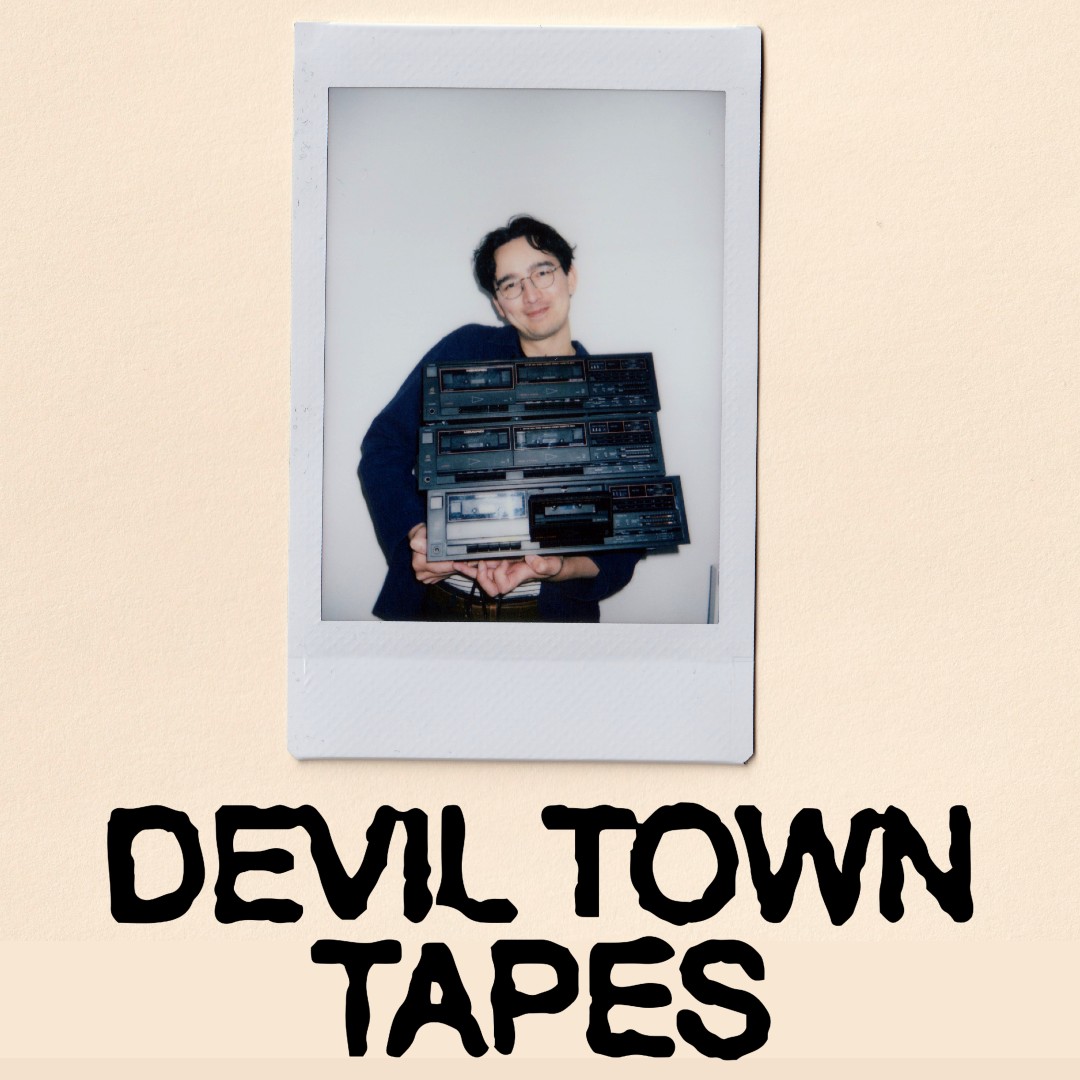
As a small music journal, we rely heavily on the work of independent tape labels to discover and share the incredible artists that we have dedicated this site to. Whether through press lists, recommendations, artist connections, social media support or supplying physicals, these homemade labels are the often unsung heroes of the industry. Today, the ugly hug is highlighting the work of our friends over at Devil Town Tapes.
Devil Town Tapes is a deeply rooted indie tape label run by Jack Laurilla, based out of Leeds, UK. With a focus on the found community that comes with sharing music, Devil Town Tapes has not only established themselves as a spearhead in the UK, but continues to grow in pockets of the U.S. as well. With an expansive set, focused on the niche creative corners that the label handles, Devil Town has housed the work of artists such as lots of hands, Greg Mendez, Snowhore, Conor Lynch, Dilary Huff, boxset, Noah Roth and many more, all differing in styles and sounds but connected by a through line of the people that help make it so special.
We got to catch up with Jack to talk about how Devil Town Tapes came to be, what he sees in the growing community and what keeps him in the game to release physical music.
Jack Laurilla, Founder of Devil Town Tapes
This interview has been edited for length and clarity
Shea Roney: What made you want to start a label? Did you have a clear vision from the beginning, or goals you were hoping to accomplish?
Jack Laurilla: It officially started in 2019, I’d wanted to do the label for a long time before then, but I didn’t really know how. I mean, I still don’t really know how to do it [laughs]. I started seriously getting into music as a listener when I went to university in Kingston, which is just outside London. There was a really great record store there called Banquet Records, and that really shaped a lot of how I listen to music. That’s when I started collecting music physically as well on CD and vinyl. I started to see the same [label] stamps on every single record – a lot of stuff from Topshelf, Run For Cover and all those guys, and I kind of didn’t really realize how much these labels were shaping my tastes. I would go away and see what records that they had released, then I’d go to Banquet the next day and get them, and invariably I’d always like them. That idea of a record label being able to shape taste in that way was something I’d never really considered and that was kind of the start of thinking like, ‘oh, this is an interesting way of communicating to people.’
At the time, the only way I knew how to release music physically in that way would have been through vinyl, which, as a student, was just impossible for me to do. So I completely parked my idea while I was doing my degree. When I finished Uni, I moved back to Bournemouth, which is kind of a small, retirement town down South. Going from Kingston, where music was everywhere, crazy bands like The Hotelier and Foxing would be playing small pubs all around, all of this really formative music to me, to then going back to Bournemouth, where there were only a few people doing gigs, felt like more of a hostile environment for being involved in DIY music. I was really kind of craving that sense of music community which I had back when I was at Uni, and that’s when I started thinking about how I could start making that happen myself, rather than just complaining about it.
SR: When did the cassette tape become a feasible format for you?
JL: Around that same time as well I discovered Bandcamp. There were no record stores in Bournemouth so it really filled that void for me, particularly finding Z Tapes. The kind of music that was being released by them was really inspiring, and the idea of tape as a format was just not on my radar before. I mean, it was a format I loved when I was a kid, the first music that I owned was on cassette tape, but I didn’t realize that was still happening, particularly in the DIY space. It’s just so much more accessible and it felt like it was, as a medium, more democratic, so all of those things combined kind of gave me the push to be like, ‘this is something that I can do’.
omes and Cult Film at Vinilo Record Store, Southampton 2019
SR: When it came to the point where you could start releasing music, what kind of artists did you look for?
JL: At the time, because I was trying to seek that community more locally, a lot of it was local. There wasn’t an abundance of gigs going on in Bournemouth. A lot of it was just scouring through Bandcamp and Soundcloud, just trying to find stuff tagged to Bournemouth or neighboring cities. I was very lucky that I was able to stumble across some artists who happen to live nearby and were also making the exact kind of music that I was interested in. I mean at the time, although they were local to me, they only seemed to exist online, so it was kind of a happy accident how the first few artists I worked with came about.
SR: Who were some of those first artists you worked with?
JL: The very first one was Cult Film [Chapman Lee], who I just stumbled upon on Soundcloud. I just felt like I could immediately relate to it. I reached out to him over Facebook, and he was very, very gracious, and agreed to let me release his music. Looking back, retrospectively, I was just a complete stranger, reaching out to say, ‘I would like to put your music out on tape, please,’ with no track record of doing that before, so it was amazing that he took what I was offering in good faith. I think the success of that first release is still kind of the motivation to keep releasing stuff. Starting off with just a selection of tracks, and then taking it through to something that people can hold in their hands. We also did a launch gig as well, and seeing so many people share that space around music that you’ve had a small part in bringing to them was really, really special to me. I’m constantly chasing that feeling with each and every thing that comes out on the label.
Launch Gig Poster made by Jake Martin
SR: After you put out that first release and began looking for more artists, did you continue to search out music that you could relate to?
JL: Definitely, I feel like a lot of the music I release is always reflecting my taste at the time. I would never want there to be like a house style or sound to be expected, you know what I mean? I see the artist’s as kindred spirits in a way, and that’s how I like to approach deciding what to release on the label . Whether that’s through the emotion that they’re conveying through their music, or a shared DIY ethos. Stylistically the music can be really different from the last release, but it still shares that throughline, in a way.That’s what keeps it fun.
SR: With those first handful of releases being UK artists, you’ve since expanded to the U.S. putting out great music from artists like Edie McKenna, Greg Mendez, Conor Lynch and a few others. How did you discover this music and how did you connect with these artists?
JL: Yes, the first two were very local. Cult Film and omes [Omar De Col], who is also from Bournemouth. After those I kind of just naturally started finding artists from further afield. It was a healthy mix between people reaching out to me and me approaching them. I guess the label exists, not only in the physical space, but also online as well, so it only made sense that I was interested in music from outside my postcode. But there has always been this throughline of people feeling connected to others on the label, particularly with artists like Bedtime Khal, Conor Lynch and Edie McKenna. Bedtime Khal is good friends with Conor, Edie has sung on Conor’s records, and, Conor has also supported Greg Mendez in the past. So even though they’re far away from me geographically, I still feel like there’s that sense of community, and all the artists are still connected in a way that doesn’t feel scattered, you can still see the connective tissue between all of them, which is really important to me.
Cult Films, omes and Jack at DIY Southampton
SR: Can you share a few personal favorite releases or projects that you’ve worked on that left some sort of impact on you, whether that be the experience, something you learned or just from pure enjoyment.
JL: There are quite a few, and all for different reasons. The compilation that we put out, which was our 11th release, was a special project for me to work on, as it featured the first five artists that we’d worked with. They had original songs on side A and covers of each other’s tracks on side B. And just the idea of them having mutual admiration for each other’s music and covering each other’s tracks was really cool to me. It was also an opportunity for me to collaborate with my friend Bo, who did all the artwork for it. He’s always done the Devil Town Tapes logos and he did all of the artwork for this as well. It just felt like every single person who’d been involved in the label up to that point was involved in this thing and it just kind of commemorates that period of time that started everything.
Poster for Welcome To… Compilation Tape
There is also a record that we reissued from Snowhore, the solo name for Veronica Mendez, who is now playing as Mary Saint Mary. That was a great record to be involved in because I’ve never reissued anything before, and it got me excited about the idea of, how by releasing music, I can archive it. Being able to do that for a record that I loved, which hadn’t been released physically before but one that I think is a classic, brought on this realization of what the role of a label can be in preserving music as well. I’m always acutely aware that the online spaces that we inhabit aren’t going to be arond forever. But once something exists physically, you’ve got an archive of it, whether it’s the 30 or 40 copies like one of our releases, or whether it’s a thousand copies, they’re always going to be there. I’ve always liked the idea that the tapes will end up somewhere really weird, and someone will find them in a car boot sale or something like twenty years down the line and rediscover them all over again.
SR: Talking about the digital landscapes, as someone who cherishes the physicality of community that comes with sharing music, what keeps you in the game and excited to keep working with physical music?
JL: I feel like great music deserves to be remembered. So if I can help to preserve the legacy of a record, I want to do that. That’s what keeps me motivated to keep going for sure, and it will never not be exciting to hold a tape in my hands, especially with something I’m so involved in, like the physical products. I’m dubbing all the tapes at home, I’m printing out the sleeves and cutting and folding them. It’s a privilege to be involved in other people’s art in that way.
SR: How does collaboration shape the way the label functions?
JL: Although I’m kind of there to drive it, I do need that collaboration to keep it interesting. Each release is definitely a collaboration, it’s always a conversation between myself and the artist. If I have ideas for things that might work well with the physical release I will offer up my opinion, but it’s their music so I always want to be in service to the record and to their vision. Every relationship is built from a mutual respect for each other as well, so the whole process is always a conversation. Also my partner Tas does a million different things with the label as well, she’s an illustrator and graphic designer, and is always helping to advise me on the visual side of the label. It’s really important for me to have that second opinion, because I can definitely get lost in the weeds and obsessed over tiny details.
Tas at Merch Stand at Vinilo Record Store, Southampton 2019
SR: You brought up how the label is a conversation in practice. Do you ever feel like it becomes a conversation with yourself, in that you are trying to find that balance between your work and life and something you deeply care about.
JL: Yeah, a hundred percent. My release schedule can be either really intense or non-existent and that’s kind of just depending on my energy at the time, because I’m always like trying to just find windows when I’m busy at work, and when it’s quiet. But sometimes when I’m emailing all day at work, the idea of coming home and looking at a screen again for a few hours is the last thing I want to do. I’m always trying to keep a healthy and fun relationship with it all, allowing myself to feel like it’s okay to take a step away from it. The label is a constant and will always be there to return to when I’m ready, just existing [laughs].
SR: For those who are looking to start their own tape label, what do you wish you knew when you were starting out and do you have any advice for them?
JL: I didn’t necessarily know what I was doing when I started, which is okay. The main thing was being motivated to do it, and I feel like if you’re motivated to do it, then you’ll seek out those answers quite naturally and find people who can give you those answers. There’s nowhere to read a ‘how to’ on releasing a tape, but if you’re inspired to release a tape then that’s the most important thing. So much of DIY is operated in good faith as well, and being able to remain in dialogue with people and being honest is really important as well.
SR: Do you have anything on the horizon for Devil Town Tapes?
JL: Yes! We have the debut album from Bedtime Khal, which has been really, really cool to work on, because he was one of the first few artists that I worked with. I’ve released one of his EPs and reissued a couple of his releases and this debut album is really sick.
Along with this series, our friends at Devil Town Tapes are offering a five tape bundle giveaway in celebration of this collaboration! The bundle will include For Edie (2024) by Edie McKenna, Slow Country (2024) by Conor Lynch, Don’t Forget to Remember (2023) by Noah Roth, Hard to Find / Wake Up (2021) Bedtime Khal, batch_six (2020) by boxset and a Devil Town pin badge.
To enter the giveaway, follow these easy steps below!
The Last Whole Earth Catalog is one of those prolific projects that redefines our expectations of what an individual can accomplish. With over twenty albums on bandcamp and an ongoing YouTube project of playing each song he has ever written live in chronological order, UK artist Dan Parr has returned with his latest album, We’re All Down The Rabbit Hole, self-released earlier this year. Venturing into the unknown and confusion of our innate obsessions, Parr explains that this album was written about someone who falls in and out of a cult, illustrating the characters’ struggling world view and deteriorating self-preservation as you tries to find his way back out again.
Although vast, the seismic catalog that Parr has built is not one of intimidation, but offers a safe point to jump in and experience his craft at any point in time. This is in part due to the timeless feel that these songs are molded from, where inspirations are voiced and personal visions are seen through with such intuition and commitment. Same goes for this collection, as “All Grass Seems So Green” kicks off the album with a whimsical and progressive folk groove as movement builds from a conversation with an ecstatic guitar, pushing the instrumentals to grow into a meticulous freak out. “Have You Ever” jumps out with choreographed guitar strings that lead with constant motion, never tripping over each other as they try to get to an unknown destination outside of our line of vision. “Until I’m Clear” simmers in a range of guitar tones, textures and dynamic moods as Parr’s musicianship excels in his transition from each new pacing. The album’s closer, “32”, is a light little love ditty – a break in layered stylings to a more conventional song structure that finds closure in its bashful lyrics and warm embrace.
Although the cult concept is not crucial to the overall experience of the album, Parr animates a classic archetype where obsession becomes both procurements of energy and devastation and our character has to take a fall in order to learn their crucial lesson. “With every headline I know the culprit / It’s society’s sickness and we all know / We’re stuck in the grind and don’t seem to mind enough,” sets us at our initial crossroads – where questions need answers but the tension reaches a breaking point as “If Only” erupts into a distorted drive of hopeful wondering. “I Don’t Want To Be Left Out” struggles with individuality held down by one’s own expectations, yet is dragged out by twinkling piano fills and a precarious mouth trumpet that dance around in freeform glee. The character reaches an awakening on “Reread My Life”, as Parr reflects, “Now that I know I can be fooled / Now that I know where I am weak / I’ll be careful when I have an option / When the intentions are not that easy to see”. It is one of the more sobering and grounded tracks in the bunch – a moment to stop and understand just how confusing and meaningful it is to be alive.
“In my mind there is not order / Only chance and what’s made for us / But in lasting memories I have to try and make a sense of peace”, settles in the heart of the story on “Every Single Little Piece” as a melodic guitar begins to swell with excitement as Parr’s demeanor grows in love and confidence. Although sometimes harsh, touching upon some of humanity’s most brash qualities and scapegoat tactics, We’re All Down The Rabbit Hole isn’t a project to relish in the flare-ups of despair, but one made to rejoice individuality, self-care, communication and unifying community, and in the whimsy of The Last Whole Earth Catalog, the rabbit hole is a welcoming place to fall down if you give it the chance.
We’re All Down The Rabbit Hole is available on all streaming platforms now. You can order CDs and tapes here. You can watch Parr’s All Songs Ever series here.



 the ugly hug