Written by Shea Roney | Photos by Averi Love Little, Braeden Long, Kian Kermani and Lauren Schmit | Video by Eilee Centeno
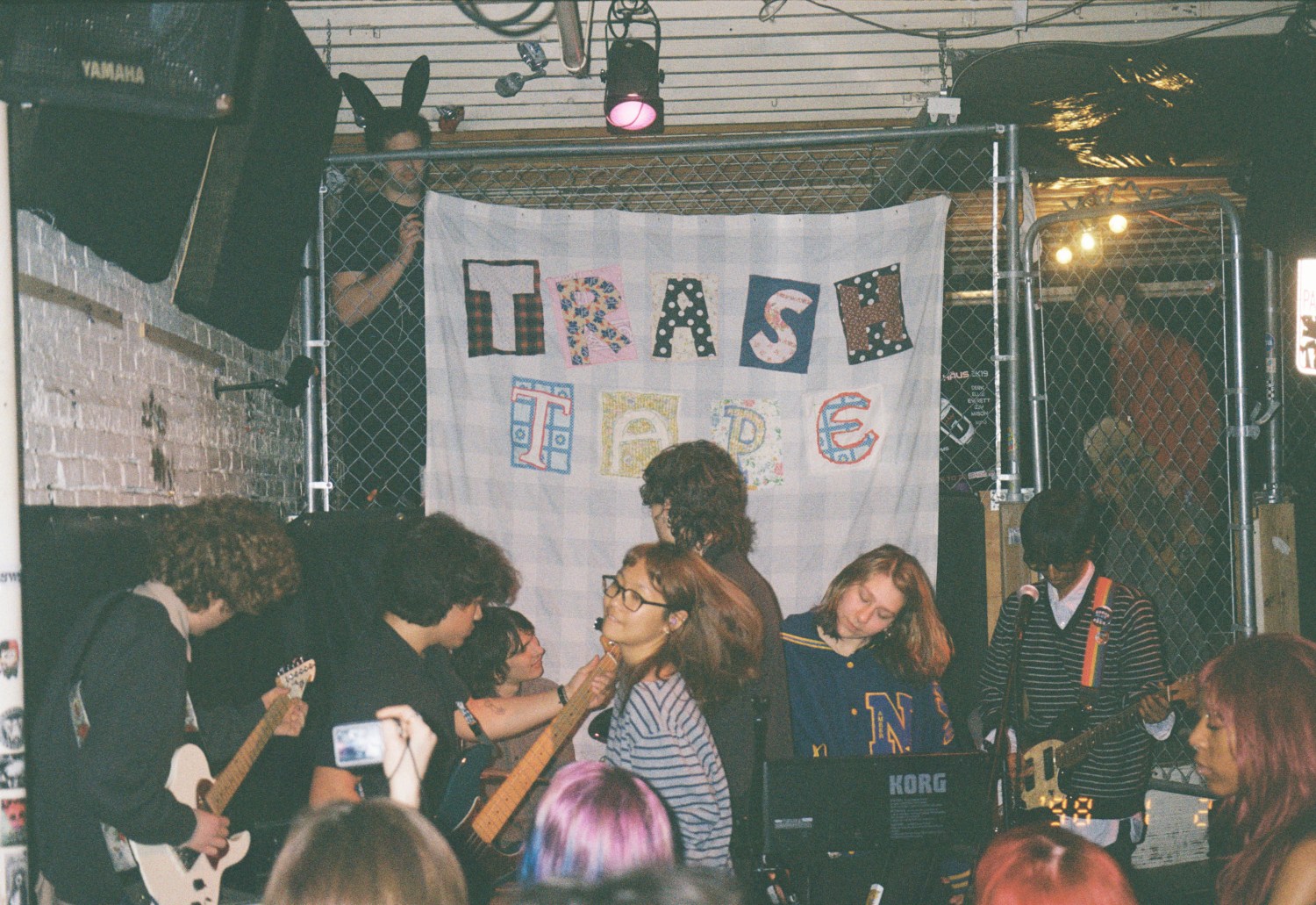
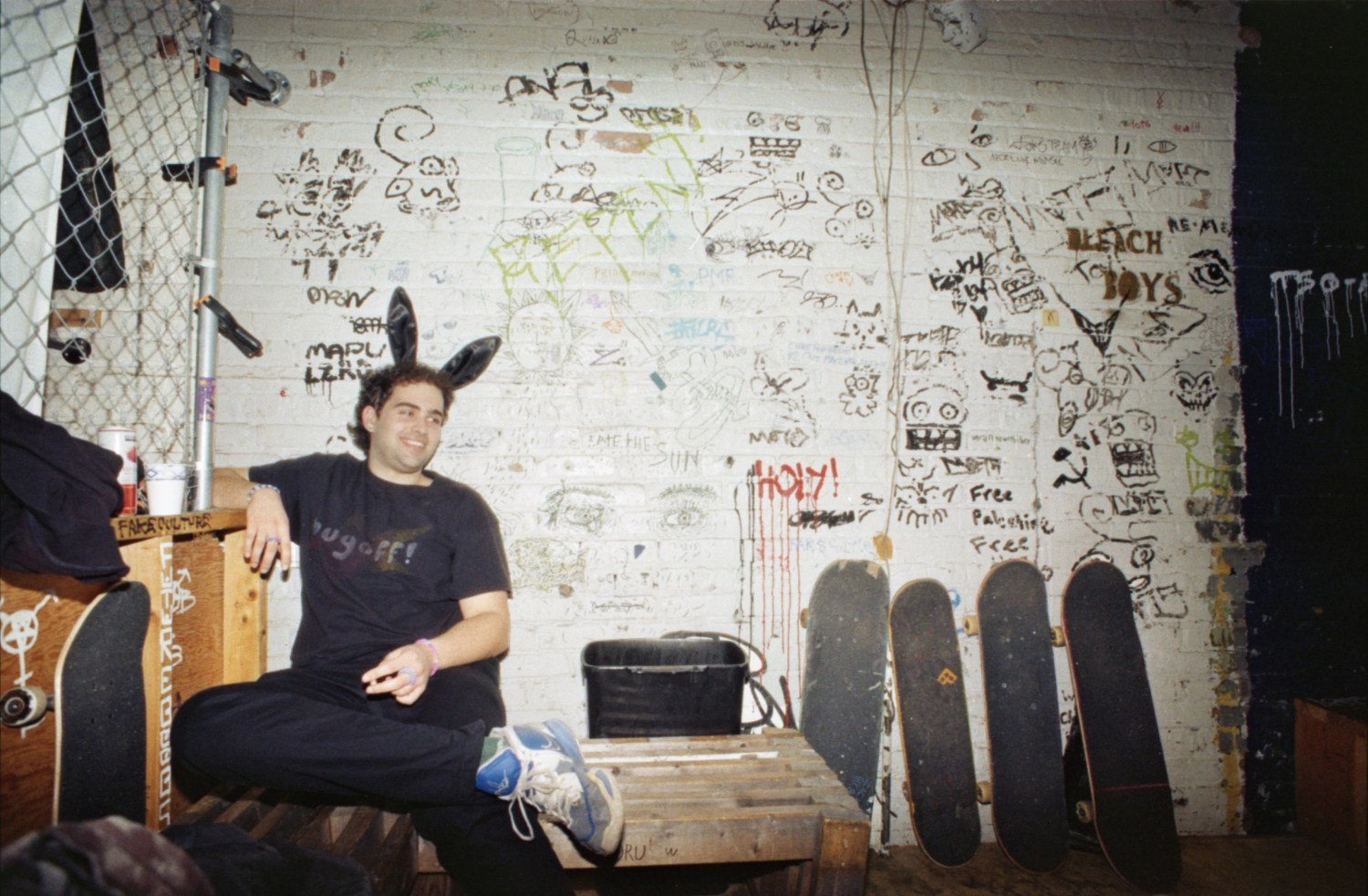
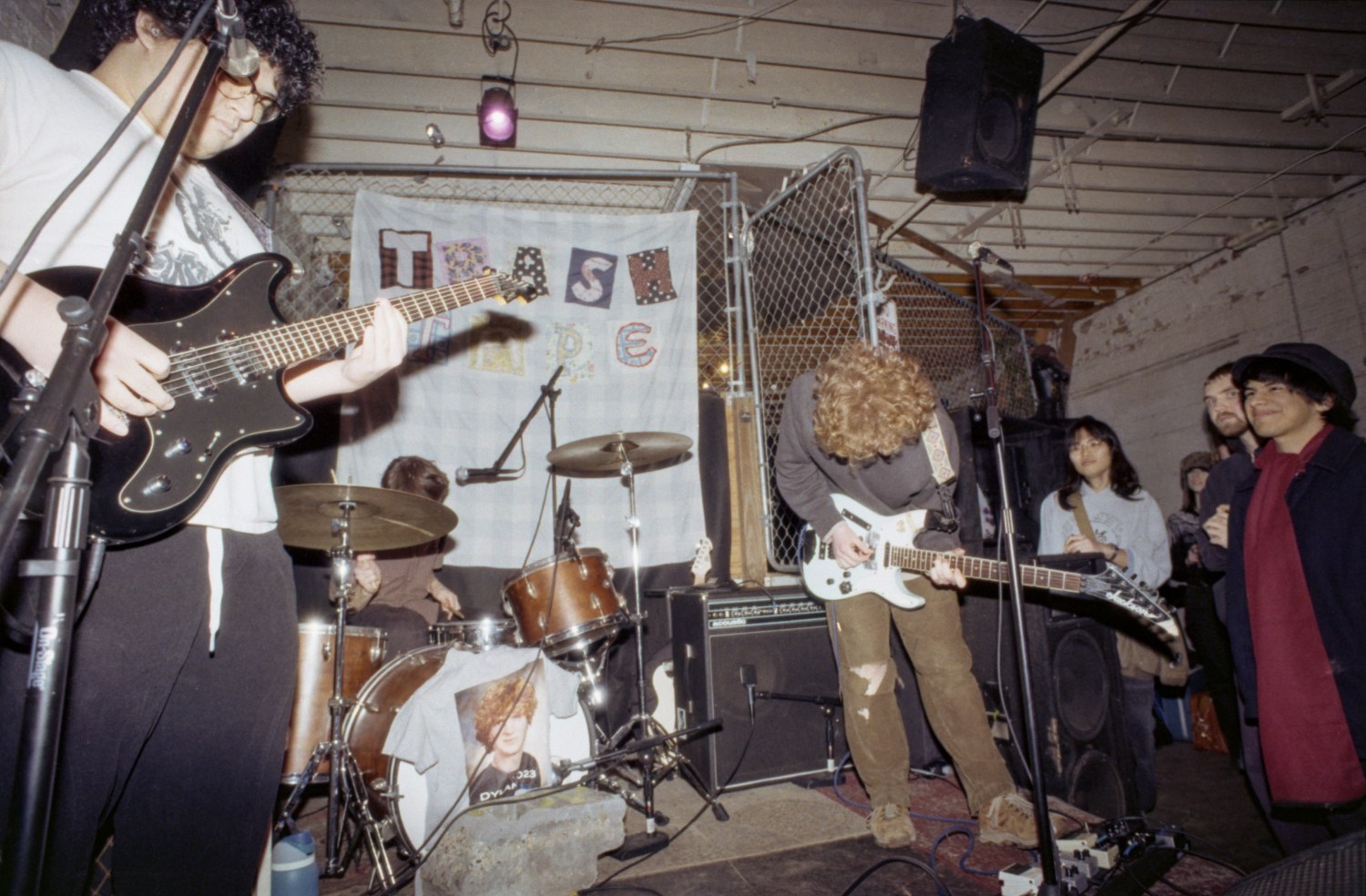
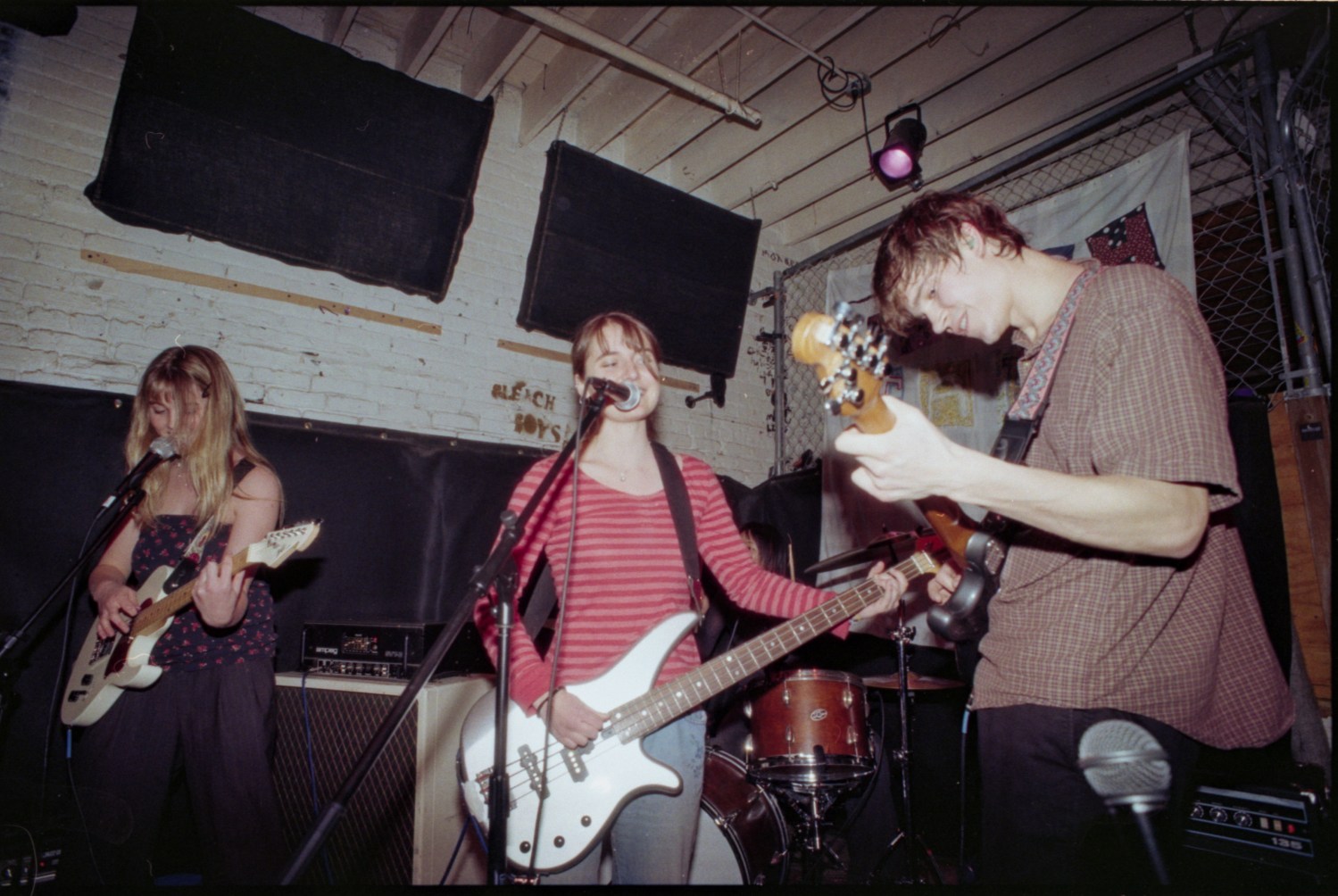
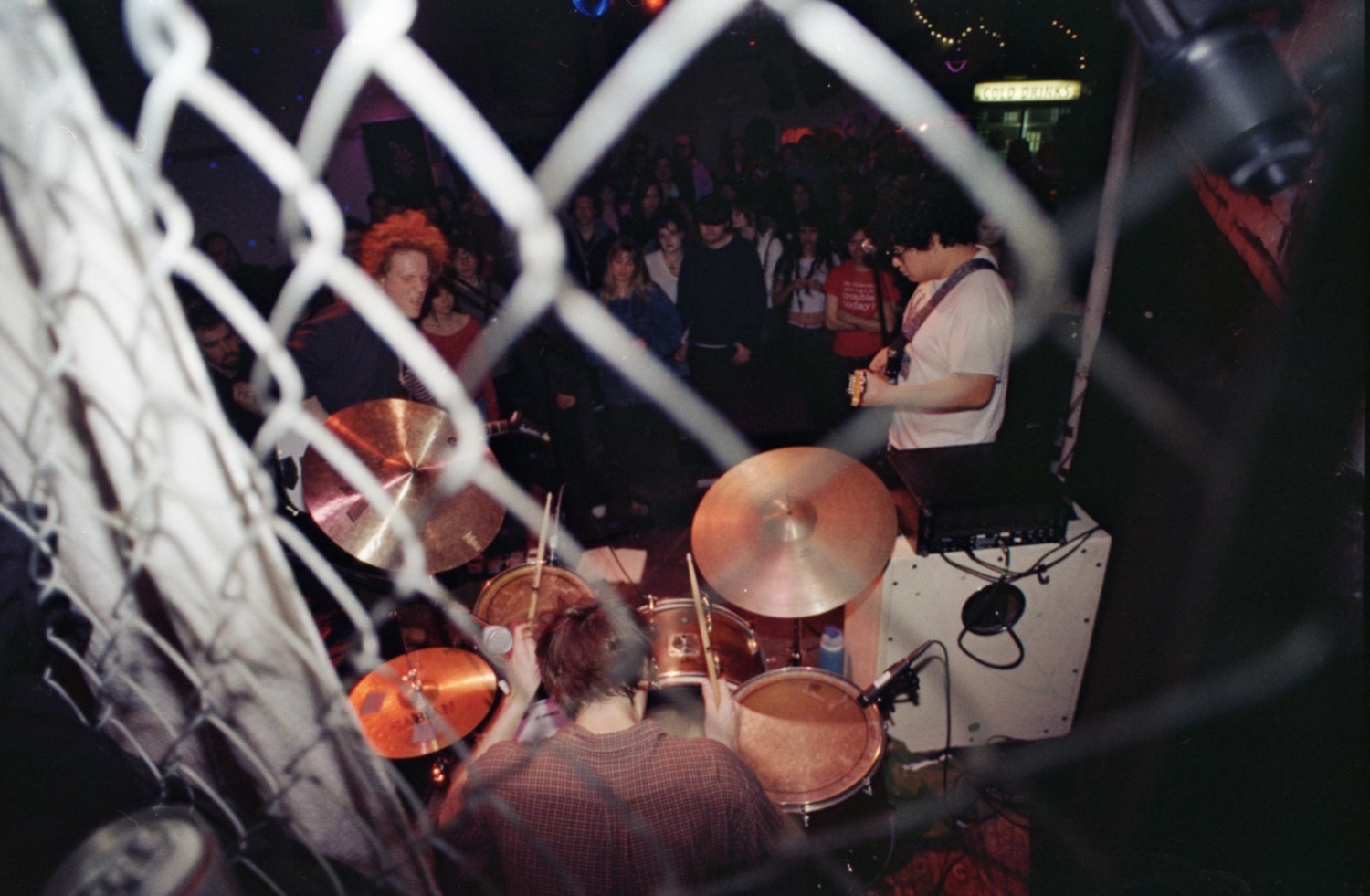
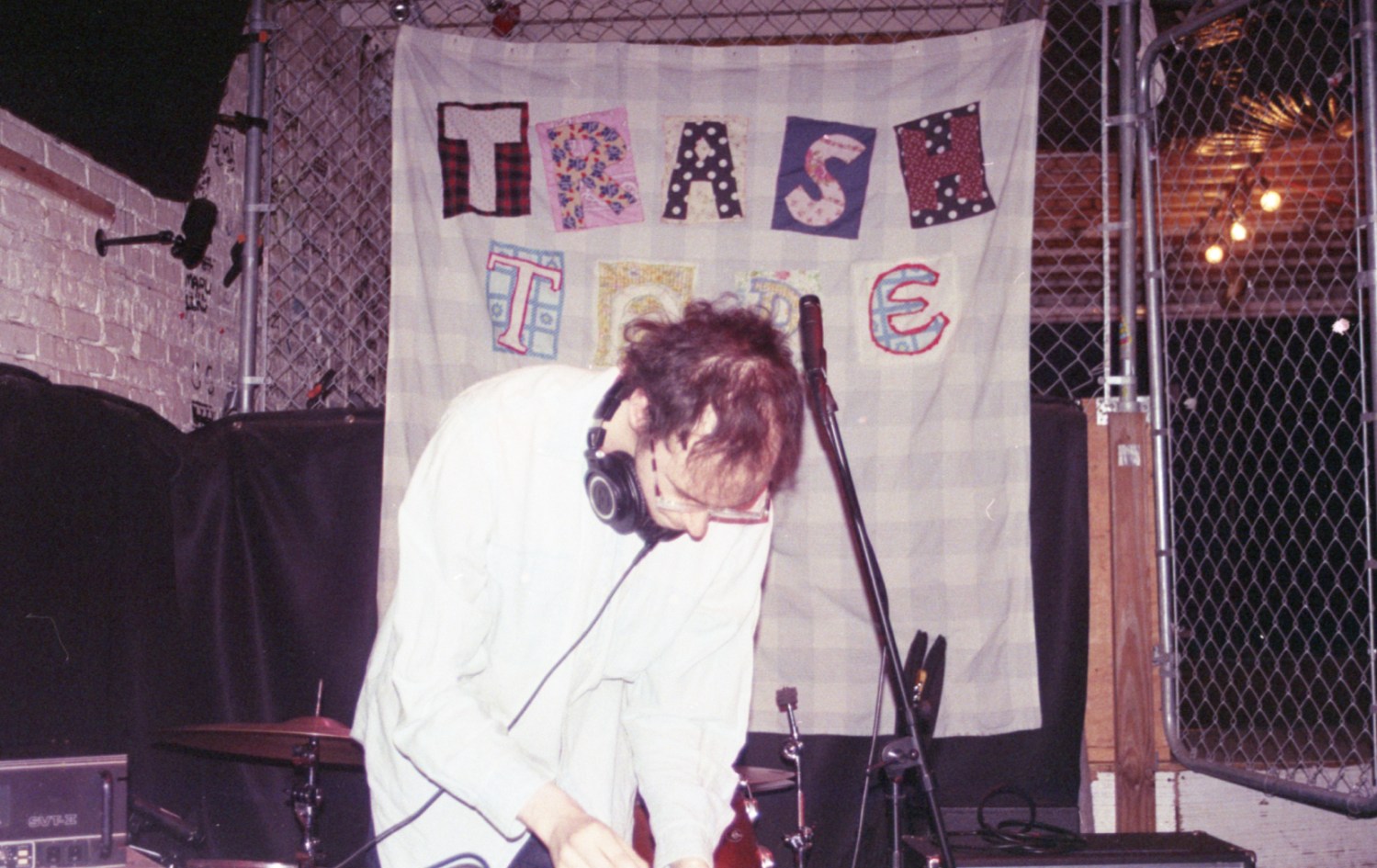
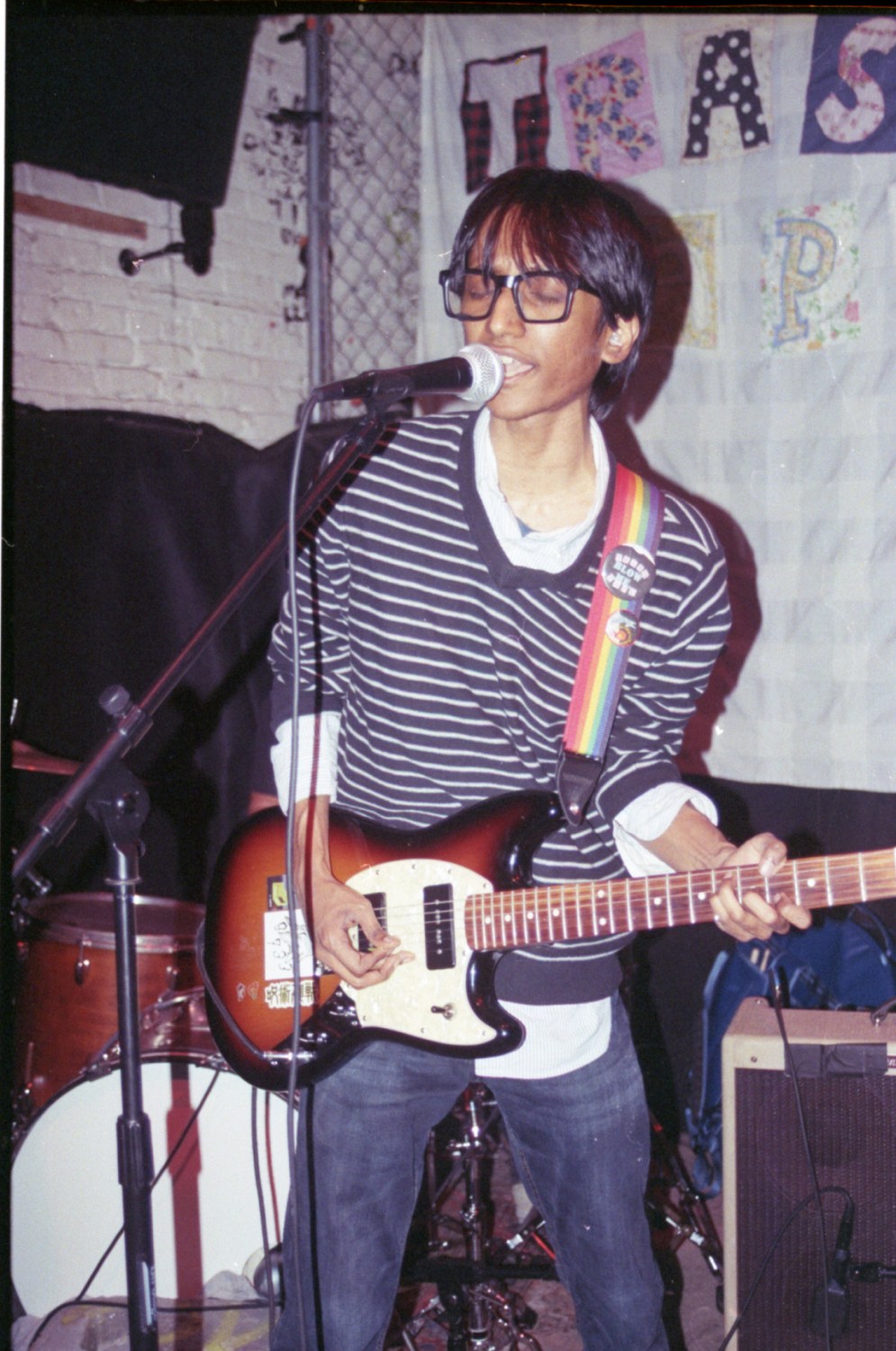
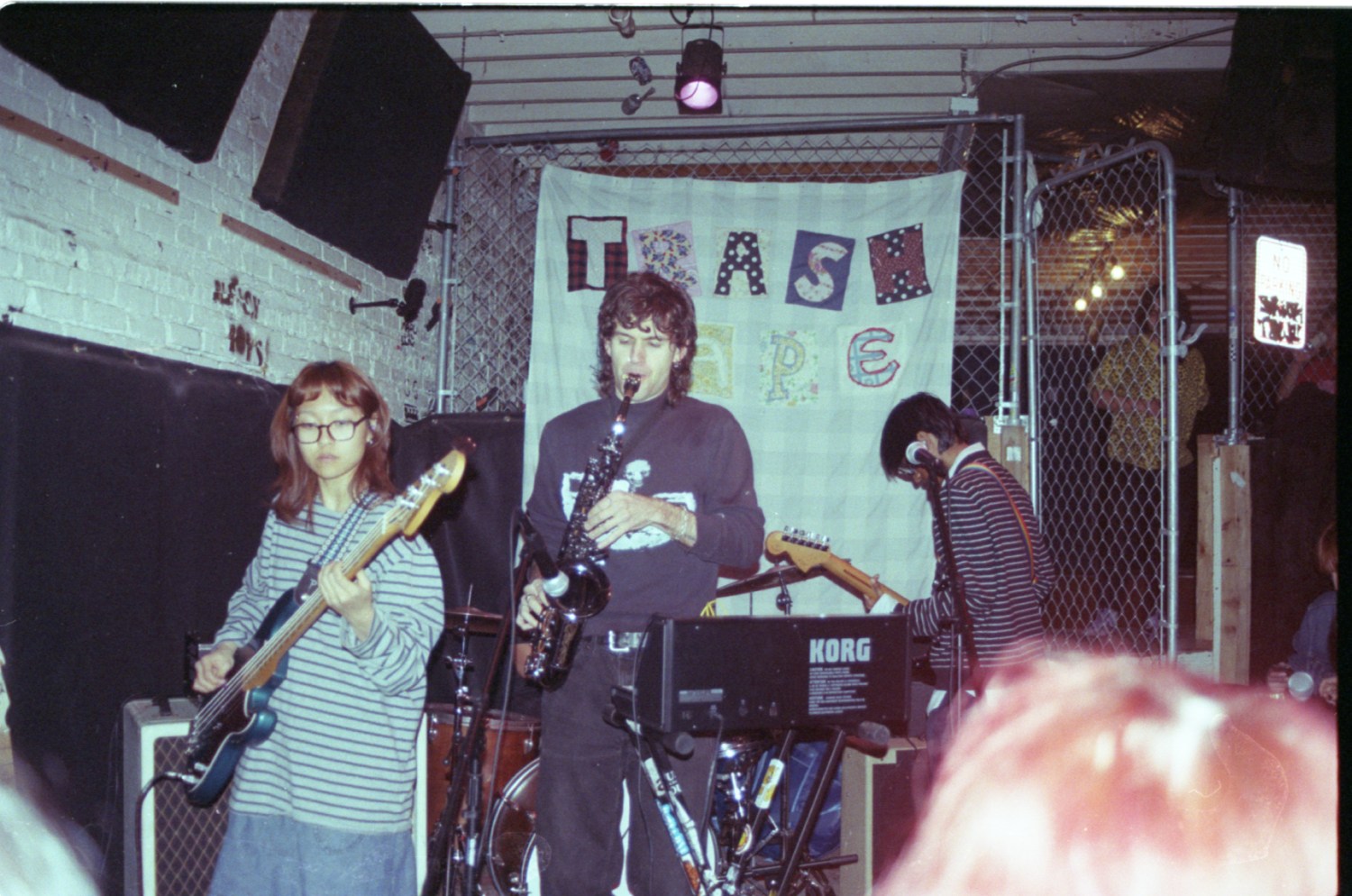
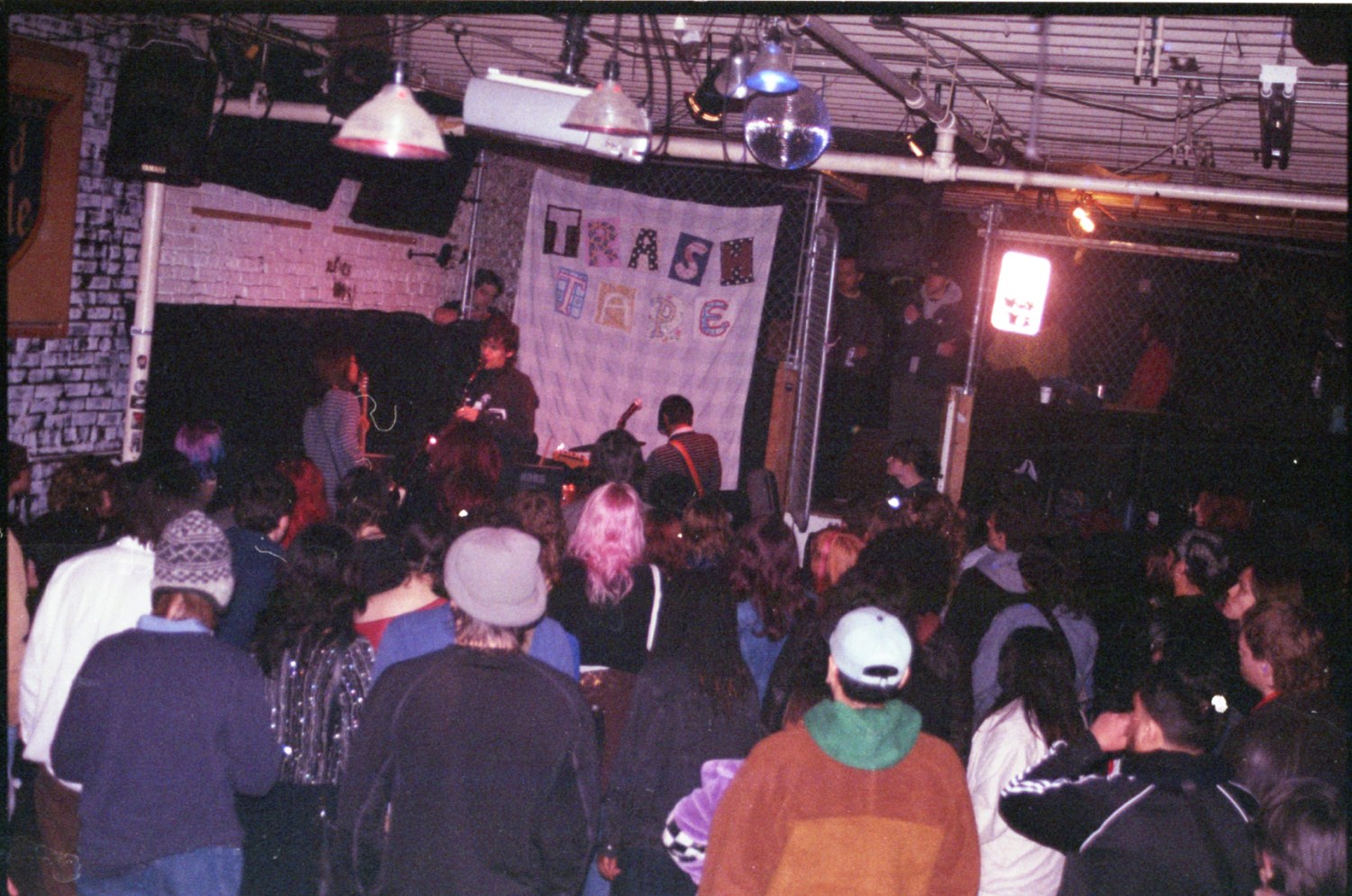
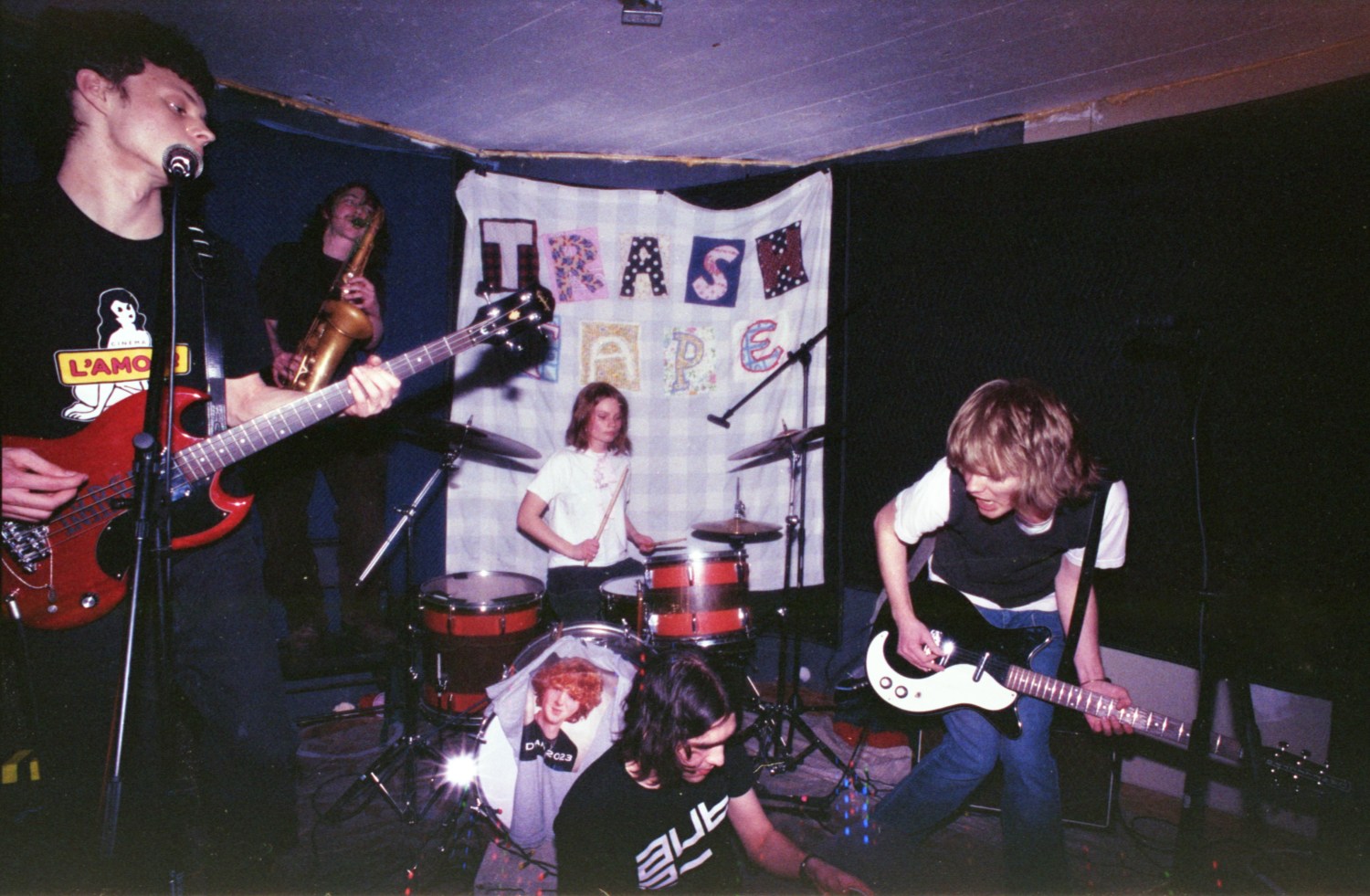
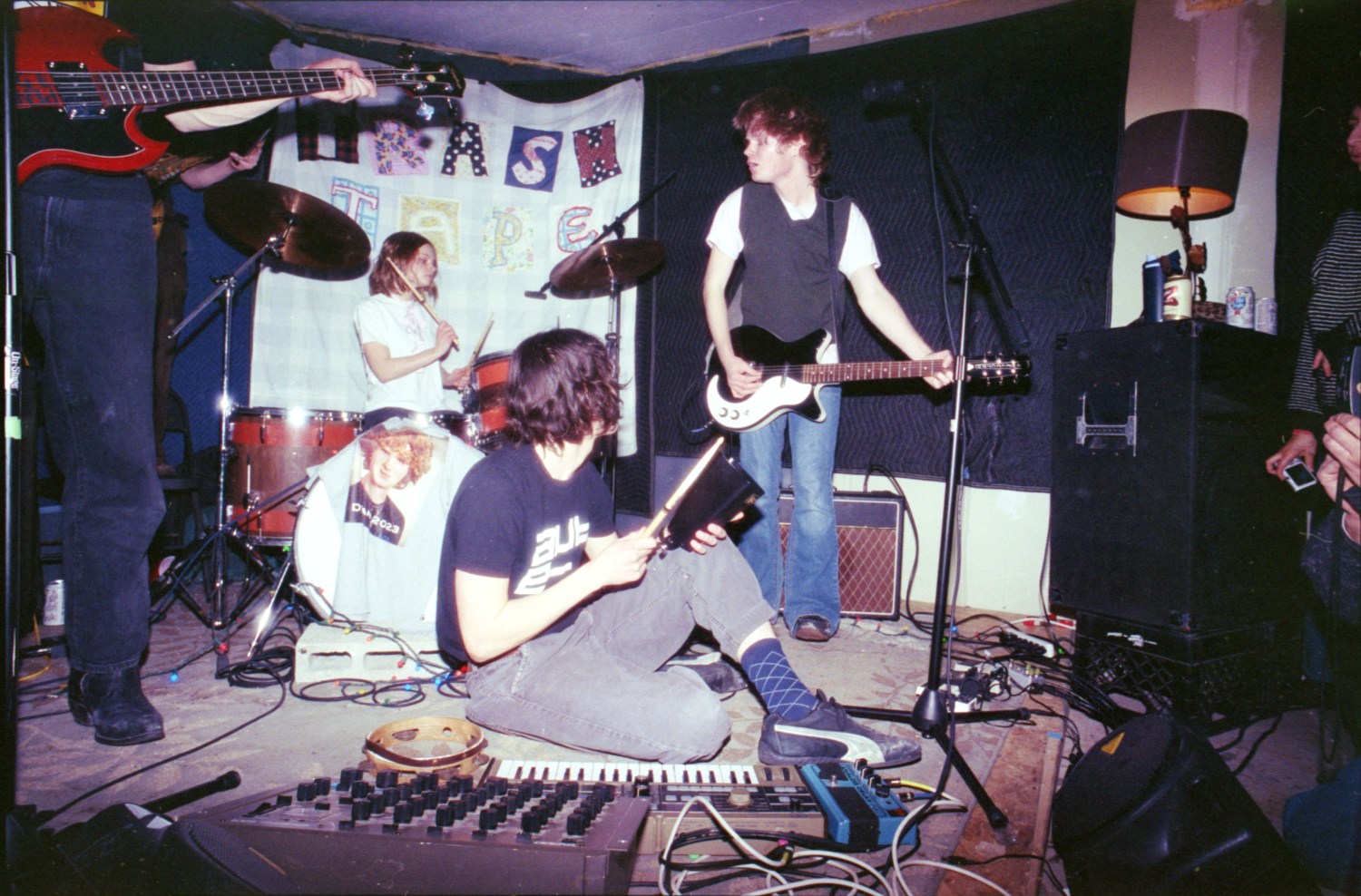
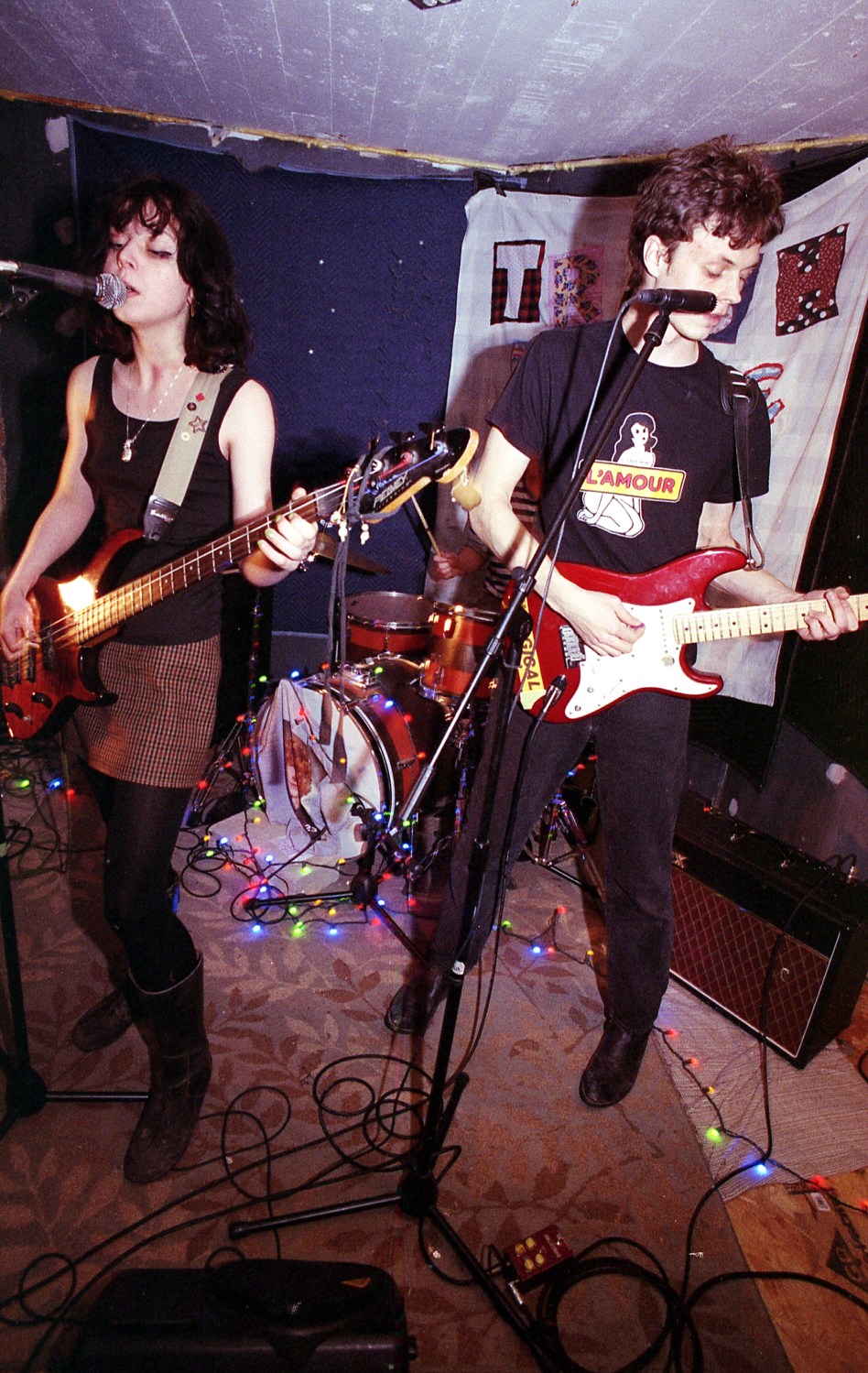
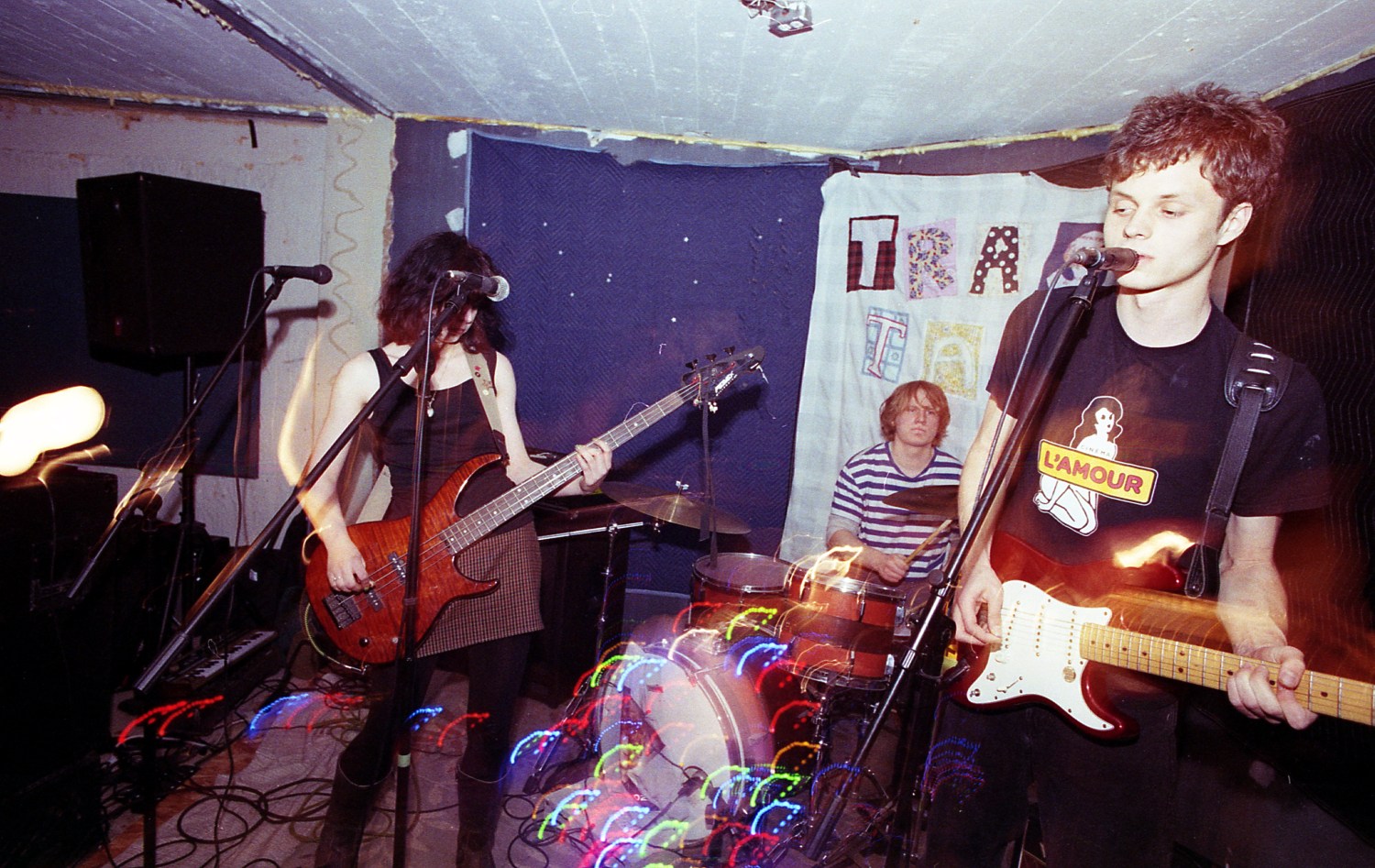
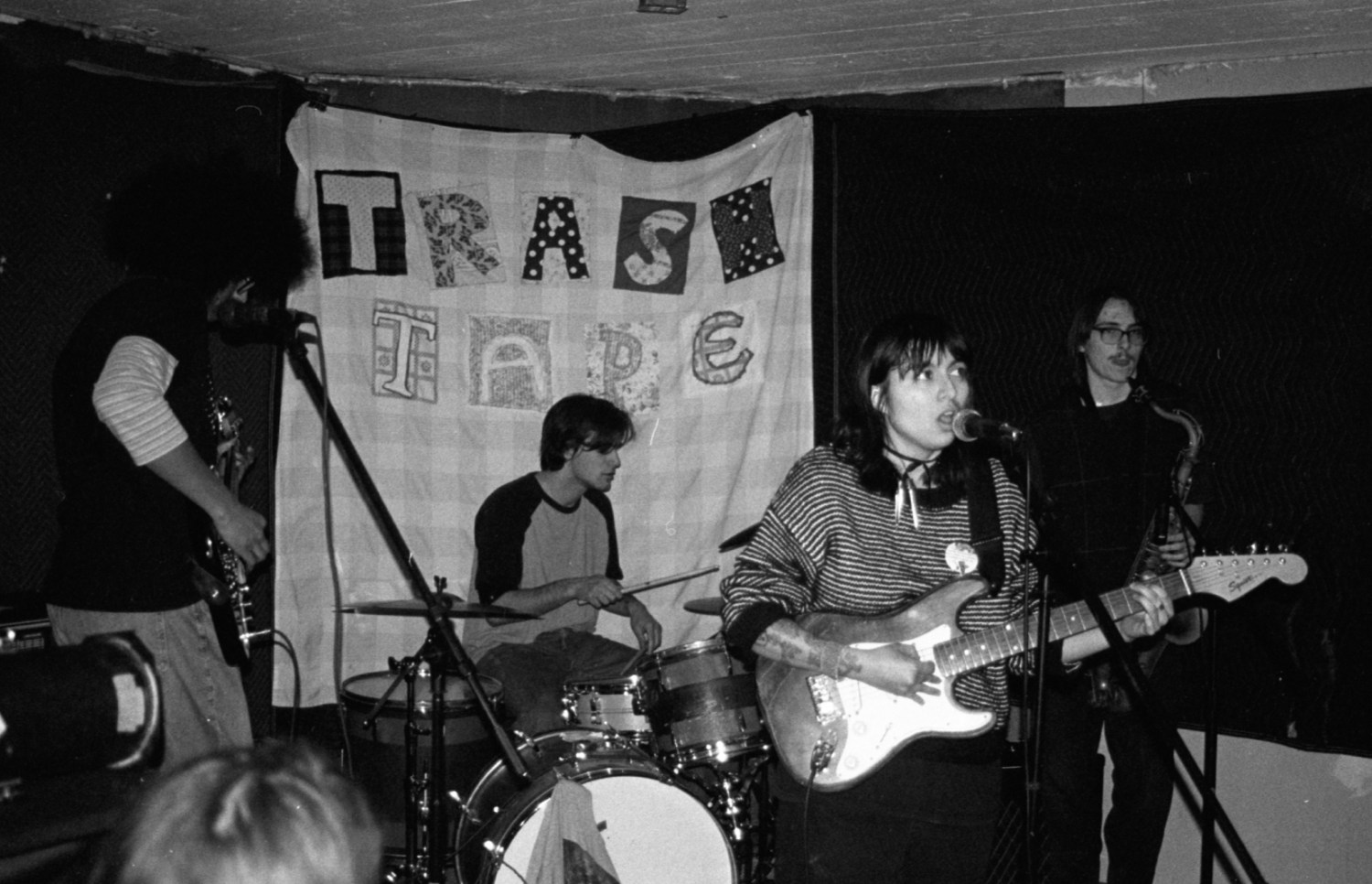
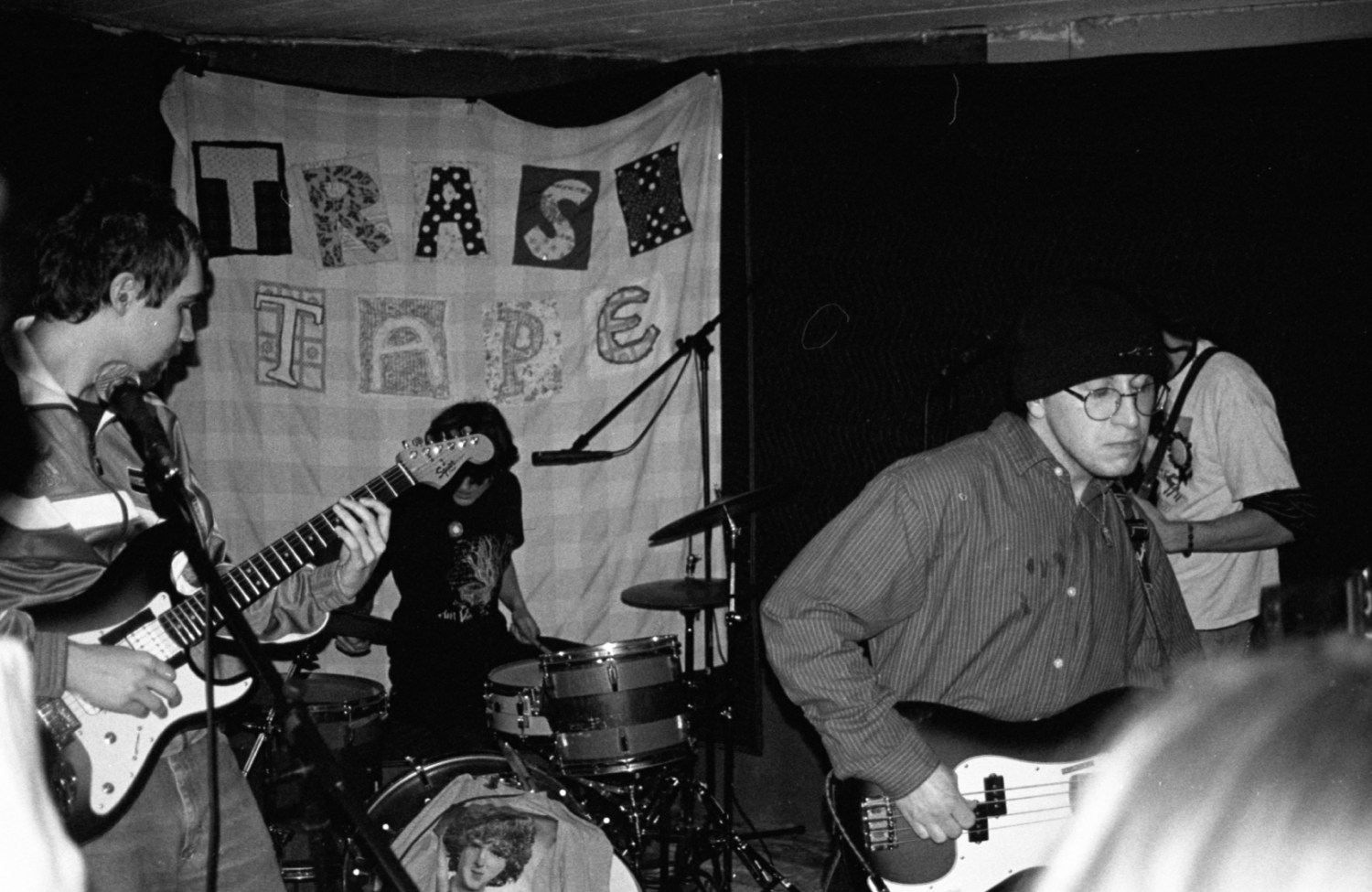
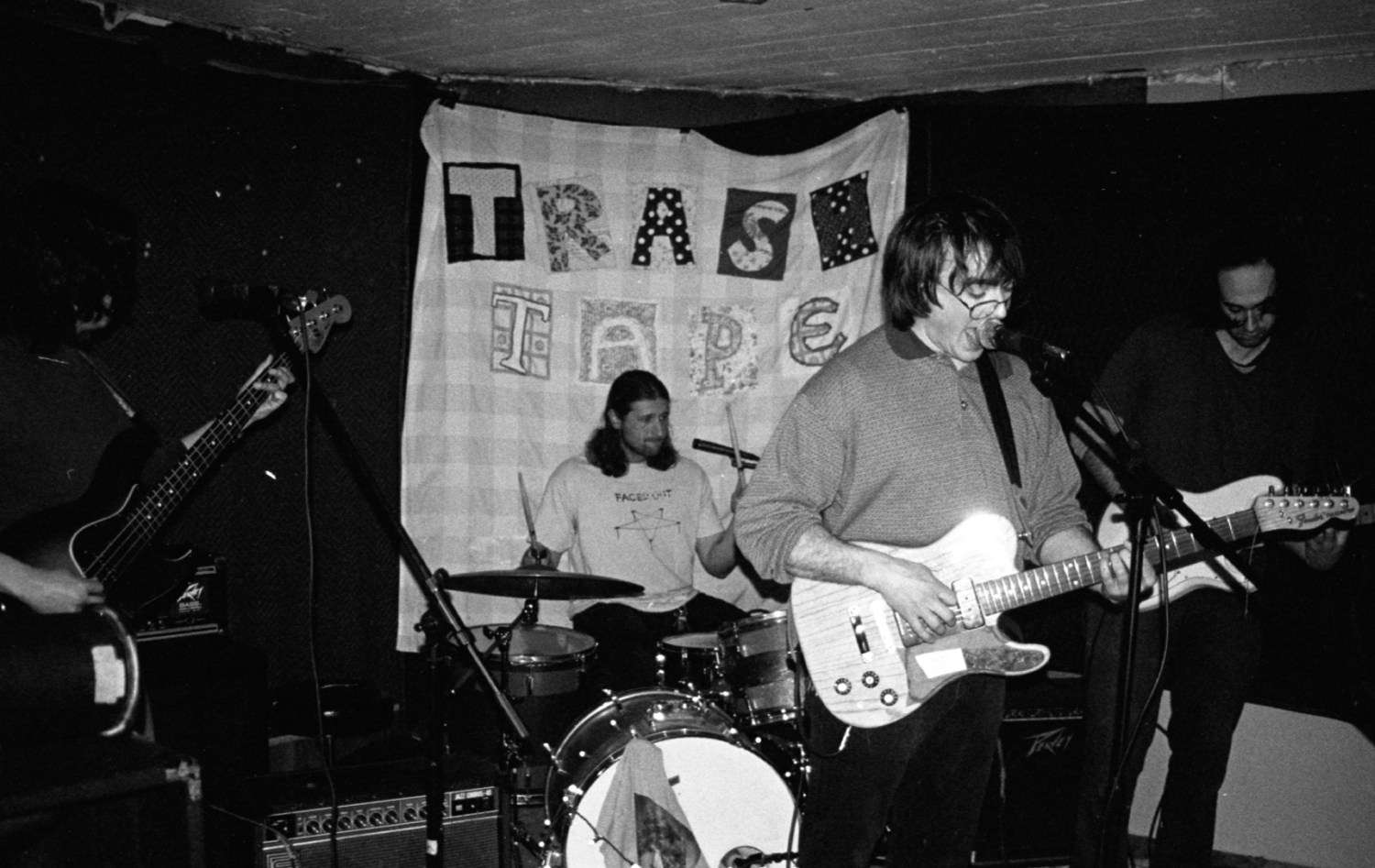
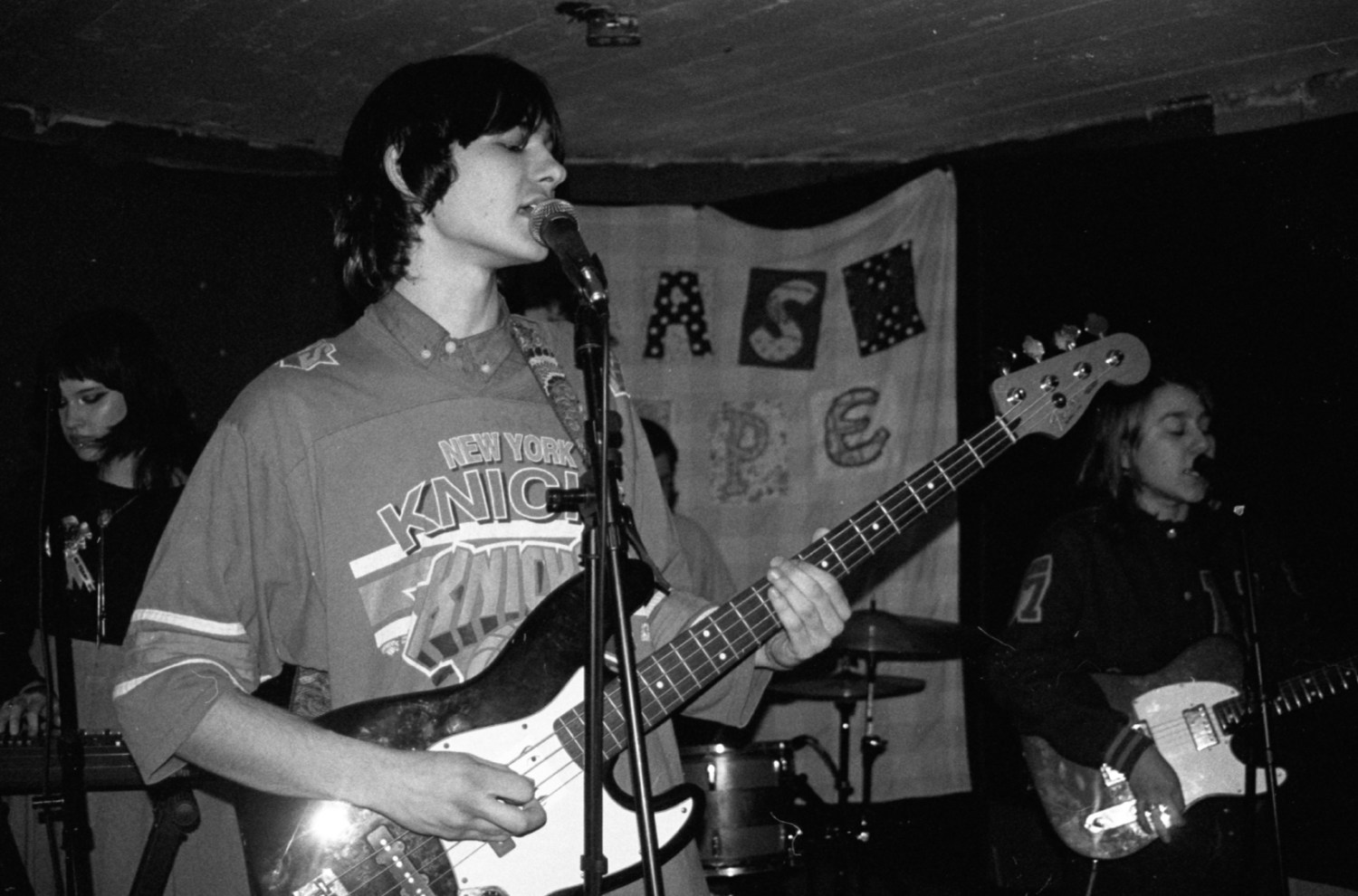
Taking over Chicago for two weekends, Trash Tape Records celebrated 6 years of DIY merriment with a three-part festival, bringing out an array of artists both on the label and local Chicago (and out-of-town) legends. The party started at Bricktown on Valentines Day, followed by a night of DJs at the legendary Rainbo Club on the 19th and a final set at Lowdown on the 22nd.
Originally formed in the Chappell Hill and Durham area when they were in high school, Trash Tape Records was founded by Nathan McMurray and Evren and Eilee Centeno. The vision was simple; to put out their friend’s music that they loved so much. Building off of that youthful excitement with a sheer DIY ethos, Trash Tape became a home to many artists with similar mindsets, making their art accessible, exciting and incredibly enduring.
2025 was a banner year for the label, as they shared back-to-back-back debut releases, such as the acclaimed self-titled barn burner from Motocrossed, the brain-scratching pop goodies of Welcome to the Shower by Tanner York, and Charlie Johnston’s imaginative The Firetruck is Running Late. So far this year, TTR has shared WhatThe Red Flare Meant, the long-awaited debut record from mail., bringing obsessive expositions of harsh dynamics and commanding melodies out from the dark and into the spotlight. Fan favorite Memory Card also returns with Siren Surf Hurricane, as Henry Tart continues to grow his catalog of enduring sentiments and melodically rich lo-fi swooners. Then recently, NC pop-defibrillators, gumhead, share their debut single titled “Covered”. Not to mention Oh Good! Sacred Heart Academy Made an EP, the debut EP from the Centeno siblings’ new project, Sacred Heart Academy. And keep an eye out for a new release from sects in the near future.
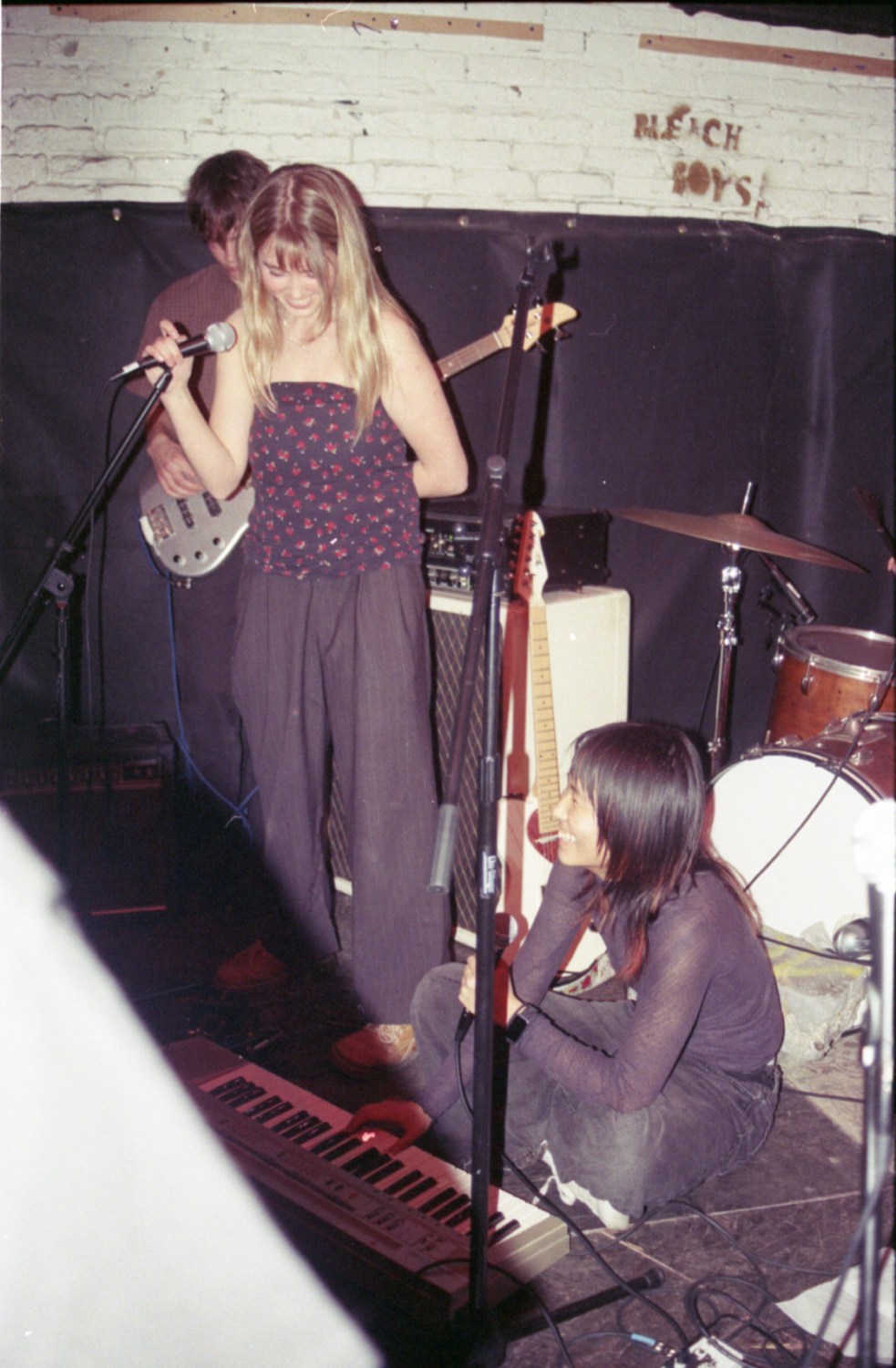
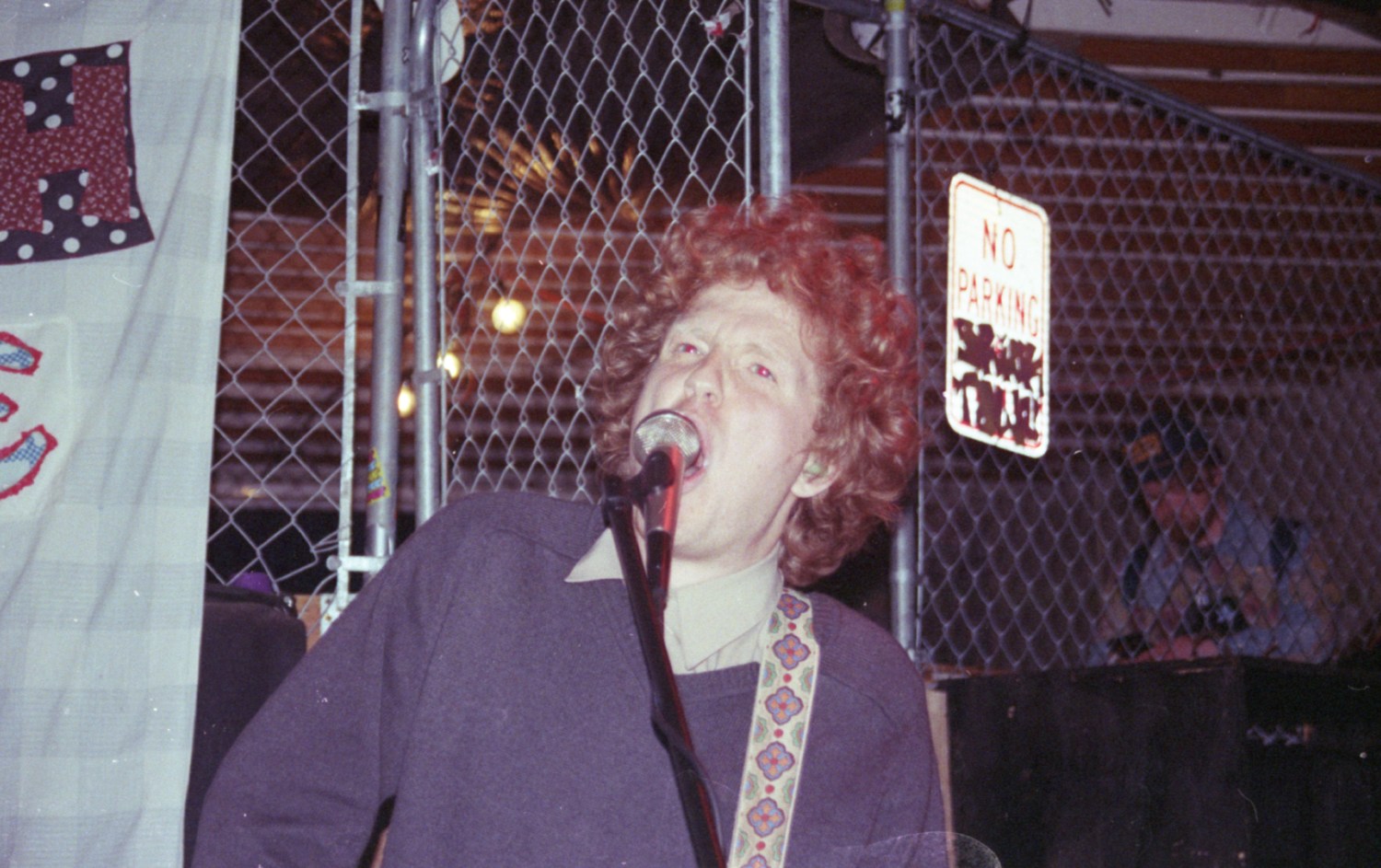
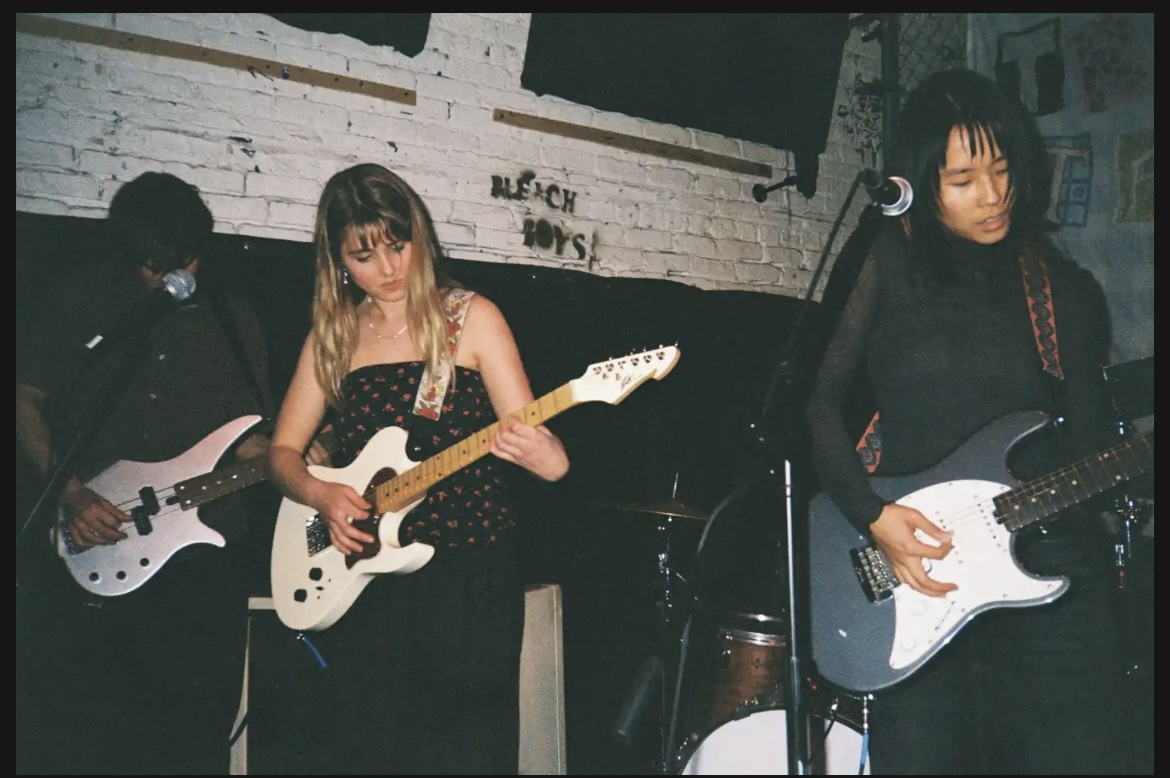
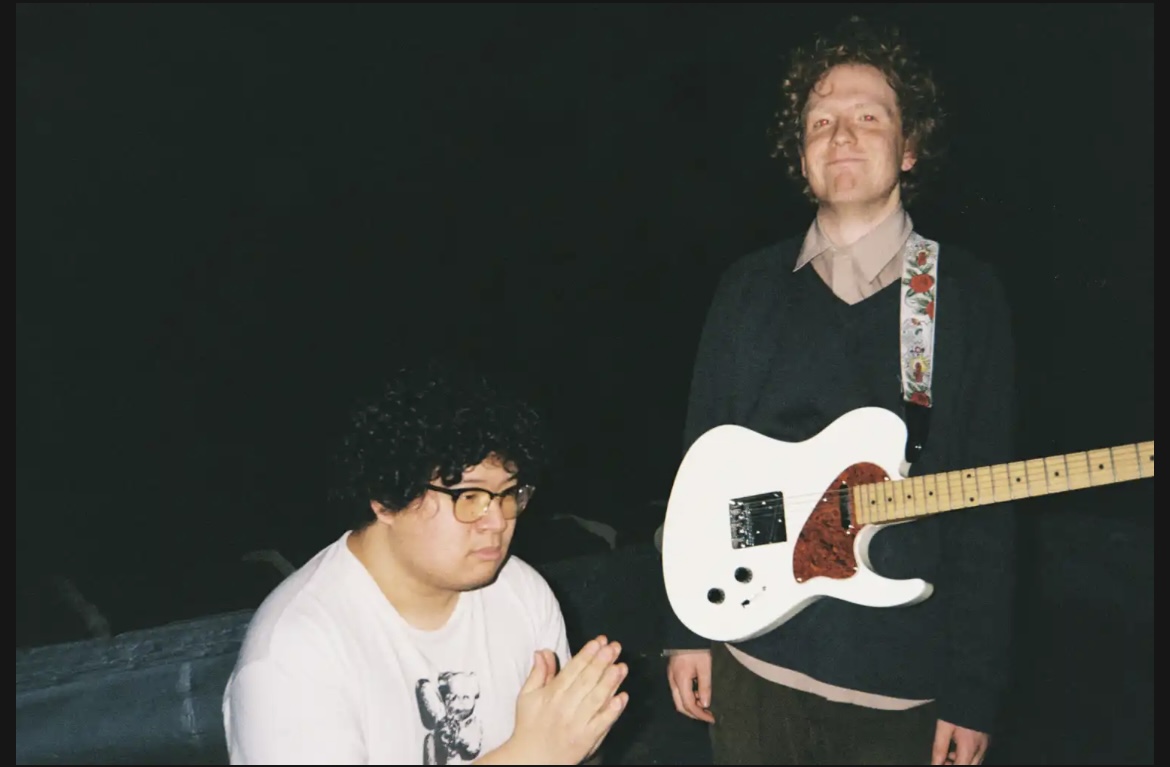
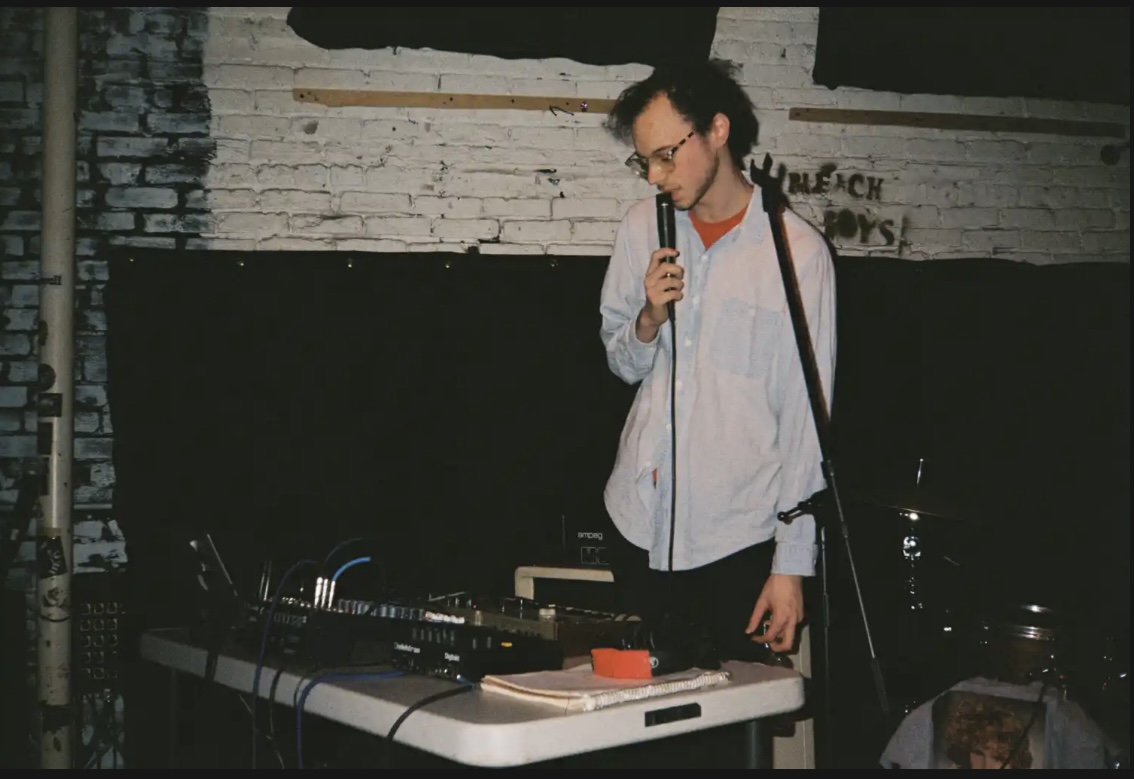
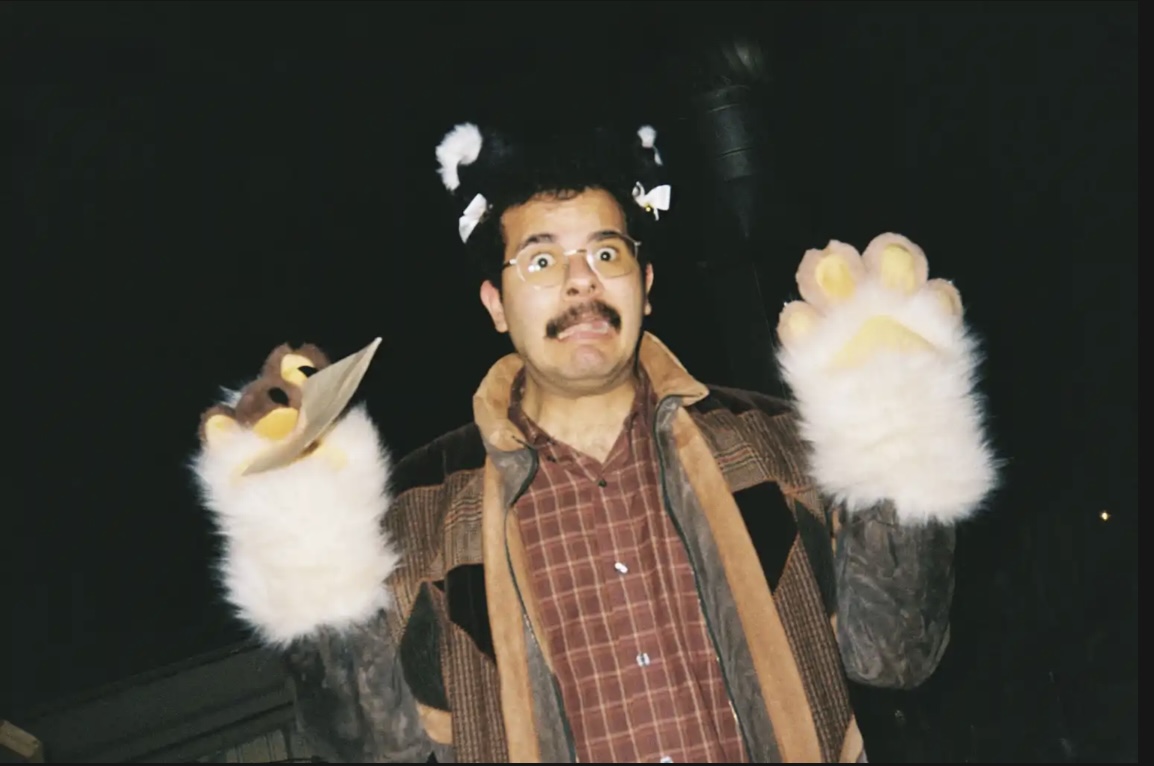
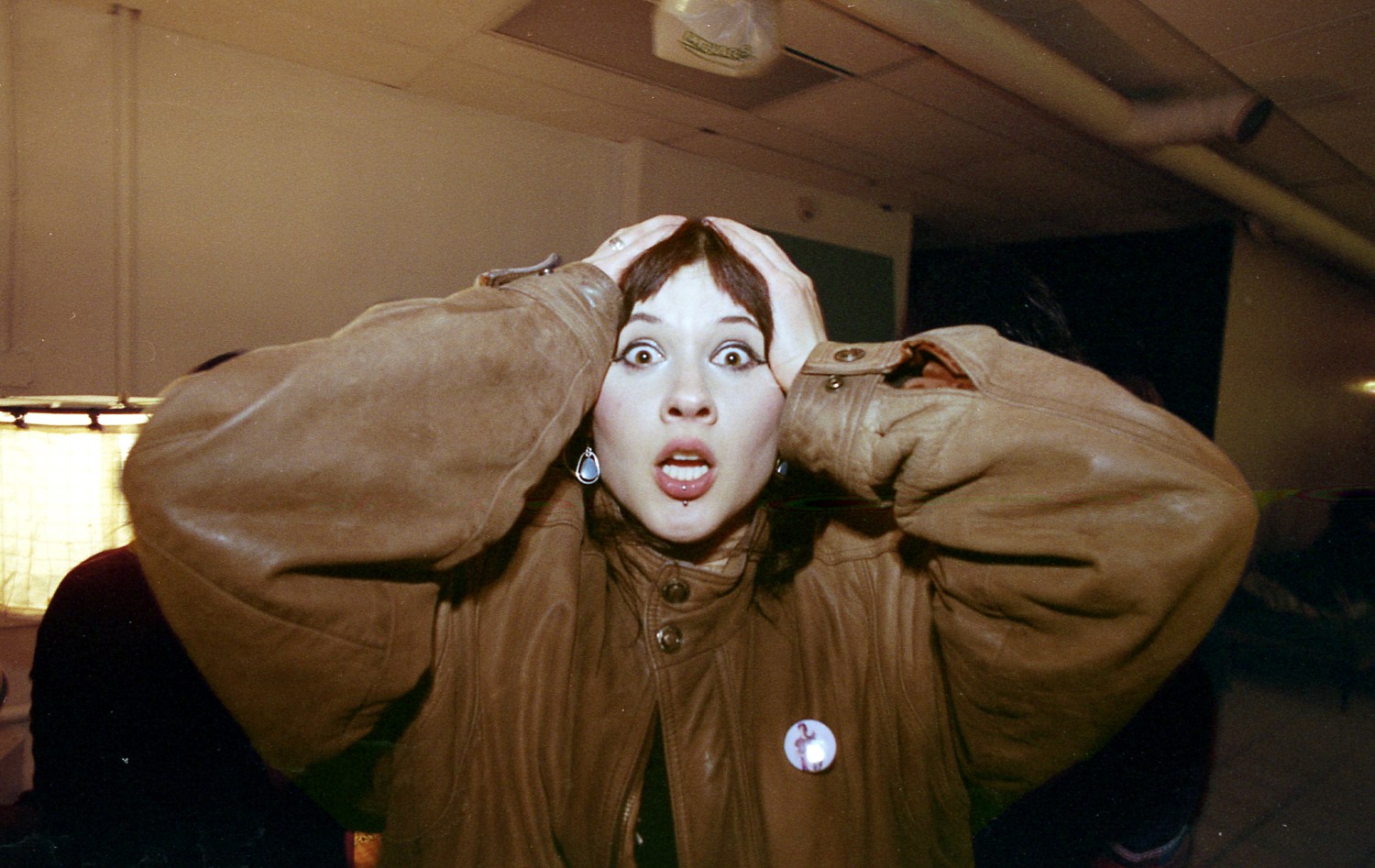
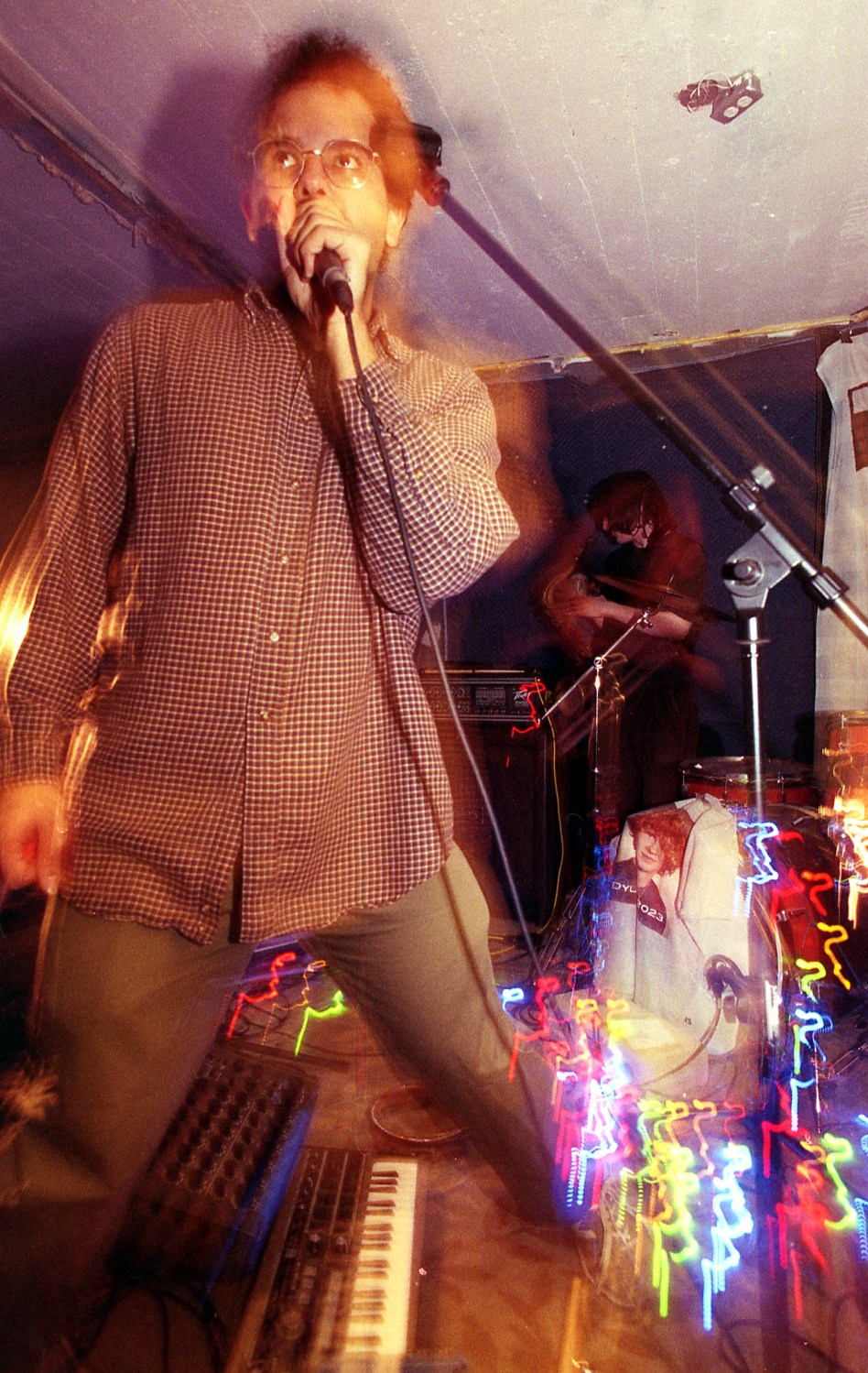
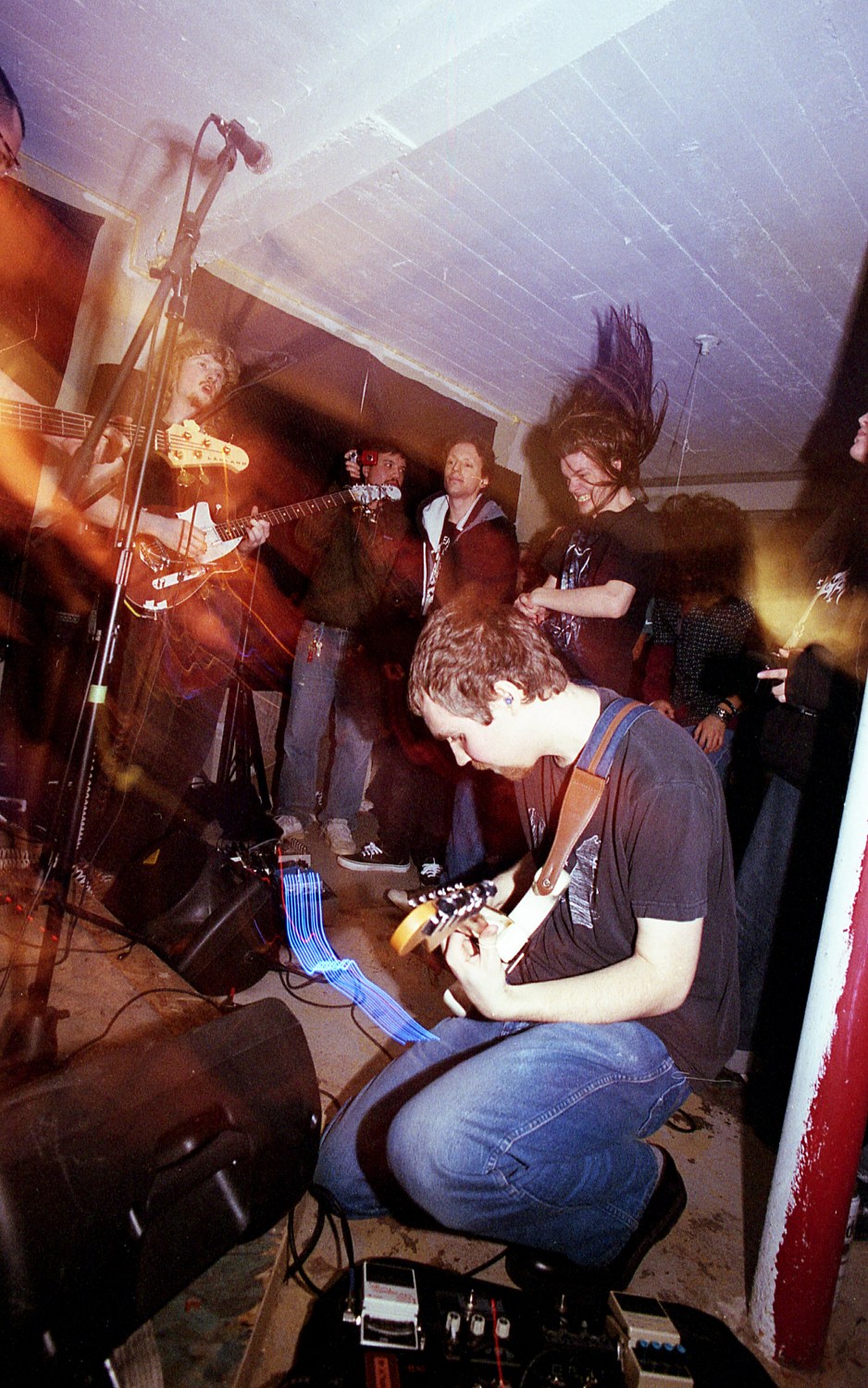
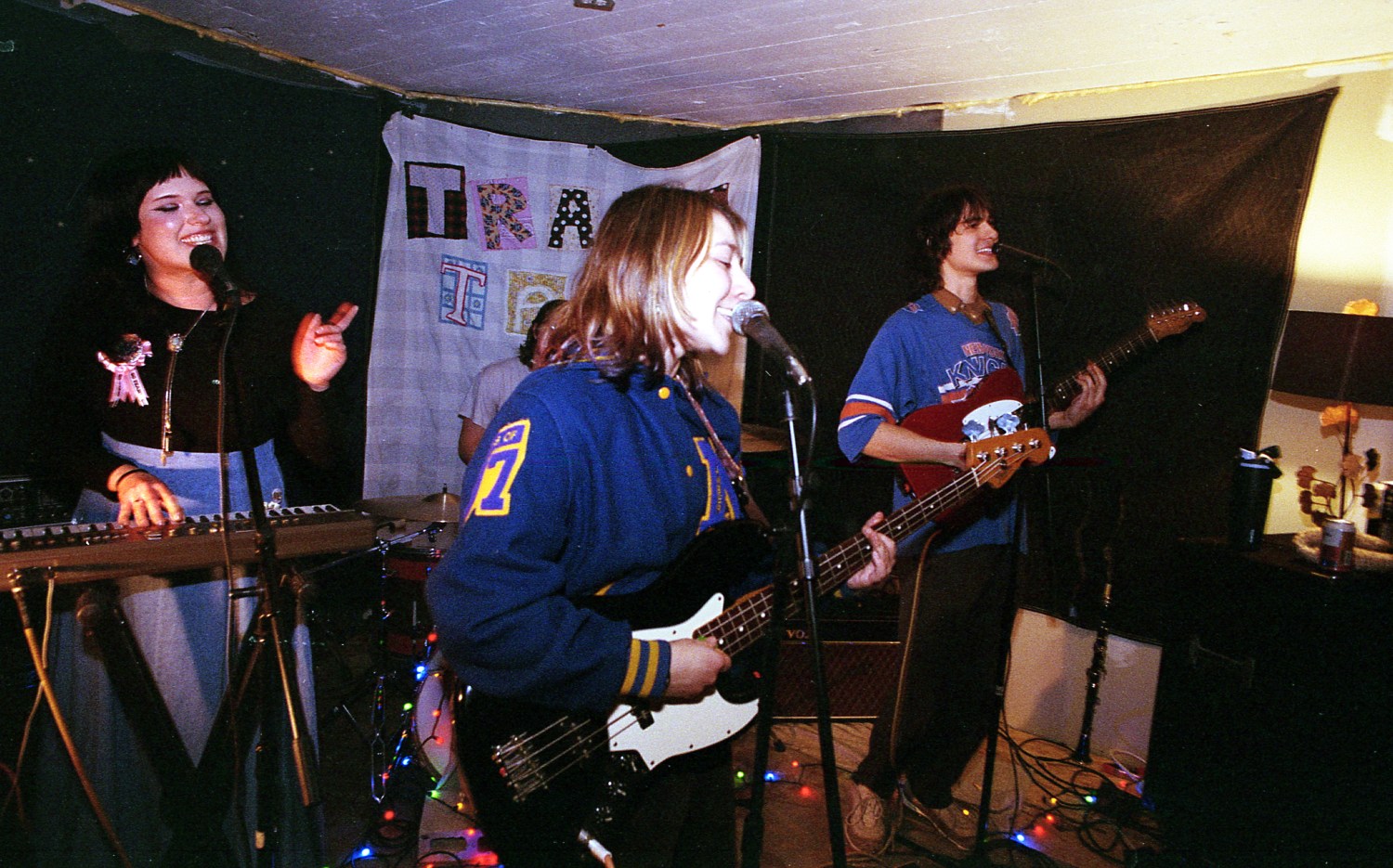
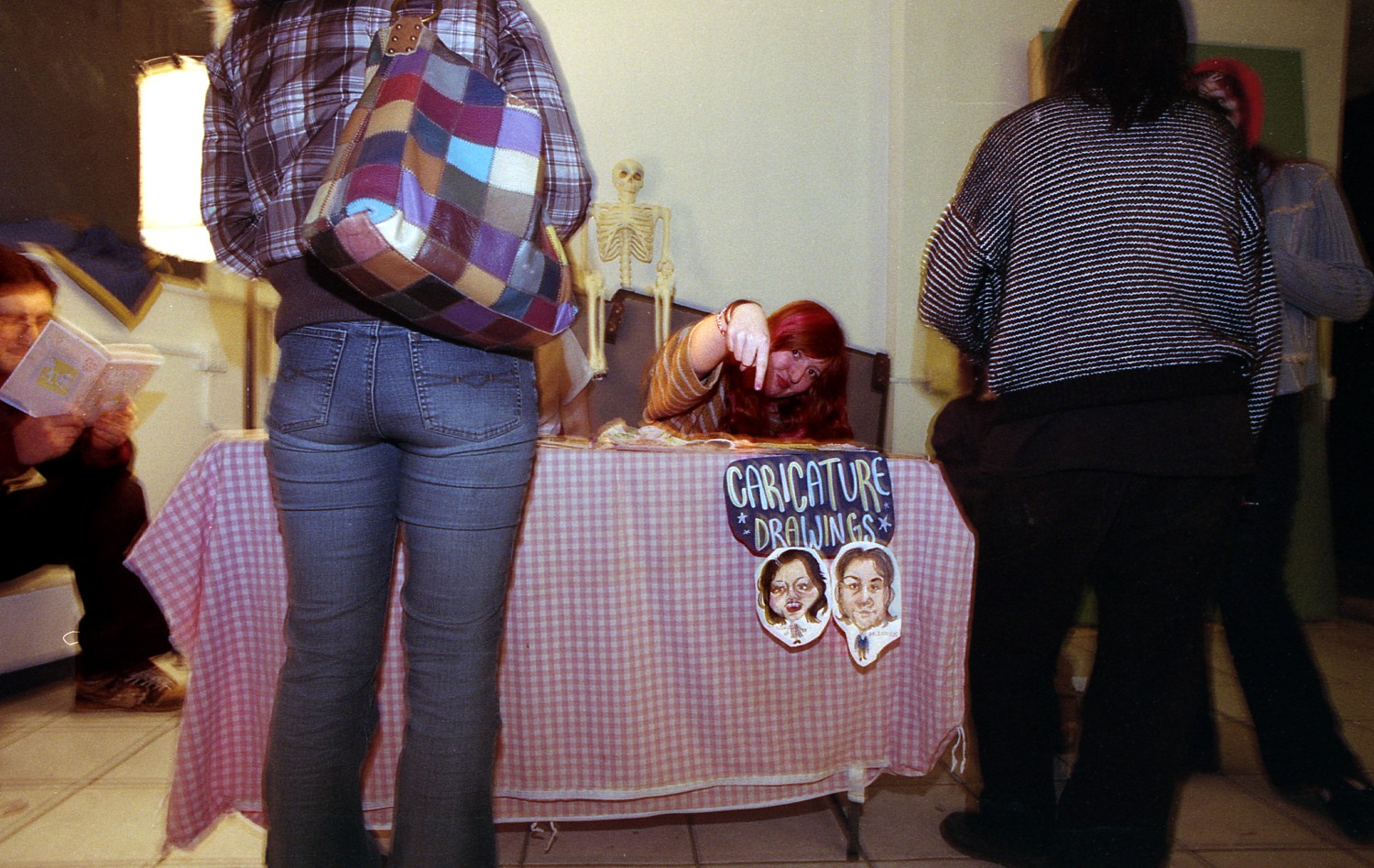
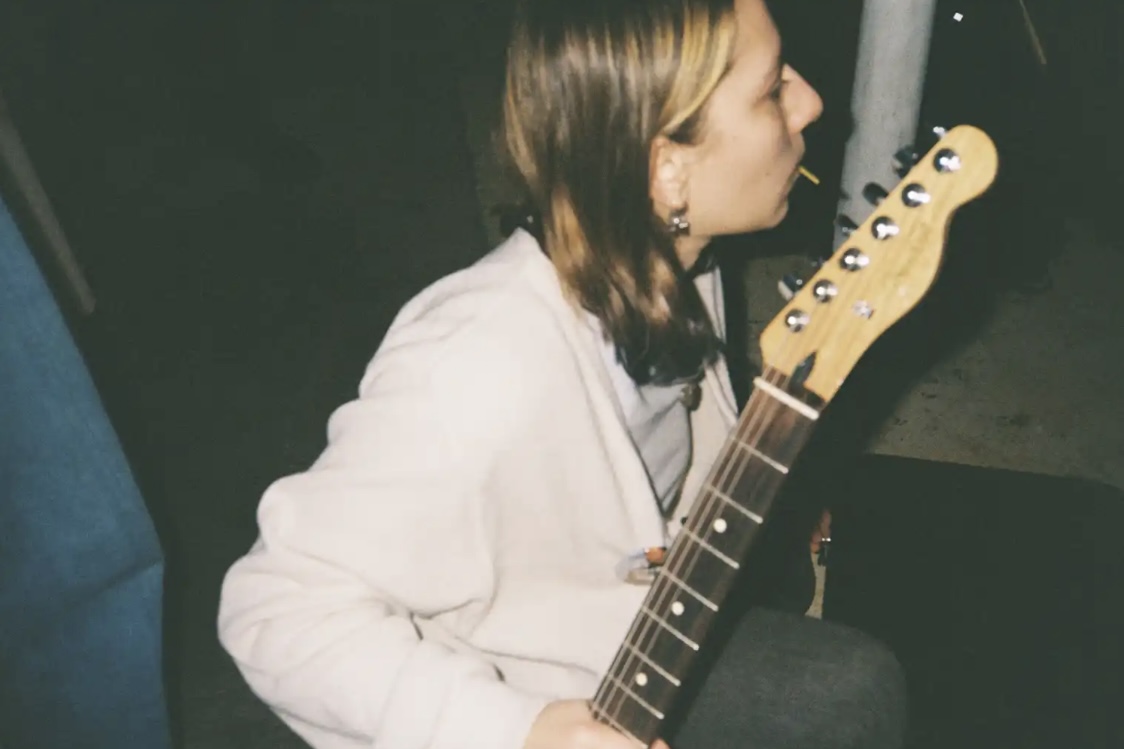
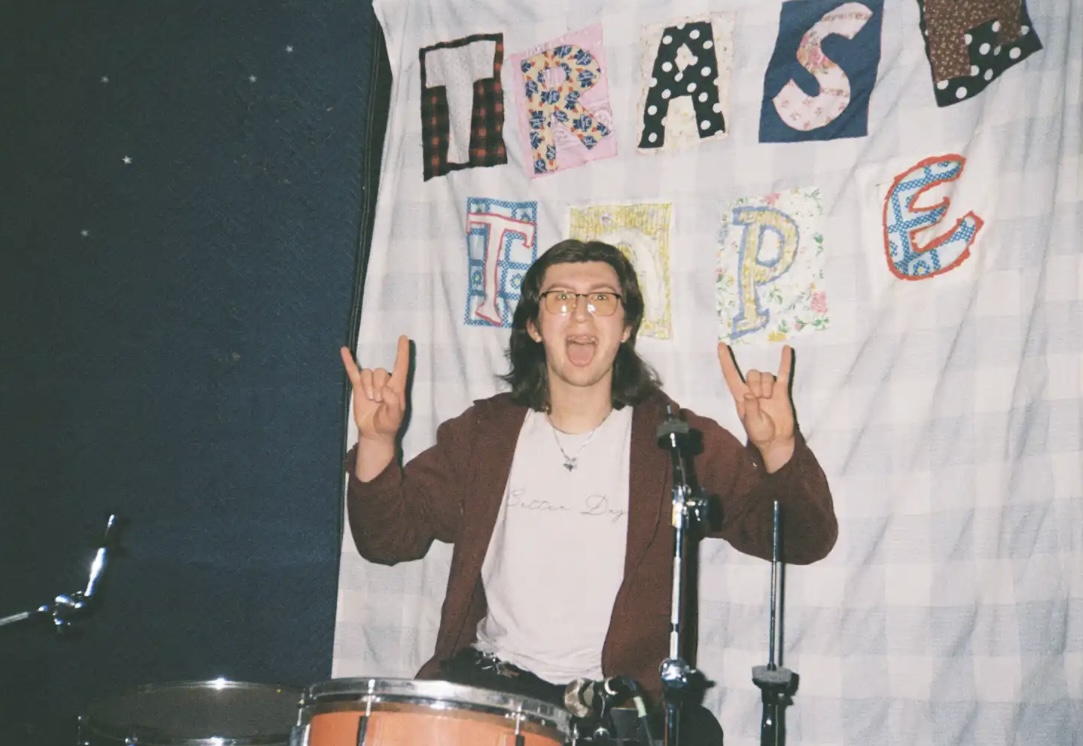
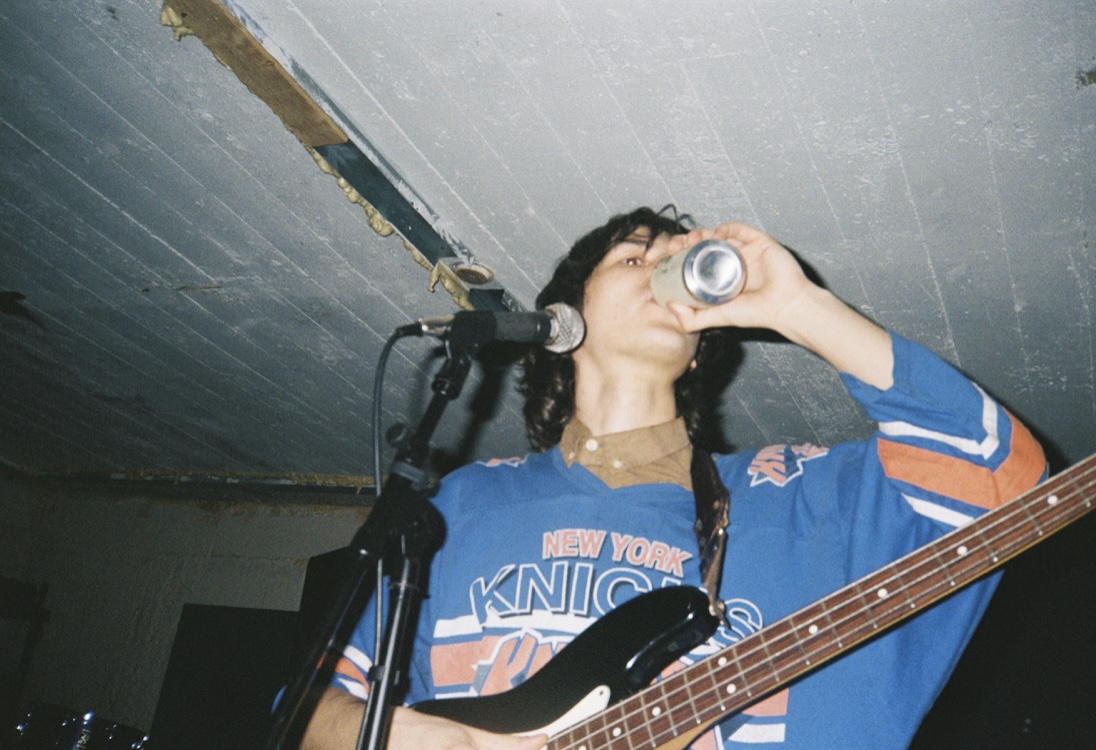
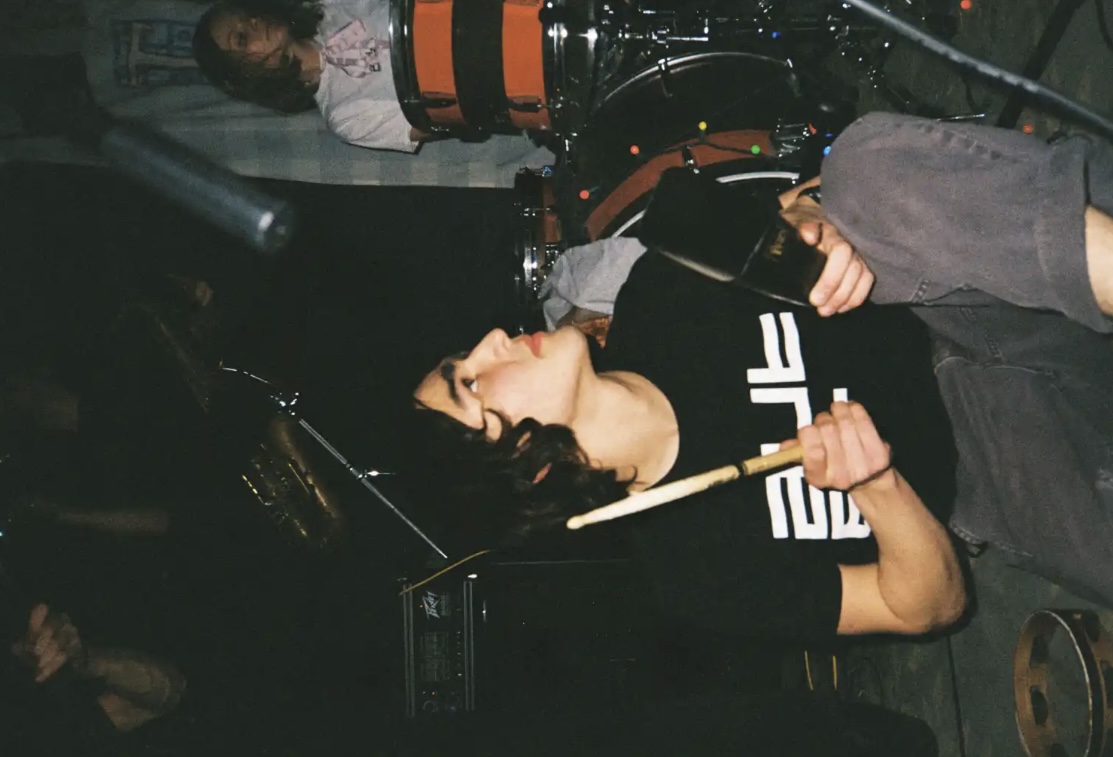
Collecting photos from Averi Love Little, Braeden Long, Kian Kermani and Lauren Schmit, take a look at two weekends worth of Taking out the Trash.
Watch a compilation of the whole festival recorded by Eilee Centeno.
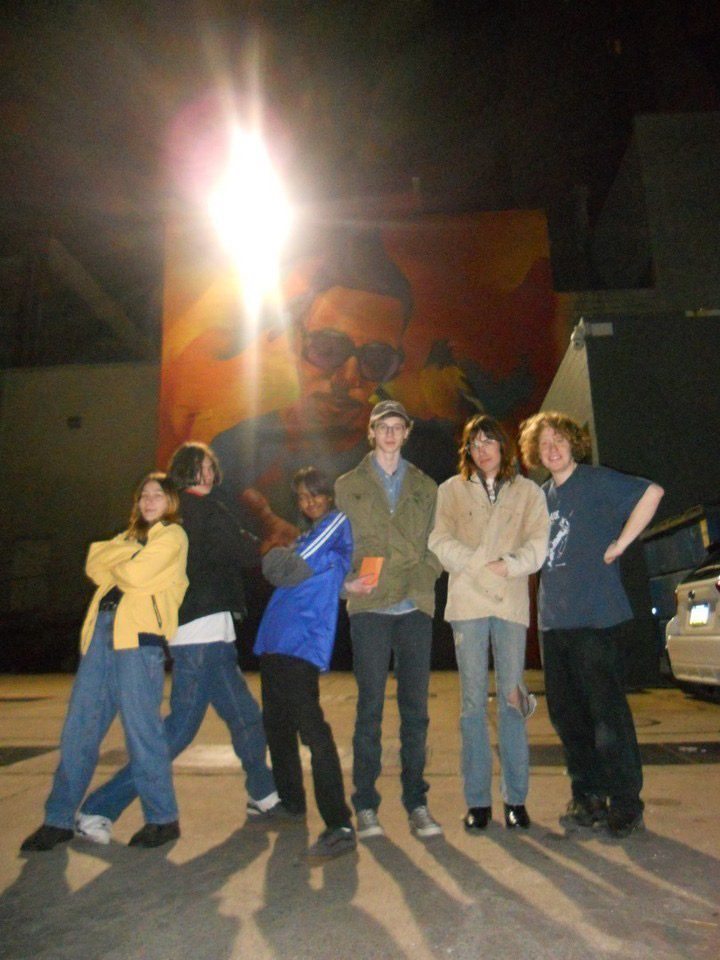
Hill View #73 by Shea RoneyPhoto by Averi Love LittleSects by Averi Love LittleLittle Chair by Averi Love LittleSects by Averi Love LittleMemory Card by Kian KermaniHill View #73 by Kian KermaniHill View #73 by Kian KermaniLittle Chair by Kian KermaniSects by Kian KermaniHill View #73 by Kian KermaniLittle Chair by Lauren SchmitSects by Lauren SchmitMemory Card by Lauren SchmitPhoto by Lauren Schmit
Current Union by Averi Love LittleCurrent Union by Averi Love LittleReceiver by Braeden LongPhoto by Braeden LongReceiver by Braeden LongPhoto by Braeden LongPhiladelphia Eagles by Braeden LongSacred Heart Academy by Braeden LongPhoto by Braeden LongKitship by Kian Kermanimail. by Kian KermaniChaepter by Kian KermaniSacred Heart Academy by Kian KermaniSacred Heart Academy by Lauren SchmitSacred Heart Academy by Lauren SchmitSacred Heart Academy by Lauren SchmitCurrent Union by Lauren Schmit
If you happen to be anywhere near Carrboro, NC this Friday-Monday, consider making your way to The Big Pop Show. Helped put together by Nathan McMurray, this legendary festival features several TTR artists as well as the best pop bands of today.
Charlie Johnston remains elusive, releasing The Firetruck Is Running Late without fanfare, and allowing listeners to take on the role of opening up and reading this diary of an album. With nostalgia in every corner and heartbreak in every line, Johnston moves through stories of life and love and loss with a gentle matter-of-factness; this record feels like a knife to the heart (if the knife were pink and sparkly). The Firetruck Is Running Late is devastatingly beautiful and feels a touch exclusive–it’s a privilege to discover Johnston’s music.
The first track, “Silo,” is a great representation of what to expect with The Firetruck Is Running Late. It demonstrates how Johnston produces vivid imagery through simple, poetic rhyme schemes and patterns: it’s satisfying to the ear without being too repetitive or cheesy. Moving through the album, you come to “Your Tree.” Here, you really get those Kimya Dawson-esque vocals and that storybook feel that the album art suggests. The nostalgia continues with “Coach’s Ballad” and the repetition, or echo, of each line of the chorus. This, combined with the clapping sounds that can be heard in the background, make the song immediately reminiscent of early childhood playground games, summer camp, and coming-of-age movies.
As Johnston’s label, Trash Tape Records, put it, this album is full of “fabled melodies…with blankets of distant, sustained piano, lagging and pushed-to-the-absolute-brink drums and sometimes a left-field appearance from heavy sub synth bass or violin.” The addition of that violin happens beautifully in “Dishes,” as Johnston finishes singing “And all the glasses drop.” The instrumentals delicately lift up the song and tide the listener over until the next line. It’s a standout song, placed perfectly at the beginning of the end of the record, where like the violin, it carries the listener into the last six minutes of the album.
As the album does come to its close, brought forward are allusions to the title, The Firetruck Is Running Late. The subtle introduction of fire comes in on “The Meow-Meow Express” as Johnston sings “One day you’ll be by a fire and I’ll be with you there / We’ll breathe and breathe and breathe until we’re too filled up with air…/ And when we are full of fire what is there to do?” While it feels like there is more to the story than meets the ear, the true meaning feels nicely buried beneath the image Johnston paints of a cat and a trainset. Then, on the final song “My Life Before Electricity,” the listener is lulled to daydreaming as Johnston repeats over and over “The firetruck is running late / The firetruck is running late.” It’s one of those songs, and even more so one of those albums, where as a listener it’s so easy to feel memories being pulled from your mind and inadvertently assigned to the lyrics of the songs. It’s an album that somehow feels like it’s written specifically about you and your life. It’s an album that you hope everybody and nobody discovers all at once, because what you want to keep a secret feels too great not to share.
The Firetruck Is Running Late is available on all streaming platforms except Spotify, and CDs are available for purchase on Bandcamp.
Charlotte’s own Motocrossed – a seven piece made up of members Blaire Fullagar, Carolyn Becht, Colin Read, AJ George, Todd Jordan, Austin Currie, and Sofie Pedersen – make sounds that make me miss the southern music scene so deeply. Recorded mostly in bedrooms and basements, you can hear the closeness in every take. It’s humid and handmade; a mosaic of rural quiet and cathartic noise. As if the fragile spaciousness of Florist met the unpredictable nature of Advance Base, it settles into the scene with a precision rarely even touched on the first try.
The opening track, “A Mouse in the Field of Our Benefits” unspools slowly, tracing a feeling of smallness into something beyond our reach. Fullagar sings with a voice that is simultaneously definitive and searching with gripping lyricism, begging questions like “were we meant to see these lives play out on screen?”. The song’s pacing is omniscient of the classic slow-motion folk – unhurried, modest, but piercing when it lands.
“Crows Come Down” is brief but essential. The stripped arrangement gives the lyric space to breathe; “something’s gotta grow, if you water at its roots”. It feels less like a studio snippet, and more of a field recording, transporting us to the vast lands under a Carolina sky.
Songs “Drown (Country Grl)” and “Yearning” show range with restraint. The form aches with late-night jam energy, like a Hailaker track warped by the heat and eaten by the cicadas. “Yearning” certainly drifts towards dream pop, guitar melding together until the words are barely held. There’s a teetering between confession and abstraction that carries the soul of the south without leaning heavily into nostalgia – think more Dear Nora than Dolly.
Ten-minute track “Possum Dog” serves as the record’s center of gravity; messy and gorgeous. It moves like a childhood fever dream, parts shimmer, parts collapse. The moments are caught rather than built, making a statement in the strum, clash, and twang. It carries an emotional sprawl where memory feels half-erased, never gone.
By the closing tracks – “Motocrossed” and “Under the Moon” – the band leans into the looseness. The title track feels like friends tumbling through an inside joke, while “Under the Moon” exhales everything, and leaves nothing to be unsaid. It’s patient, unresolved, and strangely comforting in its indecision.
But Motocrossed isn’t just another lo-fi diary from the south. It’s sharper – more deliberate in its unraveling. These songs don’t wander out of lost conscience, but a search for something greater. Each cracked voice, creaking bass, crawling beat – it all feels right. This is a debut that doesn’t beg for attention, and rather earns it through intimacy, through the courage to stay small in a world of high gloss and sheen. In a space that can be dominated by the artificial, Motocrossed makes the quiet, confident argument for the deliberate in music.
Motocrossed was released on October 3rd via Trash Tape Records. You can listen to Motocrossed anywhere you find your music!
Every Wednesday, the ugly hug shares a playlist personally curated by an artist/band that we have been enjoying. This week we have a collection of songs put together by Atlanta-based artist Awsaf Halim of the project Hill View #73.
There’s an odd moment, a newfound perspective when you lay down on your bedroom floor for the first time in a while, that opens the room up to new angles and possibilities. You might catch yourself thinking of those dust bunnies that live under your dresser forming an awesome jangle pop band, or finally noticing the fraying rug that’s caught your weight in crumbs over the years. The music that Awsaf writes under Hill View #73 is a safe space to revel in the entitlement of growing pains, holding on to those last bits of fallback daydreams as you play into these newfound angles. Hill View’s trajectory as a project, going from their sincerely raw and melodically tangible debut, Songs I Wrote Skipping Classes to 2024’s lush and dynamic night time is the grace period, offers a standout collection of bedroom tunes and found audio, a treasure trove of joy, love, fear and anxieties, the trials of fatigue and forgiveness, as Awsaf fills these tunes with grace and a voice of confidence that knows you’re not going to get it right all the time.
About the playlist, Awsaf shares;
These are songs I’ve been listening to for the past month or so. I tend to listen to a lot of music when I’m driving long commutes to school because it helps my mind wander outside of daily monotonous thinking. I love these songs in particular because to me, they’re all mostly “rock” songs which secretly have awesome songwriting. I also like when music is repetitive and leaves long spaces intentionally. It probes my brain and makes my mind happy.
Today, Motocrossed share “Drown (Country Girl)”, the second single off their upcoming debut self-titled record out October 3rd via the legendary Trash Tape Records. Coming up through Charlotte, North Carolina, this band is nothing new to the surrounding scene, although there have been some notable changes. Originally named sayurblaires, the project was formed by songwriter Blaire Fullagar, leaning into territories of digital soundscapes and emo inspired song structures. But sayurblaires soon became a project embedded with collaboration, as Colin Read (guitar), Caroyln Becht (drums) and AJ George (guitar) joined the live crew, before shortly offering to the writing process for new songs between 2023 and 2024. What came out was this newfound level of alt-country chaos as Motocrossed became the next step for the NC musicians.
In a clash of noise, Fullagar asks, “Do you wanna walk and laugh along the streetlights? We can just talk and pretend everything’s fine,” her voice falling into the motion with both confidence and an underlying layer of trust that there is something below to catch her in case she gets ahead of herself. And with that, “Drown” becomes a team effort, a culmination of distinct voicings that each bring something unique to the track, and cultivating this scenic dispute of love, curiosity, heartbreak and comradery. In the same way that we all know that Walmart parking lots have the best sunsets, the amount of noise put into the environment brings out the best of each color; loose harmonies shooting the shit amongst distorted guitars, a fiddle doing what it does best, and the rich tones from a few sax runs pull us closer into the ruckus. “Country Girl, you’re my world. But I’m not sure you should be just yet,” feels messy, but pure, and you can’t help but admire that feeling.
We recently got to talk to Blaire and Carolyn about “Drown (Country Girl)”, shifting genres, and what this project means to them.
This interview has been edited for length and clarity
You made music under the name sayurblaires for a while, but now shifting genres completely and now writing and performing under the name Motocrossed, what sparked you to want to reset everything?
Blaire: So, in 2023, we started the sayurblaires band, and we would play renditions of songs on the sayurblaires album as a full band. They were fun to play, but I feel like we kind of got detached from them and we started to write new songs. They were all just way different, because I switched to writing on guitar instead of just on my computer. They turned out a lot different, of course. And so, sayurblaires just didn’t feel right, especially because we formed the band, and then it felt like we all wrote these songs together by the time that they were actually written as a full band.
Carolyn: And it was so sonically different from what we were doing as sayurblaires, which was like, a digital, emo, screamo project, and this is, way different conceptually, unrelated almost. Not unrelated, but… we’re calling ourselves alt-country now.
Blaire: The songs that we would play, the songs that eventually became Motocrossed songs, we’d play them in the middle of the sayurblaires set, and it would feel really bizarre, honestly. So, it just felt right to switch to Motocrossed, and we’ve just played shows under Motocrossed, and we’ve only played Motocross songs since then.
Did you find that there was a shift in the shows you were playing and the crowds that were coming out?
Blaire: Yeah, when we were sayurblaires we played with bands like Your Arms Are My Cocoons and Awake But Still in Bed, which I don’t think we would have gotten those shows now. They probably wouldn’t have reached out to us. It was cool, I like those bands, and I do like emo, but ultimately, now, bands that I like a lot more are reaching out, and I feel like I’m just more in the scene that I’ve always listened to.
As that original four-piece, was it natural for everyone else to adjust to this all-country route?
Blaire: Yeah, I mean, I think everybody was super down for it, especially having the ability to write their own parts instead of the ones that I wrote for them. I think it naturally played out well. Like AJ [George], our guitarist, listens to a little bit of alt-country, but mainly they listen to a lot of really, really heavy shoegaze, so what they provide for the band is all the heavy parts. And then I feel like Colin [Read], our other guitarist and lap steel player, listens to a lot of everything, so Colin’s playing just kind of goes off of whatever the thing calls for. I think that it just naturally worked out perfectly.
With these singles, it sounds like there’s so many different voicings that you’re trying out, that it feels like it should be chaotic, but it works really well. Especially going from a 4-piece to 6 members and counting, how does this inclusion of new players represent what you wanted this project to be as you were continuing to shift and evolve and try something new?
Blaire: When we started recording these songs, I already had in mind that I wanted it to be a big band. I mean, I still want to keep adding people, I’m not against going up further. I just started reaching out to people to record on these songs that I had written. Like, the 8 songs that we have right now have probably gone through 6 or 7 versions each, just sounding different from having different people record on them.
With your new single “Drown”, you’re writing about a relationship of love and worry and complexity. What did this song mean to you as you were choosing singles and how did it come together?
Blaire: I write songs in a way where I will write one part, and then that part kind of sticks with me for a while. And then eventually, I’ll find another part that goes with it. So, this song existed as three separate parts. There was the beginning, and then the middle part, the country girl part, and then there was the end. And it came together nicely once I sat down and really wrote it. But, I’d say, more than anything, it’s just a love song. I’ve had a long on-and-off relationship for 10 years that’s messy and complicated, and that’s ultimately what it’s about. The album in general is a lot of love songs, but more than anything, it’s an album about being in love with music and the people around you. “Drown” doesn’t really feel like it’s specifically about one person in any real way, but I think it’s a good representation of the album.
You can listen to “Drown (Country Girl)” anywhere you find your music. Motocrossed is set to be released Oct 3rd via Trash Tape Records which you can preorder now!
Written by Shea Roney | Photos by Valentina Calderon
Tanner York doesn’t walk into a studio so much as he drags it with him, through Asheville apartments, the recording studio at UNC Asheville and his parents’ attic, leaving behind a trail of tape hiss, cheap snacks and a surprisingly serious collection of pop songs. York is your music obsessed friend anxiously waiting to leave a party to sing along to Beach Boys Instrumentals in his Subaru after sipping on his patented “Tanner Two,” a self-prescribed two lager limit. He spends his days obsessively scrolling through microphone reviews on one tab and a high-speed game of bootleg Tetris in another, thinking of all the different ways he can create the perfect drum sound. But when he plugs his guitar into the AC30 tucked away in his closet and presses record on his Tascam 488 MKII, all that scattered energy coalesces as he reveals himself in this sacred space as a budding hero of modern underground pop. On Welcome to the Shower, his joyfully weird and emotionally sincere debut album, released July 20 via Trash Tape Records, York transforms his obsessive ear and chaotic charm into something startlingly clear: lo-fi pop songs that sound like inside jokes until they suddenly hit like memories.
Before Tanner York started recording as Tanner York, he fronted a high-energy noise-pop duo called Diana Superstar. The early performances leaned into pure showmanship and black midi-esque chaos. “I thought my destiny was kind of like the noisy, blow-you-away live show,” York says. The songs were short-winded but bursting with excitement and creativity–jagged, stitched-together ideas that didn’t always complement one another, but hinted at a restless, ambitious musical mind. Over time though, he shifted his focus inward, discovering his real obsession wasn’t spectacle—it was the song. The melody. The chord changes. “I started realizing that what I value most is writing something that could pass the acoustic guitar test. Something sticky, something strong.” That pivot marks his growth, not just in style, but in intention as well, as he learned to craft nuanced, coherent pop songs that stick with you long after the tape stops rolling.
Photos by Hana Parpan
That newfound clarity within his songwriting is what makes Welcome to the Shower so charming and so special. While the album brims with unconventional tape tricks and lo-fi quirks, it’s never a gimmick. York’s melodies are deceptively complex, his harmonies airtight. Tracks like “Girlfriend” and “Museum Broadway” are loaded with witty lyrical side-eyes—born from York’s interest in comedy and his brief but passionate detour into stand-up in Los Angeles—but they’re never too cool to not care. In fact, they care deeply, and that tension between irony and sincerity is part of what makes this record so endearing.
In “Museum Broadway,” York paints a surrealist portrait of suburban malaise, full of strange observations and tongue in cheek imagery: “The movie theater with a fuck-ugly mural / Beside the frozen-over pond.” These are the kinds of lines he’s mastered that evoke laughter before shifting into emotional clarity over a key change when he drops the dry detachment to sing “everyday I think about just moving far away from here but I don’t have the time.”
“Girlfriend” is equally clever, but more biting in its longing. It flirts with the melodrama but always lands somewhere painfully honest. “I heard she gave you a tattoo / of your dog that recently died” and “I could be everything she is” feel like throwaway one-liners until York twists them into a chorus that aches with restraint: “But you have a girlfriend / she loves you just fine.” It’s that careful balance between pettiness, humor, and vulnerability that makes York’s writing shine. His lyrics often read like someone trying not to cry by telling a joke and then accidentally revealing everything.
While the lyrics may lean toward playful or indirect, York admits that’s partly a protective instinct: “One of the ways that I get myself to trust a lyric is to make it funny. It’s almost an insecurity thing, where it’s like, ‘oh, if I’m being funny then I’m above sincerity, which I’m trying to avoid, but I really do love songs with funny lyrics. Bands like Squeeze have incredibly funny lyrics, but they also write such amazing pop songs. I’ve always thought that novelties are in the same artistic bracket as something that’s attempting to be serious because it’s equally if not harder to pull off correctly.” That looseness, both as a defense mechanism and a genuine stylistic tool, often leads to wryly observational lines that sneak up on you and leave a mark.
Photo by Hana Parpan
Last summer York spent a few months in Los Angeles, California working for a twitch streamer, Luke Taylor, editing his streams. He found himself at stand up comedy shows almost every other night trying out new jokes and meeting fellow comedians. Through this and by playing video games online, York found lots of personal inspiration by befriending many of his comedic and musical heroes.
“I was playing Fortnite with my friend Dan, who lives in New York, and one day he asked if his friend could join the lobby. It ended up being Will from Hotline TNT and I was like, ‘Oh my God, I love his music.’” York had recently become obsessed with Cartwheel, Hotline TNT’s latest album at the time. “In a lot of ways it felt adjacent to the goals I had where it was like the kind of Teenage Fanclub writing, pretty simple pop songs, but in the context of having super loud guitars and things like that.” The two began exchanging music and ideas over Discord. “From then on Will has been a big help for me, both giving feedback and also helping me navigate releasing a record and things like that. He’s been very wonderful.”
The process behind Welcome to the Shower is as loose and spontaneous as the music sounds. “I never wrote or recorded songs with the intention of them having a place on an album, which may explain the abundance of energetic songs rather than calmer ones,” York says. “I got very into recording with a Tascam 8-track cassette recorder after seeing the Elephant 6 documentary, and the immediacy immediately inspired me. I loved how it didn’t let me spend hours tweaking with settings. It forced me to think about the music first.”
He leaned into the tape’s limitations, experimenting with pitch shifts and speed manipulation. “Sometimes I’d record my vocals at a slower speed so that when I pitched them back up they’d sound higher. Recording on tape was really helpful because sometimes when I hear a song so many times I start to get sick of it and I start doubting it. I found that if I have a song and I’m starting to get sick of it, if I pitch it up a lot, it’s almost like listening to a new song and you get to hear the chord changes differently, it feels like you’re hearing the song as an outside listener. A lot of the time it would make me realize like, ‘oh, this is still a good idea. I just need to get out of my head.’ Sometimes I would just keep the pitch shifted version that way because I ended up liking how it sounded more.”
Some tracks like the fluttery, hook-laden “All Over Again” were written, recorded, and fully mixed on tape in a single day. Others, like the textured “Cut Out,” went through multiple demos and incarnations before arriving at their final form. Whether immediate or hard-won, each song is bound by a deep, almost mythic pull toward pop itself. The shimmering ideal of a melodic, emotional, and endlessly replayable song. “I became really obsessed with pop song structure and key changes and what makes a good melody,” he says. “When I listen to great pop songs, I get so much joy from listening to them over and over, and singing along in my car. I just wanted to make songs that could fit in that space.”
Photo by Geddi Monroe
With influences that range from The Beach Boys, Beatles, and XTC to contemporary weird-pop heroes like Sharp Pins, Combat Naps, and Chris Cohen, York isn’t reinventing pop so much as lovingly disassembling it and re-taping it back together, making it entirely his own. Welcome to the Shower reflects that patchwork spirit, full of jangly guitar tones, crisp comedic timing, and unpredictable but sophisticated chord changes, all stitched together into lo-fi power pop songs crafted with enormous care and an even bigger heart.
One of the album’s most striking moments comes at the very end with “Blarry,” a devastating closer that peels back all the irony and reveals York exposed in a way that feels almost disarming. It’s a song about compromise, about trying to hold onto something already fading. “Do I, do I remind you / Of those days and long, long nights / When someone made an effort to believe you?” he asks, before answering himself with the heartbreaking clarity: “I’d walk a thousand miles / for someone just to lay beside / for that alone I’d trade anything.” Just when you think the jokes drop away as the melody stretches out in a remarkable moment of unguardedness, you get a punch to the heart as the song abruptly ends in the middle of a line and you kind of want to strangle him.
Photo by Hana Parpan
Underneath all of the amusing remarks and the bent melodies, Welcome to the Shower is an album about longing and coming-of-age confusion. Its roots lie in York’s community in Asheville, at shows at Static Age Records, a local venue and record store that fosters a thriving music scene where York has seen and played with many of his heroes and made many of his friends, in conversations with older mentors, and in jam sessions with fellow UNC Asheville music technology students (now his live band). “With this record, I stopped trying to sound like anyone else,” he says. “I just chased the melodies I couldn’t get out of my head.”
Welcome to the Shower isn’t trying to prove anything, and that’s part of its charm. It’s the sound of someone falling in love with music all over again. Not for the aesthetic, or applause, but for the simple thrill of a well-placed key change, a sticky hook, or a lyric that makes you snort before it breaks your heart. Tanner York may still be figuring it all out, but if this record is any sign, he’s already miles ahead of the curve. His songs might start as jokes but they end as the kind you can’t stop thinking about for days on end. Welcome to the Shower is the perfect soundtrack to a hot summer night and the sound of someone arriving casually, hilariously, and with total clarity.
You can listen to Welcome to the Shower out everywhere you find your music. Pre-orders for your very own Tanner York CD are now open via the legendary Trash Tape Records.
Written by Eilee Centeno | Feature Photo by Hana Parpan
Every Wednesday, the ugly hug shares a playlist personally curated by an artist/band that we have been enjoying. This week, we have a collection of songs put together by artist Caelan Burris of the Asheville-based project, Tombstone Poetry.
Since 2021, Tombstone Poetry has been forging a musical identity that paints a certain country warmth onto alternative rock and noise heavy walls. The six piece’s sound took to its most formidable shape yet last year with the release of How Could I Be So In Debt?, where they harnessed an addicting balance of twangy instrumentals and emotionally charged angst in a dense 33-minute listen. The album’s layers of screamed harmonies, shimmery distortions, religious motifs and garagey dissonance are ultimately sewn together by the band’s ability to exert sincerity, their introspections bleeding poignantly amidst every style and technique they experiment with.
Listen to Burris’ Playlist here;
You can listen to all Tombstone Poetry releases and purchase a copy of How Could I Be So In Debt? on cassette or vinyl on their bandcamp.
Written by Manon Bushong | Featured Photo by Shea Roney
As a small music journal, we rely heavily on the work of independent tape labels to discover and share the incredible artists that we have dedicated this site to. Whether through press lists, recommendations, artist connections, social media support or supplying physicals, these homemade labels are the often-unsung heroes of the industry. Today, the ugly hug is highlighting the work of our friends over at Trash Tape Records.
Originally formed in the Chappell Hill and Durham area when they were in high school, Trash Tape Records was founded by Nathan McMurray and Evren and Eilee Centeno. The vision was simple; to put out their friend’s music that they loved so much. Building off of that youthful excitement with a sheer DIY ethos, Trash Tape became a home to many artists with similar mindsets, by making their art accessible, exciting and incredibly endearing. Consisting of US-based acts covering the South and Midwest, such as Memory Card, Gabbit, Tombstone Poetry, Hill View #73, Hippie Love Party and Deerest Friends, the connective tissue of the label even expands to acts like Quite Commotion and Rain Recordings from Sweden and Gluepot from Australia, proving that a community doesn’t have boundaries.
We recently sat down with our friends at Trash Tape Records to discuss starting a label with trial and error, going on tour, high school jobs and their favorite label memories.
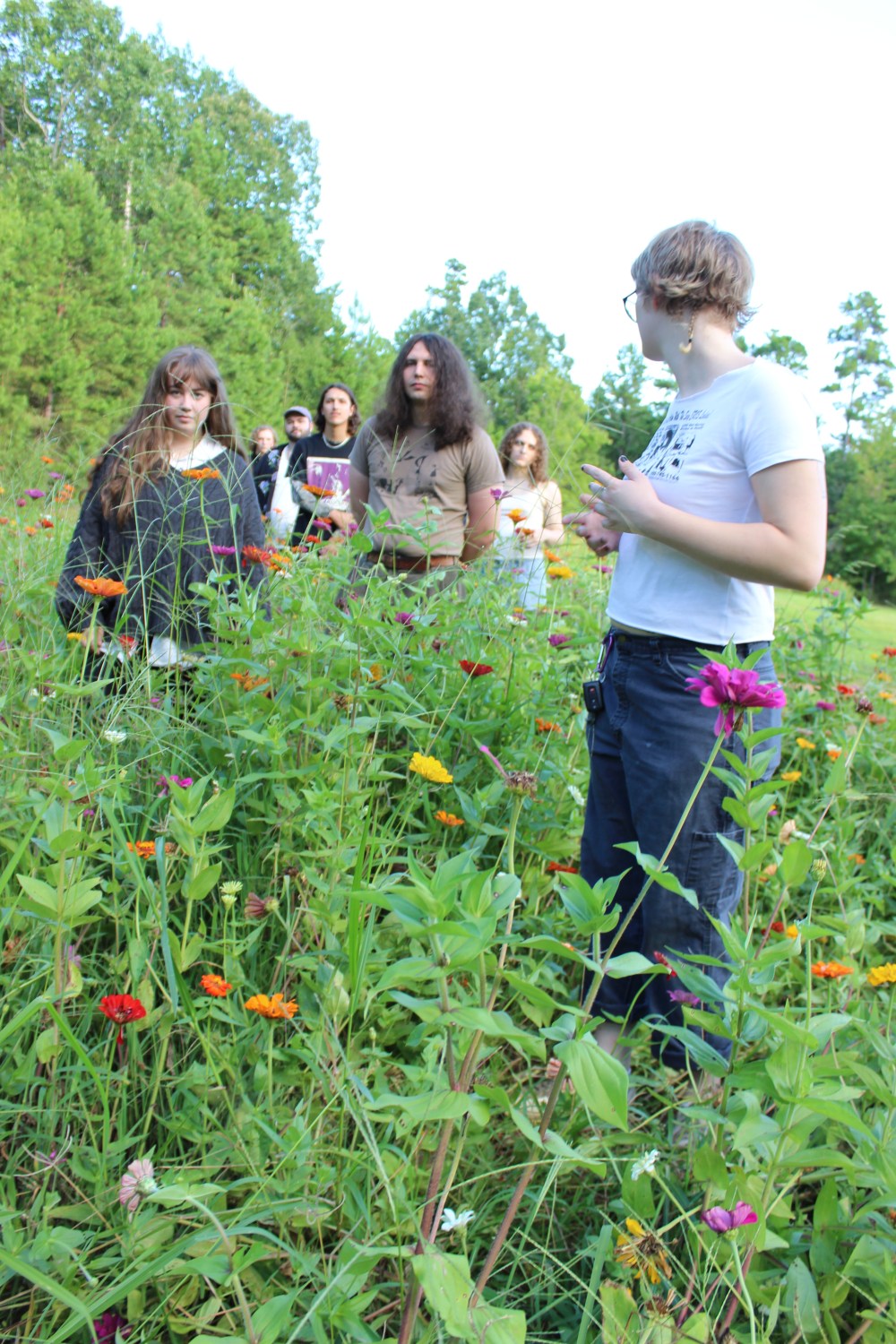
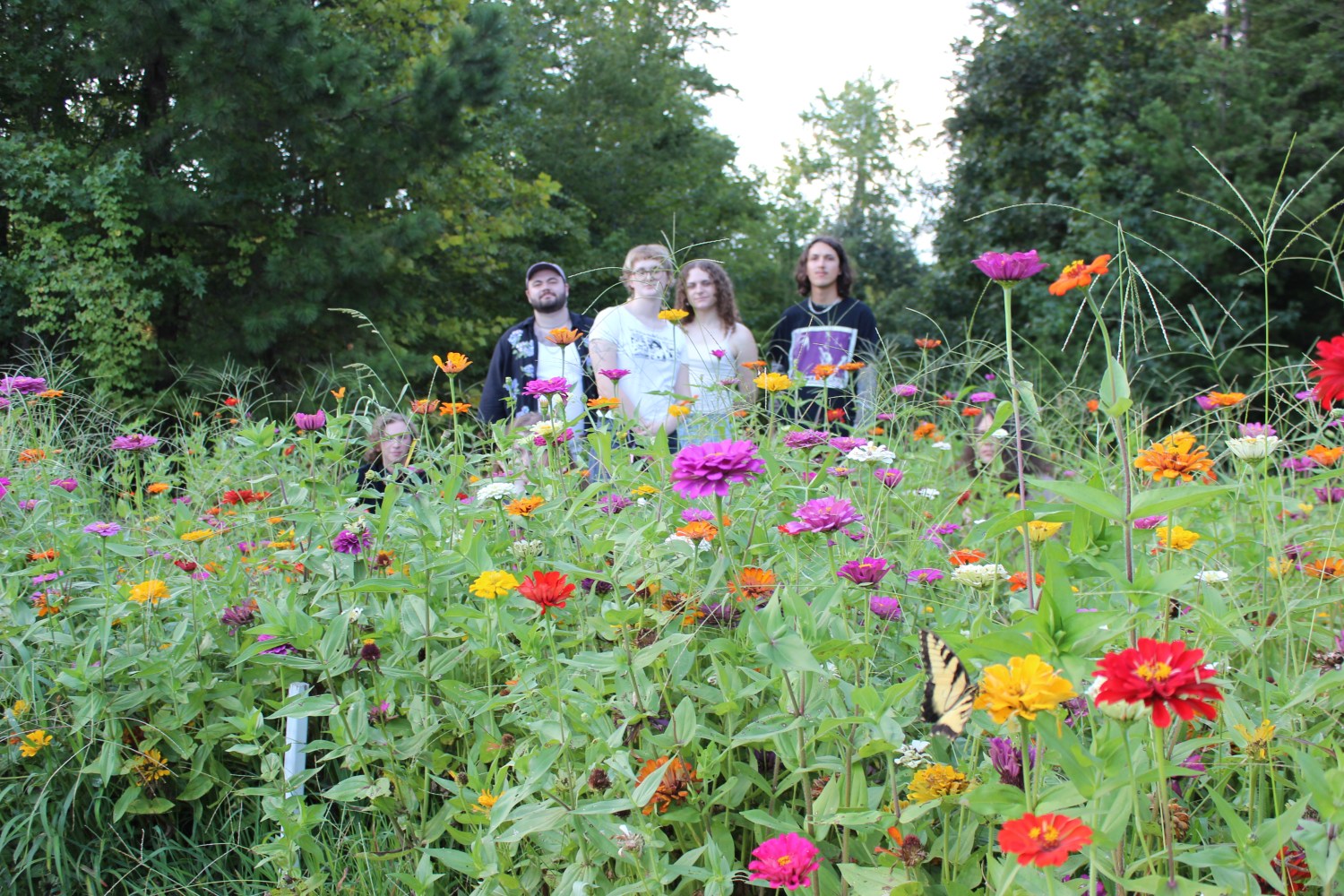
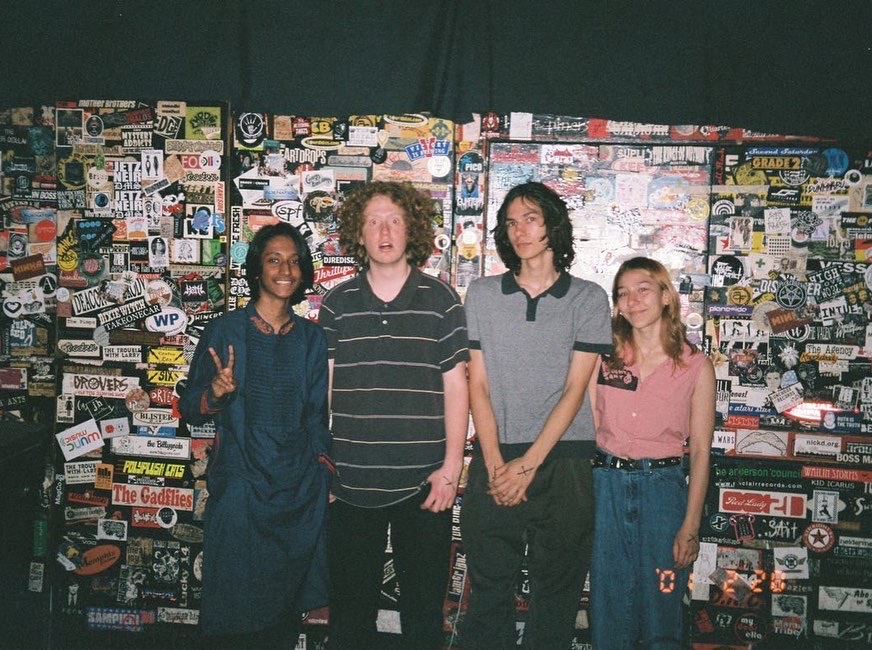
Nathan, Evren and Eilee at Kobabi in Chicago 2025 | Photo by Shea Roney
This interview has been edited for length and purposes.
Shea Roney: So, Evren and Nathan, you two started this label at a pretty young age with a basis of just wanting to make music together. How did Trash Tape initially form and what were your intentions in the beginning?
Evren Centeno: We were buds already, and we had been playing music at that point for half a year. We would go to my place or Nathan’s sometimes, because Nathan had a really bad sort of, like, what was that recorder that you had?
Nathan McMurray: I found in the attic my mom’s old multi-medium stereo, like CD player, cassette player, record player. There was this function on it to make mixtapes, but if you input a microphone and tricked the machine into thinking that it was the other cassette tape you were copying, then you could record on it. But it was one track and awful, awful quality.
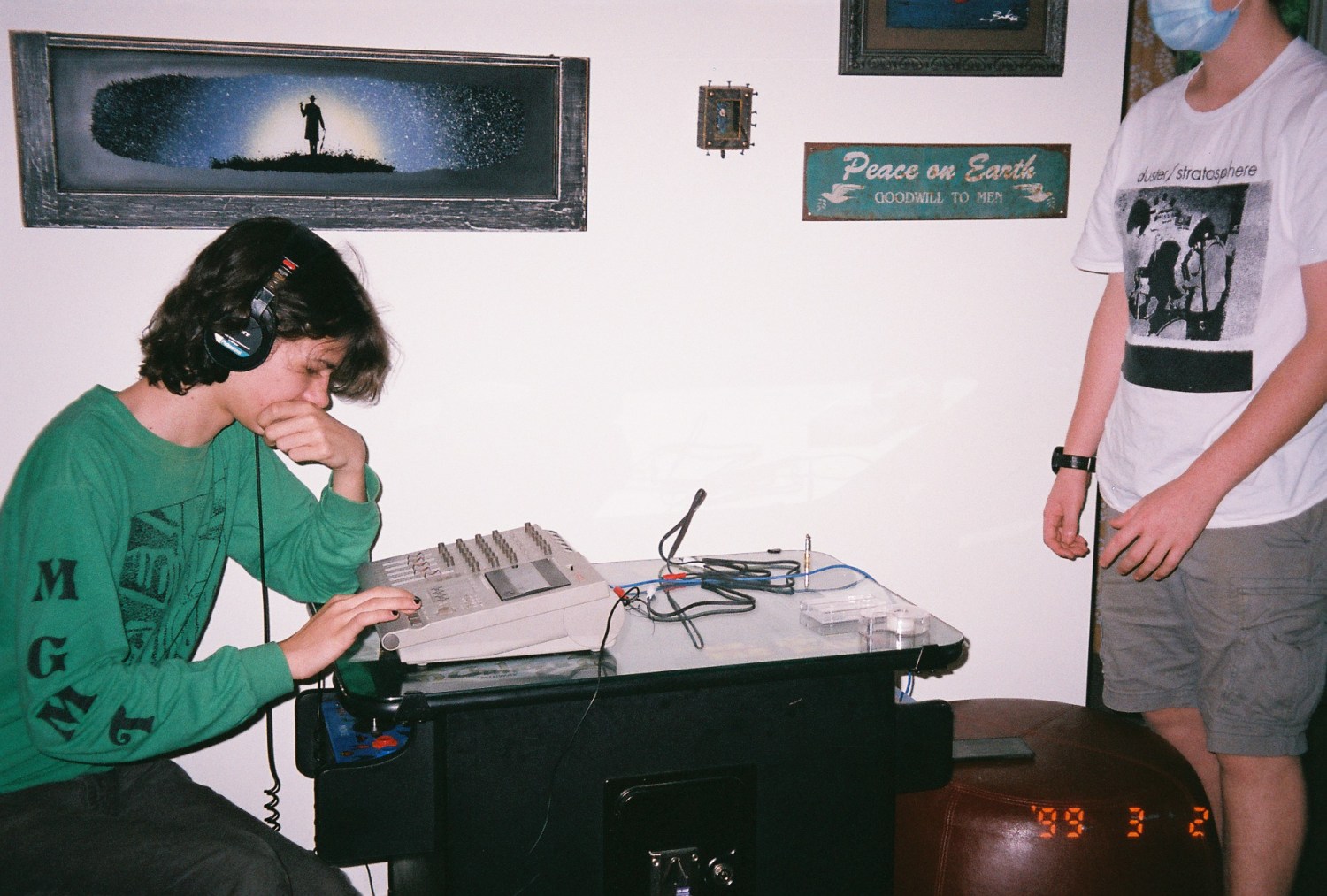
Evren: But we were messing with that because we were interested in tapes. We liked, you know, indie music, Elephant 6 and all that stuff, and we thought, ‘wouldn’t it be cool if we had something like that in our community?’ And then COVID hit, but we knew a bunch of people online through just talking about music, and friends of ours were putting out music, so we were like, let’s just put this music on streaming, and then we can hand-make some tapes. I had a tape-dubbing machine, my dad had one, just like a stereo, and you could dub tapes on it. And we also had a four-track, so we made a first run of tapes using that, and then we went from there. It was kind of loose. We just wanted to put our friends’ music out on it.
Shea: So it primarily started with friends’ music? Did you ever want to put out your own music?
Evren: Yeah, it kind of started with friends’ music. We didn’t put any of our own stuff out on the label until years after.
Nathan: Yeah, I think it was two, three years after. I remember the first, and I apologize if this isn’t something you want to print [to Evren], but Evren texted me and a few other people, something like, ‘we’re starting elephant 69’ [laughs].
Evren: Yeah, I did say that. I was 15. It’s okay to be 15 and cringy.
Nathan: We were all quite young, and it came from a good place. And then, that tape label started when we had put out a record and figured out how to dub it. We were doing it with an aux cable coming from a phone or, like, a computer straight into the Tascam onto the tape. Initially, when I first tried to do it using that shitty one track, it sounded bad, so then we took it to Evren’s dad’s tape deck and dubbed using an aux cable from my phone into that, and we just dubbed them all in real time while we watched TV or something.
Evren: And that was during quarantine, so we had no class. So Nathan would just come over to my house, and that’s what we would do. We would just write and record and dub and fold and cut paper. And it was all bad. We were all still very much 15.
Awsaf, Nathan, Evren Eilee at Local 506 Chappell Hill 2022
Shea: So, it was a lot of learning as you went for the tape production. Did you know how you wanted to record music when it came to that?
Nathan: The way I started recording music, at least me personally, was that my mom had this bad Dell laptop that was on the way out. I started doing freelance work in Photoshop when I was 12 because my dad’s friend came and pirated all the Adobe programs, so I had Adobe Audition on this laptop. And there’s this place in Durham called Hunky Dory that’s a record store slash vape shop, and in the dollar record section, they had this whole wall of used stereo equipment and everything was $5 untested. I would buy, like, RadioShack mixers and weird RCA cable adapters, and eventually, I had accumulated enough stuff that I could get a signal to pass through a microphone through this RadioShack mixer into Adobe Audition. It sounded awful. It sounded worse than if I would have just used the laptop mic. But I felt special doing it.
Shea: So, you get the initial first few releases out, did that solidify the thought that this could be an actual label for you?
Evren: I mean, I think we believed in it really heavily as it started, but we were just young and excited about something. And all our friends online would just shitpost about it, which I think was what made us think that it was interesting, or something cool at least.
Shea: Wait, what? Why?
Evren: I don’t know, actually. It was like this really insulated, but intense community. Even though it was literally only a few people who were even aware of Trash Tape Records, because all of our friends were just lurking online all day during quarantine making and spreading Trash Tape related shitposts, we felt a semblance of momentum. But really it was just a bunch of kids online making insidious jokes with one another, but then those jokes became part of the labels public image.
Nathan: It would get posted on music meme pages that, like, just shitpost about general online music. And I think that’s probably how it started to spread. It was so bizarre. But it really is such an echo chamber because you feel so much more significant when you’re in a group of 20 people and there’s pockets of three or four people in each city and you just play Minecraft and talk about music all day.
Evren: But no one was really buying the tapes still. I mean, some people were, but it was a very small scale. There weren’t repeat sellers or anything like that. We were doing small runs. But I think we just believed in it. We would pick up followers and we would see people talking about it, maybe posting about the music, listening to it. Nathan was just excited about making tapes and getting into printing and things like that. And then came the idea of wanting to tour and we wanted to play with our bands.
Tape Dubbing in North Carolina 2021
Shea: You know, that youthful excitement is so prominent when you’re 15, 16. And it’s really transferred into the way you run this label. It’s very visible and really exciting to watch. Eilee, when did you start to get involved?
Eilee Centeno: I actually don’t know.
Evren: Well, Eilee really initially started because Eilee was in college and she was past 18 and Nathan and I weren’t, so she could sign up for things that we couldn’t, like PayPal and DistroKid. We needed Eilee, but then it was also, like, Eilee was also just into what we were doing.
Nathan: I remember because I had made the email and I was trying to set up a bandcamp and a DistroKid, and at that point, we were dividing up the tasks, and I was like ‘oh, god’. So, I texted everyone, like, ‘I tried to make the PayPal, but I’m not old enough’. And then Eilee entered.
Evren: Yeah, it was all kind of very freeform. I mean, the way the name came about was just the first name someone said, and everyone was just like, ‘oh, yeah, that’s cool’. And then somebody made the logo and just drew it, and it just stuck. Put it up on Instagram, that’s our thing now.
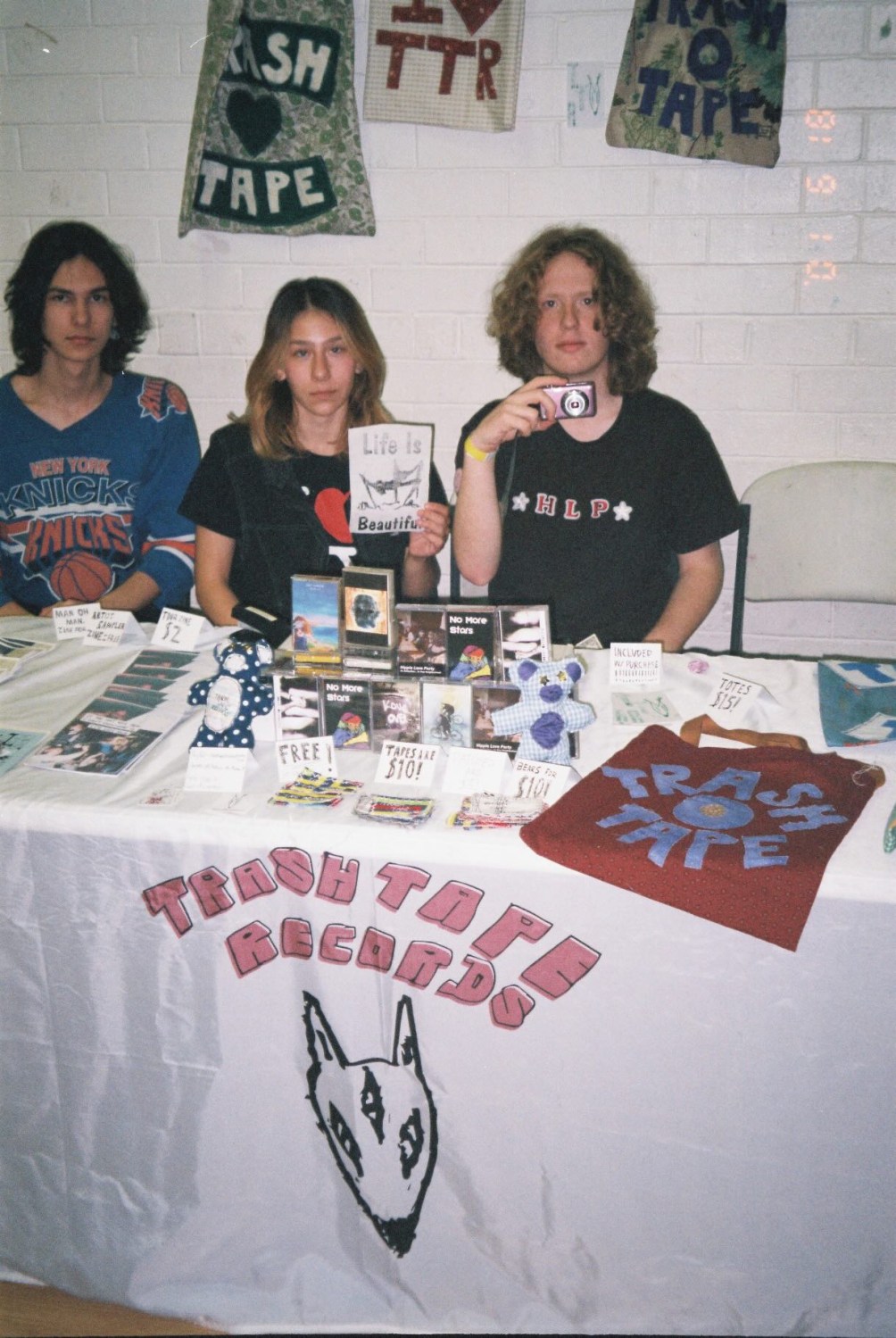
Vending at Psychic Hotline Noth Carolina 2022
Shea: So did you guys find your generalized roles by circumstance?
Evren: Yeah, Nathan, you were into the physical stuff and took the ropes on that.
Nathan: Yeah, and I’m not very good at Instagram and large-scale communication with the public, so other people picked up on that.
Evren: I like looking for music and stuff online, so I try to find people to put out their music. We would find all sorts of stuff online at that time. I’m not as keen anymore as far as to what’s going on online, but there were all sorts of young people doing stuff that we would put out.
Shea: I mean, you guys have a pretty expansive curation of artists covering a lot of ground that goes outside of your North Carolina origins. How did you first start searching for these artists? And what drew you into the people that you decided to work with?
Evren: Some of them are really haphazard. We always had open demo, well we did for a while, not anymore. Sorry to be a bad guy. We got so much crazy shit sent to our email that was kind of really obnoxious to deal with sometimes.
Eilee: But we did get lucky. Like, Awsaf sent us demos. The stuff that they sent, they didn’t even put out until later, but it was some of their best stuff. Like, ‘all the time’ was the first song they ever sent. And then Memory Card was just a friend of Awsaf’s.
Nathan: I have a very funny story about the Memory Card beginning. Henry had released his first album as a Google Drive exclusive. Do you remember that? He emailed us like, ‘I just released my album as a Google Drive exclusive’. And that’s the type of thing that we were like, ‘oh, I gotta see what this is’.
Evren: I used to use Rate Your Music a lot, and that’s how I found a bunch of stuff, like this guy Josef who we ended up making music as Rain Recordings together. He was from Sweden, and his stuff was awesome. And then Quiet Promotion, another young Swedish artist I found through Bandcamp and Rate Your Music. But then other people were just friends of friends. There is a tape label called 9733 and they also had a forum online. That’s where we would hear of S. Rabbit, who we ended up working with. And then they ended up doing Gabbit with Gavin Fretless who was on our label, basically finding each other’s music through our label.
Nathan: It feels like the culmination and dream of everything that we had hoped to possibly create.
Evren: That was our initial hope that people would just collab on each other’s records and stuff. That there would be a network of people that can record certain things and play certain instruments and whatnot.
Hill View #73, Welcome to Berlin, Memory Card and Old Star in Atlanta 2022
Shea: You do have this expansive online community. How has that defined the way that you approach what community can be for you guys?
Nathan: It feels like a modern idea of the more classic DIY indie thing. Where it’s kind of updated for a global age, because when the whole world goes global, I think music and art communities have to go global with it. Otherwise, you just kind of get trampled. And the internet happens to be the way that that goes now. I think there’s other ways that it could be done, maybe better. But that’s where we’re at.
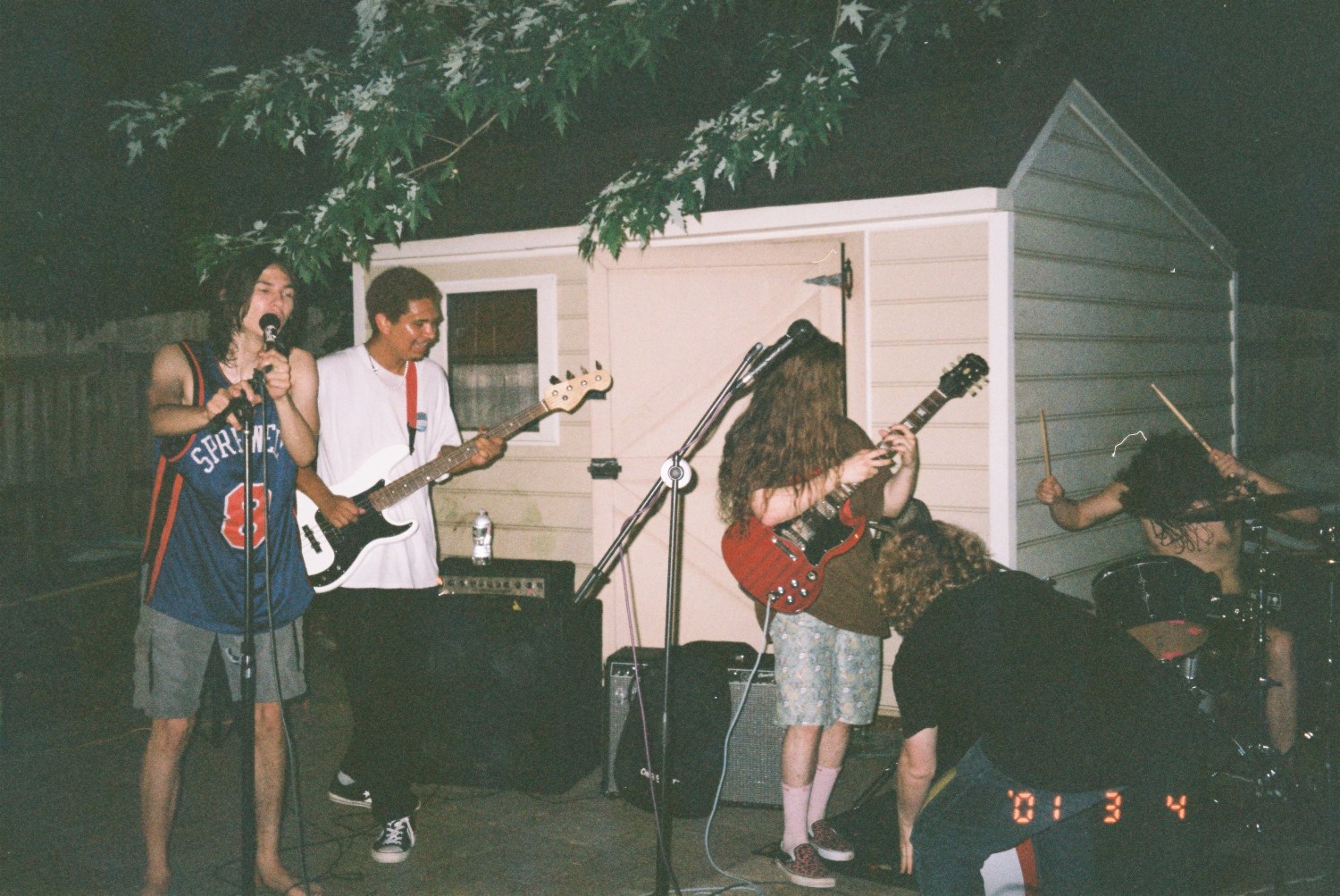
Evren: But when you’re planning a tour, or when someone’s planning a tour, they reach out to you, and they’re either staying at your house, or you’re staying at their house, you’re seeing each other, you’re playing a show. Even though we have bands where we’re from in North Carolina, then we’re playing a show in Virginia Beach with bands like Hippie Love Party and whatnot. And then we would go to Atlanta and play with Hillview and do tours with these bands. So, it almost became like a touring circuit in a way.
Eilee: I think because a lot of our artists have toured so much too and toured together. We’ve made a lot of connections all over the east and the south mainly. Where like, Knoxville feels like a second home to us just because of the community there that we wouldn’t have found otherwise. We’ve never even spent more than a day there, but everybody we know there is really special. And it’s nice because we can help our friends book shows there too. The community just keeps growing and growing.
Nathan: Yeah, because now touring feels like a big road trip where you see all your friends and you also don’t lose money. And you’re still just constantly creating anywhere. It’s really nice being inspired by different people and places. Touring in that circuit and in that manner feels so much more sustainable than just touring in places where you’ve never met anybody. It’s nice to have that kind of stability in what is a very unstable lifestyle.
Hippie Love Party with Handmade Trash Tape Merch on the “Minions Tour”
Shea: Yeah, I guess with that sustainability, as you guys get older and have different responsibilities, how do you maintain that stability with all the aspects of running a label?
Evren: It’s hard. We’re a pretty unstable label. But we’re working on it. You know, now that we’re all in Chicago, we’re trying to do more stuff locally. We did that festival, Eilee honestly did a really great job of putting that all together and really had the vision for doing more stuff locally. And I think that went really well. It seemed like something people were into.
Eilee: When I first moved here, I immediately had Evren and Nathan over and we had a day where we would just make tapes and buttons and all that stuff together. Now we do that together a lot more where it used to be super separated and it was just like, ‘oh wow, Nathan did the tapes, how awesome’. And I made Tombstone koozies, and now, somehow, they have to get to each other, so they can get to the people who bought them. And now it’s just really easy. It’s just hard too to talk about releases and stuff online or over the phone. We don’t even get to really hear each other’s honest and true opinions on music that’s sent to us or ideas we have for promotion. We’re all just like, ‘yeah, sure, let’s do it’. But then when we’re in person, we actually get to flesh it out more and really talk about our ideas because things can get jumbled.
Evren: It’s definitely a lot sometimes. We’re all also trying to make music and make other things. Eilee does a really good job of doing zine interviews and posting that on the account, just so we have stuff to put out there, stuff for people to read and get to know our artists. We’re going to try to also get more consistent with getting together and planning things out and whatnot. It’s just been a busy time. Nathan and I are doing school, Eilee’s been working, and then we’re going down to North Carolina soon for this big Pop Fest thing, and then Nathan’s going to Atlanta to help record Hill View #73 and play shows. Honestly, a lot of the way in which we support the label is just by playing for the bands on our label. I played for Hill View, Memory Card, and then did other stuff for bands that were on the label.
Nathan: It’s almost become a thing where me and Evren are the house rhythm section for the label. It almost feels like, okay, we’re helping the bands out by getting them out on the road and by backing them.
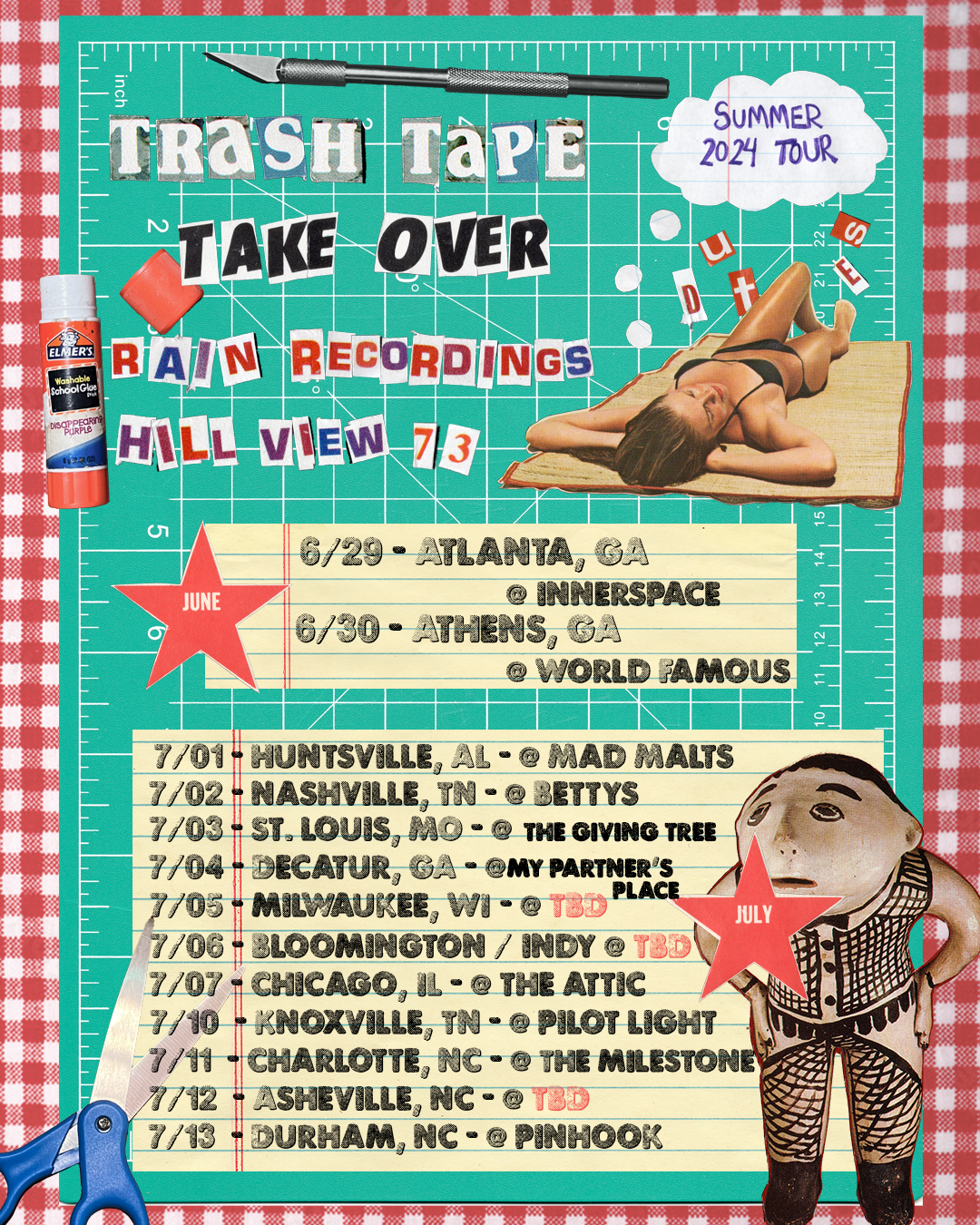
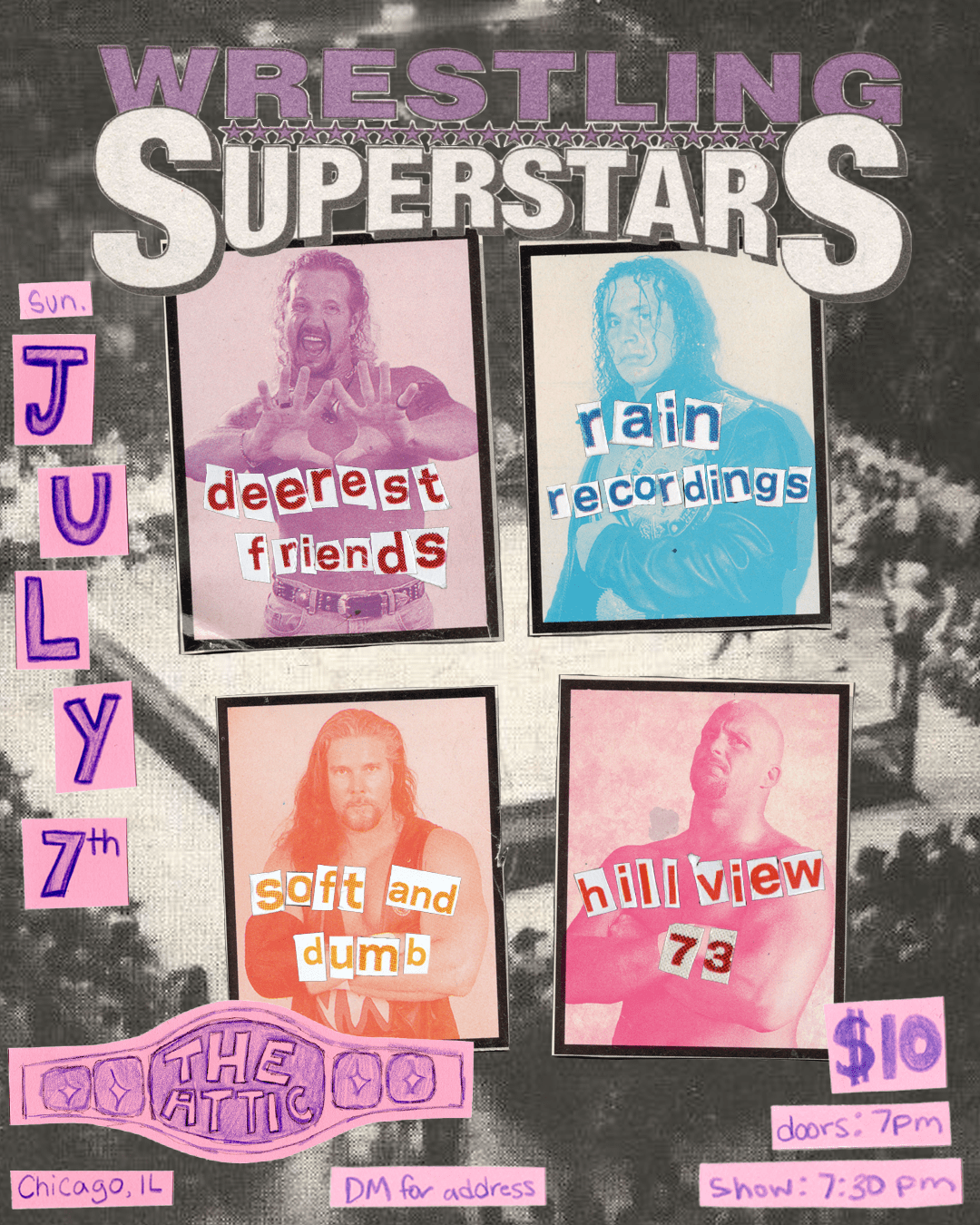
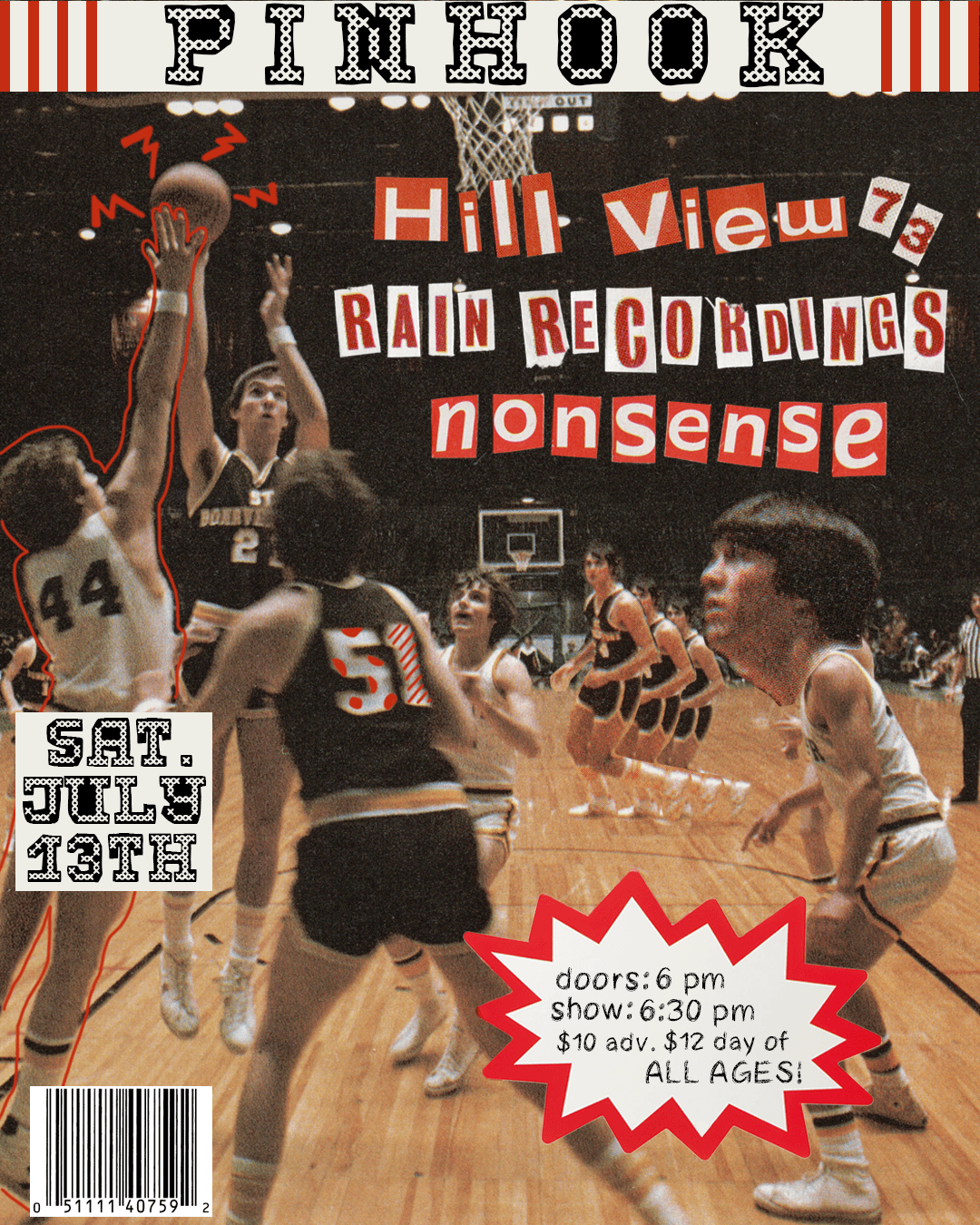
Scroll through for some Trash Tape show posters through the years
Shea: I mean, you guys do create such an engaging way to explore and appreciate new artists. Going from your zine interviews to touring and supporting your artists, what’s so important about crafting these stories, these little relatable nuggets about your artists?
Eilee: I think it’s just that our artists are small, so, people don’t know a lot about them, but all of them have really special stories that have meant a lot to us. Especially somebody like Gabbit or Tombstone Poetry, who mean a lot to us being based in North Carolina and introducing us to an amazing community. And I want their story to be shared. Even if a lot of people aren’t reading it, it’s just nice to take the time to actually really get to talk to them, for me, personally, and then to share that and hope people feel some sort of attachment or relate to something and then want to check it out.
Evren: And the thing about those digital zine stuff is it takes time with its presentation. We try to do fun stuff with it, like a little mini review or we ask them fun questions, and then we try to diversify the pages and whatnot. A lot of times when I’m trying to find new music, reading features and things like that, that’s a big way for me to get into a record because I can see where an artist’s headspace is at. I’m like, ‘oh, wow, their process sounds really interesting. Let me give it a spin.’
Nathan: I think that that’s a thing that’s died a lot in the current realm of music production. Whereas if you go back even 20 years and look at small magazines, I was just looking at an old issue of Roller Derby, and all the interviews in this issue were compelling and funny and very interesting and they motivate you to listen to the artist. And I think taking that sentiment and still giving it digitally and free and everywhere kind of gives you the benefits of genuine engagement while not being limited by buying a zine or knowing who to mail order.
Memory Card Practice at Nathan’s Apartment Winter 2025
Shea: And Eilee, you made a tour documentary too.
Eilee: Yeah, a long time ago. I have wanted to make a more updated one because I feel like we’re all just different now and it’s a different time. I was supposed to film a lot this summer on our tour. That didn’t happen and it was just… oh, my God. We might have gotten an actual TV show probably.
Nathan: There would have been a scene of me and Awsaf, just like, wordlessly using a toothbrush to scrape throw-up out of the inside of the window of their parents’ car for like an hour and a half in Homewood, Illinois, while all these guys would pull up into the gas station, look at us weird, and then drive away. It would have been one hell of a documentary.
Eilee: I was thinking of filming the Pop Fest. That would be cool.
Shea: Can you tell me a bit about Pop Fest?
Nathan: It’s like a bunch of bands who are all playing at Duke Coffeehouse in Durham, North Carolina on March 22nd and 23rd. I think it’s Saturday and Sunday.
Evren: Yeah, but a lot of trash tape artists are playing. Memory card is playing, Eilee and I are doing a set, a lot of friends are going to be there. I’m really excited. A lot of Chicago bands and North Carolina bands.
Eilee: Nathan also had a big hand in putting it together.
Nathan: It’s been a long process of planning and it’s crazy that it’s actually working out. It’s all done with university funding, so there’s a lot of proposal writing and mission statements. You gotta seem like an intelligent person with a vision to some degree. It’s going to be scary though, because it’s going to be all of the people any of us have ever known.
Eilee: Like every single world of ours is combining.
Nathan: Like my parents will be there. There might be deadbeats from when I went to high school.
Evren: Eilee’s 50-year-old co-worker is going to be there, because he’s playing a set at the festival, and we’re playing like sets back-to-back. It’s so beautiful. It’s crazy.
Nathan: Do you think we can get Mike from the cafe to come? Was it Mike or Mark, the crazy guy who ran the co-worker cafe? Oh my God. We were working as line cooks in a public park, in the cafe, but it was like a winter wonderland public park event, so we would just be there all night, and Eilee would make hot dogs and french fries and I made pizzas and sandwiches.
Evren: Yeah and then Nathan and I worked at Party City for like half a year together.
Nathan: I worked at Party City for damn near a year. You were there for like 10 months, right?
Shea: Are you guys sad to see it go?
Nathan: We went together like a week before it closed. We stole Mario figures. It was really surreal.
Evren: I was kind of like, ‘let me see what I can get here, what’s on clearance’, and there’s nothing worth buying there. There’s nothing you would ever fucking want there.
Nathan: That was the cool thing about working there, there was no incentive to steal things from work to get in trouble. The only thing would be I would go to the snack aisle, and I would steal combos if I hadn’t had dinner, and I’d eat cheese pizza combos. And that was the extent of my workplace theft. But you would get a lot of balloons. You get 12 free balloons a day. So, if I felt down, I would make a balloon.
Evren: Nathan figured out what the biggest balloon in the entire store was, and it was a life-size Stormtrooper. And we really wanted to see it, because like, that’s crazy [laughs]. So he just convinced our manager to let us blow it up.
Nathan: For promotion! But then within a week of that, we weren’t allowed within 10 feet of each other, because we would talk to each other too much.
Evren: Because it was so understaffed, we were all working like three jobs at the same time. You were the cashier, and then had to go blow up everybody’s balloons.
Nathan: I remember when we got in trouble, because there was like a huge order, like 50 or 100 balloons, something obscene. We were making them together because there was no one in the store. We’re not going to finish this if it’s just one of us, and we’re talking while we do it, because the store is empty, and that’s so sad to just blow up 100 balloons in silence. And then our manager comes over, and she’s like, ‘why are you guys talking?’ And then she made me go stand at the cashier in silence while there was nobody in the store, and Evren just had to blow up all the balloons by themselves.
Evren: At that time, we got to see each other all the time, because it was like, we would go to work, and we’d do trash tape stuff, and it was that time, like we were doing Welcome to Berlin, and then we did our first tour that summer, which was all trash tape bands. It was Hill View #73, Koudi, and then Welcome to Berlin. I drummed for all three bands and we had no fucking clue what we were doing.
Nathan taping the front bumper of his parents car – Tour 2022
Shea: What was it like figuring out how to book shows and tour?
Nathan: The thing is, it’s hard if you’re from a place, and you’ve got no music, no clout, it’s impossible to book. But if you’re from a place, no music, no clout, and you want to book a show four hours from you, it’s easy. You’re just like, ‘hey, I’m from out of town’.
Evren: The first show we booked was in Chesapeake, Virginia. I was with this band Hippie Love Party, who are on the label, at a venue called The Riff House, like a trailer in a gravel lot. It was a great show, but we went like three hours to play it, and it was great. It was worth it. And we were like, ‘oh, we can do this’. But that first tour, we were playing with three unknown bands, only two of them had music out. Koudi was releasing a record, but no one knew who they were. Hill View had just released their first EP. We played like eight shows, so what we would do was we would play where everyone was from. We went to Atlanta where Hillview is from, and then we went up north from there. But then in Asheville, no one showed up.
Eilee: We were supposed to be playing with Melaina Kol, but he had to drop the day of.
Evren: But no one showed up to that show because it was like, three bands no one’s ever heard of, ever, that have never played live, ever [laughs].
Eilee: Which is so awesome and funny too, because now we know so many people in Asheville, and it’s just like, we made such a beautiful community there three years later. It just takes time.
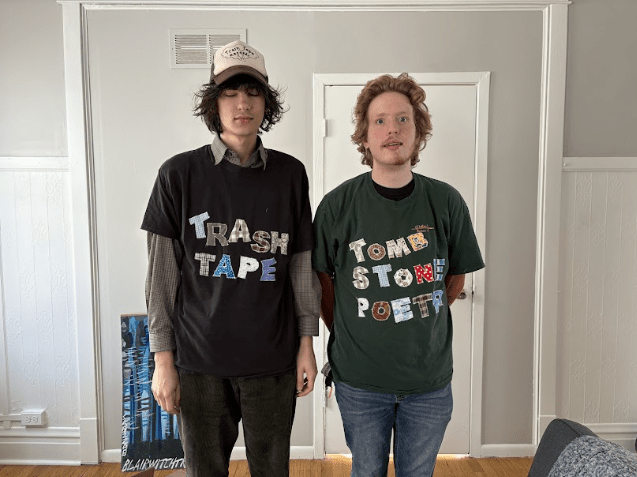
Evren and Nathan with shirts made by Eilee for Tombstone Poetry Promo Video
Shea: Trash Tapes recently celebrated 5 years of being a label. Looking back on your catalog now, broadly speaking, what are some releases that have stuck with you? Whether that be from just the sheer joy it brought, something you learned about the process of running a label or putting out music, etc.?
Eilee: For me, I think the last Rain Recordings album Turns in Idle, that was a really special release. Josef is from Sweden, so he came to stay with us for like three weeks. Evren and him worked out the album and then we all went to Drop of Sun in Asheville for the recording, and they were there for like a week. Nathan and I came up halfway through and we got to do some stuff on the record, but also just watching that whole process was really beautiful, and we all just got super close during that time. I mean, it took a long time for the album to come out, but when it was getting ready, I had asked Evren if I could help with the release and they kind of just let me do whatever I wanted. That was really nice because I wanted to get into video editing and making little promo videos with animation and stuff. Josef is a good artist and makes his own drawings, I got to work with him too, and being part of that process and then making all their shirts and merch for tour and stuff, was just really special to me. It did cause a lot of tension between Evren and I, but I feel like our relationship got stronger throughout it. My relationship with everybody just got stronger through that release and I learned a lot about the creative process and myself.
Evren: I think when the first Hill View EP came out, Songs I wrote Skipping Classes, was a big thing, because I was just graduating high school and it was like the first time Hill View released something. I’d known Awsaf for a while, I mean it still shows how good of a songwriter they are, and how good they were at that age and whatnot, but when that came out it felt like things were going places. That was a really exciting feeling, being a part of that and then playing their first shows live with them and making the tapes and selling them. There was something that felt really special about that.
Hippie Love Party x Welcome to Berlin Pool Party Show Summer 2022
Nathan: I have two answers. The first is the Memory Card album As the Deer. I flew out to Alabama, and I spent a couple weeks in Demopolis, Alabama with Henry where I thought we were going to just practice for tour, but then I got to his house and he was like, ‘okay are you ready to finish the album?’ He had more songs he had to record, and then we touched up mixing and did all of the album art in between Alabama and North Carolina. At points, his mom would stop by where we were staying and just kind of not question what was going on. And then when we were in Durham, we would stay up for days making scary music that was supposed to allegedly be a live show on the radio, and working on the album cover, and my mom would walk into the kitchen at five in the morning when she’s leaving for work and just side eye and not say anything [laughs]. Just the whole process of that album was very special, but also just because Henry is one of the people that was really, really influential in my life. It was also just a point in my life where I was kind of losing my mind and felt trapped, and then I ran away to Alabama for a month. Listening back to it, I love that album and I love every song. I think it’s my personal favorite thing that we put out, and it means so much to me to have been able to play a small part in bringing it through the finish line.
Then the other one is the second thing we put out, Take Me to the Moon and Back by Pig Democracy. That album was the first time I ever really got adventurous with my end of the production side of things. It was a box set, so I had made a print template for how to print out everything on cardstock that could then be cut and folded into a box that you could put all the tapes in. And then it also came with a zine. My dad works in this light factory, setting up lights for design, and I went up to his work and printed them all on the printers there, and he helped me lay it out using the computers there. At the end, it was a very personally important process to learn how to do all of that, and to do it for an album that means a lot to me, for a person who means a lot to me. It felt like both of those things, I think in the scheme of our label and for all of us, felt like big steps.
Along with this series, our friends over at Trash Tape Records are offering a merch bundle giveaway, which includes tapes of Terns in Idle (2023) by Rain Recordings and Field Recordings (2022) by A Patchwork, a Trash Tape pennant and buttons, as well as stickers and a tote bag from the ugly hug.
To enter the giveaway, follow these easy steps below!








 the ugly hug