As a small music journal, we rely heavily on the work of independent tape labels to discover and share the incredible artists that we have dedicated this site to. Whether through press lists, recommendations, artist connections, social media support or supplying physicals, these homemade labels are the often-unsung heroes of the industry. Today, the ugly hug is highlighting the work of our friends over at I’m Into Life Records.
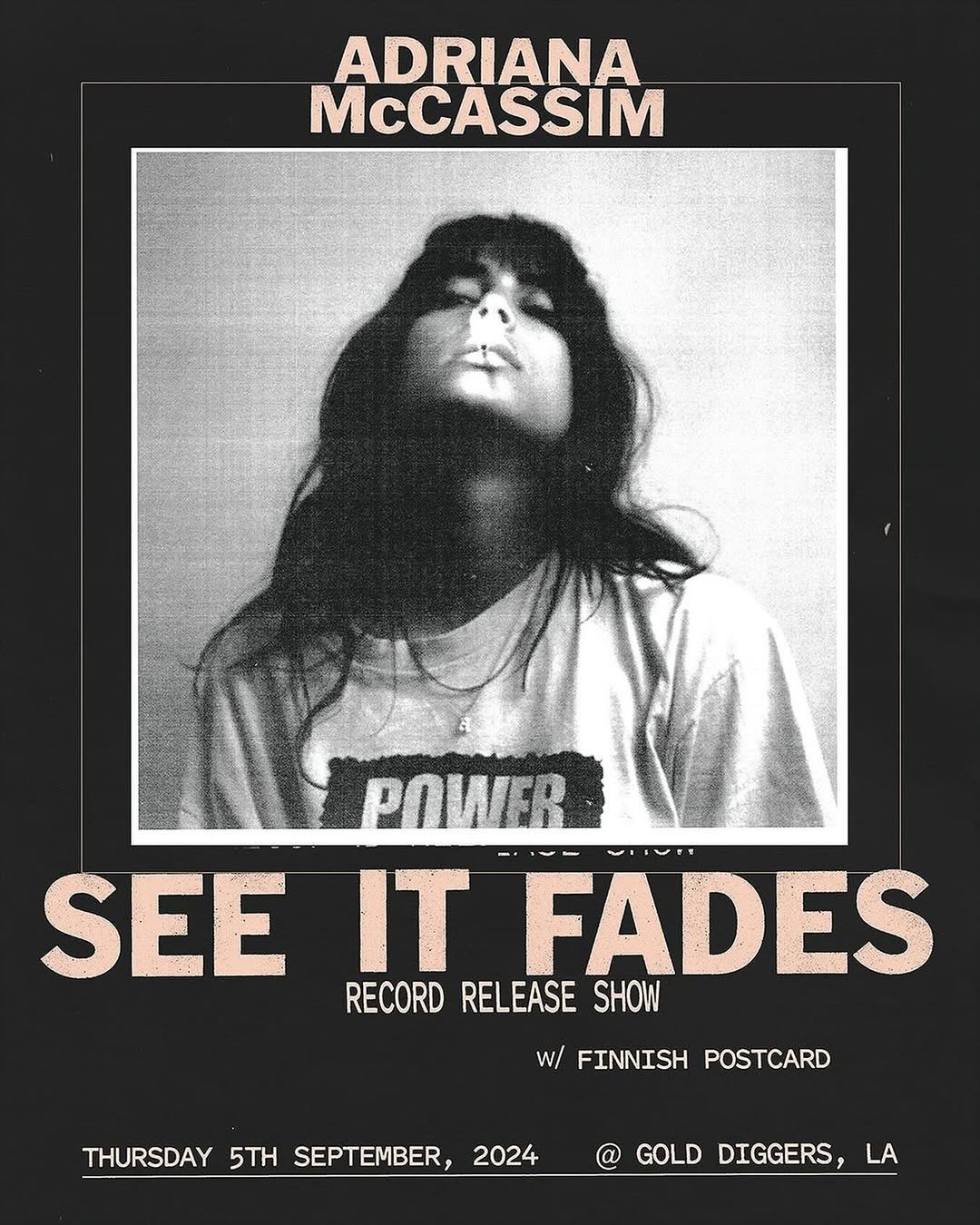
I’m Into Life Records is a tape label out of Ashville, North Carolina that was founded in 2022 by Ethan Hoffman-Sadka, who also releases music under the project Trust Blinks. What began as happenstance for Ethan to help some buddies out with their debut album has since grown into a mighty collection of recordings from an eclectic roster of artists. With a focus on the found community that comes with sharing music, I’m Into Life has become a staple in many scenes across the country. Over the years, the label has shared the works of remarkable artists such as Open Head, Laceleaf, Jolee Go, Tombstone Poetry, Good Trauma, Nobel Beast, Idle County, Finnish Postcard, Theadoore, Fraternal Twin, Adriana McCassim and Molly Drag.
We got to chat with Ethan about how the label began, what lessons he has learned and how the label got its image.
Early Label Days
This interview has been edited for length and clarity.
Ugly Hug: What sparked the idea to start a label? What were the initial goals, and have you seen those goals shift over time as you get more practice?
Ethan Hoffman-Sadka: It’s funny, I just did a music business presentation about the label, so I’m ready to talk about it [laughs]. What sparked the label starting was actually my friend’s band Open Head finished their debut album and they didn’t have a home for it or a way to market it. The label started from their release. Just as a way to help them and make vinyl for them. And then from there it grew a little and I was like, ‘Okay, I guess we’ll just roll with it’.
Did you have any prior experience with the whole releasing and marketing aspects of a label? Did you do any of that work when it came to your own projects?
I knew nothing about physicals. I think I had probably by then ordered tapes for my own music, but I also didn’t really start getting into music until a few years prior to starting the label. I was kind of a late bloomer, but I knew a little bit about the industry stuff. I used to work for this music blog called Alston Pudding when I lived in Boston and I did all their video stuff for them. And I also ran a social media account for my hedgehog at the time called Spiked Jones [laughs], so that was all I knew about using Instagram. I definitely learned the hard way how expensive vinyl is and have since pivoted to really prioritizing tape and CD releases.
covid times record store drop off at Dusty Records
Starting with Open Head, a few of the first artists you worked with were Jolee Go and Laceleaf. How did you approach finding the artists you worked with and how did you build this little community?
I’m not sure how I found Jolee Go, I think we just had mutual friends. And then serendipitously I had moved to Los Angeles around that time, and she was moving there. We’re both from New York, so I just really resonated with her first EP and saw that she didn’t have any merch for it. So, I just reached out and offered and then we developed a nice friendship. That was a kind of random one off. But after those first three releases, it more solidified an idea that it’s sort of a collective vibe, and if one artist succeeds, then everyone succeeds and gets a little more traction. To this day that’s kind of what makes the label worth it in my eyes. Artists that join the label are kind of all in this together.
As you started to build out your catalog, piecing together all these bands and making physicals, what were some of the trial and errors that you experienced, and what did you learn to embrace that has brought the label into what it is today?
This was actually a big part of the point I was trying to make in that music business lecture. You have to learn to straddle this line of being DIY, but not being a total punk, and still having some sort of business acumen. As much as it sucks, you do have to think about things like, ‘oh, will these tapes sell so you don’t just go bankrupt?’ So, I think I’ve definitely learned that. even if I am so confident in a release and love the music so much, you still need to plan around that in a financial way. It’s hard not to be like, ‘oh, I’m so in love with this release, you guys deserve vinyl.’ Which I still believe in my heart, but I’ve had to learn to be more practical. Also, this is probably not the best business minded idea, but I am always encouraging artists that if they get a bigger opportunity that they should go for it and sign to a bigger label that can pay out better. It was really exciting when Open Head just signed to Wharf Cat. It was a cool, full circle thing to have gotten to give them some sort of small platform.
polaroid of triple split crew Tombstone Poetry, Hiding Places and Trust Blinks
When things become so hectic, what makes you most excited to run a label?
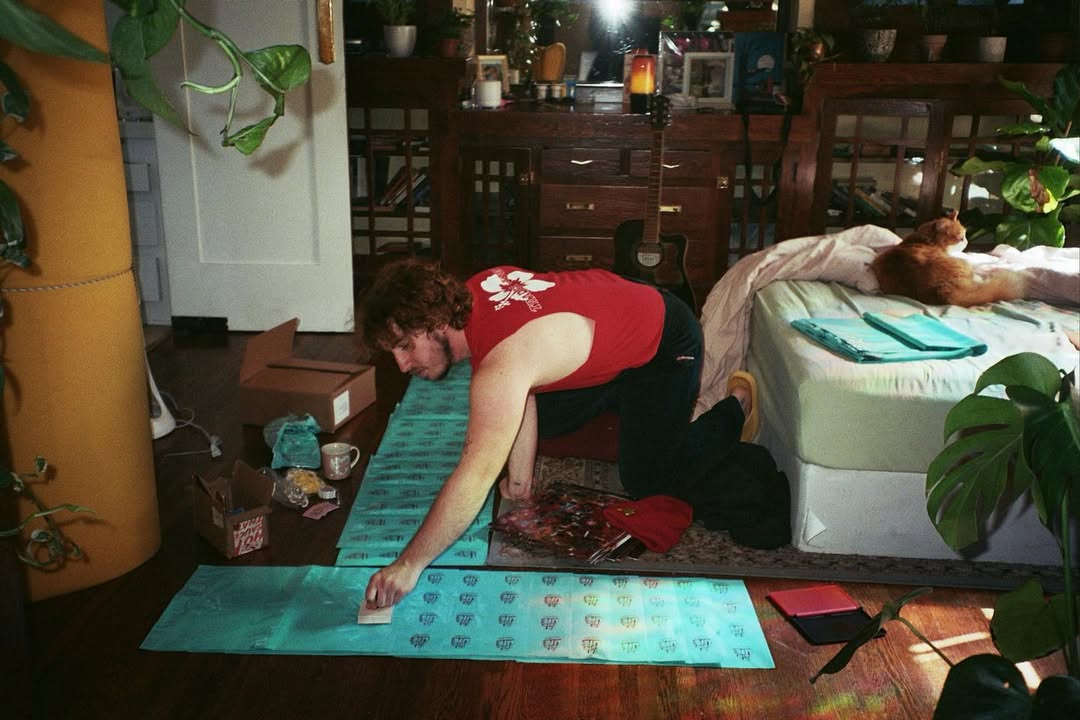
A lot of it comes from the releases, where I’ll hear something that’s so different or weird, and it reinvigorates that excitement for music. Our most recent release, Fool’s Errand by Theodore, it’s the project of Grace Ward whose music I’ve loved for a long time. But hearing their new album was such a great experience – the music is so creepy and cool and complicated, but it makes sense. So definitely the releases keep that fun and excitement going when they’re sent to me. And then also I just try to keep it fun with shipping out the orders. I’m always at the dollar tree, buying weird stickers and candy to fill the orders. I definitely want each package to feel like a Wonka Bar or something.
It’s all in the name. Who designed that animated poster that you use often? It’s such a fun visual.
So that original artwork actually came from my grandpa. He was an illustrator in the sixties in New York City, and every now and then we’ll come across one of his pieces online. That one I couldn’t find what it was illustrated for, so a friend helped me restore the image, and then we pulled the logo from it. We have not gotten into any legal ramifications for using it so far [laughs].
So is that where the name for the label came from, too?
Yes, it was in that poster. I’d imagine it came from some sort of magazine he did. So really, in the beginning, I had the release first and then started the label, kind of working backwards. So I definitely needed to think of a name. I pulled a few friends and I was definitely looking at some cool, more mysterious and edgy names, but that one kind of stuck with me because it was so almost not cool [laughs]. Especially because a lot of our music falls into a category of, ‘we’re all depressed and anxious’. But, you know, we’re still trying to make the best of it. And as long as that doesn’t get grouped into pro-life. sentiments, then, yeah, that’s how the name came about [laughs].
An I’m Into Life Poster hanging up at the Post Office
What are some releases that have stuck with you over the span of the label’s history?
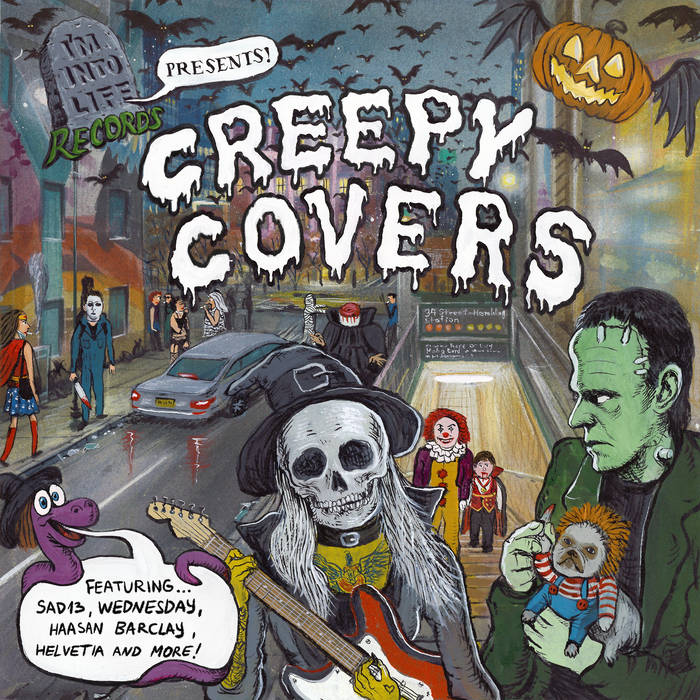
A big one was organizing the Halloween covers compilation. It was shortly after the label started and I thought it would be cool to do something to help put the label on the map. I’m so obsessed with Halloween and so obsessed with so many of the artists on that compilation. I’m definitely still proud of that one just because I think it’s pretty unusual to make this grouping of songs where you encourage all the artists to record a whole new song. It was a lot of work, and I had to start it like over 6 months in advance and then keep following up with artists because we’re all super spacey. It definitely snowballed and became this huge thing that really did help put the label on the map for a little bit and get on those huge blogs that we hate like Pitchfork and stuff [laughs].
Some of the I’m Into Life back catalog and merch
You’ve done a handful of comp releases, one of the more recent being the Hurrican Helene relief comp, Song to the Siren. Do you see yourself doing more compilations? Does it feel like a thing that kind of encompasses and connects what’s around you?
Definitely. A lot of the time, unless I really find someone who I’m obsessed with their music and they happen to not already have a label or a friend making merch for them, I don’t have a project I’m working on. At least with the compilations I have the control to make something happen instead of waiting around. The fundraiser ones are great because we can actually do something meaningful to the rest of the world. But with the #1 and #2, I wanted to tap into some really specific sounds, that if you’re kind of in the scene, you’re kind of aware as to how all these bands are connected. It’s cool to put that in a compilation and see all these artists on the same release.
Do you have anything in the works that you’re looking forward to?
It’ll sound kind of sad, but I have literally nothing in the works which is exciting to me. I have learned now over the years that I’ll have nothing on my radar, and then something will come out of nowhere, whether it’s like a new artist or a new release from an existing artist. That’s an anti-answer, but that’s how it seems to go. I had no releases for a while and then suddenly July became such a busy month. So, I’ll probably just be working on some retroactive promotion and pushing the older catalog.
Along with this series, our friends over at I’m Into Life Records are offering a merch bundle giveaway! The bundle includes How Could I Be So In Debt? vinyl (2024) by Tombstone Poetry, Hiding Places, trust blinks., Tombstone Poetry Split x3 (2025) cassette, Fool’s Errand cassette (2025) by Theadoore, as well as some I’m Into Life and ugly hug goodies.
To enter the giveaway, follow these easy steps below!
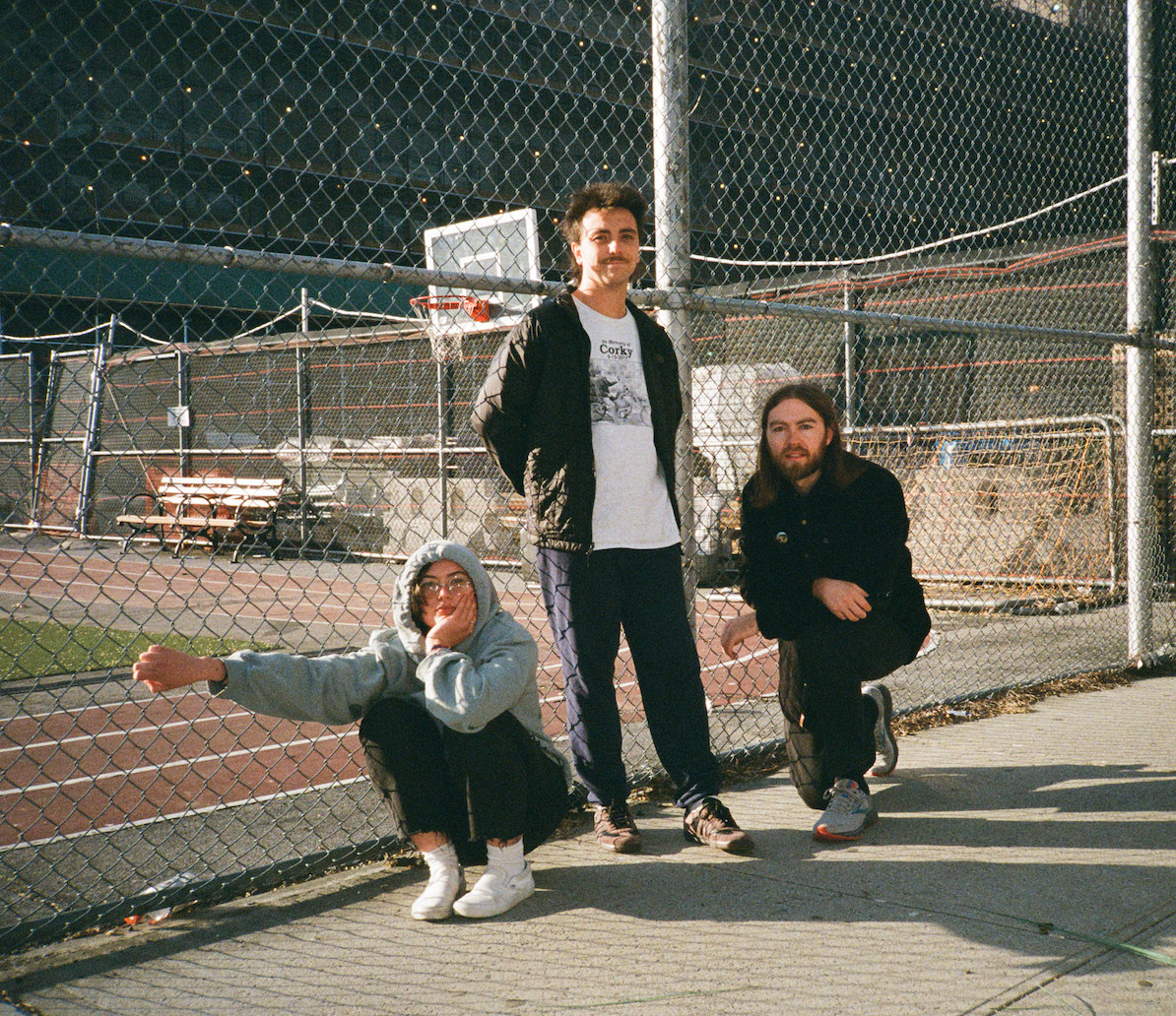
Last week, a band I had been interviewing told me that the only relevant means of music categorization is region-based. It came up amidst some anti-genre discourse, and the take was less a blanket statement of “every band from Pittsburgh is making an identical style of music” way, and more so rooted in the touching impacts of community on art. I found myself marinating on that take heavily as I listened to this split EP by Tombstone Poetry, trust blinks. and Hiding Places, three bands who share ties to Asheville, North Caroline. Their timelines in the city do not boast an identical alignment, Hiding Places is now a Brooklyn based project and trust blinks. has only been in Asheville since 2023, yet an element of community touches and binds the entirety of the listen, creating a through line amongst a series of personal reflections and guarded thoughts.
We recently got to ask trust blinks., Hiding Places and Tombstone Poetry a few questions regarding their individual tracks, collaboration on this split and the impacts of community in Asheville, North Carolina.
trust blinks. is the project of Ethan Hoffman-Sadka who has been releasing under the name since 2021. Following the last LP Turns to Gold (2024) and two collaborative singles, Trust Blinks. returns today with two new songs, “Body Keeps Score” and “Dirty Dishes”. On “Dirty Dishes”, trust blinks. reflects on a childhood unblemished perception of the world from the thinned-out lens of adulthood. The tectonic gaps between a life where “astronaut” is an attainable path and a life where you co-exist with a roommate’s neglected mug in the sink are bridged in a rusty haze of lived in guitar and tender vocals, untethering the track from the extremes that it explores to establish an experience that leans a bit further into emotionally ambiguity. The weathering impact of lived experiences is a theme that trickles over on “Body Keeps Score”, where trust blinks. examines how hardships can only promote growth if we choose to not be defined by them. Tombstone Poetry makes an appearance on the alt-country leaning track, the initial contrast of Hoffman-Sadka’s brittle and delicate deliveries followed Burris’ sharply melodic twang ultimately filtered into one through a stunning moment of harmonization.
This is not your first split release, having collaborated with other artists like liverr, new not shameful and Suggie Shooter. Now with this 3 part split, even including Tombstone Poetry on one of your tracks, what does this kind of collaboration, and/or pairing, bring out in the music that you create? What do you take away from experiences like this?
Lately, I’ve been trying to collaborate with as many of my friends/inspirations as possible. I love so many different sounds it’s hard to keep track haha. With each split or mutually created song I think I pick something new up along the way whether it’s a new skill/interest or even the realization of what I don’t like. I haven’t been really feeling a succinct sound lately so I’ve been enjoying going with the flow and doing one-off tracks instead of albums. I’m always looking for ways to force myself to not take it all so seriously- which ironically takes quite a bit of work for me.
There is a lot of depth in these songs’ complexion, for instance, “Body Keeps Score” leans into the more alt-country style and “Dirty Dishes” embraces that more slow and harsh soundscape that filled past projects like Turns to Gold. When it came to the sonic build of these songs, was there anything new that you wanted to try? Any ways you challenged yourself with these recordings?
As cliche as it sounds, it’s been hard to resist leaning into the sounds of the South since I moved here. I wrote both of these songs around 6 months ago and just recorded little demos of them for Youtube without any much thought about what genre they were at the time. When it came time to really record them they both seemed to naturally gravitate towards different sounds. I knew I wanted to record Dirty Dishes with my friend Luna (Total Wife) and the goal in doing so was definitely to channel The Pumpkins, MBV, Lilies, Acetone and so on. I wrote Body Keeps Score with Caelan (Tombstone Poetry) in mind to sing on so I think I kinda built the song up around the sound of their voice I had in my mind. I’m still pretty new to incorporating instruments like banjo, violin or pedal steel into mixes so I think I struggled a little more with Body Keeps Score when it came time to record that one. I realize I still have quite a bit of work to do when it comes to genuinely approaching songs that are a departure from the usual wheelhouse haha.
“Dirty Dishes” floats this theme of growing older and becoming more despondent to your surroundings. What was the significance in the imagery you chose? Is there a thematic throughline with the grappling that “Body Keeps Score” goes through?
I really like when any art comes from a really simple place. I think Dirty Dishes’ lyrics came really naturally in that sense. In adulthood I find myself so manic and wrongfully attuned to inconsequential details like the noise or messes my roommates make. I probably was in the middle of some mental stupor and took a step back and realized how sad it was that our worlds become so much smaller as we grow older. The line ‘you could clean them but they’ll still pile up’ is all about how there’s always some new problem or fault I find with something or someone. I’m working on that!
With Body Keeps Score there is not really as much imagery going on. I just liked how those words paired together (from the book) and made a little play on the words. The lyric, “If the body’s been keeping score I’ve gone undefeated since I was born”, kinda says it all. I think sometimes I take pride in my hardships in an unhealthy way. Hardship can definitely help us grow but not when they become an aesthetic thing or a script we rely so heavily on.
Did writing and recording these songs help you feel more present in your day-to-day, especially when pulling deeper meaning from the mundane?
I think I gravitate towards writing lyrics as if they are mantras. In that sense, writing these songs definitely helped me feel a little lighter. It’s always nice to consolidate a philosophy or feeling into a 3-minute, materialized thing that you can say goodbye to. As for recording these songs, I can’t say they were as enjoyable. I started that process after Hurricane Helene and six months later I still find it hard to get into a certain flow. The prospect of sitting at my desk was and still is extremely daunting and at some point, I just had to set a deadline so I could let myself move on. I’m not as happy with Body Keeps Score (it feels a bit dramatic/forced) but I’m excited to take some space and work on new stuff/potentially approach recording the song again in the future.
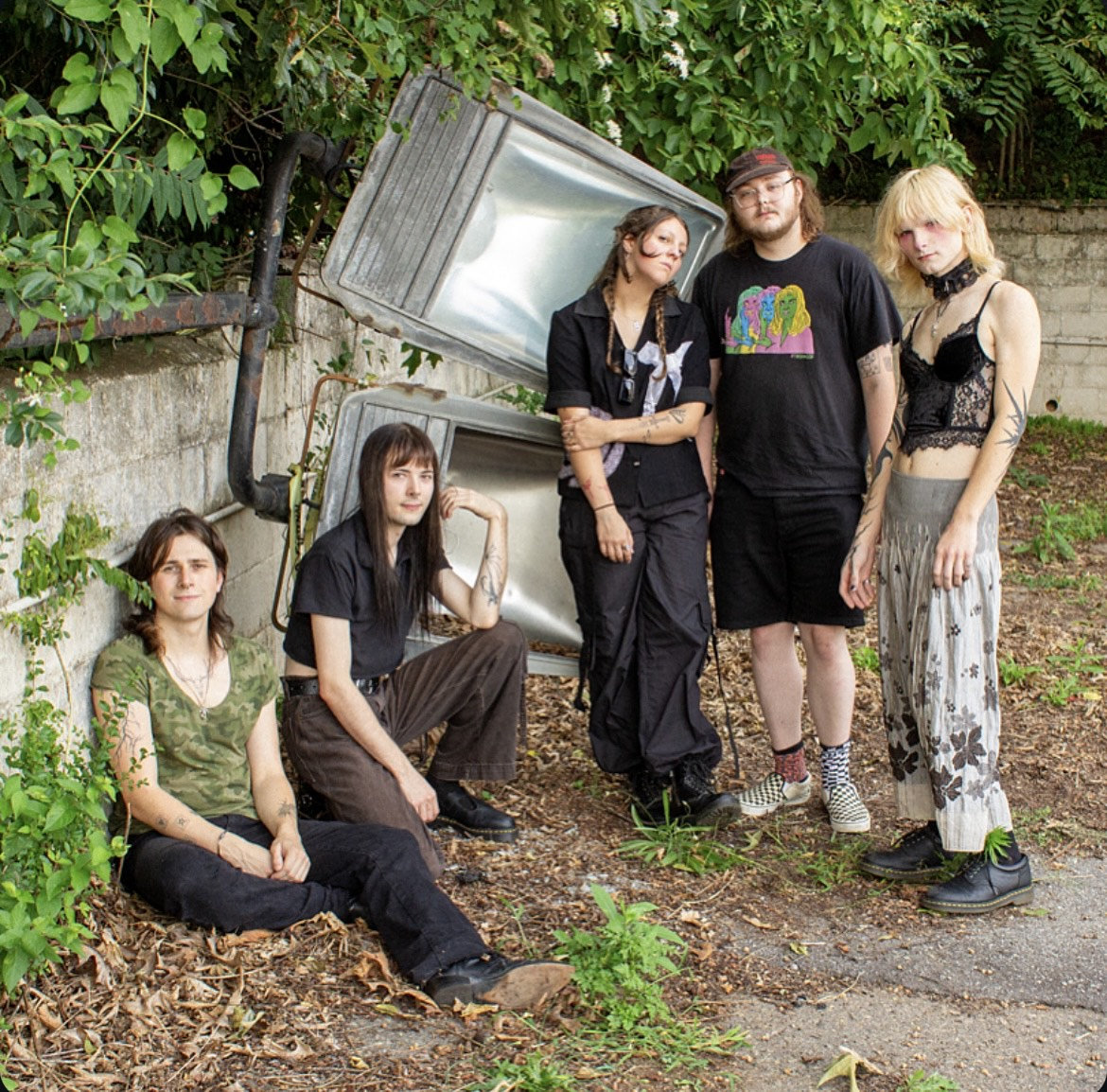
Now a Brooklyn based band, Hiding Places began in Asheville as the project of Audrey Keelin, Nicholas Byrne and Henry Cutting. Following the 2024 release of single “Pulp”, Hiding Places returns today with two new songs, “Unfixing” and “Flooded Island”. Though the notion of a “bedroom” track is technically rooted in lack, there is often an impalpable depth and level of untouched emotional ruminations in music created in one’s own space. Amidst a circling fog of delicately layered vocals on “Unfixing”, Hiding Places simulates an unraveling of skepticism and preoccupation cushioned by tender, glistening guitar. This authentic “bedroom” quality spills over onto “Flooded Island”, which maintains a wispy sense of solitude as Keelin’s syrupy vocals sift through overbearing thoughts during a quiet shift at a woodshop.
There is a great deal of focus towards different sonic textures in these songs, but especially on “Unfixing” with its building layers and the roles the landscapes played on the track. Where did you challenge yourself in crafting this soundscape? Did the build up of instrumentation come naturally with the songs’ intentions?
Nicholas: So these two songs from Hiding Places came as from songs from our first album that we’re done recording now, and basically realized, hey, we need to fit this album on a record, and these two songs stuck out as having their own sonic qualities that work together, and we thought it would be fun to release them early on this project.
Audrey: I feel like I want to preface this by saying that these two songs were built from demos that I made in my room alone. They just both have that sort of energy to them, so I think all of the textures that we incorporated in this and essentially almost everything on this recording that was built on these bedroom demos, we’re just kind of experimenting and seeing how we can make them Hiding Places songs. And these songs were arranged and produced during the same time that we were arranging and producing and recording the entire album that’s going to come out sometime soon. But they set themselves apart because they are more like bedroom recordings, and they are just softer and more delicate and songs that we don’t really play live. They have this more experimental energy to them rather than like, you know, this is a song that we arranged as a band in the practice room, and this is a song that we play live, and this is a song that we get out a lot of energy with. But to more accurately answer that question, the song’s intention was just experimentation, just trying to get out a feeling. It’s honestly indescribable, and that’s why we make music.
Lyrically, there are phrases on “Flooded Island” that lean into that imaginative imagery that you have used in the past to grapple with more adult themes, as was the focus on your prior EP, Lesson. In what ways did utilize this type of writing to bring out themes buried within these songs?
Audrey: Flooded Island was a song that I wrote while I was working in a woodshop in Chapel Hill. I had a lot of free time because there were often times where there was nobody there and I could just make my own stuff, and sometimes I would use the job site radio to mix my demos in the woodshop. So I think that that song for me is imbued with that memory. Also just imbued with the memory of working my ass off in general, especially working my ass off to move to New York. That song I wrote before I moved to New York and I was just thinking about how much hard work it was going to be to move here. It’s also just like witnessing other people overworking themselves to survive.
This is one of the first Hiding Places’ releases where you are all once again in the same spot, but now living in New York. Has that shift in location changed the way you approach and interact with how you make music?
Audrey: I think that the move to New York has actually completely changed Hiding Places’ sound as a whole. I think that these songs and some of the songs that are on the album kind of mark an end of the remote Hiding Places that we’ve known for four years now. It’s kind of bittersweet, but I’m very, very happy that we live in the same place now because we can arrange music together and play it together and try it out and add new parts and test what feels most fun and exploratory live. With the shift in location though, I think the main thing that has been really revolutionary to Hiding Places is Michael Matsakis and recording and arranging with him. Having him produce some songs and play keys and organ and bass parts and even guitar parts in some songs, he’s just so tapped into this endless stream of creativity and curiosity that I admire so much and I’m so lucky to be around.
Nicholas: Audrey made these demos in North Carolina before moving to New York about a year ago, and we recorded the rest of the parts of the arrangements in New York, so I think they exist somewhere in between sonically, which has kind of been the story of the band so far. Now with Audrey in New York, though, we have the opportunity to play a lot more and write together here, where previously our process has been building on top of demos that either Audrey or I bring to the band. There are several songs on the album that we wrote from scratch together, so we’re kind of evolving how we build songs and sounds. It’s always funny, I feel like a lot of the songs we’re releasing were made a couple years ago, so it sounds different than the things that we’re writing now. But I think these are especially cool songs because of the way that they are really crafting a soundscape and are rather ethereal in their atmosphere.
With origins in North Carolina, this split album has its soul based in the South. Now living in New York, in what ways do these songs connect you back to Asheville and the way that that community functions?
Audrey: I appreciate that you asked about Asheville. It’s extremely meaningful for me to be making music and being in the same scene still with people who live in Asheville because it’s where I grew up and it’s where I feel like it’s the scene that raised me as a musician and also just as a person. I felt disconnected from it for a while ever since I moved, but the fact that I can come back and feel at home again is so encouraging and it makes me want to just keep making music and being in that community and being inspired by that community.
Nicholas: We just played with Tombstone at Trans-Pecos here in New York, and it was really fun. It’s really cool to blend these worlds, North Carolina and New York, of people and place and music and taste!
Watch the accompanying music video for “Flooded Island”
Since 2021, Tombstone Poetry has been forging a musical identity that paints a certain country warmth onto alternative rock and noise heavy walls. Following the 2024 release of their LP How Could I Be So in Debt, Tombstone shares singles “Ignition” and “Bender” today. “Ignition” presents as the most upbeat track on this release, attesting to Tombstone Poetry’s knack for molding shame-drenched confessions into buoyant hooks and twangy warmth. “Bender” adopts a darker soundscape, though both tracks cut deep into reflections on substance abuse and the impact of addiction on relationships.
Through feelings of heartbreak and sabotage, was there a specific theme that towed the line between these two songs? What did you find yourself embracing when bringing out these songs?
I think as I continue to write about things like heartbreak, I find more solace in being brutally honest. The general theme of broken relationships (both platonic and romantic) has been a defining characteristic of Tombstone songs for a long time. I think with Bender and Ignition, the songs are not only honest but defeatist in the hopelessness of the lyrical themes. In picking them as the songs for the split I decided to embrace that feeling and have these two sister songs stand together.
As “Bender” becomes this haunting infiltration into the lives of two individuals, how did you play with the concept of a bender and heartbreak taking on similar roles in your lyrics?
Bender is a pretty straightforward song about drug addiction. It’s somewhat dramatized but the feeling of being at the mercy of your vices but wanting stability in a relationship was my point of view in writing it.
“Ignition” and “Bender” take on two different sonic build ups, yet hold on to that alt-country style that your music has set its roots into? Was there anything you wanted to do to challenge the way you work as a large instrumental unit on these tracks? Did you try anything new?
We recorded both of these tracks completely differently than anything we’ve done before. Usually we go into things as a unit at a studio, but with these two me and Lawson Alderson pieced them together in our home studio, bringing in different members of tombstone and guest musicians. It was a very fun and different experience to collage the songs together.
What did it mean to you to hop on the track “Body Keeps Score” with Trust Blinks. for this split? How did that collab come to be and what did you gravitate towards on that song?
It was a blast! I love Ethan and have been playing music with him since he moved to Asheville. We just got together one day and bounced some ideas off each other for vocal parts and it all came together.
You can listen to the split EP of trust blinks., Hiding Places and Tombstone Poetry on the bandcamp page of I’m Into Life Records, as well as order a cassette tape!
Written by Manon Bushong | Interview by Shea Roney
Every Wednesday, the ugly hug shares a playlist personally curated by an artist/band that we have been enjoying. This week, we have a collection of songs put together by artist Caelan Burris of the Asheville-based project, Tombstone Poetry.
Since 2021, Tombstone Poetry has been forging a musical identity that paints a certain country warmth onto alternative rock and noise heavy walls. The six piece’s sound took to its most formidable shape yet last year with the release of How Could I Be So In Debt?, where they harnessed an addicting balance of twangy instrumentals and emotionally charged angst in a dense 33-minute listen. The album’s layers of screamed harmonies, shimmery distortions, religious motifs and garagey dissonance are ultimately sewn together by the band’s ability to exert sincerity, their introspections bleeding poignantly amidst every style and technique they experiment with.
Listen to Burris’ Playlist here;
You can listen to all Tombstone Poetry releases and purchase a copy of How Could I Be So In Debt? on cassette or vinyl on their bandcamp.
Written by Manon Bushong | Featured Photo by Shea Roney
As a small music journal, we rely heavily on the work of independent tape labels to discover and share the incredible artists that we have dedicated this site to. Whether through press lists, recommendations, artist connections, social media support or supplying physicals, these homemade labels are the often-unsung heroes of the industry. Today, the ugly hug is highlighting the work of our friends over at Trash Tape Records.
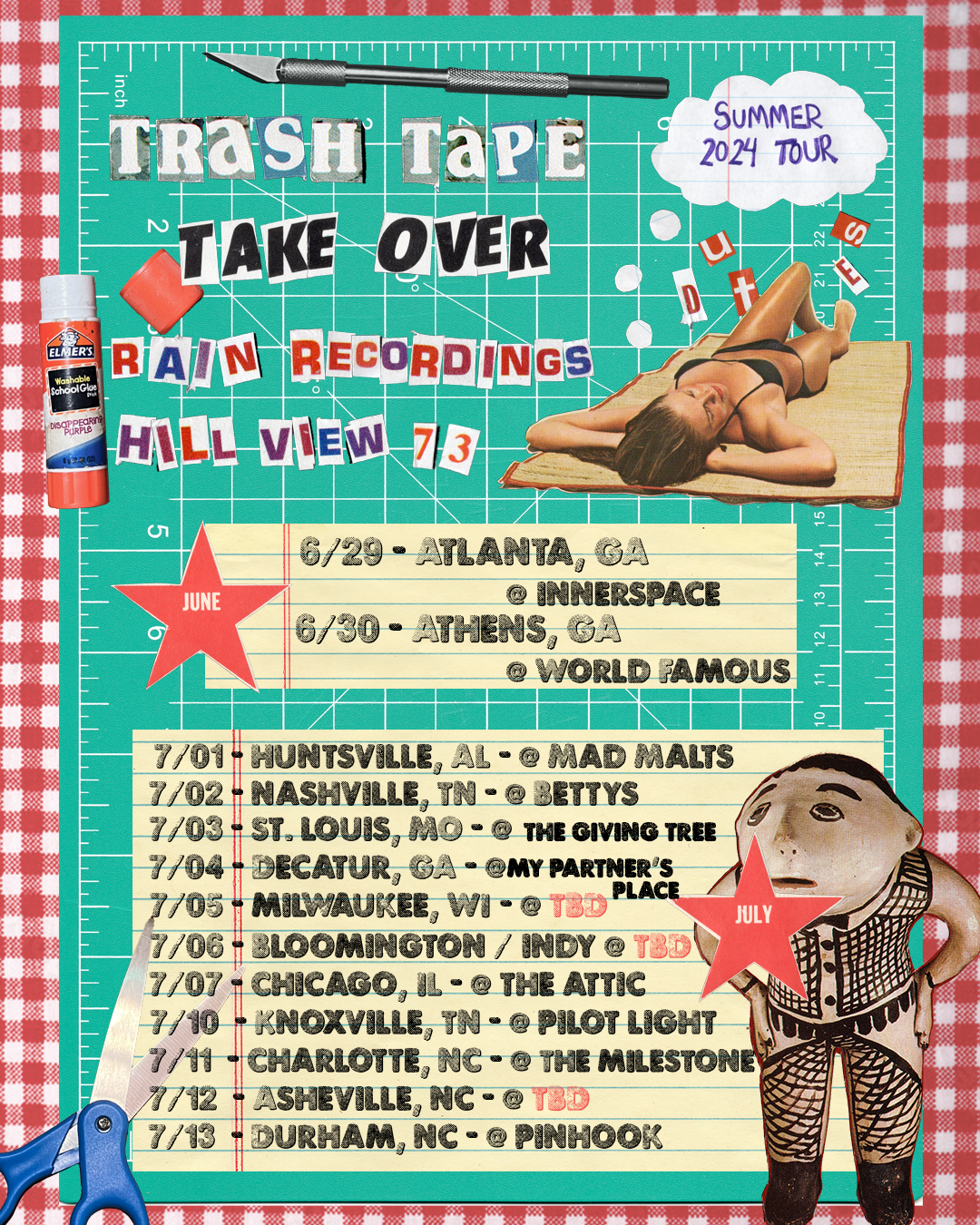
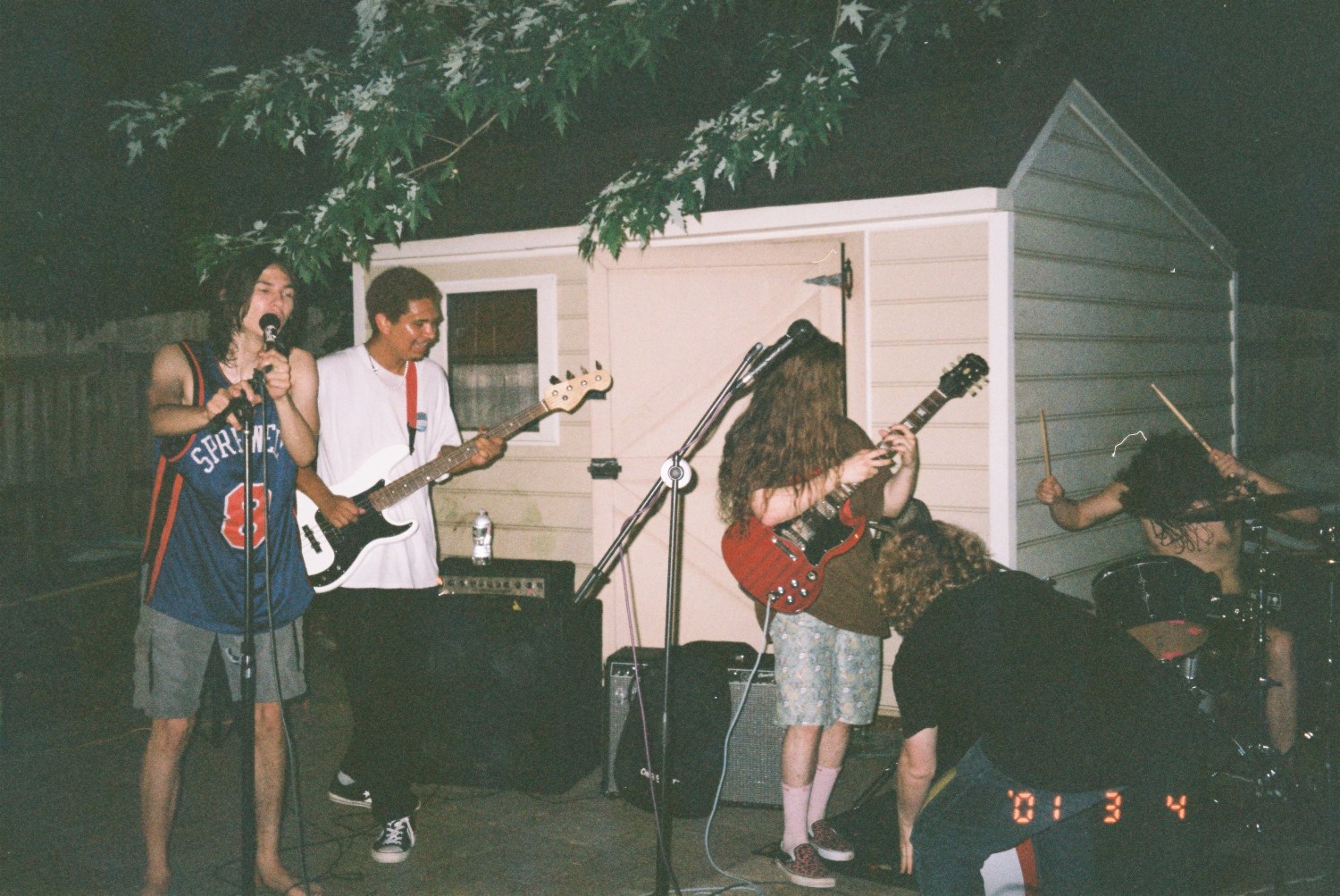
Originally formed in the Chappell Hill and Durham area when they were in high school, Trash Tape Records was founded by Nathan McMurray and Evren and Eilee Centeno. The vision was simple; to put out their friend’s music that they loved so much. Building off of that youthful excitement with a sheer DIY ethos, Trash Tape became a home to many artists with similar mindsets, by making their art accessible, exciting and incredibly endearing. Consisting of US-based acts covering the South and Midwest, such as Memory Card, Gabbit, Tombstone Poetry, Hill View #73, Hippie Love Party and Deerest Friends, the connective tissue of the label even expands to acts like Quite Commotion and Rain Recordings from Sweden and Gluepot from Australia, proving that a community doesn’t have boundaries.
We recently sat down with our friends at Trash Tape Records to discuss starting a label with trial and error, going on tour, high school jobs and their favorite label memories.
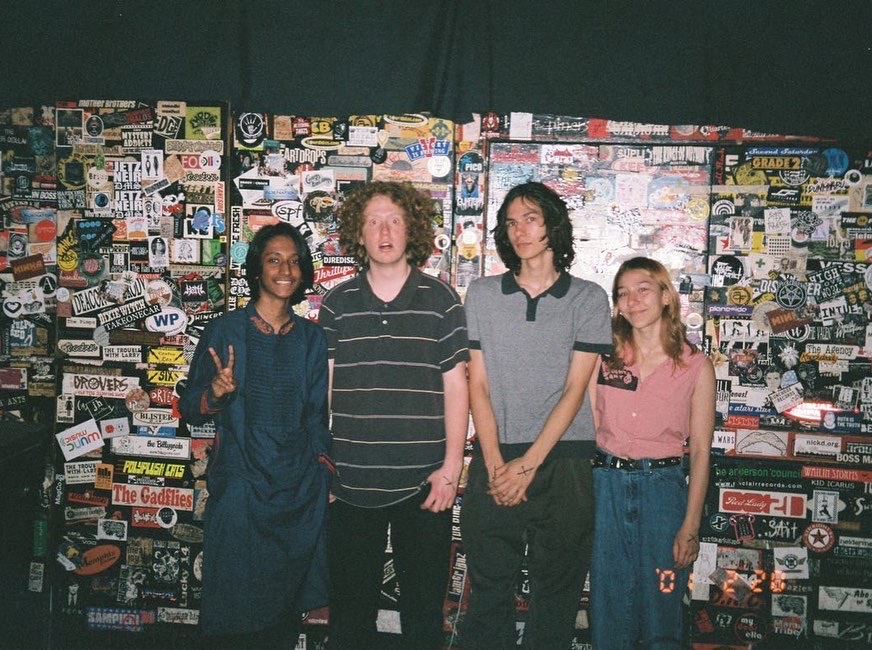
Nathan, Evren and Eilee at Kobabi in Chicago 2025 | Photo by Shea Roney
This interview has been edited for length and purposes.
Shea Roney: So, Evren and Nathan, you two started this label at a pretty young age with a basis of just wanting to make music together. How did Trash Tape initially form and what were your intentions in the beginning?
Evren Centeno: We were buds already, and we had been playing music at that point for half a year. We would go to my place or Nathan’s sometimes, because Nathan had a really bad sort of, like, what was that recorder that you had?
Nathan McMurray: I found in the attic my mom’s old multi-medium stereo, like CD player, cassette player, record player. There was this function on it to make mixtapes, but if you input a microphone and tricked the machine into thinking that it was the other cassette tape you were copying, then you could record on it. But it was one track and awful, awful quality.
Evren: But we were messing with that because we were interested in tapes. We liked, you know, indie music, Elephant 6 and all that stuff, and we thought, ‘wouldn’t it be cool if we had something like that in our community?’ And then COVID hit, but we knew a bunch of people online through just talking about music, and friends of ours were putting out music, so we were like, let’s just put this music on streaming, and then we can hand-make some tapes. I had a tape-dubbing machine, my dad had one, just like a stereo, and you could dub tapes on it. And we also had a four-track, so we made a first run of tapes using that, and then we went from there. It was kind of loose. We just wanted to put our friends’ music out on it.
Shea: So it primarily started with friends’ music? Did you ever want to put out your own music?
Evren: Yeah, it kind of started with friends’ music. We didn’t put any of our own stuff out on the label until years after.
Nathan: Yeah, I think it was two, three years after. I remember the first, and I apologize if this isn’t something you want to print [to Evren], but Evren texted me and a few other people, something like, ‘we’re starting elephant 69’ [laughs].
Evren: Yeah, I did say that. I was 15. It’s okay to be 15 and cringy.
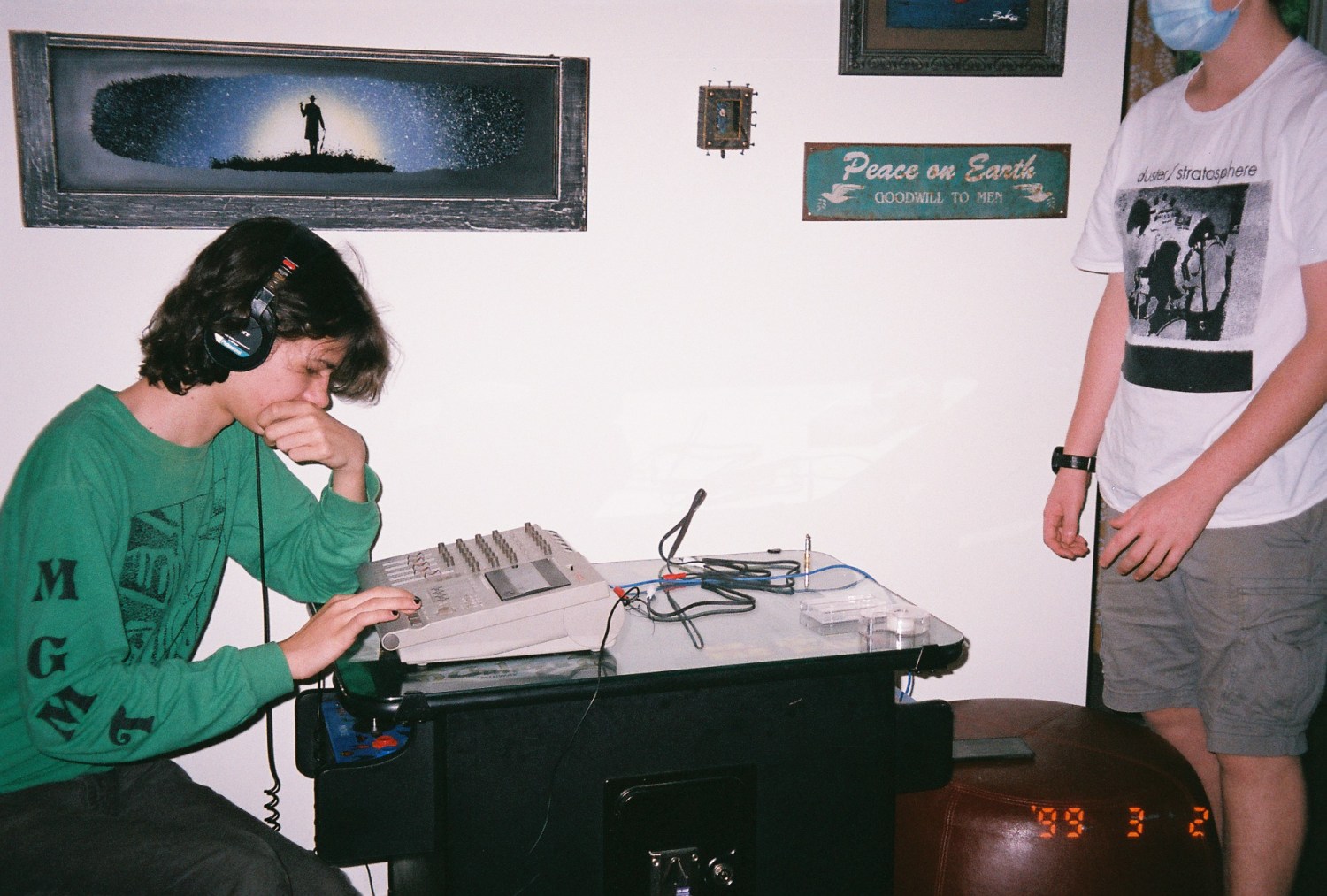
Nathan: We were all quite young, and it came from a good place. And then, that tape label started when we had put out a record and figured out how to dub it. We were doing it with an aux cable coming from a phone or, like, a computer straight into the Tascam onto the tape. Initially, when I first tried to do it using that shitty one track, it sounded bad, so then we took it to Evren’s dad’s tape deck and dubbed using an aux cable from my phone into that, and we just dubbed them all in real time while we watched TV or something.
Evren: And that was during quarantine, so we had no class. So Nathan would just come over to my house, and that’s what we would do. We would just write and record and dub and fold and cut paper. And it was all bad. We were all still very much 15.
Awsaf, Nathan, Evren Eilee at Local 506 Chappell Hill 2022
Shea: So, it was a lot of learning as you went for the tape production. Did you know how you wanted to record music when it came to that?
Nathan: The way I started recording music, at least me personally, was that my mom had this bad Dell laptop that was on the way out. I started doing freelance work in Photoshop when I was 12 because my dad’s friend came and pirated all the Adobe programs, so I had Adobe Audition on this laptop. And there’s this place in Durham called Hunky Dory that’s a record store slash vape shop, and in the dollar record section, they had this whole wall of used stereo equipment and everything was $5 untested. I would buy, like, RadioShack mixers and weird RCA cable adapters, and eventually, I had accumulated enough stuff that I could get a signal to pass through a microphone through this RadioShack mixer into Adobe Audition. It sounded awful. It sounded worse than if I would have just used the laptop mic. But I felt special doing it.
Shea: So, you get the initial first few releases out, did that solidify the thought that this could be an actual label for you?
Evren: I mean, I think we believed in it really heavily as it started, but we were just young and excited about something. And all our friends online would just shitpost about it, which I think was what made us think that it was interesting, or something cool at least.
Shea: Wait, what? Why?
Evren: I don’t know, actually. It was like this really insulated, but intense community. Even though it was literally only a few people who were even aware of Trash Tape Records, because all of our friends were just lurking online all day during quarantine making and spreading Trash Tape related shitposts, we felt a semblance of momentum. But really it was just a bunch of kids online making insidious jokes with one another, but then those jokes became part of the labels public image.
Nathan: It would get posted on music meme pages that, like, just shitpost about general online music. And I think that’s probably how it started to spread. It was so bizarre. But it really is such an echo chamber because you feel so much more significant when you’re in a group of 20 people and there’s pockets of three or four people in each city and you just play Minecraft and talk about music all day.
Evren: But no one was really buying the tapes still. I mean, some people were, but it was a very small scale. There weren’t repeat sellers or anything like that. We were doing small runs. But I think we just believed in it. We would pick up followers and we would see people talking about it, maybe posting about the music, listening to it. Nathan was just excited about making tapes and getting into printing and things like that. And then came the idea of wanting to tour and we wanted to play with our bands.
Tape Dubbing in North Carolina 2021
Shea: You know, that youthful excitement is so prominent when you’re 15, 16. And it’s really transferred into the way you run this label. It’s very visible and really exciting to watch. Eilee, when did you start to get involved?
Eilee Centeno: I actually don’t know.
Evren: Well, Eilee really initially started because Eilee was in college and she was past 18 and Nathan and I weren’t, so she could sign up for things that we couldn’t, like PayPal and DistroKid. We needed Eilee, but then it was also, like, Eilee was also just into what we were doing.
Nathan: I remember because I had made the email and I was trying to set up a bandcamp and a DistroKid, and at that point, we were dividing up the tasks, and I was like ‘oh, god’. So, I texted everyone, like, ‘I tried to make the PayPal, but I’m not old enough’. And then Eilee entered.
Evren: Yeah, it was all kind of very freeform. I mean, the way the name came about was just the first name someone said, and everyone was just like, ‘oh, yeah, that’s cool’. And then somebody made the logo and just drew it, and it just stuck. Put it up on Instagram, that’s our thing now.
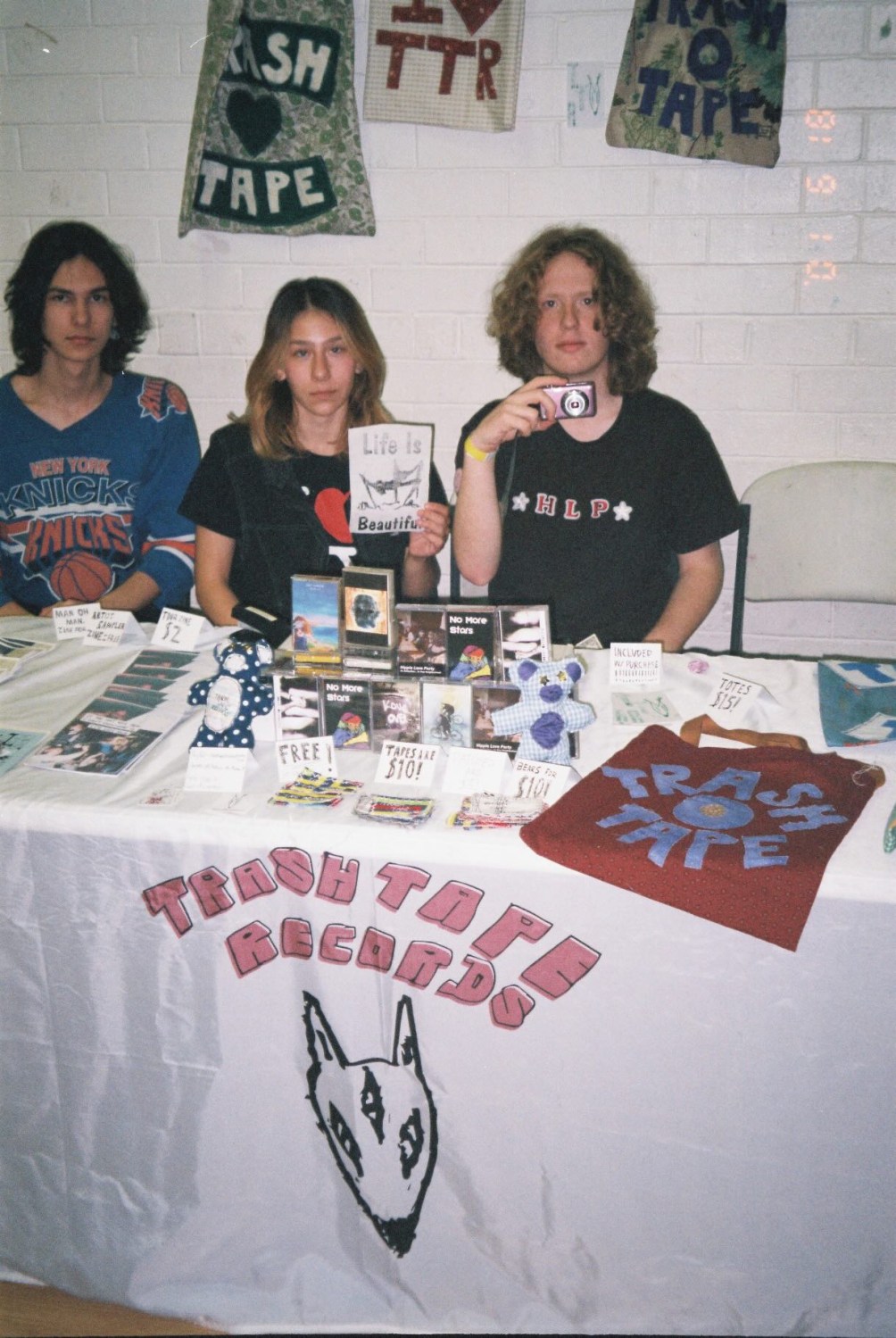
Vending at Psychic Hotline Noth Carolina 2022
Shea: So did you guys find your generalized roles by circumstance?
Evren: Yeah, Nathan, you were into the physical stuff and took the ropes on that.
Nathan: Yeah, and I’m not very good at Instagram and large-scale communication with the public, so other people picked up on that.
Evren: I like looking for music and stuff online, so I try to find people to put out their music. We would find all sorts of stuff online at that time. I’m not as keen anymore as far as to what’s going on online, but there were all sorts of young people doing stuff that we would put out.
Shea: I mean, you guys have a pretty expansive curation of artists covering a lot of ground that goes outside of your North Carolina origins. How did you first start searching for these artists? And what drew you into the people that you decided to work with?
Evren: Some of them are really haphazard. We always had open demo, well we did for a while, not anymore. Sorry to be a bad guy. We got so much crazy shit sent to our email that was kind of really obnoxious to deal with sometimes.
Eilee: But we did get lucky. Like, Awsaf sent us demos. The stuff that they sent, they didn’t even put out until later, but it was some of their best stuff. Like, ‘all the time’ was the first song they ever sent. And then Memory Card was just a friend of Awsaf’s.
Nathan: I have a very funny story about the Memory Card beginning. Henry had released his first album as a Google Drive exclusive. Do you remember that? He emailed us like, ‘I just released my album as a Google Drive exclusive’. And that’s the type of thing that we were like, ‘oh, I gotta see what this is’.
Evren: I used to use Rate Your Music a lot, and that’s how I found a bunch of stuff, like this guy Josef who we ended up making music as Rain Recordings together. He was from Sweden, and his stuff was awesome. And then Quiet Promotion, another young Swedish artist I found through Bandcamp and Rate Your Music. But then other people were just friends of friends. There is a tape label called 9733 and they also had a forum online. That’s where we would hear of S. Rabbit, who we ended up working with. And then they ended up doing Gabbit with Gavin Fretless who was on our label, basically finding each other’s music through our label.
Nathan: It feels like the culmination and dream of everything that we had hoped to possibly create.
Evren: That was our initial hope that people would just collab on each other’s records and stuff. That there would be a network of people that can record certain things and play certain instruments and whatnot.
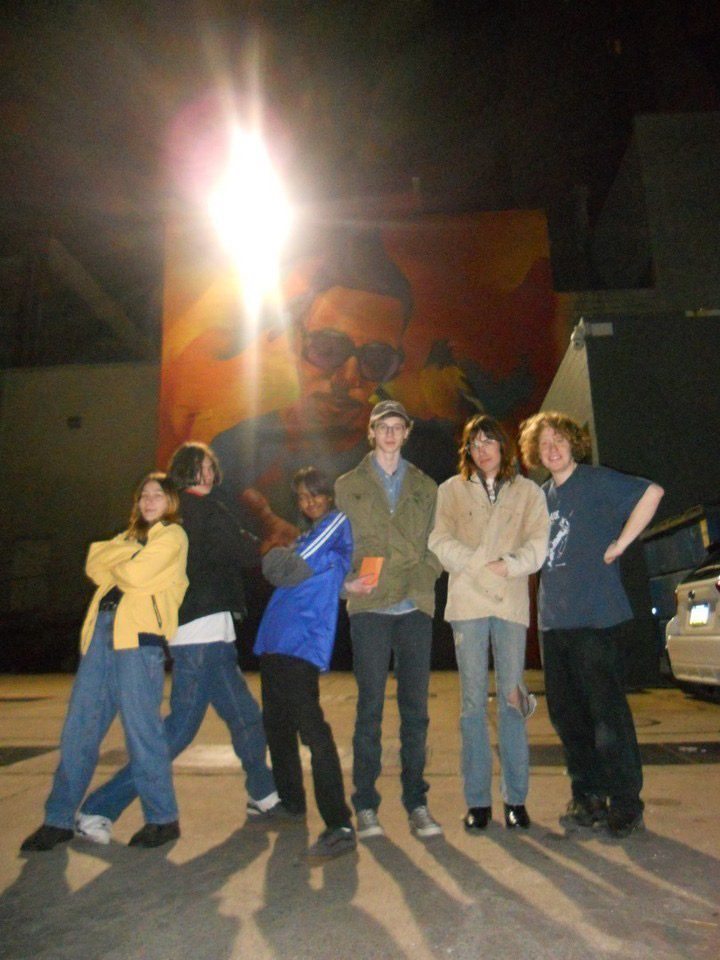
Hill View #73, Welcome to Berlin, Memory Card and Old Star in Atlanta 2022
Shea: You do have this expansive online community. How has that defined the way that you approach what community can be for you guys?
Nathan: It feels like a modern idea of the more classic DIY indie thing. Where it’s kind of updated for a global age, because when the whole world goes global, I think music and art communities have to go global with it. Otherwise, you just kind of get trampled. And the internet happens to be the way that that goes now. I think there’s other ways that it could be done, maybe better. But that’s where we’re at.
Evren: But when you’re planning a tour, or when someone’s planning a tour, they reach out to you, and they’re either staying at your house, or you’re staying at their house, you’re seeing each other, you’re playing a show. Even though we have bands where we’re from in North Carolina, then we’re playing a show in Virginia Beach with bands like Hippie Love Party and whatnot. And then we would go to Atlanta and play with Hillview and do tours with these bands. So, it almost became like a touring circuit in a way.
Eilee: I think because a lot of our artists have toured so much too and toured together. We’ve made a lot of connections all over the east and the south mainly. Where like, Knoxville feels like a second home to us just because of the community there that we wouldn’t have found otherwise. We’ve never even spent more than a day there, but everybody we know there is really special. And it’s nice because we can help our friends book shows there too. The community just keeps growing and growing.
Nathan: Yeah, because now touring feels like a big road trip where you see all your friends and you also don’t lose money. And you’re still just constantly creating anywhere. It’s really nice being inspired by different people and places. Touring in that circuit and in that manner feels so much more sustainable than just touring in places where you’ve never met anybody. It’s nice to have that kind of stability in what is a very unstable lifestyle.
Hippie Love Party with Handmade Trash Tape Merch on the “Minions Tour”
Shea: Yeah, I guess with that sustainability, as you guys get older and have different responsibilities, how do you maintain that stability with all the aspects of running a label?
Evren: It’s hard. We’re a pretty unstable label. But we’re working on it. You know, now that we’re all in Chicago, we’re trying to do more stuff locally. We did that festival, Eilee honestly did a really great job of putting that all together and really had the vision for doing more stuff locally. And I think that went really well. It seemed like something people were into.
Eilee: When I first moved here, I immediately had Evren and Nathan over and we had a day where we would just make tapes and buttons and all that stuff together. Now we do that together a lot more where it used to be super separated and it was just like, ‘oh wow, Nathan did the tapes, how awesome’. And I made Tombstone koozies, and now, somehow, they have to get to each other, so they can get to the people who bought them. And now it’s just really easy. It’s just hard too to talk about releases and stuff online or over the phone. We don’t even get to really hear each other’s honest and true opinions on music that’s sent to us or ideas we have for promotion. We’re all just like, ‘yeah, sure, let’s do it’. But then when we’re in person, we actually get to flesh it out more and really talk about our ideas because things can get jumbled.
Evren: It’s definitely a lot sometimes. We’re all also trying to make music and make other things. Eilee does a really good job of doing zine interviews and posting that on the account, just so we have stuff to put out there, stuff for people to read and get to know our artists. We’re going to try to also get more consistent with getting together and planning things out and whatnot. It’s just been a busy time. Nathan and I are doing school, Eilee’s been working, and then we’re going down to North Carolina soon for this big Pop Fest thing, and then Nathan’s going to Atlanta to help record Hill View #73 and play shows. Honestly, a lot of the way in which we support the label is just by playing for the bands on our label. I played for Hill View, Memory Card, and then did other stuff for bands that were on the label.
Nathan: It’s almost become a thing where me and Evren are the house rhythm section for the label. It almost feels like, okay, we’re helping the bands out by getting them out on the road and by backing them.
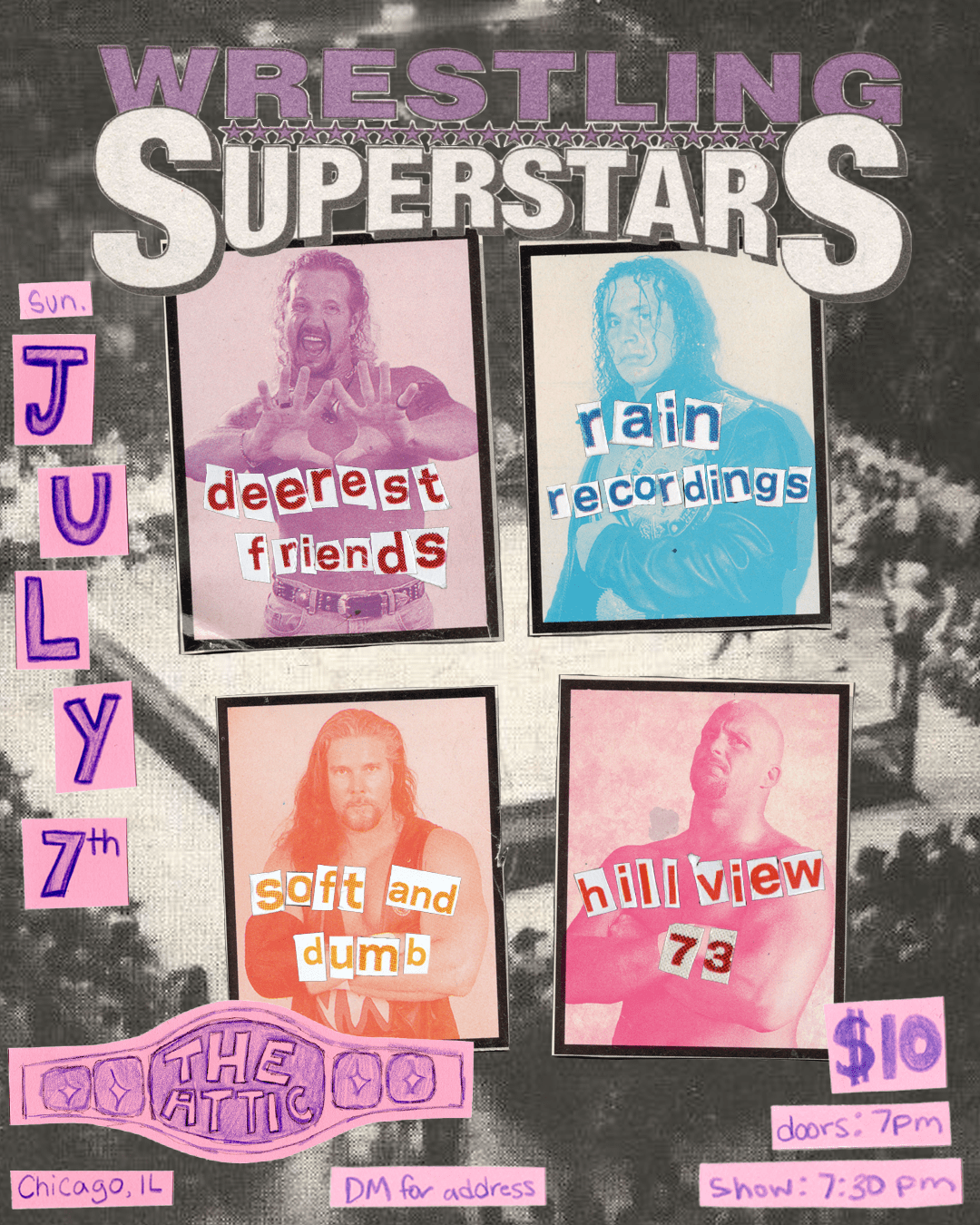
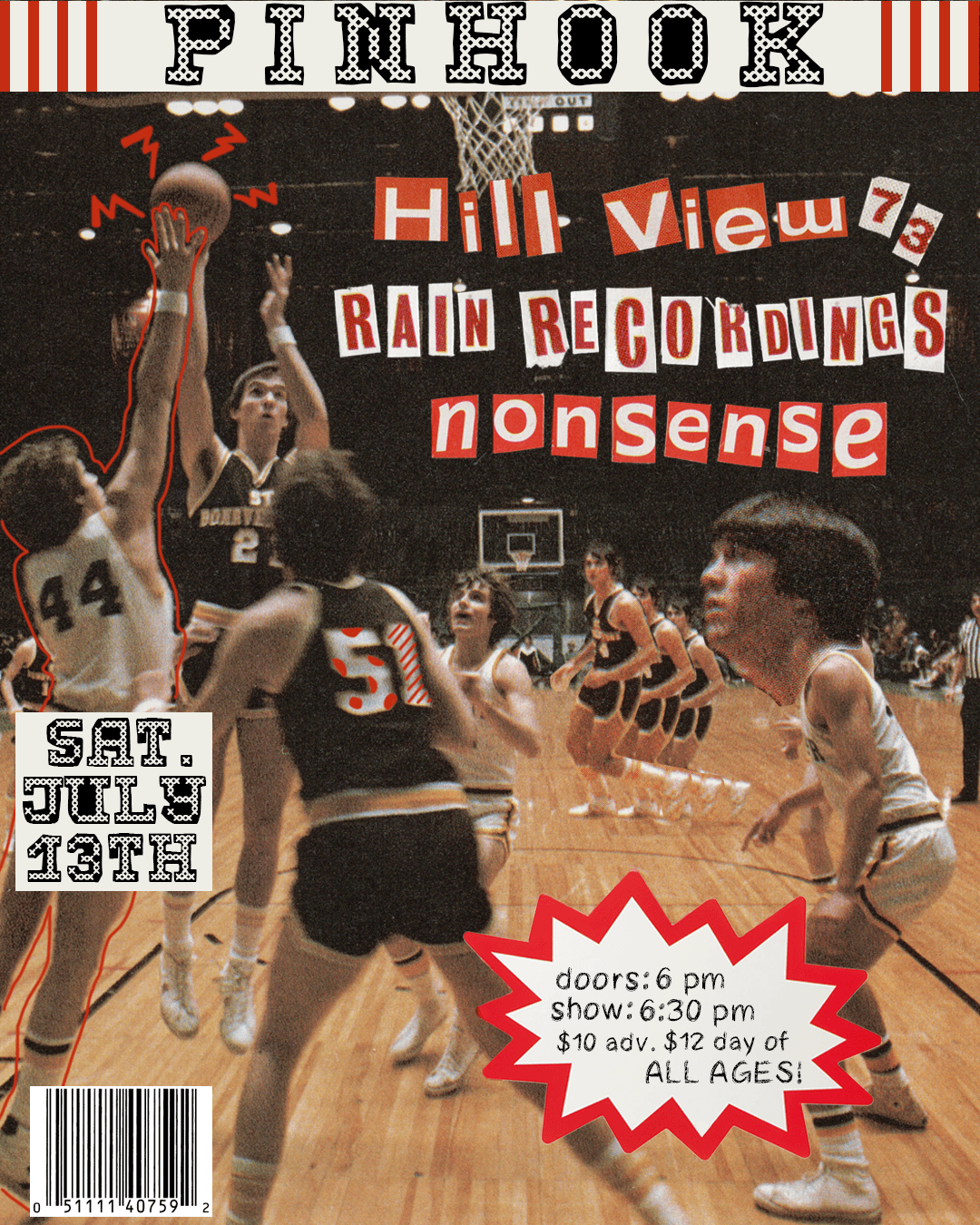
Scroll through for some Trash Tape show posters through the years
Shea: I mean, you guys do create such an engaging way to explore and appreciate new artists. Going from your zine interviews to touring and supporting your artists, what’s so important about crafting these stories, these little relatable nuggets about your artists?
Eilee: I think it’s just that our artists are small, so, people don’t know a lot about them, but all of them have really special stories that have meant a lot to us. Especially somebody like Gabbit or Tombstone Poetry, who mean a lot to us being based in North Carolina and introducing us to an amazing community. And I want their story to be shared. Even if a lot of people aren’t reading it, it’s just nice to take the time to actually really get to talk to them, for me, personally, and then to share that and hope people feel some sort of attachment or relate to something and then want to check it out.
Evren: And the thing about those digital zine stuff is it takes time with its presentation. We try to do fun stuff with it, like a little mini review or we ask them fun questions, and then we try to diversify the pages and whatnot. A lot of times when I’m trying to find new music, reading features and things like that, that’s a big way for me to get into a record because I can see where an artist’s headspace is at. I’m like, ‘oh, wow, their process sounds really interesting. Let me give it a spin.’
Nathan: I think that that’s a thing that’s died a lot in the current realm of music production. Whereas if you go back even 20 years and look at small magazines, I was just looking at an old issue of Roller Derby, and all the interviews in this issue were compelling and funny and very interesting and they motivate you to listen to the artist. And I think taking that sentiment and still giving it digitally and free and everywhere kind of gives you the benefits of genuine engagement while not being limited by buying a zine or knowing who to mail order.
Memory Card Practice at Nathan’s Apartment Winter 2025
Shea: And Eilee, you made a tour documentary too.
Eilee: Yeah, a long time ago. I have wanted to make a more updated one because I feel like we’re all just different now and it’s a different time. I was supposed to film a lot this summer on our tour. That didn’t happen and it was just… oh, my God. We might have gotten an actual TV show probably.
Nathan: There would have been a scene of me and Awsaf, just like, wordlessly using a toothbrush to scrape throw-up out of the inside of the window of their parents’ car for like an hour and a half in Homewood, Illinois, while all these guys would pull up into the gas station, look at us weird, and then drive away. It would have been one hell of a documentary.
Eilee: I was thinking of filming the Pop Fest. That would be cool.
Shea: Can you tell me a bit about Pop Fest?
Nathan: It’s like a bunch of bands who are all playing at Duke Coffeehouse in Durham, North Carolina on March 22nd and 23rd. I think it’s Saturday and Sunday.
Evren: Yeah, but a lot of trash tape artists are playing. Memory card is playing, Eilee and I are doing a set, a lot of friends are going to be there. I’m really excited. A lot of Chicago bands and North Carolina bands.
Eilee: Nathan also had a big hand in putting it together.
Nathan: It’s been a long process of planning and it’s crazy that it’s actually working out. It’s all done with university funding, so there’s a lot of proposal writing and mission statements. You gotta seem like an intelligent person with a vision to some degree. It’s going to be scary though, because it’s going to be all of the people any of us have ever known.
Eilee: Like every single world of ours is combining.
Nathan: Like my parents will be there. There might be deadbeats from when I went to high school.
Evren: Eilee’s 50-year-old co-worker is going to be there, because he’s playing a set at the festival, and we’re playing like sets back-to-back. It’s so beautiful. It’s crazy.
Nathan: Do you think we can get Mike from the cafe to come? Was it Mike or Mark, the crazy guy who ran the co-worker cafe? Oh my God. We were working as line cooks in a public park, in the cafe, but it was like a winter wonderland public park event, so we would just be there all night, and Eilee would make hot dogs and french fries and I made pizzas and sandwiches.
Evren: Yeah and then Nathan and I worked at Party City for like half a year together.
Nathan: I worked at Party City for damn near a year. You were there for like 10 months, right?
Shea: Are you guys sad to see it go?
Nathan: We went together like a week before it closed. We stole Mario figures. It was really surreal.
Evren: I was kind of like, ‘let me see what I can get here, what’s on clearance’, and there’s nothing worth buying there. There’s nothing you would ever fucking want there.
Nathan: That was the cool thing about working there, there was no incentive to steal things from work to get in trouble. The only thing would be I would go to the snack aisle, and I would steal combos if I hadn’t had dinner, and I’d eat cheese pizza combos. And that was the extent of my workplace theft. But you would get a lot of balloons. You get 12 free balloons a day. So, if I felt down, I would make a balloon.
Evren: Nathan figured out what the biggest balloon in the entire store was, and it was a life-size Stormtrooper. And we really wanted to see it, because like, that’s crazy [laughs]. So he just convinced our manager to let us blow it up.
Nathan: For promotion! But then within a week of that, we weren’t allowed within 10 feet of each other, because we would talk to each other too much.
Evren: Because it was so understaffed, we were all working like three jobs at the same time. You were the cashier, and then had to go blow up everybody’s balloons.
Nathan: I remember when we got in trouble, because there was like a huge order, like 50 or 100 balloons, something obscene. We were making them together because there was no one in the store. We’re not going to finish this if it’s just one of us, and we’re talking while we do it, because the store is empty, and that’s so sad to just blow up 100 balloons in silence. And then our manager comes over, and she’s like, ‘why are you guys talking?’ And then she made me go stand at the cashier in silence while there was nobody in the store, and Evren just had to blow up all the balloons by themselves.
Evren: At that time, we got to see each other all the time, because it was like, we would go to work, and we’d do trash tape stuff, and it was that time, like we were doing Welcome to Berlin, and then we did our first tour that summer, which was all trash tape bands. It was Hill View #73, Koudi, and then Welcome to Berlin. I drummed for all three bands and we had no fucking clue what we were doing.
Nathan taping the front bumper of his parents car – Tour 2022
Shea: What was it like figuring out how to book shows and tour?
Nathan: The thing is, it’s hard if you’re from a place, and you’ve got no music, no clout, it’s impossible to book. But if you’re from a place, no music, no clout, and you want to book a show four hours from you, it’s easy. You’re just like, ‘hey, I’m from out of town’.
Evren: The first show we booked was in Chesapeake, Virginia. I was with this band Hippie Love Party, who are on the label, at a venue called The Riff House, like a trailer in a gravel lot. It was a great show, but we went like three hours to play it, and it was great. It was worth it. And we were like, ‘oh, we can do this’. But that first tour, we were playing with three unknown bands, only two of them had music out. Koudi was releasing a record, but no one knew who they were. Hill View had just released their first EP. We played like eight shows, so what we would do was we would play where everyone was from. We went to Atlanta where Hillview is from, and then we went up north from there. But then in Asheville, no one showed up.
Eilee: We were supposed to be playing with Melaina Kol, but he had to drop the day of.
Evren: But no one showed up to that show because it was like, three bands no one’s ever heard of, ever, that have never played live, ever [laughs].
Eilee: Which is so awesome and funny too, because now we know so many people in Asheville, and it’s just like, we made such a beautiful community there three years later. It just takes time.
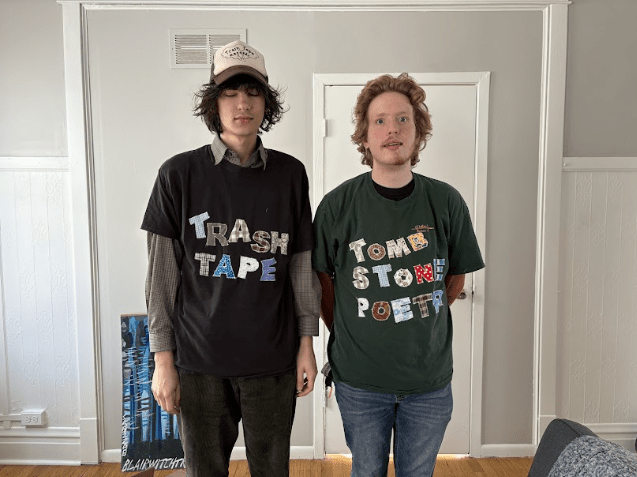
Evren and Nathan with shirts made by Eilee for Tombstone Poetry Promo Video
Shea: Trash Tapes recently celebrated 5 years of being a label. Looking back on your catalog now, broadly speaking, what are some releases that have stuck with you? Whether that be from just the sheer joy it brought, something you learned about the process of running a label or putting out music, etc.?
Eilee: For me, I think the last Rain Recordings album Turns in Idle, that was a really special release. Josef is from Sweden, so he came to stay with us for like three weeks. Evren and him worked out the album and then we all went to Drop of Sun in Asheville for the recording, and they were there for like a week. Nathan and I came up halfway through and we got to do some stuff on the record, but also just watching that whole process was really beautiful, and we all just got super close during that time. I mean, it took a long time for the album to come out, but when it was getting ready, I had asked Evren if I could help with the release and they kind of just let me do whatever I wanted. That was really nice because I wanted to get into video editing and making little promo videos with animation and stuff. Josef is a good artist and makes his own drawings, I got to work with him too, and being part of that process and then making all their shirts and merch for tour and stuff, was just really special to me. It did cause a lot of tension between Evren and I, but I feel like our relationship got stronger throughout it. My relationship with everybody just got stronger through that release and I learned a lot about the creative process and myself.
Evren: I think when the first Hill View EP came out, Songs I wrote Skipping Classes, was a big thing, because I was just graduating high school and it was like the first time Hill View released something. I’d known Awsaf for a while, I mean it still shows how good of a songwriter they are, and how good they were at that age and whatnot, but when that came out it felt like things were going places. That was a really exciting feeling, being a part of that and then playing their first shows live with them and making the tapes and selling them. There was something that felt really special about that.
Hippie Love Party x Welcome to Berlin Pool Party Show Summer 2022
Nathan: I have two answers. The first is the Memory Card album As the Deer. I flew out to Alabama, and I spent a couple weeks in Demopolis, Alabama with Henry where I thought we were going to just practice for tour, but then I got to his house and he was like, ‘okay are you ready to finish the album?’ He had more songs he had to record, and then we touched up mixing and did all of the album art in between Alabama and North Carolina. At points, his mom would stop by where we were staying and just kind of not question what was going on. And then when we were in Durham, we would stay up for days making scary music that was supposed to allegedly be a live show on the radio, and working on the album cover, and my mom would walk into the kitchen at five in the morning when she’s leaving for work and just side eye and not say anything [laughs]. Just the whole process of that album was very special, but also just because Henry is one of the people that was really, really influential in my life. It was also just a point in my life where I was kind of losing my mind and felt trapped, and then I ran away to Alabama for a month. Listening back to it, I love that album and I love every song. I think it’s my personal favorite thing that we put out, and it means so much to me to have been able to play a small part in bringing it through the finish line.
Then the other one is the second thing we put out, Take Me to the Moon and Back by Pig Democracy. That album was the first time I ever really got adventurous with my end of the production side of things. It was a box set, so I had made a print template for how to print out everything on cardstock that could then be cut and folded into a box that you could put all the tapes in. And then it also came with a zine. My dad works in this light factory, setting up lights for design, and I went up to his work and printed them all on the printers there, and he helped me lay it out using the computers there. At the end, it was a very personally important process to learn how to do all of that, and to do it for an album that means a lot to me, for a person who means a lot to me. It felt like both of those things, I think in the scheme of our label and for all of us, felt like big steps.
Along with this series, our friends over at Trash Tape Records are offering a merch bundle giveaway, which includes tapes of Terns in Idle (2023) by Rain Recordings and Field Recordings (2022) by A Patchwork, a Trash Tape pennant and buttons, as well as stickers and a tote bag from the ugly hug.
To enter the giveaway, follow these easy steps below!
















 the ugly hug