Last week, FRANK/IE CONSENT and The Spookfish shared a collaborative recording titled no bottom pond, 34 minutes of ethereal folk experimentations from a series of sessions that took place in upstate New York where Dan Goldberg of The Spookfish was living last summer. Pieced together by The Cradle’s Paco Cathcart, the duo made use of a tape recorder and a camcorder, traveling between Goldberg’s house overlooking a pond to the heights of Harvey Mountain, where the two artists embraced pure moments of improvisation and collaboration.
Although one piece, no bottom pond can be split into different movements upon listening, like a collection of extremities that coerce the natural world in which this duo finds themselves expressing its creation. Passing a guitar back and forth, FRANK/IE CONSENT and The Spookfish spent these sessions improvising with whatever they had on hand. The clanking of porcelain, the crinkling of leaves, a melodic dance of looming guitars and breathy vocals, bits of laughter over folkish whimsy – at times these awakened expressions peel off from the vibrant backdrop, only to return as one – a return to the very presence of its makers as they too take into account the beauty of their surroundings.
You can listen to no bottom pond out on FRANK/IE CONSENT’s bandcamp page now.
As a small music journal, we rely heavily on the work of independent tape labels to discover and share the incredible artists that we have dedicated this site to. Whether through press lists, recommendations, artist connections, social media support or supplying physicals, these homemade labels are the often-unsung heroes of the industry. Today, the ugly hug is highlighting the work of our friends over at Lily Tapes and Discs.
Formed by Ben Lovell in high school as an open and engaging space for his and his friend’s music, Lily Tapes and Discs has become a treasured tape label out of Rochester, New York, housing a mighty collection of recordings founded on the passion of sharing music with others. Along with Ben’s own project lung cycles, Lily Tapes is a curation of many beloved and eclectic artists, such as The National Parks Service, Ylayali, Cla-ras, The Spookfish, German Error Message, Hour, Jason Calhoun, Adeline Hotel and many more.
We recently caught up with Ben to discuss Lily Tapes and its homegrown roots, celebrating its 10 year anniversary and the importance of sharing music with your friends.
This interview has been edited for length and clarity
Ben and Grayson (ligaments) performing as part of our short-lived noise duo “dry heave & neckbeards,” I think this was at a battle of the bands in a frat house? would have been around when we put out our split tape – iirc we emptied the room
Shea Roney: Your first release under Lily Tapes was back in 2014. What sparked the idea to start a tape label? Was there a particular moment or inspiration that made you take the leap?
Ben Lovell: It was actually way before that. I started self-releasing CD-Rs and stuff like that in late high school and early college and then moved on to tapes. I was doing enough self-releasing stuff that I figured I might as well put a name and a logo on it, but most of that stuff at this point I’ve sort of taken offline. It’s all kind of old. I was recording and self-releasing stuff as a teenager and discovering tape labels and DIY stuff, sending my stuff around a little bit to certain labels that I admired and looked up to and, as it usually goes, mostly either got silence or no’s. I realized I enjoyed putting the things together and making the artwork and all that, so I might as well just keep doing it myself. The first few releases were just mine and then eventually I started asking friends if they wanted to also let me make a tape of their stuff and it sort of became an actual label instead of just a logo that I was putting on all my own stuff.
SR: You had a lot of dual releases in the early days of the label. Can you tell me about that series and how those came to be? Who were some of the first people you collaborated with?
BL: The National Park Service was the first person that I did any sort of collaboration with. We know each other from a Radiohead message board that we both posted on as teenagers and have kept in touch. We made an album together where we were just sending Audacity files back and forth over Dropbox and then I put out a tape of his stuff called I Was Flying in 2013. And then that same year I started doing some split releases also, so the National Park Service and I did a split tape, and then one with my good friend Grayson who used to make music as Ligaments. And then the split tape sort of became a focus for a little while. I enjoyed the challenge of just thinking, here’s a friend, here’s the style of music they make, and pushing myself to make something that was not the same, but sympathetic to it. So, like Grayson made a lot of electronic beat driven stuff and I had fun making a more electronic sounding thing with him. After that was the one with Ylayali, which I enjoyed doing a more sort of scrappy, sort of hodgepodge, folky thing like he was doing at the time. But that was sort of what propelled it forward for a while. I never really sought out to make that a thing, but it just sort of became a series.
annabelle, the unofficial label mascot (featured in the artwork for the self-titled lung cycles album)
SR: You seem to have a trend of deliberate pairings when it comes to your music and other lily tapes releases when selling tapes. Is this something you like to focus on and what qualities do you think it further extends when enjoying these pieces of work?
BL: Yeah, that’s interesting. I mean, I got that idea just because when I was starting to collect tapes and follow a lot of smaller labels, the idea of just doing release batches was something that I found interesting and worked on me in a lot of cases. If there was one specific release I was interested in and it was being presented as part of a batch deal, I was like, sure, I’ll just buy the batch and maybe I’ll like the other stuff, too. I have friends who are able to work this way, but I’m not able to just have a bunch of different staggered releases going at the same time. I have to have something like, ‘these are the releases I’ve started, and I’ll finish them together, and then, when that’s fully done, I’ll move on to the next thing.’ And not that selling anything is like the important part, but I’ve found that if I’m releasing stuff by 2 or 3 different artists at the same time, maybe one of those artists will bring someone who hasn’t heard of the label before to check it out and they’ll end up hearing something else that they wouldn’t have heard if I had just put out that one tape out by its own. With this last batch especially, I mean German Error Message has a fairly large following, bigger than most of the stuff that I usually put out, and there’s been a lot of new names in the orders, and a lot of people are grabbing the whole batch, which I love.
SR: Yeah, that’s so cool. That recent National Park Service and Calhoun pairing felt very special. I blocked out an afternoon to listen to those back-to-back, and it’s just so intriguing the ways you can kind of draw lines between them, but it’s still two completely separate artists that are just doing their own thing. It’s like an assorted little cheese board or something [laughs].
BL: I love that! [laughs] When other people have asked me to describe the sound of stuff on the label I just don’t know how. I know some people do sort of run their label in that way or like to have a sound world that they operate in. But for me, it’s just stuff that I like and it’s my thinking that I don’t think it’s that far-fetched that someone else would have the same overlapping tastes.
SR: How do you find the artists you work with? Is there a special connection or sound you look for?
BL: They’re just my friends usually. It’s the sort of thing where I don’t really seek out or solicit releases. Unfortunately, I have to say no to a lot of possible release projects just because of the time and money and energy involved. So, if it’s a right time, right place thing where a friend brings a project to me, and I am not already in the middle of something else, or if they’re willing to wait a little while. I want to work on as many releases as I have the time and energy for in supporting people that I’m friends with and whose music I care about.
ben and jason calhoun on tour together in pittsburgh, 2018
SR: Do you have any collaborators that help you run the label, and if so, how does that shape the way the label functions?
BL: It is mainly just me. I have a few friends that are closest to it that I’ve done a lot of work with. My friend Jeremy Ferris (Cla-ras) is an insanely talented illustrator and printmaker. He’s probably done the most artwork for the label and someone that I can just send him music, or a vague idea and he’ll come back to me with something fully fleshed out. He just always has an intuitive understanding of what a project needs and is really good at making it work. I’ve done a lot of this myself and also sort of ripped him off [laughs]. A big thing for me is making the tapes feel good, using nice paper and doing interesting things with the printmaking and the paper stocks used. Just putting together a product that feels, not luxurious, but thoughtfully assembled.
SR: Are most of the tapes handmade?
BL: I’m trying to go more in that direction. At first it was mostly just chipboard and cardstock cases that I was buying in bulk and then decorating myself with stamps and watercolor paints and stuff like that. And then I started working with Jeremy, and he does a lot of screen printing, and I started doing some letterpress printing when I was in college. And then since then I had sort of moved around a lot and had less capacity for sort of intricate printing things, so I sort of moved more towards a lot of digital artwork and digital printing, but still trying to make everything look nice. But in the past year, and with the most recent batch especially, I have been trying to focus on getting back into the print studio and making that a bigger part of the label.
SR: Is this homemade feel and approach something that holds significance to you?
BL: It is. Especially because I haven’t made that much of my own music the past few years so that’s sort of where I’ve been focusing my creative energy, learning different printmaking techniques and just making things. This is a big tangent to go on, but I’ve only released my own stuff through other labels a couple of times, and there was one album that I put out when I was in college, I don’t really remember how it happened exactly, but this label in England put it out. They did this really big deluxe package and it was like an oversized cardstock case with all these photo prints inside and it was really expensive. It sold out within a day, and I also never got copies of it. They sent them to me, but the package just never came. I don’t know if it got lost or what. but ultimately, I had to buy a copy off Discogs for like $50 to get a copy of my own album. I don’t know anyone who bought it or got a copy. I don’t like the artwork, to me it felt like it had nothing to do with the music. The whole thing was just very strange to me in how fancy, elaborate and expensive it was, and I didn’t feel like it fit me at all. It made me think about how I want to make tapes that are thoughtfully assembled, and support the music as much as possible, but are also affordable. There’s a lot of really amazing work that you can do just by using different papers and inks and just very simple handmade touches that I think people notice and appreciate. The digital distribution is whatever, it’s an accessibility thing and people should have the bandcamp access and files on their computer, but the tape is the thing for me. I want to make objects that make it clear that this isn’t just an afterthought, like the packaging and presentation of the artwork is the album too.
SR: And that stuff lasts, too! I have specific sections in my collection of just all releases from a singular tape label.
BL: Right! Same.
hour live at small world books in rochester, ny, 2018
SR: How involved are the artists in the process of putting the tape together from the start to the final product?
BL: Pretty involved. It’s obviously different from one to the next, but I don’t make any decisions without their approval. It’s pretty, I wanna say, hand-in-hand or hands-on or whatever. Every release has an email thread that is like a hundred emails long. It’s very important to me because these are my friends, and they feel like this is their tape as much as it’s just something in a catalog. I think there’s sort of a standard, you know like, we can do it this way. I can do the layout with the handwriting on the tape and all that, which works a lot of the time. Or we can do something different, or if they have an idea, then I’ll try and see where that goes. I’ve been getting back into letterpress printing and the studio here in Rochester that I do that work at has a massive basement filled with all sorts of antique metal types, so this most recent batch that I’m working on, I just sent people this spreadsheet of like 400 antique fonts and it was actually like a total coincidence that everyone chose the same font at random, which I loved, and it was a very cool font to work with, and I think it came out looking great.
SR: Can you share a few personal favorite releases or projects that you’ve worked on and tell us a little bit about them?
BL: I know I mentioned it earlier, but one of my favorites, and one of the earliest ones, was the split tape that my friend Grayson and I put out together when I was still recording as Squanto and he was Ligaments. Grayson was one of my best friends in college. We basically lived at his house, and we threw a lot of basement shows, but he also is just chronically not finishing things. It was my senior year of college and most of that year I was just listening to him work on these songs, and he would play them whenever he did a set in a show, and I just really got to know and love those songs. At one point I just had to say, ‘I’m setting a deadline for you. Give me this music, so I can put it on a tape.’ That was also the first release that Jeremy did artwork for. We didn’t know each other super well, but it all came together in a really nice way. I still have a lot of really fond memories of working on that tape together and hanging out at that house, which was also how I met Fran from Ylayali. His wife Katie’s band, Free Cake for Every Creature, played a show in our basement. and we just kept in touch, and it became a thing. He’s also one of my closest friends at this point, and I’ve sort of told myself that that is kind of the purpose of the label. I’m not great at keeping in touch with people just for the sake of keeping in touch. So, part of why all my email threads for releases are clogging up my inbox so much is because it is working on a release, but at the same time it’s also like, ‘how have you been? What’s new?’ It’s an excuse for reaching out.
yy by ylayali, 2017
The yy album from Ylayali, I just remember Fran had a very specific idea about how he wanted the artwork to be like Craigslist themed. So the tape itself is formatted to look like a Craigslist Ad. And for the product shots for the tape I found like my cell phone from high school and took blurry pics of it with that. And the release email was written like an unhinged response to a Craigslist Ad. I actually lost a bunch of subscribers, and a few people emailed back asking like, ‘what? Are you okay?’ But I love that album, and I stand by it. I still think it was really funny.
SR: The split tapes are interesting because it was very much the beginning of lily tapes, but it’s also people you continue to work with through the years too. So seeing both you and those artists develop in personal ways has been a really special experience when digging through your catalog.
BL: Yeah, I always feel like I’m not doing much, and then when I actually go back and take stock of everything I’ve put out, I’m always amazed at how much there is and how much it’s changed, and stayed the same over time. There’s a lot of things I keep returning to, and things that I forgot about, and I don’t wanna go nostalgia mode or anything but even at this point it’s very rewarding to look back on already.
SR: Can you expand on what you mean by change and stay the same?
BL: I hope so. that’s a tough one. I feel like there are just a lot of like… it’s hard for anyone who does creative work to pinpoint like, these are the things that I’m drawn to and here’s why I’m drawn to them. But there are sort of consistent things that you chase and think about chasing. and then, when you zoom out, in a broader sense, there are things that you don’t realize you were chasing that you see sort of pop up over and over. I guess I can mostly only speak to my own music, if I’m talking about the music itself. But across all the split tapes, there are certain qualities where I’ve sort of been chasing accidents. Like a lot of my own recording has been sort of trying to set up conditions so that something I may not have planned for can happen, or I can arrive at through, you know, layering different recordings and seeing what inspiration that gives me, rather than sort of coming in with something fully written and laying it down exactly like it is in my head. And the ways I’ve tried to make that happen over time have changed, but I think that I’ve been consistent in sort of seeking that out. I collaborate with a lot of people, but that’s all sort of remote, not really in real time. The actual work is mostly done alone, and most of the people that I’ve released music by are solo artists, and I think that’s something that a lot of us share. You sort of have ideas, and you’re executing them and handing them off, and in that process, they turn into something different.
house show with adeline hotel in rochester, ny, 2016
SR: Last year you released Window: 10 years of Lily Tapes and Discs. Can you tell me a bit about that project and the significance it had on you?
BL: I’m not very good at planning, like I’ve said, a lot of the time the way I work on releases is they kind of fall into my lap. But for this I completely forgot the label’s 10th anniversary. But once I realized, I thought it would be fun to sort of take a break and try and do something big by my standards. And I also did a year of retrospective stuff, like I reissued a few tapes that had gone out of print too fast, and like I said, the label has been a way to keep in touch and build friendships through working on things together and it was a way for me to sort of take inventory of where I was at with all of that. I don’t want to just keep trudging forward and risk forgetting or spreading myself too thin. I wanted to take a moment to just look at everything and check in with everyone and just sort of reflect on it together. It was a chance to reach out to the people that I hadn’t been super in touch with over the years and hear what people were working on, and I was sort of taking inventory of everyone that I wanted to reach out to about it.
I was very methodical in putting it together, and felt pretty lost at sea with it for a while until I got everyone’s tracks in and started fiddling around with an order. I very deliberately wanted it to be an intentional and digestible listening experience. I had no idea how to do that for a while, it’s 2 hours of music. But with the idea of making it a double tape and having each side be its own sort of suite helped it open up into a thing where I could sort of work on one side at a time. You don’t have to listen to the whole thing altogether. It’s morning, afternoon, evening, and night that are the four sides, and I wanted it to be something that you can take in pieces.
I also got really into the packaging and all that, trying to make it look cool. This was before I got back into the print studio, I was trying to do all this at home in my office, just buying different stamp inks and paper samples and trying to figure out the strip around the package was such a pain. I should have just asked someone who knows what they’re doing earlier, but I was super happy with the way it came out and I think that it’s a prime example of a very good feeling thing to hold. I hope everyone involved feels good about being part of it. Every part of it feels well considered to me. It didn’t feel like anyone was giving me their leftovers and it felt rewarding in that that’s something that comes out of what I’ve tried to foster in the label. It’s not just a compilation. It’s like a summation of what we’ve all done so far, and where we’re at right now, and what we’re trying to keep doing, and I think it shows.
house show with ylayali in hudson, ny, 2015
SR: For those who are looking to start their own tape label, what advice do you have for them and what do you wish you knew when you were starting out?
BL: I would say just do it is my advice. I think it’s good to just do stuff that no one cares about for a while, because no one’s gonna care about it at first, and then the longer you do it the more chances you have to sort of iterate on your process and figure out what you like, what parts of it you like doing, what parts of it you don’t like doing, and then eventually you’ll sort of arrive at something that you’re proud of, and you’ll be able to look back on the work that you did to get there and also feel proud of that. I feel like I’ve spent a long-time making stuff that very few people cared about, and to some extent I’m still doing that. Without getting into a whole diatribe about the state of music or whatever, I think this is true at every level, whether you’re a tiny tape label or someone who’s trying to make it. There are all these ideas of success that are very hard to not subscribe to and it’s one thing to know intellectually that not getting coverage from whatever site doesn’t equate to success. But, on the other hand, it’s hard not to take being ignored personally. Even now I feel like it’s a balance of telling myself that that stuff doesn’t matter and also actually feeling that that stuff doesn’t matter. And depending on how the day goes, you can go either way. But I just think if you want to do it, just do it and find out over time whether you enjoy it or not. And hopefully you’ll make some friends in the process.
There’s also so many different ways that you can pursue it too. Even now I’m constantly just rethinking things like, ‘do I wanna set this tape up the same way that I’ve done the past ones or do I want to do something radically different with the artwork,’ or just try something new just to see what happens. And the more experience you have to draw from, and the more friends you have who have seen you do the work and know that you’re not just making empty promises, the more leeway you have to try different things with it.
As a small music journal, we rely heavily on the work of independent tape labels to discover and share the incredible artists that we have dedicated this site to. Whether through press lists, recommendations, artist connections, social media support or supplying physicals, these homemade labels are the often-unsung heroes of the industry. Today, the ugly hug is highlighting the work of our friends over at We Be Friends Records.
We Be Friends is an immersive and cherished New York-based record label run by Justin Randel. With an emphasis on community, We Be Friends was built upon the simple pleasure that is sharing music and the deep bonds that can follow. Along with his own project called Reaches, Justin has cultivated a collection of expansive and truly unique projects from beloved artists such as The Spookfish, Mega Bog, Dean Cercone, iji, sneeze awful, gosh! and many more.
We got to catch up with Justin over email correspondence to talk about how We Be Friends came to be, DIY videogames and cultivating community through fermentation and music.
Justin Randel
Shea Roney: What sparked the idea to start a tape label? Was there a particular moment of inspiration that made you take the leap? What goals did you have in mind when starting the label?
Justin Randel: Unfortunately, I started this label because at the time a bunch of friends and myself were on labels that weren’t sending us any form of sales reports. I had friends playing Pitchfork and others that were having their record repressed, but nothing, no word from the labels. This was pre-streaming too, so it was obvious something was up and something needed to change. I was pretty stubborn and naive about what a tremendous amount of work running a label is and just how difficult it is to get press attention as a newbie and relative unknown, but in the end I’m glad I did this. Although this was a much harder route, I think it’s important to try and shape a more just existence.
SR: Can you share the story behind the name of the label? We Be Friends has such a welcoming tone to it and that feels to transcend into the community that you have built out of it.
JR: When I started this label, I was at the height of my fermentation fever. I wanted to ferment just about everything which included making sometimes good, sometimes questionable beers and wines. The idea was that every album would come with a bottle of something which was easy to pull off because this was also a time where pretty much all shows happened in a warehouse or basement. The state of Illinois does not allow homebrewers to sell alcohol; however, it does allow a person to give alcohol away to friends. Pretty much everyone is just a short conversation away from being a friend.
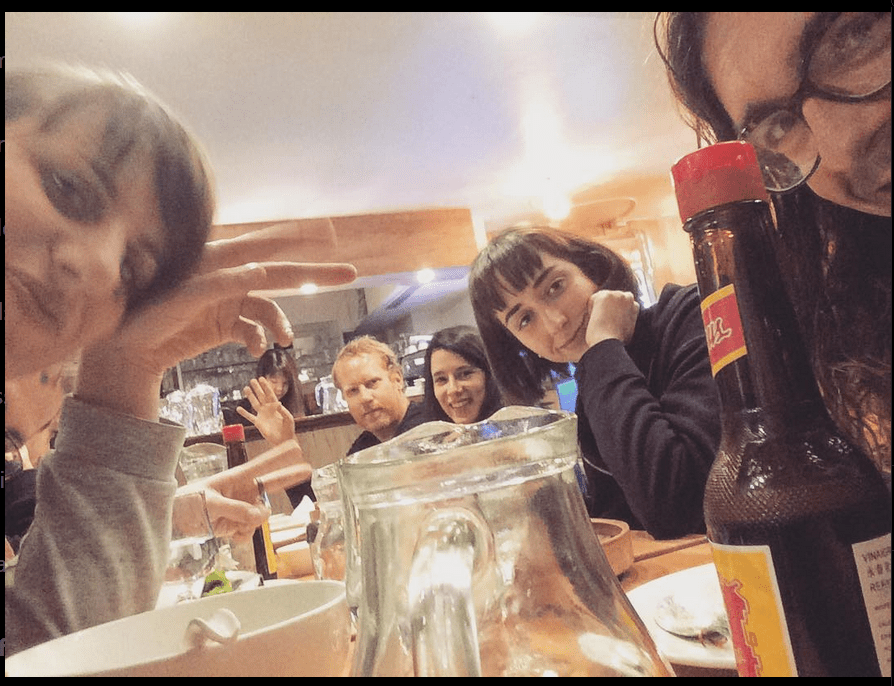
Bottling with Sinuba and Dan
SR:Do you have any collaborators that help you run the label, and if so, how does that shape the way you function? You also partner up with many other indie labels to share physical releases.
JR: Ugh I freaking wish I had collaborators. I regret starting this label on my own because it can take so much time, energy and self-assuredness. I’m definitely an optimistic person, but traversing the ever-shifting musical landscape is arduous. It can be difficult to wake up every day and tell yourself, ‘yes, this is a great idea’. As you mentioned, I have partnered with Solid Melts, Chinabot and Orindal in the past. These partnerships came about because at the time, we all just felt that we really wanted people to hear those albums. I like doing joint releases like this especially in the case of Chinabot where the label is in a different continent because it can feel silly at times sending just one record or tape to another part of the world.
Cambodia with Saphy Vong of Chinabot
SR:Who was the first artist you worked with and how did that come to be?How do you find the artists you work with?
JR: The first artist was myself. To this day, anytime I try something new like a new plant or release technique, I try to use my own projects as the tester just in case something goes south. It’s all just friends or friends that I met on tour. Although I do appreciate and listen to every submission, I do think of this less as a label and more as a community archive.
Paris with Opale, Marie Delta and Ensemble Economique
SR:What’s it like bringing an album from concept to reality, especially when making physical media? Are there any parts of the process you particularly love—or find challenging?
JR: Honestly, I find all of it extremely exciting and sometimes a little nerve wracking when a lot of copies of something show up at my door. I think the only challenge I really feel is that while writing press, I do not do that press agent thing of sending the same or nearly the same email five times. I just can’t bring myself to do that. Lately, I’ve also gone back to the old days of sending out physical copies. I am releasing these albums because I want to share albums after all. I keep learning new things with every release! I do try to do ‘better’ every time I release something, and I try to stay open to the way things shift or the possibility that I don’t know what I’m doing at all
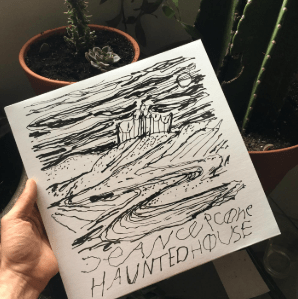
Haunted House by Dean Cercone Vinyl
SR:Working with Dan of The Spookfish, chatting on your daily hikes prior to the release of his album Bear in the Snow and the video game of the same name, was said to have broadened your horizon in the world of independent video game creators. You and The Spookfish also just released another soundtrack for a video game called To the Flame. Where has exploring this new community enhanced your perspective on creativity and are you looking to work further with video games in the future?
JR: I think when Dan first told me about DIY videogames, I mostly understood videogames as something a corporation with a big budget creates. I don’t think I necessarily understood it as art, but rather as a product which can feel similar at times. It’s interesting and encouraging to know that a small group of friends or in Bear in the Snow’s case, just a singular person can create a video game or something that has the power to transport you out of presence in a positive way similar to the way music can for many of us. Although I don’t have any current plans to work with a video game, I am open to the idea.
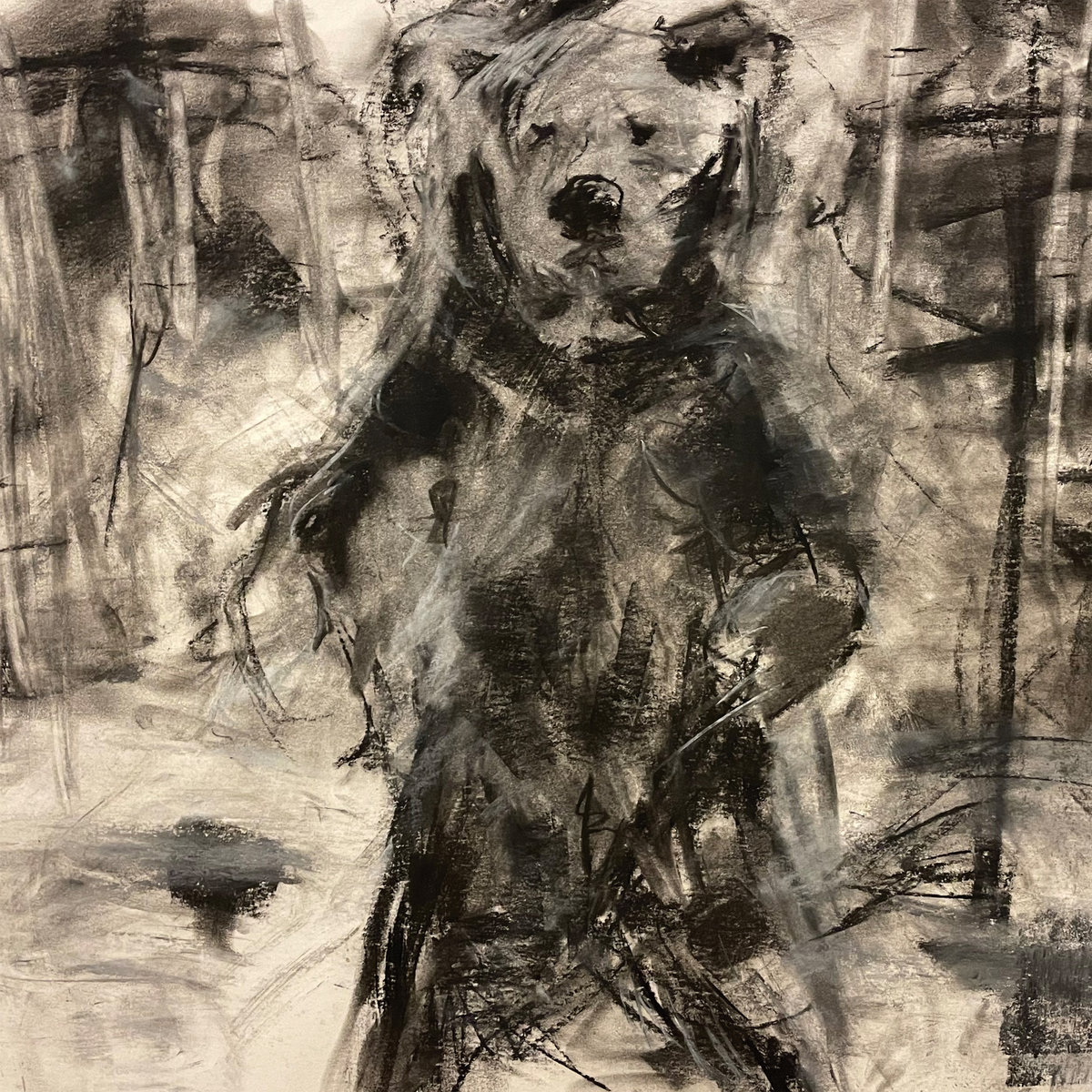
Recording Bear in the Snow with The Spookfish
SR:For those who are looking to start their own tape label, what advice do you have for them?
JR: I think it’s vital to understand that music is not a competition and not to self-limit as you go along. A ‘no’ or the more often received ‘no response’ is not necessarily a ‘no’ a year from now or after you’ve accomplished a bit more.
Along with this series, our friends over at We Be Friends are offering a merch bundle giveaway! The bundle includes To the Flame (2024) by The Spookfish, Church (2024) by Ricki Weidenhof, Another Head (2023) by Alden Penner, Happy Together (2018) by Mega Bog and Pseudodoxia (2013) and I am Alive and Well (2016) by Reaches. Also included will be an ugly hug tote bag and stickers.
To enter the giveaway, follow these easy steps below!
Running through the Catskills, cultivating in the heart of Maine and now resting in New Paltz, New York, the sonic tinkerings and lethargic dreamscapes of The Spookfish have been sprouting across the Eastern United States for some time now. Brought to life by Dan Goldberg, The Spookfish is a cherished project, one that revels in the heart of natural beauty and the experience of an ethereal being – each collection of work representing its own journey inside a textured sonic world. Last week, The Spookfish released “To The Flame”, a new tape via We Be Friends Records and the encompassing soundtrack for the new Rebel Jester Studios platform video game, To The Flame.
Within the dark depths of a weepy cavern, To The Flame follows the journey of a moth, whose main objective is to reach the light at the end of the tunnel; “a brutal pilgrimage to meet god”. The concept was inspired when game creator Ezra Szanton went to watch local dungeon synth artists Deep Gnomes and Covered Bridges with Goldberg at a cozy barn in Maine. The collaboration between Szanton, Rebel Jester artist Fergus Ferguson and Goldberg was a very hands-on experience as Szanton shared in a statement;
“Dan’s sound is perfect for this game. He combines dark ambient synths with personal instrumentals in a way that’s melancholy and spooky but also hopeful. To The Flame takes place across 4 areas, each with their own mood. Usually our artist, Fergus Ferguson, would create the art for an area first and then Dan would create music inspired by that art but sometimes it worked the other way around with Dan making music first and Fergus creating art that matched. Oftentimes I would get attached to early drafts of the songs. We decided to keep many of the early drafts in the game as variations, so when you go into an area you have a random chance of hearing essentially a demo track instead of the “final” song. This kind of variation helps keep the player interested even if they’re not making physical progress in the game (which is common because the game is quite difficult). Dan’s music really elevated To The Flame. I remember after putting the music for the main menu into the game, I just sat there for 20 minutes listening to it and thinking “we’re making a real game!!”
The soundtrack becomes a new world in and of itself; meandering through tight and damp crevices, yet manages to feel hauntingly spacious; primitive in nature, yet ghostly in its deliverance. Most of the album was recorded on a cliff over looking the ocean in Maine and was finished in a snowy shack down in New Paltz. Whether through the methodic atmosphere and scratchy recordings of “Not Alone”, the ominous and ethereal presence of “Voice in the Cavern” or the toying pacing and intonations of “Heavenly Light”, the soundtrack creeps along its own decayed and treacherous path to join you as you make your way to that singular light at the end of the tunnel.
“It was the morning after I had done a release show for the first record I ever did called Black Hole. I remember all my friends were just so supportive about it. But, I was basically living in a closet and I was pretty much on my way out of Brooklyn to go and study music therapy, so I just needed a change for a lot of reasons. But it was hard to leave”. Goldberg continues, “I had a dream that I was with some of those friends at this cabin in the snow. As I set off away from those friends at the cabin, a bear appeared in front of me. We had a standoff. The bear whacked me with its paw, and I was dying in the snow, but I remember thinking to myself, ‘I don’t regret this’”.
The Spookfish, the project of Maine-based musician Dan Goldberg, recently released his latest project, Bear in the Snow, off of We Be Friends Records. As a songwriter, Goldberg is a collage artist of sorts, encountering sparse folk music and lo-fi electronic fixings in a layered and textured sonic world. As a project, Bear in the Snow finds Goldberg in an extension of his natural self; the part of him that no longer has a place on this earth, but with full acknowledgement to his physical journey in the natural world. The album is also accompanied by its own video game created by Goldberg that follows that path of self discovery. Calling from his home in Maine, Goldberg opened up about his recovery process after a tragedy that led to this alluring and earnest project.
To fully grasp the personal aptitude and eternal understanding that went into the writing and producing of Bear in the Snow, it is crucial to know about Dan Goldberg’s last few years. With life turning events facing a family tragedy, on top of a heartbreak and moving to a new state, Goldberg was pushed into the externality of our human fragility. Referring to a lyric he wrote for the track “Misanthropy”, Goldberg kept coming back to the phrase, “the world’s not going to miss us when we’re gone”. In a bleak state, Goldberg explains his “frustration at the way that western values and capitalism can get in the way of human life,” while he adds, “if it killed us, the animals would not miss us. They won’t be like, ‘oh, I wish they did more economic development in their time,’” he laughs, but it is clear there is some weight behind it.
Having studied and practiced to be a music therapist, Goldberg made an effort to find effective ways of recovery through his own creative outlets. In textures, Bear in the Snow is a deeply expansive listen, embodying layers of familiarity and subtle sonic tensions. “I would go to this cabin and it would be these moments where I wasn’t gonna get an emergency call for an hour. I was just completely hidden in these scary woods,” he says. “I would really enjoy making sounds that soothe my brain and then playing them back,” Goldberg shares. Breaking away from structural soundness, “I think I was able to find a little bit of freedom to move the music away from my normal patterns”.
Beyond the primitive and experimental instrumentation that Goldberg creates, Bear in the Snow serves as a kind of natural field recording, following the sounds that make up his world. “Coyotes”, as simple as it sounds, is a recording of a pack of coyotes as they howl and laugh to the open sky. To some, this is an external noise that doesn’t grasp at any deeper meaning, but to Goldberg, this inclusion stands as an expansion of personal sense and growth. “As a small child I was horrified by everything. I was horrified by the woods, and I felt like everything was haunted. I’m sure that’s just being a vulnerable little being that could easily be eaten by anything,” Goldberg laughs, but with slight sincerity to his younger self. The inclusion of “Coyotes” was a thoughtful addition into an already deeply personal record. “I guess I wanted to revisit that childhood feeling” of vulnerability to the world. “That particular recording, I was walking back from a hike, and it had gotten dark. I was just immersed in that feeling and I recorded it as a journal entry”.
Recalling the time he went on a solo hike on Devil’s Path, one of New York’s most difficult trails to hike in the Catskills, Goldberg brings up a fractured process where he admits, “I would try to exhaust myself into feeling better”. As the sun set on the treacherous trail, Goldberg found himself lost and with no cell service. As the old tale goes though, follow running water and you will find a way out (which Goldberg says that this is an irresponsible action and that it is safer to stay put). Soon coming upon water supply land and flag markers, Goldberg ended up on a highway, where he came face to face with a mama bear and her cubs. “She scowled in my face before shooing her cubs in the woods and leaving,” Goldberg says. Eerily similar to the dream he explained earlier, Goldberg admits, “I feel like that was when I was like, ‘Okay, I need to focus’”.
The video game, a visual extension to the album in which Goldberg also titled “Bear in the Snow”, is a personally rooted piece of art representing Goldberg’s understanding of his path to recovery. “Well, I was working at a soap factory while I was in school. I was just drinking coffee, putting soap into boxes, and the idea just popped in my head,” he says in suit of mindless busy work. Goldberg describes the game’s concept, in which “you’re this little ghost character. I came to see that as my own ghost,” referring back to the dream, “because the bear killed my sense of self”. Enriched with these beautiful and introspective beings, the game is a haunting exposé of Goldberg’s eternal conflicts. As he continues, “my ghost is floating around, and each of those places in the game and each of those song titles is a place where some really significant things happened”.
These significant places are highlighted with a storybook instruction manual that refers to Goldberg’s travels. Put together by his partner, Saffronia Downing, the manual explains specific paths, locations, creatures, and myths that expanded Goldberg’s perception of self. As the ghostly character, you encounter this cathartic journey, redefining your own place in the world.
As a world traveler, Goldberg has been on the move for years. But he finds himself comfortable with where he is at now. “I think that I feel like I’m set,” he tells me with confidence. Having graduated and spent years in practice as a musical therapist, he has found a love for helping others in their own recovery process. “I’m really interested in combining outdoor therapy with music therapy. I would like to have a place that I could build relationships with the people that I work with,” he says.
When living in Brooklyn, Goldberg would host events that he called the ‘Mountain Shows’. Taking a group of musician friends as well as a group of listeners up Mount Taurus, the mountain became a sanctuary of redefining personal roots, not only in the natural world, but internally as well. “I think a big reason for the mountain shows was to give people different ways of looking at being in the woods, especially in New York City where a lot of people hate hiking,” he says. Goldberg developed a remarkable way in which people can experience both kinds of therapies. “I would say that the interesting thing about both fields is that they let people have moments of not speaking”. He insists, “I don’t necessarily or rationally believe in ghosts, but, some part of me feels the ghosts. Some part of us is feeling things that we aren’t thinking”. In the search for understanding, those inner ghosts can come out when least expected when given a moment to breathe and “it can share really valuable information about [people’s] lives,” Goldberg finishes.
Returning to his dream, as Goldberg laid dying in the snow, the bear stood defiant and remorseless in its actions. A nightmare of sorts, but in the end, the bear is the least important facet of this dream. A narrative, told through the simplicity of closing his eyes and the complications of REM sleep, broke down an impossibly difficult decision into a clear answer. Goldberg recalls a moment where, “it felt worth it to try and do what I needed to do, even if I got killed by a bear within five minutes”. Bear in the Snow stands as a complementary parallel to the valuable information given by the ghosts that find home in our physical bodies, as Goldberg tells me he decided right then and there, “I’m gonna do this change, even if it fails”.









 the ugly hug