Today, Providence’s newest resident, Sleep Habits, the recording project of Alan Howard, is sharing a new song “Six String” as well as “Mountain Top”, a Daniel Johnston cover. This release comes ahead of Bandcamp Friday as Howard looks to help fund his upcoming record.
“You gotta learn how to rock at an early age,” Howard sings, almost indebted to the noise that has built itself around him and his career over the years. Sleep Habits has always been a point of reflection and curiosity for Howard, giving him the space to explore a unique type of lyrical exfoliation, reinforcing the charm and tradition of indie-folk as each song becomes its own moment within a much larger story to be told. “Six String” settles in its crunchy distortion and drum fueled waltz, falling into those picking patterns of rock n’ roll nostalgia and headbanging romantics.
About the songs, Howard shares, “Six string is a song I wrote about a year ago with no intention of ever releasing. But as I sat with it, I started to kind of like it even though the lyrics are a little more direct than I’m normally comfortable with. To me it’s just a fun song about loving music and wishing I could do it more!
Mountain top is a great song by Daniel Johnston that I became obsessed with after I heard the live BBC session that they released. It’s a terrible recording but the band is rocking and Daniel sounds great; the studio version is great too (produced by Mark Linkous of sparklehorse) but just doesn’t have that same edge! I thought it would be a fun song to cover and have bandcamp Friday coming up gave a good reason to dive in!”
You can purchase “Six String / Mountain Top” now on Bandcamp to help Howard raise funds for the next Sleep Habits album.
Today, New Orleans-based staple Sleep Habits, the recording project of Alan Howard, is sharing his new single “Antique Mall” as well as its accompanying music video, premiering here on the ugly hug . “Antique Mall” is the first single from Sleep Habit’s upcoming EP titled Mourning Doves, out on May 10th via Kiln Recordings. As a whole, Mourning Doves finds Sleep Habits in a very reflective state, bringing old songs up to a new light, one of warmth and maturation, as Howard continues to push himself as a deliberate and enduring songwriter.
Setting its own pace, “Antique Mall” fills the room with warm, layered strings, reserved drum fills, chicken pecked piano notes and noticeable deep breaths as Howard leans into the open space that him and his collaborators occupy. Written years ago, it feels fitting as this track was dusted off and given new life, something resembling a piece of who he was, as Howard learns in real time how to accept the memories that feel so distant. The music that comes from Sleep Habits has always been a point of reflection and curiosity, but “Antique Mall” is very absorbing, redefining the sounds, feelings and beings that we can take inspiration from in our own daily experiences.
We recently got to ask Howard a few questions about “Antique Mall” and its accompanying music video, discussing the weight of memories and what it means to mature.
I know you’ve been sitting on these songs for quite a while now. How does it feel to have “Antique Mall” be the first track in this collection to see the light of day?
You know, it feels nice. It feels interesting to put out songs that, at this point, I almost have personal and emotional detachment to because they’re so old. It’s been interesting revisiting this song in a new frame of mind. I think I’m able to see it a bit deeper, to see more meaning out of it than I thought I was even when I wrote it.
A bit wiser now, huh?
I guess, I don’t know [laughs]. I have almost an outside perspective on it at this point. I think I learned, this song especially is a good example, that a common trope I use in my songwriting a lot is using a physical space as a symbol or a metaphor for something bigger. This song to me, what I was getting from it listening and recording it years later, was making me think about how being in some certain physical spaces can trigger certain memories and evoke things in you that you might have forgotten were even there. It’s a comforting feeling to realize that they’re still a part of you, even though you have to kind of move on from them and make space for new stuff as well. To me, an antique mall symbolizes that in-between spot, where you’re simultaneously holding onto stuff and getting rid of it.
To me, the word antique either resembles preservation or shelved and forgotten. Now that you’re a bit wiser, did returning to this song reframe the way that you approach these memories and the way you feel and experience?
Yeah, it actually has for sure… I’ve kind of been able to move away from the nostalgia-ness of it, where, like before, I was thinking about how I’ll never get to experience that again and how sad that kind of feeling of wishing I could go back can be. Whereas now it’s great that that had such an impact on me and shaped who I am now, and I’m thankful that I even had those experiences at all. I guess that’s just how maturing is a little bit.
With this EP specifically, you’re experimenting with some new recording techniques. Were there any bits of that new experimentation that helped to push this song along?
Definitely, I think that just collaborating with other people definitely helped. The setting that I chose to record in was such a chill environment. I was just hanging out with friends pretty much, but we were working on recording this song. Tyler [Scurlock], who lives in Gentilly, has this beautiful house with this living room that has wooden floors and panoramic windows and a nice acoustic piano. I intentionally chose that spot because I knew that it would just have the vibe that I wanted to be in. I knew that I wanted to be in a space that would add some kind of sonic character to the recording, and also Tyler’s just chill and down to help whatever vision I have come to life.
Tell me about the music video and the idea behind that. Is this a familiar place to you? Have you been to this antique store?
The footage is actually from a bunch of different antique stores. They’re all places that I had been to before, and the idea behind it was just wanting to incorporate that. What I love about antique malls is how they have homed all these little things, almost like dioramas, set up unintentionally. There’s just all this shit together in a way that I find so cool. It kind of made me think of I Spy, because I love those books a lot and I wanted to try translating that idea into a video. I’ve never been great about coming up with a video that has a story or anything like that, and I don’t feel super comfortable behind the camera, so this felt like something that I could really achieve.
You can listen to “Antique Mall” out everywhere now and can soon pre-order Mourning Doves via Kiln Recordings.
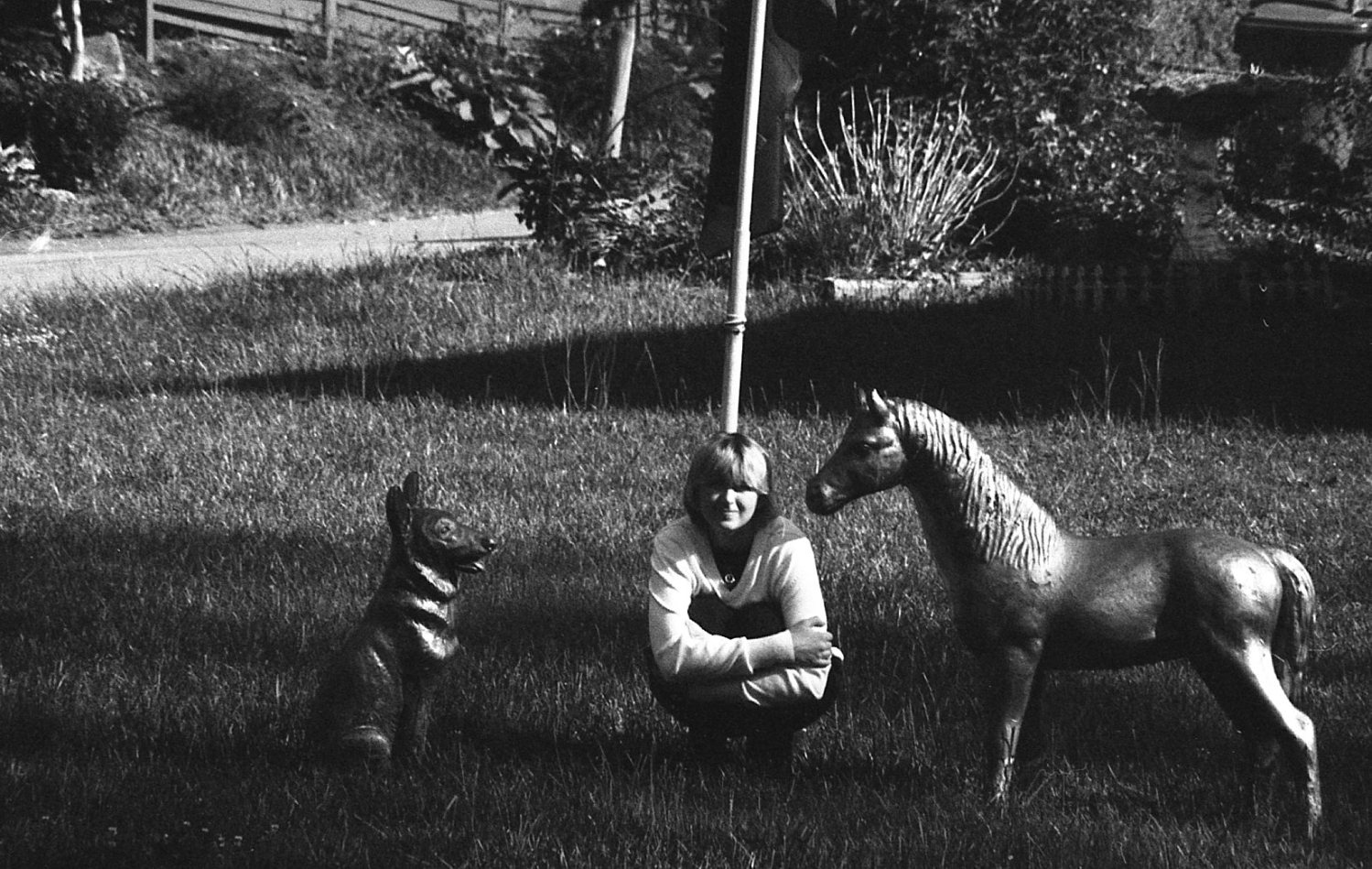
“And my idea of me / Is a place where we fill every corner / With Trinkets and Horses” sings like an open letter, where the past, present and future speak to each other in tones of grace and understanding as things are always uncertain, but each step forward is fulfilled by who you choose to bring along the way. One year ago, Mariah Houston and Alan Howard (Sleep Habits) released Trinkets and Horses, a split EP that has become a point of celebration for the two artists, both in what it has come to represent on its own, as well as what they have accomplished since.
Having met in college, the duo began to collaborate on anything they could, working out the early iterations of what would be their respected solo projects. After college, Mariah moved to New York, where she has since joined the noise-rock project, Plastic, and Alan continues to make music under the name Sleep Habits in New Orleans, where he also plays and tours with artists such as Wesley Wolffe, Noa Jamir, Thomas Dollbaum and hemlock.
As these songs continue to build out their lives, the stories scratch those marks that were left behind; imprinted – irritated and molded to shape, like the markings a harsh wood fence will leave on your skin when you get up from a momentary break. With a blend of twangy daydreams, rooted folk voicings and DIY lo-fi admiration spackling in the cracks, Trinkets and Horses does not just represent a single moment in a creative project, but rather the detailed rhythm and dedicated trust that comes with a friendship.
Recently, Mariah and Alan teamed up with New Orleans-based tape label, Kiln Recordings, to release a special edition CD, marking the first time that Trinkets and Horses can be found in a physical form. Revisiting those beloved songs, the ugly hug got to catch up with the duo, Mariah in New York and Alan driving through Utah on tour, as we discussed how the album came to be, strengthening their creative collaborations, and looking back at the experience one year later.
This interview has been edited for length and clarity
SR: I know that you two have been friends for a long time, but how did this creative relationship start?
MH: Alan and I met at Loyola in New Orleans where we lived across the hall from each other. What are the odds, right? We played in a few bands together, including a wind ensemble, I played French horn and Alan played trombone. And then on the first iteration of Sleep Habits I was singing..
AH: …because I was too scared [laughs].
MH: Yes, Alan was scared [laughs], so I was singing in Sleep Habits and Alan was playing a bit of guitar with me and helping me record some songs. It was very entry level stuff, we were just in college hanging out and making silly songs. Then it just kind of progressed from there to more serious songwriting and more serious collaborations. As we began to release stuff for our own projects, we thought, ‘damn, wouldn’t it be fun to go on tour? Why haven’t we done that yet? Let’s just make it happen!’ But we knew we needed something to tour behind, so we decided to record an EP together.
AH: In the grand scheme of things, it was all kind of very last minute, too. We really just said ‘fuck it’ and just immediately jumped into doing it. I think we uploaded the tracks a week before we left for the tour.
SR: As you were putting together the track list, you two were pulling out a few songs that you wrote individually that had been demoed and back-pocketed for awhile. What was the timeline in which you wrote these songs?
AH: It was pretty different for all three of my songs. “Little Smile” is pretty old and then “Pavement” was already on a Julia’s War comp in 2022. “Trinkets and Horses” was a pretty fresh song that I was messing around with at the time and just really came together.
MH: I had written “Promise” while I was living in Portland and the other two more recently. I actually wrote “Backseat” right when I moved to New York and then I wrote “Different Now” on New Year’s Day of 2023.
SR: A fresh start?
MH: Trying to [laughs]. I had done that this year again too. Maybe this could be my tradition. It feels really good.
SR: Throughout the EP, there feels to be this thematic throughline of redefining placement and growing up that really sticks out. Were there any overarching themes that you were looking to build upon or connect when choosing which songs to include?
MH: We didn’t really have a concept for this EP, so I do think a lot of the themes were accidental. It is funny to reflect on each song now and see how they overlap, because intrinsically, Alan and I have a lot of similar influences and we’ve known each other for almost seven years and have been collaborating since we met. So there is a lot of crossover in the kind of emotion and themes that come out in our songwriting. We also had a similar pace of upbringing, me being from the Midwest and Alan from Baton Rouge, we both had an itch to experience more about life, so there’s a lot that we both reflect on that feels similar.
AH: There were also a couple of songs that we were thinking about finishing that didn’t make the cut and may be too far gone to return to. But all of the decision making was very mutual.
MH: I decided to include “Backseat” at the last minute and Alan decided to include “Pavement”, which would both be considered more of the commercial songs, so we had a lot of discussion about the vision and style. But ultimately I think we just had some demos that came together naturally.
SR: Having both worked so closely together in college, and now covering a lot of physical distance in your collaboration, were there any takeaways about your own creative process that this EP brought out?
MH: Collaborating makes two things easier for me, which is holding myself accountable and executive functioning. We set deadlines for each other, so there was an element that reminded me not to put this off because there’s another person involved. Usually with my own music, I’ll just put a pin in it, but because we both have the tendency to sit on music for a long time, by the time we release it, we’re kind of dissatisfied with it. It’s not an accurate reflection of our taste and our style that we hold presently. But because this was such a quick turnaround, and because we’re working with each other and admire each other a lot, we actually released a project that we felt really confident about and really proud of.
SR: As it was your main goal to go on tour, which inspired you to make this EP in the first place, did these songs find different lives as you traveled and played them night after night? How does it feel looking back on it all now one year later?
AH: It was amazing! It was so fun to play the songs stripped down like they were written, but with single elements that came out in the recording process (Mariah singing with me/me playing slide with her). It felt really good to make new friends and see how people reacted to the music. It really solidified why I love playing music and doing stuff DIY. Especially it being the first tour I ever went on.
SR: Now you are celebrating the one year anniversary of Trinkets and Horses with a limited CD release from Kiln Recordings? What made you want to mark this anniversary by re-releasing the album?
AH: We had always thought about releasing this EP with some extra tracks, like we had these backyard recordings that we did at Carolina’s (hemlock) house in Chicago while we were on tour, so those are on the re-release. And we’ve always just really wanted a physical of the album.
MH: But also, Kiln is based in New Orleans and has supported our friends and our community there, like some of Alan’s other projects and Wesley Wolffe, so it’s exciting to work with them regardless. They are very deliberate, make really great art and on top of it all, they’re people we know personally, so it feels good to collaborate like that with them.
SR: Do you two have any plans to collaborate again in the future?
AH: Yeah, we’ve already been working on stuff together! I’ve been playing bass on Mariah’s new record and she’s going to be singing on my new record. But I mean, if we’re talking about collaboration, to me it feels like Mariah is just part of Sleep Habits at this point. So yeah, definitely gonna have her on the record.
MH: In any formal or full band iteration of my music, Alan will have a place. And if by chance we live in the same place again one day, I know that that will come into fruition. Whether I’m singing or playing guitar I know I’ll have a place in Sleep Habits, and when we record it doesn’t matter where we are, we can always send each other tracks. And I did record some of my album that I’m working on now in New Orleans, so Alan was there with me.
You can now order the special edition of Trinkets and Horses from Kiln Recordings, which includes two never before released backyard recordings of “Pavement” and “Trinkets and Horses” ft. hemlock, completed with a 14 page booklet including the artists’ handwritten lyrics.
Every Wednesday, the ugly hug shares a playlist personally curated by an artist/band that we have been enjoying. This week, we have a collection of songs put together by Sleep Habits.
Sleep Habits is the New Orleans-based solo project of Alan Howard, who, through an impressive catalog and countless collaborations, has become a staple in the Louisiana scene and abroad. With a knack for twangy instrumentation and a heart for genuine connection, Sleep Habits is both an underground spearhead and collective curator of folk and alternative music. You can also find Howard playing with other artists such as Wesley Wolffe, Mariah Houston, Noa Jamir, Thomas Dollbaum, hemlock and many others.
Along with the playlist, Howard shared a blurb as to how it came together;
Sitting in the living room listening to cd’s with my family was one of the first ways that I connected with music. Recently I felt a desire to return to listening to music in that way so I started a cd collection of my own and began connecting with albums that I had only listened to on streaming platforms in a whole new way. It’s so satisfying to me to pick music from a physical library and look through photos and info from the booklet while you listen. I made this playlist using only songs from cds that are in my collection (except trinkets and horses which will be on cd soon hehe).
Trinkets and Horses, a collaborative album with Brooklyn-based songwriter, Mariah Houston, is celebrating its one year anniversary with a run of CD’s put together by Kiln Recordings.
Songwriter and multi-instrumentalist, Wesley Wolffe is a familiar face amongst the New Orleans underground scene, coming into local favoritism playing with bands like STEEF, Sleep Habits and a vast amount of other stellar acts. But on his own, Wolffe spent years secretly molding his own career of brash post-rock and punk antiquity that is garnering some head turns across the country. Earlier this year, Wolffe released his sophomore record, Good Kind, that found him taking his unrestricted and fractured song structures into intense and exciting new territories for the young songwriter. Overgrown with the frustrations of social unproductivity, Wolffe’s writing became a controlled burn – turning what we think we know about ourselves upside down and clearing out the path of human disregard – all within the parameters of his unique and gripping creative lens.
Wolffe unleashed his official self-titled debut album in 2020, solidifying his sound as both a writer and performer. Taking a year off from music during the pandemic, unsettled with both the world and himself, he shares, “I just moved back to New Orleans, and I wasn’t feeling super great, so I just didn’t write anything for a long time. It took much longer than I thought it would to get back in it, but I spent two years writing and settled on seven songs.” This creative breakthrough came with gathering what he learned from his last release, as he reflects, “okay, I’m gonna do this one the right way.”
Taking the songs to Mid-City Studio to record with Matt Seferian (Pope), Good Kind wastes no time in forging its own path. Broken down into individual anecdotes, these songs are seared by the sweaty and compact musicality and unique structure of Wolffe’s instrumental demands. With the accompaniment of his twin brother, Turner Wolffe, on bass and Rob Florence on drums, Good Kind’s strength comes from the moments that waver between full fledged tenacity and the DIY charm that Wolffe commends.
Photo Courtesy of Wesley Wolffe
These days, you don’t have to go far to feel ashamed about being a human. Now that our ability to witness the world can come from our pockets, so does our ability to see how easy it is to hate, destroy and turn a blind eye to what really matters. “I always knew that I wanted to be political with my music,” Wolffe conveys. Like the rest of us during the pandemic, Wolffe was trapped in his room, feeling useless as he could only watch each bit of string that holds us together unravel with ease. “I feel like in that time period when I was writing those songs, the range of emotion that I was feeling was very, very slim. I was just becoming numb to things,” he says. “I think I was just grieving, at the risk of sounding cliché, the loss of youth that I was experiencing as a kid in their early twenties.”
Stark in its deliverance, Good Kind opens with a reminder; “Words are just words when/ Directed towards performance.” “Trinkets”, from the very beginning sets an uneasy distance between words and actions as a frantic guitar falls in line with the band’s heavy drive – Wolffe conducting the arc from a first person perspective. “I’ve never felt a great need for self expression when it comes to my personal relationships and what not,” he admits. “My life is no different than yours. I love and hate in the same way most people do. No one needs my take on those types of things – especially these days.”
Where Wolffe’s writing style sticks out is his ability to detach, leaving his own world views to embody new perspectives of ego, greed and ignorance, something he explains, “I think that’s why I can get into a character. Instead of just giving my perspective on something that’s fucked up, I can try to find a way to give somebody else’s perspective that might be on the wrong side of whatever issue it is.” A grueling task to say the least, to embody those that are taking the world in the wrong direction, becomes a game of observation, performance, and then reflection. “I feel like I need to hold a mirror up to them so that’s why my songs are in the first person,” he says. “Writing like this isn’t necessarily grounding – it can be exhausting and I’d like to think it’s challenging for the listener as well.”
“I didn’t kill no one/ All this talk of funds/ Ask me if I care,” is a hell of an opening line. “Streets” is one of the most pivotal songs in Wolffe’s repertoire, thriving in a hostile demeanor that the band creates with their unfeigned performance. Yet Wolffe’s attunement to this character, with such deadpan candor, is striking when taking the gravity of this plea – as we witness ignorance and the implementation of wrongdoing beginning to melt and mold down into a targeted vendetta. Songs like “Good Kind” and “About Me” are love letters to personal greed and being indifferent to the suffering that follows in suit. “Am I hurting you with my silence?,” he sings on the song “Boulder”, a song of manipulation and distrust, and a line that takes the cake when it comes to provocative cluelessness.
“I guess it’s not far off for me to to think of myself in that way as well – to be like a really fucked up narcissist guy,” Wolffe admits, “so it’s interesting to tap into that world and write a song about it and then it can just exist.” In no way is it idolization, but a satirization of how people continually miss the mark of what it means to be human. Good Kind becomes an exercise of holding ourselves accountable in our daily actions – observe, perform and reflect. For as hard it can be to admit, we all have moments of ignorance towards our faults – and in a way, Wolffe holds the mirror to us as well – to break the loop between performance and real action that can make all the difference.
Wesley Wolffe is donating all the proceeds of his bandcamp purchases to the Palestinian Children’s Relief Fund which you can purchase here. For more information on how you can donate, head to their website that is linked above. You can also purchase a CD of Good Kind through New Orleans-based label, Kiln Recordings.


 the ugly hug