“For one thing, with all of our previous releases, we’ve always been at a point where we’re playing so many songs that aren’t even on the record that’s coming out. We often feel like we’ve moved so far beyond the thing that we’re releasing to the world,” Hannah Pruzinsky says, noting the frustration that occurs with the consistent forward motion of artistic practices and restrictions of time. “This record is the first time where that isn’t the case. It feels really exciting to just give something away and not be holding on to residual things.”
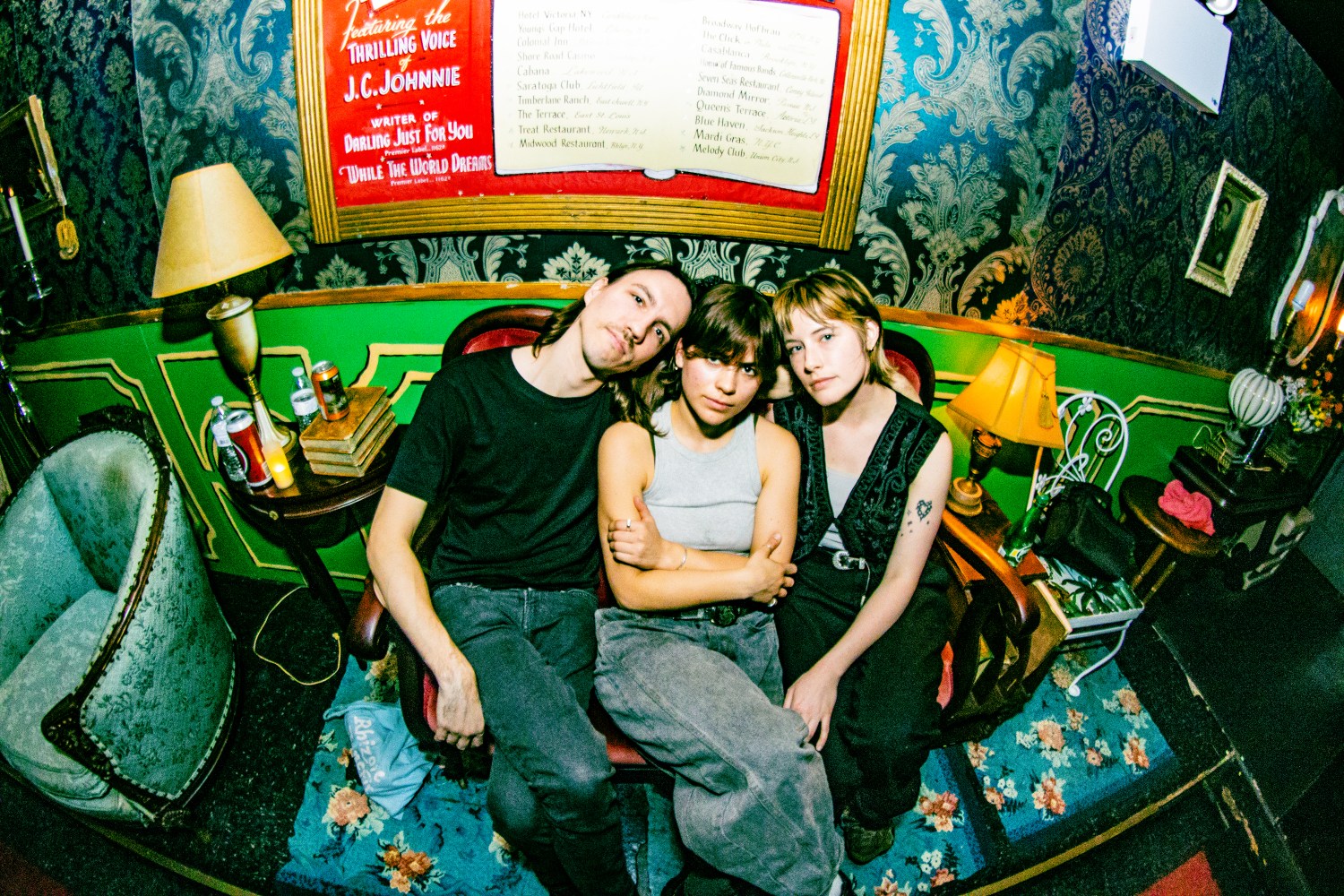
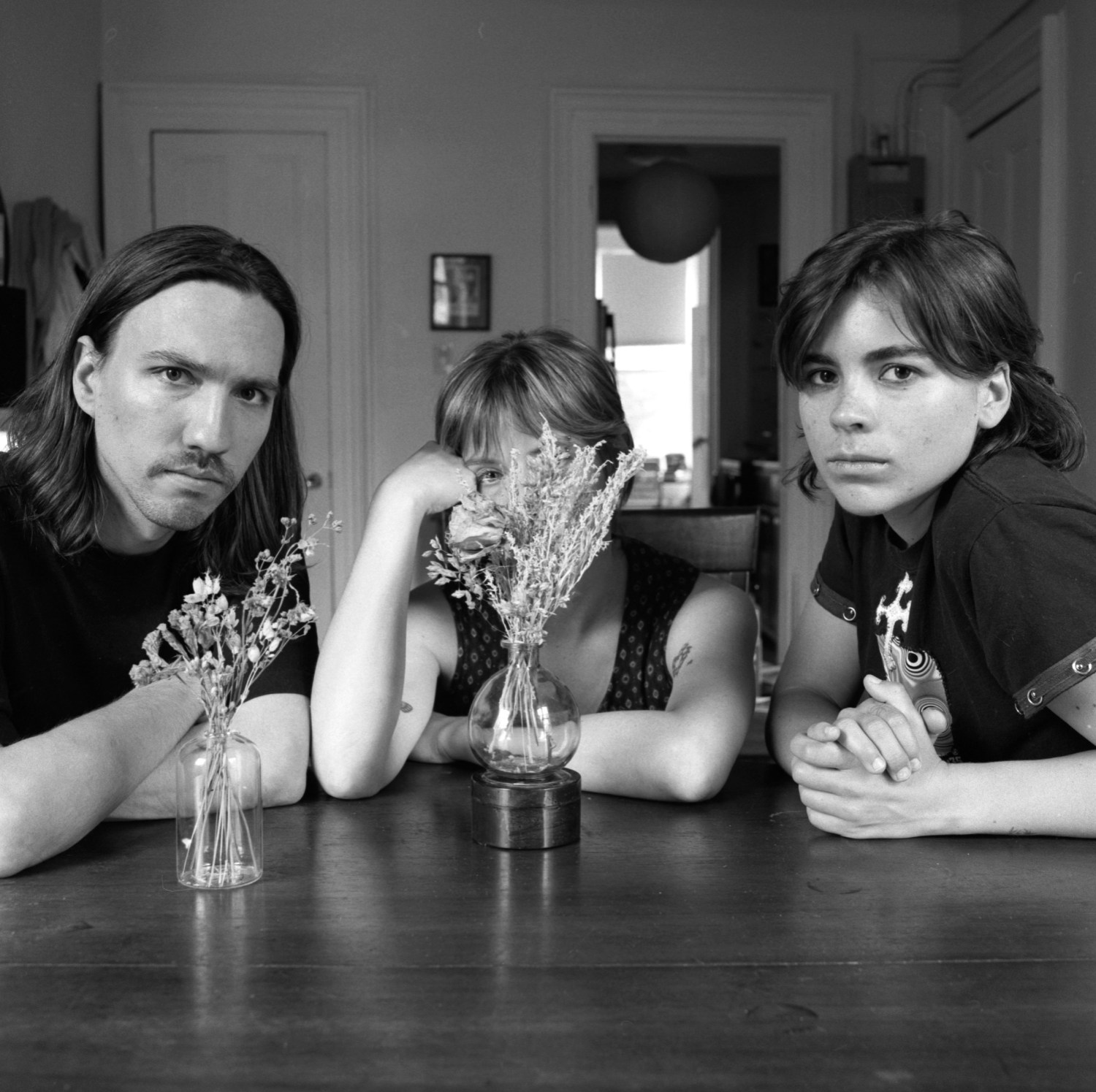
Sister. is the Brooklyn-based project of Hannah Pruzinsky, Ceci Sturman and James Chrisman, who are currently gearing up to release their sophomore record Two Birds out July 11th, marking their second release via NYC’s Mtn. Laurel Recording Co. Sharing their debut LP Abundance back in 2023, and a few straying singles here and there, Sister. has become a means of pushing the enduring process of their collaboration, all while further defining the project on their own terms. Playing with bits of maximalism, Two Birds is a record well-worn in, utilizing the exciting challenge of experimentation without hindering the deeply rooted intimacy of each track. Earlier this week, the group released “Honey”, the third taste test from the upcoming record and a display of just how well they can walk that line.
Caught within a loop, “Honey” begins with a steady build, embracing the group’s inherent talents and knack for sonic contusions that they often find themselves exploring. As a whole, the song feels rich and heavy, like thick ink blotches dripping on a clean sheet of paper. And once it gets started, it’s reluctant to stop the dribble of emotions that are no longer contained. And to their credit, “Honey” feels unpredictable in its direction, rearing both excitement and tension until the long-awaited release of the very last line, “oh honey, weren’t you moving towards eternity?”, becomes a stand-still thought caught up in all of the motion. As the group prepares to release Two Birds in a few weeks, “Honey” is a clear marking of a band that continues to push the boundaries of what they’re capable of, while still holding dear to what they know best.
We recently got to catch up with Sister., discussing new writing practices and the weight that lies within “Honey”.
SR: You guys have a new record coming out in July! How’s it feeling to finally get it going?
Hannah Pruzinsky: We’re really excited about it! These songs on the record are a lot of tunes that we’ve been working through in the live shows, so it’s been fun to be able to explore the arrangement so much.
SR: So they were given a lot of space before finalizing them?
HP: Yes, I think the oldest one is probably ‘Levity”, which I remember Ceci was playing on guitar as Felix [Walworth] and I were having a conversation like three years ago in our living room. Maybe about astrology or tarot cards or something?
Ceci Sturman: I think you had pulled [Felix’s] tarot cards and were reading them, and some of the words I found so moving and just started playing around with them. There’s a voicemail recording of the first time I ever played it, which I think is my favorite version of the song ever. It didn’t make it on the album, but the version that’s on the album is also extremely cool, and that is sort of just a James masterpiece.
James Chrisman: We recorded a good chunk of the album in live acoustic sessions. We did a lot of it in our studio, but there was some of it that was done in Hannah’s living room with all of us sitting in a circle. We tried “Levity” a few ways, but we couldn’t quite get there to be enough movement and momentum in it, because it’s quite a repetitive song. So I took that acoustic version and put it through this kind of delay where a part will get caught in the chamber and repeat, and then you can change the pitches of what’s caught – you’re kind of performing into the delay. But there’s actually very little material in the song itself, so it’s the performance of singing over guitars, and there’s the second performance of the production that’s really fun.
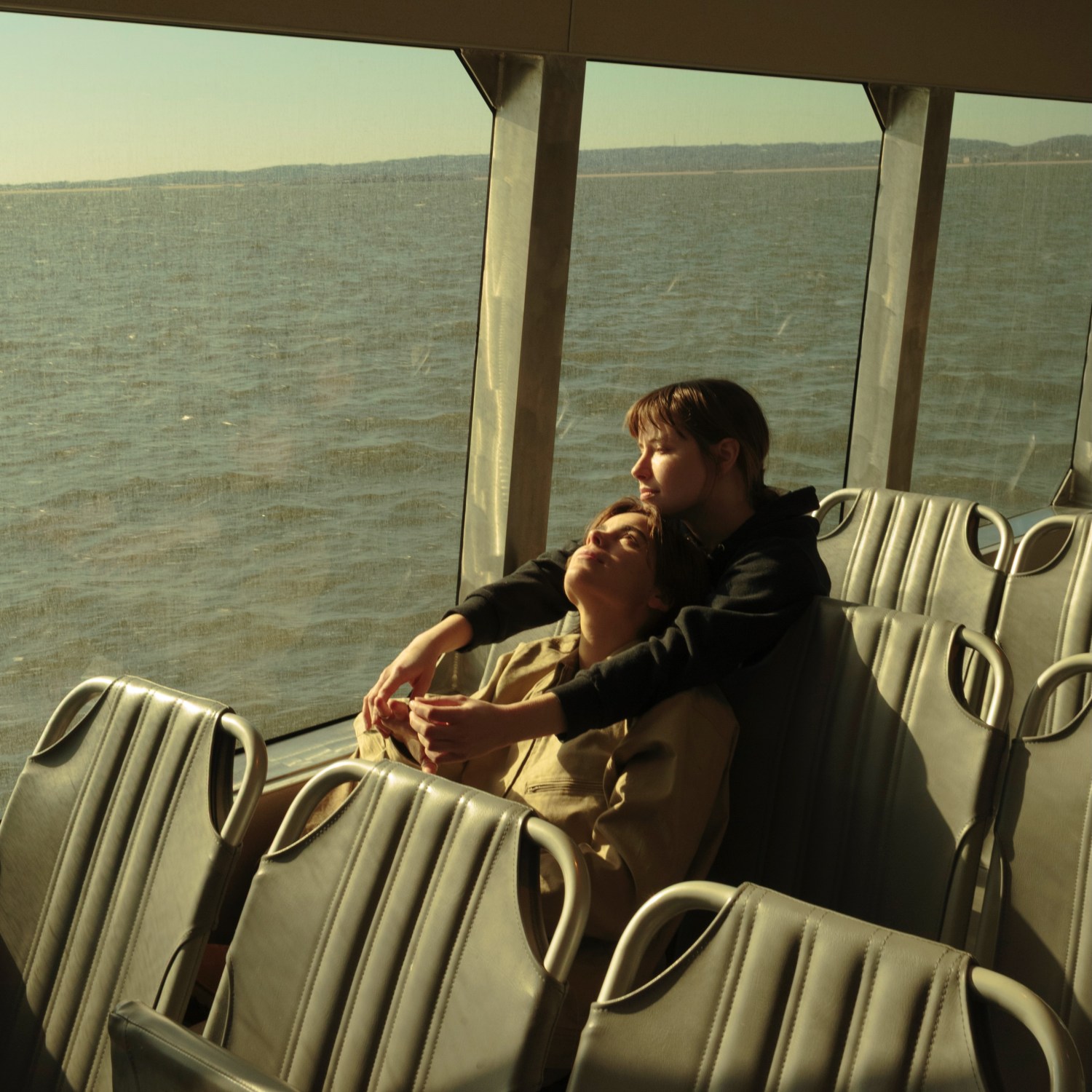
SR: I do want to talk about the sound as a whole, because it does feel like you guys are coming into a more defined area for Sister., compared to that patchwork style of Abundance. As you went into recording these songs, what did you find yourself focusing on as you were piecing together what would be the sound of this record?
CS: I think that there’s a lot of maximalism which is a thing that we prefer – it’s sort of a sister. vibe. That definitely was true in Abundance, and I think in a lot of ways we wanted to replicate that and make it sound better. We’re all just a little bit better at the process.
JC: I mean, just a big difference is that we played everything as a band before recording it. There’s a way of making music that a lot of people do now, which is you play a song into a computer and then you try a bunch of stuff over it. I’ve done that. But we had figured out band arrangements for almost all the songs. Felix was much more in the mix this time from the beginning. That is a big difference between having stuff finished and then tracking drums over it versus building over a drumbeat.
CS: It’s definitely true with our last album, where we started playing it a lot after recording it, and we found out we liked some of the new versions a little bit more. I think we were just mindful of that going into this process and being able to play it so much and really figure it out. It has made a very cohesive sound, and we’re proud of that.
HP: Also, just a note on the writing of this album, too, it was much less those patchwork moments with songs coming from Ceci, coming from me or coming from all three of us. This time around a lot of the songs started off with Ceci and I meeting to work through things, as it was also a time when we had just moved away from each other. It was this connection to each other and our friendship through the songwriting. But there are also a lot more songs this time around where all three of us wrote the songs from start to finish.
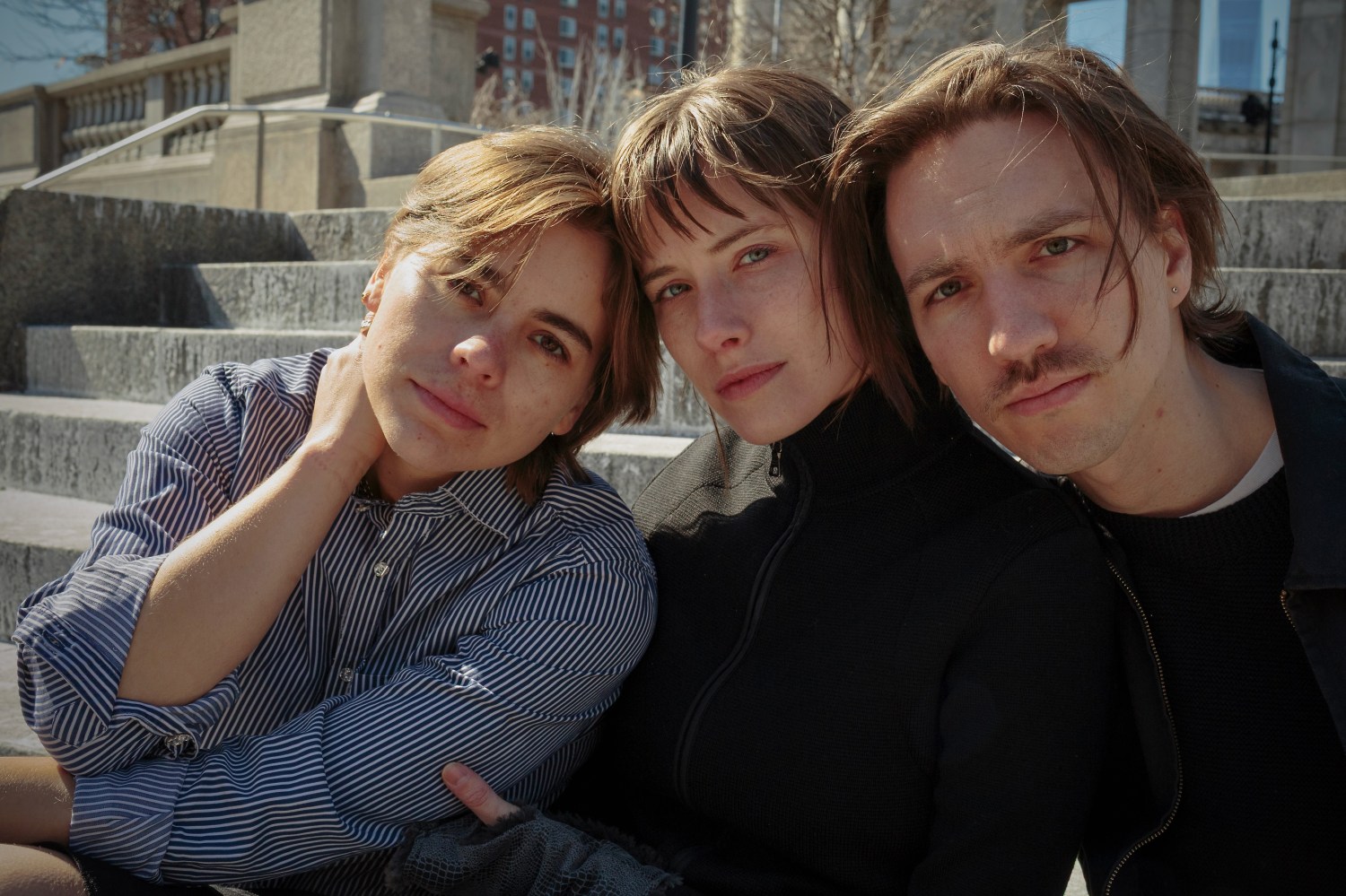
SR: What was that like having the three of you writing together start to finish?
HP: I’m always surprised by how easy it is. I don’t think I can do that with other people. I think there’s a lot of trust between the three of us, where we can propose an idea that maybe is a little silly, or feels harder to do with people that we don’t have this type of trust with natively.
CS: I was thinking about the process for “Blood in the Vines”, which is a song that we wrote together. James proposed an activity of writing a song in 30 min. So that truly was us just putting a timer on our phone and seeing what we come up with. It started with playing the guitar and throwing phrases around, and then at the end of 30 min we had the bare bones of the song, and we really liked the direction it was going.
SR: That’s an impressive practice. So you obviously have trust in each other, but as ideas started to come out of this moment, what sort of things were you trusting to either follow or quickly discard in such a short timeframe?
CS: I’m always trying to keep everything. And so, I’m like, ‘it sounds amazing. We got it’. They can attest to my falling in loveness with scratches.
HP: I remember the song at first felt kind of pop-punky in a way. That’s certainly not something we usually do, and I think we all knew we weren’t gonna go too deep down that rabbit hole. But it is fun for us to explore a different key that we don’t usually write in and see what kind of feelings and emotions or phrases come up with that. It really depends on the song we’re writing together what we start latching on to.
JC: I think in that case, the point of the exercise is to be guided by excitement and not intellectualize at all. I think a lot of creative practices people figure out that with editing, you have infinite time. But how do you get inspiration? And turns out there are ways to manufacture inspiration, and one of them is an artificial time constraint. If a Riff were stupid or something, that would be something to worry about after that timer is over. But in the meantime, you have something, and you can make it resemble something you like, because it’s something that now exists. That’s kind of the mentality behind something like that, because you’re just worried about things like, ‘is it me?’ and you sort of bypass that because you’re like, ‘Oh, no, I only have 10 min left. Who cares.’
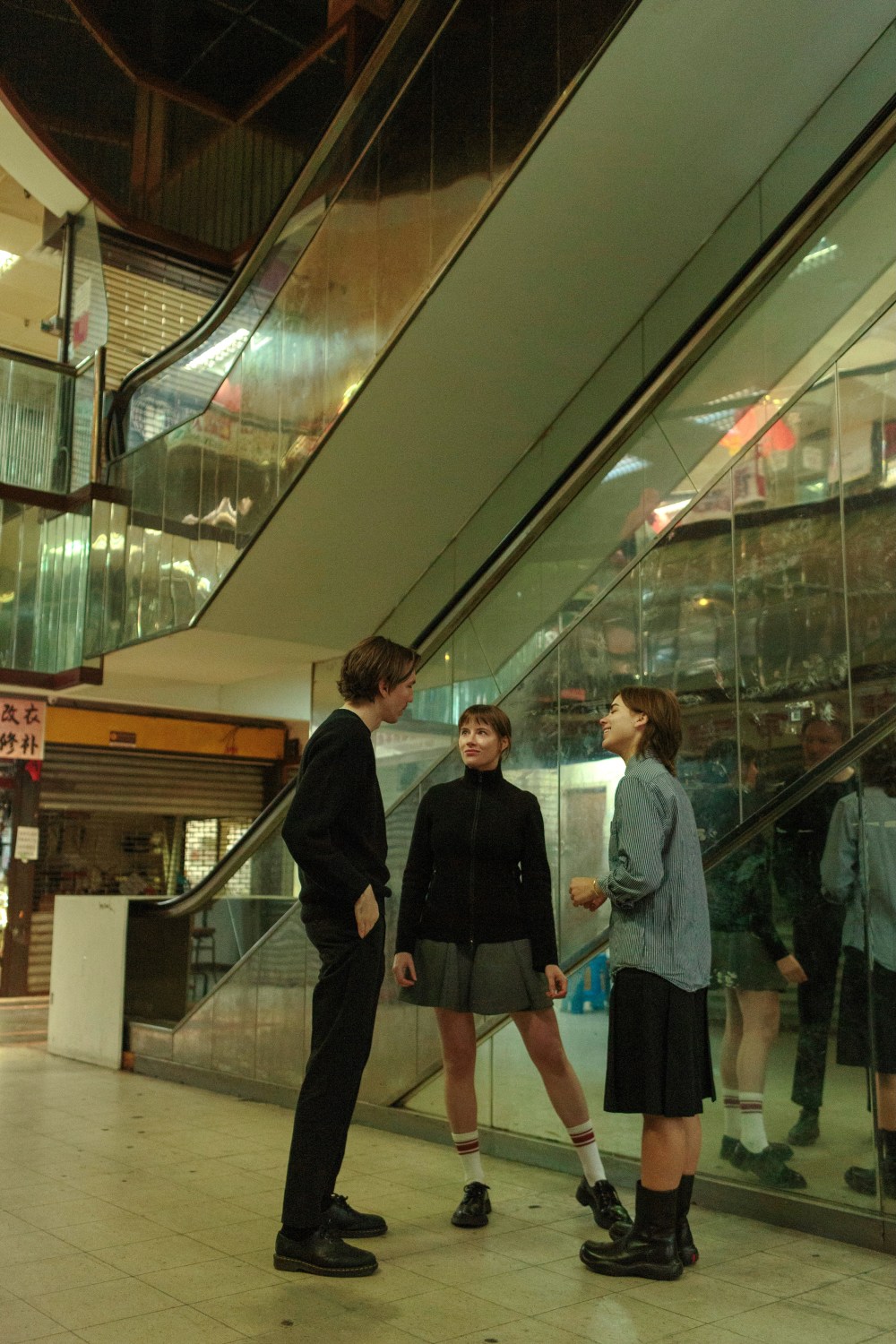
SR: I want to talk about “Honey”, the next single you are sharing. One thing that I’ve always admired about your guys’ lyrical writing is the way that you really put a lens on personal and interpersonal relationships. With that, I was really drawn into the opening setting of a kitchen, because it’s a very homey, intimate location. But as the song starts, we’re brought into this already antagonizing situation. What kind of portrait were you trying to create by using this location?
CS: “Honey” is a song that I wrote the lyrics for and I remember wanting to immediately place it in the kitchen because I read something where a songwriter talked about how having the setting in the first line can do a lot for the song, like placing someone somewhere. I’ve never done that, so I want to see how that could become a way of sorting through some conflict or interpersonal confusion that is really intimate, but very distant. I think of two people that maybe are trying to figure out if they really know each other or understand each other while they’re already in an intimate setting, and like how you can sort of navigate that familiar scene. I’ve experienced a lot in my life, where I’m just sort of getting to know someone, and the more you get to know them, the more questions you have about your compatibility, or about how you relate to each other, and how that makes you relate to yourself. Really playing with the sort of contrast between the intimacy in the home, and then the serious distance in the connection.
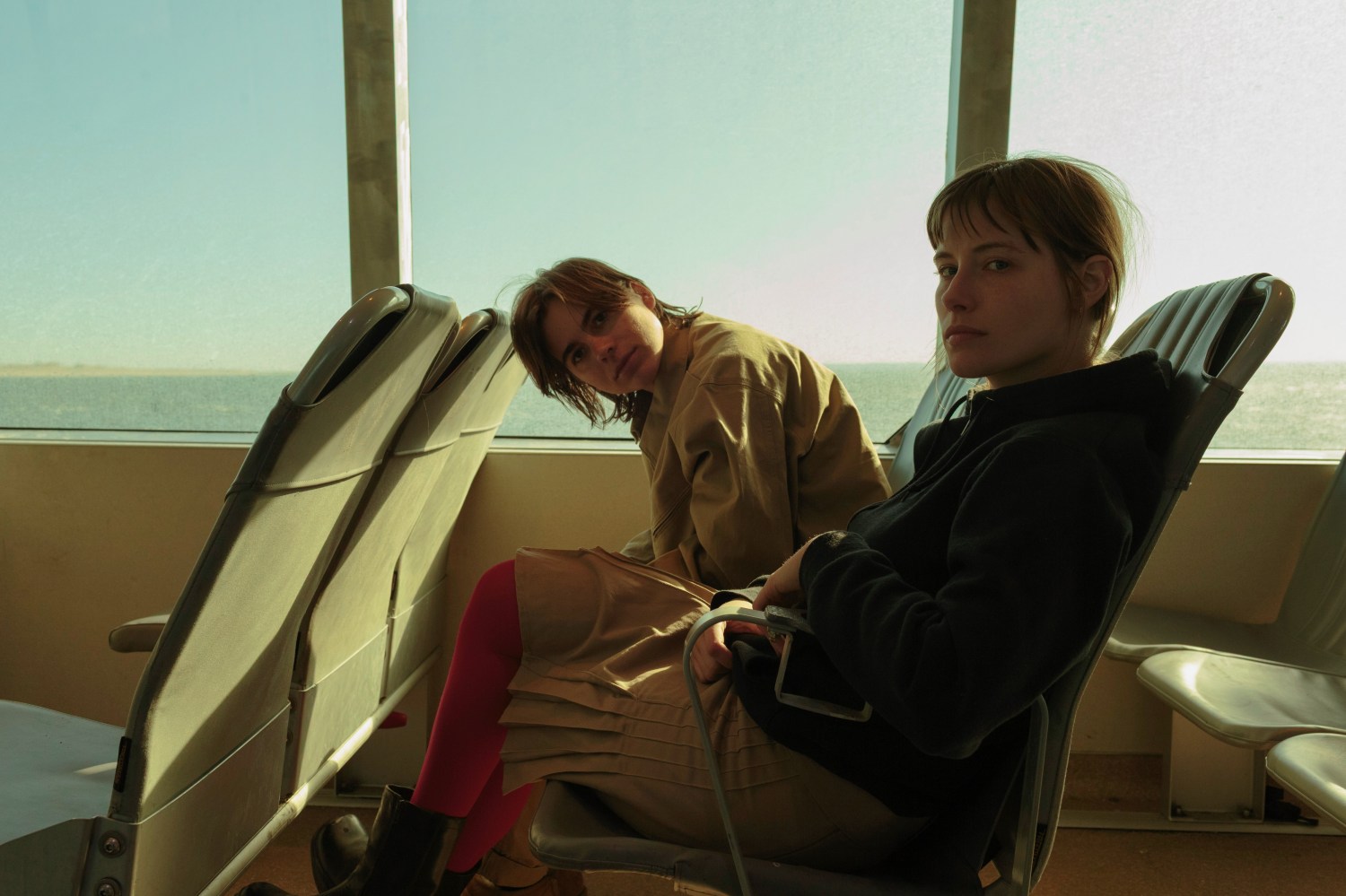
SR: The avenues you guys follow with the sonic exploration really do a good job at creating that tension. A standout word that I grasped onto was ‘eternity’. In that phrase at the end, I feel like that’s when the lyrical and the instrumental stories really blend together to form this release. What weight does that word ‘eternity’ hold in this song? And how did you guys try to embrace that weight instrumentally?
CS: I wanted the last word to be something really drastic, and it is drastic [laughs]. But, I mean, it’s like asking the same sort of intimacy question where sometimes you start asking them and then you can’t stop asking them, and they just build and build and build and build. The weight of it is just very big.
JC: And a big element of that song’s arrangement was found when I was mixing it. I took Ceci’s vocals and put it through what’s called a space echo, which is another kind of delay – that’s when something catches itself and it creates an infinite generative signal. So there’s kind of a literal sound painting aspect of evoking infinity there. And that first sound you hear in it is actually Ceci’s voice going through that space echo. And a lot of that stuff climaxes more towards the end like a sound painting aspect of the lyrics.
CC: I love how the band worked on the song and created it to be so tension driven. The chorus has no words in it which is abnormal for our songs, especially for the songs that I’ve written. It’s cool to lean on the instruments and the feeling that’s driven to continue to build the song where the chorus usually does. I think that there’s a lot of questions in the song, and we just slowly keep building and building and building and building it up until the last lyric, which is ‘weren’t you moving towards eternity?’, which is a question to continue to ask yourself all the time. I’m always asking myself.
Two Birds is set to be released July 11th via Mtn. Laurel Recording Co. You can pre-order the album digitally as well as on vinyl now!
Written by Shea Roney | Featured Photo by Sarah Blesener

 the ugly hug