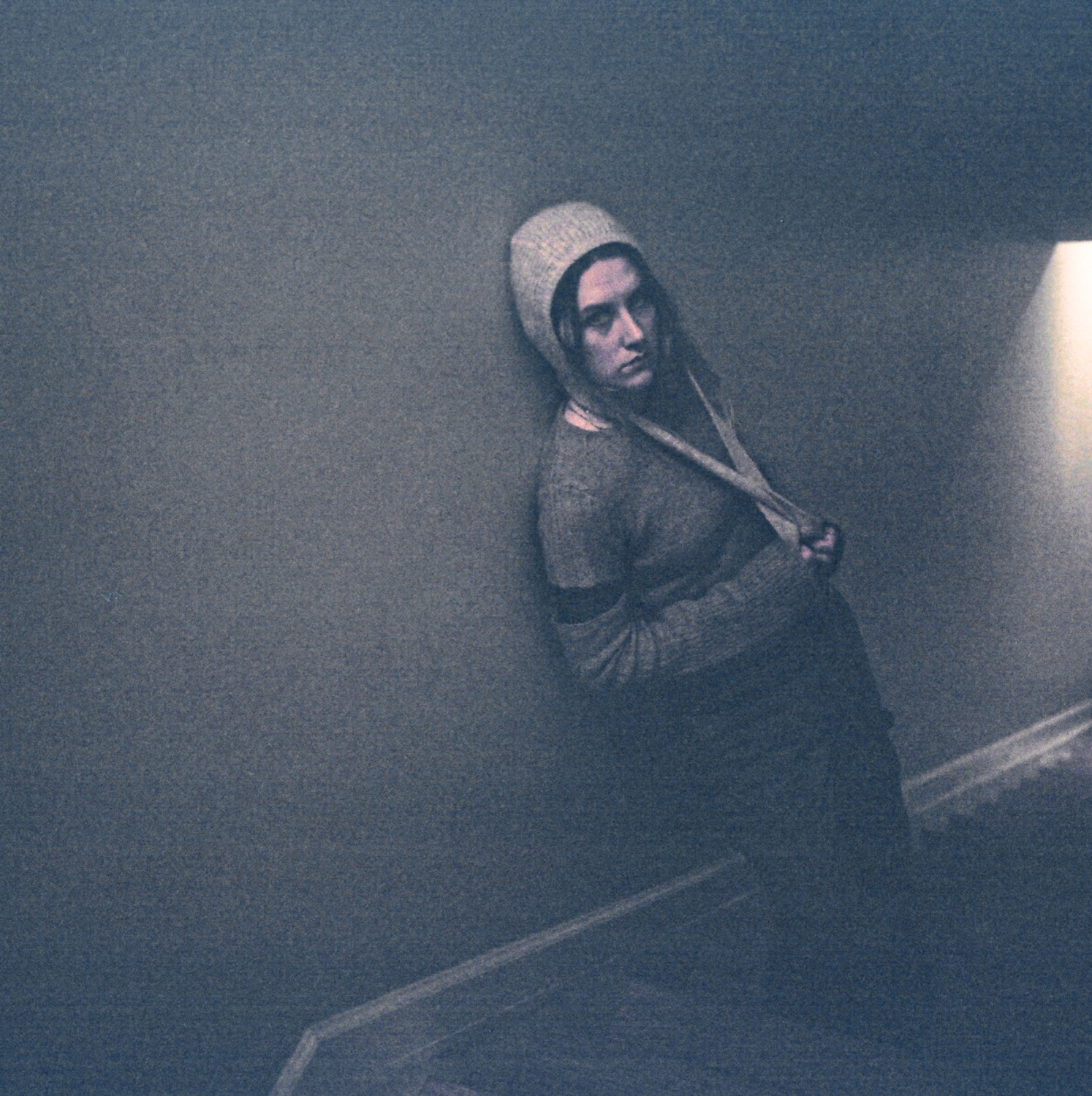
“I think in some ways it is pretty cool because you’re discovering another part of yourself that you didn’t even know was there.” If you’re a freakhead or not, there’s good news: untitled freak has released her first EP. 7 circles, a 5-piece release, introduces untitled freak’s atmosphere and sound into the world. What is the world though, you may ask? The world in this sense consists of a small city apartment lit like the Victorian days and you are whisked away in some corner of the bathroom. untitled freak begs to be listened to on the walk home on the rural street or in the depths of the bedroom you forget to clean. ugly hug had the pleasure of sitting down with untitled freak to discuss the new EP and what it brings.
How has it been since you released the singles and announced the debut EP?
It’s been really, really good! It feels different to have a new project that I’m in right now, because I’ve really only been in Laveda, and when I started playing in Retail Drugs, that was a bit of a shift. But it’s been really cool to see people excited about it and it’s definitely a lot different than other projects that I’m in. I’m just super open minded about it and I’m excited to continue to see how people react to the rest of the music when it comes out!
It seems like you have a lot more control over everything too – How has all that responsibility and authority changed the way you approach your music versus being more collaborative with bandmates?
Because I’m doing everything by myself, there’s a lot I don’t have to communicate with anybody else, which is a really interesting factor. I don’t have to talk to anybody, so I can just word vomit whatever it is onto the page, and if I like it, then that’s it. I think it’s a much faster process in general, which is cool. I have also been doing everything very spontaneously.
It’s been really fun to record by myself, because I never really have done that before. So it’s a new experience for me, and when I started recording music, I was always recording with other people, producers, musicians, somebody else always had the control at least in like DAW, whatever we were working in, which was fine, because I didn’t really care. And I’ve never really been super interested in more of the technological aspects of recording, I’ve always been more like a hands-on, interested in analog type of person. But I think it’s cool to actually be the person that’s pressing record and sitting behind the computer. You’re just gonna do things differently by nature. And make different choices because of that.
I think in some ways it is pretty cool because you’re discovering another part of yourself that you didn’t even know was there. But the one downside of recording by yourself is that I think it is fun to record with other people, and social dynamics are always fun and entertaining for me. It feels more serious in my head, the environment that I create for myself is very much like focus, but then what I’m actually doing, in some ways, feels a lot less serious.
How long does it usually take you to create a song?
I feel like most of the songs on 7 circles, like the bulk of the song and recording and even some of the mixing, maybe 5-8 hours? I think there were one or two songs that I worked on for maybe 3 hours and then I opened it up the next day and it was done. But the track “untitled freak,” that was written in two hours or something and then it was just done. The songs are a lot simpler, but very spontaneous. Sometimes I’ll sit down and I’ll open up Ableton. I feel like writing a song, but instead of going to my voice memos to find an idea that I thought had some merit, I just decided to write something new and then that was what I worked on. And then, if at the end, it’s not something I really love, then that’s okay, but at least I have a finished idea.
I really like your vocals, especially on “untitled freak,” the first single you released, especially that one part towards the end. I like how you’ve been using your voice on this project.
Yeah, a lot of that is also just spontaneous. I’ll write down words on my phone or sometimes in a notebook, and usually I’ll get halfway through the recording of the song somewhere, where most of the guitar parts are figured out, and I’m starting to hear vocal lines, and then I’ll write. I’ll just start scribbling some ideas for lyrics, usually very rough, and then I’ll just, whatever that says, I’ll embellish, and then one to two takes later, that’s the vocal take I’ll use. So I don’t really rewrite anything. Sometimes it doesn’t really make sense, because I’m just kind of going off an idea for lyrics rather than finished lyrics, but I think it makes for interesting vocal performances, because you have to dance with what you already have written and improvise.
Photo by Mars Alba
It plays out really well! I also wanted to talk about how you’ve been able to develop the visuals of this project. Seeing the photos and music videos, it seems very intimate with the apartment and lighting. I’m curious about how you want this to feel aesthetically/visually.
You know when bedroom pop was really having its moment? I always thought the aesthetic of bedroom pop was really interesting. I’m referencing what I imagined it to be in my head, and it was making music in your bedroom, and the little Tumblr vibe, people with guitars and microphones in the bedroom making music. To me, that immediately is something that came to mind. I want it to be close to my life, to whatever it is that I feel, and so naturally, visually it made sense to do the first music video in my apartment, and we filmed it in our bathroom. I also think I wanted to take my space and myself and add a weird element to it. At least specifically for the “untitled freak” video, I wanted to really emphasize being alone in your house and feeling psychologically crazy, your mind just going in circles, but then adding the element of washing myself with coffee grounds, I was like, “Oh, that’s really freaky.”
What shape do you think untitled freak would fit in?
It would be on brand for me to say circle, but no definitely I was gonna say triangle.
What are you gonna call your fan base? Are you gonna call them freaks?
Yeah, I thought about it. Freaks seem good, although it seems taken.
I think it’s fun to throw around, like what’s up you freaks?
I would love for someone to come up to me and introduce themselves, instead of saying, “Oh, I’m a fan of your music,” “I’m a total freak head!”
You can listen to 7 circles out now as well as get a limited-edition cassette or CD via Pleasure Tapes.
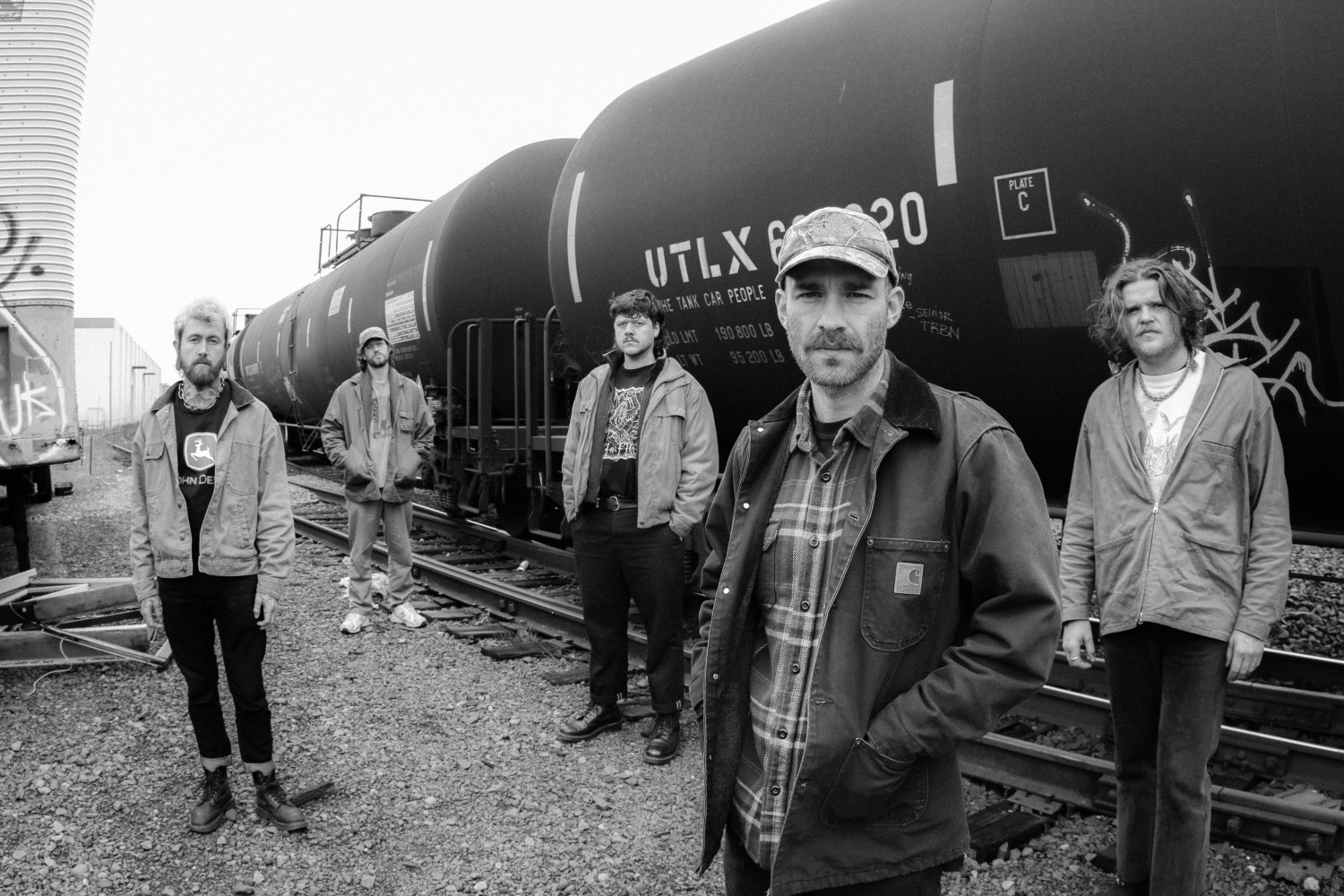
Following their debut LP Creature, an album that led with both conflicted sincerity and some long-lasting ruckus, Portland, Oregon’s own Pileup has become a shifting staple in the Pacific Northwest. Fronted by Nathan Urbach, Pileup has gone through several lineup changes, friends coming in and out of the city, now playing with consistent players Elian Conroy, Gray Hunter, Kyle Rosse and Jordan Krinsky. Today, Pileup return with their new track “Going Away”, the final single before their new album Leave The Light On out February 24th via a collab release with Pleasure Tapes Ltd. and Flesh & Bone Records.
Photo by Dashel Welch
There is a deep heeded stillness that sits firm amongst the breathy, harsh noise of “Going Away”, as Pileup revalues the use of sonic motion amongst open spaces – those spaces that are often left out to shiver for far too long. With an array of dripping guitars, the color of each instrumental voicing begins to glow and blur together, like stoplights through a rain-covered windshield, taking more effort to make out what road you’re headed down than it does to pull over and wait it out. “Unprotected by the shields of dusk / I’ve got to get out of this broken daydream,” Urbach sings, his voice becoming a soothing constant while being ever more enveloped in the track’s intoxicated pacing, as days begin to blend into nights and back into days altogether with such shocking ease.
You can listen to “Going Away” premiering here.
“Going Away” was engineered, mixed, and mastered by Nicholas Wilbur at The Unknown in Anacortes, WA. Cover art by Ash Vale
Pileup’s sophomore LP Leave The Light On, which will be released on February 24th, 2026 via Pleasure Tapes Ltd. and Flesh & Bone Records. The band will be performing the album in full at their release show that following Saturday, February 28th at the Leaven Community Center in Portland, Oregon.
“Had to put the dog down / Ninety-eight degrees out.”
Philly export Soup Dreams comes out of the gate swinging with slice-of-life lyricism and classic guitar fuzz on their debut LP Hellbender. It is an amalgamation of intimate confessionals with songs like “Nothing” and “Dust”, and heavier, electric-driven offerings on “Stray Cat” and “Radiator Baby”. Country sensibilities meld with alternative roots in “Familiar,” where pedal steel cuts through lines about a sweaty bike ride home and playing hooky à la Wednesday.
The indie rock four-piece have gained notoriety through the embrace of the local scene, one that founder Isaac Shalit discovered after they graduated from Oberlin Conservatory in 2021. Joined by Emma Kazal (bass/vocals), Nigel Law (drums) and Winnie Malcarney (guitar), the group found acclaim in their first EP “Twigs for Burning.” With a myriad of musical backgrounds, Soup Dreams teeters the genre line, tied together by the rawness of Shalit’s vocals which somehow always sound like they are imparting a secret to the listener.
I sat down with Shalit to discuss the album and the major themes of Soup Dreams, which they list as, “queer and trans identity, magic and the divine, animal familiars, and the siren pull of the open road.”
“Hellbender” is your first full-length release. Were these tracks all written for the album, or combined from past projects?
IS: I wrote the songs over a 3 year period when I moved to Philly in late 2021. The newest ones I finished writing right before we recorded – the song “Nothing” was kind of figured out in the studio, and I remember it feeling so free and exciting, like there was electricity flowing around the room. At the beginning I definitely wasn’t thinking about recording an album, a few songs even predate the band itself. It was always a dream for all of us to do a full length though, so once the body of work started to solidify it was a natural next thing. The name “Hellbender” is from way before we had even a tracklist, or probably half the songs, and I put it in “The Shining” lyrics as a little easter egg.
The songwriting throughout these tracks is poignant and vulnerable, with lines like, “Still don’t know if I’m a person worth keeping,” serving a gut punch. Often, they’re set to danceable melodies. Is this juxtaposition purposeful? What’s your compositional process like?
IS: As a songwriter I’ve always suffered from bummer disease and one of my biggest fears is having a whole set of songs that just makes people stand and nod their head. I wanted to be in a band and rock out so badly. I think the influence of everyone else in the band does a lot to create that juxtaposition you’re talking about. I’m not always happy with how vulnerable the lyrics are, but it’s what comes out so there’s not a ton of control involved!
“Dust” is a notable moment of tenderness, tapping more into classic singer/songwriter sensibilities. Who are the greatest influences on this folkier side of Soup Dreams?
IS: I was blatantly trying to write a Hop Along song when I wrote “Dust,” and landed literally so far off the mark I almost don’t want to admit that was the goal. It was a moment in my songwriting when I was trying really hard to diversify my chord progressions and add interest there. But I was clearly listening to a lot of softer stuff too – Florist (intimacy and environment), Lucinda Williams (we mention her a lot, the goat), Diane Cluck (freakishness/whimsy), Lomelda (harmony/chord motion, tone).
Which track are you most excited to play in upcoming shows?
IS: We’ve been playing all these songs for a long time actually, although it’s our “new album” there’s a whole other crop of songs that we were just starting to break in at shows right before Hellbender came out. We had to re-learn how to play the album. We’ve always had a tumultuous relationship with the song “Stray Cat” – everyone kind of hates playing it and we joke that sometimes it feels like a humiliation ritual, but I really like it so I sort of make everyone keep trying. When it’s good it’s really good.
Tell me about the Philly DIY scene. How have they embraced you, and what do you hope to bring to audiences from that community when you tour?
IS: The scene is the whole deal honestly. Our whole sound comes from it. Whenever we’re in other cities for tour I can’t help but think about how we’d be different if we came from there. Philly has this scrappiness and aggressiveness, and love for each other, that you really don’t find anywhere else (at least in the radius we can cover in Nigel’s Subaru). Also Philly has hands-down the most trans and leftist music community. So I guess we are trying to bring that, like we’re bringing our HRT injections and a PFLP flag.
You can listen to Hellbender out everywhere now.
Written by Joy Freeman | Featured Photo Courtesy of Soup Dreams
Every Wednesday, the ugly hug shares a playlist personally curated by an artist/band that we have been enjoying. This week we have a collection of songs put together by Oakland-based band Heavy Lifter.
Heavy Lifter describe themselves, in a rather perfect string of words, as “queer post-bubblegum slut grunge”. And for the Oakland-based band who so tactfully rear and sear with layered guitars, rhythmic blows and melodic prowess, there is always unconditional love for the sweetness that often gets encrusted in the center. Releasing their debut EP park n forth back in 2024, a collection that is as reactive as it is intuitive of its surroundings, the noises become a prod, a voice, a lending hand; a presence to hold tight as these songs gather in the harsh dichotomy of what life really is. But as they blast through sonic textures that melt and stream down your hands like an ice cream cone predestined by the sun, these songs stick to each and every surface they come in contact with while the band embraces the sugary mess with both moxie and purpose.
About the playlist, Ren said;
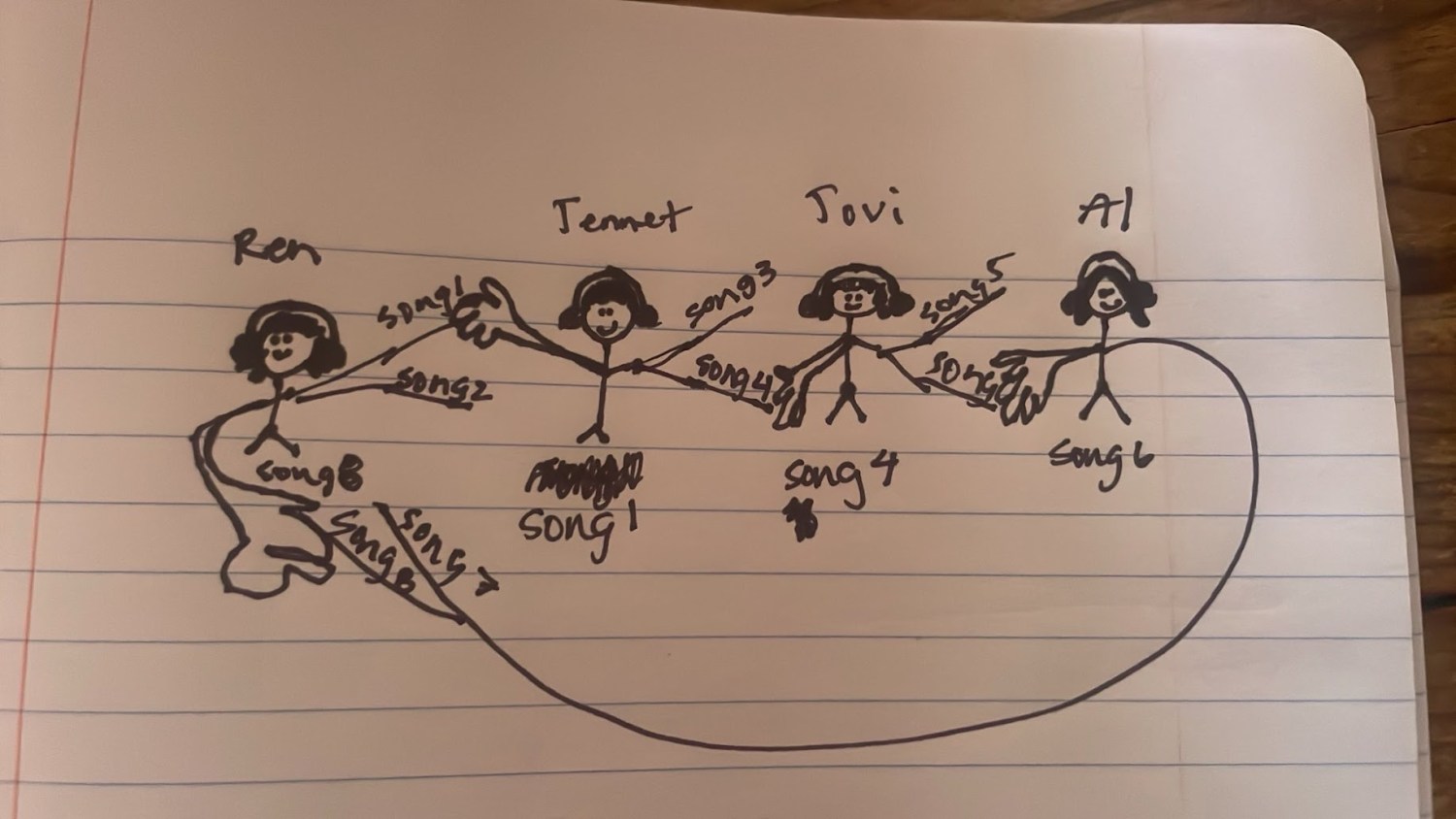
We did an exquisite corpse of sorts – starting with one of us sharing a song to the next and then that person picking a song that came to mind while listening and then sending that song to the next person and so on. I made a diagram before we started that may make it more or less confusing to understand the process (attached – feel free to include or not!). A random person who was retired from naming things for a living told AL we should change our name to heavy lifting, we aren’t gonna, but we thought it was funny and the idea will live on as a playlist. The songs are partly things we are listening to now and partly things that got pulled from our memory banks after listening to the song that was shared. It’s been a challenging month for a few of us in different ways but sending these songs back and forth and then listening to them all together has been something sweet. Hope it’s sweet for u too.
Last month, Lafayette based three piece Kaleidoscope Crux released single “Galactic Door”, a gloomy swirl of rusty guitar, textured samples and fuzzed out yearning. It was the first single off of Through the Portal, their debut EP out late this summer via Julia’s War, Pleasure Tapes and Candlepin. If approval from a sludge-lovers holy trinity of DIY tape labels was not enough to lead you to their music already, Kaleidoscope Crux is back today with their second single, shredding through a state of emotional fatigue on “Guided Away”.
The tone of “Guided Away” is instantly set with corroded vocal harmonies burgeoned by walls of heavy grungy goodness as Max Binet proclaims “it takes everything I have to keep holding on, hanging by a thread”. Sonically, the track mimics a sort of breaking point; a state of overstimulation amplified by blistering guitar riffs, unbridled vocals and tense percussion. “Self medication creeps into a lot of my lyrics, and this song is no different”, Binet explains of the track. “It deals with waking up and realizing that you’ve made an ass out of yourself. I came up with the first few lines during a shift at a kitchen job in early 2024, after a night that ended in a particularly chaotic manner.”
You can follow Kaleidoscope Crux on Bandcamp and check out the music video for “Guided Away” below.
Today, LA-based group Marguerite has shared with us the new music video for their song “larger now II / current”. This song sits as the endcap to their most recent EP things we found released back in 2024 via partnering with Pleasure Tapes. The music video for “larger now II / current” resembles a narrative based on singer and songwriter Katya Urban after she traveled back to her hometown of New York City. Finding a bike on Randalls Island, Urban then bikes all the way to the other side of the city to Coney Island, bringing light to growth after grief and how presence and memories can be intertwined in the process.
“You should know I’m larger now I’ve come to see / Even when you’re far away you’re here with me” lingers with a commanding vulnerability as “larger now II / current” plays with a steady hand, showcasing a band that can utilize both harsh tones and layered textures as Marguerite pushes forward with thought out and enduring melodies. But as the song breaks off, following a timeline set between two distinct markers, where she is now and the memories that she holds close, Urban and co. play to the tension and release of those two ends as they are being pulled closer together with each searing guitar and dynamic intuition.
About the video, the band shared, “throughout her journey, she is followed by a larger projection of herself on the horizon, literally “larger now” than her current self. When she completes her journey, she is greeted face on by the large version of herself and she settles on the sand to reflect and surrender to the water. By revisiting familiar places tied to different moments in her life, she comes back to herself and finds solace in her surroundings, despite navigating grief. This video is an ode to her late father, who taught her the great gift of how to ride a bike on Randalls Island, and the city that shaped her early life.”
Watch the music video for “larger now II / current” here!
You can listen to things we found out everywhere now, as well as order a cassette tape via Pleasure Tapes.
As a small music journal, we rely heavily on the work of independent tape labels to discover and share the incredible artists that we have dedicated this site to. Whether through press lists, recommendations, artist connections, social media support or supplying physicals, these homemade labels are the often-unsung heroes of the industry. Today, the ugly hug is highlighting the work of our friends over at Pleasure Tapes.
Since 2021, Pleasure Tapes has been paving a queer focused space within the sphere of heavier indie music. Run entirely by founder Kayla Gold, the Portland based nonprofit label is both a staple in the local DIY scene it inhabits and a blooming community in and of itself. In the four years of its existence, Pleasure Tapes has put out over one hundred releases, permeating Gold’s ethos and knack for music curation far beyond the Pacific Northwest. There is an organic emphasis on the Portland scene within the roster, though the web of artists spans all over, housing recent releases from Dosser, Trauma Glow, Slow Degrade, Glimmer, Flowers from Dead and Creek. Fueled by a prioritization of good art rather than financial gain, Pleasure Tapes is a beacon within the niche it occupies, re-envisioning DIY spaces with each release they take on.
We recently got to speak to Gold about the history of the label, recent Pleasure Tapes showcases and the importance of DIY.
This interview has been edited for length and clarity
Manon: I know you started Pleasure Tapes in 2021.What inspired you to start a label and what was your initial purpose for it?
Kayla: One part of it was I wanted to put out my own music and my friend’s music on tape at the time, and I didn’t know that there were a bunch of indie labels already, so I just started another one. At the start I had a few friends who helped me, they went separate ways, but they kind of helped me set the ethos of trying to make a label that’s more open to queer people, and just make a space where artists that maybe wouldn’t get physical media otherwise can get it through me.
Manon: That’s awesome, and I mean there can never be too many of those spaces or too many indie labels doing that. When you’re looking for artists, does that ethos play a role in how you find them now and what you choose to put out?
Kayla: Nowadays it’s so different from even a year ago. Now it’s mostly word of mouth to other bands, so sort of doing less hunting for musicians and it’s more that people are coming to me, and they might be friends with a band I have already worked with so I’m more inclined to take them on. But initially I was just listening to stuff I liked and then pestering the band til they let me make tapes for them.
Manon: So you do a lot of reaching out?
Kayla: Yeah, and I still reach out to bands if I really like their stuff, I’ll just kind of put a feeler out. I still take submissions, but I’m just super busy these days.
Manon: Yeah you mentioned you had some people helping in the beginning but now it’s just you?
Kayla: Yeah in the beginning my friend Enya, she’s a dj, so she was making stuff on tape as well. But she ended up moving back to the East Coast so ever since then it’s just been me. Sometimes my partner and band mates will help me with assembling the tapes, but other than that, it’s just me. But that’s how I like it because I like to have control over everything.
Manon: So you do all the tape assembly on your own?
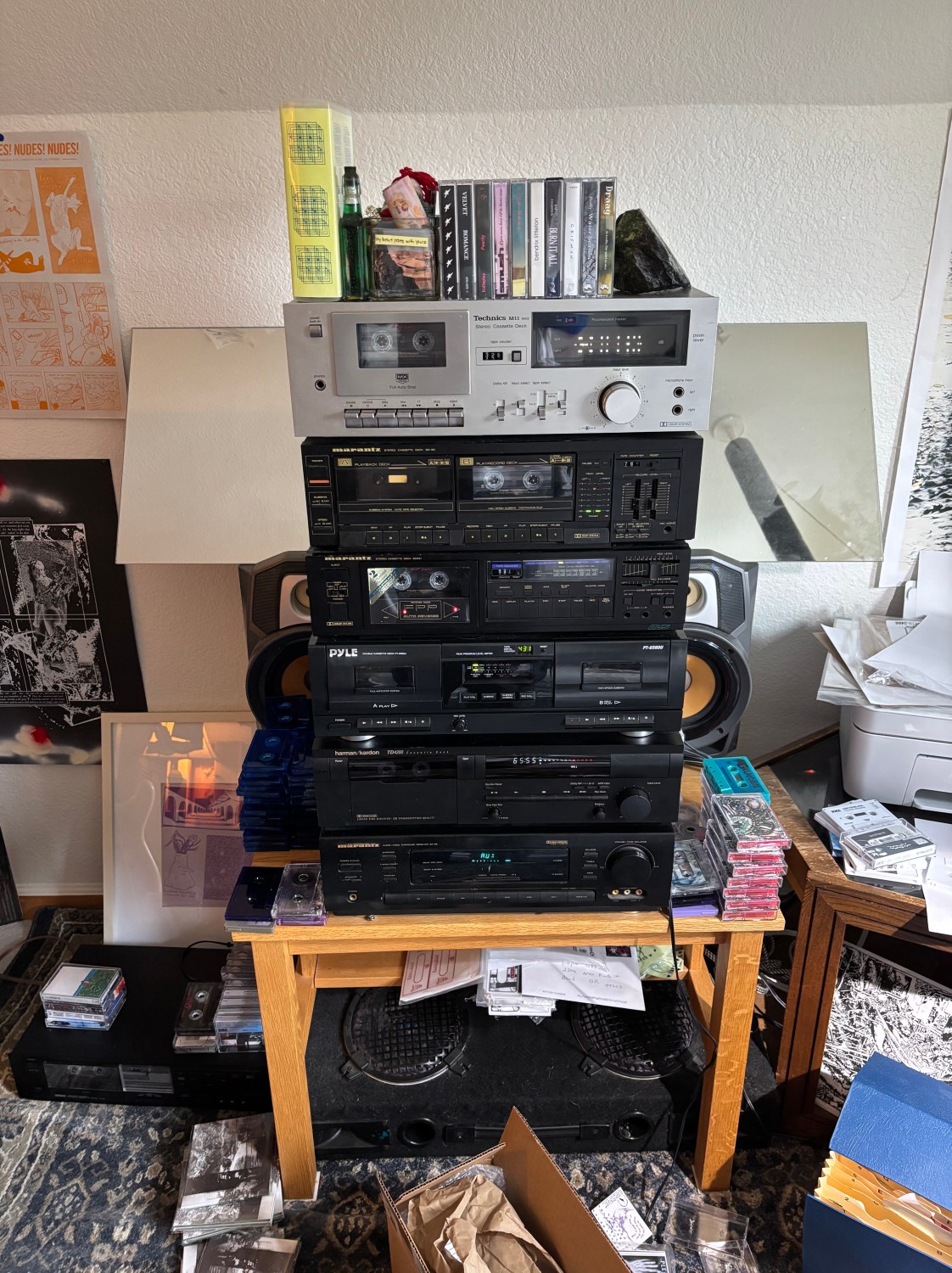
Kayla: Yeah. Over there behind me are the decks that I use to dub all the tapes. There’s one onthe floor that you can’t really see.
Manon: I trust it’s there.
Kayla: I have six, so I can churn them out pretty fast.
Manon: And you’ve also done some releases in collaboration with other labels. How is it to work with other indie labels?
Kayla: I’ve done a lot of stuff with Candlepin, I feel like we get a lot of the same submissions. In the indie label world, people will usually reach out to multiple labels at a time, so that can naturally lead to collaborations. I would say people are generally hesitant to collaborate, label to label, because of issues with things taking too long. So I always tell people that I’ll do the manufacturing, so we don’t have to wait on a timeline from a factory or whatever, I can just get it done right away. Now I’m working with Julia’s War and that’s really fun, Doug is a really nice guy. A lot of those collaboration projects are driven by artists that are really into both labels, but yeah I really like collaborating.
Manon: That’s awesome. So along with doing the manufacturing I know you also do a lot of the graphics for the releases. Can you tell me about that?
Kayla: Yeah! Typically the bands send me just the covert art, and I do the rest. Sometimes I’ll send them the template if they want to do their own design, but for most of the stuff I end up doing the final layout.
Manon: All the graphics on the label are consistently awesome, that’s very impressive. Do you have any releases you have worked on recently that you really enjoyed doing?
Kayla: My favorite band is probably Knifeplay, so doing their tapes was like a really big deal for me on a personal level because yeah, they’re in my top three bands. So it was really cool to work with the songwriter from Knifeplay and kind of get to know their aesthetic. It’s always so crazy to me, like getting calls from people that I have idolized and now I’m just talking to a normal person, that all blows my mind. So yeah, Knifeplay was really cool.
Manon: That’s awesome. Was that a band you were pestering?
Kayla: Oh yeah. I was bugging them for a while. I think sometimes you kind of have to tell it the right way, so offering to do a re-release made sense for the band at the time, in terms of building up to their next release.
Manon: And then Pleasure Tapes also host shows sometimes, can you tell me about your experience with that?
Kayla: Yeah, lately a lot of shows in Portland. Sometimes I’m just the booker, sort of promoter, because I don’t actually live in Portland, I live in a small town outside of Portland. I have my band play a lot of the shows as well. so then I end up going. But yeah, there’s a really cool music scene in Portland right now, I’ve been very impressed. There’s just been a big boom in the number of bands in the last couple of years. So there’s a lot more demand to play there, and I will get hit up by bands that are touring and want to come through and play a set in Portland, so that’s awesome. I used to hate Portland, but now I kind of love it again.
Manon: Do you have a favorite show you’ve done?
Kayla: Yeah, there was a show at the start of the year at this place called Star Theater. It’s an old fancy auditorium style theater, and we had I think six or seven bands on the bill, so that was really cool. We made a lot of friends there, and it was also the first show that my new drummer played, and so he was like, whoa, this is so cool. We were like, get used to this, because not all of our shows are this well attended.
Manon: Was it a mix of local Portland bands and ones from elsewhere, or was it all bands from Portland?
Kayla: Yeah, it was all Portland bands, and most of them are on the label. I feel like in the last year, just a bunch of the bands in Portland have been hitting me up for tapes and CDs, so my focus has kind of shifted there. Before, I was living in LA so I was mostly going to those shows and making friends down there. I also like to do these showcases where we just have Pleasure Tapes band play.
Manon: So I know you put out music from bands from all over, but would you say that where you are and the local scenes and communities are also a big factor in what you choose to release?
Kayla: Yeah definitely. I feel like it’s pretty organic that once I have done one band then their friends will hit me up. Also a lot of the bands are from Texas and the Southeast, also Louisiana, a lot of Florida bands, I mean I’ve done like 100, almost 110 releases now, and most of those are not from the same band. So there’s just a shit ton of people I’ve worked with all over now, and I feel like that is helpful for when bands are trying to tour. It makes a kind of a patchwork of cities where people might already know each other through the label, as opposed to just cold calling bands to try to set up shows.
Manon: That’s really cool. And you said most of those are not the same band, are there times where you have worked with a band for multiple releases, and how is that?
Kayla: I definitely have an open door policy for people. If they want to move on to another label I’m always fine with that. A lot of people have gone from Pleasure Tapes to Julia’s War and then blow up. I’m always open to whatever is best for people’s careers, but I also do like to do multiple releases with the same artist if they are interested.
Manon: Okay so you said you’ve done about 100 releases, is there anything you wish you knew 100 releases ago?
Kayla: Oh my god. Yeah… haha shit. Well I spent a lot of money on tape decks that ended up breaking in ways I couldn’t fix. So I would say, don’t try to buy vintage decks unless they’re fucking nice, or learn how to fix tape decks cause they always break. Also being an indie label, even within that space there’s obviously a lot of different options. So if you’re just starting out, you kind of need a niche within the niche. I think being a queer label puts off bands that do not want to be associated with something gay, but it also is an open door for people who are like “okay yeah, this label is for me, so I am going to seek them out.”
Manon: What would you say is your favorite thing about running Pleasure Tapes, and being so involved in DIY music in general?
Kayla: I love doing the design stuff, I find it really satisfying. I also like the idea of queering the space and making a transitional area where maybe we are doing things a bit differently than other labels in terms of how I take on artists, at risk to my budget. Because we are a nonprofit, so my goal isn’t ever to make money from artists. I like being able to support people that are small and just getting started, bringing visibility to that and then also hearing all of the best new music in the scene, it is pretty special. I feel like it’s a real treat to get music submitted, even if I am not going to take on the project, I do listen to everything. In the Trump four years that we’re in, as everybody’s dying from microplastics and there’s a lot of fascism in the world and things are just very dark, and it’s so important to have things that are still special and not ruined by capitalism.
Along with this series, our friends over at Pleasure Tapes are offering some merch in a giveaway bundle, which includes any tape or CD of your choice from their extensive catalog as well as a Pleasure Tapes tote bag.
To enter the giveaway, follow these easy steps below!
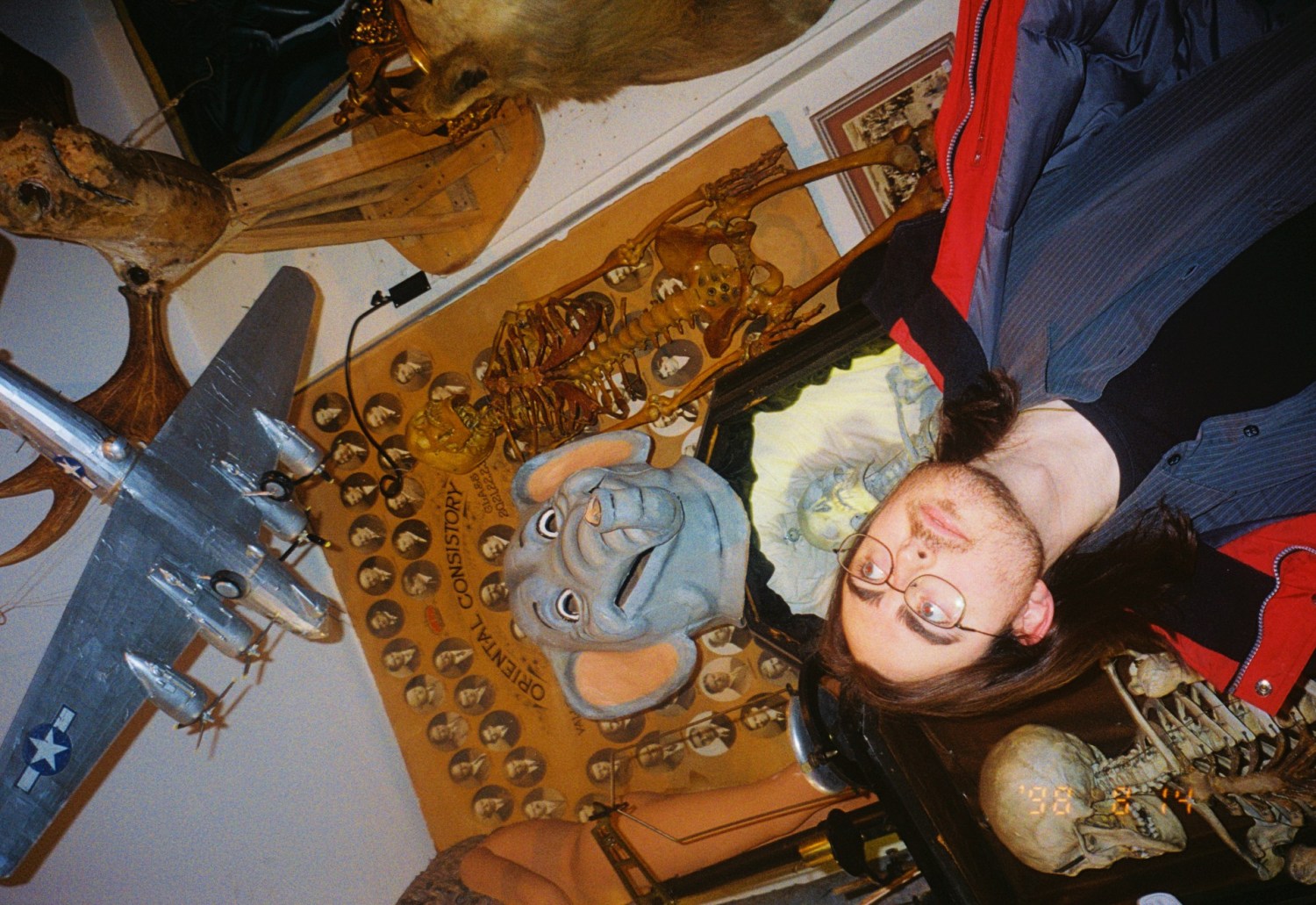
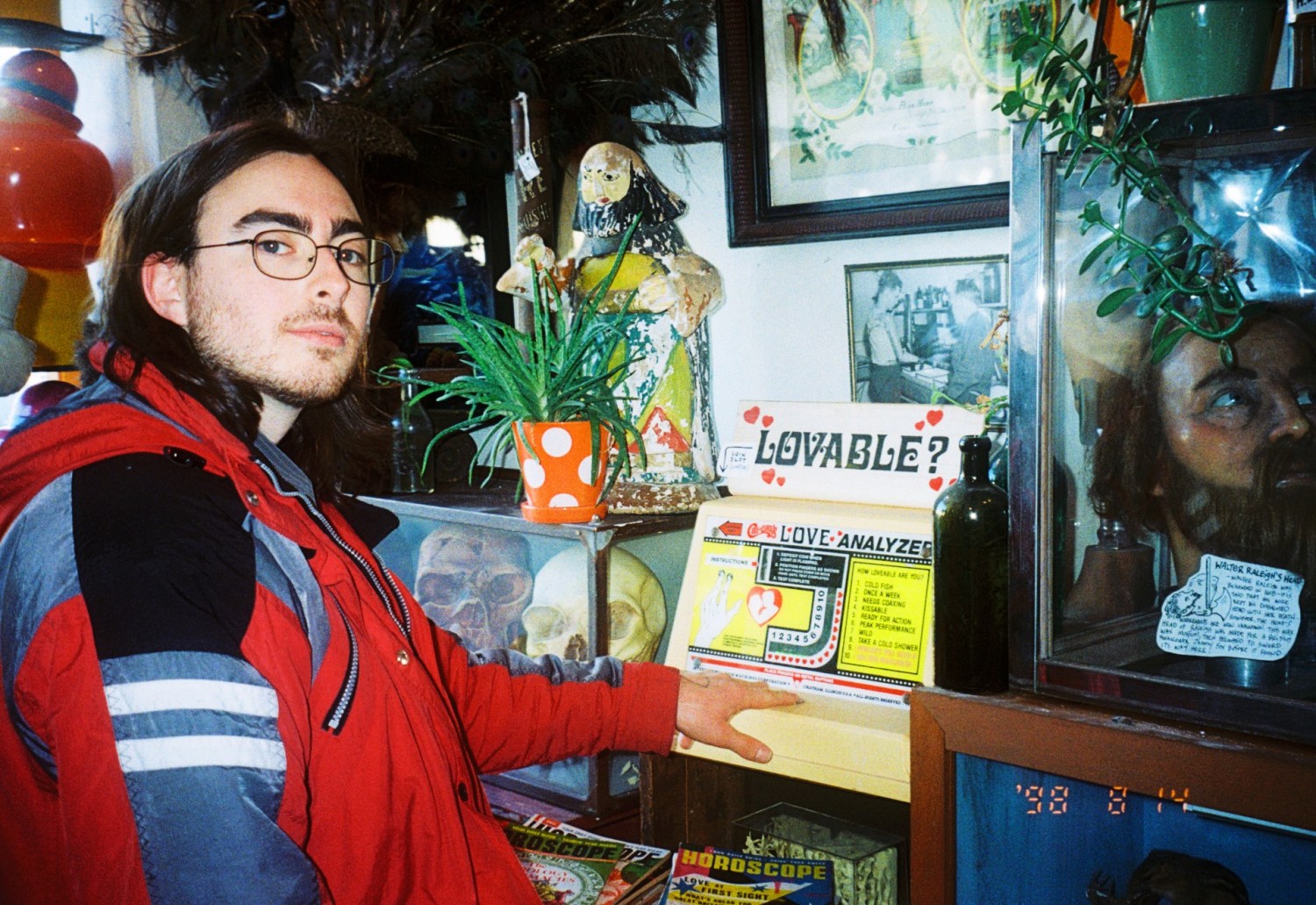
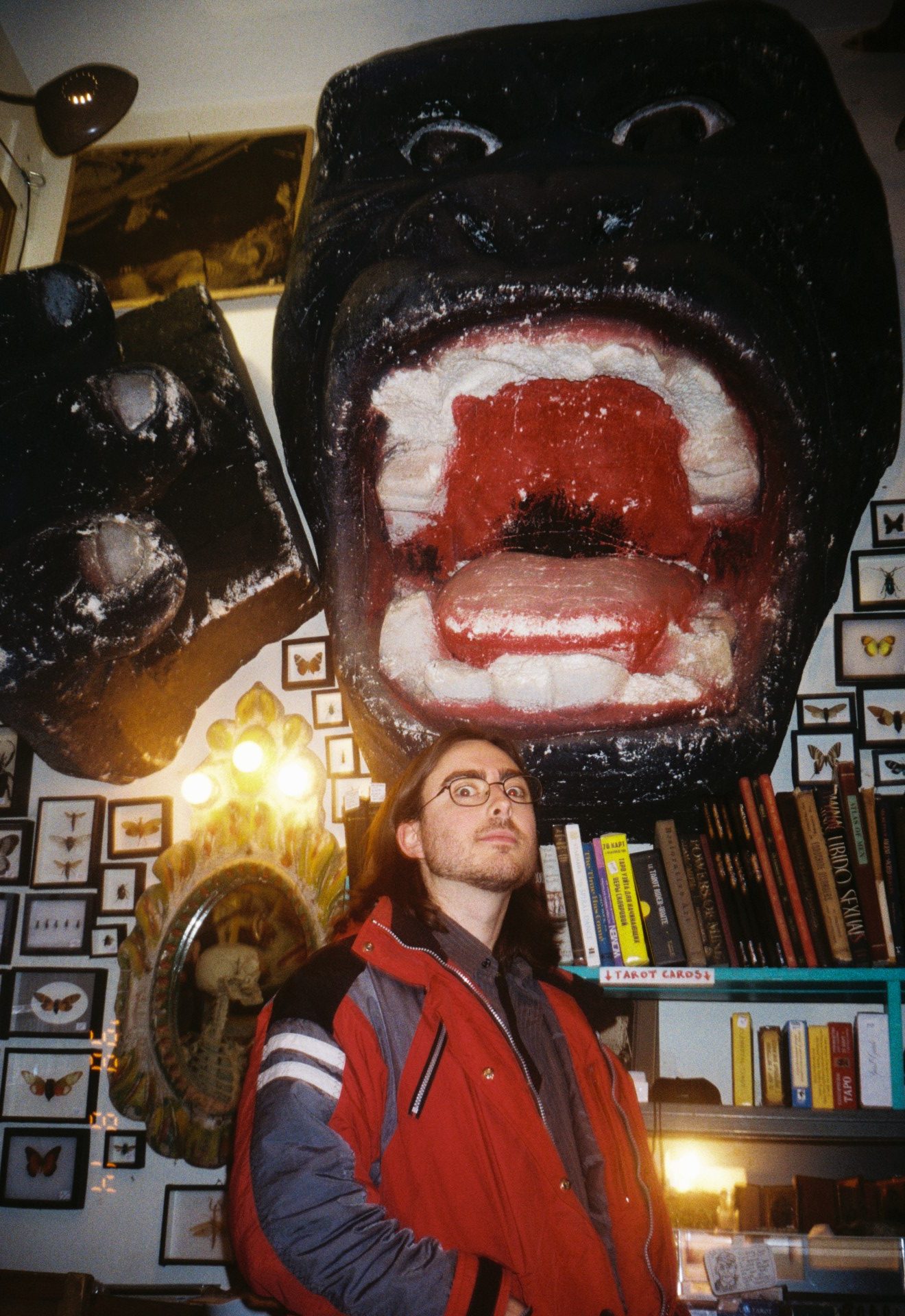
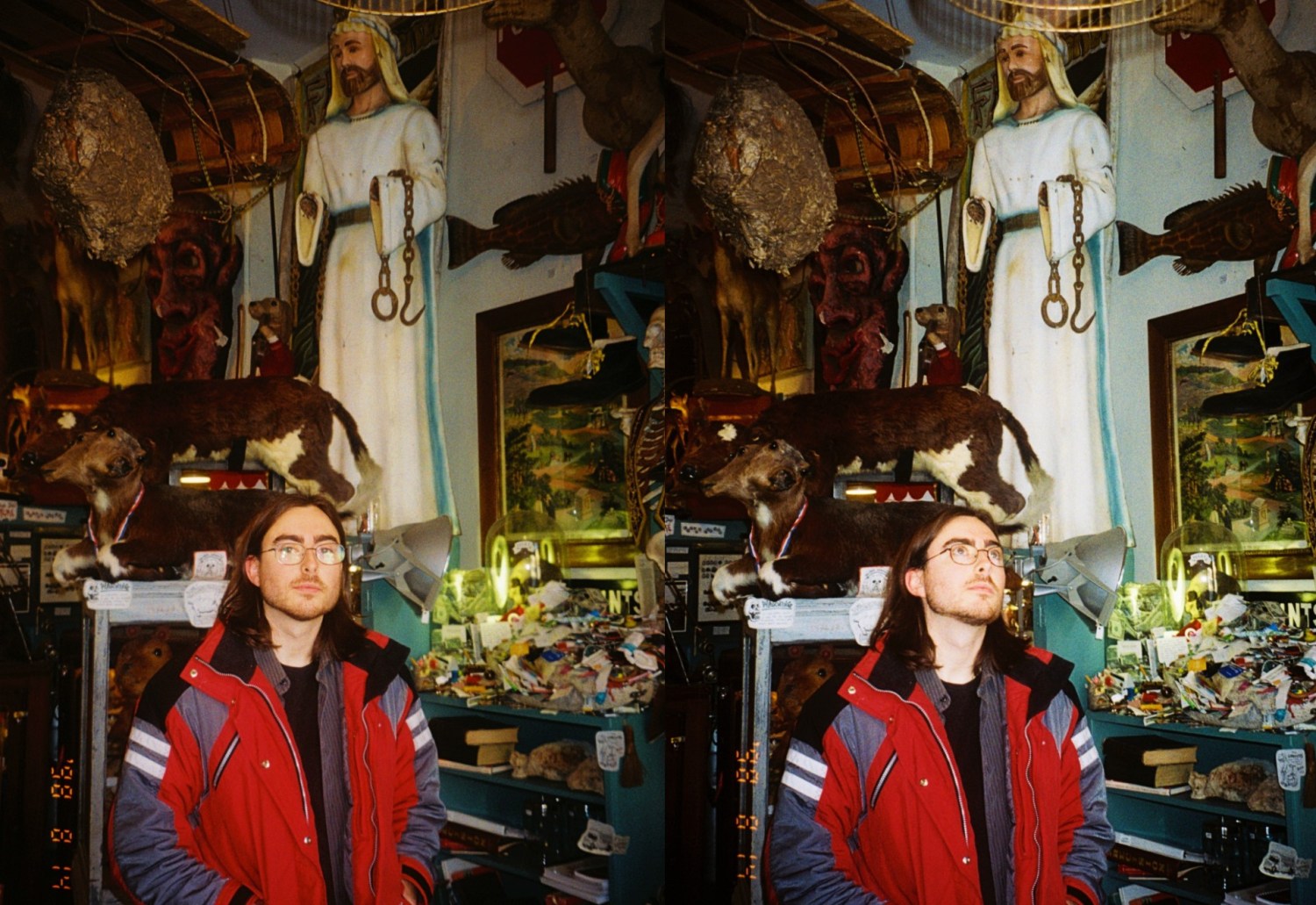
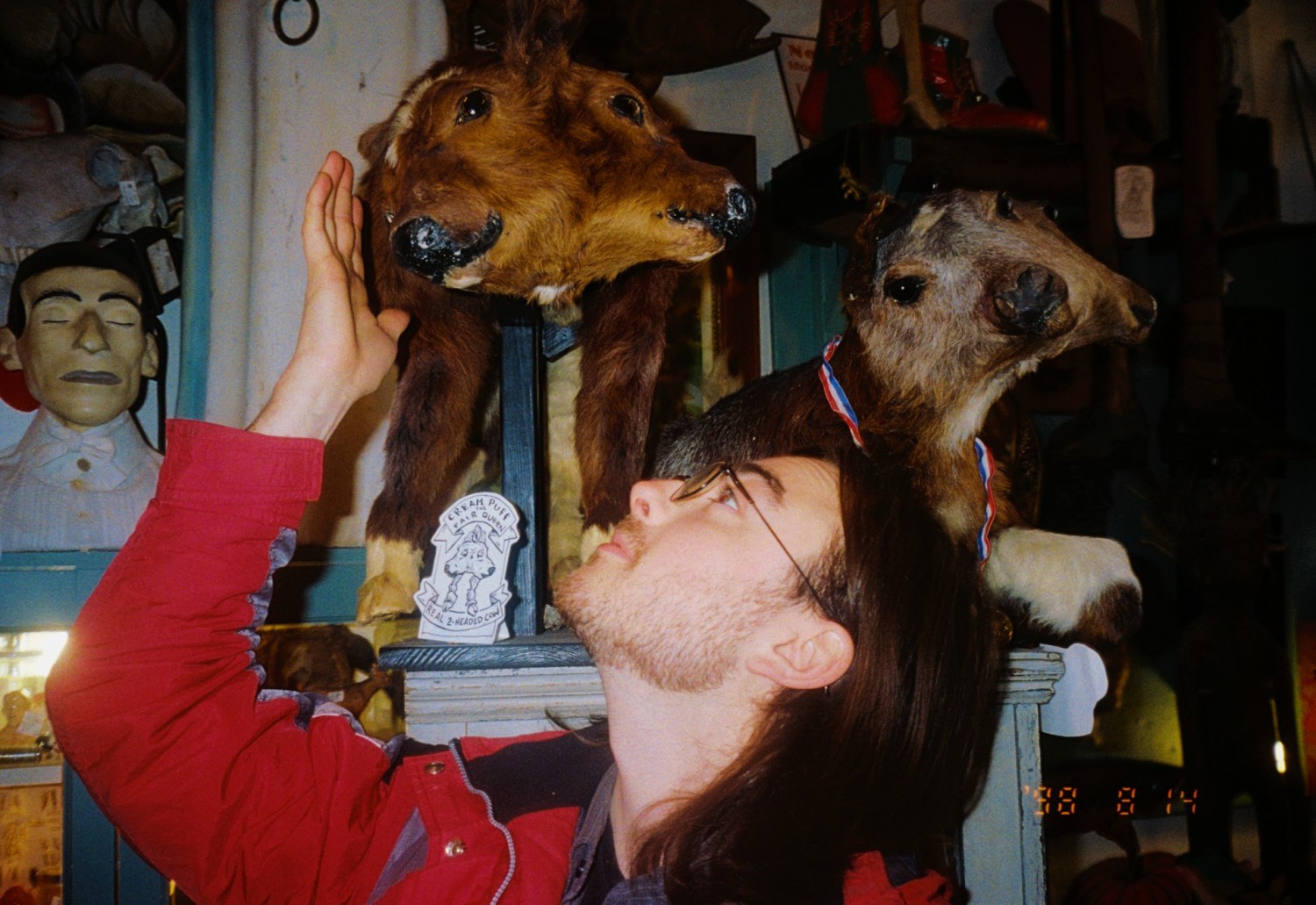
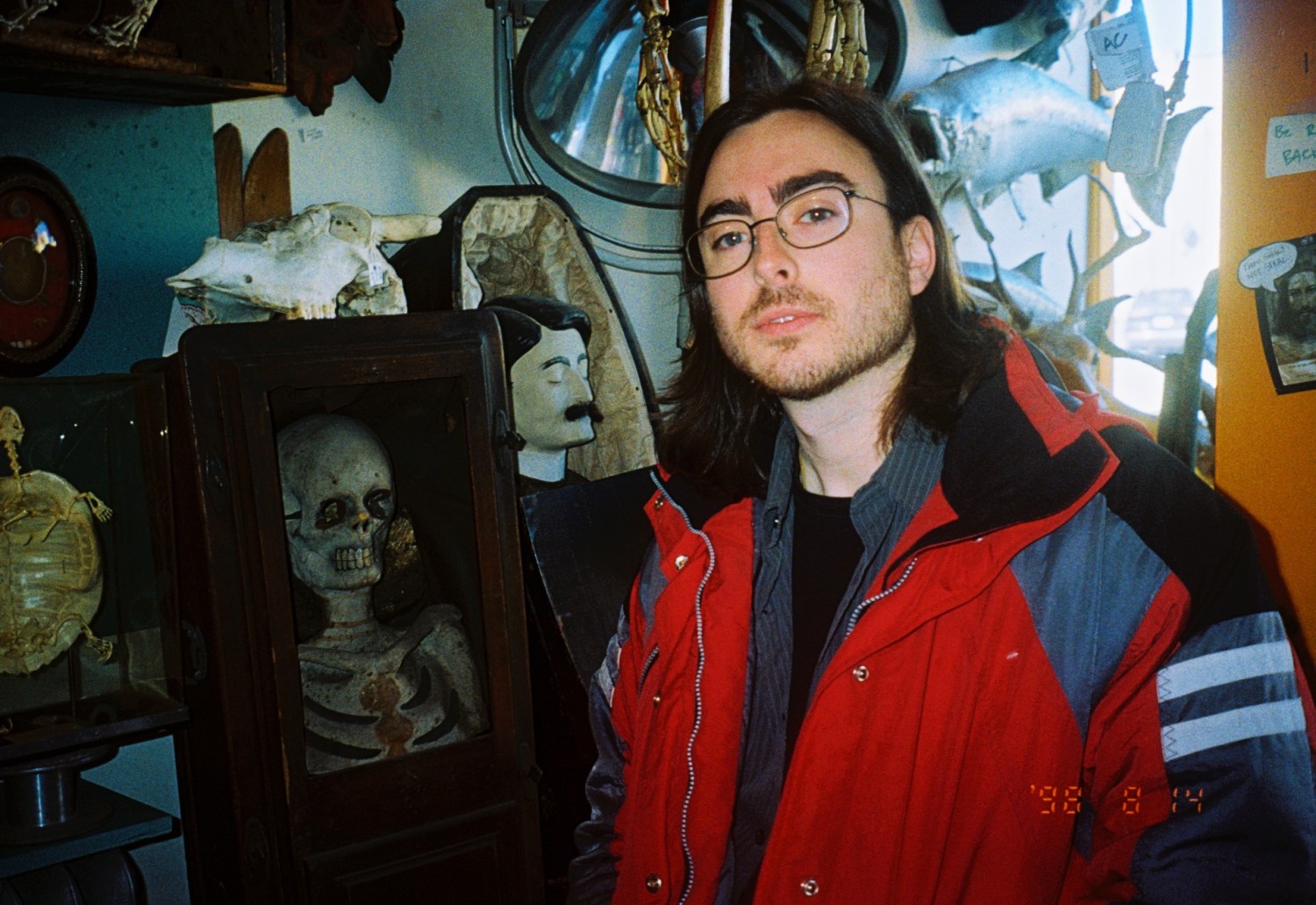
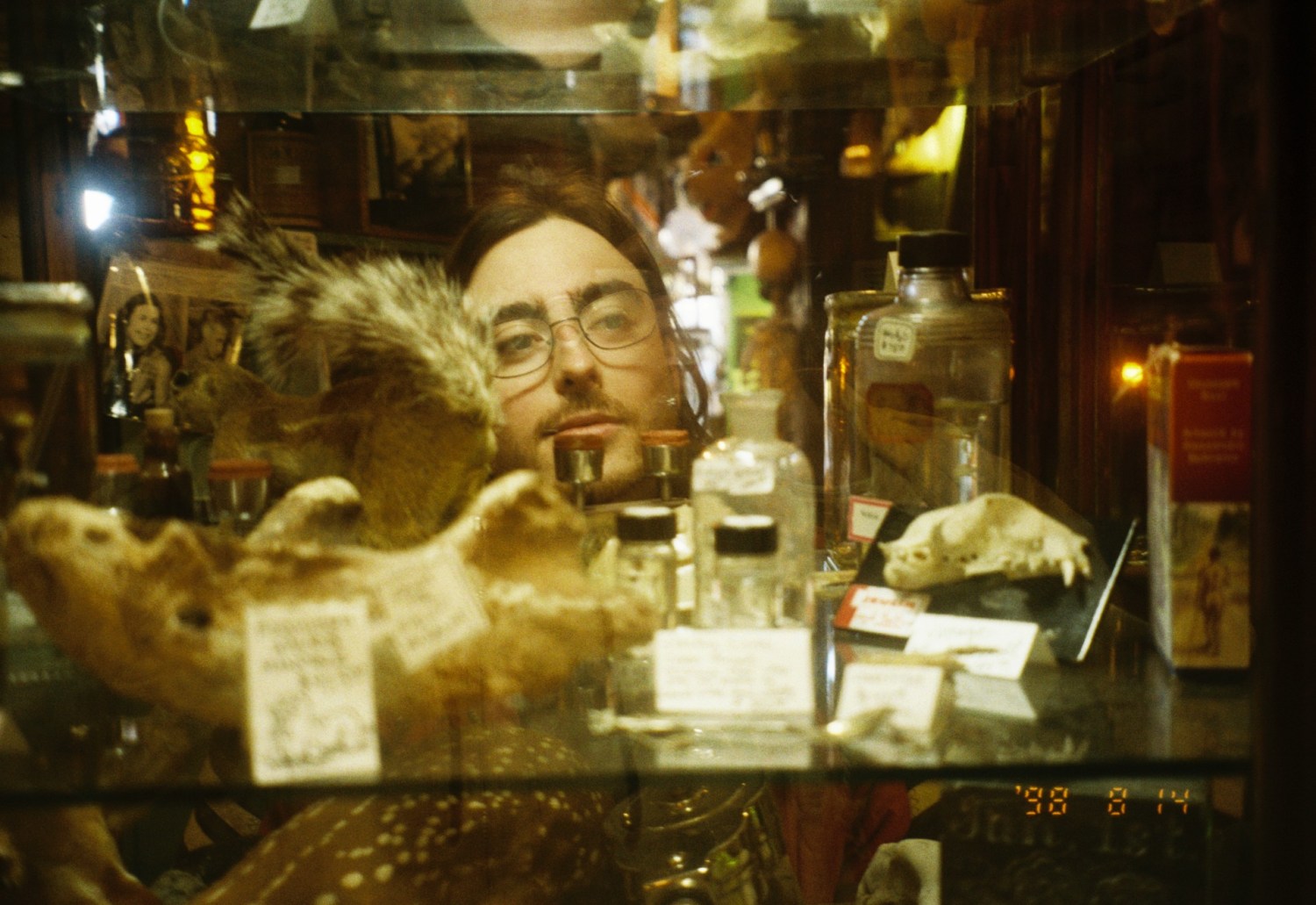
“Is there anything that came into this shop that you had to turn away because it was too fucked up?”, Chaepter asked the employee behind the desk of Chicago’s Woolly Mammoth Antiques and Oddities, the location we chose to photograph in – and one that left us grotesquely curious as to the collectables for sale. The taxidermied cow named “Meatball the Freak”, John Wayne Gacey original paintings, an old, preserved chicken nugget or a gun holster made from a squirrel, there was humor in both the disbelief and surrealism of it all that just barley cut the tension of how dark some of this stuff really was. “Hmmm,” she says, taking the time to give us an answer that would leave us satisfied in our inquiry. “I mean, people will bring in murder memorabilia all the time, stuff used in murders and crimes. But it feels weird putting monetary value to those kinds of things, so we often just trade for it.”
Chaepter Negro is a Chicago-based artist who performs under his first name, marking ground in his own unique and challenging ways with engaging and tactful sounds. Chaepter grew up in Central Illinois, rearing a large Irish-Catholic Midwest upbringing to show for it, where he was first exposed to music through classical training in cello and piano. But with the release of 2024’s Naked Era, a bold, brutalist post-punk album riddled with acute punctuation, searing guitar tones and strict melodic orders that carved out a new vision for the project and a trajectory that Chaepter and co. have fully launched into. Accompanying him are players John Golden on drums, Ayethaw Tun on bass, who have played with Chaepter for years, as well as the newest addition of Shane Morris on lead guitar.
Today, Chaepter shares a new EP called Empire Anthems, a brief and poignant collection of songs that areunwilling to mince words directed towards the fearful, and rather stupid, timeline that we are currently residing. Although gripping tightly to our being, blending punk antiquity and rage against the system with the absolute fear of what is unfolding in front of our own eyes, Empire Anthems plays out with urgency and condemnation, of course, but the purpose of its creation is a remnant of preservation. The kind of preservation you get from making art with the people you care about. The kind of preservation you get from engaging with and looking out for the community that you are a part of. The kind of self-preservation you get when you choose what has monetary value in your life, no matter how fucked up it is. Chaepter isn’t searching for fix-all answers here, but rather ways in which we can all push back when the things that matter the most are exploited.
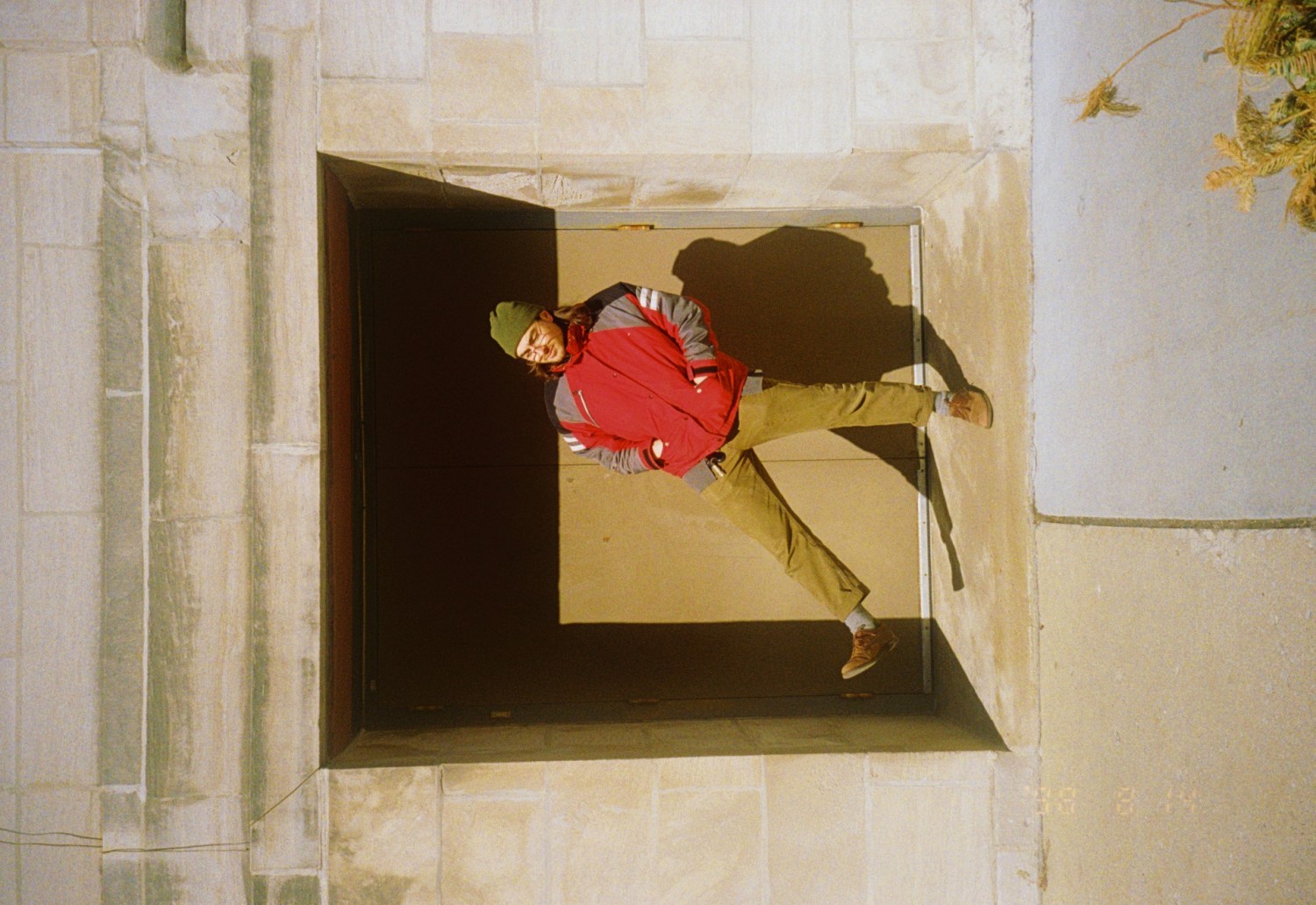
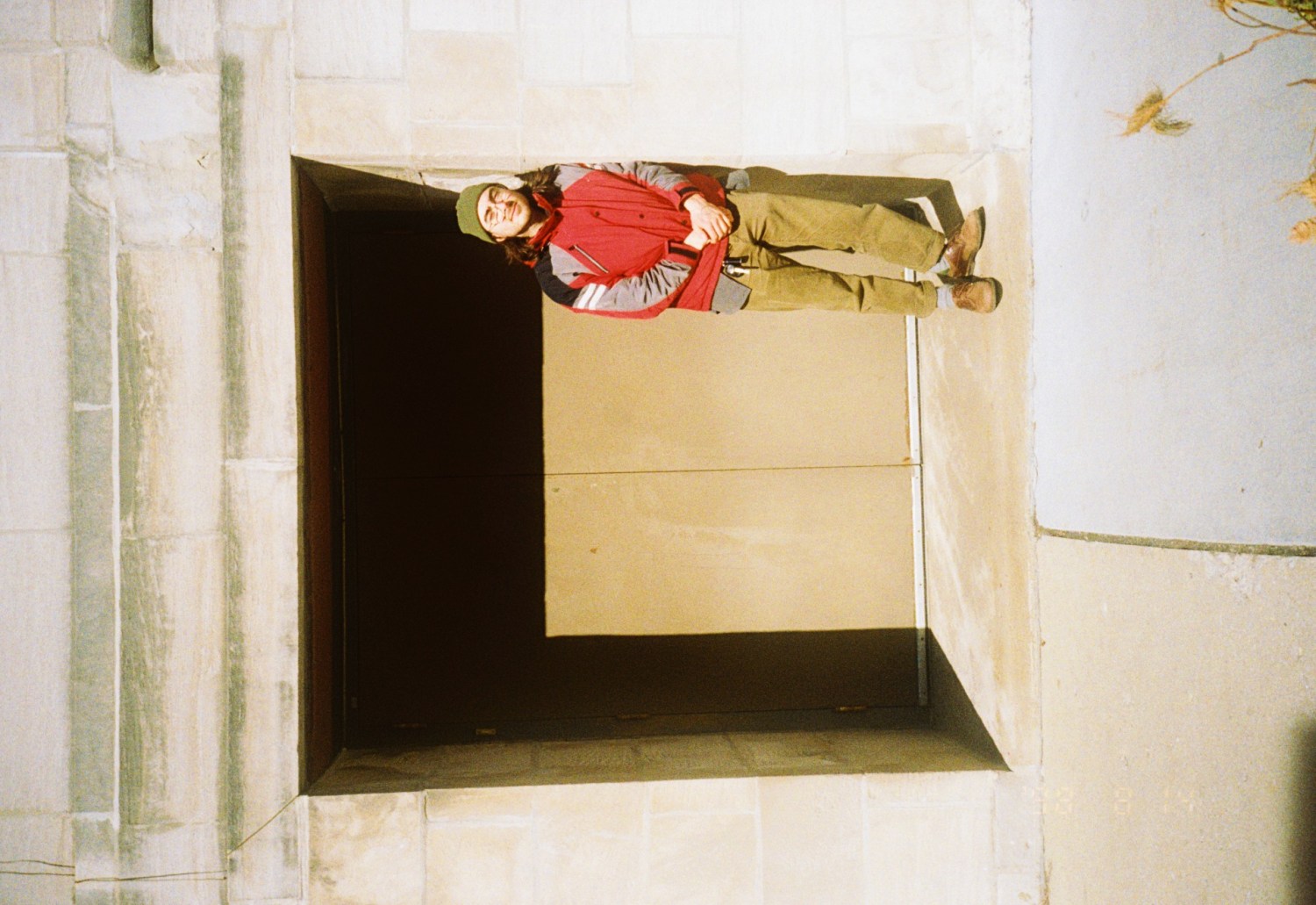
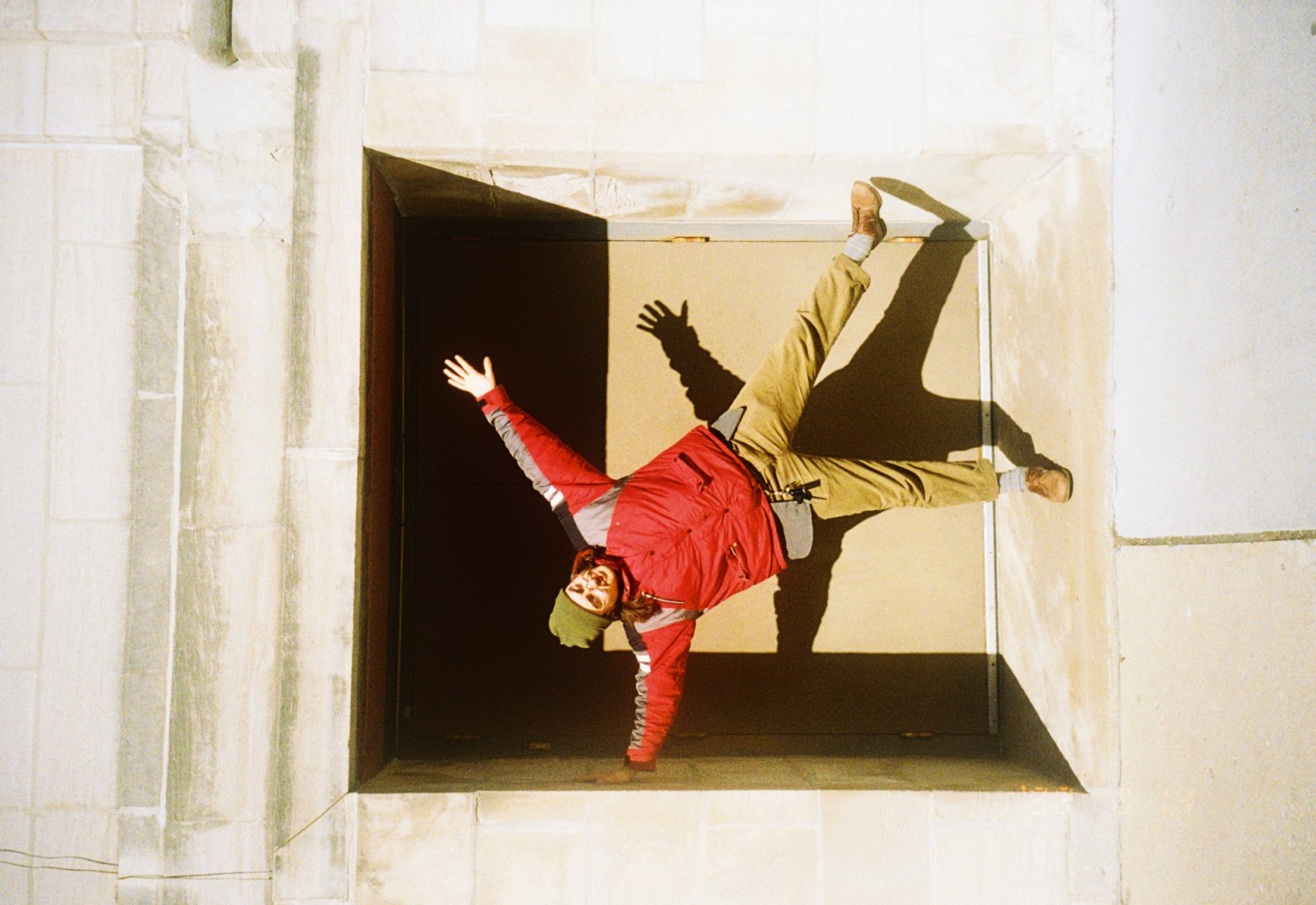
We recently spent the day with Chaepter, first taking photos in the Woolly Mammoth before we got to discuss Empire Anthems, having creative freedom in community and suffering from choice-poison.
This interview as been edited for length and clarity.
Shea Roney: So, you have an EP coming out soon called Empire Anthems.
Chaepter: Yes, we’re doing this EP with Pleasure Tapes. Honestly, it was kind of weird, the past year we’ve been touring the Naked Era record, and then I’ve been writing this other album and we just spent the last four months rehearsing and recording it – different from the EP. I just had a bunch of songs that didn’t really fit that, so we just spent a couple days in our practice space pushing through these songs. It’s like what would be the B-sides of an album or something, but we’re going to release it first while we search for a home for the bigger record.
SR: This EP is a continuation of that raw and bold sound that Naked Era fully embraced. As you venture more into this genre, exploring the techniques and sounds, what did you gravitate towards when fleshing out these songs?
C: I think for me it was just writing on guitar, and in this way, electric guitar. At the end of the day, I used to always write songs on piano, so I was always writing songs like that. It wasn’t until a couple years ago that I started structuring songs on guitar, and then also experimenting with pedals and stuff. I’ve always been doing quieter stuff, a lot of folk songs and stuff like that, but for whatever reason, it just kind of felt right to be part of a band. I’ve been in other bands, but I think what kind of led to that shift is I really like playing like this, where we can get loud and get aggressive, but also have those soft moments and have the dynamics, which we really try to do.
SR: Wanting to play louder, did you feel like you knew how to go into it, or was there trial and error?
C: Oh, definitely trial and error. I don’t actually even know guitar chords. I’ve just been doing my own tunings and my own chords, and just writing songs that way. I don’t know a C chord. I don’t know any of that shit. Everything’s been self-taught with guitar, and I think that’s been kind of nice because it’s forced me to do things a little differently. We were joking about that, because me and the band were at a show last night, and we were looking back at old videos of us playing and were like, ‘what the hell were we doing? What the fuck was that?’ [laughs] When I first started playing frontman and then playing guitar at the same time, I had just never done that, so it was a lot of trial and error, but we’re starting to kind of get to know each other a bit.
SR: When you bring a song to the group, how do you translate it to them? If you’re not referring to old music theory and stuff like that?
C: It really depends. We’re more collaborative now than when we first started. The Chaepter project was just kind of a solo project, and then I had friends that were playing with me, and we’ve gone through some iterations. But now we’re pretty much locked in as a band, and there’s a lot more collaboration. So I’ll bring in a song idea, and sometimes I’ll have a bass part written, sometimes not, sometimes I’ll have half of it. It’s just things like that. Oftentimes we’ll just do it as a three-piece. We’ll start fleshing it out, and my drummer, John, writes all his drum parts and helps with structuring. Unless we’re collaborating with someone who’s doing lead, we keep it pretty open. Sometimes I’ll come in with a song and it’s pretty much all done. Sometimes I’ll just have a riff, and we’ll see where that goes. It’s just been really good for my brain, and just us as a unit to push and pull.
SR: Do you feel like this freedom in your abilities, and lack of quote-unquote musical structure, has helped you explore and start writing in different ways?
C: Yeah, for guitar music at least. I was raised playing classically on cello and piano since I was six. I have that experience in theory and stuff, but in terms of guitar, just not knowing what I’m doing has been honestly really cool. Anytime I kind of figure something out, it feels very fresh to me, or naive in a way that I feel comfortable in. I would naturally play this way for whatever reason as opposed to feeling like I have to do something because someone taught me since I was a little kid to do it like that.
SR: So now as you gear up to release Empire Anthems, referring to these songs as almost B-sides to an album, was there a connective tissue or theme that runs throughout them all?
C: They were kind of just existing in their own kind of space. I’m also working on another record, too, so I’ve kind of had three or four records, or at least collections of songs, working off in different places. These songs were just in their own sort of world – its own darker kind of space. I was in a weird spot post-album. Whenever I’m done making a record, I get a little depressed, so I was just kind of thinking a lot about the relevance and utility of making art in a fading empire that we are currently residing in, and how that intersects with our cultural identity, and this idea of ‘Empire Anthems’ being these cultural signifiers that kind of lulls us into complacency and reaffirms the dominant American culture and rationalizes irrational American terror. You know, you turn on the radio and some pop song that’s making you not really think about something, but allowing you to continue to sleepwalk through life. How does art exist in that kind of way? These anthems just keep pulling you back into the Matrix or wherever the fuck we’re in [laughs].
SR: Yeah, I was very intrigued by the word ‘anthem’ in the title, because there is such a notable heaviness to the word. But also repeating the word ‘signifier’, can you talk about these songs as signifiers and this plane that you created?
C: The idea of art as a cultural signifier in general, being something that in music’s case, if you’re living in a certain culture, you’re going to produce certain cultural products that reaffirm what it means to live in American culture, which is this blood-sucking empire that’s on its last legs. How dominant art might be shifting, just to keep the dream alive even though it’s not there anymore, that’s just what I was thinking about. Art is obviously what I’m doing, it’s my life, and sometimes it’s the most important thing in the world to me. And other times, I gotta focus on my family. It’s this sort of oscillation back and forth of being a ‘god-like’ thing in my life pulling me towards something, but also something I’m just doing. It can feel kind of silly just writing songs in the state it is right now, but it is deeply important at the same time. I guess that’s all things.
SR: I would argue it’s always important, especially with all that comes with it, especially community, which is something that you are very vocal on. This was huge for you with Naked Era and that press, you’re very keen on giving your surroundings voice and appreciation. Thank you. What bits of this relation and respect for your surroundings sticks with you when making art?
C: I feel like in my brain, what comes out is pretty much a debris, just kind of an after. So if making art is a fabric, it’s that community that comes with it that I think matters the most. It’s kind of reflexive – it’s a mirror. So if you’re involved in a really active art scene, you’re inherently going to be injecting that into what you’re making. Whether you’re doing it explicitly or tacitly, it’s always going to be part of it. That’s something my band and I try to focus on, that process and journey mattering more than the song that comes out of it. Because at the end of the day, as artists and creatives, that’s what you have. Once you let that song go, it’s out there, but you have that journey with you forever. So inserting yourself in something and allowing yourself to be part of a scene or some sort of artistic collective fabric is the best part of doing all this shit. I spent so many years of my life making songs alone in a bedroom. It was fine, but you get out what you put in. There’s nothing wrong with writing in an isolated manner at all, but nowadays, I’ve been feeling so good about being around other people that are making stuff, and part of this greater thing.
SR: Even to the stories you tell in your songs, there is this level of presence and characterization regardless of if it’s told from your eyes or not. There is always this presence. So when it comes to dealing with conflicting imagery, you know, with this failing empire, what kind of emotions went in and came out of these songs in the process?
C: Yeah, I mean, post-album with these songs, I felt like I was just steering a ship in the dark, into the fog. It’s getting foggier and it’s very confusing – I get overstimulated. I was kind of in that space where I was just like, ‘what the fuck am I doing?’ Not in any way that’s rooted in that much reality, but I was getting very existential. I think that’s where these leftover songs and how they kind of form into this EP. It’s a weird thing, once you’ve given life to a new project. For me, it’s kind of an obsession. I’m obsessed with something for a long time, and then you finally put it to tape, and then, ‘dang, here it is’. That’s kind of the headspace I was in putting this record together. And then, you know, watching all the systems around us degrade at an even more accelerated rate than they have been doing so previously – there’s a lot going on to say the least. And again, it can seem so silly to be writing a little song, but it’s serious. And I think being able to balance both is important.
SR: Sorry, are you blinded? This window is brutal.
C: I am cooking. Part 2 on the bench out there?
*change of scenery
SR: I can’t remember what we were talking about
C: I was saying anything I needed to. I was in survival mode [laughs].
SR: [laughs] How long have you lived in the city for?
C: Since October of 2019. I moved here after I was in Madison for a little bit after college working and then moved here. Then COVID happened.
SR: Hell yeah. You have described your project in the terms of Midwest Gothic, which I really appreciate having lived here all my life. I feel like in a way that really helps make this Empire Anthems a little bit more credible, growing up in the heart of America with a big classic big family. Looking at the world you grew up in and then the world you are in now, does that live in these songs at all?
C: I feel like everyone who grows up in the Midwest has this sense of space because we are just in this plane. When I’m writing songs, I do try to channel that a lot. I grew up in Central Illinois in the country. It was really lovely being able to grow up around nature and be exposed to animals and having that big family, but there is sort of a Midwest existentialism, I guess I will call it, that feeling of living sort of nowhere all the time. Illinois in particular, and what happened to this state and what it looks like now with industrial agriculture and losing the prairie, is something I’m always thinking about and trying to channel into the music. There’s a big history of lost connection to our land here in Illinois and the Midwest in general because of industrial agriculture and what that’s done to farming communities. There’s a lot of ruins around here. You can go over to Michigan, or go to Gary, Indiana you know, an hour from here, and see with your own eyes what that looks like when people just get left behind. I was thinking about that a lot with these songs, just that expansiveness that we’re looking across. We can see everything in front of us in the Midwest.
SR: Did you find any hope buried within these songs? Or are we.. are we pre-hope?
C: [laughs] I feel like these were probably my least hopeful in a minute. These songs were kind of like a shot, you know, these five songs, just like an injection. I don’t know what’s going to happen after the injection. Whereas with a full record, I feel like I tend to be able to have emotional arcs with them and I’ve never been a huge fan of writing EPs. I’ve always felt I’ve struggled with encapsulating a full concept in them that I can do in a record. But that’s why I kind of view it as a shot, it’s just one big injection. There’s maybe not the catharsis that a full record has.
SR: I mean, to call back to before we were recording, we were talking about exposure therapy, and it’s kind of ripping off the bandaid in all aspects. Do you find yourself taking too much on at times?
C: These songs, and just a lot of the music I have been kind of consuming as of late, fall into that sort of ‘rattle ya a little bit’ category. Not in one particular sort of ideology, but just like this idea of like, things are not right per se, and if you’re feeling like something’s off, that’s not probably innate to just you, you know, it’s a fully human thing. It’s like, if you’re ill, you’re mentally ill because of this or, you know, the sort of individualized blame that it’s really easy for us to go into and to sink into that shame, you’ve got to give yourself a little bit of grace, you know? Recognize that to some degree we’re doing what we can, don’t be so hard on yourself. Maybe it’s growing up with Catholic guilt, I find myself doing so much, and I’m trying to be better about it. I don’t think we should have to be able to keep up with everything that’s going on, especially, in terms of new technology and productivism and feeling like we have to be this well-oiled, perfect little production machine as a human. It’s like, ‘nah, man, this shit is so confusing’. It’s hard to keep up and it’s not normal for the human brain to have all this fucking stupidness all the time
SR: What constitutes a break for you?
C: Oh, I’m so bad at trying to just chill out. I have a lot of family stuff that’s always going on. Eight siblings, very dysfunctional, and trying to balance that with making money and doing music, booking tours and doing this music thing, it’s just so much work. I love it, it’s an obsession, but it’s a lot of unpaid work, so it’s hard to do and balance a job. I’m reading more, which has been good. I deleted Instagram from my phone last week, I was like, ‘this shouldn’t be that big of a deal’, but it was. It’s really difficult because I use it to book tours, so I’ll message a band, and then like an hour later, I’m like watching fucking videos of AI squids being cleaned off. That’s why I deleted my Instagram. I saw this AI video of someone washing off a giant squid in a boat and I couldn’t tell if it was real or not. I was like, ‘this is fucked up. I got to get rid of this’. I was sleeping better and when I wake up, I felt just a little bit better about how much time I’m spending consuming things that don’t affect me. Obviously, we’re veering towards absurdism, but at some point, I just need to disconnect and be like, ‘okay, I’ve got friends in front of me, family, people I love that I talk to and talk back to me’. I also got rid of streaming, which has been fine, but I don’t have a lot of money to buy records so I’ve been doing YouTube and bandcamp and buying friends stuff that I really, really love.
SR: How has that been? Did it bring out anything with your relationship to listening or something?
C: I’m trying to find a balance with music because we’ve kind of been conditioned to view it all as free. Even as someone who makes stuff, I grew up with CDs – I first fell in love with music with CDs; buying CDs, getting CDs from the library, burning them, getting them from friends – it was a little more precious back then at least. I got streaming in 2018, and whether you think about it explicitly or not, it does reshape how we interact with and appreciate art, you know? I’ve just been trying to make some small changes where it’ll force me to go a little slower with stuff. Because otherwise I can be kind of overstimulating myself. Something I always think about is choice. I think historically, humans aren’t actually that good with choice, which is why I think the capitalist idea of choice in terms of products and things you consume is like a mirage. We’re good at looking back and rationalizing stuff, but when I have all these choices in front of me, I just get choice-poison – I just don’t know what to do. So I feel like limiting myself a little bit and being like, ‘okay, I can listen to this today’. I remember one summer driving my mom’s car, she had a Feist CD, and you know, I was like, ‘I don’t know what this is’, but I fell in love with it. For that whole summer, that’s the only CD I had in the car, and every song I got to love.
Scroll for more photos with Chaepter
You can listen to Empire Anthems out everywhere now via Pleasure Tapes. Chaepter will be playing an EP release show this Thursday 3/20 at Empty Bliss in Chicago and then will embark on a short tour working their way out east. Look for dates and cities here.





 the ugly hug