Last month, Brooklyn and Philly based tape-meca enthusiast label Solid Melts released what is to be the first volume of the Solid Melts compilation. Run by Drew M Gibson and Scott Palocsik, this collection compiled 29-tracks of friends old and new, reminiscing on a scene of both commotion and collaboration, and one that shook the foundations of the DIY structure that so many bands found a home in with Solid Melts.
Solid Melts vol. 1 includes artists such as The Spookfish, Reaches, Mezzanine Swimmers, RXM Reality, Accessory, gut nose, Katrina Stonehart, and many many more, traveling through looped fixations, electronic tinkerings and folk-based explorations that celebrate over a decade of music.
We got to ask Gibson a few questions about the compliation;
Coined as a compilation of music from friends old and new, what was the initial idea for Solid Melts volume one?
After a long break from the label we thought a comp would be a fun way to check in with friends!
How did you begin to piece it together? How did you reach out to folks and what sort of things were artists sending you?
It came together pretty naturally thru texts & phone calls. We actually bit off more than we could chew and couldn’t fit everyone on this first comp!
There are a variety of artistic styles and sonic avenues that are represented in this collection. What does the diversity of artists and sounds mean for Solid Melts?
We know a ton of freaks & want the sound to reflect that.
Where does curating and releasing this compilation find you in your life currently? What does it represent for you and the solid melts label as you look ahead?
Releasing the comp was mad fun! Moving forward we’re hoping to be more involved with the community by releasing tapes & organizing events! More to come ❤
Every Wednesday, the ugly hug shares a playlist personally curated by an artist/band that we have been enjoying. This week we have a collection of songs put together by Francie Medosch of the Philly-based project Florry.
This Friday, Florry is set to release their sophomore album Sounds Like… out via Dear Life Records, establishing the group in its fullest, and quite naturally, most rockin’ form yet. The music of Florry is pronounced in simplicity. Not of musical structure or emotional depth, but rather the way in which these songs stick to you and your surroundings with such ease; the simplicity of what can be the true pleasures in life. With rowdy guitar work and bona fide melodies, Florry plays like a shoot-the-shit with your closest friends, a pile of beer cans from the night before, a scenic route with good company, or a full tank of gas and no destination ahead.
“I mean, I have too much stuff,” Dan Wriggins says. “Shit, I’ve got a van full of too much stuff here,” shifting the phone to offer a glimpse to what was behind his driver’s seat; chair legs astray, boxes stacked with potential means, comforters keeping it all secure from the rough bumps of U.S. highway driving. En route from Iowa City back to Philly, Wriggins was parked, discussing a line he had stolen from folk artist Kath Bloom, recalling a time going through her garage that was also packed with too much stuff; “everything we have is given to us”, she said to him, the phrase now living on the song “Free Association”. “That line is something I wrote down while hanging out with her years ago. The song has nothing to do with her. It’s about other stuff, if it’s about anything really.” He continues, “it should go without saying that songs are usually lies. They are not a direct representation of things that happened.” It’s not necessarily a farce, breaking a “write-what-you-know” structure that every writer has been told at least once, but rather becomes an acknowledgment of the craft and how to embrace a story worth telling.
Dan Wriggins fronts the Philly-based group Friendship, who are sharing their highly anticipated new album Caveman Wakes Up this Friday. Following 2022’s beloved Love The Stranger, an album of epic road trip caliber. Marking the second release on their label home at Merge Records, Friendship continues to push the bounds of storytelling as Caveman makes a break for their most expansive release yet. Going further into the looseness of alt-country and Chesnutt-esque melodic fixations, there is a lost familiarity that a Friendship tune brings out from its hiding – the crunching of an unmarked gravel path, the intensity of humming a tune you can’t quite recognize. Caveman Wakes Up is litteredwith these feelings that begin to fill in the little gaps that we didn’t know were missing, and quite frankly, didn’t know were ever there in the first place.
“I think of it in the world of a Gary Larson The Far Side comic,” Wriggins says about the album’s title; primitive, comprehensive, funny –- a moment from the opening line off the standout track “Hollow Skulls”. A lot of the humor that resides in Larson’s use of Neanderthals is in the irony of trial and error, a glimpse at the earliest stages of habits that we consider to be of modern normalcy. Whether it be a spear falling short of a wooly mammoth with onlookers yelling “airrrr spearrrr”, or putting on a suit and tie to count rocks and sticks with corporate intensity, these quips become universal to cursing out junk radiators or watching dark clouds cover your wedding day, as Wriggins asks, “did people before us have the same grievances and annoyances that we do?” The line widens the lens from minor frustrations to asking if we’ve ever really learned how to balance very human concepts like dreams and expectations. “It’s sort of a joke about universality,” he says.
That universality is embedded in telling a good story, one that is easy to pick up, toss around for a bit, and put in your pocket for later on. These characters, some love-sick, some lost, other’s balancing grief with rusty reflections, feel like someone we know, but more importantly, someone we can see ourselves in. Wriggins’ writing gets coined often for playing with the ordinary, writing love letters of sorts to the mundane and the underappreciated, but it’s not something he particularly looks out for. “I’ve never really understood that,” he admits, questioning the description. “What do other people write about then?”
Whether singing of devotion or defeat, humorous quips mixed with an unpredictability that resonates just as casual as it is damning to the restless feelings in these stories, Wriggins doesn’t romanticize the specificity in the language he uses. But what Caveman does is build upon the spaces to confront whatever it is these stories set out to do. Where a song like “Free Association” plays towards love, yet we don’t quite know where it will lead. “I thought I was wise, thought I knew about love”, he sings, striking this contradiction in the very first line. But as a Friendship song goes, we put trust in the companionship that these feelings become, following each path that appears on its own, learning to question what we thought we knew, and knowing that the outcome will be worth it in the end. “In a real basic sense,” Wriggins says, “I think of it as you gotta follow the song wherever it goes.”
“If you started writing something that happened and that was about something that you felt really strongly about, like, if I came up with these lines because they had to do with this heartbreak. But then I get further in and write some more and end up writing a chorus that really has nothing to do with heartbreak and has something to do with some other emotion that I feel like I can write about better, well, then you gotta follow that. You gotta delete the first part that perhaps was what you started off intending to write about,” Wriggins says. “In a way it feels like a very technical way of writing. I know some folks who don’t like to do it this way, but if something actually happened that does come through in the song, it might just be a coincidence, you know? I certainly would always prioritize a really good line over something that truly actually reflects something that happened to me.”
“Anything you’re writing ever, you’re always looking for balance,” Wriggins recognizes in practice. “Sometimes you need to be heavy handed, but a lot of the time, if you’re saying something that’s too intense, you often want to, not make it lighter, but make it more reflective of the truth, which is going to be pretty complicated. So you might add some other type of detail. I think a problem that I still have is trying to put too much into a song,” he admits, the complications not lost on him. “I mean, this might be kind of cowardly,” he continues, “but I’ve really come to believe that the medium of popular song is geared towards communicating one emotion really strongly. That’s what a pop or a country song can do really, really well, better than any other art form. And of course, sometimes you want to be ambitious and you want to push what it’s built for, but at other times I feel like, man, I want to get back to basics.”
Beyond Wriggins’ writing, Friendship’s sonic explorations are brought to life by the crew he has surrounded himself with for almost a decade now, consisting of Michael Cormier-O’Leary (Hour, Dear Life Records), Peter Gill (2nd Grade) and Jon Samuels (MJ Lenderman and The Wind, Dear Life Records). Songs like “Betty Ford” and “Wildwood in January” play with patient pacing, finding solace in the contradictions of tempered folk music and former first ladies. “Tree of Heaven” rips the album wide open with Gill’s harsh, static tones and Cormier-O’Leary’s conversational drumming while the grueling demeanor of “Resident Evil” creates a stirring awareness to the intuitive focus that the band accomplishes on this record. Especially the experimentation with synthesizers and saxophone at the climax of “Free Association” stands out as a fresh new taste to the already rich arrangements that reside on the album. “Often if you try something that’s really out there in the moment, you’re going to think, well, of course, we’re not keeping that. That’s just me experimenting.” Wriggins says, recalling Gill’s idea to add in these new voicings on the last day of recording. “And once in a while you do keep it,” he laughs.
But over the years, as Friendship continue to push the bounds of their sound, it’s noticeable that there is a type of sonic progression that solidifies each album in its own territory. “You got to be experimenting with new things, both for yourself and for listeners,” Wriggins says. “But you also have to still be including stuff you’re good at because you’re the expert. Over the years I’ve been developing this theory that you have a spectrum,” recalling a time he was talking to Kurt Wagner, the stamina behind the prolific project Lambchop. “On one hand, you can keep doing the same thing over and over again that you’re really good at, and on the other hand, you could do a totally new project every single time you make something. If the next Friendship album was that we all decided to make sculptures, it would be pretty crappy, because we’re not sculptors, you know? But the other side of just doing the same thing over and over again kind of sucks, too.”
“The process of knowing what is really good and what to keep and what to cut for the production and the arrangement is a kind of democratic thing,” Wriggins says, discussing the functionality of the group. Each member has spent the better half of a decade practicing their craft in their individual routes, but when it comes to Friendship, it’s a constant back and forth on ideas. “I kind of trust their musical impulses better than mine,” Wriggins laughs. “But when it comes to lyrics, I do really know what I think is good. I’m usually able to hear it myself and say, yep, that’s the type of thing I would listen to. Of course, you always are second guessing yourself and doubting things. But often the doubt is like, well, this is pretty good. Could I make it better?” He continues, “I think the other guys especially really liked recording this one more than other ones because we’re just better at messing around. And hopefully we just keep on getting better.”
Embracing the characteristics that defined their past albums — the tenderness of Dreamin’, the solitude of Shock Out of Season and the camaraderie of Love the Stranger, Caveman Wakes Up is a powerhouse of enduring complexions. As each track fills the open spaces with both intuition and intensity, building up a collection of all the stuff they found and all that was once given, this band once again breaks the divide between what it means to experience and live art; a capture of the subtly, grace and often after-thought beauty that has become synonymous with the stories told by Friendship.
Along with this feature, the members of Friendship are taking over this week’s guest list at the ugly hug. Sharing The Cave Window, “three songs from each guy, all with some type of connection to the record itself, very loose inspiration.”
Caveman Wakes Up is set to be released this Friday, May 16th via Merge Records. You can pre-order the album now, as well as on CD and vinyl.
Quietly released on bandcamp in 2023, Philly-based songwriter Hughes Bonilla shared maybe you’ll find me under their project moniker theydevil. Full of vibrant synths and lush green patches of electronic tinkerings, Bonilla created a space in which they can explore with sincerity and confusion, however unequal those two parts may be. These songs feel giddy, easing through the charming hooks that they crafted with both intention and caution, but as a whole, the album’s beauty is indebted to lonely nights, witty interrogations, longing vocations and the ability to recognize how far they have come since then.
Beginning to work on these songs at 19 after moving to Philly, Bonilla’s writing was as reactionary as was vividly aware, compiling life’s influence into one very earnest yet complicated world. Experiencing the gut jab that is being in your early twenties, navigating rogue relationships and shifting identities, these songs became intertwined within a sense of self. Emphasizing presence and perspective, Bonilla’s songs are just as lasting as the bits of yourself you look gracefully back on with a laugh and a sigh.
Now almost two years later, theydevil is reissuing maybe you’ll find me with the help of UK favorites Devil Town Tapes as an exclusive run of tapes. We recently got to sit down with Bonilla to discuss the new life brought into these songs, learning to accept grace and reflecting on maybe you’ll find me with new light.
Self Portrait by Hughes Bonilla
This interview has been edited for length and clarity.
Shea Roney: So tell me about how this reissue with Devil Town Tapes came to be?
Hughes Bonilla: Jack and I had been following each other for a hot minute, and I had been secretly manifesting something would happen. Then he reached out to me about doing the reissue back in November and he was just like, ‘I personally want this on tape. So, it would be really cool if we just did like a whole thing so that I could have this on tape’ [laughs]. And I’m like, fuck yeah, dude, let’s do like a small run of tapes. And he had the idea of having a bonus track that’s tape exclusive, which initially made me really, really nervous because I feel like there’s a reason why songs didn’t make it on the record, which is that I did not like them. But I sent him like 2 songs to choose from and we both agreed that the bonus track should be “Bruja”. He was really stoked about it and I’m really excited that it’s happening.
SR: Almost two years out now from its initial release, how does it feel to have these songs on maybe you’ll find me see new life? Especially with one that hasn’t seen the light of day yet either.
HB: It’s really exciting mainly because I didn’t expect anything to come of this record. When I put it out, I put it out very hastily. It was something that I had been trying to put together for a long time, and there was drama with my old laptop, like I lost half of the record because my old laptop died, and I just was not expecting anyone to listen to it or pay attention to it. It was something that I put out because I had spent years obsessing over it, and I think in order just for me to move on personally and be able to create other things, I just needed to have this out in the world so that I don’t have to think about it anymore. And now having it on a physical release feels really special. It kind of feels like all of the obsessing that I did was worth it. And it feels cool that it can kind of have a reach that it didn’t have before.
SR: Did losing those recordings change the outcome of the album from how you initially envisioned the project?
HB: It definitely did. There were only a few songs that I managed to salvage, ‘oh, honey’ and ‘the good part’. I basically started from scratch after that and the entire theme of it changed. This was also like pre-Covid, and then when I lost the songs, it was like in the thick of Covid. I had one hell of a time getting a new laptop and my life had changed drastically, too, because of Covid, so the whole record really changed and became something else entirely. Which I think was kind of a blessing in disguise. I think if I had released the other songs that I had been working on, I don’t think I would have been as happy with it. I think that it forced me to make music more intentionally.
SR: Is that where the obsessing came from? Making music with more intention?
HB: Yeah. I was frustrated because I felt like I had a timeline before, and that I was excited about, and then that was completely blown out the window. I had to come up with a new timeline. It was very much this obsessive thing of like, I need to recreate this and get this all together. And there are several songs on the record that came from other songs I had to rewrite and re-record, and there were certain vocal parts that I had lyrics for and really wanted to use, but I wanted to use them in a new way. But I felt like if I didn’t do it then I was just never going to do it. I put a lot of pressure on myself.
SR: In hindsight, do you think you would do it differently now? Would you allow yourself more grace to work with?
HB: Yeah, I’m actually working on stuff now. I kind of took a break from making music for a bit, because I think I did apply too much pressure. And now I’m allowing myself to take more time with it and not really put a timeline on it because I feel like when you apply so much pressure to yourself, at least for me, I started to hate the things that I was creating because I needed it to be perfect, or as close to perfect that I could have it. And then sometimes it was like, well, I can’t make this perfect, but I need to push this out by this date. And so maybe this recording isn’t exactly the way that I want it to be, but it’s out. This time I’m just taking it slow, taking my time and making sure that things are the way that I want them to be, but also kind of trying to keep in mind that I don’t have to sound like I’m recording in a studio, because I’m not. I’m literally recording songs in my bed so it can sound that way. It’s fine.
SR: Is this a sound that you have learned to embrace the more you write and record?
HB: I think so. I hear from other musicians, or something that I feel has become really popularized is trying to make something sound like it came out of a studio when it wasn’t recorded in a studio, so I feel like a lot of things are kind of overproduced in a way. I think that there is a lot of magic in having something not sound totally perfect and polished, which is hard for me because I taught myself how to record music, but I don’t actually know what I’m doing. It would be really nice if I knew how to fucking use auto-tune, but I don’t know how to use auto-tune and at this point I feel like it’s too late [laughs]. That was something that I was really caught up on for a long time. My vocals don’t sound really polished, and I think that that’s a huge part of my music. Maybe I’m hearing things that other people aren’t necessarily hearing, where my pitch here is not exactly great, but I also spent so many hours recording these vocals, so it’s fine. I’m trying to get over that.
SR: I think that goes hand in hand with the throughline of this record, a document of just where you were at that time in your life and creating this little environment that was so specific to you. I liked how you brought up the shift from pre and post pandemic, because this album was described as a very coming of age piece of work. What elements of these songs were intertwined with that time in your life?
HB: Around the time that I started writing I was 19 and had just moved to Philadelphia, and I was kind of trying to build my world, I guess. I dipped my toes in the dating pool here. I don’t know if you’ve heard about dating in Philly, but it’s not good. I think we were ranked like the number 2 worst city to date in America. I think Chicago was 3rd [laughs].
SR: Makes sense.
HB: But I was a very uncertain person. Uncertain about my identity and where I really fell in the world. I was also navigating my gender identity, all of these things, so that’s something that comes up a lot in the record, just navigating different relationships and my relationship with myself. I feel like there are like two uplifting songs on that record. It’s “skins” and “swimming song”, and “skins” was really about me trying to come to terms with just being the person that I am and not really worrying about pleasing other people, the ideas that other people may have had of me, or expectations that I may have had of myself. It was a really lonely time transitioning to Philly and that’s kind of what a lot of the record is about.
SR: Did tasking yourself with writing these songs help you define these relationships at all? Or was it more of a chance to kind of map them out more with a new perspective?
HB: Yeah, definitely. I think writing these songs just helped me map things out and just kind of better understand where these emotions were coming from. I don’t think the music is what gave me a better understanding of myself. I think it gave me an outlet for all of the processes that I was going through at the time. It also gave me a really safe place to put feelings of anger and devastation. I feel like music is my healthiest coping mechanism, so that’s kind of what I view this album as, it’s a coping mechanism for the times.
SR: I do want to ask you about the ‘sweetness’ factor that you once described your sound as, building out this duality of heavy topics and light sounds.
HB: I think a lot of it was accidental, honestly. I never go into writing a song with the intention of sounding like something. Music is very much a place for me to just explore, and I think that’s what it really was. It was kind of an exploration of sound and going into it with a sense of almost childlike wonder. I feel like I do tend to choose softer synths and try to make a sweeter atmosphere with sound because that’s just what feels good to me and sounds good to me. Even though I’m gonna go into writing a song, I know I’m gonna write something pretty emotional, and the sounds that I choose almost feel like a safety net. I do kind of write about pretty heavy things, and so to kind of have more whimsical sounding instrumentation, it’s a good way to ease in.
SR: How do these songs sit with you now? As you have changed and are more comfortable with your writing and who you are as a person, looking back at these songs, what do you feel?
HB: I think it’s bittersweet in some ways. I feel a little bit embarrassed about the songs, which is funny because one of the songs is called “get embarrassed”. But it’s solely because I wrote these songs when I was like 19 through 22. So obviously, it just feels very embarrassing from a 25-year-old perspective now, which doesn’t seem like a lot of time, but it definitely is so much time. And I do feel like a completely different person and a different writer, so sometimes I’ll look back on the lyrics and be like, ‘yeah. This was definitely written by a 20-year-old’. Very dramatic. But at the same time, I do feel very proud of the work that I put in, and I also just feel like it’s a really awesome way to honor the space that I was in before. There are songs on that record that I do feel like are bangers, whether other people agree or not, which is really cool to feel coming out of it years later. There are definitely songs that I’ve made in the past where I’m just like, I can’t believe that I put this on the Internet, and they’re not on the Internet anymore for that reason. But everything is still on the Internet, which is a great sign!
You can purchase a limited-edition cassette tape of maybe you’ll find me by theydevil via their bandcamp page or Devil Town Tapes. The tapes also include an exclusive bonus track called “bruja”. maybe you’ll find me is available on all platforms.
Written by Shea Roney | Featured Photo Courtesy of theydevil
Today, Spring Onion, the recording project of Philadelphia-based artist Catherine Dwyer, returns with a brand-new song “Anger Acceptance”, marking the first single from her upcoming album Seated Figure set to be released March 14th via Anything Bagel. Having been a player in several Philly favorites, such as 22° Halo, 2nd Grade and Remember Sports, it is now Dwyer’s turn for a full-length endeavor, as Seated Figure is a collection of personal expression six years in the making.
“Anger Acceptance” begins with a very certain two chord progression, one of familiarity that defined a generation of not just youthful angst, but an exhilaration into a rather open and definitive moment of emotional recognition for countless individuals. The track begins clean, but full, as Dwyer sings, “I could have killed the man that told me / And I wish I killed him still,” apt to the gritty undertones that are waiting to be let loose. “We learned a lot about each other / I guess love’s a useful skill / that only matters if I make it / and with all my words I will,” becomes a marker all on its own, as the song erupts into a controlled burn of chaos and clarity, as Dwyer recognizes the beauty that lingers behind no matter how imperfect it may feel. “Anger Acceptance” is not a ploy for nostalgia per se, but rather a moment of gratitude, a recalling of what it was like to be young and angry before life goes on without a say in which direction.
About the song, Dwyer says, “This was the first song I wrote after my dad passed away from lung cancer in October 2020. I was alone, recovering from covid, listening exclusively to Nirvana, and stewing in the anger they say accompanies a great loss.”
Listen to “Anger Acceptance” premiering here on the ugly hug.
Seated Figure is set to be released March 14th with both a vinyl and cassette pressing from Anything Bagel. The album features longtime collaborators Julian Fader (Ava Luna), Carmen Perry (Remember Sports) and Francis Lyons (Ylayali), among others.
Listen to Spring Onion’s last release i did my taxes for free online.
Written by Shea Roney | Featured Photo Carmen Perry
Every Wednesday, the ugly hug shares a playlist personally curated by an artist/band that we have been enjoying. This week we have a collection of songs put together by Philly-based composer, multi-instrumentalist, producer and Founder of Dear Life Records, Michael Cormier-O’Leary.
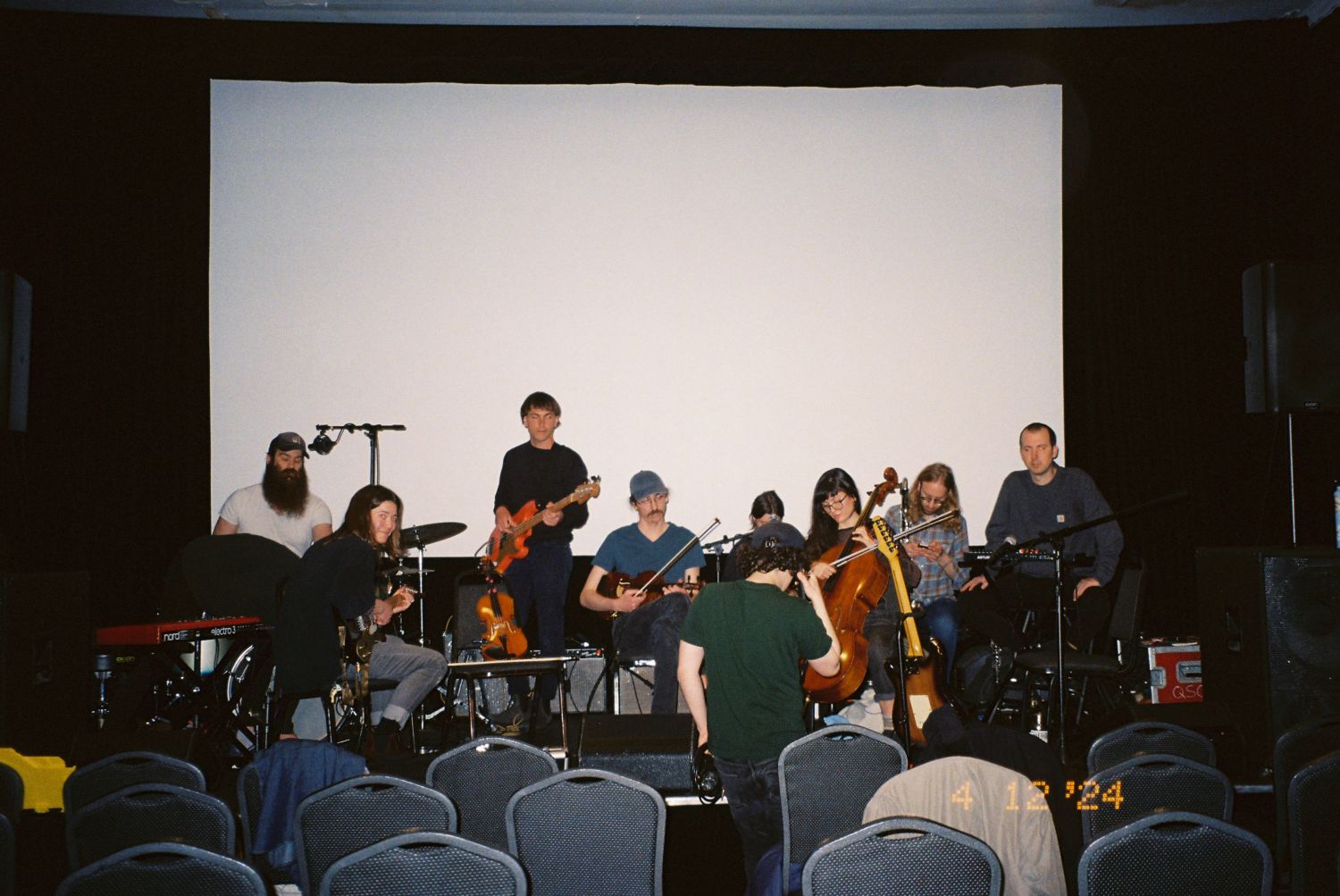
Along with contributions to beloved projects such as Friendship and 2nd Grade, Michael also leads the remarkable chamber folk ensemble, Hour. Following the critically acclaimed release of Ease the Work, Hour recently announced the arrival of Subminiature, a live tour document curating two years of DIY show performances and offering a culmination of the project’s seven years of dynamic work.
The first snippet shared from Subminiature is lead single, “At the Bar Where You Literally Saved Me from Fatal Heartbreak (Live at Philamoca, Philadelphia, PA, 4/12/24”, accompanied by a live concert video directed by Matt Ober. Watch below.
Michael put together a playlist of some of his favorite film music, a lot of which has inspired Hour in many ways. Listen below!
Hour is made up of many familiar faces from the Philly scene and beyond, with Subminiature featuring players such as Jacob Augustine, Jason Calhoun, Em Downing, Matt Fox, Peter Gill, Lucas Knapp, Evan McGonagill, Peter McLaughlin, Keith J. Nelson, Erika Nininger, Abi Reimold, Adelyn Strei
Set to be released on Valentine’s Day of this year, Hour will celebrate Subminiature with an extensive month-long tour across the U.S. You can preorder Subminiature now, including a limited edition cassette and CD run by Dear Life Records.
Written by Shea Roney | Photo by Michael Cormier-O’Leary
Earlier this year, the Philadelphia instrumental ensemble Hour released their latest album, Ease the Work, a collection that soars with dynamism and passion, striking both communal and critical acclaim across the board. Made up of ten multi-instrumentalist who perform and record live, Hour is composed and produced by leader Michael Cormier-O’Leary (Friendship, 2nd Grade, Dear Life Records). Today, the group returns with two new songs “Saturday After Payday” and “Absence is a Heady Spice”.
Photo by Michael Cormier-O’Leary
These two songs were recorded as part of the Ease the Work recording session at the Greenwood Playhouse on Peaks Island, off the coast of Portland, Maine, in which the group had to take a ferry to get to with an entire studios worth of equipment. The songs were ultimately left off of the album, yet remained a solid pairing to be released at a separate time.
Playing with a tempered progression, “Saturday After Payday” begins with a steady piano, undeterred with its direction as a string quartet and an electric bass add a firm, yet suave voicing. The track was recorded live by an eight piece iteration, and is “indebted to the work of some classic French pop arrangers, most notedly Jean-Claude Vannier.”
Like the old family heirloom pianos, “Absence is a Heady Spice” holds weight within the simplicity and unevenness, each note played is met by a release – the tension of the sticky keys relieving pressure from the years of use on the piano’s inner workings. “Being the only solo piano piece in a collection of compositions for large ensemble,” Cormier-O’Leary says, “I thought it was funny to name the piece “Absence is a Heady Spice”. Like, ‘where’d the band go?’”
“Saturday After Payday” and “Absence is a Heady Spice” are now available to stream on all platforms. Purchase the two songs here.
Hour is made up of Jason Calhoun (synth), Michael Cormier-O’Leary (guitar, percussion), Em Downing (violin), Matt Fox (viola), Elisabeth Fuchsia (violin), Peter Gill (bass), Lucas Knapp (radio effects, field recordings, piano), Evan McGonagill (cello), Peter McLaughlin (drums), Keith J. Nelson (bass clarinet, clarinet), Erika Nininger (piano, rhodes) and Abi Reimold (electric guitar).
On the other side of the property line, only marked by my neighbor’s natural shrubbery – unruly and free – is a decaying birdhouse dangling from a branch that I watch every morning from my kitchen window. Missing half of its roof from many of our repeated Midwest storms, its siding almost timid to be left on its own, the structure’s only sense of hope lies within a singular piece of twine wrapped around its perimeter put there a years ago in hopes to hold, sparingly, what is still together. But lo and behold, with every season comes a new generation of sparrows or chickadees, a race to get there first and fill it with found, soft textures of twigs and the shedding hair of our dog – home sweet home. But from where I stand, as this birdhouse persists through the changing seasons, rotting wood and weathered temptations to finally collapse – I have to wonder, do those birds live in fear, or is it just me?
Grounded in unique homemade foundations of gritty instrumentation and soured conventionals, ylayali is the project of Philly-based artist, Francis Lyons, becoming a safe haven for his artistic visions and rooted stories ever since he was in high school fifteen years ago. Whether as a producer or having played in bands such as free cake for every creature, 2nd Grade and most recently, 22° Halo, Lyons’ work over the years comfortably falls amongst indie cult favorites, rearing the notoriety from tender pop-lovers, lo-fi droolers and calculated gear heads alike. As his tender demeanor and experimental spirit spill out on his latest LP, Birdhouse in Conduit, Lyonsbrings that same appreciation and excitement of what ylayali has been for over a decade, and pulling it towards the possibility of what may come next – brilliant or unusual – both putting a beautiful and enduring edge to the recordings at hand.
Protruded by crude distortion and a grating, hypnotic march of sorts, the album begins with “Francis Funeral Home” locking into nine minutes of controlled chaos – a type of unmatched sanctity of when solitude is met with the fuckery of an electric guitar and a shit-ton of pedals. “Stay and dance until the place close / the Francis Funeral Home”, Lyons sings, guitars circulating as the idea of endings are weighed upon impact. This type of surrealism is nothing new to Lyons’ ability to tell, notably unconventional, stories of identity and self, as he himself becomes interchangeable amongst mundane objects, obtuse scenarios and lackey characters that phase in and out of his line of sight. Songs like “Shadow Play” and “Spacebar” become a pledge of irony when trying to understand his existence, or merely define its intentions. “never saw it comin’ / first lookin’ spider-wise / and the webs all disappear when the dew dries” he sings on the latter, as the delicate vocals of both Lyons and Katie Bennett (Katie Bejsiuk, Free Cake For Every Creature) force us to lean in, introducing a new level of fixation to the sounds he so easily controls.
These sonic textures and attention to detail are almost moldable in your hands, as they condense and build, meander and squirm amongst the conduction of pulpy fuzz and distortion. “Devil Dog”, at its core, is a staggering and sticky rocker, subdued to fit into Lyons’ natural speed and rough façade that feels heavier than the actual sweetness underneath. “Fuzz” plays amongst a culmination of creeks, creeps and patterned fixations, paired together with the light and whimsical string arrangements and the choked clinks of a glockenspiel that push forward; a choreographed movement amongst the differing characters that each sonic voicing represents. The brief instrumental “Security Man” is an acoustic tribulation, a harmony of configured strings that sing for repentance before being overwhelmed by the warm rage of the closing track “God’s Man”. “I saw an angel / An actual angel,” Lyons sings, a continuation of religious motifs brought up throughout the album. But in the end, you can’t help but to think of the due diligence these angels actually perform for him, as absurdity overrides the elegance of salvation – “harbinger, angel of what, solicitation’s tale” – the words holding to whatever they can as the feedback sears its final marks.
“There’s that shiny part / Worn smooth by vinyl twine / birdhouse polypropylene / one spool lasts one life” – amongst the tinkerings on the standout track, “Birdhouse”, comes one of the more tender and grounding expositions on the album as the song hums with a sound that crusts over like hardened sugar. But it is on this song where Lyons feels most grounded into his foundation, where all of those huge questions of fear, death, religion and belonging don’t matter anymore. It’s in these sonic trances that make Birdhouse in Conduit feel so enduring, where meaning fluctuates with a meandering rhythm, and yet, Lyons can still take a pause and look at what’s right in front of him. “But the birdhouse makes me smile with the loop knotted on the side,” he sings, cherishing something so simple; it means the world to both him and those little birds.
Birdhouse in Conduit is now available to stream on all platforms. You can purchase the album on vinyl here, which includes a 22 page booklet, various homemade inserts and found photos. Lyons will soon be playing a few shows with 22° Halo on the east coast. Find dates here.
Every Wednesday, the ugly hug shares a playlist personally curated by an artist/band that we have been enjoying. This week, we have a collection of songs put together by Philly-based artist Peter Gill of 2nd Grade.
Through the vast array of sounds and characters that have come out of the intimate Philly scene, 2nd grade has always been one to stand out with cult-like enjoyment. With several new singles of belt-busting hooks and chivalrous punk attitudes in their pockets, 2nd Grade is gearing up for their upcoming LP, Scheduled Explosions, as Gill and co. return as the indie pop super force they have proven to be time and time again.
Along with his playlist, Gill shared a blurb about its theme;
“My first concept for this playlist was “songs I would play in the getaway car during a bank robbery”, but the nervous energy of that playlist was a bit much. It started with Count Basie and quickly moved to Chavez and U.S. Maple. I decided to change tack and settled on “songs that constantly get stuck in my head”, which is dangerous in its own way. I start humming these songs, and suddenly I can’t remember the last five minutes and I’m taking wrong turns on the way to work. These are largely off-balance melodies full of interesting intervals and waterfalls of notes, and they all seem to express a fun fascination with the craft of pop melody. Weapons-grade stuff really, proceed with caution…”
Scheduled Explosions is set to be released October 25th via Double Double Whammy and you can preorder it here.
Today, the Philly-based project Thank You Thank You has shared a new music video for their latest single, “Watching the Cyclones” which was released earlier this month via Glamour Gowns. As an ever expanding project brought out by the artistic stamina of Tyler Bussey, Thank You Thank You is an imprint of the people who pass through – an articulation of the souls that make a moment long lasting.
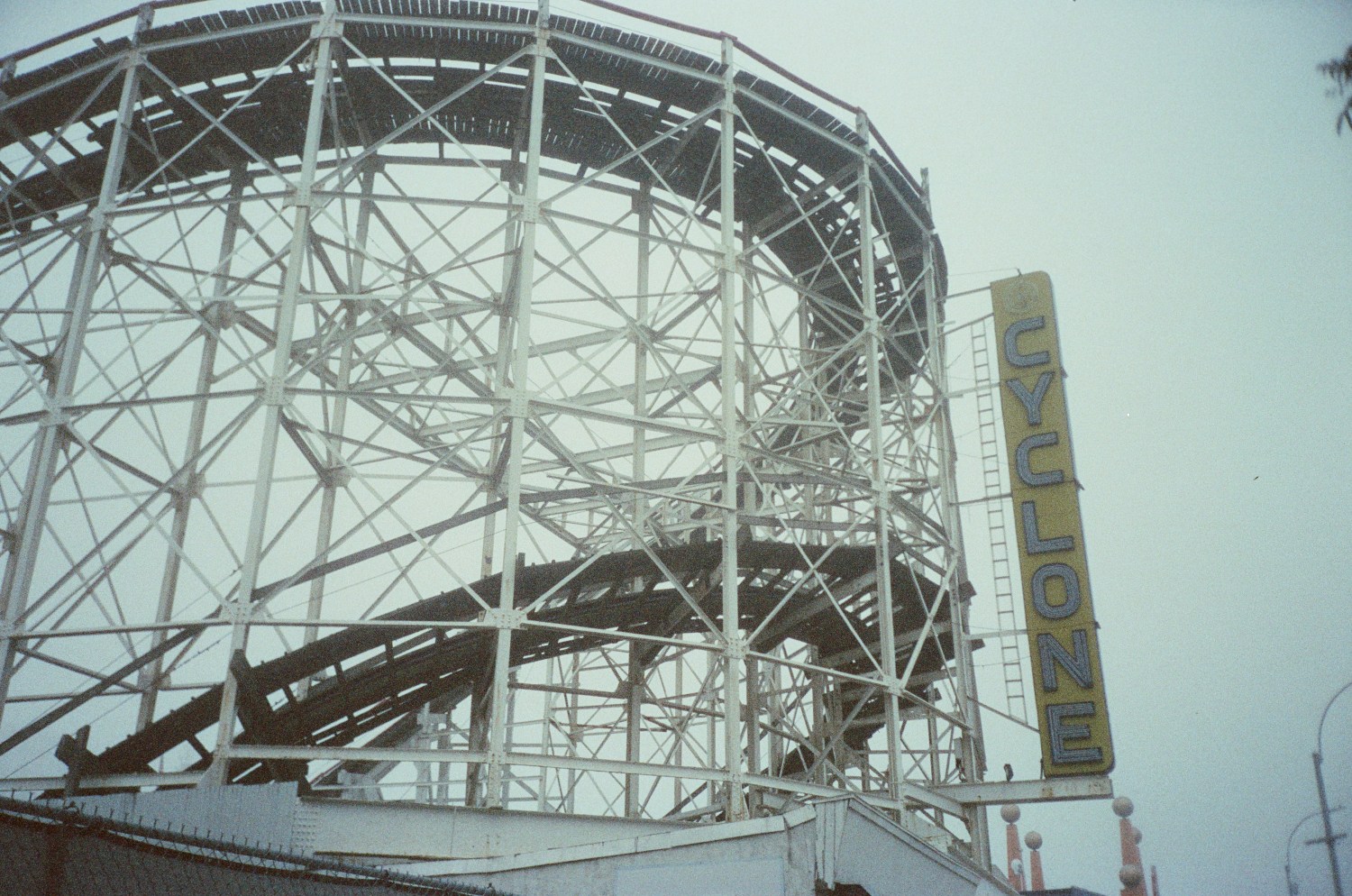
“Watching The Cyclones / Not long ago / The diamond gleamed in the sun / The great illusion that’s on my mind / Time standing still on the field for us / It’s going, it’s going, it’s gone.” Oftentimes, the heavy air of summer can be indistinguishable from underlying heartache and impressionable worries, but on the contrary, can be just as easily defined by the vitamin D and the chance to engage with its picturesque revelries. “Watching the Cyclones” thrives in that very tenderness of life, where momentary feelings blend together to form a brand new experience. It’s a patient song, allowing time and energy for the folky groove to exude its charm and make for an enjoyable experience – a chance to look around and see how good things can be.
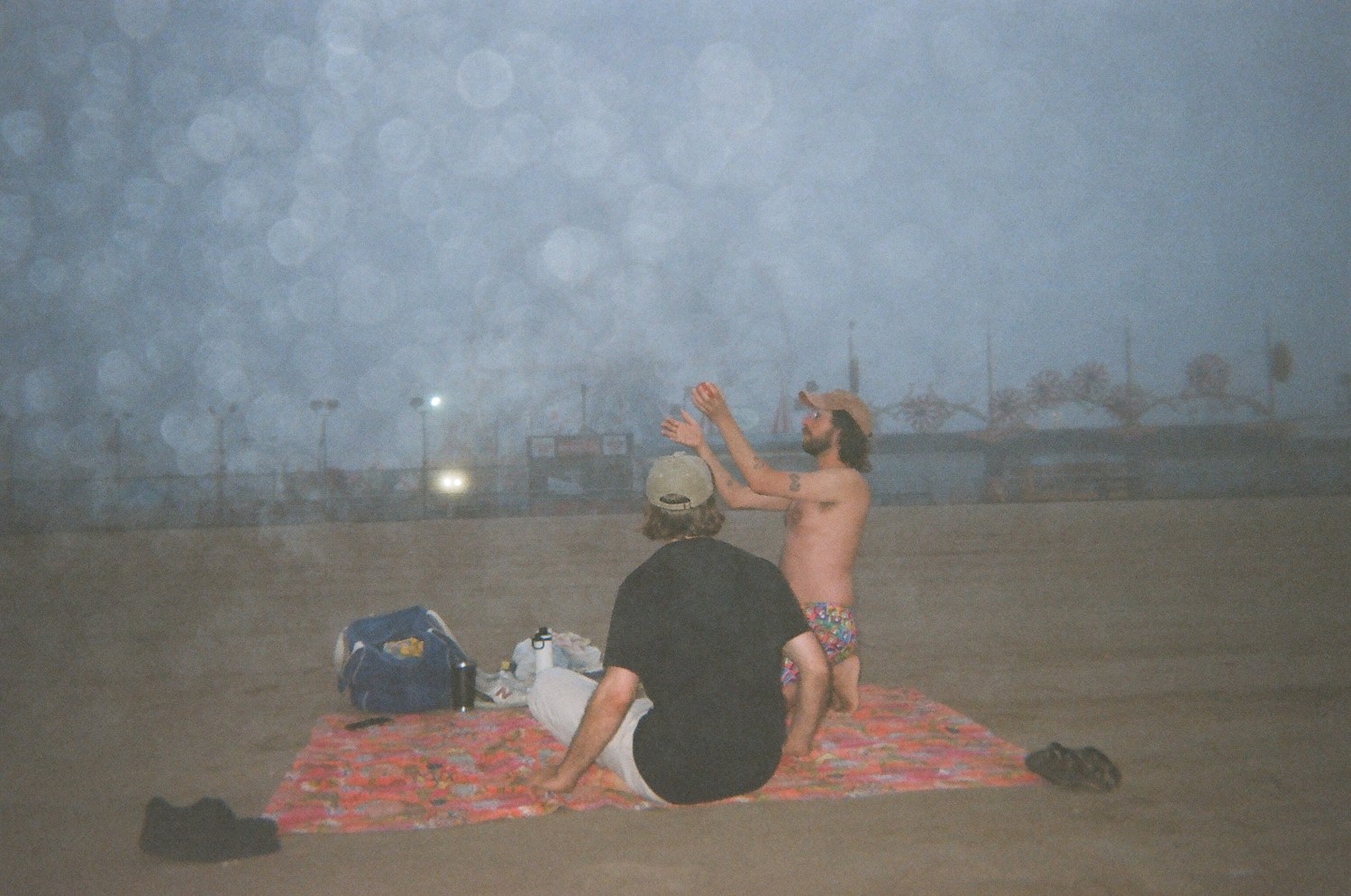
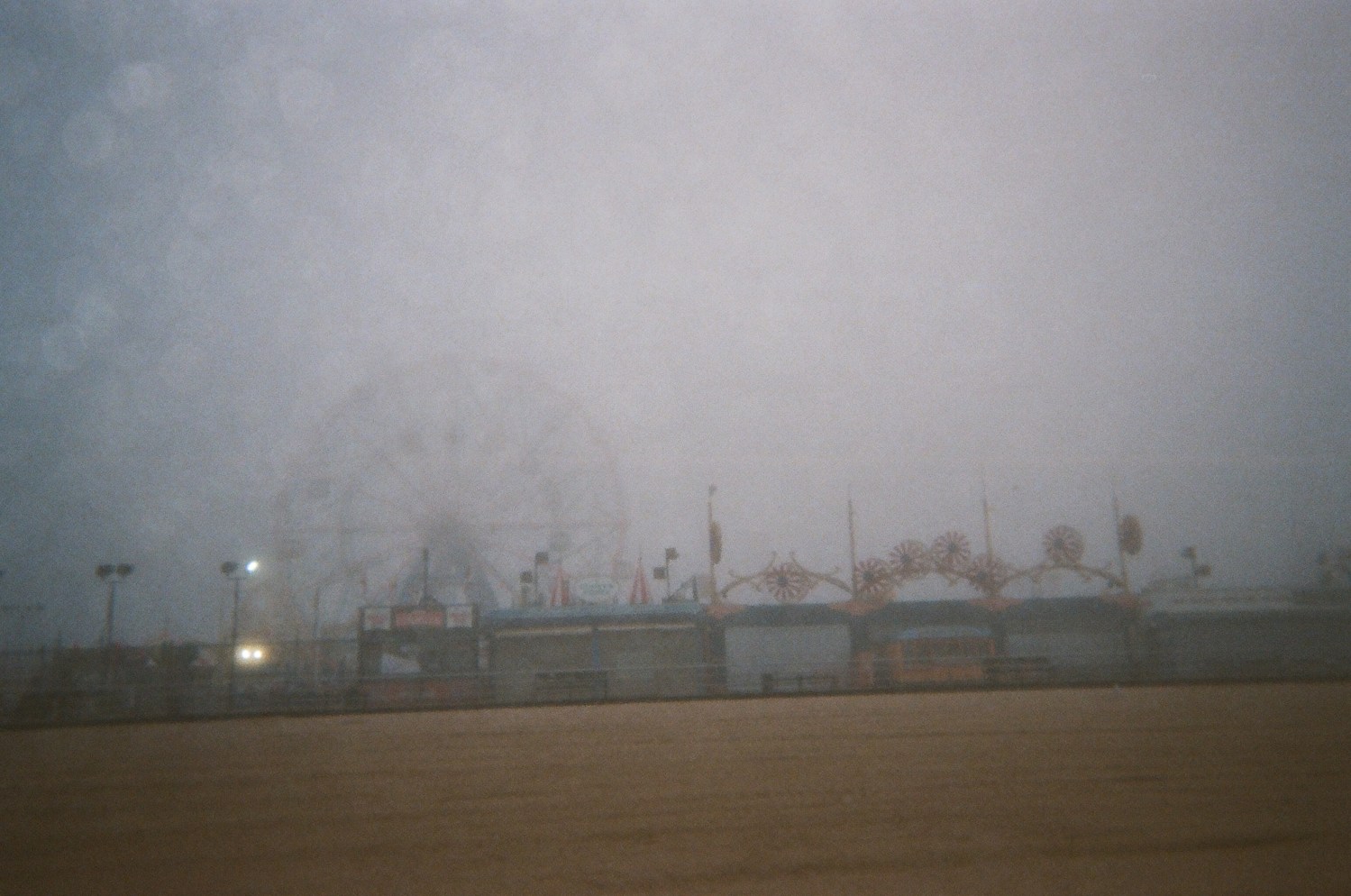
Shot by Ty, Jesse Gagne and Sam Skinner along with animations by Julia Sutton, the music video for “Watching the Cyclones” becomes a misty morning excursion, a preservation of friendship, and an exploratory of goofing around in empty public places.
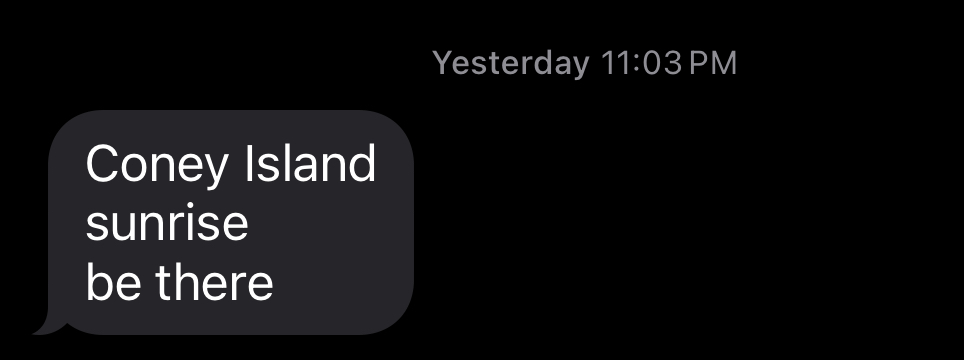
About the video, Ty shares, “In September 2022 I went to Coney Island with Jess and Sam, and on a whim on Monday, July 15th, I reached out to both of them to see if they’d like to go there with me at sunrise to make a music video. With nothing but iPhones and apples, this is what we made. We didn’t check the weather forecast and had no idea it was going to be so foggy. The video is a fun testament to making things with your friends and not overthinking it.”
You can watch the video below and stream “Watching the Cyclones” on all platforms now.
look below for some behind the scenes photos taken by Jesse Gagne and Sam Skinner that morning at Coney Island.







 the ugly hug