Deja Vu can be quite the restless feeling. When moments of wracking the brain for memories becomes a dialogue; longing for answers and building mistrust in any bit of reason as to why this feeling is so intense. But what herbal tea does on this debut album Hear as the Mirror Echoes is build upon this space; one that feels achingly familiar, but you can’t seem to pin down why. herbal tea is the project of British artist Helena Walker, who has spent the last several years crafting songs in solitude and playing with artists such as Gia Margaret and Advance Base on their UK tours. Now she shares her long-awaited debut album via Orindal Records and Gold Day. Recorded entirely DIY with her long-time collaborator and childhood friend Henry C. Sharpe, the two brought these songs to life out of various rented living rooms and bedrooms, filling each corner of the space with their intuitive folk-laden dream pop.
Like watching a line of geese cross the road, the stories that Walker entrusts in us take time, but there is comfort in the practice. One by one, each song disrupts the bustle of the outside world and marks her path through these intimate landscapes. The opening track “seventeen” toys with time as a coping tool, as Walker sings, “I’m inventing life again at seventeen / Dancing in a drawing room / like in a dream”, opening up to the struggles of trauma through shifting layers of cinematic synths and cutting distortion. This sentiment is carried through on tracks like “Grounded” and “Kitchen Floor (4A.M.)” as they become sobering moments of stillness, balancing how to effectively ground yourself while also longing for someone else to rely on in times when you can’t rely on yourself. “I don’t know what I’m worth, but I want someone like an old friend,” Walker sings on the latter track, allowing the melodies to wash over with such gentle motion.
Although these songs feel heavy, what Walker creates is a place to lean into this undeniable familiarity with both validity and inquiry; a piece of work that is just as much about discovery as it is about understanding why these feelings are here in the first place. “Submarine” creates depth amongst the many voicings that Walker and Sharpe explore, threatening to strain each choice as she becomes buried by intense longing. The standout track “Garden” revels in the delicate harmonies that seem to flow whichever way the breeze blows. Soon Walker’s singular voice becomes the benchmark for retainment and release. Growing out from planted guitars and light piano chords, the dream stops in its tracks as Walker sings, “I was born in a garden, when I liked being me, before the burden of my body.” The song speaks to the difference between growing wild and getting clipped from the stem to fit into a handpicked vase, but herbal tea refuses to be restricted as the instrumentation blooms in full color and variety.
Hear as the Mirror Echoes becomes a space in which themes of dissociation, longing and emotional anxiety are written about with such care. Where stories are rooted by intuitive soundscapes and ethereal vocal performances that each become empathetic to the other’s expressional deliverance. It’s easy to get lost in the malaise of self-doubt, but herbal tea gives voice to thought and comfort to dissonance. It’s a collection that moves at its own pace, and to its credit, the album’s greatest strengths come from those little individual blossoms of patient voicings and unconventional instrumentals that make this record feel so deeply human.
You can listen to Hear as the Mirror Echoes anywhere you find your music as well as order cassette and vinyl put together by Orindal Records and Gold Day.
There is something innately natural about a Lisa/Liza song, the project of Portland, Maine based artist, Liza Victoria, whose self-made path of intimate folk music has been creating a presence where much often goes unnoticed in this fast paced world. In 2023, Victoria released Breaking and Mending, an enduring collection of songs that grew from grief and found a home amongst an extensive and true journey of healing. But last week, Lisa/Liza shared Ocean Path, an EP consisting of some of her earliest recordings she made in her teens and early twenties, now put directly on tape via Chicago’s Orindal Records. Although these songs were pocketed for years, serving as a measure of time for Victoria, in its own way, Ocean Path was always meant to be shared with the world, it just needed to feel like the right moment.
The basis of Victoria’s intuitive storytelling lies within her guitar playing, where thought and feeling almost become a deliberation of a moment – transparent in the motion of feelings and capturing the environment entirely in which it was recorded in. Often tracked in open spaces, such as her kitchen or backyard, these songs fit just right in those places we deem as safe for our own being. “Summer Dust”, the opening track, plays with that same meaning of intimate stillness, the acute pieces of collective thoughts, mental dust, that begin to build when left alone for some time. “Love for two-becoming / Love for yourself / finally running through you”, Victoria sings with such acching care, sometimes almost to a whisper, as if saying it loud enough for only her to hear it. “Gamble”, one of Victoria’s earliest recordings, is a story of nature and nurture, following our inherent need for connection, and the responsibility we feel to offer it to others. “Gamble, my Father’s dog, was born in a mountain fog / Followed me through the dark, Searching for the dawn”, she sings through a striking progression of stunning vocals and vivid imagery.
There are also many ghosts that we haven’t been introduced to yet that align on “Shark Teeth” and “Then You Shall See”, bidding for their piece to be heard before going off to complete their other ghostly tasks. The word ‘haunting’ holds an authentic meaning when writing about Victoria’s work, where it often feels to be tapping into the presence of a soul which lives amongst these delicate and intrinsic soundscapes. But whatever that soul may be, whatever we feel it represents, it’s not there to cause alarm on this earthly plane, but rather to make that connection between what we see and what we feel – being that direct line between a deep longing and a deep understanding of our own place in this world.
Ocean Path is a remarkable sense of self, tracking a linear path of growth that can often be hard to visualize when you are the one laying the groundwork. These songs aren’t immediate, but it’s in the trust that Victoria has always held true to her artistry that is representative of a journey you take on your own time. It’s the dirty fingernails, the layer of dust, and a broom in the corner that becomes such a personalization of storytelling from Lisa/Liza, yet has always been beautifully universal to those who are welcomed in. As the project is now getting the chance to be shared with others, it’s best said in Victoria’s own words, “this cassette leads down paths of memory, reminding me we are always becoming and growing into who we are and what will be.”
You can listen to Ocean Path out everywhere now as well as order a limited edition cassette tape via Orindal Records.
Philly-based folk guitarist Kristin Daelyn’s songwriting feels just as effortless as it does emotionally intoxicating on Beyond the Break, her Orindal Records debut out today. A short yet fully settled curation of songs rifling through the in-betweens of longing and recovery, Beyond the Break flows so naturally out from Daelyn’s presence, unhindered by the cruxes of grief in which they stem from and the self-realization and love for which they are headed.
Recorded live at home by mostly Daelyn herself, Beyond the Break defines its spirit very holistically, built out from her intuitive guitar playing and steady vocal performances, each empathetic to the other’s expressional deliverance and playing towards her ultimate strengths as a songwriter. Although sparse in complexion, this graceful deliverance wields a gravitational draw, further brought out by additional tracking from Dan Knishkowy (Adeline Hotel), Danny Black (Good Old War) and Patrick Riley who offer stirring arrangements to these already moving compositions. Songs like the album’s opener “Patience Comes to the Bones” or “White Lilies” flow amongst layered harmonies that soothe the setting, trickling with loose and enduring melodies that bring an aching familiarity, like the feeling we get hearing the voice of a loved one after a hard day.
Substantively, this musical cohesion only further exposes the fervent tenderness of these songs to the still air, restoring our hope in the simple saying of “time heals all wounds”. “And do I break my heart to open it up,” she sings with a particular infliction on “An Opening”, annunciating the balance between what we want and what we need. And as the album goes, her use of language, pained yet unrushed and honest, lives within these little moments that blossom with unguarded trust. “Like a moon that hides its darker side behind a crescent smile,” illustrates those voices we often push aside on “Longing”, remaining precarious and heavy in the back of our mind. “It came to me then/How we will live/And live again,” she laments on the album’s closer “It Came to Me Then”, building courage from the layers of musical clarity rising up from below, before the movement settles, “With river in my palms/I drink and know what it’s like to be loved” – what a wonderful feeling.
You can listen to Beyond the Break out everywhere today as well as order a vinyl or CD copy from Orindal Records.
Every Wednesday, the ugly hug shares a playlist personally curated by an artist/band that we have been enjoying. This week, we have a collection of songs put together by Chicago-based songwriter, composer and multi-instrumentalist, Macie Stewart.
With a career that excels in amble collaboration and exposure, Macie Stewart creates lush compositions that flow with intense trust of the open space it has, where moments conflict and cherish, embrace or strain, all working together towards a stunning release. As a studio musician and composer who can be found on songs from SZA, Chance the Rapper, claire rousay, Kara Jackson, Mannequin Pussy and many more, Stewart is also the other half of the widely acclaimed duo, Finom, as she and co-collaborator Sima Cunningham just released their latest album, Not God, earlier this year. But as a solo artist, Stewart opens up with curiosity and confrontation, taking personal confessionals through artistic reveries and dynamic instrumentation that lures out the beauty in imperfection. Stewart’s solo debut LP, Mouth Full of Glass was released back in 2021 via Orindal Records, having since released a handful of singles and announced more music on the way soon.
In her playlist, Stewart offers up a taste of Chicago, stretching far and wide across its incredibly diverse and inspirational music scene.
Featured Photo by Shannon Marks| Written by Shea Roney
Every Wednesday, the ugly hug shares a playlist personally curated by an artist/band that we have been enjoying. This week, we have a collection of songs put together by Toronto, Ontario based artist Kenny Boothby of Little Kid.
You don’t have to sift far in our small music world before coming across Little Kid’s latest record A Million Easy Payments. Released earlier this year – their first via Orindal Records – Payments resonate with such ease, mirroring that of which passes us by everyday and reflecting on the moments often lost and forgotten. As an interchangeable and collaborative unit, Little Kid builds out from their textured and uncompromising folk stylings, beautifully capturing that triumphant feeling of making it through another rough day while still looking forward to the next. To accompany his playlist, Kenny shared a blurb about how these songs came together;
For the past three summers, I’ve been able to spend a few days completely alone on a solo camping trip. Nothing too impressive – I set up a tent and make a fire in a provincial park, with a cooler full of beer and hot dogs in my car – but the solid dose of alone time is so healing. I’ve found camping has a therapeutic aspect for me, in the sense that my only goal each day is to think about what I want or need to do in any given moment, and then do it for myself (this is helpful because as a teacher I spend most of my days monitoring and responding to other people’s needs and wants).
I also listen to a lot of music on these trips. I thought it’d be fun to make a playlist of the stuff I have come back to the most over these past few summers. Neil Young and Florist each show up twice on the playlist because those are the two artists I tend to spend the most time with on these trips. Nothing beats Neil and a beer, and those last couple Florist albums have an unparalleled quiet to them that fits so well when you’re surrounded by forest. Hopefully these songs can help someone else find a little peace and calm during these last few weeks of summer.
“Eggshell” is not a slow death in a warm bed. It is an abrupt emergency that begets a siren’s light and the gilded fragility of living after loss. On A Million Easy Payments, Little Kid gives us space and time to consider ourselves and how to sculpt with the energy around us. “Eggshell” is track five, nestled between images of a crumbling statue and an unlit cigarette.
Two acoustic guitars drink from a bright and steady country spring as Kenny Boothby’s vocals tremble with confidence. He duets with himself, often doubling the melody in a lower octave. Boothby’s vibrato, quivering and tearless, already knows the story: we are fragile, but breath comes if you let it.
In “Eggshell,” opaque reflections reveal a life-ending seizure and a widow’s later decision to remarry, change scenery, and bear the imprint of the past. Boothby sings from the perspective of the deceased, who witnesses it all with a low voice and a graceful sympathy:
Buried me, remarried you were barely getting by Just you two ‘n’ a justice of the peace Split out to the city you were really getting tired Of finding what reminded you of me
A darkened carpet and a smiling silence, still referring to a loved one as “babe” though the relationship resembles something else now. A sentimental reference to a cherry cola. If it isn’t yearning when two harmonizing voices come together for a holy swell, it’s love. Some memories are just there to hold us in our fractured states. Not with forgiveness. Just recognition.
Every Wednesday, the ugly hug shares a playlist personally curated by an artist/band that we have been enjoying. This week, we have a collection of songs put together by Chicago-based songwriter (Advance Base, Casiotone for the Painfully Alone) and founder of Orindal Records, Owen Ashworth.
Over the years, Ashworth has helped define various niche communities that have found the vivid intimacies of his work to be crucially important to phases of their lives. The incongruent desires from lonely post grads throwing on an old Casiotone record, a group of parents suffering from where-has-the-time-gone-ism to the foresight of Advance Base, or the deep and cultured love for the quiet weirdos curated by Orindal that have shaped indie scenes all over the country – Ashworth has always held an edge to those shared experiences that bring these groups together.
When asked to put together a collection of songs for the ugly hug, Ashworth shares;
I don’t make many playlists. I am mostly an albums person. I am also a Tidal person, which means that I don’t have many people I can conveniently share playlists with anyway. A little while ago, when I was on a tour with my buddy Jake, Jake suggested that we make a playlist of our favorite songs for venues to play as the house music at our shows. Most of the songs on this playlist I originally selected for that Jake & Owen tour playlist. I remember how good it felt to hear this music that I love come on in a room full of people. It made the shows feel like parties that Jake & I were throwing night after night. It was a joy to share these songs then & it’s a joy to share them with you now.
You can listen to Owen Ashworth’s playlist on Tidal
Featured Photo by Jeff Marini | Written by Shea Roney
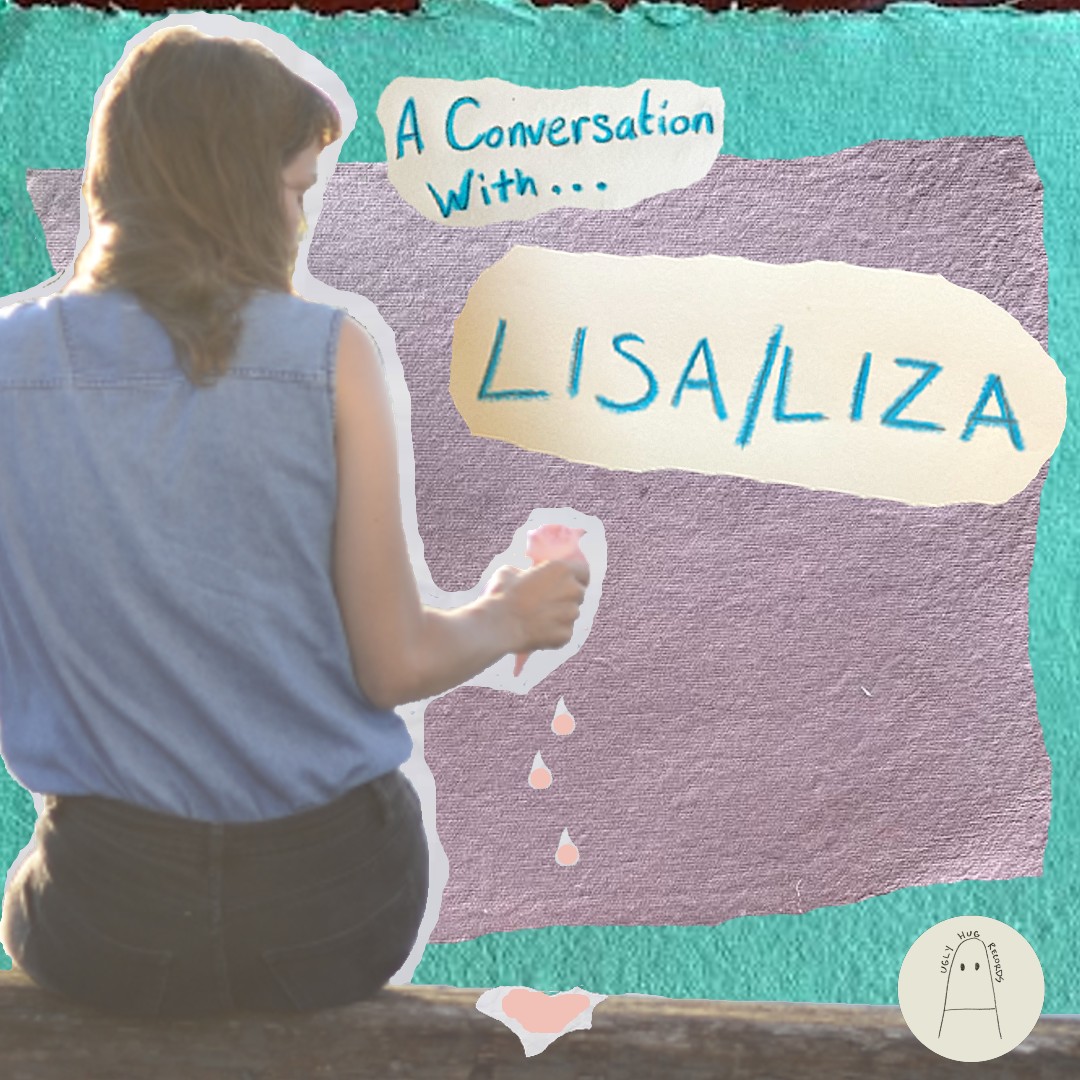
Through a career spanning almost a decade, Portland, Maine’s tender singer-songwriter, Liza Victoria, known as her project Lisa/Liza, illuminates her personal ghosts into a collection of albums filled with soft-spoken and honest self-regard. What feels at home on woodland walks or moments of solitude on a rainy day, Victoria’s work hangs from the branches of the patient and matured tree that her breathy folk songs are grown from. Utilizing her soft and afflicted voice, campfire guitar strumming and the combination of home and studio recordings, Victoria’s sound is not lost upon the feeling of loneliness and grief but is able to push a sense of warmth into the heart of it. People may derive different meanings to Lisa/Liza’s collection of work, and to an extent, this is the beauty that humanizes Victoria’s songwriting. There are no written instructions on how to deal with suffering, but Lisa/Liza’s songs are here in the meantime.
Recently, Liza Victoria took the time to answer a few of my questions. When I started posting for The Ugly Hug, Liza was one of my first supporters. As a college kid just trying to share his writing, this meant so much to me. It was an honor to work with her to put this piece out.
I know you used to live in Portland, Maine, but you recently moved out to Wayne, Maine. What has this change of scenery been like? What is the Maine music community like?
The Maine music community is very healthy and recently I’ve been reflecting on how much I feel held by it. I think there is a true communal nature to it. There are a lot of scenes within, that really just aim to support art and community, and it’s beautiful. At a lot of points I have felt really glad to have this space to make music and be part of this scene. There are a lot more places to play and communities opening up to DIY shows and scenes in rural parts of Maine now and I love that. Those are some of my favorite shows, out on farms or in unexpected spaces (ahem please invite me to your farm show). There is stuff going on right near me now, even though I’m far from Portland, I’m excited about that. I also still feel like Portland is my music-hometown, because it’s remained such a supportive and welcoming music community for me.
Your new album, Breaking and Mending is so full of transparency about your recovery from living with chronic illness and navigating mental health. When writing such beautiful songs about recovery, how do you approach the trauma? How do you approach the delicacy of your lyrics? Do the songs feel different now that they are released, as to say, when you were writing them?
Thanks for saying this, that is so kind! My approach is mostly that I don’t want to hide what I’m facing in my music and art, whatever it may be. There are a lot of spaces in society where it may not feel safe to delve into recovery or navigating mental health, but it feels like my music is my own, and I want it to be this little safe sanctuary for that, wherever I take it. That being said, it’s only reflective of those struggles because that’s what my life has entailed and it’s a very real lived experience that I was transmitting. I’m looking forward to a time when my music can reflect a softer place of joy and healing. But, I think life just holds what it holds, and art and music is a wonderful safe space to not shy away from the heavy things.
I approach lyrics sort of in mood, they kind of ebb and flow from the center of a mood or a feeling. The songs definitely change over time. They feel different after being released, and even different after years go by. It’s fun to see how their meaning shifts for me.
Your songs have such an interesting and beautiful structure to them. They are played in winding paths, that as a listener, we are not rushed to come to conclusions, but are given room to sit in your music and feel what we need to feel. How do you go about song structure when writing?
The song structure to me kind of comes naturally, but it’s also definitely something of my own making. I kind of think of it like a drawing or a painting, how sometimes when you keep working on a piece of art it can go too far. I tend to aim towards trying to let it resolve with some minimalism, or natural place. With my songs feeling sort of stream of consciousness, that is usually when the feeling of the song has come to some resolution.
Your lyrics are just as much about the present as they are about the past, and sometimes you are able to sit in this difference that makes your songs feel timeless. What tense do you feel is the most impactful for you to write in/about?
I love this question. I can’t say that either the past or the present is a more impactful place to write from. I know it’s helped me at times to reach back. I think at some point I need to write from the past or something. I think in some ways I’m trying to pull myself out of that. In this record I may be reflecting on that wish. I think there is always a use for nostalgia or memory, for the listener, and that’s impactful on its own. I think memory can draw from a happy place or a place of a lot of energy and excitement too, so it isn’t something that is always sad or holding grief. But in a lot of my songs it has been a way for me to process both those things. I’d love to sing more about the present. I think there will always be some of both.
You’ve released three albums off of Chicago Label Orindal Records, run by Owen Ashworth. As an artist, what do you find most appealing about this label?
Four actually! And several tapes haha. Owen is a great friend, so that is up there, I’m really grateful towards him. I am super in awe of his musicianship and the work he has done with this label. I was a fan before all this happened. I listened to Casiotone for the Painfully Alone first in my college dorm. It was on a mix cd from a friend and I used to play it on repeat so much that I created an enemy (not joking, haha). It’s been wonderful to be exposed to so much awesome and great music. The musicians on the label are all truly artists and interesting in a slightly outsider way that is so valuable and important. It’s hard to say what’s most appealing. I love all the music on it, I love that it’s small and stays focused on the artists. I love the friendships I have made with the other musicians on the label. I think the Midwest is really interesting and beautiful musically too, and I love having that connection to another music scene being all the way out here. I’m really grateful for the experience and support it has given me to be a part of it. And that’s an understatement. It’s just plainly had a great and beautiful impact on my life.
You are a big proponent for mental health care, accessible resources and being open to talking about your own struggles with it. As a community (music community), how do you think we should be there for others and keep the discussion around mental health open and destigmatized?
I totally think as a music community it should be a centered conversation. In my experience, musicians are very much at the forefront of the conversation, but you don’t hear a lot about it. I don’t know why that is. I think that has to do with stigma and with lack of resources, and with lack of discussion and information.
There is a lot that musicians are expected to push through and achieve with very little material gains, little profit for their careers, and a lot of expectation just to be content with very little, but to drive yourself to the edge of your ability. I don’t think it’s an exaggeration to say that it’s a recipe for trouble, for trauma, for exertion, for giving up healthy and important boundaries, and even giving up your health. I think it’s vital we are there as a community for each-other. But also, to be wary that it doesn’t become yet another expectation for musicians to hold on their shoulders, because it has a lot to do with capitalism, and with things just not being in place for so many.
What we can do, I believe, is to continue to work towards welcoming and supporting communities and spaces. To continue to believe in its impact and meaning. To include those who are stigmatized and marginalized most, is also extremely vital to this conversation. Having open conversations in your community or forums about mental health might be a way to start. Making sure people in your music community have basic resources for crisis and safety. It sounds like a lot of work, but at the same time, it can take, literally, very little. Sometimes it’s just checking in.
Again, I don’t think this should be only on the shoulders of musicians. We need grants and funds and support to help to push and keep a lot of these communities going. There are so many ways to improve things for each other. It can really just be very simple as going to shows and buying merch. I think Owen Ashworth once said something to me along the lines of “buying music is a political act”. And I think about that a lot.
A lot of your imagery in your lyrics resemble things larger than humans, i.e, the world around us in nature. Would you say you’re a spiritual person?
I am definitely a spiritual person. I don’t have much to say about it, or a way to define it. I just find spirituality really interesting and it’s a key part of who I am.
I know that you use nature a lot as a way to escape. What are the ideal conditions for the perfect hike?
I think just somewhere that inspires. It doesn’t have to be a long hike or a difficult or harrowing one. Just anything that kind of brings that spark that’s like “aha, the world is much bigger than I realized, and it’s beautiful”. That would be perfect. Maybe in the Fall or Spring too.



 the ugly hug