The tender voicings of New York-based project Adeline Hotel return today with their fourth and final single “Isn’t That Enough” before the release of their new album, Whodunnit, out this Friday. Fronted by Dan Knishkowy, Whodunnit so skillfully captures a snapshot of an individual’s journey to redefine joy in their life as the aftermath of an ended marriage begins to fade in time. “Isn’t That Enough” serves as the companion piece to the album’s title track as an emotionally freeing piece that circulates through grief, beauty, anger and understanding.
“In a sympathetic world, I saw right through you and you saw through me,” becomes representative of the complex hindsight that Knishkowy paints throughout “Isn’t That Enough”, yet this lyrical curiosity, hanging on to each breath with a protruding edge, grasps the conversation as it catches up to where he is now. In a tender pacing, sparse and warm with an acoustic drone, the band begins to find a progression, growing in the slight sonic voicings that tinker and play underneath the heavy stanzas with heightened synths and harmonies that revel in the track’s depth as it moves forward. “Isn’t That Enough” becomes a story of a relationship left baron – where the ideas of people, places and things turn against each other in depravity and a chance to gain ground, where the question feels less inclined to ask ‘isn’t that enough’?, but rather ‘will it ever be?’
You can listen to “Isn’t That Enough” below.
Whodunnit will be released this Friday, September 27 via Ruination Records and you can preorder the vinyl here. Adeline Hotel will be playing a release show at Union Pool in Brooklyn, New York on Friday, September 27 with Sima Cunningham and Katie Von Schleicher. Get tickets here.
Written by Shea Roney | Featured Photo by Amghy Chacon
Based in Brooklyn, New York, Youth Large is the solo project of Em Margey, who has returned today with a new single, “Warn Me, Hold Me”. Previously known as Emma Blue Jeans, Margey has become a staple in the intimate BK scene, both through their musical projects as well as coordinating and curating a monthly queer residency at venues such as Purgatory, Nublu, Trans Pecos, Rockwood Music Hall and more. Upon this return, Youth Large plays with articulated patience as they strip back their sound into a methodical burn on “Warn Me, Hold Me”.
There is an immediacy to the tension that “Warn Me, Hold Me” contrives, as it brings notice to the conflicting emotions within a relationship. The heavy thuds of a drum are deepened by the sparseness of instrumentation, as Margey’s instincts look every which way for a deliberate and cathartic release, singing “And every week / It creeps around the corner / we’re just saying things / you warn me, hold me.” The track’s emotions hit a peak as a harsh and swirling guitar rips through the space, as Margey repeats the very utterance, “warn me, hold me” – a clash between comfort and self-preservation as the song slowly burns out.
“Warn Me, Hold Me” is accompanied by a music video directed and edited by Margey. As a fun exposure to the rather melancholy track, the video plays with humor towards New York’s macho skate scene, even including a mustached stunt double filling in when needed.
“Warn Me, Hold Me” is Youth Large’s first release with New York-based tape label Toadstool Records and the track can be streamed everywhere now. Earlier this year, Toadstool Records also released a bandcamp compilation where all proceeds will be donated to The Freedom Theatre in the West Bank, Palestine, which you can purchase and listen to now.
With a certain tenacity, untethered to any form of expectations or rules, New York-based band Plastic moves along through the sparks and dust of their debut full length album, Crabwalk. Released last week, Crabwalk is a lumbering 76 minutes of intense dynamics and alt-rock passion; the lows are intoxicating with a ledger to minimalist exceptionalism and the highs fight through melodic wear and tear to find addictive resolve that, on the whole, begins to feel conceptually engaging and strategically pure the more you sit in it.
Beginning as a solo project by guitarist and songwriter, George Schatzlein (guitars/vocals/electronics), Plastic has been slowly molding into what it is now, with new members Wylie De Groff (bass), Nigel Meyer (guitars), Sam Kurzydlo (drums/electronics) and most recently, Mariah Houston (vocals/guitar) redefining the band with a precise and expansive mindset of five distinct voices.
the ugly hug recently sat down with all five members of Plastic on a Sunday morning, and what was planned as an interview felt like a first hand glimpse at a band whose functionality and collaborative spirit pairs with an intense trust and exciting friendship, as we discussed the record and what they have in mind going forward.
This interview has been edited for length and clarity.
Shea Roney: Last week you guys released Crabwalk into the world. How has the album roll out been?
Sam Kurzydlo: It’s been interesting, I think particularly in handling a lot of the in house stuff. We’ve been very lucky to have view no country from Texas working with us on physicals, but it’s been an interesting process. Sort of figuring out what works for us and troubleshooting as we go.
George Schatzlein: You kind of just run into the problems as you go and you have to figure it out from there. Trial by fire; you can really only learn by doing.
Nigel Meyer: Yeah, even yesterday, I was going to start dubbing tapes to have some physicals at the release show, and I realized that the tapes I have are too short for the album. So, rookie mistakes on some ends.
GS: But some of it’s been pretty seamless, kind of long winded frankly, at least. I’ll speak for myself when I say I am excited for it to be out so we can just be relieved. We’re excited for it to live in the world and we’re really proud of it, but most importantly, we feel like it’s a statement, not only because it’s a long piece, but it’s just an accumulation of work over a couple of years and what this band has become. This record really encapsulates the formation of ‘what is a band’ versus just someone writing songs and directing people what to do.
SR: So Plastic has one EP out as of now called Heredity. But as you have moved forward since, how did this group come together? Have any of you collaborated in the past with other projects?
Wylie De Groff: Well, this started as George’s solo project, so that EP he recorded all himself. But when I moved to New York three years ago, I just hit up George to hang out and he was like, ‘hey man, I’m putting together a band and I need a bass player. Do you want to come rehearse with us?’ That was my entry into the band.
SK: We all connected sort of serendipitously in different ways. George and Wiley knew each other back in high school. George and I had played a show together back in 2018 while he was running through Chicago. I think this lineup sort of coalesced across a year or so, intersecting with the development of this album. But this is the configuration that I think this group was always meant to be in, so it’s been really fulfilling to see that come together.
GS: It was like a nucleus of these webs of relationships from meeting at shows or playing the same bill that kind of just naturally collected throughout time. Classic music world.
Mariah Houston: We all went to music together [laughs].
SR: In this transition, going from a project that was very singular to a full collection of talents, is Plastic a fairly collaborative writing team now?
GS: It’s been slowly inclining to being that.
SK: I feel like even across the tracks written for this album that has sort of changed and I feel like the album is a document of that process in a way. It is really interesting because some of the more recently composed songs on this album are sort of signposts of things to come.
WD: The really long, gnarly song, “Touchdown”, which was a totally different song beforehand, was something that we gigged out for a bit and fully tracked in the studio. And then, when George was recording vocals, he just didn’t feel like it fit with the rest of the album, and we all kind of agreed and decided to maybe chop it. But instead, we saw that we had the stems of this song, and wanted to see what we could do with it and we turned it into something that started mostly in George’s head and ended up being more of an expression of what the band is now as a fuller unit working together.
SK: It went from being a song that never quite connected with me to being my favorite thing on the album.
GS: When you’re starting a project, you want to be as articulate and concise as you can be so that you’re not just banking on people to make up their own parts. But when you know you play with musicians organically, and learn to trust them, they start to write parts that suit their playing more. But I think in the context of this being a live rock band, it’s a lot easier to have more liberties with parts and it’s just progressed to be that way in the studio which has become my dream for this band’s future. We all trust each other’s taste and opinions, so now it can naturally be collaborative, because we all equally care about it. I feel like we’ve all been in bands where maybe effort isn’t always put in, but now it feels like we all really do care about this project and everybody wants to put in the best they can.
SR: Yeah, I mean that clearly stands out when sitting with the album, catching onto those individual parts and feeling the energy and focus in its writing and seeing it come together to create this massive piece.
SK: I think it’s our blessing and our curse that we think about stuff for ages and ages. But then I feel like the final product does always display that level of consideration and thought and care.
SR: With that in mind, when did you feel that these tracks were finished?
GS: When I finished the vocals, which took me way too long [laughs]. We broke it up into 3 recording sessions for main tracking and I didn’t do vocals in the studio, so it got dragged out, but I think really, it wasn’t that long ago when it felt like we were done with it. “Touchdown” to me was like, ‘okay, this feels fresh. This feels like a good thing to reference where we’re going’. It just made the record well rounded to me, when the album itself is not extremely linear.
NM: I can think of at least one or two instances where the parts I play now live aren’t exactly the parts that I played on the record because it’s just progressed. When we recorded the instrumentals, we didn’t have Mariah in the band yet, so going forward and potentially bringing in new instrumentation and reworking the songs into a three part guitar piece would definitely bring out some of these songs in a different way. I think they’re always going to mutate. The record is a snapshot of what they are now, but we know they’re not set in stone.
SR: I want to talk about the length, because it feels rare these days to find an album that goes over 35 minutes. Crabwalk tracks in at 76 minutes with a handful of tracks stretching over 7 minutes. As your debut LP, what parts of building such an extensive project do you think showcases what makes you stand out as a group?
SK: I think from the beginning we endeavored to approach it in a very experiential way. I think that all of us found it important to make something that you could sort of live in for a while, taking you for a ride with different detours and new stops popping up. And yeah, who’s to say our next thing might be nice and lean, but this one from the start was important to us, not length for length’s sake, but we wanted to create something that felt very immersive and had a beginning and an end.
WD: I think that the moments that feel most like us are the long moments like “Touchdown” and “Satiation”, where the first part of ‘Satiation’ is a normal song structure and then the second part really goes out into space. Even before it reached the studio version, that was definitely the idea we played with.
SK: I think, too, we’re not traditionalist by any means, and we’re all just students of the distinct form of music we enjoy. But I do feel like the streaming ecosystem does incentivize singles, EPs and shorter form releases.
GS: The way that that is being prioritized through streaming, to basically push shorter records, and branding music in that way, it doesn’t come naturally to us. We all love those records, but I think we’re inspired by a lot of long records at the end of the day. Something to put on in the car and drive down the highway when you have the patience and time to listen to something. It’s really, really valuable.
SK: And more recently I feel like we’re in a good spot, too, where it seems like the songs that resonate most with people when we play live are the longer, weirder, more meandering ones. That’s validating in a lot of ways, but it’s also nice that it kind of gives us permission to be a little indulgent in a way that’s really fun and inspiring.
WD: Yeah, I mean the most validating phrase we’ve gotten is like, ‘oh, this doesn’t feel like a seven minute song’. We love that. That’s the goal, to aim for when the length is natural and due to the shape of the music, not length for length sake, in the same way that we’re on purpose not keeping it short just for short sake.
SR: Flip floppin’ here, one thing that I was drawn to were those little interludes, “Try Again”, “Andrew” and “Drawn”, where if just by themselves would feel random, but when in their correct spot, bring this natural progression from the different styles that encompass the album. What was the story and the process behind these inclusions?
GS: As far as track listing came along, whatever Crabwalk means to me, when you’re really kind of at the end of a project and you’ve got these chunks of songs you start to see the little gaps that could be filled in. What we tried to do, as far as whether it’s mood, texture, aesthetic, energy. or even themes, you can kind of find one of those and patch them together to just smooth it out.
SK: “Drawn” was something I whipped up for live shows when we needed to change tunings and that track evolved out of one of those interstitial pieces I put together. But it became a personal expression for me when working at the office and trying to fold music into my life as much as time allows, I’m grateful that the rest of the group gave me the chance to clean it up to live in an environment beyond the stage.
WD: “Andrew” was just a voicemail, and I think we were listening to it when we were tracking “Wannabe”. I remember we played it on tour all the time because it was so funny and it gave us a chance to just be cheeky.
GS: Yeah, I feel like as a writer myself, I kind of naturally gravitate towards writing lyrics and songs that are maybe slightly abstract and more introspective, and I kind of wanted to just feel like I am a person. I can also be funny and have a sense of humor [laughs].
MH: Yeah, it’s so important to have your personality in your music. What makes a band really special to me is when I get to be really invested in their lore as people and I am able to identify that in their music. I think it’s nice that we have those moments of humor and personality, because we are funny [laughs].
SR: George, a lot of your lyricism is very textured and vivid, which as a listener, greatly enhances this almost dystopian feel to the album. Was there a contextualized throughline that you tried to pull through on the album within your writing?
GS: I guess similar to the instrumentation, all of a sudden it reveals itself subconsciously and then you start patching it together and you realize, for me at least, the subconscious will start relating to a theme. Sometimes it just happens where it’s laid out well enough and just feels natural. Maybe there is a throughline, but there were no sort of preconceived larger concepts. I think Crabwalk became fitting for the title because it felt like an early display of what this album was stepping into with this new phase of more collaboration. To me, the idea of a crab is this constant, but awkward and lateral motion, often repeating steps, which can become really exhausting and a difficult way of moving, but there’s always motion forward.
SR: Mariah did you contribute any lyrics to the album?
MH: I feel like my contribution to the album was very last minute. All of the instrumentals were tracked long before I was in the band and then the vocals I added were done as soon as George tracked his. It was very down to the wire.
GS: That’s what is really exciting about what’s next because now the ideas are getting slowly but surely pitched in this collaboration of talents. I don’t know what it’s gonna sound like at all, but this next record is just not gonna sound close to Crabwalk. Not that we’re trying to deliberately jump away from it, but I just think this specific way of going about it is just naturally going to make it very, very different. It’s pretty much the biggest leap you can make as a band, to make it sound different going from a pretty singular songwriter to a group of five people. I wouldn’t say the identity of the band is shifting because this has been the established identity, but this will be the next archive.
MH: I think it’s exciting for me to be in a project that is so drastically different from my personal projects. I’ve always enjoyed being in bands, and have always ended up in bands that are very different from my own music. I think George and I have very different lyrical writing styles, but it’s exciting to leave my comfort zone and potentially collaborate on stuff that’s not what I’m used to writing. I feel the same when playing with these guys, too. This is the first group of people I’ve ever jammed with, which was scary at first, and then it quickly became very fun. There’s something to be said about trusting each other.
GS: Yeah, and trusting that it’s not going to always work out the first time, of course, but once you kind of figure out how to work together in that way, where everybody’s pretty mature, when someone has something to contribute there’s a collective decision and encouragement. I think that allows me to have so much certainty and confidence and conviction that whatever we try next will be great.
SR:That sounds extremely healthy.
NM: Yeah, the writing is probably the healthiest part of the band [laughs].
Plastic is releasing a limited run of Crabwalk on CD via view no country. Following the album release, Plastic will embark on a 10-date tour across the Southeast and Mid-Atlantic United States in October.
Not that long ago, New York was once a vibrant home for independent artists, musicians and creatives alike – all trying to find their place within a community of sustainability and support. With plenty of independent venues, promotors and journalists doing the hands-on work, the means to share your art were vast and obtainable. But over the years, the accesability to express yourself became more difficult, as corporations like Live Nation and Spotify cornered the market, show spaces and venues shut down and journalism became blocked behind paywalls, eventually leading to a large cultural and financial gap separating who is able to participate.
Temporary State University is a new non-profit organization that is dedicated to training the next generation of New Yorkers to throw their own cultural events. With an emphasis on educating and organizing through three workshops this fall, TSU will teach you how to plan, organize and execute a show in a fun, fair and safe way for all.
As they gear up for these workshops, TSU will be hosting the Temporary Day Party, their big fundraising drive this Saturday, June 29 in Ridgewood, NY. As an all day event, the Temporary Day Party will consist of a 12 hour, 15 act show of some of New York’s best musicians, a handful of local vendors, as well as a preview to the full workshops.
Jordan Michael is the founder and Director of TSU. Growing up in the show world, as well as once running the NY Showpaper, Jordan has witnessed a change of the recourses, accountability and access to safe spaces in New York over the years. With the help of Hannah Pruzinksky (GUNK, h. pruz, Sister.) and Ceci Sturman (GUNK, Sister.), TSU is building up their student body of new stakeholders and leaders to rebuild that once vibrant community.
We recently had a chat with Jordan to discuss the organization, talking about the needed public shift towards redefining a venue, sharing knowledge through workshops and the overall goal for Temporary State University in the NY community and beyond.
This conversation has been edited for length and clarity
Ugly Hug: Before we talk about this project, what is your background in the New York community and where did you get the idea to start TSU?
Jordan Michael: I grew up working doors and bar, booking shows, and sometimes doing sound at venues. I also had a bunch of sound equipment that I acquired and started renting out to people. I grew up in a very vibrant community of DIY spaces, independent promoters and bands that were homeless and just toured nationally. At the time, America had such a vibrant community of DIY venues and independent media that you could kind of just dedicate yourself to touring and playing shows in this network, creating a ladder that you could climb to build a career for yourself. Now that ladder, through a million different cuts, has fallen apart. And then the pandemic happened and it just felt like the long aging process brought out the natural death of the community I grew up in. When I started to see that there are these 23 year old kids who just moved to New York that have no connection to the community and who need the help – like the kids who want to do a DIY show under a bridge in industrial Queens – I want them to have a PA system to make it happen.
UH: You have been using a very unique social campaign that documents empty spaces with the words, “there can be a show here”. What is TSU’s approach to redefining these public places that wouldn’t typically be considered a venue?
JM: Public spaces are for the public and we are the public. A show is just a gathering of people in the same space, paying attention to the same thing. You can do that anywhere. When I saw the DIY community of our teens kind of die off, a lot of it was geared towards the closure of spaces and venues. I loved so many of those spaces, and it’s not that I don’t mourn their disappearance, but it highlights the fact that a lot of the problem is individual people with a lot of consolidated power. If bands email me because they don’t have a place to play, that’s a bad sign. You shouldn’t rely on somebody else to express yourself and you shouldn’t rely on small businesses to express yourself. I’m not against doing shows at venues, most shows happen in venues, but I intentionally want to get people out of the mentality that if something doesn’t happen at 8 P.M. at a bar then it can’t happen at all.
UH: The Temporary Day Party is going to be held at a place called Party Connection in Ridgewood, NY. What kind of space is that?
JM: In cities like New York where apartments are so small, there are a lot of places where you can rent out one of these halls as like a community living room. When planning this event I didn’t want to do it in a venue, I wanted to do it in a place that theoretically you could do a show in and show people how you take a place that isn’t a venue and turn it into one for the night.
UH: A 12 hour show is pretty epic, and I can only imagine the strategy and the energy that went into planning it. How did you approach such a task?
JM: I’m currently writing a whole zine about how you herd all the cats involved in a three person bill – I can’t even get into the logistics of doing it with a twelve hour show. You come up with a bunch of people you ask to play, you figure out when they can do it, you compile a list of all the different slots people can play, and then you just puzzle it together. You also just have to figure out what instruments people are going to play and the equipment you need. Then you announce it and hope people show up.
UH:You also plan to give a small preview of the workshops that TSU will be hosting this upcoming fall at the day party. What kinds of topics will the full workshops go over as you get people started and trained to host their own events?
JM: The workshops at the event will just give people a sense of what we are teaching and how we’re going to be teaching them. We will have a guest speaker that I will ask some questions and then the audience will have the chance to ask questions as well. But the full workshops are broken up into three sections. The first section is curating the show – when you have an idea for a show and you have all the bands, a venue and a date picked out. The second workshop is pre-production and promotion, which is getting ready for the show, making sure you have everything you need and you’re doing all of the things you need to do leading up. Then the final workshop is the day of the show, making sure nothing bad happens and dealing with something bad happening so it doesn’t become something horrible happening. We will also soon be releasing guidebooks on each subject that will be available on our website for free. It’s basically just a more condensed written version of what we’re going over at these workshops. They are meant to be picked up and read in one sitting to feel like you get a sense of what it is we are sharing.
UH: As you run these workshops in New York, what do you hope to see expand to other communities as you share these tutorials to the wide public?
JM: I have no ambition to expand whatsoever. I don’t even want to keep doing this project in a few years. The dream is total obsolescence. If this is just something that is common knowledge and people just know how to do it, then it doesn’t necessarily need to be taught to them. And if tons of different people are putting together different collectives to share resources to do shows, then this doesn’t need to exist and I can quit. That’s the dream.
You can find various ways in which to help TSU reach their goal here, including a monthly contribution, donating sound equipment or storage spaces and even professional insurance services. You can now pre-register for the official TSU workshops. Visit their website for more information.
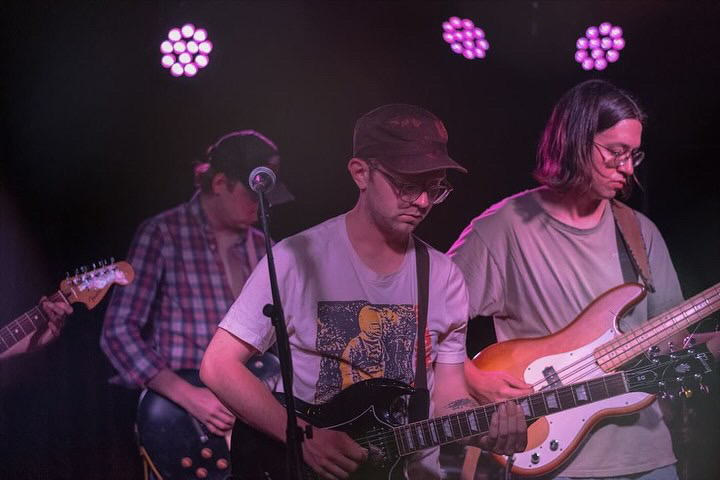
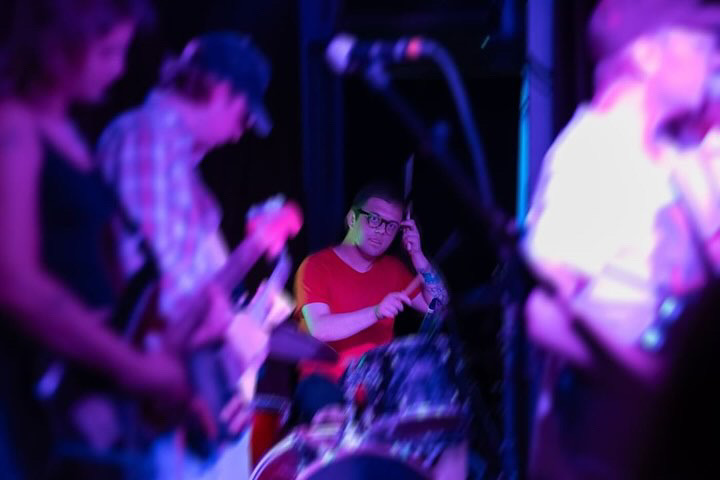
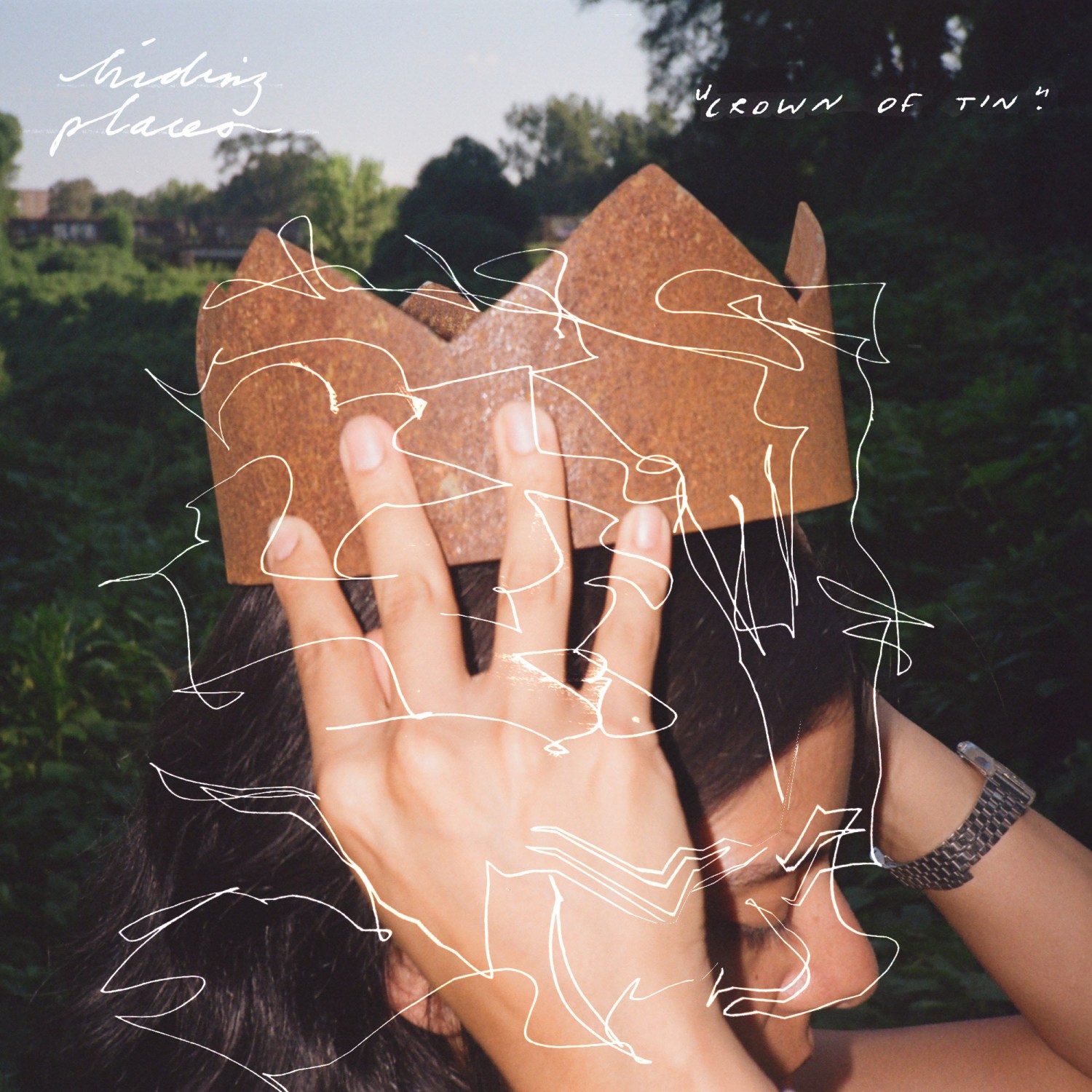
Hiding Places (North Carolina/New York) have released their new single “Crown of Tin” out today as a teaser for a new EP set for March 2024. The already well-versed four-piece, consisting of Anthony Cozzarelli, Nicholas Byrne, Henry Cutting and Audrey Keelin came to be through UNC’s student run college radio, WXYC. With a collection of eclectic influences, Hiding Places melded together a nostalgic realm of indie rock, folk, and other various genres, making a comfortable home for themselves in their growing catalog. With production help by Colin Miller (Wednesday, MJ Lenderman) “Crown of Tin”, a collaborative triumph, finds the band posing for a genuine and sonically mending chronicle of homesickness.
“Counting down the seasons until I see you again”, is a lonely statement. One that does not embellish the solitude that comes with moving away from home for the first time. As a first-year student at UNC, “Crown of Tin” is one of the first songs that Keelin ever wrote, finding a process and a purpose for sharing their music. Written from the obscure height of a dorm bunk bed, four years later “Crown of Tin” is emblematic of transition as Keelin and the band move forward.
The single begins in a sedated, lo-fi haze, finding isolation in Keelin’s performance as they sing, “Winter is me singing in my room it never ends / Taking a short dance under the sun when I can / Going on some picnics with all of my new friends”. It’s not a song that grapples with being physically alone, but more of drifting through a changed environment; new people, places, and things that haven’t been defined yet.
As this solemn path carries on, Keelin belts out, “I’ll climb trees and look around and wear my crown of tin”, sparking the track to explode with both wrath and fragility, screeching guitars and warm fuzz, pounding drums and muted acoustic guitar. A crown of tin, though cheap material in a malleable state, is representative of a form of status; one that races back to childlike determination and flexible foundations to fall back on. As the track comes to an end with collected feedback and the warm hum of amplifiers, the band sits in this contrast of comfort, while Keelin holds onto the crown of tin; a reverted sense of self that sticks around for when they need it most.
You can watch the video for “Crown of Tin” right here. Visit Hiding Placesto support the band and get some new merch!



 the ugly hug