Samira Winter has always had a gift for turning daydreams into soundtracks, but on ‘Adult Romantix’ she sharpens her focus.
Now touring in support of the record, Winter’s live performances extend the record into something tangible, charged, and alive with feeling.
We caught up with the Brazilian-born, now NY-based artist to step into the album’s glow and talk about heartbreak, transformation, and how ‘Adult Romantix’ captures the strange, beautiful tension between falling in love and letting go.
This interview has been edited for length and clarity
Lucie Day (The Ugly Hug): This album is about a lot of different things – about leaving LA, about love, about walking away from something and how that’s good for you yet sad. I was really interested in the way in which you created kind of a mini movie out of all of these characters and all of this lore. How much of it is autobiographical versus fictionalized? Do you see yourself in these characters, or do they exist separate from you?
Samira Winter: I’d say in general with Winter, it is kind of an extension of me but it’s something beyond me. I do feel like with this album, there’s an interplay – even with the whole movie idea – of “what is fiction”? What’s stemming from a raw emotion or something that in my real life has happened, but then became something bigger through a song? Sometimes it’s just a very subtle thing that then gets expanded on. A lot of this album, I think, was a time capsule. I pulled a lot from the over a decade that I lived in LA. So there’s also a little bit of the fictional side too, I’d say, incorporating these people that I’ve met, these characters, this energy.
LD: Archetypes of people that you meet?
Samira Winter: There’s the LA “California slacker-stoner” character that’s a surfer, and this type of shoegaze that was very Californian. Years of just seeing bands and going to shows. I think it’s a mix of both, but I would say some of it is actually not biographical. Some of it is truly just incorporating different characters and playing them out.
LD: Pulling the parts that are you and the parts that play off of what is you and what’s not.
Samira Winter: Yeah, I would say it’s a very nuanced thing and it’s hard to really say this is this, and this is this, but I’d say it’s a mix of both and it’s kind of an interplay too. With the lore and the characters, when I was recording the album I had it as one of my goals to explore different voices. When the album finished – I used to have a harder time when I had to talk about the record or explain “What am I gonna write in my bio?What am I gonna tell people?” And so I preemptively, when this album finished, sat down in my house in Brazil over the holidays and wrote an essay. I wrote themes and motifs and a treatment of what a movie would be for the album. I just kind of kept writing and writing and writing, and that was a huge part of the process that ended up informing all of my decisions when it came to creating the visual world. And so in that essay I would be like, okay, there’s the friend group in “Misery”, there’s the couple from the album. It’s all these characters that all belong to this world. It feels really good to have been able to make that all happen in a visual sense as well.
LD: Love is clearly such a large presence within the record. Was that something you think that you were consciously experiencing during the making of the album? Or did making the album bring that to the surface? Did you set out to make a record that was so filled with love?
Samira Winter: I would say with the way I make records, I’m not really setting out. I’m very much subconsciously just making a lot of stuff over a long period of time. I like taking a couple of years to make an album and writing and recording at different times. I think for me it did kind of happen, but yeah. I went through a breakup, and then after the breakup had all sorts of nostalgic feelings. There’s definitely also a level of the album that is a bit darker. There is a doom to it.
LD: I know you’ve talked a lot about gothic influences on the record.
Samira Winter: There’s that side of it, but I think at the end of the day it just felt like when I was packing up and being a nomad I was capturing all the different feelings and things that were happening. When I started writing songs it was kind of as if it was a diary, so I think there’s a level to life experience that ends up inspiring me. But I definitely didn’t set out to make it about love. When we finished the record, I started piecing together the dots that connected and the throughline. I liked the idea of adult romantics and pondering these things because I grew up in the 90s. Watching so many rom-coms and having so many fantasies ingrained in my head and taking everything with a grain of salt. Being like: What is fantasy? How far can you go with a crush? What are these different bounds of the platonic and the romantic?
LD: The album does feel like there’s a light and a dark- falling in love while saying goodbye, leaving something behind to move forward. In that context, do you see the album more as a record about transition or about acceptance?
Samira Winter: I’d say it’s both.
LD: I know that’s a really hard question!
Samira Winter: I wrote it in a transitory state.
LD: So that colors it.
Samira Winter: Yeah, that definitely colored it. But I think in a way, finishing it and releasing it into the world led to an acceptance because I felt like after releasing this album I’d been fully able to close the door to the past of my LA life. I’m a believer that it’s important to release music that you feel really crazy about, and that you feel really excited about. It’s important to release it because it completes the cycle. I think releasing the actual album, you know how people say it’s not mine anymore? You release it to the ether. So I feel like I’ve been truly, truly able to let go.
LD: You’ve said that writing these songs and then thinking about performing them was scary, because they were so vulnerable and intense. Now that you’ve been actually performing them, how has that been?
Samira Winter: I think it’s been getting easier now. The very first practice where I had to play “Just Like A Flower”, I had so many butterflies in my stomach. With all the songs. We’ve been on tour for about two weeks now, I think now it’s just an excitement. And yeah, it’s been really fun to play the new songs.
LD: I love that line in “Just Like a Flower”: “all a girl could want is a girl friend”.
Samira Winter: I love that line too! It’s true, and it’s really not talked about enough. All of the songs that I’ve written that have a girl theme or a girl character like “Just Like A Flower”, “The Lonely Girl”, and “Sunday”, I still get chills when I play them. It just touches my soul. It hits in like a… I don’t know. I think it’s something that people can really identify with.
LD: Speaking of throughlines, Portuguese has always been a throughline in your work. Do you think that there are other things in addition to that that have stayed consistent through all the work that you’ve made and things that you find comfort within as anchors within the making of something new?
Samira Winter: Yeah, I think with Winter I’ve been able to explore different things and some of those things I’ve explored I’ve kept in my palette. I’d say a lot of the throughline is this girl character that’s an extension of me, and it’s like seeing the world through the lens of a dream language. I think there’s definitely a lot of the daydreamer archetype in Winter, of this act of trying to stay in touch with a sense of purity and a certain type of innocence. I’m always kind of in search of streamlining and perfecting the dream pop, shoegaze – I don’t want to add a ton of genres, but the language of Winter and finding the unique way that I can keep moving it forward.
LD: You’ve talked about all of these movies as your inspiration. Out of all the ones (10 Things I Hate About You, Kids, Gregg Araki films), what movie do you think that Winter as a character would fit the best in?
Samira Winter: The thing is, every record that is Winter is a slightly different character. I think I’ve really gotten better at honing in my concepts and finding that clarity. For ‘What Kind of Blue’, that character is this French girl named Juliet Blue. ‘Adult Romantix’ is this couple. There isn’t actually a movie that exists that’s perfectly ‘Adult Romantix’, which I guess makes sense because I created it. Yeah, that’s a cool thing for me to kind of chew on- where it fits in. If I had more resources, time, and money, I would make the movie. You never know- in 20 years, who knows what’s gonna happen? [The process] is really for me. It’s way more satisfying than it just being me. I love having this thing beyond myself as a muse, you know? When it becomes more than you in a project. I think art is beyond you. Maybe not at first, but it becomes its own being. I do think it’s like something in the ether that comes through you, and you are the filter.
Check out more photos of Winter live in Salt Lake City.
You can listen to Adult Romantix anywhere you find your music as well as on vinyl, CD and cassette via Winspear.
Sonically, the most authentic of the underground bands are the ones that are recording themselves, gigging around, and making an effort to create an all-around good music community. Bullseye, a New York City-based outfit are doing just that. Bullseye are among some of the most exciting bands that seem to just be flowing out of The Big Apple. They are a newer band who are highlighting NYC’s current underground scene through their commitment to making genuine music, fronting the wave of New York-youth-bands that are keeping DIY alive. With the release of their self-titled first EP, the band has cemented themselves as one of the most promising, having recorded and produced the whole EP on their own. Certainly “on the target,” so to speak, with their embodiment of DIY.
I recently interviewed Jake Barczak, the band’s frontman, on the band’s influences, recording process, and upcoming shows, in hopes of putting their music onto the radar of fans of Pavement, The Spatualas, Guv’ner, and perhaps even early Mirah.
The Roundabout is our newest column put together by Ruby O’Brien, brining a focus to youth bands across the country.
First, I’d like to start out by asking you to introduce yourselves and what you each play. Tell me how the band came to be!
OK, well, I’m Humberto and I play the drums. I’m Clara and I play bass. I’m Oliver and I play guitar. I’m Jake and I too play a guitar and I sing. I just typed all those responses myself but they all say hello. The band formulated around my (Jake’s) songwriting attempts about 5 years ago during Covid… I made some demos that I sat on for a while, and then eventually formed a band around. It really came together when I reconnected with Oliver who I knew a couple years ago, and Clara who I played in a band with in Minneapolis when I was 12, and met a number of Texan newcomers to NYC, Humberto, Leighton, Tyler, and the like. All crazy talented people.”
What are you guys individually inspired by, movies, art, music, etc, and how does that relate to what you collectively sound like? Do you think that your individuality creates a cohesive sound or do you ever find that songwriting can be a little more chaotic? I think this Tour Tape you guys put together last March certainly has one unified sound: I’m definitely picking up Pavement or Butterglory sounds through most of the EP, but then there are one-off songs like “Shine A Light On” with the Casio drum machine that sound a lot like Helevetia or something like that.
I think we all bring different backgrounds to the band (hah bet you didn’t see THAT coming). I’m like hardcore into melody and song I feel… Oliver has the ability to take that and make it slightly or even significantly more evil (still sounds like sunshine maybe right) and Clara has her own stripe of indie rock she’s bringing on the bass. Humberto, too, brings a certain type of Rock n Roll background, and I think like an eye/ear for detail that comes from his jazz-level drumming capability and schooling in the ways of design. He’s our wabi-sabi guy, maybe. I think we have a lot in common, but also pretty heterogeneous tastes… which, if you play enough with a scrambled mix of influences, eventually something textured and shiny and awesome is gonna come out. Not sure that’s happened, but I feel like that’s what we might be capable of doing on a good day.
The EPs you guys have out so far tend to be a mix of lo-fi and hi-fi. Do you guys track everything yourselves? I’m curious what your recording process is like.
I tracked like 60% of the songs that are out on the internet already with my phone. People talk about this a lot, but the compression that a phone speaker/system does can be kind of juicy. Other tracks I’ve done with friends and band members. Jasper Leach recorded the second two tracks on the Bullseye EP with a computer + interface and played bass. Oliver recorded “Shine A Light On” in a similar way. The recording process is patchwork and kinda case-by-case.
When you sit down to write a song, who is generally coming to the band with the ideas? Or is the songwriting process a jam with lyrics that come later?
So far it’s me… but the door is open…… I hear Jason Shapiro is doing commissions for songs so…… maybe he will write the next release.
What was the most exciting show you guys have played so far and why?
We had a good time playing Bazooka Fest, put on by pal of the band Jake Whitener.” Jake plays in another awesome NYC band called the Sunshine Convention. “We played outside during a hot sunny day. Friends, Good Flying Birds (amongst many amazing other bands) were on that bill, we’ve been happy to share a stage with them… like 3 times? They rock a lot.
Where do you guys hope to take the band in the future? Do you want to be DIY, or something even bigger?
I just want to keep writing and putting out music that I like and following it and supporting those around me doing the same thing. SO whatever that looks like.
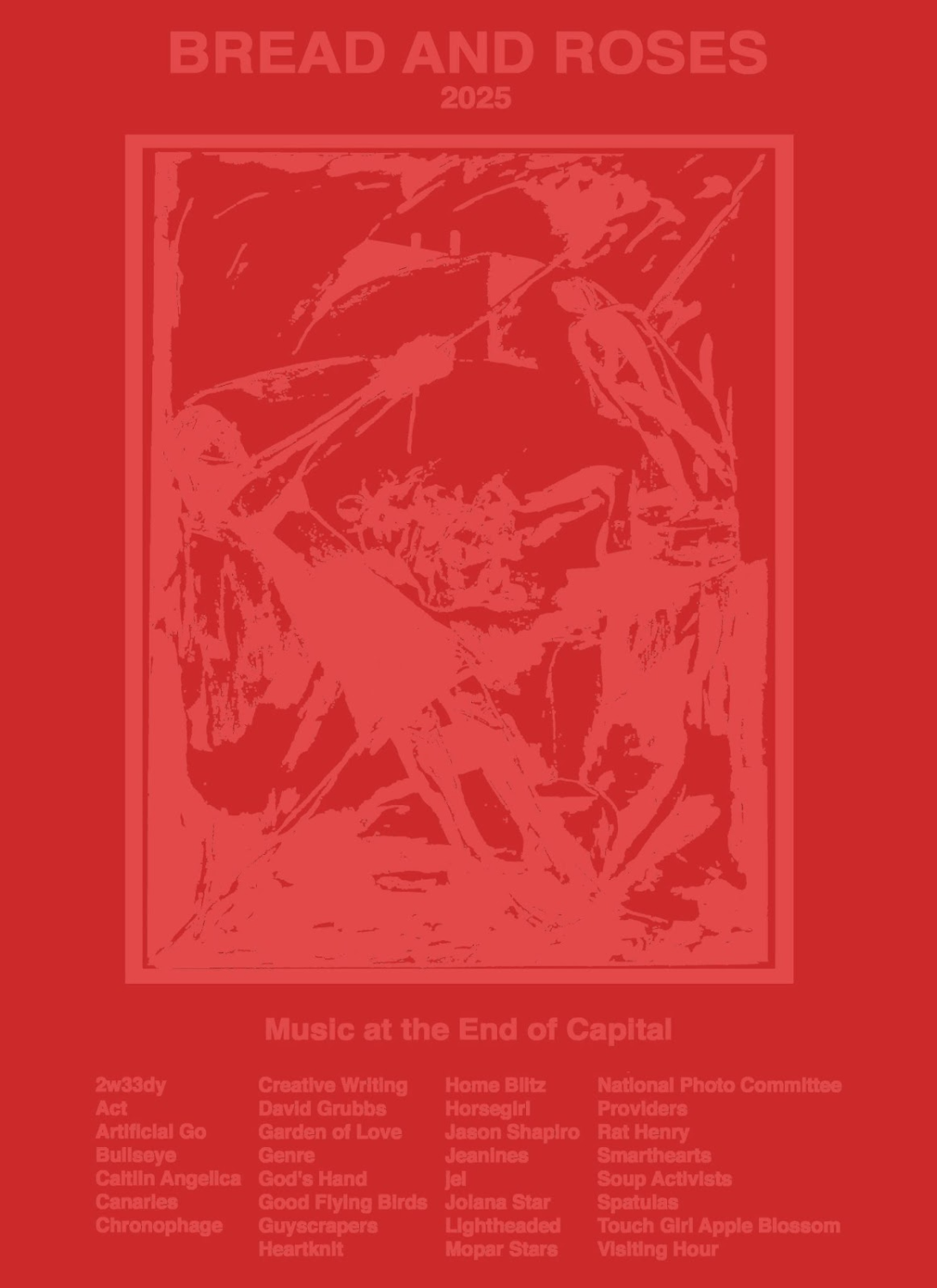
NYC locals can check out Bullseye at Bread & Roses DIY indie music fest at the end of September, which will be happening 9/26-9/28. If you aren’t based in NYC, have no fear. Bullseye is certainly on the come up and will be in your city in no time.
You can listen to Bullseye’s two EPs anywhere you find your music as well as snag a tape of their Feb ’25 Tour now!
Written by Ruby O’Brien | Featured Photo Courtesy of Bullseye
Dan Knishkowy, the creative stamina behind the New York project Adeline Hotel, recently announced the project’s return with his new record Watch the Sunflowers out October 24th via Ruination Records. Today, the ugly hug is premiering the second single “Just Like You”, a stunning display of attachment and self-agency in the face of a deeply rooted patterns.
“Dog tooth violence, rare blood run. Where’s my wild rose? Where will I become,” Knishkowy begins, his words linger like footsteps in an empty hallway, each step more and more pronounced as the direction and distance becomes more clear. As the track falls into its groove, ruminating in varying textures of strings and rich colors of instrumental shadows, a defiant guitar solo breaks through, dripping with distortion and unaligned with any classic structure, as “Just Like You” becomes a dynamic exchange, a transfer of self as Knishkowy pulls from this deep need to disengage with what he knows best. It’s a song that grapples with the ghosts that we have yet to become acquainted with, but Knishkowy’s writing has always held an edge to perspective, animating their presence with both curiosity and foretold hindsight when the moment comes to look those ghosts in the eyes. And in classic Adeline Hotel commotion, he shakes out the dust of folkloric expectations as the fluent instrumentation, the crack of the drums and the weightless harmonies begin to pack up their belongings and make their way to the door.
About the single, Knishkowy shares, “We started Sunflowers and left it unfinished for years. On returning, we felt inspired to totally reimagine it, ripping it apart to its bones and rebuilding it into a kaleidoscopic experience. We very much took the Yankee Hotel Foxtrot approach of ‘well, we made it, so we can also destroy it if we want to.’
The song itself mirrors that process, taking a hard look at ingrained patterning and the attempt to grow beyond that. Whether inherited generational trauma (‘in the hallways of my skin’), or the safe appeal of culturally sacred institutions, the narrator decides not to acquiesce any longer to the ease of familiarity (‘I cannot kneel’).
The titular line remains elusive still, even to me. Is it ‘I’m just like you’, a self-aware acknowledgement of how deep that conditioning goes, or ‘I just like you’, the rare feeling of connection you find with a person also committed to breaking these cycles?”
You can listen to “Just Like You” anywhere you find your music as well as preorder Watch the Sunflowers on vinyl.
Last week, FRANK/IE CONSENT and The Spookfish shared a collaborative recording titled no bottom pond, 34 minutes of ethereal folk experimentations from a series of sessions that took place in upstate New York where Dan Goldberg of The Spookfish was living last summer. Pieced together by The Cradle’s Paco Cathcart, the duo made use of a tape recorder and a camcorder, traveling between Goldberg’s house overlooking a pond to the heights of Harvey Mountain, where the two artists embraced pure moments of improvisation and collaboration.
Although one piece, no bottom pond can be split into different movements upon listening, like a collection of extremities that coerce the natural world in which this duo finds themselves expressing its creation. Passing a guitar back and forth, FRANK/IE CONSENT and The Spookfish spent these sessions improvising with whatever they had on hand. The clanking of porcelain, the crinkling of leaves, a melodic dance of looming guitars and breathy vocals, bits of laughter over folkish whimsy – at times these awakened expressions peel off from the vibrant backdrop, only to return as one – a return to the very presence of its makers as they too take into account the beauty of their surroundings.
You can listen to no bottom pond out on FRANK/IE CONSENT’s bandcamp page now.
As a small music journal, we rely heavily on the work of independent tape labels to discover and share the incredible artists that we have dedicated this site to. Whether through press lists, recommendations, artist connections, social media support or supplying physicals, these homemade labels are the often-unsung heroes of the industry. Today, the ugly hug is highlighting the work of our friends over at Lily Tapes and Discs.
Formed by Ben Lovell in high school as an open and engaging space for his and his friend’s music, Lily Tapes and Discs has become a treasured tape label out of Rochester, New York, housing a mighty collection of recordings founded on the passion of sharing music with others. Along with Ben’s own project lung cycles, Lily Tapes is a curation of many beloved and eclectic artists, such as The National Parks Service, Ylayali, Cla-ras, The Spookfish, German Error Message, Hour, Jason Calhoun, Adeline Hotel and many more.
We recently caught up with Ben to discuss Lily Tapes and its homegrown roots, celebrating its 10 year anniversary and the importance of sharing music with your friends.
This interview has been edited for length and clarity
Ben and Grayson (ligaments) performing as part of our short-lived noise duo “dry heave & neckbeards,” I think this was at a battle of the bands in a frat house? would have been around when we put out our split tape – iirc we emptied the room
Shea Roney: Your first release under Lily Tapes was back in 2014. What sparked the idea to start a tape label? Was there a particular moment or inspiration that made you take the leap?
Ben Lovell: It was actually way before that. I started self-releasing CD-Rs and stuff like that in late high school and early college and then moved on to tapes. I was doing enough self-releasing stuff that I figured I might as well put a name and a logo on it, but most of that stuff at this point I’ve sort of taken offline. It’s all kind of old. I was recording and self-releasing stuff as a teenager and discovering tape labels and DIY stuff, sending my stuff around a little bit to certain labels that I admired and looked up to and, as it usually goes, mostly either got silence or no’s. I realized I enjoyed putting the things together and making the artwork and all that, so I might as well just keep doing it myself. The first few releases were just mine and then eventually I started asking friends if they wanted to also let me make a tape of their stuff and it sort of became an actual label instead of just a logo that I was putting on all my own stuff.
SR: You had a lot of dual releases in the early days of the label. Can you tell me about that series and how those came to be? Who were some of the first people you collaborated with?
BL: The National Park Service was the first person that I did any sort of collaboration with. We know each other from a Radiohead message board that we both posted on as teenagers and have kept in touch. We made an album together where we were just sending Audacity files back and forth over Dropbox and then I put out a tape of his stuff called I Was Flying in 2013. And then that same year I started doing some split releases also, so the National Park Service and I did a split tape, and then one with my good friend Grayson who used to make music as Ligaments. And then the split tape sort of became a focus for a little while. I enjoyed the challenge of just thinking, here’s a friend, here’s the style of music they make, and pushing myself to make something that was not the same, but sympathetic to it. So, like Grayson made a lot of electronic beat driven stuff and I had fun making a more electronic sounding thing with him. After that was the one with Ylayali, which I enjoyed doing a more sort of scrappy, sort of hodgepodge, folky thing like he was doing at the time. But that was sort of what propelled it forward for a while. I never really sought out to make that a thing, but it just sort of became a series.
annabelle, the unofficial label mascot (featured in the artwork for the self-titled lung cycles album)
SR: You seem to have a trend of deliberate pairings when it comes to your music and other lily tapes releases when selling tapes. Is this something you like to focus on and what qualities do you think it further extends when enjoying these pieces of work?
BL: Yeah, that’s interesting. I mean, I got that idea just because when I was starting to collect tapes and follow a lot of smaller labels, the idea of just doing release batches was something that I found interesting and worked on me in a lot of cases. If there was one specific release I was interested in and it was being presented as part of a batch deal, I was like, sure, I’ll just buy the batch and maybe I’ll like the other stuff, too. I have friends who are able to work this way, but I’m not able to just have a bunch of different staggered releases going at the same time. I have to have something like, ‘these are the releases I’ve started, and I’ll finish them together, and then, when that’s fully done, I’ll move on to the next thing.’ And not that selling anything is like the important part, but I’ve found that if I’m releasing stuff by 2 or 3 different artists at the same time, maybe one of those artists will bring someone who hasn’t heard of the label before to check it out and they’ll end up hearing something else that they wouldn’t have heard if I had just put out that one tape out by its own. With this last batch especially, I mean German Error Message has a fairly large following, bigger than most of the stuff that I usually put out, and there’s been a lot of new names in the orders, and a lot of people are grabbing the whole batch, which I love.
SR: Yeah, that’s so cool. That recent National Park Service and Calhoun pairing felt very special. I blocked out an afternoon to listen to those back-to-back, and it’s just so intriguing the ways you can kind of draw lines between them, but it’s still two completely separate artists that are just doing their own thing. It’s like an assorted little cheese board or something [laughs].
BL: I love that! [laughs] When other people have asked me to describe the sound of stuff on the label I just don’t know how. I know some people do sort of run their label in that way or like to have a sound world that they operate in. But for me, it’s just stuff that I like and it’s my thinking that I don’t think it’s that far-fetched that someone else would have the same overlapping tastes.
SR: How do you find the artists you work with? Is there a special connection or sound you look for?
BL: They’re just my friends usually. It’s the sort of thing where I don’t really seek out or solicit releases. Unfortunately, I have to say no to a lot of possible release projects just because of the time and money and energy involved. So, if it’s a right time, right place thing where a friend brings a project to me, and I am not already in the middle of something else, or if they’re willing to wait a little while. I want to work on as many releases as I have the time and energy for in supporting people that I’m friends with and whose music I care about.
ben and jason calhoun on tour together in pittsburgh, 2018
SR: Do you have any collaborators that help you run the label, and if so, how does that shape the way the label functions?
BL: It is mainly just me. I have a few friends that are closest to it that I’ve done a lot of work with. My friend Jeremy Ferris (Cla-ras) is an insanely talented illustrator and printmaker. He’s probably done the most artwork for the label and someone that I can just send him music, or a vague idea and he’ll come back to me with something fully fleshed out. He just always has an intuitive understanding of what a project needs and is really good at making it work. I’ve done a lot of this myself and also sort of ripped him off [laughs]. A big thing for me is making the tapes feel good, using nice paper and doing interesting things with the printmaking and the paper stocks used. Just putting together a product that feels, not luxurious, but thoughtfully assembled.
SR: Are most of the tapes handmade?
BL: I’m trying to go more in that direction. At first it was mostly just chipboard and cardstock cases that I was buying in bulk and then decorating myself with stamps and watercolor paints and stuff like that. And then I started working with Jeremy, and he does a lot of screen printing, and I started doing some letterpress printing when I was in college. And then since then I had sort of moved around a lot and had less capacity for sort of intricate printing things, so I sort of moved more towards a lot of digital artwork and digital printing, but still trying to make everything look nice. But in the past year, and with the most recent batch especially, I have been trying to focus on getting back into the print studio and making that a bigger part of the label.
SR: Is this homemade feel and approach something that holds significance to you?
BL: It is. Especially because I haven’t made that much of my own music the past few years so that’s sort of where I’ve been focusing my creative energy, learning different printmaking techniques and just making things. This is a big tangent to go on, but I’ve only released my own stuff through other labels a couple of times, and there was one album that I put out when I was in college, I don’t really remember how it happened exactly, but this label in England put it out. They did this really big deluxe package and it was like an oversized cardstock case with all these photo prints inside and it was really expensive. It sold out within a day, and I also never got copies of it. They sent them to me, but the package just never came. I don’t know if it got lost or what. but ultimately, I had to buy a copy off Discogs for like $50 to get a copy of my own album. I don’t know anyone who bought it or got a copy. I don’t like the artwork, to me it felt like it had nothing to do with the music. The whole thing was just very strange to me in how fancy, elaborate and expensive it was, and I didn’t feel like it fit me at all. It made me think about how I want to make tapes that are thoughtfully assembled, and support the music as much as possible, but are also affordable. There’s a lot of really amazing work that you can do just by using different papers and inks and just very simple handmade touches that I think people notice and appreciate. The digital distribution is whatever, it’s an accessibility thing and people should have the bandcamp access and files on their computer, but the tape is the thing for me. I want to make objects that make it clear that this isn’t just an afterthought, like the packaging and presentation of the artwork is the album too.
SR: And that stuff lasts, too! I have specific sections in my collection of just all releases from a singular tape label.
BL: Right! Same.
hour live at small world books in rochester, ny, 2018
SR: How involved are the artists in the process of putting the tape together from the start to the final product?
BL: Pretty involved. It’s obviously different from one to the next, but I don’t make any decisions without their approval. It’s pretty, I wanna say, hand-in-hand or hands-on or whatever. Every release has an email thread that is like a hundred emails long. It’s very important to me because these are my friends, and they feel like this is their tape as much as it’s just something in a catalog. I think there’s sort of a standard, you know like, we can do it this way. I can do the layout with the handwriting on the tape and all that, which works a lot of the time. Or we can do something different, or if they have an idea, then I’ll try and see where that goes. I’ve been getting back into letterpress printing and the studio here in Rochester that I do that work at has a massive basement filled with all sorts of antique metal types, so this most recent batch that I’m working on, I just sent people this spreadsheet of like 400 antique fonts and it was actually like a total coincidence that everyone chose the same font at random, which I loved, and it was a very cool font to work with, and I think it came out looking great.
SR: Can you share a few personal favorite releases or projects that you’ve worked on and tell us a little bit about them?
BL: I know I mentioned it earlier, but one of my favorites, and one of the earliest ones, was the split tape that my friend Grayson and I put out together when I was still recording as Squanto and he was Ligaments. Grayson was one of my best friends in college. We basically lived at his house, and we threw a lot of basement shows, but he also is just chronically not finishing things. It was my senior year of college and most of that year I was just listening to him work on these songs, and he would play them whenever he did a set in a show, and I just really got to know and love those songs. At one point I just had to say, ‘I’m setting a deadline for you. Give me this music, so I can put it on a tape.’ That was also the first release that Jeremy did artwork for. We didn’t know each other super well, but it all came together in a really nice way. I still have a lot of really fond memories of working on that tape together and hanging out at that house, which was also how I met Fran from Ylayali. His wife Katie’s band, Free Cake for Every Creature, played a show in our basement. and we just kept in touch, and it became a thing. He’s also one of my closest friends at this point, and I’ve sort of told myself that that is kind of the purpose of the label. I’m not great at keeping in touch with people just for the sake of keeping in touch. So, part of why all my email threads for releases are clogging up my inbox so much is because it is working on a release, but at the same time it’s also like, ‘how have you been? What’s new?’ It’s an excuse for reaching out.
yy by ylayali, 2017
The yy album from Ylayali, I just remember Fran had a very specific idea about how he wanted the artwork to be like Craigslist themed. So the tape itself is formatted to look like a Craigslist Ad. And for the product shots for the tape I found like my cell phone from high school and took blurry pics of it with that. And the release email was written like an unhinged response to a Craigslist Ad. I actually lost a bunch of subscribers, and a few people emailed back asking like, ‘what? Are you okay?’ But I love that album, and I stand by it. I still think it was really funny.
SR: The split tapes are interesting because it was very much the beginning of lily tapes, but it’s also people you continue to work with through the years too. So seeing both you and those artists develop in personal ways has been a really special experience when digging through your catalog.
BL: Yeah, I always feel like I’m not doing much, and then when I actually go back and take stock of everything I’ve put out, I’m always amazed at how much there is and how much it’s changed, and stayed the same over time. There’s a lot of things I keep returning to, and things that I forgot about, and I don’t wanna go nostalgia mode or anything but even at this point it’s very rewarding to look back on already.
SR: Can you expand on what you mean by change and stay the same?
BL: I hope so. that’s a tough one. I feel like there are just a lot of like… it’s hard for anyone who does creative work to pinpoint like, these are the things that I’m drawn to and here’s why I’m drawn to them. But there are sort of consistent things that you chase and think about chasing. and then, when you zoom out, in a broader sense, there are things that you don’t realize you were chasing that you see sort of pop up over and over. I guess I can mostly only speak to my own music, if I’m talking about the music itself. But across all the split tapes, there are certain qualities where I’ve sort of been chasing accidents. Like a lot of my own recording has been sort of trying to set up conditions so that something I may not have planned for can happen, or I can arrive at through, you know, layering different recordings and seeing what inspiration that gives me, rather than sort of coming in with something fully written and laying it down exactly like it is in my head. And the ways I’ve tried to make that happen over time have changed, but I think that I’ve been consistent in sort of seeking that out. I collaborate with a lot of people, but that’s all sort of remote, not really in real time. The actual work is mostly done alone, and most of the people that I’ve released music by are solo artists, and I think that’s something that a lot of us share. You sort of have ideas, and you’re executing them and handing them off, and in that process, they turn into something different.
house show with adeline hotel in rochester, ny, 2016
SR: Last year you released Window: 10 years of Lily Tapes and Discs. Can you tell me a bit about that project and the significance it had on you?
BL: I’m not very good at planning, like I’ve said, a lot of the time the way I work on releases is they kind of fall into my lap. But for this I completely forgot the label’s 10th anniversary. But once I realized, I thought it would be fun to sort of take a break and try and do something big by my standards. And I also did a year of retrospective stuff, like I reissued a few tapes that had gone out of print too fast, and like I said, the label has been a way to keep in touch and build friendships through working on things together and it was a way for me to sort of take inventory of where I was at with all of that. I don’t want to just keep trudging forward and risk forgetting or spreading myself too thin. I wanted to take a moment to just look at everything and check in with everyone and just sort of reflect on it together. It was a chance to reach out to the people that I hadn’t been super in touch with over the years and hear what people were working on, and I was sort of taking inventory of everyone that I wanted to reach out to about it.
I was very methodical in putting it together, and felt pretty lost at sea with it for a while until I got everyone’s tracks in and started fiddling around with an order. I very deliberately wanted it to be an intentional and digestible listening experience. I had no idea how to do that for a while, it’s 2 hours of music. But with the idea of making it a double tape and having each side be its own sort of suite helped it open up into a thing where I could sort of work on one side at a time. You don’t have to listen to the whole thing altogether. It’s morning, afternoon, evening, and night that are the four sides, and I wanted it to be something that you can take in pieces.
I also got really into the packaging and all that, trying to make it look cool. This was before I got back into the print studio, I was trying to do all this at home in my office, just buying different stamp inks and paper samples and trying to figure out the strip around the package was such a pain. I should have just asked someone who knows what they’re doing earlier, but I was super happy with the way it came out and I think that it’s a prime example of a very good feeling thing to hold. I hope everyone involved feels good about being part of it. Every part of it feels well considered to me. It didn’t feel like anyone was giving me their leftovers and it felt rewarding in that that’s something that comes out of what I’ve tried to foster in the label. It’s not just a compilation. It’s like a summation of what we’ve all done so far, and where we’re at right now, and what we’re trying to keep doing, and I think it shows.
house show with ylayali in hudson, ny, 2015
SR: For those who are looking to start their own tape label, what advice do you have for them and what do you wish you knew when you were starting out?
BL: I would say just do it is my advice. I think it’s good to just do stuff that no one cares about for a while, because no one’s gonna care about it at first, and then the longer you do it the more chances you have to sort of iterate on your process and figure out what you like, what parts of it you like doing, what parts of it you don’t like doing, and then eventually you’ll sort of arrive at something that you’re proud of, and you’ll be able to look back on the work that you did to get there and also feel proud of that. I feel like I’ve spent a long-time making stuff that very few people cared about, and to some extent I’m still doing that. Without getting into a whole diatribe about the state of music or whatever, I think this is true at every level, whether you’re a tiny tape label or someone who’s trying to make it. There are all these ideas of success that are very hard to not subscribe to and it’s one thing to know intellectually that not getting coverage from whatever site doesn’t equate to success. But, on the other hand, it’s hard not to take being ignored personally. Even now I feel like it’s a balance of telling myself that that stuff doesn’t matter and also actually feeling that that stuff doesn’t matter. And depending on how the day goes, you can go either way. But I just think if you want to do it, just do it and find out over time whether you enjoy it or not. And hopefully you’ll make some friends in the process.
There’s also so many different ways that you can pursue it too. Even now I’m constantly just rethinking things like, ‘do I wanna set this tape up the same way that I’ve done the past ones or do I want to do something radically different with the artwork,’ or just try something new just to see what happens. And the more experience you have to draw from, and the more friends you have who have seen you do the work and know that you’re not just making empty promises, the more leeway you have to try different things with it.
Today, NYC-based tape label Toadstool Records shares a new bandcamp only compilation on Valentine’s Day called 777 Love Songs. Featuring artists such as the fruit trees, deerhoof, youth large, toy factory and one wheel fireworks show, all profits made will be donated to Mutual Aid LA and Women’s Prison Association.
About the compilation, Toadstool founder Carolina Gay shares,
“777 Love Songs is a compilation of tracks about love and heartbreak, with contributions from friends and community members – many of which are exclusive to this release. Local NYC artist Somer Stampley has contributed custom artwork.
In numerology, the number 777 is considered to be extremely lucky, awash with high vibrations. 777 is aligned with love, purpose and wisdom: it’s a sign that things will all work out in time.”
Mutual Aid Los Angelesis a connector and information hub for mutual aid efforts in Los Angeles, especially those impacted by the recent fires. They aspire to build toward abolition and believe in a world that can be freed through community solidarity.
Women’s Prison Association is the nation’s first organization for women impacted by incarceration. They work to empower women, LGBTQ+ people, and their families affected by New York’s carceral system.
“Toadstool Records has decided to raise funds for Mutual Aid LA and Women’s Prison Association because of our belief in art as a healing tool. Our hearts are broken over the immense loss and trauma in Los Angeles in the wake of the devastating fires this past January. We are also deeply disturbed by the Trump administration’s prejudiced attacks on women, people of color, and the trans community. We hope that this project will bring a little bit of relief and solace to those who need it the most.”
You can purchase 777 Love Songs on bandcamp now to listen to the full release!
“I’m gonna go off topic for a second” Nara Avakian prefaces before pivoting into a story from their day at work at a school in Elmhurst, Queens. We had been discussing the impact of taking Nara’s Room outside of the physical parameters of ‘Nara’s Room’, and while they assure me the anecdote will circle back to that point, I am hardly worried. Avakian details an art class activity where they prompted students to complete a ten minute automatic drawing followed by a more intentional piece of art on the other side of the paper. “I saw the ways that their subconscious kind of came out. I mean, they’re all twelve, thirteen, so they’re not overtly thinking, but I could see the connections that were being made,” Avakian explains.
One student had drawn a Yin and Yang symbol during the brief ten minutes, explaining to Avakian it was an element of another lesson she had that day. For the second part of the assignment, she drew a chameleon, likely inspired by the cover of a textbook in the classroom. “Because she drew the chameleon in marker, when you flipped it over it bled through and it was perfectly symmetrical with the Yin and Yang symbol. I feel like that instance is how I perceive my own songwriting and performing, it’s my subconscious flowing out and it just ends up almost experimental. I bring it to the boys, and they process it in their own ways. They evolve the meaning and turn something that is very private to me and very singular into something that is so much more nuanced.”
Avakian is the front person of Nara’s Room, a Brooklyn Based band that boasts a grungy catalogue of tracks that fizz in your ears and yank at your chest. Their experimental sound glides over achey introspections like Vaseline, forming this healing liminal space where pain has to be felt, perhaps even danced to, before it can be truly let go. The deeply cathartic essence of Nara’s Room is one of the band’s biggest triumphs, though it was not necessarily intentional from conception. Avakian began Nara’s Room at a time they were still nurturing their own confidence as a musician, initially envisioning something along the lines of “Joni Mitchell, Tim Buckley singer- songwriter”. They found bandmates Ethan Nash and Brendan Jones after posting on Craigslist for ‘non men players’ who liked the Cranberries, Galaxie 500, and the Sundays. “Lo and behold, two of the most boyish of boys responded”, Avakian jokes before tenderly reflecting on the significance of Nash and Jones in their life, “They ended up becoming my chosen family.”
The band fosters an extremely pliable approach to creativity, allowing them to harvest depth from anything. As Avakian reflected on the subsconscious driven exercises of their middle school art class, I thought of a track off Glassy Star that is somewhat centered around a bottle of juice. Recalled amidst the anguish of a parasitic relationship, “Grape Juice” is a standout example of the band’s knack for achieving emotional complexity without a need for explicit articulation. When I asked if the song was based on reality, if perhaps a decayed bodega beverage was a means to reach something darker buried in Avakian’s mind, I tried to resist posing the question in an overtly personal way. In retrospect, I think the times I have dropped what I was doing to vehemently sing along to the agonizing delivery of “a moldy bottle of Welch’s juice, I left in my closet, I forgot to drink” has less to do with me than it does the band’s ability to inject pathos into, well, anything. This dexterity wields songs that beg to be weathered by the relationship of a listener; as the stories told by Nara’s Room are meant to be felt more than understood.
Avakian explains that while the moldy grape juice story was true, it was initially someone else’s, one told via Spongebob voice filter on Instagram Reels. “At the time, I was friends with someone who was the classic case of just taking advantage of a friendship. The moldy bottle of Welch’s juice line came up, and I hate that this is the reference, but I guess it goes to show that you can find that value in anything,” Avakian explains, “I was scrolling through Instagram Reels, I don’t know if you know this guy but he tells these stories through the autotune SpongeBob filter, he has a beard, whatever. He came up, and I don’t watch everything, but for some reason I was just in a mood where I was just kind of rotting, and he talked about this story where his mom wouldn’t let him drink grape juice, so he ended up grabbing a bottle from the fridge and hiding it in his closet. He forgot about it, and then it got moldy, and that kind of just stuck with me. It was not something where I saw the reel and was like, I need to make that into a song, but I took it into my subconscious and it just kind of flowed out and really defining the mood and feelings of the song”
That Reel was just one of the many fragments of life that shaped Glassy Star, mingling in the record alongside a line delivered by Laura Dern in Blue Velvet, a copy of Kurt Vonnegut’s Bluebeard, a vinyl of Fleetwood Mac’s Live Ivory and a light up horse display in a bar in Bed-Stuy. Avakian often refers to these collaged references as “fixations”, though in the context of Nara’s Room, their purpose is ultimately a catalyst for stubborn emotional excavations. The band often knits their individual focuses into one, this creative symbiosis bridging Nash’s fascination with the New York City Transit System’s most elusive train and a poem Avakian wrote on a receipt at a comic shop in LA seven years prior on “Waiting for the z”.
There is also value in the intent behind what they choose to integrate into their art. The approach is deeply unpretentious, focused on exploring the notions that resonate regardless of their cultural weight. “That’s how I process what a fixation meant to me”, Avakian explains on their trust in their own subconscious, and how they rely on music to unravel it. Amongst the slivers of life and media that braided into Nara’s Room, an emphasis on the 2000’s holds a prominent slot in the band’s identity. Glassy Star odes heavily to the cultural landscape of the band’s formative years, the album’s visuals rich with contrast between aesthetics associated with innocence and lyrics that navigate the darker realities of growing up.
“I have this relationship with my childhood, where growing up I genuinely believed that every element in the early 2000’s would be that way forever. Like the idyllic world of a Disney Channel original movie. In my music, or at least with Glassy Star, it’s one of the dimensions. There’s so many. One of them is reconciling with growing up and change”, Avakian reflects on their focus on 2000’s media, “It’s my way of kind of returning back to the room in many ways, returning back to these things that are so foundational to who I am that don’t necessarily have a place in this world anymore.”
Their manipulation of nostalgia becomes particularly powerful in the music video for “Holden”, a standout track that purges identity uncertainties over buoyant guitar and hypnotic reverb. Avakian used various cameras for the video, which features a stop motion animation inspired by Nickolodeon’s Action League Now, and a visual narrative that unfolds in and out of a vintage television set. It exists somewhere between familiarity and fabrication, envisioning an uncanny realm that possibly cautions against stretching naivete into adulthood, though like most aspects of Nara’s Room, it leans into the abstract, holding more emphasis on emotion than rationality.
This sense of ambiguity is a driving force at their live shows. Creating the songs offers the band a means to make sense of their own minds, but through sharing them the music transcends the personal nature of a notes app entry or media fascination. The meaning becomes something entirely new, as their songs knock on the door of someone else’s emotional ruminations. “When you watch something of David Lynch’s, it’s not meant to be overtly understood, but rather experienced and felt,” Avakian reflects on preforming, “I think when I bring something out of the room, I only hope that people can enter this other space with me, and we can all kind of experience and feel something ourselves.”
You can listen to Glassy Star out on all platforms now. You can also order a cassette tape via Mtn. Laurel Recording Co. Nara also creates videos under the name foggy cow. Check it out here!
Written by Manon Bushong | Featured Photo by Mamie Heldman
“This is not a logical world we are living in! So maybe we should stop expecting it to be and just accept the absurdity. Fall straight into the magic bro,” reads a subsection hidden within the fixings of the machinery complex, titled “gave birth to a harddrive”. Earlier last year, Lily Piette shared her debut LP, titled Her Computerized Machinery Complex. Following the album’s release was a specially designed website – a placeholder to any physicality within this music – as a way to visualize and interact with the machinery complex in our measly three-dimensional human form. But in this computerized world, one fixated on intrinsic quarrels, generated visuals and lessons on quantum computing, there is a sentiment that runs through the album, a meeting point of the implausible and the actual that join, not with any profound coincidence, but rather more out of habit. Where big questions are asked and simultaneously answered with another question; the possibilities are endless and that’s okay.
Her Computerized Machinery Complex is both immediate and unsuspecting. Garnishing deep influences of nostalgic patterns and sharp instrumentation from the beloved Touch and Go era, these songs cut deep with both sincerity and cynicism, a heavily involved flavor that coats the palate unburdened by intentionality and experimentation. Taking on the duties of writing, producing and mixing, skills that Lily has been developing with two EPs prior, her artistic intuition bridges the gaps between preconceived notions and primal connections, as Her Computerized Machinery Complex navigates what we deem to understand as natural in the world around us.
Now several months out from its release, we recently sat down with Lily Piette to discuss the Machinery Complex, as well as blending visual art and music and redefining the world through vulnerability.
This interview has been edited for length and clarity
Courtesy of Lily Piette
Shea Roney: Now having some time to sit with it, how has it all been prior to releasing your debut LP?
Lily Piette: Yeah, it was great. It was the first full length thing I had mixed, produced and recorded everything myself, so I definitely think I had kind of gone a little crazy about it, and was really glad to have it out. But then, you know, I was just happy that people liked it, and because I think at that point, I had gone too deep, I was like, ‘I don’t even know what this sounds like anymore. Throw it out [laughs]’. But it was a relief.
SR: Of course, that makes sense. You take on these incredibly large world building-esque moments which I can imagine can be fairly easy to get lost in. What was your initial goal when you decided to make this record, and did it shift at all throughout the process?
LP: When I first started making these songs, I didn’t know it was going to be an album. At the same time, I started getting really into this kind of computer world. I was using Blender to make these videos about these machines, and I was really into quantum computing and all that. That was kind of separate in a way, but then it merged when I started to get to an album length and decided to just put everything together. I usually like to separate art and music, but it all just kind of happened naturally when I had the idea to make the website and just converge it all.
SR: Yes, you are also a visual artist. When you say that you try to keep them separate, are there any ways that you find this means of creation influencing the kind of music you make and your relationship with it?
LP: I’ve always felt blessed to have both because if I’m getting frustrated musically, I can just go paint and vice versa. I’ve always kind of separated them in my mind, though I think thematically I’m working kind of in the same worlds, like my paintings kind of speak to some of these same worlds I’m trying to create in music. But I felt like more so with the videos, and the things that I’m doing on the same computer that I’m making the music with, I feel like are more intertwined. That’s why I bridged more 3D modeling or video editing or whatever into this album because it’s on the same device, rather than going to paint in a studio.
SR: I want to talk about the website you made to accompany Her Computerized Machinery Complex, because you put so much effort and thought into building this visual place for the album to exist. What was the initial idea for this project?
LP: I just had all these videos I’d made from the last year that I needed to put somewhere, and this also aligned with the time I was working on the record. When I had titled it Her Computerized Machinery Complex, at some point I just wanted to create the complex – the machinery complex. It feels like a structure, probably more so like a building, but I can’t do that [laughs], so I made a website where you can go into these different rooms and spaces. I didn’t end up making the website till the album was getting mastered, which was a fun getaway from listening to the songs too much.
SR: There were a few parts that stood out as very interesting that I wanted to ask about. In a section in which you are describing the website you say “this website is an entity that has a soul and it yearns for you to understand. The website is sensitive and vulnerable and also kind of slow sometimes…” What does that mean?
LP: When I started to get into quantum computers and how they worked (the way they work is they can take every single possibility of any choice instead of 0 and 1. So it’s like 0, 1, and maybe. It’s basically the multiverse where you can think of any possibility) and it made me think, ‘isn’t that God level?’ I was looking at these pictures of quantum computers, and I’m like, ‘it looks like an angel. It’s so beautiful.’ In a lot of religious texts, it talks about the complexity of God. It’s so intense that you can’t even look at it because your brain is going to explode. I don’t know, I was just finding correlations between something divine and these machines. I’m not trying to make a statement about AI or anything like that, it’s more just that I think that they’re natural, too, just like houses are natural, and cars are natural, and we’re natural. These computers are natural, and they’re really stunning, too. I just wanted to bring back that idea that everything is nature, and everything is connected to the divine, including a quantum computer that we think is so sterile and inhuman.
SR: Another part that was really interesting was when you give birth to a hard drive, further explaining that “this is not a logical world,” building upon the absurdity in our lives. Can you tell me more about that concept?
LP: I wanted to explore these ideas of like, ‘maybe this computer feels embarrassed? Who knows?’ It feels like we’re living in a cartoon world where nothing makes sense and everything’s upside down and we all feel so upset about everything all the time, which is, you know, rightfully so, but there’s freedom in being like, ‘this is absurd. None of it makes sense.’ So why wouldn’t the computer feel embarrassed?
SR: You once brought up the similarities between the digital realm and the subconscious realm that we have as humans. In what ways do these metaphysical places connect?
LP: If we think about algorithms, or even AI self-learning algorithms, it’s taking in this unimaginable amount of information, and then it will come out in sometimes really strange and unexpected ways, which is the same way that our brains work. We live our whole lives, and we can’t access any of [the subconscious], and then it comes out in the choice of words we use, or dreams we have, or these repressed ideas about things. I mean, even when you use the AI image generator for an apple or something, it’s kind of distorted and strange. That’s due to all these complicated reasons and images and billions of pieces of information. So just like in the same way a Freudian slip would occur, it’s connected and linked to a billion different things, so it makes sense that it would replicate in that way. I just think it’s interesting that it’s hard to trace back where these things come from, in both realms, because it’s just unimaginable amounts of information.
SR: Did you make an effort to try and tap the subconscious at all when writing this record?
LP: Well, I would say the lyrics are the thing I struggle with the most, and it’s the thing I always put off till last. I struggle with being like, ‘okay, this is what I’m going to say, and I’m going to make it work phonetically as well. I always write a melody, and then I’ll sing gibberish or random words, and then I’ll try to make lyrics at the end, and oftentimes I’ll end up using whatever random thing I said because it sounded good. But I didn’t write it intentionally. Sometimes looking back at songs a while later, I’m like, ‘oh, I know exactly what I was talking about’, but I had no idea then.
Courtesy of Lily Piette
SR: There are a lot of thematic parts of this record that come from this feeling of grappling with connection in varying dimensions and relationships. Are there any ways in which referencing this digital landscape enhanced these themes?
LP: Even though I have this theme of the machines, most of the songs didn’t end up being anything about that, and are definitely about, you know, my own relationship struggles with people – betrayal, intimacy seeking connection. So, yeah, I feel like there’s this set out theme, but in reality, a lot of the songs are just about my regular life and regular emotional yearnings and everything.
SR: What we were talking about earlier, with this machinery complex being almost human-like with a soul, because technology is seen as so sterile, you’ve created this world that’s just so personable and warm, but through the lens of what we perceive as so distant and cold.
LP: Yeah, I feel like that’s what vulnerability is really. At the end of the day, that’s what I want to be as an artist. Being able to bring the idea that anything could be vulnerable, not even just to computers, but anything – a brick, a rock, or shoes, or whatever – and whether or not it’s true, it changes your relationship with the world and how you interact with everything. And I think it can only change it in a good way, approaching every single thing with compassion and love. I think that’s tied to that idea.
You can listen to Her Computerized Machinery Complex on all platforms now.
Written by Shea Roney | Featured Photo Courtesy of Lily Piette
Every Wednesday, the ugly hug shares a playlist personally curated by an artist/band that we have been enjoying. this week we have a collection of songs put together by New York-based singer-songwriter Caleb Cordes of the project Sinai Vessel.
With the release of Sinai Vessel’s fourth and final record, aptly titled I SING, Caleb culminated an album so masterful in storytelling – where instances of relational anxieties, economic plateaus and artistic values grapple with the prerequisites of both purity and cynicism – play so passionately with the grace of a tenured songwriter. Since then, while Caleb has begun to look ahead, defining new endeavors in life, his writing remains tried and true to what it means to be an individual, not lost, but wandering around this confusing, harsh, and beautiful world. Coming up upon 6 months of I SING, we asked Caleb to curate a playlist for the ugly hug, in which he shared,
Every so often — maybe only once or twice a year — I happen across a song that becomes a kind of home. “Home” sounds corny, but it’s apt — I wind up making a habit of departing from and returning to these songs, using them to bookend seasons or sessions of more experimental listening. I set down my bags, I kick off my shoes, I sigh. I expend almost no energy listening to them — they are wholly a source of comfort, a set of friends that make me feel like myself. Collected together, they form much of my motive for why I continue to listen, to search. And beyond listening, they plainly constitute a compelling reason to look forward to being alive.
A healthy portion of these tunes are songs that feel utterly private simply by extension of the fact that I’ve yet to meet another person that’s also heard them. It can feel special to be alone in that room, but I’d much rather share — especially if it means another person could find something in them to add to their own tender pantheon. Of course, these songs have also served as a constant point of reference for my own songwriting — and, seeing as I’m taking some time away from being a person who publishes or plays music, I’d like to offer them as context for my work while my last release is still reasonably close behind.
My ideal experience with all of these songs is that I could introduce them to you personally — to be on the same trip, so to speak. In my minivan, winding a mountain road. Or on a walk with two pairs of headphones, introducing one friend to another. In any case, here’s hoping you find one that gives you shelter.
Listen to Caleb’s playlist here!
You can listen to I SING on all platforms as well as purchase a vinyl copy.
Written by Shea Roney | Featured Photo by Trent Wayne
As a small music journal, we rely heavily on the work of independent tape labels to discover and share the incredible artists that we have dedicated this site to. Whether through press lists, recommendations, artist connections, social media support or supplying physicals, these homemade labels are the often-unsung heroes of the industry. Today, the ugly hug is highlighting the work of our friends over at We Be Friends Records.
We Be Friends is an immersive and cherished New York-based record label run by Justin Randel. With an emphasis on community, We Be Friends was built upon the simple pleasure that is sharing music and the deep bonds that can follow. Along with his own project called Reaches, Justin has cultivated a collection of expansive and truly unique projects from beloved artists such as The Spookfish, Mega Bog, Dean Cercone, iji, sneeze awful, gosh! and many more.
We got to catch up with Justin over email correspondence to talk about how We Be Friends came to be, DIY videogames and cultivating community through fermentation and music.
Justin Randel
Shea Roney: What sparked the idea to start a tape label? Was there a particular moment of inspiration that made you take the leap? What goals did you have in mind when starting the label?
Justin Randel: Unfortunately, I started this label because at the time a bunch of friends and myself were on labels that weren’t sending us any form of sales reports. I had friends playing Pitchfork and others that were having their record repressed, but nothing, no word from the labels. This was pre-streaming too, so it was obvious something was up and something needed to change. I was pretty stubborn and naive about what a tremendous amount of work running a label is and just how difficult it is to get press attention as a newbie and relative unknown, but in the end I’m glad I did this. Although this was a much harder route, I think it’s important to try and shape a more just existence.
SR: Can you share the story behind the name of the label? We Be Friends has such a welcoming tone to it and that feels to transcend into the community that you have built out of it.
JR: When I started this label, I was at the height of my fermentation fever. I wanted to ferment just about everything which included making sometimes good, sometimes questionable beers and wines. The idea was that every album would come with a bottle of something which was easy to pull off because this was also a time where pretty much all shows happened in a warehouse or basement. The state of Illinois does not allow homebrewers to sell alcohol; however, it does allow a person to give alcohol away to friends. Pretty much everyone is just a short conversation away from being a friend.
Bottling with Sinuba and Dan
SR:Do you have any collaborators that help you run the label, and if so, how does that shape the way you function? You also partner up with many other indie labels to share physical releases.
JR: Ugh I freaking wish I had collaborators. I regret starting this label on my own because it can take so much time, energy and self-assuredness. I’m definitely an optimistic person, but traversing the ever-shifting musical landscape is arduous. It can be difficult to wake up every day and tell yourself, ‘yes, this is a great idea’. As you mentioned, I have partnered with Solid Melts, Chinabot and Orindal in the past. These partnerships came about because at the time, we all just felt that we really wanted people to hear those albums. I like doing joint releases like this especially in the case of Chinabot where the label is in a different continent because it can feel silly at times sending just one record or tape to another part of the world.
Cambodia with Saphy Vong of Chinabot
SR:Who was the first artist you worked with and how did that come to be?How do you find the artists you work with?
JR: The first artist was myself. To this day, anytime I try something new like a new plant or release technique, I try to use my own projects as the tester just in case something goes south. It’s all just friends or friends that I met on tour. Although I do appreciate and listen to every submission, I do think of this less as a label and more as a community archive.
Paris with Opale, Marie Delta and Ensemble Economique
SR:What’s it like bringing an album from concept to reality, especially when making physical media? Are there any parts of the process you particularly love—or find challenging?
JR: Honestly, I find all of it extremely exciting and sometimes a little nerve wracking when a lot of copies of something show up at my door. I think the only challenge I really feel is that while writing press, I do not do that press agent thing of sending the same or nearly the same email five times. I just can’t bring myself to do that. Lately, I’ve also gone back to the old days of sending out physical copies. I am releasing these albums because I want to share albums after all. I keep learning new things with every release! I do try to do ‘better’ every time I release something, and I try to stay open to the way things shift or the possibility that I don’t know what I’m doing at all
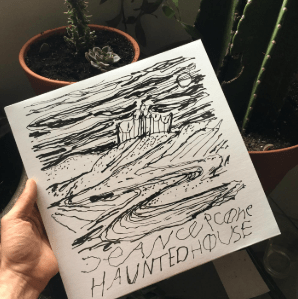
Haunted House by Dean Cercone Vinyl
SR:Working with Dan of The Spookfish, chatting on your daily hikes prior to the release of his album Bear in the Snow and the video game of the same name, was said to have broadened your horizon in the world of independent video game creators. You and The Spookfish also just released another soundtrack for a video game called To the Flame. Where has exploring this new community enhanced your perspective on creativity and are you looking to work further with video games in the future?
JR: I think when Dan first told me about DIY videogames, I mostly understood videogames as something a corporation with a big budget creates. I don’t think I necessarily understood it as art, but rather as a product which can feel similar at times. It’s interesting and encouraging to know that a small group of friends or in Bear in the Snow’s case, just a singular person can create a video game or something that has the power to transport you out of presence in a positive way similar to the way music can for many of us. Although I don’t have any current plans to work with a video game, I am open to the idea.
Recording Bear in the Snow with The Spookfish
SR:For those who are looking to start their own tape label, what advice do you have for them?
JR: I think it’s vital to understand that music is not a competition and not to self-limit as you go along. A ‘no’ or the more often received ‘no response’ is not necessarily a ‘no’ a year from now or after you’ve accomplished a bit more.
Along with this series, our friends over at We Be Friends are offering a merch bundle giveaway! The bundle includes To the Flame (2024) by The Spookfish, Church (2024) by Ricki Weidenhof, Another Head (2023) by Alden Penner, Happy Together (2018) by Mega Bog and Pseudodoxia (2013) and I am Alive and Well (2016) by Reaches. Also included will be an ugly hug tote bag and stickers.
To enter the giveaway, follow these easy steps below!











 the ugly hug